Domina Conceptos Médicos

Estudia para la escuela de medicina y tus examenes con Lecturio.

Carcinoma Basocelular

El carcinoma basocelular es la neoplasia maligna de piel más frecuente. Este cáncer surge de la capa basal de la epidermis Epidermis The external, nonvascular layer of the skin. It is made up, from within outward, of five layers of epithelium: (1) basal layer (stratum basale epidermidis); (2) spinous layer (stratum spinosum epidermidis); (3) granular layer (stratum granulosum epidermidis); (4) clear layer (stratum lucidum epidermidis); and (5) horny layer (stratum corneum epidermidis). Skin: Structure and Functions. Las lesiones aparecen con mayor frecuencia en EN Erythema nodosum is an immune-mediated panniculitis (inflammation of the subcutaneous fat) caused by a type IV (delayed-type) hypersensitivity reaction. It commonly manifests in young women as tender, erythematous nodules on the shins. Erythema Nodosum la cara como nódulos perlados, a menudo con vasos sanguíneos telangiectásicos y ulceración en EN Erythema nodosum is an immune-mediated panniculitis (inflammation of the subcutaneous fat) caused by a type IV (delayed-type) hypersensitivity reaction. It commonly manifests in young women as tender, erythematous nodules on the shins. Erythema Nodosum personas de edad avanzada. El diagnóstico se establece mediante una biopsia. A pesar de tener un bajo potencial metastásico, el carcinoma basocelular debe tratarse adecuadamente porque es localmente agresivo y destructivo para los LOS Neisseria tejidos. La escisión quirúrgica completa es el principal método de tratamiento. El pronóstico a largo plazo es excelente con un tratamiento adecuado.

Last updated: Dec 15, 2025

Editorial responsibility: Stanley Oiseth, Lindsay Jones, Evelin Maza

Descripción General

Definición

El carcinoma basocelular (carcinoma de células basales) es un cáncer de piel que surge de la capa basal de la epidermis Epidermis The external, nonvascular layer of the skin. It is made up, from within outward, of five layers of epithelium: (1) basal layer (stratum basale epidermidis); (2) spinous layer (stratum spinosum epidermidis); (3) granular layer (stratum granulosum epidermidis); (4) clear layer (stratum lucidum epidermidis); and (5) horny layer (stratum corneum epidermidis). Skin: Structure and Functions y sus anexos.

Epidemiología

  • Cáncer más común a nivel mundial
  • Neoplasia maligna de piel más frecuente
  • La incidencia ajustada por edad en EN Erythema nodosum is an immune-mediated panniculitis (inflammation of the subcutaneous fat) caused by a type IV (delayed-type) hypersensitivity reaction. It commonly manifests in young women as tender, erythematous nodules on the shins. Erythema Nodosum los LOS Neisseria Estados Unidos es de 226 por cada 100 000 personas-año.
  • > 1 millón de carcinomas basocelulares se tratan anualmente en EN Erythema nodosum is an immune-mediated panniculitis (inflammation of the subcutaneous fat) caused by a type IV (delayed-type) hypersensitivity reaction. It commonly manifests in young women as tender, erythematous nodules on the shins. Erythema Nodosum los LOS Neisseria Estados Unidos.
  • Hombres > mujeres
  • La incidencia aumenta con la edad.

Factores de riesgo

  • Exposición a la luz ultravioleta (UV):
    • Exposición solar (trabajadores al AL Amyloidosis aire libre)
    • Camas de bronceado
    • Fototerapia para la psoriasis Psoriasis Psoriasis is a common T-cell-mediated inflammatory skin condition. The etiology is unknown, but is thought to be due to genetic inheritance and environmental triggers. There are 4 major subtypes, with the most common form being chronic plaque psoriasis. Psoriasis
  • Edad avanzada
  • Exposición al AL Amyloidosis arsénico (e.g., agua potable contaminada, mariscos contaminados)
  • Radiación ionizante
  • Inmunosupresión crónica
  • Genética:
    • Tez clara
    • Antecedentes personales y familiares de carcinoma basocelular
    • Síndromes genéticos:
      • Síndrome de Gorlin (caracterizado por anomalías del desarrollo y múltiples carcinomas basocelulares)
      • Xeroderma pigmentoso (mutación en EN Erythema nodosum is an immune-mediated panniculitis (inflammation of the subcutaneous fat) caused by a type IV (delayed-type) hypersensitivity reaction. It commonly manifests in young women as tender, erythematous nodules on the shins. Erythema Nodosum la reparación del daño del ADN inducido por la radiación UV)
      • Síndrome de Bazex-Dupré-Christol (quistes de millium, hipotricosis, carcinomas basocelulares múltiples)
      • Albinismo oculocutáneo (trastorno en EN Erythema nodosum is an immune-mediated panniculitis (inflammation of the subcutaneous fat) caused by a type IV (delayed-type) hypersensitivity reaction. It commonly manifests in young women as tender, erythematous nodules on the shins. Erythema Nodosum la síntesis de melanina)
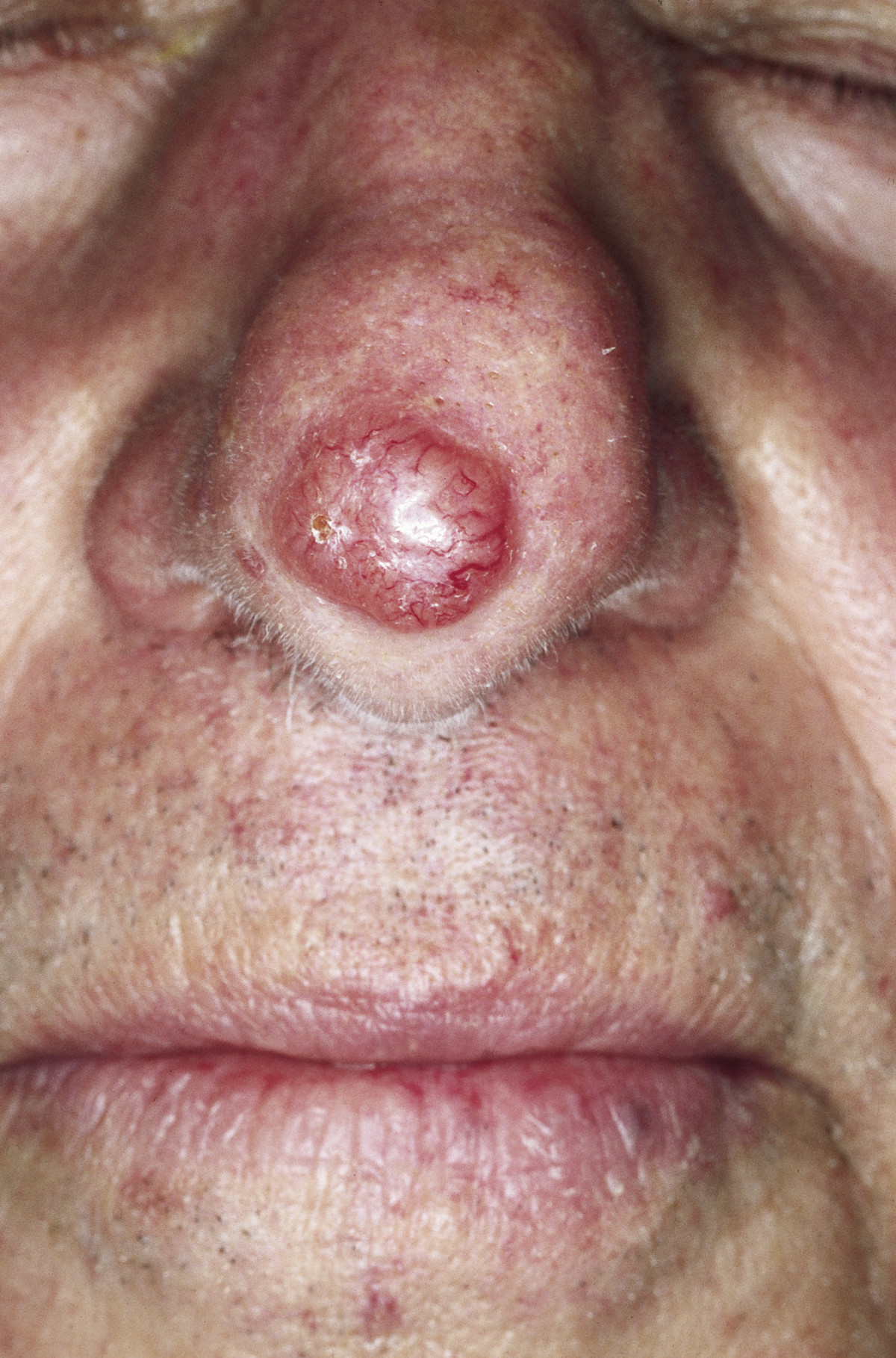
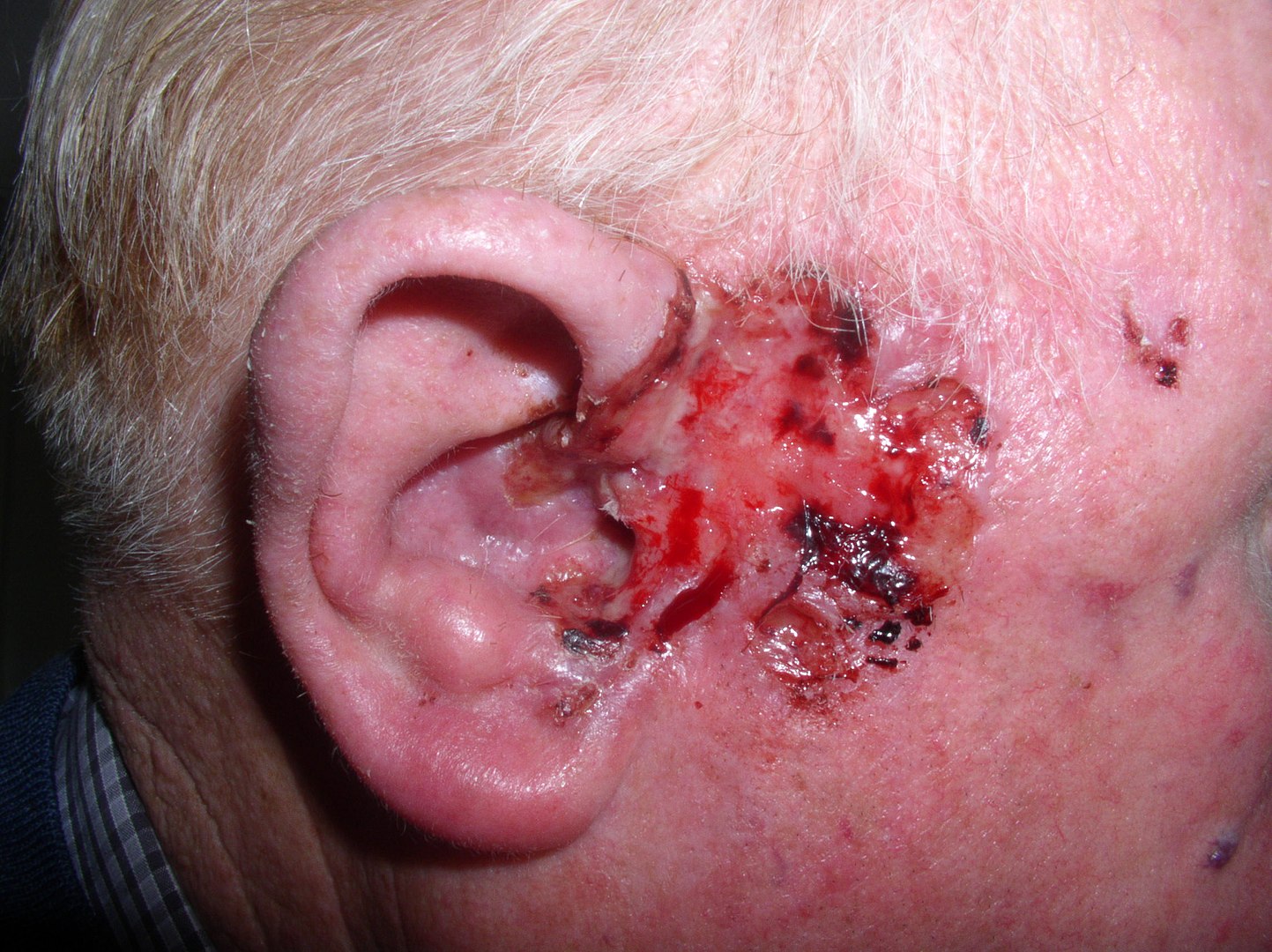
Carcinoma basocelular localmente agresivo

Carcinoma basocelular localmente agresivo en un hombre de 75 años

Imagen: “Basalioma” por Klaus D. Peter. Licencia: CC BY 3.0

Fisiopatología y Presentación Clínica

Patogénesis

  • Radiación UV:
    • Factor más importante
    • Luz UVA y UVB → Daño en EN Erythema nodosum is an immune-mediated panniculitis (inflammation of the subcutaneous fat) caused by a type IV (delayed-type) hypersensitivity reaction. It commonly manifests in young women as tender, erythematous nodules on the shins. Erythema Nodosum el ADN
    • Los LOS Neisseria genes Genes A category of nucleic acid sequences that function as units of heredity and which code for the basic instructions for the development, reproduction, and maintenance of organisms. DNA Types and Structure más frecuentemente dañados por la luz UV involucran la vía de señalización hedgehog.
  • Mutaciones comunes:
    • Mutaciones del homólogo humano del gen patched ( PTCH1 PTCH1 A patched receptor for several hedgehog proteins that associates with the smoothened receptor to modulate hedgehog signaling. It is also a tumor suppressor protein; mutations in the patched-1 gene are associated with basal cell nevus syndrome; squamous cell carcinoma of the esophagus; trichoepitheliomas, and carcinoma, transitional cell of the urinary bladder. Basal Cell Carcinoma (BCC)) (que se encuentran en EN Erythema nodosum is an immune-mediated panniculitis (inflammation of the subcutaneous fat) caused by a type IV (delayed-type) hypersensitivity reaction. It commonly manifests in young women as tender, erythematous nodules on the shins. Erythema Nodosum la mayoría de los LOS Neisseria casos de carcinoma basocelular):
      • El PTCH1 PTCH1 A patched receptor for several hedgehog proteins that associates with the smoothened receptor to modulate hedgehog signaling. It is also a tumor suppressor protein; mutations in the patched-1 gene are associated with basal cell nevus syndrome; squamous cell carcinoma of the esophagus; trichoepitheliomas, and carcinoma, transitional cell of the urinary bladder. Basal Cell Carcinoma (BCC) codifica una proteína en EN Erythema nodosum is an immune-mediated panniculitis (inflammation of the subcutaneous fat) caused by a type IV (delayed-type) hypersensitivity reaction. It commonly manifests in young women as tender, erythematous nodules on the shins. Erythema Nodosum la vía hedgehog.
      • En EN Erythema nodosum is an immune-mediated panniculitis (inflammation of the subcutaneous fat) caused by a type IV (delayed-type) hypersensitivity reaction. It commonly manifests in young women as tender, erythematous nodules on the shins. Erythema Nodosum estado de reposo, PTCH1 PTCH1 A patched receptor for several hedgehog proteins that associates with the smoothened receptor to modulate hedgehog signaling. It is also a tumor suppressor protein; mutations in the patched-1 gene are associated with basal cell nevus syndrome; squamous cell carcinoma of the esophagus; trichoepitheliomas, and carcinoma, transitional cell of the urinary bladder. Basal Cell Carcinoma (BCC) normalmente inhibe el homólogo smoothened.
      • Cuando la proteína sonic hedgehog se une a la proteína PTCH1 PTCH1 A patched receptor for several hedgehog proteins that associates with the smoothened receptor to modulate hedgehog signaling. It is also a tumor suppressor protein; mutations in the patched-1 gene are associated with basal cell nevus syndrome; squamous cell carcinoma of the esophagus; trichoepitheliomas, and carcinoma, transitional cell of the urinary bladder. Basal Cell Carcinoma (BCC) PTCH1 PTCH1 A patched receptor for several hedgehog proteins that associates with the smoothened receptor to modulate hedgehog signaling. It is also a tumor suppressor protein; mutations in the patched-1 gene are associated with basal cell nevus syndrome; squamous cell carcinoma of the esophagus; trichoepitheliomas, and carcinoma, transitional cell of the urinary bladder. Basal Cell Carcinoma (BCC) se degrada → se libera el homólogo smoothened
      • Este proceso conduce a una serie de proteínas que interactúan → factores de transcripción GLI activados → proliferación celular
      • Efecto general de las mutaciones del gen PTCH1 PTCH1 A patched receptor for several hedgehog proteins that associates with the smoothened receptor to modulate hedgehog signaling. It is also a tumor suppressor protein; mutations in the patched-1 gene are associated with basal cell nevus syndrome; squamous cell carcinoma of the esophagus; trichoepitheliomas, and carcinoma, transitional cell of the urinary bladder. Basal Cell Carcinoma (BCC): homólogo smoothened no ligado permite el crecimiento celular no regulado
    • Las mutaciones de TP53 también se observaron en EN Erythema nodosum is an immune-mediated panniculitis (inflammation of the subcutaneous fat) caused by a type IV (delayed-type) hypersensitivity reaction. It commonly manifests in young women as tender, erythematous nodules on the shins. Erythema Nodosum 20%–60% de los LOS Neisseria carcinomas basocelulares esporádicos:
      • TP53 está normalmente involucrado en EN Erythema nodosum is an immune-mediated panniculitis (inflammation of the subcutaneous fat) caused by a type IV (delayed-type) hypersensitivity reaction. It commonly manifests in young women as tender, erythematous nodules on the shins. Erythema Nodosum la apoptosis Apoptosis A regulated cell death mechanism characterized by distinctive morphologic changes in the nucleus and cytoplasm, including the endonucleolytic cleavage of genomic DNA, at regularly spaced, internucleosomal sites, I.e., DNA fragmentation. It is genetically-programmed and serves as a balance to mitosis in regulating the size of animal tissues and in mediating pathologic processes associated with tumor growth. Ischemic Cell Damage y la reparación del ADN
      • Mutaciones → proliferación celular y ADN defectuoso
    • Otros genes Genes A category of nucleic acid sequences that function as units of heredity and which code for the basic instructions for the development, reproduction, and maintenance of organisms. DNA Types and Structure: El homólogo smoothened, SUFU

Características clínicas e histológicas

  • Características de la enfermedad:
    • La lesión puede ser una pápula, un parche o una placa.
    • La mayoría permanecen localizados pero pueden volverse agresivos
    • Rara vez hacen metástasis (< 0,05%)
    • Crecimiento lento
  • Distribución del carcinoma basocelular:
    • Cara: 70% (nariz, mejillas, frente, pliegues nasolabiales y párpados)
    • Tronco: 15%
    • Resto del cuerpo: 15%
  • Histopatología:
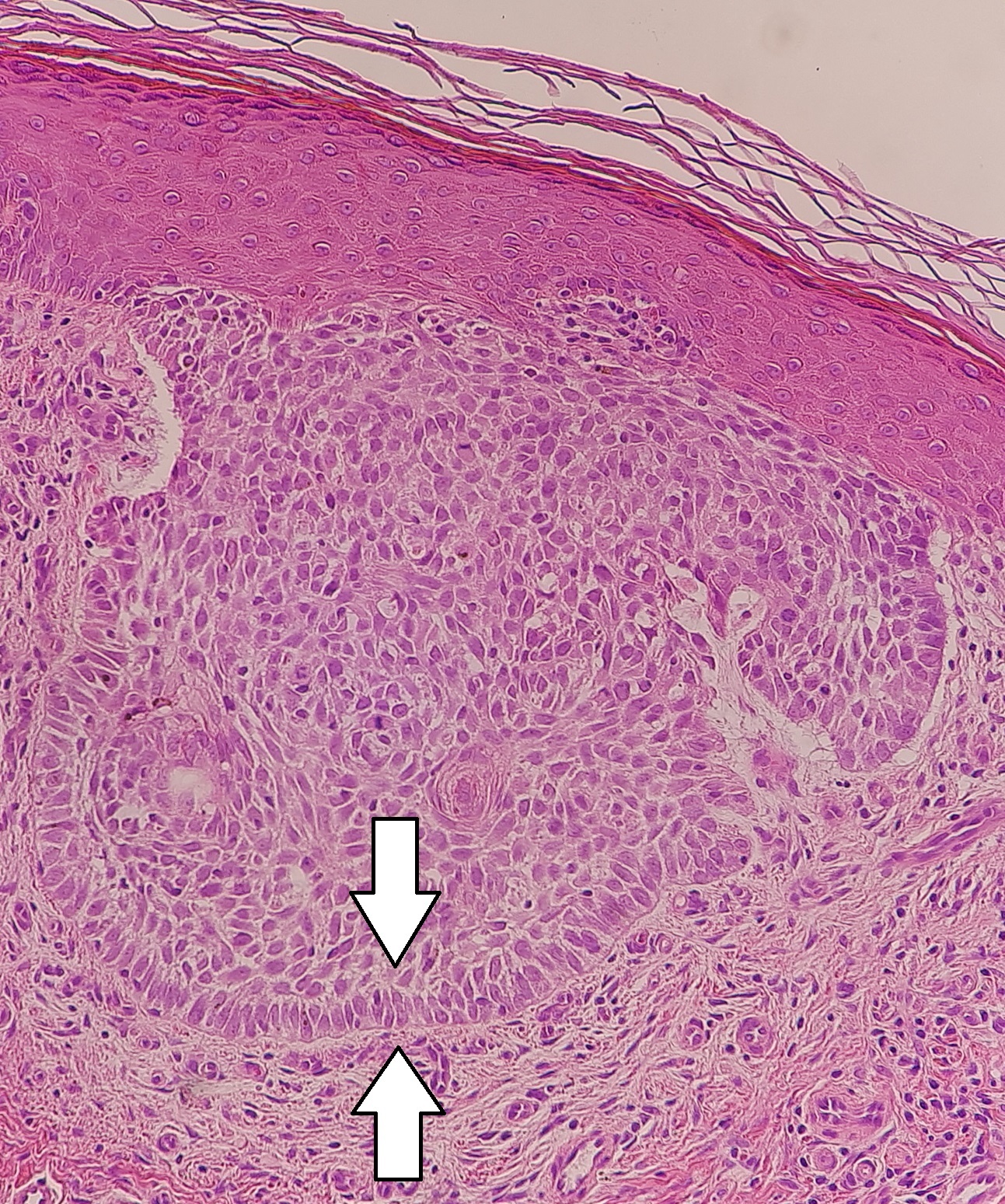
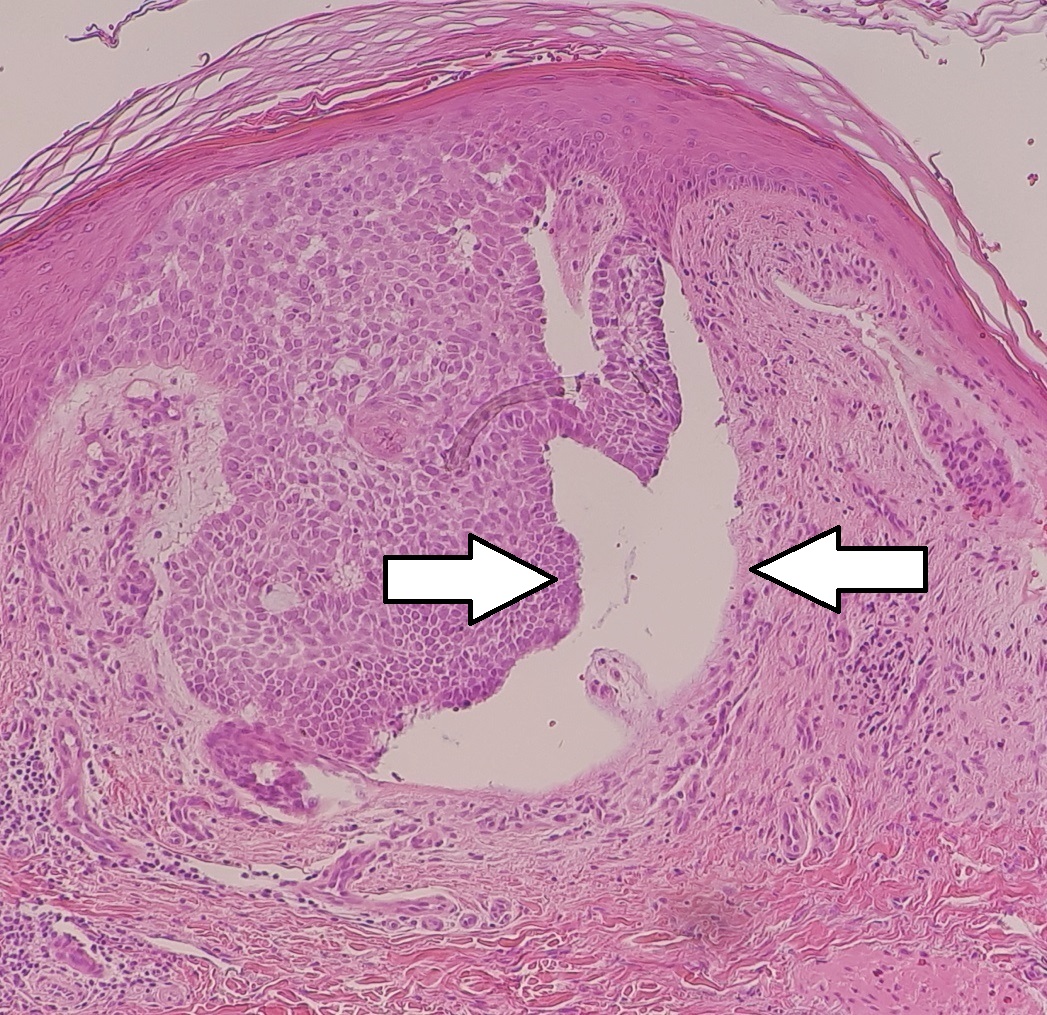
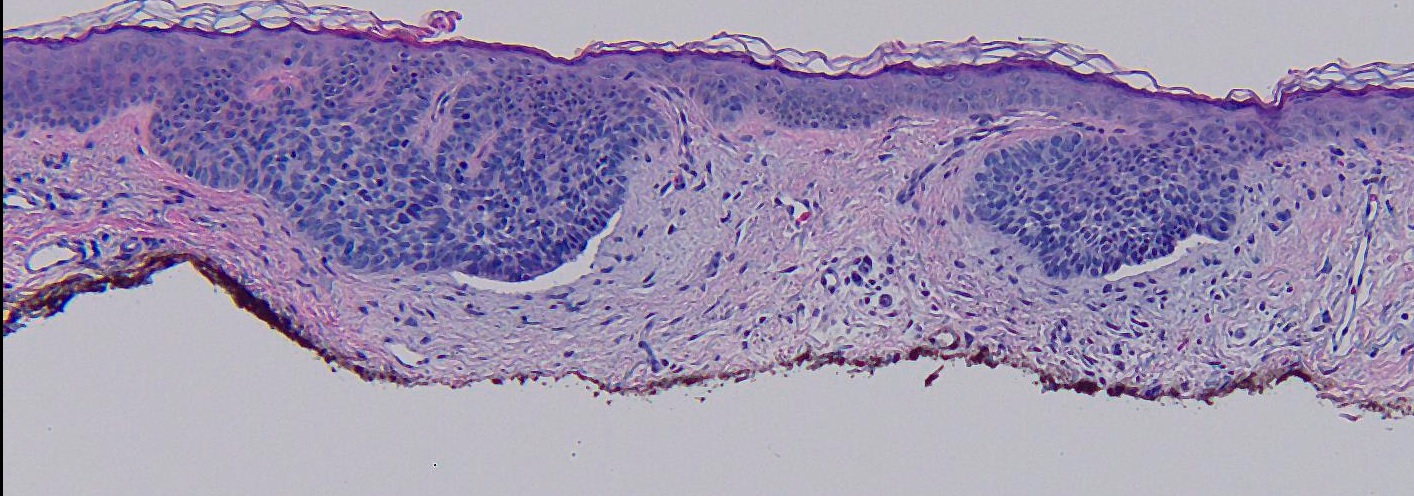
    • Islas de células tumorales con disposición en EN Erythema nodosum is an immune-mediated panniculitis (inflammation of the subcutaneous fat) caused by a type IV (delayed-type) hypersensitivity reaction. It commonly manifests in young women as tender, erythematous nodules on the shins. Erythema Nodosum empalizada periférica
    • Apoptosis Apoptosis A regulated cell death mechanism characterized by distinctive morphologic changes in the nucleus and cytoplasm, including the endonucleolytic cleavage of genomic DNA, at regularly spaced, internucleosomal sites, I.e., DNA fragmentation. It is genetically-programmed and serves as a balance to mitosis in regulating the size of animal tissues and in mediating pathologic processes associated with tumor growth. Ischemic Cell Damage celular
    • Actividad mitótica dispersa en EN Erythema nodosum is an immune-mediated panniculitis (inflammation of the subcutaneous fat) caused by a type IV (delayed-type) hypersensitivity reaction. It commonly manifests in young women as tender, erythematous nodules on the shins. Erythema Nodosum la dermis Dermis A layer of vascularized connective tissue underneath the epidermis. The surface of the dermis contains innervated papillae. Embedded in or beneath the dermis are sweat glands; hair follicles; and sebaceous glands. Skin: Structure and Functions
  • Tipos histológicos:
    • Carcinoma basocelular nodular
    • Carcinoma basocelular superficial
    • Carcinoma basocelular morfeiforme (esclerosante)
    • Otros tipos menos frecuentes:
      • Carcinoma de células basoescamosas
      • Carcinoma basocelular pigmentado
Características histológicas y presentación clínica de los LOS Neisseria principales tipos de carcinoma basocelular
Tipo Frecuencia Histología Presentación clínica
Carcinoma basocelular nodular 80%
  • Nidos de células basaloides en EN Erythema nodosum is an immune-mediated panniculitis (inflammation of the subcutaneous fat) caused by a type IV (delayed-type) hypersensitivity reaction. It commonly manifests in young women as tender, erythematous nodules on the shins. Erythema Nodosum la dermis Dermis A layer of vascularized connective tissue underneath the epidermis. The surface of the dermis contains innervated papillae. Embedded in or beneath the dermis are sweat glands; hair follicles; and sebaceous glands. Skin: Structure and Functions
  • Queratinocitos malignos en EN Erythema nodosum is an immune-mediated panniculitis (inflammation of the subcutaneous fat) caused by a type IV (delayed-type) hypersensitivity reaction. It commonly manifests in young women as tender, erythematous nodules on the shins. Erythema Nodosum empalizada en EN Erythema nodosum is an immune-mediated panniculitis (inflammation of the subcutaneous fat) caused by a type IV (delayed-type) hypersensitivity reaction. It commonly manifests in young women as tender, erythematous nodules on the shins. Erythema Nodosum la periferia
  • Aparición de “hendiduras” entre el estroma tumoral y la dermis Dermis A layer of vascularized connective tissue underneath the epidermis. The surface of the dermis contains innervated papillae. Embedded in or beneath the dermis are sweat glands; hair follicles; and sebaceous glands. Skin: Structure and Functions
    • Más común en EN Erythema nodosum is an immune-mediated panniculitis (inflammation of the subcutaneous fat) caused by a type IV (delayed-type) hypersensitivity reaction. It commonly manifests in young women as tender, erythematous nodules on the shins. Erythema Nodosum la cara
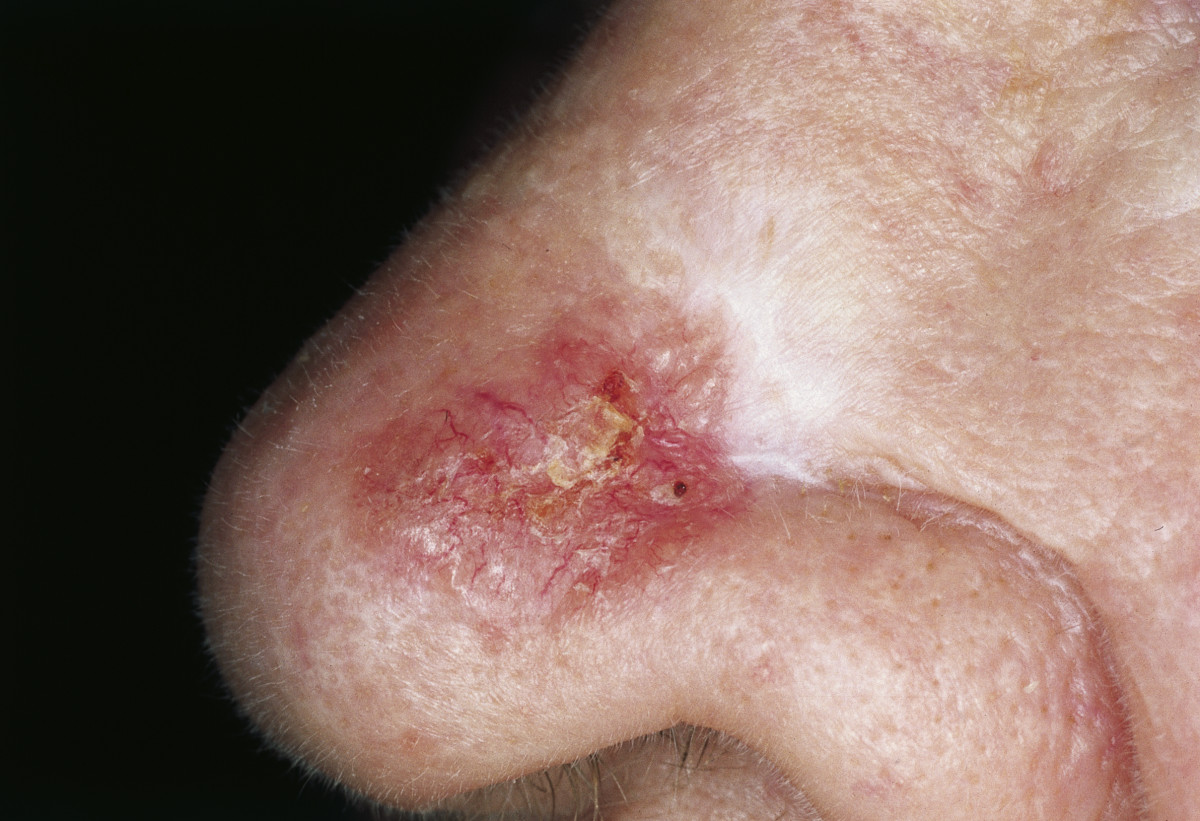
    • Pápula rosada o color piel
    • Perlado, translúcido
    • Borde enrollado (más elevado que el medio)
    • Vasos telangiectásicos
    • “Ulcus rodens”: carcinoma basocelular nodular ulcerado
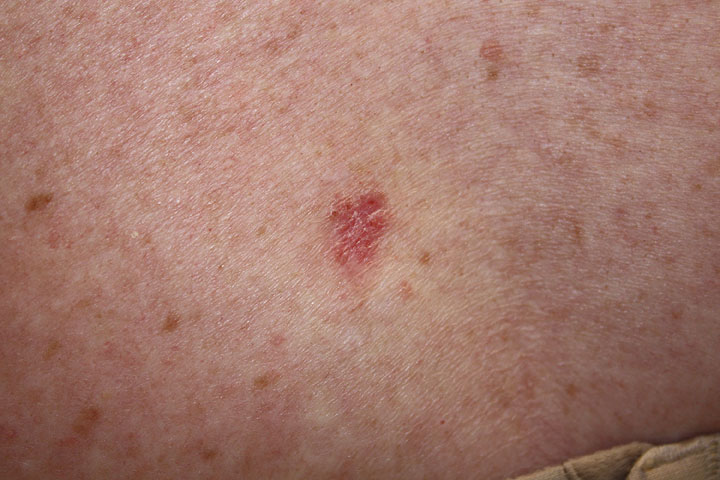
      Carcinoma basocelular superficial 15% Tumores basaloides atípicos surgen como yemas de la epidermis Epidermis The external, nonvascular layer of the skin. It is made up, from within outward, of five layers of epithelium: (1) basal layer (stratum basale epidermidis); (2) spinous layer (stratum spinosum epidermidis); (3) granular layer (stratum granulosum epidermidis); (4) clear layer (stratum lucidum epidermidis); and (5) horny layer (stratum corneum epidermidis). Skin: Structure and Functions.
      • Mayor incidencia en EN Erythema nodosum is an immune-mediated panniculitis (inflammation of the subcutaneous fat) caused by a type IV (delayed-type) hypersensitivity reaction. It commonly manifests in young women as tender, erythematous nodules on the shins. Erythema Nodosum varones
      • Más común en EN Erythema nodosum is an immune-mediated panniculitis (inflammation of the subcutaneous fat) caused by a type IV (delayed-type) hypersensitivity reaction. It commonly manifests in young women as tender, erythematous nodules on the shins. Erythema Nodosum el tronco.
      • Mácula escamosa, parche o placa
      • Rosado o eritematoso
      • El centro puede parecer atrófico
      • Pigmento oscuro disperso (puede parecerse a un melanoma Melanoma Melanoma is a malignant tumor arising from melanocytes, the melanin-producing cells of the epidermis. These tumors are most common in fair-skinned individuals with a history of excessive sun exposure and sunburns. Melanoma)
      • +/– Telangiectasias Telangiectasias Ataxia-telangiectasia
        Carcinoma basocelular morfeiforme 5%–10%
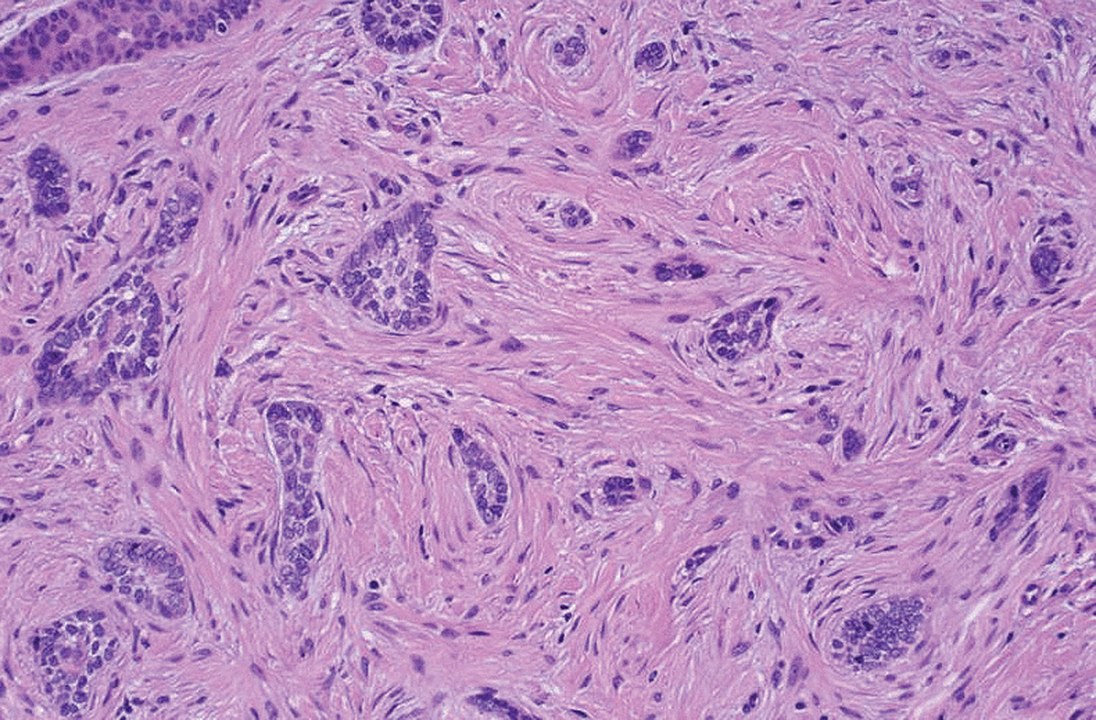
        • Cordones delgados de células basaloides que penetran en EN Erythema nodosum is an immune-mediated panniculitis (inflammation of the subcutaneous fat) caused by a type IV (delayed-type) hypersensitivity reaction. It commonly manifests in young women as tender, erythematous nodules on the shins. Erythema Nodosum el colágeno circundante
        • El colágeno puede aparecer esclerótico, semejando una cicatriz.
          • Pápula o placa lisa
          • Rosa claro o color piel
          • Firme, indurado
          • Borde mal definido

            Diagnóstico y Estadificación

            Diagnóstico

            Antecedentes:

            • Antecedentes familiares de enfermedades genéticas
            • Antecedentes personales de cánceres de piel previos
            • Antecedentes de exposición solar excesiva
            • VIH positivo u otras formas de compromiso inmunológico

            Examen físico:

            • Se debe realizar un examen minucioso de la piel.
            • Evaluar si hay linfadenopatías palpables.

            Dermatoscopia:

            • Vasos arborizantes
            • Nidos ovoides azul grisáceo
            • Ulceración
            • Ausencia de red de pigmento (a diferencia de las lesiones melanocíticas)

            Biopsia:

            • Establece el diagnóstico definitivo
            • Se puede utilizar la técnica de afeitado, sacabocados o escisional.

            Estadificación

            • Las metástasis del carcinoma basocelular son raras y, por lo tanto, generalmente no se estadifica.
            • A menudo, el cáncer es tratado antes de que se propague.
            • Sitios de metástasis:
              • Ganglios linfáticos regionales
              • Pulmones
              • Huesos
              • Hígado
              • Piel
            • Imagenología: TC o RM usadas para la evaluación de metástasis
            • La estadificación es similar a la del carcinoma cutáneo de células escamosas, pero solo se aplica a las lesiones de cabeza y cuello (American Joint Committee on Cancer, 8va edición).
            • Estadios:
              • Estadio 0: el tumor Tumor Inflammation involucra solo la epidermis Epidermis The external, nonvascular layer of the skin. It is made up, from within outward, of five layers of epithelium: (1) basal layer (stratum basale epidermidis); (2) spinous layer (stratum spinosum epidermidis); (3) granular layer (stratum granulosum epidermidis); (4) clear layer (stratum lucidum epidermidis); and (5) horny layer (stratum corneum epidermidis). Skin: Structure and Functions (in situ)
              • Estadio I:
              • Estadio II:
              • Estadio III:
                • Tumor Tumor Inflammation > 4 cm o tumor Tumor Inflammation de cualquier tamaño con invasión profunda, perineural o del hueso mínima y/o diseminación a 1 ganglio linfático ipsilateral (sin extensión extraganglionar)
                • Sin propagación a otros órganos.

            Tratamiento y Pronóstico

            Abordaje terapéutico

            Evaluar el riesgo de recurrencia:

            • Ayuda a determinar el tratamiento de elección.
            • El tratamiento inadecuado de las lesiones de alto riesgo puede provocar recurrencia y complicaciones (e.g., deformidades).
            • Características de alto riesgo:
              • Localización: cara, orejas, manos y pies.
              • Tamaño:
                • ≥ 10 mm MM Multiple myeloma (MM) is a malignant condition of plasma cells (activated B lymphocytes) primarily seen in the elderly. Monoclonal proliferation of plasma cells results in cytokine-driven osteoclastic activity and excessive secretion of IgG antibodies. Multiple Myeloma en EN Erythema nodosum is an immune-mediated panniculitis (inflammation of the subcutaneous fat) caused by a type IV (delayed-type) hypersensitivity reaction. It commonly manifests in young women as tender, erythematous nodules on the shins. Erythema Nodosum cabeza, cuello y pretibial
                • ≥ 20 mm MM Multiple myeloma (MM) is a malignant condition of plasma cells (activated B lymphocytes) primarily seen in the elderly. Monoclonal proliferation of plasma cells results in cytokine-driven osteoclastic activity and excessive secretion of IgG antibodies. Multiple Myeloma en EN Erythema nodosum is an immune-mediated panniculitis (inflammation of the subcutaneous fat) caused by a type IV (delayed-type) hypersensitivity reaction. It commonly manifests in young women as tender, erythematous nodules on the shins. Erythema Nodosum otras áreas
              • Variantes agresivas: morfeiforme, basoescamosa, micronodular
              • Lesiones recurrentes
              • Invasión perineural
              • Bordes mal definidos
              • Carcinomas basocelulares en EN Erythema nodosum is an immune-mediated panniculitis (inflammation of the subcutaneous fat) caused by a type IV (delayed-type) hypersensitivity reaction. It commonly manifests in young women as tender, erythematous nodules on the shins. Erythema Nodosum sitios de radiación previa
              • Paciente inmunocomprometido

            Cirugía:

            • Escisión quirúrgica estándar:
              • Tratamiento de 1ra línea para las lesiones de bajo riesgo
              • Márgenes: 4–5 mm MM Multiple myeloma (MM) is a malignant condition of plasma cells (activated B lymphocytes) primarily seen in the elderly. Monoclonal proliferation of plasma cells results in cytokine-driven osteoclastic activity and excessive secretion of IgG antibodies. Multiple Myeloma
            • Cirugía micrográfica de Mohs:
              • Tratamiento 1ra línea para lesiones de alto riesgo
              • Para lesiones faciales/áreas cosméticamente sensibles (menor resección de tejido normal)

            Terapias alternativas:

            • Opciones para pacientes que no son buenos candidatos para la cirugía o que prefieren no someterse a la cirugía:
              • Quimioterapia tópica (e.g., imiquimod Imiquimod A topically-applied aminoquinoline immune modulator that induces interferon production. It is used in the treatment of external genital and perianal warts, superficial carcinoma, basal cell; and actinic keratosis. Hypertrophic and Keloid Scars o fluorouracilo):
                • Localizaciones de bajo riesgo
                • Tratamiento por 6 semanas
                • La irritación de la piel es un efecto secundario.
              • Electrodesecación y curetaje:
                • Puede usarse para carcinomas basocelulares pequeños de bajo riesgo
                • Riesgo de extirpación incompleta del tumor Tumor Inflammation
              • Criocirugía:
                • No realizar en EN Erythema nodosum is an immune-mediated panniculitis (inflammation of the subcutaneous fat) caused by a type IV (delayed-type) hypersensitivity reaction. It commonly manifests in young women as tender, erythematous nodules on the shins. Erythema Nodosum lesiones de alto riesgo
                • Puede resultar en EN Erythema nodosum is an immune-mediated panniculitis (inflammation of the subcutaneous fat) caused by a type IV (delayed-type) hypersensitivity reaction. It commonly manifests in young women as tender, erythematous nodules on the shins. Erythema Nodosum cicatrices e hipopigmentación.
              • Radioterapia: para lesiones de alto riesgo en EN Erythema nodosum is an immune-mediated panniculitis (inflammation of the subcutaneous fat) caused by a type IV (delayed-type) hypersensitivity reaction. It commonly manifests in young women as tender, erythematous nodules on the shins. Erythema Nodosum quienes no son candidatos a la cirugía

            Terapia para enfermedad avanzada:

            • Para metástasis o carcinoma basocelular localmente avanzado que no es susceptible de radioterapia o cirugía
            • Inhibidor de la vía hedgehog: vismodegib Vismodegib Basal Cell Carcinoma (BCC), sonidegib

            Pronóstico

            • El pronóstico general es excelente.
            • Potencial metastásico: 0,05%–0,1%.
            • Mortalidad de casos basada en EN Erythema nodosum is an immune-mediated panniculitis (inflammation of the subcutaneous fat) caused by a type IV (delayed-type) hypersensitivity reaction. It commonly manifests in young women as tender, erythematous nodules on the shins. Erythema Nodosum la población: 0,05%.

            Diagnóstico Diferencial

            • Carcinoma de células escamosas: segundo cáncer de piel más común: el carcinoma de células escamosas generalmente se presenta como una placa o pápula firme, eritematosa y queratósica. El diagnóstico es a través de la biopsia. El examen histopatológico confirma el diagnóstico al mostrar hallazgos como queratinocitos atípicos que se infiltran en la dermis.
            • Dermatofibroma: un crecimiento mesenquimatoso común de la piel donde los fibroblastos de la piel son los constituyentes principales: el dermatofibroma generalmente se presenta como un nódulo móvil, firme e indurado que mide alrededor de 0,5 a 1 cm. Tras la compresión lateral, aparece una depresión similar a un hoyuelo en la piel suprayacente (signo del “ojal”).
            • Melanoma Melanoma Melanoma is a malignant tumor arising from melanocytes, the melanin-producing cells of the epidermis. These tumors are most common in fair-skinned individuals with a history of excessive sun exposure and sunburns. Melanoma: malignidad de la piel que surge de los LOS Neisseria melanocitos: el melanoma Melanoma Melanoma is a malignant tumor arising from melanocytes, the melanin-producing cells of the epidermis. These tumors are most common in fair-skinned individuals with a history of excessive sun exposure and sunburns. Melanoma se presenta como lesiones pigmentadas irregulares y puede parecerse a variantes pigmentadas del carcinoma basocelular. El diagnóstico se confirma mediante biopsia. Esta condición conlleva un pronóstico significativamente peor que el carcinoma basocelular.
            • Queratosis actínica: lesión queratinocítica benigna considerada precursora del carcinoma de células escamosas: Las queratosis actínicas se presentan como máculas eritematosas escamosas. El diagnóstico se establece mediante biopsia.
            • Afecciones inflamatorias de la piel: la psoriasis Psoriasis Psoriasis is a common T-cell-mediated inflammatory skin condition. The etiology is unknown, but is thought to be due to genetic inheritance and environmental triggers. There are 4 major subtypes, with the most common form being chronic plaque psoriasis. Psoriasis y el eccema pueden presentarse con pápulas y placas eritematosas y clínicamente parecer un carcinoma basocelular superficial. El diagnóstico se realiza con un examen físico completo, dermatoscopia y biopsia.

            Referencias

            1. Aasi SZ. (2020). Treatment and prognosis of basal cell carcinoma at low risk of recurrence. Retrieved January 19, 2021, from https://www.uptodate.com/contents/treatment-and-prognosis-of-basal-cell-carcinoma-at-low-risk-of-recurrence
            2. Aasi SZ. (2020). Treatment of basal cell carcinomas at high risk for recurrence. Retrieved January 19, 2021, from https://www.uptodate.com/contents/treatment-of-basal-cell-carcinomas-at-high-risk-for-recurrence
            3. Bader R. (2020). Basal cell carcinoma. Medscape. Retrieved February 3, 2021, from https://emedicine.medscape.com/article/276624-overview
            4. Curti BD, Leachman S, Urba WJ. (2018). Cancer of the skin. Jameson J., et al. (Eds.). Harrison’s Principles of Internal Medicine, 20th ed. McGraw-Hill.
            5. Lazar A. (2020). The skin. In Kumar V, et al. (Eds.). Pathologic Basis of Disease (10th ed.). Elsevier.
            6.  Wu PA. (2019). Epidemiology, pathogenesis, and clinical features of basal cell carcinoma. Retrieved January 19, 2021, from https://www.uptodate.com/contents/epidemiology-pathogenesis-and-clinical-features-of-basal-cell-carcinomaoma

            ¡Crea tu cuenta gratis o inicia una sesión para seguir leyendo!

            Regístrate ahora y obtén acceso gratuito a Lecturio con páginas de concepto, videos médicos y cuestionarios para tu educación médica.

            User Reviews

            Que tengas una sesión de estudio alegre y navideña 🎁 Ahorra 50% en todos los planes >>

            Details