Domina Conceptos Médicos

Estudia para la escuela de medicina y tus examenes con Lecturio.

Arterias: Histología

Las arterias son colecciones tubulares de células que transportan sangre oxigenada y nutrientes desde el corazón a los LOS Neisseria tejidos del cuerpo. La sangre pasa a través de las arterias en EN Erythema nodosum is an immune-mediated panniculitis (inflammation of the subcutaneous fat) caused by a type IV (delayed-type) hypersensitivity reaction. It commonly manifests in young women as tender, erythematous nodules on the shins. Erythema Nodosum orden decreciente de diámetro luminal, comenzando en EN Erythema nodosum is an immune-mediated panniculitis (inflammation of the subcutaneous fat) caused by a type IV (delayed-type) hypersensitivity reaction. It commonly manifests in young women as tender, erythematous nodules on the shins. Erythema Nodosum la arteria más grande (la aorta Aorta The main trunk of the systemic arteries. Mediastinum and Great Vessels: Anatomy) y terminando en EN Erythema nodosum is an immune-mediated panniculitis (inflammation of the subcutaneous fat) caused by a type IV (delayed-type) hypersensitivity reaction. It commonly manifests in young women as tender, erythematous nodules on the shins. Erythema Nodosum las arteriolas pequeñas. Las arterias se clasifican en EN Erythema nodosum is an immune-mediated panniculitis (inflammation of the subcutaneous fat) caused by a type IV (delayed-type) hypersensitivity reaction. It commonly manifests in young women as tender, erythematous nodules on the shins. Erythema Nodosum 3 tipos: arterias elásticas grandes, arterias musculares medianas y arterias y arteriolas pequeñas. Cada uno de estos tipos de arterias contiene 3 capas primarias: la túnica íntima, la túnica media y la túnica adventicia. En EN Erythema nodosum is an immune-mediated panniculitis (inflammation of the subcutaneous fat) caused by a type IV (delayed-type) hypersensitivity reaction. It commonly manifests in young women as tender, erythematous nodules on the shins. Erythema Nodosum particular, la túnica media contiene células musculares lisas (que permiten la vasoconstricción) y, en EN Erythema nodosum is an immune-mediated panniculitis (inflammation of the subcutaneous fat) caused by a type IV (delayed-type) hypersensitivity reaction. It commonly manifests in young women as tender, erythematous nodules on the shins. Erythema Nodosum los LOS Neisseria vasos más grandes, una cantidad significativa de elastina (que permite que estos vasos se estiren y retrocedan en EN Erythema nodosum is an immune-mediated panniculitis (inflammation of the subcutaneous fat) caused by a type IV (delayed-type) hypersensitivity reaction. It commonly manifests in young women as tender, erythematous nodules on the shins. Erythema Nodosum respuesta a los LOS Neisseria cambios de presión durante la sístole y la diástole).

Last updated: Dec 15, 2025

Editorial responsibility: Stanley Oiseth, Lindsay Jones, Evelin Maza

Descripción General

Definición

Las arterias son colecciones tubulares de células que transportan sangre oxigenada y nutrientes desde el corazón a los LOS Neisseria tejidos del cuerpo.

Características generales

Todas las arterias tienen las siguientes características:

  • Paredes más gruesas con lúmenes más pequeños que las venas
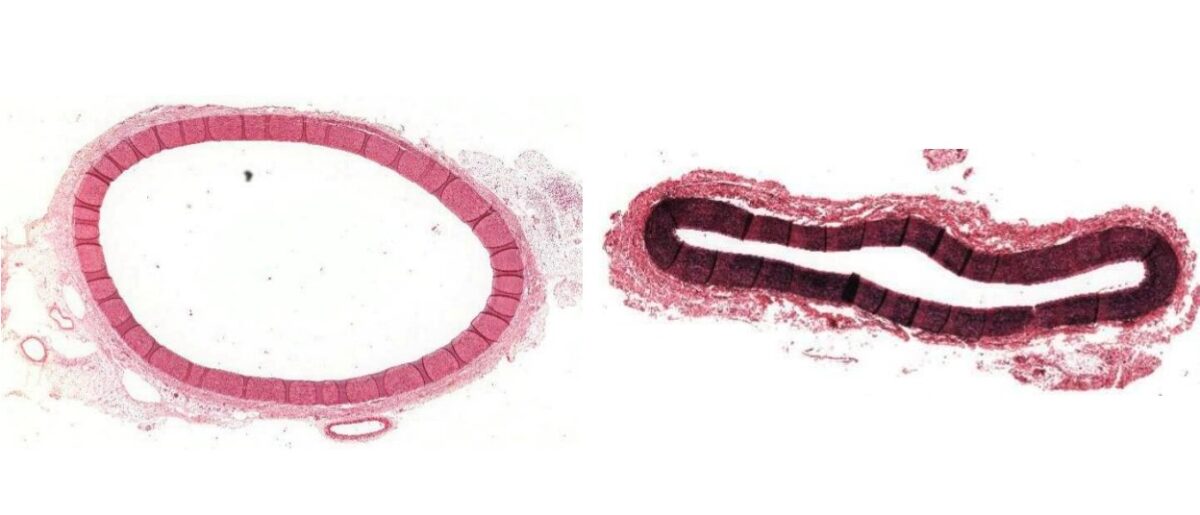
  • Apariencia redonda en EN Erythema nodosum is an immune-mediated panniculitis (inflammation of the subcutaneous fat) caused by a type IV (delayed-type) hypersensitivity reaction. It commonly manifests in young women as tender, erythematous nodules on the shins. Erythema Nodosum la histología
  • Son vasos de resistencia:
    • Crean la mayor parte de la resistencia en EN Erythema nodosum is an immune-mediated panniculitis (inflammation of the subcutaneous fat) caused by a type IV (delayed-type) hypersensitivity reaction. It commonly manifests in young women as tender, erythematous nodules on the shins. Erythema Nodosum la circulación
    • Sistema de alta presión
    • Pueden regular Regular Insulin la resistencia vascular y la velocidad del flujo sanguíneo al AL Amyloidosis contraer o relajar el músculo liso dentro de sus paredes
  • Vasos para el transporte del flujo sanguíneo: La sangre pasa a través de las arterias en EN Erythema nodosum is an immune-mediated panniculitis (inflammation of the subcutaneous fat) caused by a type IV (delayed-type) hypersensitivity reaction. It commonly manifests in young women as tender, erythematous nodules on the shins. Erythema Nodosum orden decreciente de diámetro luminal, comenzando en EN Erythema nodosum is an immune-mediated panniculitis (inflammation of the subcutaneous fat) caused by a type IV (delayed-type) hypersensitivity reaction. It commonly manifests in young women as tender, erythematous nodules on the shins. Erythema Nodosum la arteria más grande (la aorta Aorta The main trunk of the systemic arteries. Mediastinum and Great Vessels: Anatomy) y terminando en EN Erythema nodosum is an immune-mediated panniculitis (inflammation of the subcutaneous fat) caused by a type IV (delayed-type) hypersensitivity reaction. It commonly manifests in young women as tender, erythematous nodules on the shins. Erythema Nodosum las más pequeñas (las arteriolas) antes de ingresar a los LOS Neisseria lechos capilares.

Capas de la Pared del Vaso

Todas las arterias tienen la misma estructura básica y están formadas por tres capas principales: la túnica íntima, la túnica media y la túnica adventicia (también conocida como túnica externa).
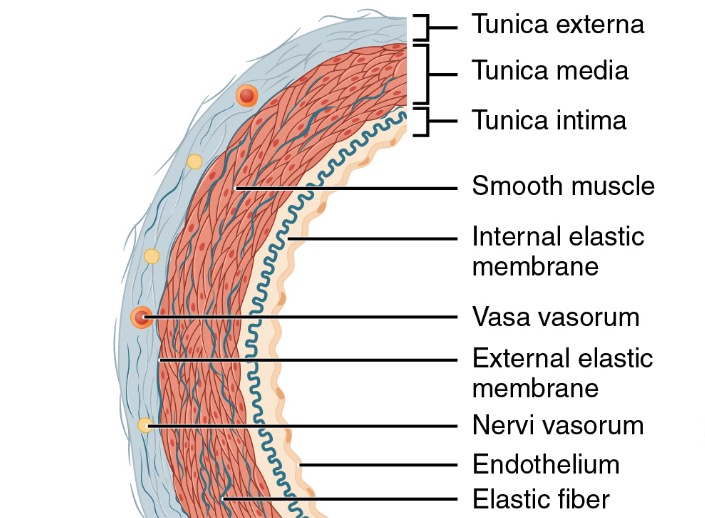
Estructura de una pared arterial

Estructura de una pared arterial

Imagen: “Structure of an artery wall” por Phil Schatz. Licencia: CC BY 4.0
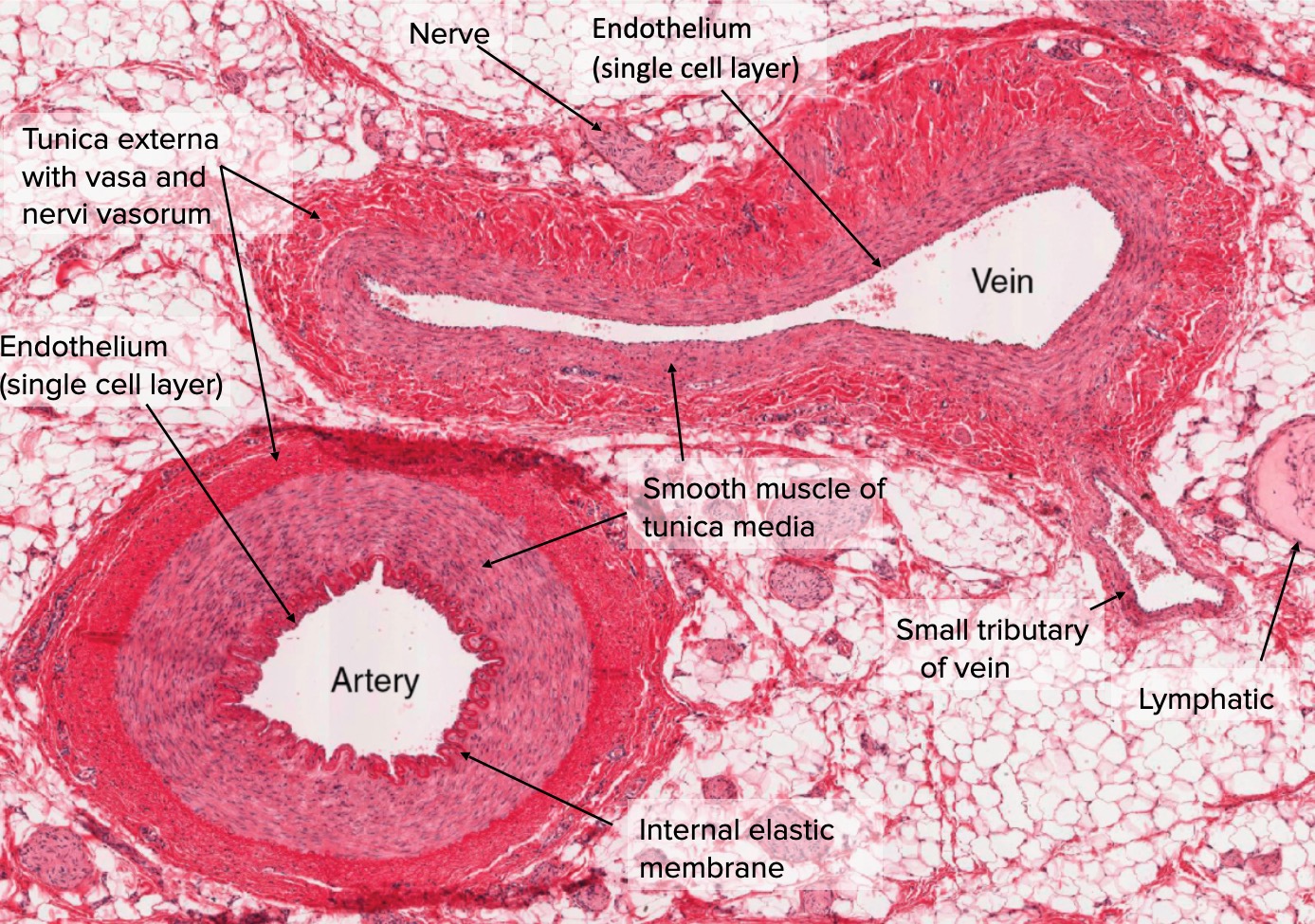
Sección transversal de arteria y vena

Sección transversal de arteria y vena

Imagen: “Types of Arteries and Arterioles” por Phil Schatz. Licencia: CC BY 4.0, editado por Lecturio.

Túnica íntima

  • Compuesta por:
    • Una sola capa de células endoteliales (células epiteliales escamosas simples)
    • Pequeñas cantidades de tejido conectivo fibroso
  • Funciones:
    • Actúa como una barrera selectivamente permeable
    • Secreta sustancias vasoactivas
    • Cuando está intacta, proporciona un revestimiento uniforme al AL Amyloidosis vaso sanguíneo, evitando la agregación de plaquetas y/o eritrocitos
  • El endotelio aparece ondulado debido a la constricción del músculo liso.
  • Irrigada por difusión directa desde el lumen
  • En EN Erythema nodosum is an immune-mediated panniculitis (inflammation of the subcutaneous fat) caused by a type IV (delayed-type) hypersensitivity reaction. It commonly manifests in young women as tender, erythematous nodules on the shins. Erythema Nodosum capilares: Esta es la única capa presente en EN Erythema nodosum is an immune-mediated panniculitis (inflammation of the subcutaneous fat) caused by a type IV (delayed-type) hypersensitivity reaction. It commonly manifests in young women as tender, erythematous nodules on the shins. Erythema Nodosum la pared del vaso.
  • En EN Erythema nodosum is an immune-mediated panniculitis (inflammation of the subcutaneous fat) caused by a type IV (delayed-type) hypersensitivity reaction. It commonly manifests in young women as tender, erythematous nodules on the shins. Erythema Nodosum vasos más grandes: Hay una membrana elástica interna separando la túnica íntima de la túnica media.

Túnica media

  • Compuesta por:
    • Músculo liso
    • Fibras elásticas (e.g., elastina)
    • Colágeno
  • Funciones:
    • El músculo liso permite que los LOS Neisseria vasos ajusten el flujo sanguíneo a través de la vasoconstricción y la vasodilatación.
    • La elastina en EN Erythema nodosum is an immune-mediated panniculitis (inflammation of the subcutaneous fat) caused by a type IV (delayed-type) hypersensitivity reaction. It commonly manifests in young women as tender, erythematous nodules on the shins. Erythema Nodosum vasos más grandes permite que el vaso retroceda.
    • El colágeno proporciona fuerza y estructura.
  • Generalmente, es la capa más gruesa (puede variar en EN Erythema nodosum is an immune-mediated panniculitis (inflammation of the subcutaneous fat) caused by a type IV (delayed-type) hypersensitivity reaction. It commonly manifests in young women as tender, erythematous nodules on the shins. Erythema Nodosum tamaño)
  • En EN Erythema nodosum is an immune-mediated panniculitis (inflammation of the subcutaneous fat) caused by a type IV (delayed-type) hypersensitivity reaction. It commonly manifests in young women as tender, erythematous nodules on the shins. Erythema Nodosum vasos más grandes: Hay una membrana elástica externa separando la túnica media de la túnica adventicia.

Túnica adventicia

  • También llamada túnica externa
  • Formada por tejido conectivo:
    • Fibras colágenas y elásticas
    • Se fusiona con el tejido conectivo que rodea los LOS Neisseria vasos, nervios y órganos vecinos
  • Funciones:
    • Fortalece la pared del vaso
    • Ancla el vaso
  • Inervada por pequeños nervios conocidos como nervi vasorum Nervi vasorum Arteries: Histology
  • Irrigada por pequeños vasos conocidos como vasa vasorum Vasa vasorum Nutrient blood vessels which supply the walls of large arteries or veins. Arteries: Histology

Tipos de Arterias

Hay 3 tipos principales de arterias, según su tamaño, función y composición general (conocida como diferenciación segmentaria). Las arterias generalmente existen en EN Erythema nodosum is an immune-mediated panniculitis (inflammation of the subcutaneous fat) caused by a type IV (delayed-type) hypersensitivity reaction. It commonly manifests in young women as tender, erythematous nodules on the shins. Erythema Nodosum un continuo, con cambios graduales en EN Erythema nodosum is an immune-mediated panniculitis (inflammation of the subcutaneous fat) caused by a type IV (delayed-type) hypersensitivity reaction. It commonly manifests in young women as tender, erythematous nodules on the shins. Erythema Nodosum la morfología de los LOS Neisseria vasos que descienden por el árbol arterial.

Los LOS Neisseria 3 tipos principales de arterias son:
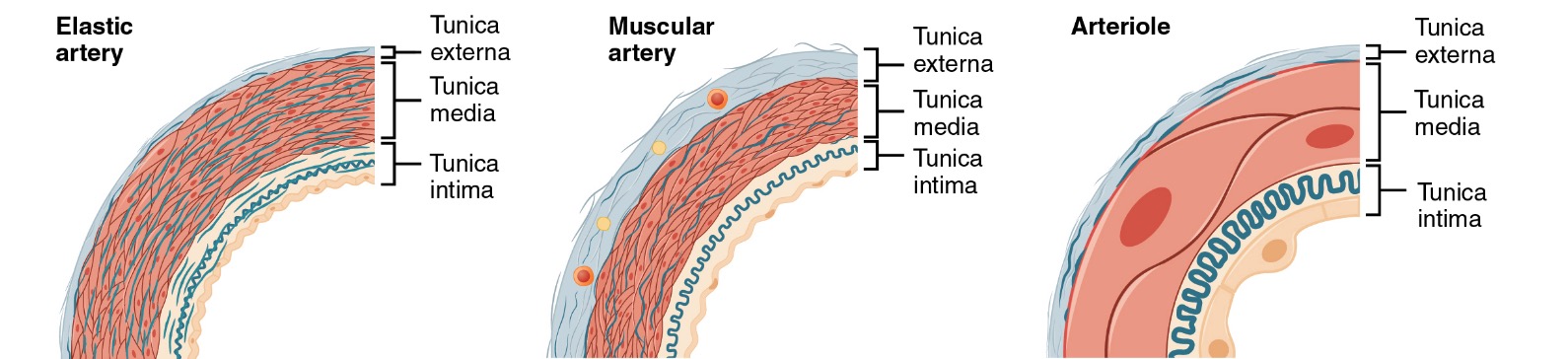
  • Grandes arterias elásticas (también conocidas como arterias conductoras)
  • Arterias musculares medianas (también conocidas como arterias distribuidoras)
  • Pequeñas arterias y arteriolas
Tipos de arterias y arteriolas

3 tipos principales de arterias

Imagen: “Types of Arteries and Arterioles” por Phil Schatz. Licencia: CC BY 4.0
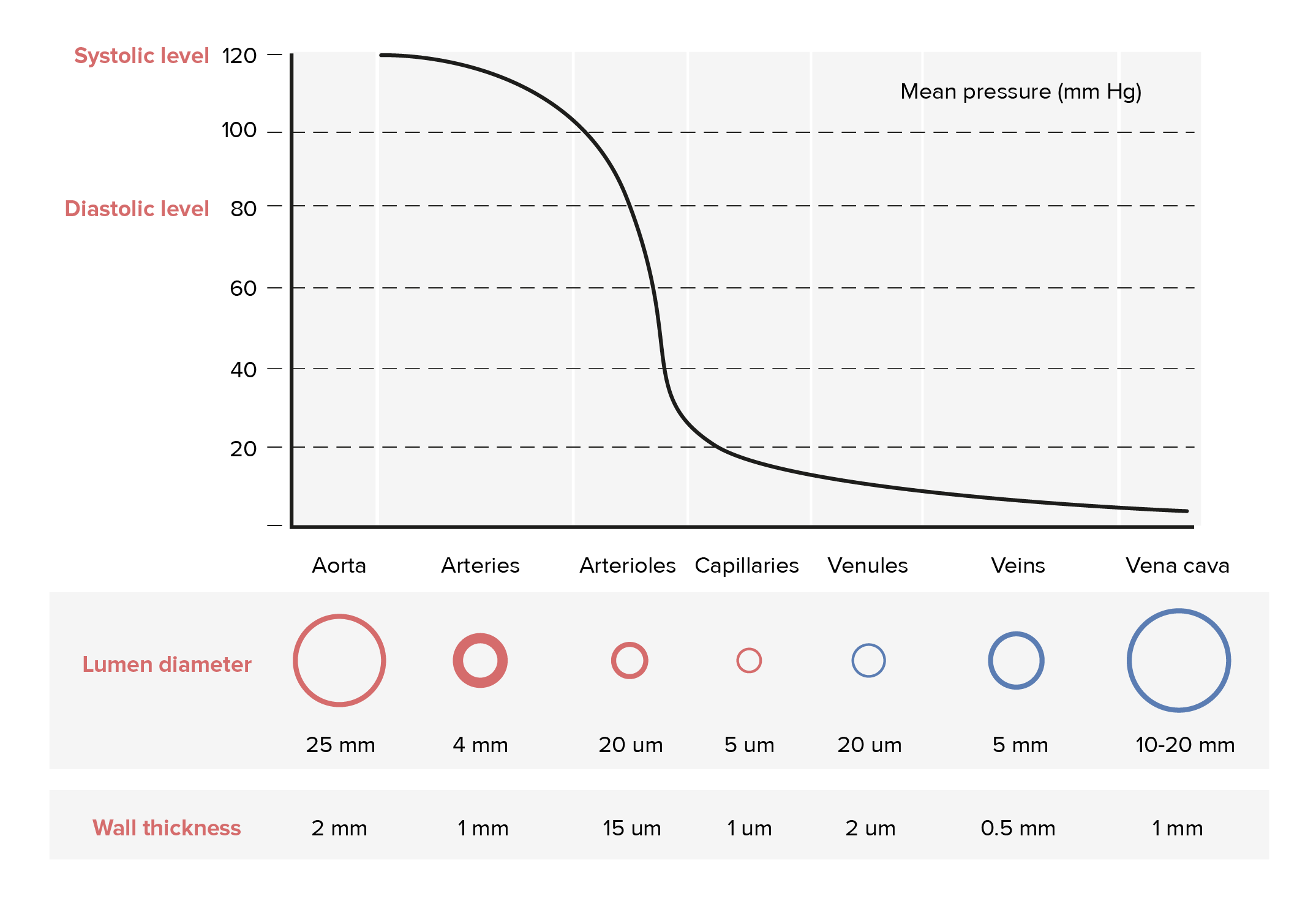
Arteries
Presiones intraluminales de diferentes vasos.
Imagen por Lecturio.

Arterias grandes/elásticas

Este grupo incluye las arterias más grandes del cuerpo; todas las arterias grandes/elásticas están cerca del corazón. La aorta Aorta The main trunk of the systemic arteries. Mediastinum and Great Vessels: Anatomy es la arteria más grande del cuerpo.

Las arterias grandes/elásticas incluyen:

  • Aorta Aorta The main trunk of the systemic arteries. Mediastinum and Great Vessels: Anatomy
  • Tronco y arterias pulmonares
  • Tronco braquiocefálico
  • Arterias carótidas comunes
  • Arterias subclavias
  • Arterias ilíacas comunes

Características:

  • Grandes lúmenes
  • La túnica íntima incluye una capa subendotelial que contiene músculo liso adicional.
  • Muchas redes de fibras elásticas dentro de la túnica media
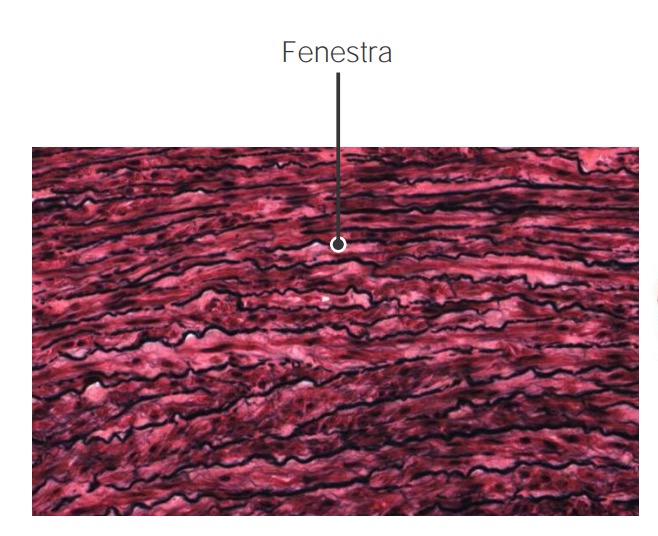
    • Las fibras elásticas tienen fenestraciones:
      • Pequeños espacios, o “ventanas”, dentro de las fibras elásticas
      • Permiten la difusión de nutrientes por toda la pared
    • Las fibras elásticas son el tipo de tejido dominante dentro de la túnica media de la aorta Aorta The main trunk of the systemic arteries. Mediastinum and Great Vessels: Anatomy.
    • Permiten que estos vasos retrocedan
  • Retroceso: los LOS Neisseria vasos pueden estirarse y volver a su forma original después de recibir el volumen de sangre expulsado por el ventrículo izquierdo durante la sístole.
  • Efectos del estiramiento y el retroceso sobre la presión arterial:
    • Minimiza los LOS Neisseria cambios en EN Erythema nodosum is an immune-mediated panniculitis (inflammation of the subcutaneous fat) caused by a type IV (delayed-type) hypersensitivity reaction. It commonly manifests in young women as tender, erythematous nodules on the shins. Erythema Nodosum la presión arterial corriente abajo durante la sístole
    • Mantiene la presión arterial durante la diástole
  • Función de depósito:
    • Durante la sístole, las paredes de los LOS Neisseria vasos se estiran, lo que permite que la sangre que se expulsa durante la sístole se “almacene” momentáneamente.
    • Durante la diástole, las paredes del vaso retroceden y esta “fuerza de retracción” mueve la sangre almacenada hacia la periferia.

Arterias musculares medianas

  • Función principal: distribución de sangre a los LOS Neisseria órganos
  • También conocidas como arterias distribuidoras
  • La túnica media tiene un predominio de músculo liso:
    • Promedio de 25–40 capas de músculo liso (aproximadamente ¾ del grosor de la pared)
    • Gran capacidad de vasoconstricción y vasodilatación, lo que da como resultado una gran capacidad para regular Regular Insulin el flujo sanguíneo
  • Estas arterias están más distantes del corazón que las arterias grandes.
  • La mayoría de los LOS Neisseria vasos sanguíneos “con nombre”, que no son grandes, son arterias musculares medianas (e.g., arterias braquial, femoral y esplénica).

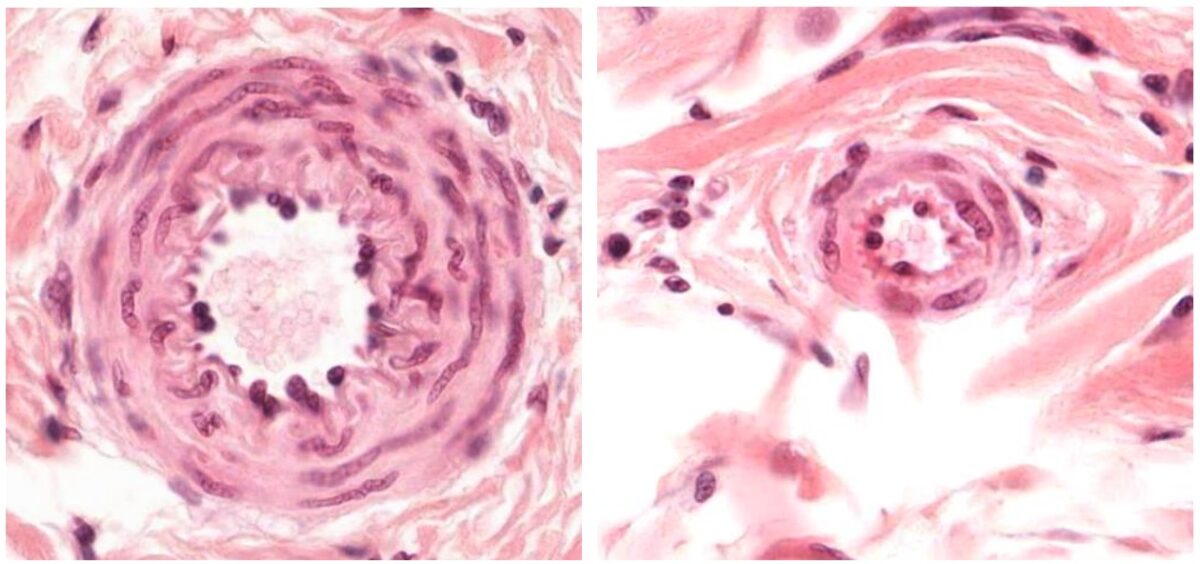
Pequeñas arterias y arteriolas

  • Estos vasos por lo general no se nombran.
  • La mayoría de estos vasos solo pueden observarse con aumento.
  • También conocidos como vasos de resistencia
  • Relativamente poco tejido elástico
  • La túnica media es gruesa en EN Erythema nodosum is an immune-mediated panniculitis (inflammation of the subcutaneous fat) caused by a type IV (delayed-type) hypersensitivity reaction. It commonly manifests in young women as tender, erythematous nodules on the shins. Erythema Nodosum proporción a su lumen en EN Erythema nodosum is an immune-mediated panniculitis (inflammation of the subcutaneous fat) caused by a type IV (delayed-type) hypersensitivity reaction. It commonly manifests in young women as tender, erythematous nodules on the shins. Erythema Nodosum relación con otros tipos de arterias.
  • Pequeñas arterias:
    • Tienen hasta 25 capas de músculo liso
    • Las pequeñas arterias se estrechan hacia la red capilar y se convierten en EN Erythema nodosum is an immune-mediated panniculitis (inflammation of the subcutaneous fat) caused by a type IV (delayed-type) hypersensitivity reaction. It commonly manifests in young women as tender, erythematous nodules on the shins. Erythema Nodosum arteriolas.
  • Arteriolas:
    • Últimos vasos antes de entrar en EN Erythema nodosum is an immune-mediated panniculitis (inflammation of the subcutaneous fat) caused by a type IV (delayed-type) hypersensitivity reaction. It commonly manifests in young women as tender, erythematous nodules on the shins. Erythema Nodosum los LOS Neisseria lechos capilares
    • Punto principal en EN Erythema nodosum is an immune-mediated panniculitis (inflammation of the subcutaneous fat) caused by a type IV (delayed-type) hypersensitivity reaction. It commonly manifests in young women as tender, erythematous nodules on the shins. Erythema Nodosum el que el cuerpo controla el flujo sanguíneo relativo a los LOS Neisseria lechos capilares de varios órganos
    • Solo 1–3 capas de músculo liso
  • Metarteriolas:
    • Vasos cortos que unen arteriolas y capilares
    • Tienen esfínteres precapilares: células de músculo liso individuales que rodean la entrada de un capilar y regulan el flujo de sangre a los LOS Neisseria lechos capilares

Relevancia Clínica

Vasculitis Vasculitis Inflammation of any one of the blood vessels, including the arteries; veins; and rest of the vasculature system in the body. Systemic Lupus Erythematosus

Las vasculitis Vasculitis Inflammation of any one of the blood vessels, including the arteries; veins; and rest of the vasculature system in the body. Systemic Lupus Erythematosus son un grupo de enfermedades autoinmunes caracterizadas por inflamación de los LOS Neisseria vasos sanguíneos mediada por el sistema inmunitario y daño de la pared. La pérdida de la integridad del vaso puede provocar hemorragia, así como isquemia y necrosis Necrosis The death of cells in an organ or tissue due to disease, injury or failure of the blood supply. Ischemic Cell Damage corriente abajo. Estos procesos pueden ser primarios o secundarios, y tienden a afectar solo vasos de un tipo específico o en EN Erythema nodosum is an immune-mediated panniculitis (inflammation of the subcutaneous fat) caused by a type IV (delayed-type) hypersensitivity reaction. It commonly manifests in young women as tender, erythematous nodules on the shins. Erythema Nodosum una ubicación específica.

Tabla: Clasificación de las vasculitis Vasculitis Inflammation of any one of the blood vessels, including the arteries; veins; and rest of the vasculature system in the body. Systemic Lupus Erythematosus
Tipo de vasculitis Vasculitis Inflammation of any one of the blood vessels, including the arteries; veins; and rest of the vasculature system in the body. Systemic Lupus Erythematosus Ejemplos de afecciones en EN Erythema nodosum is an immune-mediated panniculitis (inflammation of the subcutaneous fat) caused by a type IV (delayed-type) hypersensitivity reaction. It commonly manifests in young women as tender, erythematous nodules on the shins. Erythema Nodosum cada categoría
Vasculitis Vasculitis Inflammation of any one of the blood vessels, including the arteries; veins; and rest of the vasculature system in the body. Systemic Lupus Erythematosus de grandes vasos
  • Arteritis de Takayasu
  • Arteritis de células gigantes
Vasculitis Vasculitis Inflammation of any one of the blood vessels, including the arteries; veins; and rest of the vasculature system in the body. Systemic Lupus Erythematosus de vasos medianos
  • Poliarteritis nodosa
  • Enfermedad de Kawasaki
  • Tromboangeítis obliterante (enfermedad de Buerger)
Vasculitis Vasculitis Inflammation of any one of the blood vessels, including the arteries; veins; and rest of the vasculature system in the body. Systemic Lupus Erythematosus de vasos pequeños
  • Vasculitis Vasculitis Inflammation of any one of the blood vessels, including the arteries; veins; and rest of the vasculature system in the body. Systemic Lupus Erythematosus asociada a anticuerpos anticitoplasma de neutrófilo:
    • Poliangeítis microscópica
    • Granulomatosis con poliangeítis
    • Granulomatosis eosinofílica con poliangeítis (síndrome de Churg–Strauss)
  • Vasculitis Vasculitis Inflammation of any one of the blood vessels, including the arteries; veins; and rest of the vasculature system in the body. Systemic Lupus Erythematosus por inmunocomplejos:
    • Enfermedad de anticuerpos anti–membrana basal glomerular (Síndrome de Goodpasture)
    • Vasculitis Vasculitis Inflammation of any one of the blood vessels, including the arteries; veins; and rest of the vasculature system in the body. Systemic Lupus Erythematosus crioglobulinémica
    • Vasculitis Vasculitis Inflammation of any one of the blood vessels, including the arteries; veins; and rest of the vasculature system in the body. Systemic Lupus Erythematosus inmunoglobulina A ( IgA IgA Represents 15-20% of the human serum immunoglobulins, mostly as the 4-chain polymer in humans or dimer in other mammals. Secretory iga is the main immunoglobulin in secretions. Immunoglobulins: Types and Functions) (púrpura de Henoch–Schönlein)
Vasculitis Vasculitis Inflammation of any one of the blood vessels, including the arteries; veins; and rest of the vasculature system in the body. Systemic Lupus Erythematosus de vasos de tamaño variable Variable Variables represent information about something that can change. The design of the measurement scales, or of the methods for obtaining information, will determine the data gathered and the characteristics of that data. As a result, a variable can be qualitative or quantitative, and may be further classified into subgroups. Types of Variables
  • Síndrome de Behçet
  • Síndrome de Cogan
Vasculitis Vasculitis Inflammation of any one of the blood vessels, including the arteries; veins; and rest of the vasculature system in the body. Systemic Lupus Erythematosus de un solo órgano

Enfermedades que implican anomalías de las paredes arteriales (estructura y/o función)

  • Hipertensión: presión arterial elevada, definida como > 130 mm Hg sistólica o > 80 mm Hg diastólica: la hipertensión puede resultar de un aumento en EN Erythema nodosum is an immune-mediated panniculitis (inflammation of the subcutaneous fat) caused by a type IV (delayed-type) hypersensitivity reaction. It commonly manifests in young women as tender, erythematous nodules on the shins. Erythema Nodosum el gasto cardíaco o de la resistencia vascular sistémica. La resistencia vascular está determinada en EN Erythema nodosum is an immune-mediated panniculitis (inflammation of the subcutaneous fat) caused by a type IV (delayed-type) hypersensitivity reaction. It commonly manifests in young women as tender, erythematous nodules on the shins. Erythema Nodosum gran medida por la constricción y/o dilatación relativas de las paredes arteriales. La hipertensión es un factor de riesgo para muchas enfermedades secundarias, como accidente cerebrovascular, insuficiencia cardíaca congestiva, infarto de miocardio y enfermedad renal crónica.
  • Aterosclerosis: forma común de enfermedad arterial en EN Erythema nodosum is an immune-mediated panniculitis (inflammation of the subcutaneous fat) caused by a type IV (delayed-type) hypersensitivity reaction. It commonly manifests in young women as tender, erythematous nodules on the shins. Erythema Nodosum la que el depósito de lípidos forma una placa dentro de los LOS Neisseria vasos sanguíneos grandes, medianos y pequeños en EN Erythema nodosum is an immune-mediated panniculitis (inflammation of the subcutaneous fat) caused by a type IV (delayed-type) hypersensitivity reaction. It commonly manifests in young women as tender, erythematous nodules on the shins. Erythema Nodosum todo el cuerpo: La lesión endotelial desencadena el depósito de lípidos, liberación de moléculas inflamatorias, hiperplasia del músculo liso y aumento de la formación de tejido conectivo en EN Erythema nodosum is an immune-mediated panniculitis (inflammation of the subcutaneous fat) caused by a type IV (delayed-type) hypersensitivity reaction. It commonly manifests in young women as tender, erythematous nodules on the shins. Erythema Nodosum la región, dando finalmente lugar a las placas ateromatosas. Estas placas conducen al AL Amyloidosis estrechamiento del lumen del vaso, pérdida de elasticidad y flujo sanguíneo reducido u obstruido. Las placas rotas pueden volverse émbolos, lo que lleva a un daño agudo en EN Erythema nodosum is an immune-mediated panniculitis (inflammation of the subcutaneous fat) caused by a type IV (delayed-type) hypersensitivity reaction. It commonly manifests in young women as tender, erythematous nodules on the shins. Erythema Nodosum los LOS Neisseria órganos diana.
  • Arteriosclerosis: afección que implica el endurecimiento de los LOS Neisseria vasos y la pérdida de su elasticidad intrínseca: la arteriosclerosis se asocia más comúnmente con hipertensión y diabetes Diabetes Diabetes mellitus (DM) is a metabolic disease characterized by hyperglycemia and dysfunction of the regulation of glucose metabolism by insulin. Type 1 DM is diagnosed mostly in children and young adults as the result of autoimmune destruction of β cells in the pancreas and the resulting lack of insulin. Type 2 DM has a significant association with obesity and is characterized by insulin resistance. Diabetes Mellitus mellitus.
  • Aneurisma aórtico: dilatación anormal en EN Erythema nodosum is an immune-mediated panniculitis (inflammation of the subcutaneous fat) caused by a type IV (delayed-type) hypersensitivity reaction. It commonly manifests in young women as tender, erythematous nodules on the shins. Erythema Nodosum la aorta Aorta The main trunk of the systemic arteries. Mediastinum and Great Vessels: Anatomy como resultado de un adelgazamiento y/o debilitamiento de la pared aórtica, lo que hace HACE Altitude Sickness que sobresalga: Los LOS Neisseria aneurismas aórticos pueden ocurrir en EN Erythema nodosum is an immune-mediated panniculitis (inflammation of the subcutaneous fat) caused by a type IV (delayed-type) hypersensitivity reaction. It commonly manifests in young women as tender, erythematous nodules on the shins. Erythema Nodosum la cavidad torácica (aneurismas aórticos torácicos que afectan principalmente a la aorta Aorta The main trunk of the systemic arteries. Mediastinum and Great Vessels: Anatomy ascendente) o en EN Erythema nodosum is an immune-mediated panniculitis (inflammation of the subcutaneous fat) caused by a type IV (delayed-type) hypersensitivity reaction. It commonly manifests in young women as tender, erythematous nodules on the shins. Erythema Nodosum la cavidad abdominal (aneurismas aórticos abdominales). La ruptura de un aneurisma aórtico es una emergencia potencialmente mortal.

Referencias

  1. Aird, W. C. (2023). Endothelial biomedicine: A comprehensive reference. Cambridge University Press.
  2. Arribas, S. M., Briones, A. M., Bellingham, C., González, M. C., Salaices, M., Liu, K., Wang, Y., & Hinek, A. (2022). Alterations in the mechanical properties of resistance arteries in hypertension. Journal of Hypertension, 40(2), 209-223.
  3. Basatemur, G. L., Jørgensen, H. F., Clarke, M. C. H., Bennett, M. R., & Mallat, Z. (2024). Vascular smooth muscle cells in atherosclerosis. Nature Reviews Cardiology, 21(1), 38-54.
  4. Claesson-Welsh, L., & Dejana, E. (2024). The vasculature in health and disease: Emerging mechanisms. Annual Review of Physiology, 86, 247-269.
  5. Drake, R. L., Vogl, A. W., & Mitchell, A. W. M. (2023). Gray’s anatomy for students (5th ed.). Elsevier.
  6. Libby, P., Ridker, P. M., Maseri, A., & Bhatt, D. L. (2024). Inflammation in atherosclerosis: From pathophysiology to practice. Journal of the American College of Cardiology, 83(6), 596-615.
  7. Moore, K. L., Dalley, A. F., & Agur, A. M. R. (2022). Clinically oriented anatomy (9th ed.). Wolters Kluwer.
  8. Tennant, M., & McGeachie, J. K. (2023). Blood vessel structure and function: A practical approach. Oxford University Press.
  9. Yeh, Y. C., Wang, P. J., & Lin, C. J. (2025). Recent advances in vascular regeneration and tissue engineering. Nature Reviews Bioengineering, 2(1), 34-48.

¡Crea tu cuenta gratis o inicia una sesión para seguir leyendo!

Regístrate ahora y obtén acceso gratuito a Lecturio con páginas de concepto, videos médicos y cuestionarios para tu educación médica.

User Reviews

Que tengas una sesión de estudio alegre y navideña 🎁 Ahorra 50% en todos los planes >>

Details