Domina Conceptos Médicos

Estudia para la escuela de medicina y tus examenes con Lecturio.

Angioedema Hereditario (Deficiencia de Inhibidor de Esterasa C1)

El angioedema Angioedema Angioedema is a localized, self-limited (but potentially life-threatening), nonpitting, asymmetrical edema occurring in the deep layers of the skin and mucosal tissue. The common underlying pathophysiology involves inflammatory mediators triggering significant vasodilation and increased capillary permeability. Angioedema hereditario, también conocido como deficiencia del inhibidor de la esterasa C1, es un trastorno autosómico dominante caracterizado por episodios recurrentes de edema Edema Edema is a condition in which excess serous fluid accumulates in the body cavity or interstitial space of connective tissues. Edema is a symptom observed in several medical conditions. It can be categorized into 2 types, namely, peripheral (in the extremities) and internal (in an organ or body cavity). Edema grave ( angioedema Angioedema Angioedema is a localized, self-limited (but potentially life-threatening), nonpitting, asymmetrical edema occurring in the deep layers of the skin and mucosal tissue. The common underlying pathophysiology involves inflammatory mediators triggering significant vasodilation and increased capillary permeability. Angioedema). El angioedema Angioedema Angioedema is a localized, self-limited (but potentially life-threatening), nonpitting, asymmetrical edema occurring in the deep layers of the skin and mucosal tissue. The common underlying pathophysiology involves inflammatory mediators triggering significant vasodilation and increased capillary permeability. Angioedema hereditario suele afectar a extremidades, cara, tracto gastrointestinal y vías respiratorias superiores. La inflamación de la vía aérea puede restringir la respiración y provocar una obstrucción de la vía aérea potencialmente mortal. El angioedema Angioedema Angioedema is a localized, self-limited (but potentially life-threatening), nonpitting, asymmetrical edema occurring in the deep layers of the skin and mucosal tissue. The common underlying pathophysiology involves inflammatory mediators triggering significant vasodilation and increased capillary permeability. Angioedema hereditario tiene 3 subtipos que se distinguen por sus etiologías subyacentes y los LOS Neisseria niveles de inhibidor C1 en EN Erythema nodosum is an immune-mediated panniculitis (inflammation of the subcutaneous fat) caused by a type IV (delayed-type) hypersensitivity reaction. It commonly manifests in young women as tender, erythematous nodules on the shins. Erythema Nodosum la sangre. El tratamiento incluye la terapia con danazol Danazol A synthetic steroid with antigonadotropic and anti-estrogenic activities that acts as an anterior pituitary suppressant by inhibiting the pituitary output of gonadotropins. It possesses some androgenic properties. Danazol has been used in the treatment of endometriosis and some benign breast disorders. Antiestrogens, inhibidores de la calicreína e inhibidores de la esterasa C1. El angioedema Angioedema Angioedema is a localized, self-limited (but potentially life-threatening), nonpitting, asymmetrical edema occurring in the deep layers of the skin and mucosal tissue. The common underlying pathophysiology involves inflammatory mediators triggering significant vasodilation and increased capillary permeability. Angioedema hereditario es autolimitado, pero puede ser mortal si se comprometen las vías respiratorias.

Last updated: Mar 28, 2025

Editorial responsibility: Stanley Oiseth, Lindsay Jones, Evelin Maza

Descripción General

Definición

El angioedema Angioedema Angioedema is a localized, self-limited (but potentially life-threatening), nonpitting, asymmetrical edema occurring in the deep layers of the skin and mucosal tissue. The common underlying pathophysiology involves inflammatory mediators triggering significant vasodilation and increased capillary permeability. Angioedema hereditario es una enfermedad hereditaria que presenta episodios recurrentes de edema Edema Edema is a condition in which excess serous fluid accumulates in the body cavity or interstitial space of connective tissues. Edema is a symptom observed in several medical conditions. It can be categorized into 2 types, namely, peripheral (in the extremities) and internal (in an organ or body cavity). Edema ( angioedema Angioedema Angioedema is a localized, self-limited (but potentially life-threatening), nonpitting, asymmetrical edema occurring in the deep layers of the skin and mucosal tissue. The common underlying pathophysiology involves inflammatory mediators triggering significant vasodilation and increased capillary permeability. Angioedema), generalmente de la mucosa del sistema respiratorio y gastrointestinal, sin urticaria Urticaria Urticaria is raised, well-circumscribed areas (wheals) of edema (swelling) and erythema (redness) involving the dermis and epidermis with associated pruritus (itch). Urticaria is not a single disease but rather is a reaction pattern representing cutaneous mast cell degranulation. Urticaria (Hives) ni picor.

Epidemiología

  • Incidencia a nivel mundial:
    • 1 de cada 50 000–150 000 personas
    • Representa el 2% de los LOS Neisseria angioedemas clínicos
    • No hay diferencias en EN Erythema nodosum is an immune-mediated panniculitis (inflammation of the subcutaneous fat) caused by a type IV (delayed-type) hypersensitivity reaction. It commonly manifests in young women as tender, erythematous nodules on the shins. Erythema Nodosum la prevalencia entre sexos
    • No hay diferencias en EN Erythema nodosum is an immune-mediated panniculitis (inflammation of the subcutaneous fat) caused by a type IV (delayed-type) hypersensitivity reaction. It commonly manifests in young women as tender, erythematous nodules on the shins. Erythema Nodosum la prevalencia entre grupos étnicos
    • El 75% de los LOS Neisseria pacientes se presentan a los LOS Neisseria 15 años de edad
  • Visitas a sala de emergencias por angioedema Angioedema Angioedema is a localized, self-limited (but potentially life-threatening), nonpitting, asymmetrical edema occurring in the deep layers of the skin and mucosal tissue. The common underlying pathophysiology involves inflammatory mediators triggering significant vasodilation and increased capillary permeability. Angioedema hereditario: 15 000–30 000/año

Etiología

Las mutaciones genéticas son la causa del angioedema Angioedema Angioedema is a localized, self-limited (but potentially life-threatening), nonpitting, asymmetrical edema occurring in the deep layers of the skin and mucosal tissue. The common underlying pathophysiology involves inflammatory mediators triggering significant vasodilation and increased capillary permeability. Angioedema hereditario:

  • Mutaciones hereditarias en EN Erythema nodosum is an immune-mediated panniculitis (inflammation of the subcutaneous fat) caused by a type IV (delayed-type) hypersensitivity reaction. It commonly manifests in young women as tender, erythematous nodules on the shins. Erythema Nodosum el gen del inhibidor de la esterasa C1: mapeado en EN Erythema nodosum is an immune-mediated panniculitis (inflammation of the subcutaneous fat) caused by a type IV (delayed-type) hypersensitivity reaction. It commonly manifests in young women as tender, erythematous nodules on the shins. Erythema Nodosum 11q12-13.1
    • El HAE HAE Hereditary angioedema (HAE), also known as C1 esterase inhibitor (c1-inh) deficiency, is an autosomal dominant disorder characterized by recurrent episodes of severe swelling (angioedema). Hereditary angioedema commonly affects the limbs, face, intestinal tract, and upper airway. Hereditary Angioedema (C1 Esterase Inhibitor Deficiency) tipo III puede ser causado por mutaciones en EN Erythema nodosum is an immune-mediated panniculitis (inflammation of the subcutaneous fat) caused by a type IV (delayed-type) hypersensitivity reaction. It commonly manifests in young women as tender, erythematous nodules on the shins. Erythema Nodosum el gen F12 u otros factores genéticos.
  • Enfermedad autosómica dominante
  • Transmisión:
    • 50% de probabilidad de transmisión a hijos de cualquier sexo
    • Aproximadamente el 25 % de los LOS Neisseria casos de HAE HAE Hereditary angioedema (HAE), also known as C1 esterase inhibitor (c1-inh) deficiency, is an autosomal dominant disorder characterized by recurrent episodes of severe swelling (angioedema). Hereditary angioedema commonly affects the limbs, face, intestinal tract, and upper airway. Hereditary Angioedema (C1 Esterase Inhibitor Deficiency) se deben a mutaciones espontáneas (de novo) en EN Erythema nodosum is an immune-mediated panniculitis (inflammation of the subcutaneous fat) caused by a type IV (delayed-type) hypersensitivity reaction. It commonly manifests in young women as tender, erythematous nodules on the shins. Erythema Nodosum personas sin antecedentes familiares.

Related videos

Fisiopatología y Tipos

La fisiopatología básica de la inflamación en EN Erythema nodosum is an immune-mediated panniculitis (inflammation of the subcutaneous fat) caused by a type IV (delayed-type) hypersensitivity reaction. It commonly manifests in young women as tender, erythematous nodules on the shins. Erythema Nodosum el angioedema Angioedema Angioedema is a localized, self-limited (but potentially life-threatening), nonpitting, asymmetrical edema occurring in the deep layers of the skin and mucosal tissue. The common underlying pathophysiology involves inflammatory mediators triggering significant vasodilation and increased capillary permeability. Angioedema hereditario tiene que ver con la sobreproducción de bradicinina.

Angioedema Angioedema Angioedema is a localized, self-limited (but potentially life-threatening), nonpitting, asymmetrical edema occurring in the deep layers of the skin and mucosal tissue. The common underlying pathophysiology involves inflammatory mediators triggering significant vasodilation and increased capillary permeability. Angioedema hereditario tipo I Angioedema Angioedema Angioedema is a localized, self-limited (but potentially life-threatening), nonpitting, asymmetrical edema occurring in the deep layers of the skin and mucosal tissue. The common underlying pathophysiology involves inflammatory mediators triggering significant vasodilation and increased capillary permeability. Angioedema hereditario tipo II Angioedema Angioedema Angioedema is a localized, self-limited (but potentially life-threatening), nonpitting, asymmetrical edema occurring in the deep layers of the skin and mucosal tissue. The common underlying pathophysiology involves inflammatory mediators triggering significant vasodilation and increased capillary permeability. Angioedema hereditario tipo III
Prevalencia 80%–85% de los LOS Neisseria casos 15%–20% Muy raro; generalmente en EN Erythema nodosum is an immune-mediated panniculitis (inflammation of the subcutaneous fat) caused by a type IV (delayed-type) hypersensitivity reaction. It commonly manifests in young women as tender, erythematous nodules on the shins. Erythema Nodosum mujeres
Causa Reducción de la secreción de inhibidores de la esterasa C1 Producción de inhibidores de la esterasa C1 no funcional
  • Niveles normales de inhibidores de la esterasa C1
  • Causa poco clara; contacto con estrógenos y terapia de reemplazo hormonal, como los LOS Neisseria anticonceptivos orales
  • Mutación en EN Erythema nodosum is an immune-mediated panniculitis (inflammation of the subcutaneous fat) caused by a type IV (delayed-type) hypersensitivity reaction. It commonly manifests in young women as tender, erythematous nodules on the shins. Erythema Nodosum el gen F12, que codifica para una proteína implicada en EN Erythema nodosum is an immune-mediated panniculitis (inflammation of the subcutaneous fat) caused by a type IV (delayed-type) hypersensitivity reaction. It commonly manifests in young women as tender, erythematous nodules on the shins. Erythema Nodosum la coagulación de la sangre (gen causante de enfermedad en EN Erythema nodosum is an immune-mediated panniculitis (inflammation of the subcutaneous fat) caused by a type IV (delayed-type) hypersensitivity reaction. It commonly manifests in young women as tender, erythematous nodules on the shins. Erythema Nodosum el cromosoma 5q35.2-35.3)
Fisiopatología Exceso de producción de anafilatoxinas inflamatorias que afectan al AL Amyloidosis flujo de fluidos corporales entre el sistema vascular y los LOS Neisseria tejidos corporales Exceso de producción de anafilatoxinas inflamatorias que afectan al AL Amyloidosis flujo de fluidos corporales entre el sistema vascular y los LOS Neisseria tejidos corporales
  • Aumento de la actividad de la enzima kininogenasa, que conduce a un aumento de los LOS Neisseria niveles de bradicinina
  • Otros pacientes con mutaciones en EN Erythema nodosum is an immune-mediated panniculitis (inflammation of the subcutaneous fat) caused by a type IV (delayed-type) hypersensitivity reaction. It commonly manifests in young women as tender, erythematous nodules on the shins. Erythema Nodosum F12, codifican una proteína defectuosa que funciona en EN Erythema nodosum is an immune-mediated panniculitis (inflammation of the subcutaneous fat) caused by a type IV (delayed-type) hypersensitivity reaction. It commonly manifests in young women as tender, erythematous nodules on the shins. Erythema Nodosum la coagulación sanguínea

Presentación Clínica

Los LOS Neisseria pacientes con angioedema Angioedema Angioedema is a localized, self-limited (but potentially life-threatening), nonpitting, asymmetrical edema occurring in the deep layers of the skin and mucosal tissue. The common underlying pathophysiology involves inflammatory mediators triggering significant vasodilation and increased capillary permeability. Angioedema hereditario tienen episodios recurrentes:
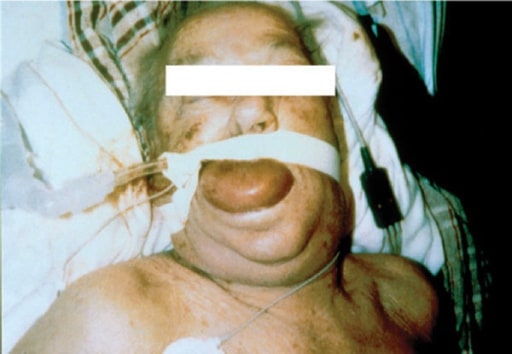
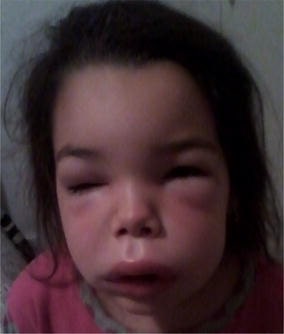
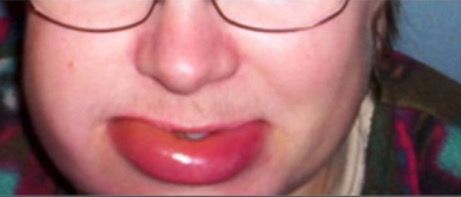
Ataque de angioedema Angioedema Angioedema is a localized, self-limited (but potentially life-threatening), nonpitting, asymmetrical edema occurring in the deep layers of the skin and mucosal tissue. The common underlying pathophysiology involves inflammatory mediators triggering significant vasodilation and increased capillary permeability. Angioedema

  • Síntomas cutáneos:
    • Edema Edema Edema is a condition in which excess serous fluid accumulates in the body cavity or interstitial space of connective tissues. Edema is a symptom observed in several medical conditions. It can be categorized into 2 types, namely, peripheral (in the extremities) and internal (in an organ or body cavity). Edema de la piel en EN Erythema nodosum is an immune-mediated panniculitis (inflammation of the subcutaneous fat) caused by a type IV (delayed-type) hypersensitivity reaction. It commonly manifests in young women as tender, erythematous nodules on the shins. Erythema Nodosum zonas no dependientes
    • Se ve VE Ventilation: Mechanics of Breathing más comúnmente en EN Erythema nodosum is an immune-mediated panniculitis (inflammation of the subcutaneous fat) caused by a type IV (delayed-type) hypersensitivity reaction. It commonly manifests in young women as tender, erythematous nodules on the shins. Erythema Nodosum cara y genitales
    • El edema Edema Edema is a condition in which excess serous fluid accumulates in the body cavity or interstitial space of connective tissues. Edema is a symptom observed in several medical conditions. It can be categorized into 2 types, namely, peripheral (in the extremities) and internal (in an organ or body cavity). Edema aumenta a lo largo de 24 horas y persiste durante las 48 horas siguientes.
  • Síntomas gastrointestinales:
    • Síntomas de cólicos, náuseas, vómitos y diarrea
    • A menudo precedido por síntomas prodrómicos de fatiga, hambre, irritabilidad y erupción cutánea
  • Síntomas de vía aérea:
    • Edema Edema Edema is a condition in which excess serous fluid accumulates in the body cavity or interstitial space of connective tissues. Edema is a symptom observed in several medical conditions. It can be categorized into 2 types, namely, peripheral (in the extremities) and internal (in an organ or body cavity). Edema de labios, lengua, úvula o paladar
    • Los primeros síntomas pueden incluir cambios en la voz, dolor de garganta y tos “perruna”.
    • Los LOS Neisseria episodios severos pueden causar obstrucción de vías respiratorias y asfixia.
    • Más de la ½ de los LOS Neisseria pacientes experimentarán síntomas de vías respiratorias.

Desencadenantes

  • Enfermedad:
    • Infección de vías respiratorias superiores
    • Infección por H. pylori H. pylori A spiral bacterium active as a human gastric pathogen. It is a gram-negative, urease-positive, curved or slightly spiral organism initially isolated in 1982 from patients with lesions of gastritis or peptic ulcers in Western Australia. Helicobacter pylori was originally classified in the genus campylobacter, but RNA sequencing, cellular fatty acid profiles, growth patterns, and other taxonomic characteristics indicate that the micro-organism should be included in the genus Helicobacter. It has been officially transferred to Helicobacter gen. Helicobacter
  • Traumáticos:
    • Intubación
    • Intervención odontológica
    • Piercings
  • Medicamentos:
    • Inhibidores de la enzima convertidora de angiotensina
    • Tamoxifeno
    • Algunos medicamentos de reemplazo hormonal
  • Estrés (mental, emocional o físico)
  • Cambios hormonales (embarazo, menstruación)

Diagnóstico

Antecedentes y examen físico

Reconocer el angioedema Angioedema Angioedema is a localized, self-limited (but potentially life-threatening), nonpitting, asymmetrical edema occurring in the deep layers of the skin and mucosal tissue. The common underlying pathophysiology involves inflammatory mediators triggering significant vasodilation and increased capillary permeability. Angioedema hereditario suele ser difícil debido a la gran variabilidad de expresión de la enfermedad:

  • Puede ser similar a otros tipos de angioedema Angioedema Angioedema is a localized, self-limited (but potentially life-threatening), nonpitting, asymmetrical edema occurring in the deep layers of the skin and mucosal tissue. The common underlying pathophysiology involves inflammatory mediators triggering significant vasodilation and increased capillary permeability. Angioedema resultantes de alergias u otras condiciones médicas
  • Debe considerarse angioedema Angioedema Angioedema is a localized, self-limited (but potentially life-threatening), nonpitting, asymmetrical edema occurring in the deep layers of the skin and mucosal tissue. The common underlying pathophysiology involves inflammatory mediators triggering significant vasodilation and increased capillary permeability. Angioedema hereditario si el paciente presenta
    • Angioedema Angioedema Angioedema is a localized, self-limited (but potentially life-threatening), nonpitting, asymmetrical edema occurring in the deep layers of the skin and mucosal tissue. The common underlying pathophysiology involves inflammatory mediators triggering significant vasodilation and increased capillary permeability. Angioedema recurrente (sin urticaria Urticaria Urticaria is raised, well-circumscribed areas (wheals) of edema (swelling) and erythema (redness) involving the dermis and epidermis with associated pruritus (itch). Urticaria is not a single disease but rather is a reaction pattern representing cutaneous mast cell degranulation. Urticaria (Hives))
    • Episodios recurrentes de dolor Dolor Inflammation abdominal y vómitos
    • Edema Edema Edema is a condition in which excess serous fluid accumulates in the body cavity or interstitial space of connective tissues. Edema is a symptom observed in several medical conditions. It can be categorized into 2 types, namely, peripheral (in the extremities) and internal (in an organ or body cavity). Edema laríngeo
    • Antecedentes familiares positivos para angioedema Angioedema Angioedema is a localized, self-limited (but potentially life-threatening), nonpitting, asymmetrical edema occurring in the deep layers of the skin and mucosal tissue. The common underlying pathophysiology involves inflammatory mediators triggering significant vasodilation and increased capillary permeability. Angioedema

Pruebas de laboratorio

Los LOS Neisseria análisis de sangre suelen utilizarse para confirmar el diagnóstico:

  • Factor 4 del complemento en EN Erythema nodosum is an immune-mediated panniculitis (inflammation of the subcutaneous fat) caused by a type IV (delayed-type) hypersensitivity reaction. It commonly manifests in young women as tender, erythematous nodules on the shins. Erythema Nodosum suero (C4): prueba de tamizaje más fiable y accesible
  • Proteína antigénica C1-INH
  • Nivel funcional de C1-INH (si está disponible)
Tabla: Hallazgos de laboratorio comunes en EN Erythema nodosum is an immune-mediated panniculitis (inflammation of the subcutaneous fat) caused by a type IV (delayed-type) hypersensitivity reaction. It commonly manifests in young women as tender, erythematous nodules on the shins. Erythema Nodosum angioedema Angioedema Angioedema is a localized, self-limited (but potentially life-threatening), nonpitting, asymmetrical edema occurring in the deep layers of the skin and mucosal tissue. The common underlying pathophysiology involves inflammatory mediators triggering significant vasodilation and increased capillary permeability. Angioedema hereditario según los LOS Neisseria tipos
Tipo de angioedema Angioedema Angioedema is a localized, self-limited (but potentially life-threatening), nonpitting, asymmetrical edema occurring in the deep layers of the skin and mucosal tissue. The common underlying pathophysiology involves inflammatory mediators triggering significant vasodilation and increased capillary permeability. Angioedema sin urticaria Urticaria Urticaria is raised, well-circumscribed areas (wheals) of edema (swelling) and erythema (redness) involving the dermis and epidermis with associated pruritus (itch). Urticaria is not a single disease but rather is a reaction pattern representing cutaneous mast cell degranulation. Urticaria (Hives) Proteína C1-INH C1q C4 y C2
Angioedema Angioedema Angioedema is a localized, self-limited (but potentially life-threatening), nonpitting, asymmetrical edema occurring in the deep layers of the skin and mucosal tissue. The common underlying pathophysiology involves inflammatory mediators triggering significant vasodilation and increased capillary permeability. Angioedema hereditario tipo I Normal
Angioedema Angioedema Angioedema is a localized, self-limited (but potentially life-threatening), nonpitting, asymmetrical edema occurring in the deep layers of the skin and mucosal tissue. The common underlying pathophysiology involves inflammatory mediators triggering significant vasodilation and increased capillary permeability. Angioedema hereditario tipo II N o ↑ (pero disfuncional) Normal
Angioedema Angioedema Angioedema is a localized, self-limited (but potentially life-threatening), nonpitting, asymmetrical edema occurring in the deep layers of the skin and mucosal tissue. The common underlying pathophysiology involves inflammatory mediators triggering significant vasodilation and increased capillary permeability. Angioedema adquirido con deficiencia de inhibidor de esterasa C1 (tipo I)
Angioedema Angioedema Angioedema is a localized, self-limited (but potentially life-threatening), nonpitting, asymmetrical edema occurring in the deep layers of the skin and mucosal tissue. The common underlying pathophysiology involves inflammatory mediators triggering significant vasodilation and increased capillary permeability. Angioedema adquirido con deficiencia de inhibidor de esterasa C1 (tipo II)

Tratamiento

El tratamiento se centra en EN Erythema nodosum is an immune-mediated panniculitis (inflammation of the subcutaneous fat) caused by a type IV (delayed-type) hypersensitivity reaction. It commonly manifests in young women as tender, erythematous nodules on the shins. Erythema Nodosum controlar los LOS Neisseria episodios enfocado en EN Erythema nodosum is an immune-mediated panniculitis (inflammation of the subcutaneous fat) caused by a type IV (delayed-type) hypersensitivity reaction. It commonly manifests in young women as tender, erythematous nodules on the shins. Erythema Nodosum los LOS Neisseria síntomas específicos:

  • Los LOS Neisseria pacientes deben elaborar un plan de atención de emergencia con su médico de atención primaria.
  • Medicamentos utilizados en EN Erythema nodosum is an immune-mediated panniculitis (inflammation of the subcutaneous fat) caused by a type IV (delayed-type) hypersensitivity reaction. It commonly manifests in young women as tender, erythematous nodules on the shins. Erythema Nodosum todos los LOS Neisseria ataques agudos tan pronto inician los LOS Neisseria síntomas:
    • Inhibidores de esterasa C1: Tratamiento de 1ra línea:
      • Concentrados de plasma Plasma The residual portion of blood that is left after removal of blood cells by centrifugation without prior blood coagulation. Transfusion Products humano
      • Formas recombinantes
    • Antagonista del receptor Receptor Receptors are proteins located either on the surface of or within a cell that can bind to signaling molecules known as ligands (e.g., hormones) and cause some type of response within the cell. Receptors B2 de la bradicinina (icatibant)
    • Inhibidores de la calicreína (ecallantide, disponible solo en EN Erythema nodosum is an immune-mediated panniculitis (inflammation of the subcutaneous fat) caused by a type IV (delayed-type) hypersensitivity reaction. It commonly manifests in young women as tender, erythematous nodules on the shins. Erythema Nodosum Estados Unidos)
  • Síntomas de la vía aérea:
    • Se debe capacitar a los LOS Neisseria pacientes para que en EN Erythema nodosum is an immune-mediated panniculitis (inflammation of the subcutaneous fat) caused by a type IV (delayed-type) hypersensitivity reaction. It commonly manifests in young women as tender, erythematous nodules on the shins. Erythema Nodosum casa se autoadministren terapias de primera línea para ataques laríngeos.
    • Tratamiento de la vía aérea
    • Se debe considerar la intubación de forma temprana.
  • Síntomas gastrointestinales:
    • Terapias de soporte y monitoreo riguroso
    • Puede ser necesaria la rehidratación.
    • Monitorear si hay signos de oclusión intestinal por edema Edema Edema is a condition in which excess serous fluid accumulates in the body cavity or interstitial space of connective tissues. Edema is a symptom observed in several medical conditions. It can be categorized into 2 types, namely, peripheral (in the extremities) and internal (in an organ or body cavity). Edema.
  • Síntomas cutáneos: por lo general, solo con medicamentos
  • Terapia preventiva:
    • Suele administrarse inhibidor de esterasa C1 entre 1–1,5 horas antes de cirugía.
    • Profilaxis con inyecciones regulares de concentrado de inhibidor de C1 derivado del plasma Plasma The residual portion of blood that is left after removal of blood cells by centrifugation without prior blood coagulation. Transfusion Products (рԁС1INH)
    • Se pueden utilizar inhibidores de la calicreína y lanadelumab (un anticuerpo monoclonal contra la calicreína plasmática)
    • Andrógenos atenuados (p. ej., estanozolol, danazol Danazol A synthetic steroid with antigonadotropic and anti-estrogenic activities that acts as an anterior pituitary suppressant by inhibiting the pituitary output of gonadotropins. It possesses some androgenic properties. Danazol has been used in the treatment of endometriosis and some benign breast disorders. Antiestrogens)
    • Se pueden utilizar antifibrinolíticos (p. ej., ácido tranexámico) como opciones de segunda línea para la profilaxis a largo plazo en EN Erythema nodosum is an immune-mediated panniculitis (inflammation of the subcutaneous fat) caused by a type IV (delayed-type) hypersensitivity reaction. It commonly manifests in young women as tender, erythematous nodules on the shins. Erythema Nodosum niños y pacientes embarazadas.

Referencias

  1. Zuraw, B., & Farkas, H. (2022). Hereditary angioedema (due to C1 inhibitor deficiency): Pathogenesis and diagnosis. UpToDate. Retrieved November 24, 2024, from https://www.uptodate.com/contents/hereditary-angioedema-due-to-c1-inhibitor-deficiency-pathogenesis-and-diagnosis
  2. Zuraw, B., & Farkas, H. (2024). Hereditary angioedema (due to C1 inhibitor deficiency): Acute treatment of angioedema attacks. UpToDate. Retrieved November 24, 2024, from https://www.uptodate.com/contents/hereditary-angioedema-due-to-c1-inhibitor-deficiency-acute-treatment-of-angioedema-attacks
  3. Frank, M. M. (2024). Hereditary Angioedema. Medscape. Retrieved November 24, 2024, from https://emedicine.medscape.com/article/135604-overview
  4. Hereditary angioedema: Medlineplus genetics. (n.d.). Retrieved November 24, 2024, from https://medlineplus.gov/genetics/condition/hereditary-angioedema/
  5. Fernandez, J. (2025). Hereditary and Acquired C1 Inhibitor Deficiency or Dysfunction Retrieved September 22, 2025, from https://www.msdmanuals.com/professional/immunology-allergic-disorders/allergic-autoimmune-and-other-hypersensitivity-disorders/hereditary-and-acquired-c1-inhibitor-deficiency-or-dysfunction
  6. Nordenfelt, P., Nilsson, M., Björkander, J., Mallbris, L., Lindfors, A., & Wahlgren, C. F. (2016). Hereditary Angioedema in Swedish Adults: Report From the National Cohort. Acta dermato-venereologica96(4), 540–545. https://doi.org/10.2340/00015555-2274
  7. Bork, K., Meng, G., Staubach, P., & Hardt, J. (2006). Hereditary angioedema: new findings concerning symptoms, affected organs, and course. The American journal of medicine119(3), 267–274. https://doi.org/10.1016/j.amjmed.2005.09.064
  8. Bork, K., Frank, J., Grundt, B., Schlattmann, P., Nussberger, J., & Kreuz, W. (2007). Treatment of acute edema attacks in hereditary angioedema with a bradykinin receptor-2 antagonist (Icatibant). The Journal of allergy and clinical immunology119(6), 1497–1503. https://doi.org/10.1016/j.jaci.2007.02.012

¡Crea tu cuenta gratis o inicia una sesión para seguir leyendo!

Regístrate ahora y obtén acceso gratuito a Lecturio con páginas de concepto, videos médicos y cuestionarios para tu educación médica.

User Reviews

Que tengas una sesión de estudio alegre y navideña 🎁 Ahorra 50% en todos los planes >>

Details