Domina Conceptos Médicos

Estudia para la escuela de medicina y tus examenes con Lecturio.

Anestésicos Intravenosos

Los LOS Neisseria anestésicos intravenosos se utilizan en EN Erythema nodosum is an immune-mediated panniculitis (inflammation of the subcutaneous fat) caused by a type IV (delayed-type) hypersensitivity reaction. It commonly manifests in young women as tender, erythematous nodules on the shins. Erythema Nodosum la práctica moderna de la anestesia desde el siglo XX. La anestesia moderna comenzó con anestésicos inhalados; sin embargo, se adoptaron los LOS Neisseria agentes intravenosos porque las dosis inyectadas o infundidas podían controlarse más estrechamente con poco medicamento desperdiciado. Actualmente, existen varios grupos de agentes (e.g., barbitúricos, benzodiazepinas y disociativos), pero los LOS Neisseria más utilizados son el fentanilo, el midazolam Midazolam A short-acting hypnotic-sedative drug with anxiolytic and amnestic properties. It is used in dentistry, cardiac surgery, endoscopic procedures, as preanesthetic medication, and as an adjunct to local anesthesia. The short duration and cardiorespiratory stability makes it useful in poor-risk, elderly, and cardiac patients. It is water-soluble at ph less than 4 and lipid-soluble at physiological pH. Benzodiazepines y el propofol Propofol An intravenous anesthetic agent which has the advantage of a very rapid onset after infusion or bolus injection plus a very short recovery period of a couple of minutes. Propofol has been used as anticonvulsants and antiemetics. Intravenous Anesthetics.

Last updated: Oct 22, 2022

Editorial responsibility: Stanley Oiseth, Lindsay Jones, Evelin Maza

Descripción General

Contínuum de la sedación y la anestesia

  • Sedación ligera o mínima: administración de ansiolíticos y analgésicos para lograr un nivel de sedación leve con capacidad de respuesta preservada:
    • Respuesta a comandos verbales
    • La vía aérea permanece permeable.
    • La respiración sigue siendo espontánea.
    • No hay depresión cardiovascular
  • Sedación moderada (también conocida como sedación consciente): administración de ansiolíticos y analgésicos para conseguir un nivel de sedación más profundo con una capacidad de respuesta menos conservada:
    • Respuesta a la voz
    • La vía aérea permanece permeable.
    • La respiración sigue siendo espontánea.
    • Depresión cardiovascular leve → reducción de la presión arterial
  • Sedación profunda: administración de ansiolíticos, analgésicos y/o anestésicos para conseguir un nivel de sedación profundo con una capacidad de respuesta mínimamente preservada:
    • Ya no hay respuesta a la voz
    • La permeabilidad de la vía aérea puede verse comprometida.
    • Puede ser necesario el soporte respiratorio.
    • Depresión cardiovascular → reducción potencialmente significativa de la presión arterial
    • Respuesta a estímulos nocivos
  • Anestesia general:
    • Administración de ansiolíticos, analgésicos y/o anestésicos para conseguir un nivel de sedación muy profundo, eliminando la capacidad de respuesta:
      • Ya no hay respuesta a la voz
      • La permeabilidad de la vía aérea puede verse comprometida.
      • Puede ser necesario el soporte respiratorio.
      • Depresión cardiovascular → reducción potencialmente significativa de la presión arterial
      • No hay respuesta a estímulos nocivos
    • La anestesia general tiene por objetivo crear un estado de sedación reversible, que incluye:

Agentes anestésicos

Los LOS Neisseria anestésicos intravenosos incluyen:

  • Barbitúricos
  • Benzodiacepinas
  • Ketamina (disociativa)
  • Etomidato
  • Propofol Propofol An intravenous anesthetic agent which has the advantage of a very rapid onset after infusion or bolus injection plus a very short recovery period of a couple of minutes. Propofol has been used as anticonvulsants and antiemetics. Intravenous Anesthetics
  • Fentanilo

Barbitúricos

Agentes en EN Erythema nodosum is an immune-mediated panniculitis (inflammation of the subcutaneous fat) caused by a type IV (delayed-type) hypersensitivity reaction. It commonly manifests in young women as tender, erythematous nodules on the shins. Erythema Nodosum la clase

  • Ácido dietilbarbitúrico ( barbital Barbital The 1st barbiturate used for induction of anesthesia. Intravenous Anesthetics): el 1er barbitúrico utilizado para la inducción de la anestesia
  • Tiopental:
    • Se utiliza para la inducción y el mantenimiento de la anestesia general
    • Hasta que fue sustituido por el propofol Propofol An intravenous anesthetic agent which has the advantage of a very rapid onset after infusion or bolus injection plus a very short recovery period of a couple of minutes. Propofol has been used as anticonvulsants and antiemetics. Intravenous Anesthetics, el tiopental era el agente intravenoso más común.
    • Un anticonvulsivo eficaz
    • Corta duración
  • Metohexital:
    • Indicado para la sedación de procedimientos de corta duración (e.g., cardioversión, reducción de fracturas o intubación)
    • Corta duración
    • Un anticonvulsivo eficaz
  • Fenobarbital y pentobarbital Pentobarbital A short-acting barbiturate that is effective as a sedative and hypnotic (but not as an anti-anxiety) agent and is usually given orally. Intravenous Anesthetics:
    • Se utiliza sobre todo en EN Erythema nodosum is an immune-mediated panniculitis (inflammation of the subcutaneous fat) caused by a type IV (delayed-type) hypersensitivity reaction. It commonly manifests in young women as tender, erythematous nodules on the shins. Erythema Nodosum la UCI para las emergencias neurológicas
    • Sus usos incluyen:
      • Tratamiento de convulsiones
      • Reducción de la presión intracraneal (PIC)
      • Inducción del coma Coma Coma is defined as a deep state of unarousable unresponsiveness, characterized by a score of 3 points on the GCS. A comatose state can be caused by a multitude of conditions, making the precise epidemiology and prognosis of coma difficult to determine. Coma médico

Estructura química

  • Los LOS Neisseria barbitúricos se derivan del ácido barbitúrico.
  • Los LOS Neisseria medicamentos dentro de la clase tienen cadenas laterales variables que se ramifican de la estructura del anillo.
  • Los LOS Neisseria barbitúricos se preparan como sales de sodio (mezcladas con cloruro de sodio o agua estéril) y se envasan como soluciones utilizadas para inyección intravenosa.
Ácido barbitúrico

La estructura química del ácido barbitúrico

Imagen: “Barbituric Acid Structural formula” por Jü. Licencia: Dominio Público
Mecanismo de acción

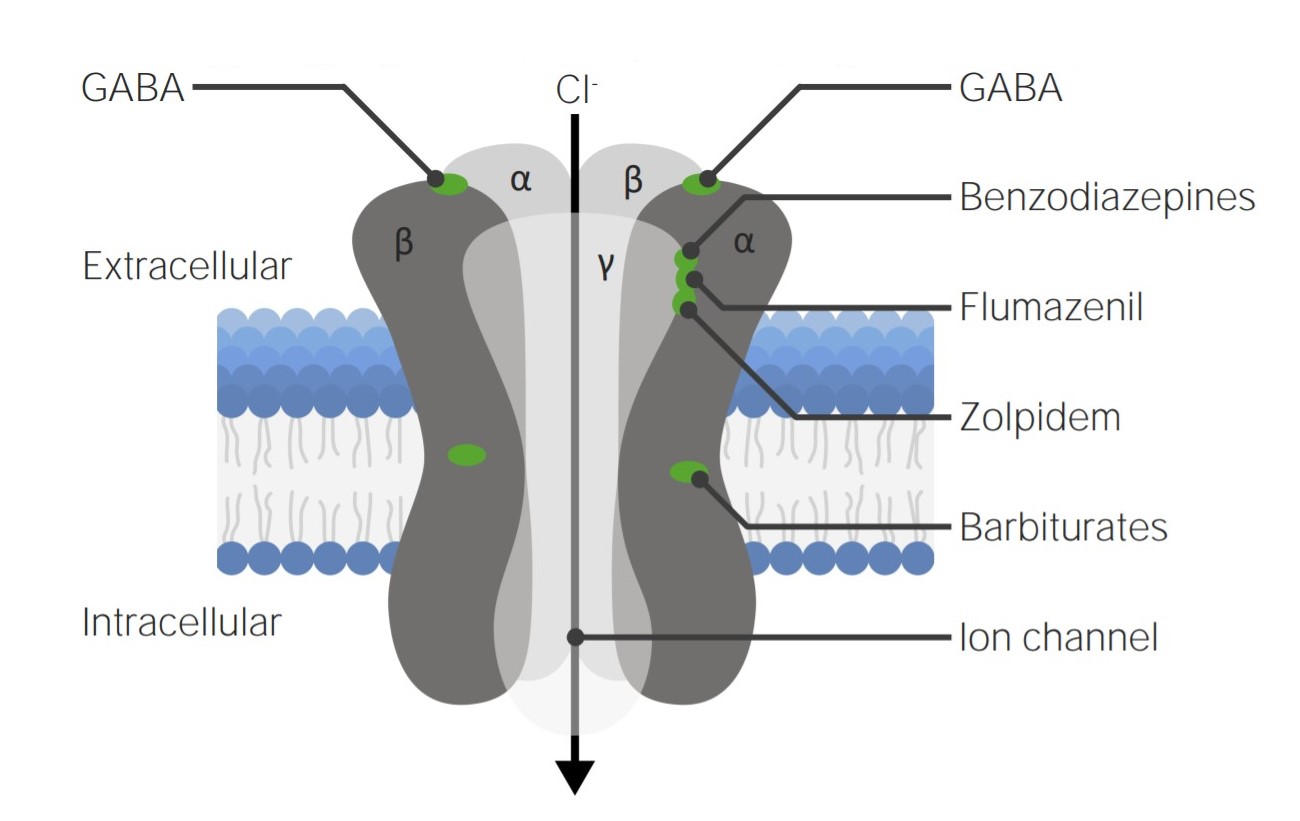
  • Ocupación/activación del receptor Receptor Receptors are proteins located either on the surface of or within a cell that can bind to signaling molecules known as ligands (e.g., hormones) and cause some type of response within the cell. Receptors del ácido γ-aminobutírico A (GABAA) → ↑ duración del flujo de cloruro a través del canal abierto
  • Deprime el sistema activador reticular en EN Erythema nodosum is an immune-mediated panniculitis (inflammation of the subcutaneous fat) caused by a type IV (delayed-type) hypersensitivity reaction. It commonly manifests in young women as tender, erythematous nodules on the shins. Erythema Nodosum el tronco encefálico
Diagrama del receptor GABA-A

Diagrama del receptor del ácido γ-aminobutírico A (GABAA):
Obsérvese a los diferentes sitios de unión de las distintas familias de medicamentos.

Imagen por Lecturio.

Efectos fisiológicos

  • Cardiovasculares:
    • Depresión del centro vasomotor medular → vasodilatación periférica → acumulación periférica de sangre
    • ↓ Presión arterial → ↑ frecuencia cardíaca
    • Inótropo negativo
  • Respiratorio: depresión del centro ventilatorio medular → respuesta reducida a la hipercapnia y la hipoxia
  • SNC:
    • Vasoconstricción cerebral → ↓ flujo sanguíneo cerebral → ↓ PIC
    • ↓ Consumo de O2 cerebral
  • Renal: ↓ flujo sanguíneo renal → ↓ gasto urinario
  • Hepático: ↓ flujo sanguíneo hepático

Farmacocinética

  • Distribución:
    • Altamente liposoluble → capaz de atravesar la barrera hematoencefálica → rápida captación cerebral
    • Captación cerebral: aproximadamente 30 segundos
    • Concentración plasmática máxima: 20–30 minutos
  • Metabolismo: hepático
  • Excreción:
    • Renal
    • Fecal
  • Sensibilidad al AL Amyloidosis contexto:
    • Las dosis repetitivas llenan/saturan los LOS Neisseria compartimentos periféricos, minimizando el efecto de la redistribución.
    • La duración del efecto depende de la velocidad de eliminación.

Indicaciones

Los LOS Neisseria barbitúricos son un grupo de medicamentos sedantes-hipnóticos con las siguientes indicaciones:

  • Trastornos epilépticos
  • Síndromes de abstinencia
  • Trastornos del sueño
  • Ansiedad preoperatoria
  • Inducción del coma Coma Coma is defined as a deep state of unarousable unresponsiveness, characterized by a score of 3 points on the GCS. A comatose state can be caused by a multitude of conditions, making the precise epidemiology and prognosis of coma difficult to determine. Coma médico → ↓ en EN Erythema nodosum is an immune-mediated panniculitis (inflammation of the subcutaneous fat) caused by a type IV (delayed-type) hypersensitivity reaction. It commonly manifests in young women as tender, erythematous nodules on the shins. Erythema Nodosum la PIC
  • Adyuvante en EN Erythema nodosum is an immune-mediated panniculitis (inflammation of the subcutaneous fat) caused by a type IV (delayed-type) hypersensitivity reaction. It commonly manifests in young women as tender, erythematous nodules on the shins. Erythema Nodosum el tratamiento de la ↑ PIC
  • Inducción de la anestesia
  • Mantenimiento de la anestesia general

Efectos secundarios y contraindicaciones

Efectos secundarios:

  • Depresión respiratoria
  • Hipotensión
  • Tolerancia
  • Reacciones anafilácticas (raras)

Interacciones medicamentosas:

Contraindicaciones:
  • Estatus asmático
  • Porfirias agudas e intermitentes
  • Hipovolemia por propensión a la depresión cardiovascular

Benzodiazepinas

Descripción general

  • El clordiazepóxido fue descubierto en EN Erythema nodosum is an immune-mediated panniculitis (inflammation of the subcutaneous fat) caused by a type IV (delayed-type) hypersensitivity reaction. It commonly manifests in young women as tender, erythematous nodules on the shins. Erythema Nodosum 1955 y se autorizó su uso clínico en EN Erythema nodosum is an immune-mediated panniculitis (inflammation of the subcutaneous fat) caused by a type IV (delayed-type) hypersensitivity reaction. It commonly manifests in young women as tender, erythematous nodules on the shins. Erythema Nodosum 1960.
  • El diazepam Diazepam A benzodiazepine with anticonvulsant, anxiolytic, sedative, muscle relaxant, and amnesic properties and a long duration of action. Its actions are mediated by enhancement of gamma-aminobutyric acid activity. Benzodiazepines, el lorazepam Lorazepam A benzodiazepine used as an anti-anxiety agent with few side effects. It also has hypnotic, anticonvulsant, and considerable sedative properties and has been proposed as a preanesthetic agent. Benzodiazepines y el midazolam Midazolam A short-acting hypnotic-sedative drug with anxiolytic and amnestic properties. It is used in dentistry, cardiac surgery, endoscopic procedures, as preanesthetic medication, and as an adjunct to local anesthesia. The short duration and cardiorespiratory stability makes it useful in poor-risk, elderly, and cardiac patients. It is water-soluble at ph less than 4 and lipid-soluble at physiological pH. Benzodiazepines siguieron a la salida del mercado del clordiazepóxido y se utilizan ampliamente para la premedicación, la sedación consciente y la inducción de la anestesia general.
  • Midazolam Midazolam A short-acting hypnotic-sedative drug with anxiolytic and amnestic properties. It is used in dentistry, cardiac surgery, endoscopic procedures, as preanesthetic medication, and as an adjunct to local anesthesia. The short duration and cardiorespiratory stability makes it useful in poor-risk, elderly, and cardiac patients. It is water-soluble at ph less than 4 and lipid-soluble at physiological pH. Benzodiazepines:
    • La benzodiazepina más utilizada para inducción de la anestesia
    • Se utiliza para múltiples propósitos (desde la sedación hasta la mitigación de las convulsiones)

Estructura química

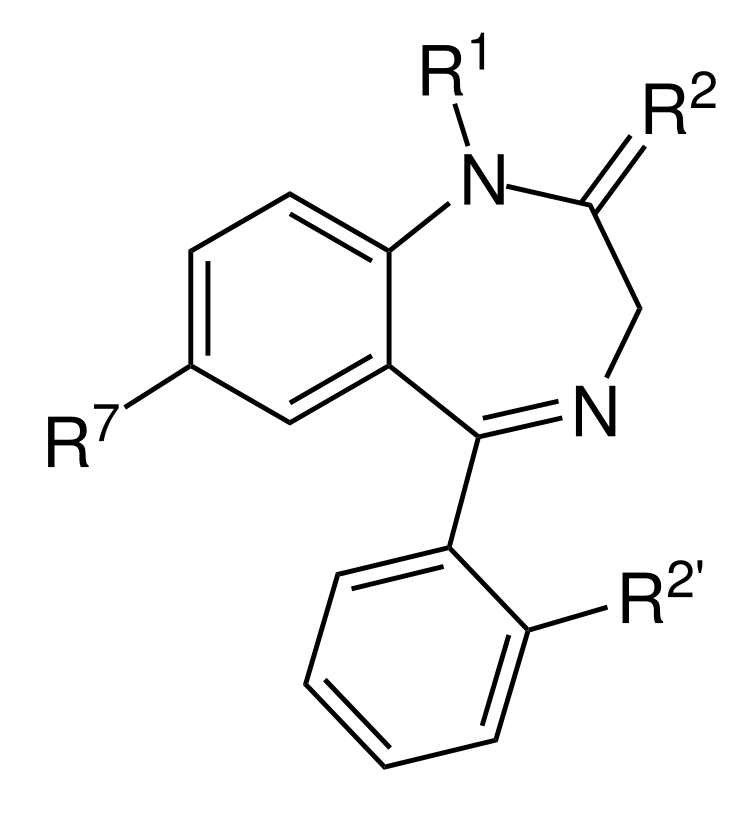
Estructura del anillo básico de la benzodiazepina

Estructura básica del anillo de la clase de las benzodiazepinas:
Los medicamentos dentro de la clase tienen grupos R variables.

Imagen: “Benzodiazepine Structural Formula” por Jü. Licencia: Dominio Público

Mecanismo de acción

La ocupación/activación del receptor Receptor Receptors are proteins located either on the surface of or within a cell that can bind to signaling molecules known as ligands (e.g., hormones) and cause some type of response within the cell. Receptors GABAA aumenta la frecuencia de apertura del canal de cloruro (Cl-) asociado, lo que provoca la inhibición del potencial de acción:

Efectos fisiológicos

  • Cardiovasculares:
    • ↓ Gasto cardíaco y resistencia vascular periférica → ↓ presión arterial
    • Coadministración con opioides → depresión miocárdica e hipotensión arterial
  • Respiratorio: ↓ respuesta a la hipercapnia
  • SNC:
    • ↓ Consumo de O2
    • Leve ↓ del flujo sanguíneo cerebral → ↓ de la PIC
    • Sedación
    • Confusión y amnesia anterógrada
    • Desinhibición e inhibición motora
    • Ansiolisis
    • Relajación muscular

Farmacocinética

  • Distribución:
    • Liposolubilidad → rápida absorción en EN Erythema nodosum is an immune-mediated panniculitis (inflammation of the subcutaneous fat) caused by a type IV (delayed-type) hypersensitivity reaction. It commonly manifests in young women as tender, erythematous nodules on the shins. Erythema Nodosum el cerebro
    • Vida media:
      • Lorazepam Lorazepam A benzodiazepine used as an anti-anxiety agent with few side effects. It also has hypnotic, anticonvulsant, and considerable sedative properties and has been proposed as a preanesthetic agent. Benzodiazepines: 15 horas
      • Diazepam Diazepam A benzodiazepine with anticonvulsant, anxiolytic, sedative, muscle relaxant, and amnesic properties and a long duration of action. Its actions are mediated by enhancement of gamma-aminobutyric acid activity. Benzodiazepines: 20–50 horas
      • Midazolam Midazolam A short-acting hypnotic-sedative drug with anxiolytic and amnestic properties. It is used in dentistry, cardiac surgery, endoscopic procedures, as preanesthetic medication, and as an adjunct to local anesthesia. The short duration and cardiorespiratory stability makes it useful in poor-risk, elderly, and cardiac patients. It is water-soluble at ph less than 4 and lipid-soluble at physiological pH. Benzodiazepines: 2 horas
  • Metabolismo: hepático (citocromo P450): a metabolitos hidrosolubles activos y no activos
  • Excreción: principalmente renal

Indicaciones

  • Inducción de anestesia general ( midazolam Midazolam A short-acting hypnotic-sedative drug with anxiolytic and amnestic properties. It is used in dentistry, cardiac surgery, endoscopic procedures, as preanesthetic medication, and as an adjunct to local anesthesia. The short duration and cardiorespiratory stability makes it useful in poor-risk, elderly, and cardiac patients. It is water-soluble at ph less than 4 and lipid-soluble at physiological pH. Benzodiazepines):
    • Pérdida de conciencia más lenta y recuperación más prolongada que el propofol Propofol An intravenous anesthetic agent which has the advantage of a very rapid onset after infusion or bolus injection plus a very short recovery period of a couple of minutes. Propofol has been used as anticonvulsants and antiemetics. Intravenous Anesthetics
    • Pérdida de conciencia más lenta y recuperación más prolongada que el etomidato
  • Premedicación
  • Sedación consciente
  • Otros usos:
    • Estados de ansiedad ( lorazepam Lorazepam A benzodiazepine used as an anti-anxiety agent with few side effects. It also has hypnotic, anticonvulsant, and considerable sedative properties and has been proposed as a preanesthetic agent. Benzodiazepines y diazepam Diazepam A benzodiazepine with anticonvulsant, anxiolytic, sedative, muscle relaxant, and amnesic properties and a long duration of action. Its actions are mediated by enhancement of gamma-aminobutyric acid activity. Benzodiazepines)
    • Espasticidad muscular ( diazepam Diazepam A benzodiazepine with anticonvulsant, anxiolytic, sedative, muscle relaxant, and amnesic properties and a long duration of action. Its actions are mediated by enhancement of gamma-aminobutyric acid activity. Benzodiazepines)
    • Abstinencia de etanol (clordiazepóxido y diazepam Diazepam A benzodiazepine with anticonvulsant, anxiolytic, sedative, muscle relaxant, and amnesic properties and a long duration of action. Its actions are mediated by enhancement of gamma-aminobutyric acid activity. Benzodiazepines)

Efectos secundarios y contraindicaciones

Efectos secundarios:

  • Depresión y paro respiratorio
  • Confusión
  • Cefalea
  • Síncope
  • Náusea/vómito
  • Diarrea
  • Temblores
  • Laringoespasmo y/o broncoespasmo en EN Erythema nodosum is an immune-mediated panniculitis (inflammation of the subcutaneous fat) caused by a type IV (delayed-type) hypersensitivity reaction. It commonly manifests in young women as tender, erythematous nodules on the shins. Erythema Nodosum neonatos (raro)
  • Tolerancia y dependencia

Interacciones medicamentosas:

  • La cimetidina ralentiza el metabolismo del diazepam Diazepam A benzodiazepine with anticonvulsant, anxiolytic, sedative, muscle relaxant, and amnesic properties and a long duration of action. Its actions are mediated by enhancement of gamma-aminobutyric acid activity. Benzodiazepines en EN Erythema nodosum is an immune-mediated panniculitis (inflammation of the subcutaneous fat) caused by a type IV (delayed-type) hypersensitivity reaction. It commonly manifests in young women as tender, erythematous nodules on the shins. Erythema Nodosum el citocromo P450.
  • La eritromicina inhibe el metabolismo del midazolam Midazolam A short-acting hypnotic-sedative drug with anxiolytic and amnestic properties. It is used in dentistry, cardiac surgery, endoscopic procedures, as preanesthetic medication, and as an adjunct to local anesthesia. The short duration and cardiorespiratory stability makes it useful in poor-risk, elderly, and cardiac patients. It is water-soluble at ph less than 4 and lipid-soluble at physiological pH. Benzodiazepines → prolonga e intensifica los LOS Neisseria efectos
  • Los LOS Neisseria opioides potencian la depresión miocárdica, la depresión respiratoria y la depresión del SNC.
  • El etanol potencia la depresión miocárdica, la depresión respiratoria y la depresión del SNC.
  • Los LOS Neisseria barbitúricos potencian la depresión miocárdica, la depresión respiratoria y la depresión del SNC.

Contraindicaciones:

  • Hipersensibilidad a las benzodiazepinas
  • Glaucoma Glaucoma Glaucoma is an optic neuropathy characterized by typical visual field defects and optic nerve atrophy seen as optic disc cupping on examination. The acute form of glaucoma is a medical emergency. Glaucoma is often, but not always, caused by increased intraocular pressure (IOP). Glaucoma de ángulo cerrado

Sobredosis y toxicidad

Presentación clínica:

  • Depresión del SNC
  • Depresión e insuficiencia respiratoria
  • Hipotensión

Tratamiento:

  • Antídoto: flumazenil Flumazenil A potent benzodiazepine receptor antagonist. Since it reverses the sedative and other actions of benzodiazepines, it has been suggested as an antidote to benzodiazepine overdoses. Benzodiazepines
  • La administración de carbón activado está contraindicada debido al AL Amyloidosis riesgo de aspiración.

Ketamina

Descripción general

  • Aprobado para anestesia general con o sin otros agentes anestésicos
  • El agente más cercano a un “anestésico completo”
  • A menudo se utiliza para la sedación/anestesia de corta duración (e.g., reducción de fracturas o dislocaciones)

Estructura química

La ketamina es similar a la fenciclidina, un alucinógeno.
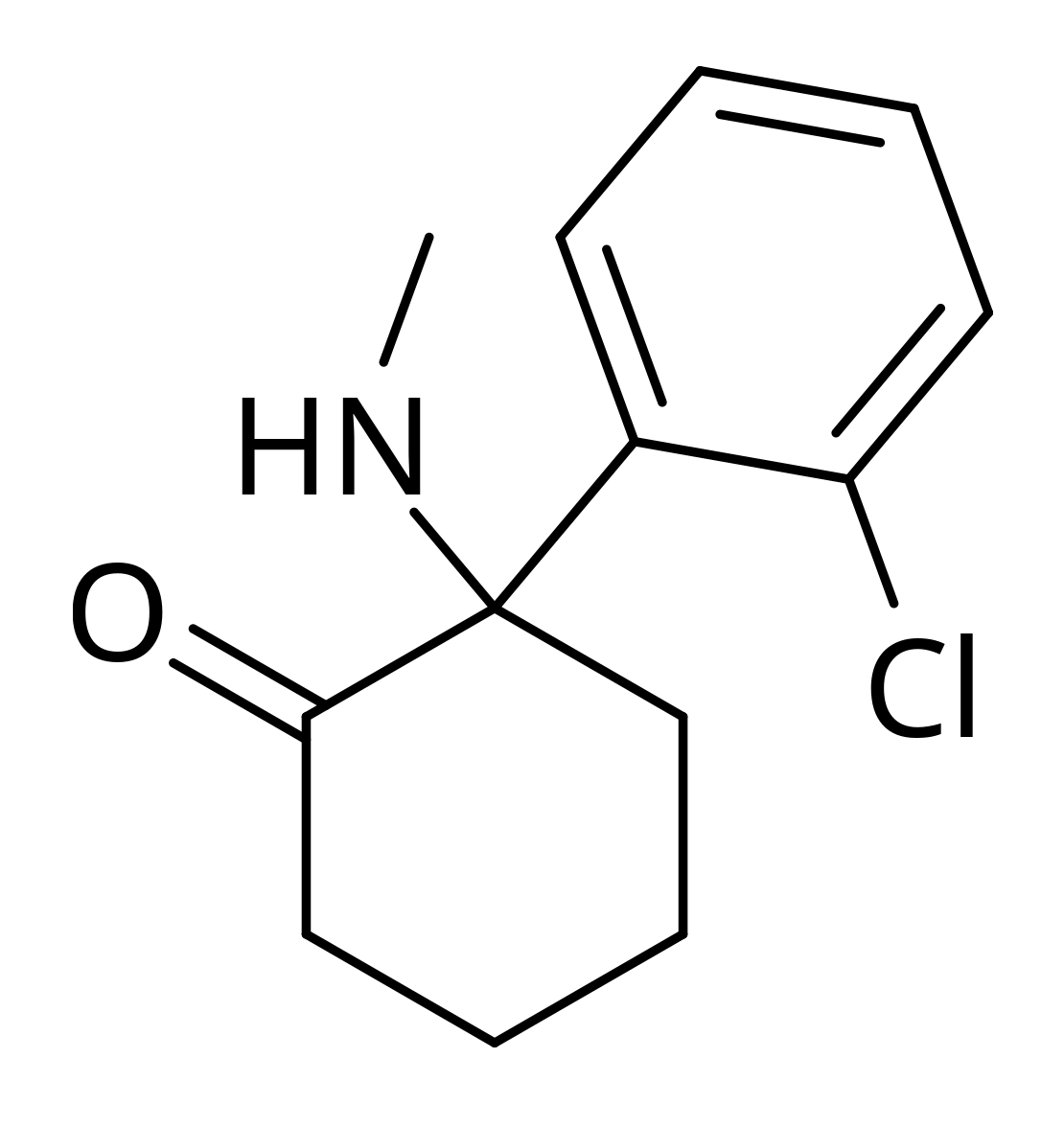
Ketamina

Estructura química de la ketamina

Imagen: “Structure of ketamine” por Brenton. Licencia: Dominio Público

Mecanismo de acción

  • Inhibe los LOS Neisseria canales NMDA (transmisión del glutamato) y los LOS Neisseria canales neuronales activados por la hiperpolarización de los LOS Neisseria nucleótidos cíclicos
  • El mecanismo exacto de la anestesia y la analgesia Analgesia Methods of pain relief that may be used with or in place of analgesics. Anesthesiology: History and Basic Concepts sigue siendo controvertido → disocia los LOS Neisseria impulsos sensoriales de la corteza límbica (perjudica la percepción sensorial)

Efectos fisiológicos

  • Cardiovasculares:
    • ↑ Gasto cardíaco y presión arterial
    • Depresión miocárdica con dosis altas
  • Respiratorios:
    • Potente broncodilatador (utilizado en EN Erythema nodosum is an immune-mediated panniculitis (inflammation of the subcutaneous fat) caused by a type IV (delayed-type) hypersensitivity reaction. It commonly manifests in young women as tender, erythematous nodules on the shins. Erythema Nodosum caso de broncoespasmo y asma ASMA Autoimmune Hepatitis)
    • ↑ Salivación
  • SNC:
    • ↑ Consumo de O2 → ↑ flujo sanguíneo cerebral → ↑ PIC
    • Modulador del estado de ánimo
    • Estimulación simpática e inhibición de la recaptación de epinefrina
    • Alucinaciones
    • Disociación

Farmacocinética

  • Distribución:
    • Altamente liposoluble + aumento de la perfusión cerebral + aumento del gasto cardíaco → rápida captación cerebral
    • Vida media: 2 horas
  • Metabolismo:
    • Hepático
    • Metabolitos: norketamina (conserva la actividad anestésica) y otros metabolitos hidrosolubles
  • Excreción: renal

Indicaciones

  • Inducción y mantenimiento de la anestesia
  • Dolor Dolor Inflammation agudo o crónico
  • Otros usos:
    • Estatus epiléptico
    • Coadministración con propofol Propofol An intravenous anesthetic agent which has the advantage of a very rapid onset after infusion or bolus injection plus a very short recovery period of a couple of minutes. Propofol has been used as anticonvulsants and antiemetics. Intravenous Anesthetics o midazolam Midazolam A short-acting hypnotic-sedative drug with anxiolytic and amnestic properties. It is used in dentistry, cardiac surgery, endoscopic procedures, as preanesthetic medication, and as an adjunct to local anesthesia. The short duration and cardiorespiratory stability makes it useful in poor-risk, elderly, and cardiac patients. It is water-soluble at ph less than 4 and lipid-soluble at physiological pH. Benzodiazepines en EN Erythema nodosum is an immune-mediated panniculitis (inflammation of the subcutaneous fat) caused by a type IV (delayed-type) hypersensitivity reaction. It commonly manifests in young women as tender, erythematous nodules on the shins. Erythema Nodosum un pequeño bolo o infusión para la sedación consciente
    • Depresión grave o resistente al AL Amyloidosis tratamiento

Efectos secundarios y contraindicaciones

Efectos secundarios:

  • Estimulante cardiovascular
  • Depresión respiratoria y apnea
  • Puede ↑ PIC
  • Asociado a reacciones de la recuperación postoperatoria:
    • Desorientación
    • Excitación
    • Alucinaciones
  • Movimientos tónico-clónicos durante la administración
  • Convulsiones
  • Tolerancia

Interacciones medicamentosas:

  • La coadministración con opioides produce apnea.
  • Interacción sinérgica con anestésicos volátiles (e.g., óxido nitroso (N2O))
  • Interacción aditiva con agentes mediadores del receptor Receptor Receptors are proteins located either on the surface of or within a cell that can bind to signaling molecules known as ligands (e.g., hormones) and cause some type of response within the cell. Receptors GABA GABA The most common inhibitory neurotransmitter in the central nervous system. Receptors and Neurotransmitters of the CNS (e.g., benzodiazepinas)

Contraindicaciones:

  • Hipersensibilidad previa
  • Mujeres embarazadas o en EN Erythema nodosum is an immune-mediated panniculitis (inflammation of the subcutaneous fat) caused by a type IV (delayed-type) hypersensitivity reaction. It commonly manifests in young women as tender, erythematous nodules on the shins. Erythema Nodosum periodo de lactancia
  • Esquizofrenia
  • Disección aórtica
  • Infarto de miocardio

Administración cautelosa en EN Erythema nodosum is an immune-mediated panniculitis (inflammation of the subcutaneous fat) caused by a type IV (delayed-type) hypersensitivity reaction. It commonly manifests in young women as tender, erythematous nodules on the shins. Erythema Nodosum:

  • Enfermedad arterial coronaria
  • Hipertensión no controlada
  • Insuficiencia cardíaca congestiva
  • Aneurismas arteriales
  • Dependencia o intoxicación por alcohol

Etomidato

Descripción general

El etomidato es un agente anestésico intravenoso con las siguientes características:
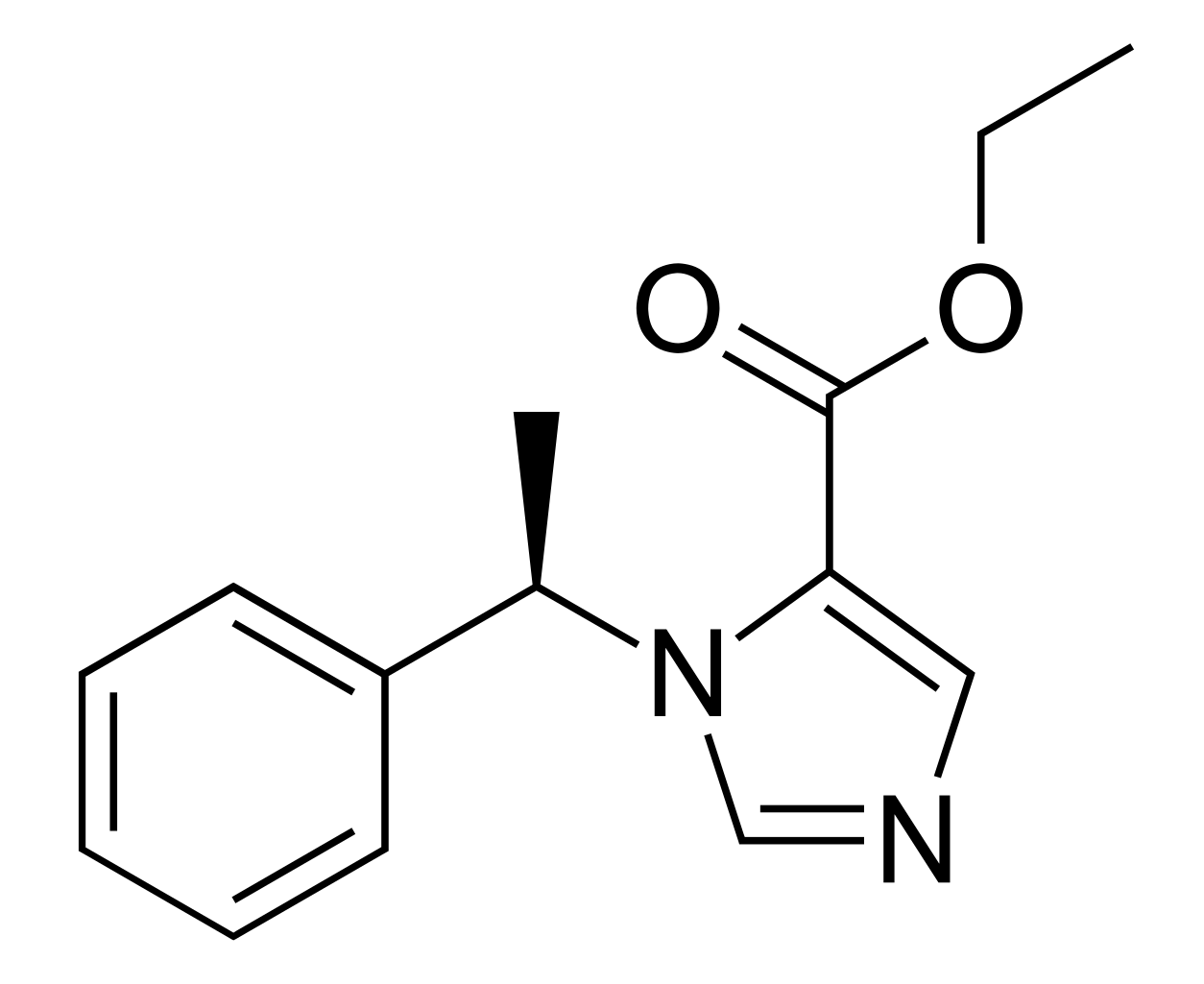
  • De acción ultracorta (i.e., de inicio rápido y corta duración)
  • Hipnótico
  • Mínima depresión de la presión sanguínea (utilizada en EN Erythema nodosum is an immune-mediated panniculitis (inflammation of the subcutaneous fat) caused by a type IV (delayed-type) hypersensitivity reaction. It commonly manifests in young women as tender, erythematous nodules on the shins. Erythema Nodosum shock Shock Shock is a life-threatening condition associated with impaired circulation that results in tissue hypoxia. The different types of shock are based on the underlying cause: distributive (↑ cardiac output (CO), ↓ systemic vascular resistance (SVR)), cardiogenic (↓ CO, ↑ SVR), hypovolemic (↓ CO, ↑ SVR), obstructive (↓ CO), and mixed. Types of Shock traumático)
  • Metabolismo rápido

Estructura química

  • Anillo de imidazol carboxilado:
    • Hidrosoluble en EN Erythema nodosum is an immune-mediated panniculitis (inflammation of the subcutaneous fat) caused by a type IV (delayed-type) hypersensitivity reaction. It commonly manifests in young women as tender, erythematous nodules on the shins. Erythema Nodosum pH pH The quantitative measurement of the acidity or basicity of a solution. Acid-Base Balance ácido
    • Liposoluble en EN Erythema nodosum is an immune-mediated panniculitis (inflammation of the subcutaneous fat) caused by a type IV (delayed-type) hypersensitivity reaction. It commonly manifests in young women as tender, erythematous nodules on the shins. Erythema Nodosum pH pH The quantitative measurement of the acidity or basicity of a solution. Acid-Base Balance fisiológico
  • Estructuralmente, no está relacionado con los LOS Neisseria otros anestésicos
Estructura química del etomidato

Estructura química del etomidato

Imagen: “Etomidate” por Vaccinationist. Licencia: Dominio Público

Mecanismo de acción

La ocupación/activación del receptor Receptor Receptors are proteins located either on the surface of or within a cell that can bind to signaling molecules known as ligands (e.g., hormones) and cause some type of response within the cell. Receptors GABAA aumenta la sensibilidad para que el GABA GABA The most common inhibitory neurotransmitter in the central nervous system. Receptors and Neurotransmitters of the CNS reduzca la neuroexcitación.

Efectos fisiológicos

  • Cardiovascular: leve ↓ en EN Erythema nodosum is an immune-mediated panniculitis (inflammation of the subcutaneous fat) caused by a type IV (delayed-type) hypersensitivity reaction. It commonly manifests in young women as tender, erythematous nodules on the shins. Erythema Nodosum la resistencia vascular periférica
  • SNC: ↓ consumo de O2 cerebral → ↓ flujo sanguíneo cerebral → ↓ PIC
  • Endocrino: inhibición de las enzimas implicadas en EN Erythema nodosum is an immune-mediated panniculitis (inflammation of the subcutaneous fat) caused by a type IV (delayed-type) hypersensitivity reaction. It commonly manifests in young women as tender, erythematous nodules on the shins. Erythema Nodosum la síntesis de cortisol Cortisol Glucocorticoids y aldosterona
  • Propiedades antieméticas

Farmacocinética

  • Distribución:
    • Liposolubilidad → rápida captación en EN Erythema nodosum is an immune-mediated panniculitis (inflammation of the subcutaneous fat) caused by a type IV (delayed-type) hypersensitivity reaction. It commonly manifests in young women as tender, erythematous nodules on the shins. Erythema Nodosum el cerebro (30–60 segundos)
    • Vida media: 2–5 minutos
  • Metabolismo:
    • Hidrolización por enzimas hepáticas y esterasas plasmáticas
    • Metabolito inactivo
  • Excreción: renal

Indicaciones

  • Inducción de anestesia general:
    • Efectos hemodinámicos mínimos
    • El inicio y la recuperación son rápidos.
  • Sedación para procedimientos
  • Tratamiento del síndrome de Cushing (uso distinto al AL Amyloidosis de la ficha)

Efectos secundarios y contraindicaciones

Efectos secundarios:

  • Supresión suprarrenal
  • Hipotensión en EN Erythema nodosum is an immune-mediated panniculitis (inflammation of the subcutaneous fat) caused by a type IV (delayed-type) hypersensitivity reaction. It commonly manifests in young women as tender, erythematous nodules on the shins. Erythema Nodosum la inducción
  • Náuseas y vómitos postoperatorios
  • Mioclonía y movimientos musculares transitorios

Interacciones medicamentosas:

  • La coadministración con opioides produce apnea.
  • El fentanilo aumenta los LOS Neisseria niveles plasmáticos y prolonga la eliminación.

Uso cauteloso:

  • Sepsis Sepsis Systemic inflammatory response syndrome with a proven or suspected infectious etiology. When sepsis is associated with organ dysfunction distant from the site of infection, it is called severe sepsis. When sepsis is accompanied by hypotension despite adequate fluid infusion, it is called septic shock. Sepsis and Septic Shock
  • Enfermedad renal crónica
  • Enfermedad hepática subyacente

Propofol

Descripción general

El propofol Propofol An intravenous anesthetic agent which has the advantage of a very rapid onset after infusion or bolus injection plus a very short recovery period of a couple of minutes. Propofol has been used as anticonvulsants and antiemetics. Intravenous Anesthetics es el agente de inducción más utilizado.

Estructura química

La estructura química del propofol Propofol An intravenous anesthetic agent which has the advantage of a very rapid onset after infusion or bolus injection plus a very short recovery period of a couple of minutes. Propofol has been used as anticonvulsants and antiemetics. Intravenous Anesthetics incluye un anillo de fenol sustituido con 2 grupos isopropilo.
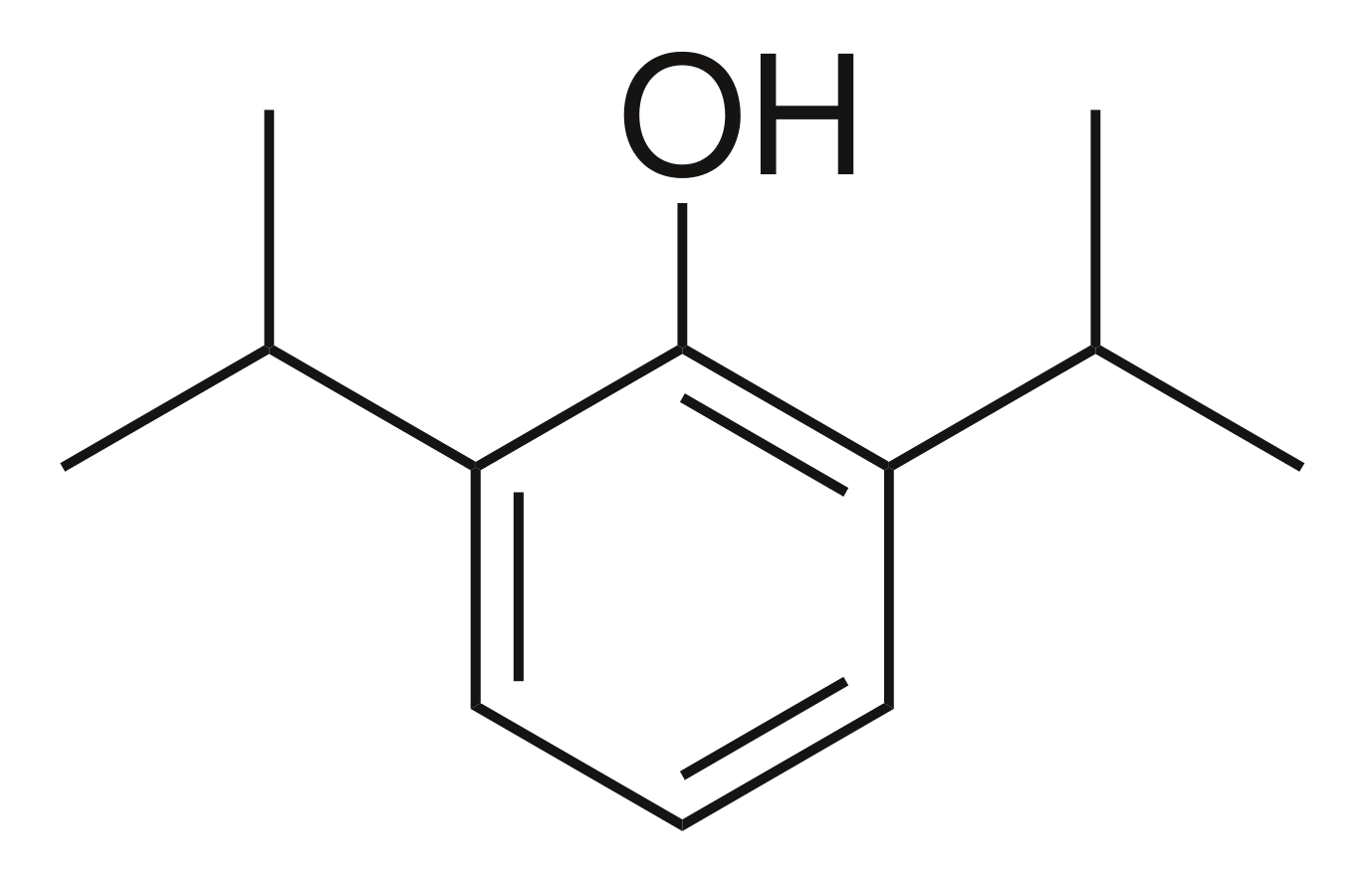
La estructura química del propofol

Estructura química del propofol

Imagen: “Propofol” por Harbin. Licencia: Dominio Público

Mecanismo de acción

  • No se entiende por completo
  • Puede implicar la facilitación de la neurotransmisión inhibitoria mediada por la unión del receptor Receptor Receptors are proteins located either on the surface of or within a cell that can bind to signaling molecules known as ligands (e.g., hormones) and cause some type of response within the cell. Receptors GABAA
  • Otros receptores y canales iónicos pueden estar implicados en EN Erythema nodosum is an immune-mediated panniculitis (inflammation of the subcutaneous fat) caused by a type IV (delayed-type) hypersensitivity reaction. It commonly manifests in young women as tender, erythematous nodules on the shins. Erythema Nodosum el efecto.

Efectos fisiológicos

  • Cardiovasculares:
    • ↓ Resistencia vascular sistémica → ↓ presión arterial
    • ↓ Precarga
    • ↓ Inotropismo
    • Alteración de la respuesta barorrefleja a la hipotensión
  • Respiratorios:
    • Depresión respiratoria profunda y apnea
    • ↓ Reflejos de las vías aéreas superiores
  • SNC:
    • ↓ Flujo sanguíneo cerebral → ↓ PIC
    • Acciones antieméticas

Farmacocinética

  • Distribución:
    • Liposolubilidad → rápida captación en EN Erythema nodosum is an immune-mediated panniculitis (inflammation of the subcutaneous fat) caused by a type IV (delayed-type) hypersensitivity reaction. It commonly manifests in young women as tender, erythematous nodules on the shins. Erythema Nodosum el cerebro
    • Inducción más rápida y menos “resaca”
    • Vida media: 40 minutos
  • Metabolismo:
    • Conjugación hepática a metabolitos inactivos
    • Metabolismo extrahepático en EN Erythema nodosum is an immune-mediated panniculitis (inflammation of the subcutaneous fat) caused by a type IV (delayed-type) hypersensitivity reaction. It commonly manifests in young women as tender, erythematous nodules on the shins. Erythema Nodosum menor medida
  • Excreción: renal

Indicaciones

  • Inducción de anestesia general:
    • Rápida aparición y recuperación
    • Efecto broncodilatador
    • No se ajusta la dosis en EN Erythema nodosum is an immune-mediated panniculitis (inflammation of the subcutaneous fat) caused by a type IV (delayed-type) hypersensitivity reaction. It commonly manifests in young women as tender, erythematous nodules on the shins. Erythema Nodosum caso de insuficiencia renal o hepática
  • Sedación para procedimientos
  • Otros usos:
    • Se utiliza en EN Erythema nodosum is an immune-mediated panniculitis (inflammation of the subcutaneous fat) caused by a type IV (delayed-type) hypersensitivity reaction. It commonly manifests in young women as tender, erythematous nodules on the shins. Erythema Nodosum la UCI para la sedación prolongada
    • Estatus epiléptico

Efectos secundarios y contraindicaciones

Efectos secundarios:

  • Hipotensión en EN Erythema nodosum is an immune-mediated panniculitis (inflammation of the subcutaneous fat) caused by a type IV (delayed-type) hypersensitivity reaction. It commonly manifests in young women as tender, erythematous nodules on the shins. Erythema Nodosum la inducción
  • Depresión respiratoria
  • Bradicardia
  • Hipertrigliceridemia (puede provocar pancreatitis Pancreatitis Inflammation of the pancreas. Pancreatitis is classified as acute unless there are computed tomographic or endoscopic retrograde cholangiopancreatographic findings of chronic pancreatitis. The two most common forms of acute pancreatitis are alcoholic pancreatitis and gallstone pancreatitis. Acute Pancreatitis)
  • Mioclonía, espasmos musculares, opistótonos y/o hipo
  • Ocasionalmente, causa cambios en EN Erythema nodosum is an immune-mediated panniculitis (inflammation of the subcutaneous fat) caused by a type IV (delayed-type) hypersensitivity reaction. It commonly manifests in young women as tender, erythematous nodules on the shins. Erythema Nodosum el ECG ECG An electrocardiogram (ECG) is a graphic representation of the electrical activity of the heart plotted against time. Adhesive electrodes are affixed to the skin surface allowing measurement of cardiac impulses from many angles. The ECG provides 3-dimensional information about the conduction system of the heart, the myocardium, and other cardiac structures. Electrocardiogram (ECG) (intervalo QT prolongado), pero rara vez es clínicamente significativo
  • Orina de color verde (poco frecuente)
  • Anafilaxia y angioedema Angioedema Angioedema is a localized, self-limited (but potentially life-threatening), nonpitting, asymmetrical edema occurring in the deep layers of the skin and mucosal tissue. The common underlying pathophysiology involves inflammatory mediators triggering significant vasodilation and increased capillary permeability. Angioedema

Interacciones medicamentosas:

  • La coadministración de midazolam Midazolam A short-acting hypnotic-sedative drug with anxiolytic and amnestic properties. It is used in dentistry, cardiac surgery, endoscopic procedures, as preanesthetic medication, and as an adjunct to local anesthesia. The short duration and cardiorespiratory stability makes it useful in poor-risk, elderly, and cardiac patients. It is water-soluble at ph less than 4 and lipid-soluble at physiological pH. Benzodiazepines puede reducir la dosis necesaria de propofol Propofol An intravenous anesthetic agent which has the advantage of a very rapid onset after infusion or bolus injection plus a very short recovery period of a couple of minutes. Propofol has been used as anticonvulsants and antiemetics. Intravenous Anesthetics para la inducción.

Contraindicaciones:

Sobredosis y toxicidad

El síndrome de infusión de propofol Propofol An intravenous anesthetic agent which has the advantage of a very rapid onset after infusion or bolus injection plus a very short recovery period of a couple of minutes. Propofol has been used as anticonvulsants and antiemetics. Intravenous Anesthetics se produce en EN Erythema nodosum is an immune-mediated panniculitis (inflammation of the subcutaneous fat) caused by a type IV (delayed-type) hypersensitivity reaction. It commonly manifests in young women as tender, erythematous nodules on the shins. Erythema Nodosum individuos con infusiones prolongadas de propofol Propofol An intravenous anesthetic agent which has the advantage of a very rapid onset after infusion or bolus injection plus a very short recovery period of a couple of minutes. Propofol has been used as anticonvulsants and antiemetics. Intravenous Anesthetics:

Presentación clínica:

  • Acidosis Acidosis A pathologic condition of acid accumulation or depletion of base in the body. The two main types are respiratory acidosis and metabolic acidosis, due to metabolic acid build up. Respiratory Acidosis metabólica
  • Hiperpotasemia
  • Hiperlipidemia
  • Rabdomiólisis
  • Bradicardia
  • Puede progresar a:
    • Insuficiencia renal
    • Colapso cardiovascular
    • Muerte

Tratamiento:

  • Interrupción del propofol Propofol An intravenous anesthetic agent which has the advantage of a very rapid onset after infusion or bolus injection plus a very short recovery period of a couple of minutes. Propofol has been used as anticonvulsants and antiemetics. Intravenous Anesthetics
  • Terapia de soporte

Fentanilo

Descripción general

  • Opioide de uso común en EN Erythema nodosum is an immune-mediated panniculitis (inflammation of the subcutaneous fat) caused by a type IV (delayed-type) hypersensitivity reaction. It commonly manifests in young women as tender, erythematous nodules on the shins. Erythema Nodosum la práctica de la anestesia moderna
  • Un opioide sintético muy potente (50–100 veces más potente que la morfina)
  • Se utiliza con mayor frecuencia como sedante en EN Erythema nodosum is an immune-mediated panniculitis (inflammation of the subcutaneous fat) caused by a type IV (delayed-type) hypersensitivity reaction. It commonly manifests in young women as tender, erythematous nodules on the shins. Erythema Nodosum personas intubadas

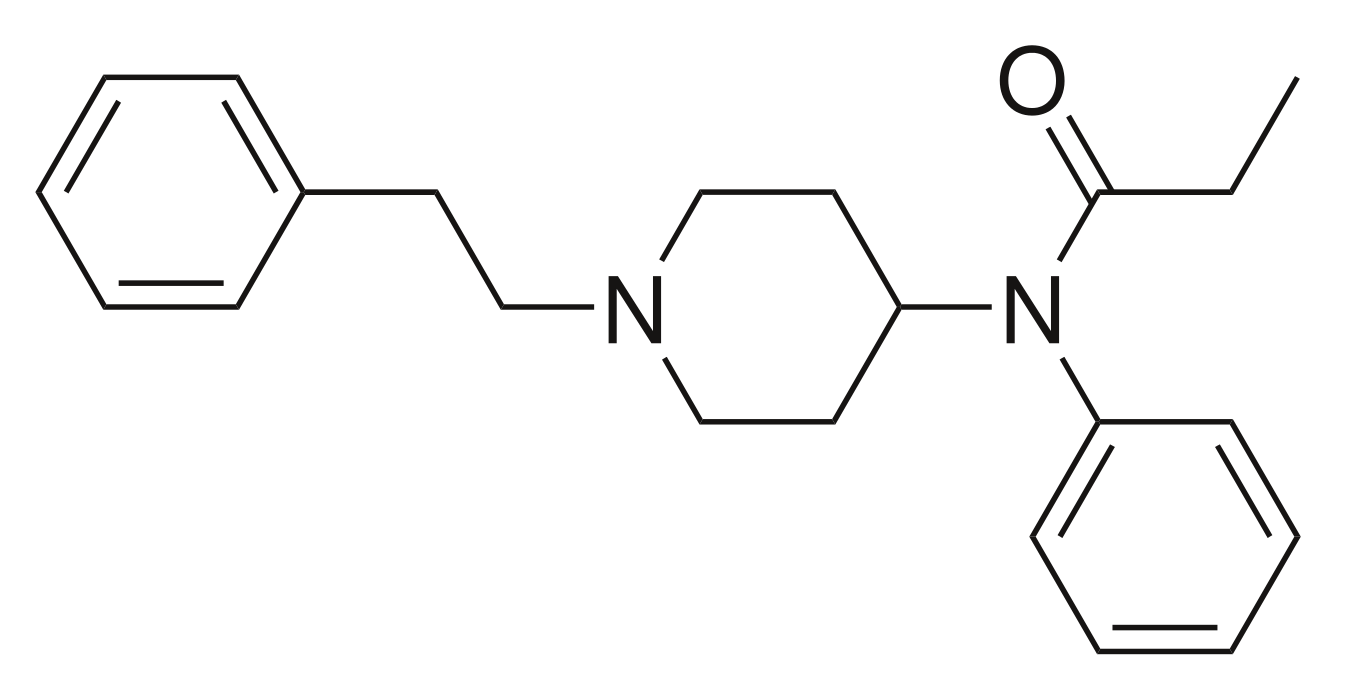
Estructura química

  • Amida de ácido monocarboxílico
  • Relacionados con las fenilpiperidinas
Estructura química del fentanilo

Estructura química del fentanilo

Imagen: “2D structure of fentanyl” por Harbin. Licencia: Dominio Público

Mecanismo de acción

  • Agonista opioide mu-selectivo → altera la percepción del dolor Dolor Inflammation y aumenta el umbral del dolor Dolor Inflammation
  • 100 veces más potente que la morfina

Efectos fisiológicos

  • Cardiovascular: activación vagal → ↓ frecuencia cardíaca y ligeramente ↓ presión arterial
  • Respiratorio: depresión respiratoria
  • SNC:

Farmacocinética

Indicaciones

Efectos secundarios y contraindicaciones

Efectos secundarios:

  • Depresión o paro respiratorio
  • Confusión
  • Somnolencia
  • Náuseas y vómitos
  • Alteraciones visuales
  • Alucinaciones
  • Delirium Delirium Delirium is a medical condition characterized by acute disturbances in attention and awareness. Symptoms may fluctuate during the course of a day and involve memory deficits and disorientation. Delirium
  • Disquinesia
  • Íleo narcótico
  • Estreñimiento

Interacciones medicamentosas:

  • Depresor respiratorio y potenciador del SNC en EN Erythema nodosum is an immune-mediated panniculitis (inflammation of the subcutaneous fat) caused by a type IV (delayed-type) hypersensitivity reaction. It commonly manifests in young women as tender, erythematous nodules on the shins. Erythema Nodosum conjunto con:
    • Benzodiazepinas
    • Relajantes musculares
    • Intoxicantes
    • Otros anestésicos
  • El síndrome serotoninérgico puede ocurrir en EN Erythema nodosum is an immune-mediated panniculitis (inflammation of the subcutaneous fat) caused by a type IV (delayed-type) hypersensitivity reaction. It commonly manifests in young women as tender, erythematous nodules on the shins. Erythema Nodosum conjunto con:
    • Inhibidores selectivos de la recaptura de serotonina
    • Antidepresivos tricíclicos
    • Triptanos
  • Los LOS Neisseria inhibidores del CYP3A4 CYP3A4 Class 3 Antiarrhythmic Drugs (Potassium Channel Blockers) prolongan la duración del efecto y/o los LOS Neisseria niveles del medicamento.
  • Los LOS Neisseria inductores del CYP3A4 CYP3A4 Class 3 Antiarrhythmic Drugs (Potassium Channel Blockers) pueden disminuir la duración del efecto y/o los LOS Neisseria niveles del medicamento.

Contraindicaciones:

  • Intolerancia conocida a los LOS Neisseria opioides
  • Depresión respiratoria significativa
  • Asma ASMA Autoimmune Hepatitis bronquial aguda o grave
  • Obstrucción gastrointestinal o íleo
  • Insuficiencia hepática
  • Traumatismo craneal o ↑ PIC

Sobredosis y toxicidad

Presentación clínica:

  • Depresión generalizada del SNC
  • Depresión respiratoria
  • Miosis Miosis Pupil: Physiology and Abnormalities
  • Hipotensión de moderada a grave
  • Náuseas y vómitos
  • Puede presentarse ansiedad, agitación, alucinaciones o disforia.

Tratamiento:

  • Antídoto: naloxona
  • Terapia de soporte

Referencias

  1. The practice of anesthesiology. Butterworth IV, J. F., Mackey, D. C., & Wasnick, J. D. (Eds.), (2018). Morgan & Mikhail’s Clinical Anesthesiology, 6e. McGraw-Hill. https://accessmedicine-mhmedical-com.ezproxy.unbosque.edu.co/content.aspx?bookid=2444&sectionid=189634971 
  2. Intravenous anesthetics. Butterworth IV, J. F., Mackey, D. C., & Wasnick, J. D. (Eds.), (2018). Morgan & Mikhail’s Clinical Anesthesiology, 6e. McGraw-Hill. https://accessmedicine-mhmedical-com.ezproxy.unbosque.edu.co/content.aspx?bookid=2444&sectionid=189636049
  3. Skibiski, J., & Abdijadid, S. (2024). Barbiturates. StatPearls. Retrieved on August 4, 2025, from http://www.ncbi.nlm.nih.gov/books/NBK539731/ 
  4. Bounds, C. G., & Nelson, V. L. (2024). Benzodiazepines. StatPearls. Retrieved on August 4, 2025, from http://www.ncbi.nlm.nih.gov/books/NBK470159/ 
  5. Rosenbaum, S. B., Gupta, V., & Palacios, J. L. (2024). Ketamine. StatPearls. Retrieved on August 4, 2025, from http://www.ncbi.nlm.nih.gov/books/NBK470357/
  6. Orhurhu, V. J., Vashisht, R., Claus, L. E., & Cohen, S. P. (2023). Ketamine toxicity. StatPearls. Retrieved on August 4, 2025, from http://www.ncbi.nlm.nih.gov/books/NBK541087/ 
  7. Williams, L. M., Boyd, K. L., & Fitzgerald, B. M. (2023). Etomidate. StatPearls. Retrieved on August 4, 2025, from http://www.ncbi.nlm.nih.gov/books/NBK535364/ 
  8. Folino, T. B., Muco, E., Safadi, A. O., & Parks, L. J. (2023). Propofol. StatPearls. Retrieved on August 4, 2025, from http://www.ncbi.nlm.nih.gov/books/NBK430884/ 
  9. Egan, T. D., & Newberry, C. (2018). Opioids. In M. C., Pardo, & Miller, R. D., (eds.), pp. 123–138.
  10. National Center for Biotechnology Information (2025). PubChem Compound Summary for CID 3345, Fentanyl. Retrieved on August 4, 2025, from https://pubchem.ncbi.nlm.nih.gov/compound/Fentanyl 
  11. Ramos-Matos, C. F., Bistas, K. G., & Lopez-Ojeda, W. (2023). Fentanyl. StatPearls. Retrieved on August 4, 2025, from http://www.ncbi.nlm.nih.gov/books/NBK459275/ 
  12. Schiller, E. Y., Goyal, A., & Mechanic, O. J. (2025). Opioid overdose. StatPearls. Retrieved on August 4, 2025, from http://www.ncbi.nlm.nih.gov/books/NBK470415/

¡Crea tu cuenta gratis o inicia una sesión para seguir leyendo!

Regístrate ahora y obtén acceso gratuito a Lecturio con páginas de concepto, videos médicos y cuestionarios para tu educación médica.

User Reviews

Details