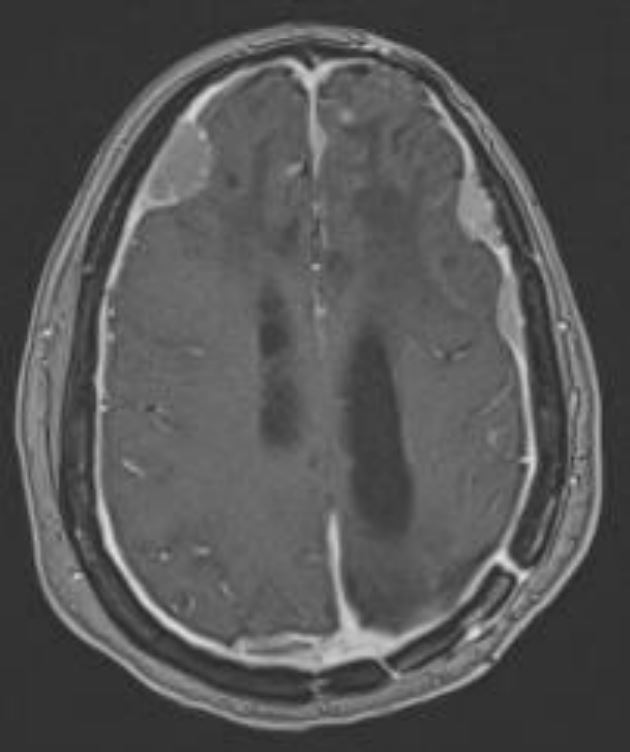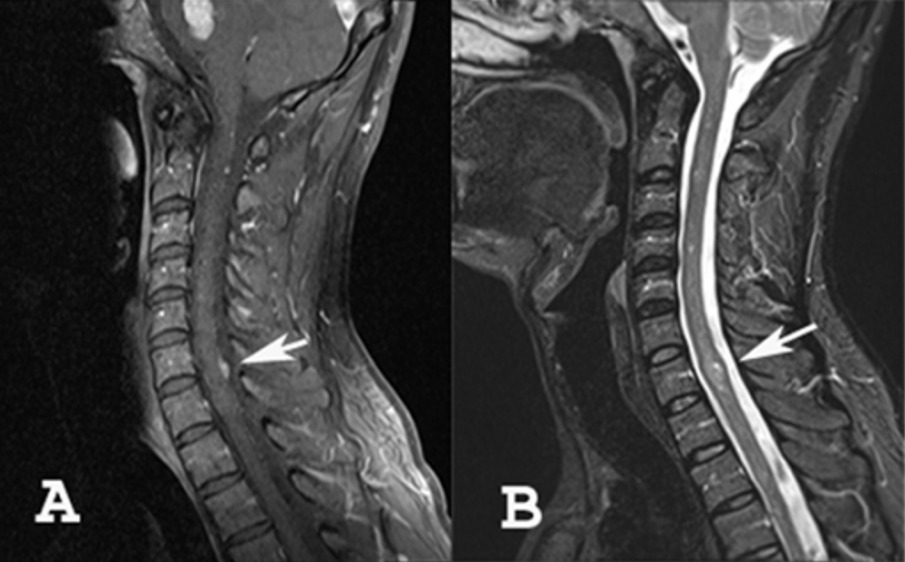



Neurofibromatose Tipo 2

A neurofibromatose tipo 2 é uma doença neurocutânea que pode surgir de mutações no gene Gene A category of nucleic acid sequences that function as units of heredity and which code for the basic instructions for the development, reproduction, and maintenance of organisms. Basic Terms of Genetics NF2 NF2 Neurofibromatosis type 2 is a neurocutaneous disorder that can arise from mutations in the NF2 gene located in chromosome 22 and may be inherited in an autosomal dominant fashion or occur from de novo mutations. The main clinical features are bilateral vestibular schwannomas, intracranial/spinal meningioma, and intramedullary and extramedullary spinal tumors. Neurofibromatosis Type 2 localizado no cromossomo 22 e pode ser herdada de forma autossómica dominante ou ocorrer a partir de mutações de novo. As principais características clínicas são schwannomas vestibulares bilaterais, meningiomas intracranianos/espinhais e tumores espinhais intramedulares e extramedulares. Outras características podem incluir lesões oculares, como cataratas, lesões de pele e neuropatia periférica. O diagnóstico é clinico a partir da história e do exame físico e confirmado com RMN, testes Testes Gonadal Hormones moleculares e histopatologia. Recomenda-se a vigilância de tumores e o acompanhamento com rastreio de familiares em risco. O tratamento inclui intervenções cirúrgicas, radioterapia e/ou terapêutica com anticorpos monoclonais com bevacizumab Bevacizumab An anti-vegf humanized murine monoclonal antibody. It inhibits vegf receptors and helps to prevent pathologic angiogenesis. Targeted and Other Nontraditional Antineoplastic Therapy.

Last updated: Dec 15, 2025

Editorial responsibility: Stanley Oiseth, Lindsay Jones, Evelin Maza

Descrição Geral

Epidemiologia

  • A incidência de neurofibromatose tipo 2 ( NF2 NF2 Neurofibromatosis type 2 is a neurocutaneous disorder that can arise from mutations in the NF2 gene located in chromosome 22 and may be inherited in an autosomal dominant fashion or occur from de novo mutations. The main clinical features are bilateral vestibular schwannomas, intracranial/spinal meningioma, and intramedullary and extramedullary spinal tumors. Neurofibromatosis Type 2) é de 1 em 25.000.
  • Os schwannomas vestibulares bilaterais estão presentes em 90%–95% dos indivíduos afetados.
  • Os meningiomas estão presentes em 50% dos indivíduos afetados.
  • As mutações de novo, que ocorrem na ausência de história familiar positiva, estão presentes em > 50% dos indivíduos afetados.
  • Mutações do gene Gene A category of nucleic acid sequences that function as units of heredity and which code for the basic instructions for the development, reproduction, and maintenance of organisms. Basic Terms of Genetics NF2 NF2 Neurofibromatosis type 2 is a neurocutaneous disorder that can arise from mutations in the NF2 gene located in chromosome 22 and may be inherited in an autosomal dominant fashion or occur from de novo mutations. The main clinical features are bilateral vestibular schwannomas, intracranial/spinal meningioma, and intramedullary and extramedullary spinal tumors. Neurofibromatosis Type 2 são detetadas em > 93% das famílias, com múltiplos membros afetados com NF2 NF2 Neurofibromatosis type 2 is a neurocutaneous disorder that can arise from mutations in the NF2 gene located in chromosome 22 and may be inherited in an autosomal dominant fashion or occur from de novo mutations. The main clinical features are bilateral vestibular schwannomas, intracranial/spinal meningioma, and intramedullary and extramedullary spinal tumors. Neurofibromatosis Type 2.

Etiologia

  • Causada pela mutação do gene Gene A category of nucleic acid sequences that function as units of heredity and which code for the basic instructions for the development, reproduction, and maintenance of organisms. Basic Terms of Genetics NF2 NF2 Neurofibromatosis type 2 is a neurocutaneous disorder that can arise from mutations in the NF2 gene located in chromosome 22 and may be inherited in an autosomal dominant fashion or occur from de novo mutations. The main clinical features are bilateral vestibular schwannomas, intracranial/spinal meningioma, and intramedullary and extramedullary spinal tumors. Neurofibromatosis Type 2 localizado no cromossomo 22
  • O gene Gene A category of nucleic acid sequences that function as units of heredity and which code for the basic instructions for the development, reproduction, and maintenance of organisms. Basic Terms of Genetics anormal:
  • O risco de transmissão genética de pais PAIS Androgen Insensitivity Syndrome para filhos é de 50%.

Patogénese

  • As mutações ocorrem no gene Gene A category of nucleic acid sequences that function as units of heredity and which code for the basic instructions for the development, reproduction, and maintenance of organisms. Basic Terms of Genetics NF2 NF2 Neurofibromatosis type 2 is a neurocutaneous disorder that can arise from mutations in the NF2 gene located in chromosome 22 and may be inherited in an autosomal dominant fashion or occur from de novo mutations. The main clinical features are bilateral vestibular schwannomas, intracranial/spinal meningioma, and intramedullary and extramedullary spinal tumors. Neurofibromatosis Type 2 , localizado no cromossomo 22.
  • O gene Gene A category of nucleic acid sequences that function as units of heredity and which code for the basic instructions for the development, reproduction, and maintenance of organisms. Basic Terms of Genetics NF2 NF2 Neurofibromatosis type 2 is a neurocutaneous disorder that can arise from mutations in the NF2 gene located in chromosome 22 and may be inherited in an autosomal dominant fashion or occur from de novo mutations. The main clinical features are bilateral vestibular schwannomas, intracranial/spinal meningioma, and intramedullary and extramedullary spinal tumors. Neurofibromatosis Type 2 codifica a síntese da merlina ( schwannomin Schwannomin A membrane protein homologous to the erm (ezrin-radixin-moesin) family of cytoskeleton-associated proteins which regulate physical properties of membranes. Alterations in neurofibromin 2 are the cause of neurofibromatosis 2. Neurofibromatosis Type 2):
    • Proteína relacionada com a membrana celular
    • Atua como supressor tumoral
    • Encontrada nas células de Schwann
  • As mutações levam à perda da expressão de merlina, permitindo o surgimento tumoral no sistema nervoso central e periférico.
  • Hipótese de 2 eventos:
    • Os schwannomas e outros tumores ocorrem somente após a inativação de ambos os alelos NF2 NF2 Neurofibromatosis type 2 is a neurocutaneous disorder that can arise from mutations in the NF2 gene located in chromosome 22 and may be inherited in an autosomal dominant fashion or occur from de novo mutations. The main clinical features are bilateral vestibular schwannomas, intracranial/spinal meningioma, and intramedullary and extramedullary spinal tumors. Neurofibromatosis Type 2:
      • Os indivíduos afetados nascem com 1 alelo anormal.
      • Alterações no 2º alelo são adquiridas.
    • A perda de função adquirida em todo o gene Gene A category of nucleic acid sequences that function as units of heredity and which code for the basic instructions for the development, reproduction, and maintenance of organisms. Basic Terms of Genetics NF2 NF2 Neurofibromatosis type 2 is a neurocutaneous disorder that can arise from mutations in the NF2 gene located in chromosome 22 and may be inherited in an autosomal dominant fashion or occur from de novo mutations. The main clinical features are bilateral vestibular schwannomas, intracranial/spinal meningioma, and intramedullary and extramedullary spinal tumors. Neurofibromatosis Type 2 ou no cromossomo 22 é mais MAIS Androgen Insensitivity Syndrome comum.
    • Mutações pontuais do alelo selvagem ocorrem com menos frequência.

Apresentação Clínica

A apresentação clínica da NF2 NF2 Neurofibromatosis type 2 is a neurocutaneous disorder that can arise from mutations in the NF2 gene located in chromosome 22 and may be inherited in an autosomal dominant fashion or occur from de novo mutations. The main clinical features are bilateral vestibular schwannomas, intracranial/spinal meningioma, and intramedullary and extramedullary spinal tumors. Neurofibromatosis Type 2 pode variar amplamente entre indivíduos com mutações de novo e famílias portadoras de mutações genéticas. O início em idades mais MAIS Androgen Insensitivity Syndrome jovens está frequentemente associado a uma apresentação atípica com sintomas mais MAIS Androgen Insensitivity Syndrome graves.
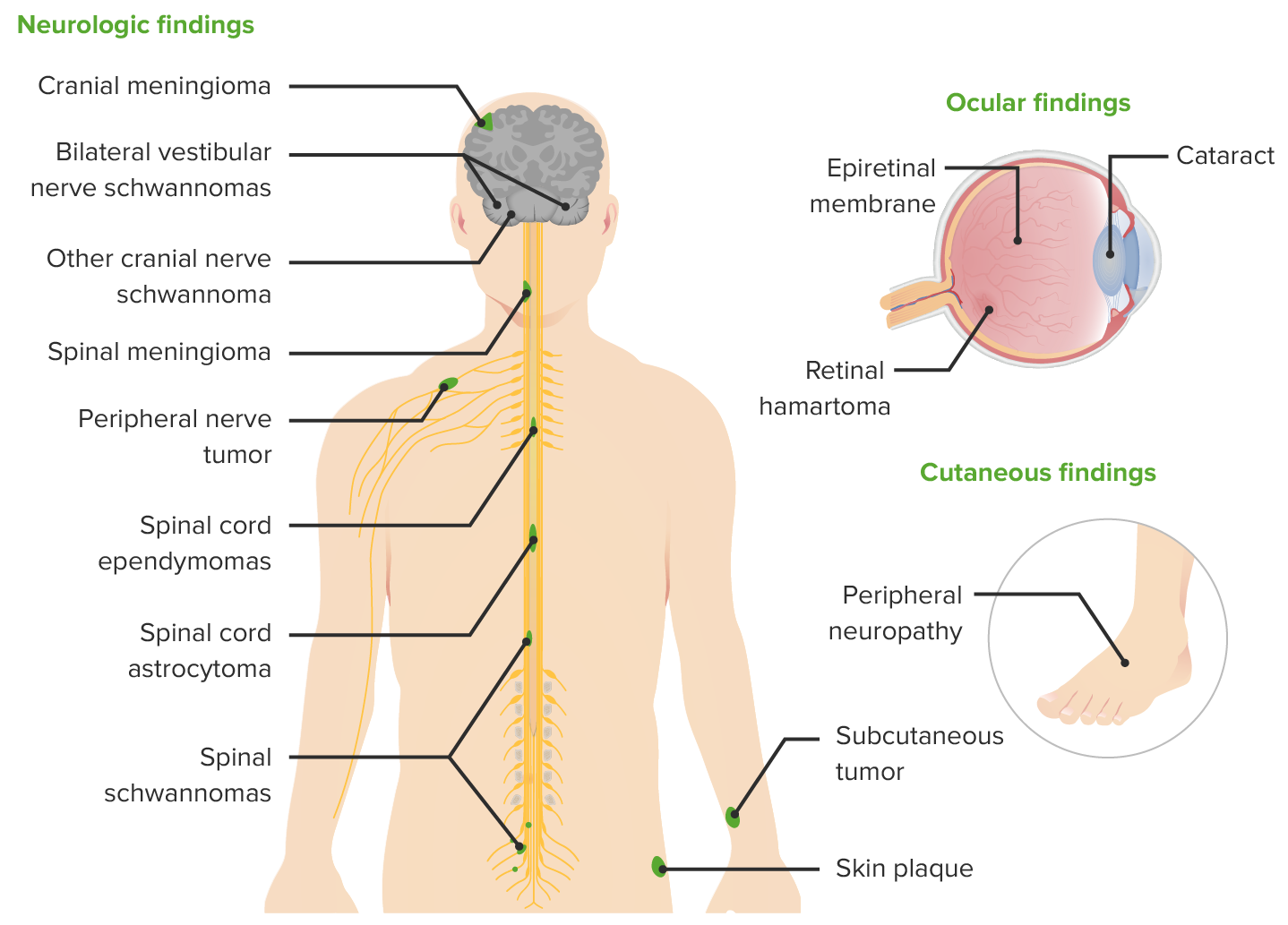
Manifestações clínicas da NF2

Manifestações clínicas da NF2

Imagem por Lecturio.
Idade de início

  • Início na infância:
    • Manifestações visuais / oculares
    • Dor
    • Fraqueza muscular
    • Mononeuropatia
    • Tumores cutâneos
    • Convulsões
  • Início na idade adulta ( mais MAIS Androgen Insensitivity Syndrome frequentemente por volta dos 20 anos):
    • Perda de audição
    • Zumbido

Lesões neurológicas

  • Schwannomas vestibulares (nervo craniano (NC) VIII):
    • Presentes em aproximadamente 95% dos indivíduos afetados pela NF2 NF2 Neurofibromatosis type 2 is a neurocutaneous disorder that can arise from mutations in the NF2 gene located in chromosome 22 and may be inherited in an autosomal dominant fashion or occur from de novo mutations. The main clinical features are bilateral vestibular schwannomas, intracranial/spinal meningioma, and intramedullary and extramedullary spinal tumors. Neurofibromatosis Type 2
    • Apresentação até aos 30 anos de idade
    • Tipicamente bilateral
    • Normalmente benigno
    • Sintomas:
      • Zumbido
      • Perda de audição
      • Perda de equilíbrio/equilíbrio
  • Schwannomas de outros nervos cranianos:
    • Presentes em 25%–50% dos indivíduos afetados pela NF2 NF2 Neurofibromatosis type 2 is a neurocutaneous disorder that can arise from mutations in the NF2 gene located in chromosome 22 and may be inherited in an autosomal dominant fashion or occur from de novo mutations. The main clinical features are bilateral vestibular schwannomas, intracranial/spinal meningioma, and intramedullary and extramedullary spinal tumors. Neurofibromatosis Type 2
    • Não observados no NC I ou NC II (ausência de células de Schwann)
    • Causa paralisias compressivas de nervos cranianos
    • Mais MAIS Androgen Insensitivity Syndrome frequentemente observados no:
      • NC III (oculomotor)
      • NC V (trigémeo)
      • NC VII (facial)
  • Meningioma Meningioma Meningiomas are slow-growing tumors that arise from the meninges of the brain and spinal cord. The vast majority are benign. These tumors commonly occur in individuals with a history of high doses of skull radiation, head trauma, and neurofibromatosis 2. Meningioma intracraniano:
    • Presente em 45%–60% dos indivíduos afetados ela NF2 NF2 Neurofibromatosis type 2 is a neurocutaneous disorder that can arise from mutations in the NF2 gene located in chromosome 22 and may be inherited in an autosomal dominant fashion or occur from de novo mutations. The main clinical features are bilateral vestibular schwannomas, intracranial/spinal meningioma, and intramedullary and extramedullary spinal tumors. Neurofibromatosis Type 2
    • Muitas vezes são múltiplos
    • Na NF2 NF2 Neurofibromatosis type 2 is a neurocutaneous disorder that can arise from mutations in the NF2 gene located in chromosome 22 and may be inherited in an autosomal dominant fashion or occur from de novo mutations. The main clinical features are bilateral vestibular schwannomas, intracranial/spinal meningioma, and intramedullary and extramedullary spinal tumors. Neurofibromatosis Type 2 desenvolve-se numa idade mais MAIS Androgen Insensitivity Syndrome jovem do que em casos esporádicos
    • Os sintomas dependem da localização e tamanho:
      • Défices neurológicos focais
      • Obstrução do fluxo do LCR
      • Convulsões
  • Meningioma Meningioma Meningiomas are slow-growing tumors that arise from the meninges of the brain and spinal cord. The vast majority are benign. These tumors commonly occur in individuals with a history of high doses of skull radiation, head trauma, and neurofibromatosis 2. Meningioma espinhal:
    • Presente em aproximadamente 20% dos indivíduos afetados pela NF2 NF2 Neurofibromatosis type 2 is a neurocutaneous disorder that can arise from mutations in the NF2 gene located in chromosome 22 and may be inherited in an autosomal dominant fashion or occur from de novo mutations. The main clinical features are bilateral vestibular schwannomas, intracranial/spinal meningioma, and intramedullary and extramedullary spinal tumors. Neurofibromatosis Type 2
    • Surgem do espaço extramedular
    • Os sintomas dependem da localização e tamanho:
      • Dor de costas
      • Dor na raiz nervosa/parestesias
      • Fraqueza muscular/paralisia
      • Obstrução do fluxo do LCR
  • Ependimomas espinhais:
    • Presentes em 20%–50% dos indivíduos afetados pela NF2 NF2 Neurofibromatosis type 2 is a neurocutaneous disorder that can arise from mutations in the NF2 gene located in chromosome 22 and may be inherited in an autosomal dominant fashion or occur from de novo mutations. The main clinical features are bilateral vestibular schwannomas, intracranial/spinal meningioma, and intramedullary and extramedullary spinal tumors. Neurofibromatosis Type 2
    • Normalmente surgem do espaço intramedular
    • Os sintomas dependem da localização e tamanho:
      • Dor de costas
      • Dor na raiz nervosa/parestesias
      • Fraqueza muscular/paralisia
      • Obstrução do fluxo do LCR
  • Neuropatia periférica:
    • Presente em > 65% dos indivíduos afetados pela NF2 NF2 Neurofibromatosis type 2 is a neurocutaneous disorder that can arise from mutations in the NF2 gene located in chromosome 22 and may be inherited in an autosomal dominant fashion or occur from de novo mutations. The main clinical features are bilateral vestibular schwannomas, intracranial/spinal meningioma, and intramedullary and extramedullary spinal tumors. Neurofibromatosis Type 2
    • Pode apresentar-se como uma neuropatia de compressão (mononeuropatia)
    • Pode apresentar-se como uma mononeuropatia multiplex
    • Pode apresentar-se como uma neuropatia sensorio-motora sistémica (não focal)
    • Sintomas de mononeuropatia dependentes do(s) nervo(s) afetado(s).
    • Sintomas de polineuropatia sistémica:
      • Dor neuropática/parestesias/perda sensorial em distribuição de luva e meia
      • Perda de força, coordenação e destreza numa distribuição de luva e meia

Lesões oculares

  • Cataratas:
    • Presentes em 60%–80% dos indivíduos afetados pela NF2 NF2 Neurofibromatosis type 2 is a neurocutaneous disorder that can arise from mutations in the NF2 gene located in chromosome 22 and may be inherited in an autosomal dominant fashion or occur from de novo mutations. The main clinical features are bilateral vestibular schwannomas, intracranial/spinal meningioma, and intramedullary and extramedullary spinal tumors. Neurofibromatosis Type 2
    • Apresenta-se com perda visual e opacidade da lente
  • Membranas epirretinianas:
    • Presentes em aproximadamente 80% dos indivíduos afetados pela NF2 NF2 Neurofibromatosis type 2 is a neurocutaneous disorder that can arise from mutations in the NF2 gene located in chromosome 22 and may be inherited in an autosomal dominant fashion or occur from de novo mutations. The main clinical features are bilateral vestibular schwannomas, intracranial/spinal meningioma, and intramedullary and extramedullary spinal tumors. Neurofibromatosis Type 2
    • Membranas brancas/cinzentas com bordas brancas distintivas
    • Podem ser translúcidas ou semitranslúcidas
    • Normalmente não interferem na visão
  • Hamartomas da retina Retina The ten-layered nervous tissue membrane of the eye. It is continuous with the optic nerve and receives images of external objects and transmits visual impulses to the brain. Its outer surface is in contact with the choroid and the inner surface with the vitreous body. The outermost layer is pigmented, whereas the inner nine layers are transparent. Eye: Anatomy:
    • Presentes em 5%–20% dos indivíduos afetados pela NF2 NF2 Neurofibromatosis type 2 is a neurocutaneous disorder that can arise from mutations in the NF2 gene located in chromosome 22 and may be inherited in an autosomal dominant fashion or occur from de novo mutations. The main clinical features are bilateral vestibular schwannomas, intracranial/spinal meningioma, and intramedullary and extramedullary spinal tumors. Neurofibromatosis Type 2
    • Afeta a mácula
    • Apresenta-se com perda visual

Lesões de pele

  • Podem ocorrer em qualquer lugar, sem área específica de predileção
  • Os tumores cutâneos mais MAIS Androgen Insensitivity Syndrome comuns são os schwannomas, embora os neurofibromas ou a histologia mista possam ser observados.
  • Placas cutâneas:
    • Presentes em 40%–50% dos indivíduos afetados pela NF2 NF2 Neurofibromatosis type 2 is a neurocutaneous disorder that can arise from mutations in the NF2 gene located in chromosome 22 and may be inherited in an autosomal dominant fashion or occur from de novo mutations. The main clinical features are bilateral vestibular schwannomas, intracranial/spinal meningioma, and intramedullary and extramedullary spinal tumors. Neurofibromatosis Type 2
    • Lesões circunscritas, levemente elevadas, levemente hiperpigmentadas, escamosas e ásperas
    • Normalmente < 2 cm de diâmetro
  • Tumores subcutâneos:
    • Presentes em 40%–50% dos indivíduos afetados pela NF2 NF2 Neurofibromatosis type 2 is a neurocutaneous disorder that can arise from mutations in the NF2 gene located in chromosome 22 and may be inherited in an autosomal dominant fashion or occur from de novo mutations. The main clinical features are bilateral vestibular schwannomas, intracranial/spinal meningioma, and intramedullary and extramedullary spinal tumors. Neurofibromatosis Type 2
    • Desenvolvem-se como tumefações ao longo dos nervos periféricos
    • Podem ser palpados como tumefações fusiformes ou nodulares
    • Pode ser notada dor à palpação.
  • Tumores intradérmicos:
    • Presentes em 60%–70% dos indivíduos afetados pela NF2 NF2 Neurofibromatosis type 2 is a neurocutaneous disorder that can arise from mutations in the NF2 gene located in chromosome 22 and may be inherited in an autosomal dominant fashion or occur from de novo mutations. The main clinical features are bilateral vestibular schwannomas, intracranial/spinal meningioma, and intramedullary and extramedullary spinal tumors. Neurofibromatosis Type 2
    • Lesões superficiais bem demarcadas com coloração azul/púrpura
    • Suaves à palpação

Diagnóstico

Critérios clínicos para neurofibromatose tipo 2 (critérios de Manchester revistos)

  • Qualquer 1 dos seguintes:
    • Schwannoma Schwannoma Schwannomas (also known as neurilemmomas) are benign nerve sheath tumors in the peripheral nervous system (PNS), arising from Schwann cells that encase the peripheral nerves. Schwannomas are the most common tumors in the PNS. Schwannoma vestibular bilateral < 70 anos de idade
    • Schwannoma Schwannoma Schwannomas (also known as neurilemmomas) are benign nerve sheath tumors in the peripheral nervous system (PNS), arising from Schwann cells that encase the peripheral nerves. Schwannomas are the most common tumors in the PNS. Schwannoma vestibular unilateral < 70 anos e familiar de 1º grau (que não seja apenas um irmão) com NF2 NF2 Neurofibromatosis type 2 is a neurocutaneous disorder that can arise from mutations in the NF2 gene located in chromosome 22 and may be inherited in an autosomal dominant fashion or occur from de novo mutations. The main clinical features are bilateral vestibular schwannomas, intracranial/spinal meningioma, and intramedullary and extramedullary spinal tumors. Neurofibromatosis Type 2
  • Quaisquer 2 dos seguintes:
    • Meningioma Meningioma Meningiomas are slow-growing tumors that arise from the meninges of the brain and spinal cord. The vast majority are benign. These tumors commonly occur in individuals with a history of high doses of skull radiation, head trauma, and neurofibromatosis 2. Meningioma, schwannoma Schwannoma Schwannomas (also known as neurilemmomas) are benign nerve sheath tumors in the peripheral nervous system (PNS), arising from Schwann cells that encase the peripheral nerves. Schwannomas are the most common tumors in the PNS. Schwannoma não vestibular, ependimoma, catarata; e
    • Familiar de 1º grau com NF2 NF2 Neurofibromatosis type 2 is a neurocutaneous disorder that can arise from mutations in the NF2 gene located in chromosome 22 and may be inherited in an autosomal dominant fashion or occur from de novo mutations. The main clinical features are bilateral vestibular schwannomas, intracranial/spinal meningioma, and intramedullary and extramedullary spinal tumors. Neurofibromatosis Type 2 ou schwannoma Schwannoma Schwannomas (also known as neurilemmomas) are benign nerve sheath tumors in the peripheral nervous system (PNS), arising from Schwann cells that encase the peripheral nerves. Schwannomas are the most common tumors in the PNS. Schwannoma vestibular unilateral e teste LZTR1 negativo (se ≥ 2 schwannomas não intradérmicos)
  • Outros critérios:
    • Meningioma Meningioma Meningiomas are slow-growing tumors that arise from the meninges of the brain and spinal cord. The vast majority are benign. These tumors commonly occur in individuals with a history of high doses of skull radiation, head trauma, and neurofibromatosis 2. Meningioma múltiplo e:
      • Schwannoma Schwannoma Schwannomas (also known as neurilemmomas) are benign nerve sheath tumors in the peripheral nervous system (PNS), arising from Schwann cells that encase the peripheral nerves. Schwannomas are the most common tumors in the PNS. Schwannoma vestibular unilateral ou
      • Quaisquer 2 dos seguintes: schwannoma Schwannoma Schwannomas (also known as neurilemmomas) are benign nerve sheath tumors in the peripheral nervous system (PNS), arising from Schwann cells that encase the peripheral nerves. Schwannomas are the most common tumors in the PNS. Schwannoma não vestibular, ependimoma, catarata
    • Mutação do gene Gene A category of nucleic acid sequences that function as units of heredity and which code for the basic instructions for the development, reproduction, and maintenance of organisms. Basic Terms of Genetics NF2 NF2 Neurofibromatosis type 2 is a neurocutaneous disorder that can arise from mutations in the NF2 gene located in chromosome 22 and may be inherited in an autosomal dominant fashion or occur from de novo mutations. The main clinical features are bilateral vestibular schwannomas, intracranial/spinal meningioma, and intramedullary and extramedullary spinal tumors. Neurofibromatosis Type 2 constitucional ou mosaicismo patogénico no sangue ou por identificação de uma mutação idêntica em 2 tumores distintos no mesmo indivíduo

Diagnóstico clínico

  • História clínica e familiar detalhada
  • Exame objetivo:
    • Avaliação auditiva
    • Avaliação oftalmológica
    • Exame neurológico
    • Exame da pele

Testes Testes Gonadal Hormones moleculares

  • Indicações:
    • Familiar de 1º grau com NF2 NF2 Neurofibromatosis type 2 is a neurocutaneous disorder that can arise from mutations in the NF2 gene located in chromosome 22 and may be inherited in an autosomal dominant fashion or occur from de novo mutations. The main clinical features are bilateral vestibular schwannomas, intracranial/spinal meningioma, and intramedullary and extramedullary spinal tumors. Neurofibromatosis Type 2
    • Presença de múltiplos tumores espinhais
    • Presença de schwannomas cutâneos
    • Presença de schwannoma Schwannoma Schwannomas (also known as neurilemmomas) are benign nerve sheath tumors in the peripheral nervous system (PNS), arising from Schwann cells that encase the peripheral nerves. Schwannomas are the most common tumors in the PNS. Schwannoma vestibular < 30 anos
    • Presença de meningioma Meningioma Meningiomas are slow-growing tumors that arise from the meninges of the brain and spinal cord. The vast majority are benign. These tumors commonly occur in individuals with a history of high doses of skull radiation, head trauma, and neurofibromatosis 2. Meningioma ou schwannoma Schwannoma Schwannomas (also known as neurilemmomas) are benign nerve sheath tumors in the peripheral nervous system (PNS), arising from Schwann cells that encase the peripheral nerves. Schwannomas are the most common tumors in the PNS. Schwannoma (não vestibular) em < 25 anos de idade
  • Começar com a análise do ADN do tumor Tumor Inflammation com sequenciamento de alterações de NF2 NF2 Neurofibromatosis type 2 is a neurocutaneous disorder that can arise from mutations in the NF2 gene located in chromosome 22 and may be inherited in an autosomal dominant fashion or occur from de novo mutations. The main clinical features are bilateral vestibular schwannomas, intracranial/spinal meningioma, and intramedullary and extramedullary spinal tumors. Neurofibromatosis Type 2 , seguida pela análise de linfócitos sanguíneos para a mesma alteração de NF2 NF2 Neurofibromatosis type 2 is a neurocutaneous disorder that can arise from mutations in the NF2 gene located in chromosome 22 and may be inherited in an autosomal dominant fashion or occur from de novo mutations. The main clinical features are bilateral vestibular schwannomas, intracranial/spinal meningioma, and intramedullary and extramedullary spinal tumors. Neurofibromatosis Type 2.
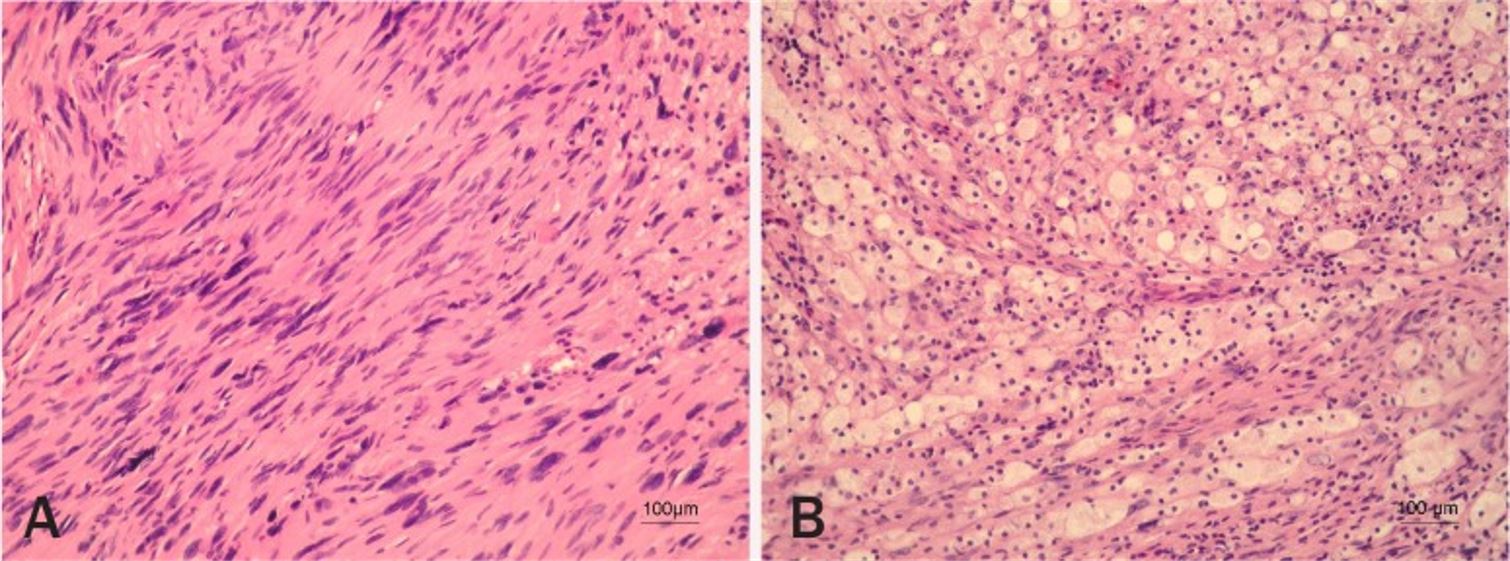
Histopatologia do Schwannoma Vestibular

Histopatologia do Schwannoma Vestibular

Imagem: “Vestibular schwannoma” por Pećina-Slaus N, Zeljko M, Pećina HI, Nikuseva Martić T, Bacić N, Tomas D, Hrasćan R. Licença: CC BY 2.5
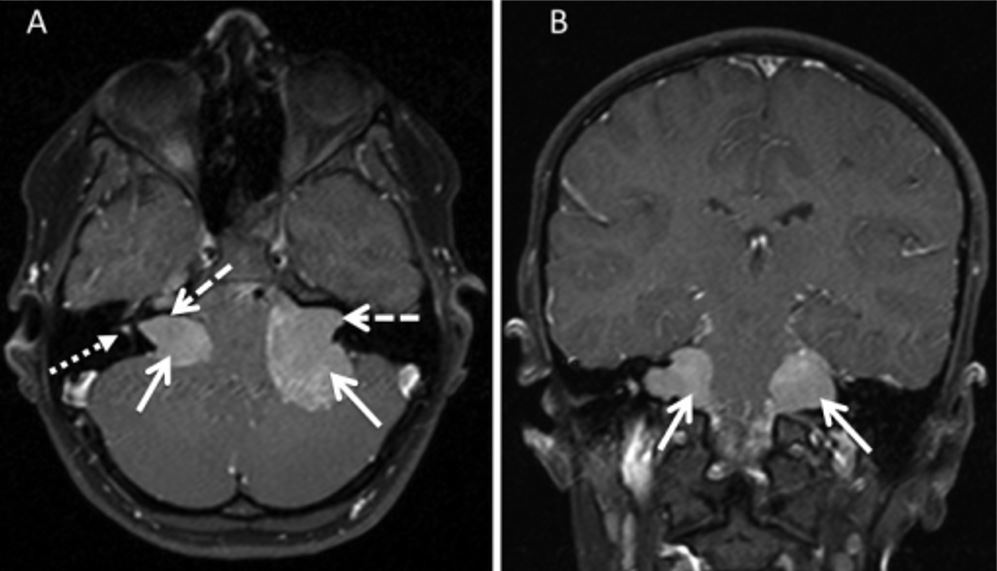
Imagiologia

  • A RMN com contraste é o método de escolha.
  • As imagens do cérebro e da coluna inteira são recomendadas para avaliar tumores intracranianos/espinhais.

Tratamento

A gestão da NF2 NF2 Neurofibromatosis type 2 is a neurocutaneous disorder that can arise from mutations in the NF2 gene located in chromosome 22 and may be inherited in an autosomal dominant fashion or occur from de novo mutations. The main clinical features are bilateral vestibular schwannomas, intracranial/spinal meningioma, and intramedullary and extramedullary spinal tumors. Neurofibromatosis Type 2 é multidisciplinar e muitas vezes envolve contribuições de vários especialistas.

  • Consultas com as seguintes especialidades:
    • Oncologia
    • Neurologia
    • Neurorradiologia
    • Oftalmologia
    • Dermatologia
    • Audiologia
    • Genética/aconselhamento genético
    • Neurocirurgia/cirurgia da base do crânio
  • Vigilância e acompanhamento de tumores:
    • História anual e exame físico (audiologia, avaliação oftalmológica, neurológica e cutânea)
    • RMN cerebral a cada 12 meses a partir dos 10 anos de idade
    • RMN da coluna vertebral a cada 24–36 meses a partir dos 10 anos de idade
  • Schwannoma Schwannoma Schwannomas (also known as neurilemmomas) are benign nerve sheath tumors in the peripheral nervous system (PNS), arising from Schwann cells that encase the peripheral nerves. Schwannomas are the most common tumors in the PNS. Schwannoma(s) vestibular(es):
    • Cirurgia:
      • Consulta de neurocirurgia ou cirurgia da base do crânio
      • A cirurgia pode ser complexa e de alto risco dependendo do tamanho, localização e multifocalidade.
    • Bevacizumab Bevacizumab An anti-vegf humanized murine monoclonal antibody. It inhibits vegf receptors and helps to prevent pathologic angiogenesis. Targeted and Other Nontraditional Antineoplastic Therapy:
      • Anticorpo monoclonal contra o fator de crescimento endotelial vascular
      • Induz o encolhimento do tumor Tumor Inflammation e a melhoria da audição
    • Outras terapêuticas direcionadas:
      • Everolimus Everolimus A derivative of sirolimus and an inhibitor of tor serine-threonine kinases. It is used to prevent graft rejection in heart and kidney transplant patients by blocking cell proliferation signals. It is also an antineoplastic agent. Immunosuppressants: inibidor quimioterápico da cinase que diminui o suprimento sanguíneo do tumor Tumor Inflammation.
      • Lapatinib Lapatinib A quinazoline derivative that inhibits epidermal growth factor receptor and HER2 tyrosine kinases. It is used for the treatment of advanced or metastatic breast cancer, where tumors overexpress HER2. Targeted and Other Nontraditional Antineoplastic Therapy: inibidor quimioterápico da tirosina cinase que interrompe as vias do recetor do fator de crescimento epidérmico (EGFR, pela sigla em inglês).
    • Défice auditivo:
      • Implantes cocleares
      • Implantes no tronco cerebral
  • Meningioma Meningioma Meningiomas are slow-growing tumors that arise from the meninges of the brain and spinal cord. The vast majority are benign. These tumors commonly occur in individuals with a history of high doses of skull radiation, head trauma, and neurofibromatosis 2. Meningioma:
    • Cirurgia:
      • Tumores de crescimento rápido
      • Tumores que ameaçam com perda funcional
    • Radioterapia:
      • Tumores que são inacessíveis cirurgicamente ou para os quais apenas é possível a ressecção parcial
      • Preocupação com o desenvolvimento de neoplasias secundárias
    • A terapêutica direcionada com lapatinib Lapatinib A quinazoline derivative that inhibits epidermal growth factor receptor and HER2 tyrosine kinases. It is used for the treatment of advanced or metastatic breast cancer, where tumors overexpress HER2. Targeted and Other Nontraditional Antineoplastic Therapy está a ser investigada.
  • Tumores intramedulares da coluna:
    • Geralmente crescem muito lentamente, sem sintomas por um longo período
    • A vigilância com RMN geralmente é adequada.
    • O bevacizumab Bevacizumab An anti-vegf humanized murine monoclonal antibody. It inhibits vegf receptors and helps to prevent pathologic angiogenesis. Targeted and Other Nontraditional Antineoplastic Therapy é a terapêutica de 1ª linha.
    • A cirurgia é recomendada se os sintomas exigirem intervenção.
  • Avaliação genética:
    • Identificação da mutação do gene Gene A category of nucleic acid sequences that function as units of heredity and which code for the basic instructions for the development, reproduction, and maintenance of organisms. Basic Terms of Genetics específico da NF2 NF2 Neurofibromatosis type 2 is a neurocutaneous disorder that can arise from mutations in the NF2 gene located in chromosome 22 and may be inherited in an autosomal dominant fashion or occur from de novo mutations. The main clinical features are bilateral vestibular schwannomas, intracranial/spinal meningioma, and intramedullary and extramedullary spinal tumors. Neurofibromatosis Type 2
    • Rastreio de familiares em risco

Diagnóstico Diferencial

  • Schwannomas vestibulares esporádicos: também conhecidos como neuromas acústicos. Na população geral, os schwannomas vestibulares esporádicos são relativamente comuns. Em contraste com a NF2 NF2 Neurofibromatosis type 2 is a neurocutaneous disorder that can arise from mutations in the NF2 gene located in chromosome 22 and may be inherited in an autosomal dominant fashion or occur from de novo mutations. The main clinical features are bilateral vestibular schwannomas, intracranial/spinal meningioma, and intramedullary and extramedullary spinal tumors. Neurofibromatosis Type 2, os schwannomas vestibulares esporádicos são tipicamente unilaterais e apresentam-se em > 30 anos de idade. A apresentação é com perda auditiva e problemas de equilíbrio. Essas lesões são diagnosticadas perante suspeita clínica e confirmadas com neuroimagem. As opções conservadoras e cirúrgicas são semelhantes às descritas para a NF2 NF2 Neurofibromatosis type 2 is a neurocutaneous disorder that can arise from mutations in the NF2 gene located in chromosome 22 and may be inherited in an autosomal dominant fashion or occur from de novo mutations. The main clinical features are bilateral vestibular schwannomas, intracranial/spinal meningioma, and intramedullary and extramedullary spinal tumors. Neurofibromatosis Type 2.
  • Schwannomatose: forma rara esporádica ou familiar de neurofibromatose associada a mutações nos genes Genes A category of nucleic acid sequences that function as units of heredity and which code for the basic instructions for the development, reproduction, and maintenance of organisms. DNA Types and Structure SMARCB1 e LZTR1 localizados no cromossoma 22. A schwannomatose é caracterizada por múltiplos schwannomas periféricos e intracranianos não cutâneos na ausência de schwannomas vestibulares bilaterais. O diagnóstico centra-se na avaliação clínica, sendo confirmado com a biópsia. O tratamento é sintomático, tratando a dor crónica que ocorre em aproximadamente metade de todos os doentes com schwannomatose.
  • Neurofibromatose tipo 1: distúrbio autossómico dominante causado por mutações no gene NF1 localizado no cromossoma 17q11.2. As manifestações clínicas podem sobrepor-se à NF2, mas as principais diferenças incluem o facto de que os nódulos de Lisch são vistos em número reduzido na NF2, os schwannomas raramente sofrem transformação maligna num neurofibrossarcoma, os tumores “dumbbell” da raiz espinhal que são vistos tanto no NF2 NF2 Neurofibromatosis type 2 is a neurocutaneous disorder that can arise from mutations in the NF2 gene located in chromosome 22 and may be inherited in an autosomal dominant fashion or occur from de novo mutations. The main clinical features are bilateral vestibular schwannomas, intracranial/spinal meningioma, and intramedullary and extramedullary spinal tumors. Neurofibromatosis Type 2 quanto no NF1 NF1 Neurofibromatosis type 1 (NF1), also known as phakomatosis, is a neurocutaneous disorder that is most commonly of autosomal dominant inheritance due to mutations in the NF1 gene. Neurofibromatosis type 1 presents a range of clinical manifestations with the most prominent features being various pigmented skin lesions called café au lait macules (CALMs), neurofibromas, freckling of the inguinal and axillary regions, and iris hamartomas. Neurofibromatosis Type 1 são schwannomas na NF2 NF2 Neurofibromatosis type 2 is a neurocutaneous disorder that can arise from mutations in the NF2 gene located in chromosome 22 and may be inherited in an autosomal dominant fashion or occur from de novo mutations. The main clinical features are bilateral vestibular schwannomas, intracranial/spinal meningioma, and intramedullary and extramedullary spinal tumors. Neurofibromatosis Type 2 e neurofibromas na NF1 NF1 Neurofibromatosis type 1 (NF1), also known as phakomatosis, is a neurocutaneous disorder that is most commonly of autosomal dominant inheritance due to mutations in the NF1 gene. Neurofibromatosis type 1 presents a range of clinical manifestations with the most prominent features being various pigmented skin lesions called café au lait macules (CALMs), neurofibromas, freckling of the inguinal and axillary regions, and iris hamartomas. Neurofibromatosis Type 1, e a NF2 NF2 Neurofibromatosis type 2 is a neurocutaneous disorder that can arise from mutations in the NF2 gene located in chromosome 22 and may be inherited in an autosomal dominant fashion or occur from de novo mutations. The main clinical features are bilateral vestibular schwannomas, intracranial/spinal meningioma, and intramedullary and extramedullary spinal tumors. Neurofibromatosis Type 2 não está associada ao comprometimento cognitivo visto na NF1 NF1 Neurofibromatosis type 1 (NF1), also known as phakomatosis, is a neurocutaneous disorder that is most commonly of autosomal dominant inheritance due to mutations in the NF1 gene. Neurofibromatosis type 1 presents a range of clinical manifestations with the most prominent features being various pigmented skin lesions called café au lait macules (CALMs), neurofibromas, freckling of the inguinal and axillary regions, and iris hamartomas. Neurofibromatosis Type 1. O tratamento é baseado nas características clínicas e pode variar desde a remoção cirúrgica à quimioterapia/radioterapia de tumores, terapia ocupacional e fisioterapia para défics motoras, tratamento com hormona do crescimento e órteses se alterações ósseas.
  • Esclerose tuberosa: distúrbio autossómico dominante com sintomas sobretudo neurocutâneos. A mutação nos genes TSC causa crescimentos excessivos “tumor-like” semelhantes a tumores no cérebro, olhos, coração, rins e pulmões. As manifestações cutâneas incluem hipopigmentação (ou seja, manchas em formato de folha (ash-leaf), lesões em forma de confetti) ou crescimento excessivo (ou seja, angiofibromas, manchas shagreen). O diagnóstico é feito por suspeita clínica e confirmado por testes Testes Gonadal Hormones genéticos. A gestão do doente envolve uma abordagem multidisciplinar que visa a monitorização e tratamento das várias manifestações da doença.

Referências

  1. Jordan, J. T., & Evans, G. (2025). NF2‑related schwannomatosis (NF2‑SWN; formerly neurofibromatosis type 2). In J. de Groot & H. A. Shih (Eds.), UpToDate. Retrieved June 17, 2025, from https://www.uptodate.com/contents/nf2-related-schwannomatosis-nf2-swn-formerly-neurofibromatosis-type-2
  2. Park, J.K. et al. (2025). Vestibular schwannoma (acoustic neuroma). UpToDate. Retrieved June 17, 2025, from https://www.uptodate.com/contents/vestibular-schwannoma-acoustic-neuroma
  3. Victorio, M.C. (2023). Neurofibromatosis. MSD Manual Professional Version. Retrieved June 17, 2025, from https://www.msdmanuals.com/professional/pediatrics/neurocutaneous-syndromes/neurofibromatosis
  4. Hsieh, D.T. (2022). Neurofibromatosis type 2. Medscape. Retrieved June 17, 2025, from https://emedicine.medscape.com/article/1178283
  5. Tiwari, R., Singh, A.K. (2022). Neurofibromatosis Type 2. StatPearls. Retrieved June 17, 2025, from https://www.ncbi.nlm.nih.gov/books/NBK470350/
  6. Asthagiri, A.R., et al. (2009). Neurofibromatosis type 2. Lancet 373:1974–1986. https://doi.org/10.1016/S0140-6736(09)60259-2

Crie sua conta gratuita ou faça login para continuar lendo!

Cadastre-se agora e tenha acesso grátis ao Lecturio, com páginas de conceitos, vídeos de medicina e questões para sua educação médica.

Aprende mais com a Lecturio:

Multiple devices displaying human anatomy and health education content.

Complementa o teu estudo da faculdade com o companheiro de estudo tudo-em-um da Lecturio, através de métodos de ensino baseados em evidência.

Estuda onde quiseres

Two iPhones display medical education apps, one showing anatomy, the other Bookmatcher.

A Lecturio Medical complementa o teu estudo através de métodos de ensino baseados em evidência, vídeos de palestras, perguntas e muito mais – tudo combinado num só lugar e fácil de usar.

User Reviews

Have a holly, jolly study session 🎁 Save 50% on all plans now >>

Que tengas una sesión de estudio alegre y navideña 🎁 Ahorra 50% en todos los planes >>

Details