



A menopausa é um processo fisiológico que ocorre em mulheres, esta caracteriza-se pela cessação permanente da menstruação após os ovários deixarem de ter atividade. A menopausa só pode ser diagnosticada de forma retrospetiva, após 12 meses sem hemorragia menstrual. Durante a transição para a menopausa, os níveis de hormonas reprodutivas podem flutuar significativamente, provocando sintomas que incluem sensações súbitas de calor Calor Inflammation, distúrbios do sono e do humor Humor Defense Mechanisms e secura vaginal. Nas mulheres pós-menopausa, os baixos níveis de estrogénio contribuem para um risco aumentado de doença cardiovascular, osteoporose e disfunção sexual devido à atrofia vulvovaginal resultante. Para algumas mulheres, estes sintomas afetam de forma negativa a qualidade de vida, sendo necessário tratamento. O tratamento assenta, geralmente, na terapêutica hormonal da menopausa (THM), mas também existem outras opções.
Last updated: Dec 15, 2025
A menopausa corresponde à cessação permanente e fisiológica da menstruação, após a perda de atividade dos ovários. Esta é determinada retrospetivamente, após 12 meses consecutivos sem hemorragia menstrual e com níveis baixos de estrogénio.
A menopausa carateriza-se por uma ↓ fisiológica dos oócitos causada por atresia Atresia Hypoplastic Left Heart Syndrome (HLHS) progressiva, o que culmina num estado hipoestrogénico crónico na pós-menopausa. Durante o período de transição, os níveis hormonais flutuam de forma significativa.
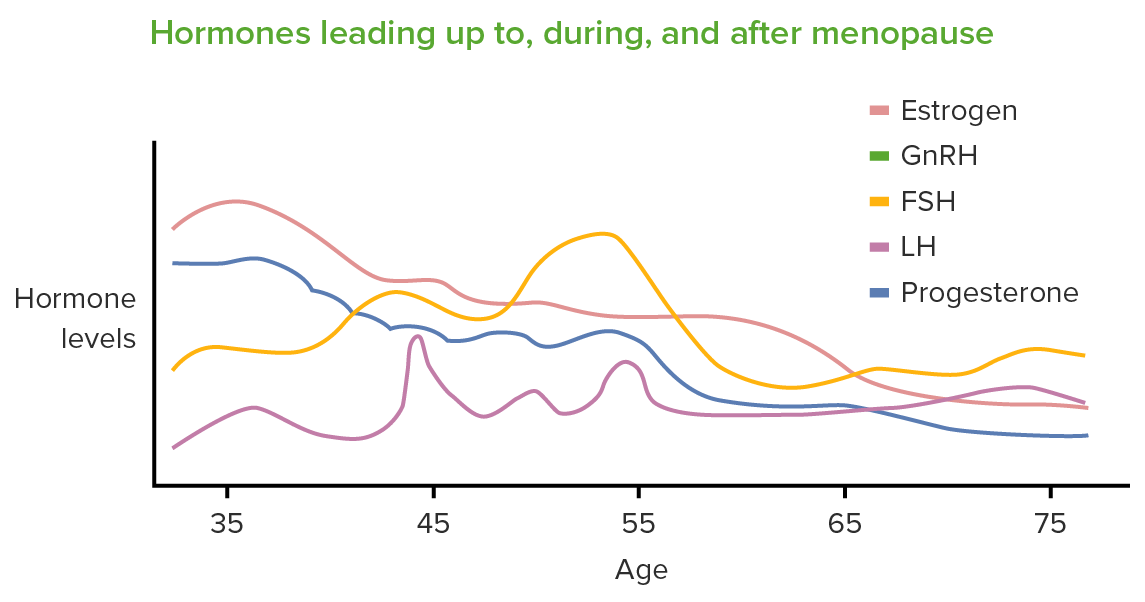
As principais alterações hormonais observadas na perimenopausa/menopausa são a diminuição do estrogénio e da progesterona e um aumento da hormona folículo-estimulante (FSH, pela sigla em inglês) e da hormona luteinizante (LH, pela sigla em inglês).
GnRH: hormona libertadora de gonadotrofinas
Contagens normais de oócitos:
Efeitos do estrogénio:
Idade reprodutiva tardia/transição para a menopausa precoce:
Transição para a menopausa tardia:
O estrogénio principal muda de estradiol Estradiol The 17-beta-isomer of estradiol, an aromatized C18 steroid with hydroxyl group at 3-beta- and 17-beta-position. Estradiol-17-beta is the most potent form of mammalian estrogenic steroids. Noncontraceptive Estrogen and Progestins (E2) para estrona ( E1 E1 An aromatized C18 steroid with a 3-hydroxyl group and a 17-ketone, a major mammalian estrogen. It is converted from androstenedione directly, or from testosterone via estradiol. In humans, it is produced primarily by the cyclic ovaries, placenta, and the adipose tissue of men and postmenopausal women. Noncontraceptive Estrogen and Progestins):
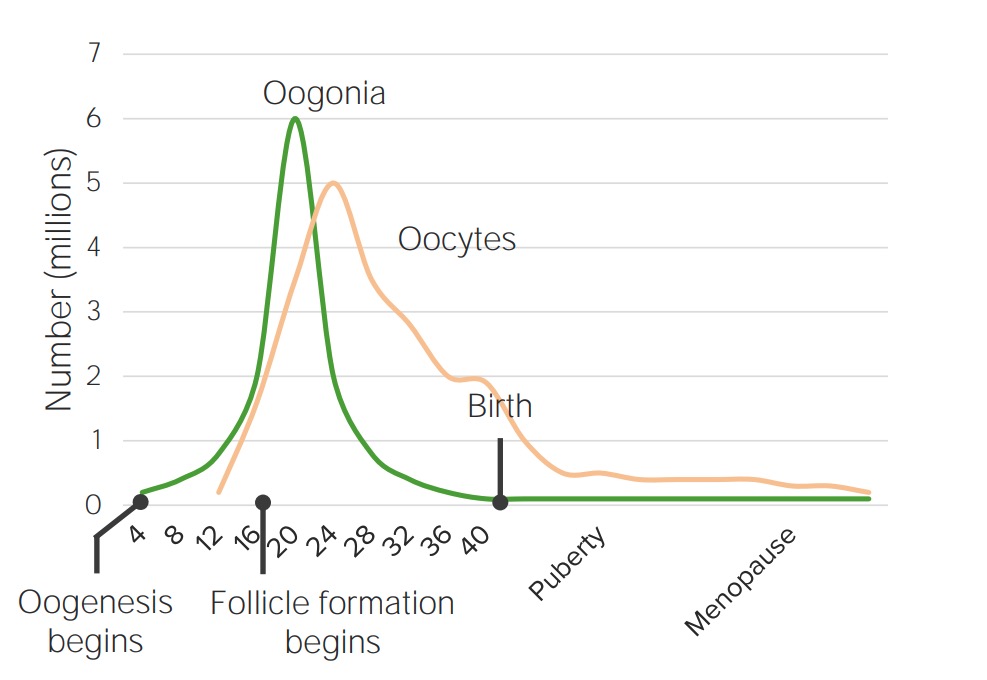
Contagem de oócitos ao longo da vida de uma mulher:
A oogénese está quase completa ao nascimento e a contagem de oócitos viáveis vai diminuindo ao longo da vida da mulher.
| Hormona | Alteração | Explicação |
|---|---|---|
| Hormona anti-Mülleriana (HAM) | ↓ |
|
| Inibina B | ↓ |
|
| Hormona luteinizante ( LH LH A major gonadotropin secreted by the adenohypophysis. Luteinizing hormone regulates steroid production by the interstitial cells of the testis and the ovary. The preovulatory luteinizing hormone surge in females induces ovulation, and subsequent luteinization of the follicle. Luteinizing hormone consists of two noncovalently linked subunits, alpha and beta. Within a species, the alpha subunit is common in the three pituitary glycoprotein hormones (TSH, LH, and FSH), but the beta subunit is unique and confers its biological specificity. Menstrual Cycle) e hormona folículo-estimulante ( FSH FSH A major gonadotropin secreted by the adenohypophysis. Follicle-stimulating hormone stimulates gametogenesis and the supporting cells such as the ovarian granulosa cells, the testicular sertoli cells, and leydig cells. Fsh consists of two noncovalently linked subunits, alpha and beta. Within a species, the alpha subunit is common in the three pituitary glycoprotein hormones (TSH, LH, and FSH), but the beta subunit is unique and confers its biological specificity. Menstrual Cycle) | ↑ | A inibina B tem um efeito inibitório sobre a LH LH A major gonadotropin secreted by the adenohypophysis. Luteinizing hormone regulates steroid production by the interstitial cells of the testis and the ovary. The preovulatory luteinizing hormone surge in females induces ovulation, and subsequent luteinization of the follicle. Luteinizing hormone consists of two noncovalently linked subunits, alpha and beta. Within a species, the alpha subunit is common in the three pituitary glycoprotein hormones (TSH, LH, and FSH), but the beta subunit is unique and confers its biological specificity. Menstrual Cycle e FSH FSH A major gonadotropin secreted by the adenohypophysis. Follicle-stimulating hormone stimulates gametogenesis and the supporting cells such as the ovarian granulosa cells, the testicular sertoli cells, and leydig cells. Fsh consists of two noncovalently linked subunits, alpha and beta. Within a species, the alpha subunit is common in the three pituitary glycoprotein hormones (TSH, LH, and FSH), but the beta subunit is unique and confers its biological specificity. Menstrual Cycle, portanto, durante a menopausa, os seus níveis aumentam. |
| Testosterona | ↓ |
|
A flutuação dos níveis hormonais no período de transição provoca os sintomas da perimenopausa. A apresentação clínica da pós-menopausa resulta dos níveis baixos de estrogénio decorrentes da perda de função ovárica, que persiste pelo resto da vida da mulher.
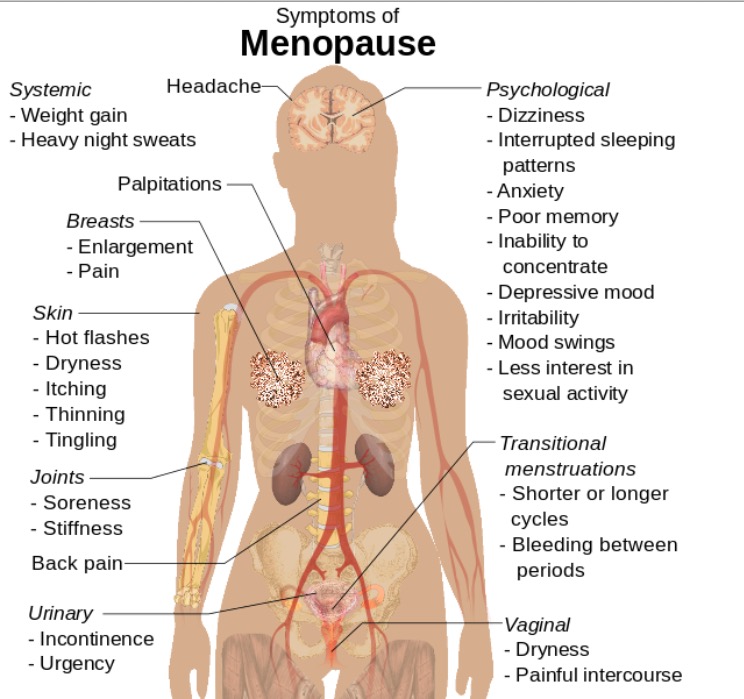
Sintomas da menopausa, que também podem ser observados na insuficiência ovárica primária
Imagem : “Symptoms of menopause” por Mikael Häggström. Licença: CC0Estes sintomas resultam do défice de estrogénio a longo prazo:
HAVOCS:
A maioria das mulheres na peri e pós-menopausa não necessita de tratamento. Os principais objetivos do tratamento são o alívio dos sintomas que afetam a qualidade de vida e a promoção da saúde através de rastreios adequados.
| Teste | Frequência |
|---|---|
| Citologia cervical | Até aos 65 anos/ a cada 3 anos |
| Rastreio de diabetes Diabetes Diabetes mellitus (DM) is a metabolic disease characterized by hyperglycemia and dysfunction of the regulation of glucose metabolism by insulin. Type 1 DM is diagnosed mostly in children and young adults as the result of autoimmune destruction of β cells in the pancreas and the resulting lack of insulin. Type 2 DM has a significant association with obesity and is characterized by insulin resistance. Diabetes Mellitus | Aos 45 anos/ a cada 3 anos |
| Colonoscopia | Aos 50 anos (45 se for uma doente de alto risco)/ a cada 10 anos |
| Mamografia | Aos 40 anos/ anualmente |
| Densidade mineral óssea | Aos 65 anos/ a cada 2 anos se estiverem presentes fatores de risco |