A diabetesDiabetesDiabetes mellitus (DM) is a metabolic disease characterized by hyperglycemia and dysfunction of the regulation of glucose metabolism by insulin. Type 1 DM is diagnosed mostly in children and young adults as the result of autoimmune destruction of β cells in the pancreas and the resulting lack of insulin. Type 2 DM has a significant association with obesity and is characterized by insulin resistance.Diabetes Mellitus mellitus (DMDMDiabetes mellitus (DM) is a metabolic disease characterized by hyperglycemia and dysfunction of the regulation of glucose metabolism by insulin. Type 1 DM is diagnosed mostly in children and young adults as the result of autoimmune destruction of β cells in the pancreas and the resulting lack of insulin. Type 2 DM has a significant association with obesity and is characterized by insulin resistance.Diabetes Mellitus) é uma doença metabólica caracterizada por hiperglicemia e disfunção da regulação do metabolismo da glicose pela insulina. A DMDMDiabetes mellitus (DM) is a metabolic disease characterized by hyperglycemia and dysfunction of the regulation of glucose metabolism by insulin. Type 1 DM is diagnosed mostly in children and young adults as the result of autoimmune destruction of β cells in the pancreas and the resulting lack of insulin. Type 2 DM has a significant association with obesity and is characterized by insulin resistance.Diabetes Mellitus tipo 1 é diagnosticada principalmente em crianças e adultos jovens como resultado da destruição autoimune das células β pancreáticas e da consequente falta de insulina. A DMDMDiabetes mellitus (DM) is a metabolic disease characterized by hyperglycemia and dysfunction of the regulation of glucose metabolism by insulin. Type 1 DM is diagnosed mostly in children and young adults as the result of autoimmune destruction of β cells in the pancreas and the resulting lack of insulin. Type 2 DM has a significant association with obesity and is characterized by insulin resistance.Diabetes Mellitus tipo 2 apresenta uma associação significativa com a obesidade e caracteriza-se por resistência à insulina, bem como por défice relativo de insulina. As causas genéticas da diabetesDiabetesDiabetes mellitus (DM) is a metabolic disease characterized by hyperglycemia and dysfunction of the regulation of glucose metabolism by insulin. Type 1 DM is diagnosed mostly in children and young adults as the result of autoimmune destruction of β cells in the pancreas and the resulting lack of insulin. Type 2 DM has a significant association with obesity and is characterized by insulin resistance.Diabetes Mellitus (e.g., maturity onset diabetes of the youngMaturity Onset Diabetes of The YoungDiabetes Mellitus (MODYMODYDiabetes Mellitus) e latent autoimmune diabetesDiabetesDiabetes mellitus (DM) is a metabolic disease characterized by hyperglycemia and dysfunction of the regulation of glucose metabolism by insulin. Type 1 DM is diagnosed mostly in children and young adults as the result of autoimmune destruction of β cells in the pancreas and the resulting lack of insulin. Type 2 DM has a significant association with obesity and is characterized by insulin resistance.Diabetes Mellitus in adults (LADALADAAutoimmune diabetes in adults with slowly progressive pancreatic beta cell failure and the presence of circulating autoantibodies to pancreatic islets cell antigens.Diabetes Mellitus)) são cada vez maisMAISAndrogen Insensitivity Syndrome reconhecidas, mas constituem uma pequena parte dos casos. Não há cura definitiva para a DMDMDiabetes mellitus (DM) is a metabolic disease characterized by hyperglycemia and dysfunction of the regulation of glucose metabolism by insulin. Type 1 DM is diagnosed mostly in children and young adults as the result of autoimmune destruction of β cells in the pancreas and the resulting lack of insulin. Type 2 DM has a significant association with obesity and is characterized by insulin resistance.Diabetes Mellitus. O objetivo do tratamento é a prevenção de complicações, que podem incluir doença arterial coronária, doença renal crónica (DRC), retinopatia e neuropatia. A monitorização a longo prazo e a manutenção dos níveis ideais de glicemia são fundamentais para prevenir complicações. O tratamento é específico de acordo com o tipo de diabetesDiabetesDiabetes mellitus (DM) is a metabolic disease characterized by hyperglycemia and dysfunction of the regulation of glucose metabolism by insulin. Type 1 DM is diagnosed mostly in children and young adults as the result of autoimmune destruction of β cells in the pancreas and the resulting lack of insulin. Type 2 DM has a significant association with obesity and is characterized by insulin resistance.Diabetes Mellitus, tendo como objetivo o controlo glicémico em todos os tipos; a reposição de insulina é essencial na DMDMDiabetes mellitus (DM) is a metabolic disease characterized by hyperglycemia and dysfunction of the regulation of glucose metabolism by insulin. Type 1 DM is diagnosed mostly in children and young adults as the result of autoimmune destruction of β cells in the pancreas and the resulting lack of insulin. Type 2 DM has a significant association with obesity and is characterized by insulin resistance.Diabetes Mellitus tipo 1, e uma dieta saudável, mudanças no estilo de vida e fármacos são importantes na DMDMDiabetes mellitus (DM) is a metabolic disease characterized by hyperglycemia and dysfunction of the regulation of glucose metabolism by insulin. Type 1 DM is diagnosed mostly in children and young adults as the result of autoimmune destruction of β cells in the pancreas and the resulting lack of insulin. Type 2 DM has a significant association with obesity and is characterized by insulin resistance.Diabetes Mellitus tipo 2.
A diabetesDiabetesDiabetes mellitus (DM) is a metabolic disease characterized by hyperglycemia and dysfunction of the regulation of glucose metabolism by insulin. Type 1 DM is diagnosed mostly in children and young adults as the result of autoimmune destruction of β cells in the pancreas and the resulting lack of insulin. Type 2 DM has a significant association with obesity and is characterized by insulin resistance.Diabetes Mellitus mellitus (DMDMDiabetes mellitus (DM) is a metabolic disease characterized by hyperglycemia and dysfunction of the regulation of glucose metabolism by insulin. Type 1 DM is diagnosed mostly in children and young adults as the result of autoimmune destruction of β cells in the pancreas and the resulting lack of insulin. Type 2 DM has a significant association with obesity and is characterized by insulin resistance.Diabetes Mellitus) é uma patologia do metabolismo dos hidratos de carbono. Geralmente ocorre em indivíduos com predisposição genética e caracteriza-se pela produção inadequada de insulina ou resistência à ação da insulina no pâncreas, resultando em hiperglicemia e sequelas patológicas a longo prazo.
Prevalência estimada de 10,5% nos Estados Unidos (e 27% em americanos > 65 anos)
Incidência muito maior em nativos americanos, negros, hispânicos, asiático-americanos e indivíduos das ilhas do Pacífico
DiabetesDiabetesDiabetes mellitus (DM) is a metabolic disease characterized by hyperglycemia and dysfunction of the regulation of glucose metabolism by insulin. Type 1 DM is diagnosed mostly in children and young adults as the result of autoimmune destruction of β cells in the pancreas and the resulting lack of insulin. Type 2 DM has a significant association with obesity and is characterized by insulin resistance.Diabetes Mellitus gestacional
Ocorre em 5%–7% das gestações nos Estados Unidos
As prevalências étnicas e geográficas são semelhantes às da DMDMDiabetes mellitus (DM) is a metabolic disease characterized by hyperglycemia and dysfunction of the regulation of glucose metabolism by insulin. Type 1 DM is diagnosed mostly in children and young adults as the result of autoimmune destruction of β cells in the pancreas and the resulting lack of insulin. Type 2 DM has a significant association with obesity and is characterized by insulin resistance.Diabetes Mellitus tipo 2
Nos Estados Unidos, prevalência elevada em mulheres afro-americanas, hispano-americanas, nativas americanas, das ilhas do Pacífico e do sul ou este asiático
Aumento da incidência de diabetesDiabetesDiabetes mellitus (DM) is a metabolic disease characterized by hyperglycemia and dysfunction of the regulation of glucose metabolism by insulin. Type 1 DM is diagnosed mostly in children and young adults as the result of autoimmune destruction of β cells in the pancreas and the resulting lack of insulin. Type 2 DM has a significant association with obesity and is characterized by insulin resistance.Diabetes Mellitus não gestacional numa fase posterior da vida
Fatores de risco:
Hemoglobina A1c ≥ 5,7% ou elevação da glicemia em jejum antes da gravidez
DiabetesDiabetesDiabetes mellitus (DM) is a metabolic disease characterized by hyperglycemia and dysfunction of the regulation of glucose metabolism by insulin. Type 1 DM is diagnosed mostly in children and young adults as the result of autoimmune destruction of β cells in the pancreas and the resulting lack of insulin. Type 2 DM has a significant association with obesity and is characterized by insulin resistance.Diabetes Mellitus gestacional em gravidez anterior
≥ 110% do peso corporal ideal ou IMC (peso em quilogramas a dividir pelo quadrado da altura em metros) > 30 durante a gestação
Ganho excessivo de peso durante a 1.ª metade da gestação
História familiar de DMDMDiabetes mellitus (DM) is a metabolic disease characterized by hyperglycemia and dysfunction of the regulation of glucose metabolism by insulin. Type 1 DM is diagnosed mostly in children and young adults as the result of autoimmune destruction of β cells in the pancreas and the resulting lack of insulin. Type 2 DM has a significant association with obesity and is characterized by insulin resistance.Diabetes Mellitus
Glicose na urina na 1.ª consulta pré-natal
Filhos anteriores ≥ 4 kg ao nascimento
Perfil lipídico alterado
Síndrome do ovário poliquístico (SOP)
Uso de glicocorticóides
Gravidez múltipla (gemelar, trigemelar, etcETCThe electron transport chain (ETC) sends electrons through a series of proteins, which generate an electrochemical proton gradient that produces energy in the form of adenosine triphosphate (ATP).Electron Transport Chain (ETC).)
Latent Autoimmune DiabetesDiabetesDiabetes mellitus (DM) is a metabolic disease characterized by hyperglycemia and dysfunction of the regulation of glucose metabolism by insulin. Type 1 DM is diagnosed mostly in children and young adults as the result of autoimmune destruction of β cells in the pancreas and the resulting lack of insulin. Type 2 DM has a significant association with obesity and is characterized by insulin resistance.Diabetes Mellitus in Adults (LADALADAAutoimmune diabetes in adults with slowly progressive pancreatic beta cell failure and the presence of circulating autoantibodies to pancreatic islets cell antigens.Diabetes Mellitus, pela sigla em inglês)
Com apresentação na idade adulta: > 25 anos
2%–12% da DMDMDiabetes mellitus (DM) is a metabolic disease characterized by hyperglycemia and dysfunction of the regulation of glucose metabolism by insulin. Type 1 DM is diagnosed mostly in children and young adults as the result of autoimmune destruction of β cells in the pancreas and the resulting lack of insulin. Type 2 DM has a significant association with obesity and is characterized by insulin resistance.Diabetes Mellitus tipo 2 na população adulta
Afeta 1%–5% de todos os pacientes com diabetesDiabetesDiabetes mellitus (DM) is a metabolic disease characterized by hyperglycemia and dysfunction of the regulation of glucose metabolism by insulin. Type 1 DM is diagnosed mostly in children and young adults as the result of autoimmune destruction of β cells in the pancreas and the resulting lack of insulin. Type 2 DM has a significant association with obesity and is characterized by insulin resistance.Diabetes Mellitus mellitus
Sem predileção étnica
Etiologia
Tipo 1
Destruição autoimune das células β pancreáticas por anticorpos anti descarboxilase do ácido glutâmico (GADGADGeneralized anxiety disorder (GAD) is a common mental condition defined by excessive, uncontrollable worrying causing distress and occurring frequently for at least 6 months. Generalized anxiety disorder is more common in women. Clinical presentation includes fatigue, low concentration, restlessness, irritability, and sleep disturbance.Generalized Anxiety Disorder, pela sigla em inglês) provocando défice de insulina
DiabetesDiabetesDiabetes mellitus (DM) is a metabolic disease characterized by hyperglycemia and dysfunction of the regulation of glucose metabolism by insulin. Type 1 DM is diagnosed mostly in children and young adults as the result of autoimmune destruction of β cells in the pancreas and the resulting lack of insulin. Type 2 DM has a significant association with obesity and is characterized by insulin resistance.Diabetes Mellitus gestacional
Etiologia pouco clara, mas não autoimune
Aumento da secreção de insulina, mas não em quantidade suficiente para manter os níveis de glicose normais
Diminuição da sensibilidade à insulina
DiabetesDiabetesDiabetes mellitus (DM) is a metabolic disease characterized by hyperglycemia and dysfunction of the regulation of glucose metabolism by insulin. Type 1 DM is diagnosed mostly in children and young adults as the result of autoimmune destruction of β cells in the pancreas and the resulting lack of insulin. Type 2 DM has a significant association with obesity and is characterized by insulin resistance.Diabetes Mellitus tipo LADALADAAutoimmune diabetes in adults with slowly progressive pancreatic beta cell failure and the presence of circulating autoantibodies to pancreatic islets cell antigens.Diabetes Mellitus
Semelhante à diabetesDiabetesDiabetes mellitus (DM) is a metabolic disease characterized by hyperglycemia and dysfunction of the regulation of glucose metabolism by insulin. Type 1 DM is diagnosed mostly in children and young adults as the result of autoimmune destruction of β cells in the pancreas and the resulting lack of insulin. Type 2 DM has a significant association with obesity and is characterized by insulin resistance.Diabetes Mellitus tipo 1, está associada a genesGenesA category of nucleic acid sequences that function as units of heredity and which code for the basic instructions for the development, reproduction, and maintenance of organisms.DNA Types and Structure do complexo HLA
Obesidade e outros fatores de risco que provocam resistência à insulina
DiabetesDiabetesDiabetes mellitus (DM) is a metabolic disease characterized by hyperglycemia and dysfunction of the regulation of glucose metabolism by insulin. Type 1 DM is diagnosed mostly in children and young adults as the result of autoimmune destruction of β cells in the pancreas and the resulting lack of insulin. Type 2 DM has a significant association with obesity and is characterized by insulin resistance.Diabetes Mellitus tipo MODYMODYDiabetes Mellitus
Transmissão autossómica dominante
14 subtipos distintos
Mecanismos envolvidos:
Regulação da transcrição disfuncional
Enzimas metabólicas alteradas
Desdobramento proteico
Canais iónicos disfuncionais
Compromisso da transdução de sinal
Fisiopatologia
Tipo 1
Destruição imunomediada por células T das células produtoras de insulina dos ilhéus pancreáticos
Autoanticorpos (nem sempre detetáveis):
Anticorpos GADGADGeneralized anxiety disorder (GAD) is a common mental condition defined by excessive, uncontrollable worrying causing distress and occurring frequently for at least 6 months. Generalized anxiety disorder is more common in women. Clinical presentation includes fatigue, low concentration, restlessness, irritability, and sleep disturbance.Generalized Anxiety Disorder:
Apresentam como alvo as células β pancreáticas produtoras de insulina
Destruição autoimune de 80%–90% das células
Provocam défice de insulina e hiperglicemia.
Anticorpos citoplasmáticos anti células dos ilhéus pancreáticos (ICAICADiabetes Mellitus, pela sigla em inglês)
Anticorpos anti insulinoma-2 (IA-2, pela sigla em inglês)
Anticorpos anti insulina (IAA, pela sigla em inglês)
Anticorpos anti transportador do zinco 8 (ZnT8, pela sigla em inglês)
Os pacientes apresentam produção autónoma de insulina mínima ou nula:
Requerem reposição de insulina em todos os momentos para tratamento da hiperglicemia
A ausência de suplementação com insulina provoca:
Cetoacidose diabética (CAD) (pode ser fatal)
Complicações crónicas da diabetesDiabetesDiabetes mellitus (DM) is a metabolic disease characterized by hyperglycemia and dysfunction of the regulation of glucose metabolism by insulin. Type 1 DM is diagnosed mostly in children and young adults as the result of autoimmune destruction of β cells in the pancreas and the resulting lack of insulin. Type 2 DM has a significant association with obesity and is characterized by insulin resistance.Diabetes Mellitus
Tipo 2
A DMDMDiabetes mellitus (DM) is a metabolic disease characterized by hyperglycemia and dysfunction of the regulation of glucose metabolism by insulin. Type 1 DM is diagnosed mostly in children and young adults as the result of autoimmune destruction of β cells in the pancreas and the resulting lack of insulin. Type 2 DM has a significant association with obesity and is characterized by insulin resistance.Diabetes Mellitus tipo 2 caracteriza-se pelo défice relativo de insulina e diminuição da sensibilidade à insulina.
Défice relativo de insulina:
A secreção de insulina pelas células β requer o transporte de glicose para dentro da célula
Mediado pelo transportador de glicose 2 (GLUT-2, pela sigla em inglês)
A obesidade e uma dieta hiperlipídica podem afetar este transporte, causando diminuição da secreção de insulina
Resistência periférica à insulina:
Com uma ingestão constante de glicose, existe uma necessidade constante de insulina.
A hiperinsulinemia provoca diminuição da sensibilidade dos recetores de insulina no fígado, músculo e células do tecido adiposo.
A regulação negativa dos recetores causa um círculo vicioso de altos níveis de insulina.
Mecanismos adicionais:
A diminuição da sensibilidade hepática à insulina provoca um défice de inibição da glicogenólise e da gliconeogénese
A hiperglicemia pode prejudicar a função das células β pancreáticas e exacerbar a resistência à insulina.
A necessidade elevada de insulina e a produção excessiva de enzimas pancreáticas provocam acumulação de pró-amilina e apoptose pancreática.
Falência progressiva das células β pancreáticas
Existem vários efeitos da hiperglicemia crónica:
Níveis elevados de glicose sérica (> 180 mg/dL) excedem o limiar renal causando:
Glicosúria
Aumento da pressão osmótica urinária, provocando poliúria
Desidratação, causando polidipsia
Défice de glicose intracelular, provocando polifagia
Complicações crónicas da diabetesDiabetesDiabetes mellitus (DM) is a metabolic disease characterized by hyperglycemia and dysfunction of the regulation of glucose metabolism by insulin. Type 1 DM is diagnosed mostly in children and young adults as the result of autoimmune destruction of β cells in the pancreas and the resulting lack of insulin. Type 2 DM has a significant association with obesity and is characterized by insulin resistance.Diabetes Mellitus
DiabetesDiabetesDiabetes mellitus (DM) is a metabolic disease characterized by hyperglycemia and dysfunction of the regulation of glucose metabolism by insulin. Type 1 DM is diagnosed mostly in children and young adults as the result of autoimmune destruction of β cells in the pancreas and the resulting lack of insulin. Type 2 DM has a significant association with obesity and is characterized by insulin resistance.Diabetes Mellitus gestacional
Disfunção das células β no contexto de resistência à insulina (semelhante à DMDMDiabetes mellitus (DM) is a metabolic disease characterized by hyperglycemia and dysfunction of the regulation of glucose metabolism by insulin. Type 1 DM is diagnosed mostly in children and young adults as the result of autoimmune destruction of β cells in the pancreas and the resulting lack of insulin. Type 2 DM has a significant association with obesity and is characterized by insulin resistance.Diabetes Mellitus tipo 2)
É provável que esta disfunção já esteja presente antes da conceção; o stress da gravidez desmascara e agrava a condição.
Efeitos da hiperglicemia materna na gravidez:
Aumento do risco de pré-eclâmpsia
Aumento do risco de complicações no parto por distócia de ombros
Efeitos da hiperglicemia materna no desenvolvimento fetal:
Aumento do risco de hipoglicemia pós-natal
Aumento do risco de feto grande para a idade gestacional
DiabetesDiabetesDiabetes mellitus (DM) is a metabolic disease characterized by hyperglycemia and dysfunction of the regulation of glucose metabolism by insulin. Type 1 DM is diagnosed mostly in children and young adults as the result of autoimmune destruction of β cells in the pancreas and the resulting lack of insulin. Type 2 DM has a significant association with obesity and is characterized by insulin resistance.Diabetes Mellitus tipo LADALADAAutoimmune diabetes in adults with slowly progressive pancreatic beta cell failure and the presence of circulating autoantibodies to pancreatic islets cell antigens.Diabetes Mellitus
Processo autoimune (semelhante à DMDMDiabetes mellitus (DM) is a metabolic disease characterized by hyperglycemia and dysfunction of the regulation of glucose metabolism by insulin. Type 1 DM is diagnosed mostly in children and young adults as the result of autoimmune destruction of β cells in the pancreas and the resulting lack of insulin. Type 2 DM has a significant association with obesity and is characterized by insulin resistance.Diabetes Mellitus tipo 1)
Destruição mediada por autoanticorpos anti células β (especialmente GADGADGeneralized anxiety disorder (GAD) is a common mental condition defined by excessive, uncontrollable worrying causing distress and occurring frequently for at least 6 months. Generalized anxiety disorder is more common in women. Clinical presentation includes fatigue, low concentration, restlessness, irritability, and sleep disturbance.Generalized Anxiety Disorder)
Processo lento e progressivo
Geralmente os pacientes não são dependentes de insulina na apresentação
Os fármacos orais perdem efeito rapidamente
Eventualmente apresentarão necessidade de insulina
DiabetesDiabetesDiabetes mellitus (DM) is a metabolic disease characterized by hyperglycemia and dysfunction of the regulation of glucose metabolism by insulin. Type 1 DM is diagnosed mostly in children and young adults as the result of autoimmune destruction of β cells in the pancreas and the resulting lack of insulin. Type 2 DM has a significant association with obesity and is characterized by insulin resistance.Diabetes Mellitus tipo MODYMODYDiabetes Mellitus
Defeitos genéticos que conduzem a défice na deteção de glicose e secreção de insulina
Mutações no fator nuclear 4 alfa do hepatócito (HNF4A, pela sigla em inglês) são a causa de 10% dos casos de MODYMODYDiabetes Mellitus.
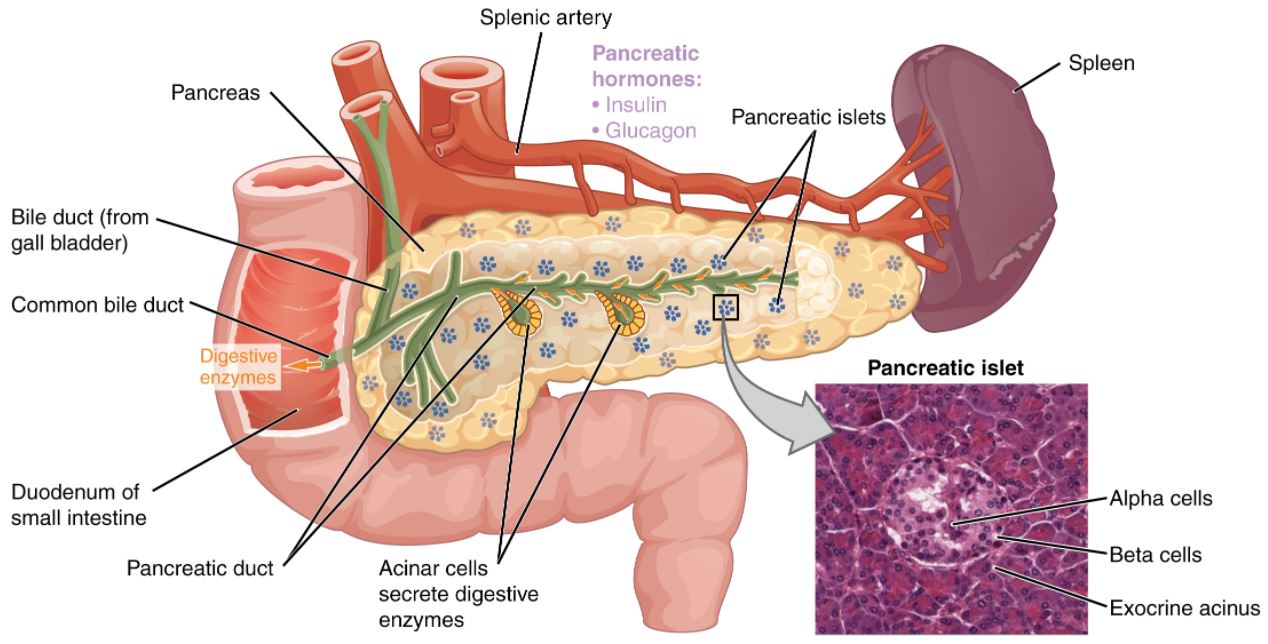
Pâncreas: A função exócrina pancreática envolve as células acinares responsáveis pela secreção de enzimas digestivas que são transportadas para o intestino delgado pelo ducto pancreático. A função endócrina do pâncreas envolve a secreção de insulina (produzida pelas células beta) e glucagon (produzida pelas células alfa) nos ilhéus pancreáticos. Estas 2 hormonas regulam a taxa do metabolismo da glicose no organismo. A imagem microscópica revela ilhéus pancreáticos.
Imagem: “Pancreas” por Regents of University of Michigan Medical School. Licença: CC por 4.0
Apresentação Clínica
Tipo 1
CAD:
A DMDMDiabetes mellitus (DM) is a metabolic disease characterized by hyperglycemia and dysfunction of the regulation of glucose metabolism by insulin. Type 1 DM is diagnosed mostly in children and young adults as the result of autoimmune destruction of β cells in the pancreas and the resulting lack of insulin. Type 2 DM has a significant association with obesity and is characterized by insulin resistance.Diabetes Mellitus tipo 1 apresenta-se geralmente em contexto de urgência com CAD:
Frequentemente precipitada por uma condição sugestiva (e.g., doença vírica, trauma, stress emocional)
Depressão do estado de consciência
Dor abdominal
Vómitos
Hálito frutado cetónico
Hiperglicemia:
A DMDMDiabetes mellitus (DM) is a metabolic disease characterized by hyperglycemia and dysfunction of the regulation of glucose metabolism by insulin. Type 1 DM is diagnosed mostly in children and young adults as the result of autoimmune destruction of β cells in the pancreas and the resulting lack of insulin. Type 2 DM has a significant association with obesity and is characterized by insulin resistance.Diabetes Mellitus tipo 1 também pode apresentar sintomas clássicos de hiperglicemia:
Polidipsia
Polifagia
Poliúria (pode apresentar-se como enurese e noctúria em crianças)
Perda de peso
Visão turva
Tipo 2
A DMDMDiabetes mellitus (DM) is a metabolic disease characterized by hyperglycemia and dysfunction of the regulation of glucose metabolism by insulin. Type 1 DM is diagnosed mostly in children and young adults as the result of autoimmune destruction of β cells in the pancreas and the resulting lack of insulin. Type 2 DM has a significant association with obesity and is characterized by insulin resistance.Diabetes Mellitus tipo 2 apresenta um início gradual, permanecendo assintomática por vários anos:
Níveis elevados de glicose frequentemente detetados em testesTestesGonadal Hormones de rastreio previamente ao início dos sintomas
Pode apresentar sintomas clássicos de hiperglicemia, como na DMDMDiabetes mellitus (DM) is a metabolic disease characterized by hyperglycemia and dysfunction of the regulation of glucose metabolism by insulin. Type 1 DM is diagnosed mostly in children and young adults as the result of autoimmune destruction of β cells in the pancreas and the resulting lack of insulin. Type 2 DM has a significant association with obesity and is characterized by insulin resistance.Diabetes Mellitus tipo 1
Por vezes, diagnosticada em contexto de síndrome hiperglicémico hiperosmolar ou com sinais de complicações a longo prazo antes de um diagnóstico estabelecido
Raramente, com CAD presente
Sintomas inespecíficos causados pela hiperglicemia:
Fadiga
Mal-estar
AnorexiaAnorexiaThe lack or loss of appetite accompanied by an aversion to food and the inability to eat. It is the defining characteristic of the disorder anorexia nervosa.Anorexia Nervosa
Amenorreia
Disfunção erétil
Cefaleia
Visão turva
Cãibras musculares
Desidratação
Manifestações cutâneas:
Celulite recorrente ou infeções fúngicas
Défice ou atraso na cicatrização de feridas
Prurido generalizado
Acantose nigricans: placas aveludadas hiperpigmentadas na pele da axila, pescoço ou entre os dedos
DiabetesDiabetesDiabetes mellitus (DM) is a metabolic disease characterized by hyperglycemia and dysfunction of the regulation of glucose metabolism by insulin. Type 1 DM is diagnosed mostly in children and young adults as the result of autoimmune destruction of β cells in the pancreas and the resulting lack of insulin. Type 2 DM has a significant association with obesity and is characterized by insulin resistance.Diabetes Mellitus gestacional
A maioria dos casos são detetados previamente ao início dos sintomas, no contexto do rastreio universal durante a gestação nos Estados Unidos
Geralmente no 2.º ou 3.º trimestres
Sintomas não tratados semelhantes aos da DMDMDiabetes mellitus (DM) is a metabolic disease characterized by hyperglycemia and dysfunction of the regulation of glucose metabolism by insulin. Type 1 DM is diagnosed mostly in children and young adults as the result of autoimmune destruction of β cells in the pancreas and the resulting lack of insulin. Type 2 DM has a significant association with obesity and is characterized by insulin resistance.Diabetes Mellitus tipo 2
DiabetesDiabetesDiabetes mellitus (DM) is a metabolic disease characterized by hyperglycemia and dysfunction of the regulation of glucose metabolism by insulin. Type 1 DM is diagnosed mostly in children and young adults as the result of autoimmune destruction of β cells in the pancreas and the resulting lack of insulin. Type 2 DM has a significant association with obesity and is characterized by insulin resistance.Diabetes Mellitus tipo LADALADAAutoimmune diabetes in adults with slowly progressive pancreatic beta cell failure and the presence of circulating autoantibodies to pancreatic islets cell antigens.Diabetes Mellitus
Sintomas inespecíficos semelhantes aos da DMDMDiabetes mellitus (DM) is a metabolic disease characterized by hyperglycemia and dysfunction of the regulation of glucose metabolism by insulin. Type 1 DM is diagnosed mostly in children and young adults as the result of autoimmune destruction of β cells in the pancreas and the resulting lack of insulin. Type 2 DM has a significant association with obesity and is characterized by insulin resistance.Diabetes Mellitus tipo 2:
Fadiga
Mal-estar
AnorexiaAnorexiaThe lack or loss of appetite accompanied by an aversion to food and the inability to eat. It is the defining characteristic of the disorder anorexia nervosa.Anorexia Nervosa
DiabetesDiabetesDiabetes mellitus (DM) is a metabolic disease characterized by hyperglycemia and dysfunction of the regulation of glucose metabolism by insulin. Type 1 DM is diagnosed mostly in children and young adults as the result of autoimmune destruction of β cells in the pancreas and the resulting lack of insulin. Type 2 DM has a significant association with obesity and is characterized by insulin resistance.Diabetes Mellitus tipo MODYMODYDiabetes Mellitus
Pacientes em idade jovem, geralmente não obesos: muitas vezes diagnosticados erradamente com DMDMDiabetes mellitus (DM) is a metabolic disease characterized by hyperglycemia and dysfunction of the regulation of glucose metabolism by insulin. Type 1 DM is diagnosed mostly in children and young adults as the result of autoimmune destruction of β cells in the pancreas and the resulting lack of insulin. Type 2 DM has a significant association with obesity and is characterized by insulin resistance.Diabetes Mellitus tipo 1
Não resistente à insulina:
Distinguir da DMDMDiabetes mellitus (DM) is a metabolic disease characterized by hyperglycemia and dysfunction of the regulation of glucose metabolism by insulin. Type 1 DM is diagnosed mostly in children and young adults as the result of autoimmune destruction of β cells in the pancreas and the resulting lack of insulin. Type 2 DM has a significant association with obesity and is characterized by insulin resistance.Diabetes Mellitus tipo 2 pode ser um desafio
Sintomas característicos de resistência à insulina (e.g., acantose nigricans) frequentemente ausentes
O diagnóstico de diabetesDiabetesDiabetes mellitus (DM) is a metabolic disease characterized by hyperglycemia and dysfunction of the regulation of glucose metabolism by insulin. Type 1 DM is diagnosed mostly in children and young adults as the result of autoimmune destruction of β cells in the pancreas and the resulting lack of insulin. Type 2 DM has a significant association with obesity and is characterized by insulin resistance.Diabetes Mellitus baseia-se na presença de hiperglicemia inadequada no contexto de sintomas clínicos suspeitos.
Tabela: Critérios de diagnóstico para diabetesDiabetesDiabetes mellitus (DM) is a metabolic disease characterized by hyperglycemia and dysfunction of the regulation of glucose metabolism by insulin. Type 1 DM is diagnosed mostly in children and young adults as the result of autoimmune destruction of β cells in the pancreas and the resulting lack of insulin. Type 2 DM has a significant association with obesity and is characterized by insulin resistance.Diabetes Mellitus mellitus
Teste
Intervalo normal
Aumento do risco de diabetesDiabetesDiabetes mellitus (DM) is a metabolic disease characterized by hyperglycemia and dysfunction of the regulation of glucose metabolism by insulin. Type 1 DM is diagnosed mostly in children and young adults as the result of autoimmune destruction of β cells in the pancreas and the resulting lack of insulin. Type 2 DM has a significant association with obesity and is characterized by insulin resistance.Diabetes Mellitus (pré-diabetes)
DiabetesDiabetesDiabetes mellitus (DM) is a metabolic disease characterized by hyperglycemia and dysfunction of the regulation of glucose metabolism by insulin. Type 1 DM is diagnosed mostly in children and young adults as the result of autoimmune destruction of β cells in the pancreas and the resulting lack of insulin. Type 2 DM has a significant association with obesity and is characterized by insulin resistance.Diabetes Mellitus
Glicose plasmática ocasional
Sintomas hiperglicémicos clássicos com glicose plasmática ocasional > 200 mg/dL
Glicemia em jejum
(jejum de 8 horas)
< 100 mg/dL
100–125 mg/dL
≥ 126 mg/dL
Glicose plasmática após 2 horas, PTOG 75 g
< 140 mg/dL
140–199 mg/dL
≥ 200 mg/dL
Hemoglobina A1c
< 5,7%
5,7%–6.4%
≥ 6,5%
PTOG: prova de tolerância oral à glicose
Tipo 1
A análise de urina pode revelar microalbuminúria, glicosúria ou corpos cetónicos
Autoanticorpos associados à DMDMDiabetes mellitus (DM) is a metabolic disease characterized by hyperglycemia and dysfunction of the regulation of glucose metabolism by insulin. Type 1 DM is diagnosed mostly in children and young adults as the result of autoimmune destruction of β cells in the pancreas and the resulting lack of insulin. Type 2 DM has a significant association with obesity and is characterized by insulin resistance.Diabetes Mellitus (anti-GAD65, anti-ICA, anti-IA-2)
Peptídeo-C
Níveis baixos indicam défice de insulina (DMDMDiabetes mellitus (DM) is a metabolic disease characterized by hyperglycemia and dysfunction of the regulation of glucose metabolism by insulin. Type 1 DM is diagnosed mostly in children and young adults as the result of autoimmune destruction of β cells in the pancreas and the resulting lack of insulin. Type 2 DM has a significant association with obesity and is characterized by insulin resistance.Diabetes Mellitus tipo 1)
Níveis elevados indicam resistência à insulina (DMDMDiabetes mellitus (DM) is a metabolic disease characterized by hyperglycemia and dysfunction of the regulation of glucose metabolism by insulin. Type 1 DM is diagnosed mostly in children and young adults as the result of autoimmune destruction of β cells in the pancreas and the resulting lack of insulin. Type 2 DM has a significant association with obesity and is characterized by insulin resistance.Diabetes Mellitus tipo 2)
Tipo 2
Rastreio recomendado em:
Indivíduos > 45 anos sem fatores de risco
Indivíduos 35 – 70 anos com excesso de peso ou obesos
Situações particulares nas quais deve ser ponderado o rastreio:
Mulheres com história de diabetesDiabetesDiabetes mellitus (DM) is a metabolic disease characterized by hyperglycemia and dysfunction of the regulation of glucose metabolism by insulin. Type 1 DM is diagnosed mostly in children and young adults as the result of autoimmune destruction of β cells in the pancreas and the resulting lack of insulin. Type 2 DM has a significant association with obesity and is characterized by insulin resistance.Diabetes Mellitus gestacional
Indivíduos que iniciam terapêutica antirretroviral para o HIVHIVAnti-HIV Drugs
Familiar de primeiro grau com diabetesDiabetesDiabetes mellitus (DM) is a metabolic disease characterized by hyperglycemia and dysfunction of the regulation of glucose metabolism by insulin. Type 1 DM is diagnosed mostly in children and young adults as the result of autoimmune destruction of β cells in the pancreas and the resulting lack of insulin. Type 2 DM has a significant association with obesity and is characterized by insulin resistance.Diabetes Mellitus
Critérios de diagnóstico: (qualquer 1 dos seguintes)
Glicose plasmática ocasional ≥ 200 mg/dL em paciente com sintomas clássicos
DiabetesDiabetesDiabetes mellitus (DM) is a metabolic disease characterized by hyperglycemia and dysfunction of the regulation of glucose metabolism by insulin. Type 1 DM is diagnosed mostly in children and young adults as the result of autoimmune destruction of β cells in the pancreas and the resulting lack of insulin. Type 2 DM has a significant association with obesity and is characterized by insulin resistance.Diabetes Mellitus gestacional
A prova de tolerância oral à glicose está recomendada entre a 24.ª e a 28.ª semanas de gestação. Consideram-se resultados alterados, se:
Glicemia em jejum: ≥ 92 mg/dL
Glicemia à 1 hora: ≥ 180 mg/dL
Glicemia às 2 horas: ≥ 153 mg/dL
DiabetesDiabetesDiabetes mellitus (DM) is a metabolic disease characterized by hyperglycemia and dysfunction of the regulation of glucose metabolism by insulin. Type 1 DM is diagnosed mostly in children and young adults as the result of autoimmune destruction of β cells in the pancreas and the resulting lack of insulin. Type 2 DM has a significant association with obesity and is characterized by insulin resistance.Diabetes Mellitus tipo LADALADAAutoimmune diabetes in adults with slowly progressive pancreatic beta cell failure and the presence of circulating autoantibodies to pancreatic islets cell antigens.Diabetes Mellitus
Mesmos critérios de diagnóstico da DMDMDiabetes mellitus (DM) is a metabolic disease characterized by hyperglycemia and dysfunction of the regulation of glucose metabolism by insulin. Type 1 DM is diagnosed mostly in children and young adults as the result of autoimmune destruction of β cells in the pancreas and the resulting lack of insulin. Type 2 DM has a significant association with obesity and is characterized by insulin resistance.Diabetes Mellitus tipo 2
Anticorpos GAD65 positivos: ajudam a identificar pacientes que parecem sofrer de DMDMDiabetes mellitus (DM) is a metabolic disease characterized by hyperglycemia and dysfunction of the regulation of glucose metabolism by insulin. Type 1 DM is diagnosed mostly in children and young adults as the result of autoimmune destruction of β cells in the pancreas and the resulting lack of insulin. Type 2 DM has a significant association with obesity and is characterized by insulin resistance.Diabetes Mellitus tipo 2, mas que provavelmente precisarão de insulina para controlar os níveis de glicose
DiabetesDiabetesDiabetes mellitus (DM) is a metabolic disease characterized by hyperglycemia and dysfunction of the regulation of glucose metabolism by insulin. Type 1 DM is diagnosed mostly in children and young adults as the result of autoimmune destruction of β cells in the pancreas and the resulting lack of insulin. Type 2 DM has a significant association with obesity and is characterized by insulin resistance.Diabetes Mellitus tipo MODYMODYDiabetes Mellitus
Para distinguir da DMDMDiabetes mellitus (DM) is a metabolic disease characterized by hyperglycemia and dysfunction of the regulation of glucose metabolism by insulin. Type 1 DM is diagnosed mostly in children and young adults as the result of autoimmune destruction of β cells in the pancreas and the resulting lack of insulin. Type 2 DM has a significant association with obesity and is characterized by insulin resistance.Diabetes Mellitus tipo 1: ausência de autoanticorpos séricos
Para distinguir da DMDMDiabetes mellitus (DM) is a metabolic disease characterized by hyperglycemia and dysfunction of the regulation of glucose metabolism by insulin. Type 1 DM is diagnosed mostly in children and young adults as the result of autoimmune destruction of β cells in the pancreas and the resulting lack of insulin. Type 2 DM has a significant association with obesity and is characterized by insulin resistance.Diabetes Mellitus tipo 2:
Atualmente não existem bons marcadores bioquímicos
História familiar de DMDMDiabetes mellitus (DM) is a metabolic disease characterized by hyperglycemia and dysfunction of the regulation of glucose metabolism by insulin. Type 1 DM is diagnosed mostly in children and young adults as the result of autoimmune destruction of β cells in the pancreas and the resulting lack of insulin. Type 2 DM has a significant association with obesity and is characterized by insulin resistance.Diabetes Mellitus não sugestiva
DiabetesDiabetesDiabetes mellitus (DM) is a metabolic disease characterized by hyperglycemia and dysfunction of the regulation of glucose metabolism by insulin. Type 1 DM is diagnosed mostly in children and young adults as the result of autoimmune destruction of β cells in the pancreas and the resulting lack of insulin. Type 2 DM has a significant association with obesity and is characterized by insulin resistance.Diabetes Mellitus mellitus na ausência de obesidade ou marcadores secundários de sensibilidade à insulina podem ser sugestivos.
Próximo das refeições (antes e/ou depois, dependendo do paciente)
Com sintomas de hipoglicemia ou hiperglicemia
Antes de atividades importantes (e.g., pilotar um avião/conduzir um autocarro escolar)
Atualmente existem novos sistemas de monitorização contínua de glicose utilizados na DMDMDiabetes mellitus (DM) is a metabolic disease characterized by hyperglycemia and dysfunction of the regulation of glucose metabolism by insulin. Type 1 DM is diagnosed mostly in children and young adults as the result of autoimmune destruction of β cells in the pancreas and the resulting lack of insulin. Type 2 DM has a significant association with obesity and is characterized by insulin resistance.Diabetes Mellitus tipo 1
Higiene regularRegularInsulin dos pés e auto-vigilância de úlceras cutâneas
Monitorização clínica
Verificação regularRegularInsulin do peso e pressão arterial
Análises laboratoriais dos níveis de HbA1c anualmente para avaliar o controlo glicémico e a eficácia do tratamento:
A HbA1c fornece uma estimativa da glicemia do paciente nos 3 meses anteriores.
Alvo: < 7%
Menos rigoroso em pacientes idosos/crianças
Medição da razão microalbumina:creatinina anualmente
Não existe cura definitiva para a diabetesDiabetesDiabetes mellitus (DM) is a metabolic disease characterized by hyperglycemia and dysfunction of the regulation of glucose metabolism by insulin. Type 1 DM is diagnosed mostly in children and young adults as the result of autoimmune destruction of β cells in the pancreas and the resulting lack of insulin. Type 2 DM has a significant association with obesity and is characterized by insulin resistance.Diabetes Mellitus. O tratamento centra-se na correção da hiperglicemia com insulina (tipo 1) ou medicação oral (tipo 2), evitando hipoglicemias e tratando os efeitos clínicos da hiperglicemia crónica.
Abordagem multidisciplinar
A abordagem inicial é realizada com a educação e apoio do paciente.
Perda ponderal com diminuição da ingestão calórica em caso de excesso de peso ou obesidade
Cessação tabágica para diminuir o risco de complicações comórbidas
Gestão do stress
Tratamentos farmacológicos para atingir alvos glicémicos individualizados:
A escolha da medicação depende do nível de HbA1c no momento do diagnóstico
Necessitam de ajuste se intolerância ou doença renal crónica (DRC)
Fármacos orais
Classes de fármacos orais utilizados para o tratamento da diabetesDiabetesDiabetes mellitus (DM) is a metabolic disease characterized by hyperglycemia and dysfunction of the regulation of glucose metabolism by insulin. Type 1 DM is diagnosed mostly in children and young adults as the result of autoimmune destruction of β cells in the pancreas and the resulting lack of insulin. Type 2 DM has a significant association with obesity and is characterized by insulin resistance.Diabetes Mellitus resistente à insulina (geralmente tipo 2):
Biguanida (metformina): fármaco de 1.ª linha
Inibidores do cotransportador de sódio-glicose-2 (SGLT-2, pela sigla em inglês): benefício demonstrado em eventos cardiorrenais, especialmente em hospitalização por insuficiência cardíaca, risco de progressão da doença renal e mortalidade
Inibidores da dipeptidil peptidase-4 (DPP-4)
Sulfonilureias
Tiazolidinedionas
Tratamento com insulina
A insulina é utilizada para o tratamento da DMDMDiabetes mellitus (DM) is a metabolic disease characterized by hyperglycemia and dysfunction of the regulation of glucose metabolism by insulin. Type 1 DM is diagnosed mostly in children and young adults as the result of autoimmune destruction of β cells in the pancreas and the resulting lack of insulin. Type 2 DM has a significant association with obesity and is characterized by insulin resistance.Diabetes Mellitus tipo 1 e, por vezes, da DMDMDiabetes mellitus (DM) is a metabolic disease characterized by hyperglycemia and dysfunction of the regulation of glucose metabolism by insulin. Type 1 DM is diagnosed mostly in children and young adults as the result of autoimmune destruction of β cells in the pancreas and the resulting lack of insulin. Type 2 DM has a significant association with obesity and is characterized by insulin resistance.Diabetes Mellitus tipo 2, quando os fármacos orais não são suficientes.
Insulinas de ação rápida: início de ação em 10 a 15 minutos
Glulisina (nome comercial Apidra)
LisproLisproInsulin that has been modified so that the b-chain contains a lysine at position 28 instead of a proline and a proline at position 29 instead of a lysine. It is used to manage blood glucose levels in patients with type 2 diabetes.Insulin (nome comercial Humalog)
AspartAspartInsulin that has been modified to contain an aspartic acid instead of a proline at position 38 of the b-chain.Insulin (nome comercial NovoLog)
Insulina de ação curta:
Início de ação em 30 minutos, atinge o pico em 2-3 horas
As insulinas de ação rápida e de ação curta são utilizadas em combinação com insulinas de ação maisMAISAndrogen Insensitivity Syndrome longa ou em bombas de insulina para a diabetesDiabetesDiabetes mellitus (DM) is a metabolic disease characterized by hyperglycemia and dysfunction of the regulation of glucose metabolism by insulin. Type 1 DM is diagnosed mostly in children and young adults as the result of autoimmune destruction of β cells in the pancreas and the resulting lack of insulin. Type 2 DM has a significant association with obesity and is characterized by insulin resistance.Diabetes Mellitus tipo 1
Insulina de ação longa: duração de 12 a 24 horas
NPHNPHNormal pressure hydrocephalus (NPH) is a neurodegenerative disorder characterized by the triad of gait abnormalities, dementia, and urinary urgency or incontinence. Normal pressure hydrocephalus can be either idiopathic or secondary to intraventricular or subarachnoid hemorrhage. Normal Pressure Hydrocephalus (genérica, também conhecida como protamina neutra de Hagedorn)
Glargina (nome comercial Lantus ou Basaglar)
DetemirDetemirA recombinant long-acting insulin and hypoglycemic agent in which a myristic acid is conjugated to a lysine at position b29. It is used to manage blood glucose levels in patients with diabetes mellitus.Insulin (nome comercial Levemir)
Tratamentos injetáveis não insulínicos
Agonistas do recetor do peptídeo 1 semelhante ao glucagonGlucagonA 29-amino acid pancreatic peptide derived from proglucagon which is also the precursor of intestinal glucagon-like peptides. Glucagon is secreted by pancreatic alpha cells and plays an important role in regulation of blood glucose concentration, ketone metabolism, and several other biochemical and physiological processes.Gastrointestinal Secretions (GLP-1GLP-1A peptide of 36 or 37 amino acids that is derived from proglucagon and mainly produced by the intestinal l cells. Glp-1(1-37 or 1-36) is further n-terminally truncated resulting in glp-1(7-37) or glp-1-(7-36) which can be amidated. These glp-1 peptides are known to enhance glucose-dependent insulin release, suppress glucagon release and gastric emptying, lower blood glucose, and reduce food intake.Insulinomas, pela sigla em inglês): preferidos em pacientes que já apresentam comorbilidades cardíacas ou renais:
Exenatida (nome comercial Byetta)
Dulaglutida (nome comercial Trulicity)
Liraglutida (nome comercial Victoza)
Semaglutida (Ozempic) – também disponível em comprimido (Rybelsus)
Suprime a secreção plasmática de glucagonGlucagonA 29-amino acid pancreatic peptide derived from proglucagon which is also the precursor of intestinal glucagon-like peptides. Glucagon is secreted by pancreatic alpha cells and plays an important role in regulation of blood glucose concentration, ketone metabolism, and several other biochemical and physiological processes.Gastrointestinal Secretions
Atrasa o esvaziamento gástrico
Promove a saciedade
Considerações especiais com o uso de insulina
O fenómeno do amanhecer:
No início da manhã, o efeito da insulina exógena administrada no dia anterior desaparece.
As hormonas antagonistas da insulina aumentam fisiologicamente pela manhã.
Pode causar hiperglicemia matinal
O efeito Somogyi:
Hiperglicemia matinal de rebound
Resposta à hipoglicemia durante a noite após quantidades excessivas de insulina exógena na noite anterior
Apresenta-se com vómitos, respiração superficial e confusão
O aumento do beta-hidroxibutirato sérico e de cetonas na urina são diagnósticas.
Pode levar ao comaComaComa is defined as a deep state of unarousable unresponsiveness, characterized by a score of 3 points on the GCS. A comatose state can be caused by a multitude of conditions, making the precise epidemiology and prognosis of coma difficult to determine. Coma e à morte se não for tratada
Requer hospitalização
Hipoglicemia grave induzida pela insulina:
Confusão
Irritabilidade
Ansiedade
Discurso arrastado
DiplopiaDiplopiaA visual symptom in which a single object is perceived by the visual cortex as two objects rather than one. Disorders associated with this condition include refractive errors; strabismus; oculomotor nerve diseases; trochlear nerve diseases; abducens nerve diseases; and diseases of the brain stem and occipital lobe.Myasthenia Gravis
Pode levar à perda de consciência, convulsões ou morte se não for tratada
Tratamento com injeção ou administração nasal de glucagonGlucagonA 29-amino acid pancreatic peptide derived from proglucagon which is also the precursor of intestinal glucagon-like peptides. Glucagon is secreted by pancreatic alpha cells and plays an important role in regulation of blood glucose concentration, ketone metabolism, and several other biochemical and physiological processes.Gastrointestinal Secretions
Tipo 2:
Síndrome hiperglicémico hiperosmolar (SHH):
A hiperglicemia grave resulta em aumento da osmolaridade semcetoacidose significativa.
Os sintomas incluem sinais de desidratação, fadiga, cãibras nas pernas, alterações da visão e do nível de consciência.
Requer hospitalização
Ganho ponderal associado à insulina e causas potenciais:
Continuação da indiscrição alimentar
Redução da glicosúria com a melhoria do controlo glicémico
Lanches para suportar uma dose de insulina muito alta (tratamento excessivo de hipoglicemia)
O ganho de peso agrava a resistência à insulina e pode provocar o aumento da dose de insulina, levando a um círculo vicioso.
DiabetesDiabetesDiabetes mellitus (DM) is a metabolic disease characterized by hyperglycemia and dysfunction of the regulation of glucose metabolism by insulin. Type 1 DM is diagnosed mostly in children and young adults as the result of autoimmune destruction of β cells in the pancreas and the resulting lack of insulin. Type 2 DM has a significant association with obesity and is characterized by insulin resistance.Diabetes Mellitus gestacional:
O risco de complicações é proporcional ao nível de hiperglicemia:
Aborto espontâneo
Anomalias fetais
Feto grande para a idade gestacional, muitas vezes com necessidade de cesariana
Macrossomia
Pré-eclâmpsia
Hipoglicemia no recém-nascido
Complicações crónicas
Tanto a DMDMDiabetes mellitus (DM) is a metabolic disease characterized by hyperglycemia and dysfunction of the regulation of glucose metabolism by insulin. Type 1 DM is diagnosed mostly in children and young adults as the result of autoimmune destruction of β cells in the pancreas and the resulting lack of insulin. Type 2 DM has a significant association with obesity and is characterized by insulin resistance.Diabetes Mellitus tipo 1 como a DMDMDiabetes mellitus (DM) is a metabolic disease characterized by hyperglycemia and dysfunction of the regulation of glucose metabolism by insulin. Type 1 DM is diagnosed mostly in children and young adults as the result of autoimmune destruction of β cells in the pancreas and the resulting lack of insulin. Type 2 DM has a significant association with obesity and is characterized by insulin resistance.Diabetes Mellitus tipo 2 podem causar complicações a longo prazo.
Doença macrovascular:
Doença cardíaca coronária/enfarte agudo do miocárdio
DiabetesDiabetesDiabetes mellitus (DM) is a metabolic disease characterized by hyperglycemia and dysfunction of the regulation of glucose metabolism by insulin. Type 1 DM is diagnosed mostly in children and young adults as the result of autoimmune destruction of β cells in the pancreas and the resulting lack of insulin. Type 2 DM has a significant association with obesity and is characterized by insulin resistance.Diabetes Mellitus tipo MODYMODYDiabetes Mellitus: patologia clinicamente heterogénea, caracterizada por diabetesDiabetesDiabetes mellitus (DM) is a metabolic disease characterized by hyperglycemia and dysfunction of the regulation of glucose metabolism by insulin. Type 1 DM is diagnosed mostly in children and young adults as the result of autoimmune destruction of β cells in the pancreas and the resulting lack of insulin. Type 2 DM has a significant association with obesity and is characterized by insulin resistance.Diabetes Mellitus não insulino-dependente diagnosticada em idade jovem (< 25 anos), com transmissão autossómica dominante e ausência de autoanticorpos.
Polidipsia psicogénica: ingestão volitiva excessiva de água. A polidipsia psicogénica é frequentemente observada em pacientes com doença mental grave e/ou alteração do desenvolvimento. Podem não ocorrer efeitos físicos, mas pode estar presente hiponatremia.
DiabetesDiabetesDiabetes mellitus (DM) is a metabolic disease characterized by hyperglycemia and dysfunction of the regulation of glucose metabolism by insulin. Type 1 DM is diagnosed mostly in children and young adults as the result of autoimmune destruction of β cells in the pancreas and the resulting lack of insulin. Type 2 DM has a significant association with obesity and is characterized by insulin resistance.Diabetes Mellitus insípida nefrogénica: forma de diabetesDiabetesDiabetes mellitus (DM) is a metabolic disease characterized by hyperglycemia and dysfunction of the regulation of glucose metabolism by insulin. Type 1 DM is diagnosed mostly in children and young adults as the result of autoimmune destruction of β cells in the pancreas and the resulting lack of insulin. Type 2 DM has a significant association with obesity and is characterized by insulin resistance.Diabetes Mellitus insípida que ocorre por patologia renal. A diabetesDiabetesDiabetes mellitus (DM) is a metabolic disease characterized by hyperglycemia and dysfunction of the regulation of glucose metabolism by insulin. Type 1 DM is diagnosed mostly in children and young adults as the result of autoimmune destruction of β cells in the pancreas and the resulting lack of insulin. Type 2 DM has a significant association with obesity and is characterized by insulin resistance.Diabetes Mellitus insípida nefrogénica difere da diabetesDiabetesDiabetes mellitus (DM) is a metabolic disease characterized by hyperglycemia and dysfunction of the regulation of glucose metabolism by insulin. Type 1 DM is diagnosed mostly in children and young adults as the result of autoimmune destruction of β cells in the pancreas and the resulting lack of insulin. Type 2 DM has a significant association with obesity and is characterized by insulin resistance.Diabetes Mellitus insípida central/neurogénica, esta última causada por níveis insuficientes de hormona antidiurética (ADH).
Insuficiência renal de alto débito: associada a poliúria por outras causas, incluindo stress, trauma, queimaduras ou cirurgia.
Tipo 2
Síndrome metabólica: grupo de condições que incluem obesidade central, aumento da pressão arterial, aumento da glicemia, triglicerídeos séricos elevados e HDL sérico baixo.
DiabetesDiabetesDiabetes mellitus (DM) is a metabolic disease characterized by hyperglycemia and dysfunction of the regulation of glucose metabolism by insulin. Type 1 DM is diagnosed mostly in children and young adults as the result of autoimmune destruction of β cells in the pancreas and the resulting lack of insulin. Type 2 DM has a significant association with obesity and is characterized by insulin resistance.Diabetes Mellitus tipo LADALADAAutoimmune diabetes in adults with slowly progressive pancreatic beta cell failure and the presence of circulating autoantibodies to pancreatic islets cell antigens.Diabetes Mellitus: forma de DMDMDiabetes mellitus (DM) is a metabolic disease characterized by hyperglycemia and dysfunction of the regulation of glucose metabolism by insulin. Type 1 DM is diagnosed mostly in children and young adults as the result of autoimmune destruction of β cells in the pancreas and the resulting lack of insulin. Type 2 DM has a significant association with obesity and is characterized by insulin resistance.Diabetes Mellitus tipo 1. Quando o diagnóstico não é claro, a avaliação da presença de anticorpos em pacientes com diabetesDiabetesDiabetes mellitus (DM) is a metabolic disease characterized by hyperglycemia and dysfunction of the regulation of glucose metabolism by insulin. Type 1 DM is diagnosed mostly in children and young adults as the result of autoimmune destruction of β cells in the pancreas and the resulting lack of insulin. Type 2 DM has a significant association with obesity and is characterized by insulin resistance.Diabetes Mellitus com manifestação recente é útil para estabelecer este diagnóstico.
Hiperglicemia induzida por corticosteróides: a prednisona e fármacos semelhantes podem causar hiperglicemia significativa. A hiperglicemia induzida por corticosteróides pode ser transitória e desaparecer com o fim do tratamento ou pode persistir e revelar uma DMDMDiabetes mellitus (DM) is a metabolic disease characterized by hyperglycemia and dysfunction of the regulation of glucose metabolism by insulin. Type 1 DM is diagnosed mostly in children and young adults as the result of autoimmune destruction of β cells in the pancreas and the resulting lack of insulin. Type 2 DM has a significant association with obesity and is characterized by insulin resistance.Diabetes Mellitus tipo 2 subjacente.
DiabetesDiabetesDiabetes mellitus (DM) is a metabolic disease characterized by hyperglycemia and dysfunction of the regulation of glucose metabolism by insulin. Type 1 DM is diagnosed mostly in children and young adults as the result of autoimmune destruction of β cells in the pancreas and the resulting lack of insulin. Type 2 DM has a significant association with obesity and is characterized by insulin resistance.Diabetes Mellitus secundária: devido a doença de Cushing, acromegalia ou hipersecreção de glucagonGlucagonA 29-amino acid pancreatic peptide derived from proglucagon which is also the precursor of intestinal glucagon-like peptides. Glucagon is secreted by pancreatic alpha cells and plays an important role in regulation of blood glucose concentration, ketone metabolism, and several other biochemical and physiological processes.Gastrointestinal Secretions causada por tumorTumorInflammation das células alfa dos ilhéus pancreáticos, síndrome de Down (trissomia 21) ou hemocromatose, pancreatite crónica ou malignidade pancreática.
Carlsson, S. (2019). Etiology and pathogenesis of latent autoimmune diabetes in adults (LADA) compared to type 2 diabetes.Frontiers in Physiology 10:320. Retrieved April 16, 2021, from https://pubmed.ncbi.nlm.nih.gov/30971952/
Bell RA, et al. (2009). Diabetes in non-Hispanic white youth: prevalence, incidence, and clinical characteristics: the SEARCH for Diabetes in Youth Study. Diabetes Care 32 Suppl 2(Suppl 2):S102–S111. https://pubmed.ncbi.nlm.nih.gov/19246575/
Mayer-Davis EJ, et al. (2018). ISPAD Clinical Practice Consensus Guidelines 2018: Definition, epidemiology, and classification of diabetes in children and adolescents. Pediatr Diabetes 19 Suppl 27(Suppl 27):7–19. https://pubmed.ncbi.nlm.nih.gov/30226024/
¡Crea tu cuenta gratis o inicia una sesión para seguir leyendo!
A Lecturio Medical complementa o teu estudo através de métodos de ensino baseados em evidência, vídeos de palestras, perguntas e muito mais – tudo combinado num só lugar e fácil de usar.
User Reviews
Details
×
Obtenha Premium para testar os seus conhecimentos
Lecturio Premium dá-lhe acesso total a todos os conteúdos e características
Obtenha Premium para ver todos os vídeos
Verifique agora o seu e-mail para obter um teste gratuito.
Crie uma conta gratuita para testar os seus conhecimentos
Lecturio Premium dá-lhe acesso total a todos os conteúdos e características - incluindo o Qbank de Lecturio com perguntas actualizadas ao estilo do board-.