A ataxia-telangiectasiaAtaxia-telangiectasiaAtaxia-telangiectasia, also known as Louis-Bar syndrome, is a neurocutaneous syndrome, which involves multiple systems but mainly affects the neurological system. Ataxia-telangiectasia is an autosomal recessive genetic disorder caused by a mutation in the ATM gene (ATM serine/threonine kinase or the ataxia-telangiectasia mutated gene).Ataxia-telangiectasia, também conhecida como síndrome de Louis-Bar, é uma síndrome neurocutânea, que envolve múltiplos sistemas, mas afeta principalmente o sistema neurológico. A ataxia-telangiectasiaAtaxia-telangiectasiaAtaxia-telangiectasia, also known as Louis-Bar syndrome, is a neurocutaneous syndrome, which involves multiple systems but mainly affects the neurological system. Ataxia-telangiectasia is an autosomal recessive genetic disorder caused by a mutation in the ATM gene (ATM serine/threonine kinase or the ataxia-telangiectasia mutated gene).Ataxia-telangiectasia é uma doença genética autossómica recessiva causada por uma mutação no geneGeneA category of nucleic acid sequences that function as units of heredity and which code for the basic instructions for the development, reproduction, and maintenance of organisms.Basic Terms of GeneticsATM (ATM serina/treonina cinase ou o geneGeneA category of nucleic acid sequences that function as units of heredity and which code for the basic instructions for the development, reproduction, and maintenance of organisms.Basic Terms of Genetics mutado da ataxia-telangiectasiaAtaxia-telangiectasiaAtaxia-telangiectasia, also known as Louis-Bar syndrome, is a neurocutaneous syndrome, which involves multiple systems but mainly affects the neurological system. Ataxia-telangiectasia is an autosomal recessive genetic disorder caused by a mutation in the ATM gene (ATM serine/threonine kinase or the ataxia-telangiectasia mutated gene).Ataxia-telangiectasia). A ataxia-telangiectasiaAtaxia-telangiectasiaAtaxia-telangiectasia, also known as Louis-Bar syndrome, is a neurocutaneous syndrome, which involves multiple systems but mainly affects the neurological system. Ataxia-telangiectasia is an autosomal recessive genetic disorder caused by a mutation in the ATM gene (ATM serine/threonine kinase or the ataxia-telangiectasia mutated gene).Ataxia-telangiectasia apresenta-se com ataxiaAtaxiaImpairment of the ability to perform smoothly coordinated voluntary movements. This condition may affect the limbs, trunk, eyes, pharynx, larynx, and other structures. Ataxia may result from impaired sensory or motor function. Sensory ataxia may result from posterior column injury or peripheral nerve diseases. Motor ataxia may be associated with cerebellar diseases; cerebral cortex diseases; thalamic diseases; basal ganglia diseases; injury to the red nucleus; and other conditions.Ataxia-telangiectasia progressiva, telangiectasiasTelangiectasiasAtaxia-telangiectasia, sintomas extrapiramidais, manifestações dermatológicas, disfunção imune e doença pulmonar progressiva. O diagnóstico é baseado na apresentação clínica e confirmado com neuroimagem e testesTestesGonadal Hormones genéticos. O tratamento é de suporte e gestão dos sintomas. O prognóstico é mau devido às inúmeras complicações.
A ataxia-telangiectasiaAtaxia-telangiectasiaAtaxia-telangiectasia, also known as Louis-Bar syndrome, is a neurocutaneous syndrome, which involves multiple systems but mainly affects the neurological system. Ataxia-telangiectasia is an autosomal recessive genetic disorder caused by a mutation in the ATM gene (ATM serine/threonine kinase or the ataxia-telangiectasia mutated gene).Ataxia-telangiectasia é uma doença neurodegenerativa autossómica recessiva rara, caracterizada por ataxiaAtaxiaImpairment of the ability to perform smoothly coordinated voluntary movements. This condition may affect the limbs, trunk, eyes, pharynx, larynx, and other structures. Ataxia may result from impaired sensory or motor function. Sensory ataxia may result from posterior column injury or peripheral nerve diseases. Motor ataxia may be associated with cerebellar diseases; cerebral cortex diseases; thalamic diseases; basal ganglia diseases; injury to the red nucleus; and other conditions.Ataxia-telangiectasia progressiva e disfunção multissistémica devido a um defeito no geneGeneA category of nucleic acid sequences that function as units of heredity and which code for the basic instructions for the development, reproduction, and maintenance of organisms.Basic Terms of GeneticsATM (ATM serina/treonina cinase ou o geneGeneA category of nucleic acid sequences that function as units of heredity and which code for the basic instructions for the development, reproduction, and maintenance of organisms.Basic Terms of Genetics mutado da ataxia-telangiectasiaAtaxia-telangiectasiaAtaxia-telangiectasia, also known as Louis-Bar syndrome, is a neurocutaneous syndrome, which involves multiple systems but mainly affects the neurological system. Ataxia-telangiectasia is an autosomal recessive genetic disorder caused by a mutation in the ATM gene (ATM serine/threonine kinase or the ataxia-telangiectasia mutated gene).Ataxia-telangiectasia).
Epidemiologia
Incidência: 1 por 20.000–100.000 nascimentos
Homens = mulheres
1%–2% dos caucasianos nos Estados Unidos são portadores de 1 geneGeneA category of nucleic acid sequences that function as units of heredity and which code for the basic instructions for the development, reproduction, and maintenance of organisms.Basic Terms of Genetics de ataxia-telangiectasiaAtaxia-telangiectasiaAtaxia-telangiectasia, also known as Louis-Bar syndrome, is a neurocutaneous syndrome, which involves multiple systems but mainly affects the neurological system. Ataxia-telangiectasia is an autosomal recessive genetic disorder caused by a mutation in the ATM gene (ATM serine/threonine kinase or the ataxia-telangiectasia mutated gene).Ataxia-telangiectasia alterado.
2ª ataxiaAtaxiaImpairment of the ability to perform smoothly coordinated voluntary movements. This condition may affect the limbs, trunk, eyes, pharynx, larynx, and other structures. Ataxia may result from impaired sensory or motor function. Sensory ataxia may result from posterior column injury or peripheral nerve diseases. Motor ataxia may be associated with cerebellar diseases; cerebral cortex diseases; thalamic diseases; basal ganglia diseases; injury to the red nucleus; and other conditions.Ataxia-telangiectasia autossómica recessiva maisMAISAndrogen Insensitivity Syndrome comum em crianças
Hereditariedade
Herança autossómica recessiva
O geneGeneA category of nucleic acid sequences that function as units of heredity and which code for the basic instructions for the development, reproduction, and maintenance of organisms.Basic Terms of GeneticsATM defeituoso está localizado no cromossoma 11 (11q22.3).
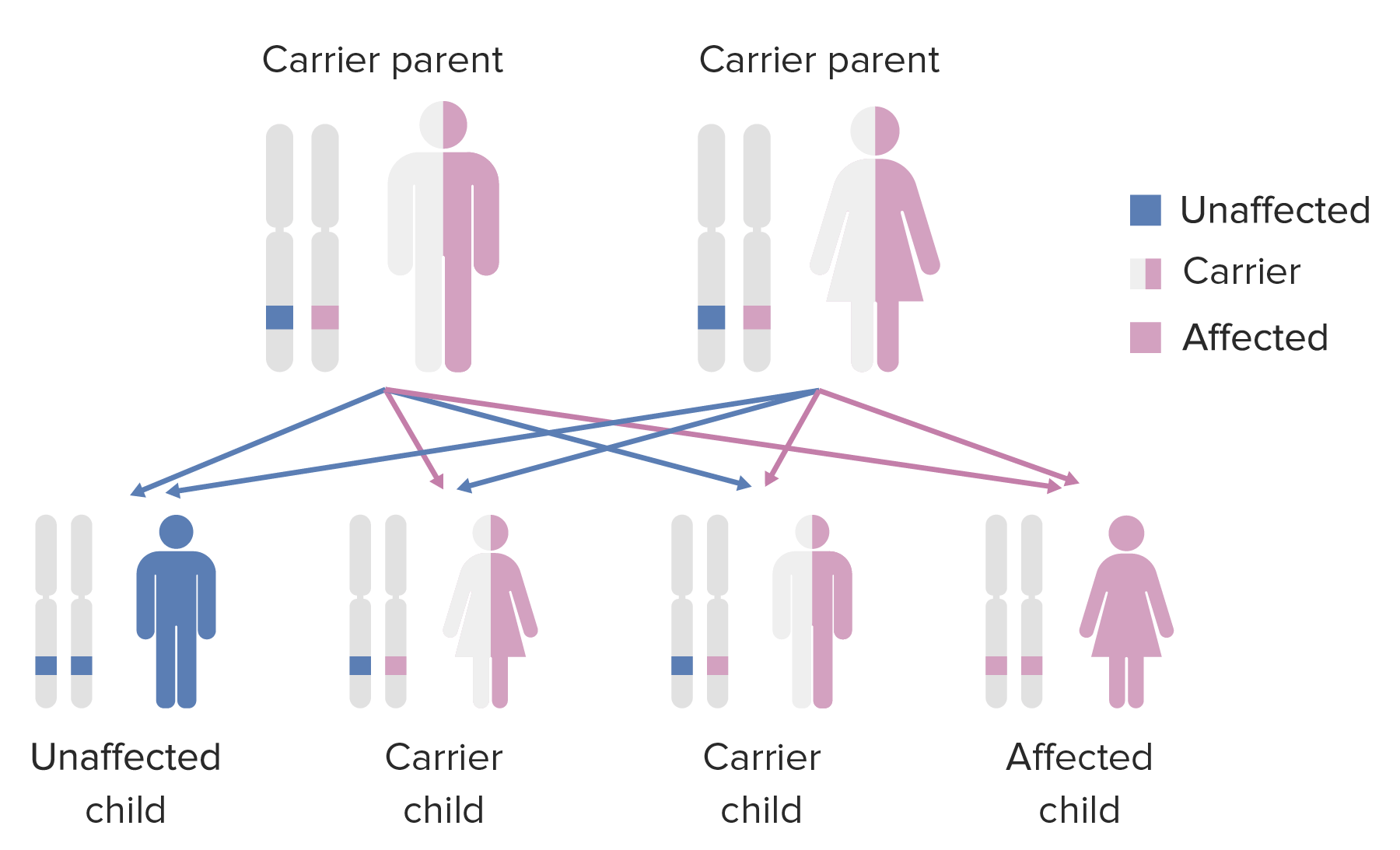
A herança ocorre quando 2 paisPAISAndrogen Insensitivity Syndrome com um geneGeneA category of nucleic acid sequences that function as units of heredity and which code for the basic instructions for the development, reproduction, and maintenance of organisms.Basic Terms of Genetics recessivo ATM (portadores) têm descendência:
Probabilidade de 1 em 4 de dar à luz uma criança afetada
Probabilidade de 2 em 4 de dar à luz a portadores
Probabilidade de 1 em 4 de dar à luz uma criança não afetada
Diagrama do padrão de heritabilidade das condições autossómicas recessivas
Imagem por Lecturio.
Etiologia
GeneGeneA category of nucleic acid sequences that function as units of heredity and which code for the basic instructions for the development, reproduction, and maintenance of organisms.Basic Terms of GeneticsATM :
O produto proteico tem uma região de funcionamento semelhante à fosfatidilinositol-3 quinase (PI3K, pela sigla em inglês):
Paralisa o ciclo celular na presença de danos no ADN para permitir a reparação
Despoleta a paragem do ciclo celular ou a apoptose se as tentativas de reparação do ADN forem infrutíferas
O produto proteico tem uma região envolvida na reparação do ADN:
Repara mutações somáticas para evitar a passagem de ADN mutado a células filhas
Protege as células de danos causados por agressões ambientais (e.g., radiação ionizante)
Expressa constitutivamente em todos os tecidos do corpo
Mutação do geneGeneA category of nucleic acid sequences that function as units of heredity and which code for the basic instructions for the development, reproduction, and maintenance of organisms.Basic Terms of GeneticsATM :
A cinase disfuncional não consegue parar o ciclo celular na presença de ADN danificado:
Células com mutações somáticas podem dividir-se descontroladamente.
Linhagens de células mutadas desprovidas de checkpoints normais podem tornar-se carcinogénicas.
A incapacidade de reparação do ADN torna as células suscetíveis ao efeito de desencadeantes patogénicos:
Células normais e células que já carregam mutações podem adquirir novas mutações aumentando a carcinogenicidade.
As mutações somáticas dos linfócitos prejudica a função de monitorização do sistema imunológico de detetação e remoção das linhagens celulares mutadas.
A Ataxia-telangiectasiaAtaxia-telangiectasiaAtaxia-telangiectasia, also known as Louis-Bar syndrome, is a neurocutaneous syndrome, which involves multiple systems but mainly affects the neurological system. Ataxia-telangiectasia is an autosomal recessive genetic disorder caused by a mutation in the ATM gene (ATM serine/threonine kinase or the ataxia-telangiectasia mutated gene).Ataxia-telangiectasia é causada por mutações no geneGeneA category of nucleic acid sequences that function as units of heredity and which code for the basic instructions for the development, reproduction, and maintenance of organisms.Basic Terms of GeneticsATM. As mutações podem surgir de várias formas:
Tipos de mutação
Mutações nonsense
Mutações frameshift
Mutações missense
Mutações de inserção-deleção
Patogénese
Mutações no geneGeneA category of nucleic acid sequences that function as units of heredity and which code for the basic instructions for the development, reproduction, and maintenance of organisms.Basic Terms of GeneticsATM aumentam o risco de cancro e radiossensibilidade. As mutações levam a uma proteína disfuncional, que causa:
Defeitos na reparação do ADN celular
Defeitos no controlo do ciclo celular
Defeitos na resposta celular a desencadeantes externos:
Dano oxidativo
Radiação ionizante
Agentes alquilantes
Mecanismo
O geneGeneA category of nucleic acid sequences that function as units of heredity and which code for the basic instructions for the development, reproduction, and maintenance of organisms.Basic Terms of GeneticsATM codifica a proteína cinase ATM, que é um regulador chave da resposta celular a quebras no ADN de cadeia dupla.
A apresentação clínica observada na ataxiaAtaxiaImpairment of the ability to perform smoothly coordinated voluntary movements. This condition may affect the limbs, trunk, eyes, pharynx, larynx, and other structures. Ataxia may result from impaired sensory or motor function. Sensory ataxia may result from posterior column injury or peripheral nerve diseases. Motor ataxia may be associated with cerebellar diseases; cerebral cortex diseases; thalamic diseases; basal ganglia diseases; injury to the red nucleus; and other conditions.Ataxia-telangiectasia é consequência direta da resposta ao dano do ADN.
Na presença de danos no ADN, a cinase ATM fosforila a proteína supressora tumoral p53, que interrompe o ciclo celular ou inicia a apoptose.
Defeitos no geneGeneA category of nucleic acid sequences that function as units of heredity and which code for the basic instructions for the development, reproduction, and maintenance of organisms.Basic Terms of GeneticsATM impedem a reparação celular e promovem a progressão do ciclo celular com ADN danificado.
Manifestações
Alterações do SNC:
Perda de células de Purkinje → atrofia cerebelar
Apresenta-se com ataxiaAtaxiaImpairment of the ability to perform smoothly coordinated voluntary movements. This condition may affect the limbs, trunk, eyes, pharynx, larynx, and other structures. Ataxia may result from impaired sensory or motor function. Sensory ataxia may result from posterior column injury or peripheral nerve diseases. Motor ataxia may be associated with cerebellar diseases; cerebral cortex diseases; thalamic diseases; basal ganglia diseases; injury to the red nucleus; and other conditions.Ataxia-telangiectasia e movimentos oculares anormais
Alterações do sistema nervoso periférico (SNP):
Disfunção das células de Schwann → alteração da mielinização
A ataxiaAtaxiaImpairment of the ability to perform smoothly coordinated voluntary movements. This condition may affect the limbs, trunk, eyes, pharynx, larynx, and other structures. Ataxia may result from impaired sensory or motor function. Sensory ataxia may result from posterior column injury or peripheral nerve diseases. Motor ataxia may be associated with cerebellar diseases; cerebral cortex diseases; thalamic diseases; basal ganglia diseases; injury to the red nucleus; and other conditions.Ataxia-telangiectasia agrava à medida que as habilidades motoras grossas e finas se deterioram.
Alterações do sistema imunológico:
Hipoplasia da glândula do timo → diminuição do número e disfunção das células T
Apresenta-se com deficiência imunológica
Apresentação Clínica
Os sintomas de ataxiaAtaxiaImpairment of the ability to perform smoothly coordinated voluntary movements. This condition may affect the limbs, trunk, eyes, pharynx, larynx, and other structures. Ataxia may result from impaired sensory or motor function. Sensory ataxia may result from posterior column injury or peripheral nerve diseases. Motor ataxia may be associated with cerebellar diseases; cerebral cortex diseases; thalamic diseases; basal ganglia diseases; injury to the red nucleus; and other conditions.Ataxia-telangiectasia estão presentes nos 1º 5 anos de vida e progridem com o envelhecimento do indivíduo afetado:
AtaxiaAtaxiaImpairment of the ability to perform smoothly coordinated voluntary movements. This condition may affect the limbs, trunk, eyes, pharynx, larynx, and other structures. Ataxia may result from impaired sensory or motor function. Sensory ataxia may result from posterior column injury or peripheral nerve diseases. Motor ataxia may be associated with cerebellar diseases; cerebral cortex diseases; thalamic diseases; basal ganglia diseases; injury to the red nucleus; and other conditions.Ataxia-telangiectasia
Frequentemente, a 1ª manifestação clínica aparente
Indivíduos afetados podem ter um atraso na marcha:
A fluidez da marcha não se desenvolve
Instabilidade postural
Marcha estreita (em contraste com outras ataxias infantis)
As quedas são menos frequentes (em contraste com outras ataxias infantis).
À medida que as alterações do SNC e do SNP se agravam com a idade, a ataxiaAtaxiaImpairment of the ability to perform smoothly coordinated voluntary movements. This condition may affect the limbs, trunk, eyes, pharynx, larynx, and other structures. Ataxia may result from impaired sensory or motor function. Sensory ataxia may result from posterior column injury or peripheral nerve diseases. Motor ataxia may be associated with cerebellar diseases; cerebral cortex diseases; thalamic diseases; basal ganglia diseases; injury to the red nucleus; and other conditions.Ataxia-telangiectasia piora:
Frequentemente acompanhada por outros sintomas/sinais de disfunção cerebelar:
Disartria
Movimentos complexos atrasados ou desajeitados
Os indivíduos afetados geralmente necessitam de assistência na mobilidade na 2ª década de vida.
Movimentos oculares anormais
Frequentemente normal na idade pré-escolar
Desenvolvimento posterior de alterações nos movimentos oculares voluntários e involuntários:
Movimento descoordenado da cabeça com os olhos ao seguir um objeto em movimento
Atraso no início do movimento dos olhos
A fluidez do movimento dos olhos é perdida (ou seja, os olhos movem-se em pequenos “saltos”).
Incapacidade de manter o olhar nos extremos do movimento ocular:
Dificuldade em ler textos longos
Desenvolvimento de estrabismo
Défice cognitivo
Apresenta-se em tenra idade
Progride com a idade
Gravidade leve a moderada
Os atrasos na fala são comuns.
As dificuldades de mastigação e deglutição geralmente acompanham as dificuldades na fala.
Sintomas extrapiramidais
Responsável por muitas das alterações motoras características da ataxia-telangiectasiaAtaxia-telangiectasiaAtaxia-telangiectasia, also known as Louis-Bar syndrome, is a neurocutaneous syndrome, which involves multiple systems but mainly affects the neurological system. Ataxia-telangiectasia is an autosomal recessive genetic disorder caused by a mutation in the ATM gene (ATM serine/threonine kinase or the ataxia-telangiectasia mutated gene).Ataxia-telangiectasia:
TremorTremorCyclical movement of a body part that can represent either a physiologic process or a manifestation of disease. Intention or action tremor, a common manifestation of cerebellar diseases, is aggravated by movement. In contrast, resting tremor is maximal when there is no attempt at voluntary movement, and occurs as a relatively frequent manifestation of parkinson disease.Myotonic Dystrophies
Mioclonias
Distonia
Coreia
Tempo de reação retardado
Disfunções neurológicas diversas
A neuropatia periférica está frequentemente presente, mas desempenha um papel menor em comparação com a disfunção neurológica maisMAISAndrogen Insensitivity Syndrome evidente.
A fraqueza do neurónio motorMotorNeurons which send impulses peripherally to activate muscles or secretory cells.Nervous System: Histology inferior está frequentemente presente e contribui para a progressão da ataxiaAtaxiaImpairment of the ability to perform smoothly coordinated voluntary movements. This condition may affect the limbs, trunk, eyes, pharynx, larynx, and other structures. Ataxia may result from impaired sensory or motor function. Sensory ataxia may result from posterior column injury or peripheral nerve diseases. Motor ataxia may be associated with cerebellar diseases; cerebral cortex diseases; thalamic diseases; basal ganglia diseases; injury to the red nucleus; and other conditions.Ataxia-telangiectasia.
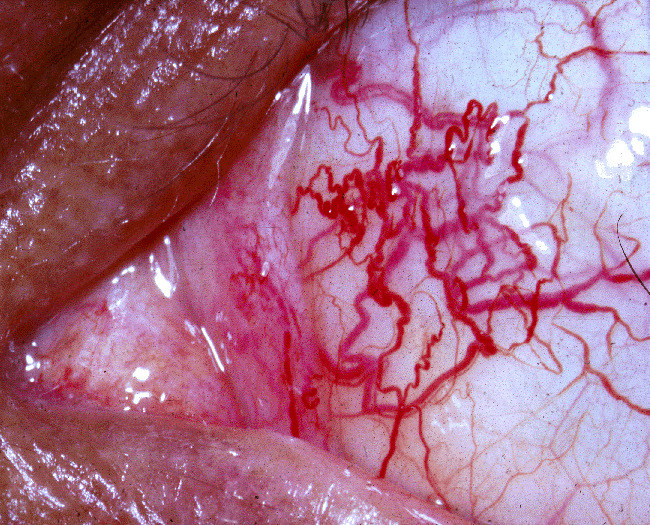
Pequenas erupções de vasos sanguíneos alargados na pele ou nas membranas mucosas
Surgem aos 5-6 anos de idade (após o início da ataxiaAtaxiaImpairment of the ability to perform smoothly coordinated voluntary movements. This condition may affect the limbs, trunk, eyes, pharynx, larynx, and other structures. Ataxia may result from impaired sensory or motor function. Sensory ataxia may result from posterior column injury or peripheral nerve diseases. Motor ataxia may be associated with cerebellar diseases; cerebral cortex diseases; thalamic diseases; basal ganglia diseases; injury to the red nucleus; and other conditions.Ataxia-telangiectasia, o que pode levar a um diagnóstico tardio)
Áreas de telangiectasiaTelangiectasiaPermanent dilation of preexisting blood vessels creating small focal red lesions, most commonly in the skin or mucous membranes. It is characterized by the prominence of skin blood vessels, such as vascular spiders.Chronic Venous Insufficiency:
Conjuntiva bulbar
Pavilhão auricular
Nariz
Face
Pescoço
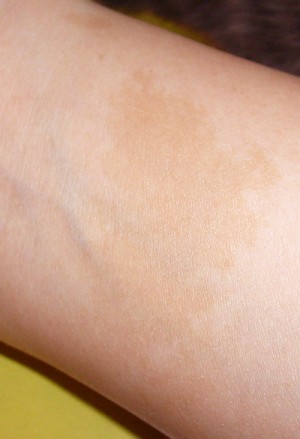
Máculas de café com leite
Máculas hipopigmentadas
Nevos melanocíticos
Erupção papuloescamosa no rosto
Telangiectasias oculares observadas num indivíduo com ataxia-telangiectasia
Imagem: “Ataxia-telangiectasia” por National Eye Institute. Licença: Public Domain
A mácula café com leite é uma das manifestações dermatológicas da ataxia-telangiectasia
Imagem: “Ataxia-telangiectasia” por National Eye Institute. Licença: Public Domain
Imunodeficiência
A imunidade celular e humoral são afetadas.
Afeta principalmente os sistemas sinopulmonares:
Infeções sinusais recorrentes
Infeções pulmonares recorrentes
Suscetibilidade a infeções pneumocócicas
Incomum:
Manifestações extrarrespiratórias
Infeções oportunistas
Doença pulmonar progressiva
Infeções sinopulmonares recorrentes
Bronquiectasias
Doença pulmonar intersticial/fibrose pulmonar:
Tosse não produtiva
Dispneia
Febre
Taquipneia
Hipoxemia
Crepitações
Fraqueza muscular respiratória
Disfagia → ↑ risco de aspiração
Aumento do risco de malignidade
Mama
Ovário
Linfomas
Leucemias
Manifestações clínicas diversas
Atrasos no crescimento
Atraso da puberdade
Diagnóstico
O diagnóstico de ataxia-telangiectasiaAtaxia-telangiectasiaAtaxia-telangiectasia, also known as Louis-Bar syndrome, is a neurocutaneous syndrome, which involves multiple systems but mainly affects the neurological system. Ataxia-telangiectasia is an autosomal recessive genetic disorder caused by a mutation in the ATM gene (ATM serine/threonine kinase or the ataxia-telangiectasia mutated gene).Ataxia-telangiectasia é baseado principalmente na apresentação clínica e é confirmado com exames laboratoriais, testesTestesGonadal Hormones genéticos e estudos de imagem.
Apresentação clínica
AtaxiaAtaxiaImpairment of the ability to perform smoothly coordinated voluntary movements. This condition may affect the limbs, trunk, eyes, pharynx, larynx, and other structures. Ataxia may result from impaired sensory or motor function. Sensory ataxia may result from posterior column injury or peripheral nerve diseases. Motor ataxia may be associated with cerebellar diseases; cerebral cortex diseases; thalamic diseases; basal ganglia diseases; injury to the red nucleus; and other conditions.Ataxia-telangiectasia de início precoce na 1ª década de vida:
AtaxiaAtaxiaImpairment of the ability to perform smoothly coordinated voluntary movements. This condition may affect the limbs, trunk, eyes, pharynx, larynx, and other structures. Ataxia may result from impaired sensory or motor function. Sensory ataxia may result from posterior column injury or peripheral nerve diseases. Motor ataxia may be associated with cerebellar diseases; cerebral cortex diseases; thalamic diseases; basal ganglia diseases; injury to the red nucleus; and other conditions.Ataxia-telangiectasia clássica
ApraxiaApraxiaA group of cognitive disorders characterized by the inability to perform previously learned skills that cannot be attributed to deficits of motor or sensory function. The two major subtypes of this condition are ideomotor and ideational apraxia, which refers to loss of the ability to mentally formulate the processes involved with performing an action. For example, dressing apraxia may result from an inability to mentally formulate the act of placing clothes on the body. Apraxias are generally associated with lesions of the dominant parietal lobe and supramarginal gyrus.Cranial Nerve Palsies oculomotora
Envolvimento de vários sistemas:
Neurológico
Imunológico
Pulmonar
Dermatológico
Avaliação laboratorial
Aumento da α-fetoproteína:
Presente na infância
Não aumenta necessariamente com a idade ou com a progressão da doença
Diminuição de IgGIgGThe major immunoglobulin isotype class in normal human serum. There are several isotype subclasses of igg, for example, igg1, igg2a, and igg2b.Hypersensitivity Pneumonitis
Diminuição de IgAIgARepresents 15-20% of the human serum immunoglobulins, mostly as the 4-chain polymer in humans or dimer in other mammals. Secretory iga is the main immunoglobulin in secretions.Immunoglobulins: Types and Functions
Níveis de IgMIgMA class of immunoglobulin bearing mu chains (immunoglobulin mu-chains). Igm can fix complement. The name comes from its high molecular weight and originally being called a macroglobulin.Immunoglobulins: Types and Functions variáveis
A atrofia cerebelar no vermis é a característica cardinal:
A atrofia ser mínima ou ausente no início da ataxiaAtaxiaImpairment of the ability to perform smoothly coordinated voluntary movements. This condition may affect the limbs, trunk, eyes, pharynx, larynx, and other structures. Ataxia may result from impaired sensory or motor function. Sensory ataxia may result from posterior column injury or peripheral nerve diseases. Motor ataxia may be associated with cerebellar diseases; cerebral cortex diseases; thalamic diseases; basal ganglia diseases; injury to the red nucleus; and other conditions.Ataxia-telangiectasia.
A deteção da mutação homozigótica do geneGeneA category of nucleic acid sequences that function as units of heredity and which code for the basic instructions for the development, reproduction, and maintenance of organisms.Basic Terms of GeneticsATM estabelece o diagnóstico de ataxia-telangiectasiaAtaxia-telangiectasiaAtaxia-telangiectasia, also known as Louis-Bar syndrome, is a neurocutaneous syndrome, which involves multiple systems but mainly affects the neurological system. Ataxia-telangiectasia is an autosomal recessive genetic disorder caused by a mutation in the ATM gene (ATM serine/threonine kinase or the ataxia-telangiectasia mutated gene).Ataxia-telangiectasia.
Deteção de mutação heterozigótica composta do geneGeneA category of nucleic acid sequences that function as units of heredity and which code for the basic instructions for the development, reproduction, and maintenance of organisms.Basic Terms of GeneticsATM
O rastreio de familiares e o aconselhamento genético estão indicados.
Tratamento
O tratamento da ataxia-telangiectasiaAtaxia-telangiectasiaAtaxia-telangiectasia, also known as Louis-Bar syndrome, is a neurocutaneous syndrome, which involves multiple systems but mainly affects the neurological system. Ataxia-telangiectasia is an autosomal recessive genetic disorder caused by a mutation in the ATM gene (ATM serine/threonine kinase or the ataxia-telangiectasia mutated gene).Ataxia-telangiectasia é de suporte dirigido aos sintomas:
Sintomas neurológicos
O principal objetivo é garantir uma boa qualidade de vida aos indivíduos que vivem com ataxia-telangiectasiaAtaxia-telangiectasiaAtaxia-telangiectasia, also known as Louis-Bar syndrome, is a neurocutaneous syndrome, which involves multiple systems but mainly affects the neurological system. Ataxia-telangiectasia is an autosomal recessive genetic disorder caused by a mutation in the ATM gene (ATM serine/threonine kinase or the ataxia-telangiectasia mutated gene).Ataxia-telangiectasia.
A fisioterapia e a avaliação regularRegularInsulin são realizadas para prevenir complicações (ou seja, quedas).
A administração de amantadina mostrou melhoria nos sintomas neurológicos.
Cancro e radiossensibilidade
Rastreio de rotina de neoplasias da mama e ovário
Monitorização regularRegularInsulin para deteção precoce de neoplasias hematológicas
O tratamento nas neoplasias é complicado, porque os indivíduos com ataxia-telangiectasiaAtaxia-telangiectasiaAtaxia-telangiectasia, also known as Louis-Bar syndrome, is a neurocutaneous syndrome, which involves multiple systems but mainly affects the neurological system. Ataxia-telangiectasia is an autosomal recessive genetic disorder caused by a mutation in the ATM gene (ATM serine/threonine kinase or the ataxia-telangiectasia mutated gene).Ataxia-telangiectasia são radiossensíveis; a radioterapia pode causar reações graves.
Os agentes quimioterápicos devem ser usados com cuidado devido ao aumento do efeito citotóxico:
Profilaxia antibiótica para prevenção da ocorrência de infeções sinopulmonares
Fisioterapia torácica para prevenir/tratar infeções crónicas
Técnicas de desobstrução torácica e dispositivos de assistência à tosse são prescritos em indivíduos com fraqueza muscular respiratória.
Os glicocorticoides são uma opção de tratamento para indivíduos com doença pulmonar intersticial, mas não são preferidos, pois os glicocorticóides comprometem ainda maisMAISAndrogen Insensitivity Syndrome a imunidade.
Ventilação não invasiva em indivíduos com insuficiência respiratória crónica
Nutrição
A deglutição deve ser formalmente avaliada em indivíduos com ataxia-telangiectasiaAtaxia-telangiectasiaAtaxia-telangiectasia, also known as Louis-Bar syndrome, is a neurocutaneous syndrome, which involves multiple systems but mainly affects the neurological system. Ataxia-telangiectasia is an autosomal recessive genetic disorder caused by a mutation in the ATM gene (ATM serine/threonine kinase or the ataxia-telangiectasia mutated gene).Ataxia-telangiectasia.
O refluxo gastroesofágico pode estar presente e deve ser monitorizado.
A terapia da fala e linguagem é recomendada para ajudar com os problemas de deglutição e nutrição.
A sobrevida global de indivíduos com ataxia-telangiectasiaAtaxia-telangiectasiaAtaxia-telangiectasia, also known as Louis-Bar syndrome, is a neurocutaneous syndrome, which involves multiple systems but mainly affects the neurological system. Ataxia-telangiectasia is an autosomal recessive genetic disorder caused by a mutation in the ATM gene (ATM serine/threonine kinase or the ataxia-telangiectasia mutated gene).Ataxia-telangiectasia depende da monitorização regularRegularInsulin dos sintomas, cuidados atentos de prevenção de infeções e identificação precoce de tumores.
Indivíduos com a forma clássica podem ou não atingir a idade adulta.
Paralisia cerebral: distúrbio congénito que afeta o movimento, o tónus muscular e a postura. A paralisia cerebral apresenta aumento dos reflexos, membros hipotónicos ou rígidos e movimentos involuntários. O diagnóstico é baseado na apresentação clínica. Muitos casos de ataxia-telangiectasiaAtaxia-telangiectasiaAtaxia-telangiectasia, also known as Louis-Bar syndrome, is a neurocutaneous syndrome, which involves multiple systems but mainly affects the neurological system. Ataxia-telangiectasia is an autosomal recessive genetic disorder caused by a mutation in the ATM gene (ATM serine/threonine kinase or the ataxia-telangiectasia mutated gene).Ataxia-telangiectasia são inicialmente diagnosticados erradamente como paralisia cerebral devido à rara ocorrência da doença e ao início dos sintomas motores antes do aparecimento da telangiectasiaTelangiectasiaPermanent dilation of preexisting blood vessels creating small focal red lesions, most commonly in the skin or mucous membranes. It is characterized by the prominence of skin blood vessels, such as vascular spiders.Chronic Venous Insufficiency. A fisioterapia e os relaxantes musculares são importantes no tratamento.
AtaxiaAtaxiaImpairment of the ability to perform smoothly coordinated voluntary movements. This condition may affect the limbs, trunk, eyes, pharynx, larynx, and other structures. Ataxia may result from impaired sensory or motor function. Sensory ataxia may result from posterior column injury or peripheral nerve diseases. Motor ataxia may be associated with cerebellar diseases; cerebral cortex diseases; thalamic diseases; basal ganglia diseases; injury to the red nucleus; and other conditions.Ataxia-telangiectasia de Friedreich: doença hereditária rara que se apresenta com dano neurológico progressivo, marcha instável e distúrbios do movimento. O diagnóstico é baseado na apresentação clínica e na história detalhada do indivíduo. O tratamento é amplamente focado na gestão dos sintomas.
Síndrome de rutura de Nijmegen: distúrbio genético caracterizado por microcefalia progressiva, atraso do crescimento intrauterino e baixa estatura, infeções sinopulmonares recorrentes, aumento do risco de cancro e insuficiência ovárica prematura. O diagnóstico é baseado na apresentação clínica e testesTestesGonadal Hormones genéticos moleculares. O tratamento inclui suplementação vitamínica, terapêutica com imunoglobulina e tratamento sintomático.
Riboldi, G. M., Samanta, D., Asuncion, R. M. D., & Frucht, S. (2024). Ataxia-Telangiectasia. In StatPearls. StatPearls Publishing. Retrieved August 11, 2025, from https://www.ncbi.nlm.nih.gov/books/NBK519542/
Crie sua conta gratuita ou faça login para continuar lendo!
A Lecturio Medical complementa o teu estudo através de métodos de ensino baseados em evidência, vídeos de palestras, perguntas e muito mais – tudo combinado num só lugar e fácil de usar.
User Reviews
Details
×
Obtenha Premium para testar os seus conhecimentos
Lecturio Premium dá-lhe acesso total a todos os conteúdos e características
Obtenha Premium para ver todos os vídeos
Verifique agora o seu e-mail para obter um teste gratuito.
Crie uma conta gratuita para testar os seus conhecimentos
Lecturio Premium dá-lhe acesso total a todos os conteúdos e características - incluindo o Qbank de Lecturio com perguntas actualizadas ao estilo do board-.