Domina Conceptos Médicos

Estudia para la escuela de medicina y tus examenes con Lecturio.

Virus del Sarampión

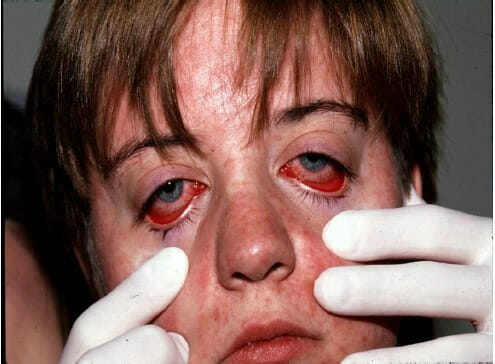
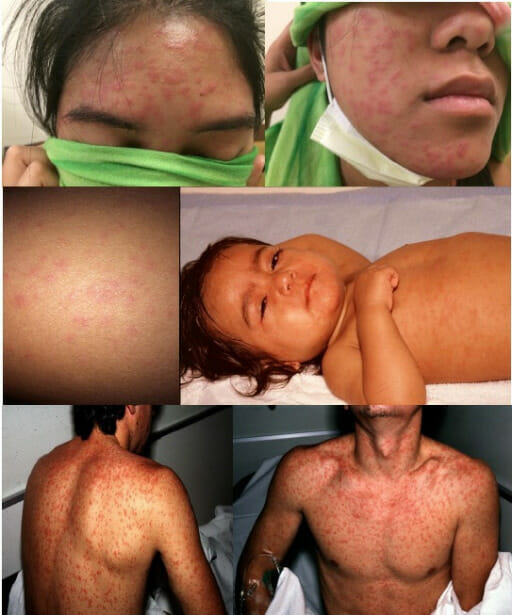
El sarampión (también conocido como rubéola) es causado por un virus Virus Viruses are infectious, obligate intracellular parasites composed of a nucleic acid core surrounded by a protein capsid. Viruses can be either naked (non-enveloped) or enveloped. The classification of viruses is complex and based on many factors, including type and structure of the nucleoid and capsid, the presence of an envelope, the replication cycle, and the host range. Virology del ARN monocatenario, lineal y de sentido negativo de la familia Paramyxoviridae Paramyxoviridae A family of spherical viruses, of the order mononegavirales, somewhat larger than the orthomyxoviruses, and containing single-stranded RNA. Subfamilies include paramyxoviridae and pneumovirinae. Respiratory Syncytial Virus y del género Morbillivirus Morbillivirus A genus of the family paramyxoviridae (subfamily paramyxovirinae) where the virions of most members have hemagglutinin but not neuraminidase activity. All members produce both cytoplasmic and intranuclear inclusion bodies. Measles virus is the type species. Measles Virus. Es altamente contagioso y se transmite solo entre los LOS Neisseria humanos a través de gotitas respiratorias o transmisión por contacto directo de una persona infectada. Por lo general, una enfermedad de la infancia, el sarampión comienza clásicamente con tos TOS Thoracic outlet syndrome (TOS) is a broad term used for a spectrum of syndromes related to the general region of the thoracic outlet, which involves the compression or irritation of elements of the brachial plexus, subclavian artery, or subclavian vein. Thoracic Outlet Syndrome, coriza y conjuntivitis, seguidas de una erupción maculopapular Maculopapular Dermatologic Examination. Las complicaciones incluyen diarrea, neumonía y encefalitis. El sarampión se puede prevenir mediante la vacunación y, gracias a esto, se había erradicado en EN Erythema nodosum is an immune-mediated panniculitis (inflammation of the subcutaneous fat) caused by a type IV (delayed-type) hypersensitivity reaction. It commonly manifests in young women as tender, erythematous nodules on the shins. Erythema Nodosum gran parte hasta los LOS Neisseria últimos años. La mayoría de los LOS Neisseria casos se tratan con cuidados de apoyo, aunque en EN Erythema nodosum is an immune-mediated panniculitis (inflammation of the subcutaneous fat) caused by a type IV (delayed-type) hypersensitivity reaction. It commonly manifests in young women as tender, erythematous nodules on the shins. Erythema Nodosum pacientes seleccionados pueden estar indicados los LOS Neisseria antivirales.

Last updated: Dec 15, 2025
Editorial responsibility: Stanley Oiseth, Lindsay Jones, Evelin Maza

Clasificación

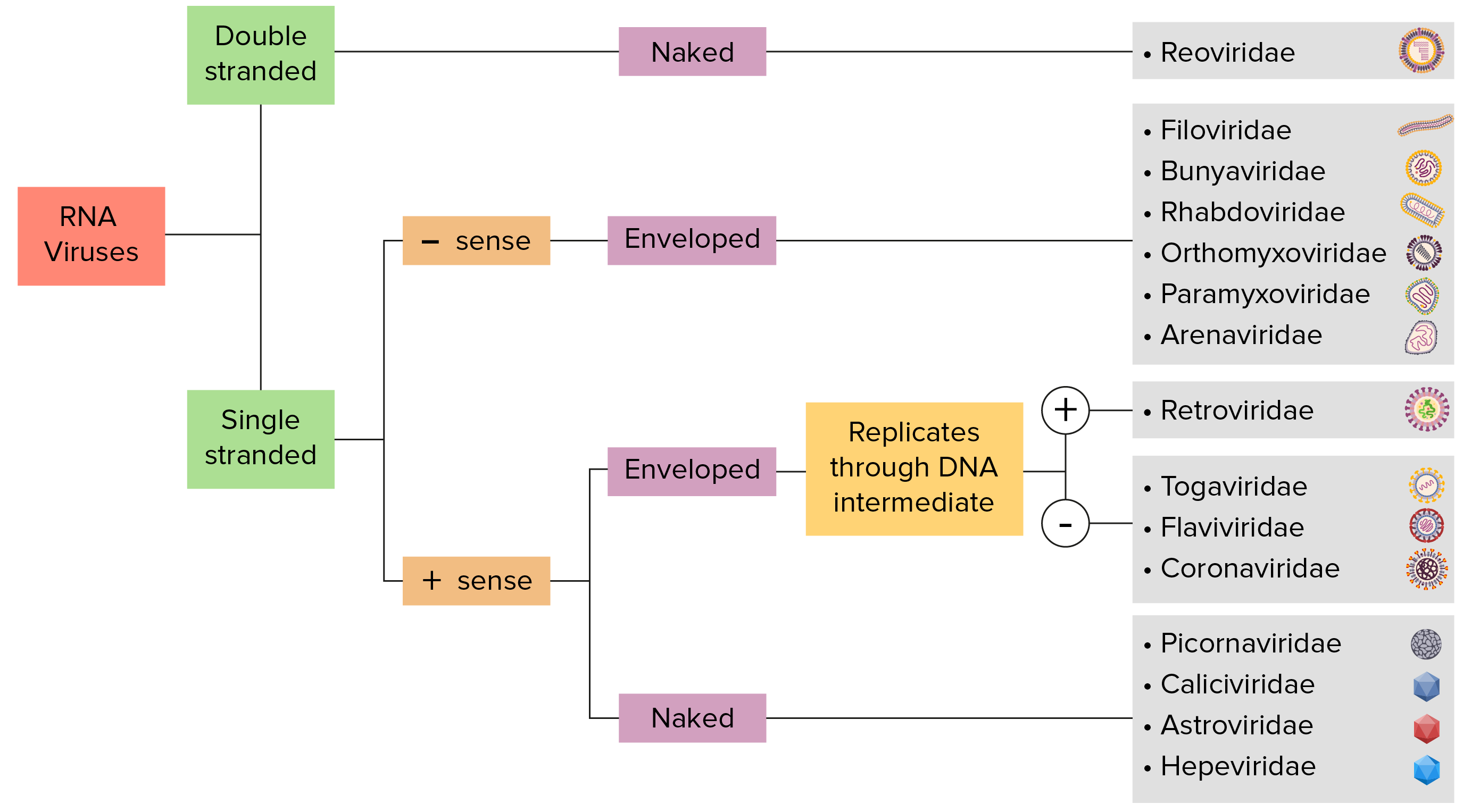
Diagrama de flujo de la clasificación de los virus de ARN

Identificación de los virus ARN:
Los virus pueden clasificarse de muchas maneras. Sin embargo, la mayoría de los virus tienen un genoma formado por ADN o ARN. Los virus con genoma ARN pueden caracterizarse además por tener ARN monocatenario o bicatenario. Los virus “envueltos” están cubiertos por una fina capa de membrana celular (normalmente tomada de la célula huésped). Si la capa está ausente, los virus se denominan “desnudos”. Los virus con genomas monocatenarios son positivos si el genoma se emplea directamente como ARN mensajero (ARNm), que se traduce en proteínas. Los virus monocatenarios negativos emplean la ARN polimerasa, una enzima viral, para transcribir su genoma en ARNm.
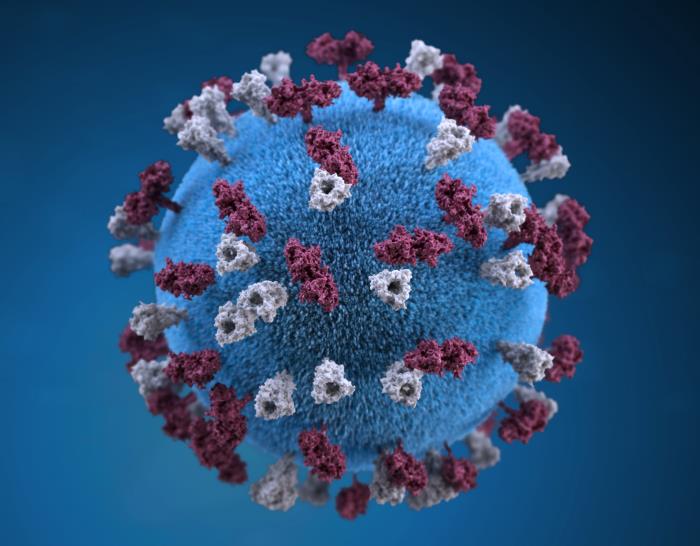
Imagen por Lecturio. Licencia: CC BY-NC-SA 4.0

Características Generales

  • Género: Morbillivirus Morbillivirus A genus of the family paramyxoviridae (subfamily paramyxovirinae) where the virions of most members have hemagglutinin but not neuraminidase activity. All members produce both cytoplasmic and intranuclear inclusion bodies. Measles virus is the type species. Measles Virus
  • Familia: Paramyxoviridae Paramyxoviridae A family of spherical viruses, of the order mononegavirales, somewhat larger than the orthomyxoviruses, and containing single-stranded RNA. Subfamilies include paramyxoviridae and pneumovirinae. Respiratory Syncytial Virus
  • Virus Virus Viruses are infectious, obligate intracellular parasites composed of a nucleic acid core surrounded by a protein capsid. Viruses can be either naked (non-enveloped) or enveloped. The classification of viruses is complex and based on many factors, including type and structure of the nucleoid and capsid, the presence of an envelope, the replication cycle, and the host range. Virology de ARN monocatenario, lineal y de sentido negativo
  • Virus Virus Viruses are infectious, obligate intracellular parasites composed of a nucleic acid core surrounded by a protein capsid. Viruses can be either naked (non-enveloped) or enveloped. The classification of viruses is complex and based on many factors, including type and structure of the nucleoid and capsid, the presence of an envelope, the replication cycle, and the host range. Virology envuelto
  • La cápside helicoidal grande transporta la ARN polimerasa dependiente de ARN en EN Erythema nodosum is an immune-mediated panniculitis (inflammation of the subcutaneous fat) caused by a type IV (delayed-type) hypersensitivity reaction. It commonly manifests in young women as tender, erythematous nodules on the shins. Erythema Nodosum el virión.
Representación gráfica en 3D de una partícula del virus del sarampión de forma esférica

Representación gráfica tridimensional de una partícula del virus del sarampión de forma esférica

Imagen: “21074” por Allison M. Maiuri. Licencia: Dominio Público

Epidemiología y Patogénesis

Epidemiología

  • Incidencia: 50–300/año en EN Erythema nodosum is an immune-mediated panniculitis (inflammation of the subcutaneous fat) caused by a type IV (delayed-type) hypersensitivity reaction. It commonly manifests in young women as tender, erythematous nodules on the shins. Erythema Nodosum Estados Unidos
  • Principalmente un trastorno infantil
    • Edad media: 3 años
    • 58% de los LOS Neisseria casos ocurre en EN Erythema nodosum is an immune-mediated panniculitis (inflammation of the subcutaneous fat) caused by a type IV (delayed-type) hypersensitivity reaction. It commonly manifests in young women as tender, erythematous nodules on the shins. Erythema Nodosum edades de 1 a 19 años
  • Desde la vacunación de 2 dosis contra el sarampión, las paperas y la rubéola ( MMR MMR A DNA repair pathway involved in correction of errors introduced during DNA replication when an incorrect base, which cannot form hydrogen bonds with the corresponding base in the parent strand, is incorporated into the daughter strand. Excinucleases recognize the base pair mismatch and cause a segment of polynucleotide chain to be excised from the daughter strand, thereby removing the mismatched base. Lynch syndrome, por sus siglas en EN Erythema nodosum is an immune-mediated panniculitis (inflammation of the subcutaneous fat) caused by a type IV (delayed-type) hypersensitivity reaction. It commonly manifests in young women as tender, erythematous nodules on the shins. Erythema Nodosum inglés), los LOS Neisseria casos en EN Erythema nodosum is an immune-mediated panniculitis (inflammation of the subcutaneous fat) caused by a type IV (delayed-type) hypersensitivity reaction. It commonly manifests in young women as tender, erythematous nodules on the shins. Erythema Nodosum Estados Unidos ↓ 99%
  • El 96% de los LOS Neisseria casos en EN Erythema nodosum is an immune-mediated panniculitis (inflammation of the subcutaneous fat) caused by a type IV (delayed-type) hypersensitivity reaction. It commonly manifests in young women as tender, erythematous nodules on the shins. Erythema Nodosum Estados Unidos están relacionados con importaciones internacionales de regiones con alta incidencia de sarampión (p. ej., regiones de la OMS del Mediterráneo oriental y África)
  • Incidencia: hombres = mujeres
  • Mayor mortalidad observada en EN Erythema nodosum is an immune-mediated panniculitis (inflammation of the subcutaneous fat) caused by a type IV (delayed-type) hypersensitivity reaction. It commonly manifests in young women as tender, erythematous nodules on the shins. Erythema Nodosum mujeres de todas las edades
  • Tasa de mortalidad del 4%–10% en EN Erythema nodosum is an immune-mediated panniculitis (inflammation of the subcutaneous fat) caused by a type IV (delayed-type) hypersensitivity reaction. It commonly manifests in young women as tender, erythematous nodules on the shins. Erythema Nodosum los LOS Neisseria países en EN Erythema nodosum is an immune-mediated panniculitis (inflammation of the subcutaneous fat) caused by a type IV (delayed-type) hypersensitivity reaction. It commonly manifests in young women as tender, erythematous nodules on the shins. Erythema Nodosum desarrollo
  • Poblaciones de riesgo: las comunidades subvacunadas siguen siendo vulnerables (p. ej., brote de Ohio de 2022 con 86 casos, 94% sin vacunar).

Transmisión

  • Altamente contagiosa → Tasa de infección secundaria del 90%: enfermedad notificable a los LOS Neisseria CDC
  • Los LOS Neisseria humanos son el único reservorio conocido.
  • Vectores:
    • Gotitas respiratorias
    • Contacto de persona a persona
    • Fómites
  • Los LOS Neisseria niños pequeños y las mujeres embarazadas son particularmente susceptibles a las infecciones.

Especies clínicamente relevantes

  • Familia Paramyxoviridae Paramyxoviridae A family of spherical viruses, of the order mononegavirales, somewhat larger than the orthomyxoviruses, and containing single-stranded RNA. Subfamilies include paramyxoviridae and pneumovirinae. Respiratory Syncytial Virus:
    • Paramixovirus: Incluye los LOS Neisseria virus Virus Viruses are infectious, obligate intracellular parasites composed of a nucleic acid core surrounded by a protein capsid. Viruses can be either naked (non-enveloped) or enveloped. The classification of viruses is complex and based on many factors, including type and structure of the nucleoid and capsid, the presence of an envelope, the replication cycle, and the host range. Virology de la parainfluenza y virus Virus Viruses are infectious, obligate intracellular parasites composed of a nucleic acid core surrounded by a protein capsid. Viruses can be either naked (non-enveloped) or enveloped. The classification of viruses is complex and based on many factors, including type and structure of the nucleoid and capsid, the presence of an envelope, the replication cycle, and the host range. Virology de las paperas.
    • Neumovirus: Incluye el virus Virus Viruses are infectious, obligate intracellular parasites composed of a nucleic acid core surrounded by a protein capsid. Viruses can be either naked (non-enveloped) or enveloped. The classification of viruses is complex and based on many factors, including type and structure of the nucleoid and capsid, the presence of an envelope, the replication cycle, and the host range. Virology respiratorio sincitial.
    • Morbillivirus Morbillivirus A genus of the family paramyxoviridae (subfamily paramyxovirinae) where the virions of most members have hemagglutinin but not neuraminidase activity. All members produce both cytoplasmic and intranuclear inclusion bodies. Measles virus is the type species. Measles Virus: Incluye el virus Virus Viruses are infectious, obligate intracellular parasites composed of a nucleic acid core surrounded by a protein capsid. Viruses can be either naked (non-enveloped) or enveloped. The classification of viruses is complex and based on many factors, including type and structure of the nucleoid and capsid, the presence of an envelope, the replication cycle, and the host range. Virology del sarampión.
  • La familia Paramyxoviridae Paramyxoviridae A family of spherical viruses, of the order mononegavirales, somewhat larger than the orthomyxoviruses, and containing single-stranded RNA. Subfamilies include paramyxoviridae and pneumovirinae. Respiratory Syncytial Virus causa entre el 30%–40% de todas las infecciones respiratorias agudas en EN Erythema nodosum is an immune-mediated panniculitis (inflammation of the subcutaneous fat) caused by a type IV (delayed-type) hypersensitivity reaction. It commonly manifests in young women as tender, erythematous nodules on the shins. Erythema Nodosum lactantes y niños.

Fisiopatología

  • Período de incubación: 2–3 semanas
  • El virus Virus Viruses are infectious, obligate intracellular parasites composed of a nucleic acid core surrounded by a protein capsid. Viruses can be either naked (non-enveloped) or enveloped. The classification of viruses is complex and based on many factors, including type and structure of the nucleoid and capsid, the presence of an envelope, the replication cycle, and the host range. Virology ingresa a través del tracto respiratorio superior → infecta los LOS Neisseria tejidos linfáticos locales → amplificación en EN Erythema nodosum is an immune-mediated panniculitis (inflammation of the subcutaneous fat) caused by a type IV (delayed-type) hypersensitivity reaction. It commonly manifests in young women as tender, erythematous nodules on the shins. Erythema Nodosum los LOS Neisseria ganglios linfáticos regionales → diseminación a varios órganos (testículos, ovarios, glándula tiroides, páncreas y sistema nervioso central)
  • 2 glicoproteínas de la envoltura se unen a las células huésped:
    • Hemaglutinina (H)
    • Proteína de fusión (F)
  • ARN monocatenario negativo utilizado como monocatenario postivo
  • ARN monocatenario traducido por los LOS Neisseria ribosomas del huésped → produce proteínas.
  • Los LOS Neisseria virus Virus Viruses are infectious, obligate intracellular parasites composed of a nucleic acid core surrounded by a protein capsid. Viruses can be either naked (non-enveloped) or enveloped. The classification of viruses is complex and based on many factors, including type and structure of the nucleoid and capsid, the presence of an envelope, the replication cycle, and the host range. Virology se empaquetan mientras las células huésped se someten a lisis.
  • Inmunosupresión generalizada:
    • Supresión de la producción de interferón a través de las proteínas no estructurales V y C
    • En EN Erythema nodosum is an immune-mediated panniculitis (inflammation of the subcutaneous fat) caused by a type IV (delayed-type) hypersensitivity reaction. It commonly manifests in young women as tender, erythematous nodules on the shins. Erythema Nodosum hipersensibilidad de tipo retardado
    • ↓ Producción de interleucina (IL)-2
    • ↓ Respuestas linfoproliferativas específicas de antígeno

Presentación Clínica

Presentación clínica

  • Etapa prodrómica:
    • Tos TOS Thoracic outlet syndrome (TOS) is a broad term used for a spectrum of syndromes related to the general region of the thoracic outlet, which involves the compression or irritation of elements of the brachial plexus, subclavian artery, or subclavian vein. Thoracic Outlet Syndrome
    • Rinitis
    • Conjuntivitis
    • Fotofobia
    • Fiebre alta
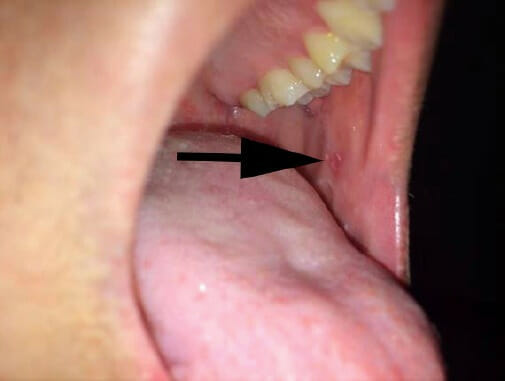
  • Día 3: Manchas de Koplik (grano de sal gris azulado con halo rojo, 1 a 2 días)
  • Día 4: erupción maculopapular Maculopapular Dermatologic Examination (de cabeza/cuello → cuerpo)

Complicaciones

Al AL Amyloidosis menos 1 complicación ocurre en EN Erythema nodosum is an immune-mediated panniculitis (inflammation of the subcutaneous fat) caused by a type IV (delayed-type) hypersensitivity reaction. It commonly manifests in young women as tender, erythematous nodules on the shins. Erythema Nodosum el 30% de los LOS Neisseria casos:
  • Inmunosupresión e infección secundaria:
    • La infección secundaria puede ser por virus Virus Viruses are infectious, obligate intracellular parasites composed of a nucleic acid core surrounded by a protein capsid. Viruses can be either naked (non-enveloped) or enveloped. The classification of viruses is complex and based on many factors, including type and structure of the nucleoid and capsid, the presence of an envelope, the replication cycle, and the host range. Virology o bacterias.
    • Se ha HA Hemolytic anemia (HA) is the term given to a large group of anemias that are caused by the premature destruction/hemolysis of circulating red blood cells (RBCs). Hemolysis can occur within (intravascular hemolysis) or outside the blood vessels (extravascular hemolysis). Hemolytic Anemia descrito reactivación de la tuberculosis Tuberculosis Tuberculosis (TB) is an infectious disease caused by Mycobacterium tuberculosis complex bacteria. The bacteria usually attack the lungs but can also damage other parts of the body. Approximately 30% of people around the world are infected with this pathogen, with the majority harboring a latent infection. Tuberculosis spreads through the air when a person with active pulmonary infection coughs or sneezes. Tuberculosis.
  • Diarrea:
    • Más común
    • Visto en EN Erythema nodosum is an immune-mediated panniculitis (inflammation of the subcutaneous fat) caused by a type IV (delayed-type) hypersensitivity reaction. It commonly manifests in young women as tender, erythematous nodules on the shins. Erythema Nodosum el 8% de los LOS Neisseria casos
  • Neumonía:
    • Complicación más mortal
    • Visto en EN Erythema nodosum is an immune-mediated panniculitis (inflammation of the subcutaneous fat) caused by a type IV (delayed-type) hypersensitivity reaction. It commonly manifests in young women as tender, erythematous nodules on the shins. Erythema Nodosum el 6% de los LOS Neisseria casos
  • Otitis media
  • Neumonía de células gigantes:
    • Visto en EN Erythema nodosum is an immune-mediated panniculitis (inflammation of the subcutaneous fat) caused by a type IV (delayed-type) hypersensitivity reaction. It commonly manifests in young women as tender, erythematous nodules on the shins. Erythema Nodosum personas con deficiencias de inmunidad celular (e.g., leucemia, SIDA)
    • A menudo fatal
  • Encefalomielitis diseminada aguda:
    • Inflamación posinfecciosa del sistema nervioso central
    • Los LOS Neisseria síntomas incluyen debilidad, fatiga y ceguera.
  • Panencefalitis esclerosante subaguda:
    • Enfermedad degenerativa mortal del SNC
    • Ocurre entre 7 y 10 años después de la infección.
    • Mal entendida
  • Ceguera: por queratitis y ulceración corneal

Diagnóstico

La enfermedad se diagnostica por sospecha clínica seguida de pruebas de laboratorio de confirmación. Los LOS Neisseria casos sospechosos deben aislarse hasta que se confirmen.

  • Los LOS Neisseria antecedentes revelan trío de síntomas: tos TOS Thoracic outlet syndrome (TOS) is a broad term used for a spectrum of syndromes related to the general region of the thoracic outlet, which involves the compression or irritation of elements of the brachial plexus, subclavian artery, or subclavian vein. Thoracic Outlet Syndrome, coriza, conjuntivitis.
  • El examen confirma erupción maculopapular Maculopapular Dermatologic Examination.
  • Diagnóstico realizado por 1 de 3:
    • Inhibición de la hemaglutinación:
      • ↑ rápida en EN Erythema nodosum is an immune-mediated panniculitis (inflammation of the subcutaneous fat) caused by a type IV (delayed-type) hypersensitivity reaction. It commonly manifests in young women as tender, erythematous nodules on the shins. Erythema Nodosum los LOS Neisseria títulos de IgG IgG The major immunoglobulin isotype class in normal human serum. There are several isotype subclasses of igg, for example, igg1, igg2a, and igg2b. Hypersensitivity Pneumonitis
      • IgM IgM A class of immunoglobulin bearing mu chains (immunoglobulin mu-chains). Igm can fix complement. The name comes from its high molecular weight and originally being called a macroglobulin. Immunoglobulins: Types and Functions positivo
    • RT-PCR RT-PCR A variation of the pcr technique in which cDNA is made from RNA via reverse transcription. The resultant cDNA is then amplified using standard pcr protocols. Polymerase Chain Reaction (PCR) con detección de ARN de sarampión
  • Considere la punción lumbar si le preocupa la encefalitis.
  • Considere la radiografía de tórax en EN Erythema nodosum is an immune-mediated panniculitis (inflammation of the subcutaneous fat) caused by a type IV (delayed-type) hypersensitivity reaction. It commonly manifests in young women as tender, erythematous nodules on the shins. Erythema Nodosum pacientes con hipoxia y preocupación por neumonía.

Tratamiento

Tratamiento

  • Cuidados de apoyo:
    • Reducción de la fiebre
    • Rehidratación
    • Medidas de prevención de la superinfección
  • Vitamina A en EN Erythema nodosum is an immune-mediated panniculitis (inflammation of the subcutaneous fat) caused by a type IV (delayed-type) hypersensitivity reaction. It commonly manifests in young women as tender, erythematous nodules on the shins. Erythema Nodosum dosis altas:
    • En EN Erythema nodosum is an immune-mediated panniculitis (inflammation of the subcutaneous fat) caused by a type IV (delayed-type) hypersensitivity reaction. It commonly manifests in young women as tender, erythematous nodules on the shins. Erythema Nodosum pacientes con deficiencias nutricionales conocidas
    • Se ha HA Hemolytic anemia (HA) is the term given to a large group of anemias that are caused by the premature destruction/hemolysis of circulating red blood cells (RBCs). Hemolysis can occur within (intravascular hemolysis) or outside the blood vessels (extravascular hemolysis). Hemolytic Anemia demostrado que la inyección IM de 2 dosis ↓ la morbilidad y la mortalidad en EN Erythema nodosum is an immune-mediated panniculitis (inflammation of the subcutaneous fat) caused by a type IV (delayed-type) hypersensitivity reaction. It commonly manifests in young women as tender, erythematous nodules on the shins. Erythema Nodosum niños < 5 años.
  • Ribavirina:
    • Utilizada en EN Erythema nodosum is an immune-mediated panniculitis (inflammation of the subcutaneous fat) caused by a type IV (delayed-type) hypersensitivity reaction. It commonly manifests in young women as tender, erythematous nodules on the shins. Erythema Nodosum casos de neumonía.
    • Reduce la duración de los LOS Neisseria síntomas y la hospitalización.
    • Reduce la morbilidad y la mortalidad.
  • Consejería de vacunación

Prevención

  • Vacuna triple viral SPR:
    • Los LOS Neisseria niños deben recibir 2 dosis.
    • Primera dosis a los LOS Neisseria 12–15 meses y segunda a los LOS Neisseria 4–6 años.
    • Se puede administrar a todas las edades.
  • Vacuna SPRV (sarampión, paperas, rubéola y varicela):
    • Los LOS Neisseria niños de hasta 12 años deben recibir 2 dosis.
    • Aprobada solo para niños de 12 meses a 12 años
    • Primera dosis a los LOS Neisseria 12–15 meses y segunda dosis a los LOS Neisseria 4–6 años
  • La infección da inmunidad de por vida.

Comparación de Erupciones Infantiles Comunes

Tabla: Comparación de erupciones cutáneas comunes en EN Erythema nodosum is an immune-mediated panniculitis (inflammation of the subcutaneous fat) caused by a type IV (delayed-type) hypersensitivity reaction. It commonly manifests in young women as tender, erythematous nodules on the shins. Erythema Nodosum la infancia
Número Otros nombres de la enfermedad Etiología Descripción
1ra enfermedad
  • Sarampión
  • Sarampión de 14 días
  • Morbilli Morbilli Measles (also known as rubeola) is caused by a single-stranded, linear, negative-sense RNA virus of the family Paramyxoviridae. It is highly contagious and spreads by respiratory droplets or direct-contact transmission from an infected person. Typically a disease of childhood, measles classically starts with cough, coryza, and conjunctivitis, followed by a maculopapular rash. Measles Virus
Morbillivirus Morbillivirus A genus of the family paramyxoviridae (subfamily paramyxovirinae) where the virions of most members have hemagglutinin but not neuraminidase activity. All members produce both cytoplasmic and intranuclear inclusion bodies. Measles virus is the type species. Measles Virus del sarampión
  • Tos TOS Thoracic outlet syndrome (TOS) is a broad term used for a spectrum of syndromes related to the general region of the thoracic outlet, which involves the compression or irritation of elements of the brachial plexus, subclavian artery, or subclavian vein. Thoracic Outlet Syndrome, coriza, conjuntivitis
  • Manchas de Koplik (manchas blanco-azuladas con un halo rojo) en EN Erythema nodosum is an immune-mediated panniculitis (inflammation of the subcutaneous fat) caused by a type IV (delayed-type) hypersensitivity reaction. It commonly manifests in young women as tender, erythematous nodules on the shins. Erythema Nodosum la membrana bucal
  • La erupción maculopapular Maculopapular Dermatologic Examination comienza en EN Erythema nodosum is an immune-mediated panniculitis (inflammation of the subcutaneous fat) caused by a type IV (delayed-type) hypersensitivity reaction. It commonly manifests in young women as tender, erythematous nodules on the shins. Erythema Nodosum la cara y detrás de las orejas → se extiende al AL Amyloidosis tronco/extremidades.
2da enfermedad
  • Escarlatina
  • Fiebre escarlata
Streptococcus Streptococcus Streptococcus is one of the two medically important genera of gram-positive cocci, the other being Staphylococcus. Streptococci are identified as different species on blood agar on the basis of their hemolytic pattern and sensitivity to optochin and bacitracin. There are many pathogenic species of streptococci, including S. pyogenes, S. agalactiae, S. pneumoniae, and the viridans streptococci. Streptococcus pyogenes
  • Erupción maculopapular Maculopapular Dermatologic Examination con sensación de papel de lija que comienza en EN Erythema nodosum is an immune-mediated panniculitis (inflammation of the subcutaneous fat) caused by a type IV (delayed-type) hypersensitivity reaction. It commonly manifests in young women as tender, erythematous nodules on the shins. Erythema Nodosum el cuello y la ingle → se extiende al AL Amyloidosis tronco/extremidades.
  • Zonas oscuras e hiperpigmentadas, especialmente en EN Erythema nodosum is an immune-mediated panniculitis (inflammation of the subcutaneous fat) caused by a type IV (delayed-type) hypersensitivity reaction. It commonly manifests in young women as tender, erythematous nodules on the shins. Erythema Nodosum los LOS Neisseria pliegues de la piel, llamadas líneas de Pastia.
  • Lengua de fresa: membrana blanca recubierta a través de la cual sobresalen papilas rojas e hinchadas
3ra enfermedad
  • Rubéola
  • sarampión alemán
  • Sarampión de 3 días
Virus Virus Viruses are infectious, obligate intracellular parasites composed of a nucleic acid core surrounded by a protein capsid. Viruses can be either naked (non-enveloped) or enveloped. The classification of viruses is complex and based on many factors, including type and structure of the nucleoid and capsid, the presence of an envelope, the replication cycle, and the host range. Virology de la rubéola
  • Asintomática en EN Erythema nodosum is an immune-mediated panniculitis (inflammation of the subcutaneous fat) caused by a type IV (delayed-type) hypersensitivity reaction. It commonly manifests in young women as tender, erythematous nodules on the shins. Erythema Nodosum el 50% de los LOS Neisseria casos
  • Erupción macular fina en EN Erythema nodosum is an immune-mediated panniculitis (inflammation of the subcutaneous fat) caused by a type IV (delayed-type) hypersensitivity reaction. It commonly manifests in young women as tender, erythematous nodules on the shins. Erythema Nodosum la cara (detrás de las orejas) → se extiende al AL Amyloidosis cuello, el tronco y las extremidades (no afecta las palmas de las manos ni las plantas de los LOS Neisseria pies).
  • Manchas de Forscheimer: Se pueden ver máculas rojas puntiformes y petequias sobre el paladar blando/úvula.
  • Linfadenopatía dolorosa generalizada
4ta enfermedad
  • Síndrome de piel escaldada por estafilococos
  • Enfermedad de Filatow-Dukes
  • Enfermedad de Ritter
Debido a cepas de Staphylococcus aureus Staphylococcus aureus Potentially pathogenic bacteria found in nasal membranes, skin, hair follicles, and perineum of warm-blooded animals. They may cause a wide range of infections and intoxications. Brain Abscess que producen toxina epidermolítica (exfoliativa)
  • Algunos creen que la cuarta enfermedad es un diagnóstico erróneo y, por lo tanto, inexistente.
  • El término se eliminó en EN Erythema nodosum is an immune-mediated panniculitis (inflammation of the subcutaneous fat) caused by a type IV (delayed-type) hypersensitivity reaction. It commonly manifests in young women as tender, erythematous nodules on the shins. Erythema Nodosum la década de 1960 y solo se usa para trivialidades médicas en EN Erythema nodosum is an immune-mediated panniculitis (inflammation of the subcutaneous fat) caused by a type IV (delayed-type) hypersensitivity reaction. It commonly manifests in young women as tender, erythematous nodules on the shins. Erythema Nodosum la actualidad.
  • Comienza con una erupción eritematosa difusa que generalmente comienza alrededor de la boca → ampollas llenas de líquido o ampollas cutáneas → ruptura y descamación
  • Signo de Nikolsky: La aplicación presión sobre la piel con un dedo (acariciar) resulta en EN Erythema nodosum is an immune-mediated panniculitis (inflammation of the subcutaneous fat) caused by a type IV (delayed-type) hypersensitivity reaction. It commonly manifests in young women as tender, erythematous nodules on the shins. Erythema Nodosum desprendimiento de las capas superiores.
5ta enfermedad Eritema infeccioso Eritrovirus o parvovirus B19 Parvovirus B19 Primate erythroparvovirus 1 (generally referred to as parvovirus B19, B19 virus, or sometimes erythrovirus B19) ranks among the smallest DNA viruses. Parvovirus B19 is of the family Parvoviridae and genus Erythrovirus. In immunocompetent humans, parvovirus B19 classically results in erythema infectiosum (5th disease) or “slapped cheek syndrome.” Parvovirus B19 (eritroparvovirus 1 de primates)
  • Eritema facial (erupción de “mejillas abofeteadas”) que consiste en EN Erythema nodosum is an immune-mediated panniculitis (inflammation of the subcutaneous fat) caused by a type IV (delayed-type) hypersensitivity reaction. It commonly manifests in young women as tender, erythematous nodules on the shins. Erythema Nodosum pápulas rojas en EN Erythema nodosum is an immune-mediated panniculitis (inflammation of the subcutaneous fat) caused by a type IV (delayed-type) hypersensitivity reaction. It commonly manifests in young women as tender, erythematous nodules on the shins. Erythema Nodosum las mejillas
  • Comienza en EN Erythema nodosum is an immune-mediated panniculitis (inflammation of the subcutaneous fat) caused by a type IV (delayed-type) hypersensitivity reaction. It commonly manifests in young women as tender, erythematous nodules on the shins. Erythema Nodosum la cara → se extiende a las extremidades → se extiende al AL Amyloidosis tronco/glúteos.
  • Inicialmente confluente, luego se vuelve en EN Erythema nodosum is an immune-mediated panniculitis (inflammation of the subcutaneous fat) caused by a type IV (delayed-type) hypersensitivity reaction. It commonly manifests in young women as tender, erythematous nodules on the shins. Erythema Nodosum forma de red o reticular a medida que se aclara.
6ta enfermedad
  • Exantema súbito
  • Roséola infantil
  • Erupción de rosas en EN Erythema nodosum is an immune-mediated panniculitis (inflammation of the subcutaneous fat) caused by a type IV (delayed-type) hypersensitivity reaction. It commonly manifests in young women as tender, erythematous nodules on the shins. Erythema Nodosum bebés
  • Fiebre de 3 días
Virus Virus Viruses are infectious, obligate intracellular parasites composed of a nucleic acid core surrounded by a protein capsid. Viruses can be either naked (non-enveloped) or enveloped. The classification of viruses is complex and based on many factors, including type and structure of the nucleoid and capsid, the presence of an envelope, the replication cycle, and the host range. Virology del herpes humano 6B o 7
  • Aparición repentina de fiebre alta
  • Manchas de Nagayama: manchas papulares en EN Erythema nodosum is an immune-mediated panniculitis (inflammation of the subcutaneous fat) caused by a type IV (delayed-type) hypersensitivity reaction. It commonly manifests in young women as tender, erythematous nodules on the shins. Erythema Nodosum el paladar blando/úvula
  • La erupción comienza cuando la fiebre desaparece (el término «exantema súbito» describe la «sorpresa» de la erupción después de que la fiebre desaparece).
  • Numerosas máculas de color rosa, en EN Erythema nodosum is an immune-mediated panniculitis (inflammation of the subcutaneous fat) caused by a type IV (delayed-type) hypersensitivity reaction. It commonly manifests in young women as tender, erythematous nodules on the shins. Erythema Nodosum forma de almendra, en EN Erythema nodosum is an immune-mediated panniculitis (inflammation of the subcutaneous fat) caused by a type IV (delayed-type) hypersensitivity reaction. It commonly manifests in young women as tender, erythematous nodules on the shins. Erythema Nodosum el tronco y el cuello → a veces se extiende a la cara/las extremidades

Referencias

  1. Perry RT, Halsey NA. (2004). The clinical significance of measles: a review. J Infect Dis. 189 Suppl 1:S4–16. https://pubmed.ncbi.nlm.nih.gov/15106083/ 
  2. Richardson M, et al. (2001). Evidence base of incubation periods, periods of infectiousness and exclusion policies for the control of communicable diseases in schools and preschools. Pediatr Infect Dis J. 20(4),380–391. https://pubmed.ncbi.nlm.nih.gov/11332662/ 
  3. Zenner D, Nacul L. (2012). Predictive power of Koplik’s spots for the diagnosis of measles. J Infect Dev Ctries. 6(3),271–275. https://pubmed.ncbi.nlm.nih.gov/22421609/ 
  4. Cherry JD. (2009). Measles virus. In: Textbook of Pediatric Infectious Diseases, 6th ed. Feigin RD., et al. (Eds.). Saunders. Philadelphia. pp.2427.
  5. Atkinson W, Wolfe C, Hamborsky J. (Eds.). (2011). Epidemiology and Prevention of Vaccine-Preventable Diseases (The Pink Book), 12th ed. The Public Health Foundation. Washington, DC.
  6. Beckford AP, Kaschula RO, Stephen C. (1985). Factors associated with fatal cases of measles. A retrospective autopsy study. S Afr Med J. 68(12),858–863. https://pubmed.ncbi.nlm.nih.gov/3877996/
  7. Chen, S. (2024). Measles. Emedicine. Retrieved January 31, 2025, from: https://emedicine.medscape.com/article/966220-overview#a4
  8. Mathis, A. D., Raines, K., Masters, N. B., Filardo, T. D., Kim, G., Crooke, S. N., Bankamp, B., Rota, P. A., & Sugerman, D. E. (2024). Measles — United States, January 1, 2020–March 28, 2024. Morbidity and Mortality Weekly Report, 73(14), 295–300. Retrieved January 31, 2025, from https://www.cdc.gov/mmwr/volumes/73/wr/mm7314a1.htm

¡Crea tu cuenta gratis o inicia una sesión para seguir leyendo!

Regístrate ahora y obtén acceso gratuito a Lecturio con páginas de concepto, videos médicos y cuestionarios para tu educación médica.

User Reviews

Que tengas una sesión de estudio alegre y navideña 🎁 Ahorra 50% en todos los planes >>

Details