Domina Conceptos Médicos

Estudia para la escuela de medicina y tus examenes con Lecturio.

Síndrome Hepatorrenal

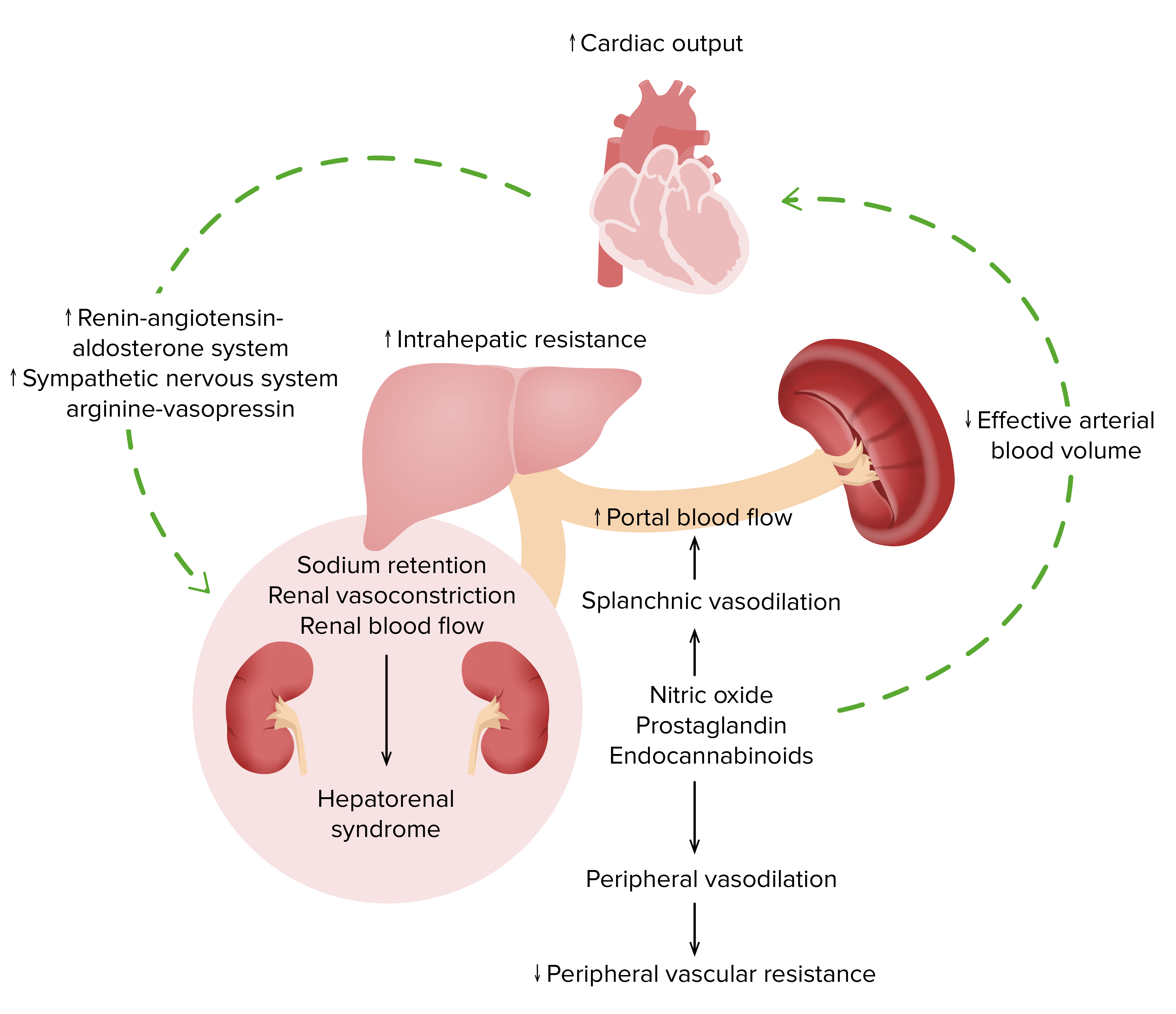
El síndrome hepatorrenal es una causa potencialmente reversible de lesión renal aguda que se desarrolla de forma secundaria a una enfermedad hepática. La principal causa del síndrome hepatorenal es la vasodilatación esplácnica, con la consiguiente disminución del volumen arterial y la subsiguiente vasoconstricción renal, que provoca hipoperfusión de los LOS Neisseria riñonese. Los LOS Neisseria pacientes suelen presentar edema Edema Edema is a condition in which excess serous fluid accumulates in the body cavity or interstitial space of connective tissues. Edema is a symptom observed in several medical conditions. It can be categorized into 2 types, namely, peripheral (in the extremities) and internal (in an organ or body cavity). Edema, oliguria Oliguria Decreased urine output that is below the normal range. Oliguria can be defined as urine output of less than or equal to 0. 5 or 1 ml/kg/hr depending on the age. Renal Potassium Regulation o anuria Anuria Absence of urine formation. It is usually associated with complete bilateral ureteral (ureter) obstruction, complete lower urinary tract obstruction, or unilateral ureteral obstruction when a solitary kidney is present. Acute Kidney Injury y ascitis en EN Erythema nodosum is an immune-mediated panniculitis (inflammation of the subcutaneous fat) caused by a type IV (delayed-type) hypersensitivity reaction. It commonly manifests in young women as tender, erythematous nodules on the shins. Erythema Nodosum el contexto de una lesión hepática aguda o crónica. El síndrome hepatorrenal se considera un diagnóstico de exclusión. El tratamiento es con agentes que causan vasoconstricción sistémica y, por lo tanto, mejoran la perfusión renal. Esto incluye octreotide Octreotide A potent, long-acting synthetic somatostatin octapeptide analog that inhibits secretion of growth hormone and is used to treat hormone-secreting tumors; diabetes mellitus; hypotension, orthostatic; hyperinsulinism; hypergastrinemia; and small bowel fistula. Antidiarrheal Drugs y midodrina. La mayoría de los LOS Neisseria casos de síndrome hepatorrenal tienen un mal pronóstico.

Last updated: Dec 15, 2025

Editorial responsibility: Stanley Oiseth, Lindsay Jones, Evelin Maza

Descripción General

Etiología

El síndrome hepatorrenal se asocia con hipertensión portal debido a:

  • Cirrosis
  • Hepatitis alcohólica grave
  • Tumores metastásicos
  • Cualquier causa de insuficiencia hepática fulminante

Clasificación

El sistema de clasificación del síndrome hepatorrenal se ha HA Hemolytic anemia (HA) is the term given to a large group of anemias that are caused by the premature destruction/hemolysis of circulating red blood cells (RBCs). Hemolysis can occur within (intravascular hemolysis) or outside the blood vessels (extravascular hemolysis). Hemolytic Anemia actualizado recientemente:

  • Síndrome hepatorrenal con lesión renal aguda (también denominado SHR de tipo 1):
    • Cirrosis y ascitis presentes
    • Lesión renal aguda presente
    • No respuesta a lo siguiente tras ≥ 2 días consecutivos:
      • Retirada de diuréticos
      • Expansión del volumen con administración de albúmina
    • Ausencia de shock Shock Shock is a life-threatening condition associated with impaired circulation that results in tissue hypoxia. The different types of shock are based on the underlying cause: distributive (↑ cardiac output (CO), ↓ systemic vascular resistance (SVR)), cardiogenic (↓ CO, ↑ SVR), hypovolemic (↓ CO, ↑ SVR), obstructive (↓ CO), and mixed. Types of Shock
    • Sin antecedentes actuales o recientes de medicación nefrotóxica (e.g., AINE).
    • Sin signos de lesión renal estructural, incluida la ausencia de:
      • Proteinuria Proteinuria The presence of proteins in the urine, an indicator of kidney diseases. Nephrotic Syndrome in Children
      • Microhematuria
      • Hallazgos en EN Erythema nodosum is an immune-mediated panniculitis (inflammation of the subcutaneous fat) caused by a type IV (delayed-type) hypersensitivity reaction. It commonly manifests in young women as tender, erythematous nodules on the shins. Erythema Nodosum el ultrasonido renal
  • Síndrome hepatorrenal sin lesión renal aguda (también denominada SHR de tipo 2 o “ascitis resistente a los diuréticos”; el deterioro de la función renal es menos grave que el observado en EN Erythema nodosum is an immune-mediated panniculitis (inflammation of the subcutaneous fat) caused by a type IV (delayed-type) hypersensitivity reaction. It commonly manifests in young women as tender, erythematous nodules on the shins. Erythema Nodosum el síndrome hepatorrenal con lesión renal aguda/enfermedad de tipo 1).

Fisiopatología

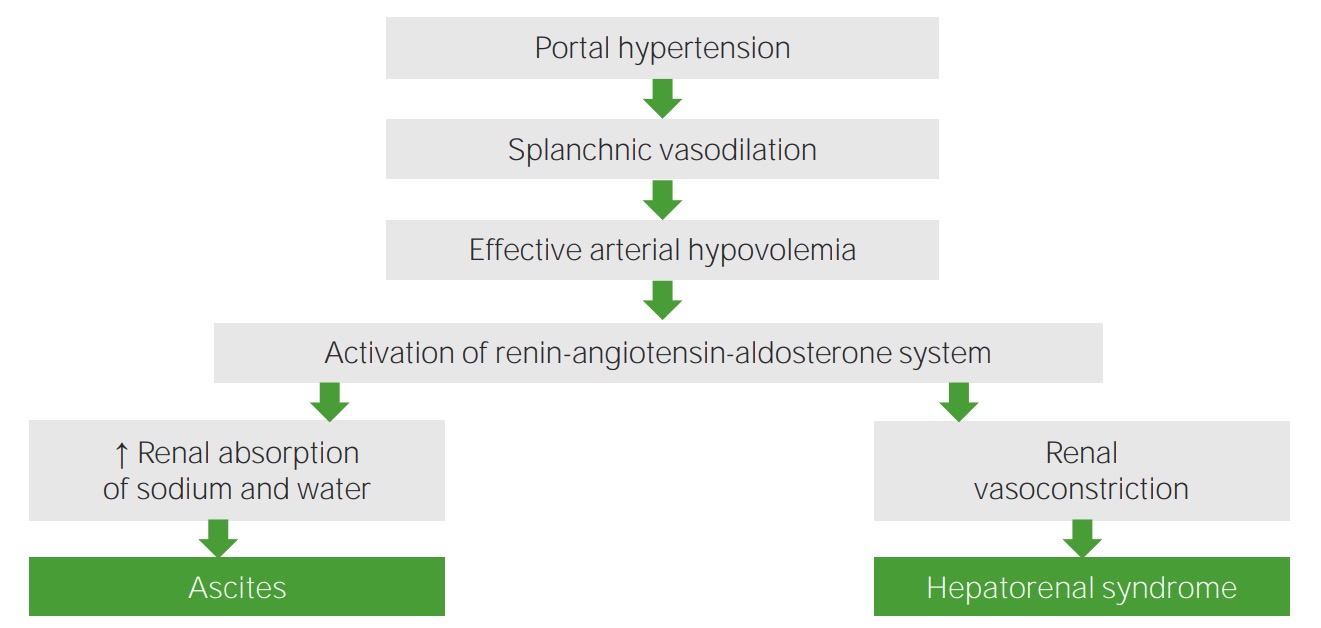
  1. La hipertensión portal desencadena la vasodilatación arterial en EN Erythema nodosum is an immune-mediated panniculitis (inflammation of the subcutaneous fat) caused by a type IV (delayed-type) hypersensitivity reaction. It commonly manifests in young women as tender, erythematous nodules on the shins. Erythema Nodosum la circulación esplácnica.
  2. Esto provoca: ascitis → hipovolemia arterial → activación del sistema renina-angiotensina-aldosterona (SRAA)
  3. La activación del SRAA provoca: vasoconstricción renal → hipoperfusión de los LOS Neisseria riñones → oliguria Oliguria Decreased urine output that is below the normal range. Oliguria can be defined as urine output of less than or equal to 0. 5 or 1 ml/kg/hr depending on the age. Renal Potassium Regulation anuria Anuria Absence of urine formation. It is usually associated with complete bilateral ureteral (ureter) obstruction, complete lower urinary tract obstruction, or unilateral ureteral obstruction when a solitary kidney is present. Acute Kidney Injury → insuficiencia renal progresiva

Los LOS Neisseria factores desencadenantes son cualquier intervención o condición que ocasione hipovolemia arterial:
  • Drenaje de ascitis
  • Infección bacteriana
  • Hemorragia digestiva
  • Uso excesivo de diuréticos

Presentación Clínica y Diagnóstico

Presentación clínica

  • Signos de insuficiencia renal de nueva aparición sin otra causa identificable:
    • Oliguria Oliguria Decreased urine output that is below the normal range. Oliguria can be defined as urine output of less than or equal to 0. 5 or 1 ml/kg/hr depending on the age. Renal Potassium Regulation anuria Anuria Absence of urine formation. It is usually associated with complete bilateral ureteral (ureter) obstruction, complete lower urinary tract obstruction, or unilateral ureteral obstruction when a solitary kidney is present. Acute Kidney Injury → lesión renal aguda
    • En EN Erythema nodosum is an immune-mediated panniculitis (inflammation of the subcutaneous fat) caused by a type IV (delayed-type) hypersensitivity reaction. It commonly manifests in young women as tender, erythematous nodules on the shins. Erythema Nodosum la fase inicial del síndrome hepatorrenal, la producción de orina suele estar normal.
  • Signos de retención de agua:
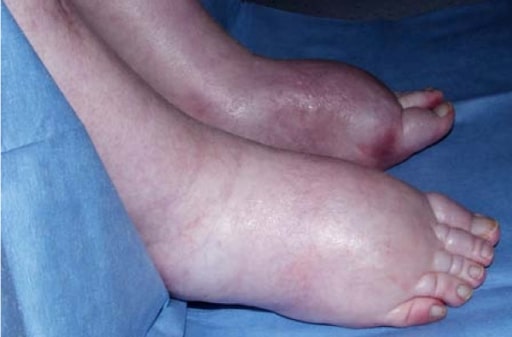
    • Edema Edema Edema is a condition in which excess serous fluid accumulates in the body cavity or interstitial space of connective tissues. Edema is a symptom observed in several medical conditions. It can be categorized into 2 types, namely, peripheral (in the extremities) and internal (in an organ or body cavity). Edema
    • Ascitis
    • Derrame pleural
  • Signos y síntomas de cirrosis:
Cuadriparesia y edema asociados a itraconazol

Edema de miembros inferiores por retención de líquidos en paciente con síndrome hepatorrenal

Imagen: “Itraconazole associated quadriparesis and edema” por National Aspergillosis Centre, Education and Research Centre, University Hospital of South Manchester (Wythenshawe Hospital), Southmoor Road, Manchester M23 9LT, UK. Licencia: CC BY 2.0

Diagnóstico

  • El síndrome hepatorrenal es un diagnóstico de exclusión.
  • Se debe investigar otras posibles causas de insuficiencia renal ( sepsis Sepsis Systemic inflammatory response syndrome with a proven or suspected infectious etiology. When sepsis is associated with organ dysfunction distant from the site of infection, it is called severe sepsis. When sepsis is accompanied by hypotension despite adequate fluid infusion, it is called septic shock. Sepsis and Septic Shock, shock Shock Shock is a life-threatening condition associated with impaired circulation that results in tissue hypoxia. The different types of shock are based on the underlying cause: distributive (↑ cardiac output (CO), ↓ systemic vascular resistance (SVR)), cardiogenic (↓ CO, ↑ SVR), hypovolemic (↓ CO, ↑ SVR), obstructive (↓ CO), and mixed. Types of Shock, agentes nefrotóxicos).
  • La evaluación de laboratorio muestra daño renal con azotemia Azotemia A biochemical abnormality referring to an elevation of blood urea nitrogen and creatinine. Azotemia can be produced by kidney diseases or other extrarenal disorders. When azotemia becomes associated with a constellation of clinical signs, it is termed uremia. Acute Kidney Injury prerrenal.
    • ↑ Creatinina sérica
    • ↑ Relación Nitrógeno de urea Urea A compound formed in the liver from ammonia produced by the deamination of amino acids. It is the principal end product of protein catabolism and constitutes about one half of the total urinary solids. Urea Cycle (BUN, por sus siglas en EN Erythema nodosum is an immune-mediated panniculitis (inflammation of the subcutaneous fat) caused by a type IV (delayed-type) hypersensitivity reaction. It commonly manifests in young women as tender, erythematous nodules on the shins. Erythema Nodosum inglés) (nitrógeno ureico en EN Erythema nodosum is an immune-mediated panniculitis (inflammation of the subcutaneous fat) caused by a type IV (delayed-type) hypersensitivity reaction. It commonly manifests in young women as tender, erythematous nodules on the shins. Erythema Nodosum sangre):creatinina (Cr) (> 20:1)
    • Proteinuria Proteinuria The presence of proteins in the urine, an indicator of kidney diseases. Nephrotic Syndrome in Children nula o mínima
    • Sodio urinario muy bajo (< 1015 mEq/dL)
    • Excreción fraccional de sodio <1%

Tratamiento

El objetivo de la terapia es mejorar la función hepática.

  • El trasplante hepático es el único tratamiento curativo.
  • Tratar cualquier causa aguda de insuficiencia hepática.
  • La derivación portosistémica intrahepática transyugular se puede utilizar como terapia paliativa.
  • Terapia con medicamentos:
    • Terlipresina (vasoconstricción en EN Erythema nodosum is an immune-mediated panniculitis (inflammation of the subcutaneous fat) caused by a type IV (delayed-type) hypersensitivity reaction. It commonly manifests in young women as tender, erythematous nodules on the shins. Erythema Nodosum la región esplácnica → reduce la presión portal)
    • Midodrina
    • Octreotide Octreotide A potent, long-acting synthetic somatostatin octapeptide analog that inhibits secretion of growth hormone and is used to treat hormone-secreting tumors; diabetes mellitus; hypotension, orthostatic; hyperinsulinism; hypergastrinemia; and small bowel fistula. Antidiarrheal Drugs
    • Albúmina
    • Más 1 de las siguientes opciones (vasoconstricción en EN Erythema nodosum is an immune-mediated panniculitis (inflammation of the subcutaneous fat) caused by a type IV (delayed-type) hypersensitivity reaction. It commonly manifests in young women as tender, erythematous nodules on the shins. Erythema Nodosum región esplácnica → ↓ presión portal):
      • 1ra línea: terlipresina (preferida) o norepinefrina.
      • 2da línea: midodrina más octreotida
  • Alrededor del 40% de los LOS Neisseria pacientes con síndrome hepatorrenal e insuficiencia renal aguda no responden al AL Amyloidosis tratamiento.

Diagnóstico Diferencial

Enfermedad prerrenal: se presenta con hallazgos de laboratorio similares (↑ creatinina sérica y ↑ cociente BUN:Cr) y hallazgos urinarios similares (baja excreción de sodio en EN Erythema nodosum is an immune-mediated panniculitis (inflammation of the subcutaneous fat) caused by a type IV (delayed-type) hypersensitivity reaction. It commonly manifests in young women as tender, erythematous nodules on the shins. Erythema Nodosum la orina). El síndrome hepatorrenal se puede diferenciar de la enfermedad prerrenal a través de una prueba de líquidos por vía intravenosa. La administración de líquidos mejora la enfermedad prerrenal pero no el síndrome hepatorrenal.

Referencias

  1. Amin, A. A., Alabsawy, E. I., Jalan, R., & Davenport, A. (2019). Epidemiology, pathophysiology, and management of hepatorenal syndrome. Seminars in nephrology39(1), 17–30.
  2. Mukhtar, A., & Dabbous, H. (2016). Modulation of splanchnic circulation: Role in perioperative management of liver transplant patients. World journal of gastroenterology22(4), 1582–1592. https://doi.org/10.3748/wjg.v22.i4.1582

¡Crea tu cuenta gratis o inicia una sesión para seguir leyendo!

Regístrate ahora y obtén acceso gratuito a Lecturio con páginas de concepto, videos médicos y cuestionarios para tu educación médica.

User Reviews

Que tengas una sesión de estudio alegre y navideña 🎁 Ahorra 50% en todos los planes >>

Details