Domina Conceptos Médicos

Estudia para la escuela de medicina y tus examenes con Lecturio.

Síndrome del QT Largo

El síndrome de QT largo es un trastorno de la repolarización miocárdica ventricular que produce una prolongación del QT en EN Erythema nodosum is an immune-mediated panniculitis (inflammation of the subcutaneous fat) caused by a type IV (delayed-type) hypersensitivity reaction. It commonly manifests in young women as tender, erythematous nodules on the shins. Erythema Nodosum el electrocardiograma ( ECG ECG An electrocardiogram (ECG) is a graphic representation of the electrical activity of the heart plotted against time. Adhesive electrodes are affixed to the skin surface allowing measurement of cardiac impulses from many angles. The ECG provides 3-dimensional information about the conduction system of the heart, the myocardium, and other cardiac structures. Electrocardiogram (ECG)). El síndrome de QT largo se asocia a un mayor riesgo de desarrollar arritmias cardiacas potencialmente mortales, en EN Erythema nodosum is an immune-mediated panniculitis (inflammation of the subcutaneous fat) caused by a type IV (delayed-type) hypersensitivity reaction. It commonly manifests in young women as tender, erythematous nodules on the shins. Erythema Nodosum concreto torsades de pointes Torsades de pointes A malignant form of polymorphic ventricular tachycardia that is characterized by heart rate between 200 and 250 beats per minute, and QRS complexes with changing amplitude and twisting of the points. The term also describes the syndrome of tachycardia with prolonged ventricular repolarization, long qt intervals exceeding 500 milliseconds or bradycardia. Torsades de pointes may be self-limited or may progress to ventricular fibrillation. Ventricular Tachycardia. La enfermedad puede ser congénita o adquirida. El SQTL congénito se atribuye a mutaciones genéticas que afectan a los LOS Neisseria canales iónicos cardíacos. El SQTL adquirido suele ser consecuencia de un tratamiento farmacológico o de anomalías electrolíticas. Los LOS Neisseria pacientes pueden ser asintomáticos o presentar palpitaciones, síncope, convulsiones e incluso muerte súbita cardiaca. El diagnóstico se establece con un ECG ECG An electrocardiogram (ECG) is a graphic representation of the electrical activity of the heart plotted against time. Adhesive electrodes are affixed to the skin surface allowing measurement of cardiac impulses from many angles. The ECG provides 3-dimensional information about the conduction system of the heart, the myocardium, and other cardiac structures. Electrocardiogram (ECG) junto con los LOS Neisseria antecedentes médicos y familiares, pruebas de laboratorio y otras pruebas cardiacas. El tratamiento depende de la etiología. El síndrome de QT largo adquirido requiere la retirada del medicamento o combinaciones de medicamentos causantes y la corrección de las anomalías electrolíticas. El tratamiento del síndrome del QT largo congénito incluye betabloqueantes, un tratamiento agresivo de los LOS Neisseria desequilibrios electrolíticos, la evitación de medicamentos que prolonguen el intervalo QT y la colocación de un desfibrilador cardioversor implantable.

Last updated: Dec 15, 2025

Editorial responsibility: Stanley Oiseth, Lindsay Jones, Evelin Maza

Definiciones

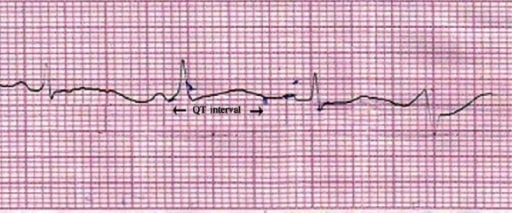
  • Síndrome del QT largo: trastorno eléctrico ventricular caracterizado por un retraso en EN Erythema nodosum is an immune-mediated panniculitis (inflammation of the subcutaneous fat) caused by a type IV (delayed-type) hypersensitivity reaction. It commonly manifests in young women as tender, erythematous nodules on the shins. Erythema Nodosum la repolarización miocárdica y demostrado como un intervalo QT prolongado en EN Erythema nodosum is an immune-mediated panniculitis (inflammation of the subcutaneous fat) caused by a type IV (delayed-type) hypersensitivity reaction. It commonly manifests in young women as tender, erythematous nodules on the shins. Erythema Nodosum el electrocardiograma ( ECG ECG An electrocardiogram (ECG) is a graphic representation of the electrical activity of the heart plotted against time. Adhesive electrodes are affixed to the skin surface allowing measurement of cardiac impulses from many angles. The ECG provides 3-dimensional information about the conduction system of the heart, the myocardium, and other cardiac structures. Electrocardiogram (ECG))
  • Intervalo QT: refleja la duración media de un potencial de acción ventricular
  • Intervalo QT normal:
    • En EN Erythema nodosum is an immune-mediated panniculitis (inflammation of the subcutaneous fat) caused by a type IV (delayed-type) hypersensitivity reaction. It commonly manifests in young women as tender, erythematous nodules on the shins. Erythema Nodosum promedio: 400440 milisegundos
    • Después de la pubertad, las mujeres tienden a tener un intervalo QT más largo que los LOS Neisseria hombres.
  • Intervalo QT prolongado:
    • Hombres:
      • Normal: ≤ 430 milisegundos
      • Intervalo QT prolongado al AL Amyloidosis límite: 431450 milisegundos
      • Intervalo QT prolongado: > 450 milisegundos
    • Mujeres:
      • Normal: ≤ 450 milisegundos
      • Intervalo QT prolongado al AL Amyloidosis límite: 451470 milisegundos
      • Intervalo QT prolongado: > 470 milisegundos
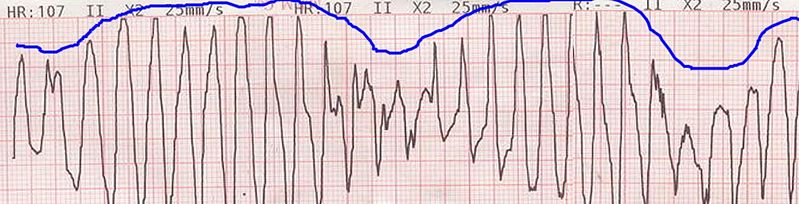
  • Torsades de pointes Torsades de pointes A malignant form of polymorphic ventricular tachycardia that is characterized by heart rate between 200 and 250 beats per minute, and QRS complexes with changing amplitude and twisting of the points. The term also describes the syndrome of tachycardia with prolonged ventricular repolarization, long qt intervals exceeding 500 milliseconds or bradycardia. Torsades de pointes may be self-limited or may progress to ventricular fibrillation. Ventricular Tachycardia:
    • Una arritmia potencialmente mortal asociada al AL Amyloidosis síndrome del QT largo
    • Forma de taquicardia ventricular polimorfa
    • Causada por postdespolarizaciones tempranas
    • Complejos QRS irregulares que se tuercen alrededor de la línea isoeléctrica (torsade de pointes = “torsión de puntos”)
    • Ritmo de 160–250/min
    • A menudo termina espontáneamente, pero puede provocar muerte cardíaca súbita

Etiología

Síndrome del QT largo congénito

Fisiopatología:

  • Defectos en EN Erythema nodosum is an immune-mediated panniculitis (inflammation of the subcutaneous fat) caused by a type IV (delayed-type) hypersensitivity reaction. It commonly manifests in young women as tender, erythematous nodules on the shins. Erythema Nodosum los LOS Neisseria genes Genes A category of nucleic acid sequences that function as units of heredity and which code for the basic instructions for the development, reproduction, and maintenance of organisms. DNA Types and Structure que codifican los LOS Neisseria canales iónicos (i.e., canalopatías cardíacas)
    • El cambio en EN Erythema nodosum is an immune-mediated panniculitis (inflammation of the subcutaneous fat) caused by a type IV (delayed-type) hypersensitivity reaction. It commonly manifests in young women as tender, erythematous nodules on the shins. Erythema Nodosum el flujo de iones positivos afecta a la corriente de repolarización en EN Erythema nodosum is an immune-mediated panniculitis (inflammation of the subcutaneous fat) caused by a type IV (delayed-type) hypersensitivity reaction. It commonly manifests in young women as tender, erythematous nodules on the shins. Erythema Nodosum los LOS Neisseria cardiomiocitos → prolonga el potencial de acción (prolongación del QT) → conduce a una postdespolarización temprana → mayor riesgo de torsades de pointes Torsades de pointes A malignant form of polymorphic ventricular tachycardia that is characterized by heart rate between 200 and 250 beats per minute, and QRS complexes with changing amplitude and twisting of the points. The term also describes the syndrome of tachycardia with prolonged ventricular repolarization, long qt intervals exceeding 500 milliseconds or bradycardia. Torsades de pointes may be self-limited or may progress to ventricular fibrillation. Ventricular Tachycardia
    • Estas mutaciones genéticas representan el 80% de los LOS Neisseria casos de síndrome del QT largo:
      • Mutaciones de pérdida de función en EN Erythema nodosum is an immune-mediated panniculitis (inflammation of the subcutaneous fat) caused by a type IV (delayed-type) hypersensitivity reaction. It commonly manifests in young women as tender, erythematous nodules on the shins. Erythema Nodosum los LOS Neisseria canales de potasio codificados por KCNQ1 y KCNH2: prolongan la duración del potencial de acción al AL Amyloidosis reducir la salida de K
      • Mutaciones de ganancia de función en EN Erythema nodosum is an immune-mediated panniculitis (inflammation of the subcutaneous fat) caused by a type IV (delayed-type) hypersensitivity reaction. It commonly manifests in young women as tender, erythematous nodules on the shins. Erythema Nodosum los LOS Neisseria canales de sodio codificados por SCN5A: prolongan la duración del potencial de acción por la contribución del aumento de las corrientes de sodio tardías (que eleva la entrada de Na [sodio])
  • Inervación simpática del corazón:
    • Un desencadenante de las torsades de pointes Torsades de pointes A malignant form of polymorphic ventricular tachycardia that is characterized by heart rate between 200 and 250 beats per minute, and QRS complexes with changing amplitude and twisting of the points. The term also describes the syndrome of tachycardia with prolonged ventricular repolarization, long qt intervals exceeding 500 milliseconds or bradycardia. Torsades de pointes may be self-limited or may progress to ventricular fibrillation. Ventricular Tachycardia es un aumento del tono simpático (como un acontecimiento emocional extremo).
    • La estimulación del ganglio estrellado izquierdo prolonga el intervalo QT
    • No se encuentra en EN Erythema nodosum is an immune-mediated panniculitis (inflammation of the subcutaneous fat) caused by a type IV (delayed-type) hypersensitivity reaction. It commonly manifests in young women as tender, erythematous nodules on the shins. Erythema Nodosum el síndrome del QT largo adquirido

Tipos de síndrome del QT largo congénito:

  1. Tipo 1 es la forma congénita más común.
    • Hasta el 45% de los LOS Neisseria casos de síndrome del QT largo
    • Defecto en EN Erythema nodosum is an immune-mediated panniculitis (inflammation of the subcutaneous fat) caused by a type IV (delayed-type) hypersensitivity reaction. It commonly manifests in young women as tender, erythematous nodules on the shins. Erythema Nodosum el gen KCNQ1
  2. Tipo 2
    • Hasta el 40% de los LOS Neisseria casos de síndrome del QT largo
    • Defecto en EN Erythema nodosum is an immune-mediated panniculitis (inflammation of the subcutaneous fat) caused by a type IV (delayed-type) hypersensitivity reaction. It commonly manifests in young women as tender, erythematous nodules on the shins. Erythema Nodosum el gen KCNH2
  3. Tipo 3
    • Hasta el 10% de los LOS Neisseria casos de síndrome del QT largo
    • Defecto en EN Erythema nodosum is an immune-mediated panniculitis (inflammation of the subcutaneous fat) caused by a type IV (delayed-type) hypersensitivity reaction. It commonly manifests in young women as tender, erythematous nodules on the shins. Erythema Nodosum el gen SCN5A

Variedad de condiciones asociadas:

  • Síndrome de Romano-Ward: 99% de los LOS Neisseria casos; síndrome del QT largo congénito sin manifestaciones extracardíacas (autosómico dominante)
  • Síndrome de Jervell y Lange-Nielsen: síndrome del QT largo congénito + pérdida auditiva neurosensorial (autosómico recesivo)
  • Síndrome de Anderson-Tawil: síndrome del QT largo congénito + parálisis periódica
  • Síndrome de Timothy: síndrome del QT largo congénito + sindactilia cutánea + autismo

Síndrome del QT largo adquirido

  • Iatrogénico/farmacológico:
    • Causa más común
    • Síndrome del QT largo causado por el bloqueo del flujo de salida de potasio durante la fase de repolarización rápida:
      • Medicamentos antiarrítmicos
      • Antibióticos (macrólidos, fluoroquinolonas, antifúngicos, antirretrovirales para el VIH, antipalúdicos)
      • Antihistamínicos (antiguos antihistamínicos no sedantes, e.g., terfenadina)
      • Opiáceos (metadona, fentanilo)
      • Agentes psicotrópicos (antidepresivos, antipsicóticos)
      • Medicamentos para la motilidad gástrica (cisaprida), antieméticos (ondansetrón)
      • Antineoplásicos
      • Agonistas beta-2
      • Diuréticos (debido a las anomalías electrolíticas resultantes)
  • Desórdenes metabólicos:
    • Alteraciones electrolíticas: hipopotasemia, hipocalcemia, hipomagnesemia
    • Hipotiroidismo
    • Anorexia Anorexia The lack or loss of appetite accompanied by an aversion to food and the inability to eat. It is the defining characteristic of the disorder anorexia nervosa. Anorexia Nervosa nerviosa, inanición (debido a las anomalías electrolíticas resultantes)
  • Bradiarritmias:
    • Disfunción del nodo sinusal
    • Bloqueo auriculoventricular (2do o 3er grado)
  • Otros:
    • Infarto de miocardio (IM)
    • Enfermedad intracraneal
    • Infección por VIH
    • Hipotermia
    • Exposición a tóxicos (e.g., organofosforados)

Manifestaciones Clínicas

Síndrome del QT largo congénito

  • A menudo se diagnostica en EN Erythema nodosum is an immune-mediated panniculitis (inflammation of the subcutaneous fat) caused by a type IV (delayed-type) hypersensitivity reaction. It commonly manifests in young women as tender, erythematous nodules on the shins. Erythema Nodosum las 3 primeras décadas de vida
  • Lo más frecuente es que sea asintomático
    Se puede hacer un diagnóstico:
    • Cuando un paciente busca atención médica después de un evento cardíaco en EN Erythema nodosum is an immune-mediated panniculitis (inflammation of the subcutaneous fat) caused by a type IV (delayed-type) hypersensitivity reaction. It commonly manifests in young women as tender, erythematous nodules on the shins. Erythema Nodosum un miembro de la familia
    • Como hallazgo incidental en EN Erythema nodosum is an immune-mediated panniculitis (inflammation of the subcutaneous fat) caused by a type IV (delayed-type) hypersensitivity reaction. It commonly manifests in young women as tender, erythematous nodules on the shins. Erythema Nodosum un ECG ECG An electrocardiogram (ECG) is a graphic representation of the electrical activity of the heart plotted against time. Adhesive electrodes are affixed to the skin surface allowing measurement of cardiac impulses from many angles. The ECG provides 3-dimensional information about the conduction system of the heart, the myocardium, and other cardiac structures. Electrocardiogram (ECG) realizado por otra indicación
  • Los LOS Neisseria que tienen síntomas presentan:
    • Síncope
    • Síncope seguido de convulsión (puede diagnosticarse erróneamente como trastorno convulsivo primario)
    • Paro cardíaco súbito
    • En EN Erythema nodosum is an immune-mediated panniculitis (inflammation of the subcutaneous fat) caused by a type IV (delayed-type) hypersensitivity reaction. It commonly manifests in young women as tender, erythematous nodules on the shins. Erythema Nodosum raras ocasiones, el evento centinela es la muerte cardíaca súbita.
  • Síndrome del QT largo tipo 1:
    • Eventos cardíacos precedidos por ejercicio (62% de los LOS Neisseria eventos) o estrés
    • La natación es un desencadenante muy específico.
  • Síndrome del QT largo tipo 2:
    • Arritmia después de un acontecimiento emocional extremo, ejercicio o estímulos auditivos (ruido repentino o timbre de alarma/teléfono)
    • Evento cardíaco posparto: casi exclusivamente en EN Erythema nodosum is an immune-mediated panniculitis (inflammation of the subcutaneous fat) caused by a type IV (delayed-type) hypersensitivity reaction. It commonly manifests in young women as tender, erythematous nodules on the shins. Erythema Nodosum el síndrome del QT largo tipo 2
    • Los LOS Neisseria eventos cardíacos también pueden ocurrir en EN Erythema nodosum is an immune-mediated panniculitis (inflammation of the subcutaneous fat) caused by a type IV (delayed-type) hypersensitivity reaction. It commonly manifests in young women as tender, erythematous nodules on the shins. Erythema Nodosum reposo o durante el sueño.
  • Síndrome del QT largo tipo 3
    • La mayoría de los LOS Neisseria eventos cardíacos se producen durante el descanso o el sueño.

Síndrome del QT largo adquirido

  • Los LOS Neisseria síntomas solo se presentan con un episodio de arritmia.
  • Los LOS Neisseria síntomas varían en EN Erythema nodosum is an immune-mediated panniculitis (inflammation of the subcutaneous fat) caused by a type IV (delayed-type) hypersensitivity reaction. It commonly manifests in young women as tender, erythematous nodules on the shins. Erythema Nodosum función del ritmo y la duración de las torsades de pointes Torsades de pointes A malignant form of polymorphic ventricular tachycardia that is characterized by heart rate between 200 and 250 beats per minute, and QRS complexes with changing amplitude and twisting of the points. The term also describes the syndrome of tachycardia with prolonged ventricular repolarization, long qt intervals exceeding 500 milliseconds or bradycardia. Torsades de pointes may be self-limited or may progress to ventricular fibrillation. Ventricular Tachycardia, así como de las comorbilidades:
    • Palpitaciones
    • Aturdimiento o presíncope
    • Síncope
    • Paro cardíaco súbito

Diagnóstico

El diagnóstico del síndrome del QT largo puede realizarse mediante un ECG ECG An electrocardiogram (ECG) is a graphic representation of the electrical activity of the heart plotted against time. Adhesive electrodes are affixed to the skin surface allowing measurement of cardiac impulses from many angles. The ECG provides 3-dimensional information about the conduction system of the heart, the myocardium, and other cardiac structures. Electrocardiogram (ECG) del paciente y/o de sus familiares de 1er grado.
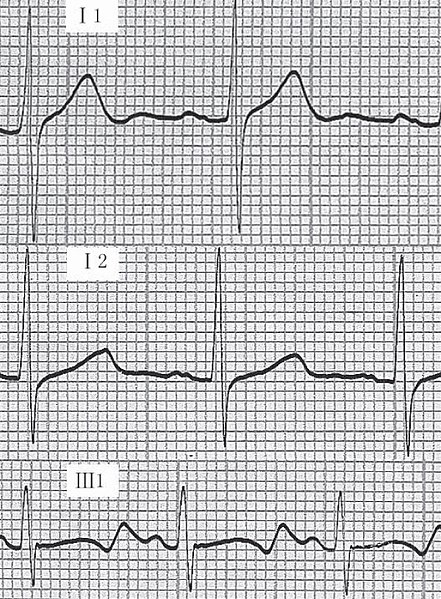
Hallazgos del ECG ECG An electrocardiogram (ECG) is a graphic representation of the electrical activity of the heart plotted against time. Adhesive electrodes are affixed to the skin surface allowing measurement of cardiac impulses from many angles. The ECG provides 3-dimensional information about the conduction system of the heart, the myocardium, and other cardiac structures. Electrocardiogram (ECG)

  • QTc (intervalo QT corregido) prolongado
    • El intervalo QT debe ser “corregido” para tener en EN Erythema nodosum is an immune-mediated panniculitis (inflammation of the subcutaneous fat) caused by a type IV (delayed-type) hypersensitivity reaction. It commonly manifests in young women as tender, erythematous nodules on the shins. Erythema Nodosum cuenta la variación de la frecuencia cardíaca y a menudo se comunica automáticamente como QTc.
    • Fórmula de corrección: QTc = intervalo QT ÷ √ intervalo RR RR Relative risk (RR) is the risk of a disease or condition occurring in a group or population with a particular exposure relative to a control (unexposed) group. Measures of Risk ( en EN Erythema nodosum is an immune-mediated panniculitis (inflammation of the subcutaneous fat) caused by a type IV (delayed-type) hypersensitivity reaction. It commonly manifests in young women as tender, erythematous nodules on the shins. Erythema Nodosum seg)
    • Intervalo QTc > 450 ms MS Multiple sclerosis (MS) is a chronic inflammatory autoimmune disease that leads to demyelination of the nerves in the CNS. Young women are more predominantly affected by this most common demyelinating condition. Multiple Sclerosis en EN Erythema nodosum is an immune-mediated panniculitis (inflammation of the subcutaneous fat) caused by a type IV (delayed-type) hypersensitivity reaction. It commonly manifests in young women as tender, erythematous nodules on the shins. Erythema Nodosum varones
    • Intervalo QTc > 470 ms MS Multiple sclerosis (MS) is a chronic inflammatory autoimmune disease that leads to demyelination of the nerves in the CNS. Young women are more predominantly affected by this most common demyelinating condition. Multiple Sclerosis en EN Erythema nodosum is an immune-mediated panniculitis (inflammation of the subcutaneous fat) caused by a type IV (delayed-type) hypersensitivity reaction. It commonly manifests in young women as tender, erythematous nodules on the shins. Erythema Nodosum mujeres
  • El síndrome del QT largo puede degenerar en EN Erythema nodosum is an immune-mediated panniculitis (inflammation of the subcutaneous fat) caused by a type IV (delayed-type) hypersensitivity reaction. It commonly manifests in young women as tender, erythematous nodules on the shins. Erythema Nodosum arritmias mortales, especialmente en EN Erythema nodosum is an immune-mediated panniculitis (inflammation of the subcutaneous fat) caused by a type IV (delayed-type) hypersensitivity reaction. It commonly manifests in young women as tender, erythematous nodules on the shins. Erythema Nodosum torsades de pointes Torsades de pointes A malignant form of polymorphic ventricular tachycardia that is characterized by heart rate between 200 and 250 beats per minute, and QRS complexes with changing amplitude and twisting of the points. The term also describes the syndrome of tachycardia with prolonged ventricular repolarization, long qt intervals exceeding 500 milliseconds or bradycardia. Torsades de pointes may be self-limited or may progress to ventricular fibrillation. Ventricular Tachycardia:
    • De corta duración, pero puede tener múltiples episodios sucesivos
    • Puede progresar a fibrilación ventricular
    • Los LOS Neisseria hallazgos del ECG ECG An electrocardiogram (ECG) is a graphic representation of the electrical activity of the heart plotted against time. Adhesive electrodes are affixed to the skin surface allowing measurement of cardiac impulses from many angles. The ECG provides 3-dimensional information about the conduction system of the heart, the myocardium, and other cardiac structures. Electrocardiogram (ECG) incluyen:
      • QTc prolongado en EN Erythema nodosum is an immune-mediated panniculitis (inflammation of the subcutaneous fat) caused by a type IV (delayed-type) hypersensitivity reaction. It commonly manifests in young women as tender, erythematous nodules on the shins. Erythema Nodosum el último latido sinusal que precede a la aparición de la arritmia
      • Taquicardia de 160250/min
      • Complejos QRS amplios (> 120 ms MS Multiple sclerosis (MS) is a chronic inflammatory autoimmune disease that leads to demyelination of the nerves in the CNS. Young women are more predominantly affected by this most common demyelinating condition. Multiple Sclerosis) con el eje del QRS girando en EN Erythema nodosum is an immune-mediated panniculitis (inflammation of the subcutaneous fat) caused by a type IV (delayed-type) hypersensitivity reaction. It commonly manifests in young women as tender, erythematous nodules on the shins. Erythema Nodosum una secuencia de 520 latidos
      • Intervalo RR RR Relative risk (RR) is the risk of a disease or condition occurring in a group or population with a particular exposure relative to a control (unexposed) group. Measures of Risk irregular
  • Monitorización ECG ECG An electrocardiogram (ECG) is a graphic representation of the electrical activity of the heart plotted against time. Adhesive electrodes are affixed to the skin surface allowing measurement of cardiac impulses from many angles. The ECG provides 3-dimensional information about the conduction system of the heart, the myocardium, and other cardiac structures. Electrocardiogram (ECG) ambulatoria: puede proporcionar información que corrobore los LOS Neisseria casos sospechosos de síndrome del QT largo congénito

Pruebas de esfuerzo

  • Evaluar las arritmias asociadas al AL Amyloidosis ejercicio
  • Comprobar las respuestas del QT (ejercicio y recuperación) y los LOS Neisseria cambios en EN Erythema nodosum is an immune-mediated panniculitis (inflammation of the subcutaneous fat) caused by a type IV (delayed-type) hypersensitivity reaction. It commonly manifests in young women as tender, erythematous nodules on the shins. Erythema Nodosum la onda T
  • Respuesta variable Variable Variables represent information about something that can change. The design of the measurement scales, or of the methods for obtaining information, will determine the data gathered and the characteristics of that data. As a result, a variable can be qualitative or quantitative, and may be further classified into subgroups. Types of Variables con el tipo de síndrome del QT largo congénito
  • QTc > 470 ms MS Multiple sclerosis (MS) is a chronic inflammatory autoimmune disease that leads to demyelination of the nerves in the CNS. Young women are more predominantly affected by this most common demyelinating condition. Multiple Sclerosis en EN Erythema nodosum is an immune-mediated panniculitis (inflammation of the subcutaneous fat) caused by a type IV (delayed-type) hypersensitivity reaction. It commonly manifests in young women as tender, erythematous nodules on the shins. Erythema Nodosum la recuperación de 25 minutos es sugestivo de síndrome del QT largo 1 (donde los LOS Neisseria eventos cardíacos ocurren comúnmente durante el ejercicio)

Análisis genético

  • Para los LOS Neisseria casos intermedios y altamente sospechosos de síndrome del QT largo congénito basados en EN Erythema nodosum is an immune-mediated panniculitis (inflammation of the subcutaneous fat) caused by a type IV (delayed-type) hypersensitivity reaction. It commonly manifests in young women as tender, erythematous nodules on the shins. Erythema Nodosum la presentación clínica, los LOS Neisseria antecedentes familiares y el ECG ECG An electrocardiogram (ECG) is a graphic representation of the electrical activity of the heart plotted against time. Adhesive electrodes are affixed to the skin surface allowing measurement of cardiac impulses from many angles. The ECG provides 3-dimensional information about the conduction system of the heart, the myocardium, and other cardiac structures. Electrocardiogram (ECG)
  • Para pacientes asintomáticos con ECG ECG An electrocardiogram (ECG) is a graphic representation of the electrical activity of the heart plotted against time. Adhesive electrodes are affixed to the skin surface allowing measurement of cardiac impulses from many angles. The ECG provides 3-dimensional information about the conduction system of the heart, the myocardium, and other cardiac structures. Electrocardiogram (ECG) seriados que muestran QTc > 460 ms MS Multiple sclerosis (MS) is a chronic inflammatory autoimmune disease that leads to demyelination of the nerves in the CNS. Young women are more predominantly affected by this most common demyelinating condition. Multiple Sclerosis

Estudios adicionales

  • Revisión de los LOS Neisseria medicamentos
  • Pruebas de laboratorio (panel metabólico, hormona estimulante de la tiroides [TSH])
  • Otros estudios cardíacos basados en EN Erythema nodosum is an immune-mediated panniculitis (inflammation of the subcutaneous fat) caused by a type IV (delayed-type) hypersensitivity reaction. It commonly manifests in young women as tender, erythematous nodules on the shins. Erythema Nodosum la causa probable (perfusión miocárdica, ecocardiograma)

Tratamiento

Síndrome del QT largo congénito

  • Reducir el riesgo de arritmias mortales:
    • Evitar los LOS Neisseria medicamentos que prolongan el QT
    • Reposición de electrolitos
    • Evitar los LOS Neisseria factores desencadenantes de la arritmia (natación/ejercicio, angustia emocional, ruido; se recomienda consultar al AL Amyloidosis especialista en EN Erythema nodosum is an immune-mediated panniculitis (inflammation of the subcutaneous fat) caused by a type IV (delayed-type) hypersensitivity reaction. It commonly manifests in young women as tender, erythematous nodules on the shins. Erythema Nodosum síndrome del QT largo para la participación en EN Erythema nodosum is an immune-mediated panniculitis (inflammation of the subcutaneous fat) caused by a type IV (delayed-type) hypersensitivity reaction. It commonly manifests in young women as tender, erythematous nodules on the shins. Erythema Nodosum deportes)
  • Medicamentos de primera línea: betabloqueadores ( propranolol Propranolol A widely used non-cardioselective beta-adrenergic antagonist. Propranolol has been used for myocardial infarction; arrhythmia; angina pectoris; hypertension; hyperthyroidism; migraine; pheochromocytoma; and anxiety but adverse effects instigate replacement by newer drugs. Antiadrenergic Drugs o nadolol Nadolol A non-selective beta-adrenergic antagonist with a long half-life, used in cardiovascular disease to treat arrhythmias, angina pectoris, and hypertension. Nadolol is also used for migraine disorders and for tremor. Class 2 Antiarrhythmic Drugs (Beta Blockers))
  • Denervación simpática cardíaca izquierda:
    • Rara vez se realiza
    • Puede funcionar en EN Erythema nodosum is an immune-mediated panniculitis (inflammation of the subcutaneous fat) caused by a type IV (delayed-type) hypersensitivity reaction. It commonly manifests in young women as tender, erythematous nodules on the shins. Erythema Nodosum algunos pacientes que no responden o no toleran los LOS Neisseria betabloqueadores
    • No es curativo; los LOS Neisseria pacientes de alto riesgo seguirán necesitando un desfibrilador cardioversor implantable
  • Los LOS Neisseria síntomas recurrentes a pesar del tratamiento médico justifican la colocación de un desfibrilador cardioversor implantable.

Síndrome del QT largo adquirido

  • Corregir rápidamente las causas médicas tratables (e.g., anomalías electrolíticas y alteraciones metabólicas).
  • Eliminar el medicamento desencadenante.

En EN Erythema nodosum is an immune-mediated panniculitis (inflammation of the subcutaneous fat) caused by a type IV (delayed-type) hypersensitivity reaction. It commonly manifests in young women as tender, erythematous nodules on the shins. Erythema Nodosum el marco de las torsades de pointes Torsades de pointes A malignant form of polymorphic ventricular tachycardia that is characterized by heart rate between 200 and 250 beats per minute, and QRS complexes with changing amplitude and twisting of the points. The term also describes the syndrome of tachycardia with prolonged ventricular repolarization, long qt intervals exceeding 500 milliseconds or bradycardia. Torsades de pointes may be self-limited or may progress to ventricular fibrillation. Ventricular Tachycardia

  • Pacientes hemodinámicamente estables:
    • Sulfato de magnesio intravenoso, monitorización cardíaca
    • Marcapasos: para los LOS Neisseria que no responden al AL Amyloidosis magnesio intravenoso
  • Pacientes hemodinámicamente inestables:
    • Desfibrilación
    • Sulfato de magnesio intravenoso

Relevancia Clínica

Factores predisponentes

Las siguientes condiciones médicas pueden predisponer comúnmente a la prolongación del QT:

  • Hipotiroidismo: la deficiencia de T3 T3 A T3 thyroid hormone normally synthesized and secreted by the thyroid gland in much smaller quantities than thyroxine (T4). Most T3 is derived from peripheral monodeiodination of T4 at the 5′ position of the outer ring of the iodothyronine nucleus. The hormone finally delivered and used by the tissues is mainly t3. Thyroid Hormones y T4 T4 The major hormone derived from the thyroid gland. Thyroxine is synthesized via the iodination of tyrosines (monoiodotyrosine) and the coupling of iodotyrosines (diiodotyrosine) in the thyroglobulin. Thyroxine is released from thyroglobulin by proteolysis and secreted into the blood. Thyroxine is peripherally deiodinated to form triiodothyronine which exerts a broad spectrum of stimulatory effects on cell metabolism. Thyroid Hormones. La enfermedad de Hashimoto (tiroiditis autoinmune) es la principal causa de hipotiroidismo en EN Erythema nodosum is an immune-mediated panniculitis (inflammation of the subcutaneous fat) caused by a type IV (delayed-type) hypersensitivity reaction. It commonly manifests in young women as tender, erythematous nodules on the shins. Erythema Nodosum las regiones no deficitarias en EN Erythema nodosum is an immune-mediated panniculitis (inflammation of the subcutaneous fat) caused by a type IV (delayed-type) hypersensitivity reaction. It commonly manifests in young women as tender, erythematous nodules on the shins. Erythema Nodosum yodo. El hipotiroidismo se diagnostica mediante la estimación de la TSH y la T4 T4 The major hormone derived from the thyroid gland. Thyroxine is synthesized via the iodination of tyrosines (monoiodotyrosine) and the coupling of iodotyrosines (diiodotyrosine) in the thyroglobulin. Thyroxine is released from thyroglobulin by proteolysis and secreted into the blood. Thyroxine is peripherally deiodinated to form triiodothyronine which exerts a broad spectrum of stimulatory effects on cell metabolism. Thyroid Hormones libre. Se trata con la administración de T4 T4 The major hormone derived from the thyroid gland. Thyroxine is synthesized via the iodination of tyrosines (monoiodotyrosine) and the coupling of iodotyrosines (diiodotyrosine) in the thyroglobulin. Thyroxine is released from thyroglobulin by proteolysis and secreted into the blood. Thyroxine is peripherally deiodinated to form triiodothyronine which exerts a broad spectrum of stimulatory effects on cell metabolism. Thyroid Hormones sintética.
  • Hipopotasemia: potasio plasmático < 3,5 mEq/L. Los LOS Neisseria factores de riesgo de la hipopotasemia son el envejecimiento, la ingesta dietética deficiente, el uso de diuréticos y las pérdidas gastrointestinales.
  • Hipocalcemia: niveles bajos de calcio ionizado en EN Erythema nodosum is an immune-mediated panniculitis (inflammation of the subcutaneous fat) caused by a type IV (delayed-type) hypersensitivity reaction. It commonly manifests in young women as tender, erythematous nodules on the shins. Erythema Nodosum suero. Los LOS Neisseria niveles de calcio están regulados por la hormona paratiroidea (PTH), segregada por la glándula paratiroidea. La presentación de los LOS Neisseria pacientes con hipocalcemia puede ir desde lo asintomático hasta las disritmias potencialmente mortales.

Diagnóstico diferencial

Las siguientes condiciones pueden incluirse en EN Erythema nodosum is an immune-mediated panniculitis (inflammation of the subcutaneous fat) caused by a type IV (delayed-type) hypersensitivity reaction. It commonly manifests in young women as tender, erythematous nodules on the shins. Erythema Nodosum el diagnóstico diferencial del intervalo QT prolongado:

  • Síncope vasovagal: disminución súbita de la presión arterial que provoca un flujo deficiente de sangre y oxígeno al AL Amyloidosis cerebro y que da lugar a una pérdida temporal de la conciencia.
  • Infarto de miocardio: obstrucción de las arterias coronarias que provoca una disminución del suministro de sangre al AL Amyloidosis miocardio. La presentación típica del infarto de miocardio es el dolor Dolor Inflammation torácico, la falta de aire y la diaforesis. Los LOS Neisseria pacientes pueden sufrir un síncope o una muerte súbita.

Complicaciones

La prolongación del QT no tratada puede evolucionar hacia las siguientes complicaciones:

  • Torsades de pointes Torsades de pointes A malignant form of polymorphic ventricular tachycardia that is characterized by heart rate between 200 and 250 beats per minute, and QRS complexes with changing amplitude and twisting of the points. The term also describes the syndrome of tachycardia with prolonged ventricular repolarization, long qt intervals exceeding 500 milliseconds or bradycardia. Torsades de pointes may be self-limited or may progress to ventricular fibrillation. Ventricular Tachycardia: una forma específica de taquicardia ventricular polimórfica en EN Erythema nodosum is an immune-mediated panniculitis (inflammation of the subcutaneous fat) caused by a type IV (delayed-type) hypersensitivity reaction. It commonly manifests in young women as tender, erythematous nodules on the shins. Erythema Nodosum pacientes con un intervalo QT largo. Se caracteriza por complejos QRS rápidos e irregulares, que parecen retorcerse alrededor de la línea de base.
  • Taquicardia ventricular: grupo de arritmias con frecuencia cardíaca > 100/min que se origina en EN Erythema nodosum is an immune-mediated panniculitis (inflammation of the subcutaneous fat) caused by a type IV (delayed-type) hypersensitivity reaction. It commonly manifests in young women as tender, erythematous nodules on the shins. Erythema Nodosum el interior del ventrículo. Existen 3 tipos principales de taquiarritmias ventriculares: la fibrilación ventricular, la taquicardia ventricular monomórfica y la taquicardia ventricular polimórfica.
  • Paro cardíaco: cese súbito y completo de la actividad cardíaca con colapso hemodinámico. Los LOS Neisseria ritmos cardíacos que se sabe que producen una parada cardíaca sin pulso son los LOS Neisseria ritmos desfibrilables (fibrilación ventricular, taquicardia ventricular sin pulso) y los LOS Neisseria ritmos no desfibrilables (actividad eléctrica sin pulso, asistolia). La identificación e intervención rápidas son fundamentales para salvar la vida del paciente.

¡Crea tu cuenta gratis o inicia una sesión para seguir leyendo!

Regístrate ahora y obtén acceso gratuito a Lecturio con páginas de concepto, videos médicos y cuestionarios para tu educación médica.

User Reviews

Que tengas una sesión de estudio alegre y navideña 🎁 Ahorra 50% en todos los planes >>

Details