Domina Conceptos Médicos

Estudia para la escuela de medicina y tus examenes con Lecturio.

Virus de la Inmunodeficiencia Humana (VIH)

El virus Virus Viruses are infectious, obligate intracellular parasites composed of a nucleic acid core surrounded by a protein capsid. Viruses can be either naked (non-enveloped) or enveloped. The classification of viruses is complex and based on many factors, including type and structure of the nucleoid and capsid, the presence of an envelope, the replication cycle, and the host range. Virology de inmunodeficiencia humana (VIH) es una especie de Lentivirus Lentivirus A genus of the family retroviridae consisting of non-oncogenic retroviruses that produce multi-organ diseases characterized by long incubation periods and persistent infection. Lentiviruses are unique in that they contain open reading frames (orfs) between the pol and env genes and in the 3' env region. Five serogroups are recognized, reflecting the mammalian hosts with which they are associated. HIV-1 is the type species. Human Immunodeficiency Virus (HIV), un género de la familia Retroviridae Retroviridae The human immunodeficiency virus (HIV) is a species of Lentivirus, a genus of the family Retroviridae, which causes HIV infections and acquired immunodeficiency syndrome (AIDS). The virus has high genetic variability and is divided into 2 major types, HIV type 1 (HIV-1) and HIV type 2 (HIV-2). The human immunodeficiency virus is a single-stranded, positive-sense, enveloped RNA virus, which targets and destroys WBCs, leading to frequent opportunistic infections and, eventually, death. Human Immunodeficiency Virus (HIV), que causa infecciones por VIH y síndrome de inmunodeficiencia adquirida (SIDA). El virus Virus Viruses are infectious, obligate intracellular parasites composed of a nucleic acid core surrounded by a protein capsid. Viruses can be either naked (non-enveloped) or enveloped. The classification of viruses is complex and based on many factors, including type and structure of the nucleoid and capsid, the presence of an envelope, the replication cycle, and the host range. Virology tiene una alta variabilidad genética y se divide en EN Erythema nodosum is an immune-mediated panniculitis (inflammation of the subcutaneous fat) caused by a type IV (delayed-type) hypersensitivity reaction. It commonly manifests in young women as tender, erythematous nodules on the shins. Erythema Nodosum 2 tipos principales, VIH tipo 1 (VIH-1) y VIH tipo 2 (VIH-2). El virus Virus Viruses are infectious, obligate intracellular parasites composed of a nucleic acid core surrounded by a protein capsid. Viruses can be either naked (non-enveloped) or enveloped. The classification of viruses is complex and based on many factors, including type and structure of the nucleoid and capsid, the presence of an envelope, the replication cycle, and the host range. Virology de inmunodeficiencia humana es un virus Virus Viruses are infectious, obligate intracellular parasites composed of a nucleic acid core surrounded by a protein capsid. Viruses can be either naked (non-enveloped) or enveloped. The classification of viruses is complex and based on many factors, including type and structure of the nucleoid and capsid, the presence of an envelope, the replication cycle, and the host range. Virology de ácido ribonucleico (ARN) monocatenario, de sentido positivo y envuelto, que ataca y destruye los LOS Neisseria leucocitos, generando frecuentes infecciones oportunistas y, finalmente, la muerte.

Last updated: Dec 15, 2025

Editorial responsibility: Stanley Oiseth, Lindsay Jones, Evelin Maza

Clasificación y Subtipos

Clasificación

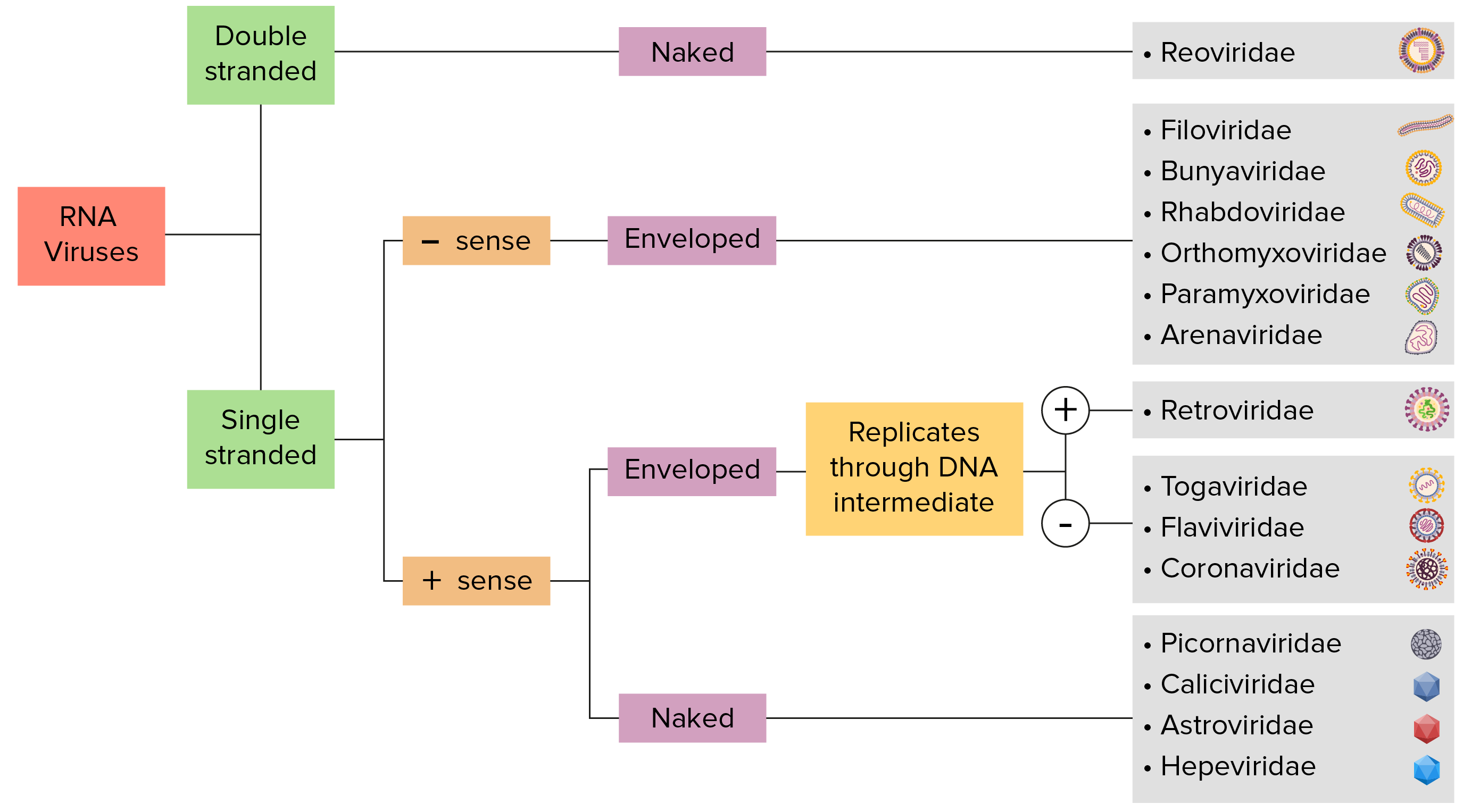
Diagrama de flujo de la clasificación de los virus de ARN

Identificación de los virus ARN:
Los virus pueden clasificarse de muchas maneras. Sin embargo, la mayoría de los virus tienen un genoma formado por ácido desoxirribonucleico (ADN) o ARN. Los virus con genoma ARN pueden caracterizarse además por tener ARN monocatenario o bicatenario. Los virus “envueltos” están cubiertos por una fina capa de membrana celular (normalmente tomada de la célula huésped). Si la envoltura está ausente, los virus se denominan “desnudos”. Los virus con genomas monocatenarios son de “sentido positivo” si el genoma se emplea directamente como ARN mensajero (ARNm), que se traduce en proteínas. Los virus monocatenarios de “sentido negativo” emplean la ARN polimerasa dependiente de ARN, una enzima viral, para transcribir su genoma en ARN mensajero.
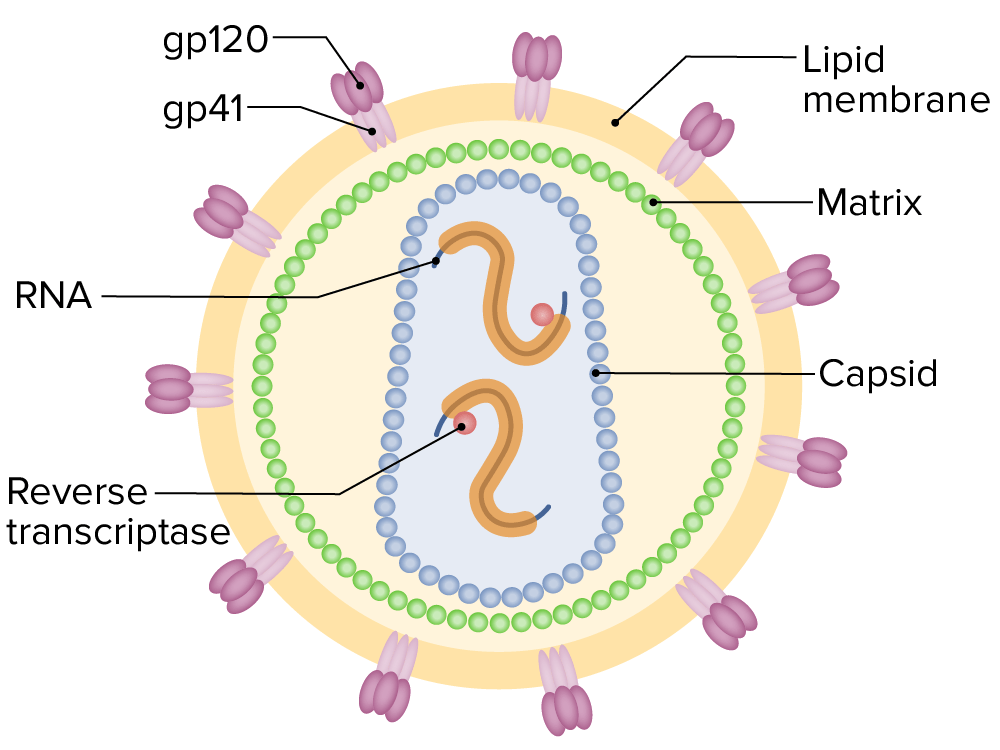
Imagen por Lecturio. Licencia: CC BY-NC-SA 4.0
  • Familia Retroviridae Retroviridae The human immunodeficiency virus (HIV) is a species of Lentivirus, a genus of the family Retroviridae, which causes HIV infections and acquired immunodeficiency syndrome (AIDS). The virus has high genetic variability and is divided into 2 major types, HIV type 1 (HIV-1) and HIV type 2 (HIV-2). The human immunodeficiency virus is a single-stranded, positive-sense, enveloped RNA virus, which targets and destroys WBCs, leading to frequent opportunistic infections and, eventually, death. Human Immunodeficiency Virus (HIV): Los LOS Neisseria virus Virus Viruses are infectious, obligate intracellular parasites composed of a nucleic acid core surrounded by a protein capsid. Viruses can be either naked (non-enveloped) or enveloped. The classification of viruses is complex and based on many factors, including type and structure of the nucleoid and capsid, the presence of an envelope, the replication cycle, and the host range. Virology utilizan enzimas de transcriptasa reversa para producir ADN a partir de su genoma de ARN (reverso del patrón habitual = “retro”).
  • Género Lentivirus Lentivirus A genus of the family retroviridae consisting of non-oncogenic retroviruses that produce multi-organ diseases characterized by long incubation periods and persistent infection. Lentiviruses are unique in that they contain open reading frames (orfs) between the pol and env genes and in the 3′ env region. Five serogroups are recognized, reflecting the mammalian hosts with which they are associated. HIV-1 is the type species. Human Immunodeficiency Virus (HIV):
    • Causa enfermedades crónicas mortales
    • Períodos de incubación prolongados
    • Integra el ácido desoxirribonucleico complementario (ADNc) viral en EN Erythema nodosum is an immune-mediated panniculitis (inflammation of the subcutaneous fat) caused by a type IV (delayed-type) hypersensitivity reaction. It commonly manifests in young women as tender, erythematous nodules on the shins. Erythema Nodosum el ADN del hospedador, infectando las células que no se dividen.

Dos subtipos de virus Virus Viruses are infectious, obligate intracellular parasites composed of a nucleic acid core surrounded by a protein capsid. Viruses can be either naked (non-enveloped) or enveloped. The classification of viruses is complex and based on many factors, including type and structure of the nucleoid and capsid, the presence of an envelope, the replication cycle, and the host range. Virology de inmunodeficiencia humana (VIH)

  • VIH-1 (descubierto primero, más virulento y más infeccioso que el VIH-2):
    • Grupo M: significa “mayor”; más del 90% de los LOS Neisseria casos de VIH/SIDA, varios subtipos o formas recombinantes
    • Grupo N: significa “no M, no O”
    • Grupo O: significa “atípico”; aislado en EN Erythema nodosum is an immune-mediated panniculitis (inflammation of the subcutaneous fat) caused by a type IV (delayed-type) hypersensitivity reaction. It commonly manifests in young women as tender, erythematous nodules on the shins. Erythema Nodosum África centro-occidental
    • Grupo P: significa “pendiente de la identificación de más casos humanos”; descubierto en EN Erythema nodosum is an immune-mediated panniculitis (inflammation of the subcutaneous fat) caused by a type IV (delayed-type) hypersensitivity reaction. It commonly manifests in young women as tender, erythematous nodules on the shins. Erythema Nodosum agosto de 2009, aislado en EN Erythema nodosum is an immune-mediated panniculitis (inflammation of the subcutaneous fat) caused by a type IV (delayed-type) hypersensitivity reaction. It commonly manifests in young women as tender, erythematous nodules on the shins. Erythema Nodosum Camerún
  • VIH-2:
    • Baja infectividad, menos virulento
    • En EN Erythema nodosum is an immune-mediated panniculitis (inflammation of the subcutaneous fat) caused by a type IV (delayed-type) hypersensitivity reaction. It commonly manifests in young women as tender, erythematous nodules on the shins. Erythema Nodosum gran parte confinado a África occidental
    • 8 subgrupos conocidos (A hasta H)

Estructura y Genoma

Virión del VIH

  • Esférico en EN Erythema nodosum is an immune-mediated panniculitis (inflammation of the subcutaneous fat) caused by a type IV (delayed-type) hypersensitivity reaction. It commonly manifests in young women as tender, erythematous nodules on the shins. Erythema Nodosum su gran mayoría
  • Aproximadamente 110 nm de diámetro
  • Estructura:
    • La envoltura del virión contiene 2 glicoproteínas de membrana:
      • Gp41 Gp41 Transmembrane envelope protein of the human immunodeficiency virus which is encoded by the HIV env gene. It has a molecular weight of 41, 000 and is glycosylated. The n-terminal part of gp41 is thought to be involved in cell fusion with the CD4 antigens of T4 lymphocytes, leading to syncytial formation. Gp41 is one of the most common HIV antigens detected by immunoblotting. HIV Infection and AIDS (transmembrana)
      • Gp120 Gp120 External envelope protein of the human immunodeficiency virus which is encoded by the HIV env gene. It has a molecular weight of 120 kda and contains numerous glycosylation sites. Gp120 binds to cells expressing CD4 cell-surface antigens, most notably t4-lymphocytes and monocytes/macrophages. Gp120 has been shown to interfere with the normal function of CD4 and is at least partly responsible for the cytopathic effect of HIV. HIV Infection and AIDS (proteína de superficie/de acoplamiento)
    • Proteína de matriz p17: rodea el núcleo del virus Virus Viruses are infectious, obligate intracellular parasites composed of a nucleic acid core surrounded by a protein capsid. Viruses can be either naked (non-enveloped) or enveloped. The classification of viruses is complex and based on many factors, including type and structure of the nucleoid and capsid, the presence of an envelope, the replication cycle, and the host range. Virology
    • Núcleo del virus Virus Viruses are infectious, obligate intracellular parasites composed of a nucleic acid core surrounded by a protein capsid. Viruses can be either naked (non-enveloped) or enveloped. The classification of viruses is complex and based on many factors, including type and structure of the nucleoid and capsid, the presence of an envelope, the replication cycle, and the host range. Virology:
      • Proteína de la cápside p24
      • 2 ácidos ribonucleicos de sentido positivo (ARN) monocatenarios envueltos, recubierto con proteína nucleocápsida
      • Enzimas (transcriptasa inversa, integrasa, proteasa)

Genoma del VIH (9 genes Genes A category of nucleic acid sequences that function as units of heredity and which code for the basic instructions for the development, reproduction, and maintenance of organisms. DNA Types and Structure que codifican 15 proteínas virales)

  • El gen Env codifica gp160 gp160 An envelope protein of the human immunodeficiency virus that is encoded by the HIV env gene. It has a molecular weight of 160, 000 kda and contains numerous glycosylation sites. It serves as a precursor for both the HIV envelope protein gp120 and the HIV envelope protein gp41. Human Immunodeficiency Virus (HIV), que se escinde para formar glicoproteínas de la envoltura:
    • gp120 Gp120 External envelope protein of the human immunodeficiency virus which is encoded by the HIV env gene. It has a molecular weight of 120 kda and contains numerous glycosylation sites. Gp120 binds to cells expressing CD4 cell-surface antigens, most notably t4-lymphocytes and monocytes/macrophages. Gp120 has been shown to interfere with the normal function of CD4 and is at least partly responsible for the cytopathic effect of HIV. HIV Infection and AIDS: unión a la célula T CD4+ del huésped
    • gp41 Gp41 Transmembrane envelope protein of the human immunodeficiency virus which is encoded by the HIV env gene. It has a molecular weight of 41, 000 and is glycosylated. The n-terminal part of gp41 is thought to be involved in cell fusion with the CD4 antigens of T4 lymphocytes, leading to syncytial formation. Gp41 is one of the most common HIV antigens detected by immunoblotting. HIV Infection and AIDS: fusión y entrada a la célula huésped
  • El gen Gag codifica p24 y p17, proteínas de la cápside y de la matriz, respectivamente.
  • El gen Pol codifica las enzimas transcriptasa inversa, integrasa y proteasa.
  • Elementos regulatorios: tat, rev, vpr, vif, nef y vpu

Variabilidad genética (muy alta)

  • Recombinación entre 2 copias de ARN en EN Erythema nodosum is an immune-mediated panniculitis (inflammation of the subcutaneous fat) caused by a type IV (delayed-type) hypersensitivity reaction. It commonly manifests in young women as tender, erythematous nodules on the shins. Erythema Nodosum cada partícula
  • Replicación rápida
  • Alta tasa de mutación
Diagram of the HIV-1 virion

Diagrama del virión del VIH tipo 1 que muestra la estructura del genoma, las principales enzimas y las glicoproteínas (gp120 y gp41)

Imagen por Lecturio.
Ciclo Vital

Tropismo

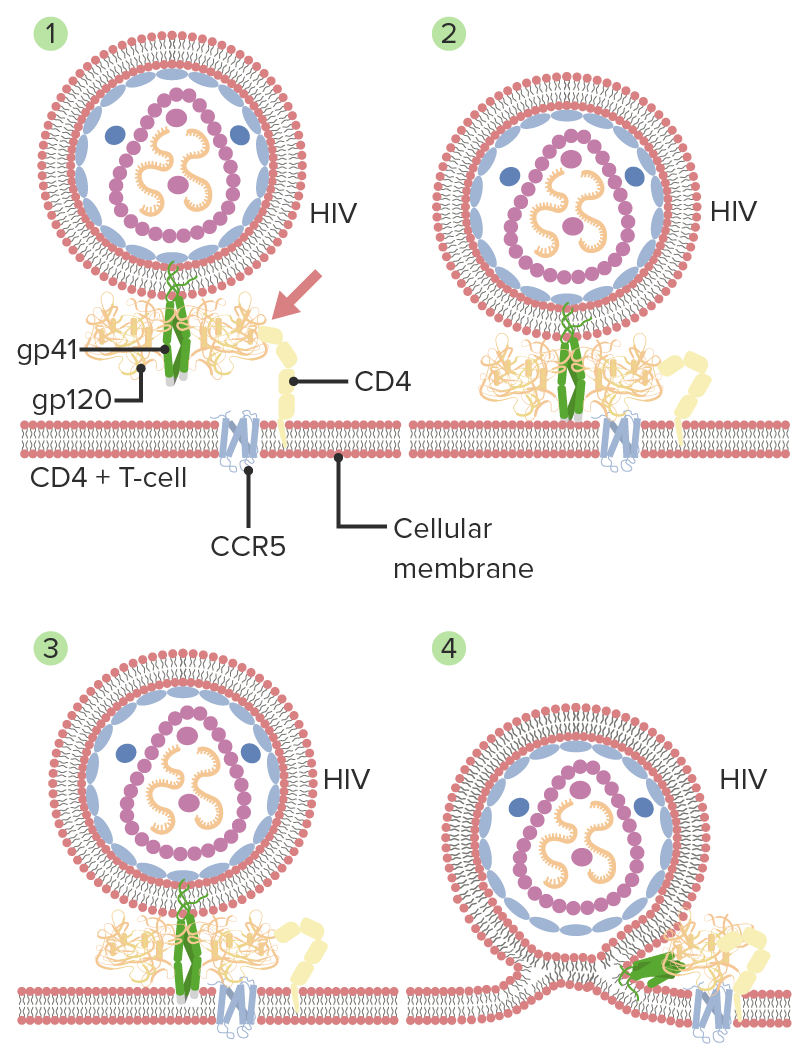
  • El VIH puede infectar células T CD4+, macrófagos y células microgliales.
  • Glicoproteína de superficie del VIH gp160 gp160 An envelope protein of the human immunodeficiency virus that is encoded by the HIV env gene. It has a molecular weight of 160, 000 kda and contains numerous glycosylation sites. It serves as a precursor for both the HIV envelope protein gp120 and the HIV envelope protein gp41. Human Immunodeficiency Virus (HIV) (compuesta por gp120 Gp120 External envelope protein of the human immunodeficiency virus which is encoded by the HIV env gene. It has a molecular weight of 120 kda and contains numerous glycosylation sites. Gp120 binds to cells expressing CD4 cell-surface antigens, most notably t4-lymphocytes and monocytes/macrophages. Gp120 has been shown to interfere with the normal function of CD4 and is at least partly responsible for the cytopathic effect of HIV. HIV Infection and AIDS y gp41 Gp41 Transmembrane envelope protein of the human immunodeficiency virus which is encoded by the HIV env gene. It has a molecular weight of 41, 000 and is glycosylated. The n-terminal part of gp41 is thought to be involved in cell fusion with the CD4 antigens of T4 lymphocytes, leading to syncytial formation. Gp41 is one of the most common HIV antigens detected by immunoblotting. HIV Infection and AIDS): clave para la unión viral a las moléculas de superficie CD4 y a los LOS Neisseria correceptores de quimiocinas
  • CD4: expresado en EN Erythema nodosum is an immune-mediated panniculitis (inflammation of the subcutaneous fat) caused by a type IV (delayed-type) hypersensitivity reaction. It commonly manifests in young women as tender, erythematous nodules on the shins. Erythema Nodosum la superficie de las células T colaboradoras, células T reguladoras, monocitos, macrófagos y células dendríticas
  • CCR5 CCR5 Ccr receptors with specificity for chemokine ccl3; chemokine ccl4; and chemokine ccl5. They are expressed at high levels in T-lymphocytes; B-lymphocytes; macrophages; mast cells; and nk cells. The ccr5 receptor is used by the human immunodeficiency virus to infect cells. HIV Infection and AIDS: expresado en EN Erythema nodosum is an immune-mediated panniculitis (inflammation of the subcutaneous fat) caused by a type IV (delayed-type) hypersensitivity reaction. It commonly manifests in young women as tender, erythematous nodules on the shins. Erythema Nodosum células T (memoria y linfocitos CD4 activados), tejidos linfoides asociados al AL Amyloidosis intestino, macrófagos, células dendríticas y microglia Microglia The third type of glial cell, along with astrocytes and oligodendrocytes (which together form the macroglia). Microglia vary in appearance depending on developmental stage, functional state, and anatomical location; subtype terms include ramified, perivascular, ameboid, resting, and activated. Microglia clearly are capable of phagocytosis and play an important role in a wide spectrum of neuropathologies. They have also been suggested to act in several other roles including in secretion (e.g., of cytokines and neural growth factors), in immunological processing (e.g., antigen presentation), and in central nervous system development and remodeling. Nervous System: Histology
  • CXCR4 CXCR4 Cxcr receptors with specificity for cxcl12 chemokine. The receptors may play a role in hematopoiesis regulation and can also function as coreceptors for the human immunodeficiency virus. HIV Infection and AIDS: expresado en EN Erythema nodosum is an immune-mediated panniculitis (inflammation of the subcutaneous fat) caused by a type IV (delayed-type) hypersensitivity reaction. It commonly manifests in young women as tender, erythematous nodules on the shins. Erythema Nodosum células T (linfocitos CD4 sin tratamiento previo y en EN Erythema nodosum is an immune-mediated panniculitis (inflammation of the subcutaneous fat) caused by a type IV (delayed-type) hypersensitivity reaction. It commonly manifests in young women as tender, erythematous nodules on the shins. Erythema Nodosum reposo, así como células CD8), células B, neutrófilos y eosinófilos
  • Cepas de VIH: pueden expresar tropismo CCR5 CCR5 Ccr receptors with specificity for chemokine ccl3; chemokine ccl4; and chemokine ccl5. They are expressed at high levels in T-lymphocytes; B-lymphocytes; macrophages; mast cells; and nk cells. The ccr5 receptor is used by the human immunodeficiency virus to infect cells. HIV Infection and AIDS (R5 o M), tropismo CXCR4 CXCR4 Cxcr receptors with specificity for cxcl12 chemokine. The receptors may play a role in hematopoiesis regulation and can also function as coreceptors for the human immunodeficiency virus. HIV Infection and AIDS (X4 o T) o tropismo dual (X4R5)

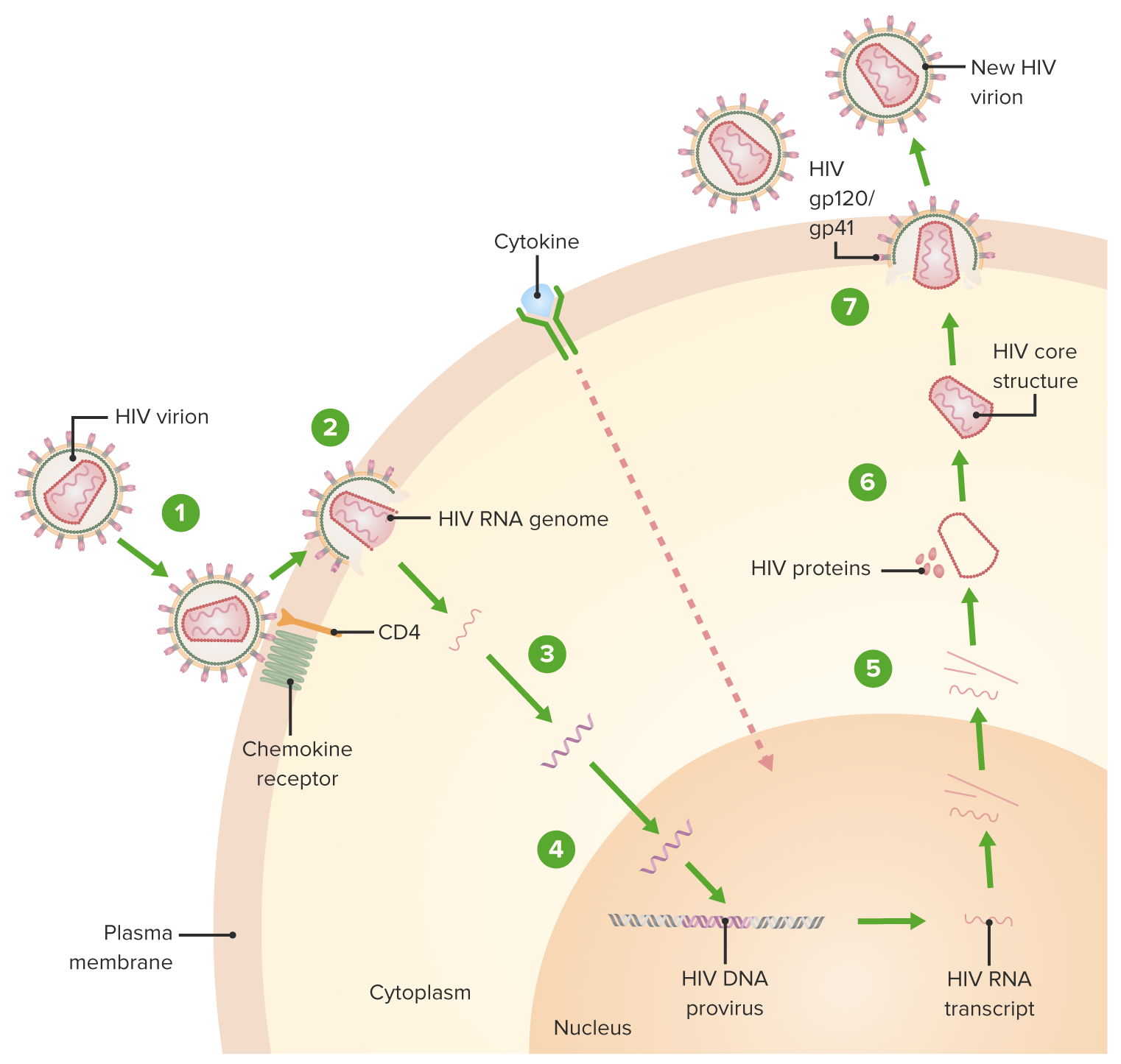
Ciclo de replicación del VIH

  • Células diana: células T CD4+, macrófagos y células dendríticas
  • Entrada del VIH a las células:
    • El virión entra primero a través de una ruptura en EN Erythema nodosum is an immune-mediated panniculitis (inflammation of the subcutaneous fat) caused by a type IV (delayed-type) hypersensitivity reaction. It commonly manifests in young women as tender, erythematous nodules on the shins. Erythema Nodosum la membrana mucosa.
    • El virión atraviesa la barrera mucosa y busca células diana.
  • Replicación del VIH:
    1. Fusión de membranas y unión de receptores (entrada): el virión (que transporta ARN viral, transcriptasa inversa, integrasa y otras proteínas) inicia la entrada en EN Erythema nodosum is an immune-mediated panniculitis (inflammation of the subcutaneous fat) caused by a type IV (delayed-type) hypersensitivity reaction. It commonly manifests in young women as tender, erythematous nodules on the shins. Erythema Nodosum la célula huésped.
      • El virión se une al AL Amyloidosis receptor Receptor Receptors are proteins located either on the surface of or within a cell that can bind to signaling molecules known as ligands (e.g., hormones) and cause some type of response within the cell. Receptors CD4 y a un receptor Receptor Receptors are proteins located either on the surface of or within a cell that can bind to signaling molecules known as ligands (e.g., hormones) and cause some type of response within the cell. Receptors de quimiocinas ( CCR5 CCR5 Ccr receptors with specificity for chemokine ccl3; chemokine ccl4; and chemokine ccl5. They are expressed at high levels in T-lymphocytes; B-lymphocytes; macrophages; mast cells; and nk cells. The ccr5 receptor is used by the human immunodeficiency virus to infect cells. HIV Infection and AIDS en EN Erythema nodosum is an immune-mediated panniculitis (inflammation of the subcutaneous fat) caused by a type IV (delayed-type) hypersensitivity reaction. It commonly manifests in young women as tender, erythematous nodules on the shins. Erythema Nodosum macrófagos, CXCR4 CXCR4 Cxcr receptors with specificity for cxcl12 chemokine. The receptors may play a role in hematopoiesis regulation and can also function as coreceptors for the human immunodeficiency virus. HIV Infection and AIDS en EN Erythema nodosum is an immune-mediated panniculitis (inflammation of the subcutaneous fat) caused by a type IV (delayed-type) hypersensitivity reaction. It commonly manifests in young women as tender, erythematous nodules on the shins. Erythema Nodosum células T).
        • Virus Virus Viruses are infectious, obligate intracellular parasites composed of a nucleic acid core surrounded by a protein capsid. Viruses can be either naked (non-enveloped) or enveloped. The classification of viruses is complex and based on many factors, including type and structure of the nucleoid and capsid, the presence of an envelope, the replication cycle, and the host range. Virology trópicos de macrófagos: cepas R5
        • Virus Virus Viruses are infectious, obligate intracellular parasites composed of a nucleic acid core surrounded by a protein capsid. Viruses can be either naked (non-enveloped) or enveloped. The classification of viruses is complex and based on many factors, including type and structure of the nucleoid and capsid, the presence of an envelope, the replication cycle, and the host range. Virology trópicos de células T: cepas X4
      • La unión de gp120 Gp120 External envelope protein of the human immunodeficiency virus which is encoded by the HIV env gene. It has a molecular weight of 120 kda and contains numerous glycosylation sites. Gp120 binds to cells expressing CD4 cell-surface antigens, most notably t4-lymphocytes and monocytes/macrophages. Gp120 has been shown to interfere with the normal function of CD4 and is at least partly responsible for the cytopathic effect of HIV. HIV Infection and AIDS con CD4 y los LOS Neisseria receptores de quimiocinas conduce a un cambio conformacional, exponiendo el dominio de fusión en EN Erythema nodosum is an immune-mediated panniculitis (inflammation of the subcutaneous fat) caused by a type IV (delayed-type) hypersensitivity reaction. It commonly manifests in young women as tender, erythematous nodules on the shins. Erythema Nodosum gp41 Gp41 Transmembrane envelope protein of the human immunodeficiency virus which is encoded by the HIV env gene. It has a molecular weight of 41, 000 and is glycosylated. The n-terminal part of gp41 is thought to be involved in cell fusion with the CD4 antigens of T4 lymphocytes, leading to syncytial formation. Gp41 is one of the most common HIV antigens detected by immunoblotting. HIV Infection and AIDS.
      • El cambio conformacional une la membrana viral y celular, fusionándolas.
    2. La capa de proteína de la cápside (que rodea el ARN viral y las proteínas) es descubierta cuando el virión atraviesa el citoplasma.
    3. Transcripción inversa: se produce la síntesis de ADN proviral (del ARN viral) mediada por transcriptasa inversa.
    4. Integración: el ADN viral se transporta a través del núcleo y se integra en EN Erythema nodosum is an immune-mediated panniculitis (inflammation of the subcutaneous fat) caused by a type IV (delayed-type) hypersensitivity reaction. It commonly manifests in young women as tender, erythematous nodules on the shins. Erythema Nodosum el ADN del huésped, facilitado por la integrasa.
    5. Replicación: se transcribe el ADN viral; se forman y transportan múltiples copias del nuevo ARN del VIH al AL Amyloidosis citoplasma.
      • El nuevo ARN del VIH se convierte en EN Erythema nodosum is an immune-mediated panniculitis (inflammation of the subcutaneous fat) caused by a type IV (delayed-type) hypersensitivity reaction. It commonly manifests in young women as tender, erythematous nodules on the shins. Erythema Nodosum el genoma de un nuevo virus Virus Viruses are infectious, obligate intracellular parasites composed of a nucleic acid core surrounded by a protein capsid. Viruses can be either naked (non-enveloped) or enveloped. The classification of viruses is complex and based on many factors, including type and structure of the nucleoid and capsid, the presence of an envelope, the replication cycle, and the host range. Virology.
      • Otras copias del ARN se utilizan para producir nuevas proteínas del VIH.
    6. Ensamblaje: Nuevo ARN viral + proteínas + enzimas se mueven a la superficie celular y forman una partícula no infecciosa.
    7. Gemación y maduración:
      • Las partículas (ARN viral + proteínas) eventualmente geman de la célula huésped con el VIH inmaduro.
      • La proteasa proteica viral luego escinde las poliproteínas recién sintetizadas, produciendo VIH maduro.
Ciclo de replicación del VIH

Ciclo de replicación del VIH:
1. El virión se une al receptor CD4 y un receptor de quimiocina, seguido de un cambio conformacional que facilita la fusión del virión y la célula huésped.
2. Una capa de proteína de la cápside (que rodea el ARN y las proteínas virales) se descubre cuando el virión atraviesa el citoplasma.
3. Se produce la síntesis de ADN proviral mediada por transcriptasa inversa.
4. El ADN viral se transporta a través del núcleo y se integra en el ADN del huésped, facilitado por la integrasa.
5. Se transcribe el ADN viral y se forman y transportan múltiples copias del nuevo ARN del VIH al citoplasma. El nuevo ARN del VIH se convierte en el genoma de un nuevo virus. También se produce la activación de citoquinas de la célula.
6. El nuevo ARN viral + proteínas + enzimas se mueven a la superficie celular y forman una partícula no infecciosa.
7. Las partículas (ARN viral + proteínas) eventualmente geman de la célula huésped con el VIH inmaduro. La proteasa proteica viral (enzima) luego escinde poliproteínas recién sintetizadas produciendo un VIH maduro.
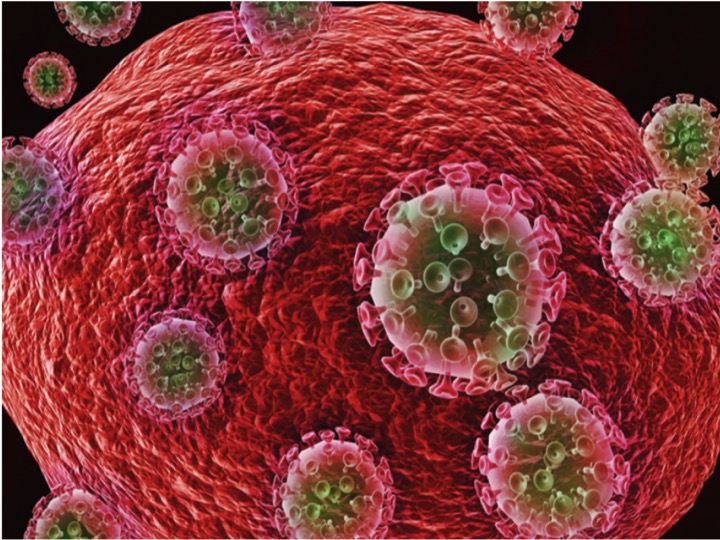
Imagen por Lecturio. Licencia: CC BY-NC-SA 4.0

Infección por VIH

Transmisión

  • Sexual:
    • > 80% a nivel mundial a través del contacto heterosexual
    • El riesgo aumenta:
      • En EN Erythema nodosum is an immune-mediated panniculitis (inflammation of the subcutaneous fat) caused by a type IV (delayed-type) hypersensitivity reaction. It commonly manifests in young women as tender, erythematous nodules on the shins. Erythema Nodosum presencia de otras enfermedades de transmisión sexual
      • Con relaciones sexuales repetidas con una pareja infectada
      • En EN Erythema nodosum is an immune-mediated panniculitis (inflammation of the subcutaneous fat) caused by a type IV (delayed-type) hypersensitivity reaction. It commonly manifests in young women as tender, erythematous nodules on the shins. Erythema Nodosum caso de carga viral elevada
    • La terapia antirretroviral reduce el riesgo de transmisión
  • Parenteral:
    • Usuarios de drogas intravenosas
    • Transfusión de sangre
    • Pinchazos de agujas en EN Erythema nodosum is an immune-mediated panniculitis (inflammation of the subcutaneous fat) caused by a type IV (delayed-type) hypersensitivity reaction. It commonly manifests in young women as tender, erythematous nodules on the shins. Erythema Nodosum profesionales médicos
  • Vertical (madre a hijo):
    • Durante el embarazo
    • Durante el nacimiento
    • A través de la lactancia
    • Riesgo disminuido por la terapia antirretroviral

Fisiopatología

  • La entrada inicial se da comúnmente a través de la mucosa anogenital.
  • Las células dendríticas intersticiales pueden servir como objetivo inicial.
  • La nueva infección se propaga con mayor frecuencia por virus Virus Viruses are infectious, obligate intracellular parasites composed of a nucleic acid core surrounded by a protein capsid. Viruses can be either naked (non-enveloped) or enveloped. The classification of viruses is complex and based on many factors, including type and structure of the nucleoid and capsid, the presence of an envelope, the replication cycle, and the host range. Virology con tropismo por macrófagos.
  • Luego, las células infectadas se fusionan con las células T CD4+ y la infección se propaga.
  • El rápido aumento inicial del ARN viral corresponde con la seroconversión (fase aguda).
  • Los LOS Neisseria niveles de ARN viral luego disminuyen en EN Erythema nodosum is an immune-mediated panniculitis (inflammation of the subcutaneous fat) caused by a type IV (delayed-type) hypersensitivity reaction. It commonly manifests in young women as tender, erythematous nodules on the shins. Erythema Nodosum respuesta a la aparición de células T CD8+ específicas del VIH.
  • Finalmente, el nivel de ARN alcanza un “punto de ajuste” (más de 6 meses).
  • Disminución lenta y progresiva de las células CD4+:
    • Efectos citopáticos directos del virus Virus Viruses are infectious, obligate intracellular parasites composed of a nucleic acid core surrounded by a protein capsid. Viruses can be either naked (non-enveloped) or enveloped. The classification of viruses is complex and based on many factors, including type and structure of the nucleoid and capsid, the presence of an envelope, the replication cycle, and the host range. Virology.
    • Citotoxicidad mediada por gp120 Gp120 External envelope protein of the human immunodeficiency virus which is encoded by the HIV env gene. It has a molecular weight of 120 kda and contains numerous glycosylation sites. Gp120 binds to cells expressing CD4 cell-surface antigens, most notably t4-lymphocytes and monocytes/macrophages. Gp120 has been shown to interfere with the normal function of CD4 and is at least partly responsible for the cytopathic effect of HIV. HIV Infection and AIDS
    • Muerte celular apoptótica inducida por activación
    • Eliminación de células CD4+ infectadas por células CD8+
  • El SIDA se desarrolla cuando las células T CD4+ < 200 células/μL.

Presentación clínica

  • Fase temprana/aguda:
    • El 60% son asintomáticos.
    • Si es una enfermedad sintomática, es similar a la mononucleosis Mononucleosis Infectious mononucleosis (IM), also known as “the kissing disease,” is a highly contagious viral infection caused by the Epstein-Barr virus. Its common name is derived from its main method of transmission: the spread of infected saliva via kissing. Clinical manifestations of IM include fever, tonsillar pharyngitis, and lymphadenopathy. Mononucleosis:
      • Fiebre
      • Dolor Dolor Inflammation de garganta
      • Cefalea, erupción cutánea, diarrea
      • Mialgia/artralgia
    • Si los LOS Neisseria síntomas duran > 14 días, progresión más rápida al AL Amyloidosis SIDA
  • Infección crónica (sin SIDA):
    • Generalmente, dura de 8–10 años
    • Mayormente asintomática
    • Acompañada de fatiga, sudores y pérdida de peso
    • Linfadenopatía generalizada
    • Puede tener candidiasis Candidiasis Candida is a genus of dimorphic, opportunistic fungi. Candida albicans is part of the normal human flora and is the most common cause of candidiasis. The clinical presentation varies and can include localized mucocutaneous infections (e.g., oropharyngeal, esophageal, intertriginous, and vulvovaginal candidiasis) and invasive disease (e.g., candidemia, intraabdominal abscess, pericarditis, and meningitis). Candida/Candidiasis recurrente, foliculitis y presentaciones graves de herpes, papiloma o herpes zóster
  • SIDA: definido por el recuento de CD4+ < 200 células/μL y presencia de condiciones definitorias de SIDA (enfermedades oportunistas secundarias a inmunosupresión)

Identificación

  • Anticuerpo contra VIH (ensayo inmunoabsorbente ligado a enzimas ( ELISA ELISA An immunoassay utilizing an antibody labeled with an enzyme marker such as horseradish peroxidase. While either the enzyme or the antibody is bound to an immunosorbent substrate, they both retain their biologic activity; the change in enzyme activity as a result of the enzyme-antibody-antigen reaction is proportional to the concentration of the antigen and can be measured spectrophotometrically or with the naked eye. Many variations of the method have been developed. St. Louis Encephalitis Virus, por sus siglas en EN Erythema nodosum is an immune-mediated panniculitis (inflammation of the subcutaneous fat) caused by a type IV (delayed-type) hypersensitivity reaction. It commonly manifests in young women as tender, erythematous nodules on the shins. Erythema Nodosum inglés))
  • Antígeno y anticuerpo del VIH
  • Antígeno del VIH
  • ARN del VIH

Referencias

  1. Cloyd M.W. (1996). Human Retroviruses. Retrieved 08 January 2021, from https://www.ncbi.nlm.nih.gov/books/NBK7934/
  2. Quinn T.C. (2019). Global epidemiology of HIV infection. Retrieved 09 January 2021, from https://www.uptodate.com/contents/global-epidemiology-of-hiv-infection
  3. Sax P.E. (2020). Acute and early HIV infection: Pathogenesis and epidemiology. Retrieved 10 January 2021, from https://www.uptodate.com/contents/acute-and-early-hiv-infection-clinical-manifestations-and-diagnosis
  4. Sax P.E. (2020). Acute and early HIV infection: Clinical manifestations and diagnosis. Retrieved 10 January 2021, from https://www.uptodate.com/contents/acute-and-early-hiv-infection-clinical-manifestations-and-diagnosis
  5. Sax P.E., Wood B.R. (2019). The natural history and clinical features of HIV infection in adults and adolescents. Retrieved 08 January 2021, from https://www.uptodate.com/contents/the-natural-history-and-clinical-features-of-hiv-infection-in-adults-and-adolescents

¡Crea tu cuenta gratis o inicia una sesión para seguir leyendo!

Regístrate ahora y obtén acceso gratuito a Lecturio con páginas de concepto, videos médicos y cuestionarios para tu educación médica.

User Reviews

Details