
Domina Conceptos Médicos

Estudia para la escuela de medicina y tus examenes con Lecturio.

Poliquistosis Renal Autosómica Recesiva (PQRAR)

La poliquistosis renal es un trastorno genético hereditario que conduce al AL Amyloidosis desarrollo de numerosos quistes llenos de líquido en EN Erythema nodosum is an immune-mediated panniculitis (inflammation of the subcutaneous fat) caused by a type IV (delayed-type) hypersensitivity reaction. It commonly manifests in young women as tender, erythematous nodules on the shins. Erythema Nodosum los LOS Neisseria riñones. Los LOS Neisseria 2 tipos principales de poliquistosis renal son la poliquistosis renal autosómica recesiva, que suele diagnosticarse antes del nacimiento o poco después, y la poliquistosis renal autosómica dominante, que suele diagnosticarse en EN Erythema nodosum is an immune-mediated panniculitis (inflammation of the subcutaneous fat) caused by a type IV (delayed-type) hypersensitivity reaction. It commonly manifests in young women as tender, erythematous nodules on the shins. Erythema Nodosum la adultez. La poliquistosis renal autosómica recesiva se caracteriza principalmente por dilataciones quísticas de los LOS Neisseria conductos colectores renales y de los LOS Neisseria conductos biliares intrahepáticos con fibrosis Fibrosis Any pathological condition where fibrous connective tissue invades any organ, usually as a consequence of inflammation or other injury. Bronchiolitis Obliterans hepática. El diagnóstico se realiza mediante el examen físico y el ultrasonido. El tratamiento requiere un enfoque multidisciplinario para frenar la progresión de la enfermedad renal mediante el control de la hipertensión, la proteinuria Proteinuria The presence of proteins in the urine, an indicator of kidney diseases. Nephrotic Syndrome in Children y los LOS Neisseria síntomas. El pronóstico de la poliquistosis renal autosómica recesiva depende de la edad de presentación, junto con el grado de afectación hepática y renal. Los LOS Neisseria pacientes que evolucionan hacia la enfermedad renal en EN Erythema nodosum is an immune-mediated panniculitis (inflammation of the subcutaneous fat) caused by a type IV (delayed-type) hypersensitivity reaction. It commonly manifests in young women as tender, erythematous nodules on the shins. Erythema Nodosum estadio terminal necesitarán terapia de reemplazo renal.

Last updated: Mar 28, 2022

Editorial responsibility: Stanley Oiseth, Lindsay Jones, Evelin Maza

Epidemiología y Etiología

Epidemiología

La poliquistosis renal afecta a unas 500 000 personas en EN Erythema nodosum is an immune-mediated panniculitis (inflammation of the subcutaneous fat) caused by a type IV (delayed-type) hypersensitivity reaction. It commonly manifests in young women as tender, erythematous nodules on the shins. Erythema Nodosum Estados Unidos. La poliquistosis renal autosómica recesiva (antes conocida como poliquistosis renal infantil), es 1 de los LOS Neisseria 2 tipos principales de poliquistosis renal.

  • Prevalencia: 1 por cada 20 000 nacidos vivos
  • 1/3 se presenta antes de 1 año de edad
  • 1/3 se presenta en EN Erythema nodosum is an immune-mediated panniculitis (inflammation of the subcutaneous fat) caused by a type IV (delayed-type) hypersensitivity reaction. It commonly manifests in young women as tender, erythematous nodules on the shins. Erythema Nodosum pacientes de 1–20 años
  • 1/3 se presenta después de los LOS Neisseria 20 años

Etiología

  • Poliquistosis renal autosómica recesiva: autosómica recesiva
  • Puede ser una mutación de:
    • PKHD1 PKHD1 Autosomal Recessive Polycystic Kidney Disease (ARPKD) en EN Erythema nodosum is an immune-mediated panniculitis (inflammation of the subcutaneous fat) caused by a type IV (delayed-type) hypersensitivity reaction. It commonly manifests in young women as tender, erythematous nodules on the shins. Erythema Nodosum el cromosoma 6p21 O:
      • Codifica la fibrocistina (proteína grande integral de la membrana) que se encuentra en EN Erythema nodosum is an immune-mediated panniculitis (inflammation of the subcutaneous fat) caused by a type IV (delayed-type) hypersensitivity reaction. It commonly manifests in young women as tender, erythematous nodules on the shins. Erythema Nodosum los LOS Neisseria conductos colectores corticales y medulares del riñón y en EN Erythema nodosum is an immune-mediated panniculitis (inflammation of the subcutaneous fat) caused by a type IV (delayed-type) hypersensitivity reaction. It commonly manifests in young women as tender, erythematous nodules on the shins. Erythema Nodosum las células de los LOS Neisseria conductos biliares hepáticos.
      • Defecto de la fibrocistina → disfunción de los LOS Neisseria cilios renales
    • DZIP1L (menos común):
      • Situado en EN Erythema nodosum is an immune-mediated panniculitis (inflammation of the subcutaneous fat) caused by a type IV (delayed-type) hypersensitivity reaction. It commonly manifests in young women as tender, erythematous nodules on the shins. Erythema Nodosum el 2do locus Locus Specific regions that are mapped within a genome. Genetic loci are usually identified with a shorthand notation that indicates the chromosome number and the position of a specific band along the P or Q arm of the chromosome where they are found. For example the locus 6p21 is found within band 21 of the P-arm of chromosome 6. Many well known genetic loci are also known by common names that are associated with a genetic function or hereditary disease. Basic Terms of Genetics para la poliquistosis renal autosómica dominante
      • La presentación incluye riñones hiperecogénicos agrandados e hipertensión arterial

Presentación Clínica

Manifestaciones generales

Las manifestaciones varían según la edad y afectan las siguientes estructuras:
  • Riñones:
    • Dilataciones quísticas de los LOS Neisseria conductos colectores
    • Microquistes < 2 mm de tamaño
    • Deterioro de la función renal
  • Tracto hepatobiliar: dilatación de la vía biliar intrahepática y fibrosis Fibrosis Any pathological condition where fibrous connective tissue invades any organ, usually as a consequence of inflammation or other injury. Bronchiolitis Obliterans hepática

Prenatal y neonatal

  • Puede detectarse prenatalmente (antes de las 24 semanas de gestación):
    • Riñones agrandados
    • Pueden observarse quistes renales.
    • Oligohidramnios y ausencia de orina en EN Erythema nodosum is an immune-mediated panniculitis (inflammation of the subcutaneous fat) caused by a type IV (delayed-type) hypersensitivity reaction. It commonly manifests in young women as tender, erythematous nodules on the shins. Erythema Nodosum la vejiga fetal
  • Secuencia de Potter, que es debido al AL Amyloidosis oligohidramnios severo y al AL Amyloidosis efecto compresivo de los LOS Neisseria riñones agrandados:
    • Deformidades posicionales de las extremidades
    • Anomalías craneofaciales
    • Hipoplasia pulmonar
    • Deterioro del crecimiento
    • Dificultades para la alimentación
  • Manifestaciones renales:
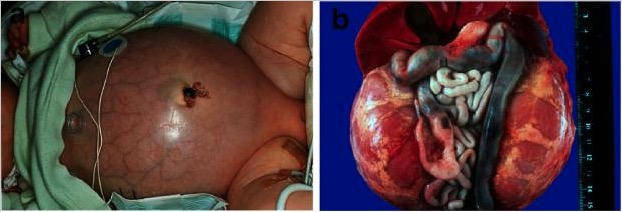
    • Abdomen protuberante debido al AL Amyloidosis agrandamiento bilateral de los LOS Neisseria riñones
    • Insuficiencia renal crónica o incluso enfermedad renal en EN Erythema nodosum is an immune-mediated panniculitis (inflammation of the subcutaneous fat) caused by a type IV (delayed-type) hypersensitivity reaction. It commonly manifests in young women as tender, erythematous nodules on the shins. Erythema Nodosum estadio terminal
    • Hipertensión
    • Hiponatremia
  • Dificultad respiratoria: se observa en EN Erythema nodosum is an immune-mediated panniculitis (inflammation of the subcutaneous fat) caused by a type IV (delayed-type) hypersensitivity reaction. It commonly manifests in young women as tender, erythematous nodules on the shins. Erythema Nodosum el 50% de los LOS Neisseria pacientes debido a la insuficiencia e hipoplasia pulmonar
PQRAR

Poliquistosis renal autosómica recesiva:
a) Bebé con el abdomen distendido debido a riñones voluminosos, lo que provoca problemas respiratorios y fallecimiento prematuro
b) Situación abdominal de un paciente fallecido perinatalmente con poliquistosis renal autosómica recesiva con riñones simétricamente agrandados en su configuración reniforme

Imagen: “Fig. 2” por Carsten Bergmann. Licencia: CC BY 2.0

Infancia y niñez

En EN Erythema nodosum is an immune-mediated panniculitis (inflammation of the subcutaneous fat) caused by a type IV (delayed-type) hypersensitivity reaction. It commonly manifests in young women as tender, erythematous nodules on the shins. Erythema Nodosum los LOS Neisseria 3 primeros años, los LOS Neisseria supervivientes del periodo neonatal experimentan una mejora temporal de la función renal, seguida de un declive.
  • Manifestaciones renales:
    • Abdomen protuberante debido al AL Amyloidosis agrandamiento bilateral de los LOS Neisseria riñones
    • Poliuria y polidipsia (suelen ser los LOS Neisseria 1eros signos de insuficiencia renal)
    • Hipertensión
    • Acidosis Acidosis A pathologic condition of acid accumulation or depletion of base in the body. The two main types are respiratory acidosis and metabolic acidosis, due to metabolic acid build up. Respiratory Acidosis metabólica
    • Infecciones del tracto urinario (ITU) recurrentes
    • Anomalías urinarias como:
      • Proteinuria Proteinuria The presence of proteins in the urine, an indicator of kidney diseases. Nephrotic Syndrome in Children
      • Glucosuria Glucosuria Diabetes Mellitus
      • Hiperfosfaturia
      • Aumento de la excreción de magnesio en EN Erythema nodosum is an immune-mediated panniculitis (inflammation of the subcutaneous fat) caused by a type IV (delayed-type) hypersensitivity reaction. It commonly manifests in young women as tender, erythematous nodules on the shins. Erythema Nodosum la orina
    • Progresión a enfermedad renal crónica (ERC):
      • Formación de quistes y fibrosis Fibrosis Any pathological condition where fibrous connective tissue invades any organ, usually as a consequence of inflammation or other injury. Bronchiolitis Obliterans
      • Disminución de la función renal
  • Manifestaciones hepáticas:
    • Puede ser una característica prominente de la poliquistosis renal autosómica recesiva en EN Erythema nodosum is an immune-mediated panniculitis (inflammation of the subcutaneous fat) caused by a type IV (delayed-type) hypersensitivity reaction. It commonly manifests in young women as tender, erythematous nodules on the shins. Erythema Nodosum pacientes que se presentan a una edad avanzada
    • Puede presentarse con hepatomegalia
    • Fibrosis Fibrosis Any pathological condition where fibrous connective tissue invades any organ, usually as a consequence of inflammation or other injury. Bronchiolitis Obliterans hepática congénita
    • Insuficiencia hepática
    • Hipertensión portal
  • Otros hallazgos: alteración del crecimiento y del desarrollo neurológico, hipertrofia ventricular izquierda

Diagnóstico

Examen físico

  • Evaluar por síndrome de Potter.
  • Evaluar si los LOS Neisseria riñones son palpables.
  • Sensibilidad abdominal a la palpación
  • Evaluar si hay manifestaciones pulmonares o hepáticas de la enfermedad.

Imagenología

  • Ultrasonido abdominal:
    • Riñones:
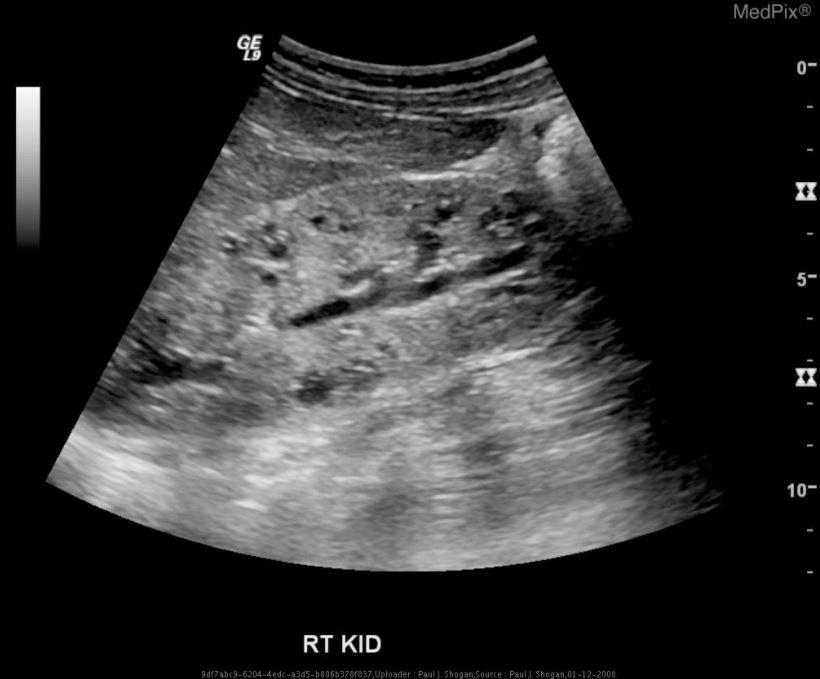
      • Riñones agrandados e hiperecogénicos bilateralmente
      • Pobre diferenciación corticomedular
      • Numerosos quistes diminutos y dilatación ductal
    • Hígado:
      • Hepatomegalia
      • Quistes hiperecogénicos
      • Dilatación de los LOS Neisseria conductos biliares principales y de los LOS Neisseria conductos intrahepáticos periféricos
  • RM o TC para una mayor caracterización de la enfermedad, o si los LOS Neisseria hallazgos del ultrasonido no son concluyentes:
    • RM: agrandamiento renal con microquistes en EN Erythema nodosum is an immune-mediated panniculitis (inflammation of the subcutaneous fat) caused by a type IV (delayed-type) hypersensitivity reaction. It commonly manifests in young women as tender, erythematous nodules on the shins. Erythema Nodosum un patrón radial hiperintenso en EN Erythema nodosum is an immune-mediated panniculitis (inflammation of the subcutaneous fat) caused by a type IV (delayed-type) hypersensitivity reaction. It commonly manifests in young women as tender, erythematous nodules on the shins. Erythema Nodosum la corteza y la médula
    • TC: no es la opción inicial debido a la radiación
Ultrasonido del riñón derecho que demuestra una poliquistosis renal autosómica recesiva.

Ultrasonido del riñón derecho que muestra una poliquistosis renal autosómica recesiva:
aumento difuso de la ecogenicidad, pérdida de la diferenciación corticomedular y múltiples microquistes dentro del parénquima renal

Imagen: “Autosomal Recessive Polycystic Kidney Disease” por Shogan PJS. Licencia: CC BY 4.0

Pruebas genéticas

Tratamiento y Pronóstico

Abordaje terapéutico

Tratamiento prenatal (si se detecta a tempranamente):

  • Monitoreo con ultrasonido cada 2–3 semanas (comprobar el tamaño del riñón y el volumen del líquido amniótico)
  • Planificación para los LOS Neisseria cuidados intensivos neonatales

Tratamiento neonatal:

  • Cuidados respiratorios de soporte (si la dificultad respiratoria se debe a hipoplasia pulmonar)
  • Ventilación mecánica
  • Monitorizar/tratar la función renal y los LOS Neisseria electrolitos séricos
  • Inhibidor de la ECA para la hipertensión
  • Restricción de líquidos para la hiponatremia
  • Alimentación nasogástrica suplementaria por la dificultad para la alimentación
  • Diálisis en EN Erythema nodosum is an immune-mediated panniculitis (inflammation of the subcutaneous fat) caused by a type IV (delayed-type) hypersensitivity reaction. It commonly manifests in young women as tender, erythematous nodules on the shins. Erythema Nodosum caso de enfermedad renal en EN Erythema nodosum is an immune-mediated panniculitis (inflammation of the subcutaneous fat) caused by a type IV (delayed-type) hypersensitivity reaction. It commonly manifests in young women as tender, erythematous nodules on the shins. Erythema Nodosum estadio terminal
  • Nefrectomía si es absolutamente necesaria para la supervivencia

Tratamiento durante la infancia y la niñez:
  • Monitorizar la función renal.
  • Monitorizar el estado del hígado:
    • Comprobar si hay signos de hipertensión portal.
    • Ultrasonido abdominal anual
  • Puede requerir alimentación suplementaria para la intolerancia a la alimentación y el crecimiento.
  • Inhibidor de la ECA o ARA para el control de la presión arterial
  • Tratar las complicaciones (e.g., ITU)
  • Trasplante renal para la enfermedad renal en EN Erythema nodosum is an immune-mediated panniculitis (inflammation of the subcutaneous fat) caused by a type IV (delayed-type) hypersensitivity reaction. It commonly manifests in young women as tender, erythematous nodules on the shins. Erythema Nodosum estadio terminal
  • Puede necesitar un trasplante de hígado

Pronóstico

  • Depende en EN Erythema nodosum is an immune-mediated panniculitis (inflammation of the subcutaneous fat) caused by a type IV (delayed-type) hypersensitivity reaction. It commonly manifests in young women as tender, erythematous nodules on the shins. Erythema Nodosum gran medida del grado de afectación renal y hepática (suele depender de la edad de presentación)
  • Peor pronóstico (tasa de mortalidad del 30%): presentación como neonato con enfermedad renal grave e insuficiencia pulmonar
  • Supervivencia más allá del 1er mes: > 80% de posibilidades de supervivencia más allá de los LOS Neisseria 15 años
Enfermedad renal poliquística autosómica recesiva

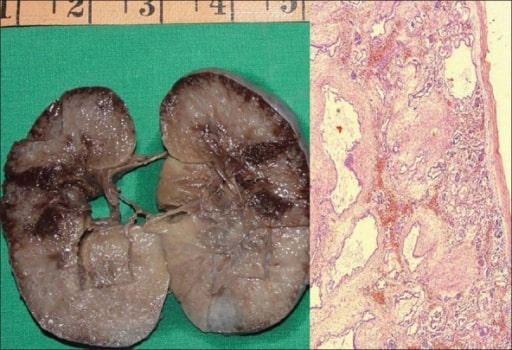
Poliquistosis renal autosómica recesiva en un feto:
A la izquierda, se muestra un espécimen macroscópico de un riñón derecho que mide 10 × 7 × 4 cm. La superficie del corte es esponjosa con escasa diferenciación corticomedular. Hay múltiples quistes diminutos, algunos en ángulo recto a la superficie cortical.
A la derecha, una microfotografía muestra numerosos quistes revestidos por una sola capa de células epiteliales cuboidales bajas con un mesénquima peritubular grueso. Los glomérulos son normales (H&E, 40x).

Imagen: “Autosomal recessive polycystic kidney” por Department of Urology, Kasturba Medical College, Manipal, India. Licencia: CC BY 2.0

Comparación

Los LOS Neisseria 2 tipos principales de poliquistosis renal son la poliquistosis renal autosómica dominante y la poliquistosis renal autosómica recesiva.

Tabla: PQRAD vs. PQRAR
Poliquistosis renal autosómica dominante Poliquistosis renal autosómica recesiva
Herencia Autosómica dominante Autosómica recesiva
Genes Genes A category of nucleic acid sequences that function as units of heredity and which code for the basic instructions for the development, reproduction, and maintenance of organisms. DNA Types and Structure implicados PKD1, PKD2 PKD1, PKD2 Autosomal dominant polycystic kidney disease (ADPKD) PKHD1 PKHD1 Autosomal Recessive Polycystic Kidney Disease (ARPKD)
Proteínas asociadas Policistina-1, policistina-2 Fibrocistina
Edad de presentación Adultez Prenatal, neonatal, infantil
Hallazgos clínicos
  • Deterioro de la función renal
  • Riñones agrandados
  • Aneurisma cerebral
  • Quistes hepáticos y pancreáticos
  • Diverticulosis Diverticulosis A pathological condition characterized by the presence of a number of colonic diverticula in the colon. Its pathogenesis is multifactorial, including colon aging, motor dysfunction, increases in intraluminal pressure, and lack of dietary fibers. Diverticular Disease en EN Erythema nodosum is an immune-mediated panniculitis (inflammation of the subcutaneous fat) caused by a type IV (delayed-type) hypersensitivity reaction. It commonly manifests in young women as tender, erythematous nodules on the shins. Erythema Nodosum el colon Colon The large intestines constitute the last portion of the digestive system. The large intestine consists of the cecum, appendix, colon (with ascending, transverse, descending, and sigmoid segments), rectum, and anal canal. The primary function of the colon is to remove water and compact the stool prior to expulsion from the body via the rectum and anal canal. Colon, Cecum, and Appendix: Anatomy
  • Hernias abdominales
  • Deterioro de la función renal
  • Riñones agrandados
  • Dilatación de la vía biliar intrahepática y fibrosis Fibrosis Any pathological condition where fibrous connective tissue invades any organ, usually as a consequence of inflammation or other injury. Bronchiolitis Obliterans hepática
  • Hipoplasia pulmonar
Morfología macroscópica y patológica
  • Riñones grandes, superficie llena de quistes, arquitectura renal distorsionada
  • Quistes redondos de tamaño variable Variable Variables represent information about something that can change. The design of the measurement scales, or of the methods for obtaining information, will determine the data gathered and the characteristics of that data. As a result, a variable can be qualitative or quantitative, and may be further classified into subgroups. Types of Variables (microquistes y macroquistes)
  • Nefronas funcionales entre los LOS Neisseria quistes
  • Riñones grandes, superficie lisa, forma general de los LOS Neisseria riñones conservada
  • Microquistes (generalmente < 2 mm), que son tubulares (afectan a los LOS Neisseria conductos colectores y a los LOS Neisseria túbulos), que irradian desde la médula hasta la corteza
  • Dilatación de los LOS Neisseria conductos colectores
Resultados del ultrasonido Múltiples quistes (según la edad):
  • < 40 años de edad: ≥ 3
  • 40–59 años de edad: ≥ 2 cada riñón
  • 60 años y más: ≥ 4 cada riñón
  • Riñones agrandados y ecogénicos
  • Pobre diferenciación corticomedular
  • Múltiples quistes diminutos

Diagnóstico Diferencial

  • Múltiples quistes simples benignos: quistes renales asintomáticos en EN Erythema nodosum is an immune-mediated panniculitis (inflammation of the subcutaneous fat) caused by a type IV (delayed-type) hypersensitivity reaction. It commonly manifests in young women as tender, erythematous nodules on the shins. Erythema Nodosum niños. Los LOS Neisseria quistes aumentan en EN Erythema nodosum is an immune-mediated panniculitis (inflammation of the subcutaneous fat) caused by a type IV (delayed-type) hypersensitivity reaction. It commonly manifests in young women as tender, erythematous nodules on the shins. Erythema Nodosum número con la edad. Los LOS Neisseria pacientes sin poliquistosis renal no suelen presentar hematuria Hematuria Presence of blood in the urine. Renal Cell Carcinoma macroscópica, dolor Dolor Inflammation de costado o insuficiencia renal. Se recomienda un tratamiento conservador.
  • Enfermedad quística renal adquirida: la enfermedad renal crónica se asocia frecuentemente con el desarrollo de múltiples quistes pequeños bilaterales. Los LOS Neisseria quistes suelen ser pequeños (< 0,5 cm) y los LOS Neisseria pacientes no tienen antecedentes familiares. Los LOS Neisseria riñones tienen un contorno suave y un tamaño entre pequeño y normal. No se observan manifestaciones extrarrenales asociadas.
  • Síndrome de quistes renales y diabetes Diabetes Diabetes mellitus (DM) is a metabolic disease characterized by hyperglycemia and dysfunction of the regulation of glucose metabolism by insulin. Type 1 DM is diagnosed mostly in children and young adults as the result of autoimmune destruction of β cells in the pancreas and the resulting lack of insulin. Type 2 DM has a significant association with obesity and is characterized by insulin resistance. Diabetes Mellitus: asociado a la mutación del gen TCF2; se caracteriza por diabetes Diabetes Diabetes mellitus (DM) is a metabolic disease characterized by hyperglycemia and dysfunction of the regulation of glucose metabolism by insulin. Type 1 DM is diagnosed mostly in children and young adults as the result of autoimmune destruction of β cells in the pancreas and the resulting lack of insulin. Type 2 DM has a significant association with obesity and is characterized by insulin resistance. Diabetes Mellitus de la edad madura que se presenta en EN Erythema nodosum is an immune-mediated panniculitis (inflammation of the subcutaneous fat) caused by a type IV (delayed-type) hypersensitivity reaction. It commonly manifests in young women as tender, erythematous nodules on the shins. Erythema Nodosum el joven y quistes renales. Otros hallazgos incluyen enzimas hepáticas anormales, ácido úrico elevado y malformaciones pancreáticas. La función renal varía desde una reducción leve hasta la enfermedad renal en EN Erythema nodosum is an immune-mediated panniculitis (inflammation of the subcutaneous fat) caused by a type IV (delayed-type) hypersensitivity reaction. It commonly manifests in young women as tender, erythematous nodules on the shins. Erythema Nodosum estadio terminal.
  • Nefronoptisis: trastorno autosómico recesivo asociado a la disfunción de los LOS Neisseria cilios primarios, los LOS Neisseria cuerpos basales y los LOS Neisseria centrosomas. El riñón luce ecogénico con pérdida de la diferenciación corticomedular en EN Erythema nodosum is an immune-mediated panniculitis (inflammation of the subcutaneous fat) caused by a type IV (delayed-type) hypersensitivity reaction. It commonly manifests in young women as tender, erythematous nodules on the shins. Erythema Nodosum el ultrasonido. Sin embargo, el tamaño de los LOS Neisseria riñones suele ser normal o ligeramente pequeño. También se encuentra fibrosis Fibrosis Any pathological condition where fibrous connective tissue invades any organ, usually as a consequence of inflammation or other injury. Bronchiolitis Obliterans hepática.
  • Complejo de esclerosis tuberosa autosómica dominante: quistes renales múltiples y bilaterales. Otros hallazgos incluyen angiomiolipomas renales, angiofibromas faciales, máculas hipomelanóticas y hamartomas nodulares de la retina Retina The ten-layered nervous tissue membrane of the eye. It is continuous with the optic nerve and receives images of external objects and transmits visual impulses to the brain. Its outer surface is in contact with the choroid and the inner surface with the vitreous body. The outermost layer is pigmented, whereas the inner nine layers are transparent. Eye: Anatomy. El diagnóstico se basa en EN Erythema nodosum is an immune-mediated panniculitis (inflammation of the subcutaneous fat) caused by a type IV (delayed-type) hypersensitivity reaction. It commonly manifests in young women as tender, erythematous nodules on the shins. Erythema Nodosum los LOS Neisseria hallazgos clínicos y en EN Erythema nodosum is an immune-mediated panniculitis (inflammation of the subcutaneous fat) caused by a type IV (delayed-type) hypersensitivity reaction. It commonly manifests in young women as tender, erythematous nodules on the shins. Erythema Nodosum las pruebas genéticas (mutación patogénica de TSC1 o TSC2).
  • Riñón displásico multiquístico: forma grave de enfermedad renal quística; los LOS Neisseria riñones se llenan de quistes sin tejido renal. La mayoría de los LOS Neisseria casos son unilaterales ( los LOS Neisseria varones son los LOS Neisseria más afectados). El diagnóstico se realiza con el ultrasonido prenatal. La mayoría de los LOS Neisseria riñones afectados involucionan, por lo que se recomienda la observación y el seguimiento a largo plazo.

Referencias

  1. Guler, S., Cimen, S., Hurton, S., et al. (2015). Diagnosis and Treatment Modalities of Symptomatic Polycystic Kidney Disease. In Li X (Ed.), Polycystic Kidney Disease [Internet]. https://www.ncbi.nlm.nih.gov/books/NBK373387/
  2. Halvorson, C.R., Bremmer, M.S., Jacobs, S.C. (2010). Polycystic kidney disease: inheritance, pathophysiology, prognosis, and treatment. Int. J. Nephrol. Renovasc. Dis. 3:69–83.
  3. Kruskal, J.B., Richie, J.P. (2021). Simple and complex renal cysts in adults. UpToDate. Retrieved Feb 25, 2021, from https://www.uptodate.com/contents/simple-and-complex-renal-cysts-in-adults
  4. National Institute of Diabetes and Digestive and Kidney Diseases. (2017). Autosomal Recessive Polycystic Kidney Disease. Retrieved February 25, 2021, from https://www.niddk.nih.gov/health-information/kidney-disease/polycystic-kidney-disease/autosomal-recessive-pkd#treat
  5. National Institute of Diabetes and Digestive and Kidney Diseases. (2017). What is Polycystic Kidney Disease? Retrieved February 25, 2021, from https://www.niddk.nih.gov/health-information/kidney-disease/polycystic-kidney-disease/what-is-pkd#symptoms
  6. National Organization for Rare Disorders. (2020). Autosomal Recessive Polycystic Kidney Disease. Retrieved February 25, 2021, from https://rarediseases.org/rare-diseases/autosomal-recessive-polycystic-kidney-disease/#symptoms
  7. Niaudet P. (2020). Autosomal recessive polycystic kidney disease in children. UpToDate. Retrieved Feb 25, 2021, from https://www.uptodate.com/contents/autosomal-recessive-polycystic-kidney-disease-in-children
  8. Niaudet, P. (2020). Renal cystic diseases in children. UpToDate. Retrieved 16 Apr 2021 from https://www.uptodate.com/contents/renal-cystic-diseases-in-children
  9. Patil A., Sweeney W.E. Jr., Avner E.D., et al. (2015). Childhood Polycystic Kidney Disease. Polycystic Kidney Disease. https://www.ncbi.nlm.nih.gov/books/NBK373381/
  10. Srinath A., Shneider B.L. (2012). Congenital hepatic fibrosis and autosomal recessive polycystic kidney disease. J Pediatr Gastroenterol Nutr. 54, 580–7.
  11. Zhou J, & Pollak M.R. (2018). Polycystic kidney disease and other inherited disorders of tubule growth and development. Jameson JL, et al. (Ed.), Harrison’s Principles of Internal Medicine (20th ed.) https://accessmedicine-mhmedical-com.aucmed.idm.oclc.org/content.aspx?bookid=2129&sectionid=192281464

¡Crea tu cuenta gratis o inicia una sesión para seguir leyendo!

Regístrate ahora y obtén acceso gratuito a Lecturio con páginas de concepto, videos médicos y cuestionarios para tu educación médica.

User Reviews

Que tengas una sesión de estudio alegre y navideña 🎁 Ahorra 50% en todos los planes >>

Details