Domina Conceptos Médicos

Estudia para la escuela de medicina y tus examenes con Lecturio.

Hemorragia Epidural

La hemorragia epidural es un evento caracterizado por sangrado en EN Erythema nodosum is an immune-mediated panniculitis (inflammation of the subcutaneous fat) caused by a type IV (delayed-type) hypersensitivity reaction. It commonly manifests in young women as tender, erythematous nodules on the shins. Erythema Nodosum el espacio epidural entre la duramadre y el cráneo. El mecanismo principal que desencadena la hemorragia es el traumático (i.e., traumatismo craneoencefálico cerrado), que causa una lesión arterial, más comúnmente una lesión en EN Erythema nodosum is an immune-mediated panniculitis (inflammation of the subcutaneous fat) caused by a type IV (delayed-type) hypersensitivity reaction. It commonly manifests in young women as tender, erythematous nodules on the shins. Erythema Nodosum la arteria meníngea media. La hemorragia epidural se presenta de forma aguda, generalmente inmediatamente (segundos a horas) después del traumatismo craneoencefálico, con un nivel alterado de conciencia que puede abarcar desde una pérdida momentánea de conciencia hasta coma Coma Coma is defined as a deep state of unarousable unresponsiveness, characterized by a score of 3 points on the GCS. A comatose state can be caused by a multitude of conditions, making the precise epidemiology and prognosis of coma difficult to determine. Coma. El diagnóstico se basa en EN Erythema nodosum is an immune-mediated panniculitis (inflammation of the subcutaneous fat) caused by a type IV (delayed-type) hypersensitivity reaction. It commonly manifests in young women as tender, erythematous nodules on the shins. Erythema Nodosum la sospecha clínica posterior a un traumatismo craneoencefálico y se confirma mediante la neuroimagenología (i.e., tomografía computarizada (TC) de cabeza sin contraste). El tratamiento incluye la estabilización del paciente, la interrupción (posiblemente la reversión) de todos los LOS Neisseria anticoagulantes, monitorización en EN Erythema nodosum is an immune-mediated panniculitis (inflammation of the subcutaneous fat) caused by a type IV (delayed-type) hypersensitivity reaction. It commonly manifests in young women as tender, erythematous nodules on the shins. Erythema Nodosum una unidad de cuidados intensivos (UCI) neurológica y la intervención neuroquirúrgica.

Last updated: Dec 15, 2025

Editorial responsibility: Stanley Oiseth, Lindsay Jones, Evelin Maza

Descripción General

Definición

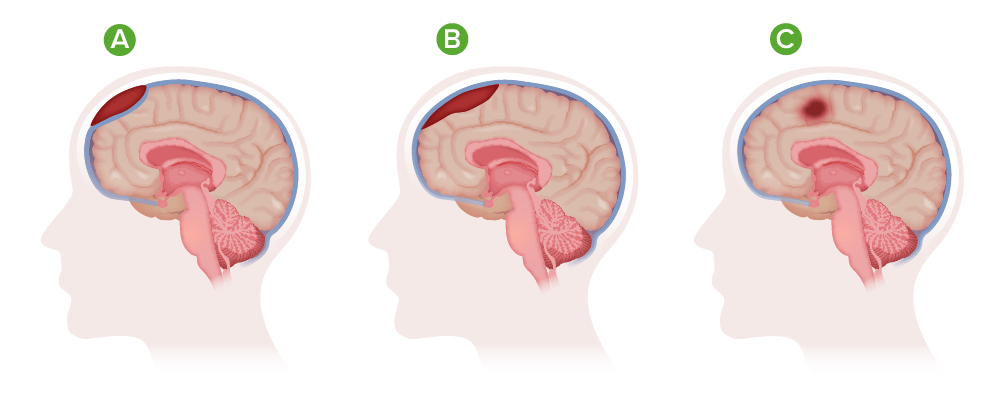
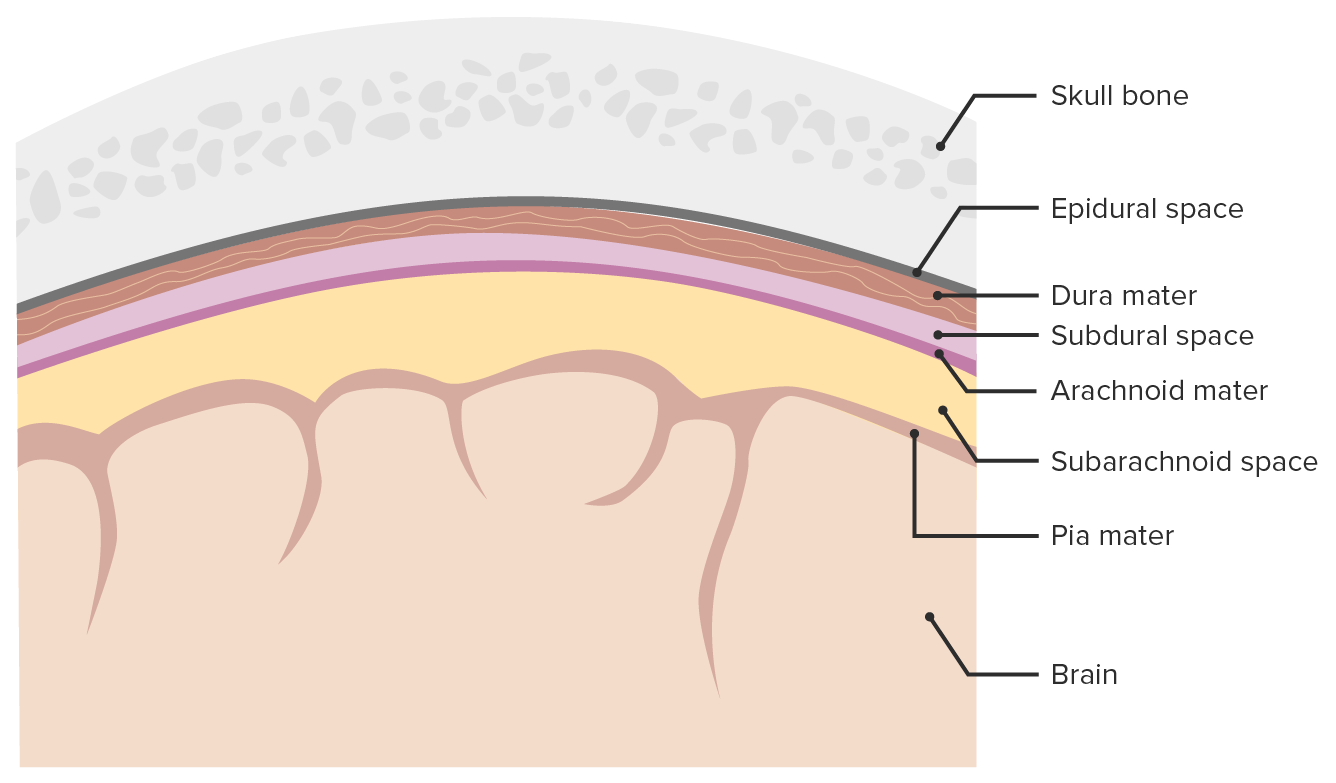
La hemorragia epidural ( hematoma Hematoma A collection of blood outside the blood vessels. Hematoma can be localized in an organ, space, or tissue. Intussusception epidural) es un evento caracterizado por sangrado en EN Erythema nodosum is an immune-mediated panniculitis (inflammation of the subcutaneous fat) caused by a type IV (delayed-type) hypersensitivity reaction. It commonly manifests in young women as tender, erythematous nodules on the shins. Erythema Nodosum el espacio epidural entre la duramadre y el cráneo. La hemorragia epidural suele ser consecuencia de un traumatismo.
Epidemiología

  • Incidencia estimada: 1%–4% de los LOS Neisseria traumatismos craneoencefálicos
  • Acompañado de fractura de cráneo en EN Erythema nodosum is an immune-mediated panniculitis (inflammation of the subcutaneous fat) caused by a type IV (delayed-type) hypersensitivity reaction. It commonly manifests in young women as tender, erythematous nodules on the shins. Erythema Nodosum > 75% de los LOS Neisseria casos
  • Mayor incidencia en EN Erythema nodosum is an immune-mediated panniculitis (inflammation of the subcutaneous fat) caused by a type IV (delayed-type) hypersensitivity reaction. It commonly manifests in young women as tender, erythematous nodules on the shins. Erythema Nodosum adultos jóvenes de 20–30 años
  • Raro en EN Erythema nodosum is an immune-mediated panniculitis (inflammation of the subcutaneous fat) caused by a type IV (delayed-type) hypersensitivity reaction. It commonly manifests in young women as tender, erythematous nodules on the shins. Erythema Nodosum adultos mayores > 50 años

Etiología

Traumatismo de la cabeza:

  • Causa más común del hematoma Hematoma A collection of blood outside the blood vessels. Hematoma can be localized in an organ, space, or tissue. Intussusception epidural
  • Provoca lesiones en EN Erythema nodosum is an immune-mediated panniculitis (inflammation of the subcutaneous fat) caused by a type IV (delayed-type) hypersensitivity reaction. It commonly manifests in young women as tender, erythematous nodules on the shins. Erythema Nodosum las estructuras vasculares que discurren entre las capas meníngeas durales y el cráneo
  • El traumatismo transmite el impacto a la base del cráneo, provocando lesiones en EN Erythema nodosum is an immune-mediated panniculitis (inflammation of the subcutaneous fat) caused by a type IV (delayed-type) hypersensitivity reaction. It commonly manifests in young women as tender, erythematous nodules on the shins. Erythema Nodosum:
    • Arteria meníngea media (más común), a medida que atraviesa el foramen espinoso
    • Arteria meníngea anterior
    • Senos durales
  • Ejemplos:
    • Accidentes de vehículos a motor Motor Neurons which send impulses peripherally to activate muscles or secretory cells. Nervous System: Histology
    • Caídas
    • Asaltos

Hematoma Hematoma A collection of blood outside the blood vessels. Hematoma can be localized in an organ, space, or tissue. Intussusception epidural no traumático:

  • Raro
  • Las posibles etiologías incluyen:
    • Infección:
      • Meningitis Meningitis Meningitis is inflammation of the meninges, the protective membranes of the brain, and spinal cord. The causes of meningitis are varied, with the most common being bacterial or viral infection. The classic presentation of meningitis is a triad of fever, altered mental status, and nuchal rigidity. Meningitis
      • Absceso epidural
    • Coagulopatía (hereditaria o iatrogénica)
    • Malformaciones vasculares durales
    • Tumores que afectan a la duramadre
    • Complicaciones neuroquirúrgicas

Fisiopatología

Lesión vascular

  • Aproximadamente el 90% de los LOS Neisseria casos de hematomas epidurales se deben a causa de una hemorragia arterial:
    • Una rama de la arteria meníngea media
    • Arteria meníngea anterior
    • Fístula arteriovenosa dural en EN Erythema nodosum is an immune-mediated panniculitis (inflammation of the subcutaneous fat) caused by a type IV (delayed-type) hypersensitivity reaction. It commonly manifests in young women as tender, erythematous nodules on the shins. Erythema Nodosum el vertex
  • Aproximadamente el 10% de los LOS Neisseria casos de los LOS Neisseria hematomas epidurales se deben a una hemorragia venosa (seno venoso dural).
  • Localización:
    • El hematoma Hematoma A collection of blood outside the blood vessels. Hematoma can be localized in an organ, space, or tissue. Intussusception epidural ocurre en EN Erythema nodosum is an immune-mediated panniculitis (inflammation of the subcutaneous fat) caused by a type IV (delayed-type) hypersensitivity reaction. It commonly manifests in young women as tender, erythematous nodules on the shins. Erythema Nodosum la región temporal en EN Erythema nodosum is an immune-mediated panniculitis (inflammation of the subcutaneous fat) caused by a type IV (delayed-type) hypersensitivity reaction. It commonly manifests in young women as tender, erythematous nodules on the shins. Erythema Nodosum el 75% de los LOS Neisseria casos.
    • El hematoma Hematoma A collection of blood outside the blood vessels. Hematoma can be localized in an organ, space, or tissue. Intussusception epidural ocurre en EN Erythema nodosum is an immune-mediated panniculitis (inflammation of the subcutaneous fat) caused by a type IV (delayed-type) hypersensitivity reaction. It commonly manifests in young women as tender, erythematous nodules on the shins. Erythema Nodosum niños con igual frecuencia en EN Erythema nodosum is an immune-mediated panniculitis (inflammation of the subcutaneous fat) caused by a type IV (delayed-type) hypersensitivity reaction. It commonly manifests in young women as tender, erythematous nodules on the shins. Erythema Nodosum las siguientes regiones:
      • Temporal
      • Occipital Occipital Part of the back and base of the cranium that encloses the foramen magnum. Skull: Anatomy
      • Frontal Frontal The bone that forms the frontal aspect of the skull. Its flat part forms the forehead, articulating inferiorly with the nasal bone and the cheek bone on each side of the face. Skull: Anatomy
      • Fosa posterior
  • Se acompaña de fractura del hueso temporal en EN Erythema nodosum is an immune-mediated panniculitis (inflammation of the subcutaneous fat) caused by a type IV (delayed-type) hypersensitivity reaction. It commonly manifests in young women as tender, erythematous nodules on the shins. Erythema Nodosum la mayoría de los LOS Neisseria casos

Expansión del hematoma Hematoma A collection of blood outside the blood vessels. Hematoma can be localized in an organ, space, or tissue. Intussusception

  • La lesión vascular provoca la extravasación de sangre al AL Amyloidosis espacio epidural, que inicialmente se compensa con una derivación venosa de sangre:
    • La compensación es responsable del “intervalo lúcido”.
    • La presión intracraneal (PIC) aumenta con la expansión del hematoma Hematoma A collection of blood outside the blood vessels. Hematoma can be localized in an organ, space, or tissue. Intussusception.
  • La expansión del hematoma Hematoma A collection of blood outside the blood vessels. Hematoma can be localized in an organ, space, or tissue. Intussusception puede ser asintomática hasta que el volumen alcanza una masa crítica.
  • A medida que aumenta la PIC debido a la expansión del hematoma Hematoma A collection of blood outside the blood vessels. Hematoma can be localized in an organ, space, or tissue. Intussusception, se produce un deterioro neurológico:
    • Lesión del parénquima cerebral
    • Compresión/herniación de las estructuras neurológicas:
      • Obliteración de ventrículos
      • Nervio oculomotor → parálisis pupilar
      • Tronco encefálico → reflejo de Cushing (bradicardia, hipertensión, compromiso respiratorio)
      • Pedúnculo cerebral → hemiparesia
  • Progresión al AL Amyloidosis coma Coma Coma is defined as a deep state of unarousable unresponsiveness, characterized by a score of 3 points on the GCS. A comatose state can be caused by a multitude of conditions, making the precise epidemiology and prognosis of coma difficult to determine. Coma
  • Progresión a la muerte

Presentación Clínica

El traumatismo craneoencefálico es la etiología más común del hematoma Hematoma A collection of blood outside the blood vessels. Hematoma can be localized in an organ, space, or tissue. Intussusception epidural. Es común un “intervalo lúcido” seguido de un rápido deterioro neurológico.

Síntomas neurológicos

  • La naturaleza de los LOS Neisseria síntomas/signos neurológicos dependen en EN Erythema nodosum is an immune-mediated panniculitis (inflammation of the subcutaneous fat) caused by a type IV (delayed-type) hypersensitivity reaction. It commonly manifests in young women as tender, erythematous nodules on the shins. Erythema Nodosum gran medida de las siguientes características del hematoma Hematoma A collection of blood outside the blood vessels. Hematoma can be localized in an organ, space, or tissue. Intussusception:
    • Localización
    • Tamaño
    • Tasa de crecimiento
    • Agudeza
  • Pérdida de consciencia:
    • Puede variar desde la pérdida momentánea del conocimiento hasta el coma Coma Coma is defined as a deep state of unarousable unresponsiveness, characterized by a score of 3 points on the GCS. A comatose state can be caused by a multitude of conditions, making the precise epidemiology and prognosis of coma difficult to determine. Coma
    • Presentación típica: pérdida momentánea del conocimiento inmediatamente después del evento traumático → recuperación espontánea por un período de tiempo → deterioro neurológico progresivo debido a la hemorragia progresiva y expansión del hematoma Hematoma A collection of blood outside the blood vessels. Hematoma can be localized in an organ, space, or tissue. Intussusception:
      • El período de mejora de la conciencia se conoce como intervalo lúcido.
      • Observado en EN Erythema nodosum is an immune-mediated panniculitis (inflammation of the subcutaneous fat) caused by a type IV (delayed-type) hypersensitivity reaction. It commonly manifests in young women as tender, erythematous nodules on the shins. Erythema Nodosum aproximadamente el 50% de los LOS Neisseria casos con hematoma Hematoma A collection of blood outside the blood vessels. Hematoma can be localized in an organ, space, or tissue. Intussusception epidural.
      • Hemorragias arteriales: el intervalo lúcido dura horas.
      • Hemorragias venosas: el intervalo lúcido dura de días a semanas.
  • Cefalea
  • Náuseas/vómitos
  • Somnolencia
  • Confusión
  • Signos comunes:
    • Hemiparesia
    • Convulsiones
    • Dilatación pupilar ipsilateral
    • Reflejo de Cushing:
      • Bradicardia
      • Hipertensión
      • Compromiso respiratorio

Diagnóstico

Neuroimagenología

TC de cabeza sin contraste:

  • Modalidad de imagenología de elección para:
    • Traumatismo craneoencefálico agudo
    • Pérdida aguda del conocimiento
    • Sospecha de hematoma Hematoma A collection of blood outside the blood vessels. Hematoma can be localized in an organ, space, or tissue. Intussusception epidural (y otras hemorragias intracraneales)
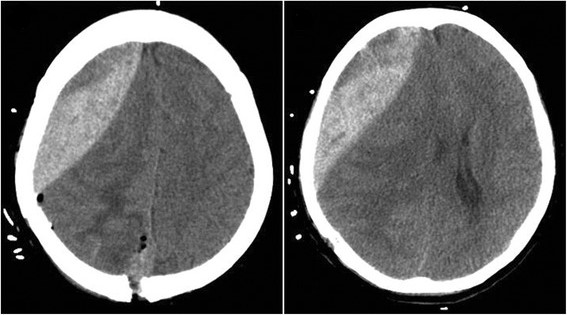
  • El hematoma Hematoma A collection of blood outside the blood vessels. Hematoma can be localized in an organ, space, or tissue. Intussusception epidural agudo aparece como una colección de sangre de alta densidad en EN Erythema nodosum is an immune-mediated panniculitis (inflammation of the subcutaneous fat) caused by a type IV (delayed-type) hypersensitivity reaction. It commonly manifests in young women as tender, erythematous nodules on the shins. Erythema Nodosum forma de lente (biconvexo) a lo largo de la convexidad del hemisferio afectado.
    • La sangre fresca tiene una alta intensidad en EN Erythema nodosum is an immune-mediated panniculitis (inflammation of the subcutaneous fat) caused by a type IV (delayed-type) hypersensitivity reaction. It commonly manifests in young women as tender, erythematous nodules on the shins. Erythema Nodosum la TC.
    • La colección aguda de sangre se distingue fácilmente de la anatomía circundante.
  • El “signo de remolino” también puede ser visible:
    • Colección de sangre heterogénea
    • Indica una extravasación aguda de sangre
    • Es una indicación de intervención neuroquirúrgica inmediata
    • Indicador de mal pronóstico
  • En EN Erythema nodosum is an immune-mediated panniculitis (inflammation of the subcutaneous fat) caused by a type IV (delayed-type) hypersensitivity reaction. It commonly manifests in young women as tender, erythematous nodules on the shins. Erythema Nodosum < 10% de los LOS Neisseria casos, el hematoma Hematoma A collection of blood outside the blood vessels. Hematoma can be localized in an organ, space, or tissue. Intussusception puede no ser evidente en EN Erythema nodosum is an immune-mediated panniculitis (inflammation of the subcutaneous fat) caused by a type IV (delayed-type) hypersensitivity reaction. It commonly manifests in young women as tender, erythematous nodules on the shins. Erythema Nodosum la TC inicial:
    • TC realizada antes de la acumulación de sangre necesaria para poder ser visible
    • La anemia Anemia Anemia is a condition in which individuals have low Hb levels, which can arise from various causes. Anemia is accompanied by a reduced number of RBCs and may manifest with fatigue, shortness of breath, pallor, and weakness. Subtypes are classified by the size of RBCs, chronicity, and etiology. Anemia: Overview and Types severa disminuye la densidad de la colección de sangre.
    • Hipotensión grave (debido a un traumatismo asociado, pérdida de sangre, hipovolemia) que conduce a un sangrado lento.
    • Una fuente venosa de sangrado conduce a un sangrado lento.

RM de cabeza:

  • Menos utilizada y no es tan accesible como la TC
  • Más sensible en EN Erythema nodosum is an immune-mediated panniculitis (inflammation of the subcutaneous fat) caused by a type IV (delayed-type) hypersensitivity reaction. It commonly manifests in young women as tender, erythematous nodules on the shins. Erythema Nodosum la detección de hemorragias intracraneales en EN Erythema nodosum is an immune-mediated panniculitis (inflammation of the subcutaneous fat) caused by a type IV (delayed-type) hypersensitivity reaction. It commonly manifests in young women as tender, erythematous nodules on the shins. Erythema Nodosum comparación con la TC sin contraste
  • Junto con la TC en EN Erythema nodosum is an immune-mediated panniculitis (inflammation of the subcutaneous fat) caused by a type IV (delayed-type) hypersensitivity reaction. It commonly manifests in young women as tender, erythematous nodules on the shins. Erythema Nodosum los LOS Neisseria casos en EN Erythema nodosum is an immune-mediated panniculitis (inflammation of the subcutaneous fat) caused by a type IV (delayed-type) hypersensitivity reaction. It commonly manifests in young women as tender, erythematous nodules on the shins. Erythema Nodosum los LOS Neisseria que la TC inicial no es diagnóstica pero la sospecha clínica de hematoma Hematoma A collection of blood outside the blood vessels. Hematoma can be localized in an organ, space, or tissue. Intussusception epidural es alta
  • Puede revelar la presencia de otras hemorragias intracraneales y/o la extensión de las lesiones intraparenquimatosas asociadas

Angiografía:

  • Normalmente, no está indicada para la evaluación del hematoma Hematoma A collection of blood outside the blood vessels. Hematoma can be localized in an organ, space, or tissue. Intussusception epidural
  • Puede ser útil para la detección de fuentes atípicas de hemorragia

Procedimientos contraindicados

Punción lumbar:

  • Contraindicado en EN Erythema nodosum is an immune-mediated panniculitis (inflammation of the subcutaneous fat) caused by a type IV (delayed-type) hypersensitivity reaction. It commonly manifests in young women as tender, erythematous nodules on the shins. Erythema Nodosum casos de sospecha de hematoma Hematoma A collection of blood outside the blood vessels. Hematoma can be localized in an organ, space, or tissue. Intussusception epidural
  • El ↑ de la PIC debido a la expansión del hematoma Hematoma A collection of blood outside the blood vessels. Hematoma can be localized in an organ, space, or tissue. Intussusception aumenta el riesgo de herniación
Hematoma epidural

Hematoma epidural:
TC que muestra un hematoma epidural frente al campo quirúrgico después de la resección del tumor

Imagen: “Ipsilateral remote hemorrhage in case 2. c, d CT showed an epidural hematoma in front of the surgical field after the tumor resection” por Yu J., et al. Licencia: CC BY 4.0, recortada por Lecturio.

Tratamiento

El hematoma Hematoma A collection of blood outside the blood vessels. Hematoma can be localized in an organ, space, or tissue. Intussusception epidural, especialmente si se presenta con compromiso neurológico o coma Coma Coma is defined as a deep state of unarousable unresponsiveness, characterized by a score of 3 points on the GCS. A comatose state can be caused by a multitude of conditions, making the precise epidemiology and prognosis of coma difficult to determine. Coma, es una situación neurológica emergente que a menudo requiere intervención quirúrgica. La falta de estabilización del paciente, diagnóstico, evaluación e intervención oportuna podría resultar en EN Erythema nodosum is an immune-mediated panniculitis (inflammation of the subcutaneous fat) caused by a type IV (delayed-type) hypersensitivity reaction. It commonly manifests in young women as tender, erythematous nodules on the shins. Erythema Nodosum una expansión hemorrágica, lesión cerebral parenquimatosa, aumento de la PIC, hernia Hernia Protrusion of tissue, structure, or part of an organ through the bone, muscular tissue, or the membrane by which it is normally contained. Hernia may involve tissues such as the abdominal wall or the respiratory diaphragm. Hernias may be internal, external, congenital, or acquired. Abdominal Hernias cerebral y muerte.

Estabilización

  • Los LOS Neisseria individuos afectados deben ser evaluados y estabilizados mediante los LOS Neisseria protocolos de soporte vital avanzado para traumatismos/soporte vital cardíaco avanzado.
  • Deben abordarse las lesiones potencialmente mortales.
  • Esfuerzos para lograr/mantener la estabilidad hemodinámica
  • Reversión de la anticoagulación
  • TC de cabeza sin contraste lo antes posible
  • Consulta neuroquirúrgica lo más pronto posible:
    • Toma de decisiones quirúrgicas/clínicas
    • Colocación de un dispositivo para la monitorización de la PIC

Estratificación

Las herramientas de toma de decisiones que se utilizan clínicamente para determinar el manejo operatorio o no operatorio incluyen:

  • Escala de coma Coma Coma is defined as a deep state of unarousable unresponsiveness, characterized by a score of 3 points on the GCS. A comatose state can be caused by a multitude of conditions, making the precise epidemiology and prognosis of coma difficult to determine. Coma de Glasgow ( GCS GCS A scale that assesses the response to stimuli in patients with craniocerebral injuries. The parameters are eye opening, motor response, and verbal response. Coma, por sus siglas en EN Erythema nodosum is an immune-mediated panniculitis (inflammation of the subcutaneous fat) caused by a type IV (delayed-type) hypersensitivity reaction. It commonly manifests in young women as tender, erythematous nodules on the shins. Erythema Nodosum inglés)
  • Hallazgos en EN Erythema nodosum is an immune-mediated panniculitis (inflammation of the subcutaneous fat) caused by a type IV (delayed-type) hypersensitivity reaction. It commonly manifests in young women as tender, erythematous nodules on the shins. Erythema Nodosum la TC de cabeza:
    • Espesor del coágulo
    • Grado de desplazamiento de la línea media
    • Presencia de lesiones cerebrales asociadas
  • Examen neurológico
  • Presencia de parálisis pupilar
  • Agudeza del hematoma Hematoma A collection of blood outside the blood vessels. Hematoma can be localized in an organ, space, or tissue. Intussusception epidural
  • Presencia de comorbilidades
  • Gravedad del trauma asociado
  • Edad: mayor edad se asocia con un peor pronóstico.

Tratamiento no operatorio

  • Puede ser apropiado para individuos con TODO lo siguiente:
    • Individuos clínicamente estables (puntuación GCS GCS A scale that assesses the response to stimuli in patients with craniocerebral injuries. The parameters are eye opening, motor response, and verbal response. Coma > 8)
    • Hematomas pequeños:
      • Espesor del coágulo < 15 mm
      • Volumen estimado del hematoma Hematoma A collection of blood outside the blood vessels. Hematoma can be localized in an organ, space, or tissue. Intussusception epidural < 30 mL
    • Ausencia de signos de hernia Hernia Protrusion of tissue, structure, or part of an organ through the bone, muscular tissue, or the membrane by which it is normally contained. Hernia may involve tissues such as the abdominal wall or the respiratory diaphragm. Hernias may be internal, external, congenital, or acquired. Abdominal Hernias cerebral según la evaluación clínica y/o radiográfica:
      • Desplazamiento mínimo o ausente de la línea media en EN Erythema nodosum is an immune-mediated panniculitis (inflammation of the subcutaneous fat) caused by a type IV (delayed-type) hypersensitivity reaction. It commonly manifests in young women as tender, erythematous nodules on the shins. Erythema Nodosum la TC (< 5 mm)
      • Ausencia de visualización directa de herniación en EN Erythema nodosum is an immune-mediated panniculitis (inflammation of the subcutaneous fat) caused by a type IV (delayed-type) hypersensitivity reaction. It commonly manifests in young women as tender, erythematous nodules on the shins. Erythema Nodosum la TC
      • Ausencia de hallazgos en EN Erythema nodosum is an immune-mediated panniculitis (inflammation of the subcutaneous fat) caused by a type IV (delayed-type) hypersensitivity reaction. It commonly manifests in young women as tender, erythematous nodules on the shins. Erythema Nodosum la exploración física de PIC elevada (i.e., papiledema, anisocoria Anisocoria Unequal pupil size, which may represent a benign physiologic variant or a manifestation of disease. Pathologic anisocoria reflects an abnormality in the musculature of the iris (iris diseases) or in the parasympathetic or sympathetic pathways that innervate the pupil. Physiologic anisocoria refers to an asymmetry of pupil diameter, usually less than 2mm, that is not associated with disease. Pupil: Physiology and Abnormalities)
      • Ausencia de PIC elevada en EN Erythema nodosum is an immune-mediated panniculitis (inflammation of the subcutaneous fat) caused by a type IV (delayed-type) hypersensitivity reaction. It commonly manifests in young women as tender, erythematous nodules on the shins. Erythema Nodosum la neuromonitorización (i.e., < 20 mm Hg)
  • Debe ser monitoreado en EN Erythema nodosum is an immune-mediated panniculitis (inflammation of the subcutaneous fat) caused by a type IV (delayed-type) hypersensitivity reaction. It commonly manifests in young women as tender, erythematous nodules on the shins. Erythema Nodosum una UCI neurológica
  • Es necesaria una monitorización continua de la PIC.
  • Las tomografías computarizadas de la cabeza en EN Erythema nodosum is an immune-mediated panniculitis (inflammation of the subcutaneous fat) caused by a type IV (delayed-type) hypersensitivity reaction. It commonly manifests in young women as tender, erythematous nodules on the shins. Erythema Nodosum serie deben realizarse cada 6–8 horas durante 36 horas.
  • El hematoma Hematoma A collection of blood outside the blood vessels. Hematoma can be localized in an organ, space, or tissue. Intussusception puede resolverse o sufrir una reabsorción gradual durante semanas.
  • Ocasionalmente, la hemorragia epidural persiste y no se resuelve espontáneamente:
    • Pueden ocurrir calcificaciones/osificaciones.
    • El hematoma Hematoma A collection of blood outside the blood vessels. Hematoma can be localized in an organ, space, or tissue. Intussusception epidural persistente es una indicación de evacuación neuroquirúrgica.

Tratamiento quirúrgico

  • Puede ser apropiado para:
    • Individuos clínicamente inestables:
      • Puntuación GCS GCS A scale that assesses the response to stimuli in patients with craniocerebral injuries. The parameters are eye opening, motor response, and verbal response. Coma < 9
      • Reducción de la puntuación de la GCS GCS A scale that assesses the response to stimuli in patients with craniocerebral injuries. The parameters are eye opening, motor response, and verbal response. Coma en EN Erythema nodosum is an immune-mediated panniculitis (inflammation of the subcutaneous fat) caused by a type IV (delayed-type) hypersensitivity reaction. It commonly manifests in young women as tender, erythematous nodules on the shins. Erythema Nodosum ≥ 2 desde el momento de la lesión hasta el momento de la evaluación
      • Presencia de parálisis pupilar
    • Hematomas grandes:
      • Espesor del coágulo > 15 mm
      • Volumen estimado del hematoma Hematoma A collection of blood outside the blood vessels. Hematoma can be localized in an organ, space, or tissue. Intussusception epidural > 30 mL
    • Presencia del “signo de remolino”
    • Desplazamiento de la línea media en EN Erythema nodosum is an immune-mediated panniculitis (inflammation of the subcutaneous fat) caused by a type IV (delayed-type) hypersensitivity reaction. It commonly manifests in young women as tender, erythematous nodules on the shins. Erythema Nodosum la TC en EN Erythema nodosum is an immune-mediated panniculitis (inflammation of the subcutaneous fat) caused by a type IV (delayed-type) hypersensitivity reaction. It commonly manifests in young women as tender, erythematous nodules on the shins. Erythema Nodosum > 5 mm, independientemente de la puntuación de la GCS GCS A scale that assesses the response to stimuli in patients with craniocerebral injuries. The parameters are eye opening, motor response, and verbal response. Coma
    • PIC > 22 mm Hg
    • Hematoma Hematoma A collection of blood outside the blood vessels. Hematoma can be localized in an organ, space, or tissue. Intussusception epidural persistente que no se reabsorbe espontáneamente en EN Erythema nodosum is an immune-mediated panniculitis (inflammation of the subcutaneous fat) caused by a type IV (delayed-type) hypersensitivity reaction. It commonly manifests in young women as tender, erythematous nodules on the shins. Erythema Nodosum el transcurso de semanas
  • Debe realizarse tan pronto como sea clínicamente posible para las personas afectadas que cumplan con estos criterios (dentro de 1–2 horas después del inicio del deterioro neurológico)
  • Técnicas quirúrgicas:
    • La craneotomía con evacuación del hematoma Hematoma A collection of blood outside the blood vessels. Hematoma can be localized in an organ, space, or tissue. Intussusception es la técnica quirúrgica que se realiza con mayor frecuencia.
    • Trepanación, agujeros de trepanación
    • Craniectomía descompresiva
  • La identificación del vaso sangrante y el taponamiento se pueden resolver simultáneamente mediante:
    • Taponamiento tradicional con ligaduras
    • Embolización endovascular de la arteria meníngea media

Pronóstico

  • Tasa de mortalidad:
    • Aproximadamente del 5%–10% si:
      • Puntuación GCS GCS A scale that assesses the response to stimuli in patients with craniocerebral injuries. The parameters are eye opening, motor response, and verbal response. Coma > 8 en EN Erythema nodosum is an immune-mediated panniculitis (inflammation of the subcutaneous fat) caused by a type IV (delayed-type) hypersensitivity reaction. It commonly manifests in young women as tender, erythematous nodules on the shins. Erythema Nodosum la presentación clínica
      • La intervención quirúrgica es rápida (1–2 horas desde el momento de la lesión).
    • Si se retrasa la intervención quirúrgica, la mortalidad es hasta un 55%
  • Recuperación favorable a los LOS Neisseria 6 meses en EN Erythema nodosum is an immune-mediated panniculitis (inflammation of the subcutaneous fat) caused by a type IV (delayed-type) hypersensitivity reaction. It commonly manifests in young women as tender, erythematous nodules on the shins. Erythema Nodosum el 50 %–90% de los LOS Neisseria casos si:
    • Puntuación GCS GCS A scale that assesses the response to stimuli in patients with craniocerebral injuries. The parameters are eye opening, motor response, and verbal response. Coma > 8 en EN Erythema nodosum is an immune-mediated panniculitis (inflammation of the subcutaneous fat) caused by a type IV (delayed-type) hypersensitivity reaction. It commonly manifests in young women as tender, erythematous nodules on the shins. Erythema Nodosum la presentación clínica
    • La intervención quirúrgica es rápida (1–2 horas desde el momento de la lesión).
  • Indicadores de mal pronóstico:
    • Puntuación en EN Erythema nodosum is an immune-mediated panniculitis (inflammation of the subcutaneous fat) caused by a type IV (delayed-type) hypersensitivity reaction. It commonly manifests in young women as tender, erythematous nodules on the shins. Erythema Nodosum la GCS GCS A scale that assesses the response to stimuli in patients with craniocerebral injuries. The parameters are eye opening, motor response, and verbal response. Coma baja en EN Erythema nodosum is an immune-mediated panniculitis (inflammation of the subcutaneous fat) caused by a type IV (delayed-type) hypersensitivity reaction. It commonly manifests in young women as tender, erythematous nodules on the shins. Erythema Nodosum la evaluación inicial
    • Presencia de parálisis pupilar
    • Edad avanzada
    • Intervención quirúrgica tardía
    • PIC elevada en EN Erythema nodosum is an immune-mediated panniculitis (inflammation of the subcutaneous fat) caused by a type IV (delayed-type) hypersensitivity reaction. It commonly manifests in young women as tender, erythematous nodules on the shins. Erythema Nodosum el postoperatorio
    • Hematoma Hematoma A collection of blood outside the blood vessels. Hematoma can be localized in an organ, space, or tissue. Intussusception de gran volumen
    • Invasión del hematoma Hematoma A collection of blood outside the blood vessels. Hematoma can be localized in an organ, space, or tissue. Intussusception hacia la línea media
    • Presencia del “signo de remolino”
    • Patología intracraneal comórbida:
      • Lesión parenquimatosa
      • Otras hemorragias intracraneales (e.g., hemorragia subaracnoidea, hematoma Hematoma A collection of blood outside the blood vessels. Hematoma can be localized in an organ, space, or tissue. Intussusception subdural)
      • Contusión cerebral
      • Edema Edema Edema is a condition in which excess serous fluid accumulates in the body cavity or interstitial space of connective tissues. Edema is a symptom observed in several medical conditions. It can be categorized into 2 types, namely, peripheral (in the extremities) and internal (in an organ or body cavity). Edema cerebral

Diagnóstico Diferencial

  • Accidente cerebrovascular isquémico: infarto isquémico del parénquima cerebral causado por la oclusión de una arteria cerebral por lesiones ateroscleróticas o émbolos cardioembólicos. El accidente cerebrovascular isquémico se presenta con déficits neurológicos y/o alteraciones del estado mental/alteraciones en EN Erythema nodosum is an immune-mediated panniculitis (inflammation of the subcutaneous fat) caused by a type IV (delayed-type) hypersensitivity reaction. It commonly manifests in young women as tender, erythematous nodules on the shins. Erythema Nodosum el nivel de conciencia que dependen del tamaño y la ubicación del infarto. El diagnóstico es clínico y se confirma mediante neuroimagenología. El tratamiento incluye la estabilización inicial del paciente, la posible intervención cerebrovascular, el tratamiento de etiologías subyacentes identificables (hipertensión grave, embolia) y el tratamiento de los LOS Neisseria factores de riesgo cardiovasculares.
  • Otras afecciones cerebrales hemorrágicas: disección de la arteria carótida/cerebral, hemorragia intraparenquimatosa y hemorragia subdural son otras manifestaciones hemorrágicas de la vasculatura cerebral que pueden presentarse con déficits neurológicos y/o alteraciones del estado mental/alteraciones en EN Erythema nodosum is an immune-mediated panniculitis (inflammation of the subcutaneous fat) caused by a type IV (delayed-type) hypersensitivity reaction. It commonly manifests in young women as tender, erythematous nodules on the shins. Erythema Nodosum el nivel de conciencia. El diagnóstico es clínico y se confirma mediante neuroimagenología. El tratamiento depende de la etiología hemorrágica e incluye estabilización inicial del paciente, consulta neuroquirúrgica/endovascular, tratamiento de la PIC y monitorización en EN Erythema nodosum is an immune-mediated panniculitis (inflammation of the subcutaneous fat) caused by a type IV (delayed-type) hypersensitivity reaction. It commonly manifests in young women as tender, erythematous nodules on the shins. Erythema Nodosum una UCI neurológica.
  • Encefalopatía hipertensiva: déficits neurológicos y/o alteraciones del estado mental/alteraciones en EN Erythema nodosum is an immune-mediated panniculitis (inflammation of the subcutaneous fat) caused by a type IV (delayed-type) hypersensitivity reaction. It commonly manifests in young women as tender, erythematous nodules on the shins. Erythema Nodosum el nivel de conciencia que se presentan en EN Erythema nodosum is an immune-mediated panniculitis (inflammation of the subcutaneous fat) caused by a type IV (delayed-type) hypersensitivity reaction. It commonly manifests in young women as tender, erythematous nodules on the shins. Erythema Nodosum el contexto de una hipertensión grave. El diagnóstico se basa en EN Erythema nodosum is an immune-mediated panniculitis (inflammation of the subcutaneous fat) caused by a type IV (delayed-type) hypersensitivity reaction. It commonly manifests in young women as tender, erythematous nodules on the shins. Erythema Nodosum la presión arterial elevada y los LOS Neisseria signos/síntomas neurológicos. La neuroimagenología es útil para descartar accidentes cerebrovasculares isquémicos o hemorrágicos.

Referencias

  1. McBride, W. (2024). Intracranial epidural hematoma in adults. Retrieved on August 9, 2025, from https://www.uptodate.com/contents/intracranial-epidural-hematoma-in-adults
  2.  Khairat, A., Waseem, M. (2023). Epidural Hematoma. In StatPearls [Internet]. StatPearls Publishing. Retrieved on August 9, 2025, from https://www.ncbi.nlm.nih.gov/books/NBK518982/
  3. Maugeri, R., Anderson, D.G., Graziano, F., et al. (2015). Conservative vs. Surgical Management of Post-Traumatic Epidural Hematoma: A Case and Review of Literature. The American journal of case reports, 16, pp. 811–817. Retrieved on August 9, 2025, from https://doi.org/10.12659/ajcr.895231
  4. Riparbelli, A. C., Capion, T., Møller, K., Mathiesen, T. I., Olsen, M. H., & Forsse, A. (2024). Critical ICP thresholds in relation to outcome: Is 22 mmHg really the answer? Acta Neurochirurgica, 166(1), 63. Retrieved on August 9, 2025, from https://www.ncbi.nlm.nih.gov/pmc/articles/PMC10844356/

¡Crea tu cuenta gratis o inicia una sesión para seguir leyendo!

Regístrate ahora y obtén acceso gratuito a Lecturio con páginas de concepto, videos médicos y cuestionarios para tu educación médica.

User Reviews

Details