
Domina Conceptos Médicos

Estudia para la escuela de medicina y tus examenes con Lecturio.

Estrongiloidiasis

La estrongiloidiasis es una enfermedad parasitaria común causada por el verme redondo Strongyloides stercoralis Strongyloides stercoralis A species of parasitic nematode widely distributed in tropical and subtropical countries. The females and their larvae inhabit the mucosa of the intestinal tract, where they cause ulceration and diarrhea. Strongyloidiasis. La transmisión se produce a través de la penetración de la piel, sobre todo al AL Amyloidosis caminar descalzo. Strongyloides tiene un ciclo de vida único que puede completarse en EN Erythema nodosum is an immune-mediated panniculitis (inflammation of the subcutaneous fat) caused by a type IV (delayed-type) hypersensitivity reaction. It commonly manifests in young women as tender, erythematous nodules on the shins. Erythema Nodosum su totalidad en EN Erythema nodosum is an immune-mediated panniculitis (inflammation of the subcutaneous fat) caused by a type IV (delayed-type) hypersensitivity reaction. It commonly manifests in young women as tender, erythematous nodules on the shins. Erythema Nodosum el huésped humano, migrando de la piel al AL Amyloidosis sistema pulmonar y luego al AL Amyloidosis sistema gastrointestinal. Los LOS Neisseria síntomas incluyen irritación cutánea, estreñimiento, diarrea, tos TOS Thoracic outlet syndrome (TOS) is a broad term used for a spectrum of syndromes related to the general region of the thoracic outlet, which involves the compression or irritation of elements of the brachial plexus, subclavian artery, or subclavian vein. Thoracic Outlet Syndrome seca y sibilancias, dependiendo del momento en EN Erythema nodosum is an immune-mediated panniculitis (inflammation of the subcutaneous fat) caused by a type IV (delayed-type) hypersensitivity reaction. It commonly manifests in young women as tender, erythematous nodules on the shins. Erythema Nodosum que el parásito se encuentre en EN Erythema nodosum is an immune-mediated panniculitis (inflammation of the subcutaneous fat) caused by a type IV (delayed-type) hypersensitivity reaction. It commonly manifests in young women as tender, erythematous nodules on the shins. Erythema Nodosum su ciclo de vida. La erradicación efectiva del parásito puede obtenerse mediante medicamentos antihelmínticos, generalmente ivermectina.

Last updated: Dec 15, 2025

Editorial responsibility: Stanley Oiseth, Lindsay Jones, Evelin Maza

Epidemiología y Etiología

Epidemiología

  • Prevalencia a nivel mundial: 100 millones de casos actualmente
  • Más común en EN Erythema nodosum is an immune-mediated panniculitis (inflammation of the subcutaneous fat) caused by a type IV (delayed-type) hypersensitivity reaction. It commonly manifests in young women as tender, erythematous nodules on the shins. Erythema Nodosum las regiones tropicales y templadas cálidas, con ¾ de los LOS Neisseria casos en EN Erythema nodosum is an immune-mediated panniculitis (inflammation of the subcutaneous fat) caused by a type IV (delayed-type) hypersensitivity reaction. It commonly manifests in young women as tender, erythematous nodules on the shins. Erythema Nodosum el sudeste asiático, África y los LOS Neisseria países del Pacífico occidental

Etiología

La estrongiloidiasis es causada por una infección parasitaria por el verme redondo (nemátodo) Strongyloides stercoralis Strongyloides stercoralis A species of parasitic nematode widely distributed in tropical and subtropical countries. The females and their larvae inhabit the mucosa of the intestinal tract, where they cause ulceration and diarrhea. Strongyloidiasis. Los LOS Neisseria nemátodos son vermes no segmentados que pueden infectar el tracto gastrointestinal, la sangre o la piel.
  • La capacidad de “autoinfectar” a su huésped conduce a casos crónicos.
  • Machos adultos: 0,9 mm de longitud, se distinguen de las hembras por el tamaño y la presencia de espículas (estructura de apareamiento en EN Erythema nodosum is an immune-mediated panniculitis (inflammation of the subcutaneous fat) caused by a type IV (delayed-type) hypersensitivity reaction. It commonly manifests in young women as tender, erythematous nodules on the shins. Erythema Nodosum forma de aguja)
  • Hembras adultas: 2,0–2,5 mm (0,08–0,10 pulgadas) de longitud
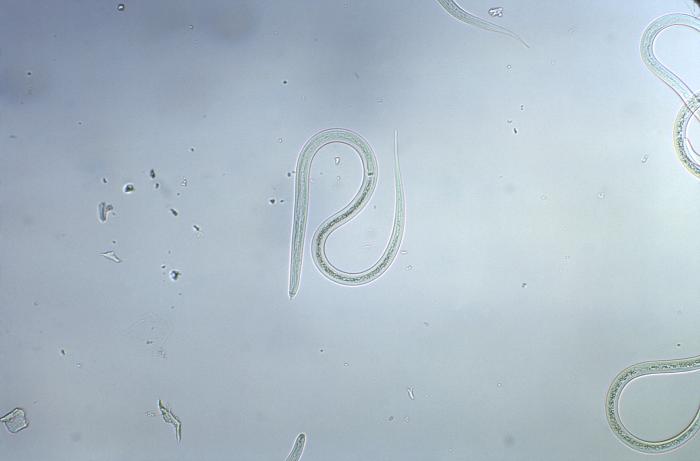
Strongyloides sp.

Strongyloides sp.:
Microfotografía con aumento de 128X de un Strongyloides sp. filariforme, un organismo en estadio larvario
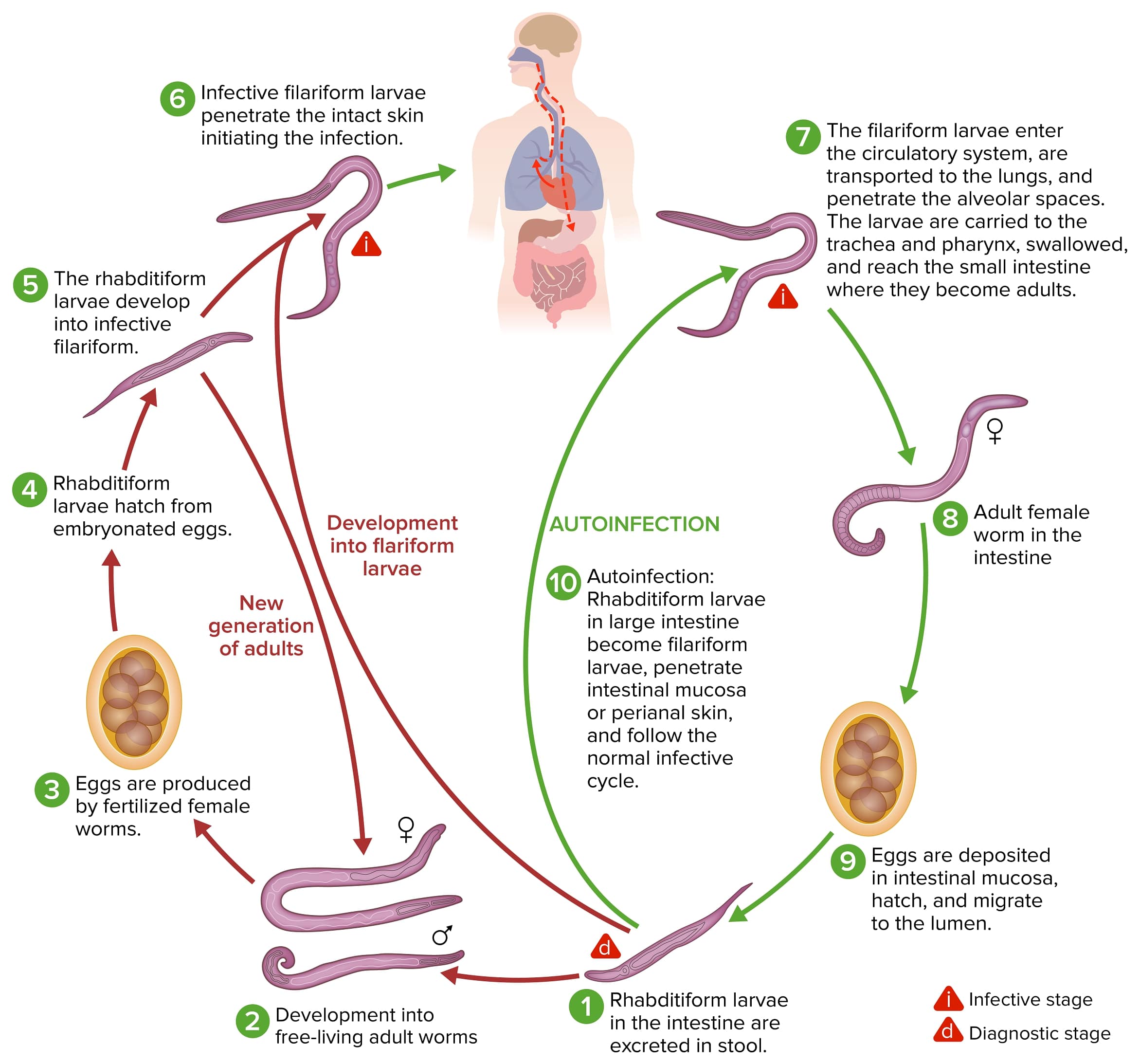
Imagen: “1547” por Dr. Mae Melvin. Licencia: Dominio Público

Fisiopatología

Ciclo de vida de S. stercoralis

  1. Las larvas filariformes del suelo contaminado penetran la piel humana.
  2. Las larvas migran por el torrente sanguíneo y los LOS Neisseria vasos linfáticos hasta los LOS Neisseria pulmones.
    • En EN Erythema nodosum is an immune-mediated panniculitis (inflammation of the subcutaneous fat) caused by a type IV (delayed-type) hypersensitivity reaction. It commonly manifests in young women as tender, erythematous nodules on the shins. Erythema Nodosum el parénquima pulmonar, las larvas penetran los LOS Neisseria alvéolos y migran hacia la tráquea y la laringe.
    • Las larvas son entonces deglutidas por el huésped.
  3. Las larvas deglutidas entran en EN Erythema nodosum is an immune-mediated panniculitis (inflammation of the subcutaneous fat) caused by a type IV (delayed-type) hypersensitivity reaction. It commonly manifests in young women as tender, erythematous nodules on the shins. Erythema Nodosum el tracto gastrointestinal.
    • Las larvas maduran en EN Erythema nodosum is an immune-mediated panniculitis (inflammation of the subcutaneous fat) caused by a type IV (delayed-type) hypersensitivity reaction. It commonly manifests in young women as tender, erythematous nodules on the shins. Erythema Nodosum la mucosa del intestino delgado.
    • Las hembras adultas producen huevos, que dan lugar a larvas rabditiformes no infecciosas que migran a la luz intestinal y se excretan en EN Erythema nodosum is an immune-mediated panniculitis (inflammation of the subcutaneous fat) caused by a type IV (delayed-type) hypersensitivity reaction. It commonly manifests in young women as tender, erythematous nodules on the shins. Erythema Nodosum las heces.
  4. La autoinfección puede ocurrir en EN Erythema nodosum is an immune-mediated panniculitis (inflammation of the subcutaneous fat) caused by a type IV (delayed-type) hypersensitivity reaction. It commonly manifests in young women as tender, erythematous nodules on the shins. Erythema Nodosum huéspedes con sistemas inmunitarios comprometidos:
    • Las larvas rabditiformes no infecciosas maduran hasta convertirse en EN Erythema nodosum is an immune-mediated panniculitis (inflammation of the subcutaneous fat) caused by a type IV (delayed-type) hypersensitivity reaction. It commonly manifests in young women as tender, erythematous nodules on the shins. Erythema Nodosum larvas filariformes infecciosas dentro del intestino.
    • Las larvas filariformes penetran la mucosa intestinal o la piel perianal para migrar a través del torrente sanguíneo y los LOS Neisseria vasos linfáticos para reiniciar el ciclo infeccioso.

Reservorios

  • Humanos (más común)
  • Gatos y perros

Transmisión

  • Más frecuente: las larvas que se encuentran en EN Erythema nodosum is an immune-mediated panniculitis (inflammation of the subcutaneous fat) caused by a type IV (delayed-type) hypersensitivity reaction. It commonly manifests in young women as tender, erythematous nodules on the shins. Erythema Nodosum la arena o el suelo contaminado penetran en EN Erythema nodosum is an immune-mediated panniculitis (inflammation of the subcutaneous fat) caused by a type IV (delayed-type) hypersensitivity reaction. It commonly manifests in young women as tender, erythematous nodules on the shins. Erythema Nodosum la piel
  • Transmisión fecal-oral (menos común)

Factores de riesgo del huésped

  • Caminar descalzo sobre suelo contaminado
  • Contacto con desechos humanos o aguas residuales
  • Ocupaciones que aumentan el contacto con el suelo contaminado (agricultura y minería del carbón)
  • Inmunosupresión
The life cycle of Strongyloides stercoralis

El ciclo de vida de Strongyloides stercoralis:
El verme redondo S. stercoralis tiene un ciclo de vida único que puede completarse dentro de su huésped definitivo, el humano. El parásito se transmite a otros huéspedes a través de las heces excretadas, pero en los pacientes inmunodeficientes puede producirse la autoinfección, que da lugar a formas más graves y crónicas de la enfermedad.

Imagem por Lecturio.

Presentación Clínica

Fases clínicas de la estrongiloidiasis

La estrongiloidiasis puede causar tanto una infección aguda como crónica. Los LOS Neisseria síntomas se correlacionan con la migración de las larvas desde la piel, el pulmón y el intestino.
  • Fase cutánea: secundaria a la penetración de las larvas en EN Erythema nodosum is an immune-mediated panniculitis (inflammation of the subcutaneous fat) caused by a type IV (delayed-type) hypersensitivity reaction. It commonly manifests in young women as tender, erythematous nodules on the shins. Erythema Nodosum la piel
    • Edema Edema Edema is a condition in which excess serous fluid accumulates in the body cavity or interstitial space of connective tissues. Edema is a symptom observed in several medical conditions. It can be categorized into 2 types, namely, peripheral (in the extremities) and internal (in an organ or body cavity). Edema
    • Eritema
    • Prurito
    • Erupción maculopapular Maculopapular Dermatologic Examination con lesiones serpiginosas ( larva currens Larva Currens Strongyloidiasis)
  • Fase pulmonar: secundaria a la migración de las larvas a través del árbol bronquial y los LOS Neisseria alvéolos
    • 1 semana después de la penetración en EN Erythema nodosum is an immune-mediated panniculitis (inflammation of the subcutaneous fat) caused by a type IV (delayed-type) hypersensitivity reaction. It commonly manifests in young women as tender, erythematous nodules on the shins. Erythema Nodosum la piel
    • Síndrome de Löffler (eosinofilia pulmonar): trastorno respiratorio transitorio caracterizado por la acumulación de eosinófilos en EN Erythema nodosum is an immune-mediated panniculitis (inflammation of the subcutaneous fat) caused by a type IV (delayed-type) hypersensitivity reaction. It commonly manifests in young women as tender, erythematous nodules on the shins. Erythema Nodosum los LOS Neisseria pulmones debido a una infección parasitaria
      • Tos TOS Thoracic outlet syndrome (TOS) is a broad term used for a spectrum of syndromes related to the general region of the thoracic outlet, which involves the compression or irritation of elements of the brachial plexus, subclavian artery, or subclavian vein. Thoracic Outlet Syndrome seca
      • Irritación de la garganta
      • Sibilancias
  • Fase gastrointestinal: secundaria a las larvas adultas dentro de la mucosa del intestino delgado
    • 3–4 semanas después de la penetración en EN Erythema nodosum is an immune-mediated panniculitis (inflammation of the subcutaneous fat) caused by a type IV (delayed-type) hypersensitivity reaction. It commonly manifests in young women as tender, erythematous nodules on the shins. Erythema Nodosum la piel
    • Síntomas:
      • Dolor Dolor Inflammation abdominal
      • Diarrea o estreñimiento
      • Anorexia Anorexia The lack or loss of appetite accompanied by an aversion to food and the inability to eat. It is the defining characteristic of the disorder anorexia nervosa. Anorexia Nervosa
      • Náuseas/vómitos

Manifestaciones graves

  • Síndrome de hiperinfección: se produce por la aceleración del ciclo de vida de Strongyloides
    • Carga excesiva de vermes en EN Erythema nodosum is an immune-mediated panniculitis (inflammation of the subcutaneous fat) caused by a type IV (delayed-type) hypersensitivity reaction. It commonly manifests in young women as tender, erythematous nodules on the shins. Erythema Nodosum la vía reproductiva tradicional (piel, pulmones e intestinos)
    • Ocurre con mayor frecuencia en EN Erythema nodosum is an immune-mediated panniculitis (inflammation of the subcutaneous fat) caused by a type IV (delayed-type) hypersensitivity reaction. It commonly manifests in young women as tender, erythematous nodules on the shins. Erythema Nodosum pacientes inmunosuprimidos
  • Estrongiloidiasis diseminada: debido a la diseminación generalizada de las larvas fuera de la ruta reproductiva tradicional, a menudo afecta al AL Amyloidosis hígado, el cerebro, el corazón y las vías urinarias
    • SNC:
      • Cefalea
      • Alteración del estado mental
      • Convulsiones focales
      • Desorientación
      • Coma Coma Coma is defined as a deep state of unarousable unresponsiveness, characterized by a score of 3 points on the GCS. A comatose state can be caused by a multitude of conditions, making the precise epidemiology and prognosis of coma difficult to determine. Coma
    • Respiratorias:
      • Asfixia
      • Hemoptisis
      • Dolor Dolor Inflammation torácico
      • Palpitaciones
      • Disnea (puede evolucionar a síndrome de dificultad respiratoria aguda)
    • Inmunes:
      • Sepsis Sepsis Systemic inflammatory response syndrome with a proven or suspected infectious etiology. When sepsis is associated with organ dysfunction distant from the site of infection, it is called severe sepsis. When sepsis is accompanied by hypotension despite adequate fluid infusion, it is called septic shock. Sepsis and Septic Shock
      • Anafilaxia
      • Shock Shock Shock is a life-threatening condition associated with impaired circulation that results in tissue hypoxia. The different types of shock are based on the underlying cause: distributive (↑ cardiac output (CO), ↓ systemic vascular resistance (SVR)), cardiogenic (↓ CO, ↑ SVR), hypovolemic (↓ CO, ↑ SVR), obstructive (↓ CO), and mixed. Types of Shock
    • Gastrointestinales:
      • Malabsorción
      • Dolor Dolor Inflammation abdominal
      • Distensión
      • Inflamación y hemorragia gastrointestinal
      • Obstrucción del intestino delgado
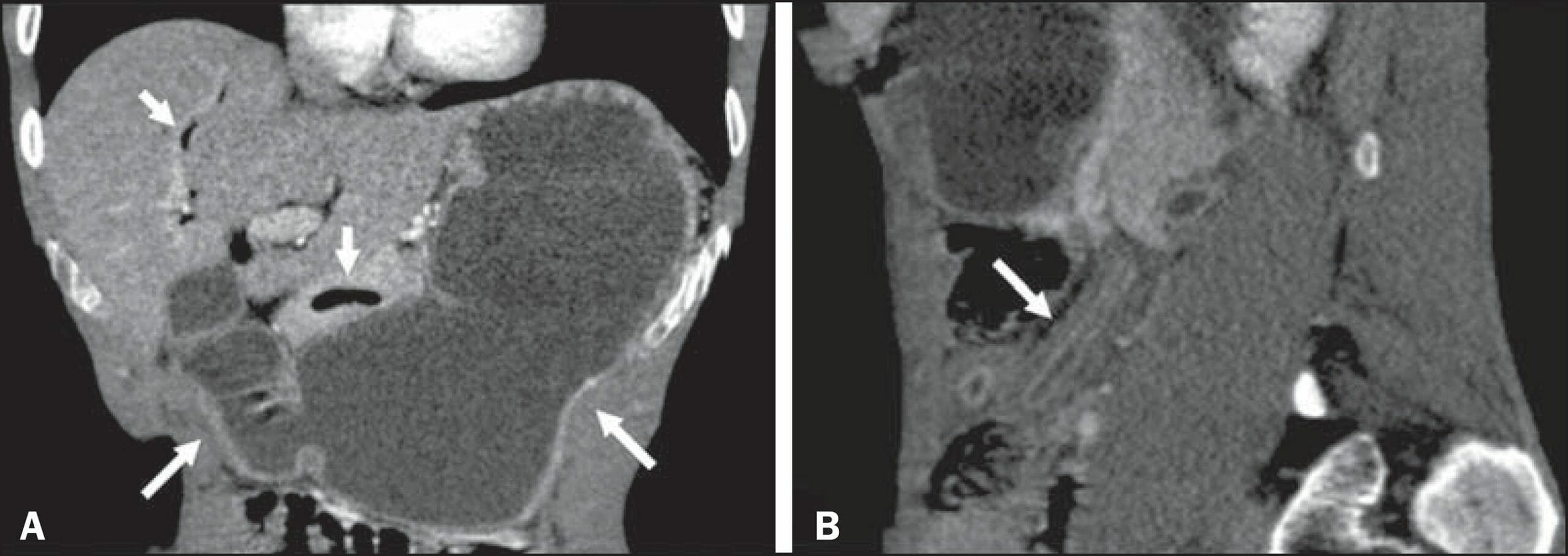
Intestinal strongyloidiasis

Estrongiloidiasis intestinal:
A) La TC con contraste en el plano coronal muestra una acentuada distensión duodenal y gástrica (flechas largas) y gas en el tracto biliar y el páncreas (flechas cortas).
B) La TC en el plano sagital muestra el signo del tubo de plomo, caracterizado por el engrosamiento de las paredes, la rigidez y el estrechamiento luminal del intestino delgado (flecha larga).

Imagen: “Intravenous contrast-enhanced CT scan” por José Henrique Frota Júnior et al. Licencia: CC BY 4.0

Diagnóstico y Tratamiento

Diagnóstico

El diagnóstico requiere una alta sospecha clínica, basada en EN Erythema nodosum is an immune-mediated panniculitis (inflammation of the subcutaneous fat) caused by a type IV (delayed-type) hypersensitivity reaction. It commonly manifests in young women as tender, erythematous nodules on the shins. Erythema Nodosum los LOS Neisseria síntomas.
  • Eosinofilia
    • Hallazgo común en EN Erythema nodosum is an immune-mediated panniculitis (inflammation of the subcutaneous fat) caused by a type IV (delayed-type) hypersensitivity reaction. It commonly manifests in young women as tender, erythematous nodules on the shins. Erythema Nodosum infecciones crónicas
    • Hallazgo inespecífico
  • Biopsia de piel: puede proporcionar la identificación microscópica de las larvas filariformes móviles.
  • Estudios serológicos
    • Ensayo inmunoabsorbente ligado a enzimas ( ELISA ELISA An immunoassay utilizing an antibody labeled with an enzyme marker such as horseradish peroxidase. While either the enzyme or the antibody is bound to an immunosorbent substrate, they both retain their biologic activity; the change in enzyme activity as a result of the enzyme-antibody-antigen reaction is proportional to the concentration of the antigen and can be measured spectrophotometrically or with the naked eye. Many variations of the method have been developed. St. Louis Encephalitis Virus, por sus siglas en EN Erythema nodosum is an immune-mediated panniculitis (inflammation of the subcutaneous fat) caused by a type IV (delayed-type) hypersensitivity reaction. It commonly manifests in young women as tender, erythematous nodules on the shins. Erythema Nodosum inglés)
    • Microscopía de inmunofluorescencia indirecta
    • Inmunoblot
  • Análisis de heces: identifica el parásito en EN Erythema nodosum is an immune-mediated panniculitis (inflammation of the subcutaneous fat) caused by a type IV (delayed-type) hypersensitivity reaction. It commonly manifests in young women as tender, erythematous nodules on the shins. Erythema Nodosum las heces
  • La endoscopia no se realiza de forma rutinaria
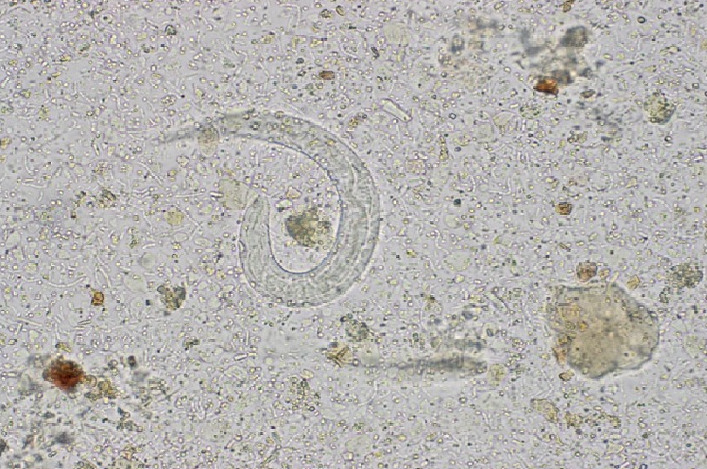
Larvas de Strongyloides

Montaje húmedo de heces que muestra larvas de Strongyloides

Imagen: “Strongyloides Hyperinfection in a Renal Transplant Patient: Always Be on the Lookout” por Case Reports in Infectious Diseases. Licencia: CC BY 4.0

Tratamiento

  • Medicamentos antihelmínticos:
    • 1era línea: ivermectina
    • Para las infecciones complicadas en EN Erythema nodosum is an immune-mediated panniculitis (inflammation of the subcutaneous fat) caused by a type IV (delayed-type) hypersensitivity reaction. It commonly manifests in young women as tender, erythematous nodules on the shins. Erythema Nodosum individuos inmunosuprimidos, se puede añadir albendazol.
  • Puede ser necesario repetir el tratamiento en EN Erythema nodosum is an immune-mediated panniculitis (inflammation of the subcutaneous fat) caused by a type IV (delayed-type) hypersensitivity reaction. It commonly manifests in young women as tender, erythematous nodules on the shins. Erythema Nodosum caso de infecciones persistentes.

Prevención

  • Uso de calzado cuando se camina al AL Amyloidosis aire libre, especialmente en EN Erythema nodosum is an immune-mediated panniculitis (inflammation of the subcutaneous fat) caused by a type IV (delayed-type) hypersensitivity reaction. It commonly manifests in young women as tender, erythematous nodules on the shins. Erythema Nodosum el suelo o la arena de regiones endémicas
  • Eliminación adecuada de las heces y de aguas residuales

Diagnóstico Diferencial

  • Fase pulmonar:
    • Tuberculosis Tuberculosis Tuberculosis (TB) is an infectious disease caused by Mycobacterium tuberculosis complex bacteria. The bacteria usually attack the lungs but can also damage other parts of the body. Approximately 30% of people around the world are infected with this pathogen, with the majority harboring a latent infection. Tuberculosis spreads through the air when a person with active pulmonary infection coughs or sneezes. Tuberculosis: infección bacteriana pulmonar causada por Mycobacterium tuberculosis Mycobacterium tuberculosis Tuberculosis (TB) is an infectious disease caused by Mycobacterium tuberculosis complex bacteria. The bacteria usually attack the lungs but can also damage other parts of the body. Approximately 30% of people around the world are infected with this pathogen, with the majority harboring a latent infection. Tuberculosis spreads through the air when a person with active pulmonary infection coughs or sneezes. Tuberculosis, que puede presentarse de forma asintomática o con fiebre, pérdida de peso, sudoración nocturna, hemoptisis y tos TOS Thoracic outlet syndrome (TOS) is a broad term used for a spectrum of syndromes related to the general region of the thoracic outlet, which involves the compression or irritation of elements of the brachial plexus, subclavian artery, or subclavian vein. Thoracic Outlet Syndrome productiva.
    • Ascariasis Ascariasis Ascariasis is most often caused by A. lumbricoides. If symptomatic, characteristics typically follow 2 phases, which correlate with the migration of the parasite through the body. The early phase may include cough, dyspnea, and wheezing. The late phase typically includes abdominal discomfort, bloating, nausea, and intermittent diarrhea. Ascaris/Ascariasis: infección causada por un verme redondo parasitario, Ascaris Ascaris Ascaris is a genus of parasitic nematodes. The infection, ascariasis, is most often caused by A. lumbricoides. Transmission occurs primarily via ingestion of water or food contaminated with Ascaris eggs. Most patients with ascariasis are asymptomatic. Ascaris/Ascariasis lumbricoides. Puede presentarse de forma asintomática o con malestares abdominales, obstrucción intestinal y síndrome de Löffler.
  • Fase gastrointestinal:
    • Enfermedad de Crohn: enfermedad inflamatoria intestinal caracterizada por la inflamación del tracto gastrointestinal, que se presenta con signos de malabsorción, dolor Dolor Inflammation abdominal y diarrea crónica no sanguinolenta.
    • Enfermedad de úlcera péptica: presencia de 1 o más lesiones ulcerosas en EN Erythema nodosum is an immune-mediated panniculitis (inflammation of the subcutaneous fat) caused by a type IV (delayed-type) hypersensitivity reaction. It commonly manifests in young women as tender, erythematous nodules on the shins. Erythema Nodosum el estómago o en EN Erythema nodosum is an immune-mediated panniculitis (inflammation of the subcutaneous fat) caused by a type IV (delayed-type) hypersensitivity reaction. It commonly manifests in young women as tender, erythematous nodules on the shins. Erythema Nodosum el revestimiento del duodeno, que se presentan con dispepsia. Puede progresar con signos de hemorragia gastrointestinal.

Referencias

  1. La Hoz, R. M., Morris, M. I., & AST Infectious Diseases Community of Practice (2019). Intestinal parasites including Cryptosporidium, Cyclospora, Giardia, and Microsporidia, Entamoeba histolytica, Strongyloides, Schistosomiasis, and Echinococcus: Guidelines from the American Society of Transplantation Infectious Diseases Community of Practice. Clinical transplantation33(9), e13618. https://doi.org/10.1111/ctr.13618
  2. Krolewiecki, A., & Nutman, T. B. (2019). Strongyloidiasis: A Neglected Tropical Disease. Infectious disease clinics of North America33(1), 135–151. https://doi.org/10.1016/j.idc.2018.10.006
  3. Mehta, R. K., Shah, N., Scott, D. G., Grattan, C. E., & Barker, T. H. (2002). Case 4. Chronic urticaria due to strongyloidiasis. Clinical and experimental dermatology27(1), 84–85. https://doi.org/10.1046/j.0307-6938.2001.00951.x

¡Crea tu cuenta gratis o inicia una sesión para seguir leyendo!

Regístrate ahora y obtén acceso gratuito a Lecturio con páginas de concepto, videos médicos y cuestionarios para tu educación médica.

User Reviews

Que tengas una sesión de estudio alegre y navideña 🎁 Ahorra 50% en todos los planes >>

Details