Domina Conceptos Médicos

Estudia para la escuela de medicina y tus examenes con Lecturio.

Estenosis Hipertrófica Del Píloro

La estenosis hipertrófica del píloro es una hipertrofia e hiperplasia del músculo del esfínter pilórico. Esta enfermedad es la causa más común de obstrucción gastrointestinal en EN Erythema nodosum is an immune-mediated panniculitis (inflammation of the subcutaneous fat) caused by a type IV (delayed-type) hypersensitivity reaction. It commonly manifests in young women as tender, erythematous nodules on the shins. Erythema Nodosum los LOS Neisseria lactantes. Los LOS Neisseria recién nacidos afectados suelen presentarse después de la tercera a la quinta semana de vida con vómitos progresivos no biliosos y una masa firme en EN Erythema nodosum is an immune-mediated panniculitis (inflammation of the subcutaneous fat) caused by a type IV (delayed-type) hypersensitivity reaction. It commonly manifests in young women as tender, erythematous nodules on the shins. Erythema Nodosum forma de aceituna u oliva en EN Erythema nodosum is an immune-mediated panniculitis (inflammation of the subcutaneous fat) caused by a type IV (delayed-type) hypersensitivity reaction. It commonly manifests in young women as tender, erythematous nodules on the shins. Erythema Nodosum el epigastrio. El ultrasonido confirma el diagnóstico basándose en EN Erythema nodosum is an immune-mediated panniculitis (inflammation of the subcutaneous fat) caused by a type IV (delayed-type) hypersensitivity reaction. It commonly manifests in young women as tender, erythematous nodules on the shins. Erythema Nodosum el grosor y la longitud del músculo pilórico y el diámetro del canal pilórico. El tratamiento inicial consiste en EN Erythema nodosum is an immune-mediated panniculitis (inflammation of the subcutaneous fat) caused by a type IV (delayed-type) hypersensitivity reaction. It commonly manifests in young women as tender, erythematous nodules on the shins. Erythema Nodosum la reanimación con líquidos y la corrección de los LOS Neisseria desequilibrios electrolíticos, seguida de una piloromiotomía abierta o laparoscópica.

Last updated: Dec 15, 2025

Editorial responsibility: Stanley Oiseth, Lindsay Jones, Evelin Maza

Descripción General

Definición

La estenosis hipertrófica del píloro es una obstrucción funcional de la salida gástrica causada por la hipertrofia e hiperplasia de las capas circular y longitudinal del píloro en EN Erythema nodosum is an immune-mediated panniculitis (inflammation of the subcutaneous fat) caused by a type IV (delayed-type) hypersensitivity reaction. It commonly manifests in young women as tender, erythematous nodules on the shins. Erythema Nodosum los LOS Neisseria lactantes.
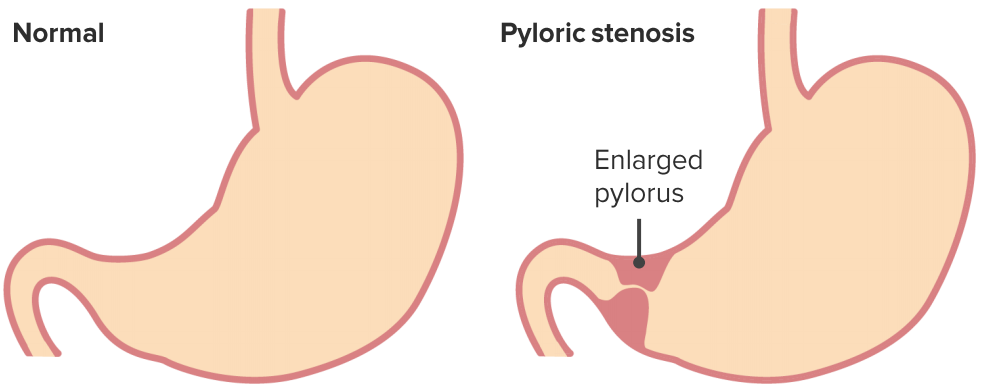
Estenosis hipertrófica del píloro

Estenosis hipertrófica del píloro

Imagen por Lecturio.
Epidemiología

  • La causa más común de obstrucción intestinal en EN Erythema nodosum is an immune-mediated panniculitis (inflammation of the subcutaneous fat) caused by a type IV (delayed-type) hypersensitivity reaction. It commonly manifests in young women as tender, erythematous nodules on the shins. Erythema Nodosum los LOS Neisseria lactantes
  • Ocurre en EN Erythema nodosum is an immune-mediated panniculitis (inflammation of the subcutaneous fat) caused by a type IV (delayed-type) hypersensitivity reaction. It commonly manifests in young women as tender, erythematous nodules on the shins. Erythema Nodosum 1,553 de cada 1 000 lactantes en EN Erythema nodosum is an immune-mediated panniculitis (inflammation of the subcutaneous fat) caused by a type IV (delayed-type) hypersensitivity reaction. It commonly manifests in young women as tender, erythematous nodules on the shins. Erythema Nodosum los LOS Neisseria Estados Unidos
    • La tasa de incidencia podría estar disminuyendo en EN Erythema nodosum is an immune-mediated panniculitis (inflammation of the subcutaneous fat) caused by a type IV (delayed-type) hypersensitivity reaction. It commonly manifests in young women as tender, erythematous nodules on the shins. Erythema Nodosum ciertos entornos con altos ingresos.
  • Más frecuente en EN Erythema nodosum is an immune-mediated panniculitis (inflammation of the subcutaneous fat) caused by a type IV (delayed-type) hypersensitivity reaction. It commonly manifests in young women as tender, erythematous nodules on the shins. Erythema Nodosum personas de raza blanca, varones, primogénitos, con grupos sanguíneos B u O, y aquellos con antecedentes positivos de estenosis pilórica en EN Erythema nodosum is an immune-mediated panniculitis (inflammation of the subcutaneous fat) caused by a type IV (delayed-type) hypersensitivity reaction. It commonly manifests in young women as tender, erythematous nodules on the shins. Erythema Nodosum la madre o el padre

Etiología

  • Las asociaciones incluyen:
    • La gastroenteritis Gastroenteritis Gastroenteritis is inflammation of the stomach and intestines, commonly caused by infections from bacteria, viruses, or parasites. Transmission may be foodborne, fecal-oral, or through animal contact. Common clinical features include abdominal pain, diarrhea, vomiting, fever, and dehydration. Gastroenteritis eosinofílica
    • El síndrome de Apert
    • El síndrome de Zellweger
    • La trisomía 18
    • Exposición neonatal (de 0 a 14 días de vida) a antibióticos macrólidos (eritromicina y azitromicina) y/o uso materno durante la lactancia
    • Tabaquismo materno
    • Alimentación con biberón en EN Erythema nodosum is an immune-mediated panniculitis (inflammation of the subcutaneous fat) caused by a type IV (delayed-type) hypersensitivity reaction. It commonly manifests in young women as tender, erythematous nodules on the shins. Erythema Nodosum vez de lactancia materna exclusiva
    • Madre joven (<20 años)
  • Se ha HA Hemolytic anemia (HA) is the term given to a large group of anemias that are caused by the premature destruction/hemolysis of circulating red blood cells (RBCs). Hemolysis can occur within (intravascular hemolysis) or outside the blood vessels (extravascular hemolysis). Hemolytic Anemia demostrado que los LOS Neisseria niveles reducidos de óxido nítrico sintasa neuronal están implicados en EN Erythema nodosum is an immune-mediated panniculitis (inflammation of the subcutaneous fat) caused by a type IV (delayed-type) hypersensitivity reaction. It commonly manifests in young women as tender, erythematous nodules on the shins. Erythema Nodosum la patogénesis.

Manifestaciones Clínicas

Síntomas

  • Inicialmente, ocurre regurgitación después de la alimentación
  • Posteriormente, ocurren vómitos no biliosos, en EN Erythema nodosum is an immune-mediated panniculitis (inflammation of the subcutaneous fat) caused by a type IV (delayed-type) hypersensitivity reaction. It commonly manifests in young women as tender, erythematous nodules on the shins. Erythema Nodosum forma de proyectil, inmediatamente después de la alimentación
  • Suele comenzar a partir de las 3 semanas de edad (rango: de 1 semana a 5 meses)
  • Poco aumento de peso
  • El lactante muestra signos de hambre (irritabilidad, aumento del reflejo de succión).

Signos

  • Masa firme, móvil, con forma de aceituna u oliva, de 2 cm, por encima y a la derecha del ombligo en EN Erythema nodosum is an immune-mediated panniculitis (inflammation of the subcutaneous fat) caused by a type IV (delayed-type) hypersensitivity reaction. It commonly manifests in young women as tender, erythematous nodules on the shins. Erythema Nodosum el epigastrio
  • Onda peristáltica gástrica a través del abdomen después de la alimentación
  • Pueden aparecer signos de deshidratación, como fontanelas hundidas, retraso en EN Erythema nodosum is an immune-mediated panniculitis (inflammation of the subcutaneous fat) caused by a type IV (delayed-type) hypersensitivity reaction. It commonly manifests in young women as tender, erythematous nodules on the shins. Erythema Nodosum el llenado capilar, sequedad de las mucosas y/o disminución de la producción de orina.

Diagnóstico

Estudios de laboratorio

  • Alcalosis metabólica hipoclorémica
  • Hipopotasemia
  • Niveles de nitrógeno ureico en EN Erythema nodosum is an immune-mediated panniculitis (inflammation of the subcutaneous fat) caused by a type IV (delayed-type) hypersensitivity reaction. It commonly manifests in young women as tender, erythematous nodules on the shins. Erythema Nodosum sangre (BUN, por sus siglas en EN Erythema nodosum is an immune-mediated panniculitis (inflammation of the subcutaneous fat) caused by a type IV (delayed-type) hypersensitivity reaction. It commonly manifests in young women as tender, erythematous nodules on the shins. Erythema Nodosum inglés) y creatinina elevada con deshidratación grave
  • La hiperbilirrubinemia no conjugada es la asociación clínica más común.
    • La hiperbilirrubinemia conjugada en EN Erythema nodosum is an immune-mediated panniculitis (inflammation of the subcutaneous fat) caused by a type IV (delayed-type) hypersensitivity reaction. It commonly manifests in young women as tender, erythematous nodules on the shins. Erythema Nodosum la estenosis hipertrófica pilórica es poco frecuente y debe motivar la evaluación de otras causas.

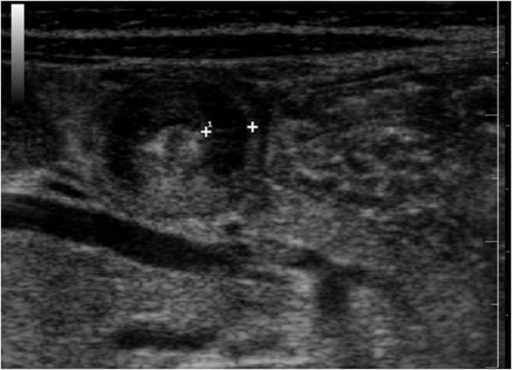
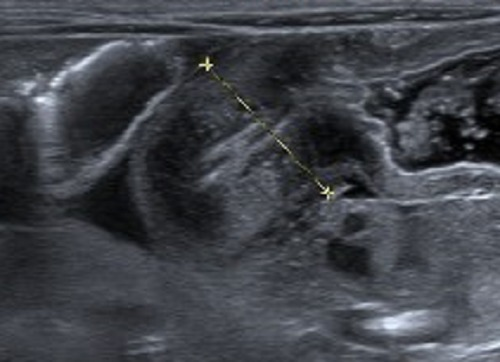
Ultrasonido

  • El diagnóstico es basado en EN Erythema nodosum is an immune-mediated panniculitis (inflammation of the subcutaneous fat) caused by a type IV (delayed-type) hypersensitivity reaction. It commonly manifests in young women as tender, erythematous nodules on the shins. Erythema Nodosum:
    • Espesor del músculo pilórico: > 3 mm (el criterio más discriminatorio y preciso)
    • Longitud del músculo pilórico: > 15 mm
    • Diámetro pilórico: > 15 mm

Estudios de contraste

  • Si el diagnóstico no se confirma con el ultrasonido, pero aún se sospecha la estenosis pilórica
  • Signo de la cuerda: canal pilórico alargado
  • Signo del hombro: abultamiento del píloro hacia el canal
  • Signo de doble vía: rayas paralelas de contraste en EN Erythema nodosum is an immune-mediated panniculitis (inflammation of the subcutaneous fat) caused by a type IV (delayed-type) hypersensitivity reaction. It commonly manifests in young women as tender, erythematous nodules on the shins. Erythema Nodosum un canal estrecho

Tratamiento

Cuidados preoperatorios

  • Reposición de fluidos + descompresión
  • Corregir las anomalías electrolíticas
  • Restablecimiento del equilibrio ácido-base

Cirugía

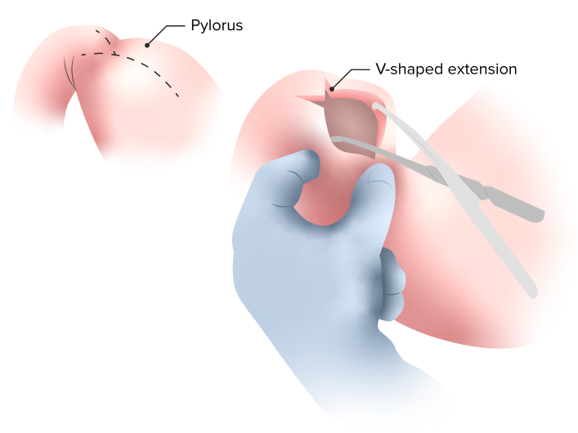
  • Piloromiotomía de Ramstedt: una incisión cutánea transversal corta más una incisión longitudinal del músculo pilórico hasta la submucosa
  • Laparoscopia: igual de eficaz y con una estancia hospitalaria más corta
Cirugía de estenosis pilórica hipertrófica

Este es el tratamiento quirúrgico clásico y definitivo de la estenosis hipertrófica del píloro, denominado “piloromiotomía de Ramstedt”, en el que se realiza una incisión longitudinal de la superficie anterior del píloro que atraviesa la capa muscular sólo hasta el nivel de la submucosa, dejando la submucosa y la mucosa en estado de prolapso.

Imagen por Lecturio.

Cuidados postoperatorios

  • Se recomienda la alimentación temprana o improvisada a las pocas horas postoperatorias, ya que puede ayudar a acortar las estancias hospitalarias sin aumentar las complicaciones.
  • Los LOS Neisseria vómitos persistentes sugieren una piloromiotomía incompleta o un diagnóstico alternativo.

Enfoque conservador

  • Si la cirugía no se tolera o no está disponible
  • Sulfato de atropina oral administrado antes y después de cada alimentación, con monitorización cuidadosa de la frecuencia cardíaca y signos de toxicidad → introducción gradual de la alimentación
    • Esta opción es significativamente menos eficaz y no se recomienda ampliamente fuera de entornos con recursos limitados.

Diagnóstico Diferencial

  • Enfermedad por reflujo gastroesofágico (ERGE): trastorno crónico en EN Erythema nodosum is an immune-mediated panniculitis (inflammation of the subcutaneous fat) caused by a type IV (delayed-type) hypersensitivity reaction. It commonly manifests in young women as tender, erythematous nodules on the shins. Erythema Nodosum el que el ácido gástrico, los LOS Neisseria alimentos o los LOS Neisseria líquidos regresan del estómago al AL Amyloidosis esófago. Los LOS Neisseria pacientes suelen presentar ardor de estómago, mal aliento, dolor Dolor Inflammation torácico y regurgitación. La enfermedad por reflujo gastroesofágico puede provocar daños en EN Erythema nodosum is an immune-mediated panniculitis (inflammation of the subcutaneous fat) caused by a type IV (delayed-type) hypersensitivity reaction. It commonly manifests in young women as tender, erythematous nodules on the shins. Erythema Nodosum los LOS Neisseria dientes, esofagitis y esófago de Barrett. El tratamiento incluye cambios en EN Erythema nodosum is an immune-mediated panniculitis (inflammation of the subcutaneous fat) caused by a type IV (delayed-type) hypersensitivity reaction. It commonly manifests in young women as tender, erythematous nodules on the shins. Erythema Nodosum el estilo de vida y terapia farmacológica con antiácidos, inhibidores de la bomba de protones (IBP) y procinéticos.
  • Síndrome de vómitos cíclicos: condición de patogénesis desconocida caracterizada por episodios recurrentes de náuseas, vómitos y letargo. Los LOS Neisseria síntomas pueden durar horas o días. El síndrome de vómitos cíclicos es más frecuente en EN Erythema nodosum is an immune-mediated panniculitis (inflammation of the subcutaneous fat) caused by a type IV (delayed-type) hypersensitivity reaction. It commonly manifests in young women as tender, erythematous nodules on the shins. Erythema Nodosum los LOS Neisseria niños, pero puede afectar a personas de cualquier edad.
  • Gastroenteritis Gastroenteritis Gastroenteritis is inflammation of the stomach and intestines, commonly caused by infections from bacteria, viruses, or parasites. Transmission may be foodborne, fecal-oral, or through animal contact. Common clinical features include abdominal pain, diarrhea, vomiting, fever, and dehydration. Gastroenteritis: inflamación del tracto gastrointestinal causada en EN Erythema nodosum is an immune-mediated panniculitis (inflammation of the subcutaneous fat) caused by a type IV (delayed-type) hypersensitivity reaction. It commonly manifests in young women as tender, erythematous nodules on the shins. Erythema Nodosum la mayoría de los LOS Neisseria casos por virus Virus Viruses are infectious, obligate intracellular parasites composed of a nucleic acid core surrounded by a protein capsid. Viruses can be either naked (non-enveloped) or enveloped. The classification of viruses is complex and based on many factors, including type and structure of the nucleoid and capsid, the presence of an envelope, the replication cycle, and the host range. Virology, pero también por bacterias o parásitos. Los LOS Neisseria síntomas suelen durar menos de 14 días e incluyen aumento de la frecuencia de las deposiciones o diarrea, fiebre, vómitos o dolor Dolor Inflammation abdominal.
  • Hiperplasia suprarrenal congénita: grupo de enfermedades raras autosómicas recesivas que se caracterizan por defectos en EN Erythema nodosum is an immune-mediated panniculitis (inflammation of the subcutaneous fat) caused by a type IV (delayed-type) hypersensitivity reaction. It commonly manifests in young women as tender, erythematous nodules on the shins. Erythema Nodosum las enzimas de las glándulas suprarrenales que participan en EN Erythema nodosum is an immune-mediated panniculitis (inflammation of the subcutaneous fat) caused by a type IV (delayed-type) hypersensitivity reaction. It commonly manifests in young women as tender, erythematous nodules on the shins. Erythema Nodosum la síntesis de cortisol Cortisol Glucocorticoids, andrógenos y aldosterona. Los LOS Neisseria pacientes pueden presentar una amplia gama de síntomas, incluida la virilización en EN Erythema nodosum is an immune-mediated panniculitis (inflammation of the subcutaneous fat) caused by a type IV (delayed-type) hypersensitivity reaction. It commonly manifests in young women as tender, erythematous nodules on the shins. Erythema Nodosum las mujeres, la pérdida de sal que conduce a la hipotensión y otras anomalías electrolíticas, y la finalización prematura del crecimiento que da lugar a la baja estatura.
  • Aumento de la presión intracraneal: emergencia médica definida por una presión intracraneal superior a 20 mm Hg que puede provocar una disminución de la perfusión cerebral así como una herniación cerebral. Los LOS Neisseria síntomas más comunes son cefalea, vómitos, alteraciones mentales, papiledema y bradicardia. Las causas son el aumento de la producción o la obstrucción parcial del flujo de salida del líquido cefalorraquídeo, las hemorragias, los LOS Neisseria tumores y las infecciones.
  • Vólvulo: condición en EN Erythema nodosum is an immune-mediated panniculitis (inflammation of the subcutaneous fat) caused by a type IV (delayed-type) hypersensitivity reaction. It commonly manifests in young women as tender, erythematous nodules on the shins. Erythema Nodosum la que un asa ASA Anterior Cord Syndrome de intestino gira sobre sí mismo y sobre el mesenterio circundante, provocando una obstrucción intestinal. El vólvulo suele estar causado por un defecto de nacimiento y se presenta en EN Erythema nodosum is an immune-mediated panniculitis (inflammation of the subcutaneous fat) caused by a type IV (delayed-type) hypersensitivity reaction. It commonly manifests in young women as tender, erythematous nodules on the shins. Erythema Nodosum los LOS Neisseria primeros años de vida, pero puede ocurrir a cualquier edad. Los LOS Neisseria síntomas más usuales son los LOS Neisseria vómitos, el dolor Dolor Inflammation y la hinchazón abdominal, el estreñimiento y las heces sanguinolentas, que pueden aparecer de forma gradual o repentina. La cirugía de urgencia es necesaria para evitar la necrosis Necrosis The death of cells in an organ or tissue due to disease, injury or failure of the blood supply. Ischemic Cell Damage de las estructuras intestinales.

Referencias

  1. Endom, E. E., Dorfman, S. R., & Olivé, A. P. (2024, November 22). Infantile hypertrophic pyloric stenosis. UpToDate. Retrieved March 27, 2025, from https://www.uptodate.com/contents/infantile-hypertrophic-pyloric-stenosis
  2. Rosen, N. G., & Stetson, A. E. (2024, February 7). Infantile hypertrophic pyloric stenosis. Medscape. Retrieved March 27, 2025, from https://emedicine.medscape.com/article/929829-overview#showall
  3. Quintero DZ, Cabrera MV, Sánchez ML, et al. Clinical practice guidelines in hypertrophic pyloric stenosis. Rev Cubana Pediatr. 2021;93(2):1-13.
  4. Garfield K, Sergent SR. Pyloric Stenosis. [Updated 2023 Jan 30]. In: StatPearls [Internet]. Treasure Island (FL): StatPearls Publishing; 2025 Jan-. Available from: https://www.ncbi.nlm.nih.gov/books/NBK555931/
  5. Kaneshiro, N. K. (Ed.). (2023, August 5). Pyloric stenosis in infants. Medlineplus medical encyclopedia. Retrieved March 27, 2025, from https://medlineplus.gov/ency/article/000970.htm

¡Crea tu cuenta gratis o inicia una sesión para seguir leyendo!

Regístrate ahora y obtén acceso gratuito a Lecturio con páginas de concepto, videos médicos y cuestionarios para tu educación médica.

User Reviews

Details