Domina Conceptos Médicos

Estudia para la escuela de medicina y tus examenes con Lecturio.

Enfermedades Pulmonares Intersticiales

Las enfermedades pulmonares intersticiales son un grupo heterogéneo de trastornos caracterizados por inflamación y fibrosis Fibrosis Any pathological condition where fibrous connective tissue invades any organ, usually as a consequence of inflammation or other injury. Bronchiolitis Obliterans del parénquima pulmonar, especialmente del tejido conectivo pulmonar en EN Erythema nodosum is an immune-mediated panniculitis (inflammation of the subcutaneous fat) caused by a type IV (delayed-type) hypersensitivity reaction. It commonly manifests in young women as tender, erythematous nodules on the shins. Erythema Nodosum las paredes alveolares. Puede ser idiopática (e.g., fibrosis Fibrosis Any pathological condition where fibrous connective tissue invades any organ, usually as a consequence of inflammation or other injury. Bronchiolitis Obliterans pulmonar idiopática) o secundaria a enfermedades del tejido conectivo, medicamentos, malignidad, exposición laboral o alérgenos. Las enfermedades pulmonares intersticiales suelen presentarse con disnea de esfuerzo progresiva y tos TOS Thoracic outlet syndrome (TOS) is a broad term used for a spectrum of syndromes related to the general region of the thoracic outlet, which involves the compression or irritation of elements of the brachial plexus, subclavian artery, or subclavian vein. Thoracic Outlet Syndrome seca. Las pruebas de función pulmonar muestran un patrón de enfermedad pulmonar restrictiva. La tomografía computarizada de alta resolución de pulmón y la biopsia suelen establecer el diagnóstico. El tratamiento incluye esteroides e inmunosupresores.

Last updated: Dec 15, 2025

Editorial responsibility: Stanley Oiseth, Lindsay Jones, Evelin Maza

Descripción General

Definición

  • La enfermedad pulmonar intersticial comprende un grupo heterogéneo de trastornos que causan diversos grados de inflamación y fibrosis Fibrosis Any pathological condition where fibrous connective tissue invades any organ, usually as a consequence of inflammation or other injury. Bronchiolitis Obliterans del intersticio pulmonar, el espacio entre el endotelio capilar y el epitelio alveolar.
  • Clínicamente, los LOS Neisseria pacientes afectados mostrarán una enfermedad pulmonar restrictiva mediante estudios de función pulmonar.

Epidemiología

La fibrosis Fibrosis Any pathological condition where fibrous connective tissue invades any organ, usually as a consequence of inflammation or other injury. Bronchiolitis Obliterans pulmonar idiopática, la sarcoidosis Sarcoidosis Sarcoidosis is a multisystem inflammatory disease that causes noncaseating granulomas. The exact etiology is unknown. Sarcoidosis usually affects the lungs and thoracic lymph nodes, but it can also affect almost every system in the body, including the skin, heart, and eyes, most commonly. Sarcoidosis y la enfermedad pulmonar intersticial asociada a enfermedades del tejido conectivo son los LOS Neisseria tipos más comunes de enfermedad pulmonar intersticial.

Clasificación

Es útil clasificar las enfermedades pulmonares intersticiales en EN Erythema nodosum is an immune-mediated panniculitis (inflammation of the subcutaneous fat) caused by a type IV (delayed-type) hypersensitivity reaction. It commonly manifests in young women as tender, erythematous nodules on the shins. Erythema Nodosum aquellas con y sin causa conocida.

Tabla: Tipos de enfermedad pulmonar intersticial
Causa desconocida Causa conocida
Neumonías intersticiales idiopáticas:
  • Fibrosis Fibrosis Any pathological condition where fibrous connective tissue invades any organ, usually as a consequence of inflammation or other injury. Bronchiolitis Obliterans pulmonar idiopática
  • Neumonía intersticial inespecífica
  • Neumonía organizada criptogénica
  • Neumonía intersticial aguda
Enfermedad pulmonar intersticial asociada a tabaquismo:
  • Neumonía intersticial asociada a bronquiolitis respiratoria
  • Neumonía intersticial descamativa
Otras:
  • Linfangioleiomiomatosis
Enfermedades sistémicas
  • Enfermedades del tejido conectivo
    • Artritis reumatoide
    • Lupus eritematoso sistémico
    • Esclerosis sistémica
    • Enfermedad de Sjogren
    • Dermatomiositis/polimiositis
  • Enfermedad granulomatosa
    • Granulomatosis con poliangeitis
    • Enfermedad de Churg-Strauss
    • Histiocitosis pulmonar de células de Langerhans
    • Sarcoidosis Sarcoidosis Sarcoidosis is a multisystem inflammatory disease that causes noncaseating granulomas. The exact etiology is unknown. Sarcoidosis usually affects the lungs and thoracic lymph nodes, but it can also affect almost every system in the body, including the skin, heart, and eyes, most commonly. Sarcoidosis
    • Neumonitis por hipersensibilidad
Asociadas a exposición
  • Ocupacional
    • Asbestosis Asbestosis A form of pneumoconiosis caused by inhalation of asbestos fibers which elicit potent inflammatory responses in the parenchyma of the lung. The disease is characterized by interstitial fibrosis of the lung, varying from scattered sites to extensive scarring of the alveolar interstitium. Pneumoconiosis
    • Silicosis Silicosis A form of pneumoconiosis resulting from inhalation of dust containing crystalline form of silicon dioxide, usually in the form of quartz. Amorphous silica is relatively nontoxic. Pneumoconiosis
    • Gases/humos
  • Medicamentos:
    Radiación, metotrexato, azatioprina, rituximab Rituximab A murine-derived monoclonal antibody and antineoplastic agent that binds specifically to the cd20 antigen and is used in the treatment of leukemia; lymphoma and rheumatoid arthritis. Immunosuppressants, bloqueadores del factor de necrosis Necrosis The death of cells in an organ or tissue due to disease, injury or failure of the blood supply. Ischemic Cell Damage tumoral, amiodarona, nitrofurantoína, quimioterapia

Diagnóstico

Antecedentes

Edad
  • La fibrosis Fibrosis Any pathological condition where fibrous connective tissue invades any organ, usually as a consequence of inflammation or other injury. Bronchiolitis Obliterans pulmonar idiopática es poco frecuente en EN Erythema nodosum is an immune-mediated panniculitis (inflammation of the subcutaneous fat) caused by a type IV (delayed-type) hypersensitivity reaction. It commonly manifests in young women as tender, erythematous nodules on the shins. Erythema Nodosum pacientes < 50 años
  • La sarcoidosis Sarcoidosis Sarcoidosis is a multisystem inflammatory disease that causes noncaseating granulomas. The exact etiology is unknown. Sarcoidosis usually affects the lungs and thoracic lymph nodes, but it can also affect almost every system in the body, including the skin, heart, and eyes, most commonly. Sarcoidosis, la enfermedad pulmonar intersticial asociada a enfermedades del tejido conectivo y la linfangioleiomiomatosis son comunes entre los LOS Neisseria 20 y los LOS Neisseria 40 años de edad
Sexo
  • La linfangioleiomiomatosis y la enfermedad pulmonar intersticial asociada a enfermedades del tejido conectivo, excepto la asociada a la artritis reumatoide, son frecuentes en EN Erythema nodosum is an immune-mediated panniculitis (inflammation of the subcutaneous fat) caused by a type IV (delayed-type) hypersensitivity reaction. It commonly manifests in young women as tender, erythematous nodules on the shins. Erythema Nodosum las mujeres
  • La fibrosis Fibrosis Any pathological condition where fibrous connective tissue invades any organ, usually as a consequence of inflammation or other injury. Bronchiolitis Obliterans pulmonar idiopática y las enfermedades pulmonares intersticiales ocupacionales son más frecuentes en EN Erythema nodosum is an immune-mediated panniculitis (inflammation of the subcutaneous fat) caused by a type IV (delayed-type) hypersensitivity reaction. It commonly manifests in young women as tender, erythematous nodules on the shins. Erythema Nodosum los LOS Neisseria hombres
Presentación clínica
  • Inicio agudo (días a semanas): neumonía eosinofílica, neumonía intersticial aguda, neumonitis por hipersensibilidad, granulomatosis con poliangeitis, exacerbación aguda de la fibrosis Fibrosis Any pathological condition where fibrous connective tissue invades any organ, usually as a consequence of inflammation or other injury. Bronchiolitis Obliterans pulmonar idiopática
  • Aparición subaguda (de semanas a meses) y sobre todo crónica (de meses a años): la mayoría de las otras enfermedades pulmonares intersticiales, especialmente la fibrosis Fibrosis Any pathological condition where fibrous connective tissue invades any organ, usually as a consequence of inflammation or other injury. Bronchiolitis Obliterans pulmonar idiopática
Síntomas
  • Disnea de esfuerzo progresiva (el más común)
  • Tos TOS Thoracic outlet syndrome (TOS) is a broad term used for a spectrum of syndromes related to the general region of the thoracic outlet, which involves the compression or irritation of elements of the brachial plexus, subclavian artery, or subclavian vein. Thoracic Outlet Syndrome seca (muy común)
  • Fatiga (común)
  • Dolor Dolor Inflammation torácico (poco común; sugiere sarcoidosis Sarcoidosis Sarcoidosis is a multisystem inflammatory disease that causes noncaseating granulomas. The exact etiology is unknown. Sarcoidosis usually affects the lungs and thoracic lymph nodes, but it can also affect almost every system in the body, including the skin, heart, and eyes, most commonly. Sarcoidosis)
  • Hemoptisis (rara; sugiere vasculitis Vasculitis Inflammation of any one of the blood vessels, including the arteries; veins; and rest of the vasculature system in the body. Systemic Lupus Erythematosus, linfangioleiomiomatosis)
Antecedentes médicos
  • Enfermedades del tejido conectivo o síntomas relacionados, como el fenómeno de Raynaud
  • Malignidad, que puede indicar una enfermedad pulmonar intersticial asociada a la dermatomiositis
  • El asma ASMA Autoimmune Hepatitis puede sugerir una granulomatosis eosinofílica con poliangeitis (también conocida como Churg-Strauss)
Antecedentes de medicamentos Metotrexato, azatioprina, rituximab Rituximab A murine-derived monoclonal antibody and antineoplastic agent that binds specifically to the cd20 antigen and is used in the treatment of leukemia; lymphoma and rheumatoid arthritis. Immunosuppressants, bloqueadores del factor de necrosis Necrosis The death of cells in an organ or tissue due to disease, injury or failure of the blood supply. Ischemic Cell Damage tumoral, amiodarona, nitrofurantoína, quimioterapia
Antecedentes familiares Tener un pariente cercano con neumonitis intersticial idiopática es un fuerte factor de riesgo de padecer enfermedad pulmonar intersticial, especialmente fibrosis Fibrosis Any pathological condition where fibrous connective tissue invades any organ, usually as a consequence of inflammation or other injury. Bronchiolitis Obliterans pulmonar idiopática.
Antecedentes sociales
  • Los LOS Neisseria antecedentes de tabaquismo están presentes en EN Erythema nodosum is an immune-mediated panniculitis (inflammation of the subcutaneous fat) caused by a type IV (delayed-type) hypersensitivity reaction. It commonly manifests in young women as tender, erythematous nodules on the shins. Erythema Nodosum casi todos los LOS Neisseria casos de neumonía intersticial descamativa y en EN Erythema nodosum is an immune-mediated panniculitis (inflammation of the subcutaneous fat) caused by a type IV (delayed-type) hypersensitivity reaction. It commonly manifests in young women as tender, erythematous nodules on the shins. Erythema Nodosum la mayoría de los LOS Neisseria pacientes con fibrosis Fibrosis Any pathological condition where fibrous connective tissue invades any organ, usually as a consequence of inflammation or other injury. Bronchiolitis Obliterans pulmonar idiopática.
  • Antecedentes de exposición, como al AL Amyloidosis asbesto o aves (neumonitis por hipersensibilidad)

Examen físico

  • Crepitantes finos al AL Amyloidosis final de la inspiración en EN Erythema nodosum is an immune-mediated panniculitis (inflammation of the subcutaneous fat) caused by a type IV (delayed-type) hypersensitivity reaction. It commonly manifests in young women as tender, erythematous nodules on the shins. Erythema Nodosum bases Bases Usually a hydroxide of lithium, sodium, potassium, rubidium or cesium, but also the carbonates of these metals, ammonia, and the amines. Acid-Base Balance pulmonares (hallazgo común, especialmente en EN Erythema nodosum is an immune-mediated panniculitis (inflammation of the subcutaneous fat) caused by a type IV (delayed-type) hypersensitivity reaction. It commonly manifests in young women as tender, erythematous nodules on the shins. Erythema Nodosum la fibrosis Fibrosis Any pathological condition where fibrous connective tissue invades any organ, usually as a consequence of inflammation or other injury. Bronchiolitis Obliterans pulmonar idiopática)
  • Las sibilancias son infrecuentes (pueden encontrarse en EN Erythema nodosum is an immune-mediated panniculitis (inflammation of the subcutaneous fat) caused by a type IV (delayed-type) hypersensitivity reaction. It commonly manifests in young women as tender, erythematous nodules on the shins. Erythema Nodosum la neumonitis por hipersensibilidad, la enfermedad de Churg-Strauss, la sarcoidosis Sarcoidosis Sarcoidosis is a multisystem inflammatory disease that causes noncaseating granulomas. The exact etiology is unknown. Sarcoidosis usually affects the lungs and thoracic lymph nodes, but it can also affect almost every system in the body, including the skin, heart, and eyes, most commonly. Sarcoidosis)
  • Hallazgos de enfermedad grave: cianosis, hipocratismo digital, cor pulmonale Cor Pulmonale Cor pulmonale is right ventricular (RV) dysfunction caused by lung disease that results in pulmonary artery hypertension. The most common cause of cor pulmonale is chronic obstructive pulmonary disease. Dyspnea is the usual presenting symptom. Cor Pulmonale

Estudios de laboratorio

La detección de autoanticuerpos puede ayudar en EN Erythema nodosum is an immune-mediated panniculitis (inflammation of the subcutaneous fat) caused by a type IV (delayed-type) hypersensitivity reaction. It commonly manifests in young women as tender, erythematous nodules on the shins. Erythema Nodosum el diagnóstico de algunas enfermedades del tejido conectivo.
Pruebas de función pulmonar

  • La capacidad de difusión del monóxido de carbono se encuentra reducida.
  • La mayoría muestra un patrón restrictivo.

Imagenología

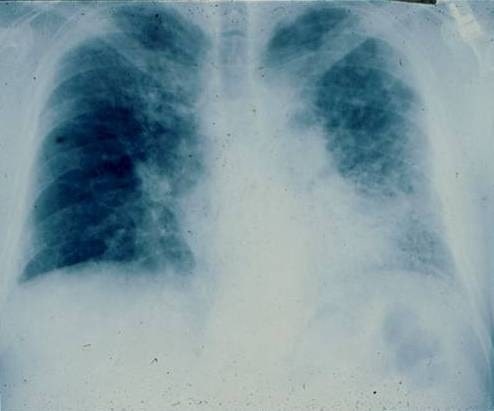
  • La radiografía de tórax puede sugerir un tipo de enfermedad pulmonar intersticial:
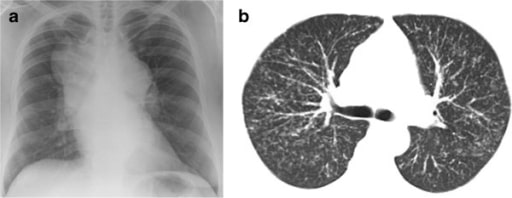
    • El patrón reticular periférico en EN Erythema nodosum is an immune-mediated panniculitis (inflammation of the subcutaneous fat) caused by a type IV (delayed-type) hypersensitivity reaction. It commonly manifests in young women as tender, erythematous nodules on the shins. Erythema Nodosum las zonas pulmonares inferiores y los LOS Neisseria pequeños espacios quísticos sugieren fibrosis Fibrosis Any pathological condition where fibrous connective tissue invades any organ, usually as a consequence of inflammation or other injury. Bronchiolitis Obliterans pulmonar idiopática.
    • El patrón nodular central en EN Erythema nodosum is an immune-mediated panniculitis (inflammation of the subcutaneous fat) caused by a type IV (delayed-type) hypersensitivity reaction. It commonly manifests in young women as tender, erythematous nodules on the shins. Erythema Nodosum zonas pulmonares medias y altas, al AL Amyloidosis igual que el aumento de tamaño de los LOS Neisseria ganglios linfáticos hiliares, sugieren sarcoidosis Sarcoidosis Sarcoidosis is a multisystem inflammatory disease that causes noncaseating granulomas. The exact etiology is unknown. Sarcoidosis usually affects the lungs and thoracic lymph nodes, but it can also affect almost every system in the body, including the skin, heart, and eyes, most commonly. Sarcoidosis.
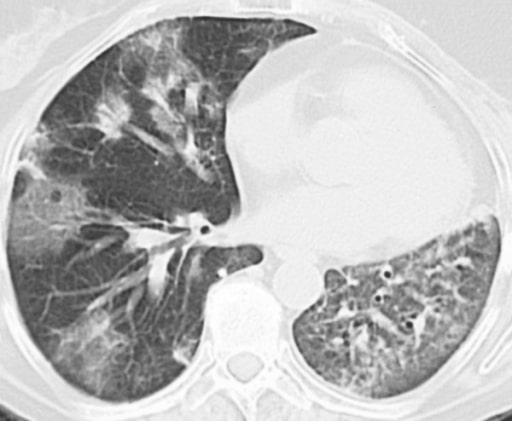
  • Tomografía computarizada (TC) de tórax:
    • Estudio inicial estándar
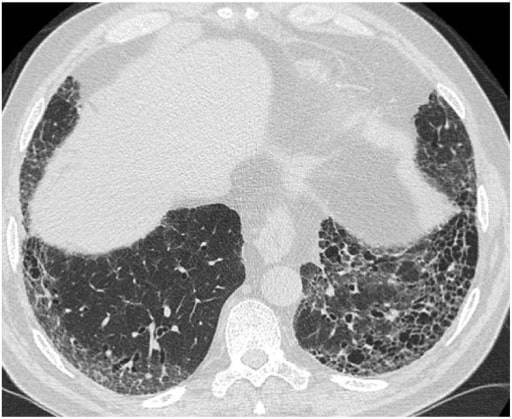
    • Puede confirmar el diagnóstico de fibrosis Fibrosis Any pathological condition where fibrous connective tissue invades any organ, usually as a consequence of inflammation or other injury. Bronchiolitis Obliterans pulmonar idiopática en EN Erythema nodosum is an immune-mediated panniculitis (inflammation of the subcutaneous fat) caused by a type IV (delayed-type) hypersensitivity reaction. It commonly manifests in young women as tender, erythematous nodules on the shins. Erythema Nodosum el marco adecuado y evitar la necesidad de una biopsia pulmonar
    • Define mejor la extensión y las características de la enfermedad (e.g., patrón en EN Erythema nodosum is an immune-mediated panniculitis (inflammation of the subcutaneous fat) caused by a type IV (delayed-type) hypersensitivity reaction. It commonly manifests in young women as tender, erythematous nodules on the shins. Erythema Nodosum panal de abeja)
    • Ayuda a excluir comorbilidades (e.g., neumotórax) o diagnósticos diferenciales (e.g., malignidad)
    • Ayuda a determinar el mejor sitio para la biopsia

Biopsia de pulmón

  • Establece el diagnóstico
  • Se realiza mediante broncoscopia con fibra óptica o cirugía
  • La biopsia no es necesaria si:
    • La TC de alta resolución muestra la clásica neumonía intersticial habitual y el paciente no tiene ninguna enfermedad sistémica que sugiera otro trastorno.
    • El paciente tiene signos o síntomas mínimos y una enfermedad estable/no progresiva.
  • Indicado en EN Erythema nodosum is an immune-mediated panniculitis (inflammation of the subcutaneous fat) caused by a type IV (delayed-type) hypersensitivity reaction. It commonly manifests in young women as tender, erythematous nodules on the shins. Erythema Nodosum casos de comorbilidades o de síntomas rápidamente progresivos

Formas Individuales

Fibrosis Fibrosis Any pathological condition where fibrous connective tissue invades any organ, usually as a consequence of inflammation or other injury. Bronchiolitis Obliterans pulmonar idiopática

  • La enfermedad pulmonar idiopática de causa desconocida más común
  • Comúnmente se diagnostica en EN Erythema nodosum is an immune-mediated panniculitis (inflammation of the subcutaneous fat) caused by a type IV (delayed-type) hypersensitivity reaction. It commonly manifests in young women as tender, erythematous nodules on the shins. Erythema Nodosum la 5ta o 6ta década
  • Afecta más a hombres que a mujeres
  • Frecuentemente asociada con el tabaquismo
  • La tasa de supervivencia a los LOS Neisseria 3–5 años es del 50%.
  • Puede estar asociado a exacerbaciones agudas
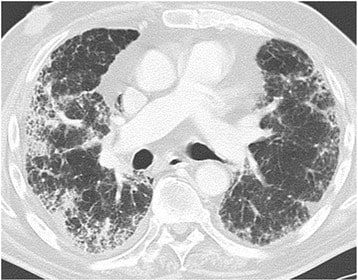
  • La TC de alta resolución de pulmón muestra un patrón de neumonía intersticial usual: patrón reticular subpleural a predominio posterior-basal con características fibróticas más avanzadas como el patrón en EN Erythema nodosum is an immune-mediated panniculitis (inflammation of the subcutaneous fat) caused by a type IV (delayed-type) hypersensitivity reaction. It commonly manifests in young women as tender, erythematous nodules on the shins. Erythema Nodosum panal de abeja y bronquiectasias por tracción.
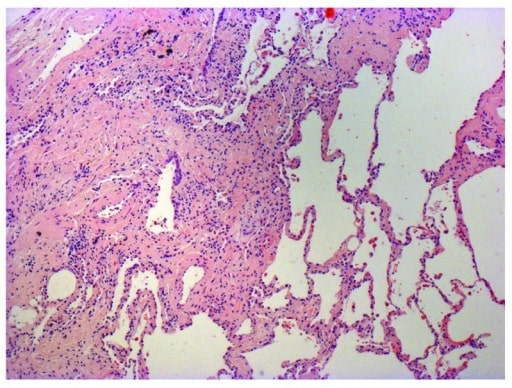
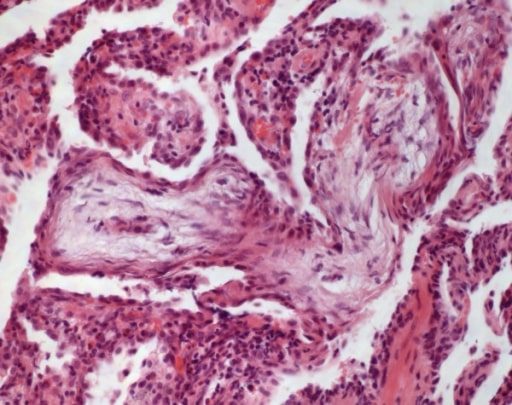
  • La histopatología muestra un patrón de neumonía intersticial usual: reticulación subpleural, patrón en EN Erythema nodosum is an immune-mediated panniculitis (inflammation of the subcutaneous fat) caused by a type IV (delayed-type) hypersensitivity reaction. It commonly manifests in young women as tender, erythematous nodules on the shins. Erythema Nodosum panal de abeja, fibroblastos, lesiones intercaladas con arquitectura conservada (heterogeneidad temporal y espacial).
  • Tratamiento: fisioterapia y oxígeno suplementario, terapia antifibrótica (pirfenidona) y trasplante de pulmón si el paciente cumple los LOS Neisseria criterios

Neumonía intersticial inespecífica

  • Puede ser idiopática o estar asociada comúnmente a enfermedades del tejido conectivo
  • Se diagnostica comúnmente en EN Erythema nodosum is an immune-mediated panniculitis (inflammation of the subcutaneous fat) caused by a type IV (delayed-type) hypersensitivity reaction. It commonly manifests in young women as tender, erythematous nodules on the shins. Erythema Nodosum mujeres no fumadoras en EN Erythema nodosum is an immune-mediated panniculitis (inflammation of the subcutaneous fat) caused by a type IV (delayed-type) hypersensitivity reaction. It commonly manifests in young women as tender, erythematous nodules on the shins. Erythema Nodosum su 5ta década
  • La tasa de supervivencia a los LOS Neisseria 5 años es del 80%.
  • La TC de alta resolución de pulmón muestra opacidades reticulares y en EN Erythema nodosum is an immune-mediated panniculitis (inflammation of the subcutaneous fat) caused by a type IV (delayed-type) hypersensitivity reaction. It commonly manifests in young women as tender, erythematous nodules on the shins. Erythema Nodosum vidrio esmerilado subpleurales difusas y simétricas; pueden observarse bronquiectasias por tracción; el patrón en EN Erythema nodosum is an immune-mediated panniculitis (inflammation of the subcutaneous fat) caused by a type IV (delayed-type) hypersensitivity reaction. It commonly manifests in young women as tender, erythematous nodules on the shins. Erythema Nodosum panal de abeja y el engrosamiento peribronquial son infrecuentes.
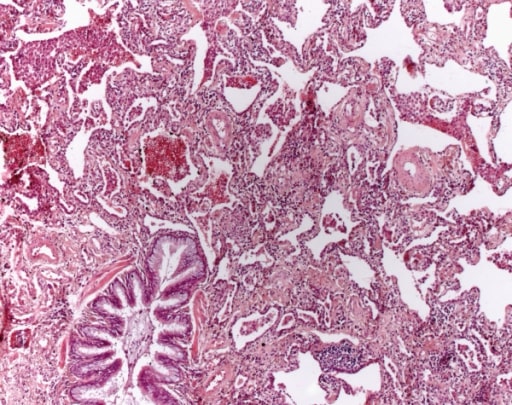
  • La histopatología muestra inflamación intersticial uniforme y fibrosis Fibrosis Any pathological condition where fibrous connective tissue invades any organ, usually as a consequence of inflammation or other injury. Bronchiolitis Obliterans sin patrón en EN Erythema nodosum is an immune-mediated panniculitis (inflammation of the subcutaneous fat) caused by a type IV (delayed-type) hypersensitivity reaction. It commonly manifests in young women as tender, erythematous nodules on the shins. Erythema Nodosum panal de abeja.
  • Tratamiento: fisioterapia, oxígeno suplementario, esteroides, terapia inmunosupresora y trasplante de pulmón si el paciente cumple los LOS Neisseria criterios

Neumonía organizada criptogénica

  • Puede ser idiopática o secundaria a polimiositis, medicamentos o malignidad.
  • Comúnmente se diagnostica en EN Erythema nodosum is an immune-mediated panniculitis (inflammation of the subcutaneous fat) caused by a type IV (delayed-type) hypersensitivity reaction. It commonly manifests in young women as tender, erythematous nodules on the shins. Erythema Nodosum la 6ta o 7ma década
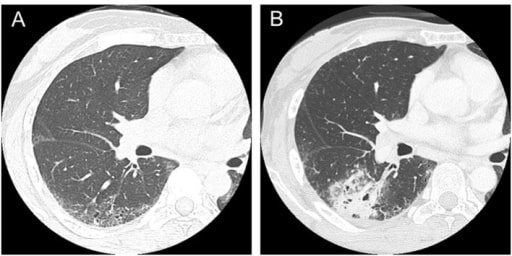
  • La TC de alta resolución de pulmón muestra consolidaciones subpleurales migratorias, en EN Erythema nodosum is an immune-mediated panniculitis (inflammation of the subcutaneous fat) caused by a type IV (delayed-type) hypersensitivity reaction. It commonly manifests in young women as tender, erythematous nodules on the shins. Erythema Nodosum forma de parches, y opacidades en EN Erythema nodosum is an immune-mediated panniculitis (inflammation of the subcutaneous fat) caused by a type IV (delayed-type) hypersensitivity reaction. It commonly manifests in young women as tender, erythematous nodules on the shins. Erythema Nodosum vidrio esmerilado con o sin un reborde de preservación subpleural conocido como signo del halo (característico).
  • Tratamiento: esteroides e inmunosupresores

Enfermedad pulmonar intersticial asociada a tabaquismo

  • Ocurre en EN Erythema nodosum is an immune-mediated panniculitis (inflammation of the subcutaneous fat) caused by a type IV (delayed-type) hypersensitivity reaction. It commonly manifests in young women as tender, erythematous nodules on the shins. Erythema Nodosum fumadores empedernidos en EN Erythema nodosum is an immune-mediated panniculitis (inflammation of the subcutaneous fat) caused by a type IV (delayed-type) hypersensitivity reaction. It commonly manifests in young women as tender, erythematous nodules on the shins. Erythema Nodosum la 5ta o 6ta década
  • El patrón en EN Erythema nodosum is an immune-mediated panniculitis (inflammation of the subcutaneous fat) caused by a type IV (delayed-type) hypersensitivity reaction. It commonly manifests in young women as tender, erythematous nodules on the shins. Erythema Nodosum panal de abeja suele estar ausente
  • La biopsia confirma el diagnóstico
  • El tratamiento incluye dejar de fumar y terapia inmunosupresora

Enfermedad pulmonar intersticial asociada a enfermedades del tejido conectivo y enfermedad pulmonar intersticial granulomatosa

Tabla: Características típicas de la esclerosis sistémica (una causa común de enfermedad pulmonar intersticial asociada a enfermedades del tejido conectivo), la sarcoidosis Sarcoidosis Sarcoidosis is a multisystem inflammatory disease that causes noncaseating granulomas. The exact etiology is unknown. Sarcoidosis usually affects the lungs and thoracic lymph nodes, but it can also affect almost every system in the body, including the skin, heart, and eyes, most commonly. Sarcoidosis (enfermedad pulmonar intersticial granulomatosa más común) y la fibrosis Fibrosis Any pathological condition where fibrous connective tissue invades any organ, usually as a consequence of inflammation or other injury. Bronchiolitis Obliterans pulmonar idiopática (enfermedad pulmonar intersticial idiopática más común)
Fibrosis Fibrosis Any pathological condition where fibrous connective tissue invades any organ, usually as a consequence of inflammation or other injury. Bronchiolitis Obliterans pulmonar idiopática Enfermedad pulmonar intersticial asociada a esclerosis sistémica Sarcoidosis Sarcoidosis Sarcoidosis is a multisystem inflammatory disease that causes noncaseating granulomas. The exact etiology is unknown. Sarcoidosis usually affects the lungs and thoracic lymph nodes, but it can also affect almost every system in the body, including the skin, heart, and eyes, most commonly. Sarcoidosis
Síntomas Adulto mayor con disnea gradual y tos TOS Thoracic outlet syndrome (TOS) is a broad term used for a spectrum of syndromes related to the general region of the thoracic outlet, which involves the compression or irritation of elements of the brachial plexus, subclavian artery, or subclavian vein. Thoracic Outlet Syndrome seca Disnea gradual y tos TOS Thoracic outlet syndrome (TOS) is a broad term used for a spectrum of syndromes related to the general region of the thoracic outlet, which involves the compression or irritation of elements of the brachial plexus, subclavian artery, or subclavian vein. Thoracic Outlet Syndrome seca, fatiga, tensión cutánea, fenómeno de Raynaud, reflujo, disfagia Asintomático o con disnea y tos TOS Thoracic outlet syndrome (TOS) is a broad term used for a spectrum of syndromes related to the general region of the thoracic outlet, which involves the compression or irritation of elements of the brachial plexus, subclavian artery, or subclavian vein. Thoracic Outlet Syndrome gradual, fatiga, palpitaciones, dolor Dolor Inflammation articular, afectación ocular y cutánea
Signos Crepitantes en EN Erythema nodosum is an immune-mediated panniculitis (inflammation of the subcutaneous fat) caused by a type IV (delayed-type) hypersensitivity reaction. It commonly manifests in young women as tender, erythematous nodules on the shins. Erythema Nodosum bases Bases Usually a hydroxide of lithium, sodium, potassium, rubidium or cesium, but also the carbonates of these metals, ammonia, and the amines. Acid-Base Balance pulmonares e hipocratismo digital Crepitantes, engrosamiento de la piel y aumento de volumen articular, telangiectasias Telangiectasias Ataxia-telangiectasia Ninguno o crepitantes, hallazgos en EN Erythema nodosum is an immune-mediated panniculitis (inflammation of the subcutaneous fat) caused by a type IV (delayed-type) hypersensitivity reaction. It commonly manifests in young women as tender, erythematous nodules on the shins. Erythema Nodosum la piel, aumento de volumen articular, linfadenopatía
Exposiciones Humo de tabaco Mayormente desconocido Mayormente desconocido
TC de alta resolución
  • Patrón reticular periférico bilateral en EN Erythema nodosum is an immune-mediated panniculitis (inflammation of the subcutaneous fat) caused by a type IV (delayed-type) hypersensitivity reaction. It commonly manifests in young women as tender, erythematous nodules on the shins. Erythema Nodosum zonas pulmonares postero-inferiores
  • Patrón en EN Erythema nodosum is an immune-mediated panniculitis (inflammation of the subcutaneous fat) caused by a type IV (delayed-type) hypersensitivity reaction. It commonly manifests in young women as tender, erythematous nodules on the shins. Erythema Nodosum panal de abeja
  • Bronquiectasias por tracción
  • El patrón de neumonía intersticial usual es diagnóstico.
Patrón de neumonía intersticial usual o neumonía intersticial inespecífica, esófago dilatado, dilatación vascular pulmonar Linfadenopatía mediastínica/hiliar, afectación reticulonodular peribronquiovascular
Histopatología Patrón de neumonía intersticial usual (focos fibroblásticos, patrón en EN Erythema nodosum is an immune-mediated panniculitis (inflammation of the subcutaneous fat) caused by a type IV (delayed-type) hypersensitivity reaction. It commonly manifests in young women as tender, erythematous nodules on the shins. Erythema Nodosum panal de abeja, heterogeneidad espacial) Patrón de neumonía intersticial inespecífica con características ocasionales de neumonía intersticial usual Granuloma no caseificante
Curso clínico Supervivencia a los LOS Neisseria 3–5 años: 50%. Supervivencia a los LOS Neisseria 10 años: 70%–80%. Buena supervivencia general

Complicaciones

  • Exacerbaciones agudas de neumonía intersticial idiopática:
    • Fase acelerada de la lesión pulmonar en EN Erythema nodosum is an immune-mediated panniculitis (inflammation of the subcutaneous fat) caused by a type IV (delayed-type) hypersensitivity reaction. It commonly manifests in young women as tender, erythematous nodules on the shins. Erythema Nodosum un paciente con una enfermedad pulmonar intersticial subyacente
    • Aparición aguda (< 30 días) de dificultad respiratoria e hipoxemia más grave que la experimentada previamente por la enfermedad pulmonar intersticial subyacente y que no se explica por otras causas (e.g., neumonía, insuficiencia cardíaca)
    • Comúnmente descrita en EN Erythema nodosum is an immune-mediated panniculitis (inflammation of the subcutaneous fat) caused by a type IV (delayed-type) hypersensitivity reaction. It commonly manifests in young women as tender, erythematous nodules on the shins. Erythema Nodosum la fibrosis Fibrosis Any pathological condition where fibrous connective tissue invades any organ, usually as a consequence of inflammation or other injury. Bronchiolitis Obliterans pulmonar idiopática
    • La TC de alta resolución de pulmón muestra un cambio en EN Erythema nodosum is an immune-mediated panniculitis (inflammation of the subcutaneous fat) caused by a type IV (delayed-type) hypersensitivity reaction. It commonly manifests in young women as tender, erythematous nodules on the shins. Erythema Nodosum el patrón previamente observado debido a la enfermedad pulmonar intersticial subyacente con opacidades en EN Erythema nodosum is an immune-mediated panniculitis (inflammation of the subcutaneous fat) caused by a type IV (delayed-type) hypersensitivity reaction. It commonly manifests in young women as tender, erythematous nodules on the shins. Erythema Nodosum vidrio esmerilado bilaterales y consolidación en EN Erythema nodosum is an immune-mediated panniculitis (inflammation of the subcutaneous fat) caused by a type IV (delayed-type) hypersensitivity reaction. It commonly manifests in young women as tender, erythematous nodules on the shins. Erythema Nodosum regiones dependientes.
    • La histopatología muestra un daño alveolar difuso.
    • El tratamiento es de soporte, ya que no existe una terapia comprobada; el trasplante de pulmón puede proporcionar la curación.
    • Tasa de mortalidad > 85%
  • Hipertensión pulmonar
  • Neumonía
  • Cardiopatía isquémica
  • Enfermedad tromboembólica
  • Cáncer de pulmón

Diagnóstico Diferencial

  • Enfermedad cardiovascular (e.g., insuficiencia cardíaca)
  • Infecciones difusas (e.g., neumonía por Pneumocystis)
  • Malignidad (e.g., carcinoma de células broncoalveolares):
    • Se debe tener en EN Erythema nodosum is an immune-mediated panniculitis (inflammation of the subcutaneous fat) caused by a type IV (delayed-type) hypersensitivity reaction. It commonly manifests in young women as tender, erythematous nodules on the shins. Erythema Nodosum cuenta que las enfermedades pulmonares intersticiales, como la neumonía organizada criptogénica, pueden ser secundarias a dermatomiositis y a malignidad; sin embargo, los LOS Neisseria tumores malignos pulmonares, como el carcinoma de células broncoalveolares, pueden imitar los LOS Neisseria síntomas y signos de las enfermedades pulmonares intersticiales.

Referencias

  1. Kasper DL, Fauci AS, Hauser SL, Longo DL, Lameson JL, Loscalzo J. Harrison’s Principles of Internal Medicine. New York, NY: McGraw-Hill Education; 2018.
  2. King TE, Raj R. Role of lung biopsy in the diagnosis of interstitial lung disease, in UpToDate Evidence-Based Medicine. Retrieved on August 18, 2020, from https://www.uptodate.com/contents/role-of-lung-biopsy-in-the-diagnosis-of-interstitial-lung-disease?search=interstitial-lung-disease&topicRef=4310&source=see_link#H4256910517

¡Crea tu cuenta gratis o inicia una sesión para seguir leyendo!

Regístrate ahora y obtén acceso gratuito a Lecturio con páginas de concepto, videos médicos y cuestionarios para tu educación médica.

User Reviews

Details