Domina Conceptos Médicos

Estudia para la escuela de medicina y tus examenes con Lecturio.

Dermatitis Seborreica

La dermatitis Dermatitis Any inflammation of the skin. Atopic Dermatitis (Eczema) seborreica es un trastorno cutáneo común, crónico y recidivante, que se presenta como placas eritematosas con escamas amarillas y grasientas en EN Erythema nodosum is an immune-mediated panniculitis (inflammation of the subcutaneous fat) caused by a type IV (delayed-type) hypersensitivity reaction. It commonly manifests in young women as tender, erythematous nodules on the shins. Erythema Nodosum zonas susceptibles (cuero cabelludo, cara y tronco). La dermatitis Dermatitis Any inflammation of the skin. Atopic Dermatitis (Eczema) seborreica tiene una incidencia bimodal, presentándose en EN Erythema nodosum is an immune-mediated panniculitis (inflammation of the subcutaneous fat) caused by a type IV (delayed-type) hypersensitivity reaction. It commonly manifests in young women as tender, erythematous nodules on the shins. Erythema Nodosum dos picos: primero en EN Erythema nodosum is an immune-mediated panniculitis (inflammation of the subcutaneous fat) caused by a type IV (delayed-type) hypersensitivity reaction. It commonly manifests in young women as tender, erythematous nodules on the shins. Erythema Nodosum los LOS Neisseria bebés, y luego en EN Erythema nodosum is an immune-mediated panniculitis (inflammation of the subcutaneous fat) caused by a type IV (delayed-type) hypersensitivity reaction. It commonly manifests in young women as tender, erythematous nodules on the shins. Erythema Nodosum la adolescencia y en EN Erythema nodosum is an immune-mediated panniculitis (inflammation of the subcutaneous fat) caused by a type IV (delayed-type) hypersensitivity reaction. It commonly manifests in young women as tender, erythematous nodules on the shins. Erythema Nodosum los LOS Neisseria primeros años de la edad adulta. Aunque se desconoce la etiología exacta, se han observado mecanismos patológicos que implican a las glándulas sebáceas y a Malassezia Malassezia Malassezia is a lipophilic yeast commonly found on the skin surfaces of many animals, including humans. In the presence of certain environments or triggers, this fungus can cause pathologic diseases ranging from superficial skin conditions (tinea versicolor and dermatitis) to invasive disease (e.g., Malassezia folliculitis, catheter-associated fungemia, meningitis, and urinary tract infections). Malassezia Fungi en EN Erythema nodosum is an immune-mediated panniculitis (inflammation of the subcutaneous fat) caused by a type IV (delayed-type) hypersensitivity reaction. It commonly manifests in young women as tender, erythematous nodules on the shins. Erythema Nodosum la piel. Los LOS Neisseria medicamentos tópicos se utilizan para la exacerbación aguda o el tratamiento de mantenimiento. Estas opciones tienen como objetivo inhibir la colonización de la piel (agentes antifúngicos), reducir la inflamación (esteroides, inhibidores de la calcineurina) y aflojar las escamas y costras (agentes queratolíticos). La dermatitis Dermatitis Any inflammation of the skin. Atopic Dermatitis (Eczema) seborreica grave y refractaria puede justificar el uso de medicamentos antifúngicos sistémicos.

Last updated: Apr 20, 2022

Editorial responsibility: Stanley Oiseth, Lindsay Jones, Evelin Maza

Epidemiología y Etiología

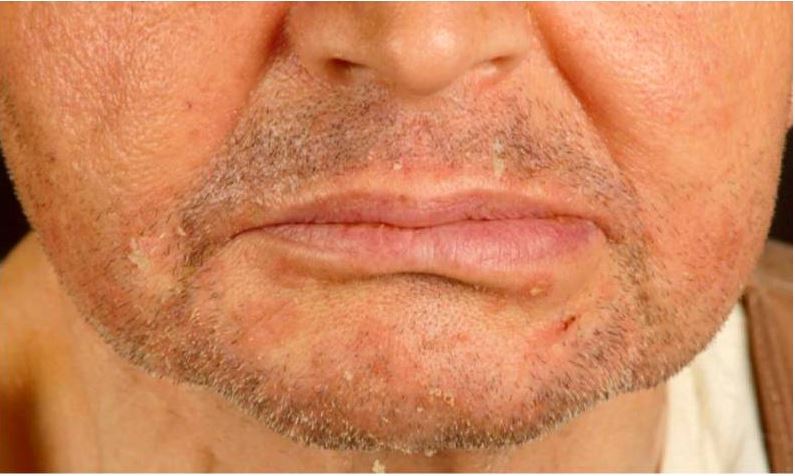
La dermatitis Dermatitis Any inflammation of the skin. Atopic Dermatitis (Eczema) seborreica es un trastorno cutáneo crónico común que se caracteriza por la aparición de manchas eritematosas con escamas grasientas y amarillentas que aparecen con mayor frecuencia en EN Erythema nodosum is an immune-mediated panniculitis (inflammation of the subcutaneous fat) caused by a type IV (delayed-type) hypersensitivity reaction. It commonly manifests in young women as tender, erythematous nodules on the shins. Erythema Nodosum zonas con glándulas sebáceas prominentes (cuero cabelludo, cara, parte superior del tronco y zona anogenital).

Epidemiología

  • Prevalencia: 3% de la población general
  • Más común en EN Erythema nodosum is an immune-mediated panniculitis (inflammation of the subcutaneous fat) caused by a type IV (delayed-type) hypersensitivity reaction. It commonly manifests in young women as tender, erythematous nodules on the shins. Erythema Nodosum los LOS Neisseria hombres
  • Distribución bimodal: se produce en EN Erythema nodosum is an immune-mediated panniculitis (inflammation of the subcutaneous fat) caused by a type IV (delayed-type) hypersensitivity reaction. It commonly manifests in young women as tender, erythematous nodules on the shins. Erythema Nodosum dos picos (primero en EN Erythema nodosum is an immune-mediated panniculitis (inflammation of the subcutaneous fat) caused by a type IV (delayed-type) hypersensitivity reaction. It commonly manifests in young women as tender, erythematous nodules on the shins. Erythema Nodosum la infancia, luego en EN Erythema nodosum is an immune-mediated panniculitis (inflammation of the subcutaneous fat) caused by a type IV (delayed-type) hypersensitivity reaction. It commonly manifests in young women as tender, erythematous nodules on the shins. Erythema Nodosum la adolescencia y en EN Erythema nodosum is an immune-mediated panniculitis (inflammation of the subcutaneous fat) caused by a type IV (delayed-type) hypersensitivity reaction. It commonly manifests in young women as tender, erythematous nodules on the shins. Erythema Nodosum la edad adulta temprana)
  • Hasta el 70% de los LOS Neisseria bebés < 3 meses de edad están afectados, pero se observa una mejora al AL Amyloidosis 1 año
  • En EN Erythema nodosum is an immune-mediated panniculitis (inflammation of the subcutaneous fat) caused by a type IV (delayed-type) hypersensitivity reaction. It commonly manifests in young women as tender, erythematous nodules on the shins. Erythema Nodosum los LOS Neisseria adultos, la enfermedad alcanza su punto máximo entre la 3ra y la 4ta década.

Etiología

No está claro, pero puede verse afectado por lo siguiente:
  • Colonización cutánea por Malassezia Malassezia Malassezia is a lipophilic yeast commonly found on the skin surfaces of many animals, including humans. In the presence of certain environments or triggers, this fungus can cause pathologic diseases ranging from superficial skin conditions (tinea versicolor and dermatitis) to invasive disease (e.g., Malassezia folliculitis, catheter-associated fungemia, meningitis, and urinary tract infections). Malassezia Fungi y su interacción con los LOS Neisseria lípidos de la superficie de la piel
  • Susceptibilidad individual:
    • Aumento de la actividad de las glándulas sebáceas (seborrea)
    • Estrés
  • Inmunodeficiencia:
    • Infección por VIH
    • Linfoma
    • Trasplante renal
  • Condiciones neuropsiquiátricas:
    • Enfermedad de Parkinson
      • Aumento de la producción de sebo
      • Mejora de la dermatitis Dermatitis Any inflammation of the skin. Atopic Dermatitis (Eczema) seborreica con el uso de levodopa Levodopa The naturally occurring form of dihydroxyphenylalanine and the immediate precursor of dopamine. Unlike dopamine itself, it can be taken orally and crosses the blood-brain barrier. It is rapidly taken up by dopaminergic neurons and converted to dopamine. It is used for the treatment of parkinsonian disorders and is usually given with agents that inhibit its conversion to dopamine outside of the central nervous system. Parkinson’s Disease Drugs
    • Demencia de Alzheimer, depresión
  • Alcoholismo
  • Cambios climáticos (empeoran con las temperaturas frías, algunos mejoran con la exposición al AL Amyloidosis sol)
  • Medicamentos: litio, haloperidol Haloperidol A phenyl-piperidinyl-butyrophenone that is used primarily to treat schizophrenia and other psychoses. It is also used in schizoaffective disorder, delusional disorders, ballism, and tourette syndrome (a drug of choice) and occasionally as adjunctive therapy in intellectual disability and the chorea of huntington disease. It is a potent antiemetic and is used in the treatment of intractable hiccups. First-Generation Antipsychotics, clorpromazina, inmunosupresores, psoraleno, antagonistas de la dopamina

Fisiopatología

  • El mecanismo fisiopatológico exacto sigue siendo desconocido.
  • Involucra las glándulas sebáceas y la colonización por Malassezia Malassezia Malassezia is a lipophilic yeast commonly found on the skin surfaces of many animals, including humans. In the presence of certain environments or triggers, this fungus can cause pathologic diseases ranging from superficial skin conditions (tinea versicolor and dermatitis) to invasive disease (e.g., Malassezia folliculitis, catheter-associated fungemia, meningitis, and urinary tract infections). Malassezia Fungi. Esta asociación se sugiere porque los LOS Neisseria agentes antifúngicos disminuyen la infección por Malassezia Malassezia Malassezia is a lipophilic yeast commonly found on the skin surfaces of many animals, including humans. In the presence of certain environments or triggers, this fungus can cause pathologic diseases ranging from superficial skin conditions (tinea versicolor and dermatitis) to invasive disease (e.g., Malassezia folliculitis, catheter-associated fungemia, meningitis, and urinary tract infections). Malassezia Fungi y tratan eficazmente la enfermedad.
  • La dermatitis Dermatitis Any inflammation of the skin. Atopic Dermatitis (Eczema) seborreica se da en EN Erythema nodosum is an immune-mediated panniculitis (inflammation of the subcutaneous fat) caused by a type IV (delayed-type) hypersensitivity reaction. It commonly manifests in young women as tender, erythematous nodules on the shins. Erythema Nodosum zonas con abundantes glándulas sebáceas.
  • La Malassezia Malassezia Malassezia is a lipophilic yeast commonly found on the skin surfaces of many animals, including humans. In the presence of certain environments or triggers, this fungus can cause pathologic diseases ranging from superficial skin conditions (tinea versicolor and dermatitis) to invasive disease (e.g., Malassezia folliculitis, catheter-associated fungemia, meningitis, and urinary tract infections). Malassezia Fungi (levadura lipofílica) en EN Erythema nodosum is an immune-mediated panniculitis (inflammation of the subcutaneous fat) caused by a type IV (delayed-type) hypersensitivity reaction. It commonly manifests in young women as tender, erythematous nodules on the shins. Erythema Nodosum la piel interactúa con el sebo. Las levaduras producen lipasas y fosfatasas que separan los LOS Neisseria ácidos grasos del sebo → liberan ácidos grasos libres inflamatorios → producción aberrante de queratinocitos → estrato córneo anormal → respuesta inflamatoria estimulada → erupción cutánea
  • Otros factores son el estrés oxidativo y los LOS Neisseria radicales de oxígeno que dañan las células.

Presentación Clínica

Características generales

  • Pápulas y placas eritematosas pruriginosas
  • Escamas grasientas y costras amarillas que se desprenden fácilmente
  • Remisiones y recaídas

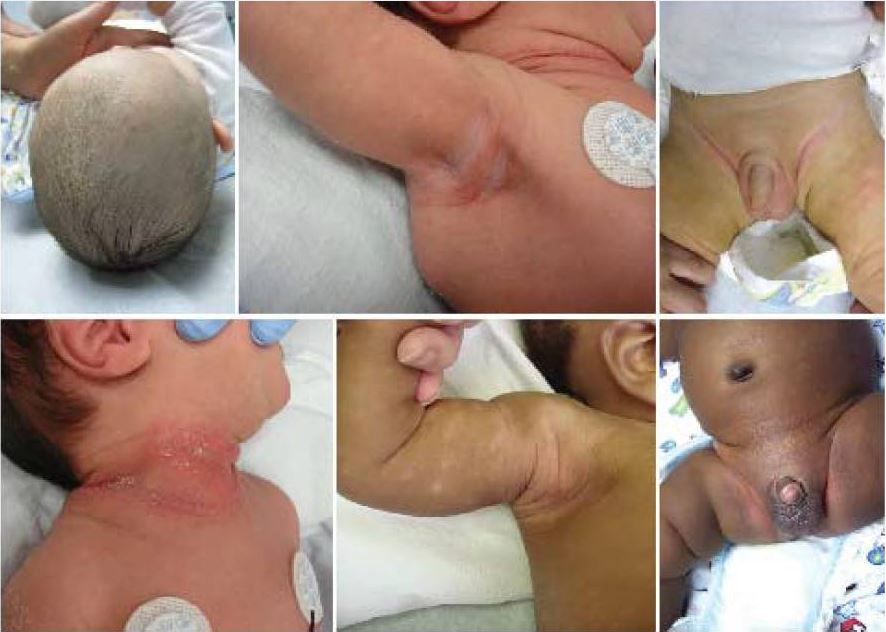
Dermatitis Dermatitis Any inflammation of the skin. Atopic Dermatitis (Eczema) seborreica en EN Erythema nodosum is an immune-mediated panniculitis (inflammation of the subcutaneous fat) caused by a type IV (delayed-type) hypersensitivity reaction. It commonly manifests in young women as tender, erythematous nodules on the shins. Erythema Nodosum bebés

  • Zonas afectadas:
    • La cabeza:
      • Cuero cabelludo (“costra láctea”)
      • Cejas, párpados, pliegues nasolabiales y retroauriculares, y cuello
    • Tronco: ombligo y zonas intertriginosas ( al AL Amyloidosis contrario que la dermatitis Dermatitis Any inflammation of the skin. Atopic Dermatitis (Eczema) atópica, que prescinde de las zonas intertriginosas)
  • Enfermedad de Leiner:
    • Enfermedad rara asociada a la deficiencia de complemento (C5)
    • Dermatitis Dermatitis Any inflammation of the skin. Atopic Dermatitis (Eczema) seborreica severa generalizada
    • También acompañada por diarrea y/o vómitos, anemia Anemia Anemia is a condition in which individuals have low Hb levels, which can arise from various causes. Anemia is accompanied by a reduced number of RBCs and may manifest with fatigue, shortness of breath, pallor, and weakness. Subtypes are classified by the size of RBCs, chronicity, and etiology. Anemia: Overview and Types o retraso en EN Erythema nodosum is an immune-mediated panniculitis (inflammation of the subcutaneous fat) caused by a type IV (delayed-type) hypersensitivity reaction. It commonly manifests in young women as tender, erythematous nodules on the shins. Erythema Nodosum el desarrollo

Dermatitis Dermatitis Any inflammation of the skin. Atopic Dermatitis (Eczema) seborreica en EN Erythema nodosum is an immune-mediated panniculitis (inflammation of the subcutaneous fat) caused by a type IV (delayed-type) hypersensitivity reaction. It commonly manifests in young women as tender, erythematous nodules on the shins. Erythema Nodosum adultos

  • Zonas afectadas:
    • Cuero cabelludo: caspa/pitiriasis sicca; escamas finas y blancas en EN Erythema nodosum is an immune-mediated panniculitis (inflammation of the subcutaneous fat) caused by a type IV (delayed-type) hypersensitivity reaction. It commonly manifests in young women as tender, erythematous nodules on the shins. Erythema Nodosum el cuero cabelludo
    • La cara:
      • Cejas, glabela, párpados, alas ALAS An enzyme of the transferase class that catalyzes condensation of the succinyl group from succinyl coenzyme a with glycine to form delta-aminolevulinate. It is a pyridoxal phosphate protein and the reaction occurs in mitochondria as the first step of the heme biosynthetic pathway. The enzyme is a key regulatory enzyme in heme biosynthesis. In liver feedback is inhibited by heme. Heme Metabolism nasales, pliegues nasolabiales ( al AL Amyloidosis contrario que el lupus, que prescinde de los LOS Neisseria pliegues nasolabiales)
      • Zonas de bigote y barba; mejora con el afeitado
    • Tronco:
      • Zonas intertriginosas (axilas, pliegues inframamarios, región anogenital)
      • Parte superior del pecho y espalda

Dermatitis Dermatitis Any inflammation of the skin. Atopic Dermatitis (Eczema) seborreica en EN Erythema nodosum is an immune-mediated panniculitis (inflammation of the subcutaneous fat) caused by a type IV (delayed-type) hypersensitivity reaction. It commonly manifests in young women as tender, erythematous nodules on the shins. Erythema Nodosum pacientes con VIH

  • En EN Erythema nodosum is an immune-mediated panniculitis (inflammation of the subcutaneous fat) caused by a type IV (delayed-type) hypersensitivity reaction. It commonly manifests in young women as tender, erythematous nodules on the shins. Erythema Nodosum pacientes con recuentos de CD4 < 400 células/microL, las lesiones pueden ser generalizadas y difíciles de controlar.
  • La dermatitis Dermatitis Any inflammation of the skin. Atopic Dermatitis (Eczema) seborreica puede ser el marcador clínico cutáneo inicial del VIH/SIDA (caracterizado por una aparición repentina y grave, distribución atípica de las lesiones o resistencia al AL Amyloidosis tratamiento)
  • Puede mejorar con la terapia antirretroviral

Diagnóstico

  • El diagnóstico se basa en EN Erythema nodosum is an immune-mediated panniculitis (inflammation of the subcutaneous fat) caused by a type IV (delayed-type) hypersensitivity reaction. It commonly manifests in young women as tender, erythematous nodules on the shins. Erythema Nodosum los LOS Neisseria hallazgos clínicos.
  • La biopsia puede utilizarse si el diagnóstico es incierto. Hallazgos en EN Erythema nodosum is an immune-mediated panniculitis (inflammation of the subcutaneous fat) caused by a type IV (delayed-type) hypersensitivity reaction. It commonly manifests in young women as tender, erythematous nodules on the shins. Erythema Nodosum la biopsia:
    • Infiltrado inflamatorio perivascular superficial (neutrófilos, linfocitos)
    • Hiperplasia psoriasiforme
    • Paraqueratosis (retención de núcleos en EN Erythema nodosum is an immune-mediated panniculitis (inflammation of the subcutaneous fat) caused by a type IV (delayed-type) hypersensitivity reaction. It commonly manifests in young women as tender, erythematous nodules on the shins. Erythema Nodosum el estrato córneo)
    • Espongiosis focal
    • Especies de levadura en EN Erythema nodosum is an immune-mediated panniculitis (inflammation of the subcutaneous fat) caused by a type IV (delayed-type) hypersensitivity reaction. It commonly manifests in young women as tender, erythematous nodules on the shins. Erythema Nodosum el estrato córneo
  • En EN Erythema nodosum is an immune-mediated panniculitis (inflammation of the subcutaneous fat) caused by a type IV (delayed-type) hypersensitivity reaction. It commonly manifests in young women as tender, erythematous nodules on the shins. Erythema Nodosum el VIH: más paraqueratosis, mayor infiltrado inflamatorio y menos espongiosis

Tratamiento

Abordaje general

  • Evitar las temperaturas frías
  • Suspender los LOS Neisseria medicamentos que puedan desencadenar brotes
  • Tratar las comorbilidades asociadas

Terapia médica

  • Agentes tópicos que contienen:
    • Sulfuro de selenio: tiene propiedades antifúngicas
    • Alquitrán: disminuye la inflamación y tiene propiedades antifúngicas
    • Azufre: queratolítico con propiedades antifúngicas
    • Ácido salicílico: queratolítico; ablanda las escamas gruesas
    • Piritionato de zinc Zinc A metallic element of atomic number 30 and atomic weight 65. 38. It is a necessary trace element in the diet, forming an essential part of many enzymes, and playing an important role in protein synthesis and in cell division. Zinc deficiency is associated with anemia, short stature, hypogonadism, impaired wound healing, and geophagia. It is known by the symbol zn. Trace Elements: tiene propiedades fungistáticas y antibacterianas
  • Antifúngicos:
    • Tópico: ketoconazol, naftifina, ciclopirox
    • Ketoconazol, fluconazol o itraconazol sistémico si es refractario o se presenta con enfermedad extensa
  • Esteroides tópicos:
    • Sólo se utiliza para los LOS Neisseria brotes agudos
    • No se recomienda el uso a largo plazo debido a la atrofia dérmica y al AL Amyloidosis mayor riesgo de recurrencia y dependencia
  • Inhibidores de la calcineurina ( tacrolimus Tacrolimus A macrolide isolated from the culture broth of a strain of streptomyces tsukubaensis that has strong immunosuppressive activity in vivo and prevents the activation of T-lymphocytes in response to antigenic or mitogenic stimulation in vitro. Immunosuppressants, pimecrolimus Pimecrolimus Immunosuppressants) utilizados como alternativas a los LOS Neisseria esteroides, especialmente para zonas delicadas (e.g., la cara).

Diagnóstico Diferencial

Los LOS Neisseria diagnósticos diferenciales de la dermatitis Dermatitis Any inflammation of the skin. Atopic Dermatitis (Eczema) seborreica incluyen las siguientes afecciones:

  • Dermatitis Dermatitis Any inflammation of the skin. Atopic Dermatitis (Eczema) atópica: enfermedad cutánea crónica, recidivante e inflamatoria que suele preceder al AL Amyloidosis asma ASMA Autoimmune Hepatitis y a otros trastornos alérgicos. Las principales características de esta afección cutánea son el prurito intenso y las lesiones cutáneas eczematosas.
  • Psoriasis Psoriasis Psoriasis is a common T-cell-mediated inflammatory skin condition. The etiology is unknown, but is thought to be due to genetic inheritance and environmental triggers. There are 4 major subtypes, with the most common form being chronic plaque psoriasis. Psoriasis: trastorno cutáneo crónico, recurrente y recidivante, caracterizado por la inflamación e hiperproliferación de las células cutáneas de la epidermis Epidermis The external, nonvascular layer of the skin. It is made up, from within outward, of five layers of epithelium: (1) basal layer (stratum basale epidermidis); (2) spinous layer (stratum spinosum epidermidis); (3) granular layer (stratum granulosum epidermidis); (4) clear layer (stratum lucidum epidermidis); and (5) horny layer (stratum corneum epidermidis). Skin: Structure and Functions. La psoriasis Psoriasis Psoriasis is a common T-cell-mediated inflammatory skin condition. The etiology is unknown, but is thought to be due to genetic inheritance and environmental triggers. There are 4 major subtypes, with the most common form being chronic plaque psoriasis. Psoriasis se presenta con placas de color salmón con escamas plateadas superpuestas, por lo que esta enfermedad también se denomina psoriasis Psoriasis Psoriasis is a common T-cell-mediated inflammatory skin condition. The etiology is unknown, but is thought to be due to genetic inheritance and environmental triggers. There are 4 major subtypes, with the most common form being chronic plaque psoriasis. Psoriasis en EN Erythema nodosum is an immune-mediated panniculitis (inflammation of the subcutaneous fat) caused by a type IV (delayed-type) hypersensitivity reaction. It commonly manifests in young women as tender, erythematous nodules on the shins. Erythema Nodosum placas.
  • Impétigo: enfermedad infecciosa caracterizada por una infección bacteriana de la piel. El impétigo puede presentarse con lesiones bullosas o no bullosas. Las costras del impétigo no bulloso son de color miel y se localizan en EN Erythema nodosum is an immune-mediated panniculitis (inflammation of the subcutaneous fat) caused by a type IV (delayed-type) hypersensitivity reaction. It commonly manifests in young women as tender, erythematous nodules on the shins. Erythema Nodosum la cara y en EN Erythema nodosum is an immune-mediated panniculitis (inflammation of the subcutaneous fat) caused by a type IV (delayed-type) hypersensitivity reaction. It commonly manifests in young women as tender, erythematous nodules on the shins. Erythema Nodosum las extremidades superiores o inferiores. El impétigo bulloso, como su nombre indica, implica la formación de erupciones cutáneas bullosas.
  • Tiña versicolor: Malassezia Malassezia Malassezia is a lipophilic yeast commonly found on the skin surfaces of many animals, including humans. In the presence of certain environments or triggers, this fungus can cause pathologic diseases ranging from superficial skin conditions (tinea versicolor and dermatitis) to invasive disease (e.g., Malassezia folliculitis, catheter-associated fungemia, meningitis, and urinary tract infections). Malassezia Fungi furfur es el patógeno causante de esta infección superficial de la piel, que se presenta con hipopigmentación o hiperpigmentación de la zona infectada.
  • Tinea capitis Tinea capitis Ringworm of the scalp and associated hair mainly caused by species of Microsporum; Trichophyton; and Epidermophyton, which may occasionally involve the eyebrows and eyelashes. Dermatophytes/Tinea Infections: infección de la piel causada por hongos dermatofitos. Existen 3 tipos de dermatofitos: trichophyton Trichophyton A mitosporic fungal genus and an anamorphic form of arthroderma. Various species attack the skin, nails, and hair. Dermatophytes/Tinea Infections, epidermophyton Epidermophyton A fungal genus which grows in the epidermis and is the cause of tinea. Dermatophytes/Tinea Infections y microsporum Microsporum A mitosporic oxygenales fungal genus causing various diseases of the skin and hair. The species microsporum canis produces tinea capitis and tinea corporis, which usually are acquired from domestic cats and dogs. Teleomorphs includes arthroderma (nannizzia). Dermatophytes/Tinea Infections.
  • Pitiriasis rosada: una erupción cutánea común que se caracteriza por una única mancha cutánea que suele evolucionar hacia un exantema generalizado al AL Amyloidosis cabo de una semana. La afección suele durar 6 semanas y es autolimitada, con un excelente pronóstico.
  • Candidiasis Candidiasis Candida is a genus of dimorphic, opportunistic fungi. Candida albicans is part of the normal human flora and is the most common cause of candidiasis. The clinical presentation varies and can include localized mucocutaneous infections (e.g., oropharyngeal, esophageal, intertriginous, and vulvovaginal candidiasis) and invasive disease (e.g., candidemia, intraabdominal abscess, pericarditis, and meningitis). Candida/Candidiasis: infección fúngica oportunista que puede afectar al AL Amyloidosis tracto gastrointestinal o a la piel, o ser sistémica en EN Erythema nodosum is an immune-mediated panniculitis (inflammation of the subcutaneous fat) caused by a type IV (delayed-type) hypersensitivity reaction. It commonly manifests in young women as tender, erythematous nodules on the shins. Erythema Nodosum pacientes inmunodeprimidos. La presentación clínica varía y depende de la gravedad de la inmunodepresión y del lugar anatómico afectado.
  • Pénfigo vulgar: enfermedad crónica, autoinmune e intraepitelial que se caracteriza por la formación de ampollas en EN Erythema nodosum is an immune-mediated panniculitis (inflammation of the subcutaneous fat) caused by a type IV (delayed-type) hypersensitivity reaction. It commonly manifests in young women as tender, erythematous nodules on the shins. Erythema Nodosum la piel y las mucosas. Causada por autoanticuerpos, que se dirigen contra antígenos diana presentes en EN Erythema nodosum is an immune-mediated panniculitis (inflammation of the subcutaneous fat) caused by a type IV (delayed-type) hypersensitivity reaction. It commonly manifests in young women as tender, erythematous nodules on the shins. Erythema Nodosum la superficie celular de los LOS Neisseria queratinocitos.
  • Sífilis secundaria: la sífilis primaria no tratada se convierte en EN Erythema nodosum is an immune-mediated panniculitis (inflammation of the subcutaneous fat) caused by a type IV (delayed-type) hypersensitivity reaction. It commonly manifests in young women as tender, erythematous nodules on the shins. Erythema Nodosum sífilis secundaria. Los LOS Neisseria pacientes presentan una erupción maculopapular Maculopapular Dermatologic Examination generalizada no pruriginosa, generalmente en EN Erythema nodosum is an immune-mediated panniculitis (inflammation of the subcutaneous fat) caused by a type IV (delayed-type) hypersensitivity reaction. It commonly manifests in young women as tender, erythematous nodules on the shins. Erythema Nodosum las palmas de las manos y las plantas de los LOS Neisseria pies, junto con lesiones pustulosas. Diversas lesiones cutáneas incluyen condilomas lata y placas blancas.
  • Escabiosis: infección cutánea altamente contagiosa causada por los LOS Neisseria ácaros Sarcoptes scabiei Sarcoptes scabiei A species of mite that causes scabies in humans and sarcoptic mange in other animals. Specific variants of s. Scabiei exist for humans and animals, but many have the ability to cross species and cause disease. Scabies que se transmiten por contacto físico directo. La escabiosis causa pápulas eritematosas y pruriginosas, vesículas dispersas y huellas de madriguera finas y curvilíneas.
Sitio Diagnóstico diferencial
Cuero cabelludo Psoriasis Psoriasis Psoriasis is a common T-cell-mediated inflammatory skin condition. The etiology is unknown, but is thought to be due to genetic inheritance and environmental triggers. There are 4 major subtypes, with the most common form being chronic plaque psoriasis. Psoriasis, caspa, dermatitis Dermatitis Any inflammation of the skin. Atopic Dermatitis (Eczema) atópica, tinea capitis Tinea capitis Ringworm of the scalp and associated hair mainly caused by species of Microsporum; Trichophyton; and Epidermophyton, which may occasionally involve the eyebrows and eyelashes. Dermatophytes/Tinea Infections
Cara Psoriasis Psoriasis Psoriasis is a common T-cell-mediated inflammatory skin condition. The etiology is unknown, but is thought to be due to genetic inheritance and environmental triggers. There are 4 major subtypes, with the most common form being chronic plaque psoriasis. Psoriasis, impétigo, dermatitis Dermatitis Any inflammation of the skin. Atopic Dermatitis (Eczema) de contacto
Canal auditivo Psoriasis Psoriasis Psoriasis is a common T-cell-mediated inflammatory skin condition. The etiology is unknown, but is thought to be due to genetic inheritance and environmental triggers. There are 4 major subtypes, with the most common form being chronic plaque psoriasis. Psoriasis, dermatitis Dermatitis Any inflammation of the skin. Atopic Dermatitis (Eczema) de contacto
Párpados Dermatitis Dermatitis Any inflammation of the skin. Atopic Dermatitis (Eczema) atópica, infestación por Demodex folliculorum Demodex Folliculorum Infectious Folliculitis
Pecho y tronco Pitiriasis rosada, tiña versicolor
Zonas intertriginosas Psoriasis Psoriasis Psoriasis is a common T-cell-mediated inflammatory skin condition. The etiology is unknown, but is thought to be due to genetic inheritance and environmental triggers. There are 4 major subtypes, with the most common form being chronic plaque psoriasis. Psoriasis, candidiasis Candidiasis Candida is a genus of dimorphic, opportunistic fungi. Candida albicans is part of the normal human flora and is the most common cause of candidiasis. The clinical presentation varies and can include localized mucocutaneous infections (e.g., oropharyngeal, esophageal, intertriginous, and vulvovaginal candidiasis) and invasive disease (e.g., candidemia, intraabdominal abscess, pericarditis, and meningitis). Candida/Candidiasis
Todos los LOS Neisseria sitios, descartar Sífilis secundaria, pénfigo, escabiosis

Referencias

  1. Berk, T.; Scheinfeld, N. (2010). Seborrheic dermatitis. P T., 35(6), 348–352. https://www.ncbi.nlm.nih.gov/pmc/articles/PMC2888552/
  2. Borda, L.; Wikramanayake, T. (2015). Seborrheic dermatitis and dandruff: a comprehensive review. J Clin Investig Dermatol, 3(2), 10.13188/2373–1044.1000019. https://www.ncbi.nlm.nih.gov/pmc/articles/PMC4852869/
  3. Clark, G.; Pope, S.; Jaboori, K. (2015). Diagnosis and treatment of seborrheic dermatitis. Am Fam Physician, 91(3), 185–190. https://www.aafp.org/afp/2015/0201/p185.html
  4. Johnson, B.; Nunley, J. (2000). Treatment of seborrheic dermatitis. Am Fam Physician, 61(9), 2703–2710.
  5. Sasseville, D.; Fowler, J. & Corona, R. (Eds.). (2020). Seborrheic dermatitis in adolescents and adults. UpToDate. Retrieved 25 Aug 2020, from https://www.uptodate.com/contents/seborrheic-dermatitis-in-adolescents-and-adults
  6. Handler, M. Z. & James, W. D. (2023). Seborrheic dermatitis. In Medscape. Retrieved June 24, 2025, from https://emedicine.medscape.com/article/1108312-overview
  7. Tucker, D.; Masood, S. (2020). Seborrheic dermatitis. https://www.ncbi.nlm.nih.gov/books/NBK551707/

¡Crea tu cuenta gratis o inicia una sesión para seguir leyendo!

Regístrate ahora y obtén acceso gratuito a Lecturio con páginas de concepto, videos médicos y cuestionarios para tu educación médica.

User Reviews

Que tengas una sesión de estudio alegre y navideña 🎁 Ahorra 50% en todos los planes >>

Details