
Domina Conceptos Médicos

Estudia para la escuela de medicina y tus examenes con Lecturio.

Enfermedad de Gaucher

La enfermedad de Gaucher es un trastorno autosómico recesivo que afecta el almacenamiento lisosómico, causado por una deficiencia de la actividad enzimática de la glucocerebrosidasa; que da lugar a la acumulación de glucocerebrósido en EN Erythema nodosum is an immune-mediated panniculitis (inflammation of the subcutaneous fat) caused by a type IV (delayed-type) hypersensitivity reaction. It commonly manifests in young women as tender, erythematous nodules on the shins. Erythema Nodosum las células y ciertos órganos. La enfermedad se clasifica en EN Erythema nodosum is an immune-mediated panniculitis (inflammation of the subcutaneous fat) caused by a type IV (delayed-type) hypersensitivity reaction. It commonly manifests in young women as tender, erythematous nodules on the shins. Erythema Nodosum 3 tipos con presentación clínica variable Variable Variables represent information about something that can change. The design of the measurement scales, or of the methods for obtaining information, will determine the data gathered and the characteristics of that data. As a result, a variable can be qualitative or quantitative, and may be further classified into subgroups. Types of Variables. El tipo 1 es no neuropático, mientras que los LOS Neisseria tipos 2 y 3 son neuropáticos. Las manifestaciones pueden incluir hematomas, letargo, anemia Anemia Anemia is a condition in which individuals have low Hb levels, which can arise from various causes. Anemia is accompanied by a reduced number of RBCs and may manifest with fatigue, shortness of breath, pallor, and weakness. Subtypes are classified by the size of RBCs, chronicity, and etiology. Anemia: Overview and Types, afectación esquelética y hepatoesplenomegalia. Los LOS Neisseria tipos neuropáticos pueden presentarse con deterioro cognitivo, ataxia Ataxia Impairment of the ability to perform smoothly coordinated voluntary movements. This condition may affect the limbs, trunk, eyes, pharynx, larynx, and other structures. Ataxia may result from impaired sensory or motor function. Sensory ataxia may result from posterior column injury or peripheral nerve diseases. Motor ataxia may be associated with cerebellar diseases; cerebral cortex diseases; thalamic diseases; basal ganglia diseases; injury to the red nucleus; and other conditions. Ataxia-telangiectasia, anomalías de la mirada, y convulsiones. El diagnóstico se basa en EN Erythema nodosum is an immune-mediated panniculitis (inflammation of the subcutaneous fat) caused by a type IV (delayed-type) hypersensitivity reaction. It commonly manifests in young women as tender, erythematous nodules on the shins. Erythema Nodosum la sospecha clínica y se confirma mediante la medición de la actividad de la glucocerebrosidasa en EN Erythema nodosum is an immune-mediated panniculitis (inflammation of the subcutaneous fat) caused by a type IV (delayed-type) hypersensitivity reaction. It commonly manifests in young women as tender, erythematous nodules on the shins. Erythema Nodosum los LOS Neisseria leucocitos de sangre periférica. El análisis genético también puede utilizarse para confirmar el diagnóstico. El tratamiento es de soporte y se centra en EN Erythema nodosum is an immune-mediated panniculitis (inflammation of the subcutaneous fat) caused by a type IV (delayed-type) hypersensitivity reaction. It commonly manifests in young women as tender, erythematous nodules on the shins. Erythema Nodosum el control de los LOS Neisseria síntomas y la mejora de la calidad de vida. La terapia de reemplazo enzimático, la terapia de reducción de sustrato y el trasplante de médula ósea son opciones de tratamiento para algunos pacientes.

Last updated: Apr 17, 2025

Editorial responsibility: Stanley Oiseth, Lindsay Jones, Evelin Maza

Descripción General

Etiología

La enfermedad de Gaucher es el resultado de una deficiencia de la hidrolasa lisosómica beta-glucosidasa (glucocerebrosidasa).

  • Codificada por el gen de la glucocerebrosidasa 1 (GBA1) situado en EN Erythema nodosum is an immune-mediated panniculitis (inflammation of the subcutaneous fat) caused by a type IV (delayed-type) hypersensitivity reaction. It commonly manifests in young women as tender, erythematous nodules on the shins. Erythema Nodosum el cromosoma 1q21-q31.
  • Autosómica recesiva
  • Hay más de 400 mutaciones distintas; 6 mutaciones son muy comunes entre la población judía askenazí.

Clasificación

La enfermedad de Gaucher se clasifica en EN Erythema nodosum is an immune-mediated panniculitis (inflammation of the subcutaneous fat) caused by a type IV (delayed-type) hypersensitivity reaction. It commonly manifests in young women as tender, erythematous nodules on the shins. Erythema Nodosum 3 tipos:

  • Tipo 1: No neuropática
  • Tipo 2: Forma neuropática aguda
  • Tipo 3: Forma neuropática crónica o subaguda, que se clasifica a su vez como:
    • Tipo 3a
    • Tipo 3b
    • Tipo 3c

Epidemiología

  • Tipo 1
    • La más común, el 90% de los LOS Neisseria casos de enfermedad de Gaucher
    • 1 de cada 40 000–50 000 nacidos vivos en EN Erythema nodosum is an immune-mediated panniculitis (inflammation of the subcutaneous fat) caused by a type IV (delayed-type) hypersensitivity reaction. It commonly manifests in young women as tender, erythematous nodules on the shins. Erythema Nodosum la población general
    • Más común en EN Erythema nodosum is an immune-mediated panniculitis (inflammation of the subcutaneous fat) caused by a type IV (delayed-type) hypersensitivity reaction. It commonly manifests in young women as tender, erythematous nodules on the shins. Erythema Nodosum la población judía askenazí:
      • Trastorno hereditario más frecuente entre los LOS Neisseria judíos askenazíes
      • Frecuencia de portador: 6%.
  • Tipo 2
    • Rara
    • Incidencia: 1 de cada 150 000 en EN Erythema nodosum is an immune-mediated panniculitis (inflammation of the subcutaneous fat) caused by a type IV (delayed-type) hypersensitivity reaction. It commonly manifests in young women as tender, erythematous nodules on the shins. Erythema Nodosum la población general
    • No hay predilección étnica
    • Rara en EN Erythema nodosum is an immune-mediated panniculitis (inflammation of the subcutaneous fat) caused by a type IV (delayed-type) hypersensitivity reaction. It commonly manifests in young women as tender, erythematous nodules on the shins. Erythema Nodosum la población judía askenazí
  • Tipo 3
    • Incidencia: 1 de cada 200 000 en EN Erythema nodosum is an immune-mediated panniculitis (inflammation of the subcutaneous fat) caused by a type IV (delayed-type) hypersensitivity reaction. It commonly manifests in young women as tender, erythematous nodules on the shins. Erythema Nodosum la población general
    • Representa el 5% de todos los LOS Neisseria pacientes con deficiencia de glucocerebrosidasa
    • Más común en EN Erythema nodosum is an immune-mediated panniculitis (inflammation of the subcutaneous fat) caused by a type IV (delayed-type) hypersensitivity reaction. It commonly manifests in young women as tender, erythematous nodules on the shins. Erythema Nodosum:

Fisiopatología


Una deficiencia de glucocerebrosidasa da lugar a la acumulación de glucocerebrósido en EN Erythema nodosum is an immune-mediated panniculitis (inflammation of the subcutaneous fat) caused by a type IV (delayed-type) hypersensitivity reaction. It commonly manifests in young women as tender, erythematous nodules on the shins. Erythema Nodosum las células del sistema reticuloendotelial, lo que provoca:
  • Infiltración de la médula ósea → disminución de hematopoyesis → citopenias
  • ↓ Densidad ósea
  • Hepatoesplenomegalia
  • Acumulación de macrófagos cargados de lípidos en los espacios perivasculares del cerebro
Vía de almacenamiento lisosomal para la deficiencia de glucocerebrosidasa.

La vía de almacenamiento lisosómico:

La deficiencia de glucocerebrosidasa es el resultado de la deficiencia de la glucocerebrosidasa (paso 3), lo que conduce a una acumulación de glucocerebrósido.

Imagen por Lecturio. Licencia: CC BY-NC-SA 4.0

Presentación Clínica

La enfermedad de Gaucher es una lipidosis multisistémica con una presentación clínica variable Variable Variables represent information about something that can change. The design of the measurement scales, or of the methods for obtaining information, will determine the data gathered and the characteristics of that data. As a result, a variable can be qualitative or quantitative, and may be further classified into subgroups. Types of Variables.
Tipo 1

  • Progresión en EN Erythema nodosum is an immune-mediated panniculitis (inflammation of the subcutaneous fat) caused by a type IV (delayed-type) hypersensitivity reaction. It commonly manifests in young women as tender, erythematous nodules on the shins. Erythema Nodosum el tiempo:
    • Edad de inicio variable Variable Variables represent information about something that can change. The design of the measurement scales, or of the methods for obtaining information, will determine the data gathered and the characteristics of that data. As a result, a variable can be qualitative or quantitative, and may be further classified into subgroups. Types of Variables, puede presentarse en EN Erythema nodosum is an immune-mediated panniculitis (inflammation of the subcutaneous fat) caused by a type IV (delayed-type) hypersensitivity reaction. It commonly manifests in young women as tender, erythematous nodules on the shins. Erythema Nodosum cualquier etapa de la vida
    • Algunos son asintomáticos durante toda la vida
    • Edad promedio al AL Amyloidosis momento del diagnóstico: 40 años
  • Signos y síntomas:
    • Hematomas por trombocitopenia
    • Cansancio crónico secundario a la anemia Anemia Anemia is a condition in which individuals have low Hb levels, which can arise from various causes. Anemia is accompanied by a reduced number of RBCs and may manifest with fatigue, shortness of breath, pallor, and weakness. Subtypes are classified by the size of RBCs, chronicity, and etiology. Anemia: Overview and Types
    • Hepatoesplenomegalia
    • Dolor Dolor Inflammation óseo
    • Necrosis Necrosis The death of cells in an organ or tissue due to disease, injury or failure of the blood supply. Ischemic Cell Damage avascular Avascular Corneal Abrasions, Erosion, and Ulcers del fémur
    • Fracturas patológicas
    • Osteopenia Osteopenia Osteoporosis/ osteoporosis Osteoporosis Osteoporosis refers to a decrease in bone mass and density leading to an increased number of fractures. There are 2 forms of osteoporosis: primary, which is commonly postmenopausal or senile; and secondary, which is a manifestation of immobilization, underlying medical disorders, or long-term use of certain medications. Osteoporosis
    • Enfermedad pulmonar intersticial
    • Hipertensión pulmonar
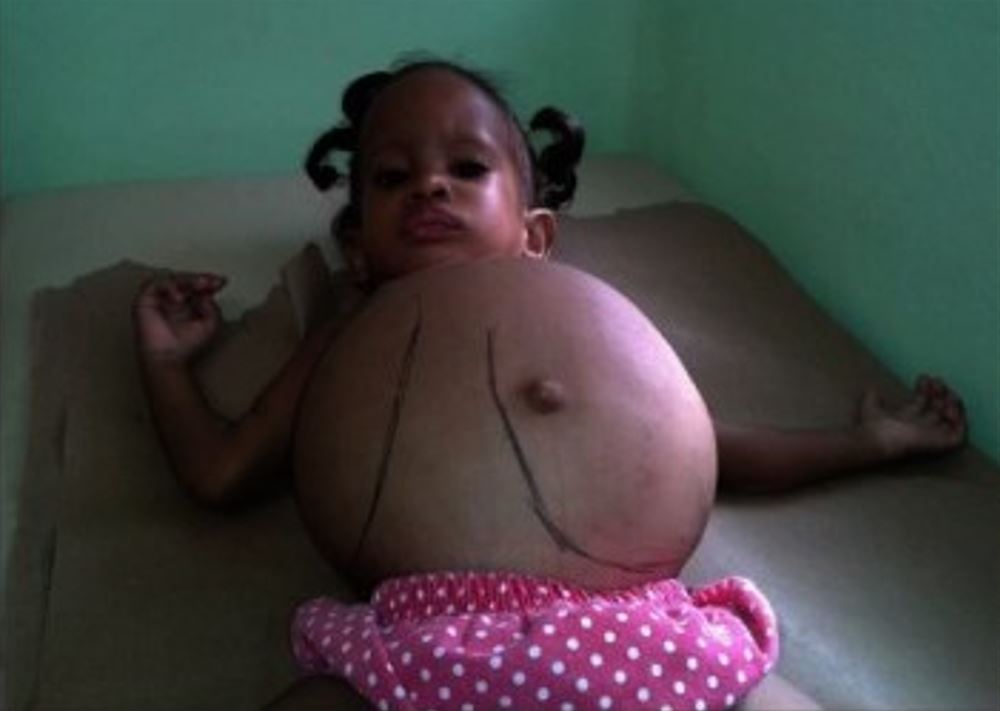
Una niña con hepatoesplenomegalia masiva debido a deficiencia de glucocerebrosidasa

Una niña con hepatoesplenomegalia masiva debido a deficiencia de glucocerebrosidasa

Imagen: “Dominican child with Gaucher disease” por Estrada-Veras JI, Cabrera-Peña GA, Pérez-Estrella de Ferrán C. Licencia: CC BY 4.0, recortada por Lecturio.
Tipo 2

  • Progresión en EN Erythema nodosum is an immune-mediated panniculitis (inflammation of the subcutaneous fat) caused by a type IV (delayed-type) hypersensitivity reaction. It commonly manifests in young women as tender, erythematous nodules on the shins. Erythema Nodosum el tiempo:
    • Presente antes de los LOS Neisseria 9 meses de edad
    • Puede presentarse en EN Erythema nodosum is an immune-mediated panniculitis (inflammation of the subcutaneous fat) caused by a type IV (delayed-type) hypersensitivity reaction. It commonly manifests in young women as tender, erythematous nodules on the shins. Erythema Nodosum el nacimiento o en EN Erythema nodosum is an immune-mediated panniculitis (inflammation of the subcutaneous fat) caused by a type IV (delayed-type) hypersensitivity reaction. It commonly manifests in young women as tender, erythematous nodules on the shins. Erythema Nodosum la infancia
    • Muerte en EN Erythema nodosum is an immune-mediated panniculitis (inflammation of the subcutaneous fat) caused by a type IV (delayed-type) hypersensitivity reaction. It commonly manifests in young women as tender, erythematous nodules on the shins. Erythema Nodosum etapa temprana de la vida:
      • A menudo a los LOS Neisseria 2 años de edad
      • Frecuentemente causada por aspiración o insuficiencia respiratoria
  • Signos y síntomas:
    • Curso neurodegenerativo rápido
    • Retraso en EN Erythema nodosum is an immune-mediated panniculitis (inflammation of the subcutaneous fat) caused by a type IV (delayed-type) hypersensitivity reaction. It commonly manifests in young women as tender, erythematous nodules on the shins. Erythema Nodosum el desarrollo
    • Dificultad para alimentarse
    • Disfagia
    • ↑ Tono muscular
    • Estridor por espasmo laríngeo
    • Convulsiones
    • Apraxia Apraxia A group of cognitive disorders characterized by the inability to perform previously learned skills that cannot be attributed to deficits of motor or sensory function. The two major subtypes of this condition are ideomotor and ideational apraxia, which refers to loss of the ability to mentally formulate the processes involved with performing an action. For example, dressing apraxia may result from an inability to mentally formulate the act of placing clothes on the body. Apraxias are generally associated with lesions of the dominant parietal lobe and supramarginal gyrus. Cranial Nerve Palsies oculomotora
    • Estrabismo
    • Hepatoesplenomegalia
    • Ictiosis
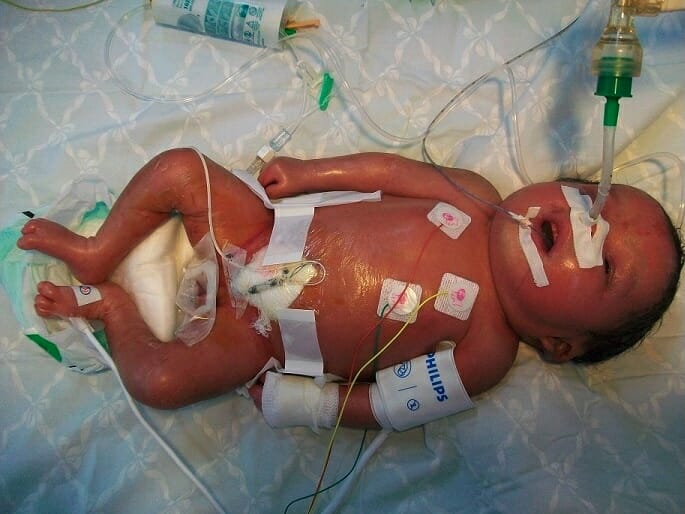
Neonatal presentations of Gaucher disease

Presentación neonatal de la enfermedad de Gaucher, subtipo 2: hidropesía, descamación y piel brillante

Imagen: “Neonatal presentations of Gaucher disease” por Neonatology Department, Charles Nicolle Hospital, Tunis-El Manar University, Tunis, Tunisia. Licencia: CC BY 2.0
Tipo 3

  • Progresión en EN Erythema nodosum is an immune-mediated panniculitis (inflammation of the subcutaneous fat) caused by a type IV (delayed-type) hypersensitivity reaction. It commonly manifests in young women as tender, erythematous nodules on the shins. Erythema Nodosum el tiempo:
    • Puede presentarse a los LOS Neisseria 2 años, a menudo en EN Erythema nodosum is an immune-mediated panniculitis (inflammation of the subcutaneous fat) caused by a type IV (delayed-type) hypersensitivity reaction. It commonly manifests in young women as tender, erythematous nodules on the shins. Erythema Nodosum la 1ra década de vida
    • Inicio gradual de los LOS Neisseria síntomas
    • Sin tratamiento, la muerte se produce en EN Erythema nodosum is an immune-mediated panniculitis (inflammation of the subcutaneous fat) caused by a type IV (delayed-type) hypersensitivity reaction. It commonly manifests in young women as tender, erythematous nodules on the shins. Erythema Nodosum pocos años.
    • Puede sobrevivir hasta la adultez
  • Signos y síntomas:
    • Encefalopatía progresiva
    • Convulsiones
    • Ralentización de los LOS Neisseria movimientos oculares sacádicos
    • Dolor Dolor Inflammation y fracturas óseas
    • Irregularidades esqueléticas
  • Características clínicas distintivas de los LOS Neisseria 3 subtipos:
    • Tipo 3a:
      • Manifestaciones neurológicas dominantes y enfermedad visceral leve
      • Miotonía progresiva y demencia
      • Ataxia Ataxia Impairment of the ability to perform smoothly coordinated voluntary movements. This condition may affect the limbs, trunk, eyes, pharynx, larynx, and other structures. Ataxia may result from impaired sensory or motor function. Sensory ataxia may result from posterior column injury or peripheral nerve diseases. Motor ataxia may be associated with cerebellar diseases; cerebral cortex diseases; thalamic diseases; basal ganglia diseases; injury to the red nucleus; and other conditions. Ataxia-telangiectasia
    • Tipo 3b:
      • Enfermedad visceral dominante y anomalías esqueléticas con signos neurológicos leves
      • Parálisis supranuclear aislada de la mirada
    • Tipo 3c (forma cardiovascular):
      • Enfermedad visceral asociada a afectación cardíaca (calcificación cardiovascular)
      • Parálisis supranuclear de la mirada
      • Opacidades corneales

Diagnóstico y Tratamiento

Diagnóstico

  • La sospecha clínica de la enfermedad de Gaucher se eleva ante la presencia de organomegalia, facilidad de aparición de hematomas, dolor Dolor Inflammation óseo y retraso en EN Erythema nodosum is an immune-mediated panniculitis (inflammation of the subcutaneous fat) caused by a type IV (delayed-type) hypersensitivity reaction. It commonly manifests in young women as tender, erythematous nodules on the shins. Erythema Nodosum el desarrollo.
  • Estudios de laboratorio de apoyo:
    • Pancitopenia
    • ↑ Pruebas de función hepática
  • Pruebas de diagnóstico:
    • Actividad de la glucocerebrosidasa en EN Erythema nodosum is an immune-mediated panniculitis (inflammation of the subcutaneous fat) caused by a type IV (delayed-type) hypersensitivity reaction. It commonly manifests in young women as tender, erythematous nodules on the shins. Erythema Nodosum los LOS Neisseria leucocitos (<15% de la actividad enzimática normal es diagnóstica)
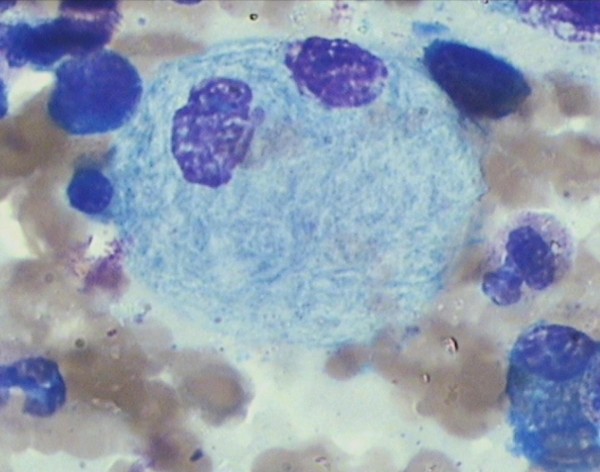
    • El análisis de la médula ósea puede mostrar células de Gaucher (ya no es la prueba de elección para la confirmación):
      • Macrófagos cargados de lípidos
      • El citoplasma tiene un aspecto de “papel fino arrugado”.
    • El análisis genético para identificar mutaciones específicas proporciona una confirmación adicional.
Frotis de médula ósea que muestra células de Gaucher

Frotis de médula ósea que muestra una célula de Gaucher en un paciente con deficiencia de glucocerebrosidasa tipo 3:
Observe que el citoplasma tiene un aspecto estriado y arrugado.

Imagen: “Bone marrow smear showing Gaucher cell” por Mohindroo, S. Licencia: CC BY 2.0

Tratamiento

El tratamiento es de soporte y se centra en EN Erythema nodosum is an immune-mediated panniculitis (inflammation of the subcutaneous fat) caused by a type IV (delayed-type) hypersensitivity reaction. It commonly manifests in young women as tender, erythematous nodules on the shins. Erythema Nodosum mejorar la calidad de vida. Algunos pacientes con enfermedad de Gaucher tienen síntomas leves y no requieren tratamiento.

  • Terapia de reemplazo enzimático:
    • Una opción para algunos pacientes
    • Administración intravenosa de glucocerebrosidasa
    • No ayuda con los LOS Neisseria síntomas del SNC, ya que la terapia de reemplazo enzimático no atraviesa la barrera hematoencefálica.
  • Terapia de reducción de sustrato:
    • Administración oral
    • El objetivo es ↓ la síntesis de glucocerebrósido → ↓ acumulación de glicolípidos.
  • Trasplante de médula ósea:
    • Se considera un último recurso para la enfermedad de Gaucher severa
    • ↑ Morbilidad y mortalidad
    • Proporciona una cura definitiva

Diagnóstico Diferencial

  • Enfermedad de Niemann-Pick tipo A: trastorno de almacenamiento lisosómico causado por una deficiencia de la enzima esfingomielinasa ácida. La enfermedad se caracteriza por una neurodegeneración progresiva que comienza a los LOS Neisseria pocos meses de vida y provoca la muerte a los LOS Neisseria 3 años. Las manifestaciones clínicas incluyen una mancha macular de color rojo cereza, dificultad para alimentarse, pérdida de habilidades motoras, hipotonía y organomegalia. El diagnóstico incluye la medición de la actividad de la enzima esfingomielinasa y pruebas genéticas. El tratamiento es de soporte.
  • Enfermedad de Tay-Sachs: trastorno de almacenamiento lisosómico autosómico recesivo causado por mutaciones genéticas en EN Erythema nodosum is an immune-mediated panniculitis (inflammation of the subcutaneous fat) caused by a type IV (delayed-type) hypersensitivity reaction. It commonly manifests in young women as tender, erythematous nodules on the shins. Erythema Nodosum el gen de la hexosaminidasa A (HEXA), que conduce a una neurodegeneración progresiva. Los LOS Neisseria síntomas clásicos en EN Erythema nodosum is an immune-mediated panniculitis (inflammation of the subcutaneous fat) caused by a type IV (delayed-type) hypersensitivity reaction. It commonly manifests in young women as tender, erythematous nodules on the shins. Erythema Nodosum los LOS Neisseria lactantes incluyen una rápida degeneración de las capacidades cognitivas y neuromusculares, ceguera progresiva y una mancha macular de color rojo cereza en EN Erythema nodosum is an immune-mediated panniculitis (inflammation of the subcutaneous fat) caused by a type IV (delayed-type) hypersensitivity reaction. It commonly manifests in young women as tender, erythematous nodules on the shins. Erythema Nodosum el examen físico. El diagnóstico se realiza con pruebas de actividad enzimática y análisis moleculares. El tratamiento es de soporte.
  • Enfermedad de Sandhoff: trastorno de almacenamiento lisosómico causado por una deficiencia tanto de hexosaminidasa tipo A (HEXA) como de hexosaminidasa tipo B (HEXB). La deficiencia de hexosaminidasa A y B, en EN Erythema nodosum is an immune-mediated panniculitis (inflammation of the subcutaneous fat) caused by a type IV (delayed-type) hypersensitivity reaction. It commonly manifests in young women as tender, erythematous nodules on the shins. Erythema Nodosum su variante juvenil, se caracteriza por una neurodegeneración progresiva que comienza a los LOS Neisseria 6 meses de edad. Las manifestaciones clínicas incluyen hiperacusia, una mancha macular de color rojo cereza, ceguera y convulsiones. El diagnóstico se realiza mediante la medición de la hexosaminidasa A y la hexosaminidasa B, así como por análisis genéticos. El tratamiento es de soporte.
  • Enfermedad de Pompe (enfermedad de almacenamiento de glucógeno II): un trastorno lisosómico y de almacenamiento de glucógeno causado por la deficiencia de alfa glucosidasa ácida. Existen 3 tipos, con inicios y presentaciones variables. Las manifestaciones clínicas incluyen retraso en EN Erythema nodosum is an immune-mediated panniculitis (inflammation of the subcutaneous fat) caused by a type IV (delayed-type) hypersensitivity reaction. It commonly manifests in young women as tender, erythematous nodules on the shins. Erythema Nodosum el desarrollo, dificultad para alimentarse, hipotonía, debilidad muscular progresiva, miocardiopatía hipertrófica e insuficiencia respiratoria. El diagnóstico se realiza con medición de la actividad enzimática y análisis genético molecular. El tratamiento incluye medidas de soporte y reemplazo enzimático.
  • Enfermedad de Fabry: un trastorno de almacenamiento lisosómico causado por la deficiencia de alfa-galactosidasa A. Esto provoca la deposición de glicofosfolípidos en EN Erythema nodosum is an immune-mediated panniculitis (inflammation of the subcutaneous fat) caused by a type IV (delayed-type) hypersensitivity reaction. It commonly manifests in young women as tender, erythematous nodules on the shins. Erythema Nodosum el endotelio vascular y en EN Erythema nodosum is an immune-mediated panniculitis (inflammation of the subcutaneous fat) caused by a type IV (delayed-type) hypersensitivity reaction. It commonly manifests in young women as tender, erythematous nodules on the shins. Erythema Nodosum las células del músculo liso. Las manifestaciones clínicas incluyen parestesias que afectan a manos y pies, lesiones cutáneas violáceas (angioqueratomas), disminución de la sudoración, complicaciones cardiovasculares y enfermedad renal. El diagnóstico se realiza con la medición de la actividad de la enzima alfa-galactosidasa A. El tratamiento incluye medidas de soporte y reemplazo enzimático.

Referencias

  1. Hertz, E., Smith, R. L., & Cohen, L. (2024). Gaucher disease provides a unique window into Parkinson disease pathogenesis. Nature Reviews Neurology, 20(9), 526–540. https://doi.org/10.1038/s41582-024-00999-z
  2. Hughes, D. A., & Pastores, G. M. (1993). Gaucher disease. In M. P. Adam et al. (Eds.), GeneReviews®. University of Washington. https://www.ncbi.nlm.nih.gov/books/NBK1269/
  3. Istaiti, M., Baris, H. N., Ardicli, D., Abu-Libdeh, B., Elpeleg, O., & Zimran, A. (2022). Real-life experience with oral eliglustat in patients with Gaucher disease previously treated with enzyme replacement therapy. Journal of Clinical Medicine, 11(21), Article 6265. https://doi.org/10.3390/jcm11216265
  4. Kulkarni, A., Sharma, R., Jadhav, S., & Mehta, A. (2024). Advancements in viral gene therapy for Gaucher disease. Genes, 15(3), Article 364. https://doi.org/10.3390/genes15030364
  5. Nelson, D. L., & Cox, M. M. (2021). Lehninger principles of biochemistry (8th ed.). W.H. Freeman and Company.
  6. UpToDate. (2025a). Gaucher disease: Pathogenesis, clinical manifestations, and diagnosis. https://www.uptodate.com/contents/gaucher-disease-pathogenesis-clinical-manifestations-and-diagnosis
  7. UpToDate. (2025b). Gaucher disease: Treatment. https://www.uptodate.com/contents/gaucher-disease-treatment?topicRef=2918&source=see_link

¡Crea tu cuenta gratis o inicia una sesión para seguir leyendo!

Regístrate ahora y obtén acceso gratuito a Lecturio con páginas de concepto, videos médicos y cuestionarios para tu educación médica.

User Reviews

Que tengas una sesión de estudio alegre y navideña 🎁 Ahorra 50% en todos los planes >>

Details