Domina Conceptos Médicos

Estudia para la escuela de medicina y tus examenes con Lecturio.

Compartimentos de Líquidos Corporales

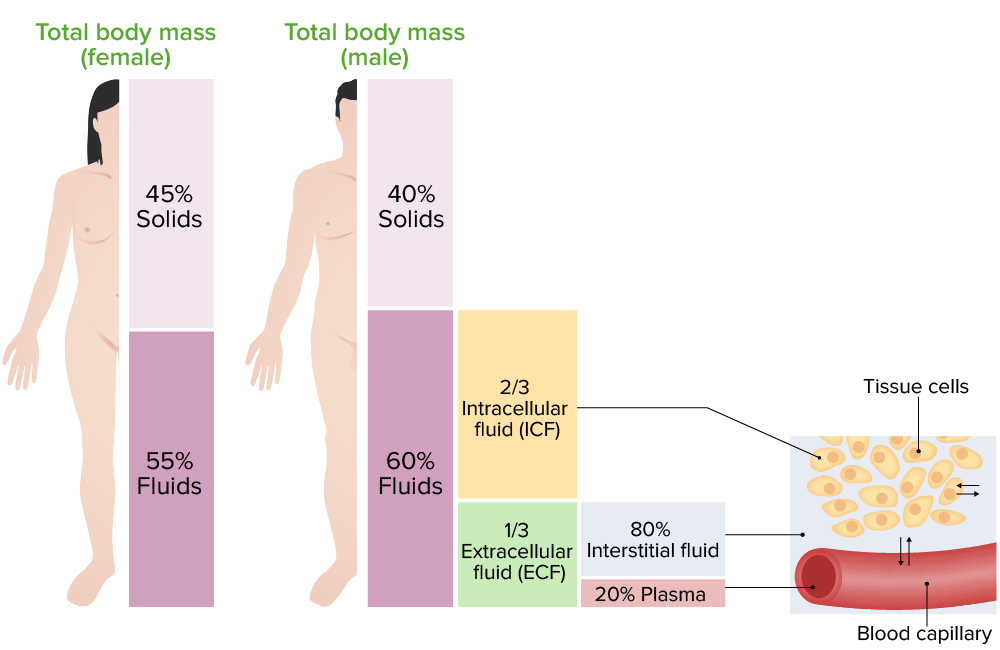
El cuerpo humano adulto está compuesto por un 60% de agua y se divide en EN Erythema nodosum is an immune-mediated panniculitis (inflammation of the subcutaneous fat) caused by a type IV (delayed-type) hypersensitivity reaction. It commonly manifests in young women as tender, erythematous nodules on the shins. Erythema Nodosum compartimentos de líquido extracelular e intracelular. El líquido extracelular está presente fuera de las células y constituye ⅓ del agua corporal total. El líquido intracelular está presente dentro de las células y constituye ⅔ del agua corporal total. Los LOS Neisseria líquidos intracelulares y extracelulares están separados en EN Erythema nodosum is an immune-mediated panniculitis (inflammation of the subcutaneous fat) caused by a type IV (delayed-type) hypersensitivity reaction. It commonly manifests in young women as tender, erythematous nodules on the shins. Erythema Nodosum compartimentos por membranas semipermeables, y el transporte de líquidos e iones se mantiene mediante canales en EN Erythema nodosum is an immune-mediated panniculitis (inflammation of the subcutaneous fat) caused by a type IV (delayed-type) hypersensitivity reaction. It commonly manifests in young women as tender, erythematous nodules on the shins. Erythema Nodosum la membrana celular. Cada compartimento contiene diferentes concentraciones de iones y moléculas osmolares. La carga relativa y la osmolaridad se mantienen rigurosamente por el transporte de agua y sustancias entre compartimentos. La hipernatremia, hiponatremia y edema Edema Edema is a condition in which excess serous fluid accumulates in the body cavity or interstitial space of connective tissues. Edema is a symptom observed in several medical conditions. It can be categorized into 2 types, namely, peripheral (in the extremities) and internal (in an organ or body cavity). Edema son afecciones clínicas que surgen de alteraciones en EN Erythema nodosum is an immune-mediated panniculitis (inflammation of the subcutaneous fat) caused by a type IV (delayed-type) hypersensitivity reaction. It commonly manifests in young women as tender, erythematous nodules on the shins. Erythema Nodosum el mantenimiento de la osmolaridad de los LOS Neisseria compartimentos de líquidos corporales.

Last updated: Dec 15, 2025

Editorial responsibility: Stanley Oiseth, Lindsay Jones, Evelin Maza

Descripción General

El agua en EN Erythema nodosum is an immune-mediated panniculitis (inflammation of the subcutaneous fat) caused by a type IV (delayed-type) hypersensitivity reaction. It commonly manifests in young women as tender, erythematous nodules on the shins. Erythema Nodosum el cuerpo humano adulto constituye aproximadamente el 60% del peso corporal total. El líquido se distribuye en EN Erythema nodosum is an immune-mediated panniculitis (inflammation of the subcutaneous fat) caused by a type IV (delayed-type) hypersensitivity reaction. It commonly manifests in young women as tender, erythematous nodules on the shins. Erythema Nodosum varios órganos, sistemas de órganos y tejidos. La suma del agua en EN Erythema nodosum is an immune-mediated panniculitis (inflammation of the subcutaneous fat) caused by a type IV (delayed-type) hypersensitivity reaction. It commonly manifests in young women as tender, erythematous nodules on the shins. Erythema Nodosum estos tejidos se conoce como agua corporal total.

  • El porcentaje de agua en EN Erythema nodosum is an immune-mediated panniculitis (inflammation of the subcutaneous fat) caused by a type IV (delayed-type) hypersensitivity reaction. It commonly manifests in young women as tender, erythematous nodules on the shins. Erythema Nodosum el cuerpo cambia con el desarrollo del cuerpo:
    • Hasta el 70% de la masa corporal en EN Erythema nodosum is an immune-mediated panniculitis (inflammation of the subcutaneous fat) caused by a type IV (delayed-type) hypersensitivity reaction. It commonly manifests in young women as tender, erythematous nodules on the shins. Erythema Nodosum lactantes
    • 50%–60% en EN Erythema nodosum is an immune-mediated panniculitis (inflammation of the subcutaneous fat) caused by a type IV (delayed-type) hypersensitivity reaction. It commonly manifests in young women as tender, erythematous nodules on the shins. Erythema Nodosum adultos normales
    • Tan bajo como 45% en EN Erythema nodosum is an immune-mediated panniculitis (inflammation of the subcutaneous fat) caused by a type IV (delayed-type) hypersensitivity reaction. It commonly manifests in young women as tender, erythematous nodules on the shins. Erythema Nodosum adultos mayores
  • El peso del agua corporal total representa:
    • 60% del peso magro en EN Erythema nodosum is an immune-mediated panniculitis (inflammation of the subcutaneous fat) caused by a type IV (delayed-type) hypersensitivity reaction. It commonly manifests in young women as tender, erythematous nodules on the shins. Erythema Nodosum los LOS Neisseria hombres
    • 50% del peso magro en EN Erythema nodosum is an immune-mediated panniculitis (inflammation of the subcutaneous fat) caused by a type IV (delayed-type) hypersensitivity reaction. It commonly manifests in young women as tender, erythematous nodules on the shins. Erythema Nodosum mujeres

Compartimentos de Líquidos Corporales

Descripción general

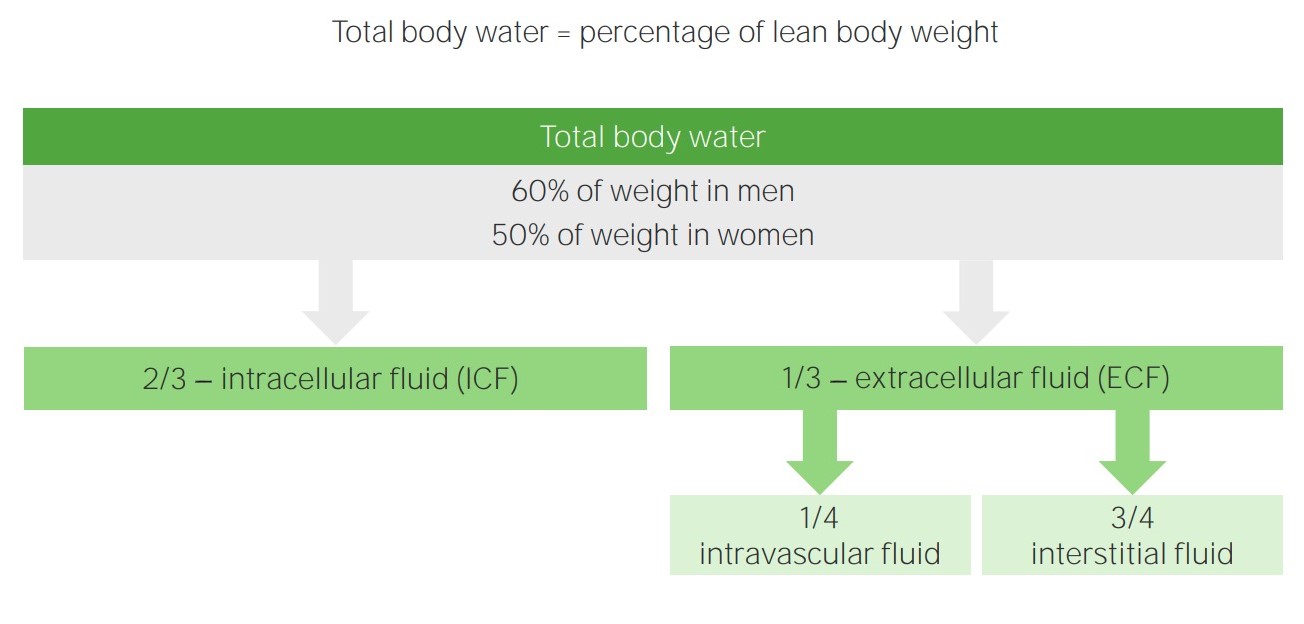
El agua corporal total se distribuye principalmente entre 2 compartimentos, a saber, los LOS Neisseria compartimentos de líquido extracelular y líquido intracelular.
  • El líquido extracelular está presente fuera de las células:
    • Constituye aproximadamente ⅓ del agua corporal total
    • El líquido extracelular incluye:
      • Líquido intravascular (¼ del líquido extracelular): componente principal del plasma Plasma The residual portion of blood that is left after removal of blood cells by centrifugation without prior blood coagulation. Transfusion Products
      • Líquido intersticial (¾ del líquido extracelular): se encuentra fuera de los LOS Neisseria vasos sanguíneos
  • El líquido intracelular está presente dentro de las células:
    • Constituye alrededor de ⅔ del agua corporal total
    • Componente principal del citoplasma de las células

Movimiento de líquido entre compartimentos

  • El líquido se separa en EN Erythema nodosum is an immune-mediated panniculitis (inflammation of the subcutaneous fat) caused by a type IV (delayed-type) hypersensitivity reaction. It commonly manifests in young women as tender, erythematous nodules on the shins. Erythema Nodosum compartimentos mediante membranas semipermeables. Las membranas son altamente permeables al AL Amyloidosis agua, pero requieren energía para transportar iones.
  • La distribución de líquido entre los LOS Neisseria compartimentos intracelular y extracelular está determinada por la concentración de Na+, cloruro (Cl)y otros electrolitos.
  • El agua se mueve entre compartimentos siguiendo gradientes osmóticos.
  • Un cambio en EN Erythema nodosum is an immune-mediated panniculitis (inflammation of the subcutaneous fat) caused by a type IV (delayed-type) hypersensitivity reaction. It commonly manifests in young women as tender, erythematous nodules on the shins. Erythema Nodosum la concentración relativa de soluto o agua hará que el agua se desplace entre compartimentos.
  • 2 procesos son responsables del movimiento pasivo del líquido a través de las membranas:
    • Difusión: Una sustancia pasa de un área de mayor concentración a un área de menor concentración.
    • Ósmosis: el agua es atraída a través de una membrana hacia una región donde hay una mayor concentración de soluto.

Medición de los LOS Neisseria compartimentos de líquidos corporales

Los LOS Neisseria volúmenes de los LOS Neisseria compartimentos se pueden medir determinando el volumen de distribución de una sustancia indicadora. Se agrega una cantidad conocida de un indicador a un compartimento, y la concentración del indicador en EN Erythema nodosum is an immune-mediated panniculitis (inflammation of the subcutaneous fat) caused by a type IV (delayed-type) hypersensitivity reaction. It commonly manifests in young women as tender, erythematous nodules on the shins. Erythema Nodosum ese compartimento se mide después de dejar suficiente tiempo para una distribución uniforme en EN Erythema nodosum is an immune-mediated panniculitis (inflammation of the subcutaneous fat) caused by a type IV (delayed-type) hypersensitivity reaction. It commonly manifests in young women as tender, erythematous nodules on the shins. Erythema Nodosum todo el compartimento. El volumen del compartimento se calcula de la siguiente manera:

Volumen = cantidad del indicador / concentración del indicador

Tabla: Compartimentos de líquidos corporales y sus indicadores asociados
Volumen Indicadores
Agua corporal total 3H2O, 2H2O, antipirina
Líquido extracelular 22Na, 125I-iotalamato, tiosulfato, inulina
Líquido intracelular Calculado como: (agua corporal total — volumen de líquido extracelular)
Volumen de plasma Plasma The residual portion of blood that is left after removal of blood cells by centrifugation without prior blood coagulation. Transfusion Products 125I-albúmina, tinte azul de Evans (T-1824)
Volumen de sangre Eritrocitos marcados con 51Cr, o calculados como: (volumen de sangre = volumen de plasma Plasma The residual portion of blood that is left after removal of blood cells by centrifugation without prior blood coagulation. Transfusion Products / (1 − hematocrito))
Líquido intersticial Calculado como: (volumen de líquido extracelular – volumen de plasma Plasma The residual portion of blood that is left after removal of blood cells by centrifugation without prior blood coagulation. Transfusion Products)
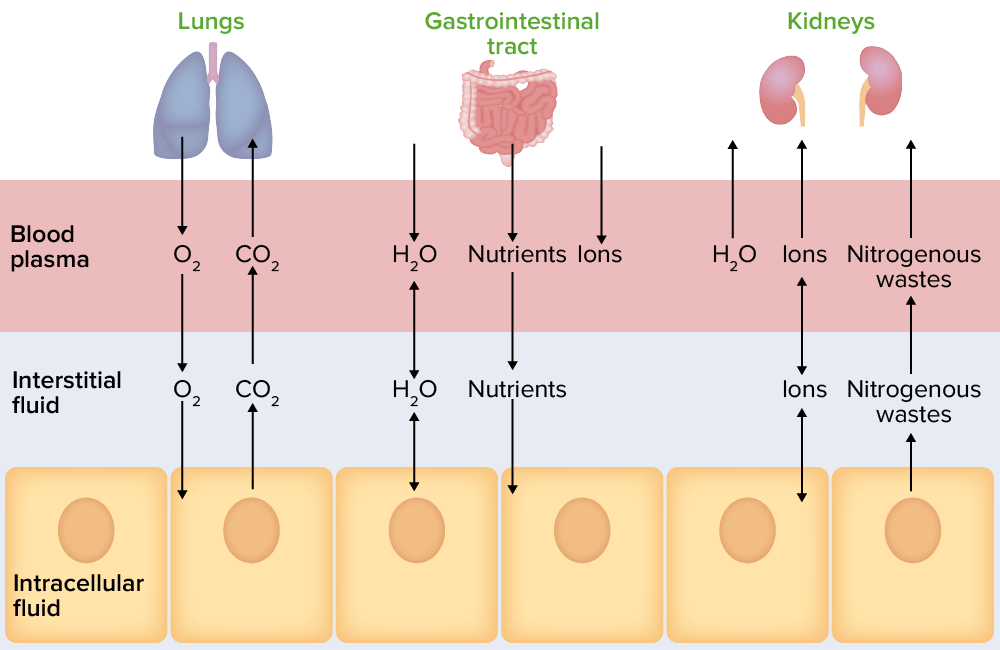
Movement of body fluids between compartments

Ilustración que representa el movimiento de los líquidos corporales entre compartimentos

Imagen por Lecturio.
Cambios en el Compartimento de Líquidos

Expansión hipo-osmótica del volumen

  • Produce un aumento del agua corporal total y una reducción de la osmolalidad
  • Se puede ver en EN Erythema nodosum is an immune-mediated panniculitis (inflammation of the subcutaneous fat) caused by a type IV (delayed-type) hypersensitivity reaction. It commonly manifests in young women as tender, erythematous nodules on the shins. Erythema Nodosum casos de:
    • Ingesta excesiva de agua
    • Síndrome de secreción inadecuada de hormona antidiurética ( SIADH SIADH Syndrome of inappropriate antidiuretic hormone secretion (SIADH) is a disorder of impaired water excretion due to the inability to suppress the secretion of antidiuretic hormone (ADH). SIADH is characterized by impaired water excretion leading to dilutional hyponatremia, which is mainly asymptomatic but may cause neurologic symptoms. S Syndrome of Inappropriate Antidiuretic Hormone Secretion (SIADH), por sus siglas en EN Erythema nodosum is an immune-mediated panniculitis (inflammation of the subcutaneous fat) caused by a type IV (delayed-type) hypersensitivity reaction. It commonly manifests in young women as tender, erythematous nodules on the shins. Erythema Nodosum inglés)
  • Cambios en EN Erythema nodosum is an immune-mediated panniculitis (inflammation of the subcutaneous fat) caused by a type IV (delayed-type) hypersensitivity reaction. It commonly manifests in young women as tender, erythematous nodules on the shins. Erythema Nodosum los LOS Neisseria constituyentes del líquido extracelular:
    • Disminución del nivel de Na+
    • Disminución en EN Erythema nodosum is an immune-mediated panniculitis (inflammation of the subcutaneous fat) caused by a type IV (delayed-type) hypersensitivity reaction. It commonly manifests in young women as tender, erythematous nodules on the shins. Erythema Nodosum el nivel de proteína total
    • El hematocrito sigue siendo el mismo.
  • Respuesta endocrina:
    • Disminución del nivel de aldosterona (suprimido por hipervolemia)
    • Disminución del nivel de hormona antidiurética (e.g., diabetes Diabetes Diabetes mellitus (DM) is a metabolic disease characterized by hyperglycemia and dysfunction of the regulation of glucose metabolism by insulin. Type 1 DM is diagnosed mostly in children and young adults as the result of autoimmune destruction of β cells in the pancreas and the resulting lack of insulin. Type 2 DM has a significant association with obesity and is characterized by insulin resistance. Diabetes Mellitus insípida)
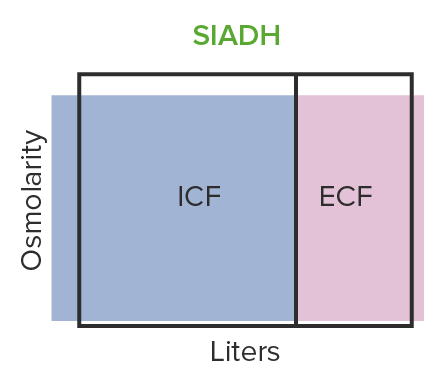
Hypo-osmotic volume expansion caused by SIADH

El SIADH provoca una expansión hipo-osmótica del volumen:
El cuerpo retiene demasiada agua y produce un exceso de hormona antidiurética.
ICF: líquido intracelular
ECF: líquido extracelular
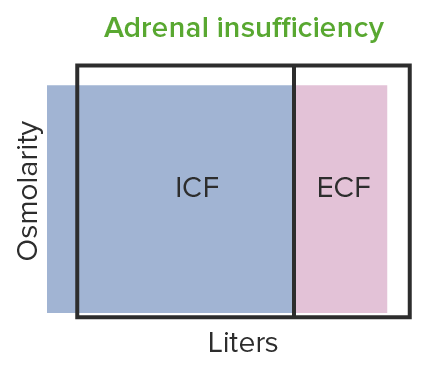
Imagen por Lecturio.

Contracción hipo-osmótica del volumen

  • Disminución del agua corporal total junto con una disminución de la osmolalidad total de los LOS Neisseria solutos.
  • Generalmente visto en EN Erythema nodosum is an immune-mediated panniculitis (inflammation of the subcutaneous fat) caused by a type IV (delayed-type) hypersensitivity reaction. It commonly manifests in young women as tender, erythematous nodules on the shins. Erythema Nodosum el caso de insuficiencia suprarrenal
  • Los LOS Neisseria cambios en EN Erythema nodosum is an immune-mediated panniculitis (inflammation of the subcutaneous fat) caused by a type IV (delayed-type) hypersensitivity reaction. It commonly manifests in young women as tender, erythematous nodules on the shins. Erythema Nodosum el líquido extracelular resultan en EN Erythema nodosum is an immune-mediated panniculitis (inflammation of the subcutaneous fat) caused by a type IV (delayed-type) hypersensitivity reaction. It commonly manifests in young women as tender, erythematous nodules on the shins. Erythema Nodosum:
    • Reducción de la presión arterial debido a la disminución del volumen
    • Disminución del nivel de Na+
    • Aumento en EN Erythema nodosum is an immune-mediated panniculitis (inflammation of the subcutaneous fat) caused by a type IV (delayed-type) hypersensitivity reaction. It commonly manifests in young women as tender, erythematous nodules on the shins. Erythema Nodosum el nivel de proteína total
    • Aumento del hematocrito
  • Respuesta endocrina:
    • Aumento de aldosterona (estimulada por hipovolemia e hipopotasemia)
    • Sin cambios en EN Erythema nodosum is an immune-mediated panniculitis (inflammation of the subcutaneous fat) caused by a type IV (delayed-type) hypersensitivity reaction. It commonly manifests in young women as tender, erythematous nodules on the shins. Erythema Nodosum el nivel de hormona antidiurética
Hypo-osmotic volume contraction seen in adrenal insufficiency

Contracción hipo-osmótica del volumen observada en la insuficiencia suprarrenal:
La baja de aldosterona conduce a la disminución de la absorción tubular de sodio, lo que resulta en la contracción del volumen hipo-osmótico.
ICF: líquido intracelular
ECF: líquido extracelular
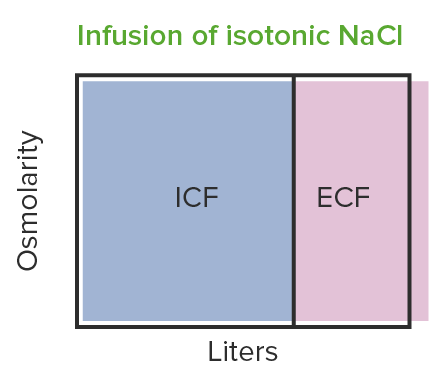
Imagen por Lecturio.

Expansión iso-osmótica del volumen

  • Expansión de volumen donde no hay cambio en EN Erythema nodosum is an immune-mediated panniculitis (inflammation of the subcutaneous fat) caused by a type IV (delayed-type) hypersensitivity reaction. It commonly manifests in young women as tender, erythematous nodules on the shins. Erythema Nodosum la osmolalidad
  • Visto con expansión de volumen de solución IV
  • Los LOS Neisseria cambios en EN Erythema nodosum is an immune-mediated panniculitis (inflammation of the subcutaneous fat) caused by a type IV (delayed-type) hypersensitivity reaction. It commonly manifests in young women as tender, erythematous nodules on the shins. Erythema Nodosum el líquido extracelular resultan en EN Erythema nodosum is an immune-mediated panniculitis (inflammation of the subcutaneous fat) caused by a type IV (delayed-type) hypersensitivity reaction. It commonly manifests in young women as tender, erythematous nodules on the shins. Erythema Nodosum:
    • Aumento de la presión arterial
    • Sin cambios en EN Erythema nodosum is an immune-mediated panniculitis (inflammation of the subcutaneous fat) caused by a type IV (delayed-type) hypersensitivity reaction. It commonly manifests in young women as tender, erythematous nodules on the shins. Erythema Nodosum el nivel de Na+
    • Disminución en EN Erythema nodosum is an immune-mediated panniculitis (inflammation of the subcutaneous fat) caused by a type IV (delayed-type) hypersensitivity reaction. It commonly manifests in young women as tender, erythematous nodules on the shins. Erythema Nodosum el nivel de proteína total
    • Disminución del hematocrito
  • Respuesta endocrina a la expansión del volumen iso-osmolar:
    • Disminución de la aldosterona (suprimida por expansión de volumen)
    • Sin cambios en EN Erythema nodosum is an immune-mediated panniculitis (inflammation of the subcutaneous fat) caused by a type IV (delayed-type) hypersensitivity reaction. It commonly manifests in young women as tender, erythematous nodules on the shins. Erythema Nodosum el nivel de hormona antidiurética
Infusion of isotonic NaCl results in iso-osmotic volume expansion

La infusión de NaCl isotónico produce una expansión iso-osmótica del volumen: se observan cambios en el líquido extracelular (i.e. aumento del volumen del líquido extracelular), pero la osmolaridad sigue siendo la misma.
ICF: líquido intracelular
ECF: líquido extracelular
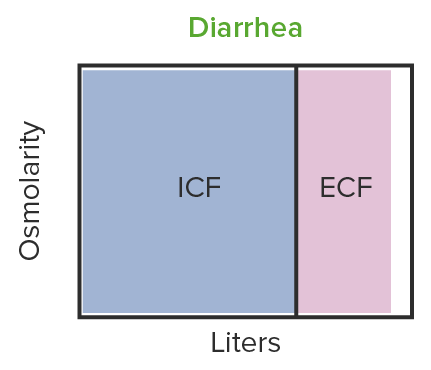
Imagen por Lecturio.

Contracción iso-osmótica del volumen

  • Contracción de volumen que ocurre sin ningún cambio en EN Erythema nodosum is an immune-mediated panniculitis (inflammation of the subcutaneous fat) caused by a type IV (delayed-type) hypersensitivity reaction. It commonly manifests in young women as tender, erythematous nodules on the shins. Erythema Nodosum la osmolalidad
  • Visto en EN Erythema nodosum is an immune-mediated panniculitis (inflammation of the subcutaneous fat) caused by a type IV (delayed-type) hypersensitivity reaction. It commonly manifests in young women as tender, erythematous nodules on the shins. Erythema Nodosum casos de pérdida de líquido iso-osmótico (e. g., diarrea y vómitos)
  • Los LOS Neisseria cambios en EN Erythema nodosum is an immune-mediated panniculitis (inflammation of the subcutaneous fat) caused by a type IV (delayed-type) hypersensitivity reaction. It commonly manifests in young women as tender, erythematous nodules on the shins. Erythema Nodosum el líquido extracelular resultan en EN Erythema nodosum is an immune-mediated panniculitis (inflammation of the subcutaneous fat) caused by a type IV (delayed-type) hypersensitivity reaction. It commonly manifests in young women as tender, erythematous nodules on the shins. Erythema Nodosum:
    • Disminución de la presión arterial
    • Sin cambios en EN Erythema nodosum is an immune-mediated panniculitis (inflammation of the subcutaneous fat) caused by a type IV (delayed-type) hypersensitivity reaction. It commonly manifests in young women as tender, erythematous nodules on the shins. Erythema Nodosum el nivel de Na+
    • Aumento en EN Erythema nodosum is an immune-mediated panniculitis (inflammation of the subcutaneous fat) caused by a type IV (delayed-type) hypersensitivity reaction. It commonly manifests in young women as tender, erythematous nodules on the shins. Erythema Nodosum el nivel de proteína total
    • Aumento del hematocrito
  • Respuesta endocrina:
    • Aumento de los LOS Neisseria niveles de aldosterona (estimulado por la contracción del volumen)
    • Sin cambios en EN Erythema nodosum is an immune-mediated panniculitis (inflammation of the subcutaneous fat) caused by a type IV (delayed-type) hypersensitivity reaction. It commonly manifests in young women as tender, erythematous nodules on the shins. Erythema Nodosum el nivel de hormona antidiurética
Iso-osmotic volume contraction caused by diarrhea

En la diarrea se observa una contracción iso-osmótica del volumen:
El líquido en la diarrea tiene la misma osmolaridad que el líquido extracelular. El volumen del líquido extracelular disminuye pero no la osmolaridad.
ICF: líquido intracelular
ECF: líquido extracelular
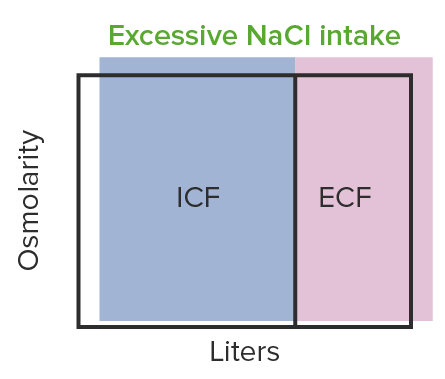
Imagen por Lecturio.

Expansión hiper-osmótica del volumen

  • Aumento de la osmolalidad junto con el aumento de volumen
  • Visto en EN Erythema nodosum is an immune-mediated panniculitis (inflammation of the subcutaneous fat) caused by a type IV (delayed-type) hypersensitivity reaction. It commonly manifests in young women as tender, erythematous nodules on the shins. Erythema Nodosum casos de:
    • Hipersecreción de aldosterona
    • Ingesta de alimentos salados
    • Individuos con un tumor Tumor Inflammation
  • Los LOS Neisseria cambios en EN Erythema nodosum is an immune-mediated panniculitis (inflammation of the subcutaneous fat) caused by a type IV (delayed-type) hypersensitivity reaction. It commonly manifests in young women as tender, erythematous nodules on the shins. Erythema Nodosum el líquido extracelular resultan en EN Erythema nodosum is an immune-mediated panniculitis (inflammation of the subcutaneous fat) caused by a type IV (delayed-type) hypersensitivity reaction. It commonly manifests in young women as tender, erythematous nodules on the shins. Erythema Nodosum:
    • Aumento de la presión arterial
    • Aumento del nivel de Na+
    • Reducción en EN Erythema nodosum is an immune-mediated panniculitis (inflammation of the subcutaneous fat) caused by a type IV (delayed-type) hypersensitivity reaction. It commonly manifests in young women as tender, erythematous nodules on the shins. Erythema Nodosum el nivel de proteína total
    • Reducción del hematocrito
  • Respuesta endocrina:
    • Reducción en EN Erythema nodosum is an immune-mediated panniculitis (inflammation of the subcutaneous fat) caused by a type IV (delayed-type) hypersensitivity reaction. It commonly manifests in young women as tender, erythematous nodules on the shins. Erythema Nodosum el nivel de aldosterona
    • Aumento en EN Erythema nodosum is an immune-mediated panniculitis (inflammation of the subcutaneous fat) caused by a type IV (delayed-type) hypersensitivity reaction. It commonly manifests in young women as tender, erythematous nodules on the shins. Erythema Nodosum el nivel de la hormona antidiurética
Hyper-osmotic volume expansion seen in increased intake of NaCl

La expansión hiper-osmótica del volumen se observa en el aumento de la ingesta de NaCl:
Esto se debe a un aumento del nivel de sodio que provoca la retención de líquidos.
ICF: líquido intracelular
ECF: líquido extracelular
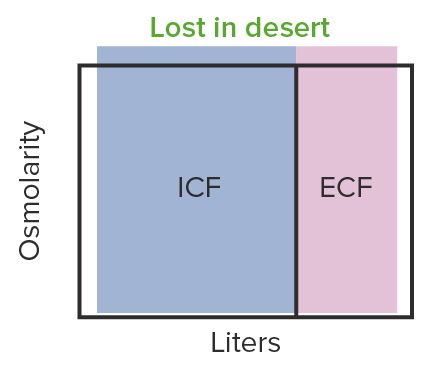
Imagen por Lecturio.

Contracción hiper-osmótica del volumen

  • Reducción del agua corporal total, pero aumenta la osmolalidad:
    • Visto en EN Erythema nodosum is an immune-mediated panniculitis (inflammation of the subcutaneous fat) caused by a type IV (delayed-type) hypersensitivity reaction. It commonly manifests in young women as tender, erythematous nodules on the shins. Erythema Nodosum casos de deshidratación
    • El sudor contiene más agua que soluto; por lo tanto, la sudoración excesiva da como resultado una contracción hiper-osmótica del volumen.
  • Los LOS Neisseria cambios en EN Erythema nodosum is an immune-mediated panniculitis (inflammation of the subcutaneous fat) caused by a type IV (delayed-type) hypersensitivity reaction. It commonly manifests in young women as tender, erythematous nodules on the shins. Erythema Nodosum el líquido extracelular resultan en EN Erythema nodosum is an immune-mediated panniculitis (inflammation of the subcutaneous fat) caused by a type IV (delayed-type) hypersensitivity reaction. It commonly manifests in young women as tender, erythematous nodules on the shins. Erythema Nodosum:
    • Disminución de la presión arterial
    • Aumento del nivel de Na+
    • Aumento en EN Erythema nodosum is an immune-mediated panniculitis (inflammation of the subcutaneous fat) caused by a type IV (delayed-type) hypersensitivity reaction. It commonly manifests in young women as tender, erythematous nodules on the shins. Erythema Nodosum el nivel de proteína total
    • Sin cambios en EN Erythema nodosum is an immune-mediated panniculitis (inflammation of the subcutaneous fat) caused by a type IV (delayed-type) hypersensitivity reaction. It commonly manifests in young women as tender, erythematous nodules on the shins. Erythema Nodosum el hematocrito
  • Respuesta endocrina:
    • Aumento del nivel de aldosterona
    • Aumento en EN Erythema nodosum is an immune-mediated panniculitis (inflammation of the subcutaneous fat) caused by a type IV (delayed-type) hypersensitivity reaction. It commonly manifests in young women as tender, erythematous nodules on the shins. Erythema Nodosum el nivel de la hormona antidiurética
Hyper-osmotic volume contraction observed in dehydration

Contracción hiper-osmótica del volumen que se observa en la deshidratación:
Esto provoca hipotensión y puede alcanzar un nivel peligrosamente bajo, privando a los órganos de oxígeno.
ICF: líquido intracelular
ECF: líquido extracelular

Imagen por Lecturio.

Composición de Líquidos Corporales

  • Los LOS Neisseria compartimentos de líquidos corporales contienen agua, iones y moléculas osmolares en EN Erythema nodosum is an immune-mediated panniculitis (inflammation of the subcutaneous fat) caused by a type IV (delayed-type) hypersensitivity reaction. It commonly manifests in young women as tender, erythematous nodules on the shins. Erythema Nodosum diferentes concentraciones.
  • La concentración relativa de los LOS Neisseria componentes depende del intercambio entre células y tejidos en EN Erythema nodosum is an immune-mediated panniculitis (inflammation of the subcutaneous fat) caused by a type IV (delayed-type) hypersensitivity reaction. It commonly manifests in young women as tender, erythematous nodules on the shins. Erythema Nodosum el cuerpo que viene determinada por la actividad de los LOS Neisseria transportadores en EN Erythema nodosum is an immune-mediated panniculitis (inflammation of the subcutaneous fat) caused by a type IV (delayed-type) hypersensitivity reaction. It commonly manifests in young women as tender, erythematous nodules on the shins. Erythema Nodosum las membranas celulares.
  • La composición de cada compartimento de líquido se mantiene rigurosamente por el movimiento continuo de agua y otras sustancias entre los LOS Neisseria compartimentos.
Tabla: Niveles normales de iones y moléculas osmolares en EN Erythema nodosum is an immune-mediated panniculitis (inflammation of the subcutaneous fat) caused by a type IV (delayed-type) hypersensitivity reaction. It commonly manifests in young women as tender, erythematous nodules on the shins. Erythema Nodosum plasma Plasma The residual portion of blood that is left after removal of blood cells by centrifugation without prior blood coagulation. Transfusion Products, líquido intersticial y líquido intracelular
Plasma Plasma The residual portion of blood that is left after removal of blood cells by centrifugation without prior blood coagulation. Transfusion Products Líquido intersticial Líquido intracelular
(mOsm/L) (mOsm/L) (mOsm/L)
Na+ 142 139 14
K+ 4,2 4,0 140
Ca CA Condylomata acuminata are a clinical manifestation of genital HPV infection. Condylomata acuminata are described as raised, pearly, flesh-colored, papular, cauliflower-like lesions seen in the anogenital region that may cause itching, pain, or bleeding. Condylomata Acuminata (Genital Warts)2+ 1,3 1,2 0
Mg2+ 0,8 0,7 20
Cloruro (Cl) 106 108 4
HCO3 24 28,3 10
HPO42–, H2PO4 2 2 11
SO42– 0,5 0,5 1
Fosfocreatina 45
Carnosina 14
Aminoácidos 2 2 8
Creatinina 0,2 0,2 9
Lactato 1,2 1,2 1,5
Adenosin trifosfato 5
Monofosfato de hexosa 3,7
Glucosa 5,6 5,6
Proteínas 1,2 0,2 4
Urea Urea A compound formed in the liver from ammonia produced by the deamination of amino acids. It is the principal end product of protein catabolism and constitutes about one half of the total urinary solids. Urea Cycle 4 1 4
Otros 4,8 3,9 10
mOsm/L totales 299,8 300,8 301,2
Actividad osmolar corregida 282,0 281,0 281,0

Relevancia Clínica

  • Hiponatremia: disminución de los LOS Neisseria niveles de Na+ en EN Erythema nodosum is an immune-mediated panniculitis (inflammation of the subcutaneous fat) caused by a type IV (delayed-type) hypersensitivity reaction. It commonly manifests in young women as tender, erythematous nodules on the shins. Erythema Nodosum el organismo. La hiponatremia ocurre con mayor frecuencia en EN Erythema nodosum is an immune-mediated panniculitis (inflammation of the subcutaneous fat) caused by a type IV (delayed-type) hypersensitivity reaction. It commonly manifests in young women as tender, erythematous nodules on the shins. Erythema Nodosum el contexto de diarrea y vómitos intensos, uso excesivo de diuréticos y enfermedad de Addison. La hiponatremia también puede ocurrir con menos frecuencia como resultado del SIADH SIADH Syndrome of inappropriate antidiuretic hormone secretion (SIADH) is a disorder of impaired water excretion due to the inability to suppress the secretion of antidiuretic hormone (ADH). SIADH is characterized by impaired water excretion leading to dilutional hyponatremia, which is mainly asymptomatic but may cause neurologic symptoms. S Syndrome of Inappropriate Antidiuretic Hormone Secretion (SIADH) y progresar a edema Edema Edema is a condition in which excess serous fluid accumulates in the body cavity or interstitial space of connective tissues. Edema is a symptom observed in several medical conditions. It can be categorized into 2 types, namely, peripheral (in the extremities) and internal (in an organ or body cavity). Edema celular, que finalmente puede provocar daño cerebral, que se presenta con síntomas neurológicos de cefalea, náuseas y letargo. El tratamiento consiste en EN Erythema nodosum is an immune-mediated panniculitis (inflammation of the subcutaneous fat) caused by a type IV (delayed-type) hypersensitivity reaction. It commonly manifests in young women as tender, erythematous nodules on the shins. Erythema Nodosum la reposición gradual de Na+, ya que un reemplazo rápido puede conducir al AL Amyloidosis síndrome de desmielinización osmótica.
  • Hipernatremia: aumento de los LOS Neisseria niveles de Na+ en EN Erythema nodosum is an immune-mediated panniculitis (inflammation of the subcutaneous fat) caused by a type IV (delayed-type) hypersensitivity reaction. It commonly manifests in young women as tender, erythematous nodules on the shins. Erythema Nodosum el organismo. La hipernatremia ocurre con mayor frecuencia como resultado de una deshidratación severa. Las personas afectadas a menudo son asintomáticas, ya que los LOS Neisseria síntomas generalmente ocurren cuando el nivel de Na+ es de aproximadamente 160 mmol/L. La hipernatremia se puede corregir administrando NaCl hipo-osmótico o solución de dextrosa.
  • Edema Edema Edema is a condition in which excess serous fluid accumulates in the body cavity or interstitial space of connective tissues. Edema is a symptom observed in several medical conditions. It can be categorized into 2 types, namely, peripheral (in the extremities) and internal (in an organ or body cavity). Edema: presencia de exceso de líquido en EN Erythema nodosum is an immune-mediated panniculitis (inflammation of the subcutaneous fat) caused by a type IV (delayed-type) hypersensitivity reaction. It commonly manifests in young women as tender, erythematous nodules on the shins. Erythema Nodosum los LOS Neisseria tejidos corporales. Ambos compartimentos extracelular e intracelular pueden estar involucrados. El edema Edema Edema is a condition in which excess serous fluid accumulates in the body cavity or interstitial space of connective tissues. Edema is a symptom observed in several medical conditions. It can be categorized into 2 types, namely, peripheral (in the extremities) and internal (in an organ or body cavity). Edema suele manifestarse clínicamente en EN Erythema nodosum is an immune-mediated panniculitis (inflammation of the subcutaneous fat) caused by a type IV (delayed-type) hypersensitivity reaction. It commonly manifests in young women as tender, erythematous nodules on the shins. Erythema Nodosum las extremidades inferiores y ocurre cuando el gradiente osmótico entre el espacio intravascular y el espacio intersticial promueve el flujo de agua desde la irrigación hacia los LOS Neisseria tejidos. El edema Edema Edema is a condition in which excess serous fluid accumulates in the body cavity or interstitial space of connective tissues. Edema is a symptom observed in several medical conditions. It can be categorized into 2 types, namely, peripheral (in the extremities) and internal (in an organ or body cavity). Edema puede tratarse mediante diuresis o la adición de moléculas osmolares (e.g., albúmina) al AL Amyloidosis espacio vascular.

Referencias

  1. Brinkman, J.E., Dorius, B., Sharma, S. (2021). Physiology, Body Fluids. Retrieved November 22, 2021, from https://www.ncbi.nlm.nih.gov/books/NBK482447
  2. Lobo, D.N. (2004). Fluid and electrolytes in the clinical setting. Nestle Nutr Workshop Ser Clin Perform Programme. 9, 187–203. https://pubmed.ncbi.nlm.nih.gov/15361687/
  3. Bedogni, G., Borghi, A., Battistini, N. (2003). Body water distribution and disease. Acta Diabetol. 40 (Suppl 1), S200-S202. https://pubmed.ncbi.nlm.nih.gov/14618472/
  4. Mathew, J., Sankar, P., Varacallo, M. (2020). StatPearls. StatPearls Publishing. Physiology, Blood Plasma. Retrieved November 22, 2021, from https://pubmed.ncbi.nlm.nih.gov/30285399/
  5. Davids, M.R., et al. (2002). Facilitating an understanding of integrative physiology: emphasis on the composition of body fluid compartments. Can J Physiol Pharmacol. 80, 835–850. https://pubmed.ncbi.nlm.nih.gov/12430978/
  6. Wiig, H., Swartz, M.A. (2012). Interstitial fluid and lymph formation and transport: physiological regulation and roles in inflammation and cancer. Physiol Rev. 92, 1005–1060. https://pubmed.ncbi.nlm.nih.gov/22811424/
  7. Benjamin, R.J., McLaughlin, L.S. (2021). Plasma components: properties, differences, and uses. Transfusion. 52 (Suppl 1), 9S-19S. https://pubmed.ncbi.nlm.nih.gov/22578375/
  8. Woodcock, T.E., Woodcock, T.M. (2012). Revised Starling equation and the glycocalyx model of transvascular fluid exchange: an improved paradigm for prescribing intravenous fluid therapy. Br J Anaesth. 108, 384–394. https://pubmed.ncbi.nlm.nih.gov/22290457/
  9. Levick, J.R., Michel, C.C. (2010). Microvascular fluid exchange and the revised Starling principle. Cardiovasc Res. 87, 198–210. https://pubmed.ncbi.nlm.nih.gov/20200043/
  10. Zierler, K. (2000). Indicator dilution methods for measuring blood flow, volume, and other properties of biological systems: a brief history and memoir. Ann Biomed Eng. 28, 836–848. https://pubmed.ncbi.nlm.nih.gov/11144667/
  11. Henriksen, J.H., Jensen, G.B., Larsson H.B. (2014). A century of indicator dilution techniques. Clin Physiol Funct Imaging. 34, 1–9. https://pubmed.ncbi.nlm.nih.gov/23869947/
  12. Kaptein, E.M., et al. (2016). A systematic literature search and review of sodium concentrations of body fluids. Clin Nephrol. 86, 203–228. https://pubmed.ncbi.nlm.nih.gov/27616761/
  13. Lu, H.A. (2017). Diabetes Insipidus. Adv Exp Med Biol. 969, 213–225. https://pubmed.ncbi.nlm.nih.gov/28258576/
  14. Kortenoeven, M.L., Fenton, R.A. (2014). Renal aquaporins and water balance disorders. Biochim Biophys Acta. 1840, 1533–1549. 
  15. Schwartz, M.J., Kokko, J.P. (1980). Urinary concentrating defect of adrenal insufficiency. Permissive role of adrenal steroids on the hydroosmotic response across the rabbit cortical collecting tubule. J Clin Invest. 66,234–242. https://pubmed.ncbi.nlm.nih.gov/6156951/
  16. Lopez-Almaraz, E., Correa-Rotter, R. (2008). Dialysis disequilibrium syndrome and other treatment complications of extreme uremia: a rare occurrence yet not vanished. Hemodial Int. 12, 301–306. https://pubmed.ncbi.nlm.nih.gov/18638082/
  17. Abraham, S.F., et al. (1976). Aldosterone secretion during high sodium cerebrospinal fluid perfusion of the brain ventricles. Acta Endocrinol. 81, 120–132. https://pubmed.ncbi.nlm.nih.gov/946137/
  18. Aguilera, G., Catt, K.J. (1979). Loci of action of regulators of aldosterone biosynthesis in isolated glomerulosa cells. Endocrinology 104, 1046–1052. https://pubmed.ncbi.nlm.nih.gov/220023/
  19. Aguilera, G., Catt, K.J. (1983). Regulation of aldosterone secretion during altered sodium intake. J Steroid Biochem. 19, 525–530. https://pubmed.ncbi.nlm.nih.gov/6136631/
  20. Balla, T., Nagy, K., Tarjan, E., Renczes, G., Spät, A. (1981). Effects of reduced extracellular sodium concentration on the function of adrenal zona glomerulosa: studies in conscious rats. J Endocrinol. 89, 411–416. https://pubmed.ncbi.nlm.nih.gov/7019371/
  21. Birkhäuser, M., et al. (1973). Effect of volume expansion by hyperosmolar and hyperoncotic solutions under constant infusion of angiotensin II on plasma aldosterone in man and its counterbalance by potassium administration. Eur J Clin Invest. 3, 307–331. https://pubmed.ncbi.nlm.nih.gov/4357275/

¡Crea tu cuenta gratis o inicia una sesión para seguir leyendo!

Regístrate ahora y obtén acceso gratuito a Lecturio con páginas de concepto, videos médicos y cuestionarios para tu educación médica.

User Reviews

Que tengas una sesión de estudio alegre y navideña 🎁 Ahorra 50% en todos los planes >>

Details