Domina Conceptos Médicos

Estudia para la escuela de medicina y tus examenes con Lecturio.

Chancroide

El chancroide es una ITS altamente transmisible causada por Haemophilus ducreyi. La enfermedad se presenta con una(s) úlcera(s) dolorosa(s) en el tracto genital (denominada chancroide o "chancro blando"). Hasta el 50% de los LOS Neisseria pacientes desarrollarán una linfadenopatía inguinal dolorosa. Además, de ese porcentaje, el 25% puede desarrollar complicaciones de los LOS Neisseria ganglios linfáticos supurativos. Dado el crecimiento de H. ducreyi en EN Erythema nodosum is an immune-mediated panniculitis (inflammation of the subcutaneous fat) caused by a type IV (delayed-type) hypersensitivity reaction. It commonly manifests in young women as tender, erythematous nodules on the shins. Erythema Nodosum un medio especial (a menudo no disponible), el chancroide se diagnostica basándose en EN Erythema nodosum is an immune-mediated panniculitis (inflammation of the subcutaneous fat) caused by a type IV (delayed-type) hypersensitivity reaction. It commonly manifests in young women as tender, erythematous nodules on the shins. Erythema Nodosum el aspecto clínico y en EN Erythema nodosum is an immune-mediated panniculitis (inflammation of the subcutaneous fat) caused by a type IV (delayed-type) hypersensitivity reaction. It commonly manifests in young women as tender, erythematous nodules on the shins. Erythema Nodosum pruebas para descartar sífilis y herpes (las causas más comunes de las úlceras genitales). Aunque la enfermedad puede resolverse espontáneamente, los LOS Neisseria antibióticos (azitromicina o ceftriaxona) son el tratamiento de elección. El tratamiento debe incluir tanto a los LOS Neisseria pacientes como a sus parejas sexuales.

Last updated: Jul 22, 2025

Editorial responsibility: Stanley Oiseth, Lindsay Jones, Evelin Maza

Descripción General

Definición

El chancroide (chancro blando) es una enfermedad de transmisión sexual causada por una bacteria Bacteria Bacteria are prokaryotic single-celled microorganisms that are metabolically active and divide by binary fission. Some of these organisms play a significant role in the pathogenesis of diseases. Bacteriology, Haemophilus ducreyi Haemophilus ducreyi A species of Haemophilus that appears to be the pathogen or causative agent of the sexually transmitted disease, chancroid. Haemophilus, que se caracteriza por una úlcera genital dolorosa y una adenopatía inguinal supurativa.
Etiología

  • H. ducreyi:
    • Gram-negativa
    • No formadora de esporas
    • No móvil
    • Cocobacilos anaerobios facultativos
    • Crece mejor en EN Erythema nodosum is an immune-mediated panniculitis (inflammation of the subcutaneous fat) caused by a type IV (delayed-type) hypersensitivity reaction. It commonly manifests in young women as tender, erythematous nodules on the shins. Erythema Nodosum un ambiente húmedo
  • Factores de riesgo asociados a las ITS:
    • Hombres incircuncisos
    • Bajo nivel socioeconómico
    • Mala higiene
    • Comportamiento sexual de riesgo (abuso de drogas, prostitución)

Epidemiología

  • El chancroide es una infección poco común en EN Erythema nodosum is an immune-mediated panniculitis (inflammation of the subcutaneous fat) caused by a type IV (delayed-type) hypersensitivity reaction. It commonly manifests in young women as tender, erythematous nodules on the shins. Erythema Nodosum la mayoría de los LOS Neisseria países desarrollados.
    • En EN Erythema nodosum is an immune-mediated panniculitis (inflammation of the subcutaneous fat) caused by a type IV (delayed-type) hypersensitivity reaction. It commonly manifests in young women as tender, erythematous nodules on the shins. Erythema Nodosum 2023, se registraron 4 casos en EN Erythema nodosum is an immune-mediated panniculitis (inflammation of the subcutaneous fat) caused by a type IV (delayed-type) hypersensitivity reaction. It commonly manifests in young women as tender, erythematous nodules on the shins. Erythema Nodosum Estados Unidos.
  • Común en EN Erythema nodosum is an immune-mediated panniculitis (inflammation of the subcutaneous fat) caused by a type IV (delayed-type) hypersensitivity reaction. It commonly manifests in young women as tender, erythematous nodules on the shins. Erythema Nodosum las siguientes regiones:

Fisiopatología

  • La infección por H. ducreyi depende de:
    • Tamaño del inóculo (100 unidades formadoras de colonias conllevan un riesgo de infección del 90%)
    • Factores del huésped
  • Transmisión: H. ducreyi entra a través de microabrasiones en EN Erythema nodosum is an immune-mediated panniculitis (inflammation of the subcutaneous fat) caused by a type IV (delayed-type) hypersensitivity reaction. It commonly manifests in young women as tender, erythematous nodules on the shins. Erythema Nodosum la piel y provoca roturas en EN Erythema nodosum is an immune-mediated panniculitis (inflammation of the subcutaneous fat) caused by a type IV (delayed-type) hypersensitivity reaction. It commonly manifests in young women as tender, erythematous nodules on the shins. Erythema Nodosum la mucosa durante el contacto sexual.
  • Proceso de infección: El patógeno produce una toxina distensiva citolítica → daño epitelial irreversible y muerte → ulceración

Presentación Clínica

  • Periodo de incubación: Los LOS Neisseria pacientes suelen desarrollar una lesión entre 4 y 10 días después de la exposición.
  • Lesión:
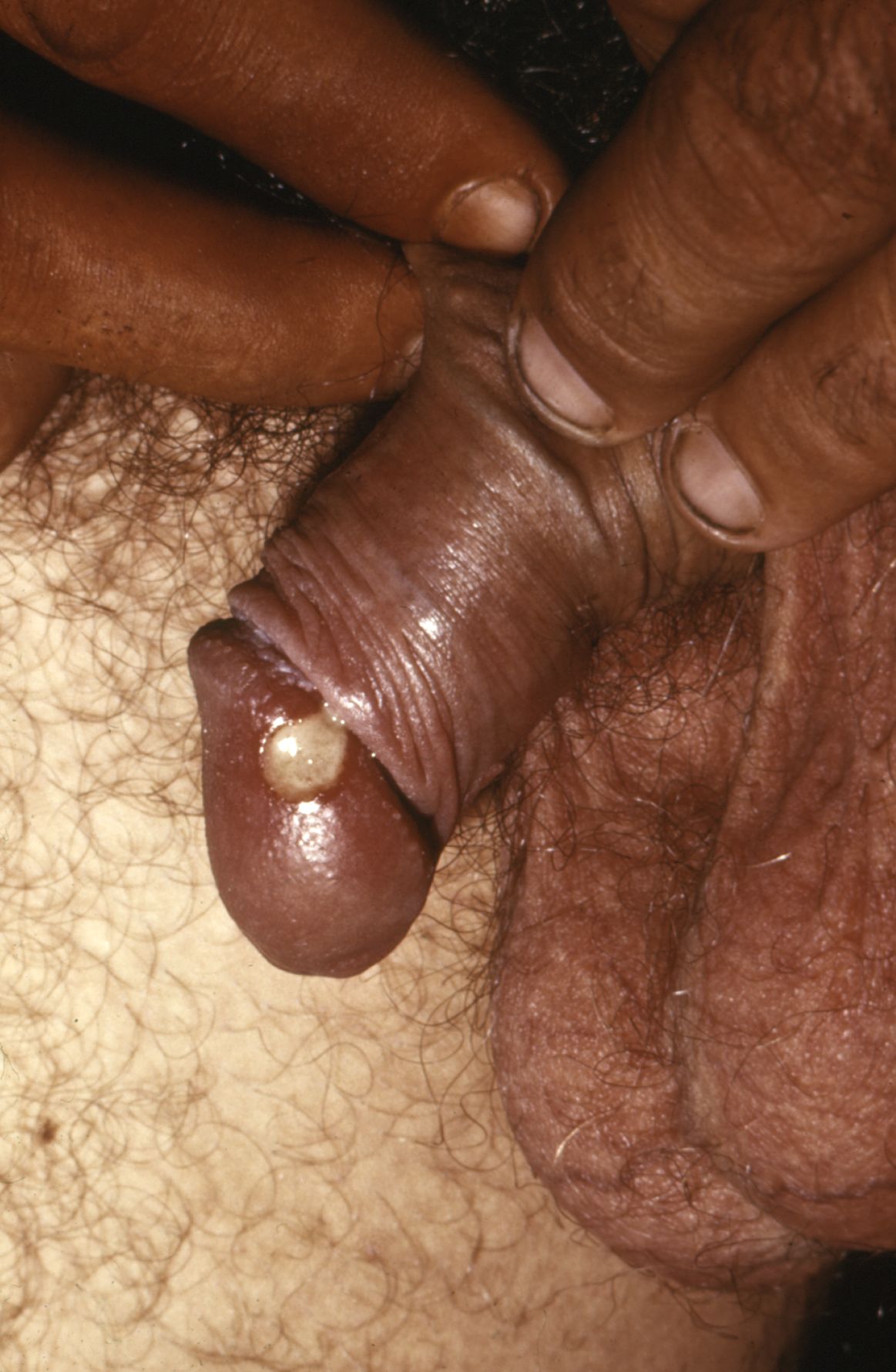
    • Se desarrolla una pápula eritematosa en EN Erythema nodosum is an immune-mediated panniculitis (inflammation of the subcutaneous fat) caused by a type IV (delayed-type) hypersensitivity reaction. It commonly manifests in young women as tender, erythematous nodules on the shins. Erythema Nodosum el lugar de la inoculación.
    • Pápula → pústula → úlcera(s)
    • Chancroide:
      • 1–2 cm (0,39–0,79 in)
      • Doloroso
      • Base eritematosa
      • Bordes bien delimitados y bordes desiguales
      • Exudado purulento gris o amarillo
  • Afecta a las zonas genitales y a los LOS Neisseria ganglios linfáticos de drenaje:
    • En EN Erythema nodosum is an immune-mediated panniculitis (inflammation of the subcutaneous fat) caused by a type IV (delayed-type) hypersensitivity reaction. It commonly manifests in young women as tender, erythematous nodules on the shins. Erythema Nodosum los LOS Neisseria hombres:
      • Corona, prepucio o glande del pene
    • En EN Erythema nodosum is an immune-mediated panniculitis (inflammation of the subcutaneous fat) caused by a type IV (delayed-type) hypersensitivity reaction. It commonly manifests in young women as tender, erythematous nodules on the shins. Erythema Nodosum las mujeres:
      • Labios, introito y zonas perianales
      • Puede ser asintomático, si las zonas vaginal y cervical están afectadas.
    • Linfadenopatía:
      • El 50% desarrollará una linfadenopatía inguinal unilateral y sensible.
      • El 25% desarrollará bubones con posterior ulceración en EN Erythema nodosum is an immune-mediated panniculitis (inflammation of the subcutaneous fat) caused by a type IV (delayed-type) hypersensitivity reaction. It commonly manifests in young women as tender, erythematous nodules on the shins. Erythema Nodosum 2 semanas.

Diagnóstico

El diagnóstico se realiza mediante el juicio clínico y pruebas para descartar las 2 causas más comunes de las úlceras genitales, el virus Virus Viruses are infectious, obligate intracellular parasites composed of a nucleic acid core surrounded by a protein capsid. Viruses can be either naked (non-enveloped) or enveloped. The classification of viruses is complex and based on many factors, including type and structure of the nucleoid and capsid, the presence of an envelope, the replication cycle, and the host range. Virology del herpes simple (VHS) y la sífilis.
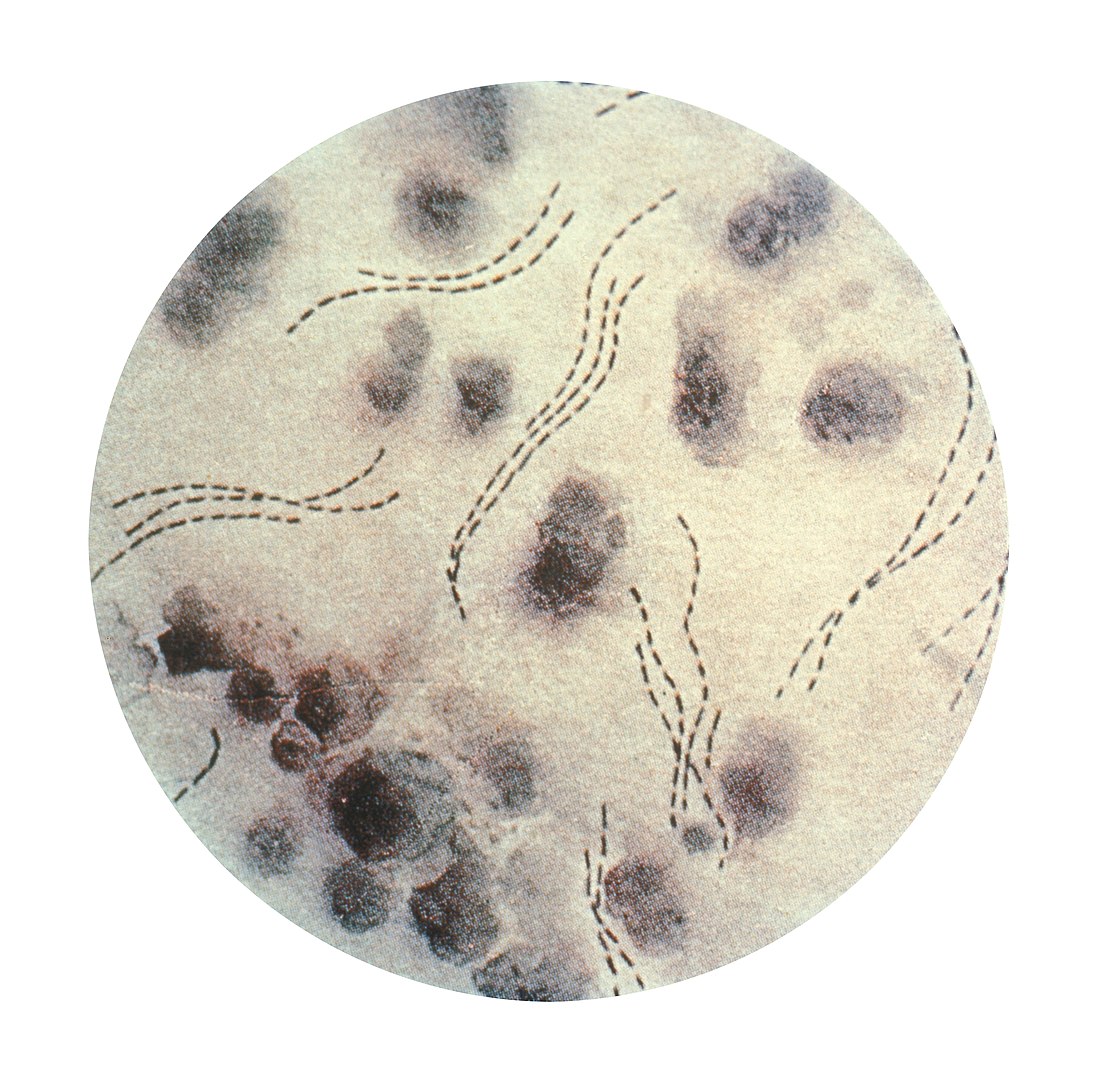
  • El diagnóstico confirmado se realiza mediante el aislamiento de H. ducreyi en EN Erythema nodosum is an immune-mediated panniculitis (inflammation of the subcutaneous fat) caused by a type IV (delayed-type) hypersensitivity reaction. It commonly manifests in young women as tender, erythematous nodules on the shins. Erythema Nodosum cultivo ( los LOS Neisseria medios especiales no están ampliamente disponibles).
  • Tinción de Gram: Los organismos aparecen como hilos paralelos que se asemejan a una “vía férrea” o a un “cadumen de peces”.
  • Las pruebas de amplificación de ácidos nucleicos no son fáciles de conseguir fuera de la investigación clínica.
  • Diagnóstico probable:
    • ≥ 1 úlcera(s) dolorosa(s) está(n) presente(s).
    • Los LOS Neisseria síntomas y signos coinciden con los LOS Neisseria de una lesión típica de chancroide.
    • Prueba PCR PCR Polymerase chain reaction (PCR) is a technique that amplifies DNA fragments exponentially for analysis. The process is highly specific, allowing for the targeting of specific genomic sequences, even with minuscule sample amounts. The PCR cycles multiple times through 3 phases: denaturation of the template DNA, annealing of a specific primer to the individual DNA strands, and synthesis/elongation of new DNA molecules. Polymerase Chain Reaction (PCR) negativa para el VHS
    • No hay evidencia de Treponema pallidum Treponema pallidum The causative agent of venereal and non-venereal syphilis as well as yaws. Treponema (microscopía de campo oscuro o pruebas serológicas).
La bacteria Haemophilus ducreyi

La bacteria Haemophilus ducreyi

Imagen: “Haemophilus ducreyi 01” by CDC. Licencia: Public Domain

Tratamiento

Principios generales

  • Evolución y tratamiento de la enfermedad:
    • Las lesiones pueden resolverse espontáneamente en EN Erythema nodosum is an immune-mediated panniculitis (inflammation of the subcutaneous fat) caused by a type IV (delayed-type) hypersensitivity reaction. It commonly manifests in young women as tender, erythematous nodules on the shins. Erythema Nodosum 3 meses, pero pueden complicarse con linfadenitis y bubones supurativos.
    • La terapia antimicrobiana es el pilar del tratamiento para evitar la formación de bubones.
  • Recomendaciones adicionales:
    • Los LOS Neisseria pacientes deben someterse a pruebas de detección de otras ITS.
    • Deben evitarse las relaciones sexuales sin protección durante el tratamiento (hasta que las úlceras se hayan resuelto).
    • Las parejas sexuales también deben ser tratadas independientemente de los LOS Neisseria síntomas.

Tratamiento médico

  • Tratamiento de primera línea: azitromicina 1 g por vía oral (por la boca) como dosis única o ceftriaxona 250 mg administrada por vía IM como dosis única:
    • Ventaja de un mayor cumplimiento, ya que se administran en EN Erythema nodosum is an immune-mediated panniculitis (inflammation of the subcutaneous fat) caused by a type IV (delayed-type) hypersensitivity reaction. It commonly manifests in young women as tender, erythematous nodules on the shins. Erythema Nodosum régimen de dosis única.
    • Seguras para las mujeres embarazadas
  • Alternativas:
    • Ciprofloxacina (curso de 3 días)
    • Eritromicina (curso de 7 días)
  • También se recomienda el tratamiento empírico para el VHS y la sífilis (ya que son más comunes y pueden existir coinfecciones).

Tratamiento quirúrgico

  • Incisión y drenaje de bubones supurativos
  • Se puede realizar una aspiración con aguja, pero los LOS Neisseria pacientes pueden necesitar repetidas aspiraciones.
  • Sin tratamiento, pueden producirse tractos fistulosos y destrucción del tejido profundo.

Diagnóstico Diferencial

  • Herpes simple: ITS común causada por el VHS tipos 1 o 2. Los LOS Neisseria síntomas prodrómicos suelen preceder a grupos de vesículas dolorosas y llenas de líquido sobre una base eritematosa. Estas vesículas acaban formando úlceras, que pueden fusionarse. Pueden aparecer linfadenopatías, disuria y neuralgias graves. El diagnóstico es generalmente clínico, pero se confirma con la PCR PCR Polymerase chain reaction (PCR) is a technique that amplifies DNA fragments exponentially for analysis. The process is highly specific, allowing for the targeting of specific genomic sequences, even with minuscule sample amounts. The PCR cycles multiple times through 3 phases: denaturation of the template DNA, annealing of a specific primer to the individual DNA strands, and synthesis/elongation of new DNA molecules. Polymerase Chain Reaction (PCR) y las pruebas serológicas. El tratamiento incluye la terapia antiviral Antiviral Antivirals for Hepatitis B.
  • Sífilis: Esta ITS está causada por T. pallidum y tiene 4 fases clínicas. La sífilis primaria comienza con una úlcera solitaria e indolora en EN Erythema nodosum is an immune-mediated panniculitis (inflammation of the subcutaneous fat) caused by a type IV (delayed-type) hypersensitivity reaction. It commonly manifests in young women as tender, erythematous nodules on the shins. Erythema Nodosum los LOS Neisseria genitales (chancro). La progresión a la sífilis secundaria se manifiesta como una erupción maculopapular Maculopapular Dermatologic Examination generalizada, que incluye las palmas y las plantas. El desarrollo de la sífilis terciaria puede causar enfermedades neurológicas graves (neurosífilis), cardiovasculares y/o gomatosas. El periodo de latencia entre la sífilis secundaria y la terciaria es la fase latente.
  • Donovanosis Donovanosis Donovanosis (also known as granuloma inguinale) is an STD caused by Klebsiella granulomatis and is mainly seen in tropical regions. The condition is characterized by chronic, progressive, ulcerating disease mostly affecting the genital region. Donovanosis: ITS rara causada por Klebsiella Klebsiella Klebsiella are encapsulated gram-negative, lactose-fermenting bacilli. They form pink colonies on MacConkey agar due to lactose fermentation. The main virulence factor is a polysaccharide capsule. Klebsiella pneumoniae is the most important pathogenic species. Klebsiella granulomatis. Las lesiones genitales progresivas y nodulares pueden convertirse en EN Erythema nodosum is an immune-mediated panniculitis (inflammation of the subcutaneous fat) caused by a type IV (delayed-type) hypersensitivity reaction. It commonly manifests in young women as tender, erythematous nodules on the shins. Erythema Nodosum ulceraciones indoloras, que provocan daños en EN Erythema nodosum is an immune-mediated panniculitis (inflammation of the subcutaneous fat) caused by a type IV (delayed-type) hypersensitivity reaction. It commonly manifests in young women as tender, erythematous nodules on the shins. Erythema Nodosum los LOS Neisseria tejidos. La linfadenopatía no es frecuente. El diagnóstico es con hallazgos microscópicos de cuerpos de Donovan de la lesión. El tratamiento incluye antibióticos, como macrólidos, tetraciclinas y trimetoprima-sulfametoxazol.
  • Linfogranuloma venéreo: ITS causada por 3 cepas de Chlamydia trachomatis Chlamydia trachomatis Type species of Chlamydia causing a variety of ocular and urogenital diseases. Chlamydia. Los LOS Neisseria pacientes pueden presentar una pequeña úlcera genital autolimitada, seguida de una linfadenopatía inguinal y/o femoral dolorosa. El diagnóstico es clínico. Aunque la prueba PCR PCR Polymerase chain reaction (PCR) is a technique that amplifies DNA fragments exponentially for analysis. The process is highly specific, allowing for the targeting of specific genomic sequences, even with minuscule sample amounts. The PCR cycles multiple times through 3 phases: denaturation of the template DNA, annealing of a specific primer to the individual DNA strands, and synthesis/elongation of new DNA molecules. Polymerase Chain Reaction (PCR) puede ayudar al AL Amyloidosis diagnóstico, la disponibilidad de esta prueba es limitada. El tratamiento incluye tetraciclinas o eritromicina.

Referencias

  1. Hicks, C. B. (2025). Chancroid. UpToDate. Retrieved July 22, 2025, from https://www.uptodate.com/contents/chancroid
  2. Irizarry, L., Velasquez, J., & Wray, A. A. (2023). Chancroid. StatPearls. Retrieved July 22, 2025, from https://www.ncbi.nlm.nih.gov/books/NBK513331/
  3. Riedel, S., Morse, S. A., Mietzner, T. A., & Miller, S. (2019). Haemophilus, bordetella, brucella, and francisella. Jawetz, Melnick, & Adelberg’s Medical Microbiology, 28e. McGraw-Hill.
  4. Centers for Disease Control and Prevention. (2024). Table 1. Sexually Transmitted Infections — Reported Cases and Rates of Reported Cases, United States*. Retrieved July 22, 2025, from https://www.cdc.gov/sti-statistics/annual/index.html

¡Crea tu cuenta gratis o inicia una sesión para seguir leyendo!

Regístrate ahora y obtén acceso gratuito a Lecturio con páginas de concepto, videos médicos y cuestionarios para tu educación médica.

User Reviews

Que tengas una sesión de estudio alegre y navideña 🎁 Ahorra 50% en todos los planes >>

Details