
Los LOS Neisseria trastornos de eliminación que se dan con más frecuencia en EN Erythema nodosum is an immune-mediated panniculitis (inflammation of the subcutaneous fat) caused by a type IV (delayed-type) hypersensitivity reaction. It commonly manifests in young women as tender, erythematous nodules on the shins. Erythema Nodosum la infancia son la enuresis Enuresis Involuntary discharge of urine after expected age of completed development of urinary control. This can happen during the daytime (diurnal enuresis) while one is awake or during sleep (nocturnal enuresis). Enuresis can be in children or in adults (as persistent primary enuresis and secondary adult-onset enuresis). Elimination Disorders (incontinencia urinaria) y la encopresis Encopresis Encopresis is the involuntary or unintentional passage of feces in inappropriate situations in children older than 4 years of age in the absence of neuromuscular disease. Elimination Disorders (incontinencia fecal en EN Erythema nodosum is an immune-mediated panniculitis (inflammation of the subcutaneous fat) caused by a type IV (delayed-type) hypersensitivity reaction. It commonly manifests in young women as tender, erythematous nodules on the shins. Erythema Nodosum situaciones inadecuadas). La enuresis Enuresis Involuntary discharge of urine after expected age of completed development of urinary control. This can happen during the daytime (diurnal enuresis) while one is awake or during sleep (nocturnal enuresis). Enuresis can be in children or in adults (as persistent primary enuresis and secondary adult-onset enuresis). Elimination Disorders generalmente se diagnostica cuando los LOS Neisseria niños > 5 años de edad siguen mojando la cama. La enuresis Enuresis Involuntary discharge of urine after expected age of completed development of urinary control. This can happen during the daytime (diurnal enuresis) while one is awake or during sleep (nocturnal enuresis). Enuresis can be in children or in adults (as persistent primary enuresis and secondary adult-onset enuresis). Elimination Disorders puede producirse tanto de día (diurna) como de noche (nocturna). La incidencia de la enuresis Enuresis Involuntary discharge of urine after expected age of completed development of urinary control. This can happen during the daytime (diurnal enuresis) while one is awake or during sleep (nocturnal enuresis). Enuresis can be in children or in adults (as persistent primary enuresis and secondary adult-onset enuresis). Elimination Disorders nocturna se resuelve espontáneamente a un ritmo de aproximadamente 15% al AL Amyloidosis año. El tratamiento de la enuresis Enuresis Involuntary discharge of urine after expected age of completed development of urinary control. This can happen during the daytime (diurnal enuresis) while one is awake or during sleep (nocturnal enuresis). Enuresis can be in children or in adults (as persistent primary enuresis and secondary adult-onset enuresis). Elimination Disorders nocturna consiste principalmente en EN Erythema nodosum is an immune-mediated panniculitis (inflammation of the subcutaneous fat) caused by a type IV (delayed-type) hypersensitivity reaction. It commonly manifests in young women as tender, erythematous nodules on the shins. Erythema Nodosum modificaciones del comportamiento y del estilo de vida, pero puede incluir la desmopresina. La encopresis Encopresis Encopresis is the involuntary or unintentional passage of feces in inappropriate situations in children older than 4 years of age in the absence of neuromuscular disease. Elimination Disorders es, en EN Erythema nodosum is an immune-mediated panniculitis (inflammation of the subcutaneous fat) caused by a type IV (delayed-type) hypersensitivity reaction. It commonly manifests in young women as tender, erythematous nodules on the shins. Erythema Nodosum la mayoría de los LOS Neisseria casos, secundaria a estreñimiento subyacente, aunque también pueden intervenir factores de estrés emocional. El tratamiento se basa principalmente en EN Erythema nodosum is an immune-mediated panniculitis (inflammation of the subcutaneous fat) caused by a type IV (delayed-type) hypersensitivity reaction. It commonly manifests in young women as tender, erythematous nodules on the shins. Erythema Nodosum el tratamiento del estreñimiento.
Last updated: Dec 15, 2025
El objetivo principal de la evaluación es determinar si existe una afección médica subyacente que pueda explicar la incontinencia (e.g., estreñimiento, diabetes Diabetes Diabetes mellitus (DM) is a metabolic disease characterized by hyperglycemia and dysfunction of the regulation of glucose metabolism by insulin. Type 1 DM is diagnosed mostly in children and young adults as the result of autoimmune destruction of β cells in the pancreas and the resulting lack of insulin. Type 2 DM has a significant association with obesity and is characterized by insulin resistance. Diabetes Mellitus mellitus, diabetes Diabetes Diabetes mellitus (DM) is a metabolic disease characterized by hyperglycemia and dysfunction of the regulation of glucose metabolism by insulin. Type 1 DM is diagnosed mostly in children and young adults as the result of autoimmune destruction of β cells in the pancreas and the resulting lack of insulin. Type 2 DM has a significant association with obesity and is characterized by insulin resistance. Diabetes Mellitus insípida).
El diagnóstico de la enuresis Enuresis Involuntary discharge of urine after expected age of completed development of urinary control. This can happen during the daytime (diurnal enuresis) while one is awake or during sleep (nocturnal enuresis). Enuresis can be in children or in adults (as persistent primary enuresis and secondary adult-onset enuresis). Elimination Disorders se realiza principalmente mediante los LOS Neisseria antecedentes, el examen físico y el análisis de orina.
La encopresis Encopresis Encopresis is the involuntary or unintentional passage of feces in inappropriate situations in children older than 4 years of age in the absence of neuromuscular disease. Elimination Disorders es la evacuación involuntaria o no intencionada de heces en EN Erythema nodosum is an immune-mediated panniculitis (inflammation of the subcutaneous fat) caused by a type IV (delayed-type) hypersensitivity reaction. It commonly manifests in young women as tender, erythematous nodules on the shins. Erythema Nodosum situaciones inadecuadas en EN Erythema nodosum is an immune-mediated panniculitis (inflammation of the subcutaneous fat) caused by a type IV (delayed-type) hypersensitivity reaction. It commonly manifests in young women as tender, erythematous nodules on the shins. Erythema Nodosum niños mayores de 4 años en EN Erythema nodosum is an immune-mediated panniculitis (inflammation of the subcutaneous fat) caused by a type IV (delayed-type) hypersensitivity reaction. It commonly manifests in young women as tender, erythematous nodules on the shins. Erythema Nodosum ausencia de enfermedad neuromuscular.
| Tipo | Explicación |
|---|---|
| Retentiva | Con estreñimiento y desbordamiento secundario y fugas alrededor de la obstrucción; más común |
| No retentiva | Sin estreñimiento |
| Primaria | Se observa en EN Erythema nodosum is an immune-mediated panniculitis (inflammation of the subcutaneous fat) caused by a type IV (delayed-type) hypersensitivity reaction. It commonly manifests in young women as tender, erythematous nodules on the shins. Erythema Nodosum varones desde la infancia; a menudo se asocia a un retraso global del desarrollo y a enuresis Enuresis Involuntary discharge of urine after expected age of completed development of urinary control. This can happen during the daytime (diurnal enuresis) while one is awake or during sleep (nocturnal enuresis). Enuresis can be in children or in adults (as persistent primary enuresis and secondary adult-onset enuresis). Elimination Disorders |
| Secundaria | Se observa en EN Erythema nodosum is an immune-mediated panniculitis (inflammation of the subcutaneous fat) caused by a type IV (delayed-type) hypersensitivity reaction. It commonly manifests in young women as tender, erythematous nodules on the shins. Erythema Nodosum niños después de un entrenamiento exitoso para ir al AL Amyloidosis baño; a menudo es de naturaleza funcional, marcado por un mayor nivel de estrés y trastornos psicológicos |
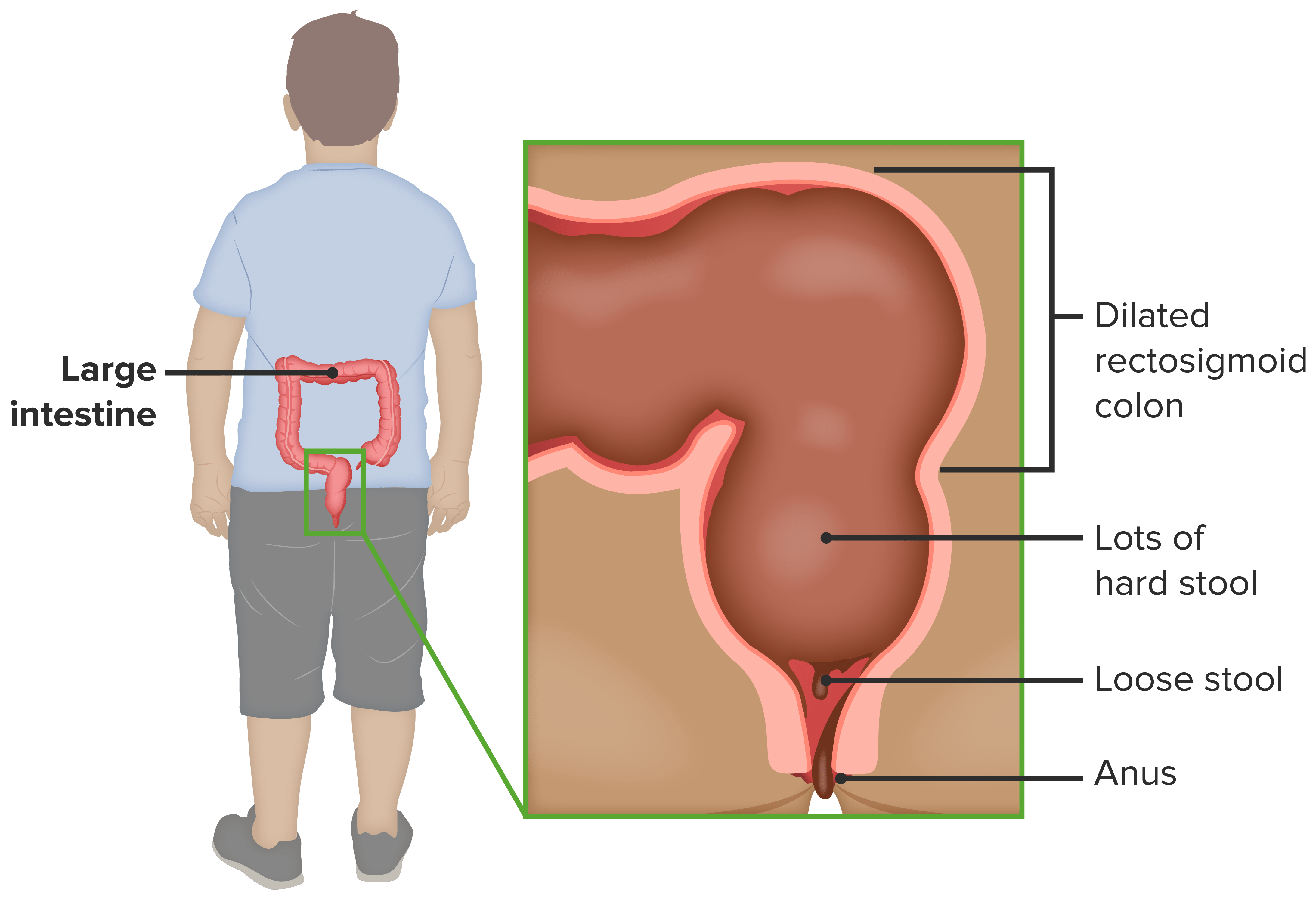
En la encopresis retentiva, el estreñimiento subyacente puede provocar incontinencia por rebosamiento.
Imagen por Lecturio.Es importante realizar una toma cuidadosa de los LOS Neisseria antecedentes para determinar si existe una afección subyacente o si hay algún factor de estrés reciente en EN Erythema nodosum is an immune-mediated panniculitis (inflammation of the subcutaneous fat) caused by a type IV (delayed-type) hypersensitivity reaction. It commonly manifests in young women as tender, erythematous nodules on the shins. Erythema Nodosum la vida del niño.
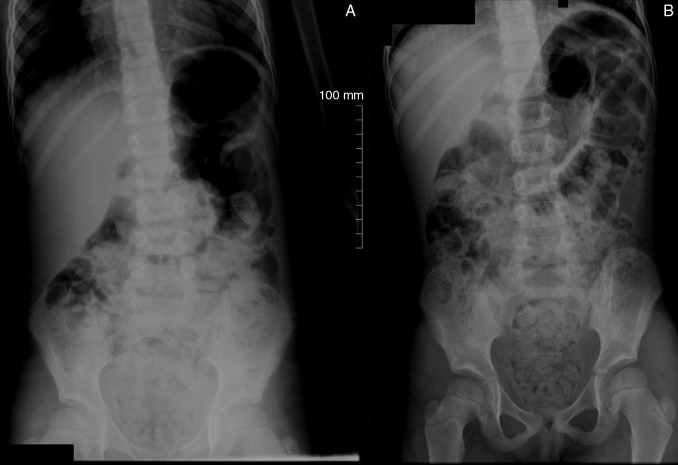
Radiografías abdominales en bipedestación (A) y en posición supina (B), mostrando una gran cantidad de heces en el colon ascendente y descendente, sigmoide y recto. También puede observarse una dilatación en el segmento rectosigmoide, secundaria a la presencia de heces.
Imagen: “Radiografias de abdome em posição ortostática” por Traslaviña, G. A., Del Ciampo, L. A., & Ferraz, I. S. Licencia: CC BY 4.0Infección del tracto urinario (ITU): infección del tracto urinario por un patógeno, generalmente Escherichia coli fecal. En EN Erythema nodosum is an immune-mediated panniculitis (inflammation of the subcutaneous fat) caused by a type IV (delayed-type) hypersensitivity reaction. It commonly manifests in young women as tender, erythematous nodules on the shins. Erythema Nodosum los LOS Neisseria niños, las ITU pueden presentarse como cistitis, pielonefritis o bacteriuria Bacteriuria The presence of bacteria in the urine which is normally bacteria-free. These bacteria are from the urinary tract and are not contaminants of the surrounding tissues. Bacteriuria can be symptomatic or asymptomatic. Significant bacteriuria is an indicator of urinary tract infection. Urinary Tract Infections (UTIs) in Children asintomática. La disfunción de vaciado (vejiga neurógena) y la disfunción intestinal (estreñimiento pediátrico) se encuentran entre las causas más comunes.