Domina Conceptos Médicos

Estudia para la escuela de medicina y tus examenes con Lecturio.

Perforación de Víscera Hueca

La perforación de víscera hueca o perforación gastrointestinal representa una afección en EN Erythema nodosum is an immune-mediated panniculitis (inflammation of the subcutaneous fat) caused by a type IV (delayed-type) hypersensitivity reaction. It commonly manifests in young women as tender, erythematous nodules on the shins. Erythema Nodosum la que se pierde la integridad de la pared gastrointestinal con la consiguiente fuga del contenido entérico hacia la cavidad peritoneal, lo que resulta en EN Erythema nodosum is an immune-mediated panniculitis (inflammation of the subcutaneous fat) caused by a type IV (delayed-type) hypersensitivity reaction. It commonly manifests in young women as tender, erythematous nodules on the shins. Erythema Nodosum peritonitis Peritonitis Inflammation of the peritoneum lining the abdominal cavity as the result of infectious, autoimmune, or chemical processes. Primary peritonitis is due to infection of the peritoneal cavity via hematogenous or lymphatic spread and without intra-abdominal source. Secondary peritonitis arises from the abdominal cavity itself through rupture or abscess of intra-abdominal organs. Penetrating Abdominal Injury. Entre las causas de perforación de víscera hueca se encuentran los LOS Neisseria traumatismos, la isquemia intestinal, las infecciones o las afecciones ulcerosas, todas las cuales acaban provocando una ruptura de espesor total de la pared intestinal. La perforación de víscera hueca se presenta como una aparición súbita de dolor Dolor Inflammation abdominal, distensión, náuseas, vómitos, estreñimiento y síntomas de peritonitis Peritonitis Inflammation of the peritoneum lining the abdominal cavity as the result of infectious, autoimmune, or chemical processes. Primary peritonitis is due to infection of the peritoneal cavity via hematogenous or lymphatic spread and without intra-abdominal source. Secondary peritonitis arises from the abdominal cavity itself through rupture or abscess of intra-abdominal organs. Penetrating Abdominal Injury. El diagnóstico se basa en EN Erythema nodosum is an immune-mediated panniculitis (inflammation of the subcutaneous fat) caused by a type IV (delayed-type) hypersensitivity reaction. It commonly manifests in young women as tender, erythematous nodules on the shins. Erythema Nodosum los LOS Neisseria antecedentes e imagenología, incluyendo la TC abdominopélvica y radiografía. El tratamiento incluye reposo intestinal, uso de una sonda nasogástrica, antibióticos para evitar infecciones graves o sepsis Sepsis Systemic inflammatory response syndrome with a proven or suspected infectious etiology. When sepsis is associated with organ dysfunction distant from the site of infection, it is called severe sepsis. When sepsis is accompanied by hypotension despite adequate fluid infusion, it is called septic shock. Sepsis and Septic Shock, analgésicos y reparación quirúrgica.

Last updated: Dec 15, 2025

Editorial responsibility: Stanley Oiseth, Lindsay Jones, Evelin Maza

Descripción General

Definición

Una perforación de víscera hueca, también conocida como perforación intestinal, es una ruptura de espesor total de la pared intestinal, con la subsiguiente fuga del contenido entérico a la cavidad peritoneal, lo que provoca una respuesta inflamatoria sistémica, peritonitis Peritonitis Inflammation of the peritoneum lining the abdominal cavity as the result of infectious, autoimmune, or chemical processes. Primary peritonitis is due to infection of the peritoneal cavity via hematogenous or lymphatic spread and without intra-abdominal source. Secondary peritonitis arises from the abdominal cavity itself through rupture or abscess of intra-abdominal organs. Penetrating Abdominal Injury y posiblemente sepsis Sepsis Systemic inflammatory response syndrome with a proven or suspected infectious etiology. When sepsis is associated with organ dysfunction distant from the site of infection, it is called severe sepsis. When sepsis is accompanied by hypotension despite adequate fluid infusion, it is called septic shock. Sepsis and Septic Shock.

Epidemiología

  • Causa de dolor Dolor Inflammation abdominal potencialmente mortal
  • Mortalidad 30%–50%
  • Incidencia del 1%–7% en EN Erythema nodosum is an immune-mediated panniculitis (inflammation of the subcutaneous fat) caused by a type IV (delayed-type) hypersensitivity reaction. It commonly manifests in young women as tender, erythematous nodules on the shins. Erythema Nodosum pacientes pediátricos con traumatismos
  • Las úlceras intestinales son la causa más común en EN Erythema nodosum is an immune-mediated panniculitis (inflammation of the subcutaneous fat) caused by a type IV (delayed-type) hypersensitivity reaction. It commonly manifests in young women as tender, erythematous nodules on the shins. Erythema Nodosum los LOS Neisseria adultos
  • El apéndice perforado es la causa más común en EN Erythema nodosum is an immune-mediated panniculitis (inflammation of the subcutaneous fat) caused by a type IV (delayed-type) hypersensitivity reaction. It commonly manifests in young women as tender, erythematous nodules on the shins. Erythema Nodosum los LOS Neisseria pacientes geriátricos

Etiología

  • Enfermedad ulceropéptica:
    • La úlcera duodenal es la más común, representando el 60% de los LOS Neisseria casos (las úlceras anteriores perforan la cavidad abdominal anterior).
    • Úlceras del antro gástrico (20%)
    • Úlceras del cuerpo gástrico (20%)
  • Causas infecciosas ( diverticulitis Diverticulitis Inflammation of a diverticulum or diverticula. Diverticular Disease, apendicitis)
  • Isquemia intestinal
  • Obstrucción intestinal: extrínseca e intrínseca
  • Disminución de la integridad de la pared intestinal por diverticulosis Diverticulosis A pathological condition characterized by the presence of a number of colonic diverticula in the colon. Its pathogenesis is multifactorial, including colon aging, motor dysfunction, increases in intraluminal pressure, and lack of dietary fibers. Diverticular Disease
  • Traumatismo
  • Cuerpos extraños

Presentación Clínica

Antecedentes

  • Aparición súbita de dolor Dolor Inflammation abdominal intenso
  • Interrogar sobre:
    • Patrones previos de dolor Dolor Inflammation abdominal
    • Cirugías abdominales previas
    • Medicamentos (e.g., AINE)

Examen físico

Signos vitales:

  • Hallazgos tempranos: fiebre, taquicardia, taquipnea
  • Hallazgos tardíos: hipotensión, sepsis Sepsis Systemic inflammatory response syndrome with a proven or suspected infectious etiology. When sepsis is associated with organ dysfunction distant from the site of infection, it is called severe sepsis. When sepsis is accompanied by hypotension despite adequate fluid infusion, it is called septic shock. Sepsis and Septic Shock, shock Shock Shock is a life-threatening condition associated with impaired circulation that results in tissue hypoxia. The different types of shock are based on the underlying cause: distributive (↑ cardiac output (CO), ↓ systemic vascular resistance (SVR)), cardiogenic (↓ CO, ↑ SVR), hypovolemic (↓ CO, ↑ SVR), obstructive (↓ CO), and mixed. Types of Shock, mal estado general

Examen abdominal:

  • Temprano: sensibilidad focal en EN Erythema nodosum is an immune-mediated panniculitis (inflammation of the subcutaneous fat) caused by a type IV (delayed-type) hypersensitivity reaction. It commonly manifests in young women as tender, erythematous nodules on the shins. Erythema Nodosum la zona de la perforación
  • Tardío: signos peritoneales
    • El paciente permanece quieto
    • Sensibilidad y/o rigidez abdominal difusa
    • Rebote y defensa abdominal
    • Disminución de los LOS Neisseria ruidos intestinales
  • Dolor Dolor Inflammation abdominal de cuadrante inferior: El líquido del estómago o de las vías biliares drena por los LOS Neisseria conductos paracólicos hacia los LOS Neisseria cuadrantes inferiores y provoca una irritación localizada.
  • Dolor Dolor Inflammation referido al AL Amyloidosis hombro por irritación del nervio frénico

Presentación atípica:

  • Común en EN Erythema nodosum is an immune-mediated panniculitis (inflammation of the subcutaneous fat) caused by a type IV (delayed-type) hypersensitivity reaction. It commonly manifests in young women as tender, erythematous nodules on the shins. Erythema Nodosum pacientes ancianos e inmunocomprometidos
  • Presentación tardía
  • Dolor Dolor Inflammation durante días en EN Erythema nodosum is an immune-mediated panniculitis (inflammation of the subcutaneous fat) caused by a type IV (delayed-type) hypersensitivity reaction. It commonly manifests in young women as tender, erythematous nodules on the shins. Erythema Nodosum lugar de minutos/horas
  • Dolor Dolor Inflammation desproporcionado con respecto al AL Amyloidosis examen físico
  • Signos vitales insignificantes (podrían ser normales)
  • Asegúrese de tener un umbral bajo para solicitar imagenología en EN Erythema nodosum is an immune-mediated panniculitis (inflammation of the subcutaneous fat) caused by a type IV (delayed-type) hypersensitivity reaction. It commonly manifests in young women as tender, erythematous nodules on the shins. Erythema Nodosum estos pacientes.

Diagnóstico

Evaluación de laboratorio

  • Niveles de ácido láctico (indican una disminución del flujo sanguíneo y posibles infecciones)
  • Gonadotropina coriónica humana (hCG, por sus siglas en EN Erythema nodosum is an immune-mediated panniculitis (inflammation of the subcutaneous fat) caused by a type IV (delayed-type) hypersensitivity reaction. It commonly manifests in young women as tender, erythematous nodules on the shins. Erythema Nodosum inglés) en EN Erythema nodosum is an immune-mediated panniculitis (inflammation of the subcutaneous fat) caused by a type IV (delayed-type) hypersensitivity reaction. It commonly manifests in young women as tender, erythematous nodules on the shins. Erythema Nodosum orina para todas las mujeres en EN Erythema nodosum is an immune-mediated panniculitis (inflammation of the subcutaneous fat) caused by a type IV (delayed-type) hypersensitivity reaction. It commonly manifests in young women as tender, erythematous nodules on the shins. Erythema Nodosum edad fértil
  • Lipasa
  • Prueba positiva de sangre oculta en EN Erythema nodosum is an immune-mediated panniculitis (inflammation of the subcutaneous fat) caused by a type IV (delayed-type) hypersensitivity reaction. It commonly manifests in young women as tender, erythematous nodules on the shins. Erythema Nodosum heces

Imagenología

  • TC:
    • Prueba de elección cuando se sospecha una perforación
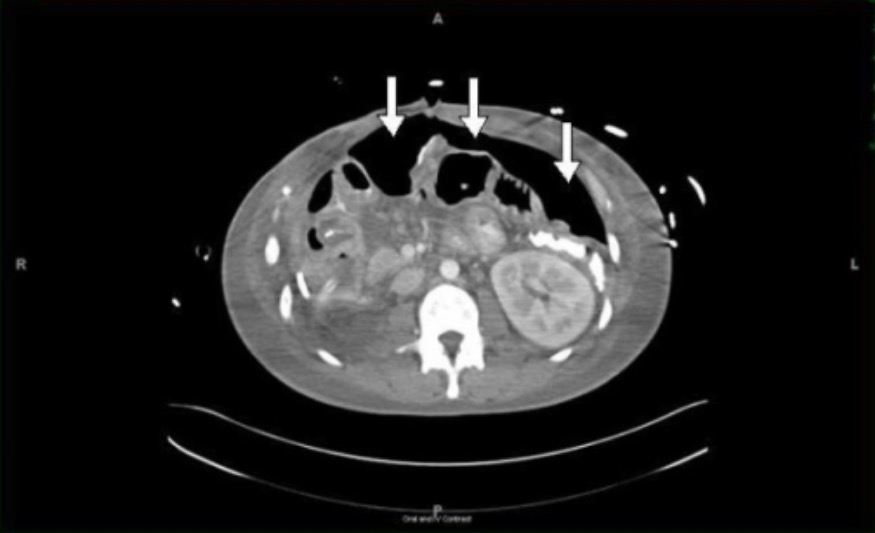
    • Puede detectar pequeñas cantidades de aire libre en EN Erythema nodosum is an immune-mediated panniculitis (inflammation of the subcutaneous fat) caused by a type IV (delayed-type) hypersensitivity reaction. It commonly manifests in young women as tender, erythematous nodules on the shins. Erythema Nodosum la cavidad peritoneal (neumoperitoneo)
    • Puede determinar el problema subyacente
    • Puede detectar otros diagnósticos diferenciales más que una radiografía
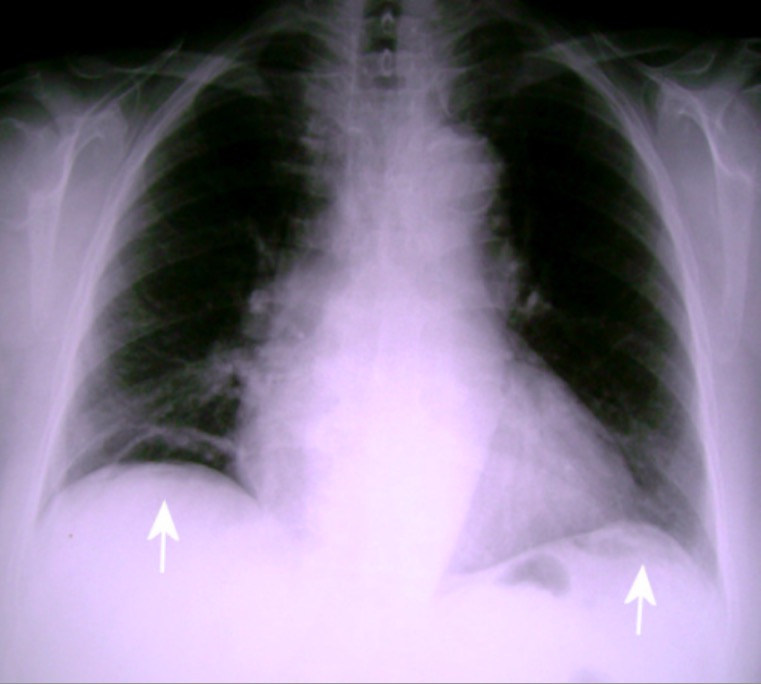
  • Radiografía de tórax y abdomen en EN Erythema nodosum is an immune-mediated panniculitis (inflammation of the subcutaneous fat) caused by a type IV (delayed-type) hypersensitivity reaction. It commonly manifests in young women as tender, erythematous nodules on the shins. Erythema Nodosum bipedestación:
    • Presencia de aire subdiafragmático
    • Poca sensibilidad y especificidad
  • Ultrasonido:
    • Utilizado con mayor frecuencia
    • Detecta el aire libre y el realce de la línea peritoneal
    • Requiere personas calificadas con conocimientos técnicos
Neumoperitoneo de gran volumen

TC postoperatoria que muestra un neumoperitoneo de gran volumen debido a una fístula broncoperitoneal

Imagen: “Post-operative computed tomography (CT) scan” por Johns Hopkins Hospital, Department of Surgery, Baltimore, MD, USA. Licencia: CC BY 2.0
Tratamiento

  • Evaluación de la vía aérea, respiración y circulación (ABC, por sus siglas en EN Erythema nodosum is an immune-mediated panniculitis (inflammation of the subcutaneous fat) caused by a type IV (delayed-type) hypersensitivity reaction. It commonly manifests in young women as tender, erythematous nodules on the shins. Erythema Nodosum inglés)
  • Reanimación con fluidos mediante 2 líneas intravenosas de gran calibre
  • Considerar el uso de hemoderivados en EN Erythema nodosum is an immune-mediated panniculitis (inflammation of the subcutaneous fat) caused by a type IV (delayed-type) hypersensitivity reaction. It commonly manifests in young women as tender, erythematous nodules on the shins. Erythema Nodosum caso de inestabilidad hemodinámica.
  • Terapia con antibióticos:
    • Debe cubrir la flora intestinal (bacterias gramnegativas y anaerobios)
    • Uso de antibióticos de amplio espectro
  • Cirugía:
    • Interconsulta temprana a cirugía (laparotomía exploratoria urgente)
    • Una opción habitual para un mal candidato a cirugía con una úlcera gástrica perforada es un parche de Graham (se utiliza una pieza de epiplón para cubrir la perforación).
    • También puede usarse la radiología intervencionista.

Diagnóstico Diferencial

  • Enfermedad ulceropéptica: una ulceración de espesor total de la mucosa duodenal o gástrica. Las úlceras perforadas son la causa más común de vísceras perforadas. Las úlceras gástricas y duodenales son los LOS Neisseria 2 tipos más comunes de úlceras pépticas. La enfermedad ulceropéptica puede presentarse como dolor Dolor Inflammation crónico por úlcera péptica que súbitamente se torna severo. Generalmente, el tratamiento es quirúrgico.
  • Diverticulitis Diverticulitis Inflammation of a diverticulum or diverticula. Diverticular Disease: la inflamación de divertículos dentro del intestino. La diverticulitis Diverticulitis Inflammation of a diverticulum or diverticula. Diverticular Disease puede producirse en EN Erythema nodosum is an immune-mediated panniculitis (inflammation of the subcutaneous fat) caused by a type IV (delayed-type) hypersensitivity reaction. It commonly manifests in young women as tender, erythematous nodules on the shins. Erythema Nodosum el intestino delgado y en EN Erythema nodosum is an immune-mediated panniculitis (inflammation of the subcutaneous fat) caused by a type IV (delayed-type) hypersensitivity reaction. It commonly manifests in young women as tender, erythematous nodules on the shins. Erythema Nodosum el intestino grueso o colon Colon The large intestines constitute the last portion of the digestive system. The large intestine consists of the cecum, appendix, colon (with ascending, transverse, descending, and sigmoid segments), rectum, and anal canal. The primary function of the colon is to remove water and compact the stool prior to expulsion from the body via the rectum and anal canal. Colon, Cecum, and Appendix: Anatomy, y generalmente se presenta con un dolor Dolor Inflammation abdominal importante y un recuento elevado de leucocitos. El tratamiento principal es con antibióticos. Si los LOS Neisseria divertículos están inflamados y debilitados, pueden romperse causando una perforación de víscera hueca.
  • Pancreatitis Pancreatitis Inflammation of the pancreas. Pancreatitis is classified as acute unless there are computed tomographic or endoscopic retrograde cholangiopancreatographic findings of chronic pancreatitis. The two most common forms of acute pancreatitis are alcoholic pancreatitis and gallstone pancreatitis. Acute Pancreatitis aguda: proceso inflamatorio del tejido pancreático con destrucción celular y elevación de la lipasa sérica. Los LOS Neisseria pacientes presentan una aparición súbita de dolor Dolor Inflammation abdominal o epigástrico intenso y persistente irradiado a la espalda, que se acompaña de náuseas y/o vómitos. La inflamación continua de los LOS Neisseria intestinos circundantes puede causar una perforación en EN Erythema nodosum is an immune-mediated panniculitis (inflammation of the subcutaneous fat) caused by a type IV (delayed-type) hypersensitivity reaction. It commonly manifests in young women as tender, erythematous nodules on the shins. Erythema Nodosum casos graves.
  • Colecistitis aguda: inflamación de la vesícula biliar que se desarrolla en EN Erythema nodosum is an immune-mediated panniculitis (inflammation of the subcutaneous fat) caused by a type IV (delayed-type) hypersensitivity reaction. It commonly manifests in young women as tender, erythematous nodules on the shins. Erythema Nodosum horas, generalmente porque un cálculo biliar obstruye el conducto cístico. La colecistitis aguda se presenta típicamente con dolor Dolor Inflammation abdominal epigástrico en EN Erythema nodosum is an immune-mediated panniculitis (inflammation of the subcutaneous fat) caused by a type IV (delayed-type) hypersensitivity reaction. It commonly manifests in young women as tender, erythematous nodules on the shins. Erythema Nodosum el cuadrante superior derecho, fiebre, leucocitosis y signo de Murphy (e.g., cese de la inspiración durante la palpación del cuadrante superior derecho).
  • Apendicitis aguda perforada: la apendicitis es la inflamación aguda del apéndice vermiforme y la urgencia quirúrgica abdominal más frecuente. La perforación se observa en EN Erythema nodosum is an immune-mediated panniculitis (inflammation of the subcutaneous fat) caused by a type IV (delayed-type) hypersensitivity reaction. It commonly manifests in young women as tender, erythematous nodules on the shins. Erythema Nodosum aproximadamente el 30% de las presentaciones de apendicitis aguda. Algunos pacientes pueden presentar un dolor Dolor Inflammation leve o vago cuando el apéndice ya se ha HA Hemolytic anemia (HA) is the term given to a large group of anemias that are caused by the premature destruction/hemolysis of circulating red blood cells (RBCs). Hemolysis can occur within (intravascular hemolysis) or outside the blood vessels (extravascular hemolysis). Hemolytic Anemia roto. Por lo general, se requiere una intervención quirúrgica.

Referencias

  1. Cahalane, M.J. (2025). Overview of gastrointestinal tract perforation. In W. Chen (Ed.), UpToDate. Retrieved April 8, 2025, from https://www.uptodate.com/contents/overview-of-gastrointestinal-tract-perforation
  2. Jones, M.W., Kashyap, S., Zabbo, C.P. Bowel Perforation. (Updated February 8, 2023). In: StatPearls [Internet]. Treasure Island (FL): StatPearls Publishing. Retrieved April 8, 2025, from https://www.ncbi.nlm.nih.gov/books/NBK537224/

¡Crea tu cuenta gratis o inicia una sesión para seguir leyendo!

Regístrate ahora y obtén acceso gratuito a Lecturio con páginas de concepto, videos médicos y cuestionarios para tu educación médica.

User Reviews

Que tengas una sesión de estudio alegre y navideña 🎁 Ahorra 50% en todos los planes >>

Details