Domina Conceptos Médicos

Estudia para la escuela de medicina y tus examenes con Lecturio.

Nefropatía por IgA

La nefropatía por IgA IgA Represents 15-20% of the human serum immunoglobulins, mostly as the 4-chain polymer in humans or dimer in other mammals. Secretory iga is the main immunoglobulin in secretions. Immunoglobulins: Types and Functions (enfermedad de Berger) es una enfermedad renal caracterizada por el depósito de IgA IgA Represents 15-20% of the human serum immunoglobulins, mostly as the 4-chain polymer in humans or dimer in other mammals. Secretory iga is the main immunoglobulin in secretions. Immunoglobulins: Types and Functions en EN Erythema nodosum is an immune-mediated panniculitis (inflammation of the subcutaneous fat) caused by a type IV (delayed-type) hypersensitivity reaction. It commonly manifests in young women as tender, erythematous nodules on the shins. Erythema Nodosum el mesangio. Es la causa más común de glomerulonefritis primaria en EN Erythema nodosum is an immune-mediated panniculitis (inflammation of the subcutaneous fat) caused by a type IV (delayed-type) hypersensitivity reaction. It commonly manifests in young women as tender, erythematous nodules on the shins. Erythema Nodosum la mayoría de los LOS Neisseria países desarrollados. Los LOS Neisseria pacientes se presentan con frecuencia en EN Erythema nodosum is an immune-mediated panniculitis (inflammation of the subcutaneous fat) caused by a type IV (delayed-type) hypersensitivity reaction. It commonly manifests in young women as tender, erythematous nodules on the shins. Erythema Nodosum la segunda y tercera década de la vida e, históricamente, con una infección previa de las vías respiratorias superiores o gastrointestinal. Las características de presentación frecuentes son hematuria Hematuria Presence of blood in the urine. Renal Cell Carcinoma macroscópica o hematuria Hematuria Presence of blood in the urine. Renal Cell Carcinoma microscópica asintomática en EN Erythema nodosum is an immune-mediated panniculitis (inflammation of the subcutaneous fat) caused by a type IV (delayed-type) hypersensitivity reaction. It commonly manifests in young women as tender, erythematous nodules on the shins. Erythema Nodosum el análisis de orina. El curso suele ser benigno, con el procedimiento diagnóstico definitivo, la biopsia renal, realizado solo en EN Erythema nodosum is an immune-mediated panniculitis (inflammation of the subcutaneous fat) caused by a type IV (delayed-type) hypersensitivity reaction. It commonly manifests in young women as tender, erythematous nodules on the shins. Erythema Nodosum casos de enfermedad renal grave y progresiva. El tratamiento depende de la gravedad de la proteinuria Proteinuria The presence of proteins in the urine, an indicator of kidney diseases. Nephrotic Syndrome in Children, la función renal y los LOS Neisseria cambios patológicos. Se administran inhibidores de la enzima convertidora de angiotensina (IECA) o antagonistas de los LOS Neisseria receptores de angiotensina (ARA) II para reducir la progresión de la enfermedad. La proteinuria Proteinuria The presence of proteins in the urine, an indicator of kidney diseases. Nephrotic Syndrome in Children persistente y el aumento de creatinina son indicaciones de terapia inmunosupresora que incluye glucocorticoides y, posiblemente, agentes citotóxicos.

Last updated: Dec 15, 2025

Editorial responsibility: Stanley Oiseth, Lindsay Jones, Evelin Maza

Descripción General

Definición

La nefropatía por IgA IgA Represents 15-20% of the human serum immunoglobulins, mostly as the 4-chain polymer in humans or dimer in other mammals. Secretory iga is the main immunoglobulin in secretions. Immunoglobulins: Types and Functions (enfermedad de Berger) es una enfermedad renal caracterizada por el depósito de IgA IgA Represents 15-20% of the human serum immunoglobulins, mostly as the 4-chain polymer in humans or dimer in other mammals. Secretory iga is the main immunoglobulin in secretions. Immunoglobulins: Types and Functions en EN Erythema nodosum is an immune-mediated panniculitis (inflammation of the subcutaneous fat) caused by a type IV (delayed-type) hypersensitivity reaction. It commonly manifests in young women as tender, erythematous nodules on the shins. Erythema Nodosum el mesangio, que causa inflamación glomerular (glomerulonefritis).

Epidemiología

  • Causa más común de glomerulonefritis primaria en EN Erythema nodosum is an immune-mediated panniculitis (inflammation of the subcutaneous fat) caused by a type IV (delayed-type) hypersensitivity reaction. It commonly manifests in young women as tender, erythematous nodules on the shins. Erythema Nodosum países desarrollados
  • A menudo se presenta en EN Erythema nodosum is an immune-mediated panniculitis (inflammation of the subcutaneous fat) caused by a type IV (delayed-type) hypersensitivity reaction. It commonly manifests in young women as tender, erythematous nodules on the shins. Erythema Nodosum la segunda a tercera década de la vida
  • Observada con más frecuencia entre caucásicos y asiáticos orientales
  • Ambos sexos se ven afectados por igual entre los LOS Neisseria asiáticos orientales; aproximadamente 2:1 predominio de hombres a mujeres entre los LOS Neisseria caucásicos

Etiología

  • Desconocida en EN Erythema nodosum is an immune-mediated panniculitis (inflammation of the subcutaneous fat) caused by a type IV (delayed-type) hypersensitivity reaction. It commonly manifests in young women as tender, erythematous nodules on the shins. Erythema Nodosum la mayoría de los LOS Neisseria casos
  • A menudo precedida por una infección de las vías respiratorias superiores o gastrointestinal
  • El ejercicio puede ser un desencadenante (empeora la hematuria Hematuria Presence of blood in the urine. Renal Cell Carcinoma en EN Erythema nodosum is an immune-mediated panniculitis (inflammation of the subcutaneous fat) caused by a type IV (delayed-type) hypersensitivity reaction. It commonly manifests in young women as tender, erythematous nodules on the shins. Erythema Nodosum pacientes con nefropatía por IgA IgA Represents 15-20% of the human serum immunoglobulins, mostly as the 4-chain polymer in humans or dimer in other mammals. Secretory iga is the main immunoglobulin in secretions. Immunoglobulins: Types and Functions).
  • Puede asociarse con afecciones como:
    • Cirrosis
    • Enfermedad celíaca
    • Infección por VIH
    • Enfermedad de cambios mínimos
    • Nefropatía membranosa
    • Granulomatosis con poliangeitis

Fisiopatología

  • Infección previa de la mucosa → alteración de la regulación de la síntesis y el metabolismo de IgA IgA Represents 15-20% of the human serum immunoglobulins, mostly as the 4-chain polymer in humans or dimer in other mammals. Secretory iga is the main immunoglobulin in secretions. Immunoglobulins: Types and Functions (O-galactosilación anormal de la región bisagra de la IgA1 principalmente polimérica)
  • La IgA1 anormalmente galactosilada aumenta el reconocimiento por los LOS Neisseria anticuerpos circulantes → inmunocomplejos → depósito mesangial de inmunocomplejos → reacción de hipersensibilidad tipo III → inflamación mesangial y glomerulonefritis

Presentación Clínica

La nefropatía por IgA IgA Represents 15-20% of the human serum immunoglobulins, mostly as the 4-chain polymer in humans or dimer in other mammals. Secretory iga is the main immunoglobulin in secretions. Immunoglobulins: Types and Functions se presenta con hematuria Hematuria Presence of blood in the urine. Renal Cell Carcinoma macroscópica recurrente o hematuria Hematuria Presence of blood in the urine. Renal Cell Carcinoma microscópica asintomática como las manifestaciones más frecuentes.

Hematuria Hematuria Presence of blood in the urine. Renal Cell Carcinoma recurrente

Hematuria Hematuria Presence of blood in the urine. Renal Cell Carcinoma microscópica

Manifestaciones raras

  • Menos del 10% de los LOS Neisseria casos
  • Los LOS Neisseria pacientes pueden presentar:
    • Síndrome nefrótico: el riñón excreta > 3,5 g de proteína/día
    • Glomerulonefritis aguda, rápidamente progresiva:
      • Hematuria Hematuria Presence of blood in the urine. Renal Cell Carcinoma
      • Edema Edema Edema is a condition in which excess serous fluid accumulates in the body cavity or interstitial space of connective tissues. Edema is a symptom observed in several medical conditions. It can be categorized into 2 types, namely, peripheral (in the extremities) and internal (in an organ or body cavity). Edema
      • Proteinuria Proteinuria The presence of proteins in the urine, an indicator of kidney diseases. Nephrotic Syndrome in Children
      • Insuficiencia renal
    • Hipertensión maligna:
      • Presión arterial extremadamente alta (típicamente > 180/120 mm Hg) con daño agudo de órganos diana
      • Presentación rara
      • La enfermedad no se detectó lo suficientemente temprano porque el paciente no tenía hematuria Hematuria Presence of blood in the urine. Renal Cell Carcinoma típica.

Diagnóstico

El diagnóstico generalmente se basa en EN Erythema nodosum is an immune-mediated panniculitis (inflammation of the subcutaneous fat) caused by a type IV (delayed-type) hypersensitivity reaction. It commonly manifests in young women as tender, erythematous nodules on the shins. Erythema Nodosum la presentación clínica y la sospecha derivada de un evento infeccioso previo.
Evaluación inicial

  • Análisis de orina (hallazgos compatibles con síndrome nefrítico):
  • Otros resultados de laboratorio:
    • Niveles normales de complemento
    • Puede haber aumento de creatinina
    • Aumento de la concentración sérica de IgA IgA Represents 15-20% of the human serum immunoglobulins, mostly as the 4-chain polymer in humans or dimer in other mammals. Secretory iga is the main immunoglobulin in secretions. Immunoglobulins: Types and Functions ( en EN Erythema nodosum is an immune-mediated panniculitis (inflammation of the subcutaneous fat) caused by a type IV (delayed-type) hypersensitivity reaction. It commonly manifests in young women as tender, erythematous nodules on the shins. Erythema Nodosum 30%–50% de los LOS Neisseria pacientes) pero sin correlación con la actividad de la enfermedad

Biopsia

  • La biopsia renal proporciona el diagnóstico definitivo.
  • Debido al AL Amyloidosis curso benigno de la glomerulonefritis, la biopsia renal (prueba invasiva) está indicada solo en EN Erythema nodosum is an immune-mediated panniculitis (inflammation of the subcutaneous fat) caused by a type IV (delayed-type) hypersensitivity reaction. It commonly manifests in young women as tender, erythematous nodules on the shins. Erythema Nodosum la enfermedad grave o progresiva:
    • Excreción persistente de proteínas en EN Erythema nodosum is an immune-mediated panniculitis (inflammation of the subcutaneous fat) caused by a type IV (delayed-type) hypersensitivity reaction. It commonly manifests in young women as tender, erythematous nodules on the shins. Erythema Nodosum orina >500 mg/día
    • Aumento de la creatinina sérica.
    • Hipertensión de nueva aparición o elevación significativa de la presión arterial con respecto al AL Amyloidosis valor inicial
  • Resultados de la biopsia:
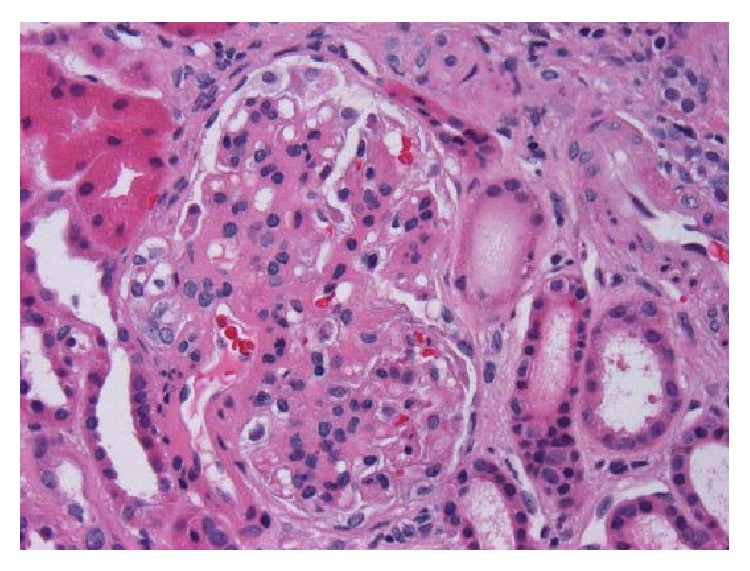
    • Microscopía óptica → hipercelularidad mesangial
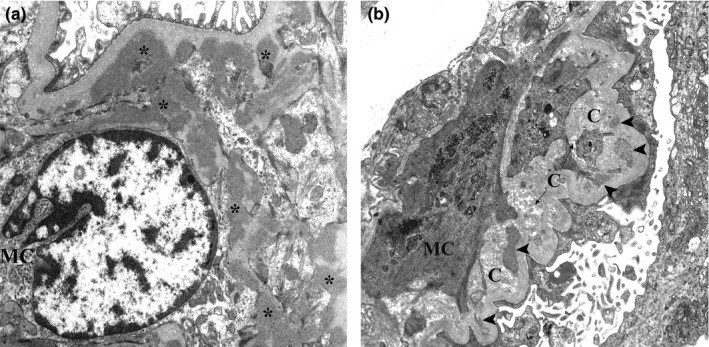
    • Microscopía electrónica → depósitos electro-densos en EN Erythema nodosum is an immune-mediated panniculitis (inflammation of the subcutaneous fat) caused by a type IV (delayed-type) hypersensitivity reaction. It commonly manifests in young women as tender, erythematous nodules on the shins. Erythema Nodosum el mesangio
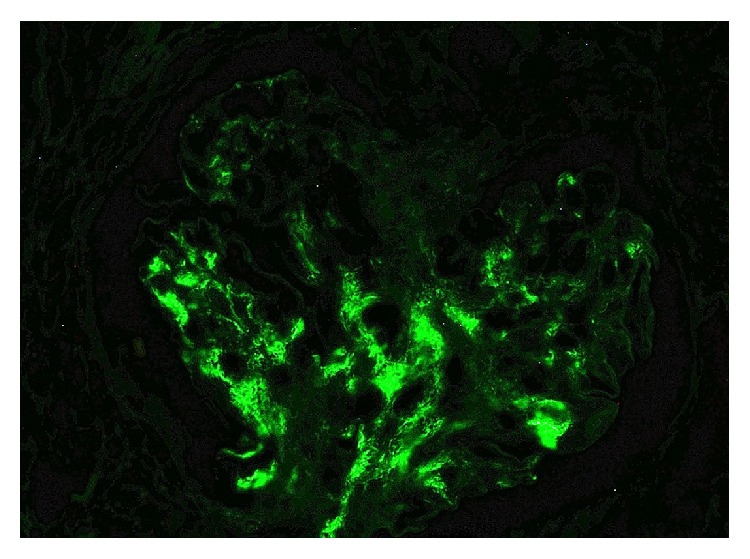
    • Microscopía de inmunofluorescencia → depósitos mesangiales de IgA IgA Represents 15-20% of the human serum immunoglobulins, mostly as the 4-chain polymer in humans or dimer in other mammals. Secretory iga is the main immunoglobulin in secretions. Immunoglobulins: Types and Functions

Related videos

Tratamiento y Pronóstico

Tratamiento

  • Para pacientes con hematuria Hematuria Presence of blood in the urine. Renal Cell Carcinoma, función renal normal y proteinuria Proteinuria The presence of proteins in the urine, an indicator of kidney diseases. Nephrotic Syndrome in Children mínima:
    • Sin tratamiento activo
    • Monitorización de la función renal (incluida la proteinuria Proteinuria The presence of proteins in the urine, an indicator of kidney diseases. Nephrotic Syndrome in Children) y la presión arterial
  • Para pacientes con proteinuria Proteinuria The presence of proteins in the urine, an indicator of kidney diseases. Nephrotic Syndrome in Children >500 mg/día y/o hipertensión:
    • Objetivo: proteinuria Proteinuria The presence of proteins in the urine, an indicator of kidney diseases. Nephrotic Syndrome in Children <500 mg/día y presión arterial <130/80 mmHg
    • Tratamiento:
      • Los LOS Neisseria IECA o los LOS Neisseria ARA II disminuyen la progresión de la enfermedad.
      • La terapia con estatinas reduce el riesgo cardiovascular (pero no tiene ningún efecto sobre la afectación renal).
      • Otras opciones, como el tratamiento con aceite de pescado y la amigdalectomía, tienen resultados controversiales.
      • Los LOS Neisseria inhibidores del cotransportador sodio-glucosa 2 (SGLT2) se recomiendan en EN Erythema nodosum is an immune-mediated panniculitis (inflammation of the subcutaneous fat) caused by a type IV (delayed-type) hypersensitivity reaction. It commonly manifests in young women as tender, erythematous nodules on the shins. Erythema Nodosum todas las personas con nefropatía IgA IgA Represents 15-20% of the human serum immunoglobulins, mostly as the 4-chain polymer in humans or dimer in other mammals. Secretory iga is the main immunoglobulin in secretions. Immunoglobulins: Types and Functions y proteinuria Proteinuria The presence of proteins in the urine, an indicator of kidney diseases. Nephrotic Syndrome in Children.
  • Para enfermedad grave, activa o progresiva:
    • Características:
      • Aumento de la creatinina sérica
      • Proteinuria Proteinuria The presence of proteins in the urine, an indicator of kidney diseases. Nephrotic Syndrome in Children persistente (> 1 g/día) a pesar de la administración de IECA o ARA II
      • Hallazgos en EN Erythema nodosum is an immune-mediated panniculitis (inflammation of the subcutaneous fat) caused by a type IV (delayed-type) hypersensitivity reaction. It commonly manifests in young women as tender, erythematous nodules on the shins. Erythema Nodosum biopsia de enfermedad activa
    • Terapia:
      • Glucocorticoides
      • Micofenolato mofetilo (alternativa si no se pueden recibir glucocorticoides)
      • Antagonistas dobles de los LOS Neisseria receptores de la endotelina y la angiotensina: esparsentán
  • Para la enfermedad de progresión rápida: considerar la posibilidad de una terapia combinada con glucocorticoides + ciclofosfamida y luego azatioprina.

Pronóstico

  • Hasta en EN Erythema nodosum is an immune-mediated panniculitis (inflammation of the subcutaneous fat) caused by a type IV (delayed-type) hypersensitivity reaction. It commonly manifests in young women as tender, erythematous nodules on the shins. Erythema Nodosum 50% de los LOS Neisseria pacientes, se observa una progresión lenta a enfermedad renal en EN Erythema nodosum is an immune-mediated panniculitis (inflammation of the subcutaneous fat) caused by a type IV (delayed-type) hypersensitivity reaction. It commonly manifests in young women as tender, erythematous nodules on the shins. Erythema Nodosum etapa terminal en EN Erythema nodosum is an immune-mediated panniculitis (inflammation of the subcutaneous fat) caused by a type IV (delayed-type) hypersensitivity reaction. It commonly manifests in young women as tender, erythematous nodules on the shins. Erythema Nodosum 20–25 años.
  • En EN Erythema nodosum is an immune-mediated panniculitis (inflammation of the subcutaneous fat) caused by a type IV (delayed-type) hypersensitivity reaction. It commonly manifests in young women as tender, erythematous nodules on the shins. Erythema Nodosum otros, remisión completa o hematuria Hematuria Presence of blood in the urine. Renal Cell Carcinoma de bajo grado persistente pero función renal conservada
  • Predictores de enfermedad renal progresiva:
    • Creatinina sérica elevada
    • Hipertensión
    • Proteinuria Proteinuria The presence of proteins in the urine, an indicator of kidney diseases. Nephrotic Syndrome in Children persistente durante más de 6 meses (> 1 g/día)

Diagnóstico Diferencial

Las siguientes condiciones se encuentran entre los LOS Neisseria diagnósticos diferenciales de la nefropatía por IgA IgA Represents 15-20% of the human serum immunoglobulins, mostly as the 4-chain polymer in humans or dimer in other mammals. Secretory iga is the main immunoglobulin in secretions. Immunoglobulins: Types and Functions.

  • Púrpura de Henoch-Schönlein o vasculitis Vasculitis Inflammation of any one of the blood vessels, including the arteries; veins; and rest of the vasculature system in the body. Systemic Lupus Erythematosus por IgA IgA Represents 15-20% of the human serum immunoglobulins, mostly as the 4-chain polymer in humans or dimer in other mammals. Secretory iga is the main immunoglobulin in secretions. Immunoglobulins: Types and Functions: otra glomerulonefritis mediada por IgA IgA Represents 15-20% of the human serum immunoglobulins, mostly as the 4-chain polymer in humans or dimer in other mammals. Secretory iga is the main immunoglobulin in secretions. Immunoglobulins: Types and Functions que puede ser desencadenada por una infección del tracto respiratorio superior o gastrointestinal: la púrpura de Henoch-Schölein generalmente ocurre en EN Erythema nodosum is an immune-mediated panniculitis (inflammation of the subcutaneous fat) caused by a type IV (delayed-type) hypersensitivity reaction. It commonly manifests in young women as tender, erythematous nodules on the shins. Erythema Nodosum niños < 10 años. Los LOS Neisseria pacientes presentan púrpura palpable en EN Erythema nodosum is an immune-mediated panniculitis (inflammation of the subcutaneous fat) caused by a type IV (delayed-type) hypersensitivity reaction. It commonly manifests in young women as tender, erythematous nodules on the shins. Erythema Nodosum los LOS Neisseria glúteos y las extremidades inferiores, dolor Dolor Inflammation abdominal y artralgias. La púrpura de Henoch-Schölein es idéntica histológicamente a la nefropatía por IgA IgA Represents 15-20% of the human serum immunoglobulins, mostly as the 4-chain polymer in humans or dimer in other mammals. Secretory iga is the main immunoglobulin in secretions. Immunoglobulins: Types and Functions.
  • Síndrome de Alport (nefritis hereditaria): también se presenta con hematuria Hematuria Presence of blood in the urine. Renal Cell Carcinoma aislada: el síndrome de Alport es una enfermedad hereditaria comúnmente ligada al AL Amyloidosis cromosoma X que da como resultado un colágeno tipo IV defectuoso; este trastorno está asociado con hipoacusia neurosensorial y anomalías oculares. Los LOS Neisseria pacientes a menudo se presentan durante la infancia con hematuria Hematuria Presence of blood in the urine. Renal Cell Carcinoma macroscópica episódica. La biopsia renal revela separación de la membrana basal glomerular.
  • Nefropatía por membrana basal delgada: también puede presentarse con hematuria Hematuria Presence of blood in the urine. Renal Cell Carcinoma aislada, así como hematuria Hematuria Presence of blood in the urine. Renal Cell Carcinoma macroscópica con dolor Dolor Inflammation de costado: esta enfermedad hereditaria se caracteriza por mutaciones del colágeno tipo IV. La biopsia renal revela adelgazamiento difuso de la membrana basal glomerular.
  • Glomerulonefritis membranoproliferativa: un patrón de enfermedad glomerular detectado en EN Erythema nodosum is an immune-mediated panniculitis (inflammation of the subcutaneous fat) caused by a type IV (delayed-type) hypersensitivity reaction. It commonly manifests in young women as tender, erythematous nodules on the shins. Erythema Nodosum la biopsia que se puede observar en EN Erythema nodosum is an immune-mediated panniculitis (inflammation of the subcutaneous fat) caused by a type IV (delayed-type) hypersensitivity reaction. It commonly manifests in young women as tender, erythematous nodules on the shins. Erythema Nodosum asociación con infecciones por hepatitis B Hepatitis B Hepatitis B virus (HBV) is a partially double-stranded DNA virus, which belongs to the Orthohepadnavirus genus and the Hepadnaviridae family. Most individuals with acute HBV infection are asymptomatic or have mild, self-limiting symptoms. Chronic infection can be asymptomatic or create hepatic inflammation, leading to liver cirrhosis and hepatocellular carcinoma (HCC). Hepatitis B Virus y C: la hematuria Hematuria Presence of blood in the urine. Renal Cell Carcinoma es la presentación más común, pero también se observan síndrome nefrótico y función renal anormal. La biopsia renal muestra hipercelularidad con engrosamiento y separación de la membrana basal glomerular.
  • Glomerulonefritis postestreptocócica: un tipo autolimitado de glomerulonefritis que se presenta en EN Erythema nodosum is an immune-mediated panniculitis (inflammation of the subcutaneous fat) caused by a type IV (delayed-type) hypersensitivity reaction. It commonly manifests in young women as tender, erythematous nodules on the shins. Erythema Nodosum niños: la glomerulonefritis postestreptocócica es una afección mediada por complejos inmunes que a menudo está precedida por faringitis por estreptococo beta-hemolítico del grupo A o infecciones cutáneas. Los LOS Neisseria resultados de laboratorio muestran niveles reducidos de complemento, niveles elevados de antiestreptolisina-O y anti-DNasa B. La biopsia renal revela una membrana basal glomerular granular en EN Erythema nodosum is an immune-mediated panniculitis (inflammation of the subcutaneous fat) caused by a type IV (delayed-type) hypersensitivity reaction. It commonly manifests in young women as tender, erythematous nodules on the shins. Erythema Nodosum la microscopía de inmunofluorescencia y jorobas subepiteliales en EN Erythema nodosum is an immune-mediated panniculitis (inflammation of the subcutaneous fat) caused by a type IV (delayed-type) hypersensitivity reaction. It commonly manifests in young women as tender, erythematous nodules on the shins. Erythema Nodosum la microscopía electrónica.

Referencias

  1. Cattran DC, Appel GB. Treatment and prognosis of IgA nephropathy. UpToDate. Retrieved February 10, 2021, from https://www.uptodate.com/contents/treatment-and-prognosis-of-iga-nephropathy
  2. Chueng CK, Barratt J. Clinical presentation and diagnosis of IgA nephropathy. UpToDate. Retrieved February 10, 2021, from https://www.uptodate.com/contents/clinical-presentation-and-diagnosis-of-iga-nephropathy
  3. Cheung CK, Barratt J. Pathogenesis of IgA nephropathy. UpToDate. Retrieved February 10, 2021, from https://www.uptodate.com/contents/pathogenesis-of-iga-nephropathy
  4. Lewis JB, Neilson EG. Glomerular Diseases. In: Jameson J, et al. (Eds.). Harrison’s Principles of Internal Medicine, 20th ed. McGraw-Hill.

¡Crea tu cuenta gratis o inicia una sesión para seguir leyendo!

Regístrate ahora y obtén acceso gratuito a Lecturio con páginas de concepto, videos médicos y cuestionarios para tu educación médica.

User Reviews

Que tengas una sesión de estudio alegre y navideña 🎁 Ahorra 50% en todos los planes >>

Details