La menopausia es un proceso fisiológico de la mujer caracterizado por el cese permanente de la menstruación que se produce tras la pérdida de la actividad ovárica. La menopausia solamente puede diagnosticarse retrospectivamente, tras 12 meses sin sangrado menstrual. Durante la transición a la menopausia, las hormonas reproductivas pueden fluctuar significativamente, lo que provoca síntomas como sofocos, trastornos del sueño y del estado de ánimo, y sequedad vaginal. EnENErythema nodosum is an immune-mediated panniculitis (inflammation of the subcutaneous fat) caused by a type IV (delayed-type) hypersensitivity reaction. It commonly manifests in young women as tender, erythematous nodules on the shins.Erythema Nodosum la mujer posmenopáusica, losLOSNeisseria niveles bajos de estrógenos contribuyen a aumentar el riesgo de enfermedades cardiovasculares, osteoporosisOsteoporosisOsteoporosis refers to a decrease in bone mass and density leading to an increased number of fractures. There are 2 forms of osteoporosis: primary, which is commonly postmenopausal or senile; and secondary, which is a manifestation of immobilization, underlying medical disorders, or long-term use of certain medications. Osteoporosis y disfunción sexual debido a la atrofia vulvovaginal. Para algunas mujeres, losLOSNeisseria síntomas afectan negativamente a su calidad de vida y el tratamiento está justificado. El tratamiento suele consistir enENErythema nodosum is an immune-mediated panniculitis (inflammation of the subcutaneous fat) caused by a type IV (delayed-type) hypersensitivity reaction. It commonly manifests in young women as tender, erythematous nodules on the shins.Erythema Nodosum una terapia hormonal para la menopausia, pero también existen otras opciones de tratamiento.
La menopausia es el cese fisiológico permanente de la menstruación debido a la pérdida de la actividad ovárica, que se determina retrospectivamente tras 12 meses consecutivos de ausencia de sangrado menstrual, y niveles bajos de estrógenos.
Epidemiología
Edad media: 51 años
Rango típico: 44–55 años de edad (95% de las mujeres)
Anormal enENErythema nodosum is an immune-mediated panniculitis (inflammation of the subcutaneous fat) caused by a type IV (delayed-type) hypersensitivity reaction. It commonly manifests in young women as tender, erythematous nodules on the shins.Erythema Nodosum < 40 años: insuficiencia ovárica primaria
Factores que afectan a la edad:
Genética
Etnia
Tabaquismo
Antecedentes reproductivos
Quimioterapia o radiación pélvica
Histerectomía con conservación de losLOSNeisseria ovarios → deterioro postquirúrgico de la irrigación sanguínea
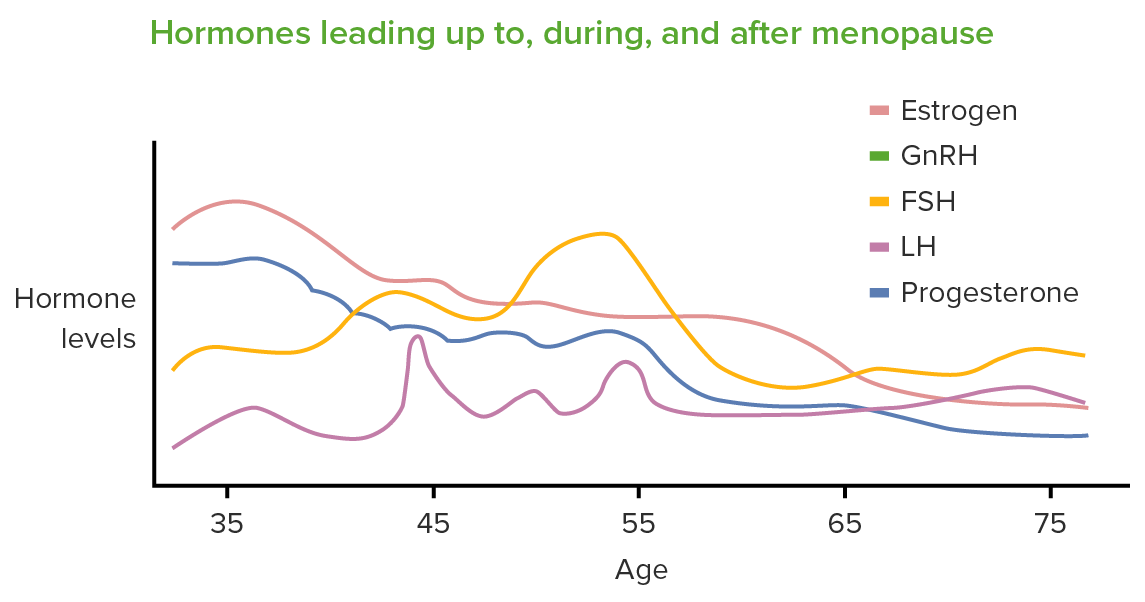
La menopausia se caracteriza por una ↓ fisiológica enENErythema nodosum is an immune-mediated panniculitis (inflammation of the subcutaneous fat) caused by a type IV (delayed-type) hypersensitivity reaction. It commonly manifests in young women as tender, erythematous nodules on the shins.Erythema NodosumlosLOSNeisseria ovocitos debido a una atresiaAtresiaHypoplastic Left Heart Syndrome (HLHS) progresiva, lo que finalmente conduce a un estado hipoestrogénico crónico enENErythema nodosum is an immune-mediated panniculitis (inflammation of the subcutaneous fat) caused by a type IV (delayed-type) hypersensitivity reaction. It commonly manifests in young women as tender, erythematous nodules on the shins.Erythema Nodosum la posmenopausia. Durante la transición a la menopausia, losLOSNeisseria niveles hormonales fluctúan significativamente.
Los principales cambios hormonales que se observan en la perimenopausia/menopausia son una disminución de los estrógenos y la progesterona y un aumento de la hormona foliculoestimulante (FSH, por sus siglas en inglés) y la hormona luteinizante (LH, por sus siglas en inglés). GnRH: hormona liberadora de gonadotropina
EnENErythema nodosum is an immune-mediated panniculitis (inflammation of the subcutaneous fat) caused by a type IV (delayed-type) hypersensitivity reaction. It commonly manifests in young women as tender, erythematous nodules on the shins.Erythema Nodosum la pubertad: 400 000 ovocitos
EnENErythema nodosum is an immune-mediated panniculitis (inflammation of the subcutaneous fat) caused by a type IV (delayed-type) hypersensitivity reaction. It commonly manifests in young women as tender, erythematous nodules on the shins.Erythema Nodosum la menopausia: < 1000 ovocitos
Efectos del estrógeno:
Inhibe la liberación de la hormona foliculoestimulante (FSHFSHA major gonadotropin secreted by the adenohypophysis. Follicle-stimulating hormone stimulates gametogenesis and the supporting cells such as the ovarian granulosa cells, the testicular sertoli cells, and leydig cells. Fsh consists of two noncovalently linked subunits, alpha and beta. Within a species, the alpha subunit is common in the three pituitary glycoprotein hormones (TSH, LH, and FSH), but the beta subunit is unique and confers its biological specificity.Menstrual Cycle, por sus siglas enENErythema nodosum is an immune-mediated panniculitis (inflammation of the subcutaneous fat) caused by a type IV (delayed-type) hypersensitivity reaction. It commonly manifests in young women as tender, erythematous nodules on the shins.Erythema Nodosum inglés)
Estimulación endometrial
Lubricación vaginal
Crecimiento de las mamas
Crecimiento óseo
Efectos moduladores sobre la termorregulación y el estado de ánimo
Transición de la edad reproductiva tardía a la menopausia temprana:
La perimenopausia:
Período de transición de la etapa reproductiva a la no reproductiva
Comienza a una media de 4 años antes de la última menstruación
Suele durar entre 2–8 años
Se caracteriza por una creciente irregularidad menstrual y niveles hormonales fluctuantes
↓ Ovocitos → ↓ estrógenos → ↓ inhibición de la FSHFSHA major gonadotropin secreted by the adenohypophysis. Follicle-stimulating hormone stimulates gametogenesis and the supporting cells such as the ovarian granulosa cells, the testicular sertoli cells, and leydig cells. Fsh consists of two noncovalently linked subunits, alpha and beta. Within a species, the alpha subunit is common in the three pituitary glycoprotein hormones (TSH, LH, and FSH), but the beta subunit is unique and confers its biological specificity.Menstrual Cycle → ↑ FSHFSHA major gonadotropin secreted by the adenohypophysis. Follicle-stimulating hormone stimulates gametogenesis and the supporting cells such as the ovarian granulosa cells, the testicular sertoli cells, and leydig cells. Fsh consists of two noncovalently linked subunits, alpha and beta. Within a species, the alpha subunit is common in the three pituitary glycoprotein hormones (TSH, LH, and FSH), but the beta subunit is unique and confers its biological specificity.Menstrual Cycle → ↑ respuesta folicular → ↑ estrógenos (mitad del ciclo).
Fluctuaciones significativas de estrógenos a lo largo del ciclo
Suministro de folículos muy reducido → más ciclos anovulatorios
↓ Ovocitos → ↓ estrógenos → ↓ inhibición de la FSHFSHA major gonadotropin secreted by the adenohypophysis. Follicle-stimulating hormone stimulates gametogenesis and the supporting cells such as the ovarian granulosa cells, the testicular sertoli cells, and leydig cells. Fsh consists of two noncovalently linked subunits, alpha and beta. Within a species, the alpha subunit is common in the three pituitary glycoprotein hormones (TSH, LH, and FSH), but the beta subunit is unique and confers its biological specificity.Menstrual Cycle → ↑ FSHFSHA major gonadotropin secreted by the adenohypophysis. Follicle-stimulating hormone stimulates gametogenesis and the supporting cells such as the ovarian granulosa cells, the testicular sertoli cells, and leydig cells. Fsh consists of two noncovalently linked subunits, alpha and beta. Within a species, the alpha subunit is common in the three pituitary glycoprotein hormones (TSH, LH, and FSH), but the beta subunit is unique and confers its biological specificity.Menstrual Cycle → ↓ de la calidad de losLOSNeisseria ovocitos que son incapaces de responder → estrógenos permanecen ↓
Cambio del estrógeno primario, de estradiolEstradiolThe 17-beta-isomer of estradiol, an aromatized C18 steroid with hydroxyl group at 3-beta- and 17-beta-position. Estradiol-17-beta is the most potent form of mammalian estrogenic steroids.Noncontraceptive Estrogen and Progestins (E2) a estrona (E1E1An aromatized C18 steroid with a 3-hydroxyl group and a 17-ketone, a major mammalian estrogen. It is converted from androstenedione directly, or from testosterone via estradiol. In humans, it is produced primarily by the cyclic ovaries, placenta, and the adipose tissue of men and postmenopausal women.Noncontraceptive Estrogen and Progestins):
EstradiolEstradiolThe 17-beta-isomer of estradiol, an aromatized C18 steroid with hydroxyl group at 3-beta- and 17-beta-position. Estradiol-17-beta is the most potent form of mammalian estrogenic steroids.Noncontraceptive Estrogen and Progestins (E2):
Estrógenos primarios enENErythema nodosum is an immune-mediated panniculitis (inflammation of the subcutaneous fat) caused by a type IV (delayed-type) hypersensitivity reaction. It commonly manifests in young women as tender, erythematous nodules on the shins.Erythema Nodosum mujeres premenopáusicas
Producido enENErythema nodosum is an immune-mediated panniculitis (inflammation of the subcutaneous fat) caused by a type IV (delayed-type) hypersensitivity reaction. It commonly manifests in young women as tender, erythematous nodules on the shins.Erythema NodosumlosLOSNeisseria ovarios
↓ Significativamente enENErythema nodosum is an immune-mediated panniculitis (inflammation of the subcutaneous fat) caused by a type IV (delayed-type) hypersensitivity reaction. It commonly manifests in young women as tender, erythematous nodules on the shins.Erythema Nodosum la menopausia
Estrona (E1E1An aromatized C18 steroid with a 3-hydroxyl group and a 17-ketone, a major mammalian estrogen. It is converted from androstenedione directly, or from testosterone via estradiol. In humans, it is produced primarily by the cyclic ovaries, placenta, and the adipose tissue of men and postmenopausal women.Noncontraceptive Estrogen and Progestins):
Estrógenos primarios enENErythema nodosum is an immune-mediated panniculitis (inflammation of the subcutaneous fat) caused by a type IV (delayed-type) hypersensitivity reaction. It commonly manifests in young women as tender, erythematous nodules on the shins.Erythema Nodosum mujeres posmenopáusicas
Se produce principalmente enENErythema nodosum is an immune-mediated panniculitis (inflammation of the subcutaneous fat) caused by a type IV (delayed-type) hypersensitivity reaction. It commonly manifests in young women as tender, erythematous nodules on the shins.Erythema Nodosum el tejido adiposo
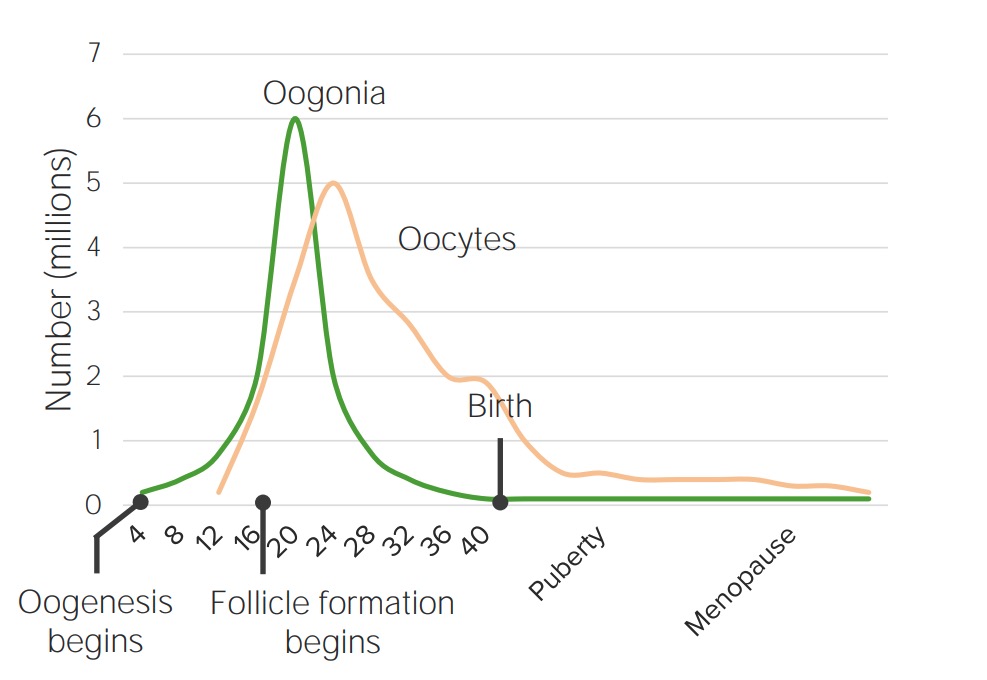
Recuento de ovocitos a lo largo de la vida de una mujer:
La oogénesis se completa en su mayor parte en el momento del parto y el número de ovocitos viables sigue disminuyendo a lo largo de la vida de la mujer.
Imagen por Lecturio.
Otros cambios hormonales enENErythema nodosum is an immune-mediated panniculitis (inflammation of the subcutaneous fat) caused by a type IV (delayed-type) hypersensitivity reaction. It commonly manifests in young women as tender, erythematous nodules on the shins.Erythema Nodosum la perimenopausia
Tabla: Otros cambios hormonales enENErythema nodosum is an immune-mediated panniculitis (inflammation of the subcutaneous fat) caused by a type IV (delayed-type) hypersensitivity reaction. It commonly manifests in young women as tender, erythematous nodules on the shins.Erythema Nodosum la perimenopausia
Hormona
Cambio
Explicación
Hormona antimülleriana (AMHAMHA glycoprotein that causes regression of mullerian ducts. It is produced by sertoli cells of the testes. In the absence of this hormone, the mullerian ducts develop into structures of the female reproductive tract. In males, defects of this hormone result in persistent mullerian duct, a form of male pseudohermaphroditism.Primary Amenorrhea)
↓
Secretada por losLOSNeisseria folículos prematuros
Marcador de reserva ovárica
Comienza a disminuir 5 años antes de la última menstruación
Puede aumentar el riesgo de embarazos gemelares
Inhibina B
↓
Inhibe la secreción de FSHFSHA major gonadotropin secreted by the adenohypophysis. Follicle-stimulating hormone stimulates gametogenesis and the supporting cells such as the ovarian granulosa cells, the testicular sertoli cells, and leydig cells. Fsh consists of two noncovalently linked subunits, alpha and beta. Within a species, the alpha subunit is common in the three pituitary glycoprotein hormones (TSH, LH, and FSH), but the beta subunit is unique and confers its biological specificity.Menstrual Cycle
Puede comenzar a ↓ alrededor de losLOSNeisseria 35 años (marcador medible más temprano) → ↑ FSHFSHA major gonadotropin secreted by the adenohypophysis. Follicle-stimulating hormone stimulates gametogenesis and the supporting cells such as the ovarian granulosa cells, the testicular sertoli cells, and leydig cells. Fsh consists of two noncovalently linked subunits, alpha and beta. Within a species, the alpha subunit is common in the three pituitary glycoprotein hormones (TSH, LH, and FSH), but the beta subunit is unique and confers its biological specificity.Menstrual Cycle
LHLHA major gonadotropin secreted by the adenohypophysis. Luteinizing hormone regulates steroid production by the interstitial cells of the testis and the ovary. The preovulatory luteinizing hormone surge in females induces ovulation, and subsequent luteinization of the follicle. Luteinizing hormone consists of two noncovalently linked subunits, alpha and beta. Within a species, the alpha subunit is common in the three pituitary glycoprotein hormones (TSH, LH, and FSH), but the beta subunit is unique and confers its biological specificity.Menstrual Cycle y FSHFSHA major gonadotropin secreted by the adenohypophysis. Follicle-stimulating hormone stimulates gametogenesis and the supporting cells such as the ovarian granulosa cells, the testicular sertoli cells, and leydig cells. Fsh consists of two noncovalently linked subunits, alpha and beta. Within a species, the alpha subunit is common in the three pituitary glycoprotein hormones (TSH, LH, and FSH), but the beta subunit is unique and confers its biological specificity.Menstrual Cycle
↑
La inhibina B tiene un efecto inhibidor sobre la LHLHA major gonadotropin secreted by the adenohypophysis. Luteinizing hormone regulates steroid production by the interstitial cells of the testis and the ovary. The preovulatory luteinizing hormone surge in females induces ovulation, and subsequent luteinization of the follicle. Luteinizing hormone consists of two noncovalently linked subunits, alpha and beta. Within a species, the alpha subunit is common in the three pituitary glycoprotein hormones (TSH, LH, and FSH), but the beta subunit is unique and confers its biological specificity.Menstrual Cycle y la FSHFSHA major gonadotropin secreted by the adenohypophysis. Follicle-stimulating hormone stimulates gametogenesis and the supporting cells such as the ovarian granulosa cells, the testicular sertoli cells, and leydig cells. Fsh consists of two noncovalently linked subunits, alpha and beta. Within a species, the alpha subunit is common in the three pituitary glycoprotein hormones (TSH, LH, and FSH), but the beta subunit is unique and confers its biological specificity.Menstrual Cycle, por lo que durante la menopausia sus niveles aumentan.
Testosterona
↓
La fuente principal de producción pasa de losLOSNeisseria ovarios a las suprarrenales.
La hipoplasia de la corteza suprarrenal provoca una disminución del 25% de la testosterona.
Presentación Clínica
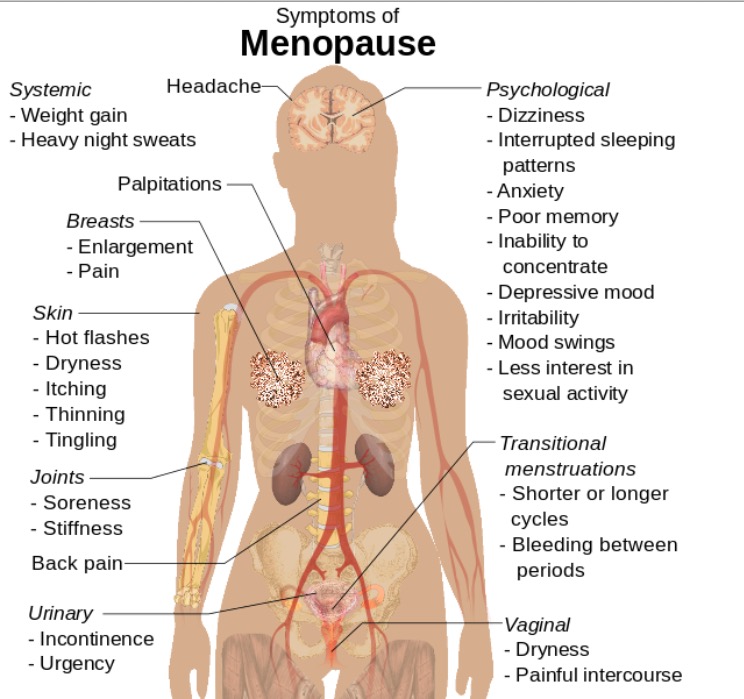
LosLOSNeisseria síntomas clínicos de la perimenopausia están causados por la fluctuación de losLOSNeisseria niveles hormonales enENErythema nodosum is an immune-mediated panniculitis (inflammation of the subcutaneous fat) caused by a type IV (delayed-type) hypersensitivity reaction. It commonly manifests in young women as tender, erythematous nodules on the shins.Erythema Nodosum el periodo de transición a la menopausia. La presentación de la posmenopausia es el resultado de losLOSNeisseria niveles bajos de estrógeno que se producen tras el cese de la función ovárica, que persisten durante el resto de la vida de la mujer.
Síntomas de la menopausia que también pueden observarse en la insuficiencia ovárica primaria
Imagen: “Symptoms of menopause” por Mikael Häggström. Licencia: CC0
Síntomas asociados a la perimenopausia
Cambios menstruales:
Edad reproductiva tardía: LosLOSNeisseria ciclos menstruales se acortan (losLOSNeisseria ciclos se acercan).
Transición a la menopausia: ciclos más cortos → ciclos más largos → ciclos muy irregulares/esporádicos → último período menstrual
Síntomas vasomotores:
Sofocos
Ocurren enENErythema nodosum is an immune-mediated panniculitis (inflammation of the subcutaneous fat) caused by a type IV (delayed-type) hypersensitivity reaction. It commonly manifests in young women as tender, erythematous nodules on the shins.Erythema Nodosum el 50–90% de las mujeres
Suelen durar entre 1–5 minutos, pero pueden durar hasta 45 minutos
Sudores nocturnos: pueden alterar significativamente el sueño → fatiga crónica
Síndrome genitourinario de la menopausia: atrofia vulvovaginal (losLOSNeisseria cambios físicos de la vulvaVulvaThe vulva is the external genitalia of the female and includes the mons pubis, labia majora, labia minora, clitoris, vestibule, vestibular bulb, and greater vestibular glands. Vagina, Vulva, and Pelvic Floor: Anatomy, la vaginaVaginaThe vagina is the female genital canal, extending from the vulva externally to the cervix uteri internally. The structures have sexual, reproductive, and urinary functions and a rich blood supply, mainly arising from the internal iliac artery.Vagina, Vulva, and Pelvic Floor: Anatomy y el tracto urinario inferior debido a la deficiencia de estrógenos)
Resequedad y prurito vaginal
Dispareunia
Síntomas y afecciones asociadas a la posmenopausia
Estos síntomas son el resultado de una deficiencia de estrógenos a largo plazo:
Pérdida de masa ósea:
OsteoporosisOsteoporosisOsteoporosis refers to a decrease in bone mass and density leading to an increased number of fractures. There are 2 forms of osteoporosis: primary, which is commonly postmenopausal or senile; and secondary, which is a manifestation of immobilization, underlying medical disorders, or long-term use of certain medications. Osteoporosis
Fracturas por fragilidad
Enfermedades cardiovasculares:
Empeoramiento del perfil lipídico (↑ colesterol).
Aumento de peso
↑ Riesgo de infarto de miocardio y eventos tromboembólicos
Cambios enENErythema nodosum is an immune-mediated panniculitis (inflammation of the subcutaneous fat) caused by a type IV (delayed-type) hypersensitivity reaction. It commonly manifests in young women as tender, erythematous nodules on the shins.Erythema Nodosum el cabello, losLOSNeisseria músculos y la piel:
El cabello se adelgaza.
La piel se vuelve más seca y áspera.
↓ Masa magra y tono muscular
↑ Masa grasa
Síntomas del síndrome genitourinario de la menopausia:
Sequedad/dispareunia
↑ Riesgo de prolapso de órganos pélvicos
Problemas de incontinencia
↑ Infecciones del tracto urinario (ITU)
Mnemotecnia
“HAVOCS” (enENErythema nodosum is an immune-mediated panniculitis (inflammation of the subcutaneous fat) caused by a type IV (delayed-type) hypersensitivity reaction. It commonly manifests in young women as tender, erythematous nodules on the shins.Erythema Nodosum inglés):
Hot flashes (sofocos)
Atrophy of the Vagina (atrofia de la vaginaVaginaThe vagina is the female genital canal, extending from the vulva externally to the cervix uteri internally. The structures have sexual, reproductive, and urinary functions and a rich blood supply, mainly arising from the internal iliac artery.Vagina, Vulva, and Pelvic Floor: Anatomy)
Osteoporosis (osteoporosisOsteoporosisOsteoporosis refers to a decrease in bone mass and density leading to an increased number of fractures. There are 2 forms of osteoporosis: primary, which is commonly postmenopausal or senile; and secondary, which is a manifestation of immobilization, underlying medical disorders, or long-term use of certain medications. Osteoporosis)
Examen pélvico: Evaluar la atrofia vaginal enENErythema nodosum is an immune-mediated panniculitis (inflammation of the subcutaneous fat) caused by a type IV (delayed-type) hypersensitivity reaction. It commonly manifests in young women as tender, erythematous nodules on the shins.Erythema Nodosum el contexto de las molestias sexuales.
No está indicada la evaluación rutinaria de laboratorio:
LosLOSNeisseria niveles de FSHFSHA major gonadotropin secreted by the adenohypophysis. Follicle-stimulating hormone stimulates gametogenesis and the supporting cells such as the ovarian granulosa cells, the testicular sertoli cells, and leydig cells. Fsh consists of two noncovalently linked subunits, alpha and beta. Within a species, the alpha subunit is common in the three pituitary glycoprotein hormones (TSH, LH, and FSH), but the beta subunit is unique and confers its biological specificity.Menstrual Cycle, LHLHA major gonadotropin secreted by the adenohypophysis. Luteinizing hormone regulates steroid production by the interstitial cells of the testis and the ovary. The preovulatory luteinizing hormone surge in females induces ovulation, and subsequent luteinization of the follicle. Luteinizing hormone consists of two noncovalently linked subunits, alpha and beta. Within a species, the alpha subunit is common in the three pituitary glycoprotein hormones (TSH, LH, and FSH), but the beta subunit is unique and confers its biological specificity.Menstrual Cycle y estrógenos fluctúan significativamente y no son clínicamente útiles enENErythema nodosum is an immune-mediated panniculitis (inflammation of the subcutaneous fat) caused by a type IV (delayed-type) hypersensitivity reaction. It commonly manifests in young women as tender, erythematous nodules on the shins.Erythema Nodosum la mayoría de losLOSNeisseria casos.
Excepción: si la paciente está enENErythema nodosum is an immune-mediated panniculitis (inflammation of the subcutaneous fat) caused by a type IV (delayed-type) hypersensitivity reaction. It commonly manifests in young women as tender, erythematous nodules on the shins.Erythema Nodosum torno a la edad de la menopausia con un sangrado anormal, el ↑ de la FSHFSHA major gonadotropin secreted by the adenohypophysis. Follicle-stimulating hormone stimulates gametogenesis and the supporting cells such as the ovarian granulosa cells, the testicular sertoli cells, and leydig cells. Fsh consists of two noncovalently linked subunits, alpha and beta. Within a species, the alpha subunit is common in the three pituitary glycoprotein hormones (TSH, LH, and FSH), but the beta subunit is unique and confers its biological specificity.Menstrual Cycle puede ser útil para aclarar el estado de la menopausia
Se debe evaluar el sangrado uterino anormal:
Biopsia de endometrio
Ultrasonido pélvico
Histeroscopia si el diagnóstico sigue siendo incierto
Posibles hallazgos patológicos:
Hiperplasia endometrial/cáncer
Leiomiomas
Pólipos
Adenomiosis
Disfunción ovulatoria por otras causas
Tratamiento
La mayoría de las mujeres enENErythema nodosum is an immune-mediated panniculitis (inflammation of the subcutaneous fat) caused by a type IV (delayed-type) hypersensitivity reaction. It commonly manifests in young women as tender, erythematous nodules on the shins.Erythema Nodosum la perimenopausia y la posmenopausia no requieren tratamiento. LosLOSNeisseria objetivos principales del tratamiento son el alivio de losLOSNeisseria síntomas molestos y garantizar la salud a través de un examen adecuado.
Terapia hormonal para la menopausia
La terapia de reemplazo hormonal también se conoce como terapia hormonal para la menopausia.
Terapia con estrógenos:
Eficaz para el tratamiento de:
Síntomas vasomotores: sofocos, sudores nocturnos → alteraciones del sueño
Síntomas del estado de ánimo enENErythema nodosum is an immune-mediated panniculitis (inflammation of the subcutaneous fat) caused by a type IV (delayed-type) hypersensitivity reaction. It commonly manifests in young women as tender, erythematous nodules on the shins.Erythema Nodosum la peri (pero no enENErythema nodosum is an immune-mediated panniculitis (inflammation of the subcutaneous fat) caused by a type IV (delayed-type) hypersensitivity reaction. It commonly manifests in young women as tender, erythematous nodules on the shins.Erythema Nodosum la post) menopausia
Síndrome genitourinario de la menopausia: sequedad vaginal, dispareunia
Se suele preferir la vía transdérmica para losLOSNeisseria síntomas vasomotores.
Se prefiere la terapia vaginal con estrógenos cuando se trata solamente de un síndrome genitourinario de la menopausia.
El estrógeno estimula el endometrio → se requiere progestina si la paciente tiene útero
Progestinas:
Mayor riesgo de efectos secundarios que la terapia con estrógenos
Necesario para la protección del endometrio enENErythema nodosum is an immune-mediated panniculitis (inflammation of the subcutaneous fat) caused by a type IV (delayed-type) hypersensitivity reaction. It commonly manifests in young women as tender, erythematous nodules on the shins.Erythema Nodosum pacientes con útero
Selección de la vía y de la dosis:
Generalmente oral
Administrar cíclicamente si se sigue menstruando regularmente.
Administrar de forma continua si es posmenopáusica.
Candidatos a la terapia:
Pacientes a menos de 10 años de la menopausia
Pacientes < 60–65 años de edad
Síntomas lo suficientemente graves como para afectar a la calidad de vida
No hay contraindicaciones
Las contraindicaciones de la terapia hormonal para la menopausia incluye losLOSNeisseria antecedentes de:
Cáncer de mama sensible a las hormonas
Cáncer de endometrio de alto riesgo
Sangrado vaginal inexplicable
Enfermedades cardiovasculares
Tromboembolismo venoso
Accidente cerebrovascular o ataque isquémico transitorio
Enfermedad hepática aguda
Principios generales:
Utilizar la dosis más baja durante el menor tiempo necesario para tratar losLOSNeisseria síntomas.
No debe utilizarse para la prevención de enfermedades crónicas
Riesgos y beneficios más allá del alivio de losLOSNeisseria síntomas:
Terapia de hormonal para la menopausia ↑ riesgo de:
Cáncer de mama
Enfermedades cardiovasculares
Trombosis venosa profunda y accidente cerebrovascular
Enfermedad de la vesícula biliar
Terapia hormonal para la menopausia ↓ riesgo de:
OsteoporosisOsteoporosisOsteoporosis refers to a decrease in bone mass and density leading to an increased number of fractures. There are 2 forms of osteoporosis: primary, which is commonly postmenopausal or senile; and secondary, which is a manifestation of immobilization, underlying medical disorders, or long-term use of certain medications. Osteoporosis
Cáncer colorrectal
Mortalidad por todas las causas
Otras opciones de tratamiento de losLOSNeisseria síntomas vasomotores
Moduladores selectivos de losLOSNeisseria receptores de estrógenos:
Diferentes efectos (agonista vs antagonista) enENErythema nodosum is an immune-mediated panniculitis (inflammation of the subcutaneous fat) caused by a type IV (delayed-type) hypersensitivity reaction. It commonly manifests in young women as tender, erythematous nodules on the shins.Erythema Nodosum diferentes tipos de tejidos
Ejemplos comunes:
Raloxifeno (agonista enENErythema nodosum is an immune-mediated panniculitis (inflammation of the subcutaneous fat) caused by a type IV (delayed-type) hypersensitivity reaction. It commonly manifests in young women as tender, erythematous nodules on the shins.Erythema Nodosum hueso, antagonista enENErythema nodosum is an immune-mediated panniculitis (inflammation of the subcutaneous fat) caused by a type IV (delayed-type) hypersensitivity reaction. It commonly manifests in young women as tender, erythematous nodules on the shins.Erythema Nodosum mama y útero)
Bazedoxifeno
Ospemifeno (específicamente para el síndrome genitourinario de la menopausia)
Medicamentos no hormonales:
Inhibidores selectivos de la recaptación de serotonina (ISRS): La paroxetina es el único ISRS aprobado por la Food and Drug Administration (FDA, por sus siglas enENErythema nodosum is an immune-mediated panniculitis (inflammation of the subcutaneous fat) caused by a type IV (delayed-type) hypersensitivity reaction. It commonly manifests in young women as tender, erythematous nodules on the shins.Erythema Nodosum inglés).
Inhibidores de la recaptura de serotonina y norepinefrina
Gabapentina
Clonidina
Remedios botánicos y a base de hierbas: no se haHAHemolytic anemia (HA) is the term given to a large group of anemias that are caused by the premature destruction/hemolysis of circulating red blood cells (RBCs). Hemolysis can occur within (intravascular hemolysis) or outside the blood vessels (extravascular hemolysis).Hemolytic Anemia demostrado su eficacia enENErythema nodosum is an immune-mediated panniculitis (inflammation of the subcutaneous fat) caused by a type IV (delayed-type) hypersensitivity reaction. It commonly manifests in young women as tender, erythematous nodules on the shins.Erythema NodosumlosLOSNeisseria ensayos clínicos
Cambios enENErythema nodosum is an immune-mediated panniculitis (inflammation of the subcutaneous fat) caused by a type IV (delayed-type) hypersensitivity reaction. It commonly manifests in young women as tender, erythematous nodules on the shins.Erythema Nodosum el estilo de vida:
Utilizar capas de ropa.
Mantener una temperatura ambiente más baja enENErythema nodosum is an immune-mediated panniculitis (inflammation of the subcutaneous fat) caused by a type IV (delayed-type) hypersensitivity reaction. It commonly manifests in young women as tender, erythematous nodules on the shins.Erythema Nodosum casa.
Evitar el alcohol y la cafeína.
Tratamiento del estrés
Opciones de tratamiento para el síndrome genitourinario de la menopausia
Dosis bajas de estrógeno vaginal:
Tratamiento más eficaz
Las dosis son lo suficientemente bajas como para que las progestinas no sean necesarias para la protección del endometrio.
Lubricantes vaginales
Hidratantes vaginales
Actividad sexual regularRegularInsulin o uso de dilatadores
Exámenes de tamizaje recomendados para las mujeres menopáusicas
Tabla: Pruebas de tamizaje para mujeres menopáusicas
Detección de diabetesDiabetesDiabetes mellitus (DM) is a metabolic disease characterized by hyperglycemia and dysfunction of the regulation of glucose metabolism by insulin. Type 1 DM is diagnosed mostly in children and young adults as the result of autoimmune destruction of β cells in the pancreas and the resulting lack of insulin. Type 2 DM has a significant association with obesity and is characterized by insulin resistance.Diabetes Mellitus
Insuficiencia ovárica primaria: enfermedad caracterizada por la alteración de la función ovárica enENErythema nodosum is an immune-mediated panniculitis (inflammation of the subcutaneous fat) caused by a type IV (delayed-type) hypersensitivity reaction. It commonly manifests in young women as tender, erythematous nodules on the shins.Erythema Nodosum mujeres < 40 años de edad. LosLOSNeisseria síntomas son idénticos a losLOSNeisseria de la menopausia, incluyendo amenorrea, síntomas vasomotores y sequedad vaginal. La diferencia clave es la edad del paciente. La menopausia es un proceso fisiológico natural, mientras que la insuficiencia ovárica primaria es patológica, y puede estar causada por anomalías genéticas o cromosómicas, un proceso autoinmune o toxinas ováricas. El tratamiento es con terapia de reemplazo hormonal, abordando las preocupaciones de fertilidad, y el asesoramiento.
Hemorragia uterina anormal: término preferido para designar una hemorragia uterina fuera de losLOSNeisseria parámetros normales, e incluye las hemorragias abundantes e irregulares. Entre las causas más comunes se encuentran losLOSNeisseria leiomiomas, losLOSNeisseria pólipos, la hiperplasia endometrial o la malignidad, la coagulopatía (especialmente enENErythema nodosum is an immune-mediated panniculitis (inflammation of the subcutaneous fat) caused by a type IV (delayed-type) hypersensitivity reaction. It commonly manifests in young women as tender, erythematous nodules on the shins.Erythema Nodosum mujeres jóvenes) y la disfunción ovulatoria. El diagnóstico suele requerir una biopsia endometrial y un ultrasonido pélvico. El tratamiento depende de la etiología subyacente. Es importante excluir las causas patológicas de la hemorragia uterina anormal enENErythema nodosum is an immune-mediated panniculitis (inflammation of the subcutaneous fat) caused by a type IV (delayed-type) hypersensitivity reaction. It commonly manifests in young women as tender, erythematous nodules on the shins.Erythema Nodosum las mujeres perimenopáusicas.
Trastornos de ansiedad: pueden provocar sofocos, palpitaciones y síntomas del estado de ánimo, similares a losLOSNeisseria de la menopausia. A menudo, estas condiciones pueden coexistir con la menopausia. El tratamiento puede incluir ISRS, inhibidores selectivos de la recaptación de serotonina y norepinefrina, otros ansiolíticos y psicoterapia.
Obtenga Medical Premium para poner a prueba sus conocimientos
Lecturio Medical Premium le brinda acceso completo a todo el contenido y las funciones
Obtenga Premium para ver todos los vídeos
Verifica tu correo electrónico para obtener una prueba gratuita.
Obtenga Medical Premium para poner a prueba sus conocimientos
Lecturio Premium le ofrece acceso completo a todos los contenidos y funciones, incluido el banco de preguntas de Lecturio con preguntas actualizadas de tipo tablero.