
Domina Conceptos Médicos

Estudia para la escuela de medicina y tus examenes con Lecturio.

Hormonas Hipotalámicas e Hipofisarias

Las hormonas hipotalámicas e hipofisarias son los LOS Neisseria reguladores más importantes del sistema endocrino. El hipotálamo funciona como centro de coordinación entre el sistema nervioso central (SNC) y el sistema endocrino, integrando las señales recibidas del resto del cerebro y liberando las hormonas reguladoras adecuadas a la hipófisis. La hipófisis libera entonces sus propias hormonas en EN Erythema nodosum is an immune-mediated panniculitis (inflammation of the subcutaneous fat) caused by a type IV (delayed-type) hypersensitivity reaction. It commonly manifests in young women as tender, erythematous nodules on the shins. Erythema Nodosum respuesta a la estimulación hipotalámica. Las hormonas hipofisarias regulan múltiples órganos endocrinos, como las gónadas, glándula tiroides, glándulas suprarrenales y glándulas mamarias. Las hormonas hipofisarias también desempeñan un papel fundamental en EN Erythema nodosum is an immune-mediated panniculitis (inflammation of the subcutaneous fat) caused by a type IV (delayed-type) hypersensitivity reaction. It commonly manifests in young women as tender, erythematous nodules on the shins. Erythema Nodosum el crecimiento y el equilibrio hídrico.

Last updated: Dec 15, 2025

Editorial responsibility: Stanley Oiseth, Lindsay Jones, Evelin Maza

Descripción General

Definiciones

Las hormonas son moléculas mensajeras que se sintetizan en EN Erythema nodosum is an immune-mediated panniculitis (inflammation of the subcutaneous fat) caused by a type IV (delayed-type) hypersensitivity reaction. It commonly manifests in young women as tender, erythematous nodules on the shins. Erythema Nodosum una parte del cuerpo y ejercen efectos reguladores específicos en EN Erythema nodosum is an immune-mediated panniculitis (inflammation of the subcutaneous fat) caused by a type IV (delayed-type) hypersensitivity reaction. It commonly manifests in young women as tender, erythematous nodules on the shins. Erythema Nodosum otra parte del cuerpo.

Hormonas hipotalámicas:

  • Secretadas directamente por las neuronas del hipotálamo
  • Actúan sobre la hipófisis
  • Representan el punto de integración entre el SNC y el sistema endocrino

Hormonas hipofisarias:

  • Se secretan tanto en EN Erythema nodosum is an immune-mediated panniculitis (inflammation of the subcutaneous fat) caused by a type IV (delayed-type) hypersensitivity reaction. It commonly manifests in young women as tender, erythematous nodules on the shins. Erythema Nodosum la región anterior como en EN Erythema nodosum is an immune-mediated panniculitis (inflammation of the subcutaneous fat) caused by a type IV (delayed-type) hypersensitivity reaction. It commonly manifests in young women as tender, erythematous nodules on the shins. Erythema Nodosum la posterior de la glándula
  • Estimulan la secreción de hormonas de los LOS Neisseria órganos endocrinos periféricos
  • Reguladas tanto por el hipotálamo como por la retroalimentación negativa de las hormonas endocrinas periféricas

Eje hipotálamo-hipófisis y retroalimentación negativa

Muchas de las principales hormonas endocrinas funcionan dentro de un bucle de retroalimentación negativa de varios pasos conocido como eje. Estos ejes implican el hipotálamo, la hipófisis y múltiples glándulas endocrinas periféricas diferentes.

Estructura general y función de un eje:
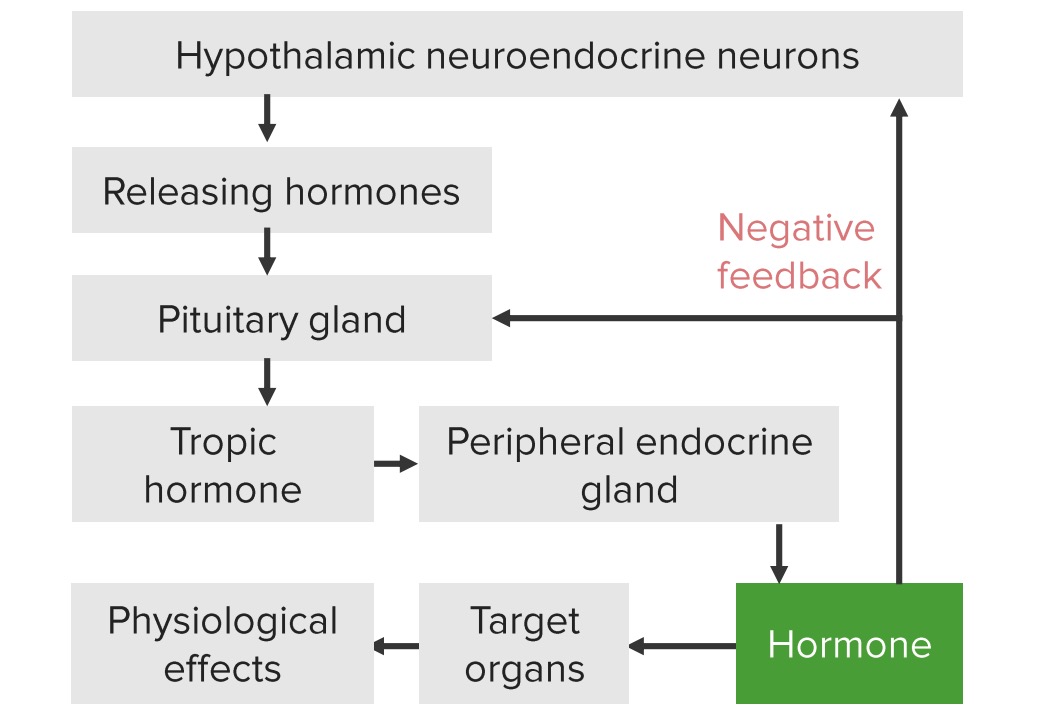
  • El hipotálamo secreta hormonas liberadoras.
  • Las hormonas liberadoras son transportadas a células diana específicas dentro de la hipófisis.
  • Las células diana de la hipófisis liberan una 2da hormona conocida como hormona trópica.
  • Las hormonas trópicas son segregadas al AL Amyloidosis torrente sanguíneo y viajan hasta sus glándulas endocrinas periféricas diana.
  • Las glándulas endocrinas periféricas secretan sus hormonas, que:
    • Actúan sobre los LOS Neisseria órganos diana y ejercen un efecto fisiológico
    • Ejercen una retroalimentación negativa sobre el hipotálamo y la hipófisis
Circuitos de retroalimentación negativa impulsados por el eje endocrino

Circuitos de retroalimentación negativa impulsados por el eje endocrino

Imagen por Lecturio.

Ejemplo: eje hipotálamo-hipófisis-tiroides:

  • El hipotálamo secreta la hormona liberadora de tirotropina.
  • La hormona liberadora de tirotropina estimula las células tirotropas de la hipófisis para que liberen la hormona estimulante de la tiroides (TSH, por sus siglas en EN Erythema nodosum is an immune-mediated panniculitis (inflammation of the subcutaneous fat) caused by a type IV (delayed-type) hypersensitivity reaction. It commonly manifests in young women as tender, erythematous nodules on the shins. Erythema Nodosum inglés) hacia el torrente sanguíneo.
  • La TSH es transportada a la tiroides para estimular la producción de hormonas tiroideas (e.g., tiroxina).
  • Tiroxina:
    • Estimula el metabolismo en EN Erythema nodosum is an immune-mediated panniculitis (inflammation of the subcutaneous fat) caused by a type IV (delayed-type) hypersensitivity reaction. It commonly manifests in young women as tender, erythematous nodules on the shins. Erythema Nodosum la mayoría de las células del cuerpo
    • Inhibe la liberación de TSH y hormona liberadora de tirotropina (retroalimentación negativa)

Hormonas Hipotalámicas

Las hormonas se sintetizan directamente en EN Erythema nodosum is an immune-mediated panniculitis (inflammation of the subcutaneous fat) caused by a type IV (delayed-type) hypersensitivity reaction. It commonly manifests in young women as tender, erythematous nodules on the shins. Erythema Nodosum las neuronas del hipotálamo. Las hormonas son los LOS Neisseria principales reguladores de la hipófisis y, por tanto, el principal mecanismo por el que el SNC se comunica con el sistema endocrino.

Control hipotalámico de la hipófisis anterior

El hipotálamo secreta factores liberadores que son transportados a la hipófisis anterior a través del sistema portal hipofisario (un complejo vascular que conecta el hipotálamo con la hipófisis).

Hormonas hipotalámicas estimulantes:

  • Hormona liberadora de tirotropina (TRH, por sus siglas en EN Erythema nodosum is an immune-mediated panniculitis (inflammation of the subcutaneous fat) caused by a type IV (delayed-type) hypersensitivity reaction. It commonly manifests in young women as tender, erythematous nodules on the shins. Erythema Nodosum inglés) → estimula las células tirotropas de la hipófisis para que liberen TSH
  • Hormona liberadora de corticotropina (CRH, por sus siglas en EN Erythema nodosum is an immune-mediated panniculitis (inflammation of the subcutaneous fat) caused by a type IV (delayed-type) hypersensitivity reaction. It commonly manifests in young women as tender, erythematous nodules on the shins. Erythema Nodosum inglés) → estimula las células corticotropas de la hipófisis para que liberen la hormona adrenocorticotrópica (ACTH, por sus siglas en EN Erythema nodosum is an immune-mediated panniculitis (inflammation of the subcutaneous fat) caused by a type IV (delayed-type) hypersensitivity reaction. It commonly manifests in young women as tender, erythematous nodules on the shins. Erythema Nodosum inglés)
  • Hormona liberadora de gonadotropina (GnRH, por sus siglas en EN Erythema nodosum is an immune-mediated panniculitis (inflammation of the subcutaneous fat) caused by a type IV (delayed-type) hypersensitivity reaction. It commonly manifests in young women as tender, erythematous nodules on the shins. Erythema Nodosum inglés)estimula las células gonadotrópicas de la hipófisis para que liberen:
    • Hormona foliculoestimulante ( FSH FSH A major gonadotropin secreted by the adenohypophysis. Follicle-stimulating hormone stimulates gametogenesis and the supporting cells such as the ovarian granulosa cells, the testicular sertoli cells, and leydig cells. Fsh consists of two noncovalently linked subunits, alpha and beta. Within a species, the alpha subunit is common in the three pituitary glycoprotein hormones (TSH, LH, and FSH), but the beta subunit is unique and confers its biological specificity. Menstrual Cycle, por sus siglas en EN Erythema nodosum is an immune-mediated panniculitis (inflammation of the subcutaneous fat) caused by a type IV (delayed-type) hypersensitivity reaction. It commonly manifests in young women as tender, erythematous nodules on the shins. Erythema Nodosum inglés)
    • Hormona luteinizante ( LH LH A major gonadotropin secreted by the adenohypophysis. Luteinizing hormone regulates steroid production by the interstitial cells of the testis and the ovary. The preovulatory luteinizing hormone surge in females induces ovulation, and subsequent luteinization of the follicle. Luteinizing hormone consists of two noncovalently linked subunits, alpha and beta. Within a species, the alpha subunit is common in the three pituitary glycoprotein hormones (TSH, LH, and FSH), but the beta subunit is unique and confers its biological specificity. Menstrual Cycle, por sus siglas en EN Erythema nodosum is an immune-mediated panniculitis (inflammation of the subcutaneous fat) caused by a type IV (delayed-type) hypersensitivity reaction. It commonly manifests in young women as tender, erythematous nodules on the shins. Erythema Nodosum inglés)
  • Hormona liberadora de la hormona del crecimiento ( GHRH GHRH A peptide of 44 amino acids in most species that stimulates the release and synthesis of growth hormone. GHRF (or GRF) is synthesized by neurons in the arcuate nucleus of the hypothalamus. After being released into the pituitary portal circulation, GHRF stimulates gh release by the somatotrophs in the pituitary gland. Hypothalamic and Pituitary Hormones, por sus siglas en EN Erythema nodosum is an immune-mediated panniculitis (inflammation of the subcutaneous fat) caused by a type IV (delayed-type) hypersensitivity reaction. It commonly manifests in young women as tender, erythematous nodules on the shins. Erythema Nodosum inglés) → estimula las células somatotrópicas de la hipófisis para que liberen la hormona del crecimiento

Hormonas hipotalámicas inhibidoras:

  • Somatostatina:
    • En EN Erythema nodosum is an immune-mediated panniculitis (inflammation of the subcutaneous fat) caused by a type IV (delayed-type) hypersensitivity reaction. It commonly manifests in young women as tender, erythematous nodules on the shins. Erythema Nodosum la hipófisis anterior, la somatostatina inhibe:
      • Hormona del crecimiento
      • TSH
    • Inhibe otras hormonas en EN Erythema nodosum is an immune-mediated panniculitis (inflammation of the subcutaneous fat) caused by a type IV (delayed-type) hypersensitivity reaction. It commonly manifests in young women as tender, erythematous nodules on the shins. Erythema Nodosum todo el cuerpo
  • Dopamina:
    • Inhibe la liberación de prolactina
    • Otras funciones: papel en EN Erythema nodosum is an immune-mediated panniculitis (inflammation of the subcutaneous fat) caused by a type IV (delayed-type) hypersensitivity reaction. It commonly manifests in young women as tender, erythematous nodules on the shins. Erythema Nodosum la función ejecutiva, control motor Motor Neurons which send impulses peripherally to activate muscles or secretory cells. Nervous System: Histology, motivación, excitación, refuerzo y recompensa

Control hipotalámico de la hipófisis posterior

A diferencia de la hipófisis anterior, no se liberan hormonas hipotalámicas en EN Erythema nodosum is an immune-mediated panniculitis (inflammation of the subcutaneous fat) caused by a type IV (delayed-type) hypersensitivity reaction. It commonly manifests in young women as tender, erythematous nodules on the shins. Erythema Nodosum la circulación para estimular la hipófisis posterior. Más bien, el hipotálamo tiene axones directamente conectados a la hipófisis posterior.
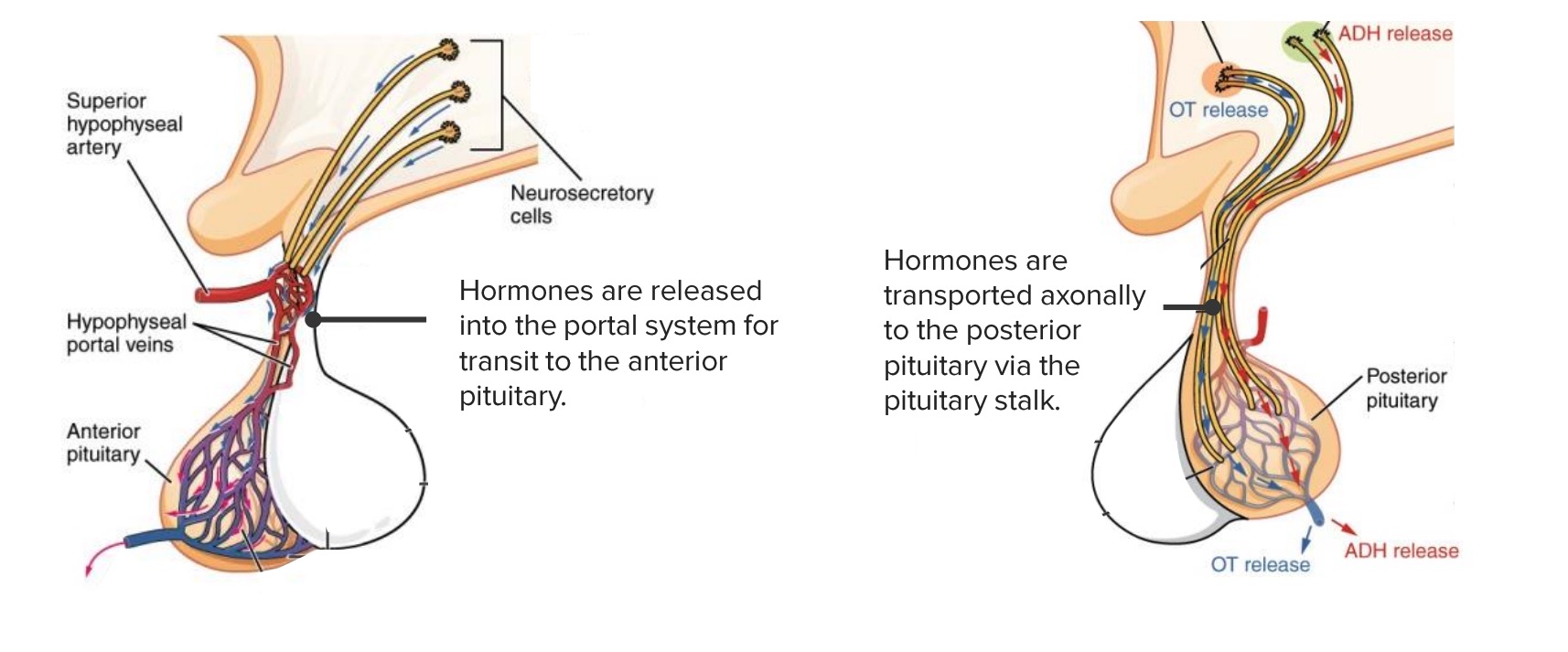
  • Las hormonas de la hipófisis posterior se sintetizan en EN Erythema nodosum is an immune-mediated panniculitis (inflammation of the subcutaneous fat) caused by a type IV (delayed-type) hypersensitivity reaction. It commonly manifests in young women as tender, erythematous nodules on the shins. Erythema Nodosum los LOS Neisseria cuerpos neuronales en EN Erythema nodosum is an immune-mediated panniculitis (inflammation of the subcutaneous fat) caused by a type IV (delayed-type) hypersensitivity reaction. It commonly manifests in young women as tender, erythematous nodules on the shins. Erythema Nodosum el hipotálamo.
  • Las hormonas de la hipófisis posterior son transportadas por los LOS Neisseria axones neuronales, a través del tallo hipofisario, hasta la hipófisis posterior.
  • Las hormonas se liberan en EN Erythema nodosum is an immune-mediated panniculitis (inflammation of the subcutaneous fat) caused by a type IV (delayed-type) hypersensitivity reaction. It commonly manifests in young women as tender, erythematous nodules on the shins. Erythema Nodosum la circulación dentro de la hipófisis posterior.
Hipófisis anterior y posterior

Diagramas de la hipófisis anterior y posterior y sus respectivas vías de comunicación con el hipotálamo:

Liberación hormonal de la hipófisis anterior: Las hormonas liberadoras hipotalámicas se secretan en las venas portales hipofisarias. Las venas las transportan a la hipófisis anterior, donde se estimula a las células diana para que liberen hormonas hipofisarias en la circulación venosa.
Liberación de hormonas por la hipófisis posterior: Las hormonas se sintetizan en los cuerpos celulares neuronales del hipotálamo, se transportan por los axones neuronales, se liberan de los terminales axónicos en la hipófisis posterior y se absorben en la circulación venosa.
ADH: hormona antidiurética
OT: oxitocina
Imagen: “Anterior and posterior pituitary gland” por Phil Schatz. Licencia: CC BY 4.0

Hormonas Hipofisarias

La hipófisis es la “glándula maestra” del sistema endocrino. La hipófisis secreta hormonas que estimulan otros órganos endocrinos de todo el cuerpo.

Hipófisis anterior

Las hormonas de la hipófisis anterior incluyen:

  • Hormona del crecimiento:
    • No se dirige a un órgano específico
    • Estimula el crecimiento y la diferenciación celular en EN Erythema nodosum is an immune-mediated panniculitis (inflammation of the subcutaneous fat) caused by a type IV (delayed-type) hypersensitivity reaction. It commonly manifests in young women as tender, erythematous nodules on the shins. Erythema Nodosum todo el cuerpo
    • Liberado por las células somatotrópicas (50% de las células de la hipófisis anterior)
    • Regulación de la hormona del crecimiento:
      • Estimulada por GHRH GHRH A peptide of 44 amino acids in most species that stimulates the release and synthesis of growth hormone. GHRF (or GRF) is synthesized by neurons in the arcuate nucleus of the hypothalamus. After being released into the pituitary portal circulation, GHRF stimulates gh release by the somatotrophs in the pituitary gland. Hypothalamic and Pituitary Hormones
      • Inhibida por la somatostatina
  • ACTH:
    • La ACTH estimula la corteza suprarrenal para que segregue corticosteroides.
    • Liberada por las células corticotrópicas (15%–20% de las células de la hipófisis anterior)
    • Regulación: estimulada por la CRH
  • TSH:
    • Estimula la glándula tiroides para que libere las hormonas tiroideas tiroxina y triyodotironina
    • Liberada por las células tirotropas (5% de las células de la hipófisis anterior)
    • Regulación: estimulada por la hormona liberadora de tirotropina
  • Gonadotropinas:
    • Las 2 hormonas gonadotropinas son:
      • Hormona foliculoestimulante ( FSH FSH A major gonadotropin secreted by the adenohypophysis. Follicle-stimulating hormone stimulates gametogenesis and the supporting cells such as the ovarian granulosa cells, the testicular sertoli cells, and leydig cells. Fsh consists of two noncovalently linked subunits, alpha and beta. Within a species, the alpha subunit is common in the three pituitary glycoprotein hormones (TSH, LH, and FSH), but the beta subunit is unique and confers its biological specificity. Menstrual Cycle): estimula el desarrollo de óvulos en EN Erythema nodosum is an immune-mediated panniculitis (inflammation of the subcutaneous fat) caused by a type IV (delayed-type) hypersensitivity reaction. It commonly manifests in young women as tender, erythematous nodules on the shins. Erythema Nodosum los LOS Neisseria ovarios y la producción de esperma en EN Erythema nodosum is an immune-mediated panniculitis (inflammation of the subcutaneous fat) caused by a type IV (delayed-type) hypersensitivity reaction. It commonly manifests in young women as tender, erythematous nodules on the shins. Erythema Nodosum los LOS Neisseria testículos
      • Hormona luteinizante ( LH LH A major gonadotropin secreted by the adenohypophysis. Luteinizing hormone regulates steroid production by the interstitial cells of the testis and the ovary. The preovulatory luteinizing hormone surge in females induces ovulation, and subsequent luteinization of the follicle. Luteinizing hormone consists of two noncovalently linked subunits, alpha and beta. Within a species, the alpha subunit is common in the three pituitary glycoprotein hormones (TSH, LH, and FSH), but the beta subunit is unique and confers its biological specificity. Menstrual Cycle): estimula la ovulación en EN Erythema nodosum is an immune-mediated panniculitis (inflammation of the subcutaneous fat) caused by a type IV (delayed-type) hypersensitivity reaction. It commonly manifests in young women as tender, erythematous nodules on the shins. Erythema Nodosum la mujer y la producción de andrógenos en EN Erythema nodosum is an immune-mediated panniculitis (inflammation of the subcutaneous fat) caused by a type IV (delayed-type) hypersensitivity reaction. It commonly manifests in young women as tender, erythematous nodules on the shins. Erythema Nodosum ambos sexos
    • Las gonadotropinas también estimulan las gónadas (i.e., ovarios y testículos), para que segreguen hormonas sexuales:
      • Andrógenos (e.g., testosterona)
      • Estradiol Estradiol The 17-beta-isomer of estradiol, an aromatized C18 steroid with hydroxyl group at 3-beta- and 17-beta-position. Estradiol-17-beta is the most potent form of mammalian estrogenic steroids. Noncontraceptive Estrogen and Progestins
      • Progesterona
    • Liberadas por las células gonadotrópicas (10% de las células de la hipófisis anterior)
    • Regulación: estimuladas por la hormona liberadora de gonadotropina
  • Prolactina:
    • Funciones:
      • Estimula la producción (pero no la secreción) de leche materna durante la lactancia
      • Tiene efectos sobre la sensibilidad a la hormona luteinizante
    • Liberada por las células lactotrópicas (15%–20% de las células de la hipófisis anterior)
    • Regulación:
      • Principalmente regulada por la dopamina (principal inhibidor de la prolactina)
      • Estimulada por la estimulación del pezón, embarazo, estrógeno, estrés y TRH

Hipófisis posterior

Los LOS Neisseria axones del hipotálamo liberan estas hormonas directamente en EN Erythema nodosum is an immune-mediated panniculitis (inflammation of the subcutaneous fat) caused by a type IV (delayed-type) hypersensitivity reaction. It commonly manifests in young women as tender, erythematous nodules on the shins. Erythema Nodosum la circulación. Las hormonas de la hipófisis posterior incluyen:

  • Oxitocina:
    • Se sintetiza en EN Erythema nodosum is an immune-mediated panniculitis (inflammation of the subcutaneous fat) caused by a type IV (delayed-type) hypersensitivity reaction. It commonly manifests in young women as tender, erythematous nodules on the shins. Erythema Nodosum los LOS Neisseria núcleos paraventriculares del hipotálamo
    • Estimula:
      • Contracciones uterinas en EN Erythema nodosum is an immune-mediated panniculitis (inflammation of the subcutaneous fat) caused by a type IV (delayed-type) hypersensitivity reaction. It commonly manifests in young women as tender, erythematous nodules on the shins. Erythema Nodosum el parto
      • Bajada de leche/secreción durante la lactancia
    • Sobrecarga durante la excitación sexual y el orgasmo
    • Puede desempeñar un papel en EN Erythema nodosum is an immune-mediated panniculitis (inflammation of the subcutaneous fat) caused by a type IV (delayed-type) hypersensitivity reaction. It commonly manifests in young women as tender, erythematous nodules on the shins. Erythema Nodosum la propulsión del semen a través del tracto reproductivo masculino
    • Conocida como la “hormona del amor”: Crea sentimientos de unión emocional y satisfacción sexual
  • Hormona antidiurética:
    • Se sintetiza en EN Erythema nodosum is an immune-mediated panniculitis (inflammation of the subcutaneous fat) caused by a type IV (delayed-type) hypersensitivity reaction. It commonly manifests in young women as tender, erythematous nodules on the shins. Erythema Nodosum los LOS Neisseria núcleos supraópticos del hipotálamo
    • Actúa sobre los LOS Neisseria riñones para aumentar la retención de agua

Resumen del Eje Hipotálamo-Hipófisis-Suprarrenal

Tabla: Resumen de las hormonas liberadas por la hipófisis anterior
Hormona hipotalámica Célula diana en EN Erythema nodosum is an immune-mediated panniculitis (inflammation of the subcutaneous fat) caused by a type IV (delayed-type) hypersensitivity reaction. It commonly manifests in young women as tender, erythematous nodules on the shins. Erythema Nodosum la hipófisis Hormona hipofisaria Órgano diana Efectos finales
CRH Corticotrópicas ACTH Corteza suprarrenal Liberación de corticosteroides
TRH Tirotrópicas TSH Glándula tiroidea Liberación de hormonas tiroideas
GnRH Gonadotrópicas FSH FSH A major gonadotropin secreted by the adenohypophysis. Follicle-stimulating hormone stimulates gametogenesis and the supporting cells such as the ovarian granulosa cells, the testicular sertoli cells, and leydig cells. Fsh consists of two noncovalently linked subunits, alpha and beta. Within a species, the alpha subunit is common in the three pituitary glycoprotein hormones (TSH, LH, and FSH), but the beta subunit is unique and confers its biological specificity. Menstrual Cycle Gónadas: ovarios, testículos Desarrollo de los LOS Neisseria folículos ováricos y producción de esperma
LH LH A major gonadotropin secreted by the adenohypophysis. Luteinizing hormone regulates steroid production by the interstitial cells of the testis and the ovary. The preovulatory luteinizing hormone surge in females induces ovulation, and subsequent luteinization of the follicle. Luteinizing hormone consists of two noncovalently linked subunits, alpha and beta. Within a species, the alpha subunit is common in the three pituitary glycoprotein hormones (TSH, LH, and FSH), but the beta subunit is unique and confers its biological specificity. Menstrual Cycle Gónadas: ovarios, testículos Producción de andrógenos (ambos sexos), estimula la ovulación (mujeres)
GHRH GHRH A peptide of 44 amino acids in most species that stimulates the release and synthesis of growth hormone. GHRF (or GRF) is synthesized by neurons in the arcuate nucleus of the hypothalamus. After being released into the pituitary portal circulation, GHRF stimulates gh release by the somatotrophs in the pituitary gland. Hypothalamic and Pituitary Hormones Somatotrópicas GH Muchos órganos Efectos anabólicos
Somatostatina (inhibidor) Somatotrópicas GH (inhibida) Muchos órganos Efectos anabólicos inhibidos con somatostatina
Dopamina (inhibidor) Lactotrópicas Prolactina (inhibida) Glándulas mamarias La producción de leche se inhibe con la dopamina

ACTH: hormona adrenocorticotrópica CRH: Hormona liberadora de corticotropina GH: Hormona de crecimiento GHRH: Hormona liberadora de hormona de crecimiento FSH: Hormona folículoestimulante LH: Hormona luteinizante TRH: Hormona liberadora de tirotropina TSH: hormona estimulante de la tiroides
Tabla: Resumen de las hormonas liberadas por la hipófisis posterior
Sitio de síntesis Hormona Órgano diana Efectos fisiológicos
Núcleo paraventricular Oxitocina
  • Útero
  • Glándula mamaria
  • Contracciones uterinas
  • Bajada de la leche y excreción
Núcleo supraóptico ADH Túbulos renales Aumento de la retención de agua
ADH: Hormona antidiurética

Relevancia Clínica

  • Hipopituitarismo: enfermedad caracterizada por una deficiencia de todas las hormonas hipofisarias. Como las hormonas hipofisarias regulan múltiples órganos, los LOS Neisseria efectos de la hipofunción hipofisaria son multisistémicos. Las causas incluyen masas hipofisiarias, síndromes congénitos, traumatismos, infecciones y daños vasculares. El diagnóstico se realiza mediante una combinación de hallazgos clínicos, niveles hormonales, pruebas de provocación e imagenología cerebral. El tratamiento consiste en EN Erythema nodosum is an immune-mediated panniculitis (inflammation of the subcutaneous fat) caused by a type IV (delayed-type) hypersensitivity reaction. It commonly manifests in young women as tender, erythematous nodules on the shins. Erythema Nodosum la sustitución hormonal y en EN Erythema nodosum is an immune-mediated panniculitis (inflammation of the subcutaneous fat) caused by a type IV (delayed-type) hypersensitivity reaction. It commonly manifests in young women as tender, erythematous nodules on the shins. Erythema Nodosum abordar la etiología subyacente.
  • Adenoma hipofisiario: tumores que se desarrollan en EN Erythema nodosum is an immune-mediated panniculitis (inflammation of the subcutaneous fat) caused by a type IV (delayed-type) hypersensitivity reaction. It commonly manifests in young women as tender, erythematous nodules on the shins. Erythema Nodosum el lóbulo anterior de la hipófisis. Los LOS Neisseria adenomas hipofisarios se clasifican según su tamaño (micro o macroadenomas) y su capacidad de secretar hormonas. Los LOS Neisseria adenomas no funcionales o no secretores no secretan hormonas, pero pueden comprimir el tejido hipofisario circundante y provocar hipopituitarismo. Los LOS Neisseria adenomas secretorios secretan diversas hormonas en EN Erythema nodosum is an immune-mediated panniculitis (inflammation of the subcutaneous fat) caused by a type IV (delayed-type) hypersensitivity reaction. It commonly manifests in young women as tender, erythematous nodules on the shins. Erythema Nodosum función del tipo de célula del que han evolucionado, lo que provoca un hiperpituitarismo.
  • Hiperprolactinemia: niveles elevados de hormona liberadora de prolactina en EN Erythema nodosum is an immune-mediated panniculitis (inflammation of the subcutaneous fat) caused by a type IV (delayed-type) hypersensitivity reaction. It commonly manifests in young women as tender, erythematous nodules on the shins. Erythema Nodosum la sangre. La causa más común es un adenoma hipofisario que secreta hormona liberadora de prolactina, conocido como prolactinoma Prolactinoma A pituitary adenoma which secretes prolactin, leading to hyperprolactinemia. Clinical manifestations include amenorrhea; galactorrhea; impotence; headache; visual disturbances; and cerebrospinal fluid rhinorrhea. Hyperprolactinemia. Las manifestaciones pueden incluir galactorrea (secreción lechosa), oligomenorrea, disfunción eréctil y, en EN Erythema nodosum is an immune-mediated panniculitis (inflammation of the subcutaneous fat) caused by a type IV (delayed-type) hypersensitivity reaction. It commonly manifests in young women as tender, erythematous nodules on the shins. Erythema Nodosum el caso de los LOS Neisseria tumores grandes, cefaleas y cambios visuales. El diagnóstico se realiza mediante la determinación de los LOS Neisseria niveles séricos de hormona liberadora de prolactina e imagenología de la hipófisis. El tratamiento suele incluir agonistas de la dopamina como terapia de 1era línea, aunque puede ser necesaria la cirugía y/o radiación.
  • Amenorrea hipotalámica funcional: una causa primaria de amenorrea secundaria (cese de la menstruación). La amenorrea hipotalámica funcional es el resultado de la disminución de la pulsación de hormona liberadora de gonadotropina, que puede ocurrir en EN Erythema nodosum is an immune-mediated panniculitis (inflammation of the subcutaneous fat) caused by a type IV (delayed-type) hypersensitivity reaction. It commonly manifests in young women as tender, erythematous nodules on the shins. Erythema Nodosum momentos de estrés físico o psicológico severo y se asocia más comúnmente a los LOS Neisseria trastornos alimentarios o al AL Amyloidosis exceso de ejercicio (común en EN Erythema nodosum is an immune-mediated panniculitis (inflammation of the subcutaneous fat) caused by a type IV (delayed-type) hypersensitivity reaction. It commonly manifests in young women as tender, erythematous nodules on the shins. Erythema Nodosum las mujeres deportistas). El tratamiento suele requerir apoyo nutricional y asesoramiento.
  • Acromegalia y gigantismo: afecciones causadas por el exceso de producción de hormona del crecimiento hipofisaria. Normalmente, el gigantismo se refiere a la estatura alta que se observa en EN Erythema nodosum is an immune-mediated panniculitis (inflammation of the subcutaneous fat) caused by a type IV (delayed-type) hypersensitivity reaction. It commonly manifests in young women as tender, erythematous nodules on the shins. Erythema Nodosum los LOS Neisseria estados de exceso de hormona del crecimiento en EN Erythema nodosum is an immune-mediated panniculitis (inflammation of the subcutaneous fat) caused by a type IV (delayed-type) hypersensitivity reaction. It commonly manifests in young women as tender, erythematous nodules on the shins. Erythema Nodosum los LOS Neisseria niños antes del cierre de la placa de crecimiento. La acromegalia es el resultado de un exceso de hormona del crecimiento tras el cierre de la placa de crecimiento, que da lugar a extremidades grandes y a una facies característica. El diagnóstico se realiza mediante análisis de laboratorio y neuroimagenología de la hipófisis.
  • Diabetes Diabetes Diabetes mellitus (DM) is a metabolic disease characterized by hyperglycemia and dysfunction of the regulation of glucose metabolism by insulin. Type 1 DM is diagnosed mostly in children and young adults as the result of autoimmune destruction of β cells in the pancreas and the resulting lack of insulin. Type 2 DM has a significant association with obesity and is characterized by insulin resistance. Diabetes Mellitus insípida central: afección en EN Erythema nodosum is an immune-mediated panniculitis (inflammation of the subcutaneous fat) caused by a type IV (delayed-type) hypersensitivity reaction. It commonly manifests in young women as tender, erythematous nodules on the shins. Erythema Nodosum la que los LOS Neisseria riñones son incapaces de concentrar la orina debido a la falta de hormona antidiurética circulante. Los LOS Neisseria niveles bajos de hormona antidiurética se deben a la disminución de la producción dentro del hipotálamo o a la disminución de la liberación de la hipófisis posterior. Los LOS Neisseria individuos presentan poliuria, nicturia y polidipsia. La diabetes Diabetes Diabetes mellitus (DM) is a metabolic disease characterized by hyperglycemia and dysfunction of the regulation of glucose metabolism by insulin. Type 1 DM is diagnosed mostly in children and young adults as the result of autoimmune destruction of β cells in the pancreas and the resulting lack of insulin. Type 2 DM has a significant association with obesity and is characterized by insulin resistance. Diabetes Mellitus insípida central y la nefrogénica se diferencian según los LOS Neisseria niveles de hormona antidiurética y la respuesta a la prueba de privación de agua. El tratamiento de la diabetes Diabetes Diabetes mellitus (DM) is a metabolic disease characterized by hyperglycemia and dysfunction of the regulation of glucose metabolism by insulin. Type 1 DM is diagnosed mostly in children and young adults as the result of autoimmune destruction of β cells in the pancreas and the resulting lack of insulin. Type 2 DM has a significant association with obesity and is characterized by insulin resistance. Diabetes Mellitus insípida central es con desmopresina.
  • Síndrome de secreción inadecuada de hormona antidiurética ( SIADH SIADH Syndrome of inappropriate antidiuretic hormone secretion (SIADH) is a disorder of impaired water excretion due to the inability to suppress the secretion of antidiuretic hormone (ADH). SIADH is characterized by impaired water excretion leading to dilutional hyponatremia, which is mainly asymptomatic but may cause neurologic symptoms. S Syndrome of Inappropriate Antidiuretic Hormone Secretion (SIADH), por sus siglas en EN Erythema nodosum is an immune-mediated panniculitis (inflammation of the subcutaneous fat) caused by a type IV (delayed-type) hypersensitivity reaction. It commonly manifests in young women as tender, erythematous nodules on the shins. Erythema Nodosum inglés): trastorno de la excreción de agua debido a la incapacidad de suprimir la secreción de hormona antidiurética. La secreción inadecuada de hormona antidiurética puede deberse a varias causas, como el aumento de la producción por parte de la hipófisis debido a un traumatismo o una enfermedad, ciertos medicamentos, la secreción ectópica en EN Erythema nodosum is an immune-mediated panniculitis (inflammation of the subcutaneous fat) caused by a type IV (delayed-type) hypersensitivity reaction. It commonly manifests in young women as tender, erythematous nodules on the shins. Erythema Nodosum el cáncer o causas hereditarias ( SIADH SIADH Syndrome of inappropriate antidiuretic hormone secretion (SIADH) is a disorder of impaired water excretion due to the inability to suppress the secretion of antidiuretic hormone (ADH). SIADH is characterized by impaired water excretion leading to dilutional hyponatremia, which is mainly asymptomatic but may cause neurologic symptoms. S Syndrome of Inappropriate Antidiuretic Hormone Secretion (SIADH) nefrogénico). El síndrome de secreción inadecuada de hormona antidiurética debe sospecharse en EN Erythema nodosum is an immune-mediated panniculitis (inflammation of the subcutaneous fat) caused by a type IV (delayed-type) hypersensitivity reaction. It commonly manifests in young women as tender, erythematous nodules on the shins. Erythema Nodosum cualquier individuo que presente hiponatremia, hipoosmolalidad y osmolalidad urinaria elevada.

Referencias

  1. Welk, C.K. (2021). Hypothalamic-pituitary axis. In Martin, K.A. (Ed.), UpToDate. Retrieved July 30, 2021, from https://www.uptodate.com/contents/hypothalamic-pituitary-axis 
  2. Sadiq, N. (2021). Physiology, pituitary hormones. Tadi, P. (Ed.), Statpearls. Retrieved August 11, 2021, from Physiology, Pituitary Hormones Article (statpearls.com)
  3. Saladin, K.S., Miller, L. (2004). Anatomy and physiology. (3rd Ed. Pp. 638–646).

¡Crea tu cuenta gratis o inicia una sesión para seguir leyendo!

Regístrate ahora y obtén acceso gratuito a Lecturio con páginas de concepto, videos médicos y cuestionarios para tu educación médica.

User Reviews

Que tengas una sesión de estudio alegre y navideña 🎁 Ahorra 50% en todos los planes >>

Details