Domina Conceptos Médicos

Estudia para la escuela de medicina y tus examenes con Lecturio.

Examen Pulmonar

El examen pulmonar es la parte de la exploración física que implica el examen de los LOS Neisseria pulmones y las vías aéreas por parte de un trabajador sanitario para evaluar los LOS Neisseria signos patológicos. El examen incluye inspección, auscultación, percusión y palpación. Un examen pulmonar cuidadoso proporciona hallazgos importantes que, junto con los LOS Neisseria antecedentes, pueden guiar al AL Amyloidosis médico hacia un diagnóstico presuntivo.

Last updated: Dec 15, 2025

Editorial responsibility: Stanley Oiseth, Lindsay Jones, Evelin Maza

Introducción

Posicionamiento:

  • El paciente se sienta erguido con los LOS Neisseria brazos a los LOS Neisseria lados.
  • Realice todos los LOS Neisseria exámenes en EN Erythema nodosum is an immune-mediated panniculitis (inflammation of the subcutaneous fat) caused by a type IV (delayed-type) hypersensitivity reaction. It commonly manifests in young women as tender, erythematous nodules on the shins. Erythema Nodosum pacientes desvestidos, preservando el pudor del paciente.

Entorno:

  • Garantizar una buena iluminación, privacidad e higiene.
  • Cubra a los LOS Neisseria pacientes con una bata, toalla o sábana limpias.

Pasos iniciales:

Inspección

La 1ra parte del examen pulmonar comienza con una inspección del paciente, anotando los LOS Neisseria hallazgos positivos y negativos pertinentes.

Descripción general de la inspección

Aspecto general/nivel de distrés del paciente:

  • Positivos pertinentes:
    • Bien o sin distrés agudo
    • Cómodo, afecto normal
  • Negativos pertinentes:
    • Con distrés (leve, moderado o grave)
    • Desarreglado
    • Evasivo, poco colaborador

Nivel de conciencia:

  • Alerta: respuesta normal
  • Confundido: desorientado en EN Erythema nodosum is an immune-mediated panniculitis (inflammation of the subcutaneous fat) caused by a type IV (delayed-type) hypersensitivity reaction. It commonly manifests in young women as tender, erythematous nodules on the shins. Erythema Nodosum el entorno
  • Letárgico: somnoliento, necesita estimulación para iniciar la respuesta
  • Obnubilado: responde lentamente, necesita estimulación repetida para mantener la atención
  • Estuporoso: respuesta mínima a la estimulación
  • Comatoso/no responde: no responde a la estimulación

Frecuencia respiratoria:

  • Frecuencia respiratoria normal: 12–20/min en EN Erythema nodosum is an immune-mediated panniculitis (inflammation of the subcutaneous fat) caused by a type IV (delayed-type) hypersensitivity reaction. It commonly manifests in young women as tender, erythematous nodules on the shins. Erythema Nodosum adultos (la frecuencia respiratoria pediátrica varía según la edad)
  • Bradipnea: frecuencia respiratoria < 12/min
  • Taquipnea: frecuencia respiratoria > 20/min, respiración superficial
  • Hiperpnea: frecuencia respiratoria > 20/min, respiración profunda
Tabla: Rangos de frecuencia respiratoria normal en EN Erythema nodosum is an immune-mediated panniculitis (inflammation of the subcutaneous fat) caused by a type IV (delayed-type) hypersensitivity reaction. It commonly manifests in young women as tender, erythematous nodules on the shins. Erythema Nodosum niños
Grupo etario Edad Rango de frecuencia respiratoria normal
Lactante menor 0–12 meses 30–60/min
Lactante mayor 1–3 años 24–40/min
Preescolar 4–5 años 22–34/min
Escolar 6–12 años 18–30/min
Adolescentes y adultos 13 años o más 12–16/min

Trabajo respiratorio:

  • Anote cualquier patrón respiratorio observable.
  • Respiración laboriosa (respiraciones anormales con ↑ esfuerzo para respirar, uso de músculos accesorios, estridor, gruñidos o aleteo nasal):
    • Músculos accesorios: esternocleidomastoideos, escalenos y pectorales mayores
    • Respiración con labio fruncido (observada en EN Erythema nodosum is an immune-mediated panniculitis (inflammation of the subcutaneous fat) caused by a type IV (delayed-type) hypersensitivity reaction. It commonly manifests in young women as tender, erythematous nodules on the shins. Erythema Nodosum pacientes con enfisema)
    • Retracciones intercostales
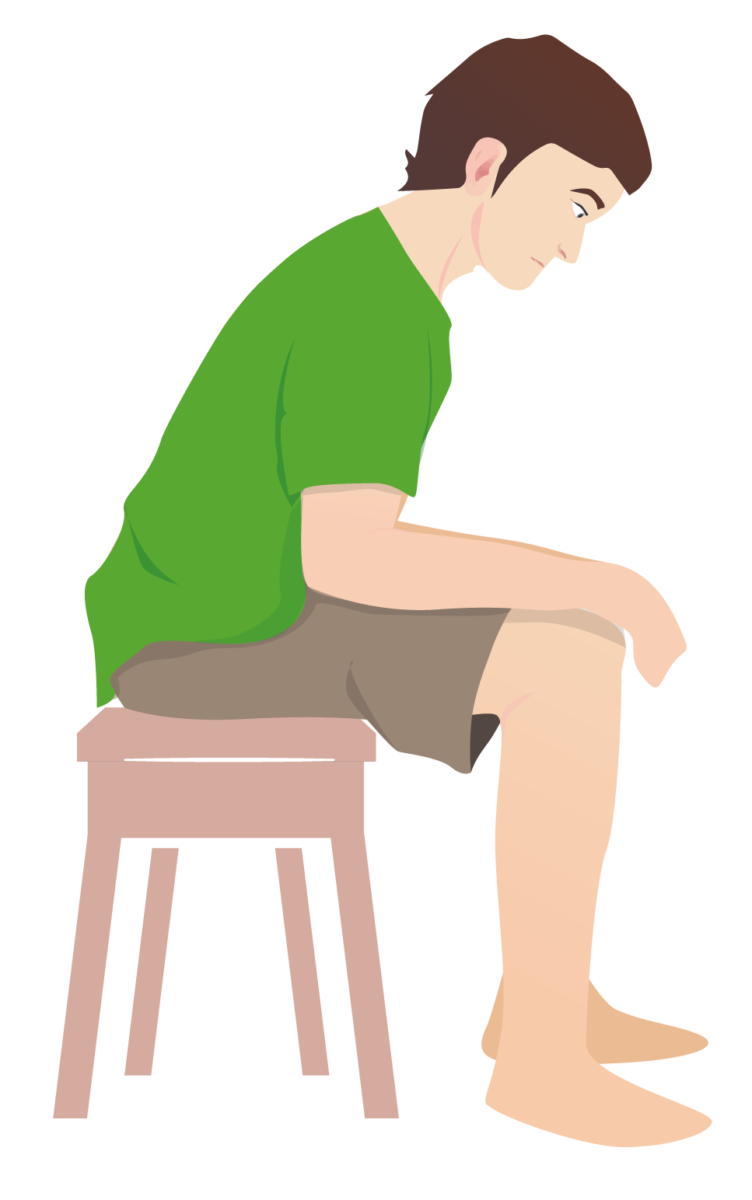
  • Posición de trípode:
    • Inclinarse hacia delante mientras se está sentado y apoyar las manos en EN Erythema nodosum is an immune-mediated panniculitis (inflammation of the subcutaneous fat) caused by a type IV (delayed-type) hypersensitivity reaction. It commonly manifests in young women as tender, erythematous nodules on the shins. Erythema Nodosum las rodillas
    • Se observa en EN Erythema nodosum is an immune-mediated panniculitis (inflammation of the subcutaneous fat) caused by a type IV (delayed-type) hypersensitivity reaction. It commonly manifests in young women as tender, erythematous nodules on the shins. Erythema Nodosum pacientes con asma ASMA Autoimmune Hepatitis, enfisema y distrés respiratorio

Inspección del tórax:

  • Simetría del tórax
  • Movimiento simétrico del tórax en EN Erythema nodosum is an immune-mediated panniculitis (inflammation of the subcutaneous fat) caused by a type IV (delayed-type) hypersensitivity reaction. It commonly manifests in young women as tender, erythematous nodules on the shins. Erythema Nodosum todas las fases de la respiración
  • Anomalías generales y visibles de la pared torácica:
    • Inspeccione en EN Erythema nodosum is an immune-mediated panniculitis (inflammation of the subcutaneous fat) caused by a type IV (delayed-type) hypersensitivity reaction. It commonly manifests in young women as tender, erythematous nodules on the shins. Erythema Nodosum busca de tórax inestable, traumatismos evidentes u otras lesiones/erupciones cutáneas.
    • Anomalías congénitas de la columna vertebral: cifosis, lordosis, escoliosis, etc ETC The electron transport chain (ETC) sends electrons through a series of proteins, which generate an electrochemical proton gradient that produces energy in the form of adenosine triphosphate (ATP). Electron Transport Chain (ETC).
    • Enfermedad pulmonar obstructiva crónica (EPOC) con tórax en EN Erythema nodosum is an immune-mediated panniculitis (inflammation of the subcutaneous fat) caused by a type IV (delayed-type) hypersensitivity reaction. It commonly manifests in young women as tender, erythematous nodules on the shins. Erythema Nodosum barril: ↑ diámetro anteroposterior del tórax

Examine las extremidades en EN Erythema nodosum is an immune-mediated panniculitis (inflammation of the subcutaneous fat) caused by a type IV (delayed-type) hypersensitivity reaction. It commonly manifests in young women as tender, erythematous nodules on the shins. Erythema Nodosum busca de signos de enfermedad respiratoria:
  • Cianosis
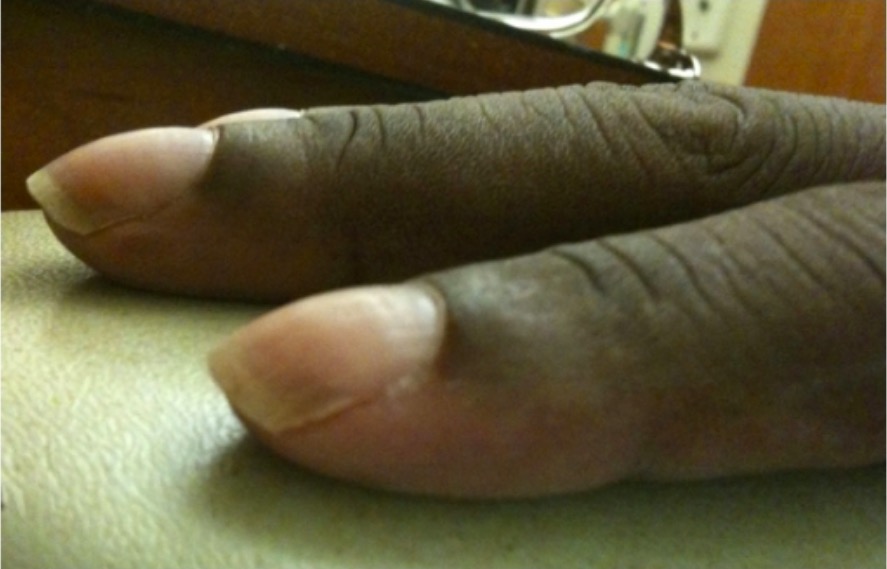
  • Dedos en EN Erythema nodosum is an immune-mediated panniculitis (inflammation of the subcutaneous fat) caused by a type IV (delayed-type) hypersensitivity reaction. It commonly manifests in young women as tender, erythematous nodules on the shins. Erythema Nodosum palillos de tambor (lechos ungueales anormalmente redondeados):
    • Reacción subcutánea por hipoxemia crónica
    • Se observa en EN Erythema nodosum is an immune-mediated panniculitis (inflammation of the subcutaneous fat) caused by a type IV (delayed-type) hypersensitivity reaction. It commonly manifests in young women as tender, erythematous nodules on the shins. Erythema Nodosum el cáncer de pulmón, la enfermedad pulmonar intersticial, la fibrosis Fibrosis Any pathological condition where fibrous connective tissue invades any organ, usually as a consequence of inflammation or other injury. Bronchiolitis Obliterans quística y las bronquiectasias
    • No está presente en EN Erythema nodosum is an immune-mediated panniculitis (inflammation of the subcutaneous fat) caused by a type IV (delayed-type) hypersensitivity reaction. It commonly manifests in young women as tender, erythematous nodules on the shins. Erythema Nodosum el asma ASMA Autoimmune Hepatitis o la EPOC
Dedos en palillo de tambor

Dedos en palillos de tambor:
Los dedos en palillo de tambor son lechos ungueales anormales y redondeados que suelen estar asociados a afecciones que provocan hipoxemia crónica, como la fibrosis quística o la enfermedad pulmonar intersticial.

Imagen: “Nail clubbing” por Department of Internal Medicine, Cleveland Clinic Florida, 2950 Cleveland Clinic Boulevard, Weston, FL 33331, USA. Licencia: CC BY 3.0

Examine el cuello:

  • Ingurgitación yugular:
    • Neumotórax a tensión
    • Posible insuficiencia cardíaca derecha

Patrones respiratorios

Algunos patrones respiratorios ayudan a afinar el diagnóstico diferencial y a dirigir los LOS Neisseria cuidados del paciente.

Tabla: Patrones respiratorios y afecciones asociadas
Patrón respiratorio Signos del examen físico Patologías asociadas
Taquipnea Frecuencia respiratoria > 20/min en EN Erythema nodosum is an immune-mediated panniculitis (inflammation of the subcutaneous fat) caused by a type IV (delayed-type) hypersensitivity reaction. It commonly manifests in young women as tender, erythematous nodules on the shins. Erythema Nodosum adultos
  • Inespecífica
  • Fiebre/ sepsis Sepsis Systemic inflammatory response syndrome with a proven or suspected infectious etiology. When sepsis is associated with organ dysfunction distant from the site of infection, it is called severe sepsis. When sepsis is accompanied by hypotension despite adequate fluid infusion, it is called septic shock. Sepsis and Septic Shock
  • Shock Shock Shock is a life-threatening condition associated with impaired circulation that results in tissue hypoxia. The different types of shock are based on the underlying cause: distributive (↑ cardiac output (CO), ↓ systemic vascular resistance (SVR)), cardiogenic (↓ CO, ↑ SVR), hypovolemic (↓ CO, ↑ SVR), obstructive (↓ CO), and mixed. Types of Shock
  • Ansiedad
Bradipnea Frecuencia respiratoria < 12/min
  • Inespecífica
  • Uso de narcóticos
  • Accidente cerebrovascular
  • Traumatismo craneoencefálico
Apnea Sin respiración
  • Parada cardíaca
  • Accidente cerebrovascular
  • Traumatismo craneoencefálico
  • Muerte
Fase espiratoria prolongada Fase espiratoria > ⅔ de la duración de la respiración (inspiración normal ⅓ de la respiración, espiración ⅔ de la respiración)
Respiración de Cheyne-Stokes
  • Períodos alternados de respiración profunda seguidos de apnea
  • El patrón se repite con cada ciclo (generalmente de 30 segundos a 2 minutos).
  • Edema Edema Edema is a condition in which excess serous fluid accumulates in the body cavity or interstitial space of connective tissues. Edema is a symptom observed in several medical conditions. It can be categorized into 2 types, namely, peripheral (in the extremities) and internal (in an organ or body cavity). Edema pulmonar
  • Insuficiencia cardíaca avanzada
  • Lesiones del tronco encefálico
  • ↑ PIC
Respiración de Kussmaul Respiración rápida similar a suspiros Acidosis Acidosis A pathologic condition of acid accumulation or depletion of base in the body. The two main types are respiratory acidosis and metabolic acidosis, due to metabolic acid build up. Respiratory Acidosis metabólica (e.g., DKA DKA Diabetic ketoacidosis (DKA) and hyperosmolar hyperglycemic state (HHS) are serious, acute complications of diabetes mellitus. Diabetic ketoacidosis is characterized by hyperglycemia and ketoacidosis due to an absolute insulin deficiency. Hyperglycemic Crises)
Agónico Patrón respiratorio irregular Parada cardiorespiratoria inminente
EPOC: enfermedad pulmonar obstructiva crónica
PIC: presión intracraneal
DKA: cetoacidosis diabética (por sus siglas en inglés)

Anomalías de la pared torácica

La visualización de la pared torácica puede ayudar a determinar la etiología de la patología.

Tabla: Anomalías de la pared torácica y afecciones asociadas
Hallazgo de la pared torácica Causas clínicas importantes
Caquexia (delgadez extrema o emaciación)
  • Cáncer
  • EPOC grave
  • Infección crónica
Obesidad
Cicatrices quirúrgicas
  • Toracotomía
  • Drenajes pleurales
  • Mediastinoscopia
  • Esternotomía
Tórax hiperexpandido en EN Erythema nodosum is an immune-mediated panniculitis (inflammation of the subcutaneous fat) caused by a type IV (delayed-type) hypersensitivity reaction. It commonly manifests in young women as tender, erythematous nodules on the shins. Erythema Nodosum barril
  • Obstrucción grave de las vías aéreas
  • Costillas horizontalizadas
  • EPOC
Anomalías de la columna vertebral
  • Escoliosis: curvatura lateral de la columna vertebral
  • Cifoescoliosis: curvatura anterior y lateral de la columna vertebral
Anomalías del esternón
  • Pectus excavatum Pectus Excavatum Cardiovascular Examination: esternón hundido en EN Erythema nodosum is an immune-mediated panniculitis (inflammation of the subcutaneous fat) caused by a type IV (delayed-type) hypersensitivity reaction. It commonly manifests in young women as tender, erythematous nodules on the shins. Erythema Nodosum el tórax
  • Pectus carinatum Pectus carinatum A developmental anomaly characterized by abnormal anterior protrusion of the sternum and adjacent costal cartilage. Cardiovascular Examination: esternón que sobresale del tórax
Masas en EN Erythema nodosum is an immune-mediated panniculitis (inflammation of the subcutaneous fat) caused by a type IV (delayed-type) hypersensitivity reaction. It commonly manifests in young women as tender, erythematous nodules on the shins. Erythema Nodosum la pared torácica
  • Lipomas
  • Tumores
EPOC: enfermedad pulmonar obstructiva crónica

Palpación

  • Palpe el tórax:
    • Técnica:
      • Presione suavemente la pared torácica.
      • Trabaje sistemáticamente, de arriba a abajo, comparando la izquierda con la derecha.
    • Evalúe en EN Erythema nodosum is an immune-mediated panniculitis (inflammation of the subcutaneous fat) caused by a type IV (delayed-type) hypersensitivity reaction. It commonly manifests in young women as tender, erythematous nodules on the shins. Erythema Nodosum busca de:
      • Áreas de sensibilidad
      • Masas
      • Enfisema subcutáneo
  • Palpe la posición de la tráquea:
    • Técnica:
      • Utilice los LOS Neisseria dedos índice, medio y anular para palpar suavemente la zona de la tiroides.
      • Utilice las dos manos para palpar ambos lados simultáneamente y comparar.
    • Evalúe en EN Erythema nodosum is an immune-mediated panniculitis (inflammation of the subcutaneous fat) caused by a type IV (delayed-type) hypersensitivity reaction. It commonly manifests in young women as tender, erythematous nodules on the shins. Erythema Nodosum busca de:
      • Desviación traqueal
      • Crepitación a la palpación
      • Edema Edema Edema is a condition in which excess serous fluid accumulates in the body cavity or interstitial space of connective tissues. Edema is a symptom observed in several medical conditions. It can be categorized into 2 types, namely, peripheral (in the extremities) and internal (in an organ or body cavity). Edema/masa
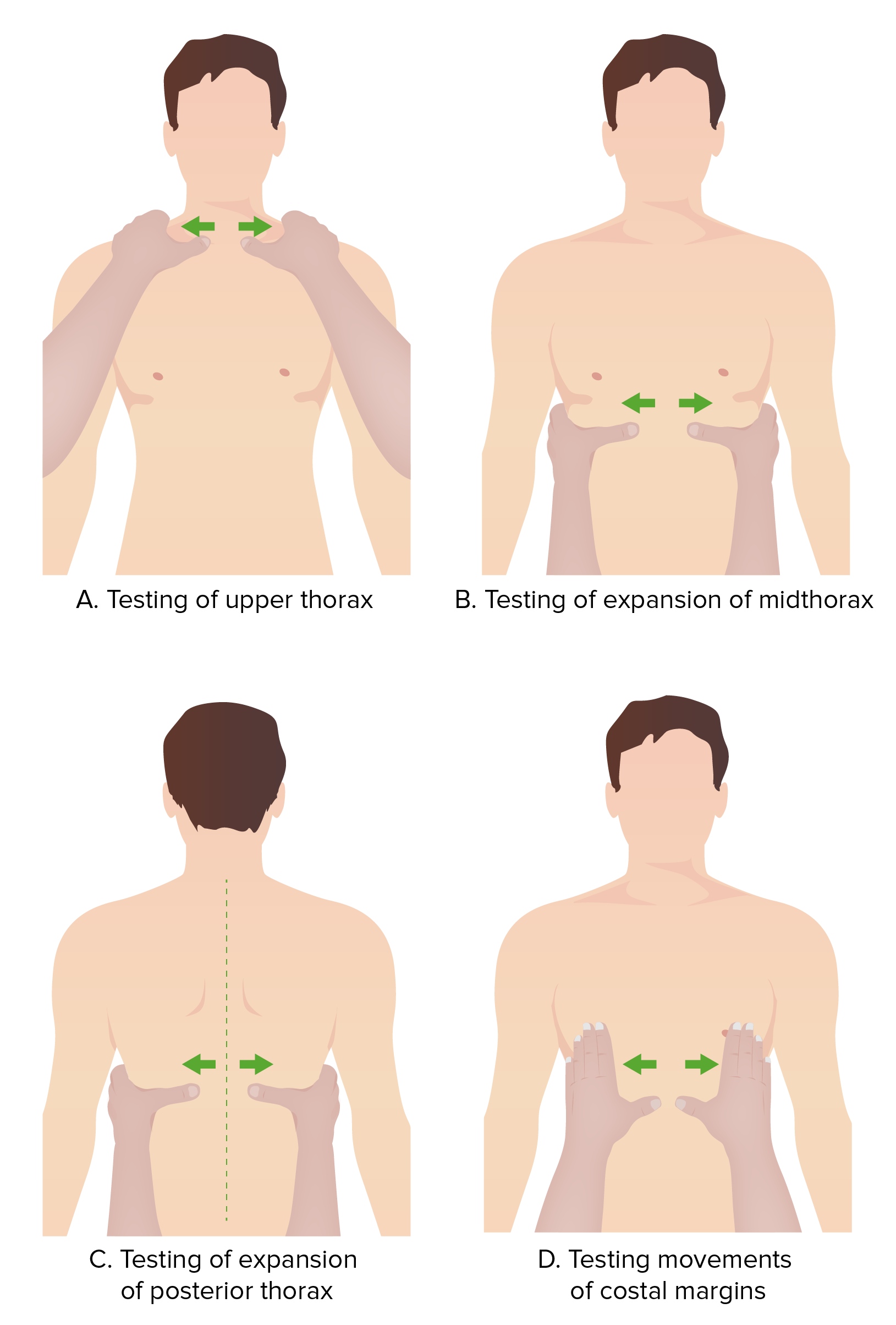
  • Observe la expansión del tórax en EN Erythema nodosum is an immune-mediated panniculitis (inflammation of the subcutaneous fat) caused by a type IV (delayed-type) hypersensitivity reaction. It commonly manifests in young women as tender, erythematous nodules on the shins. Erythema Nodosum busca de asimetría:
    • Técnica:
      • Coloque las palmas de las manos en EN Erythema nodosum is an immune-mediated panniculitis (inflammation of the subcutaneous fat) caused by a type IV (delayed-type) hypersensitivity reaction. It commonly manifests in young women as tender, erythematous nodules on the shins. Erythema Nodosum la espalda del paciente, los LOS Neisseria dedos paralelos a las costillas y los LOS Neisseria pulgares en EN Erythema nodosum is an immune-mediated panniculitis (inflammation of the subcutaneous fat) caused by a type IV (delayed-type) hypersensitivity reaction. It commonly manifests in young women as tender, erythematous nodules on the shins. Erythema Nodosum la 10ma costilla.
      • Indique al AL Amyloidosis paciente que inhale.
      • Observe el movimiento de los LOS Neisseria pulgares en EN Erythema nodosum is an immune-mediated panniculitis (inflammation of the subcutaneous fat) caused by a type IV (delayed-type) hypersensitivity reaction. It commonly manifests in young women as tender, erythematous nodules on the shins. Erythema Nodosum la espalda del paciente para comprobar la simetría.
    • Evalúe en EN Erythema nodosum is an immune-mediated panniculitis (inflammation of the subcutaneous fat) caused by a type IV (delayed-type) hypersensitivity reaction. It commonly manifests in young women as tender, erythematous nodules on the shins. Erythema Nodosum busca de:
      • Asimetría en EN Erythema nodosum is an immune-mediated panniculitis (inflammation of the subcutaneous fat) caused by a type IV (delayed-type) hypersensitivity reaction. It commonly manifests in young women as tender, erythematous nodules on the shins. Erythema Nodosum la expansión
      • Movimiento paradójico
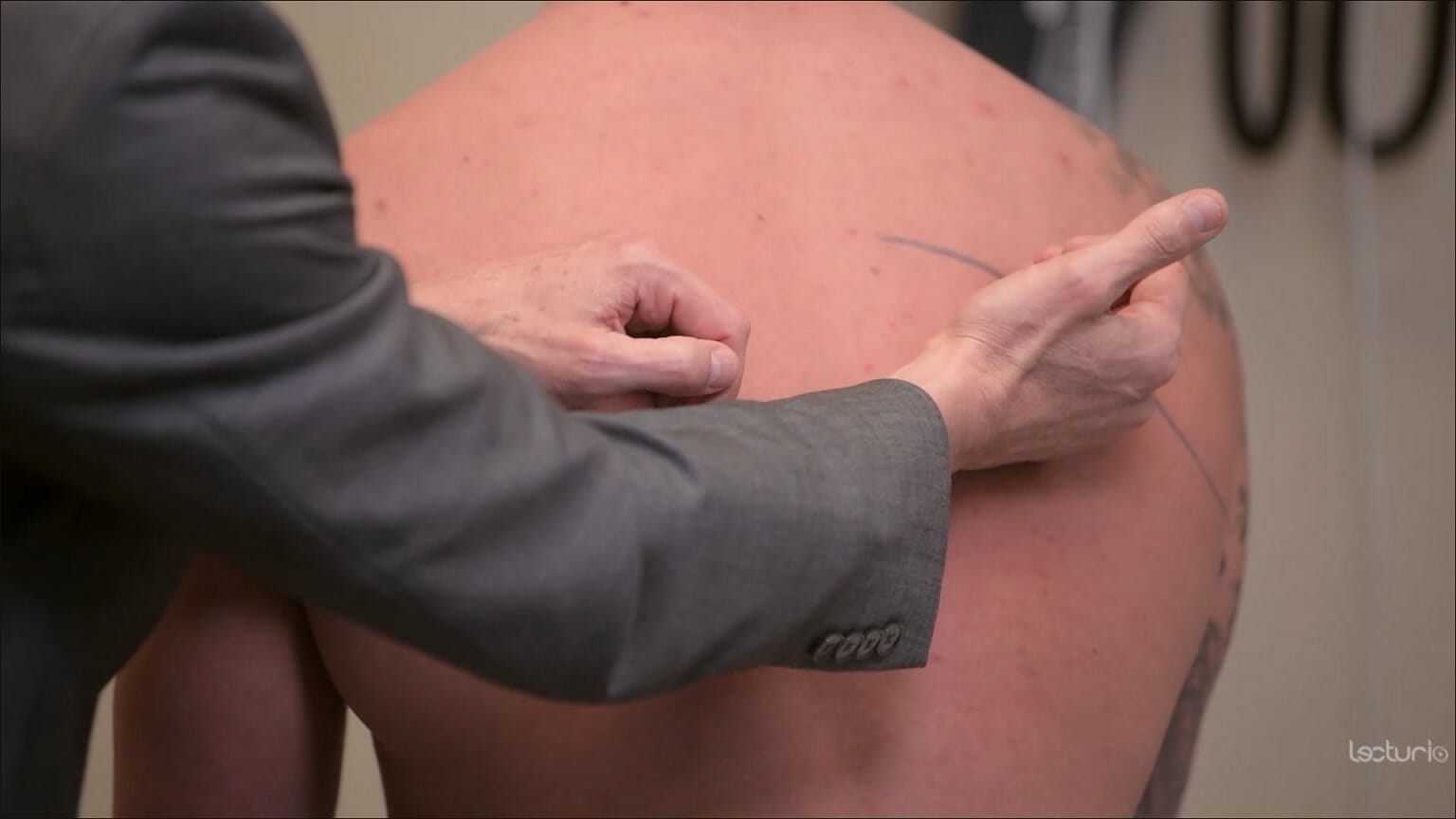
  • Sienta el frémito táctil:
    • La vibración se transmite a través de los LOS Neisseria pulmones y se siente en EN Erythema nodosum is an immune-mediated panniculitis (inflammation of the subcutaneous fat) caused by a type IV (delayed-type) hypersensitivity reaction. It commonly manifests in young women as tender, erythematous nodules on the shins. Erythema Nodosum la pared torácica.
    • Coloque las partes óseas de la mano alrededor de los LOS Neisseria bordes de la escápula del paciente.
    • Indique al paciente que diga “99” o “1, 1, 1” para comprobar el frémito.
    • ↑ Frémito: neumonía
    • ↓ Frémito:
      • Derrame
      • Obstrucción
      • Neumotórax
      • Enfisema
      • Atelectasias

Percusión

Técnica

  • Coloque el dedo medio de 1 mano sobre la zona de interés en EN Erythema nodosum is an immune-mediated panniculitis (inflammation of the subcutaneous fat) caused by a type IV (delayed-type) hypersensitivity reaction. It commonly manifests in young women as tender, erythematous nodules on the shins. Erythema Nodosum el tórax o la espalda.
  • Golpee la articulación interfalángica distal con el dedo medio de la otra mano.
  • Percuta siguiendo un patrón sistemático desde la parte superior del tórax hasta las costillas inferiores.
  • Compare la resonancia entre los LOS Neisseria lados izquierdo y derecho del tórax.

Hallazgos

  • Normal: resonante, ruidoso, de tono bajo
  • Anormal:
    • Matidez:
      • Intensidad y tono medio
      • Se encuentra en EN Erythema nodosum is an immune-mediated panniculitis (inflammation of the subcutaneous fat) caused by a type IV (delayed-type) hypersensitivity reaction. It commonly manifests in young women as tender, erythematous nodules on the shins. Erythema Nodosum la neumonía, el hemotórax y la atelectasia
    • Hiperresonancia:
      • Muy alto, de tono muy grave y más largo
      • Indica la presencia de aire en EN Erythema nodosum is an immune-mediated panniculitis (inflammation of the subcutaneous fat) caused by a type IV (delayed-type) hypersensitivity reaction. It commonly manifests in young women as tender, erythematous nodules on the shins. Erythema Nodosum la cavidad torácica
      • Se encuentra en EN Erythema nodosum is an immune-mediated panniculitis (inflammation of the subcutaneous fat) caused by a type IV (delayed-type) hypersensitivity reaction. It commonly manifests in young women as tender, erythematous nodules on the shins. Erythema Nodosum el neumotórax y el enfisema

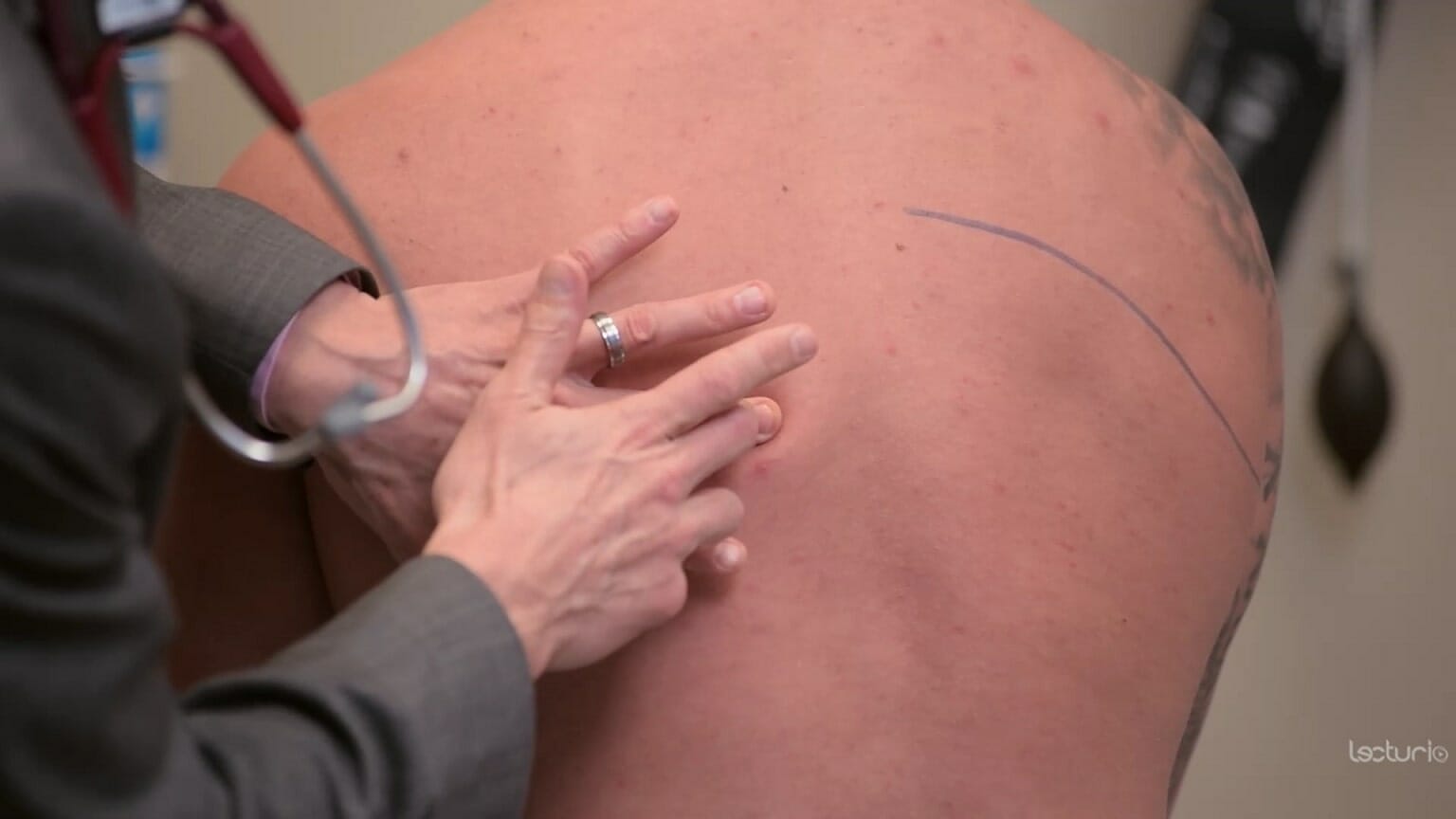
Auscultación

La auscultación se realiza con el diafragma del estetoscopio sobre la piel sin ropa.

  • Pida al AL Amyloidosis paciente que respire profundamente: escuche la inspiración y la espiración completamente.
  • Escuche los LOS Neisseria sonidos respiratorios anterior y posteriormente, empezando por la parte superior, y comparando los LOS Neisseria pulmones bilateralmente, moviéndose inferiormente.
Tabla: Sonidos respiratorios normales
Sonido Descripción Localización normal
Respiración traqueal Fuerte y de tono agudo Escuchada sobre el cuello
Respiración bronquial
  • Fuerte y de tono agudo
  • Los LOS Neisseria sonido espiratorios duran más.
Escuchada sobre las vías aéreas grandes (sobre el esternón)
Respiración broncovesicular
  • Intensidad y tono intermedios
  • Los LOS Neisseria sonidos inspiratorios y espiratorios son iguales.
Escuchada sobre los LOS Neisseria espacios intercostales 1 y 2
Respiración vesicular
  • Sonidos más graves y susurrantes
  • Los LOS Neisseria sonidos inspiratorios duran más.
Escuchada sobre los LOS Neisseria dos campos pulmonares
Tabla: Sonidos respiratorios patológicos
Sonido Descripción Afecciones asociadas
Crepitantes
  • Se escucha sólo durante la inspiración
  • Discontinuo, intermitente
  • Agudo (fino) o grave (grueso)
  • Neumonía
  • EPOC
  • Edema Edema Edema is a condition in which excess serous fluid accumulates in the body cavity or interstitial space of connective tissues. Edema is a symptom observed in several medical conditions. It can be categorized into 2 types, namely, peripheral (in the extremities) and internal (in an organ or body cavity). Edema pulmonar
Sibilancias o roncus
  • Se escucha tanto en EN Erythema nodosum is an immune-mediated panniculitis (inflammation of the subcutaneous fat) caused by a type IV (delayed-type) hypersensitivity reaction. It commonly manifests in young women as tender, erythematous nodules on the shins. Erythema Nodosum la inspiración como en EN Erythema nodosum is an immune-mediated panniculitis (inflammation of the subcutaneous fat) caused by a type IV (delayed-type) hypersensitivity reaction. It commonly manifests in young women as tender, erythematous nodules on the shins. Erythema Nodosum la espiración
  • Sonido continuo
  • Agudo (sibilancias) o grave (roncus)
Estridor inspiratorio Sonido de respiración musical y de tono agudo debido al AL Amyloidosis flujo de aire turbulento durante la inspiración Obstrucción por encima de la glotis:
  • Epiglotitis
  • Absceso retrofaríngeo/peritonsilar
Estridor espiratorio Sonido de respiración musical y de tono agudo debido al AL Amyloidosis flujo de aire turbulento durante la espiración Obstrucción por debajo de la glotis:
Estridor bifásico Sonido respiratorio musical y de tono agudo procedente de un flujo de aire turbulento durante todo el ciclo respiratorio Obstrucción en EN Erythema nodosum is an immune-mediated panniculitis (inflammation of the subcutaneous fat) caused by a type IV (delayed-type) hypersensitivity reaction. It commonly manifests in young women as tender, erythematous nodules on the shins. Erythema Nodosum la glotis:
  • Aspiración de cuerpo extraño
  • Parálisis bilateral de las cuerdas vocales
Frote pleural
  • Sonido discontinuo y de tono grave
  • Se escucha tanto en EN Erythema nodosum is an immune-mediated panniculitis (inflammation of the subcutaneous fat) caused by a type IV (delayed-type) hypersensitivity reaction. It commonly manifests in young women as tender, erythematous nodules on the shins. Erythema Nodosum la inspiración como en EN Erythema nodosum is an immune-mediated panniculitis (inflammation of the subcutaneous fat) caused by a type IV (delayed-type) hypersensitivity reaction. It commonly manifests in young women as tender, erythematous nodules on the shins. Erythema Nodosum la espiración
Pleuritis Pleuritis Pleuritis, also known as pleurisy, is an inflammation of the visceral and parietal layers of the pleural membranes of the lungs. The condition can be primary or secondary and results in sudden, sharp, and intense chest pain on inhalation and exhalation. Pleuritis
Sonidos respiratorios amortiguados o ausentes
  • Sonidos continuos con calidad musical
  • Cuando en EN Erythema nodosum is an immune-mediated panniculitis (inflammation of the subcutaneous fat) caused by a type IV (delayed-type) hypersensitivity reaction. It commonly manifests in young women as tender, erythematous nodules on the shins. Erythema Nodosum el ciclo respiratorio se producen las sibilancias; generalmente son más fuertes en EN Erythema nodosum is an immune-mediated panniculitis (inflammation of the subcutaneous fat) caused by a type IV (delayed-type) hypersensitivity reaction. It commonly manifests in young women as tender, erythematous nodules on the shins. Erythema Nodosum la espiración
  • Enfisema
  • Crisis asmática
  • Neumotórax
  • Derrame
  • Fibrosis Fibrosis Any pathological condition where fibrous connective tissue invades any organ, usually as a consequence of inflammation or other injury. Bronchiolitis Obliterans pleural
  • Tumor Tumor Inflammation
EPOC: enfermedad pulmonar obstructiva crónica

Afecciones Pulmonares Importantes

Tabla: Resumen de las afecciones pulmonares importantes y los LOS Neisseria hallazgos en EN Erythema nodosum is an immune-mediated panniculitis (inflammation of the subcutaneous fat) caused by a type IV (delayed-type) hypersensitivity reaction. It commonly manifests in young women as tender, erythematous nodules on the shins. Erythema Nodosum el examen pulmonar
Enfermedad Inspección Palpación Percusión Auscultación
Crisis asmática
  • Taquipnea
  • Hiperinflación torácica
  • Uso de los LOS Neisseria músculos respiratorios accesorios
  • Fase espiratoria prolongada
Aumento del frémito
  • Hiperresonancia
  • Depresión del diafragma
Sibilancias espiratorias
Neumotórax
  • Distrés
  • Taquipnea
  • ↓ Frémito táctil
  • Desplazamiento de la tráquea hacia el lado sano
Hiperresonancia Sonidos respiratorios débiles/ausentes
Derrame pleural
  • Distrés
  • Taquipnea
  • ↓ Frémito táctil
  • Desplazamiento de la tráquea hacia el lado sano
Sordo Sonido respiratorio débil
Atelectasias
  • Distrés
  • Taquipnea
  • ↓ Frémito táctil
  • Desplazamiento de la tráquea hacia el lado enfermo
Sordo Sonido respiratorio débil
Consolidación (neumonía)
  • Distrés
  • Taquipnea
↑ Frémito táctil Sordo
  • Sonidos respiratorios bronquiales
  • Crepitantes

Relevancia Clínica

Las siguientes son afecciones comunes encontradas utilizando el examen pulmonar de 4 partes.

  • Neumonía (inflamación pulmonar): inflamación aguda o crónica del tejido pulmonar causada por infecciones bacterianas, virales o fúngicas. Los LOS Neisseria hallazgos del examen incluyen fiebre, taquipnea, aumento del frémito táctil, matidez en EN Erythema nodosum is an immune-mediated panniculitis (inflammation of the subcutaneous fat) caused by a type IV (delayed-type) hypersensitivity reaction. It commonly manifests in young women as tender, erythematous nodules on the shins. Erythema Nodosum la percusión y sonidos respiratorios bronquiales o crepitantes durante la auscultación. Los LOS Neisseria pacientes pueden desarrollar sepsis Sepsis Systemic inflammatory response syndrome with a proven or suspected infectious etiology. When sepsis is associated with organ dysfunction distant from the site of infection, it is called severe sepsis. When sepsis is accompanied by hypotension despite adequate fluid infusion, it is called septic shock. Sepsis and Septic Shock y descompensarse. El tratamiento emplea terapia antibiótica dirigida.
  • Atelectasia: afección caracterizada por el colapso progresivo de los LOS Neisseria alvéolos y las vías aéreas pequeñas debido a obstrucción u otros mecanismos. La presentación incluye dificultad respiratoria e hipoxemia. Los LOS Neisseria hallazgos del examen incluyen matidez a la percusión, ausencia de sonidos respiratorios y desplazamiento de la tráquea hacia el lado de la atelectasia. La radiografía de tórax muestra opacificación pulmonar. El tratamiento es con fisioterapia respiratoria o presión positiva al AL Amyloidosis final de la espiración, o broncoscopia.
  • Derrame pleural: acumulación patológica de líquido en EN Erythema nodosum is an immune-mediated panniculitis (inflammation of the subcutaneous fat) caused by a type IV (delayed-type) hypersensitivity reaction. It commonly manifests in young women as tender, erythematous nodules on the shins. Erythema Nodosum la cavidad pleural causada por inflamación, infección, neoplasia u otra patología. Los LOS Neisseria hallazgos del examen incluyen disminución de los LOS Neisseria sonidos respiratorios, matidez a la percusión y disminución del frémito táctil. El tratamiento depende del tratamiento de la afección subyacente, pero a menudo comienza con la extracción de líquido (toracocentesis).
  • Neumotórax: acumulación anormal de aire en EN Erythema nodosum is an immune-mediated panniculitis (inflammation of the subcutaneous fat) caused by a type IV (delayed-type) hypersensitivity reaction. It commonly manifests in young women as tender, erythematous nodules on the shins. Erythema Nodosum el espacio pleural, incluidos los LOS Neisseria neumotórax simples y a tensión. Los LOS Neisseria hallazgos de la exploración física incluyen una disminución de los LOS Neisseria sonidos respiratorios, hiperresonancia a la percusión, desviación traqueal/desplazamiento mediastínico lejos del neumotórax a tensión, disminución del frémito táctil e ingurgitación yugular. El tratamiento incluye descompresión con aguja y colocación de un drenaje pleural.
  • Edema Edema Edema is a condition in which excess serous fluid accumulates in the body cavity or interstitial space of connective tissues. Edema is a symptom observed in several medical conditions. It can be categorized into 2 types, namely, peripheral (in the extremities) and internal (in an organ or body cavity). Edema pulmonar: afección causada por el exceso de líquido en EN Erythema nodosum is an immune-mediated panniculitis (inflammation of the subcutaneous fat) caused by a type IV (delayed-type) hypersensitivity reaction. It commonly manifests in young women as tender, erythematous nodules on the shins. Erythema Nodosum el espacio intersticial de los LOS Neisseria pulmones. El edema Edema Edema is a condition in which excess serous fluid accumulates in the body cavity or interstitial space of connective tissues. Edema is a symptom observed in several medical conditions. It can be categorized into 2 types, namely, peripheral (in the extremities) and internal (in an organ or body cavity). Edema pulmonar es una consecuencia del proceso de la enfermedad más que una patología primaria y se clasifica como cardiogénico o no cardiogénico en EN Erythema nodosum is an immune-mediated panniculitis (inflammation of the subcutaneous fat) caused by a type IV (delayed-type) hypersensitivity reaction. It commonly manifests in young women as tender, erythematous nodules on the shins. Erythema Nodosum función de la causa del edema Edema Edema is a condition in which excess serous fluid accumulates in the body cavity or interstitial space of connective tissues. Edema is a symptom observed in several medical conditions. It can be categorized into 2 types, namely, peripheral (in the extremities) and internal (in an organ or body cavity). Edema. Los LOS Neisseria hallazgos del examen incluyen crepitantes bilaterales, edema Edema Edema is a condition in which excess serous fluid accumulates in the body cavity or interstitial space of connective tissues. Edema is a symptom observed in several medical conditions. It can be categorized into 2 types, namely, peripheral (in the extremities) and internal (in an organ or body cavity). Edema de las extremidades inferiores y, a menudo, ingurgitación yugular. El tratamiento es el drenaje pulmonar con diuréticos.
  • Enfermedad pulmonar obstructiva crónica (EPOC): resumen de las enfermedades respiratorias crónicas en EN Erythema nodosum is an immune-mediated panniculitis (inflammation of the subcutaneous fat) caused by a type IV (delayed-type) hypersensitivity reaction. It commonly manifests in young women as tender, erythematous nodules on the shins. Erythema Nodosum las que se produce una limitación del flujo aéreo. Los LOS Neisseria hallazgos del examen incluyen sibilancias, fase espiratoria prolongada y, a veces, tórax en EN Erythema nodosum is an immune-mediated panniculitis (inflammation of the subcutaneous fat) caused by a type IV (delayed-type) hypersensitivity reaction. It commonly manifests in young women as tender, erythematous nodules on the shins. Erythema Nodosum barril; aproximadamente el 90% de los LOS Neisseria casos son causados por el tabaquismo. El tratamiento agudo incluye un beta-agonista inhalado de acción corta, así como esteroides, oxígeno suplementario y, en EN Erythema nodosum is an immune-mediated panniculitis (inflammation of the subcutaneous fat) caused by a type IV (delayed-type) hypersensitivity reaction. It commonly manifests in young women as tender, erythematous nodules on the shins. Erythema Nodosum casos graves, soporte ventilatorio con presión positiva al AL Amyloidosis final de la espiración.

Referencias

  1. McCormack, M. (2020). Overview of pulmonary function testing in adults. UpToDate. Retrieved January 27, 2021, from https://www.uptodate.com/contents/overview-of-pulmonary-function-testing-in-adults
  2. Lone, N. (2019). Pulmonary Examination Technique. Emedicine. Retrieved February 26, 2021, from https://emedicine.medscape.com/article/1909159-technique
  3. Bickley L. Bates’ Guide to Physical Examination and History-Taking. (2012). Lippincott Williams & Wilkins.
  4. Walker HK, Hall WD, Hurst WJ, Silverman ME, Morrison G. Clinical Methods: The History, Physical, and Laboratory Examinations. (1999). Butterworths.
  5. Bohadana A, Izbicki G, Kraman SS. Fundamentals of lung auscultation. (2014). N Engl J Med. 370 (8): p.744-751.

¡Crea tu cuenta gratis o inicia una sesión para seguir leyendo!

Regístrate ahora y obtén acceso gratuito a Lecturio con páginas de concepto, videos médicos y cuestionarios para tu educación médica.

User Reviews

Que tengas una sesión de estudio alegre y navideña 🎁 Ahorra 50% en todos los planes >>

Details