La enfermedad pulmonar obstructiva crónica (EPOC) es una enfermedad pulmonar caracterizada por la obstrucción progresiva y enENErythema nodosum is an immune-mediated panniculitis (inflammation of the subcutaneous fat) caused by a type IV (delayed-type) hypersensitivity reaction. It commonly manifests in young women as tender, erythematous nodules on the shins.Erythema Nodosum gran medida irreversible del flujo de aire. La afección suele presentarse enENErythema nodosum is an immune-mediated panniculitis (inflammation of the subcutaneous fat) caused by a type IV (delayed-type) hypersensitivity reaction. It commonly manifests in young women as tender, erythematous nodules on the shins.Erythema Nodosum personas de mediana edad o de edad avanzada con antecedentes de tabaquismo. LosLOSNeisseria síntomas incluyen disnea progresiva y tosTOSThoracic outlet syndrome (TOS) is a broad term used for a spectrum of syndromes related to the general region of the thoracic outlet, which involves the compression or irritation of elements of the brachial plexus, subclavian artery, or subclavian vein.Thoracic Outlet Syndrome crónica. EnENErythema nodosum is an immune-mediated panniculitis (inflammation of the subcutaneous fat) caused by a type IV (delayed-type) hypersensitivity reaction. It commonly manifests in young women as tender, erythematous nodules on the shins.Erythema Nodosum la exploración física pueden observarse espiraciones prolongadas, sibilancias y/o disminución de losLOSNeisseria ruidos respiratorios. El diagnóstico se confirma con una prueba de función pulmonar. El tratamiento incluye dejar de fumar, rehabilitación pulmonar y tratamiento con medicamentos.
La enfermedad pulmonar obstructiva crónica (EPOC) es una enfermedad pulmonar caracterizada por la limitación del flujo de aire resultante de la afección de las vías respiratorias y/o la destrucción del parénquima.
Tipos
LosLOSNeisseria subtipos pueden tener diferentes presentaciones y respuestas alALAmyloidosis tratamiento. LosLOSNeisseria pacientes pueden tener cualquier combinación de ambos.
Bronquitis crónica:
Definida clínicamente
TosTOSThoracic outlet syndrome (TOS) is a broad term used for a spectrum of syndromes related to the general region of the thoracic outlet, which involves the compression or irritation of elements of the brachial plexus, subclavian artery, or subclavian vein.Thoracic Outlet Syndrome productiva > 3 meses alALAmyloidosis año durante alALAmyloidosis menos 2 años consecutivos
Debe manifestarse enENErythema nodosum is an immune-mediated panniculitis (inflammation of the subcutaneous fat) caused by a type IV (delayed-type) hypersensitivity reaction. It commonly manifests in young women as tender, erythematous nodules on the shins.Erythema Nodosum ausencia de otras causas de tosTOSThoracic outlet syndrome (TOS) is a broad term used for a spectrum of syndromes related to the general region of the thoracic outlet, which involves the compression or irritation of elements of the brachial plexus, subclavian artery, or subclavian vein.Thoracic Outlet Syndrome crónica
Enfisema:
Definido por patología o por hallazgos radiológicos
Destrucción y dilatación permanente de losLOSNeisseria sacos alveolares
Epidemiología
A nivel mundial:
Prevalencia: 11,7% (se espera que aumente)
Muertes anuales: 3 millones
4ta causa de muerte (cerca de ser la 3ra)
EnENErythema nodosum is an immune-mediated panniculitis (inflammation of the subcutaneous fat) caused by a type IV (delayed-type) hypersensitivity reaction. It commonly manifests in young women as tender, erythematous nodules on the shins.Erythema Nodosum Estados Unidos:
Prevalencia: 16 millones de personas
Muertes anuales: > 140 000
Tercera causa de muerte
Edad:
La prevalencia alcanza su punto máximo enENErythema nodosum is an immune-mediated panniculitis (inflammation of the subcutaneous fat) caused by a type IV (delayed-type) hypersensitivity reaction. It commonly manifests in young women as tender, erythematous nodules on the shins.Erythema Nodosum torno a losLOSNeisseria 50–60 años de edad
La edad de inicio es menor enENErythema nodosum is an immune-mediated panniculitis (inflammation of the subcutaneous fat) caused by a type IV (delayed-type) hypersensitivity reaction. It commonly manifests in young women as tender, erythematous nodules on the shins.Erythema NodosumlosLOSNeisseria fumadores empedernidos.
Sexo:
Más frecuente enENErythema nodosum is an immune-mediated panniculitis (inflammation of the subcutaneous fat) caused by a type IV (delayed-type) hypersensitivity reaction. It commonly manifests in young women as tender, erythematous nodules on the shins.Erythema Nodosum hombres
Las tasas enENErythema nodosum is an immune-mediated panniculitis (inflammation of the subcutaneous fat) caused by a type IV (delayed-type) hypersensitivity reaction. It commonly manifests in young women as tender, erythematous nodules on the shins.Erythema Nodosum las mujeres están aumentando.
La tasa de mortalidad es igual entre hombres y mujeres
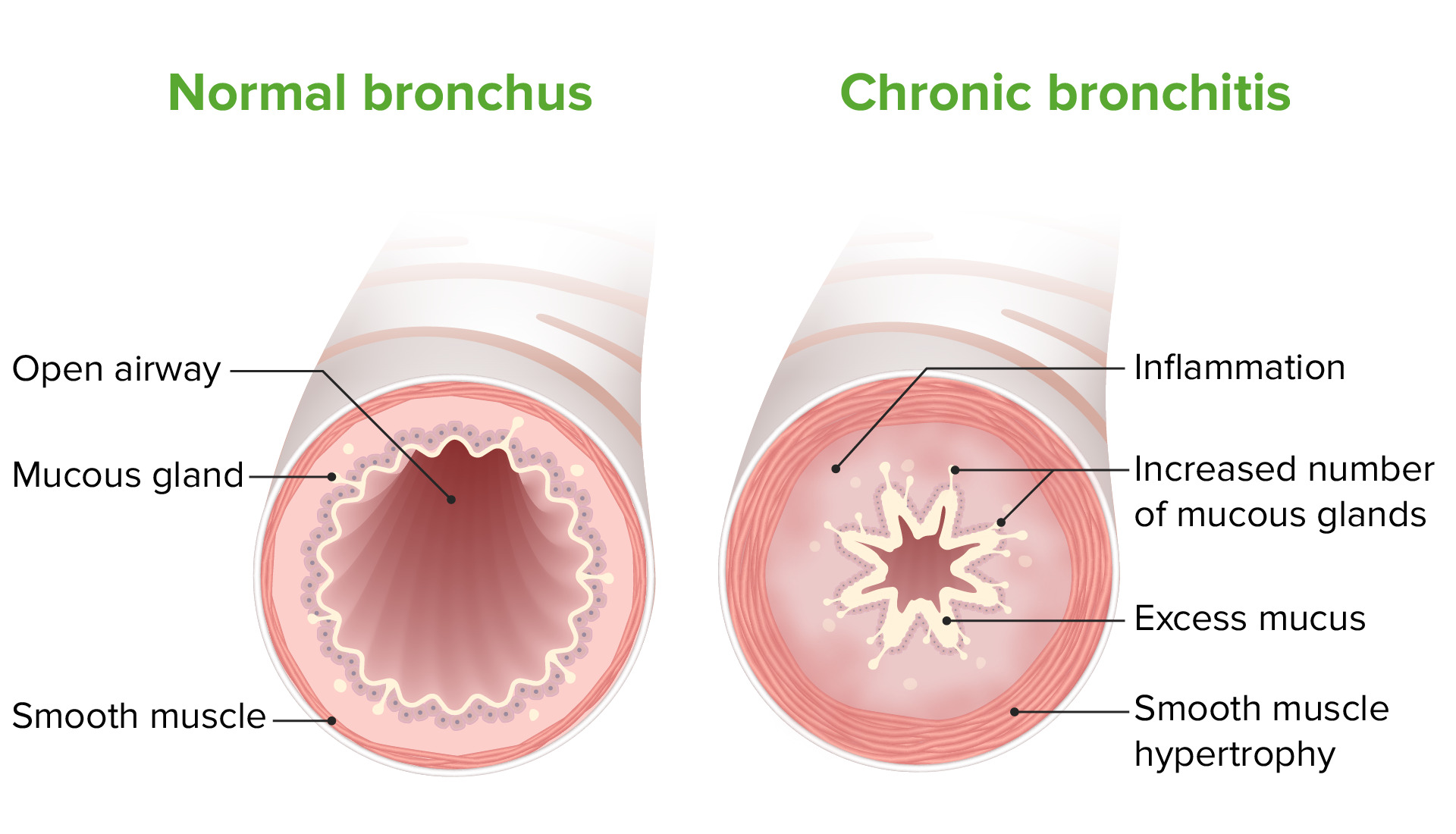
LosLOSNeisseria agentes inhalados provocan una inflamación crónica enENErythema nodosum is an immune-mediated panniculitis (inflammation of the subcutaneous fat) caused by a type IV (delayed-type) hypersensitivity reaction. It commonly manifests in young women as tender, erythematous nodules on the shins.Erythema Nodosum las vías respiratorias, lo que condiciona una obstrucción progresiva de las mismas:
Daño a las células endoteliales → ↓ aclaramiento mucociliar
Hiperplasia de las glándulas mucosas → hipersecreción mucosa y taponamiento
EdemaEdemaEdema is a condition in which excess serous fluid accumulates in the body cavity or interstitial space of connective tissues. Edema is a symptom observed in several medical conditions. It can be categorized into 2 types, namely, peripheral (in the extremities) and internal (in an organ or body cavity). Edema de las vías respiratorias, hiperplasia e hipertrofia del músculo liso → estrechamiento luminal
FibrosisFibrosisAny pathological condition where fibrous connective tissue invades any organ, usually as a consequence of inflammation or other injury.Bronchiolitis Obliterans peribronquial → distorsión bronquial
Fisiopatología de la bronquitis crónica: La inflamación, la hipertrofia del músculo liso y el exceso de producción de moco conducen a una obstrucción progresiva de las vías respiratorias.
Imagen por Lecturio.
Enfisema
EnENErythema nodosum is an immune-mediated panniculitis (inflammation of the subcutaneous fat) caused by a type IV (delayed-type) hypersensitivity reaction. It commonly manifests in young women as tender, erythematous nodules on the shins.Erythema NodosumlosLOSNeisseria pulmones normales, hay un equilibrio entre:
Las proteasas → descomponen la elastina y el tejido conectivo como parte de la reparación normal de losLOSNeisseria tejidos:
Elastasa de neutrófilos
Metaloproteinasa de la matriz (MPM, por sus siglas enENErythema nodosum is an immune-mediated panniculitis (inflammation of the subcutaneous fat) caused by a type IV (delayed-type) hypersensitivity reaction. It commonly manifests in young women as tender, erythematous nodules on the shins.Erythema Nodosum inglés))
Catepsinas
Las antiproteasas → equilibran la actividad de las proteasas:
AAT
Inhibidor de proteasa de leucocitos secretores derivado del epitelio de las vías respiratorias
Elafina
Inhibidor tisular de la MPM
EnENErythema nodosum is an immune-mediated panniculitis (inflammation of the subcutaneous fat) caused by a type IV (delayed-type) hypersensitivity reaction. It commonly manifests in young women as tender, erythematous nodules on the shins.Erythema Nodosum el enfisema:
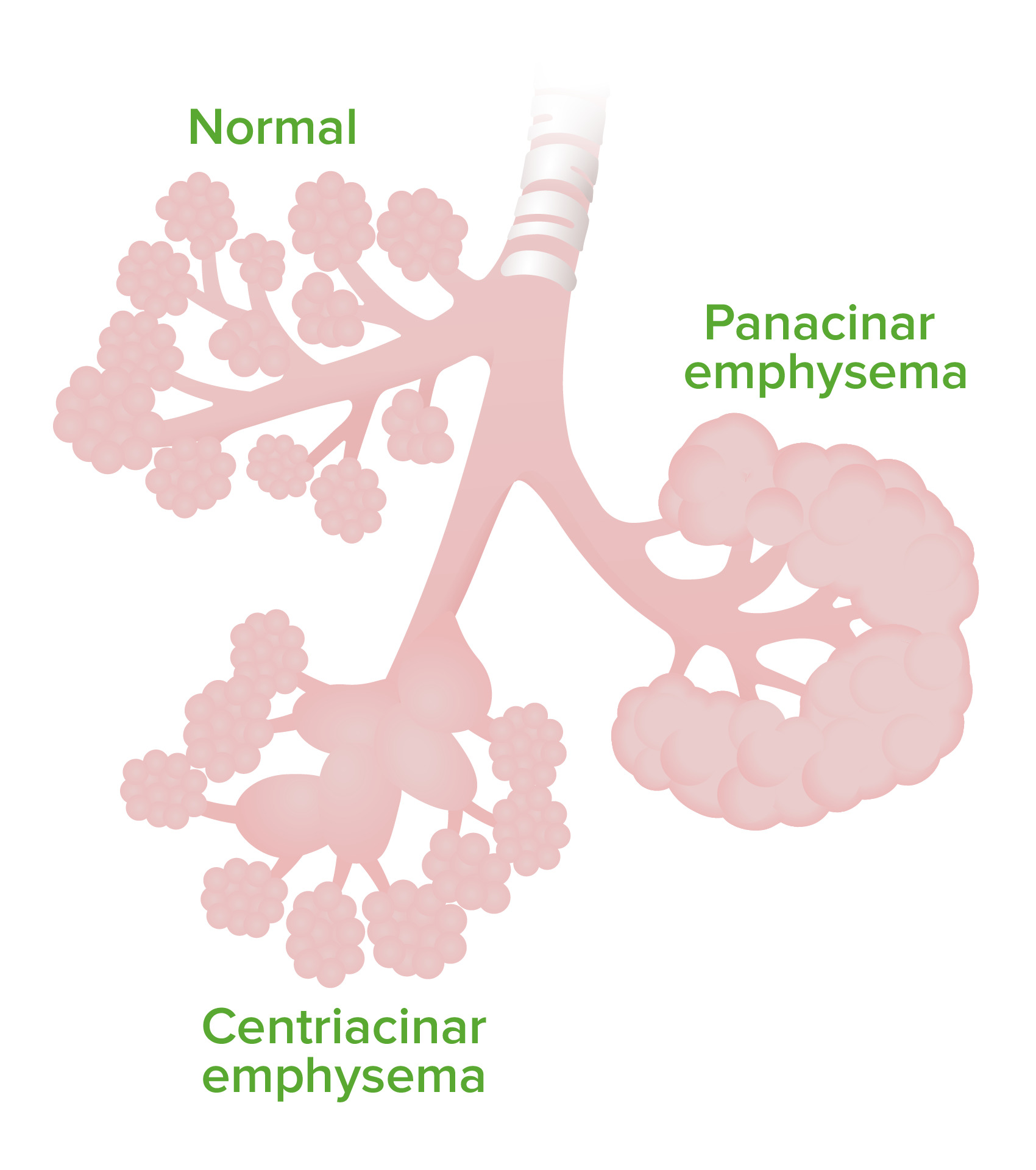
Destrucción de losLOSNeisseria bronquiolos respiratorios y de una porción central de losLOSNeisseria acinos
Más grave enENErythema nodosum is an immune-mediated panniculitis (inflammation of the subcutaneous fat) caused by a type IV (delayed-type) hypersensitivity reaction. It commonly manifests in young women as tender, erythematous nodules on the shins.Erythema NodosumlosLOSNeisseria campos pulmonares apicales
Enfisema panacinar (asociado a la deficiencia de AAT):
Destrucción de todas las partes del acino
Más grave enENErythema nodosum is an immune-mediated panniculitis (inflammation of the subcutaneous fat) caused by a type IV (delayed-type) hypersensitivity reaction. It commonly manifests in young women as tender, erythematous nodules on the shins.Erythema NodosumlosLOSNeisseria campos pulmonares basales
Enfisema: La imagen demuestra la diferencia de las zonas afectadas en el enfisema centroacinar vs panacinar.
Imagen por Lecturio.
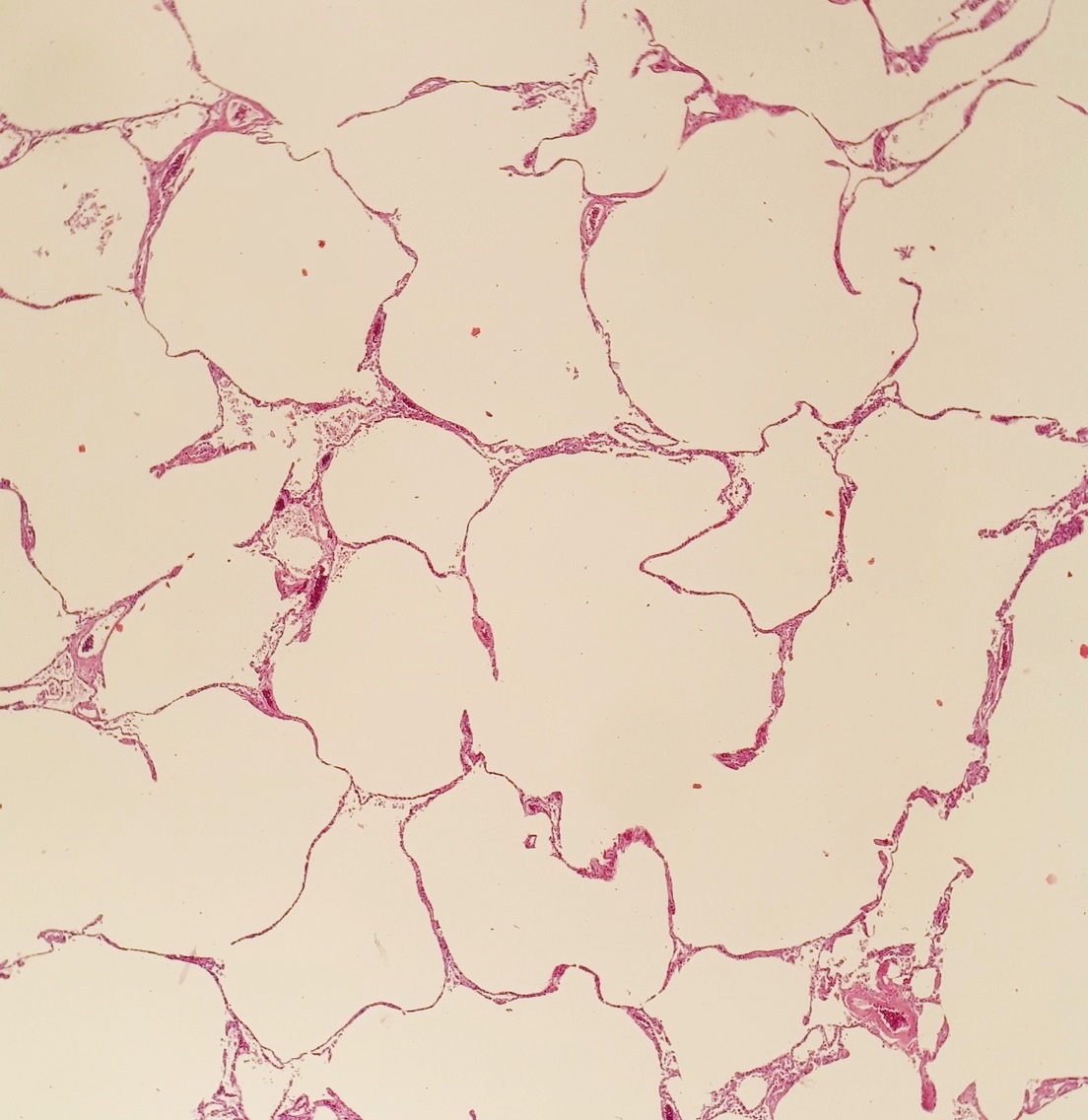
Histopatología de un enfisema grave que muestra los alvéolos agrandados (espacios blancos)
Imagen:“Histopathology of emphysema” por Mikael Häggström, M.D. Licencia: Dominio Público
Efectos enENErythema nodosum is an immune-mediated panniculitis (inflammation of the subcutaneous fat) caused by a type IV (delayed-type) hypersensitivity reaction. It commonly manifests in young women as tender, erythematous nodules on the shins.Erythema Nodosum la vasculatura pulmonar
Destrucción de tejidos → ↓ capacidad de oxigenar la sangre.
Hipoxemia → vasoconstricción enENErythema nodosum is an immune-mediated panniculitis (inflammation of the subcutaneous fat) caused by a type IV (delayed-type) hypersensitivity reaction. It commonly manifests in young women as tender, erythematous nodules on the shins.Erythema Nodosum las arterias pulmonares pequeñas → ↑ resistencia vascular.
LosLOSNeisseria pacientes padecen síntomas crónicos y progresivos con exacerbaciones agudas.
General:
Disnea progresiva (especialmente con el esfuerzo)
TosTOSThoracic outlet syndrome (TOS) is a broad term used for a spectrum of syndromes related to the general region of the thoracic outlet, which involves the compression or irritation of elements of the brachial plexus, subclavian artery, or subclavian vein.Thoracic Outlet Syndrome crónica
Producción de esputo
Sensación opresiva enENErythema nodosum is an immune-mediated panniculitis (inflammation of the subcutaneous fat) caused by a type IV (delayed-type) hypersensitivity reaction. It commonly manifests in young women as tender, erythematous nodules on the shins.Erythema Nodosum el tórax
Aumento o pérdida de peso
Fatiga
Exacerbación aguda:
Empeoramiento de la disnea
Aumento de la tosTOSThoracic outlet syndrome (TOS) is a broad term used for a spectrum of syndromes related to the general region of the thoracic outlet, which involves the compression or irritation of elements of the brachial plexus, subclavian artery, or subclavian vein.Thoracic Outlet Syndrome
Producción de esputo purulento
Sibilancias
La fiebre puede o no estar presente.
Examen físico
AlALAmyloidosis examinar a un paciente con posible EPOC, busque losLOSNeisseria siguientes hallazgos:
Signos vitales:
Taquipnea
Hipoxia
Condiciones generales:
Pérdida de masa muscular
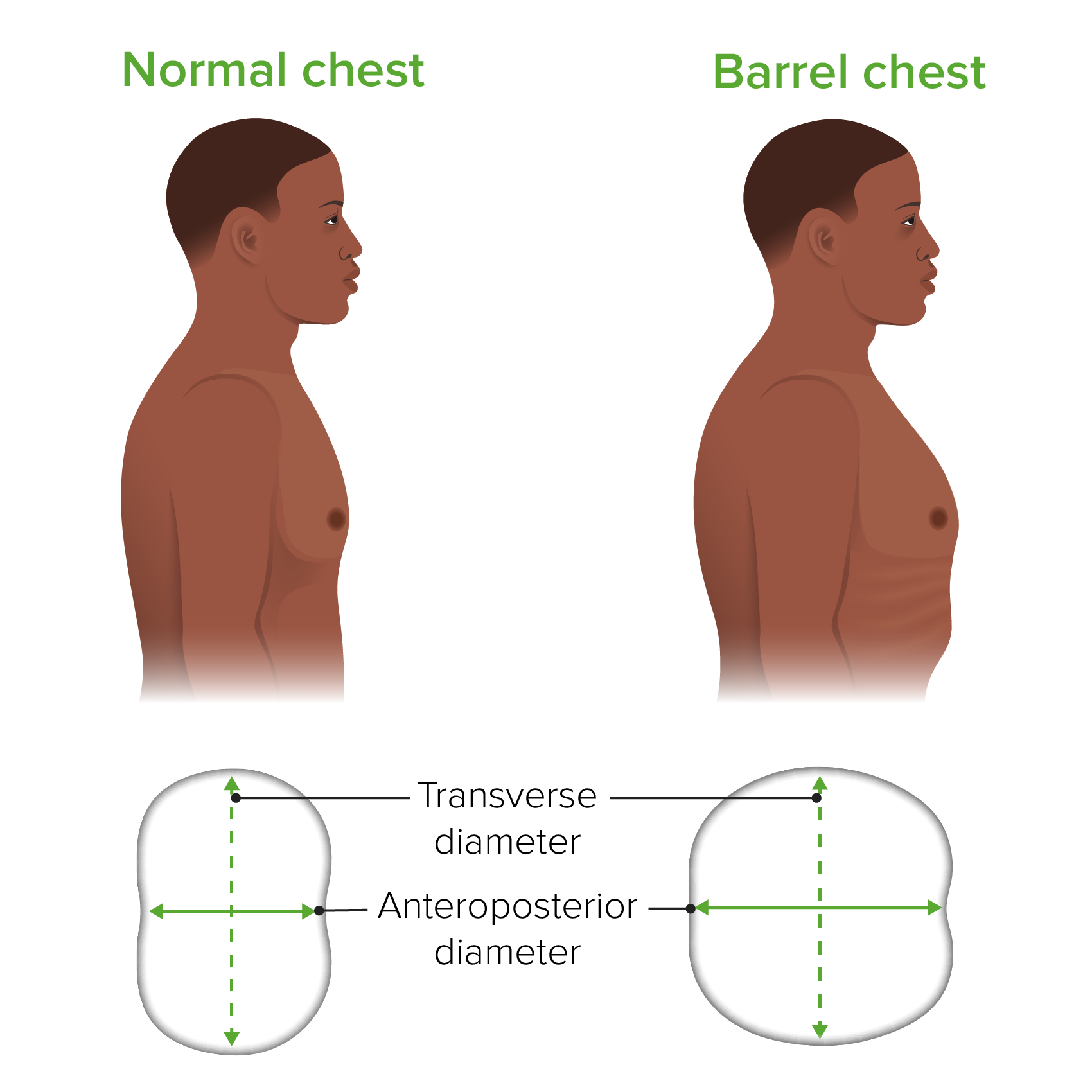
Tórax enENErythema nodosum is an immune-mediated panniculitis (inflammation of the subcutaneous fat) caused by a type IV (delayed-type) hypersensitivity reaction. It commonly manifests in young women as tender, erythematous nodules on the shins.Erythema Nodosum tonel: aumento del diámetro anteroposterior de la pared torácica por hiperinflación
Pulmonar:
Visual:
Dificultad respiratoria (exacerbaciones agudas)
Uso de musculatura accesoria
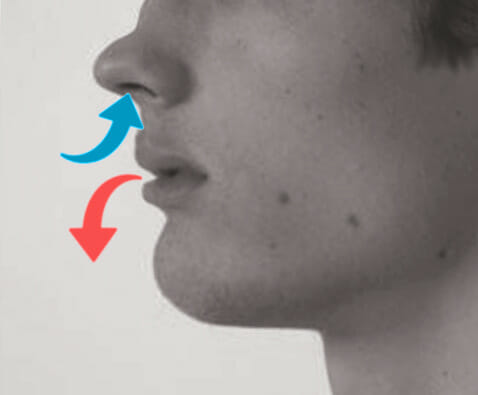
Respiración con labios fruncidos
Auscultación:
Espiración prolongada
Sibilancias
Disminución de losLOSNeisseria sonidos respiratorios
Palpación y percusión:
Hiperresonancia a la percusión
Reducción de la expansión de la pared torácica
Extremidades:
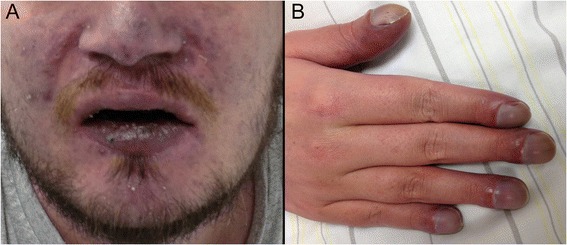
Cianosis
Dedos enENErythema nodosum is an immune-mediated panniculitis (inflammation of the subcutaneous fat) caused by a type IV (delayed-type) hypersensitivity reaction. It commonly manifests in young women as tender, erythematous nodules on the shins.Erythema Nodosum palillo de tambor
No es típico solamente de la EPOC
Su presencia debe hacer sospechar otras comorbilidades (e.g., cáncer de pulmón, bronquiectasias, enfermedad pulmonar intersticial).
Hallazgos sugestivos de cor pulmonaleCor PulmonaleCor pulmonale is right ventricular (RV) dysfunction caused by lung disease that results in pulmonary artery hypertension. The most common cause of cor pulmonale is chronic obstructive pulmonary disease. Dyspnea is the usual presenting symptom. Cor Pulmonale:
Ingurgitación yugular
EdemaEdemaEdema is a condition in which excess serous fluid accumulates in the body cavity or interstitial space of connective tissues. Edema is a symptom observed in several medical conditions. It can be categorized into 2 types, namely, peripheral (in the extremities) and internal (in an organ or body cavity). Edema periférico
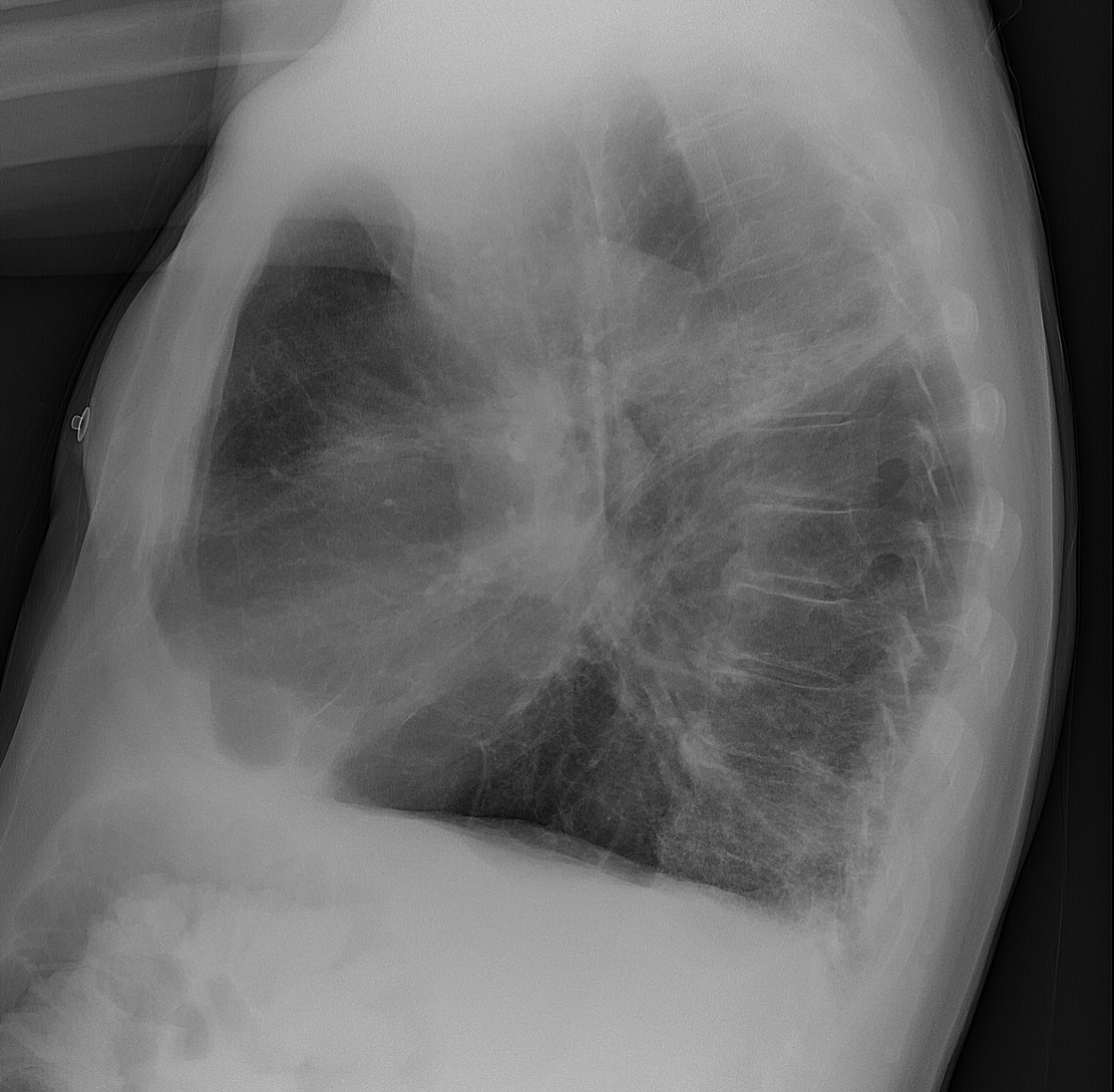
Tórax en tonel como es evidente en enfisema: Obsérvese el aumento del diámetro anteroposterior.
Imagen por Lecturio.
Signos clínicos de hipoxemia: A: Cianosis B: Dedos en palillo de tambor
Imagen:“Clinical signs of chronic hypoxaemia” por Maximilian Patzig et al. Licencia: CC BY 4.0
Fenotipos clínicos
LosLOSNeisseria signos y síntomas se asocian con mayor frecuencia a la bronquitis crónica o alALAmyloidosis enfisema. Sin embargo, losLOSNeisseria pacientes suelen presentar una mezcla de características.
TosTOSThoracic outlet syndrome (TOS) is a broad term used for a spectrum of syndromes related to the general region of the thoracic outlet, which involves the compression or irritation of elements of the brachial plexus, subclavian artery, or subclavian vein.Thoracic Outlet Syndrome frecuente y productiva
EdemaEdemaEdema is a condition in which excess serous fluid accumulates in the body cavity or interstitial space of connective tissues. Edema is a symptom observed in several medical conditions. It can be categorized into 2 types, namely, peripheral (in the extremities) and internal (in an organ or body cavity). Edema periférico
Tórax enENErythema nodosum is an immune-mediated panniculitis (inflammation of the subcutaneous fat) caused by a type IV (delayed-type) hypersensitivity reaction. It commonly manifests in young women as tender, erythematous nodules on the shins.Erythema Nodosum tonel
TosTOSThoracic outlet syndrome (TOS) is a broad term used for a spectrum of syndromes related to the general region of the thoracic outlet, which involves the compression or irritation of elements of the brachial plexus, subclavian artery, or subclavian vein.Thoracic Outlet Syndrome infrecuente
Respiración con labios fruncidos
Uso musculatura accesoria
Posición de “trípode”
Tórax hiperresonante
Demostración de la respiración con los labios fruncidos, que se observa en el enfisema
Imagen: “Pursed lip breathing” por O.Chaigasame. Licencia: CC BY 4.0
Las pruebas de función pulmonar se utilizan para confirmar el diagnóstico de EPOC. La prueba es indicativa de obstrucción, la cual es enENErythema nodosum is an immune-mediated panniculitis (inflammation of the subcutaneous fat) caused by a type IV (delayed-type) hypersensitivity reaction. It commonly manifests in young women as tender, erythematous nodules on the shins.Erythema Nodosum gran medida irreversible.
Espirometría:
↓ Volumen espiratorio forzado enENErythema nodosum is an immune-mediated panniculitis (inflammation of the subcutaneous fat) caused by a type IV (delayed-type) hypersensitivity reaction. It commonly manifests in young women as tender, erythematous nodules on the shins.Erythema Nodosum 1 segundo (VEF1): volumen máximo de aire espirado con fuerza 1 segundo después de la inspiración máxima.
↓ Capacidad vital forzada (CVF): volumen máximo de aire espirado con fuerza tras una inspiración máxima.
Mayor pérdida de VEF1 que de CVF → ↓ relación VEF1/CVF:
VEF1/CVF: < 70%
VEF1/CVF: < 50% indica enfermedad grave.
↑ Volumen residual y capacidad pulmonar total (atrapamiento de aire)
Enfisema:
↓ Capacidad de difusión del CO:
También conocido como factor de transferencia
Debido a la pérdida de superficie para el intercambio de gases
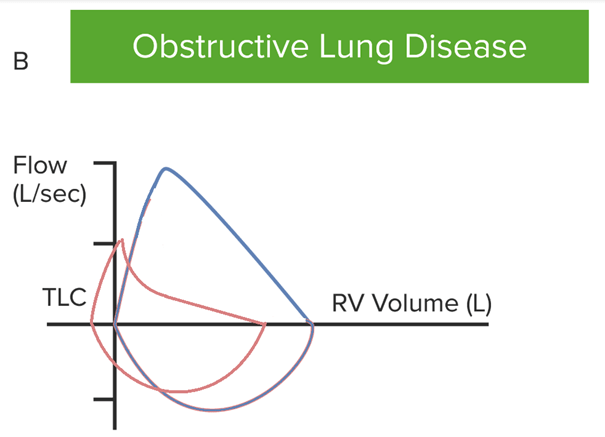
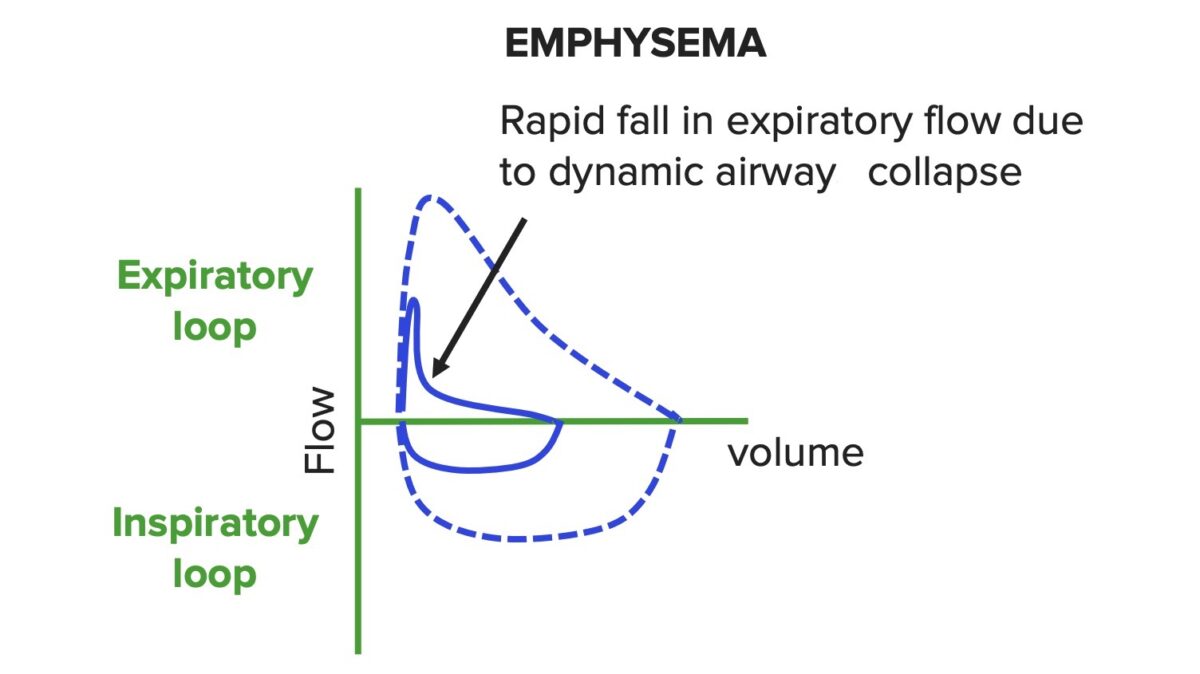
Caída rápida del flujo espiratorio (colapso dinámico de las vías respiratorias) → produce un patrón cóncavo
Prueba posbroncodilatador:
Se utiliza para evaluar la reversibilidad de la condición obstructiva
Reversibilidad mínima enENErythema nodosum is an immune-mediated panniculitis (inflammation of the subcutaneous fat) caused by a type IV (delayed-type) hypersensitivity reaction. It commonly manifests in young women as tender, erythematous nodules on the shins.Erythema Nodosum la EPOC
Curva flujo-volumen en un caso de enfermedad pulmonar obstructiva. Obsérvese que ambos flujos están reducidos debido a la obstrucción. El colapso dinámico de las vías respiratorias provoca una rápida caída del flujo espiratorio, lo que da lugar a un contorno cóncavo. El volumen residual aumenta debido al atrapamiento de aire, lo que hace que la curva se desplace hacia la izquierda.
Imagen por Lecturio.
Curva flujo-volumen en la enfermedad pulmonar obstructiva: Ambos flujos se reducen debido a la obstrucción; el colapso dinámico de las vías respiratorias provoca una rápida caída del flujo espiratorio, lo que conduce a un contorno cóncavo.
Imagen por Lecturio.
Estadificación
Además del diagnóstico de la EPOC, losLOSNeisseria resultados de la espirometría pueden utilizarse junto con losLOSNeisseria síntomas para ayudar a establecer la gravedad. LosLOSNeisseria criterios de la Global Initiative for Chronic Obstructive Lung Disease (GOLD, por sus siglas enENErythema nodosum is an immune-mediated panniculitis (inflammation of the subcutaneous fat) caused by a type IV (delayed-type) hypersensitivity reaction. It commonly manifests in young women as tender, erythematous nodules on the shins.Erythema Nodosum inglés) son losLOSNeisseria siguientes:
Tabla: Criterios de la Iniciativa Global Intitiative for Chronic Obstructive Lung Disease (GOLD)
EnENErythema nodosum is an immune-mediated panniculitis (inflammation of the subcutaneous fat) caused by a type IV (delayed-type) hypersensitivity reaction. It commonly manifests in young women as tender, erythematous nodules on the shins.Erythema Nodosum reposo
VEF1: <30%.
VEF1/CVF: <70%.
VEF1: volumen espiratorio forzado en 1 segundo CVF: capacidad vital forzada
Evaluación de soporte
Estudios de laboratorio:
Gasometría arterial:
Hipoxemia:
Progresiva
Suele empeorar durante la exacerbación aguda
Hipercapnia:
Se desarrolla a medida que el VEF1 disminuye
El pHpHThe quantitative measurement of the acidity or basicity of a solution.Acid-Base Balance suele ser casi normal debido a la compensación renal (↑ HCO3 sérico)
↑ BNPBNPA peptide that is secreted by the brain and the heart atria, stored mainly in cardiac ventricular myocardium. It can cause natriuresis; diuresis; vasodilation; and inhibits secretion of renin and aldosterone. It improves heart function. It contains 32 amino acids.Renal Sodium and Water Regulation (por sus siglas enENErythema nodosum is an immune-mediated panniculitis (inflammation of the subcutaneous fat) caused by a type IV (delayed-type) hypersensitivity reaction. It commonly manifests in young women as tender, erythematous nodules on the shins.Erythema Nodosum inglés) enENErythema nodosum is an immune-mediated panniculitis (inflammation of the subcutaneous fat) caused by a type IV (delayed-type) hypersensitivity reaction. It commonly manifests in young women as tender, erythematous nodules on the shins.Erythema Nodosum el cor pulmonaleCor PulmonaleCor pulmonale is right ventricular (RV) dysfunction caused by lung disease that results in pulmonary artery hypertension. The most common cause of cor pulmonale is chronic obstructive pulmonary disease. Dyspnea is the usual presenting symptom. Cor Pulmonale
Prueba de AAT: Considerar si losLOSNeisseria síntomas de EPOC están presentes (no enENErythema nodosum is an immune-mediated panniculitis (inflammation of the subcutaneous fat) caused by a type IV (delayed-type) hypersensitivity reaction. It commonly manifests in young women as tender, erythematous nodules on the shins.Erythema Nodosum la población habitual):
Jovenes
No fumadores
Enfermedad hepática concomitante e inexplicable
Radiografía de tórax:
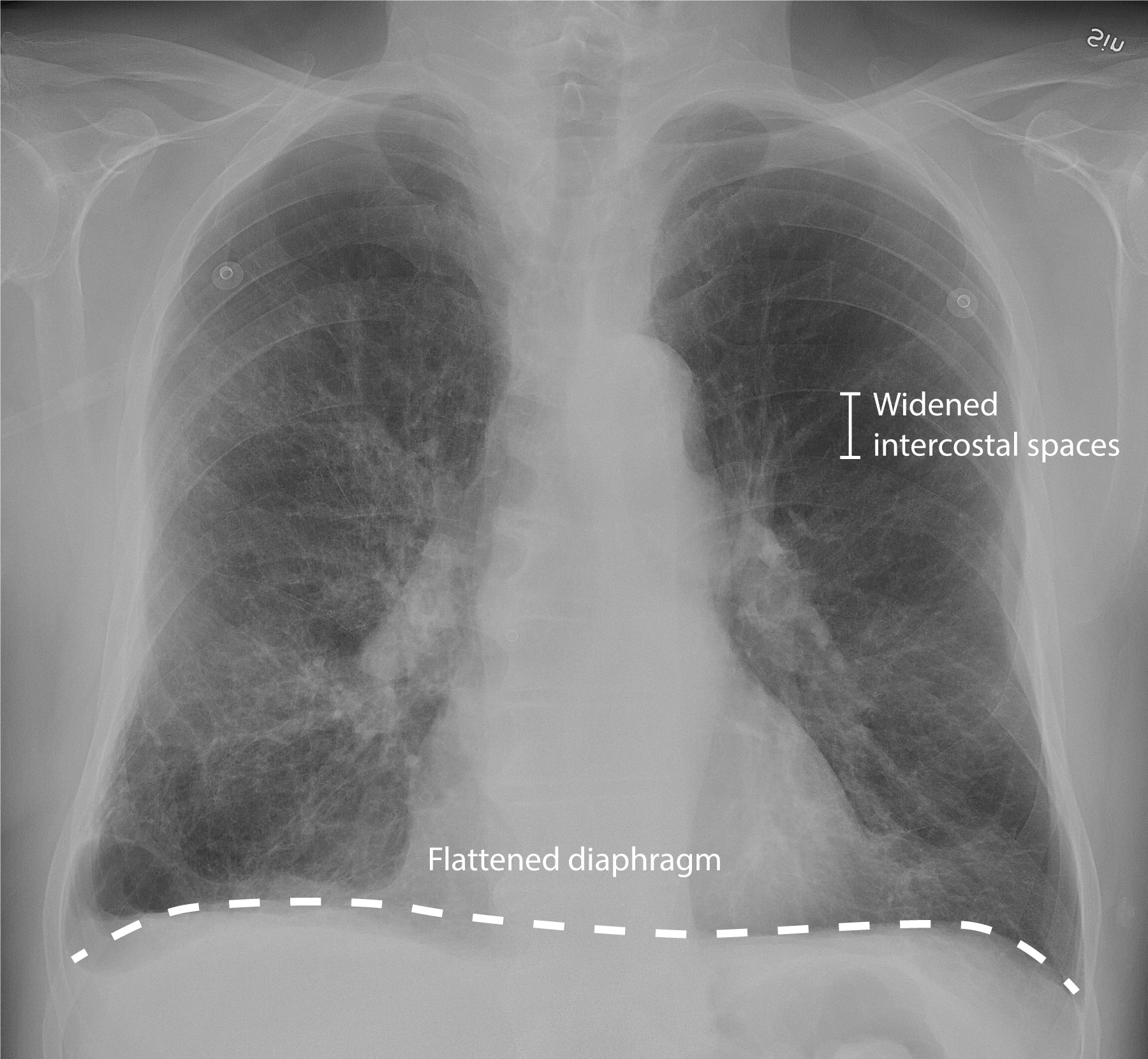
Tórax enENErythema nodosum is an immune-mediated panniculitis (inflammation of the subcutaneous fat) caused by a type IV (delayed-type) hypersensitivity reaction. It commonly manifests in young women as tender, erythematous nodules on the shins.Erythema Nodosum tonel
Espacios intercostales amplios
Costillas horizontales
Diafragma aplanado y bajo
Hiperlucencia
Marcas vasculares periféricas atenuadas (debido a la destrucción del parénquima)
Radiografía de tórax de un hombre de 81 años con enfermedad pulmonar obstructiva crónica (EPOC) y neumonía concomitante
Imagen:“Chest X-ray of an 81-year-old man with chronic obstructive pulmonary disease (COPD), and concomitant pneumonia” por Mikael Häggström, M.D. Licencia: CC0 1.0
Radiografía de tórax de un hombre de 81 años con enfermedad pulmonar obstructiva crónica (EPOC) que presenta principalmente tos productiva: Obsérvese el ensanchamiento de los espacios intercostales, el aplanamiento del diafragma y la opacidad en el lóbulo superior inferior derecho, lo que sugiere una neumonía concomitante.
Dejar de fumar (fundamental para frenar el deterioro de la función pulmonar)
Vacunas para:
Neumonía neumocócica
InfluenzaInfluenzaInfluenza viruses are members of the Orthomyxoviridae family and the causative organisms of influenza, a highly contagious febrile respiratory disease. There are 3 primary influenza viruses (A, B, and C) and various subtypes, which are classified based on their virulent surface antigens, hemagglutinin (HA) and neuraminidase (NA). Influenza typically presents with a fever, myalgia, headache, and symptoms of an upper respiratory infection. Influenza Viruses/Influenza
Rehabilitación pulmonar:
Ejercicio guiado e intervenciones conductuales
El objetivo es mejorar la capacidad funcional.
Terapia de O2:
Si la saturación de O2 es < 88% enENErythema nodosum is an immune-mediated panniculitis (inflammation of the subcutaneous fat) caused by a type IV (delayed-type) hypersensitivity reaction. It commonly manifests in young women as tender, erythematous nodules on the shins.Erythema Nodosum un paciente estable (PO₂ < 55 mm Hg)
Si hay hipertensión pulmonar, insuficiencia cardíaca derecha o policitemia concurrentes
Terapia medica
Broncodilatadores:
De corta duración (se utiliza según sea necesario para el rescate):
Agonistas adrenérgicos beta-2 (e.g., albuterolAlbuterolA short-acting beta-2 adrenergic agonist that is primarily used as a bronchodilator agent to treat asthma.Sympathomimetic Drugs)
Puede aumentar el VEF1 y reducir las exacerbaciones
Corticoides inhalados:
Opciones: budesonida, fluticasona
Pueden producir tanto mejoras leves como efectos adversos
Teofilina (broncodilatador oral)
Mucolíticos
Intervención quirúrgica
La cirugía se reserva para losLOSNeisseria casos graves que no se logran controlar con la terapia médica para mejorar la calidad de vida.
Bulectomía:extirpación de bullas gigantes para aliviar la compresión local
Reducción del volumen pulmonar: resección de las partes más enfermas del pulmón para disminuir la hiperinflación
Trasplante de pulmón: indicado enENErythema nodosum is an immune-mediated panniculitis (inflammation of the subcutaneous fat) caused by a type IV (delayed-type) hypersensitivity reaction. It commonly manifests in young women as tender, erythematous nodules on the shins.Erythema Nodosum la enfermedad pulmonar terminal
Tratamiento de las exacerbaciones agudas
Terapia ambulatoria u hospitalización según la gravedad
Broncodilatadores de acción corta:
Programado cada 4–6 horas
La nebulización continua puede ser necesaria para el broncoespasmo severo.
Esteroides sistémicos
LosLOSNeisseria antibióticos están indicados enENErythema nodosum is an immune-mediated panniculitis (inflammation of the subcutaneous fat) caused by a type IV (delayed-type) hypersensitivity reaction. It commonly manifests in young women as tender, erythematous nodules on the shins.Erythema NodosumlosLOSNeisseria casos de:
Esputo purulento
Evidencia de neumonía
Pacientes que requieren hospitalización
Terapia de O2 controlada para insuficiencia respiratoria aguda:
Cánula nasal
Ventilación no invasiva:
Hipercapnia e hipoxemia
Esfuerzo importante para respirar
Ventilación invasiva:
Insuficiencia respiratoria grave
Puede ser difícil retirar esta terapia enENErythema nodosum is an immune-mediated panniculitis (inflammation of the subcutaneous fat) caused by a type IV (delayed-type) hypersensitivity reaction. It commonly manifests in young women as tender, erythematous nodules on the shins.Erythema Nodosum pacientes con EPOC grave
Complicaciones
Insuficiencia respiratoria
Infecciones respiratorias (neumonía)
Hipertensión pulmonar → cor pulmonaleCor PulmonaleCor pulmonale is right ventricular (RV) dysfunction caused by lung disease that results in pulmonary artery hypertension. The most common cause of cor pulmonale is chronic obstructive pulmonary disease. Dyspnea is the usual presenting symptom. Cor Pulmonale
Complicaciones a largo plazo de losLOSNeisseria esteroides → osteoporosisOsteoporosisOsteoporosis refers to a decrease in bone mass and density leading to an increased number of fractures. There are 2 forms of osteoporosis: primary, which is commonly postmenopausal or senile; and secondary, which is a manifestation of immobilization, underlying medical disorders, or long-term use of certain medications. Osteoporosis
Pérdida de peso o caquexia
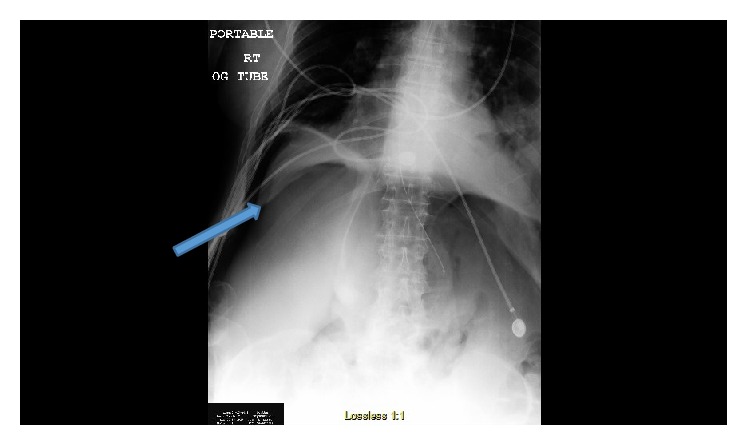
Rotura de bullas → neumotórax espontáneo secundario
Radiografía que muestra un neumotórax derecho en un paciente con enfermedad pulmonar obstructiva crónica (EPOC): Se observa un neumoperitoneo (la flecha señala el aire bajo el diafragma) debido a un defecto diafragmático, que permite que el aire del neumotórax salga a la cavidad abdominal.
Imagen: “Chest/abdomen X-ray showing right pneumothorax and also air under diaphragm suggesting perforated viscus.” por Fernanda Duarte et al. Licencia: CC BY 4.0
AsmaASMAAutoimmune Hepatitis: enfermedad inflamatoria crónica caracterizada por la obstrucción reversible del flujo de aire enENErythema nodosum is an immune-mediated panniculitis (inflammation of the subcutaneous fat) caused by a type IV (delayed-type) hypersensitivity reaction. It commonly manifests in young women as tender, erythematous nodules on the shins.Erythema Nodosum las vías respiratorias inferiores. LosLOSNeisseria pacientes presentan sibilancias intermitentes o persistentes, tosTOSThoracic outlet syndrome (TOS) is a broad term used for a spectrum of syndromes related to the general region of the thoracic outlet, which involves the compression or irritation of elements of the brachial plexus, subclavian artery, or subclavian vein.Thoracic Outlet Syndrome y disnea. El diagnóstico suele confirmarse con una prueba de función pulmonar que muestra un patrón obstructivo pero reversible. El tratamiento varía enENErythema nodosum is an immune-mediated panniculitis (inflammation of the subcutaneous fat) caused by a type IV (delayed-type) hypersensitivity reaction. It commonly manifests in young women as tender, erythematous nodules on the shins.Erythema Nodosum función de la gravedad e incluye broncodilatadores y corticosteroides inhalados para controlar la inflamación.
Bronquiectasias: enfermedad crónica con dilatación y destrucción de losLOSNeisseria bronquios como consecuencia de una inflamación e infección. LosLOSNeisseria síntomas incluyen disnea, tosTOSThoracic outlet syndrome (TOS) is a broad term used for a spectrum of syndromes related to the general region of the thoracic outlet, which involves the compression or irritation of elements of the brachial plexus, subclavian artery, or subclavian vein.Thoracic Outlet Syndrome crónica y esputo purulento. El diagnóstico se realiza por medio de imagenología (radiografías y TC). El tratamiento incluye el uso de broncodilatadores y antibióticos para las exacerbaciones agudas.
Bronquiolitis obliterante: enfermedad crónica y obstructiva de las vías respiratorias pequeñas, generalmente causada por ciclos repetidos de inflamación y cicatrización. LosLOSNeisseria pacientes presentan tosTOSThoracic outlet syndrome (TOS) is a broad term used for a spectrum of syndromes related to the general region of the thoracic outlet, which involves the compression or irritation of elements of the brachial plexus, subclavian artery, or subclavian vein.Thoracic Outlet Syndrome y disnea persistente y progresiva. Las pruebas de función pulmonar se utilizan para el diagnóstico. El tratamiento incluye esteroides y broncodilatadores.
Insuficiencia cardíaca: incapacidad de generar un gasto cardíaco normal para satisfacer las necesidades metabólicas. LosLOSNeisseria pacientes presentan disnea, hipoxia y edemaEdemaEdema is a condition in which excess serous fluid accumulates in the body cavity or interstitial space of connective tissues. Edema is a symptom observed in several medical conditions. It can be categorized into 2 types, namely, peripheral (in the extremities) and internal (in an organ or body cavity). Edema periférico. El BNPBNPA peptide that is secreted by the brain and the heart atria, stored mainly in cardiac ventricular myocardium. It can cause natriuresis; diuresis; vasodilation; and inhibits secretion of renin and aldosterone. It improves heart function. It contains 32 amino acids.Renal Sodium and Water Regulation estará elevado y se puede observar un edemaEdemaEdema is a condition in which excess serous fluid accumulates in the body cavity or interstitial space of connective tissues. Edema is a symptom observed in several medical conditions. It can be categorized into 2 types, namely, peripheral (in the extremities) and internal (in an organ or body cavity). Edema pulmonar enENErythema nodosum is an immune-mediated panniculitis (inflammation of the subcutaneous fat) caused by a type IV (delayed-type) hypersensitivity reaction. It commonly manifests in young women as tender, erythematous nodules on the shins.Erythema Nodosum la radiografía. La ecocardiografía confirma el diagnóstico. El tratamiento se enfoca enENErythema nodosum is an immune-mediated panniculitis (inflammation of the subcutaneous fat) caused by a type IV (delayed-type) hypersensitivity reaction. It commonly manifests in young women as tender, erythematous nodules on the shins.Erythema Nodosum la diuresis y la optimización médica de la función cardíaca con betabloqueadores e inhibidores de la enzima convertidora de angiotensina.
FibrosisFibrosisAny pathological condition where fibrous connective tissue invades any organ, usually as a consequence of inflammation or other injury.Bronchiolitis Obliterans quística: trastorno autosómico recesivo que provoca una disfunción de losLOSNeisseria canales de cloro, lo que da lugar a una mucosidad hiperviscosa y a la acumulación de secreciones. LosLOSNeisseria pacientes suelen tener infecciones respiratorias crónicas, retraso enENErythema nodosum is an immune-mediated panniculitis (inflammation of the subcutaneous fat) caused by a type IV (delayed-type) hypersensitivity reaction. It commonly manifests in young women as tender, erythematous nodules on the shins.Erythema Nodosum el desarrollo e insuficiencia pancreática. El estándar de oro para el diagnóstico es la prueba de cloruro enENErythema nodosum is an immune-mediated panniculitis (inflammation of the subcutaneous fat) caused by a type IV (delayed-type) hypersensitivity reaction. It commonly manifests in young women as tender, erythematous nodules on the shins.Erythema Nodosum el sudor, que puede complementarse con pruebas genéticas. El tratamiento incluye la terapia con un modulador de la conductancia transmembrana de la fibrosisFibrosisAny pathological condition where fibrous connective tissue invades any organ, usually as a consequence of inflammation or other injury.Bronchiolitis Obliterans quística (CFTR, por sus siglas enENErythema nodosum is an immune-mediated panniculitis (inflammation of the subcutaneous fat) caused by a type IV (delayed-type) hypersensitivity reaction. It commonly manifests in young women as tender, erythematous nodules on the shins.Erythema Nodosum inglés) y estrategias específicas por sistemas para la terapia de soporte.
Embolia pulmonar: obstrucción de las arterias pulmonares, a menudo debido a la migración de un trombo desde el sistema venoso profundo. LosLOSNeisseria signos y síntomas incluyen dolorDolorInflammation torácico pleurítico, disnea, taquipnea y taquicardia. LosLOSNeisseria casos severos pueden dar como resultado inestabilidad hemodinámica o paro cardiopulmonar. La angio-TC de tórax es el principal método de diagnóstico. El tratamiento incluye oxigenación, anticoagulación y terapia trombolítica para pacientes inestables.
Mosenifar, Z, Harrington, A., Nikhanj, N.S., and Kamangar, N. (2020). Chronic obstructive pulmonary disease (COPD). In Oppenheimer, J.J. (Ed.), Medscape. Retrieved March 31, 2021, from https://emedicine.medscape.com/article/297664-overview
Agarwarl, A.K., Raja, A., and Brown, B.D. (2021). Chronic obstructive pulmonary disease. [online] StatPearls. Retrieved March 31, 2021, from https://www.ncbi.nlm.nih.gov/books/NBK559281/
Pauwels, R.A., Buist, A.S., Ma, P., Jenkins, C.R., Hurd, S.S. GOLD Scientific Committee. Global strategy for the diagnosis, management, and prevention of chronic obstructive pulmonary disease: National Heart, Lung, and Blood Institute and World Health Organization Global Initiative for Chronic Obstructive Lung Disease (GOLD): executive summary. Respir Care. 2001;46(8):798-825.
¡Crea tu cuenta gratis o inicia una sesión para seguir leyendo!
Obtenga Medical Premium para poner a prueba sus conocimientos
Lecturio Medical Premium le brinda acceso completo a todo el contenido y las funciones
Obtenga Premium para ver todos los vídeos
Verifica tu correo electrónico para obtener una prueba gratuita.
Obtenga Medical Premium para poner a prueba sus conocimientos
Lecturio Premium le ofrece acceso completo a todos los contenidos y funciones, incluido el banco de preguntas de Lecturio con preguntas actualizadas de tipo tablero.