
Domina Conceptos Médicos

Estudia para la escuela de medicina y tus examenes con Lecturio.

Enfermedad de Wilson

La enfermedad de Wilson (degeneración hepatolenticular) es un trastorno autosómico recesivo causado por varias mutaciones en EN Erythema nodosum is an immune-mediated panniculitis (inflammation of the subcutaneous fat) caused by a type IV (delayed-type) hypersensitivity reaction. It commonly manifests in young women as tender, erythematous nodules on the shins. Erythema Nodosum el gen ATP7B, que regula el transporte de cobre dentro de los LOS Neisseria hepatocitos. La disfunción de este mecanismo de transporte conduce a acumulaciones anormales de cobre en EN Erythema nodosum is an immune-mediated panniculitis (inflammation of the subcutaneous fat) caused by a type IV (delayed-type) hypersensitivity reaction. It commonly manifests in young women as tender, erythematous nodules on the shins. Erythema Nodosum el hígado, el cerebro, los LOS Neisseria ojos y otros órganos, con los LOS Neisseria consiguientes trastornos; hepáticos, neurológicos y psiquiátricos importantes y expresados de forma variable Variable Variables represent information about something that can change. The design of the measurement scales, or of the methods for obtaining information, will determine the data gathered and the characteristics of that data. As a result, a variable can be qualitative or quantitative, and may be further classified into subgroups. Types of Variables. La afectación hepática puede manifestarse como hepatitis, insuficiencia hepática o cirrosis, mientras que la afectación de los LOS Neisseria ganglios basales provoca signos extrapiramidales. La mayoría de los LOS Neisseria pacientes son diagnosticados entre los LOS Neisseria 5 y los LOS Neisseria 35 años (media: 13 años). El diagnóstico se establece si el paciente tiene ceruloplasmina plasmática baja, depósitos de cobre en EN Erythema nodosum is an immune-mediated panniculitis (inflammation of the subcutaneous fat) caused by a type IV (delayed-type) hypersensitivity reaction. It commonly manifests in young women as tender, erythematous nodules on the shins. Erythema Nodosum la córnea (anillos de Kayser-Fleischer) y niveles elevados de cobre en EN Erythema nodosum is an immune-mediated panniculitis (inflammation of the subcutaneous fat) caused by a type IV (delayed-type) hypersensitivity reaction. It commonly manifests in young women as tender, erythematous nodules on the shins. Erythema Nodosum la orina. Sin embargo, a menudo se necesitan otras pruebas, ya que no todos los LOS Neisseria pacientes tendrán todos estos hallazgos. El pronóstico es bueno para pacientes sin enfermedad hepática avanzada y que son tratados con los LOS Neisseria agentes quelantes penicilamina o trientina. La enfermedad de Wilson no tratada es en EN Erythema nodosum is an immune-mediated panniculitis (inflammation of the subcutaneous fat) caused by a type IV (delayed-type) hypersensitivity reaction. It commonly manifests in young women as tender, erythematous nodules on the shins. Erythema Nodosum última instancia fatal, y los LOS Neisseria pacientes mueren por cirrosis, insuficiencia hepática aguda o complicaciones secundarias a una enfermedad neurológica progresiva.

Last updated: Dec 15, 2025

Editorial responsibility: Stanley Oiseth, Lindsay Jones, Evelin Maza

Epidemiología y Fisiopatología

Epidemiología

  • Prevalencia a nivel mundial: 1 por cada 30 000 nacidos vivos
    • Un cribado poblacional reciente mediante secuenciación molecular sugiere una prevalencia tan frecuente como 1 entre 7.000 y 10.000
    • Se han identificado más de 500 mutaciones diferentes en EN Erythema nodosum is an immune-mediated panniculitis (inflammation of the subcutaneous fat) caused by a type IV (delayed-type) hypersensitivity reaction. It commonly manifests in young women as tender, erythematous nodules on the shins. Erythema Nodosum el gen ATP7B, con diversas patogenicidades en EN Erythema nodosum is an immune-mediated panniculitis (inflammation of the subcutaneous fat) caused by a type IV (delayed-type) hypersensitivity reaction. It commonly manifests in young women as tender, erythematous nodules on the shins. Erythema Nodosum diversas variantes genéticas.
  • La edad típica de inicio es de 3-35 años (aunque se presentan casos fuera de este rango)
    • La edad media en EN Erythema nodosum is an immune-mediated panniculitis (inflammation of the subcutaneous fat) caused by a type IV (delayed-type) hypersensitivity reaction. It commonly manifests in young women as tender, erythematous nodules on the shins. Erythema Nodosum el momento del diagnóstico es de 13 años, pero el inicio puede variar desde la primera infancia (desde los LOS Neisseria 2 años) hasta después de los LOS Neisseria 60 años.

Fisiopatología

  • Metabolismo normal del cobre:
    • El cobre se absorbe en EN Erythema nodosum is an immune-mediated panniculitis (inflammation of the subcutaneous fat) caused by a type IV (delayed-type) hypersensitivity reaction. It commonly manifests in young women as tender, erythematous nodules on the shins. Erythema Nodosum el estómago y el duodeno → se une a la albúmina circulante → es absorbido por varios tejidos
    • El exceso de cobre se excreta en EN Erythema nodosum is an immune-mediated panniculitis (inflammation of the subcutaneous fat) caused by a type IV (delayed-type) hypersensitivity reaction. It commonly manifests in young women as tender, erythematous nodules on the shins. Erythema Nodosum la bilis → se elimina en EN Erythema nodosum is an immune-mediated panniculitis (inflammation of the subcutaneous fat) caused by a type IV (delayed-type) hypersensitivity reaction. It commonly manifests in young women as tender, erythematous nodules on the shins. Erythema Nodosum las heces
  • La enfermedad de Wilson es un trastorno autosómico recesivo causado por mutaciones en EN Erythema nodosum is an immune-mediated panniculitis (inflammation of the subcutaneous fat) caused by a type IV (delayed-type) hypersensitivity reaction. It commonly manifests in young women as tender, erythematous nodules on the shins. Erythema Nodosum el gen ATP7B que se encuentra en EN Erythema nodosum is an immune-mediated panniculitis (inflammation of the subcutaneous fat) caused by a type IV (delayed-type) hypersensitivity reaction. It commonly manifests in young women as tender, erythematous nodules on the shins. Erythema Nodosum el cromosoma 13.
    • Codifica una ATPasa transportadora de cobre unida a la membrana
      • Regula el transporte de cobre dentro de los LOS Neisseria hepatocitos
    • La deficiencia o disfunción de la proteína ATP7B causa lo siguiente:
      • Deterioro de la excreción de cobre en EN Erythema nodosum is an immune-mediated panniculitis (inflammation of the subcutaneous fat) caused by a type IV (delayed-type) hypersensitivity reaction. It commonly manifests in young women as tender, erythematous nodules on the shins. Erythema Nodosum la bilis → acumulación hepática de cobre → toxicidad por cobre secundaria a daño oxidante al AL Amyloidosis hígado
      • Disminución de la incorporación de cobre a la apoceruloplasmina → el cobre se acumula en EN Erythema nodosum is an immune-mediated panniculitis (inflammation of the subcutaneous fat) caused by a type IV (delayed-type) hypersensitivity reaction. It commonly manifests in young women as tender, erythematous nodules on the shins. Erythema Nodosum tejidos con bajos niveles circulantes de ceruloplasmina (proteína de transporte de cobre circulante)
    • Las mutaciones diferentes/variantes en EN Erythema nodosum is an immune-mediated panniculitis (inflammation of the subcutaneous fat) caused by a type IV (delayed-type) hypersensitivity reaction. It commonly manifests in young women as tender, erythematous nodules on the shins. Erythema Nodosum el gen ATP7B ayudan a explicar algunas de las diferentes manifestaciones clínicas.
  • A medida que avanza la enfermedad, el cobre se acumula en EN Erythema nodosum is an immune-mediated panniculitis (inflammation of the subcutaneous fat) caused by a type IV (delayed-type) hypersensitivity reaction. It commonly manifests in young women as tender, erythematous nodules on the shins. Erythema Nodosum:
    • Hígado
    • Cerebro
    • Córnea
    • Riñones

Presentación Clínica

La enfermedad de Wilson generalmente se presenta en EN Erythema nodosum is an immune-mediated panniculitis (inflammation of the subcutaneous fat) caused by a type IV (delayed-type) hypersensitivity reaction. It commonly manifests in young women as tender, erythematous nodules on the shins. Erythema Nodosum niños y adultos jóvenes. Raramente se manifiesta después de los LOS Neisseria 40 años de edad. Las manifestaciones son principalmente hepáticas, neurológicas y psiquiátricas y pueden incluir:
  • Enfermedades hepáticas
    • Hepatomegalia +/– esplenomegalia
    • Ascitis
    • Dolor Dolor Inflammation abdominal
    • Ictericia
    • Puede incluir hepatitis, lesión hepática aguda o cirrosis
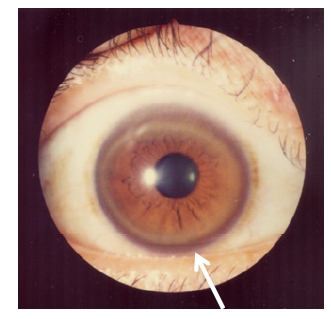
  • Anillos de Kayser-Fleischer
    • Depósitos de cobre en EN Erythema nodosum is an immune-mediated panniculitis (inflammation of the subcutaneous fat) caused by a type IV (delayed-type) hypersensitivity reaction. It commonly manifests in young women as tender, erythematous nodules on the shins. Erythema Nodosum la membrana de Descemet de la córnea, que se manifiestan como anillos de color marrón verdoso que rodean el iris.
    • Presentes en EN Erythema nodosum is an immune-mediated panniculitis (inflammation of the subcutaneous fat) caused by a type IV (delayed-type) hypersensitivity reaction. It commonly manifests in young women as tender, erythematous nodules on the shins. Erythema Nodosum:
      • > 90% de los LOS Neisseria pacientes con presentaciones neurológicas o psiquiátricas
      • 50%–60% de pacientes con enfermedad hepática
  • Síntomas neurológicos: Los LOS Neisseria depósitos de cobre dentro del cerebro causan alteraciones motoras extrapiramidales.
    • En los ganglios basales → asterixis y síntomas parecidos al parkinsonismo (Nótese: el término “degeneración lenticular” utilizado en EN Erythema nodosum is an immune-mediated panniculitis (inflammation of the subcutaneous fat) caused by a type IV (delayed-type) hypersensitivity reaction. It commonly manifests in young women as tender, erythematous nodules on the shins. Erythema Nodosum la descripción original de Wilson, que era estudiante de medicina en EN Erythema nodosum is an immune-mediated panniculitis (inflammation of the subcutaneous fat) caused by a type IV (delayed-type) hypersensitivity reaction. It commonly manifests in young women as tender, erythematous nodules on the shins. Erythema Nodosum ese momento, se refiere al AL Amyloidosis núcleo lenticular [putamen + globo pálido] parte de los LOS Neisseria ganglios basales.)
    • En EN Erythema nodosum is an immune-mediated panniculitis (inflammation of the subcutaneous fat) caused by a type IV (delayed-type) hypersensitivity reaction. It commonly manifests in young women as tender, erythematous nodules on the shins. Erythema Nodosum el cerebelo → disartria, disfagia, descoordinación y ataxia Ataxia Impairment of the ability to perform smoothly coordinated voluntary movements. This condition may affect the limbs, trunk, eyes, pharynx, larynx, and other structures. Ataxia may result from impaired sensory or motor function. Sensory ataxia may result from posterior column injury or peripheral nerve diseases. Motor ataxia may be associated with cerebellar diseases; cerebral cortex diseases; thalamic diseases; basal ganglia diseases; injury to the red nucleus; and other conditions. Ataxia-telangiectasia
    • En EN Erythema nodosum is an immune-mediated panniculitis (inflammation of the subcutaneous fat) caused by a type IV (delayed-type) hypersensitivity reaction. It commonly manifests in young women as tender, erythematous nodules on the shins. Erythema Nodosum el cerebro → psicosis, demencia y desórdenes del afecto
  • Síntomas psiquiátricos: depresión, irritabilidad o cambios de personalidad
  • Enfermedad hemolítica: anemia Anemia Anemia is a condition in which individuals have low Hb levels, which can arise from various causes. Anemia is accompanied by a reduced number of RBCs and may manifest with fatigue, shortness of breath, pallor, and weakness. Subtypes are classified by the size of RBCs, chronicity, and etiology. Anemia: Overview and Types hemolítica Coombs negativo, a menudo asociada con ictericia en EN Erythema nodosum is an immune-mediated panniculitis (inflammation of the subcutaneous fat) caused by a type IV (delayed-type) hypersensitivity reaction. It commonly manifests in young women as tender, erythematous nodules on the shins. Erythema Nodosum la presentación. La anemia Anemia Anemia is a condition in which individuals have low Hb levels, which can arise from various causes. Anemia is accompanied by a reduced number of RBCs and may manifest with fatigue, shortness of breath, pallor, and weakness. Subtypes are classified by the size of RBCs, chronicity, and etiology. Anemia: Overview and Types hemolítica se observa con frecuencia en EN Erythema nodosum is an immune-mediated panniculitis (inflammation of the subcutaneous fat) caused by a type IV (delayed-type) hypersensitivity reaction. It commonly manifests in young women as tender, erythematous nodules on the shins. Erythema Nodosum la insuficiencia hepática aguda debida a la enfermedad de Wilson, pero también se puede observar sin insuficiencia hepática como anemia Anemia Anemia is a condition in which individuals have low Hb levels, which can arise from various causes. Anemia is accompanied by a reduced number of RBCs and may manifest with fatigue, shortness of breath, pallor, and weakness. Subtypes are classified by the size of RBCs, chronicity, and etiology. Anemia: Overview and Types hemolítica de bajo grado, crónica o episódica.
Enfermedad de Wilson Anillos de Kayser-Fleischer

Anillo de Kayser-Fleischer: depósito de cobre en la córnea

Imagen: “Kayser-Fleischer rings” por Bentham Science Publishers, 2012.  Licencia: CC-BY-2.5

Mnemotécnia

Presentación clínica de la enfermedad de Wilson: ABCD

Diagnóstico y Tratamiento

Diagnóstico

  • Las pruebas para la enfermedad de Wilson deben considerarse en EN Erythema nodosum is an immune-mediated panniculitis (inflammation of the subcutaneous fat) caused by a type IV (delayed-type) hypersensitivity reaction. It commonly manifests in young women as tender, erythematous nodules on the shins. Erythema Nodosum cualquier paciente con anomalías hepáticas, neurológicas o psiquiátricas inexplicables, y los LOS Neisseria familiares de primer grado de los LOS Neisseria pacientes con enfermedad de Wilson deben someterse a pruebas de detección de la enfermedad.
  • Examen físico: los LOS Neisseria anillos de Kayser-Fleischer generalmente solo se ven con el examen con lámpara de hendidura (presente solo en EN Erythema nodosum is an immune-mediated panniculitis (inflammation of the subcutaneous fat) caused by a type IV (delayed-type) hypersensitivity reaction. It commonly manifests in young women as tender, erythematous nodules on the shins. Erythema Nodosum 50%–60% de aquellos con compromiso hepático aislado, y en EN Erythema nodosum is an immune-mediated panniculitis (inflammation of the subcutaneous fat) caused by a type IV (delayed-type) hypersensitivity reaction. It commonly manifests in young women as tender, erythematous nodules on the shins. Erythema Nodosum > 90% de los LOS Neisseria pacientes con afectación neurológica).
  • Abordaje inicial:
    • Transaminitis Transaminitis Tick-borne Encephalitis Virus con relación AST AST Enzymes of the transferase class that catalyze the conversion of l-aspartate and 2-ketoglutarate to oxaloacetate and l-glutamate. Liver Function Tests a ALT ALT An enzyme that catalyzes the conversion of l-alanine and 2-oxoglutarate to pyruvate and l-glutamate. Liver Function Tests > 2
    • Ceruloplasmina sérica disminuida
    • Excreción urinaria de cobre en EN Erythema nodosum is an immune-mediated panniculitis (inflammation of the subcutaneous fat) caused by a type IV (delayed-type) hypersensitivity reaction. It commonly manifests in young women as tender, erythematous nodules on the shins. Erythema Nodosum 24 horas elevada
    • Hemograma completo
    • Determinación de cobre intercambiable relativo, si está disponible
    • Examen con lámpara de hendidura para anillos de Kayser-Fleischer
  • La determinación de cobre intercambiable relativo se ha HA Hemolytic anemia (HA) is the term given to a large group of anemias that are caused by the premature destruction/hemolysis of circulating red blood cells (RBCs). Hemolysis can occur within (intravascular hemolysis) or outside the blood vessels (extravascular hemolysis). Hemolytic Anemia convertido en EN Erythema nodosum is an immune-mediated panniculitis (inflammation of the subcutaneous fat) caused by a type IV (delayed-type) hypersensitivity reaction. It commonly manifests in young women as tender, erythematous nodules on the shins. Erythema Nodosum un biomarcador diagnóstico de alta precisión, con una sensibilidad y especificidad cercanas al AL Amyloidosis 100 % cuando la proporción de cobre intercambiable con respecto al AL Amyloidosis cobre sérico total supera el 15-18,5 %.
  • Imagenología: el ultrasonido puede mostrar:
    • Esteatosis hepática
    • Hepatomegalia o esplenomegalia
    • Hallazgos sugestivos de cirrosis
  • Pruebas estándar de oro:
    • Sistema de puntuación de Leipzig: puntuaciones ≥4 indican enfermedad de Wilson muy probable, puntuaciones de 3 indican diagnóstico probable que requiere pruebas adicionales, puntuaciones ≤2 indican enfermedad de Wilson improbable
    • Biopsia hepática: aumento de cobre detectado por ensayo cuantitativo (se usa si el estudio inicial es indeterminado)
      • >250 mcg/g de peso seco establece el diagnóstico
      • <50 mcg/g de peso seco excluye el diagnóstico
    • Análisis genético molecular para variantes patógenas bialélicas de ATP7B

Tratamiento

  • Estilo de vida:
    • Dieta baja en EN Erythema nodosum is an immune-mediated panniculitis (inflammation of the subcutaneous fat) caused by a type IV (delayed-type) hypersensitivity reaction. It commonly manifests in young women as tender, erythematous nodules on the shins. Erythema Nodosum cobre: evite los LOS Neisseria alimentos ricos en EN Erythema nodosum is an immune-mediated panniculitis (inflammation of the subcutaneous fat) caused by a type IV (delayed-type) hypersensitivity reaction. It commonly manifests in young women as tender, erythematous nodules on the shins. Erythema Nodosum cobre, como las vísceras, los LOS Neisseria mariscos, las nueces y el chocolate.
  • Tratamiento médico (obligatorio):
    • Quelación de cobre con penicilamina o trientina
    • Si se tolera mal: zinc Zinc A metallic element of atomic number 30 and atomic weight 65. 38. It is a necessary trace element in the diet, forming an essential part of many enzymes, and playing an important role in protein synthesis and in cell division. Zinc deficiency is associated with anemia, short stature, hypogonadism, impaired wound healing, and geophagia. It is known by the symbol zn. Trace Elements oral
  • El trasplante de hígado puede ser necesario en EN Erythema nodosum is an immune-mediated panniculitis (inflammation of the subcutaneous fat) caused by a type IV (delayed-type) hypersensitivity reaction. It commonly manifests in young women as tender, erythematous nodules on the shins. Erythema Nodosum casos graves, como insuficiencia hepática fulminante.

Pronóstico

  • El pronóstico para los LOS Neisseria pacientes que logran la desintoxicación de cobre antes de desarrollar cirrosis y luego mantienen un equilibrio normal de cobre es excelente, con una supervivencia que no difiere significativamente de la de la población general.
  • La enfermedad de Wilson no tratada es mortal debido a la acumulación continua de cobre, y los LOS Neisseria pacientes mueren por cirrosis, insuficiencia hepática aguda o complicaciones debidas a una enfermedad neurológica progresiva.
  • La esperanza de vida es desconocida pero es variable Variable Variables represent information about something that can change. The design of the measurement scales, or of the methods for obtaining information, will determine the data gathered and the characteristics of that data. As a result, a variable can be qualitative or quantitative, and may be further classified into subgroups. Types of Variables. En EN Erythema nodosum is an immune-mediated panniculitis (inflammation of the subcutaneous fat) caused by a type IV (delayed-type) hypersensitivity reaction. It commonly manifests in young women as tender, erythematous nodules on the shins. Erythema Nodosum un estudio se informó una media de supervivencia aproximada de 5 años después de la aparición de los LOS Neisseria síntomas neurológicos. De los LOS Neisseria pacientes que desarrollan insuficiencia hepática aguda debido a la enfermedad de Wilson, el 95% muere en EN Erythema nodosum is an immune-mediated panniculitis (inflammation of the subcutaneous fat) caused by a type IV (delayed-type) hypersensitivity reaction. It commonly manifests in young women as tender, erythematous nodules on the shins. Erythema Nodosum días o semanas sin un trasplante de hígado.
  • La supervivencia con tratamiento es excelente, incluso en EN Erythema nodosum is an immune-mediated panniculitis (inflammation of the subcutaneous fat) caused by a type IV (delayed-type) hypersensitivity reaction. It commonly manifests in young women as tender, erythematous nodules on the shins. Erythema Nodosum presencia de daño hepático (pero no si la enfermedad hepática está avanzada). Se requiere tratamiento de por vida.

Diagnóstico Diferencial

  • Enfermedad de Huntington: también puede presentarse con manifestaciones neuropsiquiátricas en EN Erythema nodosum is an immune-mediated panniculitis (inflammation of the subcutaneous fat) caused by a type IV (delayed-type) hypersensitivity reaction. It commonly manifests in young women as tender, erythematous nodules on the shins. Erythema Nodosum un paciente < 40 años de edad. Los LOS Neisseria síntomas incluyen corea, atetosis, agresión, depresión y demencia. La enfermedad de Huntington es causada por una repetición autosómica dominante de trinucleótidos (CAG) en EN Erythema nodosum is an immune-mediated panniculitis (inflammation of the subcutaneous fat) caused by a type IV (delayed-type) hypersensitivity reaction. It commonly manifests in young women as tender, erythematous nodules on the shins. Erythema Nodosum el cromosoma 4. La imagenología cerebral muestra atrofia del caudado y el putamen. Los LOS Neisseria anillos de Kayser-Fleischer no se ven en EN Erythema nodosum is an immune-mediated panniculitis (inflammation of the subcutaneous fat) caused by a type IV (delayed-type) hypersensitivity reaction. It commonly manifests in young women as tender, erythematous nodules on the shins. Erythema Nodosum la enfermedad de Huntington.
  • Enfermedad de Parkinson: también puede presentarse con las siguientes manifestaciones neuropsiquiátricas: temblor de conteo de píldoras, rigidez de rueda dentada, bradicinesia, inestabilidad postural y marcha arrastrando los LOS Neisseria pies. La enfermedad de Parkinson se asocia con la pérdida de neuronas dopaminérgicas de la sustancia negra. La histología muestra depósitos de α-sinucleína (inclusiones eosinofílicas intracelulares). Los LOS Neisseria anillos de Kayser-Fleischer no se ven en EN Erythema nodosum is an immune-mediated panniculitis (inflammation of the subcutaneous fat) caused by a type IV (delayed-type) hypersensitivity reaction. It commonly manifests in young women as tender, erythematous nodules on the shins. Erythema Nodosum la enfermedad de Parkinson.
  • Hepatitis debida a otras causas (e.g., alcohol, paracetamol paracetamol Acetaminophen is an over-the-counter nonopioid analgesic and antipyretic medication and the most commonly used analgesic worldwide. Despite the widespread use of acetaminophen, its mechanism of action is not entirely understood. Acetaminophen): las manifestaciones neuropsiquiátricas de la enfermedad de Wilson ayudan a diferenciarla de otras causas de hepatitis (aunque la encefalopatía hepática puede asociarse con insuficiencia hepática). Los LOS Neisseria antecedentes, los LOS Neisseria análisis de laboratorio y la imagenología puede ayudar a diferenciar las causas de la hepatitis de la enfermedad de Wilson.

Referencias

  1. Schilsky, M. (2023). Wilson disease: clinical manifestations, diagnosis, and natural history. UpToDate. Retrieved May 25, 2025, from https://www.uptodate.com/contents/wilson-disease-clinical-manifestations-diagnosis-and-natural-history
  2. Kasper, D. L., Braunwald, F. (2017). Harrison’s Principle of Internal Medicine (19th ed., vol. I, pp. 2519–2520).
  3. Członkowska, A., Litwin, T., Dusek, P., Ferenci, P., Lutsenko, S., Medici, V., Rybakowski, J. K., Weiss, K. H., & Schilsky, M. L. (2018). Wilson disease. Nature reviews. Disease primers, 4(1), 21. https://doi.org/10.1038/s41572-018-0018-3
  4. Kumar, M., Gaharwar, U., Paul, S., et al. (2020) WilsonGen a comprehensive clinically annotated genomic variant resource for Wilson’s disease. Scientific Reports 10, 9037. https://doi.org/10.1038/s41598-020-66099-2
  5. Hermann W. (2019). Classification and differential diagnosis of Wilson’s disease. Annals of Translational Medicine, 7(Suppl 2), S63. https://doi.org/10.21037/atm.2019.02.07
  6. Kasztelan-Szczerbinska, B., Cichoz-Lach, H. (2021). Wilson’s disease: an update on the diagnostic workup and management. Journal of Clinical Medicine, 10(21), 5097. https://doi.org/10.3390/jcm10215097
  7. Schilsky, M. L., Roberts, E. A., Bronstein, J. M., Dhawan, A., Hamilton, J. P., Rivard, A. M., Washington, M. K., Weiss, K. H., & Zimbrean, P. C. (2023). A multidisciplinary approach to the diagnosis and management of Wilson disease: Executive summary of the 2022 Practice Guidance on Wilson disease from the American Association for the Study of Liver Diseases. Hepatology (Baltimore, Md.), 77(4), 1428–1455. https://doi.org/10.1002/hep.32805
  8. Gao, J., Brackley, S., & Mann, J. P. (2019). The global prevalence of Wilson disease from next-generation sequencing data. Genetics in medicine : official journal of the American College of Medical Genetics, 21(5), 1155–1163. https://doi.org/10.1038/s41436-018-0309-9
  9. Basan, N. M., Sheikh Hassan, M., Gökhan, Z., Nur Alper, S., Yaşar, S. Ş., Gür, T., & Köksal, A. (2024). Usefulness of the Leipzig Score in the Diagnosis of Wilson’s Disease – A Diagnostically Challenging Case Report. International medical case reports journal, 17, 819–822. https://doi.org/10.2147/IMCRJ.S491888
  10. Alkhouri, N., Gonzalez-Peralta, R. P., & Medici, V. (2023). Wilson disease: A summary of the updated AASLD Practice Guidance. Hepatology Communications, 7(6), e0150. https://doi.org/10.1097/HC9.0000000000000150
  11. European Association for the Study of the Liver. (2025). EASL-ERN Clinical Practice Guidelines on Wilson’s disease. Journal of Hepatology, 82(4), 639-674. https://doi.org/10.1016/j.jhep.2024.11.007
  12. Feldman, M., Friedman, L. S., & Brandt, L. J. (Eds.). (2021). Sleisenger and Fordtran’s gastrointestinal and liver disease: Pathophysiology, diagnosis, management (11th ed.). Elsevier. [Chapter on Wilson Disease]
  13. Jameson, J. L., Fauci, A. S., Kasper, D. L., Hauser, S. L., Longo, D. L., & Loscalzo, J. (Eds.). (2022). Harrison’s principles of internal medicine (21st ed.). McGraw-Hill Education. [Chapter on Wilson Disease]

¡Crea tu cuenta gratis o inicia una sesión para seguir leyendo!

Regístrate ahora y obtén acceso gratuito a Lecturio con páginas de concepto, videos médicos y cuestionarios para tu educación médica.

User Reviews

Que tengas una sesión de estudio alegre y navideña 🎁 Ahorra 50% en todos los planes >>

Details