Domina Conceptos Médicos

Estudia para la escuela de medicina y tus examenes con Lecturio.

Enfermedad De Hirschsprung

La enfermedad de Hirschsprung, también conocida como aganglionosis congénita o megacolon Megacolon Megacolon is a severe, abnormal dilatation of the colon, and is classified as acute or chronic. There are many etiologies of megacolon, including neuropathic and dysmotility conditions, severe infections, ischemia, and inflammatory bowel disease. Megacolon congénito, es una anomalía congénita del colon Colon The large intestines constitute the last portion of the digestive system. The large intestine consists of the cecum, appendix, colon (with ascending, transverse, descending, and sigmoid segments), rectum, and anal canal. The primary function of the colon is to remove water and compact the stool prior to expulsion from the body via the rectum and anal canal. Colon, Cecum, and Appendix: Anatomy causada por la incapacidad de las células ganglionares derivadas de la cresta neural para migrar al AL Amyloidosis colon Colon The large intestines constitute the last portion of the digestive system. The large intestine consists of the cecum, appendix, colon (with ascending, transverse, descending, and sigmoid segments), rectum, and anal canal. The primary function of the colon is to remove water and compact the stool prior to expulsion from the body via the rectum and anal canal. Colon, Cecum, and Appendix: Anatomy distal. La falta de inervación afecta siempre al AL Amyloidosis recto y se extiende de forma proximal y contigua a distancias variables. La mayoría de los LOS Neisseria casos se diagnostican en EN Erythema nodosum is an immune-mediated panniculitis (inflammation of the subcutaneous fat) caused by a type IV (delayed-type) hypersensitivity reaction. It commonly manifests in young women as tender, erythematous nodules on the shins. Erythema Nodosum el periodo neonatal, con una tríada clásica de síntomas que incluye retraso en EN Erythema nodosum is an immune-mediated panniculitis (inflammation of the subcutaneous fat) caused by a type IV (delayed-type) hypersensitivity reaction. It commonly manifests in young women as tender, erythematous nodules on the shins. Erythema Nodosum la expulsión del meconio, distensión abdominal y vómitos biliosos. Los LOS Neisseria individuos con grados menos graves de obstrucción funcional pueden no ser diagnosticados hasta más tarde en EN Erythema nodosum is an immune-mediated panniculitis (inflammation of the subcutaneous fat) caused by a type IV (delayed-type) hypersensitivity reaction. It commonly manifests in young women as tender, erythematous nodules on the shins. Erythema Nodosum la infancia o en EN Erythema nodosum is an immune-mediated panniculitis (inflammation of the subcutaneous fat) caused by a type IV (delayed-type) hypersensitivity reaction. It commonly manifests in young women as tender, erythematous nodules on the shins. Erythema Nodosum la niñez, cuando presentan síntomas de estreñimiento crónico refractario, distensión abdominal y retraso en EN Erythema nodosum is an immune-mediated panniculitis (inflammation of the subcutaneous fat) caused by a type IV (delayed-type) hypersensitivity reaction. It commonly manifests in young women as tender, erythematous nodules on the shins. Erythema Nodosum el crecimiento. El diagnóstico de la enfermedad de Hirschsprung se confirma por la ausencia de células ganglionares en EN Erythema nodosum is an immune-mediated panniculitis (inflammation of the subcutaneous fat) caused by a type IV (delayed-type) hypersensitivity reaction. It commonly manifests in young women as tender, erythematous nodules on the shins. Erythema Nodosum la biopsia rectal tras la realización de pruebas no invasivas como la manometría anorrectal y el uso de enema de contraste. La resección quirúrgica del segmento agangliónico es el tratamiento estándar.

Last updated: Dec 15, 2025

Editorial responsibility: Stanley Oiseth, Lindsay Jones, Evelin Maza

Descripción General

Definición

La enfermedad de Hirschsprung, también conocida como aganglionosis congénita o megacolon Megacolon Megacolon is a severe, abnormal dilatation of the colon, and is classified as acute or chronic. There are many etiologies of megacolon, including neuropathic and dysmotility conditions, severe infections, ischemia, and inflammatory bowel disease. Megacolon congénito, es una anomalía congénita del colon Colon The large intestines constitute the last portion of the digestive system. The large intestine consists of the cecum, appendix, colon (with ascending, transverse, descending, and sigmoid segments), rectum, and anal canal. The primary function of the colon is to remove water and compact the stool prior to expulsion from the body via the rectum and anal canal. Colon, Cecum, and Appendix: Anatomy causada por la incapacidad de las células ganglionares derivadas de la cresta neural para migrar al AL Amyloidosis colon Colon The large intestines constitute the last portion of the digestive system. The large intestine consists of the cecum, appendix, colon (with ascending, transverse, descending, and sigmoid segments), rectum, and anal canal. The primary function of the colon is to remove water and compact the stool prior to expulsion from the body via the rectum and anal canal. Colon, Cecum, and Appendix: Anatomy distal.

Clasificación

  • Esporádica:
    • Lo más común (70%)
    • ⅓ de los casos tienen > 1 mutaciones del gen de la tirosina quinasa receptora.
  • Formas familiares: aproximadamente la mitad de los casos tienen > 1 mutaciones del gen de la tirosina quinasa receptora.
  • Como parte de un síndrome genético:
    • Síndrome de Down/trisomía 21:
      • Aproximadamente el 10% de los LOS Neisseria individuos con enfermedad de Hirschsprung tienen síndrome de Down.
      • < 1% de los LOS Neisseria individuos con síndrome de Down tienen enfermedad de Hirschsprung.
    • Síndrome de Waardenburg:
      • Trastorno pigmentario hereditario autosómico dominante
      • El 100% de los LOS Neisseria individuos con síndrome de Waardenburg tipo 4 tienen enfermedad de Hirschsprung.
    • Síndrome de Mowat-Wilson:
      • Discapacidad intelectual, microcefalia
      • Entre el 41% y el 71% de los LOS Neisseria casos tienen enfermedad de Hirschsprung.
    • Neoplasia endocrina múltiple tipo 2A: cáncer medular de tiroides y feocromocitoma con o sin hiperparatiroidismo primario

Epidemiología

  • La incidencia anual es de aproximadamente 1 de cada 5 000 nacidos vivos en EN Erythema nodosum is an immune-mediated panniculitis (inflammation of the subcutaneous fat) caused by a type IV (delayed-type) hypersensitivity reaction. It commonly manifests in young women as tender, erythematous nodules on the shins. Erythema Nodosum Estados Unidos.
  • La proporción hombres:mujeres es de 3–4:1, pero se acerca más a 1:1 cuando se trata de todo el colon Colon The large intestines constitute the last portion of the digestive system. The large intestine consists of the cecum, appendix, colon (with ascending, transverse, descending, and sigmoid segments), rectum, and anal canal. The primary function of the colon is to remove water and compact the stool prior to expulsion from the body via the rectum and anal canal. Colon, Cecum, and Appendix: Anatomy.
  • Más común en EN Erythema nodosum is an immune-mediated panniculitis (inflammation of the subcutaneous fat) caused by a type IV (delayed-type) hypersensitivity reaction. It commonly manifests in young women as tender, erythematous nodules on the shins. Erythema Nodosum poblaciones de ascendencia asiática

Etiología

  • La enfermedad de Hirschsprung está asociada a mutaciones en EN Erythema nodosum is an immune-mediated panniculitis (inflammation of the subcutaneous fat) caused by a type IV (delayed-type) hypersensitivity reaction. It commonly manifests in young women as tender, erythematous nodules on the shins. Erythema Nodosum múltiples genes Genes A category of nucleic acid sequences that function as units of heredity and which code for the basic instructions for the development, reproduction, and maintenance of organisms. DNA Types and Structure que son importantes para el crecimiento y la diferenciación de las células de la cresta neural, más comúnmente en EN Erythema nodosum is an immune-mediated panniculitis (inflammation of the subcutaneous fat) caused by a type IV (delayed-type) hypersensitivity reaction. It commonly manifests in young women as tender, erythematous nodules on the shins. Erythema Nodosum el gen de la tirosina quinasa receptora.
  • Es probable que los LOS Neisseria factores ambientales y los LOS Neisseria genes Genes A category of nucleic acid sequences that function as units of heredity and which code for the basic instructions for the development, reproduction, and maintenance of organisms. DNA Types and Structure modificadores (algunos ligados al AL Amyloidosis sexo) contribuyan a ello.

Fisiopatología

La fisiopatología detrás la enfermedad de Hirschsprung es la ausencia completa de células ganglionares (aganglionosis) en EN Erythema nodosum is an immune-mediated panniculitis (inflammation of the subcutaneous fat) caused by a type IV (delayed-type) hypersensitivity reaction. It commonly manifests in young women as tender, erythematous nodules on the shins. Erythema Nodosum la red nerviosa intrínseca del intestino debido al AL Amyloidosis fracaso de estas células, derivadas de la cresta neural, para migrar completamente a los LOS Neisseria plexos mientéricos de la pared del colon Colon The large intestines constitute the last portion of the digestive system. The large intestine consists of the cecum, appendix, colon (with ascending, transverse, descending, and sigmoid segments), rectum, and anal canal. The primary function of the colon is to remove water and compact the stool prior to expulsion from the body via the rectum and anal canal. Colon, Cecum, and Appendix: Anatomy.

  • Se extiende en EN Erythema nodosum is an immune-mediated panniculitis (inflammation of the subcutaneous fat) caused by a type IV (delayed-type) hypersensitivity reaction. It commonly manifests in young women as tender, erythematous nodules on the shins. Erythema Nodosum sentido proximal desde el esfínter anal y afecta en EN Erythema nodosum is an immune-mediated panniculitis (inflammation of the subcutaneous fat) caused by a type IV (delayed-type) hypersensitivity reaction. It commonly manifests in young women as tender, erythematous nodules on the shins. Erythema Nodosum distintos grados al AL Amyloidosis colon Colon The large intestines constitute the last portion of the digestive system. The large intestine consists of the cecum, appendix, colon (with ascending, transverse, descending, and sigmoid segments), rectum, and anal canal. The primary function of the colon is to remove water and compact the stool prior to expulsion from the body via the rectum and anal canal. Colon, Cecum, and Appendix: Anatomy
  • Siempre involucra el recto
  • Produce una obstrucción funcional debido a la detención del peristaltismo en EN Erythema nodosum is an immune-mediated panniculitis (inflammation of the subcutaneous fat) caused by a type IV (delayed-type) hypersensitivity reaction. It commonly manifests in young women as tender, erythematous nodules on the shins. Erythema Nodosum el punto de detención de la migración
  • El segmento ganglionar también presenta alteraciones anormales en EN Erythema nodosum is an immune-mediated panniculitis (inflammation of the subcutaneous fat) caused by a type IV (delayed-type) hypersensitivity reaction. It commonly manifests in young women as tender, erythematous nodules on the shins. Erythema Nodosum la expresión de receptores, canales, proteínas citoesqueléticas y factores neurotróficos.
  • Patología macroscópica:
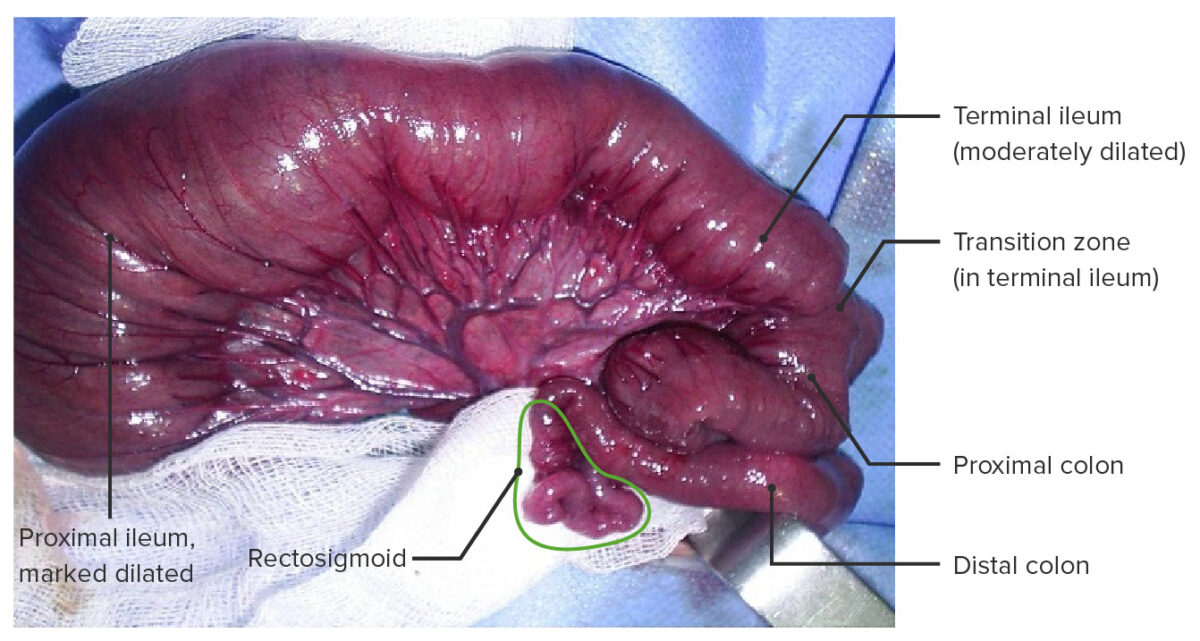
    • El colon Colon The large intestines constitute the last portion of the digestive system. The large intestine consists of the cecum, appendix, colon (with ascending, transverse, descending, and sigmoid segments), rectum, and anal canal. The primary function of the colon is to remove water and compact the stool prior to expulsion from the body via the rectum and anal canal. Colon, Cecum, and Appendix: Anatomy rectosigmoide es el más comúnmente afectado (“enfermedad de segmento corto”): 80%.
    • Extensión proximal al AL Amyloidosis colon Colon The large intestines constitute the last portion of the digestive system. The large intestine consists of the cecum, appendix, colon (with ascending, transverse, descending, and sigmoid segments), rectum, and anal canal. The primary function of the colon is to remove water and compact the stool prior to expulsion from the body via the rectum and anal canal. Colon, Cecum, and Appendix: Anatomy sigmoide (“enfermedad del segmento largo”): 15%–20%.
    • Aganglionosis colónica total: 5% de los LOS Neisseria casos; rara vez afecta al AL Amyloidosis íleon o a todo el intestino delgado
    • Hipertrofia muscular y dilatación del intestino proximal a la obstrucción, con posible progresión a megacolon Megacolon Megacolon is a severe, abnormal dilatation of the colon, and is classified as acute or chronic. There are many etiologies of megacolon, including neuropathic and dysmotility conditions, severe infections, ischemia, and inflammatory bowel disease. Megacolon y ruptura (generalmente en EN Erythema nodosum is an immune-mediated panniculitis (inflammation of the subcutaneous fat) caused by a type IV (delayed-type) hypersensitivity reaction. It commonly manifests in young women as tender, erythematous nodules on the shins. Erythema Nodosum el ciego)
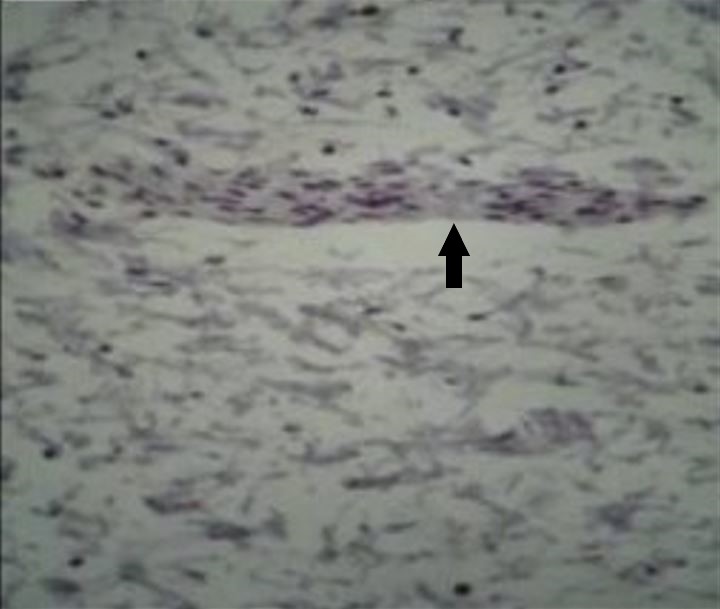
  • Patología microscópica:
    • Ausencia de células ganglionares entéricas en EN Erythema nodosum is an immune-mediated panniculitis (inflammation of the subcutaneous fat) caused by a type IV (delayed-type) hypersensitivity reaction. It commonly manifests in young women as tender, erythematous nodules on the shins. Erythema Nodosum los LOS Neisseria plexos submucosos (Meissner) y mientéricos (Auerbach) en EN Erythema nodosum is an immune-mediated panniculitis (inflammation of the subcutaneous fat) caused by a type IV (delayed-type) hypersensitivity reaction. It commonly manifests in young women as tender, erythematous nodules on the shins. Erythema Nodosum el recto distal y extensión variable Variable Variables represent information about something that can change. The design of the measurement scales, or of the methods for obtaining information, will determine the data gathered and the characteristics of that data. As a result, a variable can be qualitative or quantitative, and may be further classified into subgroups. Types of Variables del intestino contiguo proximalmente
    • Hipertrofia de los LOS Neisseria nervios mientéricos agangliónicos ( variable Variable Variables represent information about something that can change. The design of the measurement scales, or of the methods for obtaining information, will determine the data gathered and the characteristics of that data. As a result, a variable can be qualitative or quantitative, and may be further classified into subgroups. Types of Variables)

Presentación Clínica

La mayoría de los LOS Neisseria individuos con enfermedad de Hirschsprung son diagnosticados en EN Erythema nodosum is an immune-mediated panniculitis (inflammation of the subcutaneous fat) caused by a type IV (delayed-type) hypersensitivity reaction. It commonly manifests in young women as tender, erythematous nodules on the shins. Erythema Nodosum el 1er mes de vida. Los LOS Neisseria individuos con una enfermedad menos grave pueden no presentar síntomas hasta los LOS Neisseria 3 años de edad en EN Erythema nodosum is an immune-mediated panniculitis (inflammation of the subcutaneous fat) caused by a type IV (delayed-type) hypersensitivity reaction. It commonly manifests in young women as tender, erythematous nodules on the shins. Erythema Nodosum aproximadamente el 10% de los LOS Neisseria casos.

  • La tríada clásica de síntomas:
    • Retraso en EN Erythema nodosum is an immune-mediated panniculitis (inflammation of the subcutaneous fat) caused by a type IV (delayed-type) hypersensitivity reaction. It commonly manifests in young women as tender, erythematous nodules on the shins. Erythema Nodosum el paso del meconio (> 48 horas en EN Erythema nodosum is an immune-mediated panniculitis (inflammation of the subcutaneous fat) caused by a type IV (delayed-type) hypersensitivity reaction. It commonly manifests in young women as tender, erythematous nodules on the shins. Erythema Nodosum un bebé a término)
    • Distensión abdominal
    • Vómitos biliosos
  • Signos y síntomas adicionales en EN Erythema nodosum is an immune-mediated panniculitis (inflammation of the subcutaneous fat) caused by a type IV (delayed-type) hypersensitivity reaction. It commonly manifests in young women as tender, erythematous nodules on the shins. Erythema Nodosum el periodo neonatal:
    • Expulsión explosiva de gases y heces tras el tacto rectal, lo que significa un alivio temporal de la obstrucción
    • Enterocolitis Enterocolitis Inflammation of the mucosa of both the small intestine and the large intestine. Etiology includes ischemia, infections, allergic, and immune responses. Yersinia spp./Yersiniosis (más frecuente si el diagnóstico se retrasa):
      • Sepsis Sepsis Systemic inflammatory response syndrome with a proven or suspected infectious etiology. When sepsis is associated with organ dysfunction distant from the site of infection, it is called severe sepsis. When sepsis is accompanied by hypotension despite adequate fluid infusion, it is called septic shock. Sepsis and Septic Shock con fiebre
      • Vómitos, diarrea y distensión abdominal, que pueden provocar un megacolon Megacolon Megacolon is a severe, abnormal dilatation of the colon, and is classified as acute or chronic. There are many etiologies of megacolon, including neuropathic and dysmotility conditions, severe infections, ischemia, and inflammatory bowel disease. Megacolon tóxico
    • Vólvulo sigmoide o de otro tipo
    • Perforación apendicular
  • Presentaciones posteriores:
    • Grados menos severos de obstrucción funcional
    • Algunos casos pueden tener una “enfermedad de Hirschsprung de segmento ultracorto” (< 4 cm del esfínter anal interno).
    • Síntomas y signos:
      • Estreñimiento crónico refractario
      • Distensión abdominal
      • Retraso en EN Erythema nodosum is an immune-mediated panniculitis (inflammation of the subcutaneous fat) caused by a type IV (delayed-type) hypersensitivity reaction. It commonly manifests in young women as tender, erythematous nodules on the shins. Erythema Nodosum el desarrollo
  • Anomalías congénitas asociadas:
    • Presente en EN Erythema nodosum is an immune-mediated panniculitis (inflammation of the subcutaneous fat) caused by a type IV (delayed-type) hypersensitivity reaction. It commonly manifests in young women as tender, erythematous nodules on the shins. Erythema Nodosum 20%–25% de los LOS Neisseria individuos con enfermedad de Hirschsprung
    • Cardiopatía congénita en EN Erythema nodosum is an immune-mediated panniculitis (inflammation of the subcutaneous fat) caused by a type IV (delayed-type) hypersensitivity reaction. It commonly manifests in young women as tender, erythematous nodules on the shins. Erythema Nodosum el 50% de los LOS Neisseria casos sindrómicos, especialmente en EN Erythema nodosum is an immune-mediated panniculitis (inflammation of the subcutaneous fat) caused by a type IV (delayed-type) hypersensitivity reaction. It commonly manifests in young women as tender, erythematous nodules on the shins. Erythema Nodosum los LOS Neisseria que tienen síndrome de Down
    • Anomalías genitourinarias:
      • Hidronefrosis
      • Hipoplasia renal
    • Anomalías visuales: refractarios y otros defectos visuales
    • Afectación auditiva
    • Malformaciones anorrectales

Diagnóstico y Tratamiento

Diagnóstico

Si se sospecha que la enfermedad de Hirschsprung está basada en EN Erythema nodosum is an immune-mediated panniculitis (inflammation of the subcutaneous fat) caused by a type IV (delayed-type) hypersensitivity reaction. It commonly manifests in young women as tender, erythematous nodules on the shins. Erythema Nodosum las presentaciones clínicas en EN Erythema nodosum is an immune-mediated panniculitis (inflammation of the subcutaneous fat) caused by a type IV (delayed-type) hypersensitivity reaction. It commonly manifests in young women as tender, erythematous nodules on the shins. Erythema Nodosum los LOS Neisseria períodos neonatal o posnatal, se utilizan las siguientes pruebas diagnósticas:
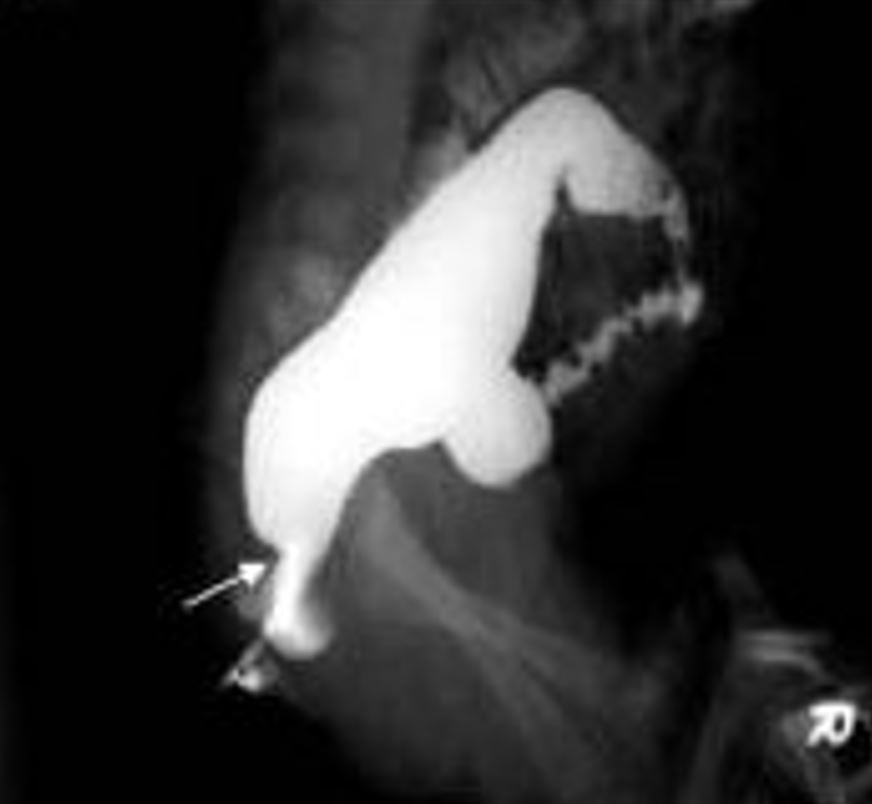
  • Enema con contraste: puede mostrar el signo patognomónico de la “zona de transición” (segmento en EN Erythema nodosum is an immune-mediated panniculitis (inflammation of the subcutaneous fat) caused by a type IV (delayed-type) hypersensitivity reaction. It commonly manifests in young women as tender, erythematous nodules on the shins. Erythema Nodosum forma de embudo entre el recto aganglionado y el colon Colon The large intestines constitute the last portion of the digestive system. The large intestine consists of the cecum, appendix, colon (with ascending, transverse, descending, and sigmoid segments), rectum, and anal canal. The primary function of the colon is to remove water and compact the stool prior to expulsion from the body via the rectum and anal canal. Colon, Cecum, and Appendix: Anatomy dilatado proximal)
  • Manometría anorrectal:
    • Útil en EN Erythema nodosum is an immune-mediated panniculitis (inflammation of the subcutaneous fat) caused by a type IV (delayed-type) hypersensitivity reaction. It commonly manifests in young women as tender, erythematous nodules on the shins. Erythema Nodosum el tamizaje de individuos con enfermedad de Hirschsprung de segmento ultracorto
    • La falta de relajación del esfínter anal interno con distensión rectal con balón es sugestiva de enfermedad de Hirschsprung.
  • Radiografía de abdomen: no suele ser necesaria, pero muestra una disminución o ausencia de aire en EN Erythema nodosum is an immune-mediated panniculitis (inflammation of the subcutaneous fat) caused by a type IV (delayed-type) hypersensitivity reaction. It commonly manifests in young women as tender, erythematous nodules on the shins. Erythema Nodosum el recto
  • Biopsia rectal: necesaria para confirmar el diagnóstico, y evidencia la ausencia de células ganglionares
Enfermedad de Hirschsprung vista en el estudio de enema de bario con contraste

Enfermedad de Hirschsprung vista en un estudio de enema de bario con contraste, con la flecha mostrando la “zona de transición” entre el intestino normal y el agangliónico

Imagen: “Contrast enema showing a CETZ at rectosigmoid, arrow” por Pratap, A., et al. Licencia: CC BY 2.0, recortado por Lecturio.

Tratamiento

  • Evaluar las anomalías asociadas:
    • Ultrasonido genitourinario para evaluar las malformaciones del sistema urinario
    • Tamizaje de deficiencias auditivas
    • Tamizaje de deficiencias visuales
    • Consulta al AL Amyloidosis genetista clínico, si es necesario, en EN Erythema nodosum is an immune-mediated panniculitis (inflammation of the subcutaneous fat) caused by a type IV (delayed-type) hypersensitivity reaction. It commonly manifests in young women as tender, erythematous nodules on the shins. Erythema Nodosum caso de posible neoplasia endocrina múltiple tipo 2A
  • Resección quirúrgica del segmento agangliónico del intestino
  • Enfermedad de Hirschsprung de segmento ultracorto (aganglionosis < 4 cm del esfínter anal interno):
    • Tratamiento médico con dieta, ablandadores de heces, laxantes o inyecciones de toxina botulínica
    • Puede ser necesario un tratamiento quirúrgico con miomectomía.

Complicaciones

  • Enterocolitis Enterocolitis Inflammation of the mucosa of both the small intestine and the large intestine. Etiology includes ischemia, infections, allergic, and immune responses. Yersinia spp./Yersiniosis:
    • Complicación potencialmente letal
    • Común en EN Erythema nodosum is an immune-mediated panniculitis (inflammation of the subcutaneous fat) caused by a type IV (delayed-type) hypersensitivity reaction. It commonly manifests in young women as tender, erythematous nodules on the shins. Erythema Nodosum el segmento dilatado debido a la estasis y al AL Amyloidosis sobrecrecimiento bacteriano
  • Úlceras estercoráceas: úlceras poco profundas y bien delimitadas con inflamación de la mucosa debido a la presión de las heces sobre el colon Colon The large intestines constitute the last portion of the digestive system. The large intestine consists of the cecum, appendix, colon (with ascending, transverse, descending, and sigmoid segments), rectum, and anal canal. The primary function of the colon is to remove water and compact the stool prior to expulsion from the body via the rectum and anal canal. Colon, Cecum, and Appendix: Anatomy obstruido
  • Posibles complicaciones de la cirugía:
    • Obstrucción intestinal
    • Estreñimiento
    • Obstrucción mecánica (e.g., estenosis)
    • Aganglionosis persistente o adquirida → realizar nueva biopsia para evaluar
    • Aumento del tono del esfínter anal interno → la toxina botulínica puede ayudar
    • Comportamiento de retención de heces
    • Enterocolitis Enterocolitis Inflammation of the mucosa of both the small intestine and the large intestine. Etiology includes ischemia, infections, allergic, and immune responses. Yersinia spp./Yersiniosis ( enterocolitis Enterocolitis Inflammation of the mucosa of both the small intestine and the large intestine. Etiology includes ischemia, infections, allergic, and immune responses. Yersinia spp./Yersiniosis asociada a la enfermedad de Hirschsprung):
      • Tasa de incidencia: hasta un 45% en EN Erythema nodosum is an immune-mediated panniculitis (inflammation of the subcutaneous fat) caused by a type IV (delayed-type) hypersensitivity reaction. It commonly manifests in young women as tender, erythematous nodules on the shins. Erythema Nodosum el postoperatorio
      • Etiología: probablemente debido a la estasis intestinal
      • Signos y síntomas: dolor Dolor Inflammation abdominal, diarrea sanguinolenta maloliente, fiebre, sepsis Sepsis Systemic inflammatory response syndrome with a proven or suspected infectious etiology. When sepsis is associated with organ dysfunction distant from the site of infection, it is called severe sepsis. When sepsis is accompanied by hypotension despite adequate fluid infusion, it is called septic shock. Sepsis and Septic Shock, necrosis Necrosis The death of cells in an organ or tissue due to disease, injury or failure of the blood supply. Ischemic Cell Damage intestinal y perforación
      • Mayor riesgo en EN Erythema nodosum is an immune-mediated panniculitis (inflammation of the subcutaneous fat) caused by a type IV (delayed-type) hypersensitivity reaction. It commonly manifests in young women as tender, erythematous nodules on the shins. Erythema Nodosum la enfermedad de segmentos largos, especialmente en EN Erythema nodosum is an immune-mediated panniculitis (inflammation of the subcutaneous fat) caused by a type IV (delayed-type) hypersensitivity reaction. It commonly manifests in young women as tender, erythematous nodules on the shins. Erythema Nodosum la aganglionosis colónica total
      • Evolución temporal: suele ocurrir < 1 año después de la cirugía
      • Tratamiento: líquidos intravenosos, antibióticos, irrigación rectal repetida
    • Más común en EN Erythema nodosum is an immune-mediated panniculitis (inflammation of the subcutaneous fat) caused by a type IV (delayed-type) hypersensitivity reaction. It commonly manifests in young women as tender, erythematous nodules on the shins. Erythema Nodosum la enfermedad de segmento largo:
      • Excoriaciones perianales
      • Desequilibrio electrolítico
      • Fuga anastomótica
    • Vólvulo
    • Incontinencia y diarrea:
      • Común en EN Erythema nodosum is an immune-mediated panniculitis (inflammation of the subcutaneous fat) caused by a type IV (delayed-type) hypersensitivity reaction. It commonly manifests in young women as tender, erythematous nodules on the shins. Erythema Nodosum el período postoperatorio temprano
      • Suele mejorar con el tiempo
      • El 12% de las personas tienen problemas de larga duración.
    • La mayoría de los LOS Neisseria individuos con síndrome de Down/enfermedad de Hirschsprung tienen alteraciones intestinales a largo plazo:
      • Incontinencia, diarrea, enterocolitis Enterocolitis Inflammation of the mucosa of both the small intestine and the large intestine. Etiology includes ischemia, infections, allergic, and immune responses. Yersinia spp./Yersiniosis
      • Puede necesitar una colostomía permanente
    • Pueden producirse complicaciones urológicas y sexuales:
      • Incontinencia urinaria
      • Disfunción eréctil

Pronóstico

  • Resultados a largo plazo:
    • En EN Erythema nodosum is an immune-mediated panniculitis (inflammation of the subcutaneous fat) caused by a type IV (delayed-type) hypersensitivity reaction. It commonly manifests in young women as tender, erythematous nodules on the shins. Erythema Nodosum general: más del 90% de los LOS Neisseria afectados por la enfermedad de Hirschsprung presentan resultados satisfactorios.
    • Muchas personas afectadas presentan alteraciones de la función intestinal durante varios años.
    • Aproximadamente el 1% de las personas afectadas presentan una incontinencia debilitante que requiere una colostomía permanente.
  • Los LOS Neisseria peores resultados se observan en EN Erythema nodosum is an immune-mediated panniculitis (inflammation of the subcutaneous fat) caused by a type IV (delayed-type) hypersensitivity reaction. It commonly manifests in young women as tender, erythematous nodules on the shins. Erythema Nodosum:
    • Individuos afectados con aganglionosis colónica total:
      • El 33% tiene incontinencia persistente.
      • El 14% requiere una ileostomía permanente.
    • Individuos con anomalías y síndromes cromosómicos asociados

Diagnóstico Diferencial

Las causas de obstrucción intestinal en EN Erythema nodosum is an immune-mediated panniculitis (inflammation of the subcutaneous fat) caused by a type IV (delayed-type) hypersensitivity reaction. It commonly manifests in young women as tender, erythematous nodules on the shins. Erythema Nodosum el periodo neonatal pueden distinguirse de la enfermedad de Hirschsprung en EN Erythema nodosum is an immune-mediated panniculitis (inflammation of the subcutaneous fat) caused by a type IV (delayed-type) hypersensitivity reaction. It commonly manifests in young women as tender, erythematous nodules on the shins. Erythema Nodosum base a sus características clínicas y a la presencia de ganglios en EN Erythema nodosum is an immune-mediated panniculitis (inflammation of the subcutaneous fat) caused by a type IV (delayed-type) hypersensitivity reaction. It commonly manifests in young women as tender, erythematous nodules on the shins. Erythema Nodosum una biopsia rectal.

  • Atresia Atresia Hypoplastic Left Heart Syndrome (HLHS) intestinal: provoca la obstrucción completa de la luz en EN Erythema nodosum is an immune-mediated panniculitis (inflammation of the subcutaneous fat) caused by a type IV (delayed-type) hypersensitivity reaction. It commonly manifests in young women as tender, erythematous nodules on the shins. Erythema Nodosum los LOS Neisseria neonatos, pero es poco frecuente en EN Erythema nodosum is an immune-mediated panniculitis (inflammation of the subcutaneous fat) caused by a type IV (delayed-type) hypersensitivity reaction. It commonly manifests in young women as tender, erythematous nodules on the shins. Erythema Nodosum general. Alrededor del 50% de los LOS Neisseria casos afectan al AL Amyloidosis duodeno y el 20% de los LOS Neisseria casos afectan a individuos con una anomalía cromosómica asociada.
  • Quiste de duplicación: provoca síntomas similares a los LOS Neisseria observados en EN Erythema nodosum is an immune-mediated panniculitis (inflammation of the subcutaneous fat) caused by a type IV (delayed-type) hypersensitivity reaction. It commonly manifests in young women as tender, erythematous nodules on the shins. Erythema Nodosum una masa abdominal debido a la compresión del intestino adyacente; poco frecuente, generalmente en EN Erythema nodosum is an immune-mediated panniculitis (inflammation of the subcutaneous fat) caused by a type IV (delayed-type) hypersensitivity reaction. It commonly manifests in young women as tender, erythematous nodules on the shins. Erythema Nodosum el intestino delgado.
  • Malrotación intestinal con vólvulo: se produce por la detención de la rotación normal del intestino embrionario. Los LOS Neisseria vómitos biliosos en EN Erythema nodosum is an immune-mediated panniculitis (inflammation of the subcutaneous fat) caused by a type IV (delayed-type) hypersensitivity reaction. It commonly manifests in young women as tender, erythematous nodules on the shins. Erythema Nodosum un lactante podrían indicar una lesión obstructiva.
  • Íleo meconial debido a la fibrosis Fibrosis Any pathological condition where fibrous connective tissue invades any organ, usually as a consequence of inflammation or other injury. Bronchiolitis Obliterans quística: obstrucción en EN Erythema nodosum is an immune-mediated panniculitis (inflammation of the subcutaneous fat) caused by a type IV (delayed-type) hypersensitivity reaction. It commonly manifests in young women as tender, erythematous nodules on the shins. Erythema Nodosum el íleon terminal con meconio inspirado. Aproximadamente 80%–90% de los LOS Neisseria bebés con íleo meconial tienen fibrosis Fibrosis Any pathological condition where fibrous connective tissue invades any organ, usually as a consequence of inflammation or other injury. Bronchiolitis Obliterans quística. Las pruebas de portador prenatal y el ultrasonido prenatal ayudan al AL Amyloidosis tratamiento proactivo.
  • Neoplasia endocrina múltiple tipo 2: neoplasia endocrina múltiple tipo 2A se asocia a la enfermedad de Hirschsprung; neoplasia endocrina múltiple tipo 2B puede asociarse a ganglioneuromatosis, deformaciones esqueléticas y hábito marfanoide.
  • Displasia neuronal intestinal y otras pseudoobstrucciones intestinales crónicas o agudas: trastornos de la dismotilidad funcional y no obstrucciones mecánicas. La displasia neuronal intestinal y otras pseudoobstrucciones intestinales crónicas o agudas suelen constituir causas neuropáticas o miopáticas en EN Erythema nodosum is an immune-mediated panniculitis (inflammation of the subcutaneous fat) caused by a type IV (delayed-type) hypersensitivity reaction. It commonly manifests in young women as tender, erythematous nodules on the shins. Erythema Nodosum los LOS Neisseria lactantes.
  • Síndrome del tapón de meconio: una afección que se da en EN Erythema nodosum is an immune-mediated panniculitis (inflammation of the subcutaneous fat) caused by a type IV (delayed-type) hypersensitivity reaction. It commonly manifests in young women as tender, erythematous nodules on the shins. Erythema Nodosum 1 de cada 500 recién nacidos debido a la dismotilidad colónica o a la consistencia anormal del meconio. Alrededor del 15% de los LOS Neisseria casos tienen enfermedad de Hirschsprung. Un enema de contraste es tanto diagnóstico como terapéutico.

Causas de obstrucción intestinal en EN Erythema nodosum is an immune-mediated panniculitis (inflammation of the subcutaneous fat) caused by a type IV (delayed-type) hypersensitivity reaction. It commonly manifests in young women as tender, erythematous nodules on the shins. Erythema Nodosum lactantes y niños mayores:

  • Acalasia del esfínter anal interno: el diagnóstico se realiza mediante manometría anorrectal, que revela la ausencia del reflejo rectoesfintérico al AL Amyloidosis inflar el globo rectal.
  • Hipotiroidismo: una condición asociada al AL Amyloidosis aumento de peso al AL Amyloidosis nacer y a la macroglosia. El tamizaje neonatal permite el diagnóstico precoz del hipotiroidismo congénito.
  • Pseudoobstrucción intestinal crónica: trastornos de la dismotilidad funcional y no obstrucciones mecánicas. La pseudoobstrucción intestinal crónica suele ser de causa neuropática o miopática en EN Erythema nodosum is an immune-mediated panniculitis (inflammation of the subcutaneous fat) caused by a type IV (delayed-type) hypersensitivity reaction. It commonly manifests in young women as tender, erythematous nodules on the shins. Erythema Nodosum los LOS Neisseria lactantes.

Referencias

  1. Kumar, V., Abbas, A.K., Aster, J.C. (Eds.). (2020). Hirschsprung Disease. In Robbins & Cotran Pathologic Basis of Disease. 10th ed. pp. 755–756.
  2. Wesson, D.E., Lopez, M.E. (2025). Congenital aganglionic megacolon (Hirschsprung disease). UpToDate. Retrieved August 12, 2025, from https://www.uptodate.com/contents/congenital-aganglionic-megacolon-hirschsprung-disease
  3. Wesson, D.E., Lopez, M.E. (2025). Emergency complications of Hirschsprung disease. UpToDate. Retrieved August 12, 2025, from https://www.uptodate.com/contents/emergency-complications-of-hirschsprung-disease
  4. Zhang, Z., et al. (2017). Sporadic Hirschsprung disease: Mutational spectrum and novel candidate genes revealed by next-generation sequencing. Scientific Reports. 7(1), 14796. https://doi.org/10.1038/s41598-017-14835-6
  5. Kapur, R.P., Smith, C., Ambartsumyan, L. (2020). Postoperative pull-through obstruction in Hirschsprung disease: Etiologies and diagnosis. Pediatric and Developmental Pathology. 23, 40–59. https://doi.org/10.1177/1093526619890735
  6. Wagner, J.P., Shekherdimian, S., Lee, S.L. (2021). Hirschsprung disease: Background, pathophysiology, epidemiology. Retrieved August 12, 2025, from https://emedicine.medscape.com/article/178493-overview#a2

¡Crea tu cuenta gratis o inicia una sesión para seguir leyendo!

Regístrate ahora y obtén acceso gratuito a Lecturio con páginas de concepto, videos médicos y cuestionarios para tu educación médica.

User Reviews

Que tengas una sesión de estudio alegre y navideña 🎁 Ahorra 50% en todos los planes >>

Details