Domina Conceptos Médicos

Estudia para la escuela de medicina y tus examenes con Lecturio.

Enfermedad de Cambios Mínimos

La enfermedad de cambios mínimos, también conocida como nefrosis lipoidea, es la causa más común de síndrome nefrótico en niños. La denominación "cambios mínimos" proviene de los LOS Neisseria escasos cambios observados en EN Erythema nodosum is an immune-mediated panniculitis (inflammation of the subcutaneous fat) caused by a type IV (delayed-type) hypersensitivity reaction. It commonly manifests in young women as tender, erythematous nodules on the shins. Erythema Nodosum las biopsias renales al AL Amyloidosis microscopio óptico. Los LOS Neisseria hallazgos clínicos distintivos incluyen edema Edema Edema is a condition in which excess serous fluid accumulates in the body cavity or interstitial space of connective tissues. Edema is a symptom observed in several medical conditions. It can be categorized into 2 types, namely, peripheral (in the extremities) and internal (in an organ or body cavity). Edema, proteinuria Proteinuria The presence of proteins in the urine, an indicator of kidney diseases. Nephrotic Syndrome in Children, hipoalbuminemia e hiperlipidemia. El diagnóstico se basa en EN Erythema nodosum is an immune-mediated panniculitis (inflammation of the subcutaneous fat) caused by a type IV (delayed-type) hypersensitivity reaction. It commonly manifests in young women as tender, erythematous nodules on the shins. Erythema Nodosum la sospecha clínica y los LOS Neisseria hallazgos de laboratorio que lo respaldan. La administración de corticosteroides es la piedra angular del tratamiento, y el pronóstico es muy favorable.

Last updated: Dec 15, 2025

Editorial responsibility: Stanley Oiseth, Lindsay Jones, Evelin Maza

Descripción General

Definición

La enfermedad de cambios mínimos es un trastorno glomerular primario de etiología incierta que causa síndrome nefrótico. El término “mínimos” se refiere a los LOS Neisseria cambios estructurales mínimos de los LOS Neisseria glomérulos cuando se observan con microscopía de luz.
Epidemiología

  • La enfermedad de cambios mínimos es la causa más común del síndrome nefrótico en EN Erythema nodosum is an immune-mediated panniculitis (inflammation of the subcutaneous fat) caused by a type IV (delayed-type) hypersensitivity reaction. It commonly manifests in young women as tender, erythematous nodules on the shins. Erythema Nodosum los LOS Neisseria niños.
    • Representa el 90% de los LOS Neisseria casos de síndrome nefrótico en EN Erythema nodosum is an immune-mediated panniculitis (inflammation of the subcutaneous fat) caused by a type IV (delayed-type) hypersensitivity reaction. It commonly manifests in young women as tender, erythematous nodules on the shins. Erythema Nodosum niños < 6 años
    • Representa el 50% de los LOS Neisseria casos de síndrome nefrótico en EN Erythema nodosum is an immune-mediated panniculitis (inflammation of the subcutaneous fat) caused by a type IV (delayed-type) hypersensitivity reaction. It commonly manifests in young women as tender, erythematous nodules on the shins. Erythema Nodosum niños > 10 años
  • Incidencia: 2 por cada 100 000 niños al AL Amyloidosis año
  • La proporción entre hombres y mujeres es de 2:1 en EN Erythema nodosum is an immune-mediated panniculitis (inflammation of the subcutaneous fat) caused by a type IV (delayed-type) hypersensitivity reaction. It commonly manifests in young women as tender, erythematous nodules on the shins. Erythema Nodosum los LOS Neisseria niños más pequeños.
  • Igual incidencia entre géneros en EN Erythema nodosum is an immune-mediated panniculitis (inflammation of the subcutaneous fat) caused by a type IV (delayed-type) hypersensitivity reaction. It commonly manifests in young women as tender, erythematous nodules on the shins. Erythema Nodosum los LOS Neisseria adolescentes

Etiología

  • Primario: 90% de los LOS Neisseria casos son idiopáticos
  • Causas secundarias:
    • Antiinflamatorios no esteroideos (AINE)
    • Enfermedades hematológicas
    • Infecciones
    • Inmunización
    • Reacciones alérgicas
    • Trastornos autoinmunes

Fisiopatología

  • Síntomas principales del síndrome nefrótico:
    • Edema Edema Edema is a condition in which excess serous fluid accumulates in the body cavity or interstitial space of connective tissues. Edema is a symptom observed in several medical conditions. It can be categorized into 2 types, namely, peripheral (in the extremities) and internal (in an organ or body cavity). Edema
    • Hiperproteinuria
    • Hipoalbuminemia
    • Hiperlipidemia
  • Una serie de procesos patológicos conducen a los LOS Neisseria signos y síntomas de la enfermedad de cambios mínimos:
    • Secreción de citoquinas por células T → daño de los LOS Neisseria podocitos glomerulares → pérdida de carga aniónica de la membrana basal glomerular → ↑ permeabilidad glomerular → proteinuria Proteinuria The presence of proteins in the urine, an indicator of kidney diseases. Nephrotic Syndrome in Children selectiva → pérdida de albúmina.
    • ↓ Albúmina sérica → ↓ presión coloide intravascular → pérdida de líquido intravascular → edema Edema Edema is a condition in which excess serous fluid accumulates in the body cavity or interstitial space of connective tissues. Edema is a symptom observed in several medical conditions. It can be categorized into 2 types, namely, peripheral (in the extremities) and internal (in an organ or body cavity). Edema.
    • ↓ albúmina sérica → ↑ producción hepática de lipoproteínas → ↑ colesterol y triglicéridos
    • Pérdida urinaria de inmunoglobulinas → ↑ riesgo de infección por bacterias encapsuladas
    • Pérdida urinaria de antitrombina III, proteína C y proteína S → estado de hipercoagulabilidad.
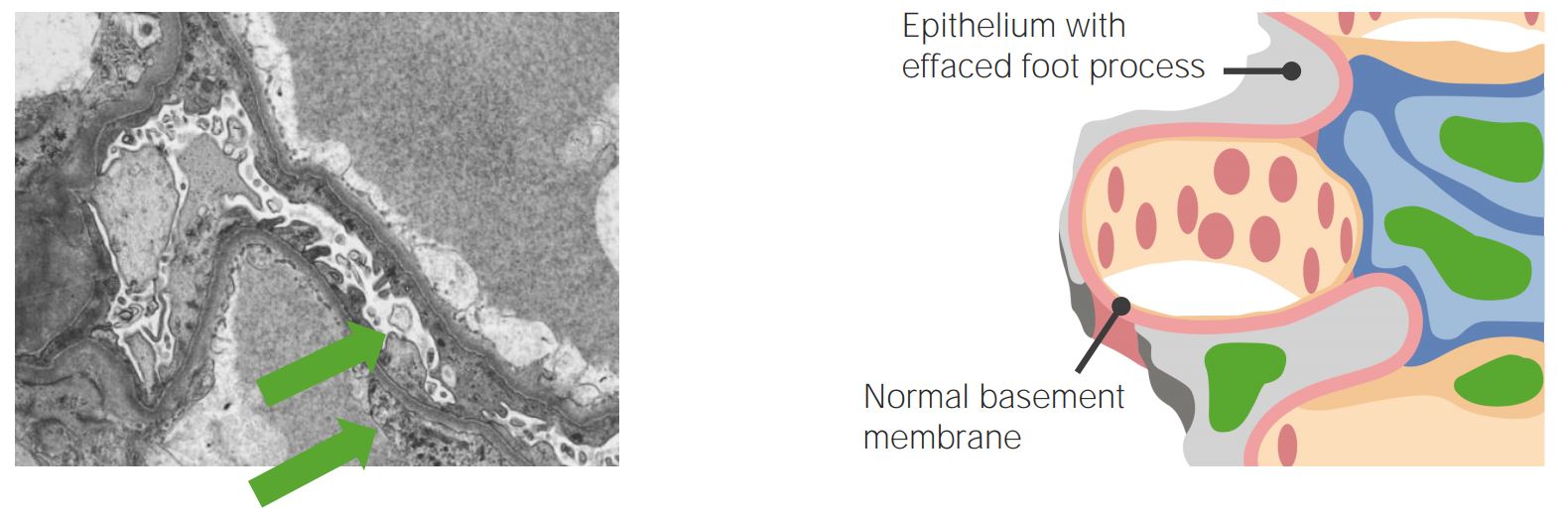
Desplazamiento de los procesos pediculados de los podocitos

Microscopio electrónico (izquierda) y diagrama (derecha) mostrando el borrado de los procesos pediculados de los podocitos

Imagen: “Managing a locally advanced malignant thymoma complicated by nephrotic syndrome: a case report” por Teoh DC, El-Modir A. Licencia: CC BY 2.0, editada por Lecturio.
Presentación Clínica

  • Antecedentes:
    • Inicio súbito de los LOS Neisseria síntomas
    • A veces precedido por una infección de las vías respiratorias superiores
    • Aumento de la micción
    • Aumento de peso
  • Examen: edema Edema Edema is a condition in which excess serous fluid accumulates in the body cavity or interstitial space of connective tissues. Edema is a symptom observed in several medical conditions. It can be categorized into 2 types, namely, peripheral (in the extremities) and internal (in an organ or body cavity). Edema blando con fóvea:
  • Típicamente normotensos (90% de los LOS Neisseria pacientes)
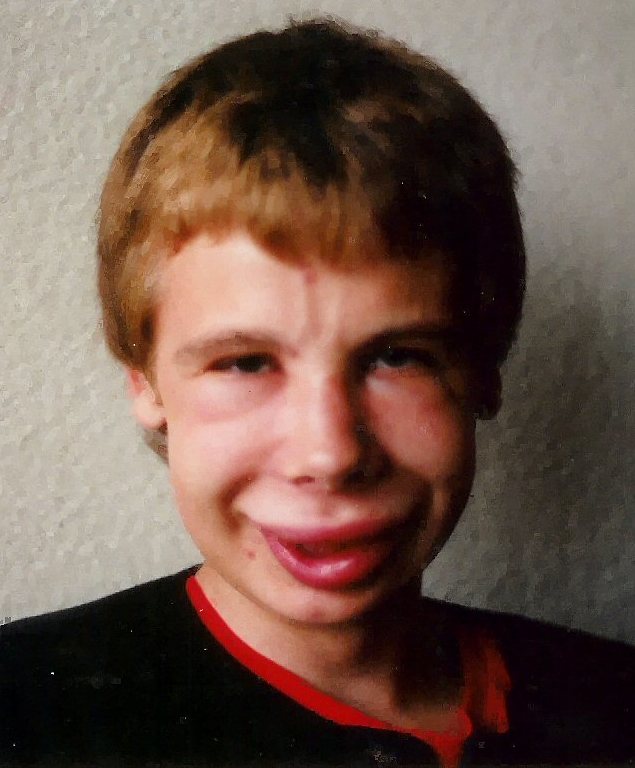
Edema por síndrome nefrótico

Síndrome nefrótico:
La afección se acompaña de retención de agua y sodio. La imagen muestra hinchazón/edema facial. El grado de edema puede variar. Puede haber un ligero edema en los párpados que disminuye durante el día, edema que afecta a los miembros inferiores, una hinchazón generalizada o una anasarca completa.
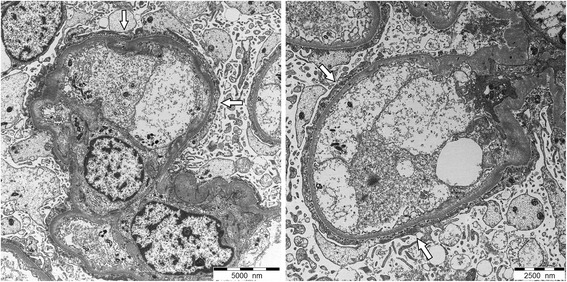
Imagen: “Nephrotic syndrome” por Charles Picavet. Licencia: Dominio Público

Diagnóstico

  • Orina:
    • Primer chorro de orina de la mañana con 3+ o 4+ de proteínas
    • Relación proteínas en EN Erythema nodosum is an immune-mediated panniculitis (inflammation of the subcutaneous fat) caused by a type IV (delayed-type) hypersensitivity reaction. It commonly manifests in young women as tender, erythematous nodules on the shins. Erythema Nodosum orina: creatinina > 2
    • Proteínas en EN Erythema nodosum is an immune-mediated panniculitis (inflammation of the subcutaneous fat) caused by a type IV (delayed-type) hypersensitivity reaction. It commonly manifests in young women as tender, erythematous nodules on the shins. Erythema Nodosum orina de 24 horas > 40 mg/m2/hora
    • Sangre microscópica negativa
    • Microscopía con cilindros grasos
  • Suero:
    • Albúmina < 2,5 g/dL
    • Colesterol total y triglicéridos > 200 mg/dL
    • Creatinina normal a elevada
    • Sodio normal a bajo
    • Hemoconcentración
    • Recuento de plaquetas normal a elevado
    • Niveles normales de complemento C3 y C4
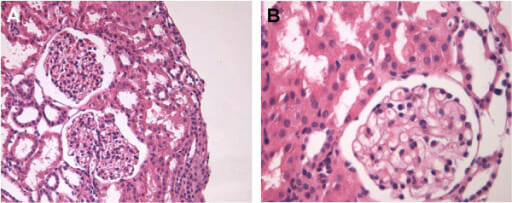
  • Biopsia renal:
    • Se realiza si no responde al AL Amyloidosis tratamiento o si la presentación de la enfermedad de cambios mínimos es atípica
    • Microscopía de luz: proliferación mesangial normal a mínima
    • Inmunofluorescencia: negativo para el depósito de complejos de anticuerpos
    • Microscopía electrónica: muestra la fusión y el borrado de podocitos

Tratamiento

Tratamiento

  • Cambios en EN Erythema nodosum is an immune-mediated panniculitis (inflammation of the subcutaneous fat) caused by a type IV (delayed-type) hypersensitivity reaction. It commonly manifests in young women as tender, erythematous nodules on the shins. Erythema Nodosum el estilo de vida:
    • Restricción de sodio < 3 g/día
    • Restricción de líquidos
    • Ingesta adecuada de proteínas en EN Erythema nodosum is an immune-mediated panniculitis (inflammation of the subcutaneous fat) caused by a type IV (delayed-type) hypersensitivity reaction. It commonly manifests in young women as tender, erythematous nodules on the shins. Erythema Nodosum la dieta
    • Dieta baja en EN Erythema nodosum is an immune-mediated panniculitis (inflammation of the subcutaneous fat) caused by a type IV (delayed-type) hypersensitivity reaction. It commonly manifests in young women as tender, erythematous nodules on the shins. Erythema Nodosum colesterol
  • Medicamentos:
    • Corticosteroides:
    • Diuréticos:
      • Utilizados comúnmente en EN Erythema nodosum is an immune-mediated panniculitis (inflammation of the subcutaneous fat) caused by a type IV (delayed-type) hypersensitivity reaction. It commonly manifests in young women as tender, erythematous nodules on the shins. Erythema Nodosum adultos
      • Rara vez se utilizan en EN Erythema nodosum is an immune-mediated panniculitis (inflammation of the subcutaneous fat) caused by a type IV (delayed-type) hypersensitivity reaction. It commonly manifests in young women as tender, erythematous nodules on the shins. Erythema Nodosum niños, solo en EN Erythema nodosum is an immune-mediated panniculitis (inflammation of the subcutaneous fat) caused by a type IV (delayed-type) hypersensitivity reaction. It commonly manifests in young women as tender, erythematous nodules on the shins. Erythema Nodosum casos de edema Edema Edema is a condition in which excess serous fluid accumulates in the body cavity or interstitial space of connective tissues. Edema is a symptom observed in several medical conditions. It can be categorized into 2 types, namely, peripheral (in the extremities) and internal (in an organ or body cavity). Edema grave

Clasificación basada en EN Erythema nodosum is an immune-mediated panniculitis (inflammation of the subcutaneous fat) caused by a type IV (delayed-type) hypersensitivity reaction. It commonly manifests in young women as tender, erythematous nodules on the shins. Erythema Nodosum la respuesta a los LOS Neisseria corticosteroides

  • Respuesta a los LOS Neisseria esteroides:
    • > 90% de los LOS Neisseria casos
    • Mejor pronóstico
    • Remisión con un ciclo de corticosteroides
    • Disminución progresiva para suspender los LOS Neisseria esteroides
    • Posibilidad de recaída:
      • No hay recaída en EN Erythema nodosum is an immune-mediated panniculitis (inflammation of the subcutaneous fat) caused by a type IV (delayed-type) hypersensitivity reaction. It commonly manifests in young women as tender, erythematous nodules on the shins. Erythema Nodosum aproximadamente el 30%.
      • Recaída infrecuente en EN Erythema nodosum is an immune-mediated panniculitis (inflammation of the subcutaneous fat) caused by a type IV (delayed-type) hypersensitivity reaction. It commonly manifests in young women as tender, erythematous nodules on the shins. Erythema Nodosum aproximadamente el 30% → repetir el ciclo de corticosteroides
      • Recaída frecuente en EN Erythema nodosum is an immune-mediated panniculitis (inflammation of the subcutaneous fat) caused by a type IV (delayed-type) hypersensitivity reaction. It commonly manifests in young women as tender, erythematous nodules on the shins. Erythema Nodosum aproximadamente el 40% → dependiente de esteroides
  • Dependiente de esteroides: remisión inicial con recaída durante el ciclo de esteroides o dentro de las 2 semanas siguientes a la finalización del ciclo
  • Resistente a los LOS Neisseria esteroides:
    • Peor pronóstico
    • No se consigue la remisión después de un ciclo de 8 semanas de corticosteroides
    • Necesidad de investigar otras causas de síndrome nefrótico distintas de la enfermedad con cambios mínimos:
      • Biopsia
      • Pruebas genéticas

Complicaciones

  • Renales:
    • Lesión renal aguda
    • Enfermedad renal crónica (ERC)
  • Eventos tromboembólicos:
    • Tromboembolismo pulmonar (TEP)
    • Trombosis de la vena renal
    • Prevención con la deambulación y el uso de anticoagulantes
  • Infecciones:
    • Peritonitis Peritonitis Inflammation of the peritoneum lining the abdominal cavity as the result of infectious, autoimmune, or chemical processes. Primary peritonitis is due to infection of the peritoneal cavity via hematogenous or lymphatic spread and without intra-abdominal source. Secondary peritonitis arises from the abdominal cavity itself through rupture or abscess of intra-abdominal organs. Penetrating Abdominal Injury bacteriana espontánea
    • Bacteriemia
    • Celulitis
    • Neumonía
    • Protección con las vacunas:
      • Neumococo 23 valente
      • Influenza Influenza Influenza viruses are members of the Orthomyxoviridae family and the causative organisms of influenza, a highly contagious febrile respiratory disease. There are 3 primary influenza viruses (A, B, and C) and various subtypes, which are classified based on their virulent surface antigens, hemagglutinin (HA) and neuraminidase (NA). Influenza typically presents with a fever, myalgia, headache, and symptoms of an upper respiratory infection. Influenza Viruses/Influenza
  • Relacionadas con la medicación:
    • Efectos de la administración prolongada de corticosteroides
    • Progresión a la dependencia a esteroides
    • Requiere la transición a otros inmunosupresores:
      • Levamisol
      • Micofenolato
      • Ciclosporina

Diagnóstico Diferencial

  • Síndrome nefrítico: forma de enfermedad renal causada por la inflamación y la lesión inmunomediada de los LOS Neisseria glomérulos. La presentación clínica se caracteriza por la combinación de hematuria Hematuria Presence of blood in the urine. Renal Cell Carcinoma, proteinuria Proteinuria The presence of proteins in the urine, an indicator of kidney diseases. Nephrotic Syndrome in Children, hipertensión e insuficiencia renal. Algunos ejemplos son la glomerulonefritis post-estreptocócica y la púrpura de Henoch-Schonlein. El tratamiento depende de la causa específica.
  • Insuficiencia hepática: término general que hace HACE Altitude Sickness referencia al AL Amyloidosis deterioro de la función hepática por diversas causas. La hipoalbuminemia y el edema Edema Edema is a condition in which excess serous fluid accumulates in the body cavity or interstitial space of connective tissues. Edema is a symptom observed in several medical conditions. It can be categorized into 2 types, namely, peripheral (in the extremities) and internal (in an organ or body cavity). Edema son hallazgos clínicos comunes. La ausencia de aumento de la excreción de proteínas en EN Erythema nodosum is an immune-mediated panniculitis (inflammation of the subcutaneous fat) caused by a type IV (delayed-type) hypersensitivity reaction. It commonly manifests in young women as tender, erythematous nodules on the shins. Erythema Nodosum la orina diferencia la insuficiencia hepática de la enfermedad con cambios mínimos como causa del síndrome nefrótico.
  • Insuficiencia cardíaca: término general que hace HACE Altitude Sickness referencia al AL Amyloidosis deterioro de la función cardíaca por diversas causas. El edema Edema Edema is a condition in which excess serous fluid accumulates in the body cavity or interstitial space of connective tissues. Edema is a symptom observed in several medical conditions. It can be categorized into 2 types, namely, peripheral (in the extremities) and internal (in an organ or body cavity). Edema es una característica clínica frecuente. Otros hallazgos clínicos, como soplos, murmullos y disnea, diferencian la insuficiencia cardíaca de la enfermedad de cambios mínimos como causa del síndrome nefrótico.
  • Malnutrición proteica: el kwashiorkor Kwashiorkor A syndrome produced by severe protein deficiency, characterized by retarded growth, changes in skin and hair pigment, edema, and pathologic changes in the liver, including fatty infiltration, necrosis, and fibrosis. The word is a local name in gold coast, africa, meaning ‘displaced child’. Although first reported from africa, kwashiorkor is now known throughout the world, but mainly in the tropics and subtropics. It is considered to be related to marasmus. Malnutrition in children in resource-limited countries y la reducción de la ingesta de proteínas pueden correlacionarse con una reducción de la síntesis proteica, de la albúmina sérica y de los LOS Neisseria niveles de proteínas totales.
  • Síndrome nefrótico congénito e infantil: la presentación temprana de esta forma de síndrome nefrótico antes de los LOS Neisseria 12 meses de edad la diferencia de la enfermedad con cambios mínimos. La aparición temprana es preocupante por la etiología genética.

Referencias

  1. Kamil, ES. (2019). Minimal change disease. In Lerma, E., et al. (Eds.). Nephrology secrets. pp. 179–185. http://dx.doi.org/10.1016/B978-0-323-47871-7.00035-6
  2. Erkan, E. (2020). Nephrotic syndrome. In R. M. Kliegman, J. W. St. Geme, N. J. Blum, S. S. Shah, R. C. Tasker, & K. M. Wilson (Eds.), Nelson textbook of pediatrics (21st ed., pp. 2752–2760.e3). Elsevier.
  3. Feehally, J., & Floege, J. (2019). Introduction to glomerular disease: Histologic classification and pathogenesis. In J. Feehally, J. Floege, M. Tonelli, & R. J. Johnson (Eds.), Comprehensive clinical nephrology (6th ed., pp. 199–208.e1). Elsevier. https://www.clinicalkey.com/#!/content/book/3-s2.0-B9780323825924000171
  4. McKinney, P. A., Feltbower, R. G., Brocklebank, J. T., & Fitzpatrick, M. M. (2001). Time trends and ethnic patterns of childhood nephrotic syndrome in Yorkshire, UK. Pediatric Nephrology, 16(12), 1040–1044. https://doi.org/10.1007/s004670100021
  5. Gipson, DS, et al. (2009). Management of childhood-onset nephrotic syndrome. Pediatrics. 124(2),747–757. https://pubmed.ncbi.nlm.nih.gov/19651590/ 
  6. Vivarelli, M, et al. (2017). Glomerular diseases: Update for the clinician, minimal change disease. Clinical Journal of the American Society of Nephrology. 12(2),332–335. https://doi.org/10.2215/CJN.05000516
  7. Zamora, G., & Pearson-Shaver, A. L. (2023). Minimal change disease. In StatPearls. StatPearls Publishing. Retrieved on August 4, 2025, from https://www.ncbi.nlm.nih.gov/books/NBK560639/

¡Crea tu cuenta gratis o inicia una sesión para seguir leyendo!

Regístrate ahora y obtén acceso gratuito a Lecturio con páginas de concepto, videos médicos y cuestionarios para tu educación médica.

User Reviews

Que tengas una sesión de estudio alegre y navideña 🎁 Ahorra 50% en todos los planes >>

Details