
El intestino grueso constituye la última porción del sistema digestivo. El intestino grueso está formado por el ciego, apéndice, colon Colon The large intestines constitute the last portion of the digestive system. The large intestine consists of the cecum, appendix, colon (with ascending, transverse, descending, and sigmoid segments), rectum, and anal canal. The primary function of the colon is to remove water and compact the stool prior to expulsion from the body via the rectum and anal canal. Colon, Cecum, and Appendix: Anatomy (con los LOS Neisseria segmentos ascendente, transverso, descendente y sigmoide), recto y canal anal. La función principal del colon Colon The large intestines constitute the last portion of the digestive system. The large intestine consists of the cecum, appendix, colon (with ascending, transverse, descending, and sigmoid segments), rectum, and anal canal. The primary function of the colon is to remove water and compact the stool prior to expulsion from the body via the rectum and anal canal. Colon, Cecum, and Appendix: Anatomy es remover el agua y compactar las heces antes de expulsarlas del cuerpo a través del recto y el canal anal. El colon Colon The large intestines constitute the last portion of the digestive system. The large intestine consists of the cecum, appendix, colon (with ascending, transverse, descending, and sigmoid segments), rectum, and anal canal. The primary function of the colon is to remove water and compact the stool prior to expulsion from the body via the rectum and anal canal. Colon, Cecum, and Appendix: Anatomy también contiene muchas glándulas secretoras de moco para lubricar las heces que pasan por él. El colon Colon The large intestines constitute the last portion of the digestive system. The large intestine consists of the cecum, appendix, colon (with ascending, transverse, descending, and sigmoid segments), rectum, and anal canal. The primary function of the colon is to remove water and compact the stool prior to expulsion from the body via the rectum and anal canal. Colon, Cecum, and Appendix: Anatomy recibe su irrigación de las ramas cólicas de las arterias mesentéricas superior e inferior, que forman una importante anastomosis a lo largo del colon Colon The large intestines constitute the last portion of the digestive system. The large intestine consists of the cecum, appendix, colon (with ascending, transverse, descending, and sigmoid segments), rectum, and anal canal. The primary function of the colon is to remove water and compact the stool prior to expulsion from the body via the rectum and anal canal. Colon, Cecum, and Appendix: Anatomy transverso. El colon Colon The large intestines constitute the last portion of the digestive system. The large intestine consists of the cecum, appendix, colon (with ascending, transverse, descending, and sigmoid segments), rectum, and anal canal. The primary function of the colon is to remove water and compact the stool prior to expulsion from the body via the rectum and anal canal. Colon, Cecum, and Appendix: Anatomy está regulado por el sistema nervioso autónomo (SNA) y recibe impulsos tanto simpáticos (inhibidores) como parasimpáticos (estimuladores).
Last updated: Dec 15, 2025
El intestino grueso se desarrolla a partir del intestino primitivo medio y posterior:
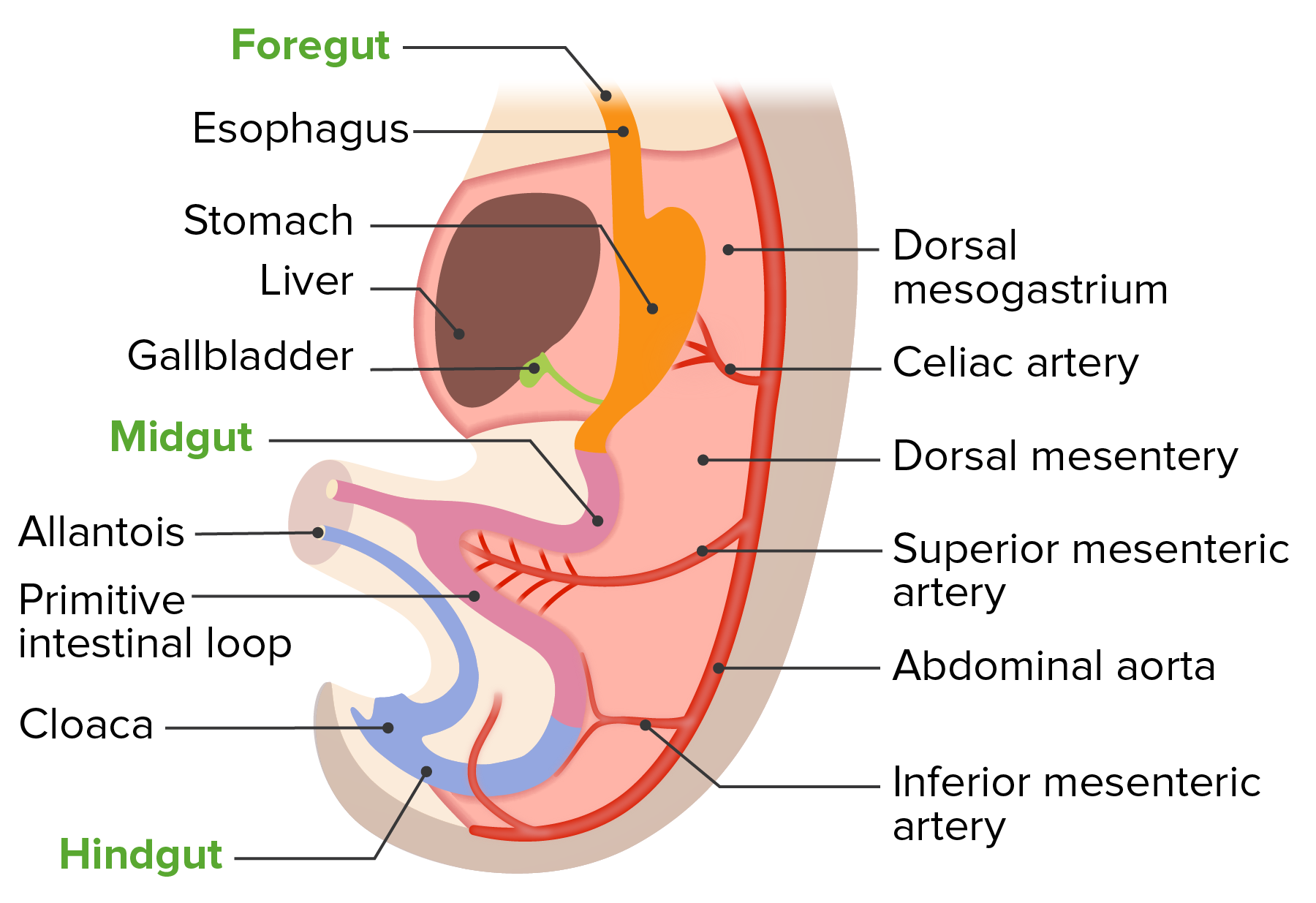
Desarrollo del tubo intestinal
Imagen por Lecturio.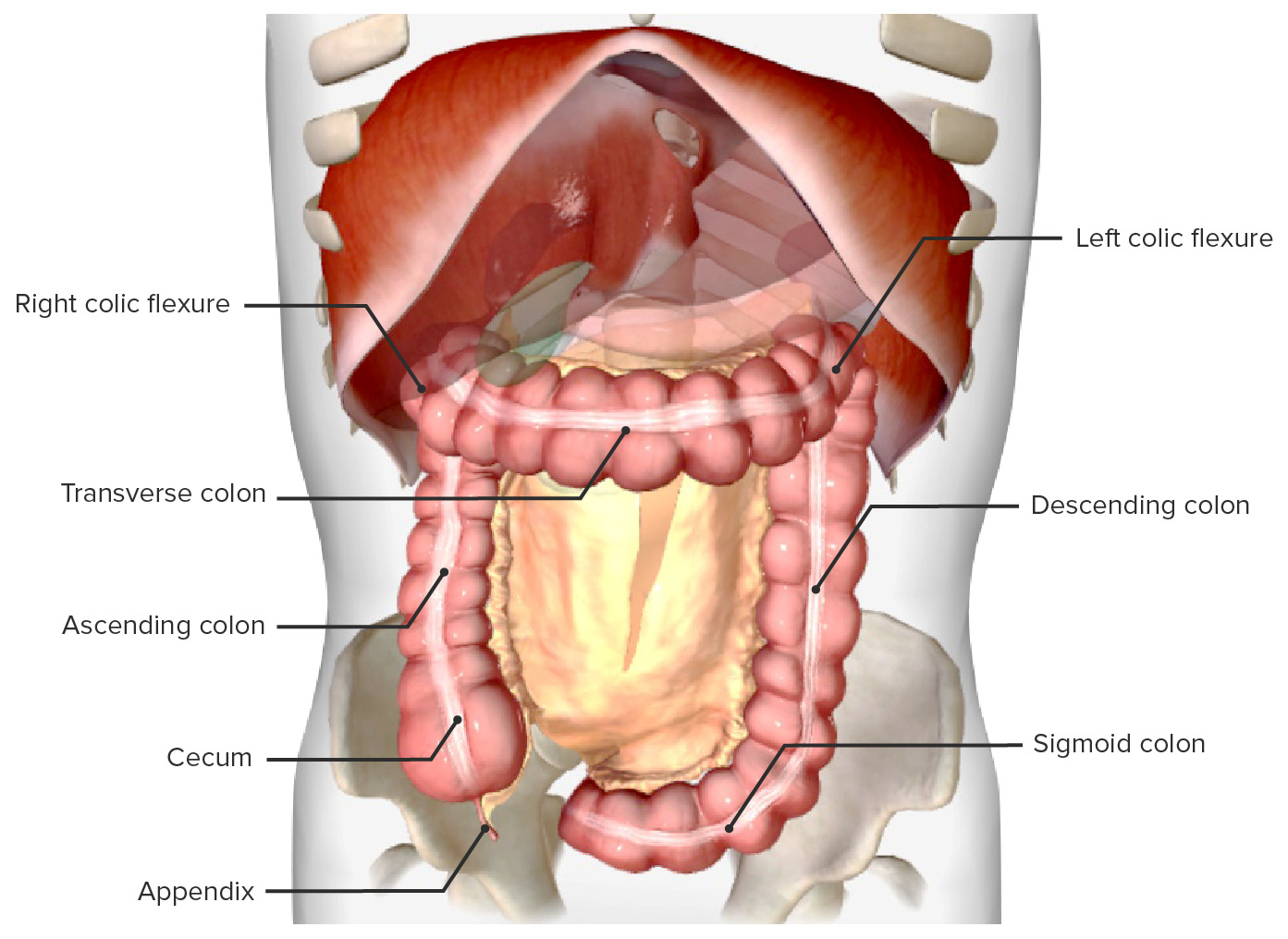
Imagen que demuestra la anatomía del intestino grueso in situ
Imagen por BioDigital, editado por Lecturio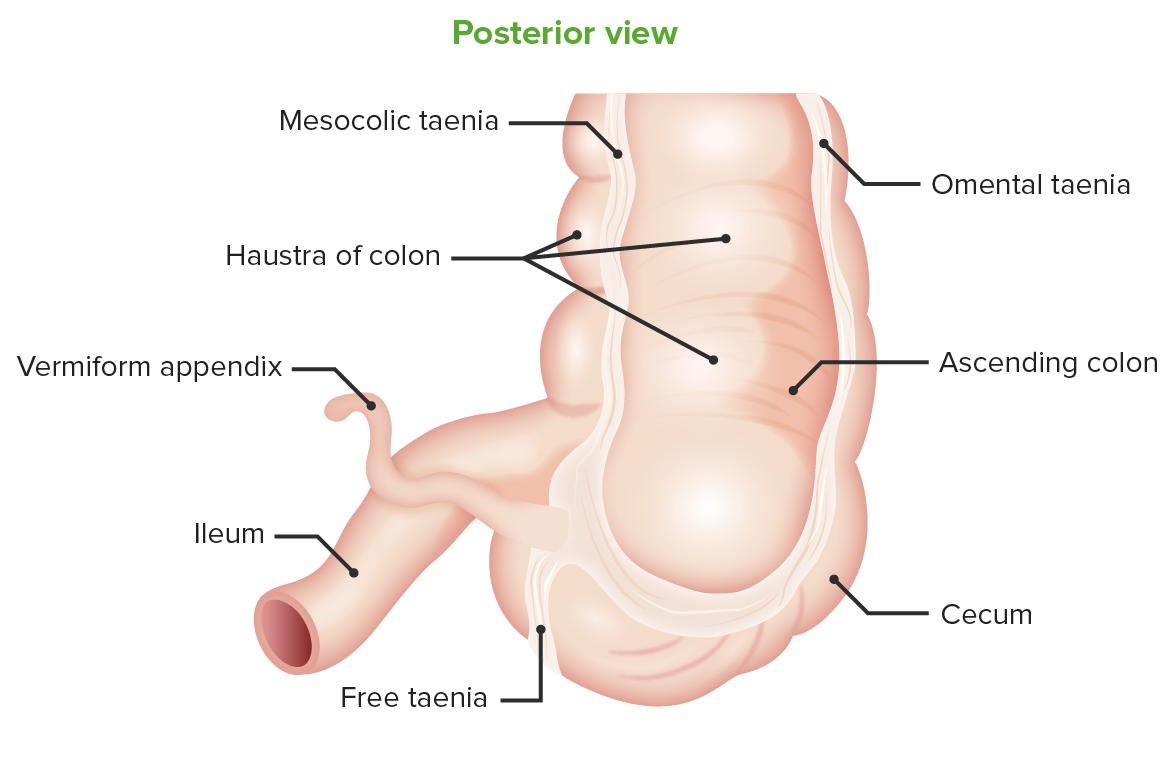
Vista posterior del ciego:
Ubicación del apéndice vermiforme en la confluencia de la tenia
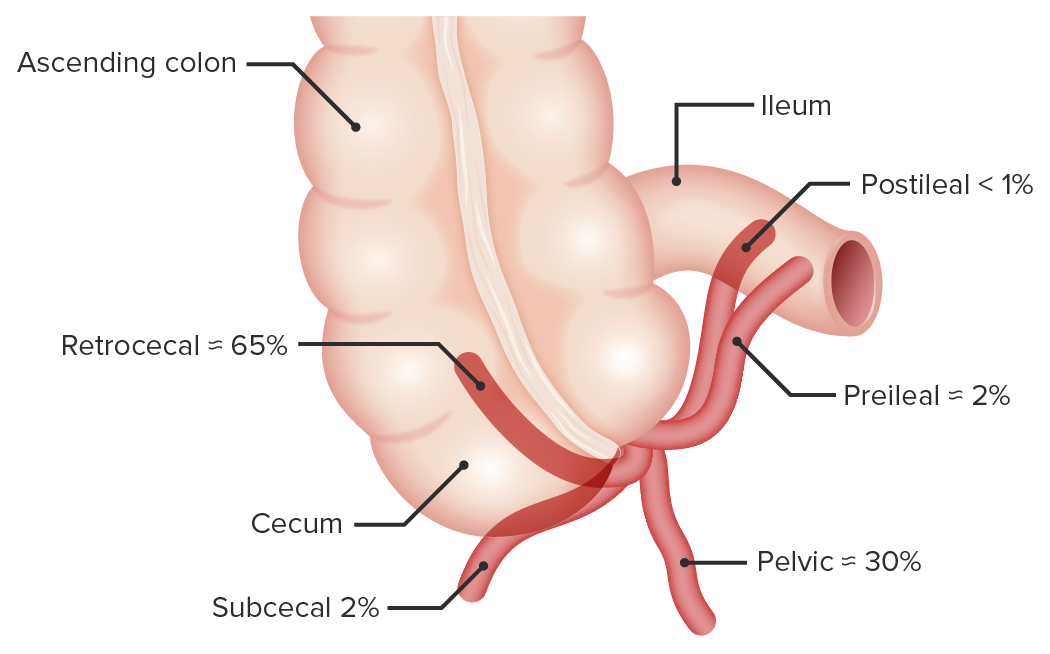
Vista anterior del ciego que muestra diferentes variaciones anatómicas de ubicación apendicular:
Observe que la base del apéndice es constante; sin embargo, la ubicación de la punta puede variar.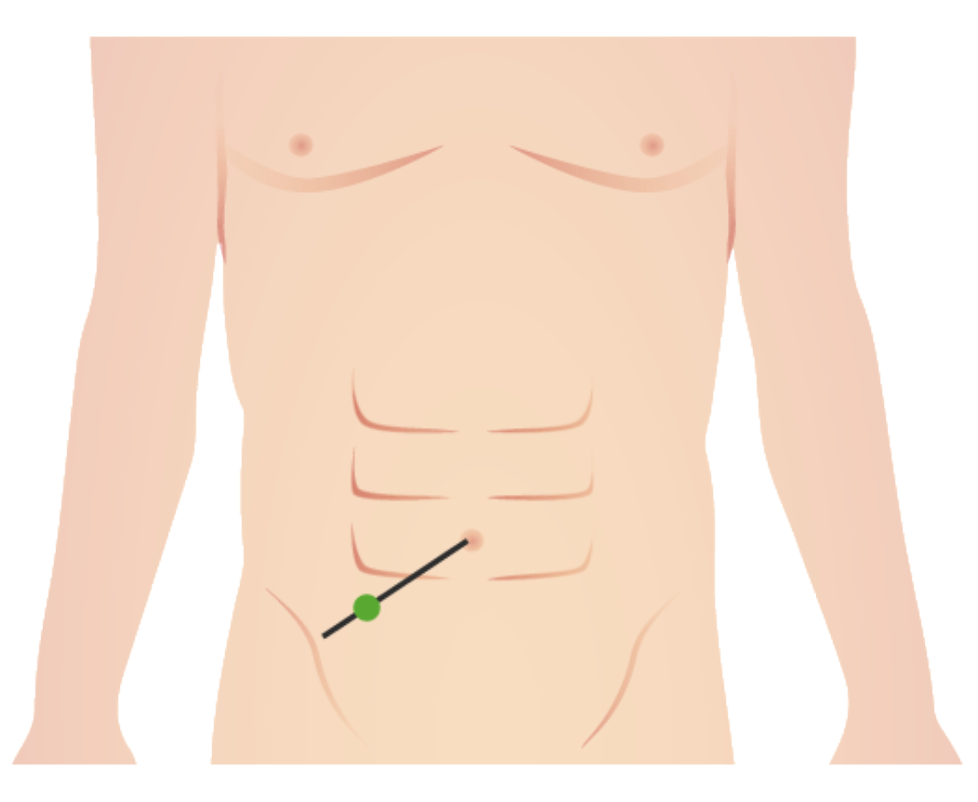
Ubicaciones de los puntos de McBurney y Lanz
Imagen por Lecturio. Licencia: CC BY-NC-SA 4.0Varias características anatómicas distinguen el intestino grueso del intestino delgado y el recto, que incluyen:
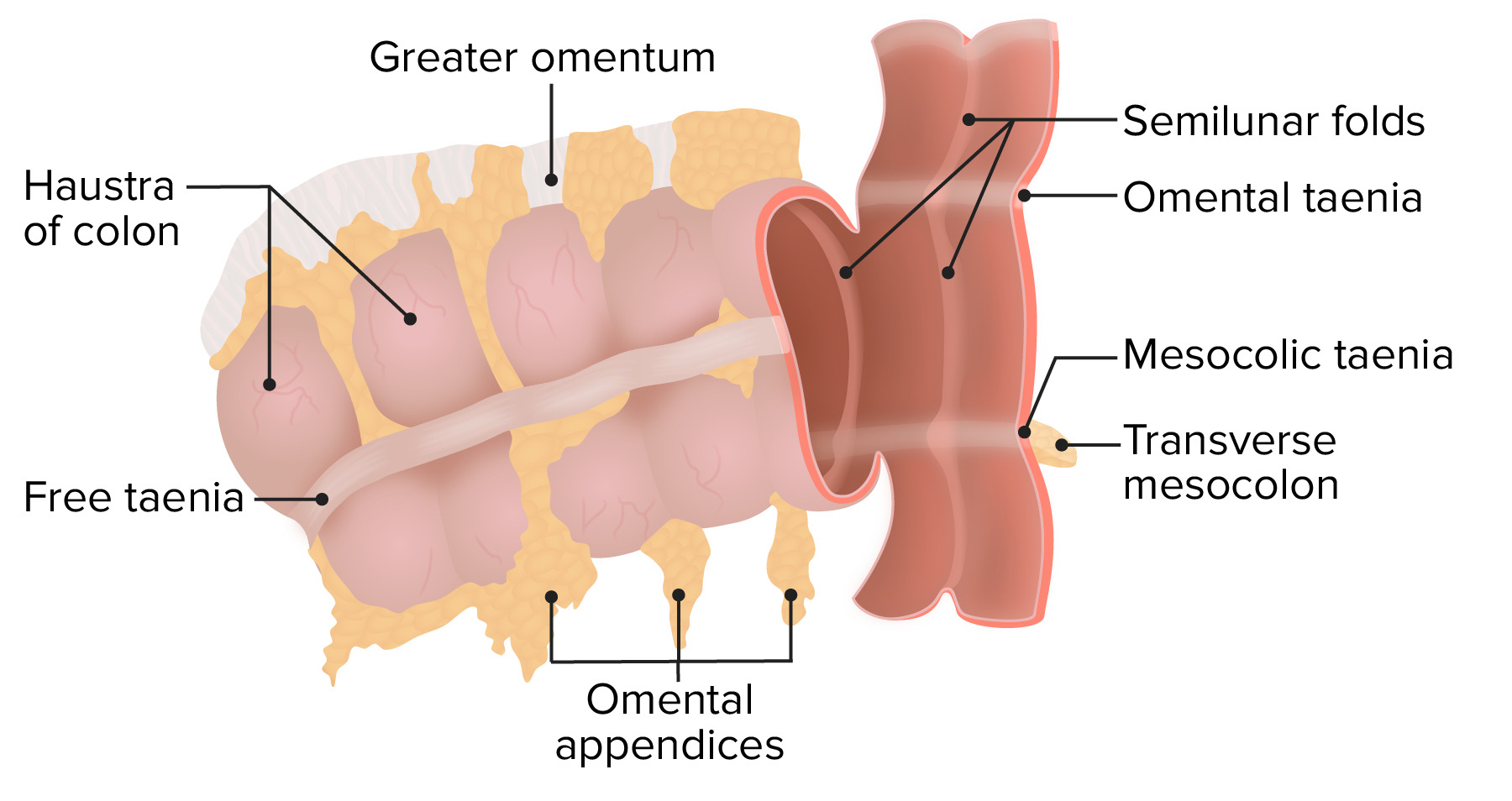
Diagrama que representa la tenia coli, haustra y los apéndices omentales:
Observe cómo el mesocolon transverso se une a la tenia mesocólica.
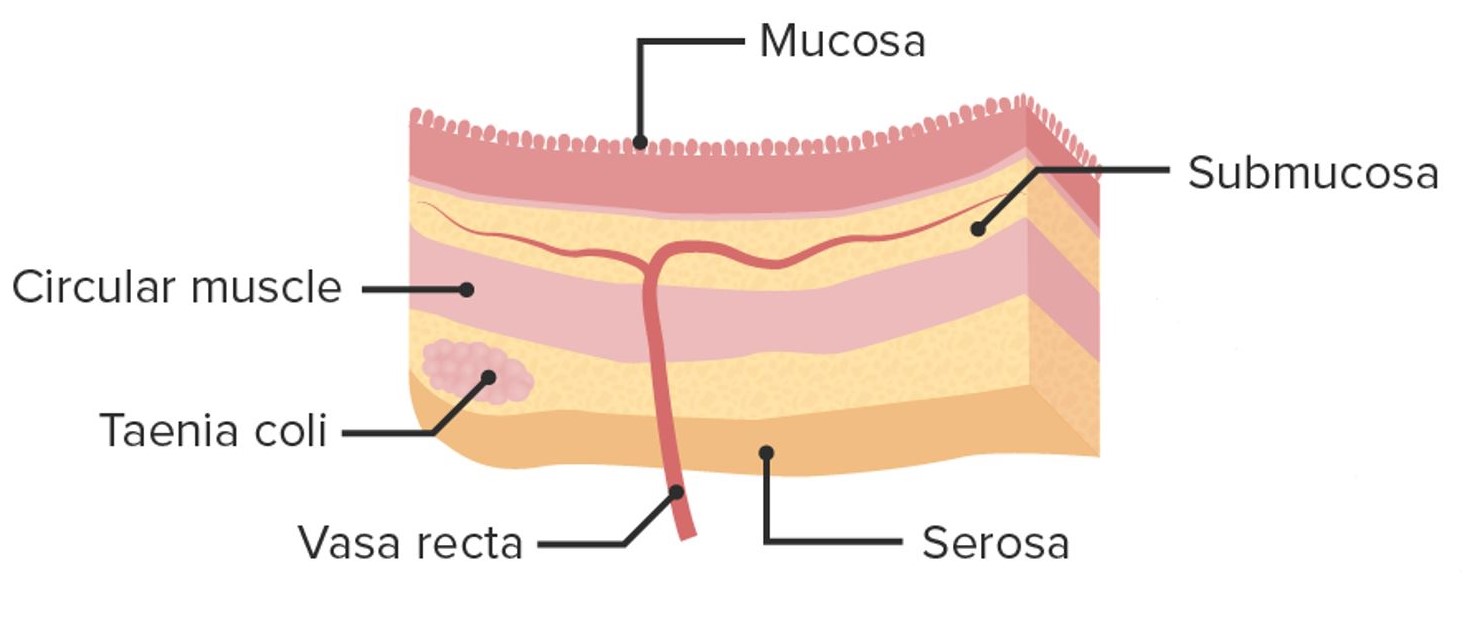
Capas de la pared del colon
Imagen por Lecturio.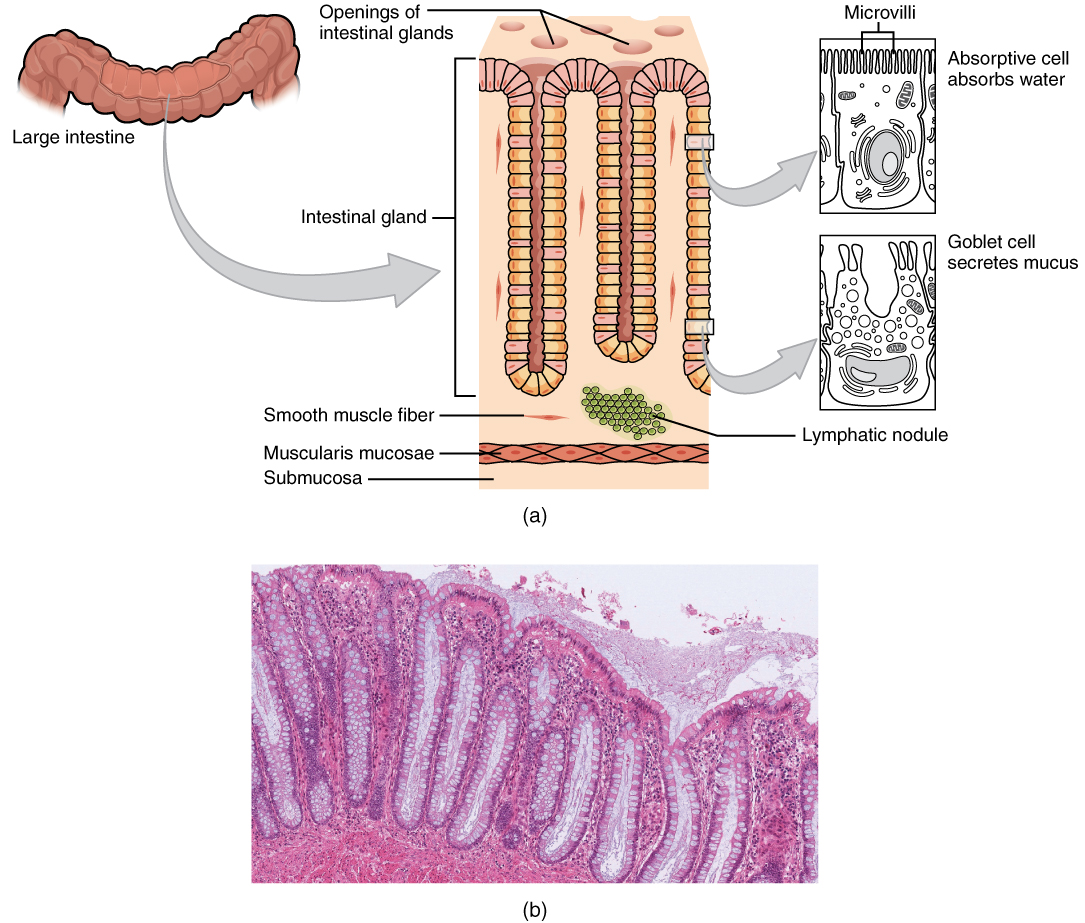
Histología del colon:
Tenga en cuenta las muchas glándulas en forma de tubo dentro de la lámina propia.
La capa muscular primaria de la pared del colon Colon The large intestines constitute the last portion of the digestive system. The large intestine consists of the cecum, appendix, colon (with ascending, transverse, descending, and sigmoid segments), rectum, and anal canal. The primary function of the colon is to remove water and compact the stool prior to expulsion from the body via the rectum and anal canal. Colon, Cecum, and Appendix: Anatomy.
La irrigación arterial es a través de la arteria mesentérica superior y la arteria mesentérica inferior.
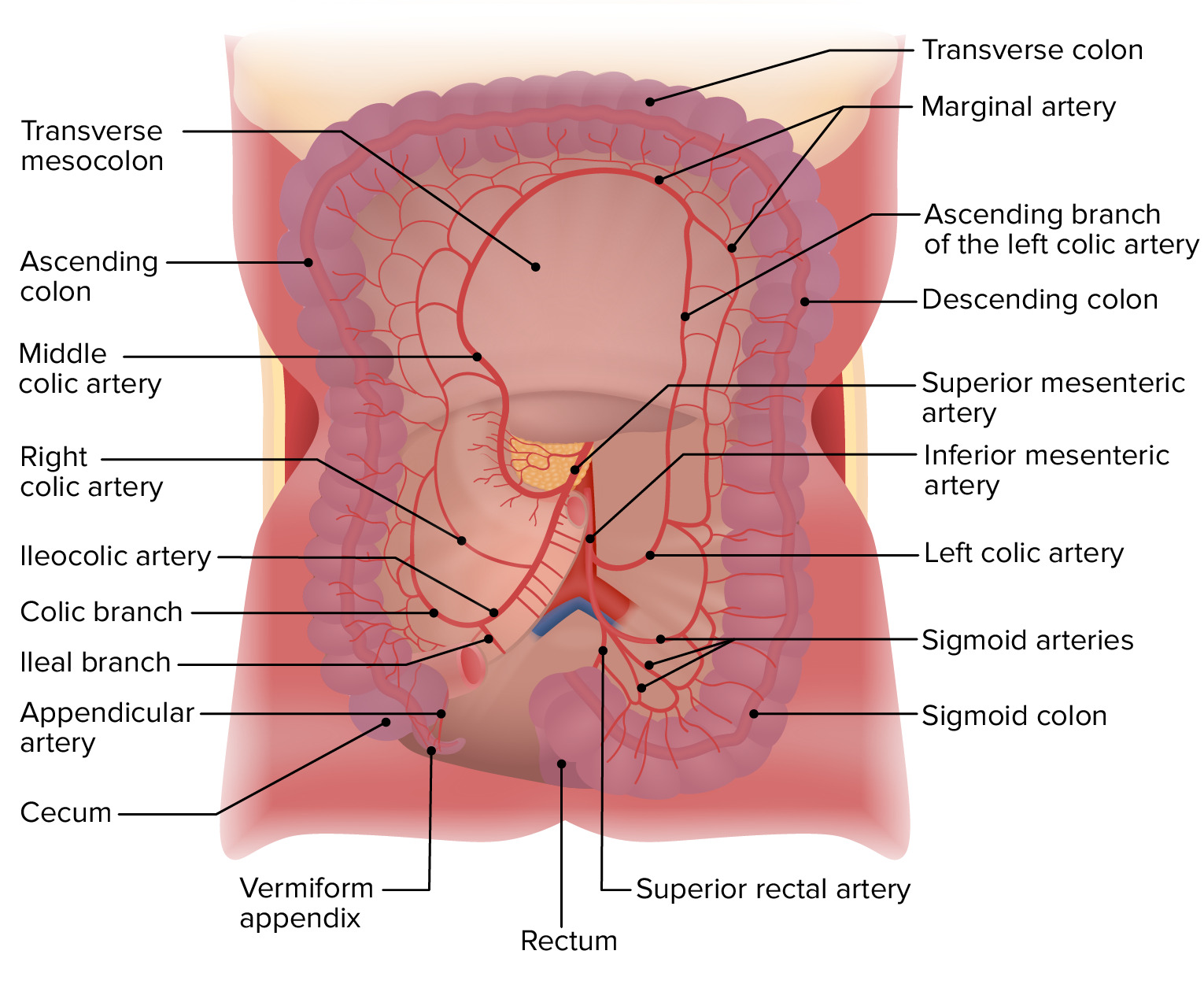
Irrigación del intestino grueso
Imagen por Lecturio.El ciego, apéndice y colon Colon The large intestines constitute the last portion of the digestive system. The large intestine consists of the cecum, appendix, colon (with ascending, transverse, descending, and sigmoid segments), rectum, and anal canal. The primary function of the colon is to remove water and compact the stool prior to expulsion from the body via the rectum and anal canal. Colon, Cecum, and Appendix: Anatomy drenan a través de venas nombradas que corren paralelas a sus arterias, que finalmente drenan en EN Erythema nodosum is an immune-mediated panniculitis (inflammation of the subcutaneous fat) caused by a type IV (delayed-type) hypersensitivity reaction. It commonly manifests in young women as tender, erythematous nodules on the shins. Erythema Nodosum la vena mesentérica superior y vena mesentérica inferior.

Drenaje venoso del colon
Imagen por Lecturio.A través de múltiples ganglios linfáticos abdominales:
El colon Colon The large intestines constitute the last portion of the digestive system. The large intestine consists of the cecum, appendix, colon (with ascending, transverse, descending, and sigmoid segments), rectum, and anal canal. The primary function of the colon is to remove water and compact the stool prior to expulsion from the body via the rectum and anal canal. Colon, Cecum, and Appendix: Anatomy está inervado por el SNA, que tiene divisiones parasimpáticas y simpáticas.