



Cystoisospora Cystoisospora Cystoisospora is a genus within the Coccidia subclass of protozoans. They are single-celled, obligate intracellular parasites that cause intestinal infections in humans. Humans are the only host for these species, and they are both transmitted through the fecal-oral route. The symptoms of cystoisosporiasis are watery diarrhea, abdominal pain, and fever. Cystoisospora/Cystoisosporiasis and Cyclospora/Cyclosporiasis e Cyclospora Cyclospora Cyclospora is a genus within the Coccidia subclass of protozoans. They are single-celled, obligate intracellular parasites that cause intestinal infections in humans. Humans are the only host for these species, and they are both transmitted through the fecal-oral route. The symptoms of cyclosporiasis are watery diarrhea, abdominal pain, and fever. Cystoisospora/Cystoisosporiasis and Cyclospora/Cyclosporiasis são géneros dentro da subclasse Coccidia Coccidia A subclass of protozoans commonly parasitic in the epithelial cells of the intestinal tract but also found in the liver and other organs. Its organisms are found in both vertebrates and higher invertebrates and comprise two orders: eimeriida and eucoccidiida. Cystoisospora/Cystoisosporiasis and Cyclospora/Cyclosporiasis dos protozoários. Estes parasitas unicelulares e intracelulares obrigatórios causam infeções intestinais em humanos. Os humanos são o único hospedeiro destas espécies e ambas são transmitidas através da via fecal-oral. Os sintomas da cistoisosporíase e ciclosporíase são diarreia aquosa, dor abdominal e febre. A cistoisosporíase grave pode ocorrer em indivíduos imunocomprometidos, nomeadamente aqueles com VIH/SIDA, e pode levar à má-absorção, perda de peso e desidratação. Ambas as doenças são autolimitadas em indivíduos imunocompetentes, embora a ciclosporíase tenha uma evolução mais MAIS Androgen Insensitivity Syndrome prolongada. O diagnóstico é obtido através da identificação de ovócitos nas amostras de fezes. A antibioterapia com trimetoprim-sulfametoxazol pode ser usada (sobretudo em indivíduos imunocomprometidos).
Last updated: Dec 15, 2025
Ambos os microorganismos provocam doenças intestinais em humanos.
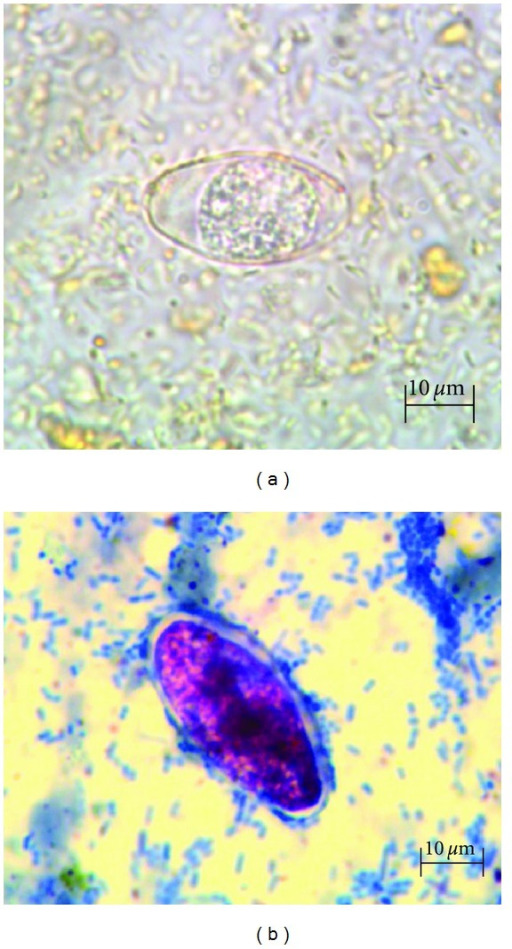
Imagens microscópicas de Cystoisospora:
(a): Cystoisospora belli sob preparação salina
(b): Cystoisospora belli sob coloração ácido-resistente (também conhecida como coloração de Ziehl-Neelsen)
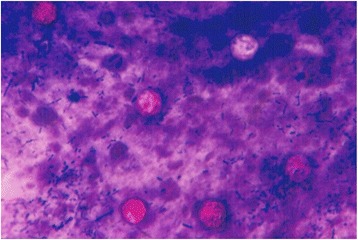
Ovócitos de cyclospora cayetanensis em esfregaço fecal sob coloração ácido-resistente
Imagem: “Cyclospora cayetanensis oocysts” de Kaminsky RG et al. Licença: CC BY 4.0Cystoisospora Cystoisospora Cystoisospora is a genus within the Coccidia subclass of protozoans. They are single-celled, obligate intracellular parasites that cause intestinal infections in humans. Humans are the only host for these species, and they are both transmitted through the fecal-oral route. The symptoms of cystoisosporiasis are watery diarrhea, abdominal pain, and fever. Cystoisospora/Cystoisosporiasis and Cyclospora/Cyclosporiasis:
Cyclospora Cyclospora Cyclospora is a genus within the Coccidia subclass of protozoans. They are single-celled, obligate intracellular parasites that cause intestinal infections in humans. Humans are the only host for these species, and they are both transmitted through the fecal-oral route. The symptoms of cyclosporiasis are watery diarrhea, abdominal pain, and fever. Cystoisospora/Cystoisosporiasis and Cyclospora/Cyclosporiasis:
Ambas as espécies são encontradas apenas em humanos.
Cystoisospora Cystoisospora Cystoisospora is a genus within the Coccidia subclass of protozoans. They are single-celled, obligate intracellular parasites that cause intestinal infections in humans. Humans are the only host for these species, and they are both transmitted through the fecal-oral route. The symptoms of cystoisosporiasis are watery diarrhea, abdominal pain, and fever. Cystoisospora/Cystoisosporiasis and Cyclospora/Cyclosporiasis (doença grave):
Cyclospora Cyclospora Cyclospora is a genus within the Coccidia subclass of protozoans. They are single-celled, obligate intracellular parasites that cause intestinal infections in humans. Humans are the only host for these species, and they are both transmitted through the fecal-oral route. The symptoms of cyclosporiasis are watery diarrhea, abdominal pain, and fever. Cystoisospora/Cystoisosporiasis and Cyclospora/Cyclosporiasis:
Ambas as espécies são transmitidas por via fecal-oral (ingestão de alimentos e água contaminados).
Cystoisospora Cystoisospora Cystoisospora is a genus within the Coccidia subclass of protozoans. They are single-celled, obligate intracellular parasites that cause intestinal infections in humans. Humans are the only host for these species, and they are both transmitted through the fecal-oral route. The symptoms of cystoisosporiasis are watery diarrhea, abdominal pain, and fever. Cystoisospora/Cystoisosporiasis and Cyclospora/Cyclosporiasis e Cyclospora Cyclospora Cyclospora is a genus within the Coccidia subclass of protozoans. They are single-celled, obligate intracellular parasites that cause intestinal infections in humans. Humans are the only host for these species, and they are both transmitted through the fecal-oral route. The symptoms of cyclosporiasis are watery diarrhea, abdominal pain, and fever. Cystoisospora/Cystoisosporiasis and Cyclospora/Cyclosporiasis apresentam um ciclo de vida semelhante:

O ciclo de vida da Cystoisospora belli. A ingestão de ovócitos maduros permite que o parasita invada as cálulas epiteliais do intestino delgado. Aí, continua o seu ciclo de vida e reproduz-se. Os ovócitos imaturos são excretados nas fezes e amadurecem no ambiente, permitindo a continuação deste ciclo
Imagem por Lecturio.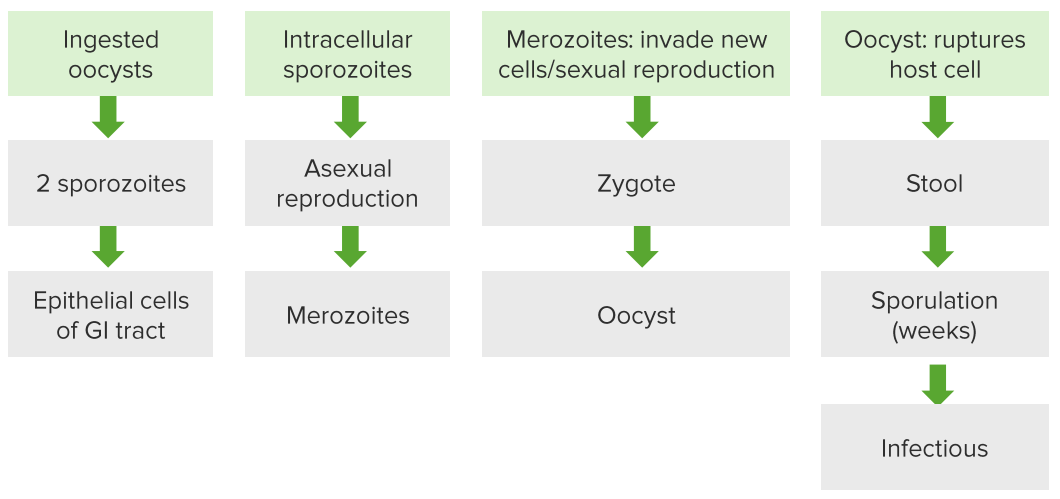
O ciclo de vida de Cyclospora cayetanensis
Imagem por Lecturio.A cistoisosporíase tem um período de incubação de 7-14 dias. A apresentação da doença varia de acordo com o estado imunológico do indivíduo.
A ciclosporíase tem um período de incubação de aproximadamente 7 dias.
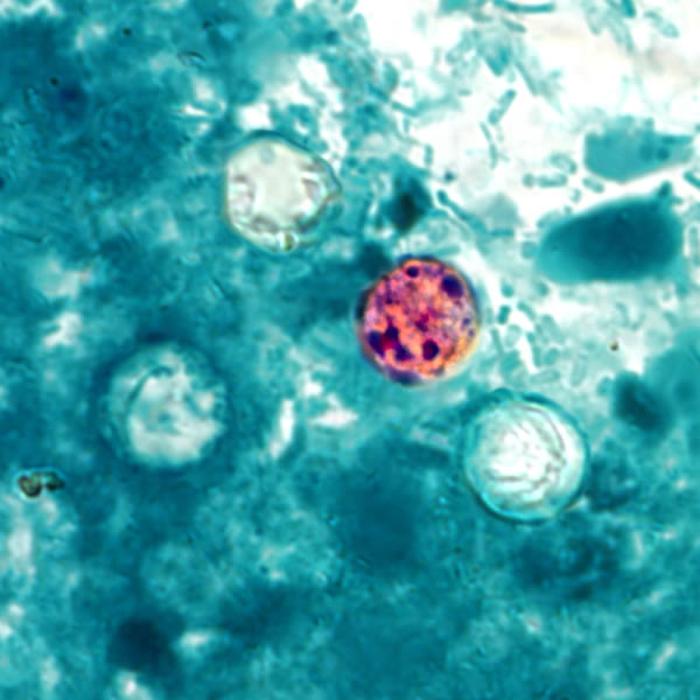
Fotomicrografia de ovócitos de Cyclospora cayetanensis encontrados numa amostra de fezes, utilizando a coloração ácido-resistente (Ziehl-Neelsen)
Imagem: “Cyclospora cayetanensis” por CDC. Licença: Public DomainDa antibioterapia utilizada no tratamento da ciclosporíase estão incluídos: