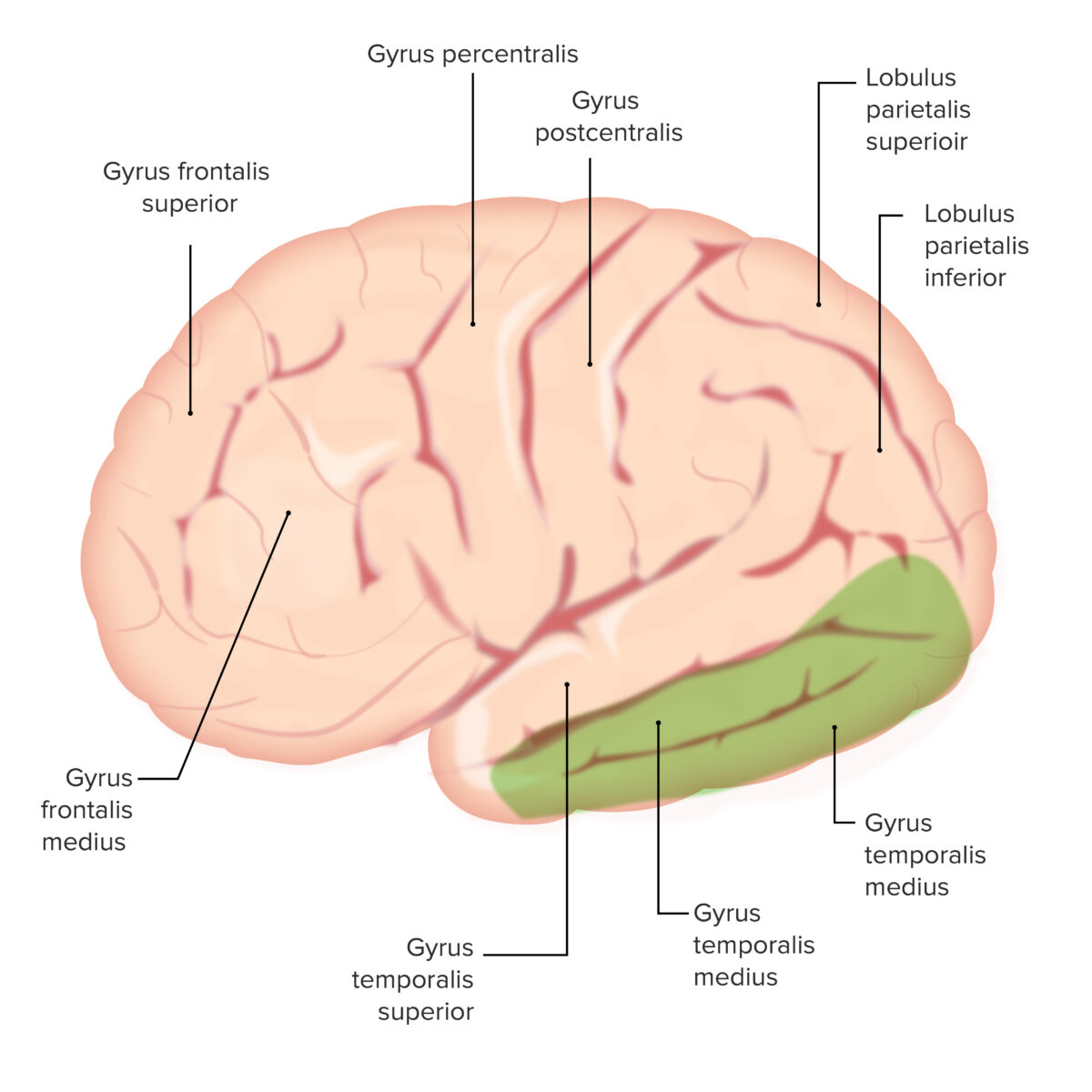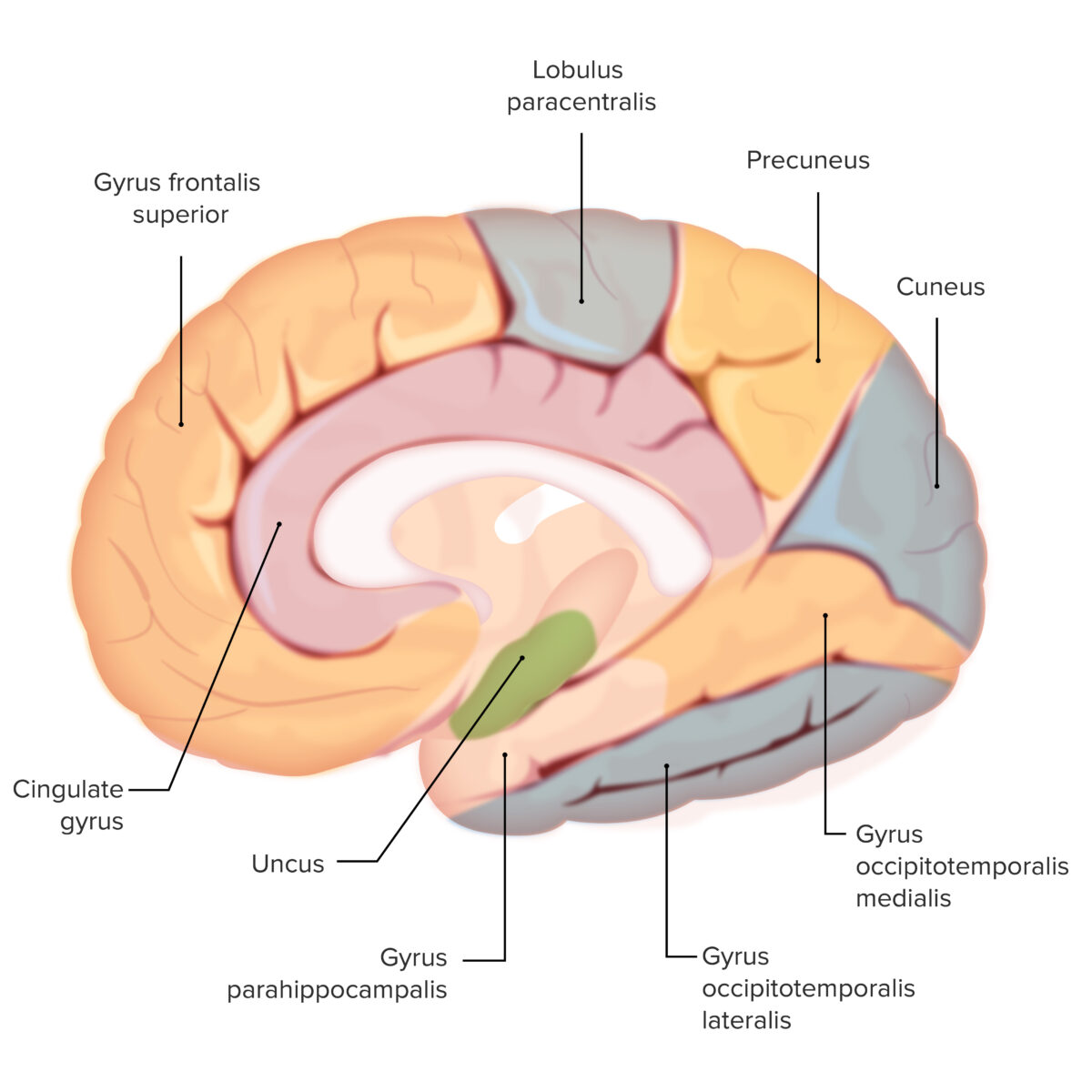



Córtex Cerebral

O córtex cerebral é o maior e mais MAIS Androgen Insensitivity Syndrome desenvolvido componente do cérebro humano e do sistema nervoso central (SNC). Ocupando a parte superior da cavidade craniana, o córtex cerebral possui 4 lobos e divide-se em 2 hemisférios unidos centralmente pelo corpo caloso. O córtex é organizado em giros que são separados por sulcos. O córtex cerebral fornece o substrato neuronal para a experiência consciente dos estímulos sensitivos.

Last updated: Dec 15, 2025

Editorial responsibility: Stanley Oiseth, Lindsay Jones, Evelin Maza

Características Gerais

Descrição Geral

O córtex cerebral é a camada mais MAIS Androgen Insensitivity Syndrome superficial do cérebro:

  • A mais MAIS Androgen Insensitivity Syndrome superficial das estruturas cerebrais, situando-se profundamente às meninges Meninges The brain and the spinal cord are enveloped by 3 overlapping layers of connective tissue called the meninges. The layers are, from the most external layer to the most internal layer, the dura mater, arachnoid mater, and pia mater. Between these layers are 3 potential spaces called the epidural, subdural, and subarachnoid spaces. Meninges: Anatomy
  • Localizado acima do tentório do cérebro, uma estrutura formada por reflexões durais posicionadas superiormente ao cerebelo
  • Deriva embriologicamente da ectoderme

O cérebro é maior porção do encéfalo. O cérebro é composto por matéria cinzenta (córtex cerebral) e estruturas subjacentes de matéria branca:

  • Organizados em 4 lobos cerebrais
  • Subdividido em sulcos (reentrâncias) e giros (proeminências) nomeados individualmente e que servem para funções únicas.
  • A porção mais MAIS Androgen Insensitivity Syndrome desenvolvida do encéfalo humano:
    • Localizado no crânio
    • Conectado à medula espinhal através do tronco cerebral
  • Embriologia: Ectoderme dorsal → tubo neural → prosencéfalo → telencéfalo
Vesícula cerebral

O desenvolvimento embrionário do cérebro: observar a linhagem a partir do tubo neural → prosencéfalo → telencéfalo → cérebro

Imagem: “Brain Vesicle” por Phil Schatz. Licença: CC BY 4.0
Lobos

  • Lobo frontal Frontal The bone that forms the frontal aspect of the skull. Its flat part forms the forehead, articulating inferiorly with the nasal bone and the cheek bone on each side of the face. Skull: Anatomy
  • Lobo parietal Parietal One of a pair of irregularly shaped quadrilateral bones situated between the frontal bone and occipital bone, which together form the sides of the cranium. Skull: Anatomy
  • Lobo occipital Occipital Part of the back and base of the cranium that encloses the foramen magnum. Skull: Anatomy
  • Lobo temporal

Sulcos importantes

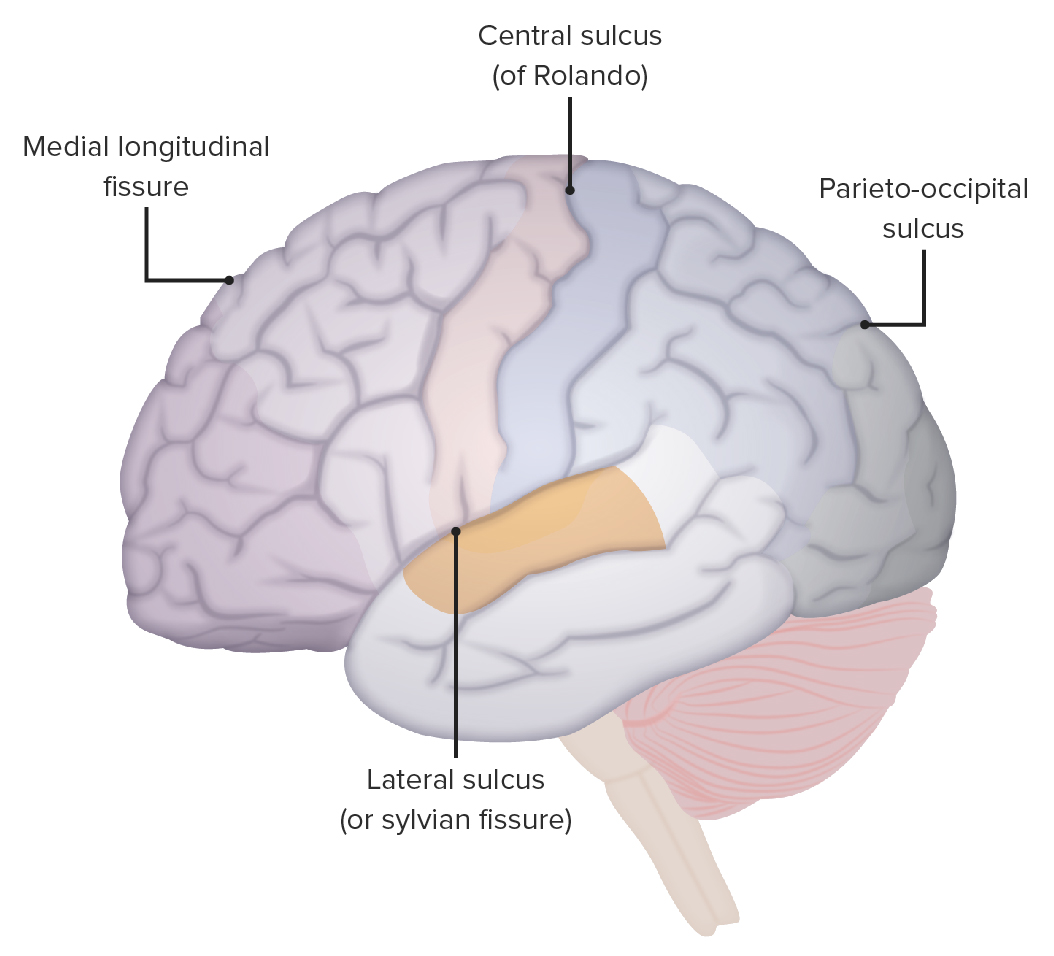
  • Fissura longitudinal medial: separa os hemisférios cerebrais esquerdo e direito
  • Sulco lateral (ou fissura Sylvian): separa os lobos parietal Parietal One of a pair of irregularly shaped quadrilateral bones situated between the frontal bone and occipital bone, which together form the sides of the cranium. Skull: Anatomy e temporal
  • Sulco central (de Rolando): separa os lobos parietal Parietal One of a pair of irregularly shaped quadrilateral bones situated between the frontal bone and occipital bone, which together form the sides of the cranium. Skull: Anatomy e frontal Frontal The bone that forms the frontal aspect of the skull. Its flat part forms the forehead, articulating inferiorly with the nasal bone and the cheek bone on each side of the face. Skull: Anatomy
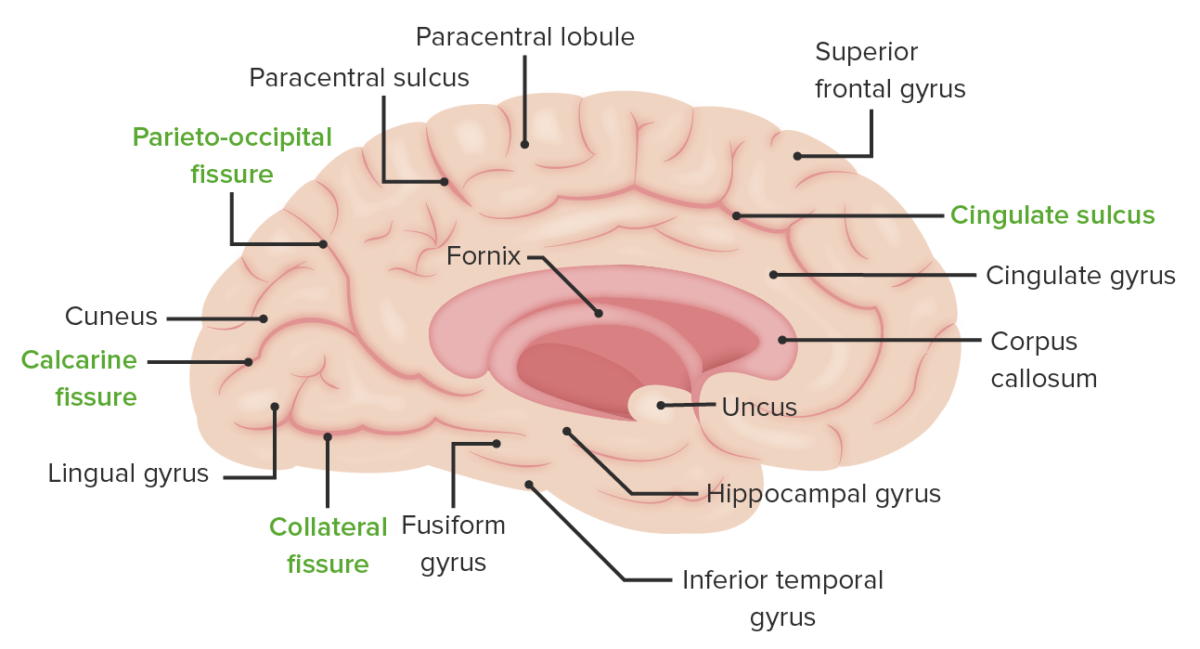
  • Sulco colateral: separa o giro fusiforme do giro hipocampal
  • Sulco calcarino: separa os lobos occipitais horizontalmente nos giros cúneo (superior) e lingual (inferior)
  • Sulco parieto-occipital: separa os lobos parietal Parietal One of a pair of irregularly shaped quadrilateral bones situated between the frontal bone and occipital bone, which together form the sides of the cranium. Skull: Anatomy e occipital Occipital Part of the back and base of the cranium that encloses the foramen magnum. Skull: Anatomy

Giros importantes

  • Giro pré-central: no lobo frontal Frontal The bone that forms the frontal aspect of the skull. Its flat part forms the forehead, articulating inferiorly with the nasal bone and the cheek bone on each side of the face. Skull: Anatomy, controla o movimento motor Motor Neurons which send impulses peripherally to activate muscles or secretory cells. Nervous System: Histology voluntário
  • Giro pós-central: no lobo parietal Parietal One of a pair of irregularly shaped quadrilateral bones situated between the frontal bone and occipital bone, which together form the sides of the cranium. Skull: Anatomy, onde se localiza o córtex somatossensorial
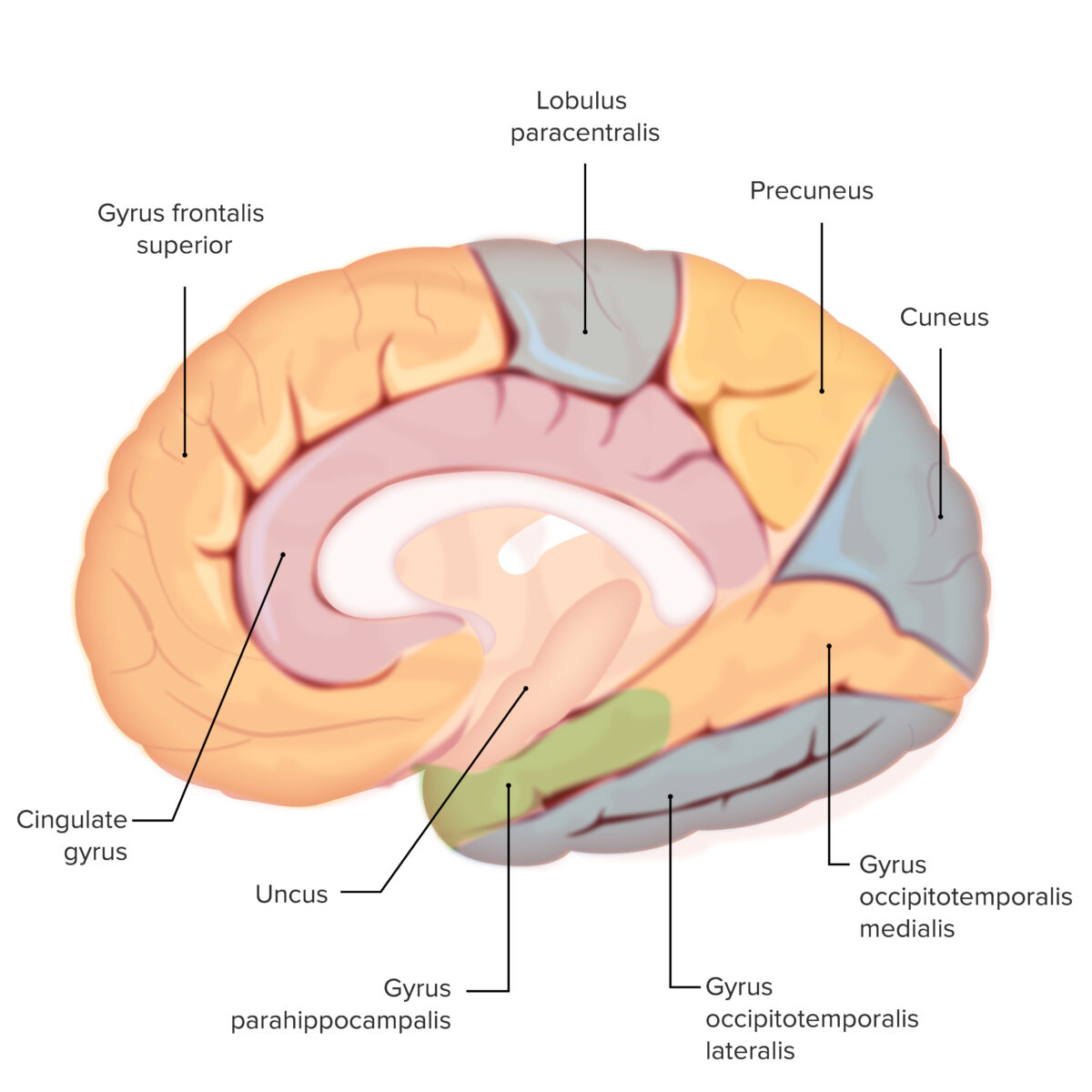
  • Giro cingulado: localizado acima do corpo caloso e faz parte do sistema límbico
  • Giro fusiforme; nos lobos temporal e occipital Occipital Part of the back and base of the cranium that encloses the foramen magnum. Skull: Anatomy, que se acredita desempenhar um papel no reconhecimento facial e de palavras
  • Giro temporal inferior: envolvido com o processamento auditivo
  • Giro hipocampal (giro parahipocampal) → dobra-se na superfície interna do lobo temporal que faz fronteira com o hipocampo
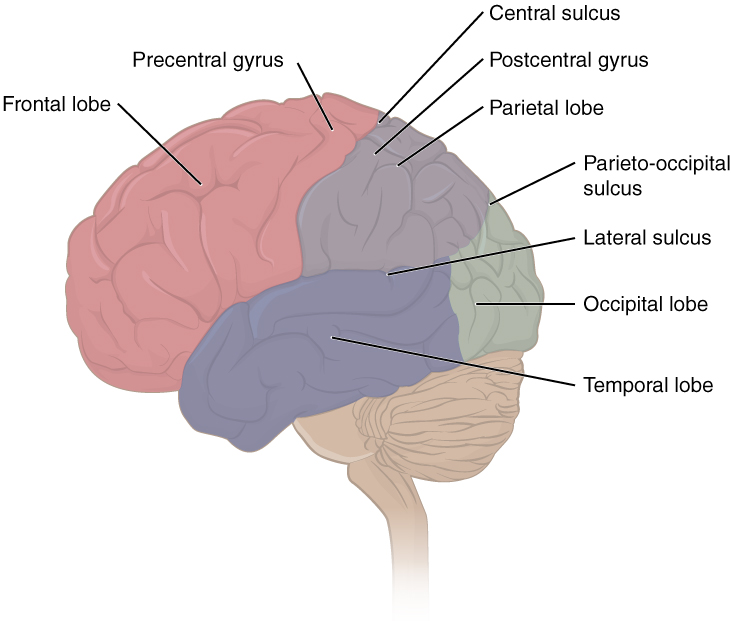
Lobos do córtex cerebral

A imagem demonstra a localização de algumas estruturas-chave, incluindo cada um dos 4 lobos, os giros pré-central e pós-central e os sulcos central, lateral e parieto-occipital.

Imagem: “Lobes of Cerebral Cortex” por OpenStax Anatomy and Physiology. Licença: CC BY 4.0
Estrutura Microscópica e Neurovasculatura

Estrutura microscópica

  • Substância cinzenta externa
  • Substância branca interna composta por 2 partes:

Sistema vascular

  • Vascularização arterial:
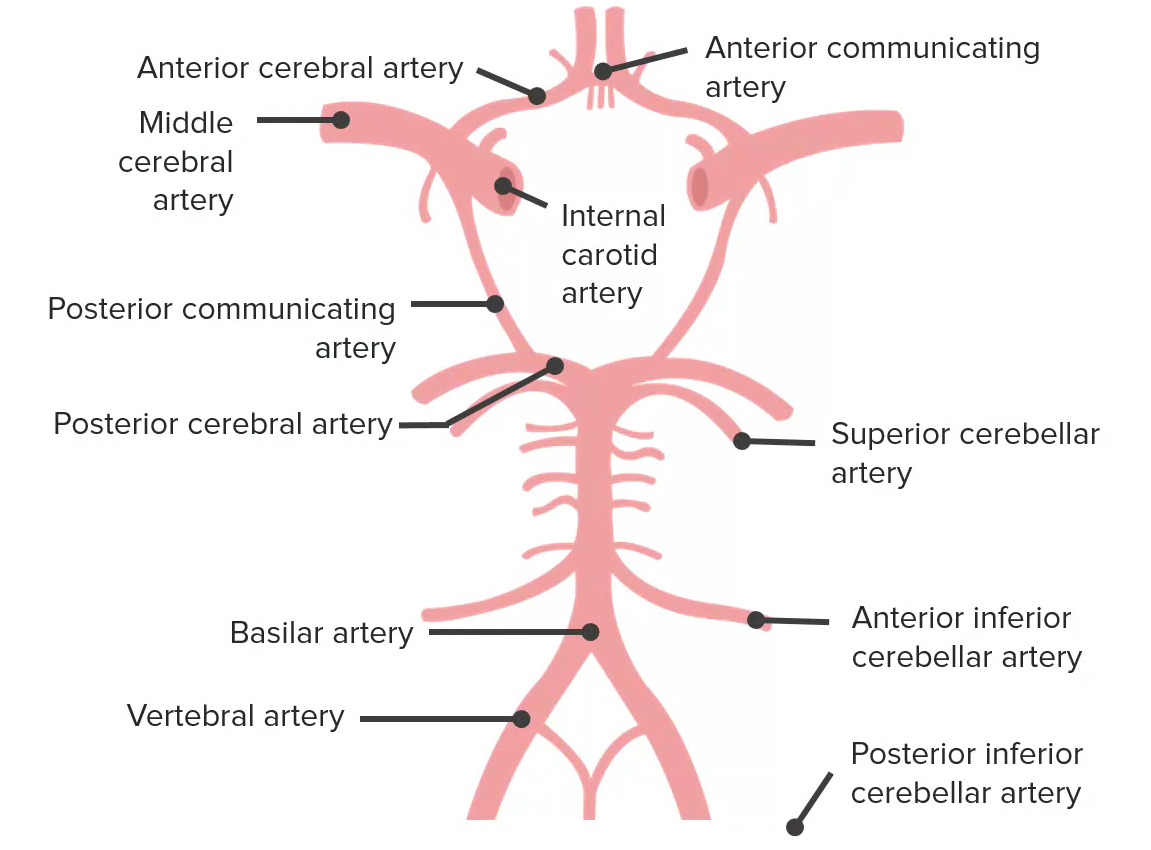
    • O suprimento arterial é feito pelas artérias carótidas internas e vertebrais em pares, que ancoram e dão origem ao círculo de Willis.
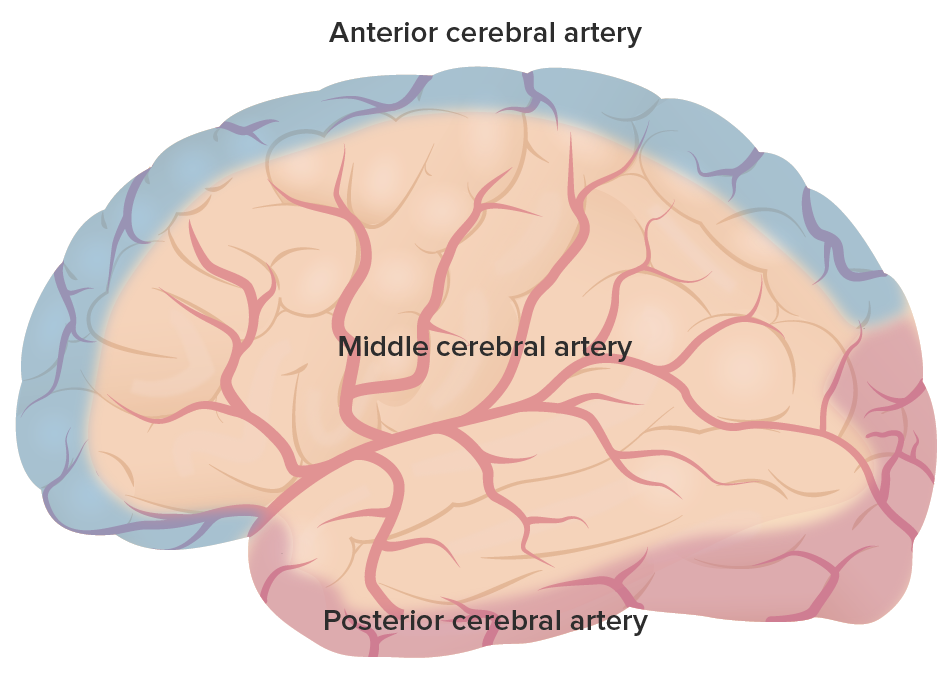
    • O círculo de Willis dá origem a 3 artérias cerebrais primárias:
      • Artéria cerebral anterior: supre a superfície anteromedial
      • Artéria cerebral média (ACM): supre a superfície lateral
      • Artéria cerebral posterior (ACP): supre as superfícies posterior e inferior
  • Drenagem venosa:
    • As veias cerebrais drenam para grandes seios venosos que atravessam a dura-máter.
    • Todos desembocam na confluência dos seios, seios transversos, seios sigmoides e terminam nas veias jugulares.

Lobo Frontal

O lobo frontal Frontal The bone that forms the frontal aspect of the skull. Its flat part forms the forehead, articulating inferiorly with the nasal bone and the cheek bone on each side of the face. Skull: Anatomy é o aspecto mais MAIS Androgen Insensitivity Syndrome anterior/superior do cérebro supratentorial. Controla muitas das funções de ordem superior do cérebro, incluindo função motora, pensamento executivo e fala.

  • Limites:
    • Anteriormente pelo osso frontal Frontal The bone that forms the frontal aspect of the skull. Its flat part forms the forehead, articulating inferiorly with the nasal bone and the cheek bone on each side of the face. Skull: Anatomy
    • Superiormente pelos ossos frontal Frontal The bone that forms the frontal aspect of the skull. Its flat part forms the forehead, articulating inferiorly with the nasal bone and the cheek bone on each side of the face. Skull: Anatomy e parietal Parietal One of a pair of irregularly shaped quadrilateral bones situated between the frontal bone and occipital bone, which together form the sides of the cranium. Skull: Anatomy
    • Posteriormente pelo sulco central
    • Inferiormente pela fossa craniana anterior
  • Localização do lobo frontal Frontal The bone that forms the frontal aspect of the skull. Its flat part forms the forehead, articulating inferiorly with the nasal bone and the cheek bone on each side of the face. Skull: Anatomy:
    • Delineado posteriormente pelo sulco central
    • Medialmente delineado pela fissura longitudinal
    • Inferolateralmente delineado pela fissura lateral
  • Homúnculo motor Motor Neurons which send impulses peripherally to activate muscles or secretory cells. Nervous System: Histology: mapa neurológico no córtex motor Motor Neurons which send impulses peripherally to activate muscles or secretory cells. Nervous System: Histology primário representando a proporção do cérebro dedicada ao processamento da função motora
    • Extremidades inferiores representadas mais MAIS Androgen Insensitivity Syndrome medialmente
    • Tronco, extremidades superiores e face localizados mais MAIS Androgen Insensitivity Syndrome lateralmente
    • O tamanho de determinada característica no homúnculo está relacionado com o tamanho relativo da região do cérebro dedicada a essa característica específica.
  • Vascularização:
    • Lobo frontal Frontal The bone that forms the frontal aspect of the skull. Its flat part forms the forehead, articulating inferiorly with the nasal bone and the cheek bone on each side of the face. Skull: Anatomy lateral: ACM
    • Lobo frontal Frontal The bone that forms the frontal aspect of the skull. Its flat part forms the forehead, articulating inferiorly with the nasal bone and the cheek bone on each side of the face. Skull: Anatomy medial/superior: Artéria cerebral anterior
Tabela: Estrutura interna do lobo frontal Frontal The bone that forms the frontal aspect of the skull. Its flat part forms the forehead, articulating inferiorly with the nasal bone and the cheek bone on each side of the face. Skull: Anatomy
Nome Localização Número de
Brodmann
Função
Córtex motor Motor Neurons which send impulses peripherally to activate muscles or secretory cells. Nervous System: Histology primário Giro pré-central 4 Dita o controlo motor Motor Neurons which send impulses peripherally to activate muscles or secretory cells. Nervous System: Histology contralateral
Córtex pré-motor Anterior ao córtex motor Motor Neurons which send impulses peripherally to activate muscles or secretory cells. Nervous System: Histology primário 6 Programação de eventos motores; os neurónios são ativados antes dos neurónios motores primários
Córtex motor Motor Neurons which send impulses peripherally to activate muscles or secretory cells. Nervous System: Histology suplementar Superfície da linha média do hemisfério anterior à representação da perna no córtex motor Motor Neurons which send impulses peripherally to activate muscles or secretory cells. Nervous System: Histology primário 6 Planeamento de movimentos motores complexos
Córtex pré-frontal Porção anterior do lobo frontal Frontal The bone that forms the frontal aspect of the skull. Its flat part forms the forehead, articulating inferiorly with the nasal bone and the cheek bone on each side of the face. Skull: Anatomy 8–14, 24, 25, 32, 44–47 Olfato e função executiva (resolução de problemas, julgamento, planeamento, comportamento e emoções)
Campo ocular frontal Frontal The bone that forms the frontal aspect of the skull. Its flat part forms the forehead, articulating inferiorly with the nasal bone and the cheek bone on each side of the face. Skull: Anatomy Interseção do giro frontal Frontal The bone that forms the frontal aspect of the skull. Its flat part forms the forehead, articulating inferiorly with the nasal bone and the cheek bone on each side of the face. Skull: Anatomy médio com o giro pré-central 8
  • Coordenação dos movimentos oculares voluntários
  • Recebe aferências do córtex visual primário e secundário
  • Fornece eferentes para os núcleos musculares cerebrais dos nervos cranianos III, IV e VI → colículo superior → inervação dos núcleos musculares do olho
Área de Broca Giro frontal Frontal The bone that forms the frontal aspect of the skull. Its flat part forms the forehead, articulating inferiorly with the nasal bone and the cheek bone on each side of the face. Skull: Anatomy inferior do hemisfério dominante 44, 45 Produção de palavras (fala motora)
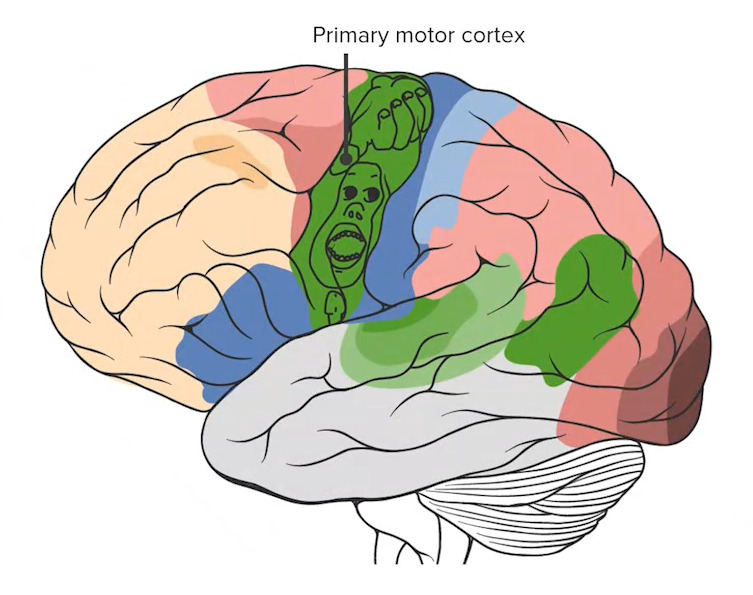
Cortex Motor Primário

Observar o córtex motor primário (a estrutura mais posterior do lobo frontal) com o homúnculo sobreposto, detalhando as proporções do córtex dedicadas ao processamento de cada função motora específica.

Imagem por Lecturio.

Related videos

Lobo Parietal

O lobo parietal Parietal One of a pair of irregularly shaped quadrilateral bones situated between the frontal bone and occipital bone, which together form the sides of the cranium. Skull: Anatomy situa-se posteriormente ao lobo frontal Frontal The bone that forms the frontal aspect of the skull. Its flat part forms the forehead, articulating inferiorly with the nasal bone and the cheek bone on each side of the face. Skull: Anatomy e superiormente ao lobo occipital Occipital Part of the back and base of the cranium that encloses the foramen magnum. Skull: Anatomy. Está associado aos processos de sensação e compreensão da linguagem.

  • Limites:
    • Anteriormente pelo sulco central
    • Superiormente pelo osso parietal Parietal One of a pair of irregularly shaped quadrilateral bones situated between the frontal bone and occipital bone, which together form the sides of the cranium. Skull: Anatomy,
    • Posteriormente pelo sulco parieto-occipital
    • Inferiormente pela fissura Sylvian.
  • Localização do lobo parietal Parietal One of a pair of irregularly shaped quadrilateral bones situated between the frontal bone and occipital bone, which together form the sides of the cranium. Skull: Anatomy: posterior ao sulco central nas superfícies superolateral e medial do hemisfério cerebral
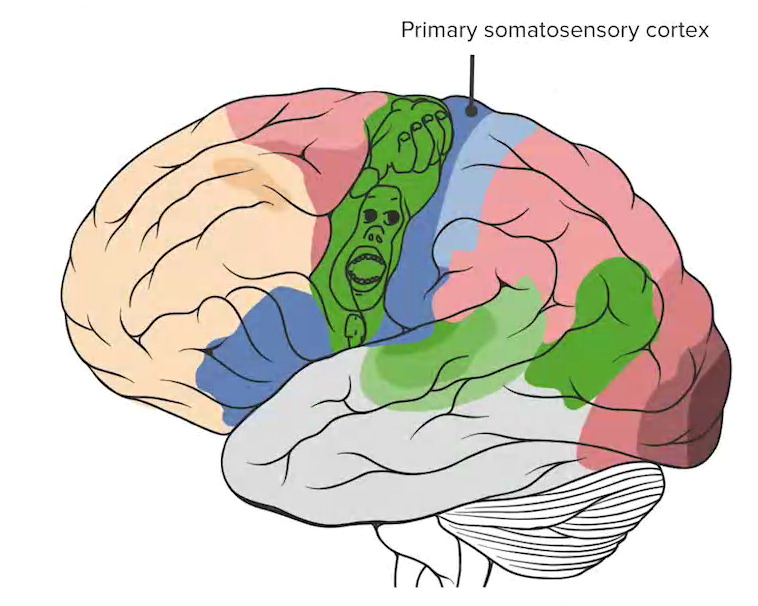
  • Homúnculo sensorial: mapa neurológico no córtex somatossensorial primário, representando a proporção do cérebro dedicada ao processamento da função sensorial
  • Vascularização:
    • Medial: artéria cerebral média (ACM) e artéria cerebral anterior (ACA)
    • Posterior: artéria cerebral posterior (ACP)
Tabela: Estrutura interna do lobo parietal Parietal One of a pair of irregularly shaped quadrilateral bones situated between the frontal bone and occipital bone, which together form the sides of the cranium. Skull: Anatomy
Nome Localização Brodmann
número
Função
Córtex somatossensorial primário Giro pós-central 3, 1, 2 Recebe aferência somatossensorial contralateral do núcleo posteromedial ventral e do núcleo posterolateral ventral do tálamo
Áreas de associação parietal Parietal One of a pair of irregularly shaped quadrilateral bones situated between the frontal bone and occipital bone, which together form the sides of the cranium. Skull: Anatomy Parietal Parietal One of a pair of irregularly shaped quadrilateral bones situated between the frontal bone and occipital bone, which together form the sides of the cranium. Skull: Anatomy posterior 5, 7 Estereognosia e consciência do eu contralateral e arredores
Área de Wernicke Giro supramarginal do hemisfério dominante (para além do giro temporal superior)* 22, 40 Compreensão da linguagem
*Definições para a área de Wernicke diferem muito na literatura e podem também incluir o giro angular do lobo parietal (área 39 de Brodmann).
Córtex Somato-sensorial Primário

O córtex somatossensorial primário (marcada em azul escuro) marca a região mais anterior do lobo parietal.

Imagem por Lecturio.

Related videos

Lobo Occipital

O lobo occipital Occipital Part of the back and base of the cranium that encloses the foramen magnum. Skull: Anatomy é o lobo mais MAIS Androgen Insensitivity Syndrome posterior do cérebro supratentorial. Está principalmente envolvido no processamento visual.

  • Fronteiras:
    • Anteriormente pelo lobo temporal
    • Superiormente pelo sulco parieto-occipital
    • Posteriormente pelo osso occipital Occipital Part of the back and base of the cranium that encloses the foramen magnum. Skull: Anatomy
    • Inferiormente pela tenda do cerebelo
  • Localização do lobo occipital Occipital Part of the back and base of the cranium that encloses the foramen magnum. Skull: Anatomy: posterior aos lobos temporal e parietal Parietal One of a pair of irregularly shaped quadrilateral bones situated between the frontal bone and occipital bone, which together form the sides of the cranium. Skull: Anatomy
    • O sulco parieto-occipital separa a sua superfície medial dos lobos temporal e parietal Parietal One of a pair of irregularly shaped quadrilateral bones situated between the frontal bone and occipital bone, which together form the sides of the cranium. Skull: Anatomy.
    • A linha parietotemporal lateral separa a sua superfície lateral dos lobos temporal e parietal Parietal One of a pair of irregularly shaped quadrilateral bones situated between the frontal bone and occipital bone, which together form the sides of the cranium. Skull: Anatomy.
  • Suprimento sanguíneo: ramos da ACP
Tabela: Estrutura interna do lobo occipital Occipital Part of the back and base of the cranium that encloses the foramen magnum. Skull: Anatomy
Nome Localização Brodmann
número
Função
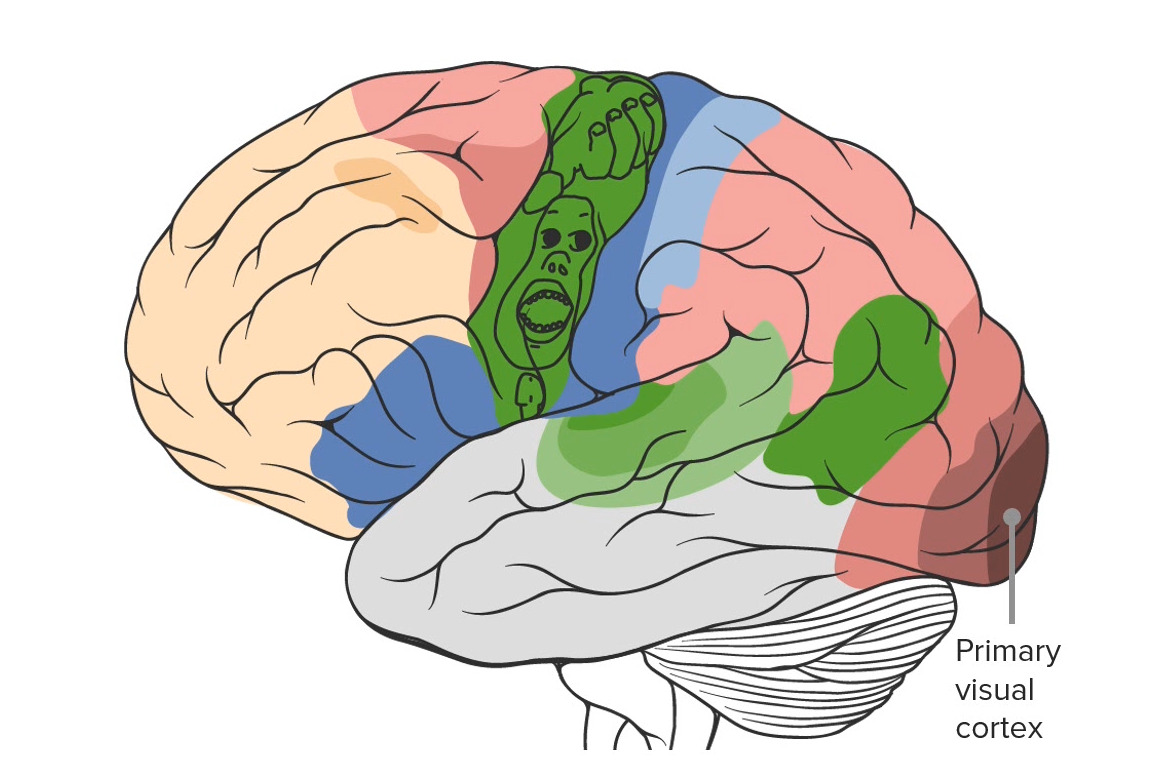
Córtex visual primário Lobo occipital Occipital Part of the back and base of the cranium that encloses the foramen magnum. Skull: Anatomy posterior 17 Visão e acuidade visual (entrada do núcleo geniculado lateral via radiações óticas)
Córtex de associação visual Córtex extra-estriado 18, 19 Processa informação relacionada com a forma, cor, movimento, profundidade e relações espaciais
Primary Visual Cortex

Observar a localização do córtex visual primário na região mais posterior do cérebro no lobo occipital.

Imagem por Lecturio.

Related videos

Lobo Temporal

O lobo temporal é o aspecto mais MAIS Androgen Insensitivity Syndrome anterior/inferior do cérebro supratentorial. Está envolvido nos processos de audição, olfato e memória.

  • Fronteiras:
    • Anteriormente pelo osso esfenóide
    • Superiormente pela fissura Sylvian
    • Posteriormente pelo lobo occipital Occipital Part of the back and base of the cranium that encloses the foramen magnum. Skull: Anatomy
    • Inferiormente pela fossa craniana média
  • Localização do lobo temporal: ocupa a fossa craniana média
    • Estende-se superiormente à fissura Sylviana e posteriormente à linha parietotemporal lateral
    • Inferior e lateral ao lobo parietal Parietal One of a pair of irregularly shaped quadrilateral bones situated between the frontal bone and occipital bone, which together form the sides of the cranium. Skull: Anatomy
    • Inferior e posterior ao lobo frontal Frontal The bone that forms the frontal aspect of the skull. Its flat part forms the forehead, articulating inferiorly with the nasal bone and the cheek bone on each side of the face. Skull: Anatomy
    • Anterior ao lobo occipital Occipital Part of the back and base of the cranium that encloses the foramen magnum. Skull: Anatomy
  • Vascularização:
    • Ramos do sistema carotídeo interno
    • Ramos da artéria vertebrobasilar
Tabela: Estrutura interna do lobo temporal
Nome Localização Brodmann
número
Função
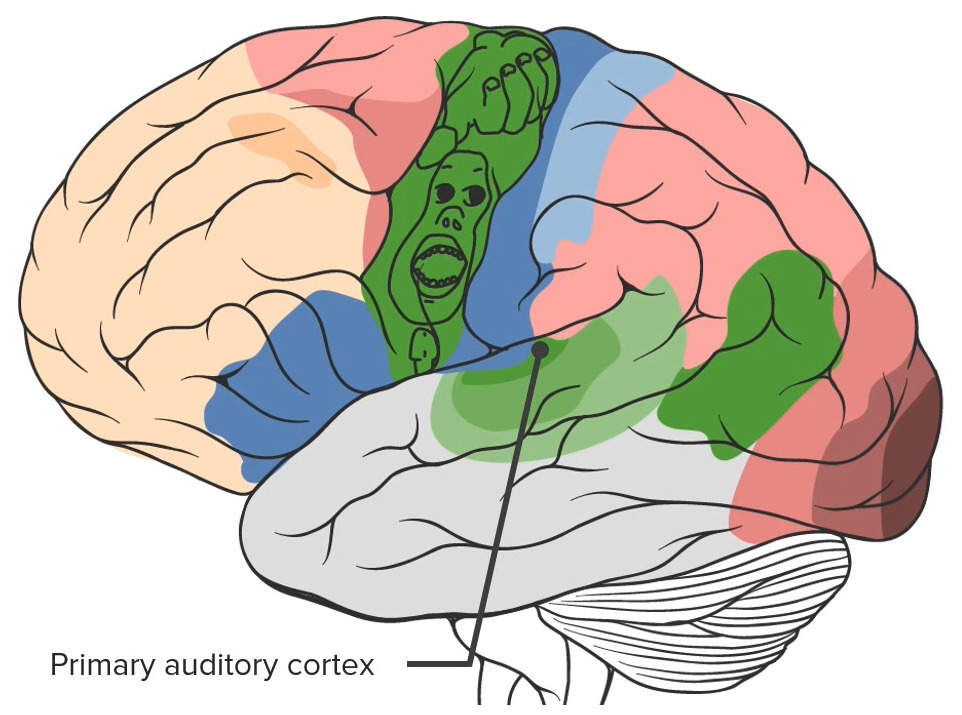
Córtex auditivo primário Plano temporal superior dos lobos temporais dentro do sulco lateral 40, 41 Audição
Giro temporal médio e inferior Lobo temporal médio e inferior 20, 21 Memória de longo prazo
Giro parahipocampal Localizado medialmente no córtex temporo-occipital inferior 34 Memória de curto prazo
Uncus Uncus Cerebral Cortex: Anatomy Contínuo com o giro hipocampal 35 Olfato
Giro Fusiforme Giro Medial Occipitotemporal 37 Reconhecimento facial
Área de Wernicke Giro temporal superior do hemisfério dominante (para além do giro supramarginal do lobo parietal Parietal One of a pair of irregularly shaped quadrilateral bones situated between the frontal bone and occipital bone, which together form the sides of the cranium. Skull: Anatomy)* 22, 40 Compreensão da linguagem
*Definições para a área de Wernicke diferem muito na literatura e podem também incluir o giro angular do lobo parietal (área 39 de Brodmann).

Related videos

Relevância Clínica

As seguintes estruturas estão intimamente relacionadas com o córtex cerebral por localização ou função:

  • Vias auditivas e vestibulares: vias neuronais que permitem a perceção do som. A perceção auditiva converte as ondas acústicas – que significam flutuações na pressão à nossa volta – em sinais elétricos e, consequentemente, percebe tons, sons e ruídos.
  • Via visual: o sistema visual, é parte do SNC. A via visual engloba múltiplas estruturas que juntas possibilitam a perceção visual do mundo ao nosso redor. A via visual começa nos fotorrecetores da retina Retina The ten-layered nervous tissue membrane of the eye. It is continuous with the optic nerve and receives images of external objects and transmits visual impulses to the brain. Its outer surface is in contact with the choroid and the inner surface with the vitreous body. The outermost layer is pigmented, whereas the inner nine layers are transparent. Eye: Anatomy, continua através do nervo ótico e do corpo geniculado lateral e termina no córtex visual e no córtex de associação visual, que processa e integra a informação.
  • Tronco encefálico: consiste no mesencéfalo, ponte e bolbo. O tronco cerebral é uma estrutura semelhante a um pedúnculo que conecta o cérebro à medula espinhal (ME) e é uma importante estação de retransmissão de informações sensitivas, motoras e autonómicas.
  • Cerebelo: localizado na fossa posterior do crânio, dorsal à ponte e mesencéfalo. A sua principal função é a coordenação dos movimentos, equilíbrio e postura. O cerebelo consiste em 3 lobos de cada lado dos seus 2 hemisférios e está conectado no meio pelo vermis.
  • Sistema cerebrovascular: composto pelos vasos que suprem o cérebro. O cérebro recebe aproximadamente 750 ml de sangue a cada minuto, o que representa 15% do débito cardíaco. O suprimento arterial do cérebro é dividido em 2 categorias: a circulação anterior do sistema da artéria carótida interna e a circulação cerebral posterior do sistema circulatório vertebrobasilar.
  • Diencéfalo: consiste em 4 componentes, o tálamo, o epitálamo, o hipotálamo e o subtálamo. Em geral, o diencéfalo coordena as funções vegetativas e sensorio-motoras inconscientes.
  • Sistema límbico: consiste em vários componentes: o hipocampo, o giro parahipocampal com o córtex entorrinal, o giro do cíngulo, a amígdala e os corpos mamilares. Estas estruturas têm uma variedade de funções, incluindo o processamento e integração das emoções, memória a longo prazo e o olfato.

Referências

  1. Seeley, WW, Miller, BL. (2018). Alzheimer’s disease. In Jameson, J.L., et al. (Eds.), Harrison’s Principles of Internal Medicine, 20th ed., Vol 2. pp. 3108–3114.
  2. Wolk, DA, & Dickerson, BC. (2020). Clinical features and diagnosis of Alzheimer disease. UpToDate. Retrieved August 3, 2021, from https://www.uptodate.com/contents/clinical-features-and-diagnosis-of-alzheimer-disease
  3. Keene, CD, Montine, TJ, Kuller, LH. (2018). Epidemiology, pathology, and pathogenesis of Alzheimer disease. UpToDate. Retrieved August 3, 2021, from https://www.uptodate.com/contents/epidemiology-pathology-and-pathogenesis-of-alzheimer-disease
  4. Forcier, M. (2020). Adolescent sexuality. UpToDate. Retrieved June 22, 2021, from https://www.uptodate.com/contents/adolescent-sexuality
  5. Barshes, NR. (2019). Overview of upper extremity peripheral artery disease. UpToDate. Retrieved February 15, 2021,from https://www.uptodate.com/contents/overview-of-upper-extremity-peripheral-artery-disease
  6. Spittell, PC. (2019). Subclavian steal syndrome. UpToDate. Retrieved February 15, 2021, from https://www.uptodate.com/contents/subclavian-steal-syndrome
  7. Edwardson, MA. (2021). Overview of ischemic stroke prognosis in adults. UpToDate. Retrieved August 5, 2021, from https://www.uptodate.com/contents/overview-of-ischemic-stroke-prognosis-in-adults
  8. Oliveira-Filho, J, & Mullen, MT. (2021). Initial assessment and management of acute stroke. UpToDate. Retrieved August 1, 2021, from https://www.uptodate.com/contents/initial-assessment-and-management-of-acute-stroke

Crie sua conta gratuita ou faça login para continuar lendo!

Cadastre-se agora e tenha acesso grátis ao Lecturio, com páginas de conceitos, vídeos de medicina e questões para sua educação médica.

Aprende mais com a Lecturio:

Multiple devices displaying human anatomy and health education content.

Complementa o teu estudo da faculdade com o companheiro de estudo tudo-em-um da Lecturio, através de métodos de ensino baseados em evidência.

Estuda onde quiseres

Two iPhones display medical education apps, one showing anatomy, the other Bookmatcher.

A Lecturio Medical complementa o teu estudo através de métodos de ensino baseados em evidência, vídeos de palestras, perguntas e muito mais – tudo combinado num só lugar e fácil de usar.

User Reviews

Have a holly, jolly study session 🎁 Save 50% on all plans now >>

Que tengas una sesión de estudio alegre y navideña 🎁 Ahorra 50% en todos los planes >>

Details