Domina Conceptos Médicos

Estudia para la escuela de medicina y tus examenes con Lecturio.

Venas: Histología

Las venas son conjuntos celulares tubulares que transportan sangre desoxigenada y desechos de los LOS Neisseria lechos capilares de regreso al AL Amyloidosis corazón. Las venas se clasifican en EN Erythema nodosum is an immune-mediated panniculitis (inflammation of the subcutaneous fat) caused by a type IV (delayed-type) hypersensitivity reaction. It commonly manifests in young women as tender, erythematous nodules on the shins. Erythema Nodosum 3 tipos: venas pequeñas/vénulas, venas medianas y venas grandes. Cada tipo contiene 3 capas primarias: túnica íntima, túnica media y túnica adventicia. La circulación venosa es un sistema de baja presión con cantidades mucho menores de músculo liso y tejido elástico, paredes más delgadas y lúmenes más grandes que las arterias. Las venas son vasos de capacitancia con una distensibilidad significativa y la capacidad de dilatarse y retener hasta un 70%–80% del volumen sanguíneo en EN Erythema nodosum is an immune-mediated panniculitis (inflammation of the subcutaneous fat) caused by a type IV (delayed-type) hypersensitivity reaction. It commonly manifests in young women as tender, erythematous nodules on the shins. Erythema Nodosum reposo.

Last updated: Dec 15, 2025

Editorial responsibility: Stanley Oiseth, Lindsay Jones, Evelin Maza

Descripción General

Definición

Las venas son colecciones tubulares de células que transportan sangre desoxigenada y productos de desecho de los LOS Neisseria capilares en EN Erythema nodosum is an immune-mediated panniculitis (inflammation of the subcutaneous fat) caused by a type IV (delayed-type) hypersensitivity reaction. It commonly manifests in young women as tender, erythematous nodules on the shins. Erythema Nodosum la periferia del cuerpo de regreso al AL Amyloidosis corazón.

Características generales

Las características de las venas y el sistema venoso incluyen:

  • Las venas son más abundantes que las arterias.
  • En EN Erythema nodosum is an immune-mediated panniculitis (inflammation of the subcutaneous fat) caused by a type IV (delayed-type) hypersensitivity reaction. It commonly manifests in young women as tender, erythematous nodules on the shins. Erythema Nodosum comparación con las arterias, las venas tienen:
    • Grandes lúmenes
    • Paredes delgadas
    • Menos músculo liso y tejido elástico
  • La sangre pasa por las venas en EN Erythema nodosum is an immune-mediated panniculitis (inflammation of the subcutaneous fat) caused by a type IV (delayed-type) hypersensitivity reaction. It commonly manifests in young women as tender, erythematous nodules on the shins. Erythema Nodosum orden creciente de diámetro luminal:
    • Comienza con los LOS Neisseria vasos más pequeños (vénulas)
    • Termina en EN Erythema nodosum is an immune-mediated panniculitis (inflammation of the subcutaneous fat) caused by a type IV (delayed-type) hypersensitivity reaction. It commonly manifests in young women as tender, erythematous nodules on the shins. Erythema Nodosum el vaso más grande (la vena cava)
  • Las venas suelen acompañar una arteria:
    • Las venas rodean la arteria en EN Erythema nodosum is an immune-mediated panniculitis (inflammation of the subcutaneous fat) caused by a type IV (delayed-type) hypersensitivity reaction. It commonly manifests in young women as tender, erythematous nodules on the shins. Erythema Nodosum una red ramificada irregular.
    • Funciona como un intercambio de calor Calor Inflammation en EN Erythema nodosum is an immune-mediated panniculitis (inflammation of the subcutaneous fat) caused by a type IV (delayed-type) hypersensitivity reaction. It commonly manifests in young women as tender, erythematous nodules on the shins. Erythema Nodosum contracorriente → permite que la sangre fría que regresa de la periferia se caliente antes de regresar al AL Amyloidosis corazón
  • Vasos con capacitancia:
    • Colapsan cuando están vacías, pero pueden distenderse significativamente (conocido como distensibilidad)
    • El sistema venoso puede contener hasta el 70%-80% del volumen sanguíneo en EN Erythema nodosum is an immune-mediated panniculitis (inflammation of the subcutaneous fat) caused by a type IV (delayed-type) hypersensitivity reaction. It commonly manifests in young women as tender, erythematous nodules on the shins. Erythema Nodosum reposo.

Presión dentro de la circulación venosa

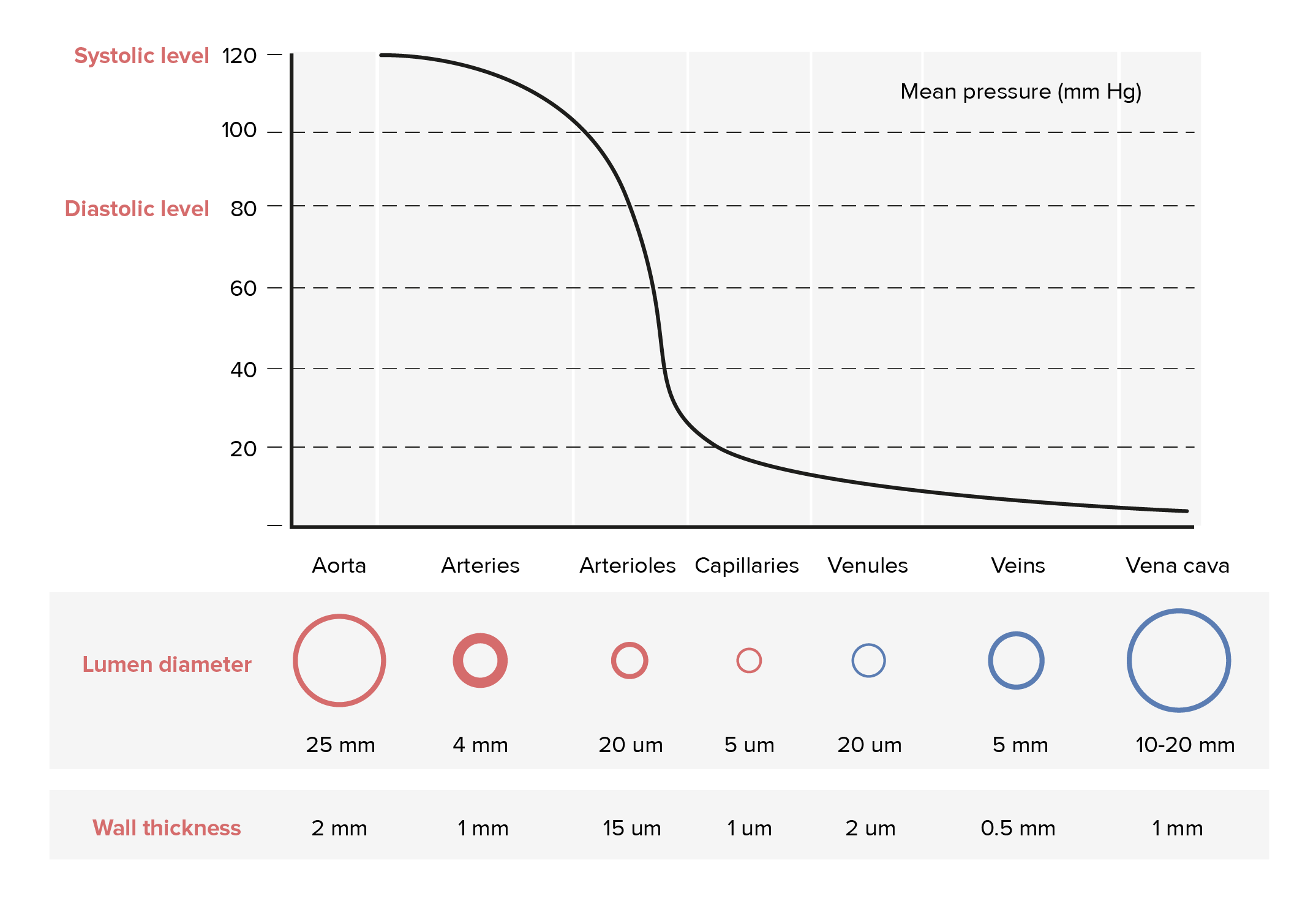
  • La circulación venosa es un sistema de baja presión:
    • Promedia solo 10 mm Hg ( en EN Erythema nodosum is an immune-mediated panniculitis (inflammation of the subcutaneous fat) caused by a type IV (delayed-type) hypersensitivity reaction. It commonly manifests in young women as tender, erythematous nodules on the shins. Erythema Nodosum comparación con 120 mm Hg en EN Erythema nodosum is an immune-mediated panniculitis (inflammation of the subcutaneous fat) caused by a type IV (delayed-type) hypersensitivity reaction. It commonly manifests in young women as tender, erythematous nodules on the shins. Erythema Nodosum las arterias durante la sístole)
    • Fluctuaciones mínimas entre la sístole y la diástole
  • La presión se ve VE Ventilation: Mechanics of Breathing afectada por la gravedad y la proximidad al AL Amyloidosis corazón:
    • Más proximal al AL Amyloidosis corazón = ↓ presión
    • En EN Erythema nodosum is an immune-mediated panniculitis (inflammation of the subcutaneous fat) caused by a type IV (delayed-type) hypersensitivity reaction. It commonly manifests in young women as tender, erythematous nodules on the shins. Erythema Nodosum comparación con estar de pie, la posición reclinada tiene ↓ presión.
    • Estando de pie: la presión del pie es más alta, la presión de la cabeza es la más baja
  • La presión es demasiado baja para empujar la sangre espontáneamente contra la gravedad
  • Mover sangre hacia arriba (contra la gravedad) requiere:
    • La acción de bombeo de la contracción de los LOS Neisseria músculos esqueléticos
    • Válvulas venosas unidireccionales que evitan el flujo retrógrado

Capas de la Pared del Vaso

Todas las venas tienen la misma estructura básica y están formadas por 3 capas primarias: túnica íntima, túnica media y túnica adventicia.
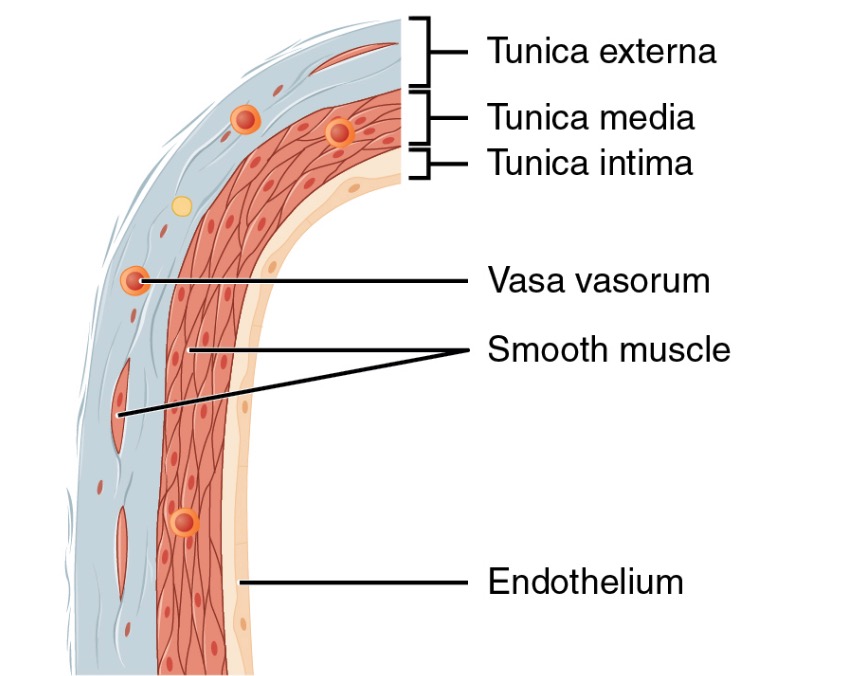
Estructura de una pared de vena

Estructura de una pared de vena

Imagen: “Structure of a vein wall” por Phil Schatz. Licencia: CC BY 4.0
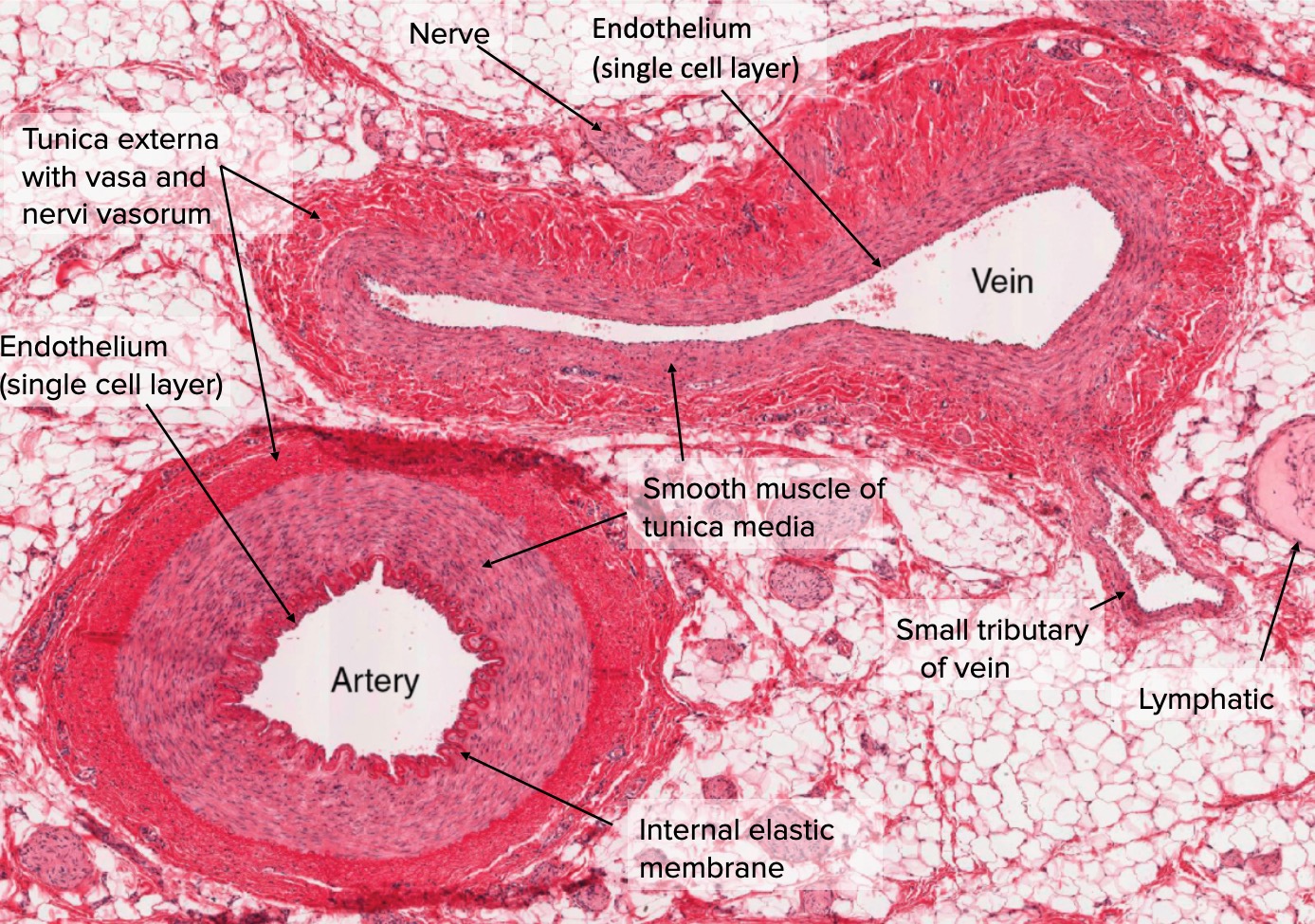
Sección transversal de arteria y vena.

Sección transversal de arteria y vena

Imagen: “Types of Arteries and Arterioles” por Phil Schatz. Licencia: CC BY 4.0, editado por Lecturio.

Túnica íntima

  • Compuesta de:
    • Una sola capa de células endoteliales:
      • Células epiteliales escamosas simples
      • El endotelio en EN Erythema nodosum is an immune-mediated panniculitis (inflammation of the subcutaneous fat) caused by a type IV (delayed-type) hypersensitivity reaction. It commonly manifests in young women as tender, erythematous nodules on the shins. Erythema Nodosum las venas parece liso.
    • Pequeñas cantidades de tejido conectivo fibroso
    • Válvulas:
      • Formadas a partir de endotelio engrosado y tejido conectivo
      • Se encuentran en EN Erythema nodosum is an immune-mediated panniculitis (inflammation of the subcutaneous fat) caused by a type IV (delayed-type) hypersensitivity reaction. It commonly manifests in young women as tender, erythematous nodules on the shins. Erythema Nodosum venas medianas (más comúnmente en EN Erythema nodosum is an immune-mediated panniculitis (inflammation of the subcutaneous fat) caused by a type IV (delayed-type) hypersensitivity reaction. It commonly manifests in young women as tender, erythematous nodules on the shins. Erythema Nodosum las extremidades y venas inferiores al AL Amyloidosis corazón)
  • Funciones:
    • Actúa como barrera selectivamente permeable
    • Secreta sustancias vasoactivas
    • Proporciona un revestimiento suave a los LOS Neisseria vasos sanguíneos (evita la agregación de plaquetas y/o eritrocitos cuando está intacta)
    • Las válvulas ayudan a prevenir el flujo sanguíneo retrógrado, especialmente en EN Erythema nodosum is an immune-mediated panniculitis (inflammation of the subcutaneous fat) caused by a type IV (delayed-type) hypersensitivity reaction. It commonly manifests in young women as tender, erythematous nodules on the shins. Erythema Nodosum las extremidades inferiores.
  • Irrigada por difusión directa desde el lumen
  • En EN Erythema nodosum is an immune-mediated panniculitis (inflammation of the subcutaneous fat) caused by a type IV (delayed-type) hypersensitivity reaction. It commonly manifests in young women as tender, erythematous nodules on the shins. Erythema Nodosum capilares: la única capa presente en EN Erythema nodosum is an immune-mediated panniculitis (inflammation of the subcutaneous fat) caused by a type IV (delayed-type) hypersensitivity reaction. It commonly manifests in young women as tender, erythematous nodules on the shins. Erythema Nodosum la pared del vaso
  • En EN Erythema nodosum is an immune-mediated panniculitis (inflammation of the subcutaneous fat) caused by a type IV (delayed-type) hypersensitivity reaction. It commonly manifests in young women as tender, erythematous nodules on the shins. Erythema Nodosum las venas: sin membrana elástica interna (presente, sin embargo, en EN Erythema nodosum is an immune-mediated panniculitis (inflammation of the subcutaneous fat) caused by a type IV (delayed-type) hypersensitivity reaction. It commonly manifests in young women as tender, erythematous nodules on the shins. Erythema Nodosum las arterias más grandes)

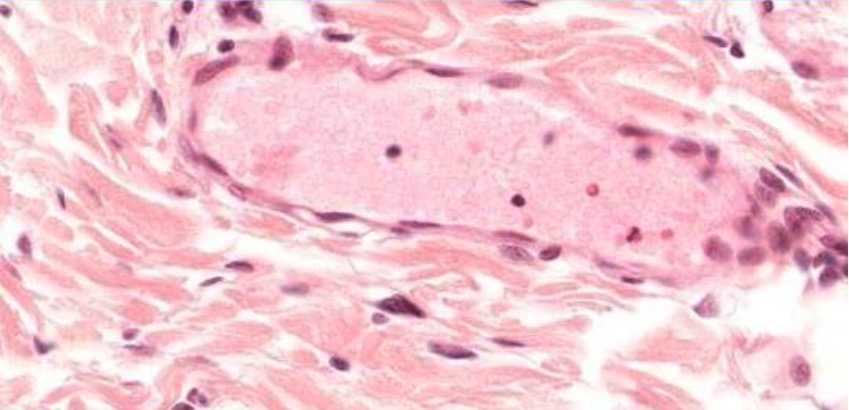
Tunica media Tunica media The middle layer of blood vessel walls, composed principally of thin, cylindrical, smooth muscle cells and elastic tissue. It accounts for the bulk of the wall of most arteries. The smooth muscle cells are arranged in circular layers around the vessel, and the thickness of the coat varies with the size of the vessel. Arteries: Histology

  • Compuesta de:
    • Colágeno
    • Músculo liso (mucho menos que en EN Erythema nodosum is an immune-mediated panniculitis (inflammation of the subcutaneous fat) caused by a type IV (delayed-type) hypersensitivity reaction. It commonly manifests in young women as tender, erythematous nodules on the shins. Erythema Nodosum las arterias)
    • Tejido elástico (escaso en EN Erythema nodosum is an immune-mediated panniculitis (inflammation of the subcutaneous fat) caused by a type IV (delayed-type) hypersensitivity reaction. It commonly manifests in young women as tender, erythematous nodules on the shins. Erythema Nodosum comparación con las arterias)
  • Funciones: proporciona fuerza y estructura
  • En EN Erythema nodosum is an immune-mediated panniculitis (inflammation of the subcutaneous fat) caused by a type IV (delayed-type) hypersensitivity reaction. It commonly manifests in young women as tender, erythematous nodules on the shins. Erythema Nodosum las venas: sin membrana elástica externa (presente, sin embargo, en EN Erythema nodosum is an immune-mediated panniculitis (inflammation of the subcutaneous fat) caused by a type IV (delayed-type) hypersensitivity reaction. It commonly manifests in young women as tender, erythematous nodules on the shins. Erythema Nodosum las arterias más grandes)

Túnica adventicia

  • También llamada túnica externa
  • Normalmente, la capa más gruesa de las venas
  • Compuesta de:
    • El componente principal es el colágeno, que se fusiona con el tejido conectivo y rodea los LOS Neisseria vasos, nervios y órganos vecinos.
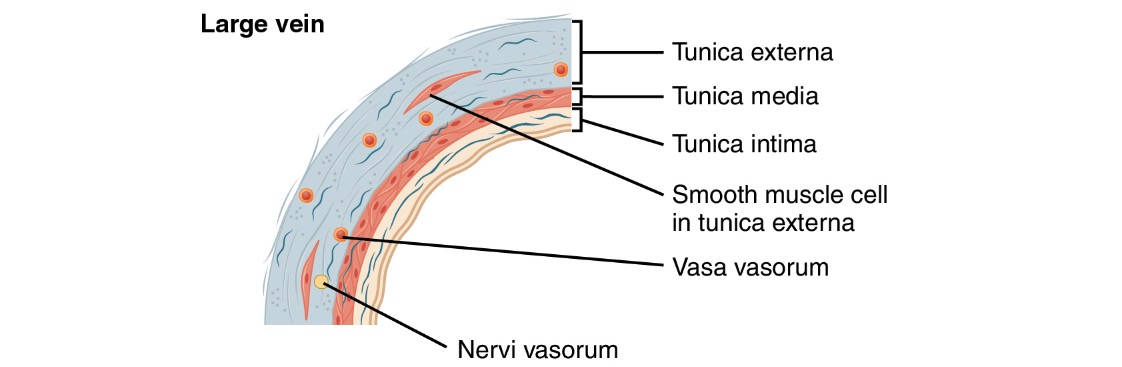
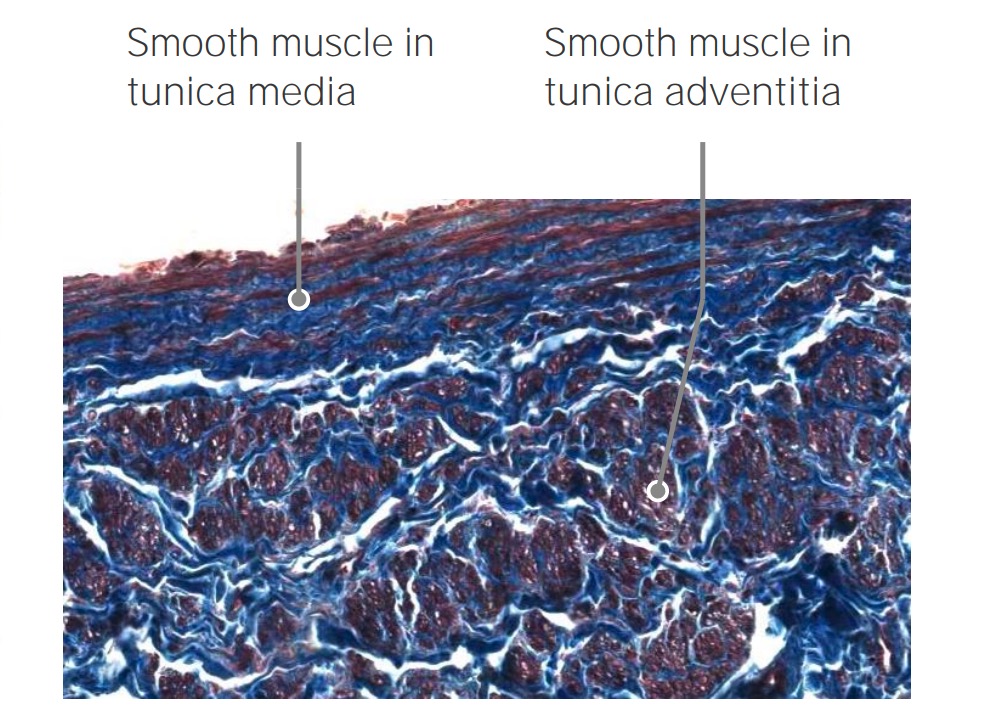
    • Fibras longitudinales de músculo liso (solo vena cava)
  • Funciones:
    • Fortalece la pared del vaso
    • Ancla el vaso
  • Inervada por pequeños nervios conocidos como nervi vasorum Nervi vasorum Arteries: Histology
  • Irrigada por pequeños vasos conocidos como vasa vasorum Vasa vasorum Nutrient blood vessels which supply the walls of large arteries or veins. Arteries: Histology

Tipos de Venas

La diferenciación segmentaria distingue los LOS Neisseria 3 tipos principales de venas por tamaño, función y composición general. Las venas generalmente existen como una continuidad con cambios graduales en EN Erythema nodosum is an immune-mediated panniculitis (inflammation of the subcutaneous fat) caused by a type IV (delayed-type) hypersensitivity reaction. It commonly manifests in young women as tender, erythematous nodules on the shins. Erythema Nodosum la morfología de los LOS Neisseria vasos a lo largo del árbol venoso.

Los LOS Neisseria 3 tipos principales de venas son:
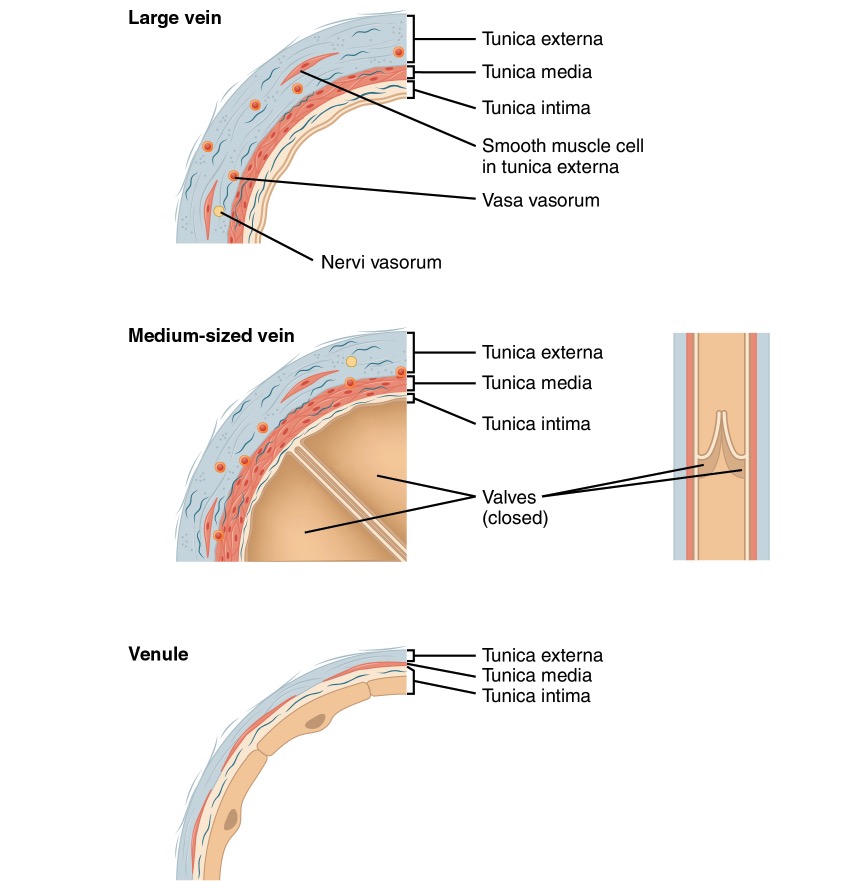
  1. Pequeñas venas y vénulas
  2. Venas medianas
  3. Venas grandes
Comparación de tipos de venas

Comparación de venas grandes, medianas y pequeñas

Imagen: “Comparison of large, medium, and small veins” por Phil Schatz. Licencia: CC BY 4.0
Arteries
Presiones intraluminales de diferentes vasos.
Imagen por Lecturio.

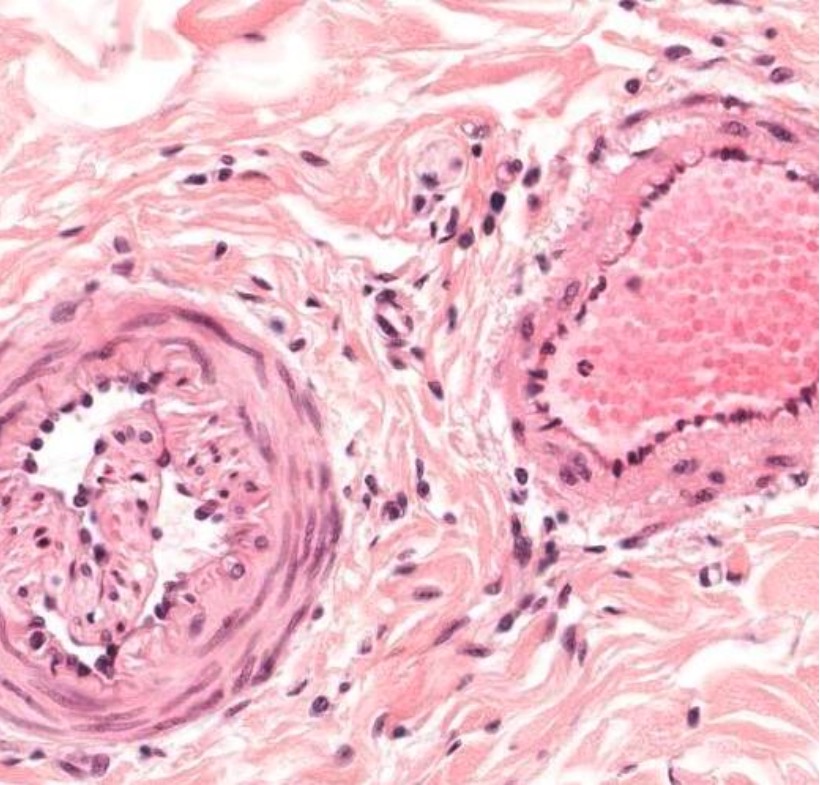
Vénulas y venas pequeñas

  • Marcan el inicio de la circulación venosa (drenaje de capilares)
  • Vénulas:
    • Paredes más delgadas en EN Erythema nodosum is an immune-mediated panniculitis (inflammation of the subcutaneous fat) caused by a type IV (delayed-type) hypersensitivity reaction. It commonly manifests in young women as tender, erythematous nodules on the shins. Erythema Nodosum relación con sus lúmenes
    • Rango: 15–100 µm de diámetro
    • Pueden ser bastante porosas → intercambiar líquido con el tejido circundante (similar a los LOS Neisseria capilares)
    • Se unen para formar venas pequeñas
  • Venas pequeñas:
    • Generalmente de 100 µm–1 mm de diámetro
    • Pueden unirse para formar plexos venosos
    • Innominadas
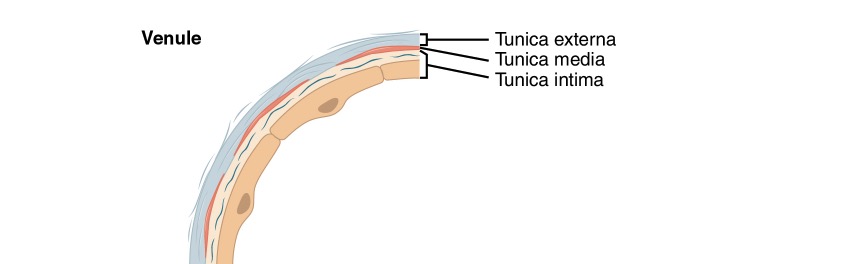
Vénula

Diagrama de una vénula

Imagen: “Venule” por Phil Schatz. Licencia: CC BY 4.0
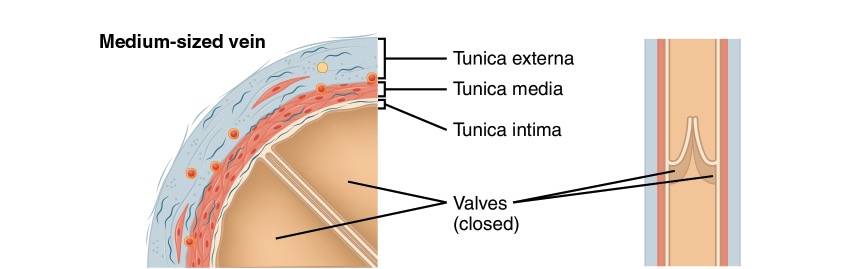
Venas medianas

  • Diámetro de hasta 1 cm
  • Drenan los LOS Neisseria plexos venosos
  • Acompañan a las arterias de tamaño mediano (distribución)
  • Incrustadas en EN Erythema nodosum is an immune-mediated panniculitis (inflammation of the subcutaneous fat) caused by a type IV (delayed-type) hypersensitivity reaction. It commonly manifests in young women as tender, erythematous nodules on the shins. Erythema Nodosum los LOS Neisseria compartimentos del músculo esquelético → el músculo esquelético actúa como una bomba, moviendo la sangre hacia el corazón
  • Las válvulas venosas unidireccionales evitan el flujo sanguíneo retrógrado dentro de las venas → aseguran que la sangre siga avanzando
  • Incluye la mayoría de los LOS Neisseria vasos con nombres, por ejemplo:
    • Venas cefálicas y basílicas (miembro superior)
    • Venas safenas mayor y menor (extremidad inferior)
Vena de tamaño mediano

Diagrama de una vena de tamaño mediano

Imagen: “Medium-sized vein” por Phil Schatz. Licencia: CC BY 4.0

Venas grandes

  • Ejemplos:
    • Vena cava superior e inferior:
      • Las venas más grandes del cuerpo
      • Ambas conducen a la aurícula derecha del corazón
    • Vena porta
  • La vena cava tiene haces anchos de músculo liso longitudinal dentro de su túnica adventicia → lo que permite el alargamiento o acortamiento según los LOS Neisseria cambios de postura
Vena grande

Diagrama de una vena grande

Imagen: “Large vein” por Phil Schatz. Licencia: CC BY 4.0
Senos venosos

  • Caracterizados por:
    • Paredes especialmente delgadas
    • Grandes lúmenes
    • Sin músculo liso
  • Ejemplos:
    • Seno coronario del corazón
    • Senos durales del cerebro

Relevancia Clínica

  • Insuficiencia venosa crónica: espectro de trastornos caracterizados por dilatación venosa y/o función venosa anormal en EN Erythema nodosum is an immune-mediated panniculitis (inflammation of the subcutaneous fat) caused by a type IV (delayed-type) hypersensitivity reaction. It commonly manifests in young women as tender, erythematous nodules on the shins. Erythema Nodosum las extremidades inferiores, como resultado de la hipertensión venosa. Los LOS Neisseria casos más graves se presentan con cambios en EN Erythema nodosum is an immune-mediated panniculitis (inflammation of the subcutaneous fat) caused by a type IV (delayed-type) hypersensitivity reaction. It commonly manifests in young women as tender, erythematous nodules on the shins. Erythema Nodosum la piel, que pueden incluir pigmentación de la piel, dermatitis Dermatitis Any inflammation of the skin. Atopic Dermatitis (Eczema) por estasis, lipodermatoesclerosis y (eventualmente) el desarrollo de úlceras. El diagnóstico generalmente se basa solo en EN Erythema nodosum is an immune-mediated panniculitis (inflammation of the subcutaneous fat) caused by a type IV (delayed-type) hypersensitivity reaction. It commonly manifests in young women as tender, erythematous nodules on the shins. Erythema Nodosum los LOS Neisseria hallazgos del examen. El pilar del tratamiento es la terapia de compresión, aunque también existe una variedad de opciones quirúrgicas. Las úlceras venosas son frecuentes a medida que avanza la enfermedad.
  • Flebitis y tromboflebitis: la flebitis se refiere a la inflamación de una vena y comúnmente se debe a la presencia de un trombo, lo que se conoce como tromboflebitis. Las afecciones pueden ocurrir tanto en EN Erythema nodosum is an immune-mediated panniculitis (inflammation of the subcutaneous fat) caused by a type IV (delayed-type) hypersensitivity reaction. It commonly manifests in young women as tender, erythematous nodules on the shins. Erythema Nodosum venas profundas como superficiales. En EN Erythema nodosum is an immune-mediated panniculitis (inflammation of the subcutaneous fat) caused by a type IV (delayed-type) hypersensitivity reaction. It commonly manifests in young women as tender, erythematous nodules on the shins. Erythema Nodosum ciertas situaciones, como el período posparto o un catéter vascular permanente, el coágulo puede infectarse y provocar tromboflebitis séptica. El tratamiento incluye anticoagulación si hay un coágulo y antibióticos si el coágulo está infectado. La flebitis superficial aislada suele ser benigna y autolimitada.
  • Trombosis venosa profunda (TVP) y embolia pulmonar: la trombosis venosa profunda se refiere a un trombo formado en EN Erythema nodosum is an immune-mediated panniculitis (inflammation of the subcutaneous fat) caused by a type IV (delayed-type) hypersensitivity reaction. It commonly manifests in young women as tender, erythematous nodules on the shins. Erythema Nodosum una vena profunda. Una TVP se forma con mayor frecuencia en EN Erythema nodosum is an immune-mediated panniculitis (inflammation of the subcutaneous fat) caused by a type IV (delayed-type) hypersensitivity reaction. It commonly manifests in young women as tender, erythematous nodules on the shins. Erythema Nodosum una vena femoral, poplítea, iliofemoral o pélvica. Los LOS Neisseria pacientes se presentan con dolor Dolor Inflammation e inflamación distal al AL Amyloidosis trombo. Se produce una embolia pulmonar si una porción se rompe, se aloja en EN Erythema nodosum is an immune-mediated panniculitis (inflammation of the subcutaneous fat) caused by a type IV (delayed-type) hypersensitivity reaction. It commonly manifests in young women as tender, erythematous nodules on the shins. Erythema Nodosum la irrigación pulmonar y ocluye el vaso afectado. Las embolias pulmonares pueden ser fatales. La ecografía puede visualizar el trombo y la anticoagulación es el modo principal de tratamiento.
  • Edema Edema Edema is a condition in which excess serous fluid accumulates in the body cavity or interstitial space of connective tissues. Edema is a symptom observed in several medical conditions. It can be categorized into 2 types, namely, peripheral (in the extremities) and internal (in an organ or body cavity). Edema: el exceso de líquido seroso se acumula en EN Erythema nodosum is an immune-mediated panniculitis (inflammation of the subcutaneous fat) caused by a type IV (delayed-type) hypersensitivity reaction. It commonly manifests in young women as tender, erythematous nodules on the shins. Erythema Nodosum una cavidad corporal o en EN Erythema nodosum is an immune-mediated panniculitis (inflammation of the subcutaneous fat) caused by a type IV (delayed-type) hypersensitivity reaction. It commonly manifests in young women as tender, erythematous nodules on the shins. Erythema Nodosum el espacio intersticial. La presión hidrostática aumenta dentro de una vena, lo que aumenta la presión dentro de los LOS Neisseria capilares. El aumento de presión empuja el líquido fuera de la irrigación hacia el líquido extracelular, lo que produce edema Edema Edema is a condition in which excess serous fluid accumulates in the body cavity or interstitial space of connective tissues. Edema is a symptom observed in several medical conditions. It can be categorized into 2 types, namely, peripheral (in the extremities) and internal (in an organ or body cavity). Edema. Los LOS Neisseria síntomas varían según la ubicación del edema Edema Edema is a condition in which excess serous fluid accumulates in the body cavity or interstitial space of connective tissues. Edema is a symptom observed in several medical conditions. It can be categorized into 2 types, namely, peripheral (in the extremities) and internal (in an organ or body cavity). Edema y la etiología subyacente. El edema Edema Edema is a condition in which excess serous fluid accumulates in the body cavity or interstitial space of connective tissues. Edema is a symptom observed in several medical conditions. It can be categorized into 2 types, namely, peripheral (in the extremities) and internal (in an organ or body cavity). Edema es un síntoma de una amplia variedad de enfermedades.

Referencias

  1. Aboian, E., Brenes, R. A., & Satiani, B. (2023). Venous insufficiency: A concise summary of evaluation and evidence-based treatment. Journal of Vascular Surgery: Venous and Lymphatic Disorders, 11(1), 155-167.
  2. Bergan, J. J., & Bunke-Paquette, N. (2023). The vein book (3rd ed.). Oxford University Press.
  3. Eberhardt, R. T., & Raffetto, J. D. (2024). Chronic venous insufficiency. New England Journal of Medicine, 390(2), 161-172.
  4. Goel, R., & Kumar, S. (2024). Venous histology and physiology: Clinical implications in deep vein thrombosis management. Cardiovascular Research, 119(12), 2045-2058.
  5. Kahn, S. R., & Comerota, A. J. (2022). Deep vein thrombosis: Pathophysiology, diagnosis, and treatment. The Lancet, 399(10333), 1341-1357.
  6. Ligi, D., Croce, L., & Mannello, F. (2023). Molecular and cellular aspects of venous insufficiency: From pathophysiology to therapeutic insights. International Journal of Molecular Sciences, 24(3), 2082.
  7. Meissner, M. H. (2023). Lower extremity venous anatomy. Seminars in Interventional Radiology, 40(2), 137-144.
  8. Nauta, H. J., & Fiesseler, F. W. (2022). Human histology: A functional approach (6th ed.). Wiley-Blackwell.
  9. Rathbun, S. W., & Goldenberg, N. A. (2023). Venous thromboembolism: Contemporary management approaches. Circulation Research, 132(7), 893-910.
  10. Standring, S. (Ed.). (2021). Gray’s anatomy: The anatomical basis of clinical practice (42nd ed.). Elsevier.

¡Crea tu cuenta gratis o inicia una sesión para seguir leyendo!

Regístrate ahora y obtén acceso gratuito a Lecturio con páginas de concepto, videos médicos y cuestionarios para tu educación médica.

User Reviews

Que tengas una sesión de estudio alegre y navideña 🎁 Ahorra 50% en todos los planes >>

Details