Domina Conceptos Médicos

Estudia para la escuela de medicina y tus examenes con Lecturio.

Tumor de Wilms

El tumor Tumor Inflammation de Wilms es una neoplasia causada por la proliferación del blastema metanéfrico en EN Erythema nodosum is an immune-mediated panniculitis (inflammation of the subcutaneous fat) caused by a type IV (delayed-type) hypersensitivity reaction. It commonly manifests in young women as tender, erythematous nodules on the shins. Erythema Nodosum los LOS Neisseria riñones y es la neoplasia renal más común en EN Erythema nodosum is an immune-mediated panniculitis (inflammation of the subcutaneous fat) caused by a type IV (delayed-type) hypersensitivity reaction. It commonly manifests in young women as tender, erythematous nodules on the shins. Erythema Nodosum los LOS Neisseria niños. El tumor Tumor Inflammation de Wilms suele surgir de forma esporádica, pero también puede aparecer como resultado de una anomalía congénita específica como el síndrome WAGR ( tumor Tumor Inflammation de Wilms, aniridia Aniridia A congenital abnormality in which there is only a rudimentary iris. This is due to the failure of the optic cup to grow. Aniridia also occurs in a hereditary form, usually autosomal dominant. Wilms Tumor, anomalías genitourinarias y retraso mental), el síndrome de Denys-Drash o el síndrome de Beckwith-Wiedemann. El tumor Tumor Inflammation de Wilms suele presentarse como una masa firme, no sensible y lisa que no cruza la línea media. El tumor Tumor Inflammation de Wilms también puede presentarse raramente con dolor Dolor Inflammation abdominal, hematuria Hematuria Presence of blood in the urine. Renal Cell Carcinoma y/o hipertensión. La malignidad se diagnostica con ultrasonido abdominal y estudios histopatológicos (a partir de una biopsia o resección). El tumor Tumor Inflammation de Wilms se trata con una terapia multimodal (cirugía, quimioterapia y/o radiación). Dependiendo de la edad del paciente, los LOS Neisseria marcadores moleculares y los LOS Neisseria hallazgos patológicos, el pronóstico es generalmente favorable, con tasas de supervivencia a los LOS Neisseria 5 años cercanas al AL Amyloidosis 90%.

Last updated: Dec 15, 2025
Editorial responsibility: Stanley Oiseth, Lindsay Jones, Evelin Maza

Descripción General

Epidemiología

  • Es la neoplasia renal más frecuente en EN Erythema nodosum is an immune-mediated panniculitis (inflammation of the subcutaneous fat) caused by a type IV (delayed-type) hypersensitivity reaction. It commonly manifests in young women as tender, erythematous nodules on the shins. Erythema Nodosum los LOS Neisseria niños.
  • Representa el 6%–7% de todas las neoplasias en EN Erythema nodosum is an immune-mediated panniculitis (inflammation of the subcutaneous fat) caused by a type IV (delayed-type) hypersensitivity reaction. It commonly manifests in young women as tender, erythematous nodules on the shins. Erythema Nodosum niños
  • 500 nuevos casos al AL Amyloidosis año en EN Erythema nodosum is an immune-mediated panniculitis (inflammation of the subcutaneous fat) caused by a type IV (delayed-type) hypersensitivity reaction. It commonly manifests in young women as tender, erythematous nodules on the shins. Erythema Nodosum Estados Unidos
  • Incidencia de aproximadamente 7 casos/millón de niños < 15 años en EN Erythema nodosum is an immune-mediated panniculitis (inflammation of the subcutaneous fat) caused by a type IV (delayed-type) hypersensitivity reaction. It commonly manifests in young women as tender, erythematous nodules on the shins. Erythema Nodosum Estados Unidos:
  • Edad mediana al AL Amyloidosis momento de diagnóstico para:
    • Enfermedad unilateral:
      • Niños: 37 meses
      • Niñas: 43 meses
    • Enfermedad bilateral:
      • Niños: 24 meses
      • Niñas: 31 meses
  • Las anomalías congénitas asociadas se diagnostican a una edad más temprana.
  • Los LOS Neisseria afroamericanos tienen un mayor riesgo de desarrollar la enfermedad.
  • Los LOS Neisseria asiáticos tienen un riesgo significativamente menor de desarrollar la enfermedad.

Etiología

  • Generalmente ocurre de forma esporádica
  • Aproximadamente el 10%–20% tiene un síndrome de malformación múltiple:
    • Síndrome “WAGR” (por sus siglas en EN Erythema nodosum is an immune-mediated panniculitis (inflammation of the subcutaneous fat) caused by a type IV (delayed-type) hypersensitivity reaction. It commonly manifests in young women as tender, erythematous nodules on the shins. Erythema Nodosum inglés): deleción cromosómica del gen WT1 en EN Erythema nodosum is an immune-mediated panniculitis (inflammation of the subcutaneous fat) caused by a type IV (delayed-type) hypersensitivity reaction. It commonly manifests in young women as tender, erythematous nodules on the shins. Erythema Nodosum 11p13
      • WWilms tumor Tumor Inflammation ( tumor Tumor Inflammation de Wilms)
      • AAniridia ( aniridia Aniridia A congenital abnormality in which there is only a rudimentary iris. This is due to the failure of the optic cup to grow. Aniridia also occurs in a hereditary form, usually autosomal dominant. Wilms Tumor)
      • GGenitourinary abnormalities (anomalías genitourinarias)
      • RMental Retardation (discapacidad intelectual)
    • Síndrome de Beckwith-Wiedemann: mutaciones de microduplicación en EN Erythema nodosum is an immune-mediated panniculitis (inflammation of the subcutaneous fat) caused by a type IV (delayed-type) hypersensitivity reaction. It commonly manifests in young women as tender, erythematous nodules on the shins. Erythema Nodosum el gen WT2 en EN Erythema nodosum is an immune-mediated panniculitis (inflammation of the subcutaneous fat) caused by a type IV (delayed-type) hypersensitivity reaction. It commonly manifests in young women as tender, erythematous nodules on the shins. Erythema Nodosum 11p15
      • Tumor Tumor Inflammation de Wilms ( en EN Erythema nodosum is an immune-mediated panniculitis (inflammation of the subcutaneous fat) caused by a type IV (delayed-type) hypersensitivity reaction. It commonly manifests in young women as tender, erythematous nodules on the shins. Erythema Nodosum el 5%–10%)
      • Macrosomía
      • Macroglosia
      • Hemihipertrofia
      • Onfalocele
      • Ojos prominentes
      • Pliegues en EN Erythema nodosum is an immune-mediated panniculitis (inflammation of the subcutaneous fat) caused by a type IV (delayed-type) hypersensitivity reaction. It commonly manifests in young women as tender, erythematous nodules on the shins. Erythema Nodosum las orejas
      • Riñones agrandados
      • Hiperplasia pancreática
      • Hipoglucemia neonatal
    • Síndrome de Denys-Drash: mutación puntual en EN Erythema nodosum is an immune-mediated panniculitis (inflammation of the subcutaneous fat) caused by a type IV (delayed-type) hypersensitivity reaction. It commonly manifests in young women as tender, erythematous nodules on the shins. Erythema Nodosum la línea germinal en EN Erythema nodosum is an immune-mediated panniculitis (inflammation of the subcutaneous fat) caused by a type IV (delayed-type) hypersensitivity reaction. It commonly manifests in young women as tender, erythematous nodules on the shins. Erythema Nodosum el 8vo o 9no exón del gen WT1
      • Tumor Tumor Inflammation de Wilms
      • Pseudohermafroditismo masculino: puede presentar testículos no descendidos por disgenesia gonadal
      • Esclerosis mesangial difusa en EN Erythema nodosum is an immune-mediated panniculitis (inflammation of the subcutaneous fat) caused by a type IV (delayed-type) hypersensitivity reaction. It commonly manifests in young women as tender, erythematous nodules on the shins. Erythema Nodosum los LOS Neisseria riñones: proteinuria Proteinuria The presence of proteins in the urine, an indicator of kidney diseases. Nephrotic Syndrome in Children en EN Erythema nodosum is an immune-mediated panniculitis (inflammation of the subcutaneous fat) caused by a type IV (delayed-type) hypersensitivity reaction. It commonly manifests in young women as tender, erythematous nodules on the shins. Erythema Nodosum la infancia, que progresa a síndrome nefrótico e insuficiencia renal
Tumor de Wilms

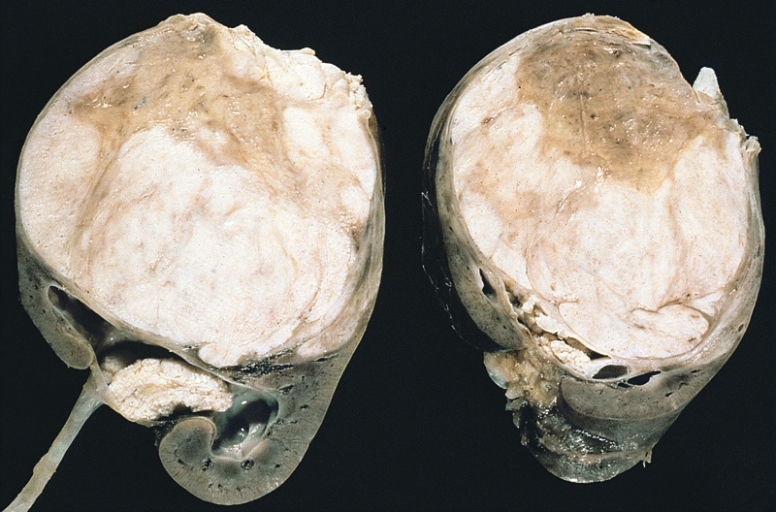
Tumor de Wilms:
Obsérvense los prominentes septos que subdividen la superficie seccionada y la protrusión del tumor en la pelvis renal, que se asemeja a un rabdomiosarcoma botrioide.

Imagen: “Wilms Tumor” por The Armed Forces Institute of Pathology. Licencia: Dominio Público

Related videos

Fisiopatología

  • Asociado a un desarrollo renal aberrante:
    • Desarrollo glomerular o tubular anormal en EN Erythema nodosum is an immune-mediated panniculitis (inflammation of the subcutaneous fat) caused by a type IV (delayed-type) hypersensitivity reaction. It commonly manifests in young women as tender, erythematous nodules on the shins. Erythema Nodosum la proliferación del blastema metanéfrico
    • Se cree que surge de restos nefrogénicos o nefroblastomatosis (que son focos de células inmaduras o embrionarias persistentes):
      • Están presentes en EN Erythema nodosum is an immune-mediated panniculitis (inflammation of the subcutaneous fat) caused by a type IV (delayed-type) hypersensitivity reaction. It commonly manifests in young women as tender, erythematous nodules on the shins. Erythema Nodosum el 1% de los LOS Neisseria riñones de los LOS Neisseria recién nacidos y sufren regresión en EN Erythema nodosum is an immune-mediated panniculitis (inflammation of the subcutaneous fat) caused by a type IV (delayed-type) hypersensitivity reaction. It commonly manifests in young women as tender, erythematous nodules on the shins. Erythema Nodosum la primera infancia.
      • Presente en EN Erythema nodosum is an immune-mediated panniculitis (inflammation of the subcutaneous fat) caused by a type IV (delayed-type) hypersensitivity reaction. It commonly manifests in young women as tender, erythematous nodules on the shins. Erythema Nodosum el 35% de los LOS Neisseria tumores de Wilms unilaterales y en EN Erythema nodosum is an immune-mediated panniculitis (inflammation of the subcutaneous fat) caused by a type IV (delayed-type) hypersensitivity reaction. It commonly manifests in young women as tender, erythematous nodules on the shins. Erythema Nodosum casi el 100% de los LOS Neisseria bilaterales
  • Oncogénesis:
    • Se cree que ocurre por cambios genéticos que desencadenan estos restos nefrogénicos
    • Se asocia a una mutación de pérdida de función en EN Erythema nodosum is an immune-mediated panniculitis (inflammation of the subcutaneous fat) caused by a type IV (delayed-type) hypersensitivity reaction. It commonly manifests in young women as tender, erythematous nodules on the shins. Erythema Nodosum varios genes Genes A category of nucleic acid sequences that function as units of heredity and which code for the basic instructions for the development, reproduction, and maintenance of organisms. DNA Types and Structure supresores de tumores y de transcripción:
      • WT1
      • WT2
      • p53
      • FWT1
      • FWT2
  • Algunos tumores no presentan ninguna de las mutaciones genéticas mencionadas, lo que sugiere que otros genes Genes A category of nucleic acid sequences that function as units of heredity and which code for the basic instructions for the development, reproduction, and maintenance of organisms. DNA Types and Structure desconocidos pueden estar implicados en EN Erythema nodosum is an immune-mediated panniculitis (inflammation of the subcutaneous fat) caused by a type IV (delayed-type) hypersensitivity reaction. It commonly manifests in young women as tender, erythematous nodules on the shins. Erythema Nodosum el tumor Tumor Inflammation de Wilms.

Presentación Clínica

Manifestaciones

  • La mayoría se presenta solo con una masa lisa, firme e indolora que no cruza la línea media.
  • Otros síntomas menos comunes:
  • Un subgrupo de pacientes presenta una hemorragia subcapsular:
    • Aumento rápido del volumen abdominal
    • Anemia Anemia Anemia is a condition in which individuals have low Hb levels, which can arise from various causes. Anemia is accompanied by a reduced number of RBCs and may manifest with fatigue, shortness of breath, pallor, and weakness. Subtypes are classified by the size of RBCs, chronicity, and etiology. Anemia: Overview and Types
    • Hipertensión
    • Fiebre

Examen físico

  • Examen abdominal general con el paciente en EN Erythema nodosum is an immune-mediated panniculitis (inflammation of the subcutaneous fat) caused by a type IV (delayed-type) hypersensitivity reaction. It commonly manifests in young women as tender, erythematous nodules on the shins. Erythema Nodosum posición supina:
    • Inspeccionar visualmente el abdomen y el costado.
    • Evaluar si hay masa palpable.
    • Se requiere un examen físico cuidadoso si se sospecha de un tumor Tumor Inflammation de Wilms (la palpación vigorosa aumenta el riesgo de ruptura y derrame quirúrgico del tumor Tumor Inflammation).
  • Examen genitourinario general para evaluar las condiciones sindrómicas
  • Examen ocular para evaluar la aniridia Aniridia A congenital abnormality in which there is only a rudimentary iris. This is due to the failure of the optic cup to grow. Aniridia also occurs in a hereditary form, usually autosomal dominant. Wilms Tumor
  • Evaluar la hemihipertrofia de las extremidades.

Diagnóstico

Tamizaje

Ultrasonido abdominal seriado para los LOS Neisseria que tienen riesgo de tumor Tumor Inflammation de Wilms:
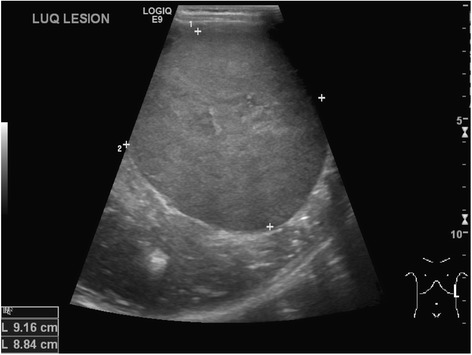
  • Niños con síndrome de Beckwith-Wiedemann o hemihiperplasia aislada: cada 3 meses hasta los LOS Neisseria 7 años
  • Niños con WAGR y síndromes asociados a WT1: cada 3 meses hasta los LOS Neisseria 5 años
  • Hermanos de un paciente con tumor Tumor Inflammation de Wilms familiar: cada 3 meses hasta los LOS Neisseria 8 años
  • Hijos de supervivientes del tumor Tumor Inflammation de Wilms bilateral: cada 3 meses hasta los LOS Neisseria 8 años

Diagnóstico imagenológico y estudios de laboratorio

  • Ultrasonido abdominal (renal): detecta la hidronefrosis y una masa renal multiquística
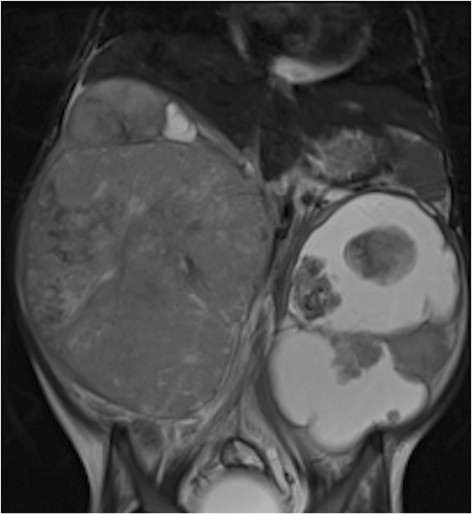
  • TC con contraste o RM de abdomen: para evaluar mejor la naturaleza o la extensión de la enfermedad
  • TC de tórax:
    • Para determinar si hay metástasis de pulmón
    • Biopsia si hay un nódulo sospechoso
  • El diagnóstico definitivo se realiza mediante una biopsia:
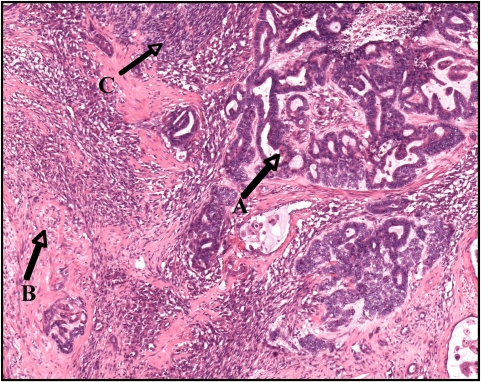
    • El tumor Tumor Inflammation es un patrón mixto de 3 tipos de células:
      • Células blastemales
      • Células estromales
      • Células epiteliales
    • Las proporciones varían, lo que da lugar a múltiples aspectos.
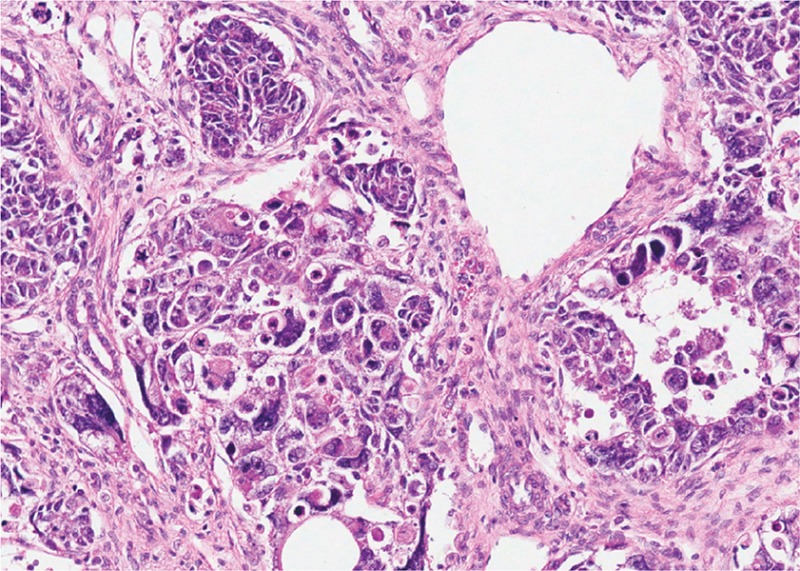
    • Tumor Tumor Inflammation de Wilms anaplásico:
      • Se observan núcleos grandes y distorsionados + figuras mitóticas polipoides multipolares
      • Más común en EN Erythema nodosum is an immune-mediated panniculitis (inflammation of the subcutaneous fat) caused by a type IV (delayed-type) hypersensitivity reaction. It commonly manifests in young women as tender, erythematous nodules on the shins. Erythema Nodosum la edad avanzada
      • Indicativo de un mal pronóstico
  • Pruebas de laboratorio:
    • Análisis de orina:
      • Hematuria Hematuria Presence of blood in the urine. Renal Cell Carcinoma
      • Proteinuria Proteinuria The presence of proteins in the urine, an indicator of kidney diseases. Nephrotic Syndrome in Children en EN Erythema nodosum is an immune-mediated panniculitis (inflammation of the subcutaneous fat) caused by a type IV (delayed-type) hypersensitivity reaction. It commonly manifests in young women as tender, erythematous nodules on the shins. Erythema Nodosum el síndrome de Denys-Drash
    • Panel metabólico para obtener la creatinina basal
    • Hemograma para determinar la hemoglobina de referencia (puede haber policitemia)
    • Pruebas de función hepática anormales si hay metástasis en EN Erythema nodosum is an immune-mediated panniculitis (inflammation of the subcutaneous fat) caused by a type IV (delayed-type) hypersensitivity reaction. It commonly manifests in young women as tender, erythematous nodules on the shins. Erythema Nodosum el hígado

Estadificación

Del National Wilms Tumor Tumor Inflammation Study (NWTS, por sus siglas en EN Erythema nodosum is an immune-mediated panniculitis (inflammation of the subcutaneous fat) caused by a type IV (delayed-type) hypersensitivity reaction. It commonly manifests in young women as tender, erythematous nodules on the shins. Erythema Nodosum inglés)/Children’s Oncology Group (COG, por sus siglas en EN Erythema nodosum is an immune-mediated panniculitis (inflammation of the subcutaneous fat) caused by a type IV (delayed-type) hypersensitivity reaction. It commonly manifests in young women as tender, erythematous nodules on the shins. Erythema Nodosum inglés):

  • Estadio I:
    • Tumor Tumor Inflammation confinado en EN Erythema nodosum is an immune-mediated panniculitis (inflammation of the subcutaneous fat) caused by a type IV (delayed-type) hypersensitivity reaction. It commonly manifests in young women as tender, erythematous nodules on the shins. Erythema Nodosum el riñón y que se puede extirpar completamente
    • La cápsula renal está intacta.
    • No se realizó ninguna biopsia ni hubo derrame quirúrgico del tumor Tumor Inflammation
    • No hay afectación de los LOS Neisseria vasos renales
    • No hay márgenes quirúrgicos positivos
    • Todos los LOS Neisseria ganglios linfáticos muestreados son negativos
  • Estadio II:
    • El tumor Tumor Inflammation ha HA Hemolytic anemia (HA) is the term given to a large group of anemias that are caused by the premature destruction/hemolysis of circulating red blood cells (RBCs). Hemolysis can occur within (intravascular hemolysis) or outside the blood vessels (extravascular hemolysis). Hemolytic Anemia crecido más allá del riñón, pero se puede extirpar completamente.
    • Puede haber extensión regional del tumor Tumor Inflammation (penetración de la cápsula renal o invasión del seno renal).
    • Los LOS Neisseria vasos sanguíneos fuera del parénquima renal pueden contener un tumor Tumor Inflammation.
    • Todos los LOS Neisseria ganglios linfáticos muestreados son negativos.
  • Estadio III:
    • Restos tumorales residuales (escisión quirúrgica incompleta)
    • Tumor Tumor Inflammation que penetra a través del peritoneo
    • Derrame quirúrgico del tumor Tumor Inflammation o biopsia
    • Ganglios linfáticos regionales positivos (no en EN Erythema nodosum is an immune-mediated panniculitis (inflammation of the subcutaneous fat) caused by a type IV (delayed-type) hypersensitivity reaction. It commonly manifests in young women as tender, erythematous nodules on the shins. Erythema Nodosum ganglios linfáticos distantes)
  • Estadio IV:
    • Metástasis hematógena
    • Metástasis en EN Erythema nodosum is an immune-mediated panniculitis (inflammation of the subcutaneous fat) caused by a type IV (delayed-type) hypersensitivity reaction. It commonly manifests in young women as tender, erythematous nodules on the shins. Erythema Nodosum los LOS Neisseria ganglios linfáticos fuera de la región abdominopélvica
    • Tumor Tumor Inflammation dentro de la glándula suprarrenal
  • Estadio V: afectación renal bilateral

Tratamiento

Tratamiento

Recomendaciones basadas en EN Erythema nodosum is an immune-mediated panniculitis (inflammation of the subcutaneous fat) caused by a type IV (delayed-type) hypersensitivity reaction. It commonly manifests in young women as tender, erythematous nodules on the shins. Erythema Nodosum los LOS Neisseria ensayos del NWTS/COG:

  • Depende del estadio y de la histología
  • Estadio I y II:
    • Resección quirúrgica primaria
    • 19 semanas de vincristina y dactinomicina después de la cirugía
    • Si el paciente tiene anaplasia en EN Erythema nodosum is an immune-mediated panniculitis (inflammation of the subcutaneous fat) caused by a type IV (delayed-type) hypersensitivity reaction. It commonly manifests in young women as tender, erythematous nodules on the shins. Erythema Nodosum estadio I o anaplasia focal en EN Erythema nodosum is an immune-mediated panniculitis (inflammation of the subcutaneous fat) caused by a type IV (delayed-type) hypersensitivity reaction. It commonly manifests in young women as tender, erythematous nodules on the shins. Erythema Nodosum estadio II:
      • Añadir doxorrubicina.
      • Ampliar el régimen de quimioterapia a 25 semanas.
      • Añadir radioterapia.
    • Si el paciente tiene estadio II + anaplasia difusa:
      • Añadir carboplatino, ciclofosfamida y etopósido.
      • Retirar la dactinomicina.
      • Añadir la radioterapia.
      • Ampliar el régimen de quimioterapia a 30 semanas.
  • Estadio III:
    • Resección quirúrgica primaria con muestreo de ganglios linfáticos
    • 25 semanas de vincristina, dactinomicina y doxorrubicina después de la cirugía
    • Radioterapia
    • Si el paciente tiene marcadores moleculares de alto riesgo, ampliar el régimen de quimioterapia a 31 semanas.
    • Si el paciente tiene anaplasia difusa:
      • Añadir carboplatino, ciclofosfamida y etopósido.
      • Retirar la dactinomicina.
      • Ampliar el régimen de quimioterapia a 30 semanas.
  • Estadio IV:
    • Resección quirúrgica primaria con muestreo de ganglios linfáticos
    • 25 semanas de vincristina, dactinomicina y doxorrubicina después de la cirugía
    • Radioterapia
    • Si el paciente tiene marcadores moleculares de alto riesgo y/o un nódulo pulmonar con respuesta incompleta en EN Erythema nodosum is an immune-mediated panniculitis (inflammation of the subcutaneous fat) caused by a type IV (delayed-type) hypersensitivity reaction. It commonly manifests in young women as tender, erythematous nodules on the shins. Erythema Nodosum 6 semanas, el tratamiento se ajusta en EN Erythema nodosum is an immune-mediated panniculitis (inflammation of the subcutaneous fat) caused by a type IV (delayed-type) hypersensitivity reaction. It commonly manifests in young women as tender, erythematous nodules on the shins. Erythema Nodosum función de la respuesta individual del paciente.
    • Si el paciente tiene anaplasia focal:
      • Añadir carboplatino, ciclofosfamida y etopósido.
      • Retirar la dactinomicina.
      • Ampliar el régimen de quimioterapia a 30 semanas.
    • Si el paciente tiene anaplasia difusa:
      • Añadir carboplatino, ciclofosfamida e irinotecán.
      • Retirar la dactinomicina.
      • Ampliar el régimen de quimioterapia a 36 semanas.
  • Estadio V (bilateral):
    • Vincristina, actinomicina y doxorrubicina preoperatorias durante 6 semanas
    • Cirugía (cirugía conservadora de nefronas siempre que sea posible)
    • Quimioterapia y radioterapia postoperatoria (decisión basada en EN Erythema nodosum is an immune-mediated panniculitis (inflammation of the subcutaneous fat) caused by a type IV (delayed-type) hypersensitivity reaction. It commonly manifests in young women as tender, erythematous nodules on the shins. Erythema Nodosum la histopatología del tumor Tumor Inflammation y la afectación de ganglios linfáticos)
    • El tratamiento postoperatorio se adapta según la histopatología y la respuesta individual del paciente.

Pronóstico

  • Tasa de supervivencia a los LOS Neisseria 5 años > 90%
  • Depende del estadio del tumor Tumor Inflammation en EN Erythema nodosum is an immune-mediated panniculitis (inflammation of the subcutaneous fat) caused by a type IV (delayed-type) hypersensitivity reaction. It commonly manifests in young women as tender, erythematous nodules on the shins. Erythema Nodosum el momento del diagnóstico
  • Los LOS Neisseria pacientes con anaplasia difusa tienen el peor pronóstico.
  • La edad influye en EN Erythema nodosum is an immune-mediated panniculitis (inflammation of the subcutaneous fat) caused by a type IV (delayed-type) hypersensitivity reaction. It commonly manifests in young women as tender, erythematous nodules on the shins. Erythema Nodosum el pronóstico:
    • Una mayor edad en EN Erythema nodosum is an immune-mediated panniculitis (inflammation of the subcutaneous fat) caused by a type IV (delayed-type) hypersensitivity reaction. It commonly manifests in young women as tender, erythematous nodules on the shins. Erythema Nodosum el momento del diagnóstico se asocia a un peor pronóstico.
    • Adultos: mayor tasa de toxicidad asociada al AL Amyloidosis tratamiento
    • < 2 años de edad: menor tasa de recaída
  • La causa de la muerte:
    • Relacionado con el tumor Tumor Inflammation: 86%
    • Efectos tardíos de la terapia: 9%.
    • No relacionado con la enfermedad o los LOS Neisseria efectos de la terapia: 5%.
    • Desconocido: 1%.

Diagnóstico Diferencial

  • Sarcoma de células claras de riñón: es la segunda neoplasia pediátrica más frecuente del riñón: Esta condición tiene mayores tasas de recaída y mortalidad que el tumor Tumor Inflammation de Wilms. El hueso es un lugar común de metástasis. La patología muestra cordones y nidos de células tumorales pálidas con abundante matriz extracelular que está separada por una red de arcadas vasculares. El diagnóstico se realiza mediante ultrasonido o TC, y el tratamiento consiste en EN Erythema nodosum is an immune-mediated panniculitis (inflammation of the subcutaneous fat) caused by a type IV (delayed-type) hypersensitivity reaction. It commonly manifests in young women as tender, erythematous nodules on the shins. Erythema Nodosum cirugía y quimioterapia.
  • Tumor Tumor Inflammation rabdoide del riñón: tumor Tumor Inflammation renal altamente maligno que suele afectar a los LOS Neisseria niños < 2 años. En EN Erythema nodosum is an immune-mediated panniculitis (inflammation of the subcutaneous fat) caused by a type IV (delayed-type) hypersensitivity reaction. It commonly manifests in young women as tender, erythematous nodules on the shins. Erythema Nodosum el momento del diagnóstico, el tumor Tumor Inflammation suele estar avanzado, con metástasis en EN Erythema nodosum is an immune-mediated panniculitis (inflammation of the subcutaneous fat) caused by a type IV (delayed-type) hypersensitivity reaction. It commonly manifests in young women as tender, erythematous nodules on the shins. Erythema Nodosum los LOS Neisseria pulmones, los LOS Neisseria ganglios linfáticos, el abdomen, el cerebro, el hígado y los LOS Neisseria huesos. La tasa de mortalidad es elevada (> 80%) en EN Erythema nodosum is an immune-mediated panniculitis (inflammation of the subcutaneous fat) caused by a type IV (delayed-type) hypersensitivity reaction. It commonly manifests in young women as tender, erythematous nodules on the shins. Erythema Nodosum el año del diagnóstico. Imagenología abdominal: para el diagnóstico se utilizan el ultrasonido y la TC con biopsia, y el tratamiento es con quimioterapia.
  • Nefroma mesoblástico congénito: masa renal benigna que se diagnostica durante el primer año de vida o mediante el ultrasonido prenatal. El nefroma mesoblástico congénito está asociado a la hipertensión y la elevación de renina y calcio. La masa suele ser infiltrante y requiere escisión quirúrgica.
  • Carcinoma de células renales (CCR): Raro en EN Erythema nodosum is an immune-mediated panniculitis (inflammation of the subcutaneous fat) caused by a type IV (delayed-type) hypersensitivity reaction. It commonly manifests in young women as tender, erythematous nodules on the shins. Erythema Nodosum la infancia, pero en EN Erythema nodosum is an immune-mediated panniculitis (inflammation of the subcutaneous fat) caused by a type IV (delayed-type) hypersensitivity reaction. It commonly manifests in young women as tender, erythematous nodules on the shins. Erythema Nodosum el momento de la presentación la enfermedad suele estar ya avanzada en EN Erythema nodosum is an immune-mediated panniculitis (inflammation of the subcutaneous fat) caused by a type IV (delayed-type) hypersensitivity reaction. It commonly manifests in young women as tender, erythematous nodules on the shins. Erythema Nodosum los LOS Neisseria niños en EN Erythema nodosum is an immune-mediated panniculitis (inflammation of the subcutaneous fat) caused by a type IV (delayed-type) hypersensitivity reaction. It commonly manifests in young women as tender, erythematous nodules on the shins. Erythema Nodosum comparación con los LOS Neisseria adultos. Los LOS Neisseria supervivientes de neuroblastoma Neuroblastoma Neuroblastoma is a malignancy that arises from the neural crest cell derivatives along the sympathetic chain (neuroblasts) and is most commonly located in the adrenal medulla. The tumor often presents in childhood with a flank mass that crosses the midline. Neuroblastoma que se sometieron a radioterapia renal dirigida y a quimioterapia basada en EN Erythema nodosum is an immune-mediated panniculitis (inflammation of the subcutaneous fat) caused by a type IV (delayed-type) hypersensitivity reaction. It commonly manifests in young women as tender, erythematous nodules on the shins. Erythema Nodosum compuestos de platino pueden tener un mayor riesgo de presentar un CCR. El diagnóstico se realiza con imagenología abdominal y el tratamiento es la escisión quirúrgica.
  • Carcinoma medular renal: malignidad renal muy invasiva y poco frecuente: La enfermedad se observa esencialmente en EN Erythema nodosum is an immune-mediated panniculitis (inflammation of the subcutaneous fat) caused by a type IV (delayed-type) hypersensitivity reaction. It commonly manifests in young women as tender, erythematous nodules on the shins. Erythema Nodosum pacientes con hemoglobinopatía falciforme, en EN Erythema nodosum is an immune-mediated panniculitis (inflammation of the subcutaneous fat) caused by a type IV (delayed-type) hypersensitivity reaction. It commonly manifests in young women as tender, erythematous nodules on the shins. Erythema Nodosum particular el rasgo falciforme. El tumor Tumor Inflammation es agresivo y se observa con metástasis temprana. El tratamiento es con escisión quirúrgica y quimioterapia.

Referencias

  1. American Cancer Society. (2018). Key Statistics for Wilms Tumors. Retrieved November 9, 2024, from https://www.cancer.org/cancer/wilms-tumor/about/key-statistics.html
  2. Chintagumpala, M. (2024). Presentation, diagnosis, and staging of Wilms tumor. UpToDate. Retrieved November 8, 2024, from https://www.uptodate.com/contents/presentation-diagnosis-and-staging-of-wilms-tumor
  3. Chintagumpula, M. (2024). Treatment and prognosis of Wilms tumor. UpToDate. Retrieved November 8, 2024, from https://www.uptodate.com/contents/treatment-and-prognosis-of-wilms-tumor
  4. National Cancer Institute (2024). Wilms Tumor and Other Childhood Kidney Tumors Treatment (PDQ®)–Health Professional Version. Retrieved November 9, 2024, from https://www.cancer.gov/types/kidney/hp/wilms-treatment-pdq#_723_toc
  5. Popov, S. D., Sebire, N. J., & Vujanic, G. M. (2016). Wilms’ tumour – histology and differential diagnosis. In M. M. van den Heuvel-Eibrink (Ed.), Wilms Tumor (Chapter 1). Codon Publications. https://doi.org/10.15586/codon.wt.2016.ch1
  6. Green D.M., Anderson J.R., Breslow N.E., Dome J.S. (2021). Wilms Tumor (Nephroblastoma), Version 2.2021, NCCN Clinical Practice Guidelines in Oncology. Journal of the National Comprehensive Cancer Network, 19(8), 945–977. https://doi.org/10.6004/jnccn.2021.0037

¡Crea tu cuenta gratis o inicia una sesión para seguir leyendo!

Regístrate ahora y obtén acceso gratuito a Lecturio con páginas de concepto, videos médicos y cuestionarios para tu educación médica.

User Reviews

Que tengas una sesión de estudio alegre y navideña 🎁 Ahorra 50% en todos los planes >>

Details