Domina Conceptos Médicos

Estudia para la escuela de medicina y tus examenes con Lecturio.

Traumatismo Torácico en Niños

Las instancias de fuerza traumática aplicada al AL Amyloidosis tórax se observan en EN Erythema nodosum is an immune-mediated panniculitis (inflammation of the subcutaneous fat) caused by a type IV (delayed-type) hypersensitivity reaction. It commonly manifests in young women as tender, erythematous nodules on the shins. Erythema Nodosum el 10% de los LOS Neisseria casos de traumatismo pediátrico, generalmente en EN Erythema nodosum is an immune-mediated panniculitis (inflammation of the subcutaneous fat) caused by a type IV (delayed-type) hypersensitivity reaction. It commonly manifests in young women as tender, erythematous nodules on the shins. Erythema Nodosum el contexto de accidentes automovilísticos y caídas. El traumatismo torácico rara vez ocurre de forma aislada y a menudo se asocia con politraumatismos. Los LOS Neisseria 2 mecanismos principales involucran fuerzas contundentes y penetrantes. Las lesiones más frecuentes son neumotórax, hemotórax, tórax inestable y contusiones pulmonares. El tratamiento de los LOS Neisseria niños afectados es muy similar al AL Amyloidosis de los LOS Neisseria adultos, pero la patoanatomía pediátrica única dicta diferencias importantes en EN Erythema nodosum is an immune-mediated panniculitis (inflammation of the subcutaneous fat) caused by a type IV (delayed-type) hypersensitivity reaction. It commonly manifests in young women as tender, erythematous nodules on the shins. Erythema Nodosum el abordaje y el tratamiento.

Last updated: Dec 15, 2025

Editorial responsibility: Stanley Oiseth, Lindsay Jones, Evelin Maza

Descripción General

Clasificación

  • Traumatismo cerrado: lesión causada por la aplicación de una fuerza mecánica por un objeto o fuerza contundente
  • Traumatismo penetrante: lesión provocada por un instrumento cortante o perforante que interrumpe la continuidad de los LOS Neisseria tejidos

Epidemiología

  • Infrecuentes: 10% de los LOS Neisseria traumatismos pediátricos
  • Rara vez ocurre de forma aislada, hasta el 85% de los LOS Neisseria casos se asocian con politraumatismos
  • La mayoría debido a accidentes automovilísticos y caídas
  • 7%–8% de los LOS Neisseria casos se deben a maltrato y, generalmente, ocurren en EN Erythema nodosum is an immune-mediated panniculitis (inflammation of the subcutaneous fat) caused by a type IV (delayed-type) hypersensitivity reaction. It commonly manifests in young women as tender, erythematous nodules on the shins. Erythema Nodosum individuos < 3 años de edad.
  • Traumatismo cerrado:
    • 85% de los LOS Neisseria casos por traumatismo contundente
    • > 50% de los LOS Neisseria casos de traumatismo torácico cerrado están asociados con lesiones en EN Erythema nodosum is an immune-mediated panniculitis (inflammation of the subcutaneous fat) caused by a type IV (delayed-type) hypersensitivity reaction. It commonly manifests in young women as tender, erythematous nodules on the shins. Erythema Nodosum cabeza, abdomen o extremidades.
  • Traumatismo penetrante: más a menudo debido a heridas de bala
  • Mortalidad general: 15%–26%

Fisiopatología y anatomía

La región torácica de un niño es más distensible en EN Erythema nodosum is an immune-mediated panniculitis (inflammation of the subcutaneous fat) caused by a type IV (delayed-type) hypersensitivity reaction. It commonly manifests in young women as tender, erythematous nodules on the shins. Erythema Nodosum comparación con la de los LOS Neisseria adultos:

  • Costillas flexibles:
    • Debido a un menor grado de osificación
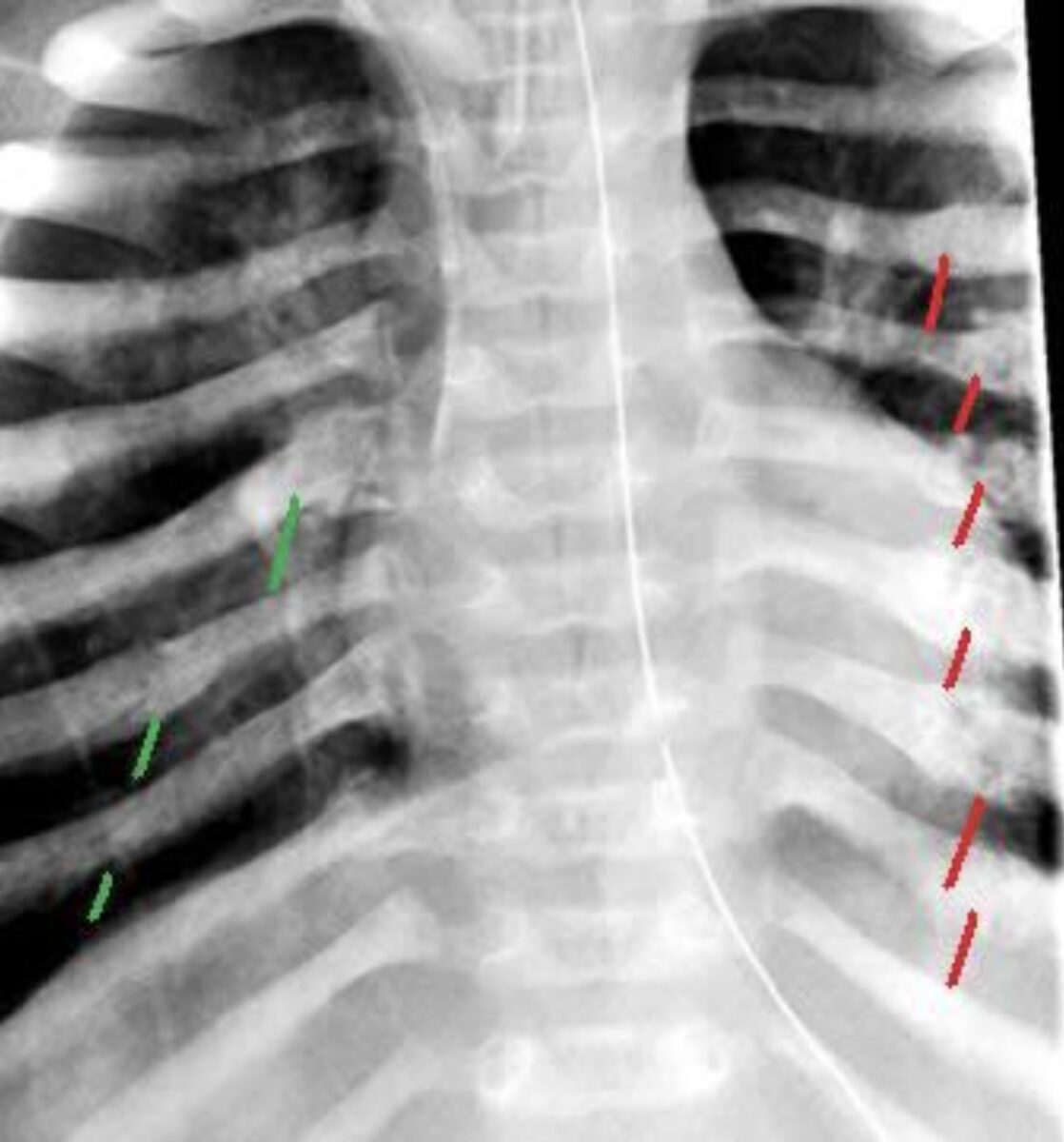
    • Transmisión de la energía del traumatismo al AL Amyloidosis parénquima pulmonar → contusiones pulmonares
    • Es poco probable que se fracture Fracture A fracture is a disruption of the cortex of any bone and periosteum and is commonly due to mechanical stress after an injury or accident. Open fractures due to trauma can be a medical emergency. Fractures are frequently associated with automobile accidents, workplace injuries, and trauma. Overview of Bone Fractures: las fracturas indican mecanismos de alta energía y lesiones internas.
  • El mediastino es más móvil:
    • Desplazamiento visceral más drástico
    • Pérdida de la precarga e hipotensión
  • Reserva pulmonar inferior

Lesiones Torácicas Frecuentes

Tabla: Lesiones torácicas frecuentes en EN Erythema nodosum is an immune-mediated panniculitis (inflammation of the subcutaneous fat) caused by a type IV (delayed-type) hypersensitivity reaction. It commonly manifests in young women as tender, erythematous nodules on the shins. Erythema Nodosum niños
Neumotórax
  • Frecuentes (33% de los LOS Neisseria casos)
  • Neumotórax a tensión: compromiso repentino del llenado del corazón derecho
Hemotórax
  • Menos frecuente
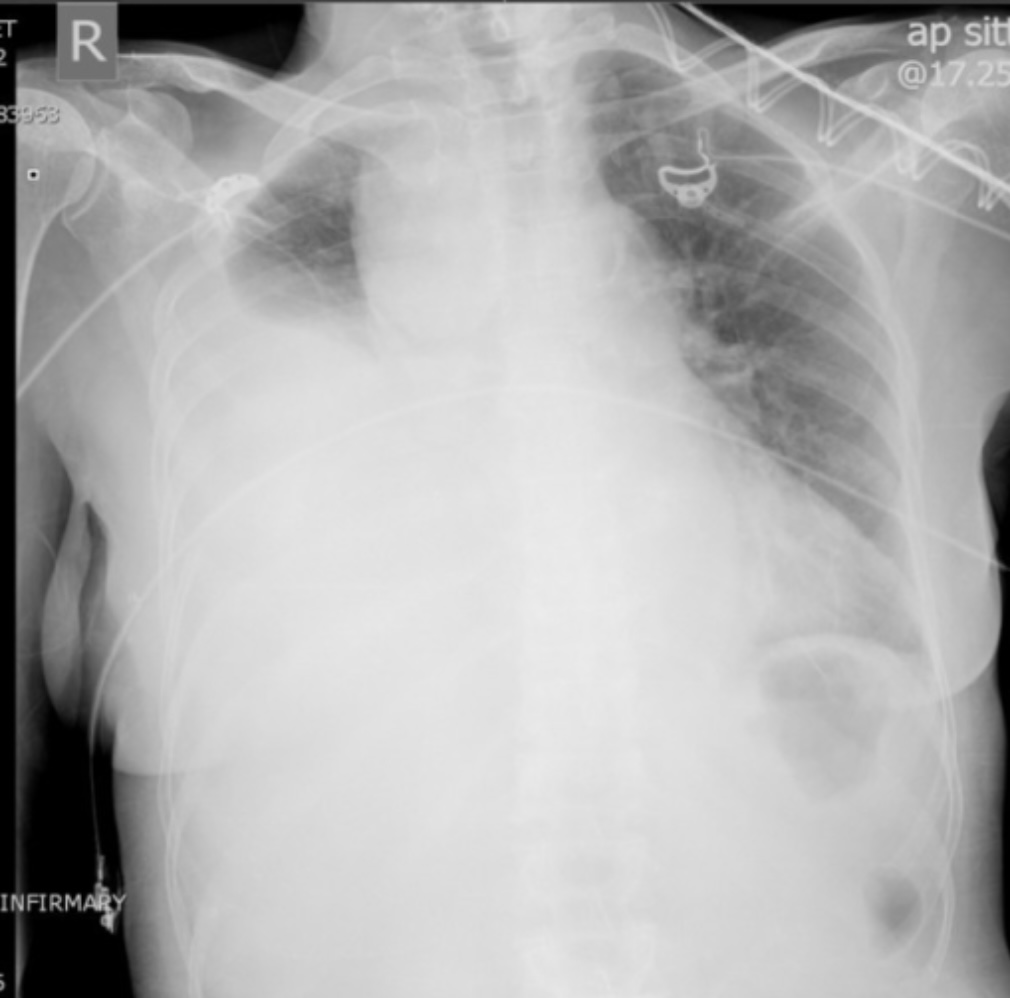
  • Descrito como un “blanqueamiento” de tórax en EN Erythema nodosum is an immune-mediated panniculitis (inflammation of the subcutaneous fat) caused by a type IV (delayed-type) hypersensitivity reaction. It commonly manifests in young women as tender, erythematous nodules on the shins. Erythema Nodosum la radiografía
  • El hemotórax puede contener hasta un 40% del volumen efectivo → signos de shock Shock Shock is a life-threatening condition associated with impaired circulation that results in tissue hypoxia. The different types of shock are based on the underlying cause: distributive (↑ cardiac output (CO), ↓ systemic vascular resistance (SVR)), cardiogenic (↓ CO, ↑ SVR), hypovolemic (↓ CO, ↑ SVR), obstructive (↓ CO), and mixed. Types of Shock hemorrágico
Lesión del parénquima pulmonar o contusión pulmonar
  • Las contusiones y laceraciones pulmonares son lesiones predominantes.
  • A menudo ocurren sin signos externos de lesión
  • Edema Edema Edema is a condition in which excess serous fluid accumulates in the body cavity or interstitial space of connective tissues. Edema is a symptom observed in several medical conditions. It can be categorized into 2 types, namely, peripheral (in the extremities) and internal (in an organ or body cavity). Edema, hemorragia e inflamación de los LOS Neisseria espacios alveolares → desajuste ventilación/perfusión
  • 2 mecanismos: compresión o desgarro, y desplazamiento severo
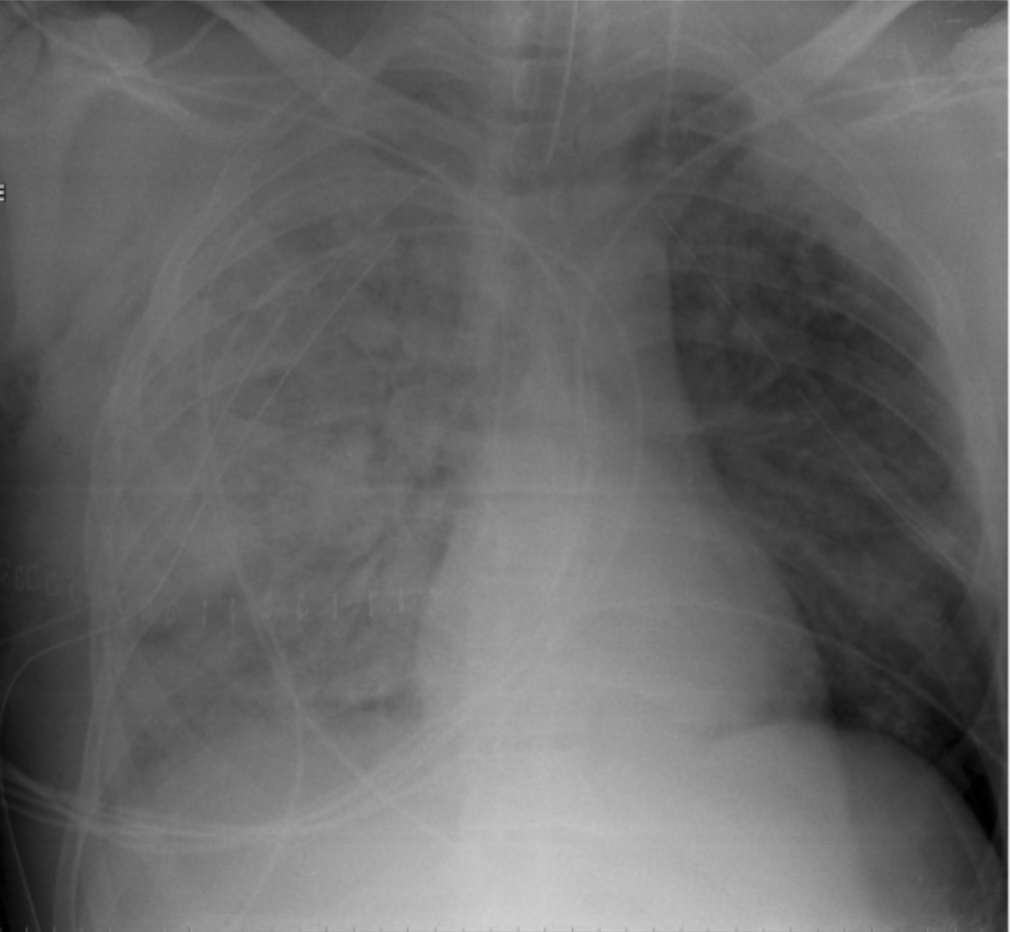
  • La hemorragia alveolar produce hepatización.
  • Área consolidada en EN Erythema nodosum is an immune-mediated panniculitis (inflammation of the subcutaneous fat) caused by a type IV (delayed-type) hypersensitivity reaction. It commonly manifests in young women as tender, erythematous nodules on the shins. Erythema Nodosum la radiografía de tórax (difícil de diferenciar de neumonía o atelectasia)
Fractura de costilla
  • Representa lesiones graves debido a fuerzas de alto impacto
  • Puede resultar en EN Erythema nodosum is an immune-mediated panniculitis (inflammation of the subcutaneous fat) caused by a type IV (delayed-type) hypersensitivity reaction. It commonly manifests in young women as tender, erythematous nodules on the shins. Erythema Nodosum tórax inestable
  • Puede indicar maltrato infantil cuando faltan mecanismos de alta energía
Lesión cardíaca cerrada o contusión cardíaca
  • Se observa en EN Erythema nodosum is an immune-mediated panniculitis (inflammation of the subcutaneous fat) caused by a type IV (delayed-type) hypersensitivity reaction. It commonly manifests in young women as tender, erythematous nodules on the shins. Erythema Nodosum el traumatismo torácico contuso relacionado con deportes
  • Los LOS Neisseria individuos afectados generalmente fallecen antes de llegar al AL Amyloidosis hospital.
  • Puede manifestarse como arritmias, commotio cordis Commotio cordis A sudden cardiac arrhythmia (e.g., ventricular fibrillation) caused by a blunt, non-penetrating impact to the precordial region of chest wall. Commotio cordis often results in sudden death without prompt cardiopulmonary defibrillation. Blunt Chest Trauma y muerte súbita
Lesiones de la aorta Aorta The main trunk of the systemic arteries. Mediastinum and Great Vessels: Anatomy y los LOS Neisseria grandes vasos
  • Muy raras (0,06%–0,1%)
  • El sitio más común es el istmo aórtico.
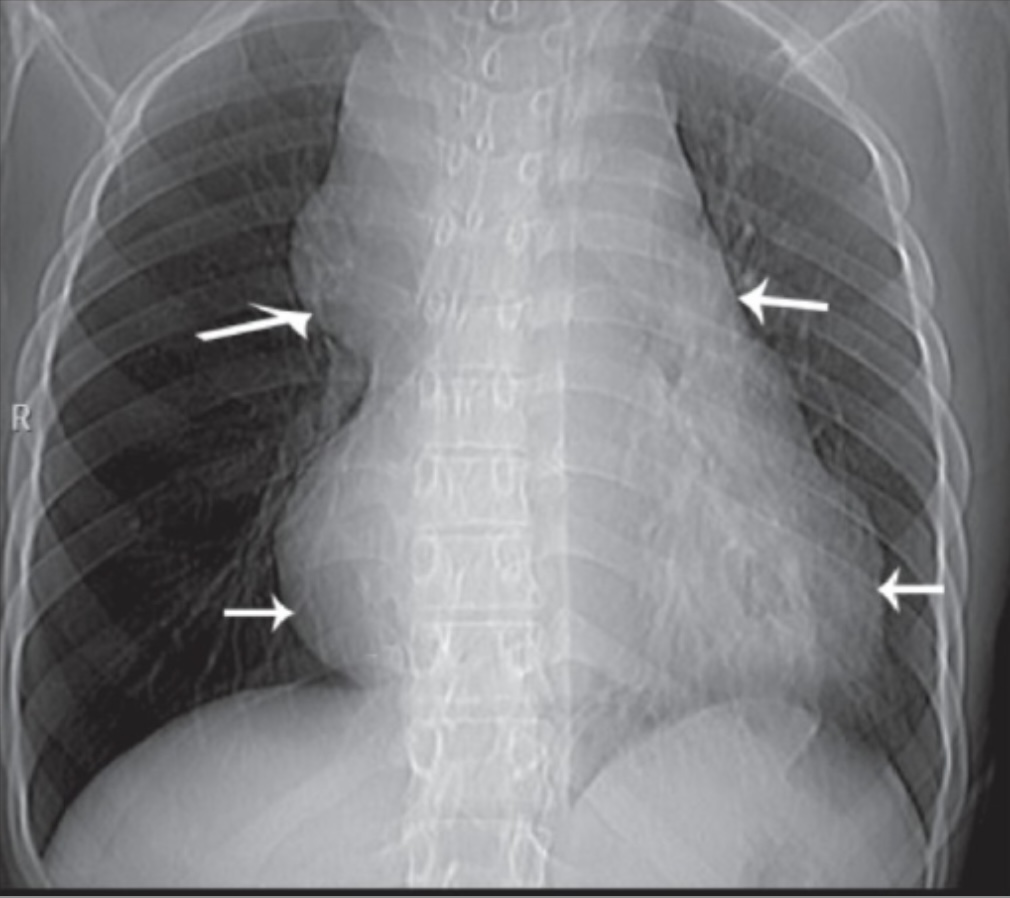
  • Ensanchamiento del contorno mediastínico en EN Erythema nodosum is an immune-mediated panniculitis (inflammation of the subcutaneous fat) caused by a type IV (delayed-type) hypersensitivity reaction. It commonly manifests in young women as tender, erythematous nodules on the shins. Erythema Nodosum la radiografía de tórax
Lesión esofágica
  • 0,1% de los LOS Neisseria casos de traumatismo cerrado
  • Asociada con otras lesiones mediastínicas
  • Produce dolor Dolor Inflammation torácico o epigástrico
  • Reconocida por neumomediastino o neumoperitoneo en EN Erythema nodosum is an immune-mediated panniculitis (inflammation of the subcutaneous fat) caused by a type IV (delayed-type) hypersensitivity reaction. It commonly manifests in young women as tender, erythematous nodules on the shins. Erythema Nodosum la imagenología diagnóstica (neumomediastino en EN Erythema nodosum is an immune-mediated panniculitis (inflammation of the subcutaneous fat) caused by a type IV (delayed-type) hypersensitivity reaction. It commonly manifests in young women as tender, erythematous nodules on the shins. Erythema Nodosum el 10% de los LOS Neisseria casos de traumatismo torácico cerrado)
Lesión diafragmática
  • Puede estar acompañada por parálisis del nervio frénico, lesión del hígado y el bazo, y dificultad respiratoria
  • Se pueden escuchar ruidos intestinales en EN Erythema nodosum is an immune-mediated panniculitis (inflammation of the subcutaneous fat) caused by a type IV (delayed-type) hypersensitivity reaction. It commonly manifests in young women as tender, erythematous nodules on the shins. Erythema Nodosum el tórax.
Asfixia traumática
  • Rara
  • Accidentes de vehículos motorizados de alta velocidad, lesiones por aplastamiento de la cabeza y el torso
  • Ocurre debido a la flexibilidad de la pared torácica
  • La presión intratorácica aumenta con la fuerza de compresión del abdomen contra una glotis cerrada.
  • Las petequias aparecen en EN Erythema nodosum is an immune-mediated panniculitis (inflammation of the subcutaneous fat) caused by a type IV (delayed-type) hypersensitivity reaction. It commonly manifests in young women as tender, erythematous nodules on the shins. Erythema Nodosum la mucosa oral con edema Edema Edema is a condition in which excess serous fluid accumulates in the body cavity or interstitial space of connective tissues. Edema is a symptom observed in several medical conditions. It can be categorized into 2 types, namely, peripheral (in the extremities) and internal (in an organ or body cavity). Edema y cianosis.
Lesión traqueobronquial
  • Debida a una rápida desaceleración, lesiones por aplastamiento o fuerza en EN Erythema nodosum is an immune-mediated panniculitis (inflammation of the subcutaneous fat) caused by a type IV (delayed-type) hypersensitivity reaction. It commonly manifests in young women as tender, erythematous nodules on the shins. Erythema Nodosum el tórax contra una glotis cerrada
  • Más comúnmente expresada como aire mediastínico, neumotórax y enfisema subcutáneo
  • Puede ser letal en EN Erythema nodosum is an immune-mediated panniculitis (inflammation of the subcutaneous fat) caused by a type IV (delayed-type) hypersensitivity reaction. It commonly manifests in young women as tender, erythematous nodules on the shins. Erythema Nodosum ⅓ de casos
Traumatismo penetrante Las heridas por arma de fuego son una causa cada vez más común.

Evaluación

Evaluación primaria (“ABCDE” ( en EN Erythema nodosum is an immune-mediated panniculitis (inflammation of the subcutaneous fat) caused by a type IV (delayed-type) hypersensitivity reaction. It commonly manifests in young women as tender, erythematous nodules on the shins. Erythema Nodosum inglés))

  • A – Airway Airway ABCDE Assessment (vía aérea):
    • Compruebe la permeabilidad de la vía aérea.
    • Obstrucción a menudo debido a sangre o secreciones
  • B – Breathing (respiración):
    • Observe, escuche y palpe la pared torácica para evaluar la respiración.
    • En EN Erythema nodosum is an immune-mediated panniculitis (inflammation of the subcutaneous fat) caused by a type IV (delayed-type) hypersensitivity reaction. It commonly manifests in young women as tender, erythematous nodules on the shins. Erythema Nodosum casos de neumotórax, hemotórax o tórax inestable, la respiración puede ser asimétrica.
  • C – Circulation Circulation The movement of the blood as it is pumped through the cardiovascular system. ABCDE Assessment (circulación):
    • Palpe los LOS Neisseria pulsos periféricos y centrales.
    • Shock Shock Shock is a life-threatening condition associated with impaired circulation that results in tissue hypoxia. The different types of shock are based on the underlying cause: distributive (↑ cardiac output (CO), ↓ systemic vascular resistance (SVR)), cardiogenic (↓ CO, ↑ SVR), hypovolemic (↓ CO, ↑ SVR), obstructive (↓ CO), and mixed. Types of Shock obstructivo en EN Erythema nodosum is an immune-mediated panniculitis (inflammation of the subcutaneous fat) caused by a type IV (delayed-type) hypersensitivity reaction. It commonly manifests in young women as tender, erythematous nodules on the shins. Erythema Nodosum taponamiento cardíaco y neumotórax a tensión
  • D – Disability Disability Determination of the degree of a physical, mental, or emotional handicap. The diagnosis is applied to legal qualification for benefits and income under disability insurance and to eligibility for social security and workman’s compensation benefits. ABCDE Assessment (discapacidad):
    • Evalúe el nivel de alerta.
    • Escala de Coma Coma Coma is defined as a deep state of unarousable unresponsiveness, characterized by a score of 3 points on the GCS. A comatose state can be caused by a multitude of conditions, making the precise epidemiology and prognosis of coma difficult to determine. Coma de Glasgow ( GCS GCS A scale that assesses the response to stimuli in patients with craniocerebral injuries. The parameters are eye opening, motor response, and verbal response. Coma, por sus siglas en EN Erythema nodosum is an immune-mediated panniculitis (inflammation of the subcutaneous fat) caused by a type IV (delayed-type) hypersensitivity reaction. It commonly manifests in young women as tender, erythematous nodules on the shins. Erythema Nodosum inglés) < 8 es una indicación de intubación de emergencia.
  • E – Exposure (exposición):
    • Completo; examen físico de la cabeza a los LOS Neisseria pies para detectar otras lesiones
  • Como atajo, cuando la persona afectada habla, es una indicación de:
    • Una vía aérea permeable
    • Respiración adecuada
    • Circulación y perfusión suficientes al AL Amyloidosis cerebro
    • Útil para evaluar el estado mental
Tabla: Lesiones potencialmente mortales que se considerarán durante la evaluación primaria de traumatismo torácico
A B C
Obstrucción de la vía aérea o rotura traqueobronquial
  • Neumotórax a tensión
  • Neumotórax abierto
  • Tórax inestable
  • Contusión pulmonar
  • Hemotórax masivo
  • Contusión cardiaca
  • Taponamiento cardíaco
  • Disrupción aórtica

Evaluación secundaria

  • Antecedentes abreviados:
    • Mecanismo de lesión (e.g., aceleración o desaceleración)
  • Inspección cuidadosa de pies a cabeza; en EN Erythema nodosum is an immune-mediated panniculitis (inflammation of the subcutaneous fat) caused by a type IV (delayed-type) hypersensitivity reaction. It commonly manifests in young women as tender, erythematous nodules on the shins. Erythema Nodosum el traumatismo torácico, busque específicamente:
    • Frecuencia respiratoria anormal
    • Desviación traqueal
    • Tríada de Beck: presión arterial baja, ruidos cardíacos atenuados, presión venosa yugular elevada
    • Movimientos torácicos paradójicos (e.g., tórax inestable)
    • Crepitación con enfisema subcutáneo

Abordaje diagnóstico

  • Imagenología diagnóstica:
    • Ultrasonido (evaluación enfocada con ultrasonido para trauma extendida (eFAST, por sus siglas en EN Erythema nodosum is an immune-mediated panniculitis (inflammation of the subcutaneous fat) caused by a type IV (delayed-type) hypersensitivity reaction. It commonly manifests in young women as tender, erythematous nodules on the shins. Erythema Nodosum inglés)) en EN Erythema nodosum is an immune-mediated panniculitis (inflammation of the subcutaneous fat) caused by a type IV (delayed-type) hypersensitivity reaction. It commonly manifests in young women as tender, erythematous nodules on the shins. Erythema Nodosum casos de inestabilidad hemodinámica
    • Radiografía de tórax: para determinar fracturas costales, áreas de consolidación (contusión pulmonar), neumotórax y hemotórax
    • TC: para determinar rotura aórtica y hemotórax
    • Broncoscopia y laringoscopia: para identificar la falta de continuidad en EN Erythema nodosum is an immune-mediated panniculitis (inflammation of the subcutaneous fat) caused by a type IV (delayed-type) hypersensitivity reaction. It commonly manifests in young women as tender, erythematous nodules on the shins. Erythema Nodosum la vía aérea superior y el árbol bronquial
    • Esofagoscopia: para determinar la falta de continuidad del esófago
  • Evaluaciones de laboratorio: niveles de troponina para descartar una lesión cardíaca cerrada
  • ECG ECG An electrocardiogram (ECG) is a graphic representation of the electrical activity of the heart plotted against time. Adhesive electrodes are affixed to the skin surface allowing measurement of cardiac impulses from many angles. The ECG provides 3-dimensional information about the conduction system of the heart, the myocardium, and other cardiac structures. Electrocardiogram (ECG): para comprobar si hay arritmias

Tratamiento

El tratamiento depende de la lesión (inicio rápido de RCP de alta calidad si el individuo falla en EN Erythema nodosum is an immune-mediated panniculitis (inflammation of the subcutaneous fat) caused by a type IV (delayed-type) hypersensitivity reaction. It commonly manifests in young women as tender, erythematous nodules on the shins. Erythema Nodosum la evaluación de las vías respiratorias, respiración, circulación (ABC, por sus siglas en EN Erythema nodosum is an immune-mediated panniculitis (inflammation of the subcutaneous fat) caused by a type IV (delayed-type) hypersensitivity reaction. It commonly manifests in young women as tender, erythematous nodules on the shins. Erythema Nodosum inglés)).

Tratamiento de soporte

  • Monitorización de los LOS Neisseria signos vitales
  • Mantenga la vía aérea: intube si es necesario.
  • Mantenga la oxigenación:
    • O2 suplementario
    • Ventilación con presión positiva, si es necesario
  • Mantenga la presión arterial/perfusión:
    • Cristaloides isotónicos o transfusión de sangre, si es necesario
    • Vasopresores

Lesiones potencialmente mortales

  • Neumotórax a tensión: descompresión con aguja y drenaje pleural
  • Neumotórax abierto: válvula de 1 vía
  • Tórax inestable
    • Cuidados de soporte: intubación y ventilación mecánica
    • Fijación quirúrgica de la pared torácica cuando sea necesario
  • Hemotórax: drenaje pleural con tubo o toracotomía en EN Erythema nodosum is an immune-mediated panniculitis (inflammation of the subcutaneous fat) caused by a type IV (delayed-type) hypersensitivity reaction. It commonly manifests in young women as tender, erythematous nodules on the shins. Erythema Nodosum casos de hemorragia severa
  • Lesiones de la aorta Aorta The main trunk of the systemic arteries. Mediastinum and Great Vessels: Anatomy y grandes vasos: intervención quirúrgica
  • Lesiones penetrantes:
    • Resucitación con líquidos
    • Intervención quirúrgica en EN Erythema nodosum is an immune-mediated panniculitis (inflammation of the subcutaneous fat) caused by a type IV (delayed-type) hypersensitivity reaction. It commonly manifests in young women as tender, erythematous nodules on the shins. Erythema Nodosum personas con gasto por drenaje pleural > 2 mL/kg/h

Referencias

  1. Kuo, D.Z., Houtrow, A.J. (2016). Recognition and management of medical complexity. Pediatrics, 138, 1. https://search.proquest.com/docview/1846002393
  2. Gutiérrez, C.E. (2016). Pediatric trauma. In J. E. Tintinalli, J.S. Stapczynski, O.J. Ma, D.M. Yealy, G.D. Meckler, D.M. Cline (Eds.), Tintinalli’s Emergency Medicine: A Comprehensive Study Guide, 8e. New York, NY: McGraw-Hill Education. accessmedicine.mhmedical.com/content.aspx?aid=1121492666
  3. Roskind, C.G., Pryor, H.I., Klein, B.L. (2020). Acute care of multiple trauma. In R.M. Kliegman MD, J.W. St Geme, N.J. Blum, S.S. Shah, MSCE, R.C. Tasker, K.M. Wilson (Eds.), Nelson Textbook of Pediatrics (pp. 54-554.e1). https://www.clinicalkey.es/#!/content/3-s2.0-B9780323529501000821
  4. Dubois, S.M. (2011). Trauma de tórax. In S. Martínez Dubois (Ed.), Cirugía bases del conocimiento quirúrgico y apoyo en trauma, 5e. New York, NY: McGraw-Hill Education. accessmedicina.mhmedical.com/content.aspx?aid=1118391901
  5. Stafford, P. W., & Harmon, C. M. (1993). Thoracic trauma in children. Current Opinion in Pediatrics, 5(3), 325–332. https://doi.org/10.1097/00008480-199306000-00014

¡Crea tu cuenta gratis o inicia una sesión para seguir leyendo!

Regístrate ahora y obtén acceso gratuito a Lecturio con páginas de concepto, videos médicos y cuestionarios para tu educación médica.

User Reviews

Que tengas una sesión de estudio alegre y navideña 🎁 Ahorra 50% en todos los planes >>

Details