
Domina Conceptos Médicos

Estudia para la escuela de medicina y tus examenes con Lecturio.

Tamizaje de Cáncer de Próstata

El cáncer de próstata es uno de los LOS Neisseria cánceres más comunes que afectan a los LOS Neisseria hombres. En EN Erythema nodosum is an immune-mediated panniculitis (inflammation of the subcutaneous fat) caused by a type IV (delayed-type) hypersensitivity reaction. It commonly manifests in young women as tender, erythematous nodules on the shins. Erythema Nodosum Estados Unidos, el riesgo de por vida de ser diagnosticado con cáncer de próstata es aproximadamente del 11%, y el riesgo de por vida de fallecer por esta afección es del 2,5%. El cáncer de próstata es un cáncer de crecimiento lento que tarda años (incluso décadas) en EN Erythema nodosum is an immune-mediated panniculitis (inflammation of the subcutaneous fat) caused by a type IV (delayed-type) hypersensitivity reaction. It commonly manifests in young women as tender, erythematous nodules on the shins. Erythema Nodosum convertirse en EN Erythema nodosum is an immune-mediated panniculitis (inflammation of the subcutaneous fat) caused by a type IV (delayed-type) hypersensitivity reaction. It commonly manifests in young women as tender, erythematous nodules on the shins. Erythema Nodosum una enfermedad avanzada, y muchos hombres permanecen asintomáticos y fallecen a causa de otras afecciones médicas. El método preferido de tamizaje es la prueba del antígeno prostático específico ( PSA PSA A glycoprotein that is a kallikrein-like serine proteinase and an esterase, produced by epithelial cells of both normal and malignant prostate tissue. It is an important marker for the diagnosis of prostate cancer. Prostate Cancer, por sus siglas en EN Erythema nodosum is an immune-mediated panniculitis (inflammation of the subcutaneous fat) caused by a type IV (delayed-type) hypersensitivity reaction. It commonly manifests in young women as tender, erythematous nodules on the shins. Erythema Nodosum inglés). Afecciones como la prostatitis Prostatitis Prostatitis is inflammation or an irritative condition of the prostate that presents as different syndromes: acute bacterial, chronic bacterial, chronic prostatitis/chronic pelvic pain, and asymptomatic. Bacterial prostatitis is easier to identify clinically and the management (antibiotics) is better established. Prostatitis y la hiperplasia prostática benigna también se asocian con niveles elevados de PSA PSA A glycoprotein that is a kallikrein-like serine proteinase and an esterase, produced by epithelial cells of both normal and malignant prostate tissue. It is an important marker for the diagnosis of prostate cancer. Prostate Cancer. Por lo tanto, se puede buscar la confirmación del diagnóstico mediante una biopsia de próstata, lo que conlleva riesgos. La recomendación actual es que el paciente y el médico conversen sobre los LOS Neisseria riesgos y beneficios, y evalúen el riesgo del paciente de padecer cáncer de próstata. Los LOS Neisseria factores considerados en EN Erythema nodosum is an immune-mediated panniculitis (inflammation of the subcutaneous fat) caused by a type IV (delayed-type) hypersensitivity reaction. It commonly manifests in young women as tender, erythematous nodules on the shins. Erythema Nodosum la discusión incluyen la edad del paciente, la esperanza de vida, los LOS Neisseria antecedentes familiares, las comorbilidades y los LOS Neisseria valores individuales con respecto las consecuencias asociadas con el tamizaje y el tratamiento.

Last updated: Dec 15, 2025

Editorial responsibility: Stanley Oiseth, Lindsay Jones, Evelin Maza

Descripción General

Cáncer de próstata

  • Cáncer de próstata
  • El adenocarcinoma representa > 90% de los LOS Neisseria casos.

Epidemiología

  • A nivel mundial:
    • 2do cáncer más comúnmente diagnosticado en EN Erythema nodosum is an immune-mediated panniculitis (inflammation of the subcutaneous fat) caused by a type IV (delayed-type) hypersensitivity reaction. It commonly manifests in young women as tender, erythematous nodules on the shins. Erythema Nodosum hombres
    • > 1,3 millones de casos diagnosticados anualmente
  • En EN Erythema nodosum is an immune-mediated panniculitis (inflammation of the subcutaneous fat) caused by a type IV (delayed-type) hypersensitivity reaction. It commonly manifests in young women as tender, erythematous nodules on the shins. Erythema Nodosum Estados Unidos:
    • 3ra causa principal de cáncer en EN Erythema nodosum is an immune-mediated panniculitis (inflammation of the subcutaneous fat) caused by a type IV (delayed-type) hypersensitivity reaction. It commonly manifests in young women as tender, erythematous nodules on the shins. Erythema Nodosum hombres
    • Aproximadamente 192 000 casos diagnosticados anualmente
    • El riesgo de por vida de un diagnóstico de cáncer de próstata es del 11%.
    • El riesgo de por vida de fallecer por cáncer de próstata es del 2,5%.
  • Supervivencia a los LOS Neisseria 5 años después del diagnóstico:
    • Enfermedad localizada o diseminación regional: casi el 100%
    • Enfermedad metastásica a distancia: 31%

Factores de riesgo

Factores inherentes (factores principales):

  • Edad
  • Más común y de inicio más temprano en EN Erythema nodosum is an immune-mediated panniculitis (inflammation of the subcutaneous fat) caused by a type IV (delayed-type) hypersensitivity reaction. It commonly manifests in young women as tender, erythematous nodules on the shins. Erythema Nodosum los LOS Neisseria afroamericanos
  • Antecedentes familiares de cáncer de próstata, particularmente en EN Erythema nodosum is an immune-mediated panniculitis (inflammation of the subcutaneous fat) caused by a type IV (delayed-type) hypersensitivity reaction. It commonly manifests in young women as tender, erythematous nodules on the shins. Erythema Nodosum familiares de 1er grado que fueron diagnosticados < 65 años
  • Antecedentes familiares de otros cánceres hereditarios
    • Cáncer de mama, mutaciones de los LOS Neisseria genes Genes A category of nucleic acid sequences that function as units of heredity and which code for the basic instructions for the development, reproduction, and maintenance of organisms. DNA Types and Structure BRCA1 y BRCA2
    • Melanoma Melanoma Melanoma is a malignant tumor arising from melanocytes, the melanin-producing cells of the epidermis. These tumors are most common in fair-skinned individuals with a history of excessive sun exposure and sunburns. Melanoma
    • Cáncer colorrectal, síndrome de Lynch
    • Cáncer de ovarios
    • Cáncer de páncreas

Factores médicos:

  • Obesidad
  • Inhibidores de la 5-alfa reductasa (e.g., finasteride Finasteride An orally active 3-oxo-5-alpha-steroid 4-dehydrogenase inhibitor. It is used as a surgical alternative for treatment of benign prostatic hyperplasia. Androgens and Antiandrogens)
    • ↓ niveles de antígeno prostático específico ( PSA PSA A glycoprotein that is a kallikrein-like serine proteinase and an esterase, produced by epithelial cells of both normal and malignant prostate tissue. It is an important marker for the diagnosis of prostate cancer. Prostate Cancer, por sus siglas en EN Erythema nodosum is an immune-mediated panniculitis (inflammation of the subcutaneous fat) caused by a type IV (delayed-type) hypersensitivity reaction. It commonly manifests in young women as tender, erythematous nodules on the shins. Erythema Nodosum inglés)
    • ↑ riesgo de cáncer de próstata de alto grado
  • Infección por Trichomonas Trichomonas A genus of parasitic flagellate eukaryotes distinguished by the presence of four anterior flagella, an undulating membrane, and a trailing flagellum. Nitroimidazoles vaginalis

Factores sociales y ambientales:

  • Dieta rica en EN Erythema nodosum is an immune-mediated panniculitis (inflammation of the subcutaneous fat) caused by a type IV (delayed-type) hypersensitivity reaction. It commonly manifests in young women as tender, erythematous nodules on the shins. Erythema Nodosum grasas y baja en EN Erythema nodosum is an immune-mediated panniculitis (inflammation of the subcutaneous fat) caused by a type IV (delayed-type) hypersensitivity reaction. It commonly manifests in young women as tender, erythematous nodules on the shins. Erythema Nodosum vegetales
  • Tabaquismo
  • Exposición al AL Amyloidosis Agente Naranja
    • Herbicida y químico defoliante utilizado durante la Guerra de Vietnam entre 1965 y 1972
    • Asociado con un cáncer más agresivo
  • Exposición a la clordecona
    • Insecticida utilizado entre 1973 y 2003 en EN Erythema nodosum is an immune-mediated panniculitis (inflammation of the subcutaneous fat) caused by a type IV (delayed-type) hypersensitivity reaction. It commonly manifests in young women as tender, erythematous nodules on the shins. Erythema Nodosum el Caribe
    • Se une a los LOS Neisseria receptores de estrógeno, que pueden contribuir al AL Amyloidosis desarrollo de malignidades

Related videos

Razonamiento del Tamizaje

Tamizaje individualizado

  • El tamizaje ofrece un pequeño beneficio potencial para reducir la posibilidad de muerte por cáncer de próstata.
  • El beneficio potencial tomará muchos años, incluso décadas, mientras que los LOS Neisseria daños ocurren poco después de que comience el tamizaje.
  • El cáncer de próstata a menudo tiene una tasa de crecimiento lenta, en EN Erythema nodosum is an immune-mediated panniculitis (inflammation of the subcutaneous fat) caused by a type IV (delayed-type) hypersensitivity reaction. It commonly manifests in young women as tender, erythematous nodules on the shins. Erythema Nodosum la que:
    • La mitad de los LOS Neisseria casos no se presentan clínicamente.
    • Los LOS Neisseria pacientes frecuentemente fallecen a causa de otras afecciones médicas.
  • Se anima a cada paciente a decidir sobre los LOS Neisseria posibles beneficios y daños discutidos en EN Erythema nodosum is an immune-mediated panniculitis (inflammation of the subcutaneous fat) caused by a type IV (delayed-type) hypersensitivity reaction. It commonly manifests in young women as tender, erythematous nodules on the shins. Erythema Nodosum función de sus propios valores.

Beneficios del tamizaje

  • Objetivos:
    • Identificar el cáncer de próstata localizado de alto riesgo que puede tratarse con éxito
    • Prevenir la morbilidad y la mortalidad relacionadas con el cáncer de próstata, incluida la enfermedad avanzada o metastásica
  • Beneficios del tamizaje basado en EN Erythema nodosum is an immune-mediated panniculitis (inflammation of the subcutaneous fat) caused by a type IV (delayed-type) hypersensitivity reaction. It commonly manifests in young women as tender, erythematous nodules on the shins. Erythema Nodosum PSA PSA A glycoprotein that is a kallikrein-like serine proteinase and an esterase, produced by epithelial cells of both normal and malignant prostate tissue. It is an important marker for the diagnosis of prostate cancer. Prostate Cancer:
    • En EN Erythema nodosum is an immune-mediated panniculitis (inflammation of the subcutaneous fat) caused by a type IV (delayed-type) hypersensitivity reaction. It commonly manifests in young women as tender, erythematous nodules on the shins. Erythema Nodosum los LOS Neisseria hombres de 55–69 años, las pruebas de tamizaje pueden prevenir 1,3 muertes por cáncer de próstata por cada 1 000 hombres evaluados durante 13 años.
    • El tamizaje puede prevenir 3 casos de cáncer de próstata metastásico por cada 1 000 hombres.
    • Sin embargo, los LOS Neisseria ensayos no han demostrado una reducción de la mortalidad por todas las causas.

Riesgos del tamizaje

  • Daños del tamizaje:
    • Resultados frecuentes de falsos positivos
    • Conduce a un sobrediagnóstico (cáncer diagnosticado en EN Erythema nodosum is an immune-mediated panniculitis (inflammation of the subcutaneous fat) caused by a type IV (delayed-type) hypersensitivity reaction. It commonly manifests in young women as tender, erythematous nodules on the shins. Erythema Nodosum hombres que de otro modo no tendrían cáncer sintomático en EN Erythema nodosum is an immune-mediated panniculitis (inflammation of the subcutaneous fat) caused by a type IV (delayed-type) hypersensitivity reaction. It commonly manifests in young women as tender, erythematous nodules on the shins. Erythema Nodosum su vida)
  • Posibles daños de la biopsia diagnóstica:
    • Dolor Dolor Inflammation
    • Infección
    • Hemorragia rectal
    • Obstrucción urinaria
    • Daño psicológico
  • Posibles daños del tratamiento del cáncer:
    • Disfunción eréctil (hasta el 50% de los LOS Neisseria pacientes)
    • Incontinencia urinaria
    • Disfunción intestinal
    • Daño psicológico

Recomendaciones del Tamizaje

United States Preventive Service Task Force (USPSTF)

  • Los LOS Neisseria hombres de 55–69 años deben:
    • Discutir los LOS Neisseria posibles beneficios y daños con su médico
    • Considerar la edad, los LOS Neisseria antecedentes familiares, la raza/etnia, las comorbilidades y la esperanza de vida
    • Tomar una decisión individual sobre el tamizaje
  • Hombres ≥ 70 años:
    • Los LOS Neisseria beneficios no superan los LOS Neisseria daños esperados.
    • No deben realizarse pruebas de tamizaje de cáncer de próstata de forma rutinaria
  • Los LOS Neisseria hombres que no expresan una preferencia por el tamizaje no deben someterse al AL Amyloidosis mismo.

American Cancer Society

  • El tamizaje no debe realizarse sin una discusión sobre los LOS Neisseria daños y beneficios.
  • Esta discusión debería ocurrir a los LOS Neisseria:
    • 50 años de edad para hombres con un riesgo promedio de cáncer de próstata y una esperanza de vida ≥ 10 años
    • 45 años de edad para hombres con alto riesgo de cáncer de próstata (afroamericanos y aquellos con un familiar de 1er grado diagnosticado con cáncer de próstata < 65 años)
    • 40 años para hombres con mayor riesgo (> 1 pariente de 1er grado que tuvo cáncer de próstata < 65 años)

Estrategia de Tamizaje: PSA

El antígeno prostático específico es actualmente el único método de tamizaje recomendado para el cáncer de próstata.
Contexto

  • Una proteína producida por células prostáticas normales y neoplásicas
  • En EN Erythema nodosum is an immune-mediated panniculitis (inflammation of the subcutaneous fat) caused by a type IV (delayed-type) hypersensitivity reaction. It commonly manifests in young women as tender, erythematous nodules on the shins. Erythema Nodosum individuos sanos, una pequeña proporción ingresará al AL Amyloidosis torrente sanguíneo.

Causas de elevación de PSA PSA A glycoprotein that is a kallikrein-like serine proteinase and an esterase, produced by epithelial cells of both normal and malignant prostate tissue. It is an important marker for the diagnosis of prostate cancer. Prostate Cancer sérico en EN Erythema nodosum is an immune-mediated panniculitis (inflammation of the subcutaneous fat) caused by a type IV (delayed-type) hypersensitivity reaction. It commonly manifests in young women as tender, erythematous nodules on the shins. Erythema Nodosum el cáncer de próstata

  • Un mayor número de células que producen PSA PSA A glycoprotein that is a kallikrein-like serine proteinase and an esterase, produced by epithelial cells of both normal and malignant prostate tissue. It is an important marker for the diagnosis of prostate cancer. Prostate Cancer, a pesar de que las células malignas generalmente producen menos PSA PSA A glycoprotein that is a kallikrein-like serine proteinase and an esterase, produced by epithelial cells of both normal and malignant prostate tissue. It is an important marker for the diagnosis of prostate cancer. Prostate Cancer
  • Interrupción en EN Erythema nodosum is an immune-mediated panniculitis (inflammation of the subcutaneous fat) caused by a type IV (delayed-type) hypersensitivity reaction. It commonly manifests in young women as tender, erythematous nodules on the shins. Erythema Nodosum la arquitectura normal y en EN Erythema nodosum is an immune-mediated panniculitis (inflammation of the subcutaneous fat) caused by a type IV (delayed-type) hypersensitivity reaction. It commonly manifests in young women as tender, erythematous nodules on the shins. Erythema Nodosum la membrana basal, lo que permite que una mayor proporción de PSA PSA A glycoprotein that is a kallikrein-like serine proteinase and an esterase, produced by epithelial cells of both normal and malignant prostate tissue. It is an important marker for the diagnosis of prostate cancer. Prostate Cancer ingrese al AL Amyloidosis torrente sanguíneo

Interpretación de resultados

  • No existe un valor de corte de PSA PSA A glycoprotein that is a kallikrein-like serine proteinase and an esterase, produced by epithelial cells of both normal and malignant prostate tissue. It is an important marker for the diagnosis of prostate cancer. Prostate Cancer perfecto que evite todos los LOS Neisseria falsos positivos o todos los LOS Neisseria falsos negativos.
    • Tasa de falsos positivos: aproximadamente el 70%
      • Causas benignas de niveles elevados de PSA PSA A glycoprotein that is a kallikrein-like serine proteinase and an esterase, produced by epithelial cells of both normal and malignant prostate tissue. It is an important marker for the diagnosis of prostate cancer. Prostate Cancer (que contribuyen a la tasa de falsos positivos)
        • Hiperplasia prostática benigna
        • Prostatitis Prostatitis Prostatitis is inflammation or an irritative condition of the prostate that presents as different syndromes: acute bacterial, chronic bacterial, chronic prostatitis/chronic pelvic pain, and asymptomatic. Bacterial prostatitis is easier to identify clinically and the management (antibiotics) is better established. Prostatitis
        • Retención urinaria
        • Procedimientos urológicos (cistoscopia, resección transuretral de próstata)
    • Tasa de falsos negativos: aproximadamente el 15%
  • Positivo: PSA PSA A glycoprotein that is a kallikrein-like serine proteinase and an esterase, produced by epithelial cells of both normal and malignant prostate tissue. It is an important marker for the diagnosis of prostate cancer. Prostate Cancer ≥ 4 ng/mL
    • Estándar más ampliamente aceptado, que intenta equilibrar las compensaciones entre sensibilidad y especificidad
    • Características de la prueba en EN Erythema nodosum is an immune-mediated panniculitis (inflammation of the subcutaneous fat) caused by a type IV (delayed-type) hypersensitivity reaction. It commonly manifests in young women as tender, erythematous nodules on the shins. Erythema Nodosum este punto de corte:
      • Para la detección de cualquier cáncer de próstata: sensibilidad = 21%; especificidad = 91%
      • Para la detección de cáncer de alto grado: sensibilidad = 51%
    • Diferentes puntos de corte para la toma de decisiones: rangos de referencia específicos para cada edad, ya que los LOS Neisseria niveles de PSA PSA A glycoprotein that is a kallikrein-like serine proteinase and an esterase, produced by epithelial cells of both normal and malignant prostate tissue. It is an important marker for the diagnosis of prostate cancer. Prostate Cancer tienden a aumentar con la edad
  • Negativo: PSA PSA A glycoprotein that is a kallikrein-like serine proteinase and an esterase, produced by epithelial cells of both normal and malignant prostate tissue. It is an important marker for the diagnosis of prostate cancer. Prostate Cancer <4 ng/mL
    • Se necesita seguimiento
    • Para pacientes que toman un inhibidor de la 5-alfa reductasa:
      • Se debe aplicar un factor de corrección para una interpretación precisa, ya que los LOS Neisseria inhibidores de la 5-alfa reductasa reducen los LOS Neisseria valores de PSA PSA A glycoprotein that is a kallikrein-like serine proteinase and an esterase, produced by epithelial cells of both normal and malignant prostate tissue. It is an important marker for the diagnosis of prostate cancer. Prostate Cancer.
      • Si hay un aumento en EN Erythema nodosum is an immune-mediated panniculitis (inflammation of the subcutaneous fat) caused by a type IV (delayed-type) hypersensitivity reaction. It commonly manifests in young women as tender, erythematous nodules on the shins. Erythema Nodosum el nivel de PSA PSA A glycoprotein that is a kallikrein-like serine proteinase and an esterase, produced by epithelial cells of both normal and malignant prostate tissue. It is an important marker for the diagnosis of prostate cancer. Prostate Cancer, se debe referir a urología.

Seguimiento

  • La prueba debe repetirse cada 1–2 años si el nivel es < 4 ng/mL.
    • Las recomendaciones del intervalo varían entre organizaciones.
    • Pueden individualizarse según el nivel de PSA PSA A glycoprotein that is a kallikrein-like serine proteinase and an esterase, produced by epithelial cells of both normal and malignant prostate tissue. It is an important marker for the diagnosis of prostate cancer. Prostate Cancer y los LOS Neisseria factores de riesgo del paciente
  • Considere repetir la prueba en EN Erythema nodosum is an immune-mediated panniculitis (inflammation of the subcutaneous fat) caused by a type IV (delayed-type) hypersensitivity reaction. It commonly manifests in young women as tender, erythematous nodules on the shins. Erythema Nodosum 6–8 semanas si el nivel está entre 4 y 7 ng/mL para descartar causas benignas.
    • Si el PSA PSA A glycoprotein that is a kallikrein-like serine proteinase and an esterase, produced by epithelial cells of both normal and malignant prostate tissue. It is an important marker for the diagnosis of prostate cancer. Prostate Cancer aún está elevado, o > 7 ng/mL en EN Erythema nodosum is an immune-mediated panniculitis (inflammation of the subcutaneous fat) caused by a type IV (delayed-type) hypersensitivity reaction. It commonly manifests in young women as tender, erythematous nodules on the shins. Erythema Nodosum el tamizaje inicial, referir a urología.
    • Los LOS Neisseria exámenes urológicos adicionales pueden incluir:
      • Relación PSA PSA A glycoprotein that is a kallikrein-like serine proteinase and an esterase, produced by epithelial cells of both normal and malignant prostate tissue. It is an important marker for the diagnosis of prostate cancer. Prostate Cancer libre:total (< 10%–15% sugiere cáncer)
      • Densidad de PSA PSA A glycoprotein that is a kallikrein-like serine proteinase and an esterase, produced by epithelial cells of both normal and malignant prostate tissue. It is an important marker for the diagnosis of prostate cancer. Prostate Cancer (relación entre el nivel de PSA PSA A glycoprotein that is a kallikrein-like serine proteinase and an esterase, produced by epithelial cells of both normal and malignant prostate tissue. It is an important marker for the diagnosis of prostate cancer. Prostate Cancer y el volumen de la próstata medido en EN Erythema nodosum is an immune-mediated panniculitis (inflammation of the subcutaneous fat) caused by a type IV (delayed-type) hypersensitivity reaction. It commonly manifests in young women as tender, erythematous nodules on the shins. Erythema Nodosum un ultrasonido transrectal)
      • Análisis molecular y genómico
      • Resonancia magnética (RM) de la próstata
      • Biopsia de próstata

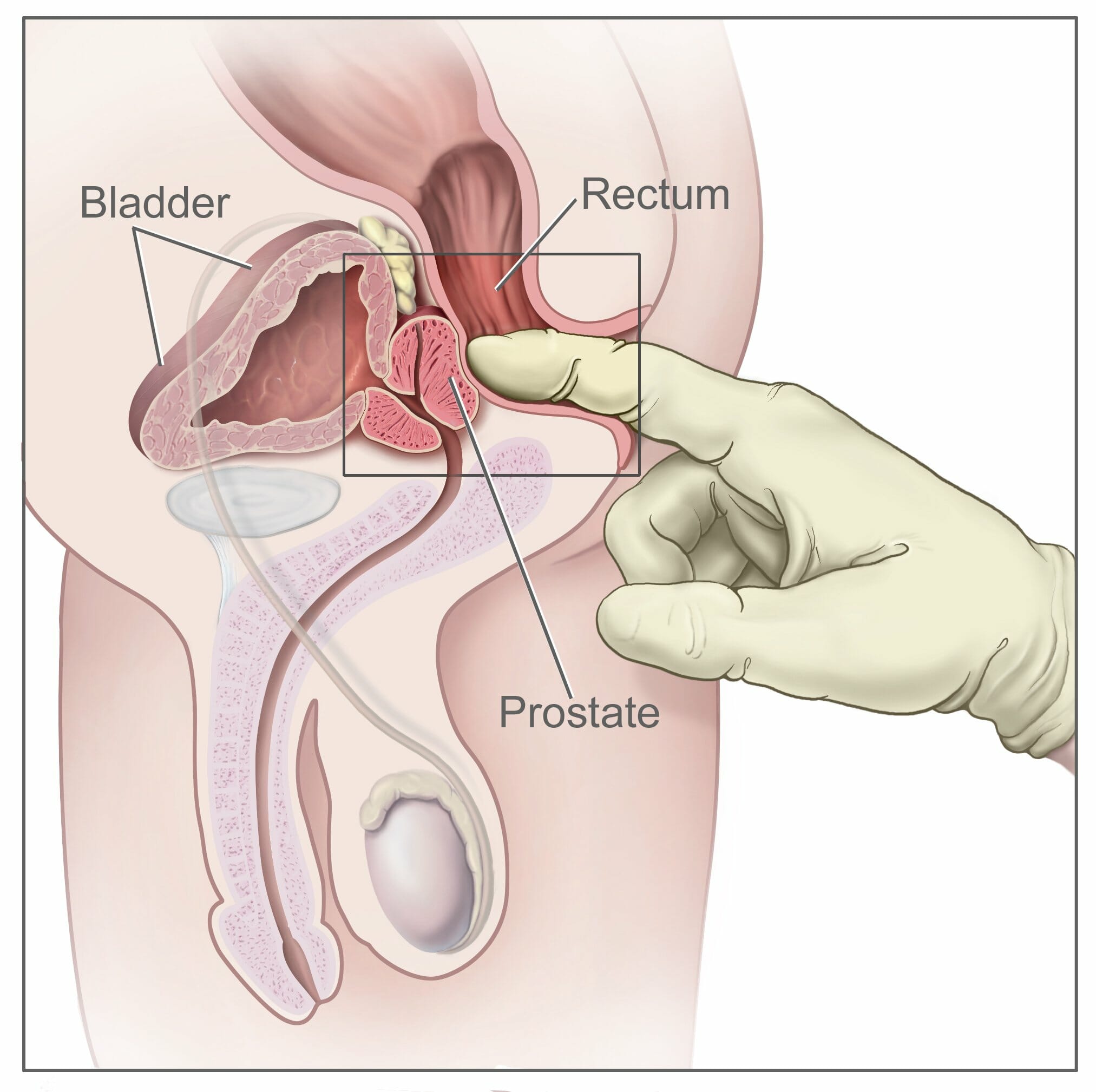
Estrategia de Tamizaje: Tacto Rectal

  • Ya no se recomienda para pacientes asintomáticos
  • Baja sensibilidad y especificidad
  • No proporciona información adicional a una prueba de PSA PSA A glycoprotein that is a kallikrein-like serine proteinase and an esterase, produced by epithelial cells of both normal and malignant prostate tissue. It is an important marker for the diagnosis of prostate cancer. Prostate Cancer
Digital rectal exam

Tacto rectal para tamizaje de cáncer de próstata

Imagen: “Digital rectal exam” por Unknown Illustrator. Licencia: Dominio Público

Referencias

  1. American Cancer Society (2019). Recommendations for Prostate Cancer Early Detection. https://www.cancer.org/cancer/prostate-cancer/detection-diagnosis-staging/acs-recommendations.html
  2. United States Preventive Services Task Force (2018). Prostate Cancer: Screening. https://www.uspreventiveservicestaskforce.org/uspstf/announcements/final-recommendation-statement-screening-prostate-cancer
  3. Jahn, J., Giovannucci, E., Stampfer, M. (2015). The High Prevalence of Undiagnosed Prostate Cancer at Autopsy: Implications for Epidemiology and Treatment of Prostate Cancer in the Prostate-Specific Antigen-Era. Int J Cancer, 137(12): 2795–2802.
  4. Hoffman, R.M. (2020). Screening for prostate cancer. UpToDate. Retrieved December 20, 2020, from https://www.uptodate.com/contents/screening-for-prostate-cancer
  5. Sartor, A.O. (2020). Risk factors for prostate cancer. UpToDate. Retrieved December 20, 2020, from https://www.uptodate.com/contents/risk-factors-for-prostate-cancer
  6. Mark, J.R. (2019). Prostate cancer. MSD Manual Professional Version. https://www.msdmanuals.com/professional/genitourinary-disorders/genitourinary-cancer/prostate-cancer
  7. Tracy, C.R., Brooks, N.A., and Said, M. (2020). Prostate cancer. Medscape. https://emedicine.medscape.com/article/1967731-overview

¡Crea tu cuenta gratis o inicia una sesión para seguir leyendo!

Regístrate ahora y obtén acceso gratuito a Lecturio con páginas de concepto, videos médicos y cuestionarios para tu educación médica.

User Reviews

Que tengas una sesión de estudio alegre y navideña 🎁 Ahorra 50% en todos los planes >>

Details