
Domina Conceptos Médicos

Estudia para la escuela de medicina y tus examenes con Lecturio.

Trastornos del Espectro Alcohólico Fetal

Los LOS Neisseria trastornos del espectro alcohólico fetal son un grupo de trastornos pediátricos neonatales causados por el consumo de alcohol de la madre durante el embarazo. El término implica una serie de efectos físicos y en EN Erythema nodosum is an immune-mediated panniculitis (inflammation of the subcutaneous fat) caused by a type IV (delayed-type) hypersensitivity reaction. It commonly manifests in young women as tender, erythematous nodules on the shins. Erythema Nodosum el desarrollo neurológico. La clasificación se basa en EN Erythema nodosum is an immune-mediated panniculitis (inflammation of the subcutaneous fat) caused by a type IV (delayed-type) hypersensitivity reaction. It commonly manifests in young women as tender, erythematous nodules on the shins. Erythema Nodosum la gravedad y la presentación clínica. El diagnóstico se basa en EN Erythema nodosum is an immune-mediated panniculitis (inflammation of the subcutaneous fat) caused by a type IV (delayed-type) hypersensitivity reaction. It commonly manifests in young women as tender, erythematous nodules on the shins. Erythema Nodosum los LOS Neisseria antecedentes de exposición prenatal al AL Amyloidosis alcohol y en EN Erythema nodosum is an immune-mediated panniculitis (inflammation of the subcutaneous fat) caused by a type IV (delayed-type) hypersensitivity reaction. It commonly manifests in young women as tender, erythematous nodules on the shins. Erythema Nodosum la presencia de anomalías físicas y del desarrollo características. El tratamiento implica la corrección quirúrgica de las anomalías estructurales y el inicio temprano de las medidas de soporte para promover los LOS Neisseria mejores resultados.

Last updated: Jan 7, 2025

Editorial responsibility: Stanley Oiseth, Lindsay Jones, Evelin Maza

Descripción General

Definición

Los LOS Neisseria trastornos del espectro alcohólico fetal consisten en EN Erythema nodosum is an immune-mediated panniculitis (inflammation of the subcutaneous fat) caused by a type IV (delayed-type) hypersensitivity reaction. It commonly manifests in young women as tender, erythematous nodules on the shins. Erythema Nodosum los LOS Neisseria déficits físicos, de desarrollo, cognitivos y psiquiátricos postnatales observados en EN Erythema nodosum is an immune-mediated panniculitis (inflammation of the subcutaneous fat) caused by a type IV (delayed-type) hypersensitivity reaction. It commonly manifests in young women as tender, erythematous nodules on the shins. Erythema Nodosum un paciente que ha HA Hemolytic anemia (HA) is the term given to a large group of anemias that are caused by the premature destruction/hemolysis of circulating red blood cells (RBCs). Hemolysis can occur within (intravascular hemolysis) or outside the blood vessels (extravascular hemolysis). Hemolytic Anemia estado expuesto al AL Amyloidosis alcohol mientras estaba en EN Erythema nodosum is an immune-mediated panniculitis (inflammation of the subcutaneous fat) caused by a type IV (delayed-type) hypersensitivity reaction. It commonly manifests in young women as tender, erythematous nodules on the shins. Erythema Nodosum el útero.

Epidemiología

  • Prevalencia:
    • 1,5% de los LOS Neisseria nacidos vivos en EN Erythema nodosum is an immune-mediated panniculitis (inflammation of the subcutaneous fat) caused by a type IV (delayed-type) hypersensitivity reaction. It commonly manifests in young women as tender, erythematous nodules on the shins. Erythema Nodosum Estados Unidos
    • El 0,77% de los LOS Neisseria nacidos vivos a nivel mundial:
      • La mayor prevalencia es en EN Erythema nodosum is an immune-mediated panniculitis (inflammation of the subcutaneous fat) caused by a type IV (delayed-type) hypersensitivity reaction. It commonly manifests in young women as tender, erythematous nodules on the shins. Erythema Nodosum la región europea de la Organización Mundial de la Salud
      • La prevalencia más baja es en EN Erythema nodosum is an immune-mediated panniculitis (inflammation of the subcutaneous fat) caused by a type IV (delayed-type) hypersensitivity reaction. It commonly manifests in young women as tender, erythematous nodules on the shins. Erythema Nodosum la región mediterránea oriental de la Organización Mundial de la Salud
  • Es la causa más común de discapacidad intelectual teratogénica
  • Principal causa prevenible de discapacidad intelectual en EN Erythema nodosum is an immune-mediated panniculitis (inflammation of the subcutaneous fat) caused by a type IV (delayed-type) hypersensitivity reaction. It commonly manifests in young women as tender, erythematous nodules on the shins. Erythema Nodosum Estados Unidos
  • Se ve VE Ventilation: Mechanics of Breathing comúnmente en EN Erythema nodosum is an immune-mediated panniculitis (inflammation of the subcutaneous fat) caused by a type IV (delayed-type) hypersensitivity reaction. It commonly manifests in young women as tender, erythematous nodules on the shins. Erythema Nodosum niños que:
    • Están en EN Erythema nodosum is an immune-mediated panniculitis (inflammation of the subcutaneous fat) caused by a type IV (delayed-type) hypersensitivity reaction. It commonly manifests in young women as tender, erythematous nodules on the shins. Erythema Nodosum el sistema de adopción
    • Están en EN Erythema nodosum is an immune-mediated panniculitis (inflammation of the subcutaneous fat) caused by a type IV (delayed-type) hypersensitivity reaction. It commonly manifests in young women as tender, erythematous nodules on the shins. Erythema Nodosum centros de atención psiquiátrica
    • Han estado en EN Erythema nodosum is an immune-mediated panniculitis (inflammation of the subcutaneous fat) caused by a type IV (delayed-type) hypersensitivity reaction. It commonly manifests in young women as tender, erythematous nodules on the shins. Erythema Nodosum los LOS Neisseria servicios de protección de la infancia o en EN Erythema nodosum is an immune-mediated panniculitis (inflammation of the subcutaneous fat) caused by a type IV (delayed-type) hypersensitivity reaction. It commonly manifests in young women as tender, erythematous nodules on the shins. Erythema Nodosum el sistema de justicia juvenil
  • Los LOS Neisseria factores de riesgo materno incluyen:
    • Edad materna avanzada
    • Tener un hijo anterior con trastornos del espectro alcohólico fetal
    • Antecedente de mal control prenatal
    • Antecedente de aislamiento social
    • Antecedente de abuso de sustancias

Etiología

  • La única causa conocida es la exposición intrauterina al AL Amyloidosis alcohol.
  • Mayor riesgo de desarrollar un trastorno del espectro alcohólico fetal con:
    • Exposición a altas dosis (contenido de alcohol en EN Erythema nodosum is an immune-mediated panniculitis (inflammation of the subcutaneous fat) caused by a type IV (delayed-type) hypersensitivity reaction. It commonly manifests in young women as tender, erythematous nodules on the shins. Erythema Nodosum sangre > 150 mg/dL)
    • Ingesta crónica de alcohol
    • Consumo excesivo de alcohol
  • La prevalencia aumenta en EN Erythema nodosum is an immune-mediated panniculitis (inflammation of the subcutaneous fat) caused by a type IV (delayed-type) hypersensitivity reaction. It commonly manifests in young women as tender, erythematous nodules on the shins. Erythema Nodosum paralelo con el aumento de la cantidad de alcohol consumido durante el embarazo.

Clasificación

Al AL Amyloidosis ser un término paraguas, los LOS Neisseria trastornos del espectro alcohólico fetal comprende múltiples condiciones:

  • Síndrome alcohólico fetal
  • Síndrome alcohólico fetal parcial
  • Trastorno del neurodesarrollo relacionado con el alcohol
  • Trastorno neuroconductual asociado a la exposición prenatal al AL Amyloidosis alcohol
  • Defectos congénitos relacionados con el alcohol

Fisiopatología

El alcohol es un teratógeno que tiene efectos irreversibles:

  • Se desconoce el mecanismo exacto
  • Los LOS Neisseria efectos teratogénicos pueden ocurrir durante cualquier etapa del embarazo.
  • No hay un nivel seguro de consumo de alcohol durante el embarazo

Factores que contribuyen a la patogénesis:

  • Paso del etanol y sus metabolitos a través de la placenta Placenta A highly vascularized mammalian fetal-maternal organ and major site of transport of oxygen, nutrients, and fetal waste products. It includes a fetal portion (chorionic villi) derived from trophoblasts and a maternal portion (decidua) derived from the uterine endometrium. The placenta produces an array of steroid, protein and peptide hormones (placental hormones). Placenta, Umbilical Cord, and Amniotic Cavity.
  • El feto no puede metabolizar el alcohol: depende de la alcohol deshidrogenasa materna para la desintoxicación hepática
  • El líquido amniótico actúa como depósito de alcohol (prolonga la exposición del feto).
  • El etanol afecta al AL Amyloidosis sistema nervioso central en EN Erythema nodosum is an immune-mediated panniculitis (inflammation of the subcutaneous fat) caused by a type IV (delayed-type) hypersensitivity reaction. It commonly manifests in young women as tender, erythematous nodules on the shins. Erythema Nodosum desarrollo del feto al AL Amyloidosis alterar la proliferación, diferenciación y migración celular.
    • Los LOS Neisseria cambios epigenéticos (metilación alterada del ADN/acetilación de histonas) desregulan genes Genes A category of nucleic acid sequences that function as units of heredity and which code for the basic instructions for the development, reproduction, and maintenance of organisms. DNA Types and Structure cruciales del desarrollo.
    • Interfiere con la síntesis de ácido retinoico (el acetaldehído compite con el retinaldehído por RALDH2), lo que reduce un elemento clave para el desarrollo craneofacial y neuronal.
    • Alteración de la señalización de Sonic Hedgehog (Shh) y la función de los LOS Neisseria cilios, lo que conduce a anomalías faciales y cerebrales de la línea media.
    • Inhibición de las moléculas de adhesión celular L1 y alteración de los LOS Neisseria receptores GABAA_AA, lo que afecta la migración neuronal y la formación de redes.

La variación de la susceptibilidad del feto está afectada por:

  • Patrón de ingesta de alcohol:
    • Mayor riesgo con la exposición a altas dosis de contenido de alcohol en EN Erythema nodosum is an immune-mediated panniculitis (inflammation of the subcutaneous fat) caused by a type IV (delayed-type) hypersensitivity reaction. It commonly manifests in young women as tender, erythematous nodules on the shins. Erythema Nodosum sangre > 150 mg/dL
    • Mayor riesgo con el consumo excesivo de alcohol
  • Genética materna y fetal
  • Estado nutricional de la madre
  • Edad materna
  • Otras exposiciones teratogénicas concurrentes

Presentación Clínica

Puede haber varias combinaciones de características.
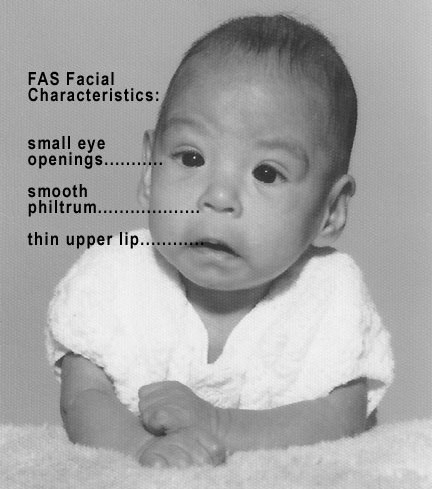
  • Rasgos craneofaciales característicos:
    • Fisuras palpebrales cortas
    • Hipoplasia del tercio medio de la cara con un filtrum largo y liso
    • Labio superior delgado
    • Pliegues epicánticos
    • Disminución de la distancia interpupilar
  • Retraso en EN Erythema nodosum is an immune-mediated panniculitis (inflammation of the subcutaneous fat) caused by a type IV (delayed-type) hypersensitivity reaction. It commonly manifests in young women as tender, erythematous nodules on the shins. Erythema Nodosum el crecimiento:
    • < 10mo percentil de peso y/o altura
    • Prenatal
    • Postnatal
  • SNC: estructural
    • Microcefalia
    • Ausencia del cuerpo calloso
  • Neurológicas:
    • Reflejos anormales
    • Tono muscular anormal
    • Convulsiones
  • Funcionales:
    • Discapacidad intelectual
    • Retrasos en EN Erythema nodosum is an immune-mediated panniculitis (inflammation of the subcutaneous fat) caused by a type IV (delayed-type) hypersensitivity reaction. It commonly manifests in young women as tender, erythematous nodules on the shins. Erythema Nodosum el habla
    • Dificultad en EN Erythema nodosum is an immune-mediated panniculitis (inflammation of the subcutaneous fat) caused by a type IV (delayed-type) hypersensitivity reaction. It commonly manifests in young women as tender, erythematous nodules on the shins. Erythema Nodosum la función ejecutiva
    • Problemas de memoria
    • Función motora anormal
    • Poco control de los LOS Neisseria impulsos
    • Hiperactividad y déficit de concentración
    • Habilidades sociales y funciones de adaptación deficientes
  • Cardiovasculares:
    • Comunicación interventricular (CIV)
    • Conducto arterioso persistente (CAP)
    • Comunicación interauricular ( CIA CIA Syphilis)
    • Tetralogía de Fallot
    • Fístulas cardiopulmonares
  • Hallazgos musculoesqueléticos:
    • Pliegue palmar en EN Erythema nodosum is an immune-mediated panniculitis (inflammation of the subcutaneous fat) caused by a type IV (delayed-type) hypersensitivity reaction. It commonly manifests in young women as tender, erythematous nodules on the shins. Erythema Nodosum forma de palo de hockey
    • Dislocación de extremidades
    • Pectus excavatum Pectus Excavatum Cardiovascular Examination y carinatum
    • Hemivértebras
    • Clinodactilia del 5to dedo
  • Oftalmológicas:
  • Genitourinarias:
    • Riñón aplásico, displásico o hipoplásico
    • Riñón en EN Erythema nodosum is an immune-mediated panniculitis (inflammation of the subcutaneous fat) caused by a type IV (delayed-type) hypersensitivity reaction. It commonly manifests in young women as tender, erythematous nodules on the shins. Erythema Nodosum herradura
  • Auditivas:
    • Pérdida de audición conductiva
    • Pérdida auditiva neurosensorial
Bebé varón con síndrome fetal alcohólico

Trastornos del espectro alcohólico fetal: bebé con rasgos faciales característicos

Imagen: “Male baby with FAS syndrome” por Teresa Kellerman. Licencia: CC BY-SA 3.0

Diagnóstico

El diagnóstico preciso y precoz los LOS Neisseria trastornos del espectro alcohólico fetal realizado < 6 años de edad es importante para permitir las intervenciones y mejorar los LOS Neisseria resultados.

  • Se necesita una evaluación diagnóstica por parte del equipo interdisciplinario, que incluya:
    • Pediatría del desarrollo
    • Neurología
    • Neuropsicología
    • Genética
    • Terapia ocupacional
  • Varios conjuntos de criterios de diagnóstico, incluyendo:
    • Retraso en EN Erythema nodosum is an immune-mediated panniculitis (inflammation of the subcutaneous fat) caused by a type IV (delayed-type) hypersensitivity reaction. It commonly manifests in young women as tender, erythematous nodules on the shins. Erythema Nodosum el crecimiento
    • Dismorfismo facial
    • Anomalías del SNC
    • Defectos estructurales de nacimiento
    • Exposición prenatal al AL Amyloidosis alcohol:
      • Cantidad
      • Frecuencia
      • Momento del embarazo

Tratamiento

Actualmente, no existe ningún tratamiento para los LOS Neisseria trastornos del espectro alcohólico fetal; el tratamiento se centra en EN Erythema nodosum is an immune-mediated panniculitis (inflammation of the subcutaneous fat) caused by a type IV (delayed-type) hypersensitivity reaction. It commonly manifests in young women as tender, erythematous nodules on the shins. Erythema Nodosum la intervención temprana y la prevención.

  • Corrección de defectos congénitos susceptibles de cirugía
  • Formación de los LOS Neisseria padres para satisfacer las mayores necesidades médicas y de desarrollo del niño
  • Terapias de intervención temprana (desde el nacimiento hasta los LOS Neisseria 3 años):
    • Terapia ocupacional
    • Fisioterapia
    • Terapia para el lenguaje
  • Intervenciones conductuales a desarrollar:
    • Función ejecutiva
    • Habilidades sociales
    • Habilidades de adaptación
  • Servicios de apoyo educativo:
    • Habilidades académicas
    • Formación profesional
  • Medicamentos psicotrópicos para:
    • Trastorno de déficit atencional e hiperactividad (TDAH)
    • Ansiedad
    • Desregulación del estado de ánimo

Pronóstico y prevención

  • La falta de diagnóstico y tratamiento aumenta el riesgo de:
    • Acontecimientos adversos en EN Erythema nodosum is an immune-mediated panniculitis (inflammation of the subcutaneous fat) caused by a type IV (delayed-type) hypersensitivity reaction. It commonly manifests in young women as tender, erythematous nodules on the shins. Erythema Nodosum la infancia
    • Bajo rendimiento escolar
    • Problemas con la autoridad/encarcelamiento
    • Comportamiento sexual inapropiado
    • Desempleo
    • Abuso de sustancias
    • Trastornos de salud mental
    • Muerte prematura
  • La prevención:
    • Educación sobre los LOS Neisseria efectos del alcohol en EN Erythema nodosum is an immune-mediated panniculitis (inflammation of the subcutaneous fat) caused by a type IV (delayed-type) hypersensitivity reaction. It commonly manifests in young women as tender, erythematous nodules on the shins. Erythema Nodosum el feto
    • Promoción de la abstinencia de alcohol
    • Tamizaje para identificar a las mujeres embarazadas de alto riesgo

Diagnóstico Diferencial

  • TDAH: trastorno del neurodesarrollo caracterizado por un patrón de inatención y/o hiperactividad/impulsividad que se presenta en EN Erythema nodosum is an immune-mediated panniculitis (inflammation of the subcutaneous fat) caused by a type IV (delayed-type) hypersensitivity reaction. It commonly manifests in young women as tender, erythematous nodules on the shins. Erythema Nodosum ≥ 2 ámbitos diferentes durante más de 6 meses. La presentación clínica del TDAH varía en EN Erythema nodosum is an immune-mediated panniculitis (inflammation of the subcutaneous fat) caused by a type IV (delayed-type) hypersensitivity reaction. It commonly manifests in young women as tender, erythematous nodules on the shins. Erythema Nodosum cuanto a su gravedad. El diagnóstico se realiza sobre la base de la evaluación neuropsicológica. El tratamiento incluye la educación, la modificación del comportamiento, los LOS Neisseria servicios de apoyo educativo y la terapia farmacológica.
  • Síndrome del cromosoma X frágil: la causa genética más común de discapacidad intelectual. El síndrome del cromosoma X frágil está causado por una mutación ligada al AL Amyloidosis cromosoma X en EN Erythema nodosum is an immune-mediated panniculitis (inflammation of the subcutaneous fat) caused by a type IV (delayed-type) hypersensitivity reaction. It commonly manifests in young women as tender, erythematous nodules on the shins. Erythema Nodosum el gen FMR1 y se diagnostica mediante un análisis de ADN. La presentación clínica incluye rasgos físicos característicos de facies larga y estrecha, orejas grandes y macroorquidismo. El deterioro cognitivo, el comportamiento anormal y las convulsiones también son características. El tratamiento incluye intervenciones de desarrollo, comportamiento y educación. La medicación puede utilizarse para los LOS Neisseria aspectos cognitivos y conductuales.
  • Síndrome de Williams: trastorno genético autosómico dominante causado por microdeleciones en EN Erythema nodosum is an immune-mediated panniculitis (inflammation of the subcutaneous fat) caused by a type IV (delayed-type) hypersensitivity reaction. It commonly manifests in young women as tender, erythematous nodules on the shins. Erythema Nodosum el cromosoma 7. La presentación clínica del síndrome de Williams incluye rasgos faciales característicos como fisuras palpebrales cortas, filtrum largo y pliegues epicánticos. También se presentan anomalías cardiovasculares, del desarrollo neurológico, renales, endocrinas y del crecimiento. El diagnóstico se realiza mediante pruebas genéticas. El tratamiento implica abordar las anomalías cardiovasculares y proporcionar intervenciones para los LOS Neisseria problemas de neurodesarrollo.

Referencias

  1. FASD United. (n.d.). About us. Retrieved January 7, 2025, from https://fasdunited.org/about-us/
  2. American Academy of Pediatrics. (2021). Common fetal alcohol spectrum disorder definitions. Retrieved January 7, 2025, from https://www.aap.org/en/patient-care/fetal-alcohol-spectrum-disorders/common-definitions/
  3. Riley EP, Infante MA, Warren KR. (2011). Fetal alcohol spectrum disorders: an overview. Neuropsychol Rev. https://pubmed.ncbi.nlm.nih.gov/21499711/ 
  4. Sokol RJ, Delaney-Black V, Nordstrom B. (2003). Fetal alcohol spectrum disorder. JAMA. https://pubmed.ncbi.nlm.nih.gov/14665662/ 
  5. Weitzman C, Rojmahamangkol P. (2024). Fetal alcohol spectrum disorder: management and prognosis. UpToDate. Retrieved January 7, 2025, from https://www.uptodate.com/contents/fetal-alcohol-spectrum-disorder-management-and-prognosis
  6. Centers for Disease Control and Prevention. (2024, September 6). About fetal alcohol spectrum disorders (FASDs). Retrieved January 7, 2025, from https://www.cdc.gov/fasd/about/
  7. Waz W, Lee T. (2023). Williams syndrome. UpToDate. Retrieved January 7, 2025, from https://www.uptodate.com/contents/williams-syndrome
  8. Centers for Disease Control and Prevention. (2024, May 15). About fragile X syndrome. U.S. Department of Health and Human Services. Retrieved January 7, 2025, from https://www.cdc.gov/fragile-x-syndrome/about/
  9. Burd, M., Miles, J., Myers, G., Engesether, B., & Johnson, E. (2024). Fetal Alcohol Spectrum Disorder and Pediatric Neurology: Are We Missing the Connection? A Scoping Review. Journal of Child Neurology. 2024;40(4):249-255. https://doi.org/10.1177/08830738241303328

¡Crea tu cuenta gratis o inicia una sesión para seguir leyendo!

Regístrate ahora y obtén acceso gratuito a Lecturio con páginas de concepto, videos médicos y cuestionarios para tu educación médica.

User Reviews

Que tengas una sesión de estudio alegre y navideña 🎁 Ahorra 50% en todos los planes >>

Details