Domina Conceptos Médicos

Estudia para la escuela de medicina y tus examenes con Lecturio.

Síndrome de X Frágil

El síndrome de X frágil, también conocido como síndrome de Martin-Bell, es una enfermedad genética de herencia ligada al AL Amyloidosis cromosoma X. Tanto los LOS Neisseria niños como las niñas pueden verse afectados, pero la gravedad es mucho mayor en EN Erythema nodosum is an immune-mediated panniculitis (inflammation of the subcutaneous fat) caused by a type IV (delayed-type) hypersensitivity reaction. It commonly manifests in young women as tender, erythematous nodules on the shins. Erythema Nodosum los LOS Neisseria niños. Los LOS Neisseria rasgos característicos son cara alargada, frente y barbilla prominentes, orejas grandes, pies planos y testículos grandes después de la pubertad en EN Erythema nodosum is an immune-mediated panniculitis (inflammation of the subcutaneous fat) caused by a type IV (delayed-type) hypersensitivity reaction. It commonly manifests in young women as tender, erythematous nodules on the shins. Erythema Nodosum los LOS Neisseria niños. El síndrome de X frágil es la causa más común de discapacidad intelectual hereditaria y también se asocia al AL Amyloidosis autismo. Las pruebas genéticas confirman el diagnóstico. El tratamiento está dirigido a mejorar los LOS Neisseria síntomas asociados.

Last updated: Dec 15, 2025

Editorial responsibility: Stanley Oiseth, Lindsay Jones, Evelin Maza

Epidemiología y Genética

Epidemiología

  • Es la causa hereditaria más común de retraso en EN Erythema nodosum is an immune-mediated panniculitis (inflammation of the subcutaneous fat) caused by a type IV (delayed-type) hypersensitivity reaction. It commonly manifests in young women as tender, erythematous nodules on the shins. Erythema Nodosum el desarrollo y la 2da causa genética más común (detrás del síndrome de Down)
  • Incidencia del síndrome de X frágil clásico:
    • 1 de cada 4 000–7 000 nacidos vivos en EN Erythema nodosum is an immune-mediated panniculitis (inflammation of the subcutaneous fat) caused by a type IV (delayed-type) hypersensitivity reaction. It commonly manifests in young women as tender, erythematous nodules on the shins. Erythema Nodosum niños
    • En EN Erythema nodosum is an immune-mediated panniculitis (inflammation of the subcutaneous fat) caused by a type IV (delayed-type) hypersensitivity reaction. It commonly manifests in young women as tender, erythematous nodules on the shins. Erythema Nodosum niñas, la prevalencia es entre dos tercios y la mitad de la de los LOS Neisseria niños.

Genética

El síndrome de X frágil se produce debido a una mutación de pérdida de función en EN Erythema nodosum is an immune-mediated panniculitis (inflammation of the subcutaneous fat) caused by a type IV (delayed-type) hypersensitivity reaction. It commonly manifests in young women as tender, erythematous nodules on the shins. Erythema Nodosum el gen del retraso mental del cromosoma X frágil 1 (FMR1). El FMR1 codifica la proteína del retraso mental del X frágil, que es importante para el desarrollo del cerebro y las gónadas (testículos y ovarios).

Más del 99% de los LOS Neisseria casos se deben a una expansión inestable de repeticiones de trinucleótidos (CGG) en EN Erythema nodosum is an immune-mediated panniculitis (inflammation of the subcutaneous fat) caused by a type IV (delayed-type) hypersensitivity reaction. It commonly manifests in young women as tender, erythematous nodules on the shins. Erythema Nodosum la región promotora del gen FMR1:
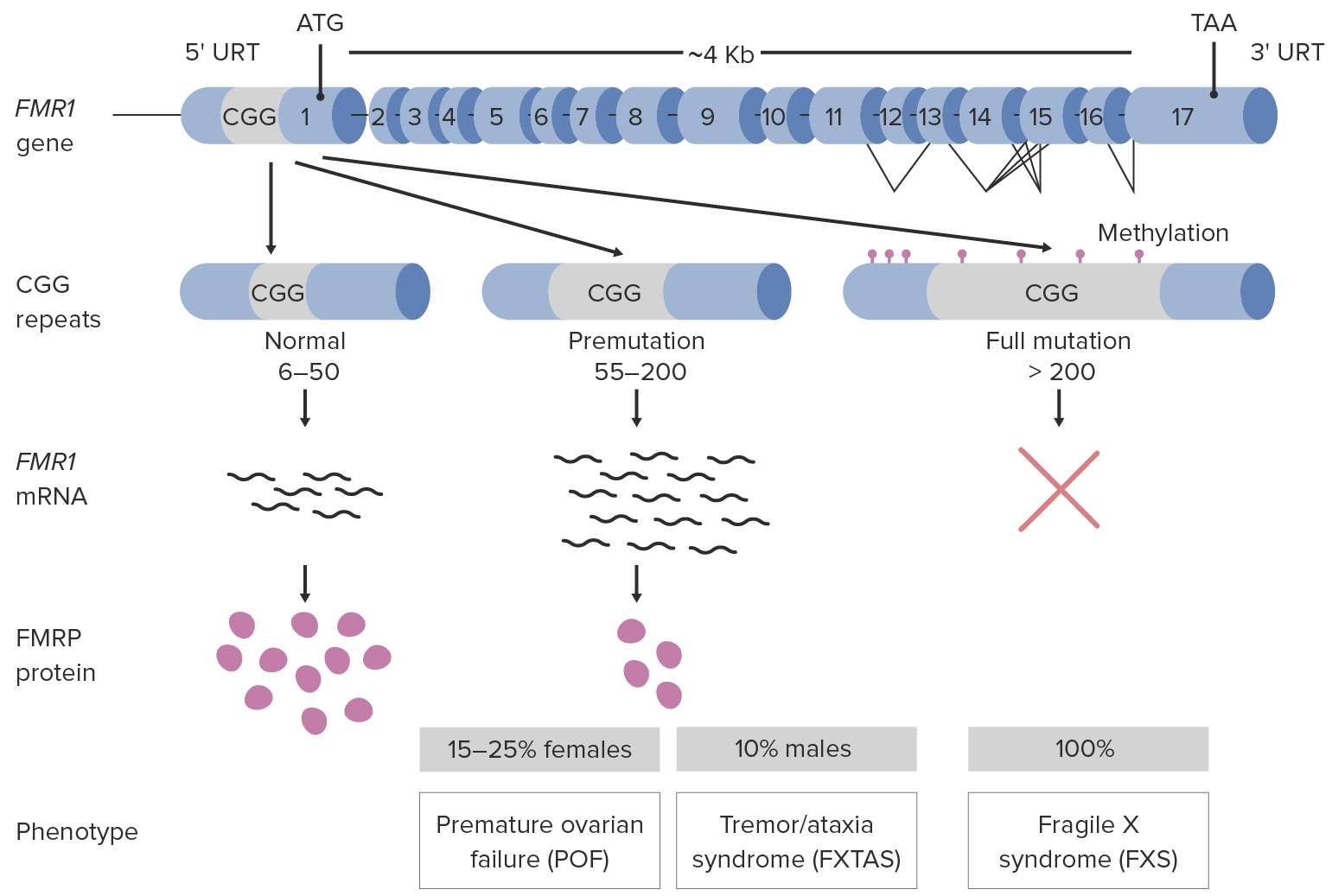
  • El fenotipo clásico del X frágil (mutación completa) resulta de > 200 repeticiones → metilación anormal → silenciamiento del gen FMR1 → reducción/pérdida de proteína del retraso mental del X frágil
  • Aproximadamente 50–200 repeticiones se considera una premutación (normal < 40 repeticiones) → conduce a un gen FMR1 funcional con producción de proteína del retraso mental del X frágil, aunque no totalmente normal
    • Se presentan manifestaciones clínicas menos graves.
    • El alelo es inestable y puede convertirse en EN Erythema nodosum is an immune-mediated panniculitis (inflammation of the subcutaneous fat) caused by a type IV (delayed-type) hypersensitivity reaction. It commonly manifests in young women as tender, erythematous nodules on the shins. Erythema Nodosum una mutación completa en EN Erythema nodosum is an immune-mediated panniculitis (inflammation of the subcutaneous fat) caused by a type IV (delayed-type) hypersensitivity reaction. It commonly manifests in young women as tender, erythematous nodules on the shins. Erythema Nodosum futuras generaciones.
    • La tasa de premutación es de aproximadamente 1 en EN Erythema nodosum is an immune-mediated panniculitis (inflammation of the subcutaneous fat) caused by a type IV (delayed-type) hypersensitivity reaction. It commonly manifests in young women as tender, erythematous nodules on the shins. Erythema Nodosum 750–850 niños.
    • La tasa de premutación es de aproximadamente 1 en EN Erythema nodosum is an immune-mediated panniculitis (inflammation of the subcutaneous fat) caused by a type IV (delayed-type) hypersensitivity reaction. It commonly manifests in young women as tender, erythematous nodules on the shins. Erythema Nodosum 250–300 niñas.
  • La longitud/tamaño de la repetición de la expansión se correlaciona con la gravedad de las manifestaciones clínicas (↑ repetición de la expansión → mayor gravedad de la afección)
Esquema de la fisiopatología del síndrome del cromosoma X frágil

Fisiopatología del síndrome de X frágil
FXTAS: Síndrome de temblor/ataxia asociado al X frágil

Imagen por Lecturio.

El patrón de herencia es dominante ligado al AL Amyloidosis X:
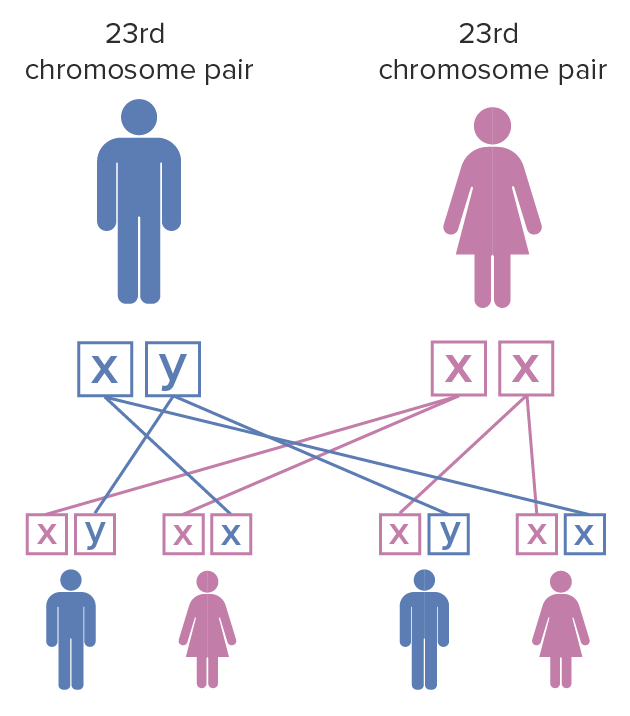
  • Los LOS Neisseria niños están más afectados que las niñas porque los LOS Neisseria niños solo tienen 1 cromosoma X
  • Las niñas pueden tener > 200 repeticiones en EN Erythema nodosum is an immune-mediated panniculitis (inflammation of the subcutaneous fat) caused by a type IV (delayed-type) hypersensitivity reaction. It commonly manifests in young women as tender, erythematous nodules on the shins. Erythema Nodosum 1 alelo de 1 cromosoma X pero no en EN Erythema nodosum is an immune-mediated panniculitis (inflammation of the subcutaneous fat) caused by a type IV (delayed-type) hypersensitivity reaction. It commonly manifests in young women as tender, erythematous nodules on the shins. Erythema Nodosum el otro
  • En EN Erythema nodosum is an immune-mediated panniculitis (inflammation of the subcutaneous fat) caused by a type IV (delayed-type) hypersensitivity reaction. It commonly manifests in young women as tender, erythematous nodules on the shins. Erythema Nodosum las células de las niñas, 1 cromosoma X está inactivado, lo que limita potencialmente los LOS Neisseria efectos de la mutación.
Fragile X Syndrome Inheritance pattern

Patrón de herencia del síndrome del cromosoma X frágil:
La madre tiene un par de cromosomas X que han sufrido una mutación; el padre tiene cromosomas X e Y no afectados. Cuando la mujer con la mutación del cromosoma X frágil en ambos cromosomas X tiene hijos, cada hijo tiene un 100% de posibilidades de heredar la enfermedad. Las mujeres se ven menos afectadas por el síndrome del cromosoma X frágil que los hombres debido a la inactivación del cromosoma X.

Imagen por Lecturio.

Presentación Clínica

Las niñas y las personas con premutaciones tienen manifestaciones clínicas variables y a menudo menos graves. Las siguientes son las características clínicas de los LOS Neisseria pacientes con síndrome de X frágil clásico (mutación completa).
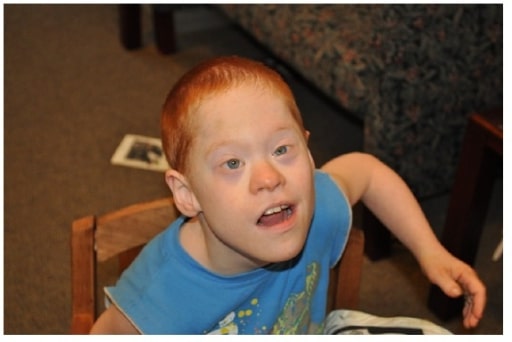
Fenotipo clínico en EN Erythema nodosum is an immune-mediated panniculitis (inflammation of the subcutaneous fat) caused by a type IV (delayed-type) hypersensitivity reaction. It commonly manifests in young women as tender, erythematous nodules on the shins. Erythema Nodosum los LOS Neisseria niños

  • Aspecto exterior:
    • Estatura alta
    • Macrocefalia (cabeza grande) con aumento del volumen cerebral
    • Rasgos faciales prominentes: cara alargada, frente prominente, barbilla prominente
    • Orejas grandes
    • Paladar alto y arqueado
    • Pies planos
    • El macroorquidismo (testículos agrandados, aunque con una función normal) se produce tras el inicio de la pubertad.
    • Articulaciones hiperextensibles, especialmente los LOS Neisseria pulgares y los LOS Neisseria dedos
    • Bajo tono muscular en EN Erythema nodosum is an immune-mediated panniculitis (inflammation of the subcutaneous fat) caused by a type IV (delayed-type) hypersensitivity reaction. It commonly manifests in young women as tender, erythematous nodules on the shins. Erythema Nodosum la infancia
    • Notable retraso motor Motor Neurons which send impulses peripherally to activate muscles or secretory cells. Nervous System: Histology
  • Cognición/inteligencia:
    • Retraso global del desarrollo
    • Discapacidad intelectual: El coeficiente intelectual empeora con el aumento de la edad.
    • Dificultad de aprendizaje: particularmente matemáticas/habilidades cuantitativas y habilidades visoespaciales
    • Retraso en EN Erythema nodosum is an immune-mediated panniculitis (inflammation of the subcutaneous fat) caused by a type IV (delayed-type) hypersensitivity reaction. It commonly manifests in young women as tender, erythematous nodules on the shins. Erythema Nodosum el desarrollo del lenguaje:
      • Mayor dificultad de expresión que de recepción del lenguaje
      • Pobreza articular, ecolalia
      • Aproximadamente el 10% no aprenden a hablar.
    • Declive en EN Erythema nodosum is an immune-mediated panniculitis (inflammation of the subcutaneous fat) caused by a type IV (delayed-type) hypersensitivity reaction. It commonly manifests in young women as tender, erythematous nodules on the shins. Erythema Nodosum el funcionamiento ejecutivo y memoria la cual empeora con el tiempo.
  • Anomalías del comportamiento:
    • Síntomas similares a los LOS Neisseria del trastorno por déficit de atención e hiperactividad (TDAH)
      • Hiperactividad/impulsividad
      • Falta de atención/corta capacidad de atención
    • Síntomas de ansiedad
      • Ansiedad social
      • Ataques de pánico
      • Actividades/obsesiones similares al AL Amyloidosis trastorno obsesivo-compulsivo
    • Trastorno del espectro autista
      • Entre el 18%–67% cumplen los LOS Neisseria criterios de los LOS Neisseria trastornos del espectro autista.
      • Los LOS Neisseria niños con síndrome de X frágil y autismo presentan mayores discapacidades cognitivas y conductuales que los LOS Neisseria que solo tienen síndrome de X frágil.
      • Se caracteriza por:
        • Dificultad en EN Erythema nodosum is an immune-mediated panniculitis (inflammation of the subcutaneous fat) caused by a type IV (delayed-type) hypersensitivity reaction. It commonly manifests in young women as tender, erythematous nodules on the shins. Erythema Nodosum las interacciones sociales, en EN Erythema nodosum is an immune-mediated panniculitis (inflammation of the subcutaneous fat) caused by a type IV (delayed-type) hypersensitivity reaction. It commonly manifests in young women as tender, erythematous nodules on the shins. Erythema Nodosum la comprensión de las normas sociales y en EN Erythema nodosum is an immune-mediated panniculitis (inflammation of the subcutaneous fat) caused by a type IV (delayed-type) hypersensitivity reaction. It commonly manifests in young women as tender, erythematous nodules on the shins. Erythema Nodosum la formación de relaciones con los LOS Neisseria compañeros
        • Aversión a la mirada y poco contacto visual
        • Patrones motores repetitivos (e.g., aleteo de manos, balanceo, andar de puntillas)
        • Ecolalia/repetición de palabras y sonidos
        • Hipersensibilidad a los LOS Neisseria estímulos ambientales
        • Comportamientos autolesivos (e.g., golpearse la cabeza, morderse las uñas)

Fenotipo clínico en EN Erythema nodosum is an immune-mediated panniculitis (inflammation of the subcutaneous fat) caused by a type IV (delayed-type) hypersensitivity reaction. It commonly manifests in young women as tender, erythematous nodules on the shins. Erythema Nodosum las niñas

  • Aproximadamente el 50% con la mutación completa tienen un intelecto normal, el resto tiene una discapacidad intelectual de leve a limítrofe.
  • Aproximadamente el 50% tiene características físicas y de comportamiento similares, aunque más leves, a las de los LOS Neisseria niños, como se ha HA Hemolytic anemia (HA) is the term given to a large group of anemias that are caused by the premature destruction/hemolysis of circulating red blood cells (RBCs). Hemolysis can occur within (intravascular hemolysis) or outside the blood vessels (extravascular hemolysis). Hemolytic Anemia visto anteriormente.

Afecciones asociadas

  • Visión: errores de refracción, estrabismo y ambliopía
  • Neurológico: Las convulsiones se producen en EN Erythema nodosum is an immune-mediated panniculitis (inflammation of the subcutaneous fat) caused by a type IV (delayed-type) hypersensitivity reaction. It commonly manifests in young women as tender, erythematous nodules on the shins. Erythema Nodosum 10%–20% de los LOS Neisseria casos de síndrome de X frágil.
    • Tipos más comunes: convulsiones parciales simples o complejas
    • Es más común en EN Erythema nodosum is an immune-mediated panniculitis (inflammation of the subcutaneous fat) caused by a type IV (delayed-type) hypersensitivity reaction. It commonly manifests in young women as tender, erythematous nodules on the shins. Erythema Nodosum la primera infancia, con un pico entre los LOS Neisseria 6 meses y los LOS Neisseria 4 años de edad.
  • Cardíaco: prolapso de la válvula mitral, regurgitación mitral

Diagnóstico

Diagnóstico prenatal

  • Amniocentesis Amniocentesis Percutaneous transabdominal puncture of the uterus during pregnancy to obtain amniotic fluid. It is commonly used for fetal karyotype determination in order to diagnose abnormal fetal conditions. Polyhydramnios
  • Muestra de vellosidades coriónicas

Diagnóstico postnatal

  • Antecedentes y examen físico
  • Pruebas genéticas:
    • Contar las repeticiones CGG en EN Erythema nodosum is an immune-mediated panniculitis (inflammation of the subcutaneous fat) caused by a type IV (delayed-type) hypersensitivity reaction. It commonly manifests in young women as tender, erythematous nodules on the shins. Erythema Nodosum el cromosoma X: > 200 repeticiones en EN Erythema nodosum is an immune-mediated panniculitis (inflammation of the subcutaneous fat) caused by a type IV (delayed-type) hypersensitivity reaction. It commonly manifests in young women as tender, erythematous nodules on the shins. Erythema Nodosum 1 alelo marca el diagnóstico en EN Erythema nodosum is an immune-mediated panniculitis (inflammation of the subcutaneous fat) caused by a type IV (delayed-type) hypersensitivity reaction. It commonly manifests in young women as tender, erythematous nodules on the shins. Erythema Nodosum las niñas.
    • Recomendado en EN Erythema nodosum is an immune-mediated panniculitis (inflammation of the subcutaneous fat) caused by a type IV (delayed-type) hypersensitivity reaction. It commonly manifests in young women as tender, erythematous nodules on the shins. Erythema Nodosum niños con características físicas o del comportamiento que presenten alguno de lo siguiente:
      • Retraso en EN Erythema nodosum is an immune-mediated panniculitis (inflammation of the subcutaneous fat) caused by a type IV (delayed-type) hypersensitivity reaction. It commonly manifests in young women as tender, erythematous nodules on the shins. Erythema Nodosum el desarrollo
      • Habilidades intelectuales/discapacidad limítrofes
      • Diagnóstico de autismo sin etiología específica
    • Recomendado en EN Erythema nodosum is an immune-mediated panniculitis (inflammation of the subcutaneous fat) caused by a type IV (delayed-type) hypersensitivity reaction. It commonly manifests in young women as tender, erythematous nodules on the shins. Erythema Nodosum adultos que presenten alguna de las siguientes:
      • Características físicas y discapacidad intelectual inespecífica
      • Mujeres con insuficiencia ovárica prematura ( los LOS Neisseria ovarios dejan de funcionar antes de los LOS Neisseria 40 años de edad)
      • Pacientes > 50 años de edad con ataxia Ataxia Impairment of the ability to perform smoothly coordinated voluntary movements. This condition may affect the limbs, trunk, eyes, pharynx, larynx, and other structures. Ataxia may result from impaired sensory or motor function. Sensory ataxia may result from posterior column injury or peripheral nerve diseases. Motor ataxia may be associated with cerebellar diseases; cerebral cortex diseases; thalamic diseases; basal ganglia diseases; injury to the red nucleus; and other conditions. Ataxia-telangiectasia cerebelar progresiva y temblor no intencionado
  • Pruebas adicionales: ecocardiograma para evaluar el prolapso de la válvula mitral

Tratamiento

No existe un tratamiento curativo para el síndrome de X frágil. El tratamiento se adapta a los LOS Neisseria síntomas presentes. La terapia de soporte incluye lo siguiente:

Tratamiento educativo

  • Intervención temprana
  • Educación especial
  • Terapia del habla y del lenguaje
  • Entrenamiento vocacional
  • Evitar los LOS Neisseria estimulantes, que desencadenan hipersensibilidad y comportamientos específicos

Tratamiento médico

  • Estimulantes para el TDAH, bajo estricta vigilancia (efectivo en EN Erythema nodosum is an immune-mediated panniculitis (inflammation of the subcutaneous fat) caused by a type IV (delayed-type) hypersensitivity reaction. It commonly manifests in young women as tender, erythematous nodules on the shins. Erythema Nodosum aproximadamente el 70% de los LOS Neisseria casos)
  • Inhibidores selectivos de la recaptura de serotonina (ISRS) para la ansiedad y los LOS Neisseria cambios de humor Humor Defense Mechanisms (efectivo en EN Erythema nodosum is an immune-mediated panniculitis (inflammation of the subcutaneous fat) caused by a type IV (delayed-type) hypersensitivity reaction. It commonly manifests in young women as tender, erythematous nodules on the shins. Erythema Nodosum aproximadamente el 50% de los LOS Neisseria casos)
  • Anticonvulsivos para controlar las convulsiones y aliviar los LOS Neisseria problemas de ánimo
  • Antidepresivos y antipsicóticos para tratar las conductas autolesivas y agresivas

Otros

  • Corrección del estrabismo
  • Asesoramiento genético

Relevancia Clínica

Diagnóstico diferencial

Las siguientes afecciones son diagnósticos diferenciales del síndrome de X frágil:

  • Síndrome de Prader-Willi: afección genética que se hereda raramente y que está causada por una pérdida de genes Genes A category of nucleic acid sequences that function as units of heredity and which code for the basic instructions for the development, reproduction, and maintenance of organisms. DNA Types and Structure funcionales en EN Erythema nodosum is an immune-mediated panniculitis (inflammation of the subcutaneous fat) caused by a type IV (delayed-type) hypersensitivity reaction. It commonly manifests in young women as tender, erythematous nodules on the shins. Erythema Nodosum el cromosoma 15. Los LOS Neisseria pacientes tienen características físicas, cognitivas y conductuales similares a las del síndrome de X frágil; sin embargo, estos pacientes muestran hiperfagia (comer en EN Erythema nodosum is an immune-mediated panniculitis (inflammation of the subcutaneous fat) caused by a type IV (delayed-type) hypersensitivity reaction. It commonly manifests in young women as tender, erythematous nodules on the shins. Erythema Nodosum exceso) y obesidad. Aproximadamente el 10% de los LOS Neisseria niños con síndrome de X frágil tienen un fenotipo de Prader-Willi, pero no los LOS Neisseria cambios genéticos observados en EN Erythema nodosum is an immune-mediated panniculitis (inflammation of the subcutaneous fat) caused by a type IV (delayed-type) hypersensitivity reaction. It commonly manifests in young women as tender, erythematous nodules on the shins. Erythema Nodosum el síndrome de Prader-Willi. Las pruebas genéticas ayudan al AL Amyloidosis diagnóstico. El tratamiento es de soporte.
  • Síndrome de Klinefelter: enfermedad genética que afecta a los LOS Neisseria varones y que se caracteriza por la presencia de 1 o más cromosomas X adicionales, lo que suele dar lugar al AL Amyloidosis cariotipo 47, XXY XXY Klinefelter syndrome is a chromosomal aneuploidy characterized by the presence of 1 or more extra X chromosomes in a male karyotype, most commonly leading to karyotype 47,XXY. Klinefelter syndrome is associated with decreased levels of testosterone and is the most common cause of congenital hypogonadism. Klinefelter Syndrome. El síndrome de Klinefelter se asocia a una disminución de los LOS Neisseria niveles de testosterona y es la causa más común de hipogonadismo congénito. Las personas afectadas suelen ser altas y tienen testículos pequeños, disminución del vello corporal, ginecomastia e infertilidad. El tratamiento consiste en EN Erythema nodosum is an immune-mediated panniculitis (inflammation of the subcutaneous fat) caused by a type IV (delayed-type) hypersensitivity reaction. It commonly manifests in young women as tender, erythematous nodules on the shins. Erythema Nodosum una terapia de sustitución de testosterona de por vida.
  • Síndrome de Sotos: también conocido como gigantismo cerebral, una afección genética raramente familiar causada típicamente por una mutación genética esporádica. Los LOS Neisseria pacientes tienen rasgos faciales similares, así como anormalidades cognitivas y de comportamiento como en EN Erythema nodosum is an immune-mediated panniculitis (inflammation of the subcutaneous fat) caused by a type IV (delayed-type) hypersensitivity reaction. It commonly manifests in young women as tender, erythematous nodules on the shins. Erythema Nodosum el síndrome de X frágil. Sin embargo, presentan un crecimiento extremo en EN Erythema nodosum is an immune-mediated panniculitis (inflammation of the subcutaneous fat) caused by a type IV (delayed-type) hypersensitivity reaction. It commonly manifests in young women as tender, erythematous nodules on the shins. Erythema Nodosum la niñez, seguido de una fusión epifisaria prematura (cierre del cartílago de crecimiento) y una edad ósea avanzada. El diagnóstico se realiza mediante pruebas genéticas. El tratamiento es de soporte.
  • Trastorno del espectro autista: trastorno del neurodesarrollo de aparición temprana en EN Erythema nodosum is an immune-mediated panniculitis (inflammation of the subcutaneous fat) caused by a type IV (delayed-type) hypersensitivity reaction. It commonly manifests in young women as tender, erythematous nodules on the shins. Erythema Nodosum la niñez, caracterizado por una comunicación y unas habilidades sociales deficientes, así como por comportamientos repetitivos y estereotipados. El intelecto es variable Variable Variables represent information about something that can change. The design of the measurement scales, or of the methods for obtaining information, will determine the data gathered and the characteristics of that data. As a result, a variable can be qualitative or quantitative, and may be further classified into subgroups. Types of Variables y puede ser incluso avanzado. No hay asociación con características físicas específicas. El diagnóstico es clínico basado en EN Erythema nodosum is an immune-mediated panniculitis (inflammation of the subcutaneous fat) caused by a type IV (delayed-type) hypersensitivity reaction. It commonly manifests in young women as tender, erythematous nodules on the shins. Erythema Nodosum los LOS Neisseria antecedentes y los LOS Neisseria comportamientos. Se pueden realizar pruebas para evaluar las afecciones subyacentes o coexistentes. El diagnóstico temprano y las terapias de soporte son importantes para mejorar el resultado. Puede ocurrir con o sin diagnóstico concurrente de síndrome de X frágil.
  • TDAH: trastorno de salud mental caracterizado por la hiperactividad/impulsividad y la falta de atención que afecta al AL Amyloidosis funcionamiento cognitivo, conductual y social. El trastorno no está asociado a ninguna característica física específica. El diagnóstico es clínico con amplias evaluaciones médicas, conductuales, emocionales y educativas multifacéticas. El tratamiento incluye medicamentos estimulantes, psicoterapia e intervenciones conductuales y educativas. Puede ocurrir con o sin diagnóstico concurrente de síndrome de X frágil.

Afecciones relacionadas

Las siguientes son afecciones que preocupan a quienes tienen premutaciones para el síndrome de X frágil.

  • Insuficiencia ovárica prematura: hipogonadismo hipogonadotrópico en EN Erythema nodosum is an immune-mediated panniculitis (inflammation of the subcutaneous fat) caused by a type IV (delayed-type) hypersensitivity reaction. It commonly manifests in young women as tender, erythematous nodules on the shins. Erythema Nodosum mujeres antes de los LOS Neisseria 40 años. Se asocia con irregularidades menstruales, síntomas de deficiencia de estrógenos (e.g., sofocos, sequedad vaginal y osteoporosis Osteoporosis Osteoporosis refers to a decrease in bone mass and density leading to an increased number of fractures. There are 2 forms of osteoporosis: primary, which is commonly postmenopausal or senile; and secondary, which is a manifestation of immobilization, underlying medical disorders, or long-term use of certain medications. Osteoporosis) y, posiblemente, dificultad para concebir. Las pruebas de laboratorio de los LOS Neisseria niveles hormonales ayudan al AL Amyloidosis diagnóstico. Dado que el fallo ovárico prematuro se asocia a una premutación del síndrome de X frágil, se justifica la realización de pruebas genéticas para la premutación del síndrome de X frágil. El tratamiento implica una terapia de sustitución hormonal y el tratamiento de los LOS Neisseria problemas de salud reproductiva y mental asociados.
  • Síndrome de temblor/ ataxia Ataxia Impairment of the ability to perform smoothly coordinated voluntary movements. This condition may affect the limbs, trunk, eyes, pharynx, larynx, and other structures. Ataxia may result from impaired sensory or motor function. Sensory ataxia may result from posterior column injury or peripheral nerve diseases. Motor ataxia may be associated with cerebellar diseases; cerebral cortex diseases; thalamic diseases; basal ganglia diseases; injury to the red nucleus; and other conditions. Ataxia-telangiectasia: un trastorno neurodegenerativo progresivo que se observa en EN Erythema nodosum is an immune-mediated panniculitis (inflammation of the subcutaneous fat) caused by a type IV (delayed-type) hypersensitivity reaction. It commonly manifests in young women as tender, erythematous nodules on the shins. Erythema Nodosum individuos mayores de 50 años con una premutación para el síndrome de X frágil. Los LOS Neisseria hombres se ven más afectados que las mujeres. Las características clínicas incluyen demencia o deterioro cognitivo de aparición temprana, ataxia Ataxia Impairment of the ability to perform smoothly coordinated voluntary movements. This condition may affect the limbs, trunk, eyes, pharynx, larynx, and other structures. Ataxia may result from impaired sensory or motor function. Sensory ataxia may result from posterior column injury or peripheral nerve diseases. Motor ataxia may be associated with cerebellar diseases; cerebral cortex diseases; thalamic diseases; basal ganglia diseases; injury to the red nucleus; and other conditions. Ataxia-telangiectasia de aparición tardía (dificultad para realizar movimientos como caminar), temblores posturales, debilidad de las extremidades inferiores proximales y neuropatía periférica. Las pruebas genéticas confirman el diagnóstico. El tratamiento es de soporte, con medicamentos y terapia. No hay cura para el síndrome.

Referencias

  1. Van Esch, H. (2024). Fragile X syndrome: Clinical features and diagnosis in children and adolescents. UpToDate. Retrieved December 5, 2024, from https://www.uptodate.com/contents/fragile-x-syndrome-clinical-features-and-diagnosis-in-children-and-adolescents
  2. Van Esch, H. (2024). Fragile X syndrome: Management in children and adolescents. UpToDate. Retrieved December 5, 2024, from  https://www.uptodate.com/contents/fragile-x-syndrome-management-in-children-and-adolescents
  3. Wilkins-Haug, L. (2024). Fragile X syndrome: Prenatal screening and diagnosis. UpToDate. Retrieved December 5, 2024, from https://www.uptodate.com/contents/fragile-x-syndrome-prenatal-screening-and-diagnosis
  4. Jewell, J. A. (2024). Fragile X syndrome. eMedicine. Retrieved December 5, 2024, from https://emedicine.medscape.com/article/943776-overview

¡Crea tu cuenta gratis o inicia una sesión para seguir leyendo!

Regístrate ahora y obtén acceso gratuito a Lecturio con páginas de concepto, videos médicos y cuestionarios para tu educación médica.

User Reviews

Que tengas una sesión de estudio alegre y navideña 🎁 Ahorra 50% en todos los planes >>

Details