
Domina Conceptos Médicos

Estudia para la escuela de medicina y tus examenes con Lecturio.

Síndrome de Turner

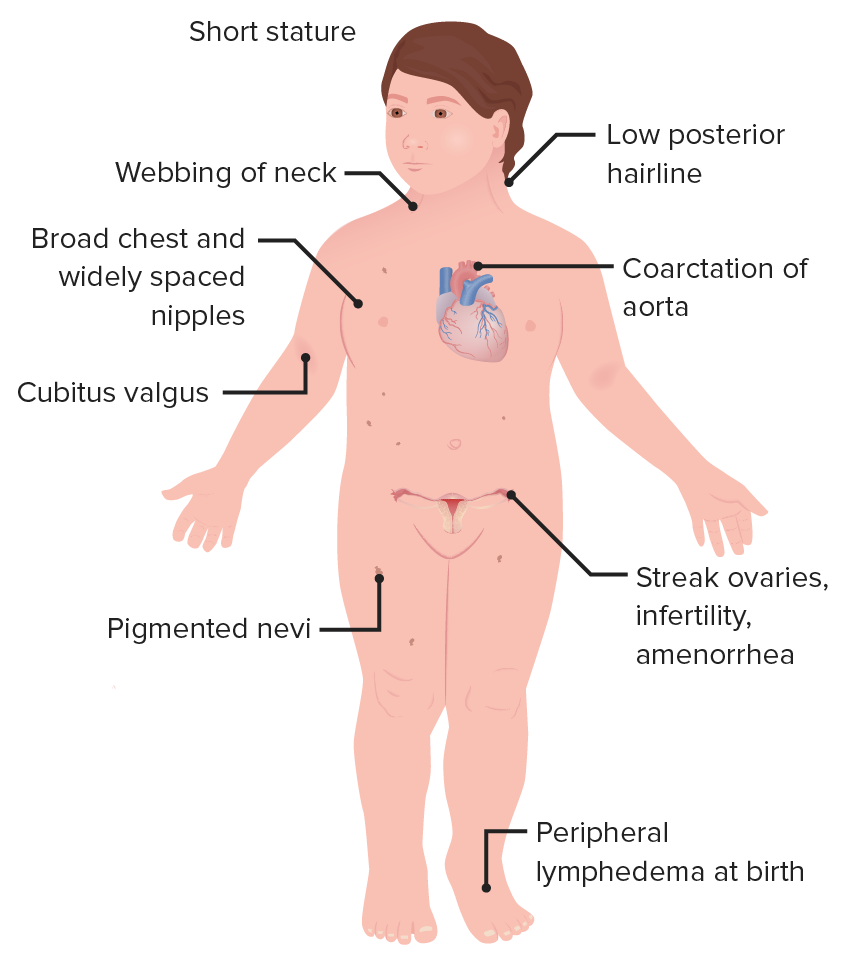
El síndrome de Turner es una afección genética que afecta a las mujeres, en EN Erythema nodosum is an immune-mediated panniculitis (inflammation of the subcutaneous fat) caused by a type IV (delayed-type) hypersensitivity reaction. It commonly manifests in young women as tender, erythematous nodules on the shins. Erythema Nodosum la que falta parcial o totalmente un cromosoma X. El resultado clásico es el cariotipo 45,X con un fenotipo femenino. El síndrome de Turner se asocia a una disminución de los LOS Neisseria niveles de hormonas sexuales y es la causa más común de amenorrea primaria. Los LOS Neisseria afectados pueden presentar una serie de anomalías médicas que afectan, entre otros, a los LOS Neisseria sistemas cardíaco, renal, reproductivo, esquelético y linfático. El aspecto característico es el de una mujer de baja estatura, cuello alado, tórax ancho con pezones muy espaciados, cabello posterior de implantación baja y edema Edema Edema is a condition in which excess serous fluid accumulates in the body cavity or interstitial space of connective tissues. Edema is a symptom observed in several medical conditions. It can be categorized into 2 types, namely, peripheral (in the extremities) and internal (in an organ or body cavity). Edema periférico de manos y pies. Las pruebas genéticas confirman el diagnóstico. El tratamiento consiste en EN Erythema nodosum is an immune-mediated panniculitis (inflammation of the subcutaneous fat) caused by a type IV (delayed-type) hypersensitivity reaction. It commonly manifests in young women as tender, erythematous nodules on the shins. Erythema Nodosum la terapia de reemplazo hormonal.

Last updated: Dec 15, 2025
Editorial responsibility: Stanley Oiseth, Lindsay Jones, Evelin Maza

Epidemiología y Genética

Epidemiología

  • Incidencia: 1 de cada 2 000–2 500 nacidos vivos
  • El 99% se aborta espontáneamente
  • Anomalía cromosómica gonadal más frecuente en EN Erythema nodosum is an immune-mediated panniculitis (inflammation of the subcutaneous fat) caused by a type IV (delayed-type) hypersensitivity reaction. It commonly manifests in young women as tender, erythematous nodules on the shins. Erythema Nodosum la mujer

Genética

  • Cariotipo: Solo hay 1 cromosoma X normal; el otro falta o está alterado.
    • Monosomía cromosómica sexual completa en EN Erythema nodosum is an immune-mediated panniculitis (inflammation of the subcutaneous fat) caused by a type IV (delayed-type) hypersensitivity reaction. It commonly manifests in young women as tender, erythematous nodules on the shins. Erythema Nodosum aproximadamente el 45% de los LOS Neisseria nacidos vivos: 45,X (falta el 2do cromosoma sexual)
    • Mosaicismo cromosómico sexual en EN Erythema nodosum is an immune-mediated panniculitis (inflammation of the subcutaneous fat) caused by a type IV (delayed-type) hypersensitivity reaction. It commonly manifests in young women as tender, erythematous nodules on the shins. Erythema Nodosum aproximadamente el 50% de los LOS Neisseria nacidos vivos:
      • Más comúnmente 46,XX con 45,X
      • Aproximadamente 10%–12% presentan mosaicismo que incluye material del cromosoma Y.
  • Etiología:
    • El proceso subyacente es la no disyunción, que puede producirse durante la meiosis Meiosis The creation of eukaryotic gametes involves a DNA replication phase followed by 2 cellular division stages: meiosis I and meiosis II. Meiosis I separates homologous chromosomes into separate cells (1n, 2c), while meiosis II separates sister chromatids into gametes (1n, 1c). Meiosis o la mitosis Mitosis A type of cell nucleus division by means of which the two daughter nuclei normally receive identical complements of the number of chromosomes of the somatic cells of the species. Cell Cycle:
      • En EN Erythema nodosum is an immune-mediated panniculitis (inflammation of the subcutaneous fat) caused by a type IV (delayed-type) hypersensitivity reaction. It commonly manifests in young women as tender, erythematous nodules on the shins. Erythema Nodosum la meiosis Meiosis The creation of eukaryotic gametes involves a DNA replication phase followed by 2 cellular division stages: meiosis I and meiosis II. Meiosis I separates homologous chromosomes into separate cells (1n, 2c), while meiosis II separates sister chromatids into gametes (1n, 1c). Meiosis: Fallo en EN Erythema nodosum is an immune-mediated panniculitis (inflammation of the subcutaneous fat) caused by a type IV (delayed-type) hypersensitivity reaction. It commonly manifests in young women as tender, erythematous nodules on the shins. Erythema Nodosum la separación de los LOS Neisseria cromosomas ( meiosis I Meiosis I Following DNA replication, meiosis I creates 2 daughter cells containing half the genetic information of the mother cell (1n) but the same number of chromosomes (2c) by segregating sister chromatids into the same daughter cell Meiosis) o cromátidas ( meiosis II Meiosis II Meiosis II is a cellular division event wherein the number of chromosomes in the daughter cells is halved from that of the mother cell. Meiosis II: similar to meiosis I but not preceded by interphase (DNA replication) Meiosis) que conducen a la pérdida de un cromosoma (monosomía cromosómica).
      • En EN Erythema nodosum is an immune-mediated panniculitis (inflammation of the subcutaneous fat) caused by a type IV (delayed-type) hypersensitivity reaction. It commonly manifests in young women as tender, erythematous nodules on the shins. Erythema Nodosum la mitosis Mitosis A type of cell nucleus division by means of which the two daughter nuclei normally receive identical complements of the number of chromosomes of the somatic cells of the species. Cell Cycle: La no disyunción postzigótica da lugar a que diferentes células de un mismo individuo tengan contenidos cromosómicos/cariotipos diferentes (mosaicismo cromosómico).
    • Casi el 70% de los LOS Neisseria casos se deben a la no disyunción meiótica de los LOS Neisseria cromosomas sexuales paternos; i.e., se pierde el cromosoma X paterno.
  • No hay factores de riesgo conocidos

Presentación Clínica

Fenotipo clínico

  • Aspecto exterior
    • Baja estatura
    • Pterygium colli Pterygium colli Turner Syndrome (cuello alado)
    • Linfedema congénito
    • “Pecho en forma de escudo”: tórax ancho con pezones muy espaciados
    • Linfedema en EN Erythema nodosum is an immune-mediated panniculitis (inflammation of the subcutaneous fat) caused by a type IV (delayed-type) hypersensitivity reaction. It commonly manifests in young women as tender, erythematous nodules on the shins. Erythema Nodosum el dorso de la mano y del pie (aspecto de salchicha en EN Erythema nodosum is an immune-mediated panniculitis (inflammation of the subcutaneous fat) caused by a type IV (delayed-type) hypersensitivity reaction. It commonly manifests in young women as tender, erythematous nodules on the shins. Erythema Nodosum los LOS Neisseria dedos de las manos y de los LOS Neisseria pies)
    • Cabello de implantación baja
    • Cubitus valgus (antebrazos girados hacia fuera)
    • Múltiples nevos pigmentarios (benignos)
    • Anomalías en EN Erythema nodosum is an immune-mediated panniculitis (inflammation of the subcutaneous fat) caused by a type IV (delayed-type) hypersensitivity reaction. It commonly manifests in young women as tender, erythematous nodules on the shins. Erythema Nodosum las orejas, como orejas de implantación baja o rotadas
    • Displasias ungueales
    • 4to metacarpiano/metatarsiano corto
    • Cifosis y/o escoliosis
  • Cognición/inteligencia
    • La inteligencia puede ser normal o reducida.
    • Puede haber un déficit en EN Erythema nodosum is an immune-mediated panniculitis (inflammation of the subcutaneous fat) caused by a type IV (delayed-type) hypersensitivity reaction. It commonly manifests in young women as tender, erythematous nodules on the shins. Erythema Nodosum algunas áreas (e.g., matemáticas, orientación espacial).
  • Fenotipo conductual
    • Mayor riesgo de deterioro de las habilidades sociales y/o de trastornos del estado de ánimo como ansiedad o depresión
  • Desarrollo sexual/fertilidad
    • Hipogonadismo hipergonadotrópico
      • Insuficiencia ovárica primaria, ya que el desarrollo de los LOS Neisseria ovarios suele estar alterado (disgenesia gonadal)
      • Disminución de los LOS Neisseria niveles de estrógeno y progesterona con elevación de la hormona luteinizante y la hormona foliculoestimulante
    • Retraso o falta de inicio de la pubertad por falta de estrógenos
      • Falta de desarrollo mamario
      • Amenorrea primaria
    • Infertilidad
      • Embarazo espontáneo muy improbable, pero posible en EN Erythema nodosum is an immune-mediated panniculitis (inflammation of the subcutaneous fat) caused by a type IV (delayed-type) hypersensitivity reaction. It commonly manifests in young women as tender, erythematous nodules on the shins. Erythema Nodosum ~5% de las personas afectadas

Afecciones asociadas

  • Anomalías cardíacas:
    • Se encuentra en EN Erythema nodosum is an immune-mediated panniculitis (inflammation of the subcutaneous fat) caused by a type IV (delayed-type) hypersensitivity reaction. It commonly manifests in young women as tender, erythematous nodules on the shins. Erythema Nodosum aproximadamente ⅓ de los LOS Neisseria individuos con síndrome de Turner
    • Válvula aórtica bicúspide congénita → ↑ riesgo de estenosis aórtica y/o insuficiencia aórtica
    • Coartación congénita de la aorta Aorta The main trunk of the systemic arteries. Mediastinum and Great Vessels: Anatomy (estrechamiento anormal en EN Erythema nodosum is an immune-mediated panniculitis (inflammation of the subcutaneous fat) caused by a type IV (delayed-type) hypersensitivity reaction. It commonly manifests in young women as tender, erythematous nodules on the shins. Erythema Nodosum un segmento de la aorta Aorta The main trunk of the systemic arteries. Mediastinum and Great Vessels: Anatomy)
    • Anomalías de las venas pulmonares
    • ↑ Riesgo de disección aórtica (se produce un desgarro en EN Erythema nodosum is an immune-mediated panniculitis (inflammation of the subcutaneous fat) caused by a type IV (delayed-type) hypersensitivity reaction. It commonly manifests in young women as tender, erythematous nodules on the shins. Erythema Nodosum la capa interna de la aorta Aorta The main trunk of the systemic arteries. Mediastinum and Great Vessels: Anatomy) o de rotura; el riesgo aumenta durante el embarazo
  • Malformaciones de los LOS Neisseria riñones y los LOS Neisseria uréteres
    • Riñones en EN Erythema nodosum is an immune-mediated panniculitis (inflammation of the subcutaneous fat) caused by a type IV (delayed-type) hypersensitivity reaction. It commonly manifests in young women as tender, erythematous nodules on the shins. Erythema Nodosum herradura (riñones normales fusionados congénitamente, formando una herradura)
    • Agenesia, anomalías rotacionales, obstrucciones
  • Problemas de visión como daltonismo, cataratas y estrabismo (ojos cruzados)
  • Hipertensión (común incluso en EN Erythema nodosum is an immune-mediated panniculitis (inflammation of the subcutaneous fat) caused by a type IV (delayed-type) hypersensitivity reaction. It commonly manifests in young women as tender, erythematous nodules on the shins. Erythema Nodosum la niñez y la adolescencia)
  • Higroma quístico (crecimiento/masa anormal, normalmente en EN Erythema nodosum is an immune-mediated panniculitis (inflammation of the subcutaneous fat) caused by a type IV (delayed-type) hypersensitivity reaction. It commonly manifests in young women as tender, erythematous nodules on the shins. Erythema Nodosum el cuello)
  • Pérdida de la audición
  • Otitis media recurrente
  • Enfermedad celíaca
  • Osteoporosis Osteoporosis Osteoporosis refers to a decrease in bone mass and density leading to an increased number of fractures. There are 2 forms of osteoporosis: primary, which is commonly postmenopausal or senile; and secondary, which is a manifestation of immobilization, underlying medical disorders, or long-term use of certain medications. Osteoporosis y fracturas patológicas secundarias a niveles de estrógenos ↓
  • ↑ Riesgo de gonadoblastoma si hay material del cromosoma Y
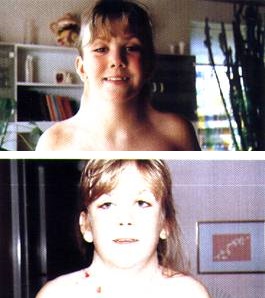
Mujer con síndrome de Turner

Rasgos característicos de una niña con síndrome de Turner

Imagen por Lecturio.
Diagnóstico y Tratamiento

Diagnóstico

  • Si se sospecha in utero:
    • Muestra de vellosidades coriónicas
    • Amniocentesis Amniocentesis Percutaneous transabdominal puncture of the uterus during pregnancy to obtain amniotic fluid. It is commonly used for fetal karyotype determination in order to diagnose abnormal fetal conditions. Polyhydramnios con cariotipo
  • Diagnóstico postnatal:
    • Antecedentes y examen físico
    • Pruebas genéticas: El cariotipo confirma el diagnóstico.
    • Los LOS Neisseria análisis de laboratorio muestran: ↓ niveles de estrógenos y andrógenos, ↑ niveles de hormona luteinizante y hormona foliculoestimulante.
  • Pruebas de detección adicionales una vez confirmado el diagnóstico:
    • Evaluación de la audición, con exámenes repetidos cada 3 a 5 años debido al AL Amyloidosis riesgo progresivo de pérdida auditiva
    • Examen ocular
    • Evaluaciones/tamizaje neuropsicológicos, de desarrollo, educativos y de comportamiento
    • Medición de la presión arterial en EN Erythema nodosum is an immune-mediated panniculitis (inflammation of the subcutaneous fat) caused by a type IV (delayed-type) hypersensitivity reaction. It commonly manifests in young women as tender, erythematous nodules on the shins. Erythema Nodosum brazos y piernas
    • Pruebas de rutina:
      • Prueba de tiroides y enzimas hepáticas anualmente
      • Tamizaje de lípidos cada 5 años
      • Tamizaje de glucosa cada 1 a 3 años
    • Imagenología:
      • Ecocardiograma y/o resonancia magnética (RM) cardíaca de base para comprobar si hay defectos cardíacos, con imágenes repetidas cada 5 años para controlar el riesgo de dilatación y disección aórtica
      • Ultrasonido renal para detectar malformaciones
      • Absorciometría con rayos X de doble energía de referencia en EN Erythema nodosum is an immune-mediated panniculitis (inflammation of the subcutaneous fat) caused by a type IV (delayed-type) hypersensitivity reaction. It commonly manifests in young women as tender, erythematous nodules on the shins. Erythema Nodosum la edad adulta temprana, con exploraciones repetidas cada 5 a 10 años

Tratamiento

  • Reemplazo hormonal:
    • Terapia de estrógenos (de por vida) iniciada en EN Erythema nodosum is an immune-mediated panniculitis (inflammation of the subcutaneous fat) caused by a type IV (delayed-type) hypersensitivity reaction. It commonly manifests in young women as tender, erythematous nodules on the shins. Erythema Nodosum la adolescencia para la maduración/desarrollo sexual
      • Iniciado con una dosis baja alrededor de los LOS Neisseria 11 a 12 años para imitar gradualmente la pubertad normal
      • Aumentos de dosis graduales durante 2 a 4 años para optimizar el desarrollo de los LOS Neisseria senos y la salud ósea
    • Terapia cíclica con progestágenos introducida 2 a 3 años después del comienzo de la terapia con estrógenos y/o al AL Amyloidosis comienzo del sangrado intermenstrual, para garantizar una protección endometrial adecuada
    • Hormona de crecimiento para intentar mejorar la baja estatura; se utiliza con un enfoque individualizado basado en EN Erythema nodosum is an immune-mediated panniculitis (inflammation of the subcutaneous fat) caused by a type IV (delayed-type) hypersensitivity reaction. It commonly manifests in young women as tender, erythematous nodules on the shins. Erythema Nodosum la trayectoria de la altura y se continúa hasta alcanzar casi la altura final o el cierre epifisario
  • Tratamiento de fertilidad si se desea tener hijos, incluido el asesoramiento temprano sobre las opciones de preservación de la fertilidad (p. ej., criopreservación de ovocitos o tejido ovárico)
  • En EN Erythema nodosum is an immune-mediated panniculitis (inflammation of the subcutaneous fat) caused by a type IV (delayed-type) hypersensitivity reaction. It commonly manifests in young women as tender, erythematous nodules on the shins. Erythema Nodosum el raro caso de que haya material de cromosoma Y, se recomienda la gonadectomía.

Relevancia Clínica

Diagnóstico diferencial

Las siguientes afecciones son diagnósticos diferenciales del síndrome de Turner:

  • Síndrome de Noonan: afección genética autosómica dominante causada por varias posibles mutaciones genéticas. Tanto los LOS Neisseria hombres como las mujeres pueden verse afectados. La presentación clínica incluye estatura baja, cuello alado y defectos cardíacos congénitos. Las pruebas genéticas confirman el diagnóstico. Los LOS Neisseria individuos con síndrome de Noonan tienen un cariotipo normal. Los LOS Neisseria retrasos en EN Erythema nodosum is an immune-mediated panniculitis (inflammation of the subcutaneous fat) caused by a type IV (delayed-type) hypersensitivity reaction. It commonly manifests in young women as tender, erythematous nodules on the shins. Erythema Nodosum el desarrollo son más frecuentes que en EN Erythema nodosum is an immune-mediated panniculitis (inflammation of the subcutaneous fat) caused by a type IV (delayed-type) hypersensitivity reaction. It commonly manifests in young women as tender, erythematous nodules on the shins. Erythema Nodosum el síndrome de Turner.
  • Disgenesia gonadal: afección congénita en EN Erythema nodosum is an immune-mediated panniculitis (inflammation of the subcutaneous fat) caused by a type IV (delayed-type) hypersensitivity reaction. It commonly manifests in young women as tender, erythematous nodules on the shins. Erythema Nodosum la que las gónadas no se desarrollan. Tanto los LOS Neisseria hombres como las mujeres se ven afectados. La disgenesia gonadal no es causada por una anomalía cromosómica. Las mujeres tienen un cariotipo 46,XX normal con falta de inicio de la pubertad, amenorrea primaria e infertilidad similar al AL Amyloidosis síndrome de Turner. Sin embargo, los LOS Neisseria rasgos fenotípicos observados en EN Erythema nodosum is an immune-mediated panniculitis (inflammation of the subcutaneous fat) caused by a type IV (delayed-type) hypersensitivity reaction. It commonly manifests in young women as tender, erythematous nodules on the shins. Erythema Nodosum el síndrome de Turner no están presentes. Se requiere una terapia de reemplazo hormonal.

Afección relacionada

La siguiente afección está relacionada con el síndrome de Turner, ya que también provoca insuficiencia gonadal debido a una anomalía cromosómica:

  • Síndrome de Klinefelter: trastorno de anomalía cromosómica que se observa en EN Erythema nodosum is an immune-mediated panniculitis (inflammation of the subcutaneous fat) caused by a type IV (delayed-type) hypersensitivity reaction. It commonly manifests in young women as tender, erythematous nodules on the shins. Erythema Nodosum los LOS Neisseria hombres y en EN Erythema nodosum is an immune-mediated panniculitis (inflammation of the subcutaneous fat) caused by a type IV (delayed-type) hypersensitivity reaction. It commonly manifests in young women as tender, erythematous nodules on the shins. Erythema Nodosum el que hay cromosomas X, y posiblemente Y, adicionales en EN Erythema nodosum is an immune-mediated panniculitis (inflammation of the subcutaneous fat) caused by a type IV (delayed-type) hypersensitivity reaction. It commonly manifests in young women as tender, erythematous nodules on the shins. Erythema Nodosum el cariotipo. Provoca un retraso de la pubertad y un hipogonadismo hipergonadotrópico primario en EN Erythema nodosum is an immune-mediated panniculitis (inflammation of the subcutaneous fat) caused by a type IV (delayed-type) hypersensitivity reaction. It commonly manifests in young women as tender, erythematous nodules on the shins. Erythema Nodosum los LOS Neisseria hombres. Los LOS Neisseria individuos con esta afección tienden a presentarse con fenotipo masculino, altos, con testículos pequeños, disminución del vello corporal, ginecomastia e infertilidad. Las pruebas genéticas confirman el diagnóstico. Requiere terapia de reemplazo de testosterona.

Referencias

  1. Turner Syndrome. Medline Plus. https://medlineplus.gov/genetics/condition/turner-syndrome/
  2. Morgan, Thomas. (2007). Turner Syndrome: Diagnosis and Management. Am Fam Physician. 76(3):405–417.
  3. Gravholt, C., Andersen et al. on behalf of the International Turner Syndrome Consensus Group. (2017). Clinical practice guidelines for the care of girls and women with Turner syndrome: proceedings from the 2016 Cincinnati International Turner Syndrome Meeting, European Journal of Endocrinology, 177(3), G1-G70. https://eje.bioscientifica.com/view/journals/eje/177/3/EJE-17-0430.xml
  4. Backeljauw, Philippe. (2023). Clinical manifestations and diagnosis of Turner syndrome. UpToDate. Retrieved February 19, 2025, from https://www.uptodate.com/contents/clinical-manifestations-and-diagnosis-of-turner-syndrome
  5. Bernard, V., Donadille, B., Zenaty, D., Courtillot, C., Salenave, S., Brac de la Perrière, A., Albarel, F., Fèvre, A., Kerlan, V., Brue, T., Delemer, B., Borson-Chazot, F., Carel, J. C., Chanson, P., Léger, J., Touraine, P., Christin-Maitre, S., & CMERC Center for Rare Disease (2016). Spontaneous fertility and pregnancy outcomes amongst 480 women with Turner syndrome. Human reproduction (Oxford, England)31(4), 782–788. https://doi.org/10.1093/humrep/dew012
  6. Bacino, C.A. (2024). Sex chromosome abnormalities. UpToDate. Retrieved February 19, 2025, from https://www.uptodate.com/contents/sex-chromosome-abnormalities
  7. Backeljauw, Philippe. (2024). Management of Turner syndrome in children and adolescents. UpToDate. Retrieved February 19, 2025, from https://www.uptodate.com/contents/management-of-turner-syndrome-in-children-and-adolescents
  8. Backeljauw, Philippe. (2024). Management of Turner syndrome in adults. UpToDate. Retrieved February 19, 2025, from https://www.uptodate.com/contents/management-of-turner-syndrome-in-adults
  9. Gravholt, C. H., Viuff, M., Just, J., Sandahl, K., Brun, S., van der Velden, J., Andersen, N. H., & Skakkebaek, A. (2023). The Changing Face of Turner Syndrome. Endocrine reviews44(1), 33–69. https://doi.org/10.1210/endrev/bnac016
  10. Steiner, M., & Saenger, P. (2022). Turner Syndrome: An Update. Advances in pediatrics69(1), 177–202. https://doi.org/10.1016/j.yapd.2022.03.004
  11. Gravholt, C. H., Viuff, M. H., Brun, S., Stochholm, K., & Andersen, N. H. (2019). Turner syndrome: mechanisms and management. Nature reviews. Endocrinology15(10), 601–614. https://doi.org/10.1038/s41574-019-0224-4

¡Crea tu cuenta gratis o inicia una sesión para seguir leyendo!

Regístrate ahora y obtén acceso gratuito a Lecturio con páginas de concepto, videos médicos y cuestionarios para tu educación médica.

User Reviews

Que tengas una sesión de estudio alegre y navideña 🎁 Ahorra 50% en todos los planes >>

Details