
Domina Conceptos Médicos

Estudia para la escuela de medicina y tus examenes con Lecturio.

Poliposis Familiar Juvenil

La poliposis juvenil familiar, también conocida como síndrome de poliposis juvenil, es una enfermedad autosómica dominante caracterizada por el crecimiento de pólipos hamartomatosos (tipo juvenil) en EN Erythema nodosum is an immune-mediated panniculitis (inflammation of the subcutaneous fat) caused by a type IV (delayed-type) hypersensitivity reaction. It commonly manifests in young women as tender, erythematous nodules on the shins. Erythema Nodosum el tracto gastrointestinal, la mayoría de los LOS Neisseria cuales surgen en EN Erythema nodosum is an immune-mediated panniculitis (inflammation of the subcutaneous fat) caused by a type IV (delayed-type) hypersensitivity reaction. It commonly manifests in young women as tender, erythematous nodules on the shins. Erythema Nodosum el colon Colon The large intestines constitute the last portion of the digestive system. The large intestine consists of the cecum, appendix, colon (with ascending, transverse, descending, and sigmoid segments), rectum, and anal canal. The primary function of the colon is to remove water and compact the stool prior to expulsion from the body via the rectum and anal canal. Colon, Cecum, and Appendix: Anatomy. Los LOS Neisseria síndromes de poliposis son un grupo de condiciones hereditarias o adquiridas que se caracterizan por el crecimiento de pólipos en EN Erythema nodosum is an immune-mediated panniculitis (inflammation of the subcutaneous fat) caused by a type IV (delayed-type) hypersensitivity reaction. It commonly manifests in young women as tender, erythematous nodules on the shins. Erythema Nodosum el tracto gastrointestinal y que se asocian a otras características extracolónicas. Estos síndromes están causados por mutaciones en EN Erythema nodosum is an immune-mediated panniculitis (inflammation of the subcutaneous fat) caused by a type IV (delayed-type) hypersensitivity reaction. It commonly manifests in young women as tender, erythematous nodules on the shins. Erythema Nodosum genes Genes A category of nucleic acid sequences that function as units of heredity and which code for the basic instructions for the development, reproduction, and maintenance of organisms. DNA Types and Structure específicos asociados a la supresión de tumores o a la regulación del ciclo celular. La poliposis juvenil familiar está comúnmente asociada a mutaciones en EN Erythema nodosum is an immune-mediated panniculitis (inflammation of the subcutaneous fat) caused by a type IV (delayed-type) hypersensitivity reaction. It commonly manifests in young women as tender, erythematous nodules on the shins. Erythema Nodosum los LOS Neisseria genes Genes A category of nucleic acid sequences that function as units of heredity and which code for the basic instructions for the development, reproduction, and maintenance of organisms. DNA Types and Structure SMAD4 (cromosoma 18q) y BMPR1A BMPR1A A subtype of bone morphogenetic protein receptors with high affinity for bone morphogenetic proteins. They can interact with and undergo phosphorylation by type II bone morphogenetic protein receptors. They signal primarily through receptor-regulated SMAD proteins. Familial Juvenile Polyposis (cromosoma 10q). El diagnóstico se realiza al AL Amyloidosis visualizar 5 o más pólipos juveniles en EN Erythema nodosum is an immune-mediated panniculitis (inflammation of the subcutaneous fat) caused by a type IV (delayed-type) hypersensitivity reaction. It commonly manifests in young women as tender, erythematous nodules on the shins. Erythema Nodosum la colonoscopia, múltiples pólipos juveniles en EN Erythema nodosum is an immune-mediated panniculitis (inflammation of the subcutaneous fat) caused by a type IV (delayed-type) hypersensitivity reaction. It commonly manifests in young women as tender, erythematous nodules on the shins. Erythema Nodosum otras áreas del tracto gastrointestinal o cualquier número de pólipos juveniles más antecedentes familiares positivos. El tratamiento es quirúrgico para reducir la probabilidad de hemorragia y obstrucción gastrointestinal.

Last updated: Dec 15, 2025

Editorial responsibility: Stanley Oiseth, Lindsay Jones, Evelin Maza

Descripción General

Definición

La poliposis juvenil familiar o síndrome de poliposis juvenil, es una enfermedad autosómica dominante caracterizada por el crecimiento de pólipos hamartomatosos (tipo juvenil) en EN Erythema nodosum is an immune-mediated panniculitis (inflammation of the subcutaneous fat) caused by a type IV (delayed-type) hypersensitivity reaction. It commonly manifests in young women as tender, erythematous nodules on the shins. Erythema Nodosum el colon Colon The large intestines constitute the last portion of the digestive system. The large intestine consists of the cecum, appendix, colon (with ascending, transverse, descending, and sigmoid segments), rectum, and anal canal. The primary function of the colon is to remove water and compact the stool prior to expulsion from the body via the rectum and anal canal. Colon, Cecum, and Appendix: Anatomy.

Epidemiología

  • Pólipo juvenil: pólipo más comúnmente encontrado en EN Erythema nodosum is an immune-mediated panniculitis (inflammation of the subcutaneous fat) caused by a type IV (delayed-type) hypersensitivity reaction. It commonly manifests in young women as tender, erythematous nodules on the shins. Erythema Nodosum niños
    • Los LOS Neisseria pólipos esporádicos suelen ser solitarios y no se asocian a ningún riesgo de cáncer.
    • El síndrome de poliposis juvenil tiene un mayor riesgo de cáncer.
  • Síndrome de poliposis juvenil:
    • Incidencia: 1 de cada 100 000
    • La mayoría desarrolla pólipos antes de los LOS Neisseria 20 años.
    • Aproximadamente el 75% de los LOS Neisseria pacientes tienen antecedentes familiares de la enfermedad.
    • Mayor riesgo de cáncer colorrectal y extracolónico (estómago, duodeno, páncreas y yeyuno).

Etiología

  • Más comúnmente asociado con mutaciones en EN Erythema nodosum is an immune-mediated panniculitis (inflammation of the subcutaneous fat) caused by a type IV (delayed-type) hypersensitivity reaction. It commonly manifests in young women as tender, erythematous nodules on the shins. Erythema Nodosum la línea germinal de los LOS Neisseria genes Genes A category of nucleic acid sequences that function as units of heredity and which code for the basic instructions for the development, reproduction, and maintenance of organisms. DNA Types and Structure SMAD4 (cromosoma 18q) y BMPR1A BMPR1A A subtype of bone morphogenetic protein receptors with high affinity for bone morphogenetic proteins. They can interact with and undergo phosphorylation by type II bone morphogenetic protein receptors. They signal primarily through receptor-regulated SMAD proteins. Familial Juvenile Polyposis (cromosoma 10q)
  • Una condición autosómica dominante con penetrancia incompleta
  • La mutación patogénica de al AL Amyloidosis menos 1 gen se encuentra en EN Erythema nodosum is an immune-mediated panniculitis (inflammation of the subcutaneous fat) caused by a type IV (delayed-type) hypersensitivity reaction. It commonly manifests in young women as tender, erythematous nodules on the shins. Erythema Nodosum 40%–50% de los LOS Neisseria pacientes.

Fisiopatología

  • Los LOS Neisseria genes Genes A category of nucleic acid sequences that function as units of heredity and which code for the basic instructions for the development, reproduction, and maintenance of organisms. DNA Types and Structure SMAD4 y BMPR1A BMPR1A A subtype of bone morphogenetic protein receptors with high affinity for bone morphogenetic proteins. They can interact with and undergo phosphorylation by type II bone morphogenetic protein receptors. They signal primarily through receptor-regulated SMAD proteins. Familial Juvenile Polyposis ejercen una función de supresión tumoral.
  • Las mutaciones suelen ser defectos hereditarios de la línea germinal, pero pueden ser de novo.
  • Las mutaciones provocan una señalización deficiente del factor de crecimiento tumoral beta 1 (TGF-β) y un mal control de la proliferación celular → proliferación celular incontrolada → hamartomas → cáncer

Presentación Clínica

Antecedentes clínicos

  • Normalmente se presenta con:
    • Hemorragia digestiva/rectal (síntoma de presentación más común)
    • Intususcepción
    • Obstrucción
  • Los LOS Neisseria pacientes también pueden quejarse de la protrusión de una masa a través del esfínter anal (prolapso rectal).
  • Síntomas de anemia Anemia Anemia is a condition in which individuals have low Hb levels, which can arise from various causes. Anemia is accompanied by a reduced number of RBCs and may manifest with fatigue, shortness of breath, pallor, and weakness. Subtypes are classified by the size of RBCs, chronicity, and etiology. Anemia: Overview and Types:
    • Fatiga
    • Debilidad generalizada
    • Pérdida de apetito
    • Manos o pies fríos
    • Piernas inquietas
    • Palpitaciones
    • Disnea

Hallazgos

Otras manifestaciones pueden incluir:

  • SNC:
    • Macrocefalia
    • Hidrocefalia
  • Tórax:
  • Tracto urogenital:
    • Testículos no descendidos
    • Útero y vagina Vagina The vagina is the female genital canal, extending from the vulva externally to the cervix uteri internally. The structures have sexual, reproductive, and urinary functions and a rich blood supply, mainly arising from the internal iliac artery. Vagina, Vulva, and Pelvic Floor: Anatomy bífidos
    • Agenesia renal unilateral
  • Tracto gastrointestinal:
    • Divertículo de Meckel
    • Malrotación
    • Hemorragia gastrointestinal
    • Prolapso rectal
  • Vascular:

Diagnóstico

Criterios

El diagnóstico se realiza al AL Amyloidosis visualizar > 5 pólipos en EN Erythema nodosum is an immune-mediated panniculitis (inflammation of the subcutaneous fat) caused by a type IV (delayed-type) hypersensitivity reaction. It commonly manifests in young women as tender, erythematous nodules on the shins. Erythema Nodosum la colonoscopia, múltiples pólipos juveniles en EN Erythema nodosum is an immune-mediated panniculitis (inflammation of the subcutaneous fat) caused by a type IV (delayed-type) hypersensitivity reaction. It commonly manifests in young women as tender, erythematous nodules on the shins. Erythema Nodosum otras áreas del tracto gastrointestinal o cualquier número de pólipos con antecedentes familiares positivos.
Abordaje diagnóstico

  • Hemograma: anemia Anemia Anemia is a condition in which individuals have low Hb levels, which can arise from various causes. Anemia is accompanied by a reduced number of RBCs and may manifest with fatigue, shortness of breath, pallor, and weakness. Subtypes are classified by the size of RBCs, chronicity, and etiology. Anemia: Overview and Types
  • Enema de bario: ayuda a detectar pólipos y cambios estructurales en EN Erythema nodosum is an immune-mediated panniculitis (inflammation of the subcutaneous fat) caused by a type IV (delayed-type) hypersensitivity reaction. It commonly manifests in young women as tender, erythematous nodules on the shins. Erythema Nodosum el tracto gastrointestinal inferior
  • Colonoscopia:
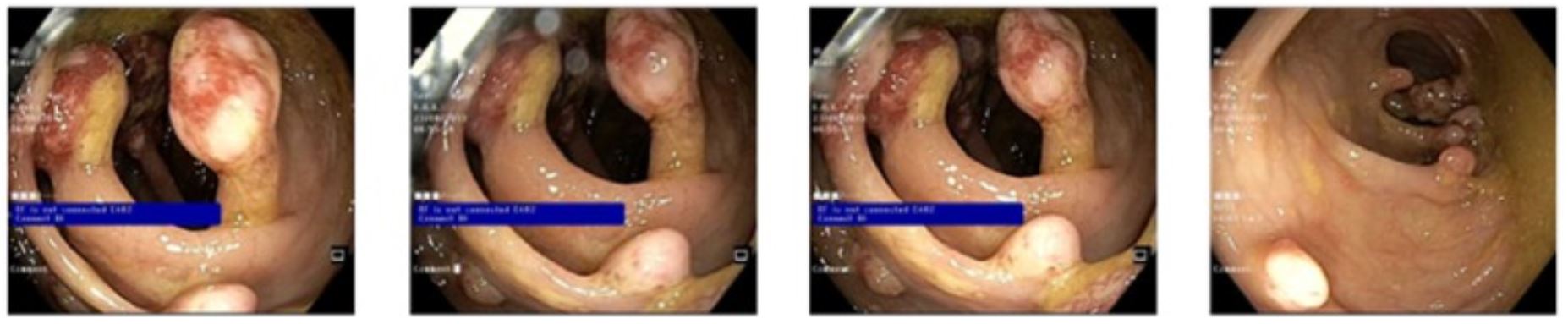
    • Los LOS Neisseria pólipos suelen ser redondos, superficie lisa, rojos y pedunculados.
    • La mayoría de los LOS Neisseria pacientes tienen entre 50–100 pólipos colorrectales.
    • Generalmente, se limita al AL Amyloidosis colon Colon The large intestines constitute the last portion of the digestive system. The large intestine consists of the cecum, appendix, colon (with ascending, transverse, descending, and sigmoid segments), rectum, and anal canal. The primary function of the colon is to remove water and compact the stool prior to expulsion from the body via the rectum and anal canal. Colon, Cecum, and Appendix: Anatomy distal y al AL Amyloidosis recto, aunque puede encontrarse en EN Erythema nodosum is an immune-mediated panniculitis (inflammation of the subcutaneous fat) caused by a type IV (delayed-type) hypersensitivity reaction. It commonly manifests in young women as tender, erythematous nodules on the shins. Erythema Nodosum todo el tracto gastrointestinal
  • Características histológicas de un pólipo juvenil:
    • Abundante lámina propia
    • A menudo con infiltración de células inflamatorias
    • Glándulas dilatadas llenas de mucina
Múltiples pólipos juveniles pedunculados y sésiles, no sangrantes

Múltiples pólipos juveniles pedunculados y sésiles, no sangrantes

Imagen: “Multiple pedunculated and sessile, nonbleeding polyps” por Amna Ahmed and Badr Alsaleem. Licencia: CC BY 4.0

Tratamiento

Observación

  • Seguimiento a largo plazo debido al AL Amyloidosis mayor riesgo de cáncer colorrectal
  • Colonoscopia: se inicia a los LOS Neisseria 12–15 años
    • Puede iniciarse antes si el paciente se vuelve sintomático
    • Si es negativa: Repetir cada 2–3 años.
    • Si es positiva o se eliminan los LOS Neisseria pólipos: Repetir anualmente.
  • Endoscopia alta: iniciada a los LOS Neisseria 12 años
    • Realizar cada 2–3 años.
    • Si se detectan pólipos: repetir anualmente
  • Prueba genética de SMAD4 o BMPR1A BMPR1A A subtype of bone morphogenetic protein receptors with high affinity for bone morphogenetic proteins. They can interact with and undergo phosphorylation by type II bone morphogenetic protein receptors. They signal primarily through receptor-regulated SMAD proteins. Familial Juvenile Polyposis:
    • Recomendado en EN Erythema nodosum is an immune-mediated panniculitis (inflammation of the subcutaneous fat) caused by a type IV (delayed-type) hypersensitivity reaction. It commonly manifests in young women as tender, erythematous nodules on the shins. Erythema Nodosum aquellos que cumplen los LOS Neisseria criterios clínicos
    • Ayuda a orientar el tamizaje de los LOS Neisseria familiares en EN Erythema nodosum is an immune-mediated panniculitis (inflammation of the subcutaneous fat) caused by a type IV (delayed-type) hypersensitivity reaction. It commonly manifests in young women as tender, erythematous nodules on the shins. Erythema Nodosum riesgo
  • Evaluar los LOS Neisseria síntomas relacionados con la anemia Anemia Anemia is a condition in which individuals have low Hb levels, which can arise from various causes. Anemia is accompanied by a reduced number of RBCs and may manifest with fatigue, shortness of breath, pallor, and weakness. Subtypes are classified by the size of RBCs, chronicity, and etiology. Anemia: Overview and Types, las telangiectasias Telangiectasias Ataxia-telangiectasia y las malformaciones vasculares

Tratamiento quirúrgico

  • Indicado en EN Erythema nodosum is an immune-mediated panniculitis (inflammation of the subcutaneous fat) caused by a type IV (delayed-type) hypersensitivity reaction. It commonly manifests in young women as tender, erythematous nodules on the shins. Erythema Nodosum:
    • Displasia de alto grado
    • Pacientes que fracasan en EN Erythema nodosum is an immune-mediated panniculitis (inflammation of the subcutaneous fat) caused by a type IV (delayed-type) hypersensitivity reaction. It commonly manifests in young women as tender, erythematous nodules on the shins. Erythema Nodosum el tratamiento endoscópico
    • Profiláctico en EN Erythema nodosum is an immune-mediated panniculitis (inflammation of the subcutaneous fat) caused by a type IV (delayed-type) hypersensitivity reaction. It commonly manifests in young women as tender, erythematous nodules on the shins. Erythema Nodosum pacientes que no pueden adherirse a la vigilancia
    • Formación rápida de pólipos
    • Hemorragia digestiva
    • Fuertes antecedentes familiares de cáncer colorrectal
  • Colectomía:
    • Limita la hemorragia asociada a la ulceración del pólipo
    • Evita la obstrucción mecánica
    • Prevención del cáncer
  • Después de la colectomía, el resto del recto debe ser examinado anualmente (el 50% requiere eventualmente una proctectomía).

Complicaciones

  • Anemia Anemia Anemia is a condition in which individuals have low Hb levels, which can arise from various causes. Anemia is accompanied by a reduced number of RBCs and may manifest with fatigue, shortness of breath, pallor, and weakness. Subtypes are classified by the size of RBCs, chronicity, and etiology. Anemia: Overview and Types
  • Obstrucción intestinal

Pronóstico

  • Riesgo de padecer cancer colorrectal a lo largo de la vida: 39%–68% a los LOS Neisseria 60 años
  • Riesgo de cáncer gástrico: hasta un 21%

Diagnóstico Diferencial

  • Pólipos adenomatosos familiares: trastorno genético hereditario autosómico dominante que se presenta con numerosos pólipos adenomatosos en EN Erythema nodosum is an immune-mediated panniculitis (inflammation of the subcutaneous fat) caused by a type IV (delayed-type) hypersensitivity reaction. It commonly manifests in young women as tender, erythematous nodules on the shins. Erythema Nodosum el colon Colon The large intestines constitute the last portion of the digestive system. The large intestine consists of the cecum, appendix, colon (with ascending, transverse, descending, and sigmoid segments), rectum, and anal canal. The primary function of the colon is to remove water and compact the stool prior to expulsion from the body via the rectum and anal canal. Colon, Cecum, and Appendix: Anatomy. Los LOS Neisseria pólipos adenomatosos familiares son el más común de los LOS Neisseria síndromes de poliposis. Todos los LOS Neisseria pacientes con pólipos adenomatosos familiares desarrollarán cáncer de colon Colon The large intestines constitute the last portion of the digestive system. The large intestine consists of the cecum, appendix, colon (with ascending, transverse, descending, and sigmoid segments), rectum, and anal canal. The primary function of the colon is to remove water and compact the stool prior to expulsion from the body via the rectum and anal canal. Colon, Cecum, and Appendix: Anatomy a la edad de 35–40 años si no reciben tratamiento. El tratamiento es con un programa de vigilancia y colectomía.
  • Síndrome de Peutz-Jeghers: trastorno hereditario autosómico dominante caracterizado por pólipos gastrointestinales y máculas pigmentadas mucocutáneas. El síndrome de Peutz-Jeghers está causado por alteraciones en EN Erythema nodosum is an immune-mediated panniculitis (inflammation of the subcutaneous fat) caused by a type IV (delayed-type) hypersensitivity reaction. It commonly manifests in young women as tender, erythematous nodules on the shins. Erythema Nodosum el gen STK11 y se asocia a cánceres colónicos (colorrectales) y no colónicos (pancreáticos, gástricos, de mama, uterinos, cervicales, de pulmón, de ovarios y testiculares). El tratamiento es con vigilancia estrecha y cirugía.
  • Enfermedad de Cowden: trastorno autosómico dominante causado por mutaciones en EN Erythema nodosum is an immune-mediated panniculitis (inflammation of the subcutaneous fat) caused by a type IV (delayed-type) hypersensitivity reaction. It commonly manifests in young women as tender, erythematous nodules on the shins. Erythema Nodosum el gen supresor de tumores PTEN, y caracterizado por el desarrollo de múltiples hamartomas benignos. La enfermedad es una genodermatosis caracterizada por múltiples hamartomas benignos en EN Erythema nodosum is an immune-mediated panniculitis (inflammation of the subcutaneous fat) caused by a type IV (delayed-type) hypersensitivity reaction. It commonly manifests in young women as tender, erythematous nodules on the shins. Erythema Nodosum cualquier localización, lesiones mucocutáneas y macrocefalia. El tratamiento depende de la localización del hamartoma Hamartoma A focal malformation resembling a neoplasm, composed of an overgrowth of mature cells and tissues that normally occur in the affected area. Colorectal Cancer.
  • Cáncer de colon Colon The large intestines constitute the last portion of the digestive system. The large intestine consists of the cecum, appendix, colon (with ascending, transverse, descending, and sigmoid segments), rectum, and anal canal. The primary function of the colon is to remove water and compact the stool prior to expulsion from the body via the rectum and anal canal. Colon, Cecum, and Appendix: Anatomy hereditario no polipósico: también conocido como síndrome de Lynch; un trastorno autosómico dominante causado por mutaciones en EN Erythema nodosum is an immune-mediated panniculitis (inflammation of the subcutaneous fat) caused by a type IV (delayed-type) hypersensitivity reaction. It commonly manifests in young women as tender, erythematous nodules on the shins. Erythema Nodosum los LOS Neisseria genes Genes A category of nucleic acid sequences that function as units of heredity and which code for the basic instructions for the development, reproduction, and maintenance of organisms. DNA Types and Structure reparadores de desajustes de ADN, que en EN Erythema nodosum is an immune-mediated panniculitis (inflammation of the subcutaneous fat) caused by a type IV (delayed-type) hypersensitivity reaction. It commonly manifests in young women as tender, erythematous nodules on the shins. Erythema Nodosum última instancia conduce al AL Amyloidosis desarrollo de cáncer colorrectal en EN Erythema nodosum is an immune-mediated panniculitis (inflammation of the subcutaneous fat) caused by a type IV (delayed-type) hypersensitivity reaction. It commonly manifests in young women as tender, erythematous nodules on the shins. Erythema Nodosum familiares de 1er grado. El tratamiento es con colectomía profiláctica y endoscopia frecuente para la vigilancia.
  • Cáncer colorrectal: la 2da causa de muerte relacionada con el cáncer en EN Erythema nodosum is an immune-mediated panniculitis (inflammation of the subcutaneous fat) caused by a type IV (delayed-type) hypersensitivity reaction. It commonly manifests in young women as tender, erythematous nodules on the shins. Erythema Nodosum Estados Unidos. El cáncer colorrectal es una enfermedad heterogénea, originada por anomalías genéticas y epigenéticas, con influencia de factores ambientales. Casi todos los LOS Neisseria casos de cáncer colorrectal son adenocarcinomas. La mayoría de los LOS Neisseria casos son asintomáticos, por lo que el tamizaje es importante. El diagnóstico se realiza mediante colonoscopia. El tratamiento es principalmente quirúrgico.

Referencias

  1. Cohan, J.N., Varma, M.G. (2020). Large intestine. In Doherty, G.M.(Ed.), Current Diagnosis & Treatment: Surgery, 15e. McGraw-Hill. https://accessmedicine.mhmedical.com/content.aspx?bookid=2860&sectionid=241183142
  2. Shalkow, J. (2020). Colorectal Tumors in Adolescents and Young Adults. Emedicina. Retrieved June 20, 2021, from https://emedicine.medscape.com/article/993370-overview#a2
  3. Chung, D., Delgado, K. (2020). Juvenile polyposis syndrome. UpToDate. Retrieved June 21, 2021, from https://www.uptodate.com/contents/juvenile-polyposis-syndrome#H251243034

¡Crea tu cuenta gratis o inicia una sesión para seguir leyendo!

Regístrate ahora y obtén acceso gratuito a Lecturio con páginas de concepto, videos médicos y cuestionarios para tu educación médica.

User Reviews

Que tengas una sesión de estudio alegre y navideña 🎁 Ahorra 50% en todos los planes >>

Details