
La pleura Pleura The pleura is a serous membrane that lines the walls of the thoracic cavity and the surface of the lungs. This structure of mesodermal origin covers both lungs, the mediastinum, the thoracic surface of the diaphragm, and the inner part of the thoracic cage. The pleura is divided into a visceral pleura and parietal pleura. Pleura: Anatomy es una membrana serosa que recubre las paredes de la cavidad torácica y la superficie de los LOS Neisseria pulmones. Esta estructura de origen mesodérmico cubre ambos pulmones, el mediastino, la superficie torácica del diafragma y la parte interna de la caja torácica. La pleura Pleura The pleura is a serous membrane that lines the walls of the thoracic cavity and the surface of the lungs. This structure of mesodermal origin covers both lungs, the mediastinum, the thoracic surface of the diaphragm, and the inner part of the thoracic cage. The pleura is divided into a visceral pleura and parietal pleura. Pleura: Anatomy se divide en EN Erythema nodosum is an immune-mediated panniculitis (inflammation of the subcutaneous fat) caused by a type IV (delayed-type) hypersensitivity reaction. It commonly manifests in young women as tender, erythematous nodules on the shins. Erythema Nodosum la pleura Pleura The pleura is a serous membrane that lines the walls of the thoracic cavity and the surface of the lungs. This structure of mesodermal origin covers both lungs, the mediastinum, the thoracic surface of the diaphragm, and the inner part of the thoracic cage. The pleura is divided into a visceral pleura and parietal pleura. Pleura: Anatomy visceral y la pleura Pleura The pleura is a serous membrane that lines the walls of the thoracic cavity and the surface of the lungs. This structure of mesodermal origin covers both lungs, the mediastinum, the thoracic surface of the diaphragm, and the inner part of the thoracic cage. The pleura is divided into a visceral pleura and parietal pleura. Pleura: Anatomy parietal Parietal One of a pair of irregularly shaped quadrilateral bones situated between the frontal bone and occipital bone, which together form the sides of the cranium. Skull: Anatomy. Entre ambas capas hay un espacio potencial bien lubricado llamado cavidad pleural, que facilita los LOS Neisseria movimientos respiratorios de los LOS Neisseria pulmones y ayuda a evitar la fricción.
Last updated: Dec 15, 2025
La pleura Pleura The pleura is a serous membrane that lines the walls of the thoracic cavity and the surface of the lungs. This structure of mesodermal origin covers both lungs, the mediastinum, the thoracic surface of the diaphragm, and the inner part of the thoracic cage. The pleura is divided into a visceral pleura and parietal pleura. Pleura: Anatomy es una membrana serosa de doble capa que recubre las paredes de la cavidad torácica y la superficie de los LOS Neisseria pulmones. Por lo tanto, se extiende por toda la cavidad torácica.
Límites:

Límites y partes de la pleura dentro de la cavidad torácica
Imagen por Lecturio. Licencia: CC BY-NC-SA 4.0Cada pulmón está encerrado en EN Erythema nodosum is an immune-mediated panniculitis (inflammation of the subcutaneous fat) caused by a type IV (delayed-type) hypersensitivity reaction. It commonly manifests in young women as tender, erythematous nodules on the shins. Erythema Nodosum un saco pleural seroso que consta de 2 membranas continuas de pleura Pleura The pleura is a serous membrane that lines the walls of the thoracic cavity and the surface of the lungs. This structure of mesodermal origin covers both lungs, the mediastinum, the thoracic surface of the diaphragm, and the inner part of the thoracic cage. The pleura is divided into a visceral pleura and parietal pleura. Pleura: Anatomy visceral y parietal Parietal One of a pair of irregularly shaped quadrilateral bones situated between the frontal bone and occipital bone, which together form the sides of the cranium. Skull: Anatomy.
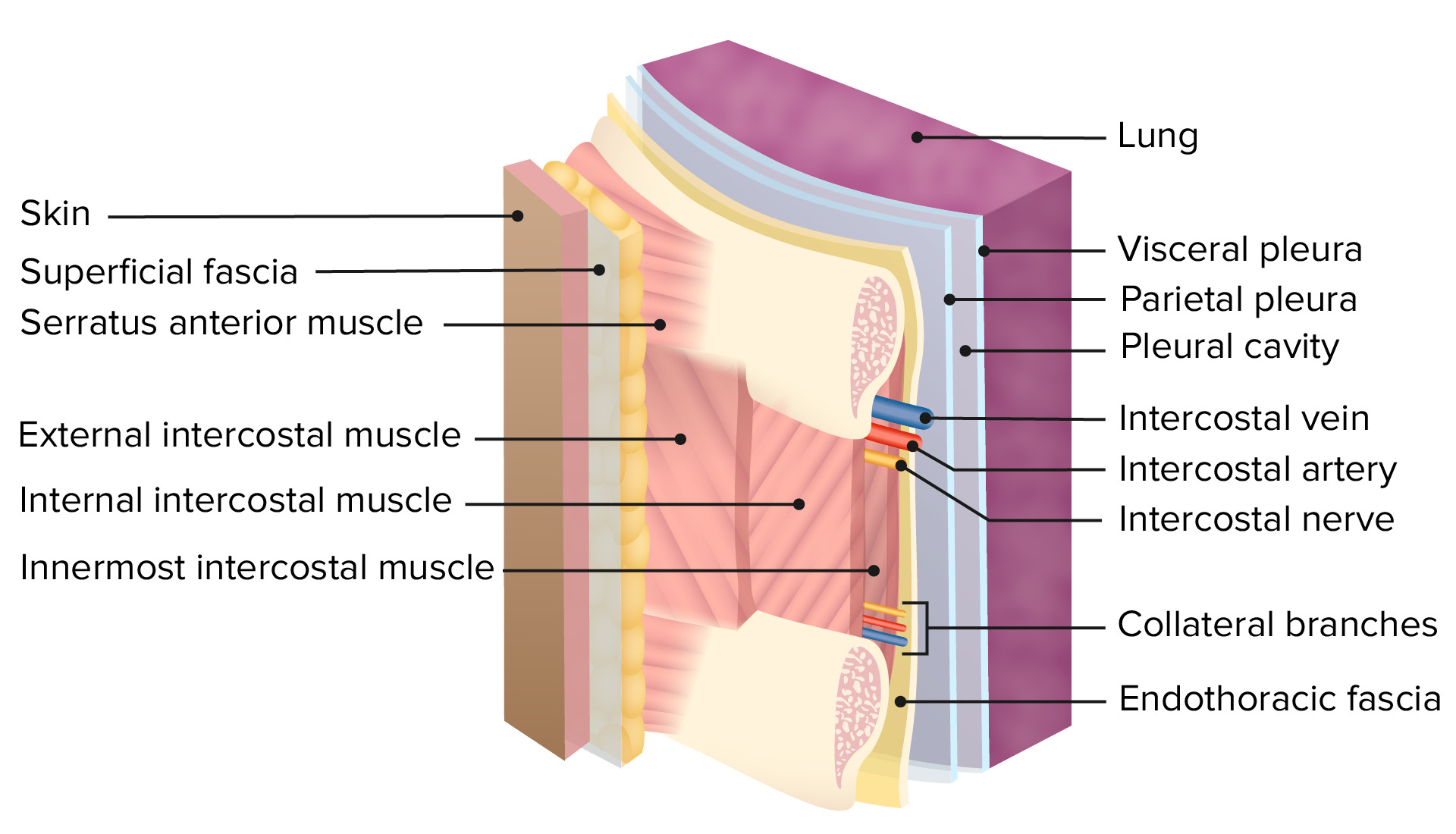
Capas de la pared torácica:
Obsérvese la doble capa de pleura y la cavidad pleural, separada de la caja torácica por la fascia endotorácica.
Cavidad pleural:
| Irrigación | Inervación | |
|---|---|---|
| Pleura Pleura The pleura is a serous membrane that lines the walls of the thoracic cavity and the surface of the lungs. This structure of mesodermal origin covers both lungs, the mediastinum, the thoracic surface of the diaphragm, and the inner part of the thoracic cage. The pleura is divided into a visceral pleura and parietal pleura. Pleura: Anatomy parietal Parietal One of a pair of irregularly shaped quadrilateral bones situated between the frontal bone and occipital bone, which together form the sides of the cranium. Skull: Anatomy | La parte costal es irrigada por:
La porción diafragmática es irrigada por: la parte superficial de la microcirculación diafragmática |
Recibe inervación somática aferente (sensorial) de:
|
| Pleura Pleura The pleura is a serous membrane that lines the walls of the thoracic cavity and the surface of the lungs. This structure of mesodermal origin covers both lungs, the mediastinum, the thoracic surface of the diaphragm, and the inner part of the thoracic cage. The pleura is divided into a visceral pleura and parietal pleura. Pleura: Anatomy visceral |
|
Recibe inervación aferente visceral (autonómica) del: plexo pulmonar |
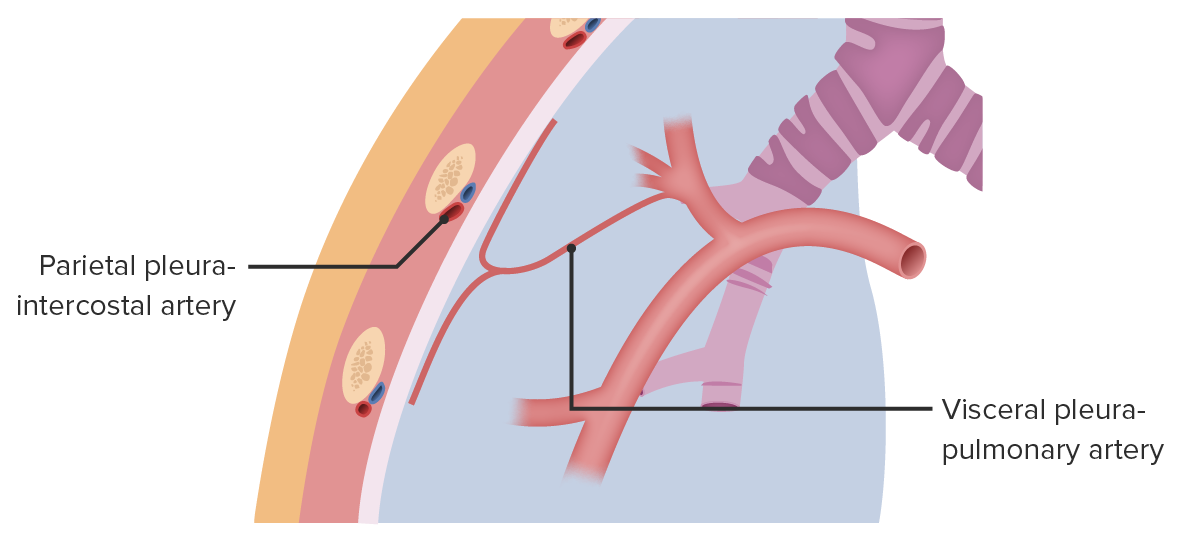
La irrigación sanguínea de las pleuras:
La pleura parietal recibe irrigación sanguínea de las arterias intercostales, diafragmáticas, mediastínicas y torácicas internas. La pleura visceral recibe irrigación sanguínea de los vasos bronquiales y pulmonares.