Domina Conceptos Médicos

Estudia para la escuela de medicina y tus examenes con Lecturio.

Muslo: Anatomía

El muslo es la región del miembro inferior que se encuentra entre la cadera y la articulación de la rodilla. En EN Erythema nodosum is an immune-mediated panniculitis (inflammation of the subcutaneous fat) caused by a type IV (delayed-type) hypersensitivity reaction. It commonly manifests in young women as tender, erythematous nodules on the shins. Erythema Nodosum el muslo hay un solo hueso llamado fémur, que está rodeado de grandes músculos agrupados en EN Erythema nodosum is an immune-mediated panniculitis (inflammation of the subcutaneous fat) caused by a type IV (delayed-type) hypersensitivity reaction. It commonly manifests in young women as tender, erythematous nodules on the shins. Erythema Nodosum 3 compartimentos fasciales. El muslo está irrigado principalmente por la arteria femoral y sus ramas, drenado por redes venosas profundas y superficiales, e inervado por ramas de los LOS Neisseria plexos lumbar y sacro.

Last updated: Dec 15, 2025

Editorial responsibility: Stanley Oiseth, Lindsay Jones, Evelin Maza

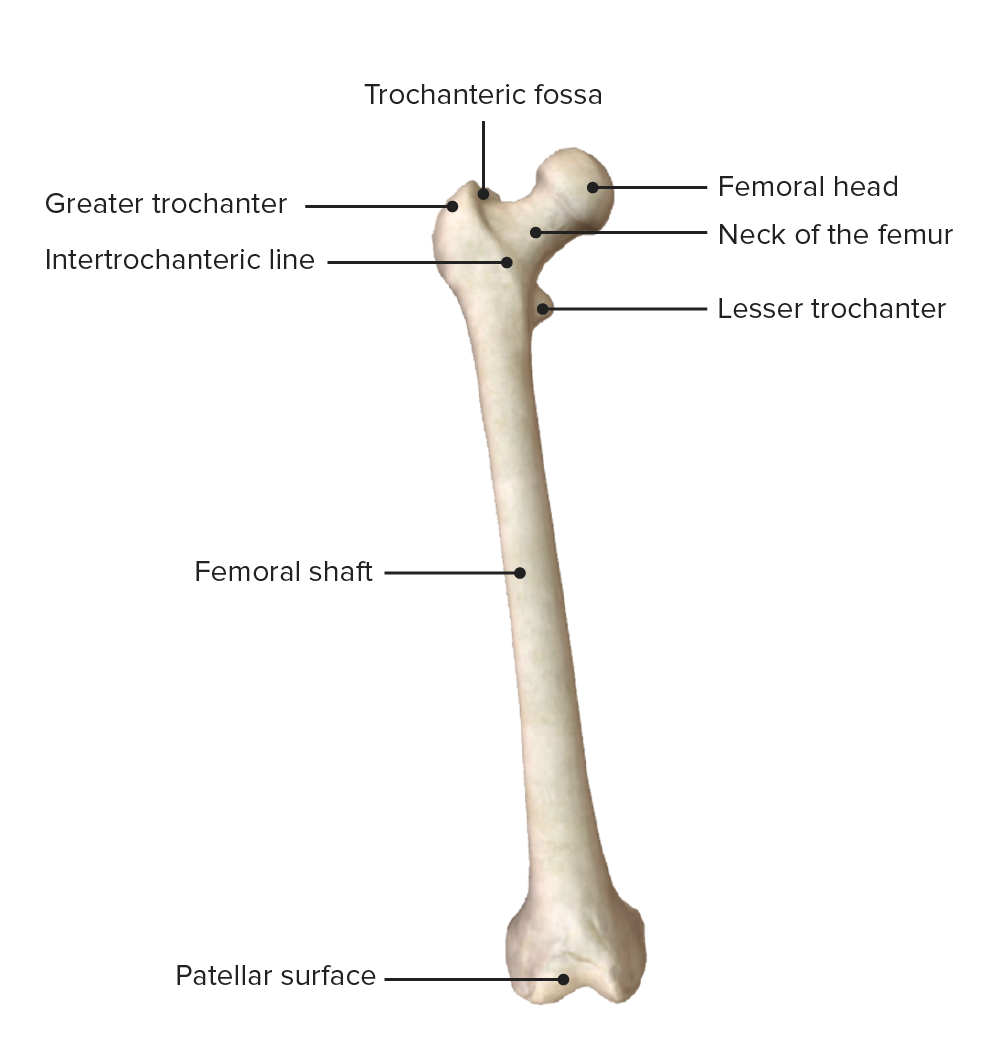
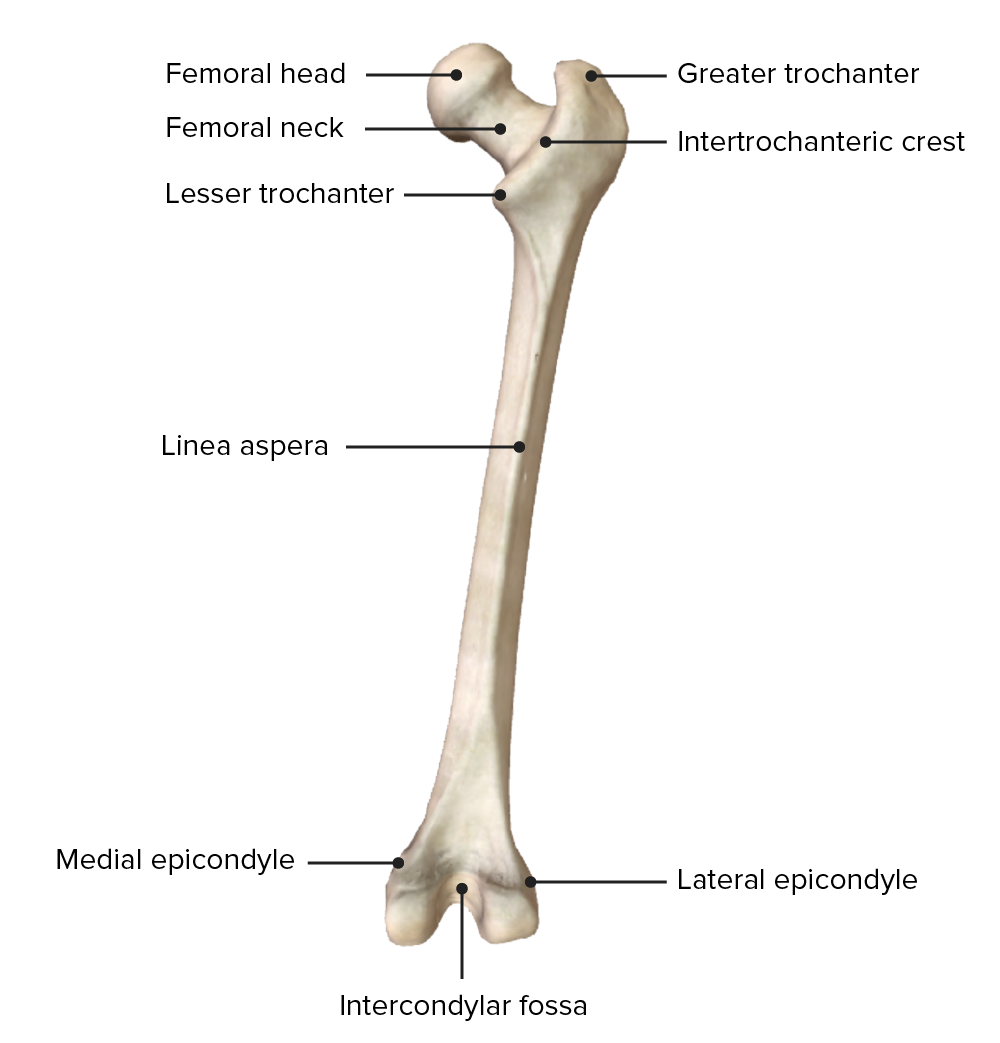
Hueso del Muslo: Fémur

  • El hueso más largo y fuerte del cuerpo humano
  • El único hueso situado en EN Erythema nodosum is an immune-mediated panniculitis (inflammation of the subcutaneous fat) caused by a type IV (delayed-type) hypersensitivity reaction. It commonly manifests in young women as tender, erythematous nodules on the shins. Erythema Nodosum el muslo
  • Articulaciones del fémur:
    • Con el acetábulo del hueso de la cadera en EN Erythema nodosum is an immune-mediated panniculitis (inflammation of the subcutaneous fat) caused by a type IV (delayed-type) hypersensitivity reaction. It commonly manifests in young women as tender, erythematous nodules on the shins. Erythema Nodosum sentido proximal: para formar la articulación de la cadera
    • Con la tibia Tibia The second longest bone of the skeleton. It is located on the medial side of the lower leg, articulating with the fibula laterally, the talus distally, and the femur proximally. Knee Joint: Anatomy en EN Erythema nodosum is an immune-mediated panniculitis (inflammation of the subcutaneous fat) caused by a type IV (delayed-type) hypersensitivity reaction. It commonly manifests in young women as tender, erythematous nodules on the shins. Erythema Nodosum sentido distal: para formar las articulaciones tibiofemorales medial y lateral
    • Con la rótula en EN Erythema nodosum is an immune-mediated panniculitis (inflammation of the subcutaneous fat) caused by a type IV (delayed-type) hypersensitivity reaction. It commonly manifests in young women as tender, erythematous nodules on the shins. Erythema Nodosum sentido distal: forma la articulación patelofemoral
Segmento Puntos de referencia importantes
Extremo (epífisis) proximal
  • Cabeza:
    • Esférica
    • Se articula con el acetábulo para formar la articulación de la cadera
    • Tiene la fóvea del ligamento de la cabeza en EN Erythema nodosum is an immune-mediated panniculitis (inflammation of the subcutaneous fat) caused by a type IV (delayed-type) hypersensitivity reaction. It commonly manifests in young women as tender, erythematous nodules on the shins. Erythema Nodosum su superficie posteroinferior
  • Cuello:
    • Aproximadamente 5 cm de longitud
    • Se subdivide en EN Erythema nodosum is an immune-mediated panniculitis (inflammation of the subcutaneous fat) caused by a type IV (delayed-type) hypersensitivity reaction. It commonly manifests in young women as tender, erythematous nodules on the shins. Erythema Nodosum 3 regiones: las porciones basicervical, mediocervical y subcapital
    • Las fracturas en EN Erythema nodosum is an immune-mediated panniculitis (inflammation of the subcutaneous fat) caused by a type IV (delayed-type) hypersensitivity reaction. It commonly manifests in young women as tender, erythematous nodules on the shins. Erythema Nodosum esta zona pueden provocar necrosis Necrosis The death of cells in an organ or tissue due to disease, injury or failure of the blood supply. Ischemic Cell Damage avascular Avascular Corneal Abrasions, Erosion, and Ulcers.
  • Trocánteres mayor y menor:
    • Lugares de inserción de los LOS Neisseria músculos de la cadera, la pelvis Pelvis The pelvis consists of the bony pelvic girdle, the muscular and ligamentous pelvic floor, and the pelvic cavity, which contains viscera, vessels, and multiple nerves and muscles. The pelvic girdle, composed of 2 “hip” bones and the sacrum, is a ring-like bony structure of the axial skeleton that links the vertebral column with the lower extremities. Pelvis: Anatomy y el muslo
    • Conectado por la línea intertrocantérica anteriormente y la cresta intertrocantérica posteriormente
Diáfisis
  • Cilíndrica
  • Convexa por delante y cóncava por detrás
  • Línea áspera: cresta longitudinal que se encuentra en EN Erythema nodosum is an immune-mediated panniculitis (inflammation of the subcutaneous fat) caused by a type IV (delayed-type) hypersensitivity reaction. It commonly manifests in young women as tender, erythematous nodules on the shins. Erythema Nodosum la superficie posterior y que está formada por un labio medial y otro lateral
Extremo (epífisis) distal
  • Superficie rotuliana:
    • Depresión anterior
    • Proporciona una superficie de deslizamiento para la rótula
  • Cóndilos medial y lateral: se articulan con la tibia Tibia The second longest bone of the skeleton. It is located on the medial side of the lower leg, articulating with the fibula laterally, the talus distally, and the femur proximally. Knee Joint: Anatomy para formar la articulación de la rodilla
  • Fosa intercondílea:
    • Separa los LOS Neisseria cóndilos del fémur distal en EN Erythema nodosum is an immune-mediated panniculitis (inflammation of the subcutaneous fat) caused by a type IV (delayed-type) hypersensitivity reaction. It commonly manifests in young women as tender, erythematous nodules on the shins. Erythema Nodosum sentido posterior
    • Lugar de inserción de los LOS Neisseria ligamentos estabilizadores de la rodilla

Related videos

Compartimentos Fasciales del Muslo

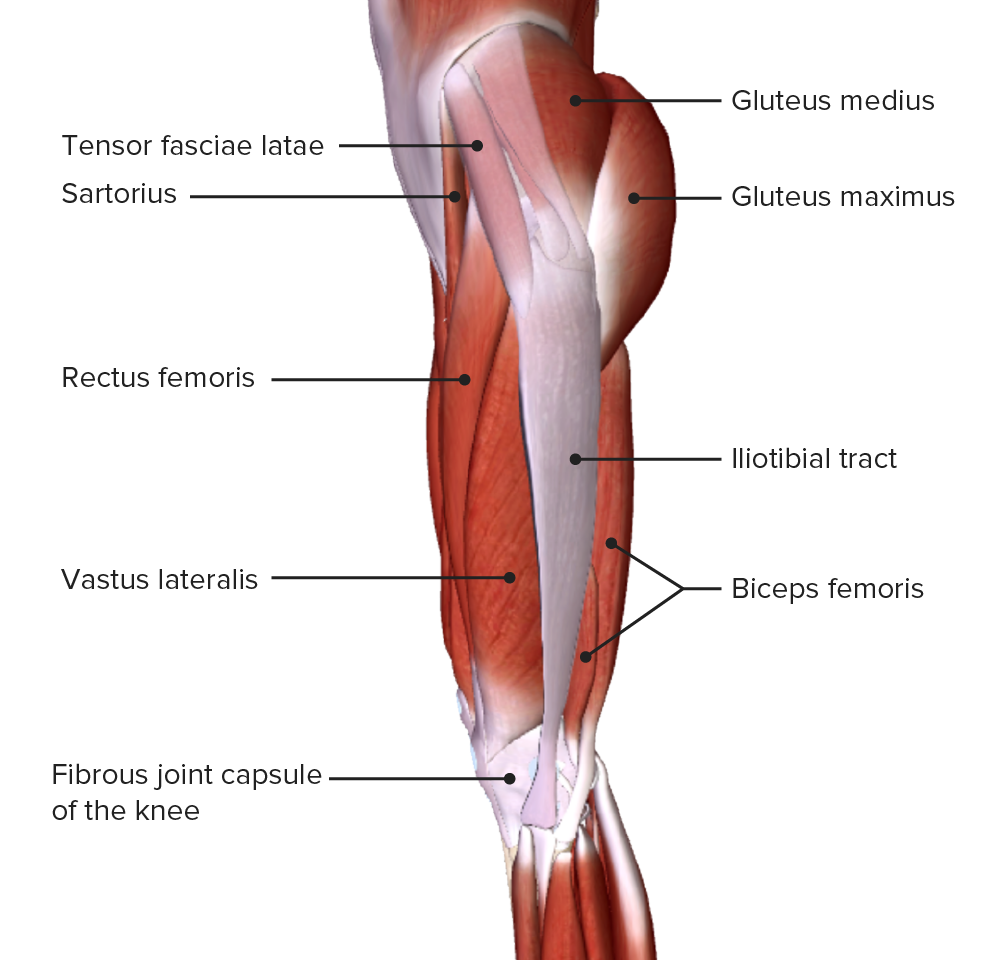
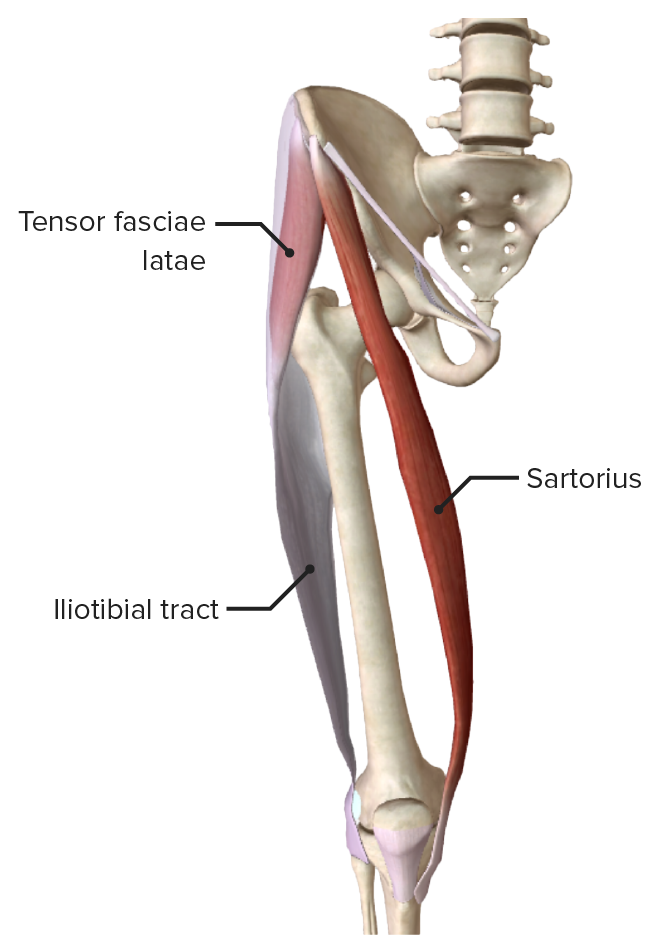
El tracto iliotibial o banda iliotibial es un engrosamiento de la fascia lata Fascia lata Femoral Region and Hernias: Anatomy situado en EN Erythema nodosum is an immune-mediated panniculitis (inflammation of the subcutaneous fat) caused by a type IV (delayed-type) hypersensitivity reaction. It commonly manifests in young women as tender, erythematous nodules on the shins. Erythema Nodosum la superficie lateral del muslo. El tracto iliotibial es un estabilizador de la cadera y la rodilla.

  • Extremo proximal:
    • Se divide en EN Erythema nodosum is an immune-mediated panniculitis (inflammation of the subcutaneous fat) caused by a type IV (delayed-type) hypersensitivity reaction. It commonly manifests in young women as tender, erythematous nodules on the shins. Erythema Nodosum una capa superficial y otra profunda, que encierra el músculo tensor de la fascia lata Fascia lata Femoral Region and Hernias: Anatomy.
    • Se inserta proximalmente a la cresta ilíaca de la pelvis Pelvis The pelvis consists of the bony pelvic girdle, the muscular and ligamentous pelvic floor, and the pelvic cavity, which contains viscera, vessels, and multiple nerves and muscles. The pelvic girdle, composed of 2 “hip” bones and the sacrum, is a ring-like bony structure of the axial skeleton that links the vertebral column with the lower extremities. Pelvis: Anatomy
  • Extremo distal:
    • Se fusiona con la aponeurosis del vasto lateral del cuádriceps
    • Se inserta al AL Amyloidosis tubérculo de Gerdy en EN Erythema nodosum is an immune-mediated panniculitis (inflammation of the subcutaneous fat) caused by a type IV (delayed-type) hypersensitivity reaction. It commonly manifests in young women as tender, erythematous nodules on the shins. Erythema Nodosum el cóndilo lateral de la tibia Tibia The second longest bone of the skeleton. It is located on the medial side of the lower leg, articulating with the fibula laterally, the talus distally, and the femur proximally. Knee Joint: Anatomy
Vista lateral del muslo

Vista lateral del muslo, mostrando el tracto iliotibial y el músculo tensor de la fascia lata.

Imagen por BioDigital, editado por Lecturio.
Los LOS Neisseria 3 septos intermusculares nacen de la fascia lata Fascia lata Femoral Region and Hernias: Anatomy y se unen a la línea áspera del fémur. Los LOS Neisseria tabiques intermusculares lateral, medial y posterior dividen el muslo en EN Erythema nodosum is an immune-mediated panniculitis (inflammation of the subcutaneous fat) caused by a type IV (delayed-type) hypersensitivity reaction. It commonly manifests in young women as tender, erythematous nodules on the shins. Erythema Nodosum lo siguiente:
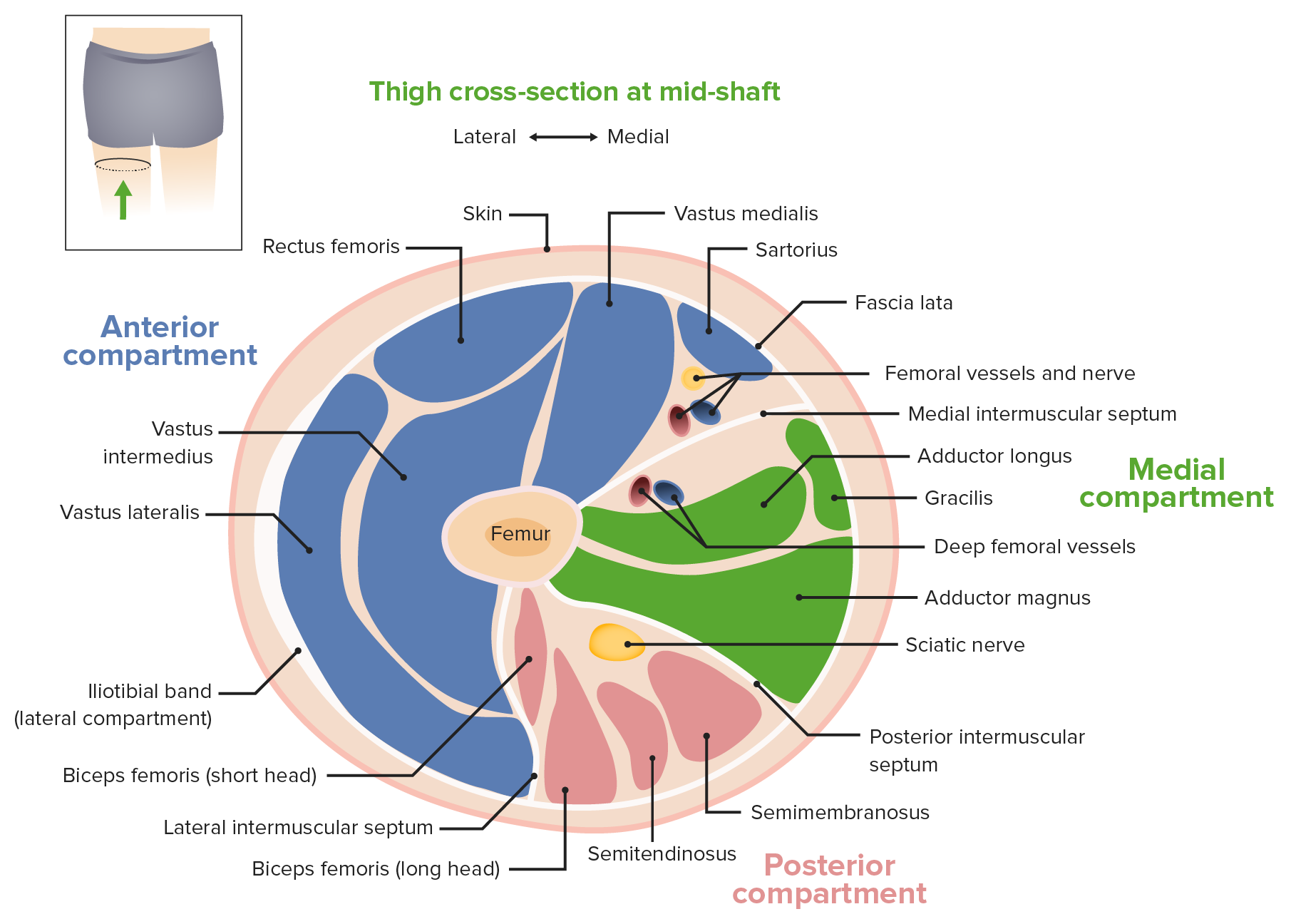
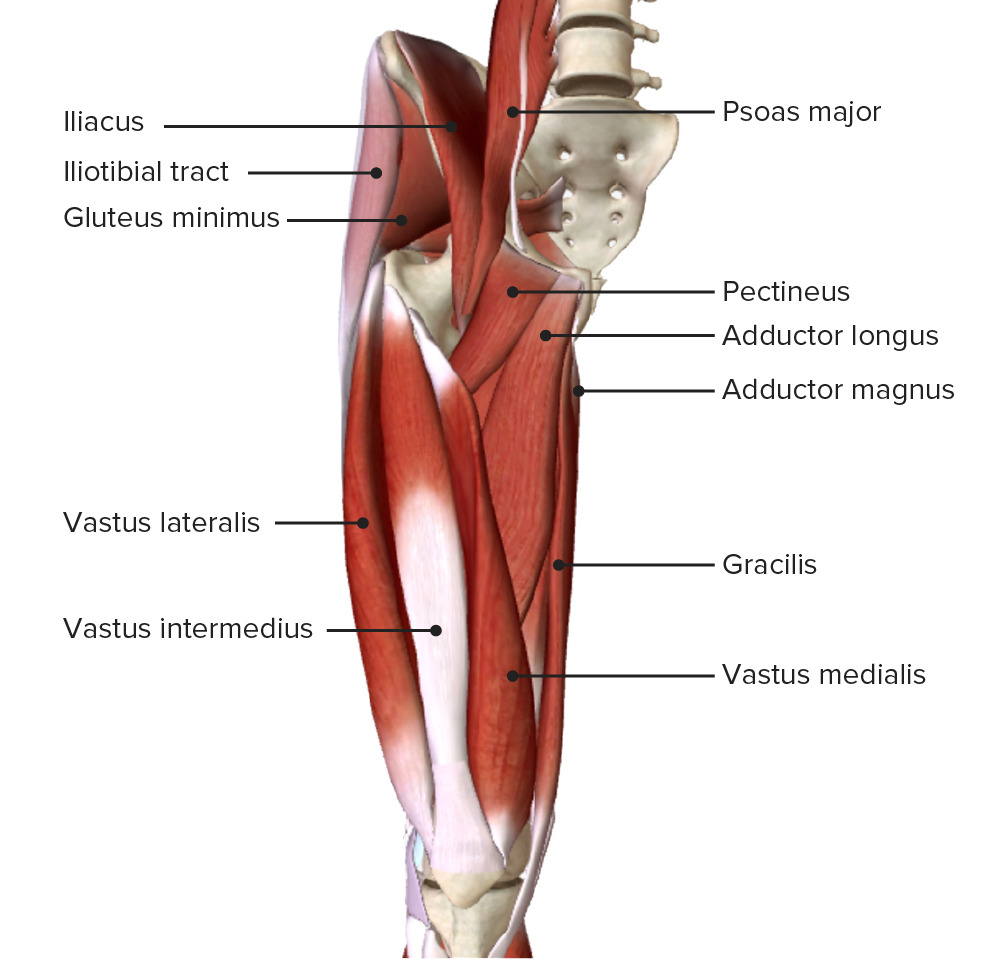
  1. El compartimento anterior o extensor:
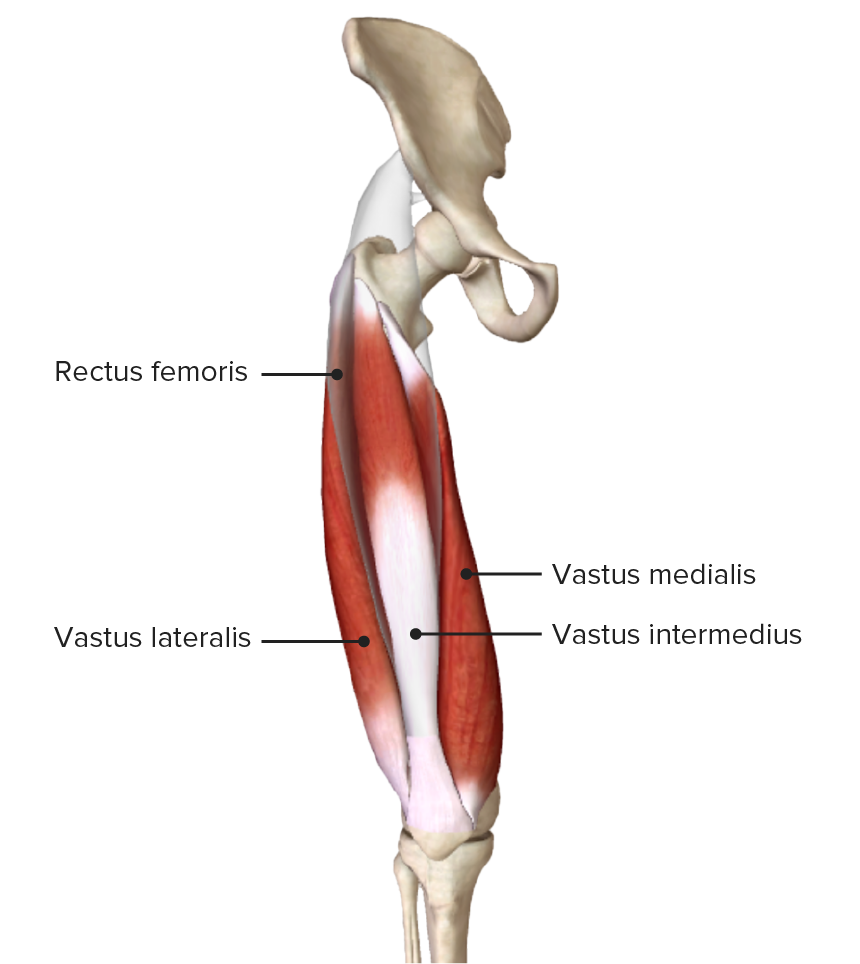
    • Cuádriceps (recto femoral, vasto lateral, vasto intermedio y vasto medial)
    • Sartorio
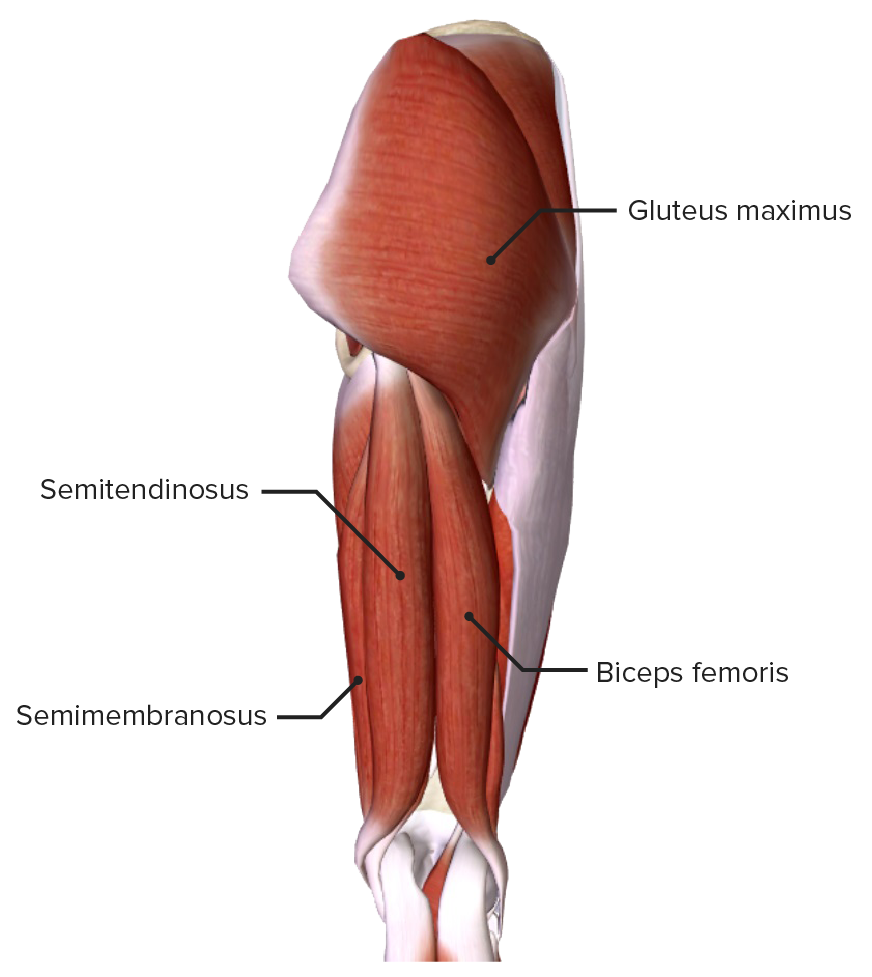
  2. El compartimento posterior o flexor:
    • Bíceps femoral
    • Semitendinoso
    • Semimembranoso
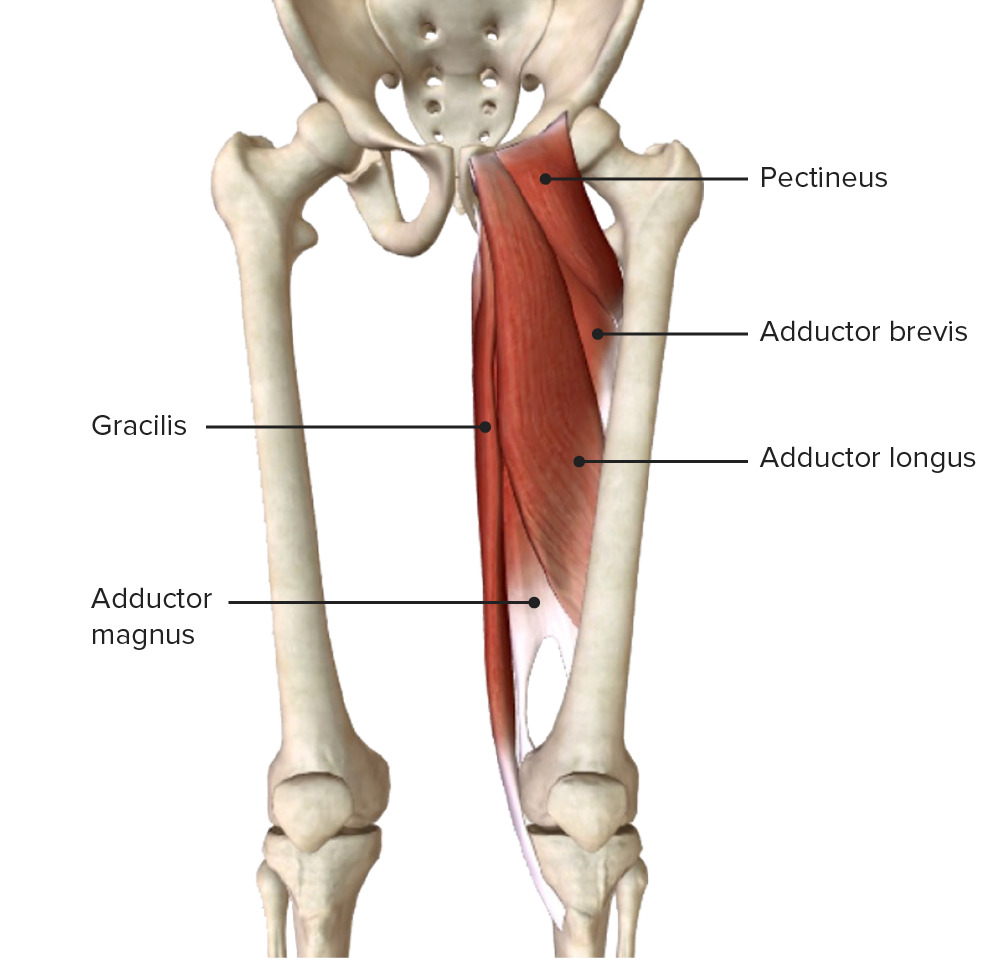
  3. El compartimento medial o aductor:
    • Aductor mayor
    • Aductor largo
    • Aductor corto
    • Grácil
    • Pectíneo
Corte transversal del muslo en la mitad de la diáfisis

Corte transversal del muslo en la mitad de la diáfisis

Imagen por Lecturio.

Compartimento Anterior del Muslo

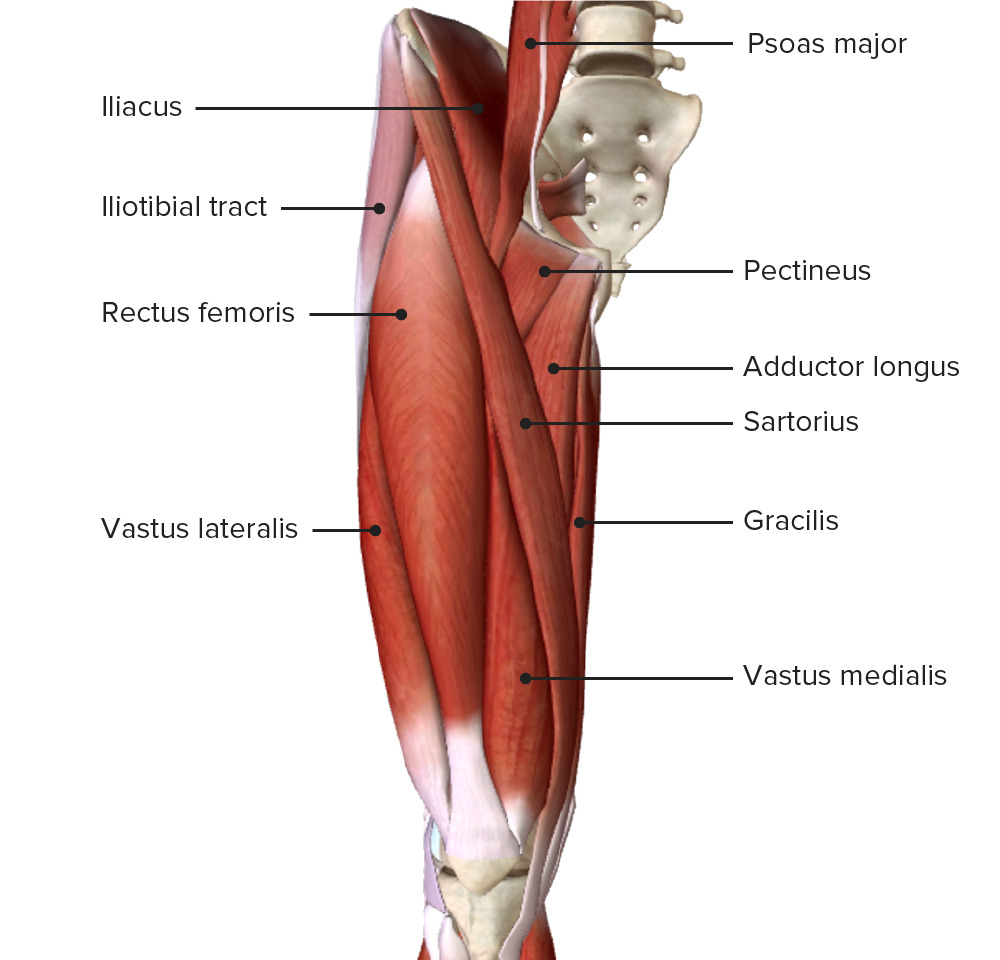
  • El compartimento anterior del muslo contiene los LOS Neisseria siguientes músculos:
    • Cuádriceps femoral: comprende el recto femoral, el vasto medial, el vasto intermedio y el vasto lateral.
    • Sartorio
    • Algunas veces, el iliopsoas se considera parte del compartimento anterior; de lo contrario, se considera un músculo de la articulación de la cadera/ pelvis Pelvis The pelvis consists of the bony pelvic girdle, the muscular and ligamentous pelvic floor, and the pelvic cavity, which contains viscera, vessels, and multiple nerves and muscles. The pelvic girdle, composed of 2 “hip” bones and the sacrum, is a ring-like bony structure of the axial skeleton that links the vertebral column with the lower extremities. Pelvis: Anatomy.
  • La función principal de los LOS Neisseria músculos del compartimento anterior del muslo es la extensión de la rodilla.
  • Todos estos músculos están inervados por el nervio femoral.
Músculo Origen Inserción Inervación Función
Recto femoral Espina ilíaca anteroinferior Tuberosidad tibial a través del cuádriceps común y el ligamento rotuliano Nervio femoral (L3, L4)
  • Extender la pierna a nivel de rodilla
  • El recto femoral también puede apoyar al AL Amyloidosis iliopsoas en EN Erythema nodosum is an immune-mediated panniculitis (inflammation of the subcutaneous fat) caused by a type IV (delayed-type) hypersensitivity reaction. It commonly manifests in young women as tender, erythematous nodules on the shins. Erythema Nodosum la flexión de la cadera.
Vasto lateral Trocánter mayor y labio lateral de la línea áspera
Vasto intermedio Cara anterior de la diáfisis del fémur
Vasto medial Línea intertrocantérica y labio medial de la línea áspera
Sartorio Espina ilíaca anterosuperior Superficie medial de la tibia Tibia The second longest bone of the skeleton. It is located on the medial side of the lower leg, articulating with the fibula laterally, the talus distally, and the femur proximally. Knee Joint: Anatomy proximal Nervio femoral (L2)
  • Flexiona, abduce y rota lateralmente la cadera
  • Flexiona la rodilla

Compartimento Posterior del Muslo

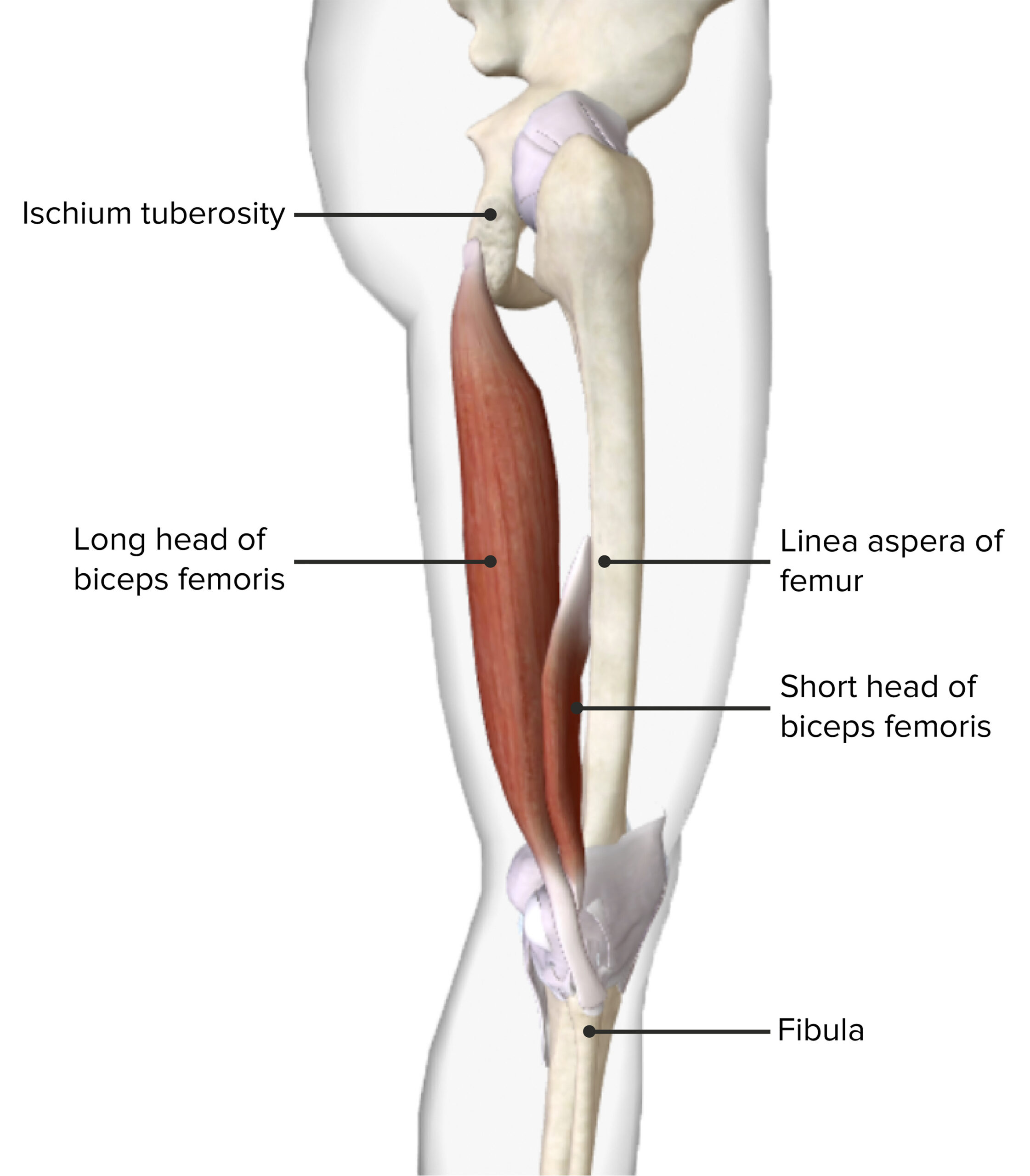
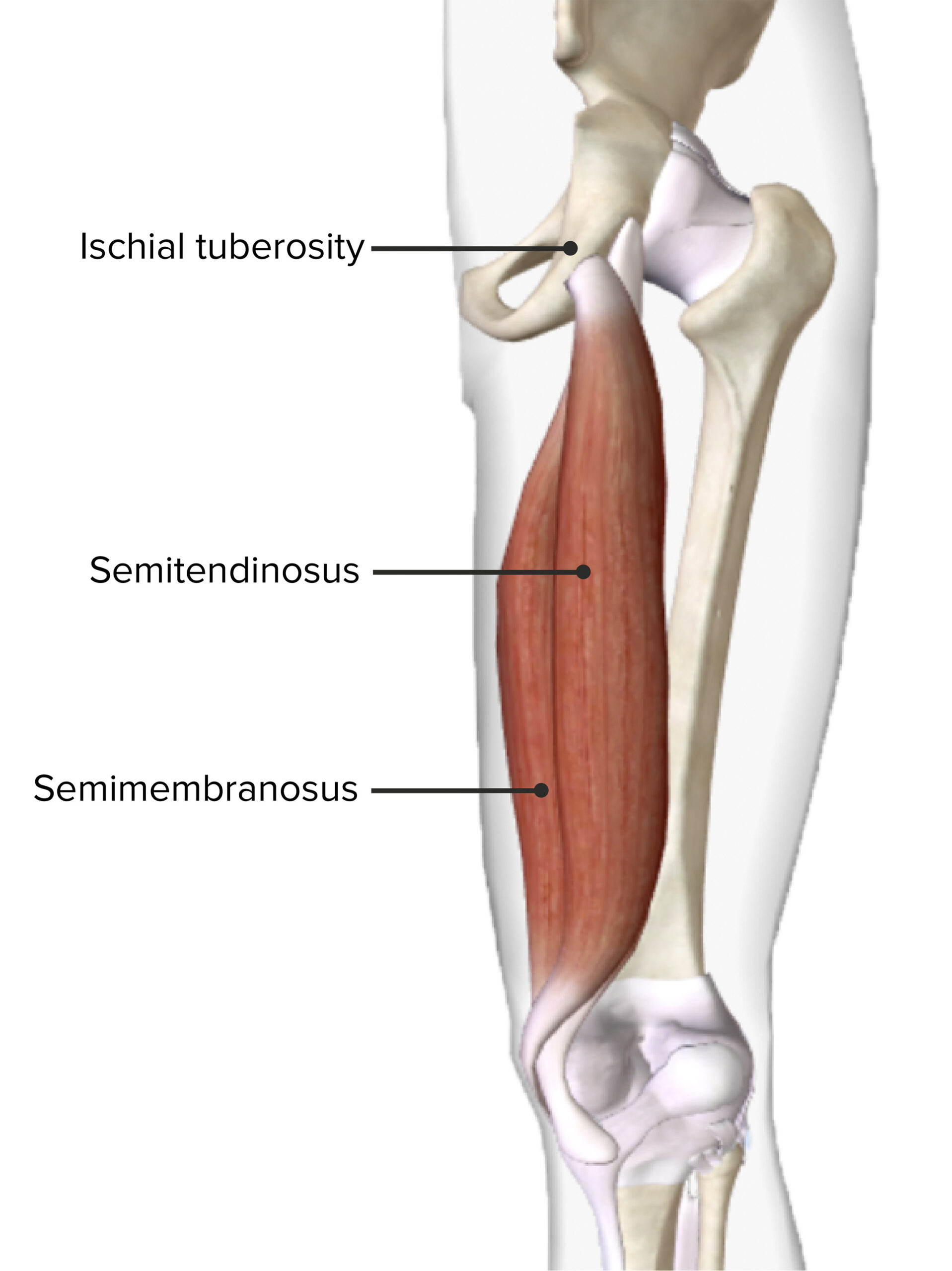
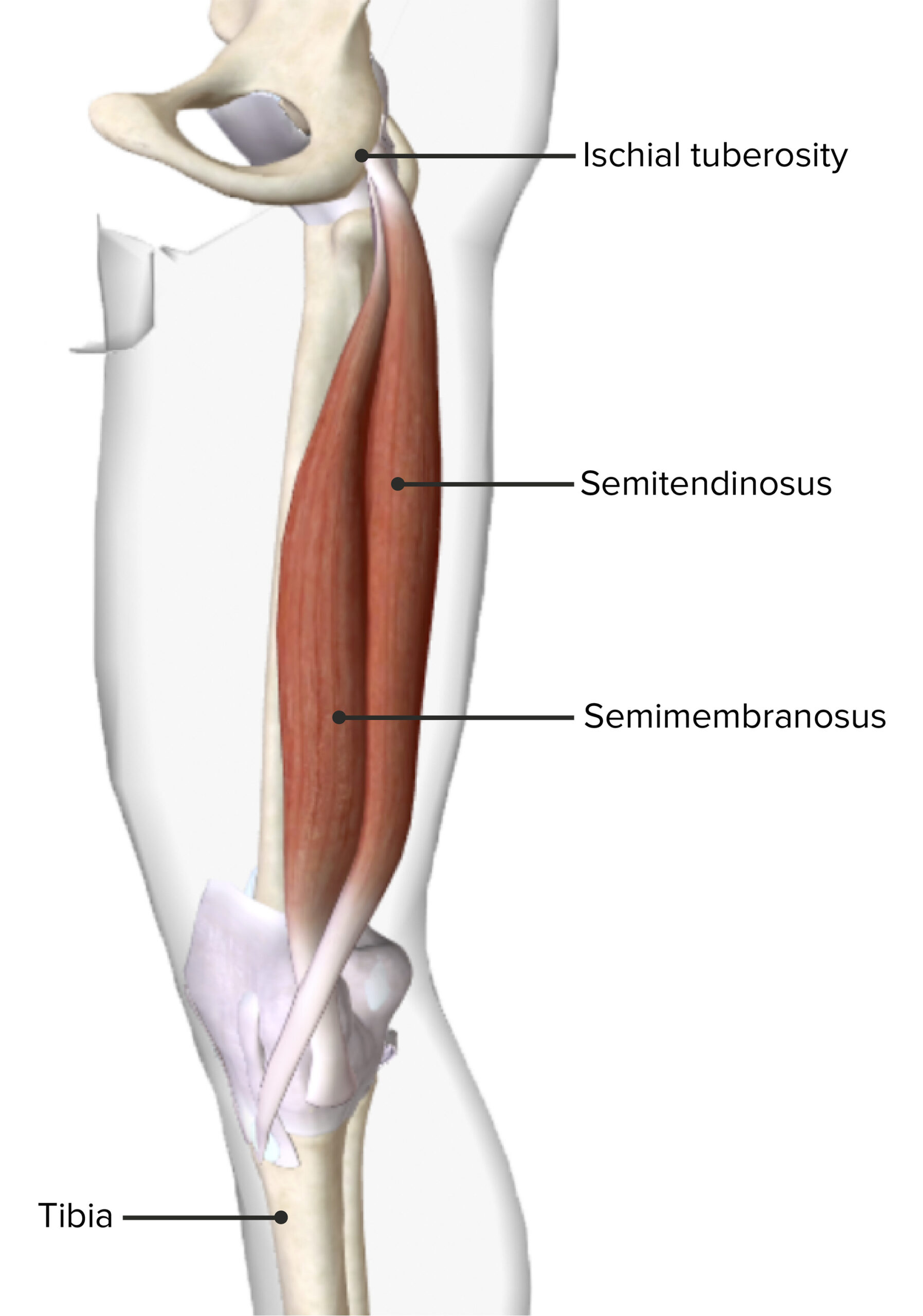
  • El compartimento posterior del muslo contiene los LOS Neisseria músculos isquiotibiales:
    • Bíceps femoral
    • Semitendinoso
    • Semimembranoso
  • Los LOS Neisseria músculos del compartimento posterior tienen como función principal la flexión de la rodilla y la extensión de la cadera.
  • Estos músculos están inervados por ramas del nervio ciático.
Músculo Origen Inserción Inervación Función
Bíceps femoral
  • Cabeza larga: tuberosidad isquiática
  • Cabeza corta: línea áspera y línea supracondílea lateral
Superficie lateral del peroné
  • Cabeza larga: división tibial del nervio ciático (L5, S1 S1 Heart Sounds)
  • Cabeza corta: división peronea común del nervio ciático ( S1 S1 Heart Sounds)
  • Flexiona y rota lateralmente la rodilla cuando está flexionada
  • Extiende la cadera
Semitendinoso Tuberosidad isquiática Superficie medial de la tibia Tibia The second longest bone of the skeleton. It is located on the medial side of the lower leg, articulating with the fibula laterally, the talus distally, and the femur proximally. Knee Joint: Anatomy proximal División tibial del nervio ciático (L5, S1 S1 Heart Sounds) Extiende la cadera, flexiona la rodilla y rota medialmente la rodilla cuando está flexionada
Semimembranoso Superficie posterior del cóndilo medial de la tibia Tibia The second longest bone of the skeleton. It is located on the medial side of the lower leg, articulating with the fibula laterally, the talus distally, and the femur proximally. Knee Joint: Anatomy

Compartimento Medial del Muslo

  • El compartimento medial del muslo contiene los LOS Neisseria siguientes músculos:
    • Aductores mayor, largo y corto
    • Grácil
    • Pectíneo
    • A veces se incluye el obturador externo, aunque es principalmente un rotador externo y cumple un rol secundario como aductor.
  • La función principal de los LOS Neisseria músculos del compartimento medial es la aducción de la cadera.
  • Estos músculos están inervados principalmente por el nervio obturador, excepto el pectíneo (nervio femoral).
Músculo Origen Inserción Inervación Función
Aductor mayor
  • Porción aductora: rama isquiopúbica
  • Porción larga: tuberosidad isquiática
  • Porción aductora: línea áspera
  • Porción larga: tubérculo aductor
  • Porción aductora: nervio obturador (L3, L4)
  • Porción larga: nervio tibial (L4)
  • Porción aductora: aduce la cadera
  • Porción larga: extiende la cadera
Aductor largo Cuerpo del pubis Medio ⅓ de la línea áspera Nervio obturador (L3) Aduce la cadera
Aductor corto Cuerpo y rama inferior del pubis Línea áspera proximal
Grácil Superficie medial de la tibia Tibia The second longest bone of the skeleton. It is located on the medial side of the lower leg, articulating with the fibula laterally, the talus distally, and the femur proximally. Knee Joint: Anatomy proximal Nervio obturador (L2)
  • Aduce la cadera
  • Flexiona la rodilla
Pectíneo Rama superior del pubis Línea pectínea del fémur Nervio femoral (L2) Aduce, flexiona y estabiliza la rotación medial de la cadera

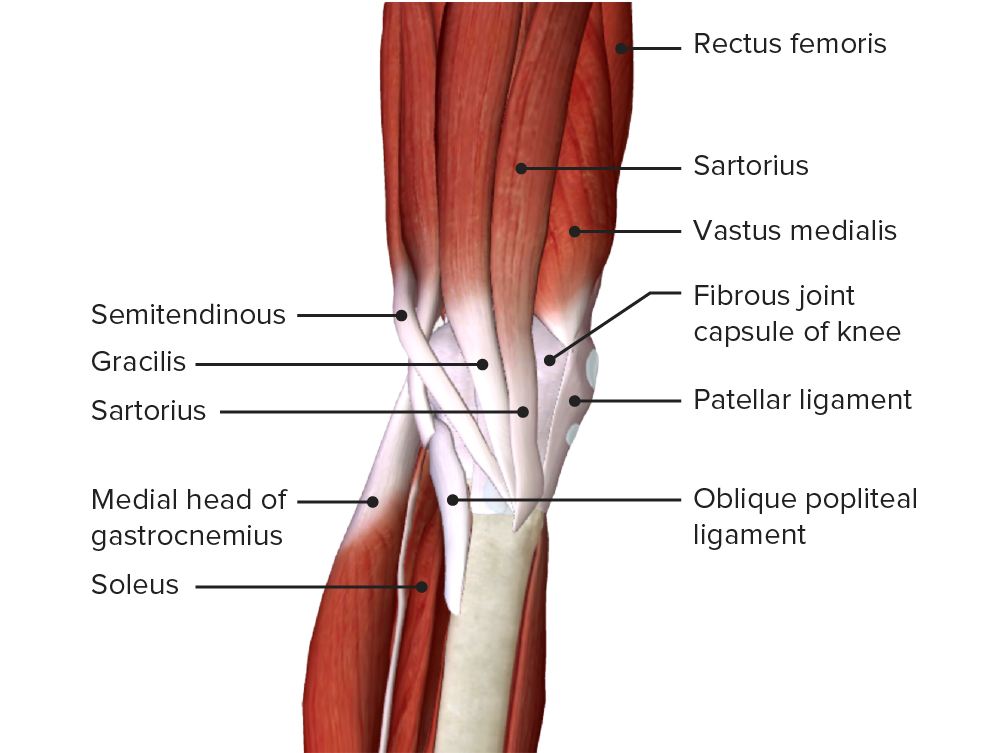
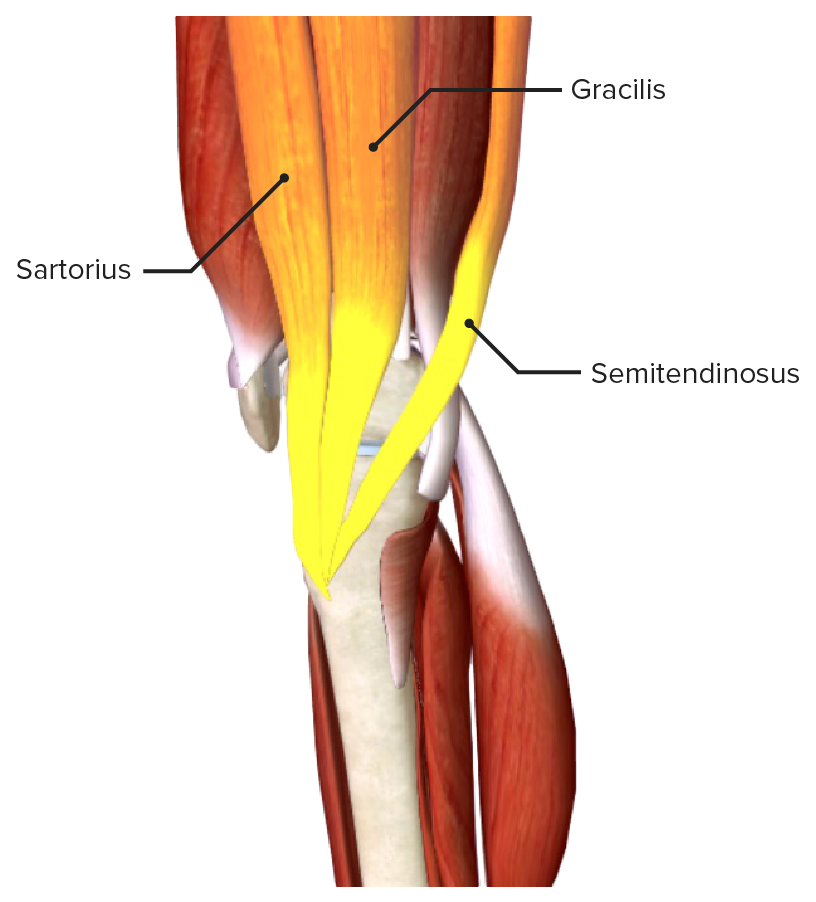
Pes anserinus Pes anserinus Thigh: Anatomy (Pata de ganso)

En EN Erythema nodosum is an immune-mediated panniculitis (inflammation of the subcutaneous fat) caused by a type IV (delayed-type) hypersensitivity reaction. It commonly manifests in young women as tender, erythematous nodules on the shins. Erythema Nodosum el extremo distal de la región medial del muslo se encuentra la pata de ganso, que comprende los LOS Neisseria tendones conjuntos de los LOS Neisseria músculos sartorio, grácil y semitendinoso que se insertan en EN Erythema nodosum is an immune-mediated panniculitis (inflammation of the subcutaneous fat) caused by a type IV (delayed-type) hypersensitivity reaction. It commonly manifests in young women as tender, erythematous nodules on the shins. Erythema Nodosum la tibia Tibia The second longest bone of the skeleton. It is located on the medial side of the lower leg, articulating with the fibula laterally, the talus distally, and the femur proximally. Knee Joint: Anatomy.
Irrigación Sanguínea

Irrigación sanguínea arterial

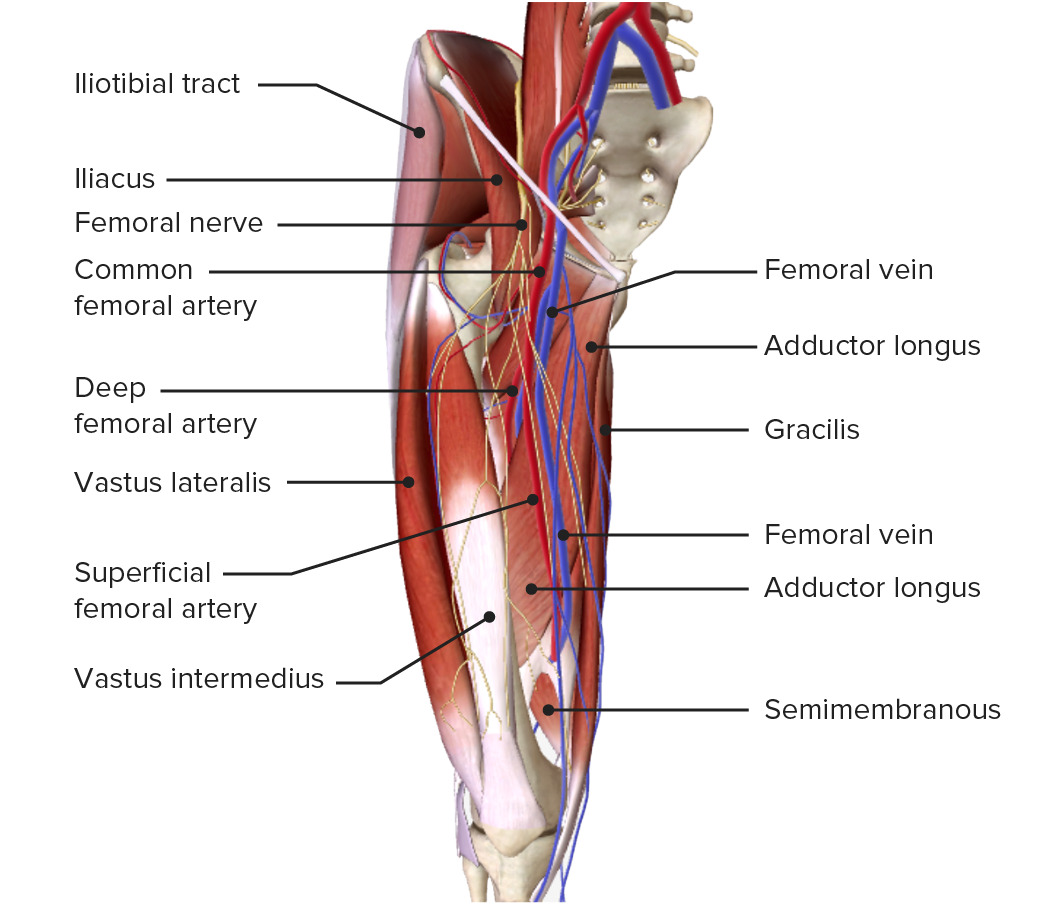
De la pelvis Pelvis The pelvis consists of the bony pelvic girdle, the muscular and ligamentous pelvic floor, and the pelvic cavity, which contains viscera, vessels, and multiple nerves and muscles. The pelvic girdle, composed of 2 “hip” bones and the sacrum, is a ring-like bony structure of the axial skeleton that links the vertebral column with the lower extremities. Pelvis: Anatomy salen tres arterias: la femoral, la obturadora y la glútea inferior. Sin embargo, las arterias femoral y obturadora continúan hacia el muslo, mientras que la glútea inferior irriga y termina en EN Erythema nodosum is an immune-mediated panniculitis (inflammation of the subcutaneous fat) caused by a type IV (delayed-type) hypersensitivity reaction. It commonly manifests in young women as tender, erythematous nodules on the shins. Erythema Nodosum la región glútea.
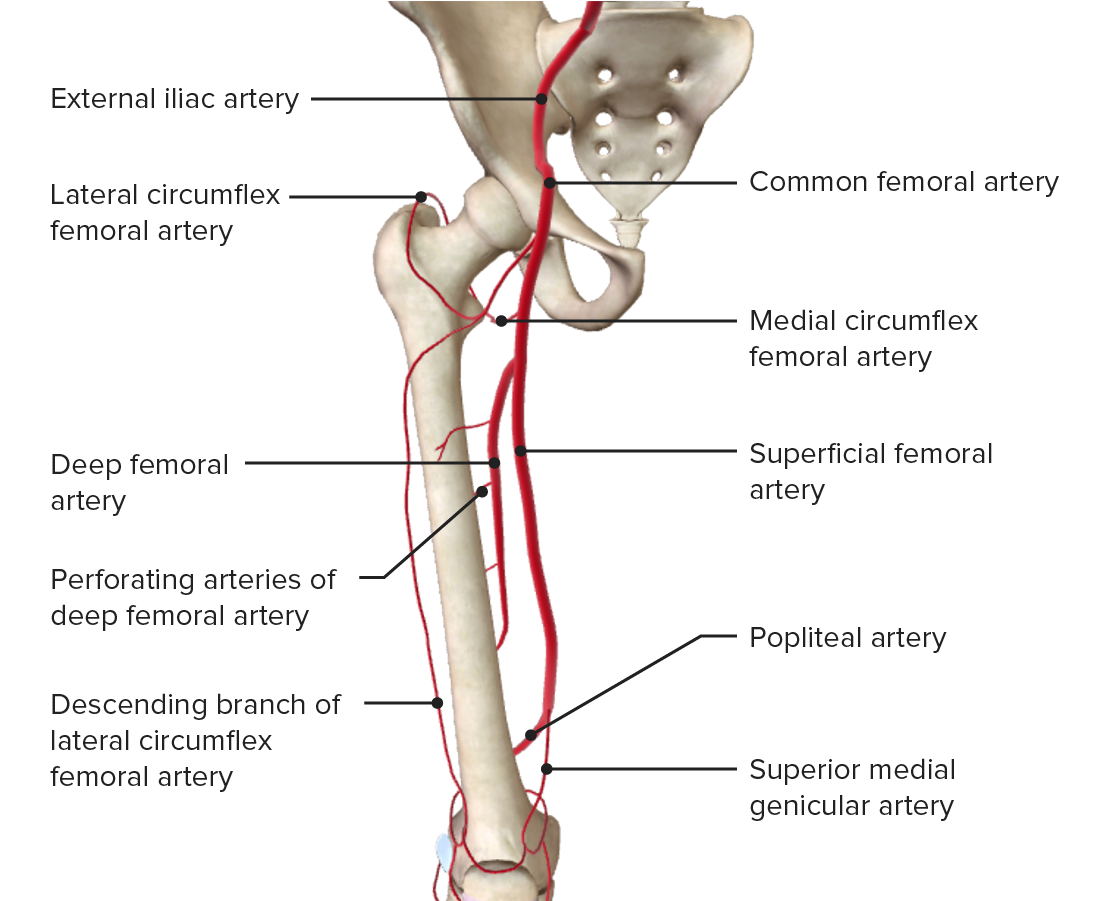
  • Arteria femoral:
    • Irriga la mayor parte del miembro inferior
    • Una continuación directa de la arteria ilíaca externa
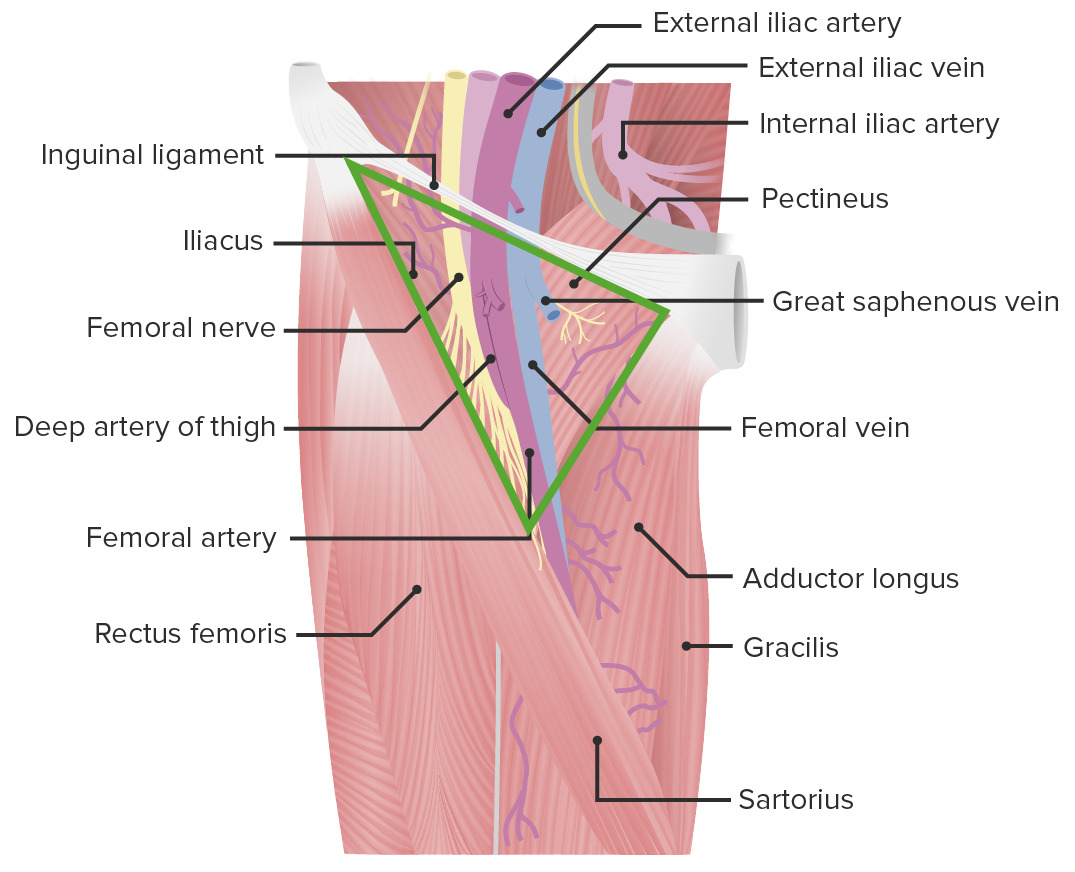
    • Se origina y entra en EN Erythema nodosum is an immune-mediated panniculitis (inflammation of the subcutaneous fat) caused by a type IV (delayed-type) hypersensitivity reaction. It commonly manifests in young women as tender, erythematous nodules on the shins. Erythema Nodosum el muslo al AL Amyloidosis pasar por debajo del canal inguinal
    • Pasa por el triángulo femoral, donde se puede palpar
    • Entra en EN Erythema nodosum is an immune-mediated panniculitis (inflammation of the subcutaneous fat) caused by a type IV (delayed-type) hypersensitivity reaction. It commonly manifests in young women as tender, erythematous nodules on the shins. Erythema Nodosum el canal aductor distalmente en EN Erythema nodosum is an immune-mediated panniculitis (inflammation of the subcutaneous fat) caused by a type IV (delayed-type) hypersensitivity reaction. It commonly manifests in young women as tender, erythematous nodules on the shins. Erythema Nodosum el muslo, termina en EN Erythema nodosum is an immune-mediated panniculitis (inflammation of the subcutaneous fat) caused by a type IV (delayed-type) hypersensitivity reaction. It commonly manifests in young women as tender, erythematous nodules on the shins. Erythema Nodosum el hiato aductor y se convierte en EN Erythema nodosum is an immune-mediated panniculitis (inflammation of the subcutaneous fat) caused by a type IV (delayed-type) hypersensitivity reaction. It commonly manifests in young women as tender, erythematous nodules on the shins. Erythema Nodosum la arteria poplítea
    • Tiene varias ramas:
      • Arteria femoral profunda (arteria profunda del muslo): es la rama principal de la femoral; irriga la mayoría de las estructuras del muslo y emite ramas perforantes y las arterias femorales circunflejas medial y lateral a la articulación de la cadera
      • Arteria epigástrica superficial
      • Arteria ilíaca circunfleja superficial
      • Arteria pudenda externa superficial
      • Arteria pudenda externa profunda
  • Arteria obturadora:
    • Rama de la arteria ilíaca interna
    • Pasa a través del agujero obturador a los LOS Neisseria músculos del compartimento medial
    • Da importantes ramas extrapélvicas:
      • Rama anterior: irriga el músculo obturador externo, los LOS Neisseria músculos aductores y la piel de la cara interna del muslo
      • Rama posterior: irriga a los LOS Neisseria músculos unidos a la tuberosidad isquiática
      • Arteria del ligamento redondo: irriga la cabeza del fémur

Drenaje venoso

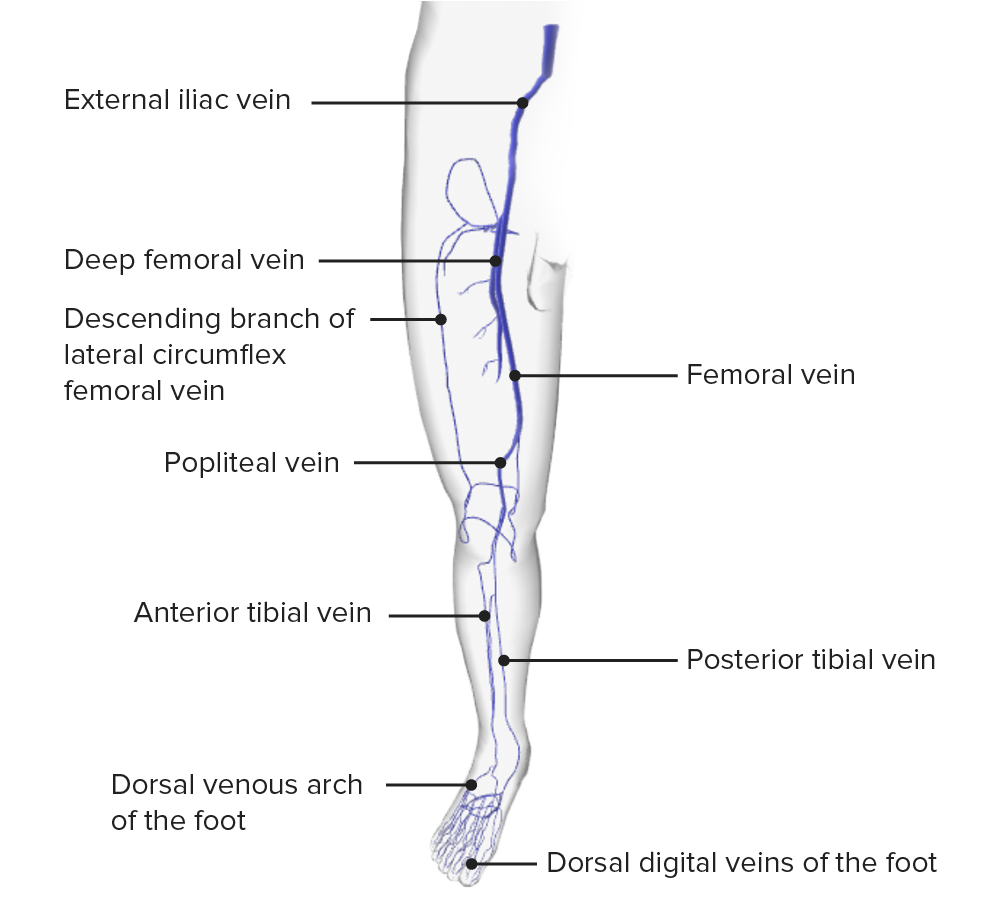
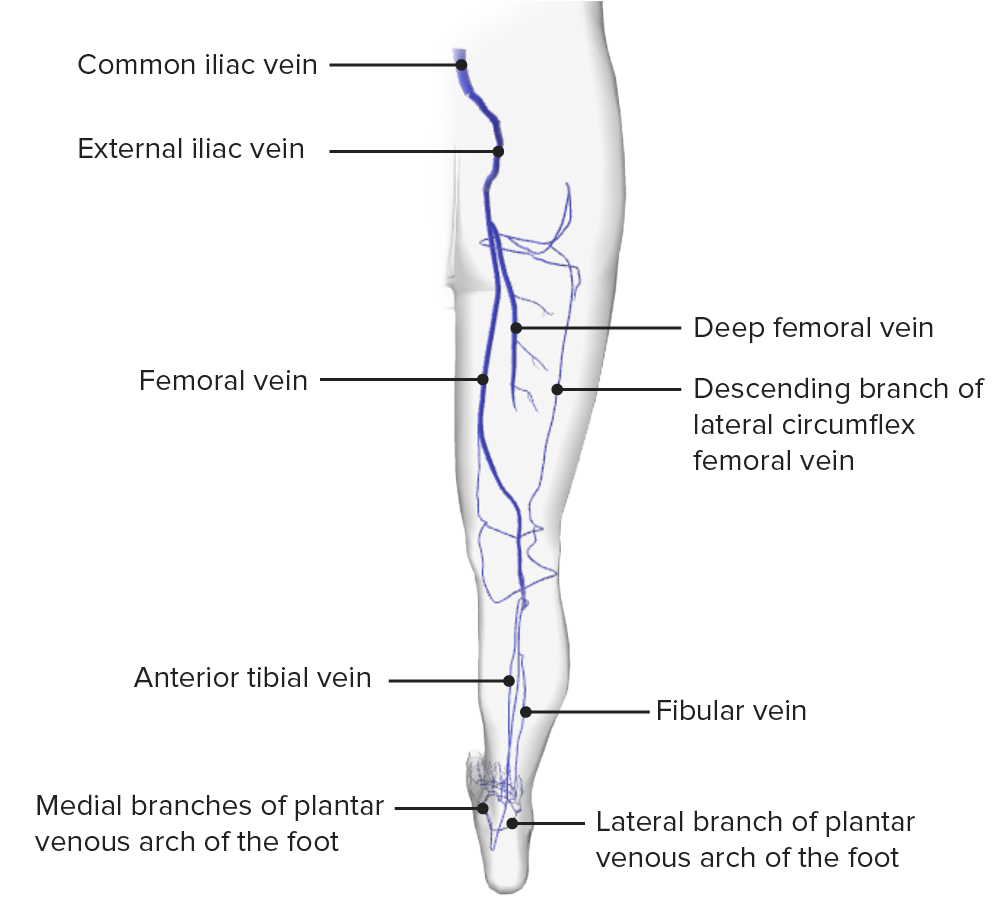
  • Sistema venoso profundo:
    • La vena poplítea se convierte en EN Erythema nodosum is an immune-mediated panniculitis (inflammation of the subcutaneous fat) caused by a type IV (delayed-type) hypersensitivity reaction. It commonly manifests in young women as tender, erythematous nodules on the shins. Erythema Nodosum la vena femoral al AL Amyloidosis ascender al AL Amyloidosis muslo.
    • La vena femoral acompaña a la arteria femoral en EN Erythema nodosum is an immune-mediated panniculitis (inflammation of the subcutaneous fat) caused by a type IV (delayed-type) hypersensitivity reaction. It commonly manifests in young women as tender, erythematous nodules on the shins. Erythema Nodosum su trayectoria y recibe a la vena profunda del muslo (vena femoral profunda) en EN Erythema nodosum is an immune-mediated panniculitis (inflammation of the subcutaneous fat) caused by a type IV (delayed-type) hypersensitivity reaction. It commonly manifests in young women as tender, erythematous nodules on the shins. Erythema Nodosum la parte proximal del muslo.
    • La vena femoral se convierte en EN Erythema nodosum is an immune-mediated panniculitis (inflammation of the subcutaneous fat) caused by a type IV (delayed-type) hypersensitivity reaction. It commonly manifests in young women as tender, erythematous nodules on the shins. Erythema Nodosum la vena ilíaca externa una vez que pasa por debajo del ligamento inguinal.
  • Sistema venoso superficial:
    • La vena safena mayor se origina en EN Erythema nodosum is an immune-mediated panniculitis (inflammation of the subcutaneous fat) caused by a type IV (delayed-type) hypersensitivity reaction. It commonly manifests in young women as tender, erythematous nodules on the shins. Erythema Nodosum el arco venoso dorsal del pie.
    • Asciende por la cara medial de la pierna pasando por detrás del cóndilo medial de la rodilla
    • Drena en EN Erythema nodosum is an immune-mediated panniculitis (inflammation of the subcutaneous fat) caused by a type IV (delayed-type) hypersensitivity reaction. It commonly manifests in young women as tender, erythematous nodules on the shins. Erythema Nodosum la vena femoral en EN Erythema nodosum is an immune-mediated panniculitis (inflammation of the subcutaneous fat) caused by a type IV (delayed-type) hypersensitivity reaction. It commonly manifests in young women as tender, erythematous nodules on the shins. Erythema Nodosum el triángulo femoral

Inervación

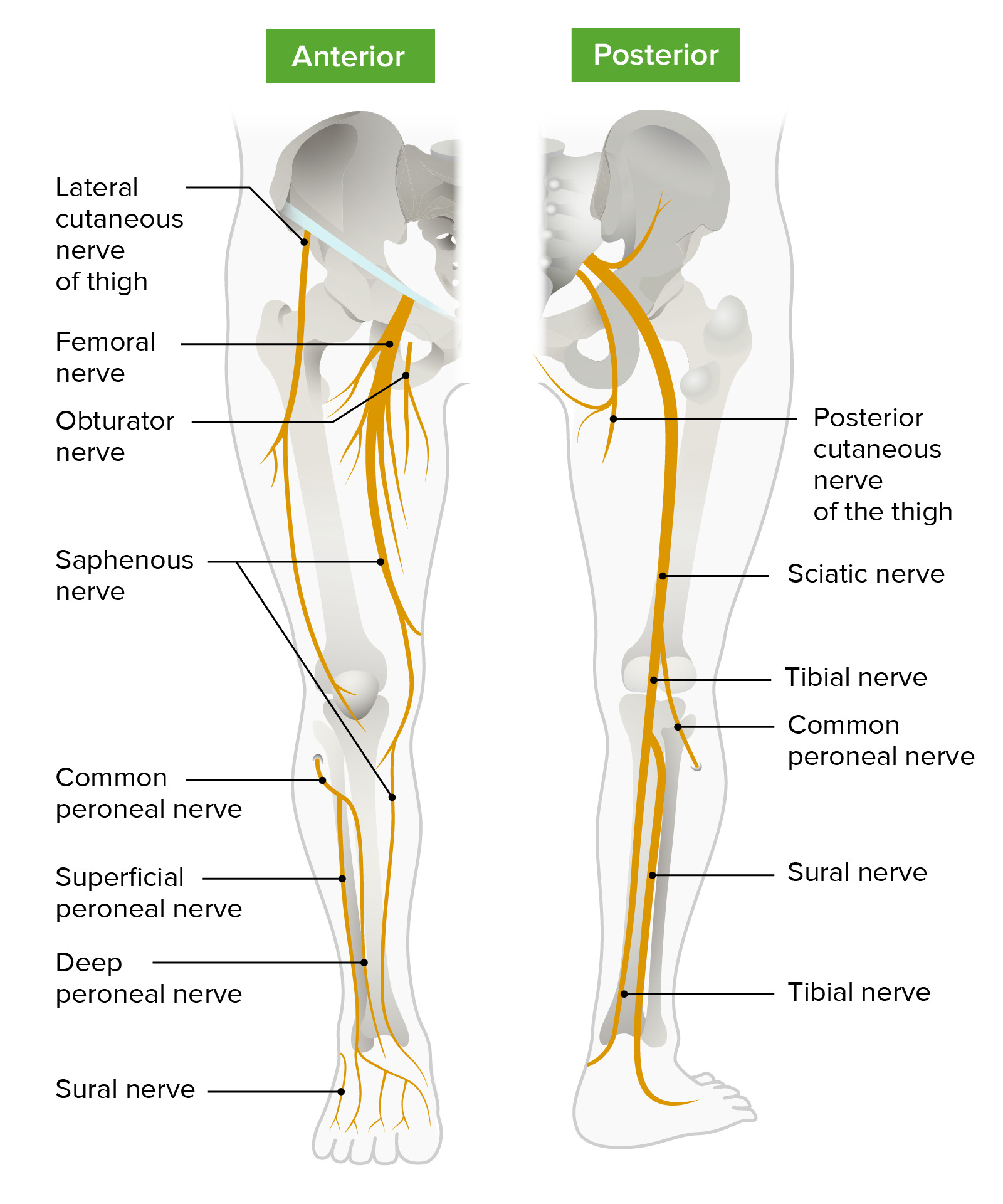
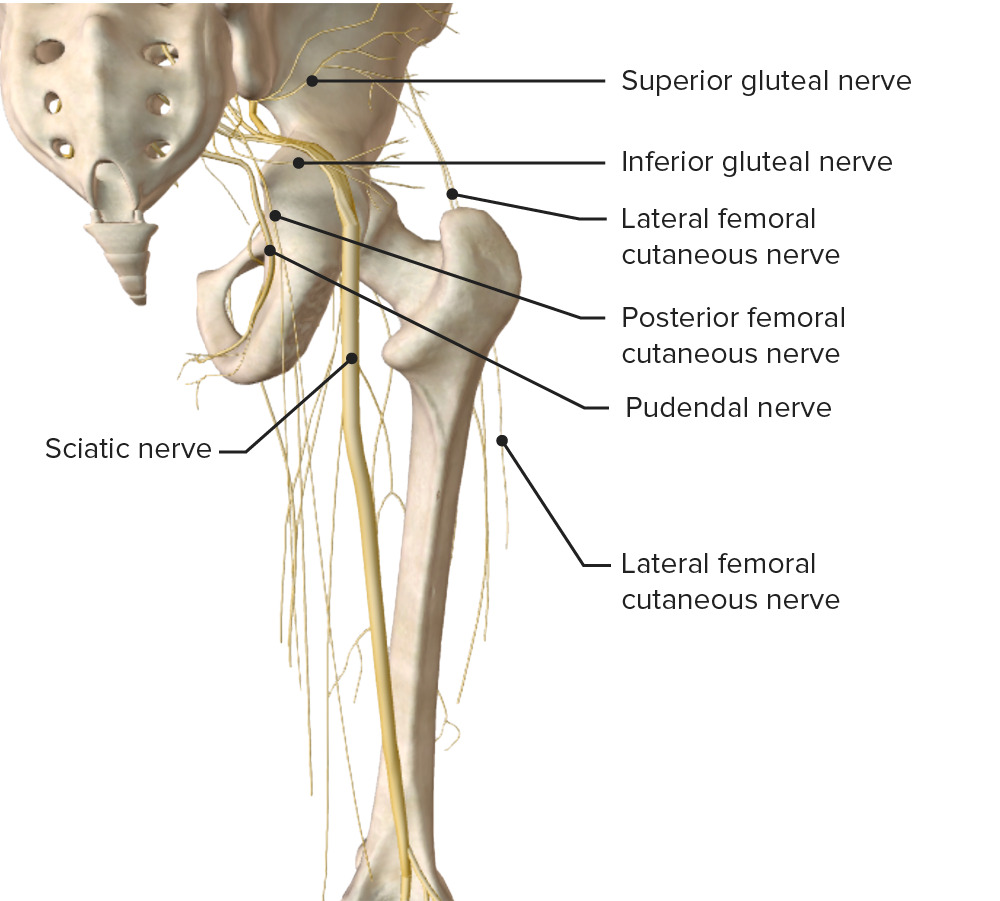
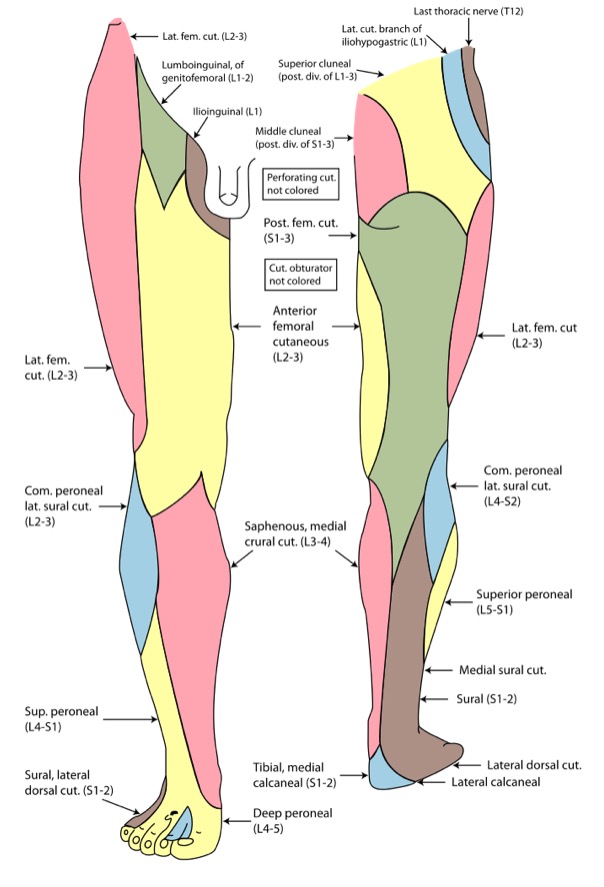
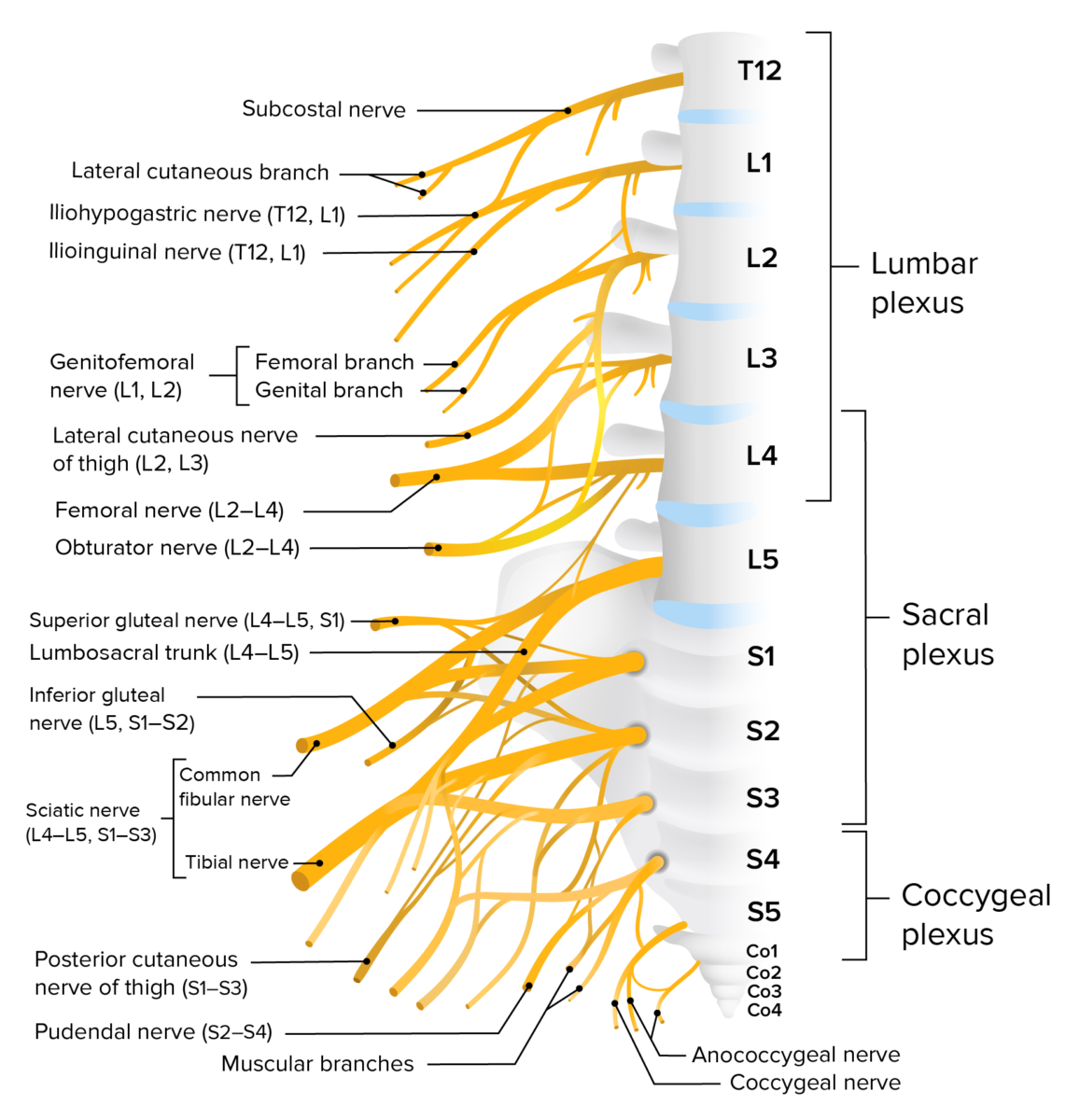
El muslo está inervado por ramas del plexo lumbar y sacro.

Nervio Origen Inervación motora Inervación sensorial
Nervio cutáneo femoral lateral Plexo lumbar (L2–L3) Piel anterolateral del muslo
Nervio cutáneo femoral posterior Plexo sacro ( S2 S2 Heart Sounds S3 S3 Heart Sounds) Piel de la región glútea, periné posterior y muslo posterior
Nervio femoral
  • Rama más grande del plexo lumbar
  • Ramas ventrales de las ramas dorsales L2–4
  • Músculos del compartimento anterior
  • Ilíaco
  • Pectíneo
  • Piel anterior del muslo
  • Piel medial de los LOS Neisseria 2/3 inferiores del muslo
Nervio safeno Rama del nervio femoral Piel medial de los LOS Neisseria 2/3 inferiores del muslo, medial inferior de la pierna y pie
Nervio obturador
  • Plexo lumbar
  • Ramas ventrales de las ramas dorsales L2–4
Músculos del compartimento medial Piel medial del 1/3 superior del muslo
Nervio ciático (nervio más grueso del cuerpo humano)
  • Plexo sacro (L4– S3 S3 Heart Sounds)
  • Entra en EN Erythema nodosum is an immune-mediated panniculitis (inflammation of the subcutaneous fat) caused by a type IV (delayed-type) hypersensitivity reaction. It commonly manifests in young women as tender, erythematous nodules on the shins. Erythema Nodosum la parte posterior del muslo a través del agujero ciático mayor
Rama tibial: Músculos del compartimento posterior Ninguno en EN Erythema nodosum is an immune-mediated panniculitis (inflammation of the subcutaneous fat) caused by a type IV (delayed-type) hypersensitivity reaction. It commonly manifests in young women as tender, erythematous nodules on the shins. Erythema Nodosum el muslo
Nervios de las extremidades inferiores

Inervación de los miembros inferiores

Imagen por Lecturio.
Relevancia Clínica

Las siguientes afecciones son clínicamente relevantes para el muslo:

  • Fractura de la diáfisis del fémur: una fractura en EN Erythema nodosum is an immune-mediated panniculitis (inflammation of the subcutaneous fat) caused by a type IV (delayed-type) hypersensitivity reaction. It commonly manifests in young women as tender, erythematous nodules on the shins. Erythema Nodosum cualquier parte de la diáfisis del fémur. Las fracturas de la diáfisis femoral suelen producirse en EN Erythema nodosum is an immune-mediated panniculitis (inflammation of the subcutaneous fat) caused by a type IV (delayed-type) hypersensitivity reaction. It commonly manifests in young women as tender, erythematous nodules on the shins. Erythema Nodosum adultos jóvenes debido a lesiones de alto impacto. En EN Erythema nodosum is an immune-mediated panniculitis (inflammation of the subcutaneous fat) caused by a type IV (delayed-type) hypersensitivity reaction. It commonly manifests in young women as tender, erythematous nodules on the shins. Erythema Nodosum las personas mayores, estas fracturas suelen deberse a caídas de bajo impacto, incluso de pie, y están relacionadas con la osteoporosis Osteoporosis Osteoporosis refers to a decrease in bone mass and density leading to an increased number of fractures. There are 2 forms of osteoporosis: primary, which is commonly postmenopausal or senile; and secondary, which is a manifestation of immobilization, underlying medical disorders, or long-term use of certain medications. Osteoporosis. Suele presentarse como un muslo dolorosamente inflamado y tenso, con un rango de movimiento restringido. El compromiso vascular secundario a la pérdida de sangre y la embolización grasa son posibles complicaciones.
  • Fracturas de fémur proximal: más frecuentes en EN Erythema nodosum is an immune-mediated panniculitis (inflammation of the subcutaneous fat) caused by a type IV (delayed-type) hypersensitivity reaction. It commonly manifests in young women as tender, erythematous nodules on the shins. Erythema Nodosum las personas mayores y relacionadas con la osteoporosis Osteoporosis Osteoporosis refers to a decrease in bone mass and density leading to an increased number of fractures. There are 2 forms of osteoporosis: primary, which is commonly postmenopausal or senile; and secondary, which is a manifestation of immobilization, underlying medical disorders, or long-term use of certain medications. Osteoporosis. Generalmente, se clasifican en EN Erythema nodosum is an immune-mediated panniculitis (inflammation of the subcutaneous fat) caused by a type IV (delayed-type) hypersensitivity reaction. It commonly manifests in young women as tender, erythematous nodules on the shins. Erythema Nodosum fracturas intracapsulares y extracapsulares; las fracturas intracapsulares pueden provocar una necrosis Necrosis The death of cells in an organ or tissue due to disease, injury or failure of the blood supply. Ischemic Cell Damage avascular Avascular Corneal Abrasions, Erosion, and Ulcers de la cabeza femoral.
  • Hernia Hernia Protrusion of tissue, structure, or part of an organ through the bone, muscular tissue, or the membrane by which it is normally contained. Hernia may involve tissues such as the abdominal wall or the respiratory diaphragm. Hernias may be internal, external, congenital, or acquired. Abdominal Hernias femoral: un tipo poco común de hernia Hernia Protrusion of tissue, structure, or part of an organ through the bone, muscular tissue, or the membrane by which it is normally contained. Hernia may involve tissues such as the abdominal wall or the respiratory diaphragm. Hernias may be internal, external, congenital, or acquired. Abdominal Hernias inguinal, en EN Erythema nodosum is an immune-mediated panniculitis (inflammation of the subcutaneous fat) caused by a type IV (delayed-type) hypersensitivity reaction. It commonly manifests in young women as tender, erythematous nodules on the shins. Erythema Nodosum la que el contenido intraabdominal se hernia Hernia Protrusion of tissue, structure, or part of an organ through the bone, muscular tissue, or the membrane by which it is normally contained. Hernia may involve tissues such as the abdominal wall or the respiratory diaphragm. Hernias may be internal, external, congenital, or acquired. Abdominal Hernias por debajo del ligamento inguinal y a través del anillo femoral hacia el canal femoral. Más comunes en EN Erythema nodosum is an immune-mediated panniculitis (inflammation of the subcutaneous fat) caused by a type IV (delayed-type) hypersensitivity reaction. It commonly manifests in young women as tender, erythematous nodules on the shins. Erythema Nodosum los LOS Neisseria adultos que en EN Erythema nodosum is an immune-mediated panniculitis (inflammation of the subcutaneous fat) caused by a type IV (delayed-type) hypersensitivity reaction. It commonly manifests in young women as tender, erythematous nodules on the shins. Erythema Nodosum los LOS Neisseria niños, las hernias femorales suelen presentarse con una inflamación que empeora al AL Amyloidosis toser o hacer esfuerzos y que sobresale en EN Erythema nodosum is an immune-mediated panniculitis (inflammation of the subcutaneous fat) caused by a type IV (delayed-type) hypersensitivity reaction. It commonly manifests in young women as tender, erythematous nodules on the shins. Erythema Nodosum el triángulo femoral (inferior al AL Amyloidosis ligamento inguinal y medial a la vena femoral).

Referencias

  1. Drake, R.L., Vogl, A.W., & Mitchell, A.W.M. (2014). Gray’s Anatomy for Students (3rd ed.). Philadelphia, PA: Churchill Livingstone.
  2. Bordoni, B., & Varacallo, M. Anatomy, Bony Pelvis and Lower Limb, Thigh Quadriceps Muscle. [Updated 2020 Jul 27]. In: StatPearls [Internet]. Treasure Island (FL): StatPearls Publishing; 2020 Jan. Retrieved from: https://www.ncbi.nlm.nih.gov/books/NBK513334/
  3. Khan, A., & Arain, A. Anatomy, Bony Pelvis and Lower Limb, Anterior Thigh Muscles. [Updated 2020 Aug 15]. In: StatPearls [Internet]. Treasure Island (FL): StatPearls Publishing; 2020 Jan. Retrieved from: https://www.ncbi.nlm.nih.gov/books/NBK538425/

¡Crea tu cuenta gratis o inicia una sesión para seguir leyendo!

Regístrate ahora y obtén acceso gratuito a Lecturio con páginas de concepto, videos médicos y cuestionarios para tu educación médica.

User Reviews

Que tengas una sesión de estudio alegre y navideña 🎁 Ahorra 50% en todos los planes >>

Details