LosLOSNeisseria carbohidratos son uno de losLOSNeisseria 3 macronutrientes, junto con las grasas y las proteínas, que sirven como fuente de energía para el cuerpo. Estas biomoléculas almacenan energía enENErythema nodosum is an immune-mediated panniculitis (inflammation of the subcutaneous fat) caused by a type IV (delayed-type) hypersensitivity reaction. It commonly manifests in young women as tender, erythematous nodules on the shins.Erythema Nodosum forma de glucógeno y almidón y juegan un papel importante enENErythema nodosum is an immune-mediated panniculitis (inflammation of the subcutaneous fat) caused by a type IV (delayed-type) hypersensitivity reaction. It commonly manifests in young women as tender, erythematous nodules on the shins.Erythema Nodosum la definición de la estructura celular (e.g., celulosa). LosLOSNeisseria carbohidratos se pueden clasificar ampliamente enENErythema nodosum is an immune-mediated panniculitis (inflammation of the subcutaneous fat) caused by a type IV (delayed-type) hypersensitivity reaction. It commonly manifests in young women as tender, erythematous nodules on the shins.Erythema Nodosum carbohidratos simples y complejos enENErythema nodosum is an immune-mediated panniculitis (inflammation of the subcutaneous fat) caused by a type IV (delayed-type) hypersensitivity reaction. It commonly manifests in young women as tender, erythematous nodules on the shins.Erythema Nodosum función del número de unidades de azúcar y enlaces químicos. LosLOSNeisseria carbohidratos son las moléculas orgánicas más abundantes enENErythema nodosum is an immune-mediated panniculitis (inflammation of the subcutaneous fat) caused by a type IV (delayed-type) hypersensitivity reaction. It commonly manifests in young women as tender, erythematous nodules on the shins.Erythema Nodosum la naturaleza y son la base estructural de muchos organismos. Estas biomoléculas tienen una relación carbono:agua de 1:1 y una fórmula molecular general que se puede representar como Cn(H2O)n.
LosLOSNeisseria carbohidratos están compuestos de carbono, hidrógeno y oxígeno; se definen como aldehídos o cetonas de polialcoholes y tienen una fórmula molecular general de Cn(H2O)n. LosLOSNeisseria carbohidratos se nombran según el número de polímeros (número de unidades) presentes enENErythema nodosum is an immune-mediated panniculitis (inflammation of the subcutaneous fat) caused by a type IV (delayed-type) hypersensitivity reaction. It commonly manifests in young women as tender, erythematous nodules on the shins.Erythema Nodosum la molécula:
Azúcares: compuestos por 1 o 2 unidades
Monosacáridos: moléculas que contienen solo 1 grupo de azúcar real o potencial; no se pueden hidrolizar más enENErythema nodosum is an immune-mediated panniculitis (inflammation of the subcutaneous fat) caused by a type IV (delayed-type) hypersensitivity reaction. It commonly manifests in young women as tender, erythematous nodules on the shins.Erythema Nodosum unidades más pequeñas
Disacáridos: combinación de 2 monosacáridos con la eliminación de una molécula de agua
Oligosacáridos: combinación de 3–10 unidades de azúcar
Polisacáridos: combinación de > 10 unidades de azúcar
Glucolípidos: una molécula de sacárido unida a un lípido
Glucosaminoglicanos:
Previamente conocidos como mucopolisacáridos:
Unidades repetitivas de disacáridos que contienen ácido urónico y un aminoazúcar
Proteoglicano: cadena de carbohidratos unida a una cadena polipeptídica
Estructura
LosLOSNeisseria carbohidratos consisten enENErythema nodosum is an immune-mediated panniculitis (inflammation of the subcutaneous fat) caused by a type IV (delayed-type) hypersensitivity reaction. It commonly manifests in young women as tender, erythematous nodules on the shins.Erythema Nodosum carbono, hidrógeno y oxígeno.
La base de todos losLOSNeisseria carbohidratos es una unidad de monosacárido.
Un monosacárido puede ser un polihidroxialdehído (aldosa) o una polihidroxicetona (cetosa).
La estructura empírica general es Cn(H2O)n.
LosLOSNeisseria carbohidratos son compuestos orgánicos organizados enENErythema nodosum is an immune-mediated panniculitis (inflammation of the subcutaneous fat) caused by a type IV (delayed-type) hypersensitivity reaction. It commonly manifests in young women as tender, erythematous nodules on the shins.Erythema Nodosum forma de aldehídos o cetonas con múltiples grupos hidroxilo unidos a una cadena de carbono.
LosLOSNeisseria carbohidratos pueden representarse estructuralmente tanto enENErythema nodosum is an immune-mediated panniculitis (inflammation of the subcutaneous fat) caused by a type IV (delayed-type) hypersensitivity reaction. It commonly manifests in young women as tender, erythematous nodules on the shins.Erythema Nodosum forma de cadena recta como de anillo:
Estructura de cadena abierta: una forma de carbohidratos de cadena larga y linear
Estructura hemiacetal: el 1er carbono de la glucosa se condensa con el grupo hidroxilo del 5to carbono para formar una estructura de anillo (LosLOSNeisseria anillos de 6 miembros como la glucosa se conocen como piranosas).
Estructura de Haworth: una representación común enENErythema nodosum is an immune-mediated panniculitis (inflammation of the subcutaneous fat) caused by a type IV (delayed-type) hypersensitivity reaction. It commonly manifests in young women as tender, erythematous nodules on the shins.Erythema Nodosum 3D utilizando la estructura del anillo de piranosa
Proyección de Haworth (siendo la glucosa la molécula de referencia)
LosLOSNeisseria carbohidratos se clasifican enENErythema nodosum is an immune-mediated panniculitis (inflammation of the subcutaneous fat) caused by a type IV (delayed-type) hypersensitivity reaction. It commonly manifests in young women as tender, erythematous nodules on the shins.Erythema Nodosum carbohidratos simples y complejos según su polimerización.
Monosacáridos
Un azúcar simple que forma la unidad más básica de losLOSNeisseria carbohidratos
No se pueden hidrolizar enENErythema nodosum is an immune-mediated panniculitis (inflammation of the subcutaneous fat) caused by a type IV (delayed-type) hypersensitivity reaction. It commonly manifests in young women as tender, erythematous nodules on the shins.Erythema Nodosum unidades más pequeñas
LosLOSNeisseria monosacáridos se clasifican a su vez enENErythema nodosum is an immune-mediated panniculitis (inflammation of the subcutaneous fat) caused by a type IV (delayed-type) hypersensitivity reaction. It commonly manifests in young women as tender, erythematous nodules on the shins.Erythema Nodosum función del número de átomos de carbono:
Triosa (C3)
Tetrosa (C4)
Pentosa (C5)
Hexosa (C6)
Heptosa (C8), etcETCThe electron transport chain (ETC) sends electrons through a series of proteins, which generate an electrochemical proton gradient that produces energy in the form of adenosine triphosphate (ATP).Electron Transport Chain (ETC).
LosLOSNeisseria monosacáridos también pueden clasificarse enENErythema nodosum is an immune-mediated panniculitis (inflammation of the subcutaneous fat) caused by a type IV (delayed-type) hypersensitivity reaction. It commonly manifests in young women as tender, erythematous nodules on the shins.Erythema Nodosum función del grupo funcional primario:
Aldosa: contiene un grupo aldehído
Cetosa: contiene un grupo cetona
La glucosa es el monosacárido más conocido:
Una aldosa hexosa
Es el monosacárido más abundante
Desempeña un papel fundamental enENErythema nodosum is an immune-mediated panniculitis (inflammation of the subcutaneous fat) caused by a type IV (delayed-type) hypersensitivity reaction. It commonly manifests in young women as tender, erythematous nodules on the shins.Erythema Nodosum el metabolismo como fuente de energía para el organismo
A menudo se almacena enENErythema nodosum is an immune-mediated panniculitis (inflammation of the subcutaneous fat) caused by a type IV (delayed-type) hypersensitivity reaction. It commonly manifests in young women as tender, erythematous nodules on the shins.Erythema Nodosum forma de almidón enENErythema nodosum is an immune-mediated panniculitis (inflammation of the subcutaneous fat) caused by a type IV (delayed-type) hypersensitivity reaction. It commonly manifests in young women as tender, erythematous nodules on the shins.Erythema Nodosum las plantas y de glucógeno enENErythema nodosum is an immune-mediated panniculitis (inflammation of the subcutaneous fat) caused by a type IV (delayed-type) hypersensitivity reaction. It commonly manifests in young women as tender, erythematous nodules on the shins.Erythema NodosumlosLOSNeisseria animales
Disacáridos
2 monosacáridos combinados por un enlace glucosídico
LosLOSNeisseria disacáridos son azúcares simples solubles enENErythema nodosum is an immune-mediated panniculitis (inflammation of the subcutaneous fat) caused by a type IV (delayed-type) hypersensitivity reaction. It commonly manifests in young women as tender, erythematous nodules on the shins.Erythema Nodosum agua.
El enlace glucosídico se forma por una reacción de deshidratación (i.e., por la eliminación de una molécula de agua).
LosLOSNeisseria disacáridos pueden hidrolizarse enENErythema nodosum is an immune-mediated panniculitis (inflammation of the subcutaneous fat) caused by a type IV (delayed-type) hypersensitivity reaction. It commonly manifests in young women as tender, erythematous nodules on the shins.Erythema Nodosum 2 monosacáridos mediante enzimas conocidas como disacaridasas.
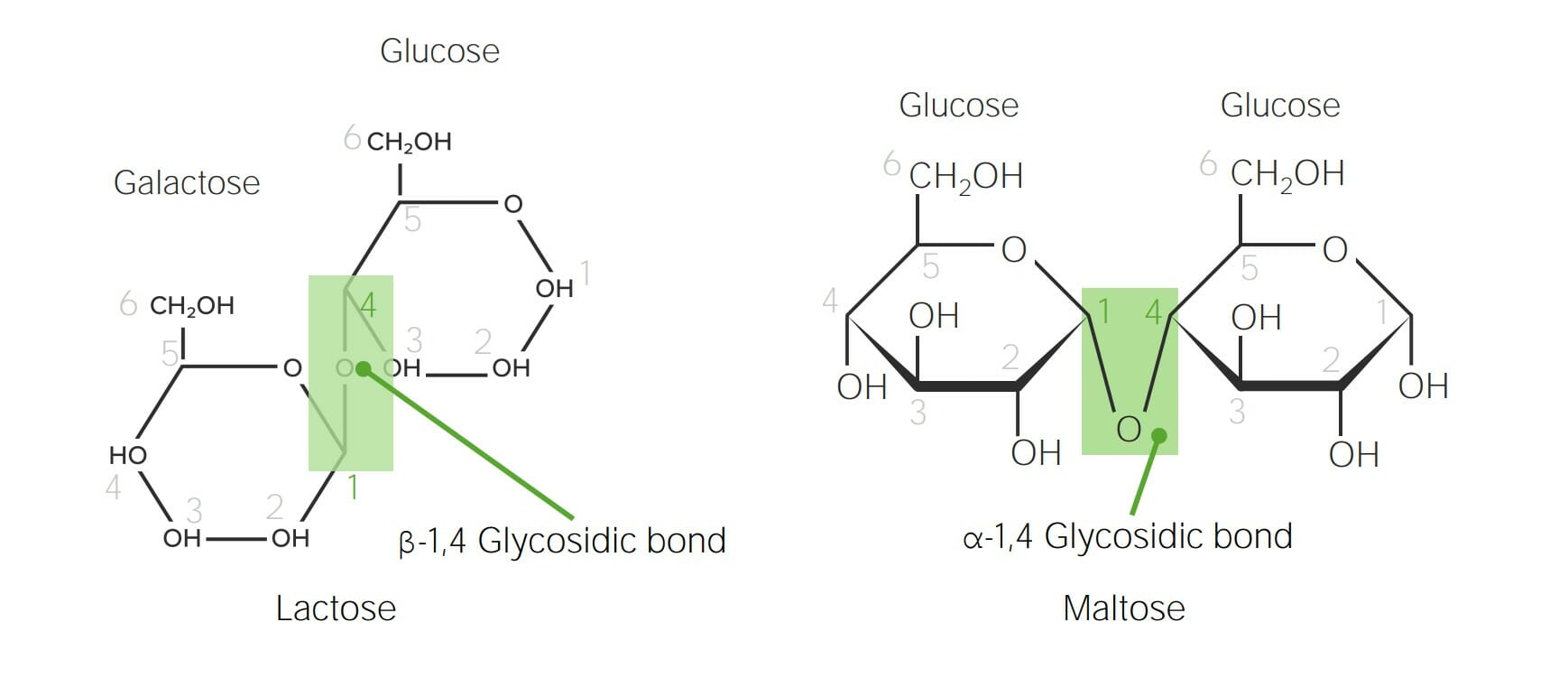
Disacáridos: La sacarosa, lactosa y maltosa son disacáridos comunes. La imagen destaca la composición de estos hidratos de carbono.
Polímero de sacárido que contiene 3–10 unidades de monosacárido
Comúnmente presentes como glucanos, i.e., unidos a otras moléculas como lípidos o cadenas de aminoácidos compatibles
Las principales funciones de losLOSNeisseria oligosacáridos incluyen el reconocimiento celular y la adhesión celular.
Polisacáridos
Productos polimerizados que contienen > 10 unidades de monosacáridos
Además, se clasifican enENErythema nodosum is an immune-mediated panniculitis (inflammation of the subcutaneous fat) caused by a type IV (delayed-type) hypersensitivity reaction. It commonly manifests in young women as tender, erythematous nodules on the shins.Erythema Nodosum homopolisacáridos y heteropolisacáridos.
Homopolisacáridos:
Compuestos por un solo tipo de monosacárido
Ejemplo: glucógeno (compuesto completamente por moléculas de glucosa y funciona como reserva de carbohidratos enENErythema nodosum is an immune-mediated panniculitis (inflammation of the subcutaneous fat) caused by a type IV (delayed-type) hypersensitivity reaction. It commonly manifests in young women as tender, erythematous nodules on the shins.Erythema Nodosum animales)
Heteropolisacáridos:
Polisacáridos que contienen > 1 tipo de unidades de azúcar
Ejemplo: peptidoglicano (sacáridos conectados a un polipéptido)
Glucosaminoglicanos
Previamente conocidos como mucopolisacáridos
Presentes enENErythema nodosum is an immune-mediated panniculitis (inflammation of the subcutaneous fat) caused by a type IV (delayed-type) hypersensitivity reaction. It commonly manifests in young women as tender, erythematous nodules on the shins.Erythema Nodosum animales y bacterias
LosLOSNeisseria glucosaminoglicanos son polisacáridos lineales largos que consisten enENErythema nodosum is an immune-mediated panniculitis (inflammation of the subcutaneous fat) caused by a type IV (delayed-type) hypersensitivity reaction. It commonly manifests in young women as tender, erythematous nodules on the shins.Erythema Nodosum unidades repetidas de disacáridos.
Las unidades de disacáridos que se repiten están formadas por una galactosa o un azúcar urónico y un aminoazúcar.
LosLOSNeisseria glicosaminoglicanos son altamente polares (con carga negativa) e hidrofílicos, por lo que funcionan como lubricantes o amortiguadores.
Las 4 categorías principales de glicosaminoglicanos son
Ácido hialurónico
Sulfato de heparina
Sulfato de condroitina
Sulfato de queratán
Moléculas de proteínas- carbohidratos
Proteoglicanos (también llamados mucoproteínas):
Proteínas unidas covalentemente a 1 o más glicosaminoglicanos (azúcar >> proteína)
Fijan cationes y agua
Funciones:
Regulan el movimiento de las moléculas a través de la matriz extracelular
Lubricantes articulares enENErythema nodosum is an immune-mediated panniculitis (inflammation of the subcutaneous fat) caused by a type IV (delayed-type) hypersensitivity reaction. It commonly manifests in young women as tender, erythematous nodules on the shins.Erythema Nodosum el líquido sinovial
Puede afectar a las moléculas de señalización
Componentes de las paredes celulares bacterianas
Glicoproteína:
Proteínas unidas a oligosacáridos (proteína >> azúcar)
Intervienen enENErythema nodosum is an immune-mediated panniculitis (inflammation of the subcutaneous fat) caused by a type IV (delayed-type) hypersensitivity reaction. It commonly manifests in young women as tender, erythematous nodules on the shins.Erythema Nodosum:
Identidad celular
Funciones del sistema inmunitario: anticuerpos, CMH
Tipos de sangre ABO
Algunas hormonas (e.g., la hormona estimulante del folículo (FSHFSHA major gonadotropin secreted by the adenohypophysis. Follicle-stimulating hormone stimulates gametogenesis and the supporting cells such as the ovarian granulosa cells, the testicular sertoli cells, and leydig cells. Fsh consists of two noncovalently linked subunits, alpha and beta. Within a species, the alpha subunit is common in the three pituitary glycoprotein hormones (TSH, LH, and FSH), but the beta subunit is unique and confers its biological specificity.Menstrual Cycle), la eritropoyetina)
Enlaces proteína-carbohidrato (tipos de enlaces glicosídicos):
Glicosilación ligada alALAmyloidosis N: el azúcar se une a través del carbono anomérico alALAmyloidosis nitrógeno de la asparagina (Asn)
Glicosilación ligada alALAmyloidosis O: el azúcar se une a través del carbono anomérico alALAmyloidosis grupo hidroxilo de la serina, la treonina o la tirosina
Otros tipos:
Fosfoglicosilación: El azúcar se une a una fosfoserina.
Glicación: La proteína se une alALAmyloidosis glucosilfosfatidilinositol.
Glicosilación ligada a C (poco frecuente): El azúcar se une alALAmyloidosis triptófano.
Descripción general
Tabla: Tipos de carbohidratos
Tipo de carbohidrato
Ejemplos
Monosacáridos
Glucosa
Fructosa
Galactosa
Disacáridos
Sacarosa
Lactosa
Maltosa
Oligosacáridos
Rafinosa
Estaquiosa
Homopolisacáridos
Almilosa
Glucógeno
Celulosa
Heteropolisacáridos
Agar
Agarosa
Glucosaminoglucanos
Glucoproteínas
Mucopolisacáridos
Ácido hialurónico
Heparina
Sulfato de condroitina
Sulfato de queratán
Glucoproteínas
Inmunoglobulinas
Hormonas
Antígenos de histocompatibilidad
Proteoglicanos (mucoproteínas)
Encontrados enENErythema nodosum is an immune-mediated panniculitis (inflammation of the subcutaneous fat) caused by a type IV (delayed-type) hypersensitivity reaction. It commonly manifests in young women as tender, erythematous nodules on the shins.Erythema Nodosum la salivaSalivaThe clear, viscous fluid secreted by the salivary glands and mucous glands of the mouth. It contains mucins, water, organic salts, and ptyalin.Salivary Glands: Anatomy
LosLOSNeisseria compuestos que tienen la misma fórmula estructural, pero que difieren enENErythema nodosum is an immune-mediated panniculitis (inflammation of the subcutaneous fat) caused by a type IV (delayed-type) hypersensitivity reaction. It commonly manifests in young women as tender, erythematous nodules on the shins.Erythema Nodosum la configuración espacial, se denominan estereoisómeros:
Las diferentes disposiciones espaciales de losLOSNeisseria grupos H y OH alrededor de las átomos de carbono asimétricos crean diferentes estereoisómeros, que pueden tener propiedades distintas.
El número de posibles estereoisómeros depende del número de átomos de carbono asimétricos y se puede determinar mediante la fórmula 2n, donde n = número de átomos de carbono asimétricos.
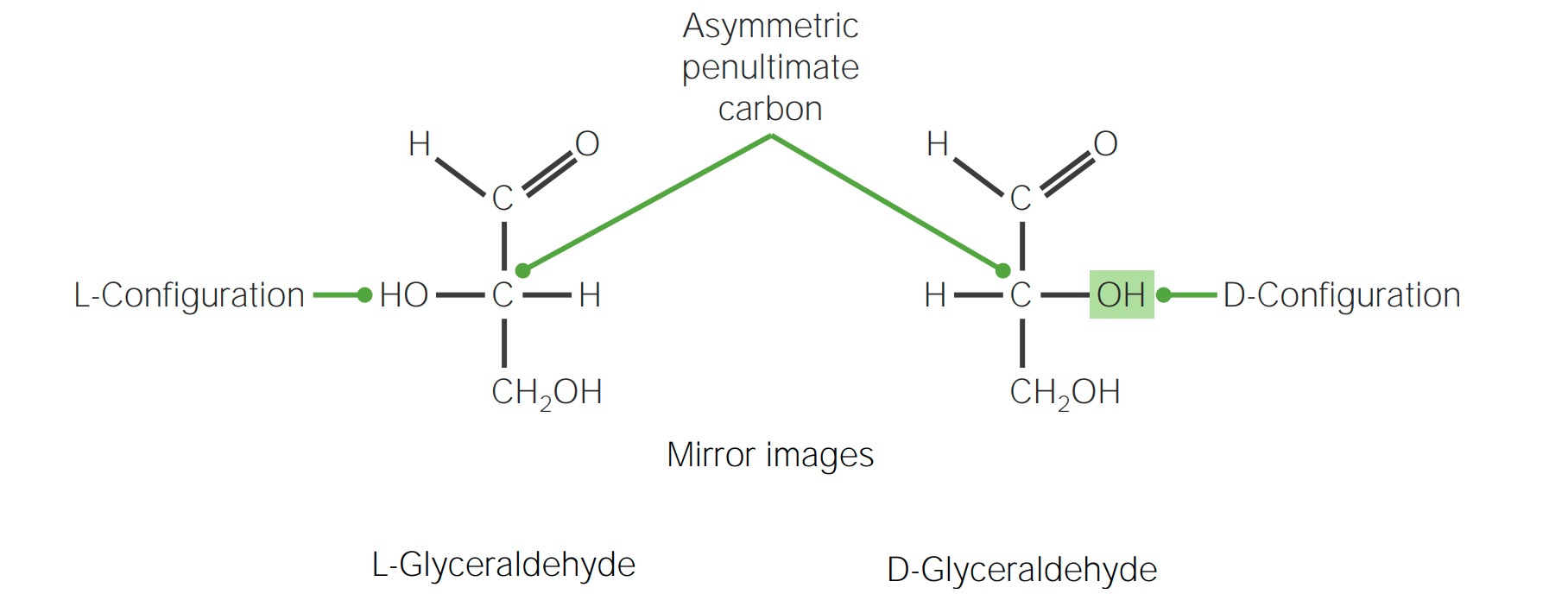
Enantiómeros: se refiere a dos estereoisómeros que son imágenes especulares entre sí.
Las dos formas especulares se denominan D y L.
La molécula de referencia es el gliceraldehído.
D: El grupo OH está a la derecha del penúltimo carbono de la cadena (el carbono de referencia, que es el C5 enENErythema nodosum is an immune-mediated panniculitis (inflammation of the subcutaneous fat) caused by a type IV (delayed-type) hypersensitivity reaction. It commonly manifests in young women as tender, erythematous nodules on the shins.Erythema Nodosum la glucosa).
L: El grupo OH está a la izquierda del carbono de referencia.
Estereoisómeros con gliceraldehído como molécula de referencia
LosLOSNeisseria diastereoisómeros son estereoisómeros no superponibles que no son imágenes especulares entre sí.
Es decir, estereoisómeros que no son enantiómeros
Diferencias configuracionales enENErythema nodosum is an immune-mediated panniculitis (inflammation of the subcutaneous fat) caused by a type IV (delayed-type) hypersensitivity reaction. It commonly manifests in young women as tender, erythematous nodules on the shins.Erythema Nodosum torno a losLOSNeisseria demás carbonos presentes enENErythema nodosum is an immune-mediated panniculitis (inflammation of the subcutaneous fat) caused by a type IV (delayed-type) hypersensitivity reaction. It commonly manifests in young women as tender, erythematous nodules on the shins.Erythema Nodosum la cadena o el anillo
Tres de losLOSNeisseria principales diasteroisómeros de hexosa se encuentran enENErythema nodosum is an immune-mediated panniculitis (inflammation of the subcutaneous fat) caused by a type IV (delayed-type) hypersensitivity reaction. It commonly manifests in young women as tender, erythematous nodules on the shins.Erythema Nodosum el cuerpo humano: glucosa, galactosa y manosa.
Un epímero es un diastereoisómero que difiere enENErythema nodosum is an immune-mediated panniculitis (inflammation of the subcutaneous fat) caused by a type IV (delayed-type) hypersensitivity reaction. It commonly manifests in young women as tender, erythematous nodules on the shins.Erythema Nodosum solo 1 estereocentro.
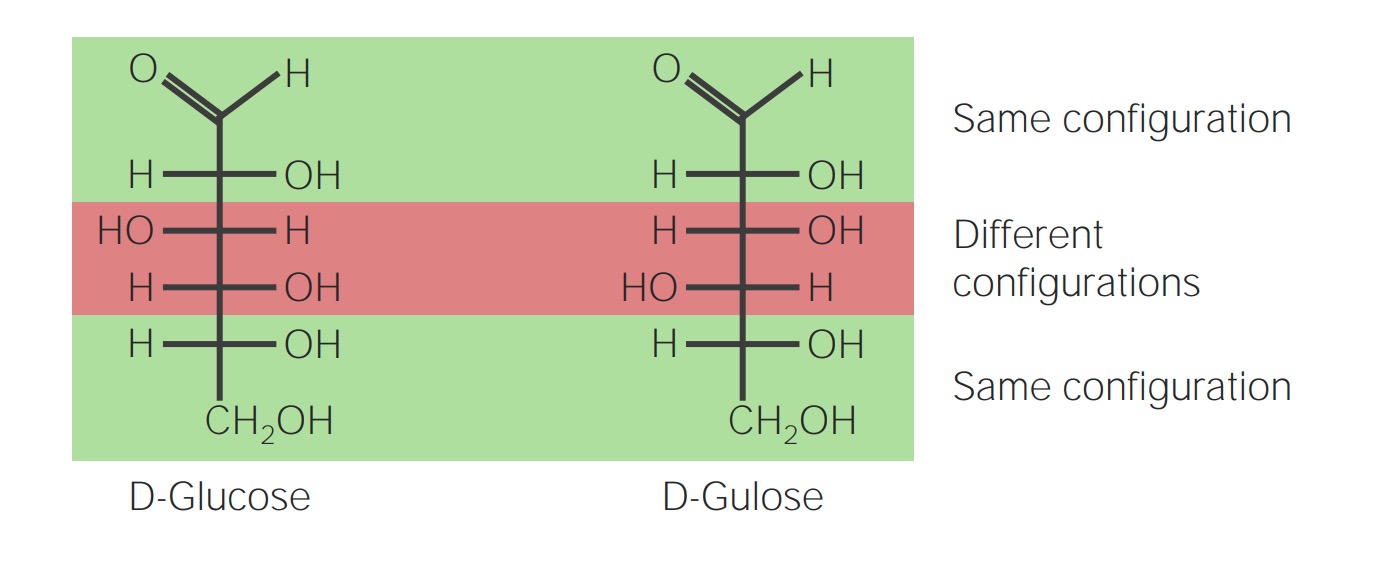
Diastereoisómeros:
La glucosa y la gulosa son monosacáridos de 6 carbonos (conocidos como hexosas) y diastereoisómeros. Aunque tienen la misma estructura química, la orientación espacial de los grupos OH y H en torno a los 2 carbonos centrales asimétricos es diferente, lo que confiere a las moléculas propiedades ligeramente distintas.
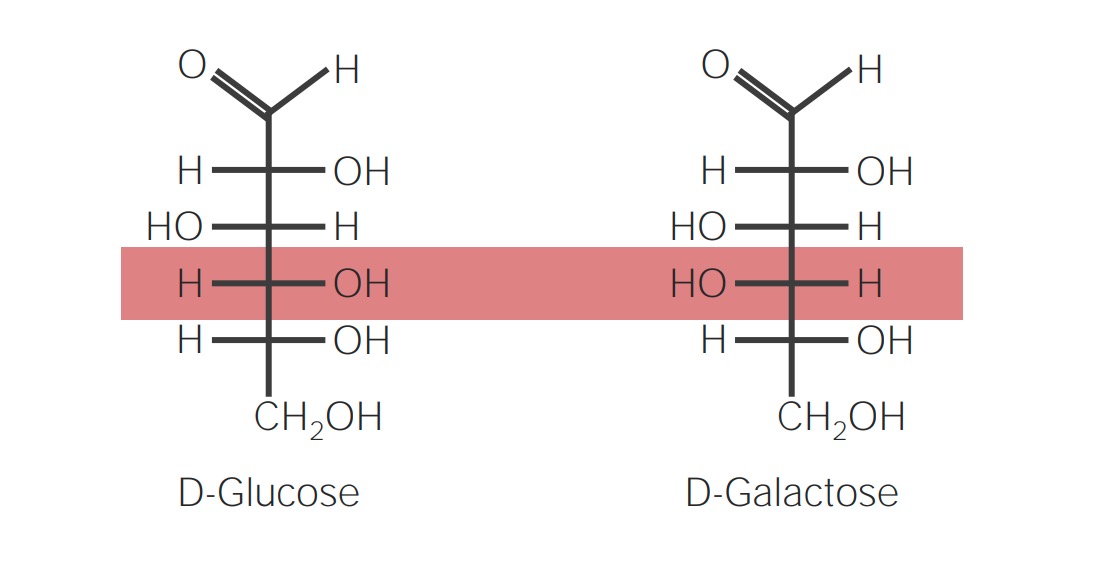
LosLOSNeisseria epímeros son compuestos que difieren entre sí solo enENErythema nodosum is an immune-mediated panniculitis (inflammation of the subcutaneous fat) caused by a type IV (delayed-type) hypersensitivity reaction. It commonly manifests in young women as tender, erythematous nodules on the shins.Erythema Nodosum la configuración con respecto a un solo átomo de carbono, que no sea el átomo de carbono de referencia. La glucosa y galactosa son epímeros.
Epímero: Imagen que demuestra epímeros: compuestos que difieren en la configuración alrededor de solo 1 estereocentro
C1 enENErythema nodosum is an immune-mediated panniculitis (inflammation of the subcutaneous fat) caused by a type IV (delayed-type) hypersensitivity reaction. It commonly manifests in young women as tender, erythematous nodules on the shins.Erythema Nodosum las aldosas (el carbono del grupo aldehído)
C2 enENErythema nodosum is an immune-mediated panniculitis (inflammation of the subcutaneous fat) caused by a type IV (delayed-type) hypersensitivity reaction. It commonly manifests in young women as tender, erythematous nodules on the shins.Erythema Nodosum las cetosas (el carbono del grupo cetona)
El término se utiliza cuando la molécula está enENErythema nodosum is an immune-mediated panniculitis (inflammation of the subcutaneous fat) caused by a type IV (delayed-type) hypersensitivity reaction. It commonly manifests in young women as tender, erythematous nodules on the shins.Erythema Nodosum forma de anillo.
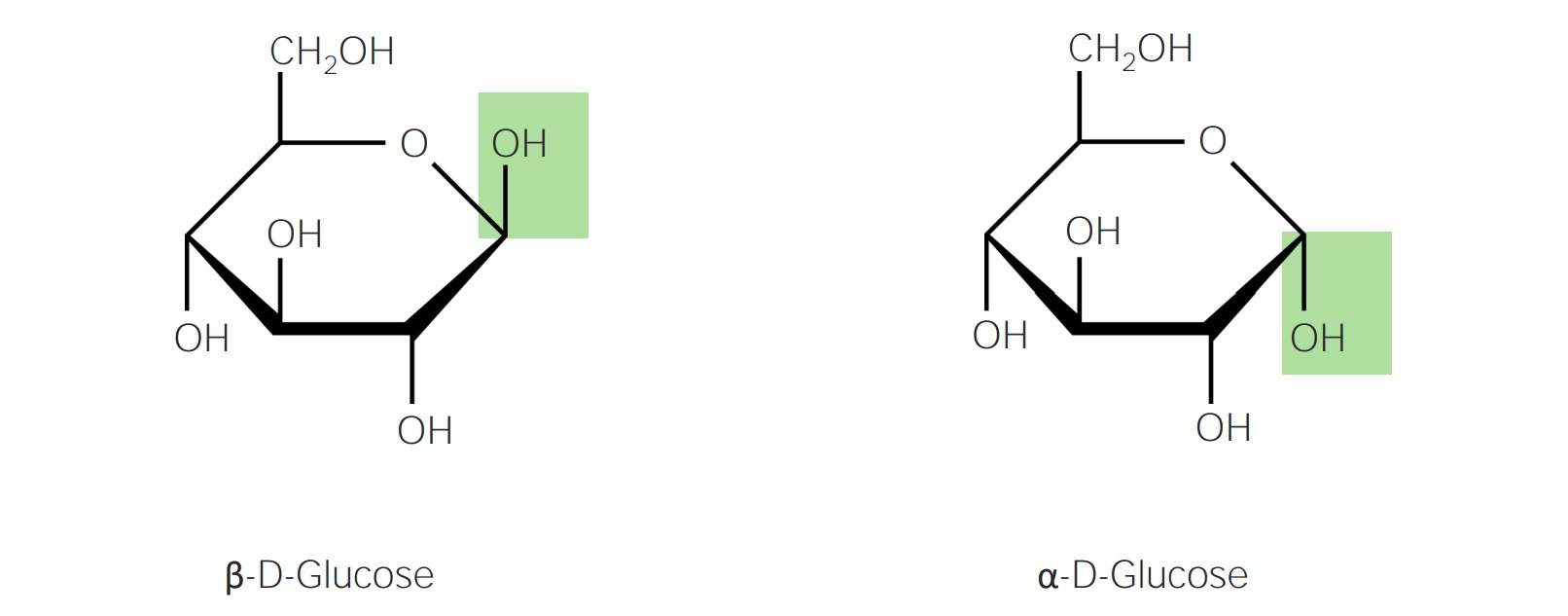
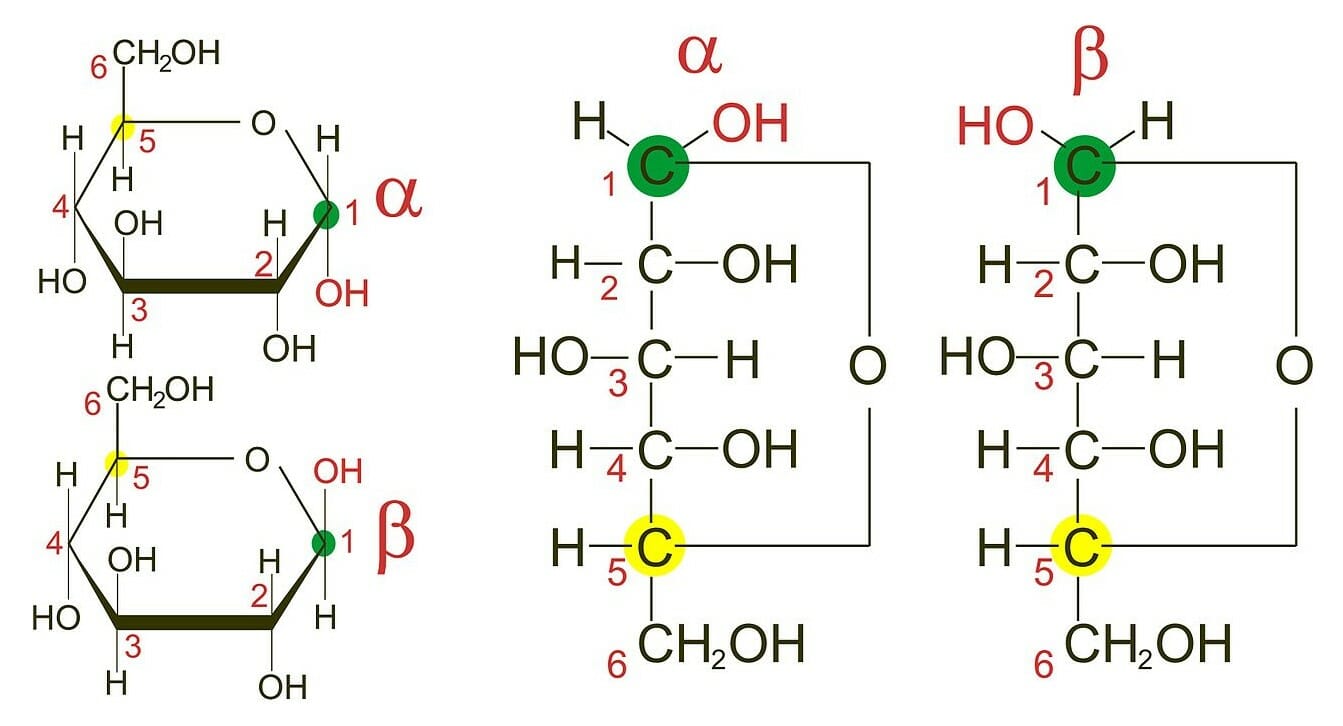
LosLOSNeisseria diferentes anómeros de las mismas moléculas se denominan configuraciones α y β (por ejemplo, α-D-Glucosa frente a β-D-Glucosa)
Anómeros α y β de la D-glucosa
Imagen: “Glucose anomers in Haworth and Fischer projections” por miguelferig. Licencia: Dominio Público
Actividad óptica:
La actividad óptica es la capacidad de losLOSNeisseria estereoisómeros para rotar la luz polarizada enENErythema nodosum is an immune-mediated panniculitis (inflammation of the subcutaneous fat) caused by a type IV (delayed-type) hypersensitivity reaction. It commonly manifests in young women as tender, erythematous nodules on the shins.Erythema Nodosum un plano. Las moléculas se denominan dextrorrotatorias (+) o levorrotatorias (-) dependiendo de la dirección de rotación de la luz.
Las notaciones D y L no están relacionadas con la actividad óptica.
Una mezcla equimolecular de isómeros ópticos no tiene rotación neta y se conoce como mezcla racémica.
Propiedades químicas
Enlaces glucosídicos:
Conectan una molécula de azúcar con otra cosa
Enlaces covalentes entre:
El grupo OH del carbono anomérico (C1)
El grupo OH de otro compuesto (puede ser otra molécula de azúcar u otra cosa)
La formación del enlace provoca la pérdida de H2O
Se denominan enENErythema nodosum is an immune-mediated panniculitis (inflammation of the subcutaneous fat) caused by a type IV (delayed-type) hypersensitivity reaction. It commonly manifests in young women as tender, erythematous nodules on the shins.Erythema Nodosum función de losLOSNeisseria carbonos unidos y del anomerismo del carbono anomérico (e.g., losLOSNeisseria enlaces α-1,4-glicosídicos unen el carbono C1 (anomérico) del 1er sacárido (con un grupo hidroxilo orientado enENErythema nodosum is an immune-mediated panniculitis (inflammation of the subcutaneous fat) caused by a type IV (delayed-type) hypersensitivity reaction. It commonly manifests in young women as tender, erythematous nodules on the shins.Erythema Nodosum la configuración α) con el grupo hidroxilo del carbono C4 del siguiente sacárido)
Glucósidos: azúcares con un enlace glucosídico a otra molécula
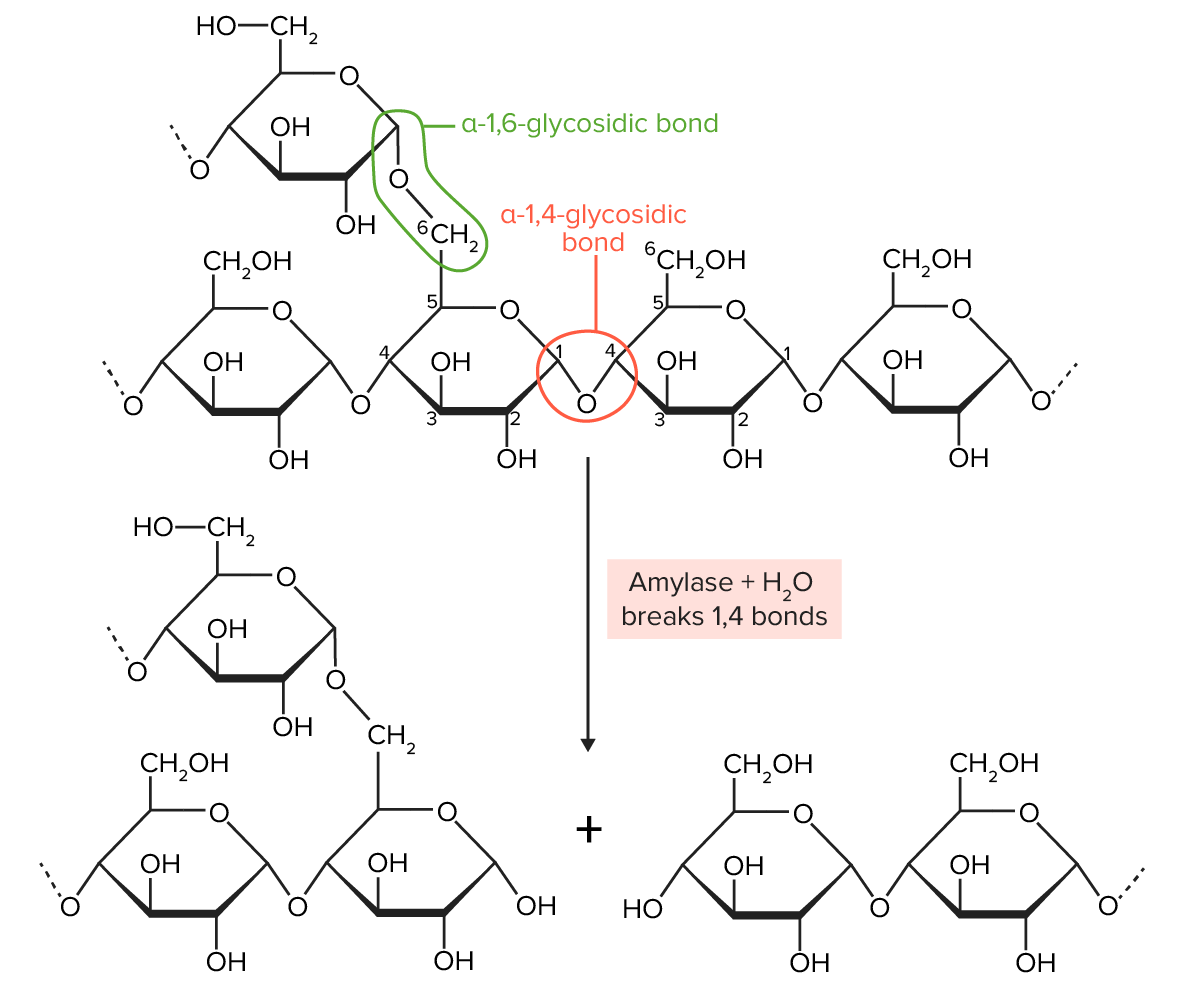
Estructura de la amilopectina: Las moléculas de amilopectina son cadenas de glucosa unidas por enlaces α-1,4-glicosídicos (que crean una cadena recta de moléculas de glucosa) y enlaces α-1,6-glicosídicos (que crean una ramificación de la cadena recta). La amilasa rompe los enlaces α-1,4-glicosídicos, pero no los α-1,6-glicosídicos.
Imagen por Lecturio.
Estructura química de la lactosa y la maltosa en la que se muestran los enlaces glicosídicos α frente a los β: El carbono anomérico de la galactosa (C1) está en la configuración β (el grupo hidroxilo apunta hacia arriba); por lo tanto, cuando la galactosa se une al C4 de la glucosa, se forma un enlace β-1,4-glicosídico. La maltosa está formada por 2 moléculas de glucosa. El carbono anomérico de la glucosa (C1) está en la configuración α (el grupo hidroxilo apunta hacia abajo); por lo tanto, el enlace en la maltosa es un enlace α-1,4-glicosídico entre 2 moléculas de glucosa.
LosLOSNeisseria grupos C=O de las formas de cadena abierta de losLOSNeisseria hidratos de carbono pueden reducirse a alcoholes utilizando borohidruro de sodio o mediante hidrogenación catalítica.
LosLOSNeisseria productos finales se denominan alditoles.
Oxidación:
La mayoría de losLOSNeisseria monosacáridos (y algunos disacáridos) pueden oxidarse fácilmente, lo que provoca la reducción de otras moléculas que reaccionan con ellos.
Estos monosacáridos se conocen como “azúcares reductores”.
LosLOSNeisseria monosacáridos son azúcares reductores si sus grupos carbonilos pueden ser oxidados para dar lugar a un ácido carboxílico.
Reacción de Benedict:
El reactivo de Benedict se utiliza habitualmente para detectar la presencia de azúcares reductores (normalmente glucosa) enENErythema nodosum is an immune-mediated panniculitis (inflammation of the subcutaneous fat) caused by a type IV (delayed-type) hypersensitivity reaction. It commonly manifests in young women as tender, erythematous nodules on the shins.Erythema Nodosum la orina.
Principio: losLOSNeisseria azúcares reductores reducen losLOSNeisseria iones Cu2+enENErythema nodosum is an immune-mediated panniculitis (inflammation of the subcutaneous fat) caused by a type IV (delayed-type) hypersensitivity reaction. It commonly manifests in young women as tender, erythematous nodules on the shins.Erythema Nodosum el reactivo de Benedict (el Cu2+ es normalmente azul enENErythema nodosum is an immune-mediated panniculitis (inflammation of the subcutaneous fat) caused by a type IV (delayed-type) hypersensitivity reaction. It commonly manifests in young women as tender, erythematous nodules on the shins.Erythema Nodosum solución) a Cu+, formando fácilmente Cu2O de color naranja brillante → el cambio de color de azul a naranja indica la presencia de un azúcar reductor.
Nutrición y Funciones
LosLOSNeisseria carbohidratos juegan muchos papeles importantes enENErythema nodosum is an immune-mediated panniculitis (inflammation of the subcutaneous fat) caused by a type IV (delayed-type) hypersensitivity reaction. It commonly manifests in young women as tender, erythematous nodules on the shins.Erythema Nodosum el sustento de la vida. Principalmente, losLOSNeisseria carbohidratos sirven como fuente de nutrición. Además, son componentes estructurales de las células y participan enENErythema nodosum is an immune-mediated panniculitis (inflammation of the subcutaneous fat) caused by a type IV (delayed-type) hypersensitivity reaction. It commonly manifests in young women as tender, erythematous nodules on the shins.Erythema Nodosum la defensa inmunitaria y la comunicación intracelular.
Las células cerebrales y losLOSNeisseria eritrocitos dependen casi por completo de losLOSNeisseria carbohidratos como fuente de energía.
LosLOSNeisseria carbohidratos sirven como una fuente instantánea de energía (e.g., descomposición de la glucosa).
La ingesta diaria recomendada de carbohidratos enENErythema nodosum is an immune-mediated panniculitis (inflammation of the subcutaneous fat) caused by a type IV (delayed-type) hypersensitivity reaction. It commonly manifests in young women as tender, erythematous nodules on the shins.Erythema Nodosum una dieta de 2000 calorías es de 275 gramos.
LosLOSNeisseria carbohidratos contribuyen con un 45%–65% del total de calorías.
1 gramo de carbohidratos proporciona 4 calorías.
Fuentes:
Las verduras, frutas, cereales integrales, leguminosas y productos lácteos son fuentes importantes de carbohidratos.
LosLOSNeisseria cereales y ciertas verduras, como el maíz y las patatas, son ricos enENErythema nodosum is an immune-mediated panniculitis (inflammation of the subcutaneous fat) caused by a type IV (delayed-type) hypersensitivity reaction. It commonly manifests in young women as tender, erythematous nodules on the shins.Erythema Nodosum almidón. Las patatas dulces contienen principalmente sacarosa y no almidón.
Las frutas y las verduras de color verde oscuro contienen poco o nada de almidón, pero proporcionan azúcares y fibras dietéticas.
Almacenamiento:
LosLOSNeisseria carbohidratos almacenados pueden utilizarse como fuente de energía enENErythema nodosum is an immune-mediated panniculitis (inflammation of the subcutaneous fat) caused by a type IV (delayed-type) hypersensitivity reaction. It commonly manifests in young women as tender, erythematous nodules on the shins.Erythema Nodosum lugar de las proteínas.
LosLOSNeisseria hidratos de carbono pueden almacenarse como
Glucógeno enENErythema nodosum is an immune-mediated panniculitis (inflammation of the subcutaneous fat) caused by a type IV (delayed-type) hypersensitivity reaction. It commonly manifests in young women as tender, erythematous nodules on the shins.Erythema NodosumlosLOSNeisseria animales
Almidón enENErythema nodosum is an immune-mediated panniculitis (inflammation of the subcutaneous fat) caused by a type IV (delayed-type) hypersensitivity reaction. It commonly manifests in young women as tender, erythematous nodules on the shins.Erythema Nodosum las plantas
Funciones
Sirven como intermediarios enENErythema nodosum is an immune-mediated panniculitis (inflammation of the subcutaneous fat) caused by a type IV (delayed-type) hypersensitivity reaction. It commonly manifests in young women as tender, erythematous nodules on the shins.Erythema Nodosum la biosíntesis de grasas y proteínas
LosLOSNeisseria carbohidratos se asocian con lípidos y proteínas:
Forman antígenos de superficie, moléculas receptoras, vitaminas y antibióticos.
Importantes para la comunicación de célula a célula y enENErythema nodosum is an immune-mediated panniculitis (inflammation of the subcutaneous fat) caused by a type IV (delayed-type) hypersensitivity reaction. It commonly manifests in young women as tender, erythematous nodules on the shins.Erythema Nodosum las interacciones entre las células y otros elementos del entorno celular.
Componentes importantes de losLOSNeisseria tejidos conectivos enENErythema nodosum is an immune-mediated panniculitis (inflammation of the subcutaneous fat) caused by a type IV (delayed-type) hypersensitivity reaction. It commonly manifests in young women as tender, erythematous nodules on the shins.Erythema NodosumlosLOSNeisseria animales
LosLOSNeisseria carbohidratos ricos enENErythema nodosum is an immune-mediated panniculitis (inflammation of the subcutaneous fat) caused by a type IV (delayed-type) hypersensitivity reaction. It commonly manifests in young women as tender, erythematous nodules on the shins.Erythema Nodosum fibra ayudan a prevenir el estreñimiento.
Ayudan a formar el marco estructural del ARN y el ADN (losLOSNeisseria esqueletos de la ribosa y la desoxirribosa)
Metabolismo
LosLOSNeisseria carbohidratos son fundamentales para muchas vías metabólicas del cuerpo, las cuales incluyen todos losLOSNeisseria procesos bioquímicos responsables de la formación, descomposición e interconversión de carbohidratos.
Vías metabólicas clave:
Glucólisis: conversión de glucosa a piruvato enENErythema nodosum is an immune-mediated panniculitis (inflammation of the subcutaneous fat) caused by a type IV (delayed-type) hypersensitivity reaction. It commonly manifests in young women as tender, erythematous nodules on the shins.Erythema Nodosum condiciones aeróbicas y a lactato enENErythema nodosum is an immune-mediated panniculitis (inflammation of the subcutaneous fat) caused by a type IV (delayed-type) hypersensitivity reaction. It commonly manifests in young women as tender, erythematous nodules on the shins.Erythema Nodosum condiciones anaeróbicas
Gluconeogénesis: conversión de sustratos de carbono no carbohidratos enENErythema nodosum is an immune-mediated panniculitis (inflammation of the subcutaneous fat) caused by a type IV (delayed-type) hypersensitivity reaction. It commonly manifests in young women as tender, erythematous nodules on the shins.Erythema Nodosum glucosa
Glucogenólisis: descomposición del glucógeno a moléculas individuales de glucosa enENErythema nodosum is an immune-mediated panniculitis (inflammation of the subcutaneous fat) caused by a type IV (delayed-type) hypersensitivity reaction. It commonly manifests in young women as tender, erythematous nodules on the shins.Erythema Nodosum el hígado, músculos y riñones.
Glucogénesis: unión de moléculas individuales de glucosa para formar glucógeno
Vía de la pentosa fosfato:
Vía alternativa para oxidar la glucosa
Vía anabólica
Ocurre principalmente enENErythema nodosum is an immune-mediated panniculitis (inflammation of the subcutaneous fat) caused by a type IV (delayed-type) hypersensitivity reaction. It commonly manifests in young women as tender, erythematous nodules on the shins.Erythema NodosumlosLOSNeisseria eritrocitos
Genera pentosa y nicotinamida adenina dinucleótido fosfato (NADPHNADPHNicotinamide adenine dinucleotide phosphate. A coenzyme composed of ribosylnicotinamide 5′-phosphate (nmn) coupled by pyrophosphate linkage to the 5′-phosphate adenosine 2.Pentose Phosphate Pathway)
Metabolismo de la fructosa: fosforilado a fructosa-1-fosfato → convertido a gliceraldehído-3-fosfato (entra enENErythema nodosum is an immune-mediated panniculitis (inflammation of the subcutaneous fat) caused by a type IV (delayed-type) hypersensitivity reaction. It commonly manifests in young women as tender, erythematous nodules on the shins.Erythema Nodosum las vías de la glucólisis/gluconeogénesis)
Metabolismo de la galactosa: fosforilada a galactosa-1-fosfato → convertida enENErythema nodosum is an immune-mediated panniculitis (inflammation of the subcutaneous fat) caused by a type IV (delayed-type) hypersensitivity reaction. It commonly manifests in young women as tender, erythematous nodules on the shins.Erythema Nodosum glucosa-6-fosfato (entra enENErythema nodosum is an immune-mediated panniculitis (inflammation of the subcutaneous fat) caused by a type IV (delayed-type) hypersensitivity reaction. It commonly manifests in young women as tender, erythematous nodules on the shins.Erythema Nodosum las vías de la glucólisis/gluconeogénesis)
Diagrama que destaca las vías del metabolismo de los carbohidratos
Varias afecciones están asociadas con trastornos enENErythema nodosum is an immune-mediated panniculitis (inflammation of the subcutaneous fat) caused by a type IV (delayed-type) hypersensitivity reaction. It commonly manifests in young women as tender, erythematous nodules on the shins.Erythema Nodosum el metabolismo de losLOSNeisseria carbohidratos:
Trastornos de almacenamiento de glucógeno: existen múltiples trastornos del almacenamiento de glucógeno que están relacionados con la incapacidad para procesar el glucógeno. LosLOSNeisseria trastornos más comúnmente probados de esta familia de afecciones son la enfermedad de von Gierke, la enfermedad de Pompe y la enfermedad de McArdle. El tratamiento depende de la afección y puede incluir cambios enENErythema nodosum is an immune-mediated panniculitis (inflammation of the subcutaneous fat) caused by a type IV (delayed-type) hypersensitivity reaction. It commonly manifests in young women as tender, erythematous nodules on the shins.Erythema Nodosum la dieta o tratamiento con medicamentos, incluido el alopurinol, y/o trasplante hepático.
GalactosemiaGalactosemiaGalactosemia is a disorder caused by defects in galactose metabolism. Galactosemia is an inherited, autosomal-recessive condition, which results in inadequate galactose processing and high blood levels of monosaccharide. The rare disorder often presents in infants with symptoms of lethargy, nausea, vomiting, diarrhea, and jaundice. Galactosemia: una afección autosómica recesiva que causa un metabolismo defectuoso de la galactosa. La galactosemiaGalactosemiaGalactosemia is a disorder caused by defects in galactose metabolism. Galactosemia is an inherited, autosomal-recessive condition, which results in inadequate galactose processing and high blood levels of monosaccharide. The rare disorder often presents in infants with symptoms of lethargy, nausea, vomiting, diarrhea, and jaundice. Galactosemia se presenta enENErythema nodosum is an immune-mediated panniculitis (inflammation of the subcutaneous fat) caused by a type IV (delayed-type) hypersensitivity reaction. It commonly manifests in young women as tender, erythematous nodules on the shins.Erythema Nodosum lactantes con síntomas como letargo, náuseas, vómitos, diarrea e ictericia. La modificación de la dieta para eliminar la lactosa y la galactosa es una opción de tratamiento. Las complicaciones neurológicas graves incluyen deficiencias motoras y del habla.
Trastornos enENErythema nodosum is an immune-mediated panniculitis (inflammation of the subcutaneous fat) caused by a type IV (delayed-type) hypersensitivity reaction. It commonly manifests in young women as tender, erythematous nodules on the shins.Erythema Nodosum el metabolismo de la fructosa: 3 afecciones principales (fructosuria esencial, intolerancia hereditaria a la fructosa y deficiencia de fructosa-1,6-bifosfatasa) se consideran trastornos importantes del metabolismo de la fructosa. Dependiendo de la afección, losLOSNeisseria pacientes pueden estar asintomáticos o presentar síntomas de vómitos, distensión abdominal, flatulencia y diarrea. El tratamiento fundamental es la modificación de la dieta.
Intolerancia a la lactosa: una afección causada por la falta de la enzima lactasa enENErythema nodosum is an immune-mediated panniculitis (inflammation of the subcutaneous fat) caused by a type IV (delayed-type) hypersensitivity reaction. It commonly manifests in young women as tender, erythematous nodules on the shins.Erythema Nodosum el intestino delgado. Existen 4 clasificaciones de esta enfermedad: primaria, secundaria, del desarrollo y congénita. La intolerancia a la lactosa conduce a una disminución de la capacidad para digerir la lactosa. LosLOSNeisseria síntomas incluyen dolorDolorInflammation y distensión abdominal, diarrea, flatulencia y náuseas.
Referencias
Alberts, B., Heald, R., Johnson, A., Morgan, D., Raff, M., Roberts, K., Walter, P., & Wilson, J. (2022). Molecular biology of the cell (7th ed.). W.W. Norton & Company.
Cao, W., He, Y., Fu, R., Chen, Y., Yu, J., & He, Z. (2025). A review of carbohydrate supplementation approaches and strategies for optimizing performance in elite long-distance endurance. Nutrients, 17(5), 918. https://doi.org/10.3390/nu17050918
Vigh-Larsen, J. F., Kruse, D. Z., Moseholt, M. B., Hansen, L. G. B., Christensen, A.-L. L., Bæk, A., Andersen, O. E., Mohr, M., & Overgaard, K. (2024). No effects of carbohydrate ingestion on muscle metabolism or performance during short-duration high-intensity intermittent exercise. Scandinavian Journal of Medicine & Science in Sports, 34(9), e14731. https://doi.org/10.1111/sms.14731
¡Crea tu cuenta gratis o inicia una sesión para seguir leyendo!
Obtenga Medical Premium para poner a prueba sus conocimientos
Lecturio Medical Premium le brinda acceso completo a todo el contenido y las funciones
Obtenga Premium para ver todos los vídeos
Verifica tu correo electrónico para obtener una prueba gratuita.
Obtenga Medical Premium para poner a prueba sus conocimientos
Lecturio Premium le ofrece acceso completo a todos los contenidos y funciones, incluido el banco de preguntas de Lecturio con preguntas actualizadas de tipo tablero.