Domina Conceptos Médicos

Estudia para la escuela de medicina y tus examenes con Lecturio.

Edema

El edema Edema Edema is a condition in which excess serous fluid accumulates in the body cavity or interstitial space of connective tissues. Edema is a symptom observed in several medical conditions. It can be categorized into 2 types, namely, peripheral (in the extremities) and internal (in an organ or body cavity). Edema es una condición en EN Erythema nodosum is an immune-mediated panniculitis (inflammation of the subcutaneous fat) caused by a type IV (delayed-type) hypersensitivity reaction. It commonly manifests in young women as tender, erythematous nodules on the shins. Erythema Nodosum la que un exceso de líquido seroso se acumula en EN Erythema nodosum is an immune-mediated panniculitis (inflammation of the subcutaneous fat) caused by a type IV (delayed-type) hypersensitivity reaction. It commonly manifests in young women as tender, erythematous nodules on the shins. Erythema Nodosum la cavidad corporal o en EN Erythema nodosum is an immune-mediated panniculitis (inflammation of the subcutaneous fat) caused by a type IV (delayed-type) hypersensitivity reaction. It commonly manifests in young women as tender, erythematous nodules on the shins. Erythema Nodosum el espacio intersticial de los LOS Neisseria tejidos conectivos. El edema Edema Edema is a condition in which excess serous fluid accumulates in the body cavity or interstitial space of connective tissues. Edema is a symptom observed in several medical conditions. It can be categorized into 2 types, namely, peripheral (in the extremities) and internal (in an organ or body cavity). Edema es un signo observado en EN Erythema nodosum is an immune-mediated panniculitis (inflammation of the subcutaneous fat) caused by a type IV (delayed-type) hypersensitivity reaction. It commonly manifests in young women as tender, erythematous nodules on the shins. Erythema Nodosum varias condiciones médicas. La dinámica de los LOS Neisseria fluidos en EN Erythema nodosum is an immune-mediated panniculitis (inflammation of the subcutaneous fat) caused by a type IV (delayed-type) hypersensitivity reaction. It commonly manifests in young women as tender, erythematous nodules on the shins. Erythema Nodosum el cuerpo depende de los LOS Neisseria compartimentos de los LOS Neisseria fluidos corporales, la osmolaridad de los LOS Neisseria fluidos y las fuerzas de Starling. El edema Edema Edema is a condition in which excess serous fluid accumulates in the body cavity or interstitial space of connective tissues. Edema is a symptom observed in several medical conditions. It can be categorized into 2 types, namely, peripheral (in the extremities) and internal (in an organ or body cavity). Edema puede clasificarse en EN Erythema nodosum is an immune-mediated panniculitis (inflammation of the subcutaneous fat) caused by a type IV (delayed-type) hypersensitivity reaction. It commonly manifests in young women as tender, erythematous nodules on the shins. Erythema Nodosum 2 tipos, a saber, periférico ( en EN Erythema nodosum is an immune-mediated panniculitis (inflammation of the subcutaneous fat) caused by a type IV (delayed-type) hypersensitivity reaction. It commonly manifests in young women as tender, erythematous nodules on the shins. Erythema Nodosum las extremidades) e interno ( en EN Erythema nodosum is an immune-mediated panniculitis (inflammation of the subcutaneous fat) caused by a type IV (delayed-type) hypersensitivity reaction. It commonly manifests in young women as tender, erythematous nodules on the shins. Erythema Nodosum un órgano o cavidad corporal). Los LOS Neisseria síntomas varían según la localización del edema Edema Edema is a condition in which excess serous fluid accumulates in the body cavity or interstitial space of connective tissues. Edema is a symptom observed in several medical conditions. It can be categorized into 2 types, namely, peripheral (in the extremities) and internal (in an organ or body cavity). Edema.

Last updated: Dec 15, 2025
Editorial responsibility: Stanley Oiseth, Lindsay Jones, Evelin Maza

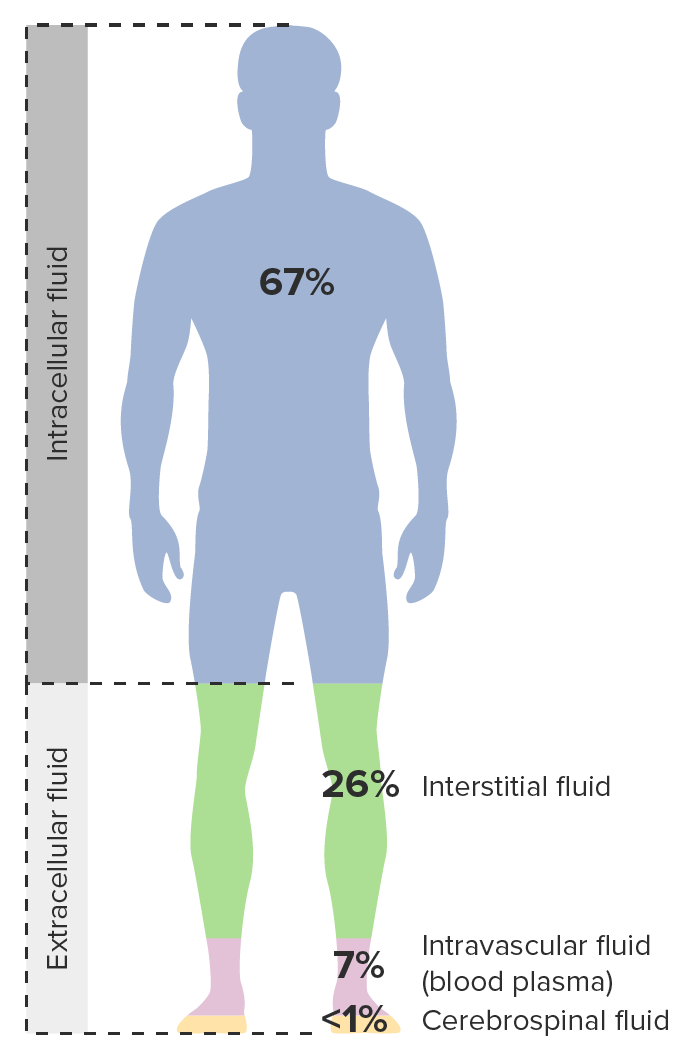
Compartimentos de los Fluidos Corporales

Compartimento de líquido intracelular

  • Representa ⅔ del total del agua corporal
  • Volumen total contenido en EN Erythema nodosum is an immune-mediated panniculitis (inflammation of the subcutaneous fat) caused by a type IV (delayed-type) hypersensitivity reaction. It commonly manifests in young women as tender, erythematous nodules on the shins. Erythema Nodosum todas las células del cuerpo
  • Se calcula restando el agua corporal total del volumen de líquido extracelular

Compartimento de líquido extracelular

  • Representa ⅓ del total del agua corporal
  • Se puede medir utilizando:
    • Inulina
    • Manitol
    • Sodio radiactivo
  • Subdividido en EN Erythema nodosum is an immune-mediated panniculitis (inflammation of the subcutaneous fat) caused by a type IV (delayed-type) hypersensitivity reaction. It commonly manifests in young women as tender, erythematous nodules on the shins. Erythema Nodosum:
    • Líquido intersticial:
      • Representa ⅔ del compartimento de líquido extracelular
      • Se calcula restando el volumen de líquido extracelular del volumen de plasma Plasma The residual portion of blood that is left after removal of blood cells by centrifugation without prior blood coagulation. Transfusion Products
    • Plasma Plasma The residual portion of blood that is left after removal of blood cells by centrifugation without prior blood coagulation. Transfusion Products sanguíneo
      • Representa ⅓ del compartimento del líquido extracelular
      • Puede medirse con albúmina sérica radioyodada o con colorante azul de Evans
Body fluid compartments

Imagen que muestra los compartimentos de fluidos corporales y la división por líquidos intracelulares y extracelulares

Imagen por Lecturio.
Osmolaridad y Osmolalidad

  • Osmolaridad: número de moléculas de soluto por litro de solvente
  • Osmolalidad: número de moléculas de soluto por kilogramo de solvente
  • La diferencia entre ambos es insignificante para las soluciones.
  • Osmolalidad estimada:
    • Osm = (2 x Na) + (glucosa / 18) + (nitrógeno de urea Urea A compound formed in the liver from ammonia produced by the deamination of amino acids. It is the principal end product of protein catabolism and constitutes about one half of the total urinary solids. Urea Cycle (BUN, por sus siglas en EN Erythema nodosum is an immune-mediated panniculitis (inflammation of the subcutaneous fat) caused by a type IV (delayed-type) hypersensitivity reaction. It commonly manifests in young women as tender, erythematous nodules on the shins. Erythema Nodosum inglés) / 2,8)
  • Medición directa de la osmolalidad: disminución del punto de congelación/presión de vapor
  • Hematocrito (concentración sanguínea):
    • Se relaciona indirectamente con la osmolalidad
    • En EN Erythema nodosum is an immune-mediated panniculitis (inflammation of the subcutaneous fat) caused by a type IV (delayed-type) hypersensitivity reaction. It commonly manifests in young women as tender, erythematous nodules on the shins. Erythema Nodosum una solución hipoosmolar (las células se hinchan)
    • En EN Erythema nodosum is an immune-mediated panniculitis (inflammation of the subcutaneous fat) caused by a type IV (delayed-type) hypersensitivity reaction. It commonly manifests in young women as tender, erythematous nodules on the shins. Erythema Nodosum una solución hiperosmolar (las células se encogen)
  • Proteínas séricas (presión oncótica):
    • Albúmina y globulinas séricas:
    • Relacionadas indirectamente con la osmolalidad
  • El nivel fisiológico de la osmolalidad de la sangre es de aproximadamente 300 mOsm.
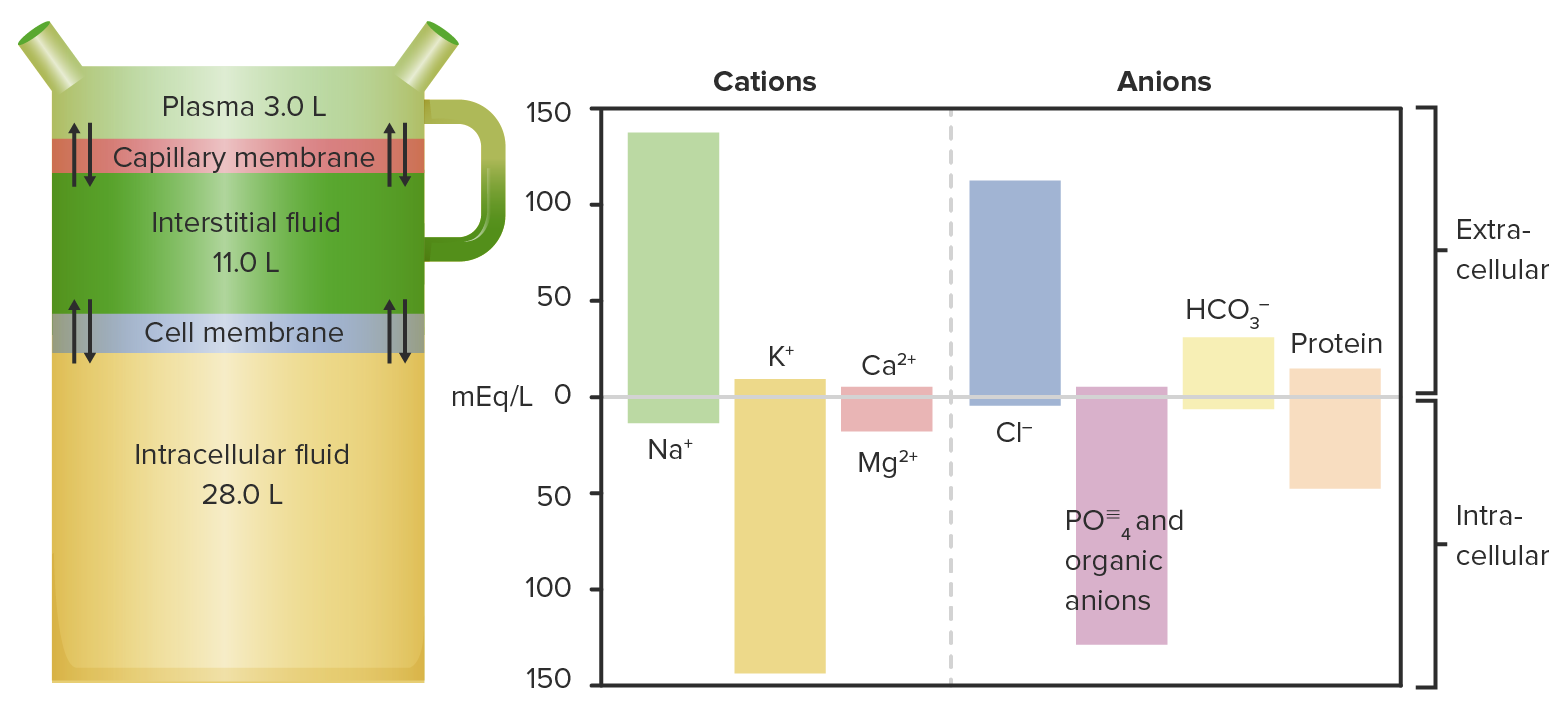
Distribución de fluidos y sus respectivos cationes y aniones

Diagrama y gráfico que muestran la distribución de los fluidos y sus respectivos cationes y aniones:
Observe que los niveles de K+ son los más altos en las células y los de Na+ son los más altos en el plasma.

Imagen por Lecturio. Licencia: CC BY-NC-SA 4.0

Fuerzas de Starling

  • Cuando la presión hidrostática arteriolar > a la presión oncótica arterial, el líquido fluye desde el lumen arteriolar → espacio intersticial
  • En EN Erythema nodosum is an immune-mediated panniculitis (inflammation of the subcutaneous fat) caused by a type IV (delayed-type) hypersensitivity reaction. It commonly manifests in young women as tender, erythematous nodules on the shins. Erythema Nodosum el lado venular, ocurre lo contrario:
    • Presión oncótica venular > presión hidrostática venular
    • Obliga a los LOS Neisseria fluidos a entrar en EN Erythema nodosum is an immune-mediated panniculitis (inflammation of the subcutaneous fat) caused by a type IV (delayed-type) hypersensitivity reaction. It commonly manifests in young women as tender, erythematous nodules on the shins. Erythema Nodosum el lumen capilar
  • Balance de la presión:
    • Las presiones hidrostática arteriolar y oncótica venular no están completamente en EN Erythema nodosum is an immune-mediated panniculitis (inflammation of the subcutaneous fat) caused by a type IV (delayed-type) hypersensitivity reaction. It commonly manifests in young women as tender, erythematous nodules on the shins. Erythema Nodosum balance.
    • La presión hidrostática arteriolar es ligeramente ↑, lo que significa que el líquido depositado en EN Erythema nodosum is an immune-mediated panniculitis (inflammation of the subcutaneous fat) caused by a type IV (delayed-type) hypersensitivity reaction. It commonly manifests in young women as tender, erythematous nodules on the shins. Erythema Nodosum los LOS Neisseria tejidos es mayor que el reabsorbido
    • El líquido sobrante es recogido por los LOS Neisseria vasos linfáticos.
  • Causas de edema Edema Edema is a condition in which excess serous fluid accumulates in the body cavity or interstitial space of connective tissues. Edema is a symptom observed in several medical conditions. It can be categorized into 2 types, namely, peripheral (in the extremities) and internal (in an organ or body cavity). Edema por fuerzas de Starling:
    • ↑ Presión hidrostática del líquido capilar (e.g., insuficiencia cardíaca)
    • ↓ Presión oncótica plasmática (e.g., pérdida de proteínas en EN Erythema nodosum is an immune-mediated panniculitis (inflammation of the subcutaneous fat) caused by a type IV (delayed-type) hypersensitivity reaction. It commonly manifests in young women as tender, erythematous nodules on the shins. Erythema Nodosum el síndrome nefrótico)
    • ↑ Permeabilidad capilar (e.g., sepsis Sepsis Systemic inflammatory response syndrome with a proven or suspected infectious etiology. When sepsis is associated with organ dysfunction distant from the site of infection, it is called severe sepsis. When sepsis is accompanied by hypotension despite adequate fluid infusion, it is called septic shock. Sepsis and Septic Shock, quemaduras)
    • ↑ Presión osmótica del líquido intersticial coloide (e.g., obstrucción de los LOS Neisseria vasos linfáticos)
Diagrama de la Ley de Starling

Diagrama de la Ley de Starling en un capilar sistémico:
Muestra la localización y el cálculo de las fuerzas intra y extraluminales para calcular las presiones de filtración y de absorción.
HP: presión hidrostática
OP: presión oncótica

Imagen por Lecturio. Licencia: CC BY-NC-SA 4.0

Tipos de Edema

Edema Edema Edema is a condition in which excess serous fluid accumulates in the body cavity or interstitial space of connective tissues. Edema is a symptom observed in several medical conditions. It can be categorized into 2 types, namely, peripheral (in the extremities) and internal (in an organ or body cavity). Edema periférico

El edema Edema Edema is a condition in which excess serous fluid accumulates in the body cavity or interstitial space of connective tissues. Edema is a symptom observed in several medical conditions. It can be categorized into 2 types, namely, peripheral (in the extremities) and internal (in an organ or body cavity). Edema periférico es la hinchazón de las extremidades dependientes de la gravedad (más frecuente en EN Erythema nodosum is an immune-mediated panniculitis (inflammation of the subcutaneous fat) caused by a type IV (delayed-type) hypersensitivity reaction. It commonly manifests in young women as tender, erythematous nodules on the shins. Erythema Nodosum los LOS Neisseria miembros inferiores, distal > proximal). Aunque el edema Edema Edema is a condition in which excess serous fluid accumulates in the body cavity or interstitial space of connective tissues. Edema is a symptom observed in several medical conditions. It can be categorized into 2 types, namely, peripheral (in the extremities) and internal (in an organ or body cavity). Edema periférico suele ser indoloro, puede causar molestias por la hinchazón y plantear dificultades para caminar.

Subtipos:
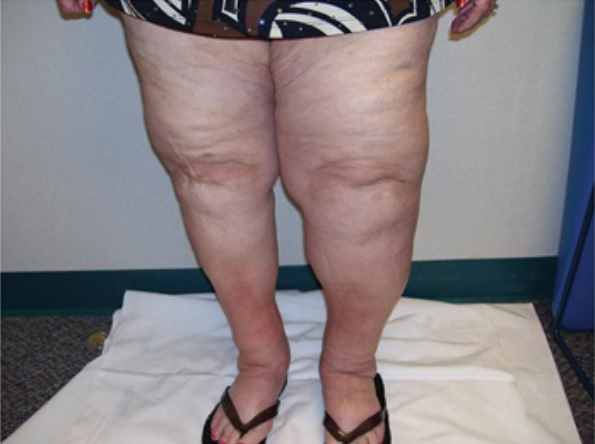
  • Edema con fóvea:
    • Edema por exceso de líquido sin exceso de coloide
    • Deja “hundimientos” debido al desplazamiento del fluido cuando se aplica presión en la zona
  • Edema sin fóvea:
    • Edema causado por exceso de coloide sin exceso de líquido:
      • Linfedema: problemas de drenaje linfático, las proteínas se acumulan en el intersticio
      • Mixedema: acumulación de mucopolisacáridos hidrofílicos en el tejido, lo que provoca una retención de líquidos
    • No deja fóvea porque el fluido es “retenido” por las proteínas

Edema Edema Edema is a condition in which excess serous fluid accumulates in the body cavity or interstitial space of connective tissues. Edema is a symptom observed in several medical conditions. It can be categorized into 2 types, namely, peripheral (in the extremities) and internal (in an organ or body cavity). Edema interno

  • Ascitis: acumulación de líquido en EN Erythema nodosum is an immune-mediated panniculitis (inflammation of the subcutaneous fat) caused by a type IV (delayed-type) hypersensitivity reaction. It commonly manifests in young women as tender, erythematous nodules on the shins. Erythema Nodosum el abdomen
  • Hidrotórax: acumulación de líquido en EN Erythema nodosum is an immune-mediated panniculitis (inflammation of the subcutaneous fat) caused by a type IV (delayed-type) hypersensitivity reaction. It commonly manifests in young women as tender, erythematous nodules on the shins. Erythema Nodosum la cavidad pleural (también conocido como derrame pleural)
  • Anasarca Anasarca Hookworm Infections: edema Edema Edema is a condition in which excess serous fluid accumulates in the body cavity or interstitial space of connective tissues. Edema is a symptom observed in several medical conditions. It can be categorized into 2 types, namely, peripheral (in the extremities) and internal (in an organ or body cavity). Edema generalizado
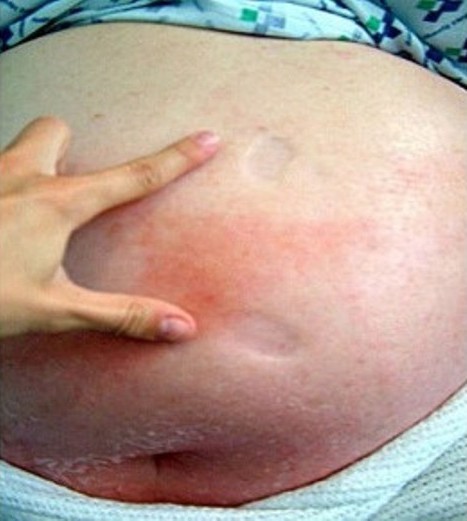
Fotografía que muestra un marcado edema con fóvea y eritema con bordes mal delimitados debido a celulitis

Celulitis de la pared abdominal:
Imagen que muestra un marcado edema con fóvea y eritema con bordes mal delimitados debido a la celulitis

Imagen: “How 40 kilograms of fluid retention can be overlooked: two case reports” por Ong HS, Sze CW, Koh TW, Coppack SW. Licencia: CC BY 2.0

Relevancia Clínica

Las siguientes afecciones suelen provocar edemas:
  • Insuficiencia cardíaca: enfermedad en EN Erythema nodosum is an immune-mediated panniculitis (inflammation of the subcutaneous fat) caused by a type IV (delayed-type) hypersensitivity reaction. It commonly manifests in young women as tender, erythematous nodules on the shins. Erythema Nodosum la que el corazón es incapaz de bombear suficiente sangre al AL Amyloidosis resto del cuerpo, lo que provoca una acumulación de líquidos que condiciona la aparición de edema Edema Edema is a condition in which excess serous fluid accumulates in the body cavity or interstitial space of connective tissues. Edema is a symptom observed in several medical conditions. It can be categorized into 2 types, namely, peripheral (in the extremities) and internal (in an organ or body cavity). Edema. La localización del edema Edema Edema is a condition in which excess serous fluid accumulates in the body cavity or interstitial space of connective tissues. Edema is a symptom observed in several medical conditions. It can be categorized into 2 types, namely, peripheral (in the extremities) and internal (in an organ or body cavity). Edema depende del lado del corazón afectado. La insuficiencia cardíaca derecha provoca un edema Edema Edema is a condition in which excess serous fluid accumulates in the body cavity or interstitial space of connective tissues. Edema is a symptom observed in several medical conditions. It can be categorized into 2 types, namely, peripheral (in the extremities) and internal (in an organ or body cavity). Edema periférico en EN Erythema nodosum is an immune-mediated panniculitis (inflammation of the subcutaneous fat) caused by a type IV (delayed-type) hypersensitivity reaction. It commonly manifests in young women as tender, erythematous nodules on the shins. Erythema Nodosum las piernas, mientras que la izquierda provoca un edema Edema Edema is a condition in which excess serous fluid accumulates in the body cavity or interstitial space of connective tissues. Edema is a symptom observed in several medical conditions. It can be categorized into 2 types, namely, peripheral (in the extremities) and internal (in an organ or body cavity). Edema pulmonar. El tratamiento es con diuréticos y vasodilatadores.
  • Síndrome nefrótico: grupo de afecciones caracterizadas por la proteinuria Proteinuria The presence of proteins in the urine, an indicator of kidney diseases. Nephrotic Syndrome in Children (aproximadamente 3–3,5 gramos de proteínas en EN Erythema nodosum is an immune-mediated panniculitis (inflammation of the subcutaneous fat) caused by a type IV (delayed-type) hypersensitivity reaction. It commonly manifests in young women as tender, erythematous nodules on the shins. Erythema Nodosum un periodo de 24 horas). La pérdida de proteínas provoca una disminución de los LOS Neisseria niveles de albúmina en EN Erythema nodosum is an immune-mediated panniculitis (inflammation of the subcutaneous fat) caused by a type IV (delayed-type) hypersensitivity reaction. It commonly manifests in young women as tender, erythematous nodules on the shins. Erythema Nodosum sangre y el consiguiente edema Edema Edema is a condition in which excess serous fluid accumulates in the body cavity or interstitial space of connective tissues. Edema is a symptom observed in several medical conditions. It can be categorized into 2 types, namely, peripheral (in the extremities) and internal (in an organ or body cavity). Edema debido a la pérdida de presión oncótica capilar. El síndrome nefrótico provoca anasarca Anasarca Hookworm Infections ( edema Edema Edema is a condition in which excess serous fluid accumulates in the body cavity or interstitial space of connective tissues. Edema is a symptom observed in several medical conditions. It can be categorized into 2 types, namely, peripheral (in the extremities) and internal (in an organ or body cavity). Edema generalizado).
  • Cirrosis hepática: una enfermedad hepática fibrótica crónica asociada a insuficiencia hepática. El tejido hepático fibrótico conduce a hipertensión, que puede dar lugar a ascitis. La ascitis transudativa provoca la acumulación de líquido en EN Erythema nodosum is an immune-mediated panniculitis (inflammation of the subcutaneous fat) caused by a type IV (delayed-type) hypersensitivity reaction. It commonly manifests in young women as tender, erythematous nodules on the shins. Erythema Nodosum la cavidad abdominal. Se produce una insuficiencia hepática que da lugar a niveles bajos de albúmina y proteínas en EN Erythema nodosum is an immune-mediated panniculitis (inflammation of the subcutaneous fat) caused by a type IV (delayed-type) hypersensitivity reaction. It commonly manifests in young women as tender, erythematous nodules on the shins. Erythema Nodosum la sangre, lo que provoca edema Edema Edema is a condition in which excess serous fluid accumulates in the body cavity or interstitial space of connective tissues. Edema is a symptom observed in several medical conditions. It can be categorized into 2 types, namely, peripheral (in the extremities) and internal (in an organ or body cavity). Edema de las extremidades inferiores. El tratamiento se enfoca en EN Erythema nodosum is an immune-mediated panniculitis (inflammation of the subcutaneous fat) caused by a type IV (delayed-type) hypersensitivity reaction. It commonly manifests in young women as tender, erythematous nodules on the shins. Erythema Nodosum la enfermedad hepática subyacente y paracentesis Paracentesis A procedure in which fluid is withdrawn from a body cavity or organ via a trocar and cannula, needle, or other hollow instrument. Portal Hypertension para la eliminación del líquido abdominal.
  • Shock Shock Shock is a life-threatening condition associated with impaired circulation that results in tissue hypoxia. The different types of shock are based on the underlying cause: distributive (↑ cardiac output (CO), ↓ systemic vascular resistance (SVR)), cardiogenic (↓ CO, ↑ SVR), hypovolemic (↓ CO, ↑ SVR), obstructive (↓ CO), and mixed. Types of Shock distributivo: una distribución anormal del flujo sanguíneo que condiciona un suministro inadecuado de sangre a los LOS Neisseria tejidos y órganos. El aumento de la permeabilidad capilar y la vasodilatación dan como resultado un estado grave caracterizado por una baja resistencia vascular sistémica y un alto gasto cardíaco que provoca enrojecimiento, baja presión arterial y síncope. El shock Shock Shock is a life-threatening condition associated with impaired circulation that results in tissue hypoxia. The different types of shock are based on the underlying cause: distributive (↑ cardiac output (CO), ↓ systemic vascular resistance (SVR)), cardiogenic (↓ CO, ↑ SVR), hypovolemic (↓ CO, ↑ SVR), obstructive (↓ CO), and mixed. Types of Shock séptico es el tipo más común de shock Shock Shock is a life-threatening condition associated with impaired circulation that results in tissue hypoxia. The different types of shock are based on the underlying cause: distributive (↑ cardiac output (CO), ↓ systemic vascular resistance (SVR)), cardiogenic (↓ CO, ↑ SVR), hypovolemic (↓ CO, ↑ SVR), obstructive (↓ CO), and mixed. Types of Shock distributivo.
  • Linfedema: acumulación anormal de líquido rico en EN Erythema nodosum is an immune-mediated panniculitis (inflammation of the subcutaneous fat) caused by a type IV (delayed-type) hypersensitivity reaction. It commonly manifests in young women as tender, erythematous nodules on the shins. Erythema Nodosum proteínas en EN Erythema nodosum is an immune-mediated panniculitis (inflammation of the subcutaneous fat) caused by a type IV (delayed-type) hypersensitivity reaction. It commonly manifests in young women as tender, erythematous nodules on the shins. Erythema Nodosum el intersticio que resulta de una obstrucción del drenaje linfático. El aumento del contenido proteico del tejido extravascular provoca la retención de agua y la hinchazón de los LOS Neisseria tejidos blandos. El aumento de las proteínas extravasculares estimula la proliferación de fibroblastos, la organización de los LOS Neisseria fluidos y la hinchazón sin fóvea de la extremidad afectada.

Referencias

  1. Koeppen, B.M., Stanton, B.A. (2013). 1 – Physiology of Body Fluids, Editor(s): Renal Physiology (5th Edition), Mosby, Pages 1–14. https://www.sciencedirect.com/science/article/pii/B9780323086912000016
  2. Whiting, E., McCready, M.E. (2016). Pitting and non-pitting oedema. The Medical Journal of Australia, 205(4), 157–158. https://doi.org/10.5694/mja16.00416
  3. Hou, W., Sanyal, A.J. (2009). Ascites: Diagnosis and management. The Medical Clinics of North America, 93(4), 801–817. https://doi.org/10.1016/j.mcna.2009.03.007

¡Crea tu cuenta gratis o inicia una sesión para seguir leyendo!

Regístrate ahora y obtén acceso gratuito a Lecturio con páginas de concepto, videos médicos y cuestionarios para tu educación médica.

User Reviews

Que tengas una sesión de estudio alegre y navideña 🎁 Ahorra 50% en todos los planes >>

Details