Domina Conceptos Médicos

Estudia para la escuela de medicina y tus examenes con Lecturio.

Divertículo De Meckel

Un divertículo de Meckel es un remanente persistente del conducto onfalomesentérico (vitelino). Un divertículo de Meckel suele estar situado en EN Erythema nodosum is an immune-mediated panniculitis (inflammation of the subcutaneous fat) caused by a type IV (delayed-type) hypersensitivity reaction. It commonly manifests in young women as tender, erythematous nodules on the shins. Erythema Nodosum el borde antimesentérico del íleon. El revestimiento de la mucosa del divertículo puede contener mucosa heterotópica (más comúnmente gástrica). Aunque con frecuencia es asintomático, un divertículo de Meckel puede provocar una ulceración y presentar una hemorragia digestiva baja. Otras complicaciones son la diverticulitis Diverticulitis Inflammation of a diverticulum or diverticula. Diverticular Disease o la obstrucción del intestino delgado. Una gammagrafía de Meckel puede detectar el divertículo en EN Erythema nodosum is an immune-mediated panniculitis (inflammation of the subcutaneous fat) caused by a type IV (delayed-type) hypersensitivity reaction. It commonly manifests in young women as tender, erythematous nodules on the shins. Erythema Nodosum pacientes hemodinámicamente estables. Para los LOS Neisseria que tienen una hemorragia activa, la arteriografía es la opción diagnóstica. El tratamiento de un divertículo de Meckel sintomático es la cirugía.

Last updated: Dec 15, 2025

Editorial responsibility: Stanley Oiseth, Lindsay Jones, Evelin Maza

Descripción General

Definición

Un divertículo de Meckel es un remanente persistente del conducto onfalomesentérico. Un divertículo de Meckel es un verdadero divertículo (contiene todas las capas de la pared intestinal), que surge de la superficie antimesentérica del íleon medio-distal.
Epidemiología

  • La anomalía congénita más común del tracto gastrointestinal
  • Prevalencia: aproximadamente el 2% de la población
  • Sexo: hombres > mujeres (2:1)
  • Lo más habitual es que los LOS Neisseria síntomas se presenten entre los LOS Neisseria 2–4 años de edad
  • Mayor incidencia en EN Erythema nodosum is an immune-mediated panniculitis (inflammation of the subcutaneous fat) caused by a type IV (delayed-type) hypersensitivity reaction. It commonly manifests in young women as tender, erythematous nodules on the shins. Erythema Nodosum niños con malformaciones mayores que afectan:
    • Ombligo
    • Tracto gastrointestinal
    • Sistema nervioso
    • Corazón

Regla del 2

  • 2% de la población
  • 2 veces más frecuente en EN Erythema nodosum is an immune-mediated panniculitis (inflammation of the subcutaneous fat) caused by a type IV (delayed-type) hypersensitivity reaction. It commonly manifests in young women as tender, erythematous nodules on the shins. Erythema Nodosum los LOS Neisseria hombres
  • Se presenta con frecuencia a los LOS Neisseria 2 años de edad
  • El 2% desarrolla síntomas/complicaciones
  • 2 pulgadas de largo
  • 2 pies de la válvula ileocecal

Etiología

  • Conducto onfalomesentérico:
    • Conecta el intestino medio con el saco vitelino en EN Erythema nodosum is an immune-mediated panniculitis (inflammation of the subcutaneous fat) caused by a type IV (delayed-type) hypersensitivity reaction. It commonly manifests in young women as tender, erythematous nodules on the shins. Erythema Nodosum el útero
    • Normalmente involuciona entre la 5ta y 6ta semana de gestación
  • El conducto onfalomesentérico que no involuciona completamente puede dar lugar a:
    • Un divertículo de Meckel (remanente persistente más común)
    • Quistes onfalomesentéricos
    • Fístula onfalomesentérica (drenaje a través del ombligo)
    • Bandas fibrosas (pueden causar obstrucción intestinal)
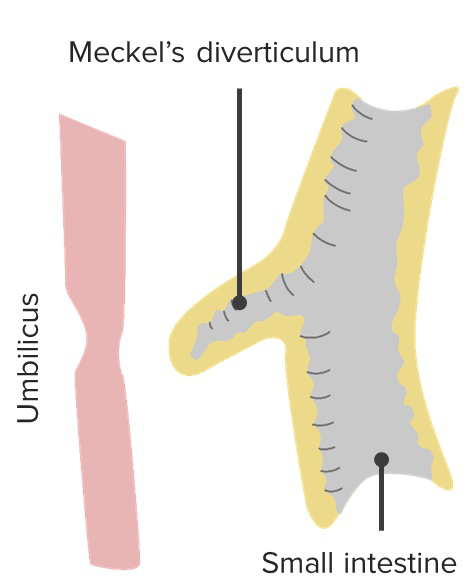
Divertículo de Meckel

Un divertículo de Meckel

Imagen por Lecturio.
Related videos

Fisiopatología y Presentación Clínica

Anatomía

  • Divertículo verdadero: contiene todas las capas histológicas del tracto intestinal
  • Situado en EN Erythema nodosum is an immune-mediated panniculitis (inflammation of the subcutaneous fat) caused by a type IV (delayed-type) hypersensitivity reaction. It commonly manifests in young women as tender, erythematous nodules on the shins. Erythema Nodosum el íleon medio y distal (a 60 cm de la válvula ileocecal)
  • Suele surgir de la superficie antimesentérica
  • Revestimiento de la mucosa:
    • Se asemeja a un intestino delgado normal
    • Pero puede contener mucosa ectópica (heterotópica) (12%–44%):
      • Gástrica (más común)
      • Pancreática
      • Colónica
  • Suministro de sangre: arteria vitelina (una rama de la arteria mesentérica superior)
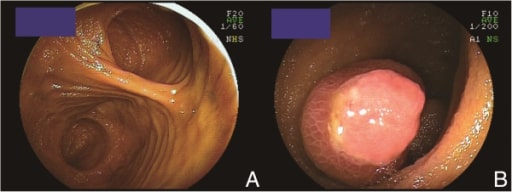
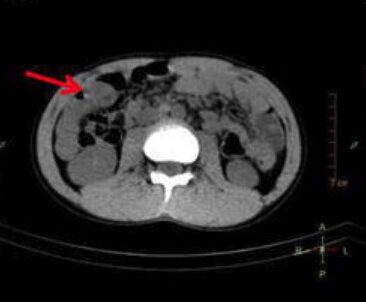
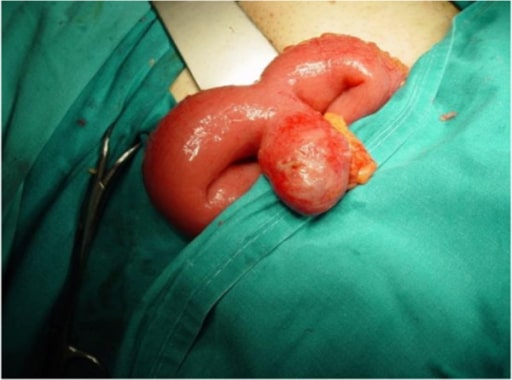
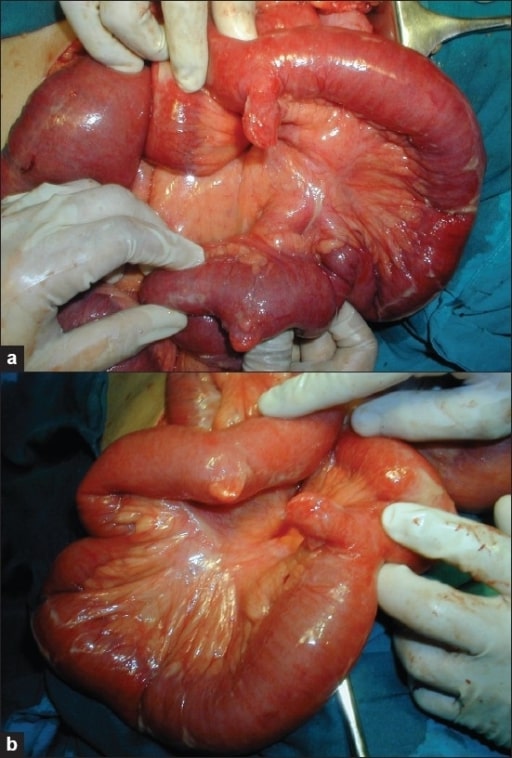
Doble divertículo de Meckel

Imágenes (a) y (b) mostrando un doble divertículo de Meckel

Imagen: “Photograph showing double Meckel’s diverticulum” por the Department of General Surgery, Fr. Muller Medical College Hospital, Kankanady, Mangalore (D.K.), Karnataka, India. Licencia: CC BY 2.0.
Fisiopatología

  • Hemorragia digestiva:
    • Se produce si un divertículo de Meckel contiene mucosa gástrica ectópica
    • La mucosa gástrica secreta ácido y se produce una ulceración → la ulceración es posterior o en EN Erythema nodosum is an immune-mediated panniculitis (inflammation of the subcutaneous fat) caused by a type IV (delayed-type) hypersensitivity reaction. It commonly manifests in young women as tender, erythematous nodules on the shins. Erythema Nodosum la mucosa del intestino delgado adyacente → hemorragia
  • Diverticulitis Diverticulitis Inflammation of a diverticulum or diverticula. Diverticular Disease de Meckel:
    • Inflamación aguda de un divertículo de Meckel (similar a la apendicitis)
    • El orificio diverticular se obstruye (fecalito, alimento, cuerpo extraño, tumor Tumor Inflammation), lo que provoca un sobrecrecimiento bacteriano y una inflamación.
    • Puede provocar isquemia y perforación en EN Erythema nodosum is an immune-mediated panniculitis (inflammation of the subcutaneous fat) caused by a type IV (delayed-type) hypersensitivity reaction. It commonly manifests in young women as tender, erythematous nodules on the shins. Erythema Nodosum casos graves
  • La obstrucción del intestino delgado puede ser el resultado de varios mecanismos:
    • Intususcepción:
      • Una parte del intestino se introduce en EN Erythema nodosum is an immune-mediated panniculitis (inflammation of the subcutaneous fat) caused by a type IV (delayed-type) hypersensitivity reaction. It commonly manifests in young women as tender, erythematous nodules on the shins. Erythema Nodosum sí mismo.
      • El divertículo de Meckel actúa como un punto de entrada.
    • Vólvulo:
      • El divertículo de Meckel a veces tiene bandas fibrosas que se conectan al AL Amyloidosis peritoneo/pared abdominal.
      • Los LOS Neisseria intestinos pueden retorcerse alrededor de las bandas fibrosas.
    • Torsión: giro del propio divertículo
    • Diverticulitis Diverticulitis Inflammation of a diverticulum or diverticula. Diverticular Disease de Meckel: La inflamación puede estrechar la luz del intestino delgado adyacente.
    • Hernia Hernia Protrusion of tissue, structure, or part of an organ through the bone, muscular tissue, or the membrane by which it is normally contained. Hernia may involve tissues such as the abdominal wall or the respiratory diaphragm. Hernias may be internal, external, congenital, or acquired. Abdominal Hernias de Littre: El divertículo se encarcela en EN Erythema nodosum is an immune-mediated panniculitis (inflammation of the subcutaneous fat) caused by a type IV (delayed-type) hypersensitivity reaction. It commonly manifests in young women as tender, erythematous nodules on the shins. Erythema Nodosum una hernia Hernia Protrusion of tissue, structure, or part of an organ through the bone, muscular tissue, or the membrane by which it is normally contained. Hernia may involve tissues such as the abdominal wall or the respiratory diaphragm. Hernias may be internal, external, congenital, or acquired. Abdominal Hernias.
    • Inversión: El divertículo se invierte en EN Erythema nodosum is an immune-mediated panniculitis (inflammation of the subcutaneous fat) caused by a type IV (delayed-type) hypersensitivity reaction. It commonly manifests in young women as tender, erythematous nodules on the shins. Erythema Nodosum la luz del intestino y provoca una obstrucción intermitente.

Presentación Clínica

  • Frecuentemente asintomático
  • El 25%–50% de los LOS Neisseria pacientes sintomáticos tienen < 10 años de edad.
  • En EN Erythema nodosum is an immune-mediated panniculitis (inflammation of the subcutaneous fat) caused by a type IV (delayed-type) hypersensitivity reaction. It commonly manifests in young women as tender, erythematous nodules on the shins. Erythema Nodosum adultos (especialmente < 40 años de edad): Se sospecha de un divertículo de Meckel si no hay una fuente identificable de hemorragia digestiva.
  • Presentación similar en EN Erythema nodosum is an immune-mediated panniculitis (inflammation of the subcutaneous fat) caused by a type IV (delayed-type) hypersensitivity reaction. It commonly manifests in young women as tender, erythematous nodules on the shins. Erythema Nodosum niños y adultos:
    • Hemorragia digestiva baja indolora (la más común):
      • Aguda (hematoquecia masiva)
      • Crónica/lenta ( melena Melena The black, tarry, foul-smelling feces that contain degraded blood. Gastrointestinal Bleeding; gelatina de grosella o heces granates en EN Erythema nodosum is an immune-mediated panniculitis (inflammation of the subcutaneous fat) caused by a type IV (delayed-type) hypersensitivity reaction. It commonly manifests in young women as tender, erythematous nodules on the shins. Erythema Nodosum niños)
    • Obstrucción del intestino delgado:
      • Náuseas/vómitos
      • Dolor Dolor Inflammation abdominal tipo cólico
      • Distensión abdominal
      • En EN Erythema nodosum is an immune-mediated panniculitis (inflammation of the subcutaneous fat) caused by a type IV (delayed-type) hypersensitivity reaction. It commonly manifests in young women as tender, erythematous nodules on the shins. Erythema Nodosum los LOS Neisseria niños: más comúnmente en EN Erythema nodosum is an immune-mediated panniculitis (inflammation of the subcutaneous fat) caused by a type IV (delayed-type) hypersensitivity reaction. It commonly manifests in young women as tender, erythematous nodules on the shins. Erythema Nodosum forma de invaginación recurrente
    • Diverticulitis Diverticulitis Inflammation of a diverticulum or diverticula. Diverticular Disease de Meckel:
      • Síntomas similares a la apendicitis aguda
      • Con signos de irritación peritoneal si está perforado
      • La sensibilidad abdominal suele ser más en EN Erythema nodosum is an immune-mediated panniculitis (inflammation of the subcutaneous fat) caused by a type IV (delayed-type) hypersensitivity reaction. It commonly manifests in young women as tender, erythematous nodules on the shins. Erythema Nodosum la línea media.

Diagnóstico

Pruebas para hemorragia digestiva

  • Radiología:
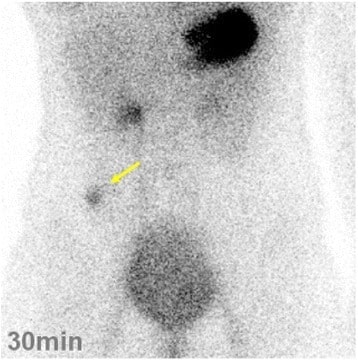
    • La gammagrafía de Meckel:
      • Se utiliza como prueba de 1ra línea en EN Erythema nodosum is an immune-mediated panniculitis (inflammation of the subcutaneous fat) caused by a type IV (delayed-type) hypersensitivity reaction. It commonly manifests in young women as tender, erythematous nodules on the shins. Erythema Nodosum pacientes hemodinámicamente estables y si la sospecha es alta (normalmente niños)
      • Estudio de medicina nuclear que utiliza tecnecio marcado radioactivamente que se une a la mucosa gástrica
      • La mucosa gástrica ectópica se identifica en EN Erythema nodosum is an immune-mediated panniculitis (inflammation of the subcutaneous fat) caused by a type IV (delayed-type) hypersensitivity reaction. It commonly manifests in young women as tender, erythematous nodules on the shins. Erythema Nodosum la gammagrafía.
    • Arteriografía:
      • Si la hemorragia es lo suficientemente intensa como para necesitar una transfusión de sangre
      • Se puede identificar una rama anómala de la arteria mesentérica superior que alimenta al AL Amyloidosis divertículo de Meckel.
      • Prueba invasiva
    • Angiografía por tomografía computarizada (TC):
      • Más sensible que la arteriografía para las hemorragias de menor riesgo
      • Detecta hemorragias lentas (0,3 mL/min)
  • Endoscopia:
    • Cápsula endoscópica: puede visualizar un divertículo de Meckel normal, sangrante, invertido y ulcerado
    • Enteroscopia de doble balón:
      • Confirma el diagnóstico y las complicaciones mediante la visualización
      • El enteroscopio puede pasarse por la boca hasta el intestino delgado, o de forma retrógrada, a través del colon Colon The large intestines constitute the last portion of the digestive system. The large intestine consists of the cecum, appendix, colon (with ascending, transverse, descending, and sigmoid segments), rectum, and anal canal. The primary function of the colon is to remove water and compact the stool prior to expulsion from the body via the rectum and anal canal. Colon, Cecum, and Appendix: Anatomy.
      • Requiere conocimientos especializados y más tiempo

Pruebas de obstrucción del intestino delgado y diverticulitis Diverticulitis Inflammation of a diverticulum or diverticula. Diverticular Disease

  • TC:
    • Identificará la obstrucción, presencia de cambios inflamatorios y/o perforación
    • El divertículo de Meckel se diagnostica correctamente en EN Erythema nodosum is an immune-mediated panniculitis (inflammation of the subcutaneous fat) caused by a type IV (delayed-type) hypersensitivity reaction. It commonly manifests in young women as tender, erythematous nodules on the shins. Erythema Nodosum aproximadamente el 50% de los LOS Neisseria casos.
  • Laparoscopia diagnóstica:
    • Se realiza si los LOS Neisseria estudios de imagenología son equívocos (es difícil distinguir un divertículo inflamado de una apendicitis en EN Erythema nodosum is an immune-mediated panniculitis (inflammation of the subcutaneous fat) caused by a type IV (delayed-type) hypersensitivity reaction. It commonly manifests in young women as tender, erythematous nodules on the shins. Erythema Nodosum la imagenología)
    • Puede ser tanto terapéutica como diagnóstica

Tratamiento

Asintomático

  • Un divertículo de Meckel encontrado incidentalmente en EN Erythema nodosum is an immune-mediated panniculitis (inflammation of the subcutaneous fat) caused by a type IV (delayed-type) hypersensitivity reaction. It commonly manifests in young women as tender, erythematous nodules on the shins. Erythema Nodosum la imagenología: no es necesario un tratamiento
  • Un divertículo de Meckel encontrado durante la cirugía (por otra afección):
    • Considerar:
      • Estado clínico (mayor riesgo perioperatorio en EN Erythema nodosum is an immune-mediated panniculitis (inflammation of the subcutaneous fat) caused by a type IV (delayed-type) hypersensitivity reaction. It commonly manifests in young women as tender, erythematous nodules on the shins. Erythema Nodosum pacientes de edad avanzada)
      • Riesgo de complicaciones a lo largo de la vida (mayor en EN Erythema nodosum is an immune-mediated panniculitis (inflammation of the subcutaneous fat) caused by a type IV (delayed-type) hypersensitivity reaction. It commonly manifests in young women as tender, erythematous nodules on the shins. Erythema Nodosum los LOS Neisseria niños)
      • Sexo masculino (mayor riesgo sintomático)
      • Anomalías o características diverticulares (que aumentan el riesgo de complicaciones)
    • Se recomienda la resección:
      • En EN Erythema nodosum is an immune-mediated panniculitis (inflammation of the subcutaneous fat) caused by a type IV (delayed-type) hypersensitivity reaction. It commonly manifests in young women as tender, erythematous nodules on the shins. Erythema Nodosum los LOS Neisseria niños
      • En EN Erythema nodosum is an immune-mediated panniculitis (inflammation of the subcutaneous fat) caused by a type IV (delayed-type) hypersensitivity reaction. It commonly manifests in young women as tender, erythematous nodules on the shins. Erythema Nodosum personas sanas (< 50 años de edad) adultas: si el divertículo de Meckel es > 2 cm de longitud o se observan anomalías/bandas fibrosas palpables
      • En EN Erythema nodosum is an immune-mediated panniculitis (inflammation of the subcutaneous fat) caused by a type IV (delayed-type) hypersensitivity reaction. It commonly manifests in young women as tender, erythematous nodules on the shins. Erythema Nodosum pacientes > 50 años de edad o con comorbilidades: si hay una anomalía palpable (mucosa heterotópica, posible tumor Tumor Inflammation, bandas fibrosas)
    • No se recomienda la resección: si el paciente tiene > 50 años y no hay ninguna anomalía palpable
  • Debe proporcionarse asesoramiento sobre los LOS Neisseria posibles síntomas futuros.

Sintomático

  • De soporte:
    • Hidratación y reanimación intravenosa
    • Transfusión de sangre si es necesario (para la hemorragia digestiva)
    • Reposo intestinal, descompresión con sonda nasogástrica (para obstrucción del intestino delgado)
    • Antibióticos intravenosos (para la diverticulitis Diverticulitis Inflammation of a diverticulum or diverticula. Diverticular Disease de Meckel)
  • Cirugía (tratamiento definitivo):
    • De emergencia si hay signos de sepsis Sepsis Systemic inflammatory response syndrome with a proven or suspected infectious etiology. When sepsis is associated with organ dysfunction distant from the site of infection, it is called severe sepsis. When sepsis is accompanied by hypotension despite adequate fluid infusion, it is called septic shock. Sepsis and Septic Shock, peritonitis Peritonitis Inflammation of the peritoneum lining the abdominal cavity as the result of infectious, autoimmune, or chemical processes. Primary peritonitis is due to infection of the peritoneal cavity via hematogenous or lymphatic spread and without intra-abdominal source. Secondary peritonitis arises from the abdominal cavity itself through rupture or abscess of intra-abdominal organs. Penetrating Abdominal Injury, perforación
    • Resección del divertículo de Meckel
    • Resección segmentaria del intestino delgado (incluyendo el divertículo de Meckel):
      • Incluir la mucosa ulcerada sangrante
      • Si el intestino delgado adyacente está gravemente inflamado/isquémico

Diagnóstico Diferencial

  • Apendicitis aguda: se presenta con dolor Dolor Inflammation abdominal y sensibilidad sobre todo en EN Erythema nodosum is an immune-mediated panniculitis (inflammation of the subcutaneous fat) caused by a type IV (delayed-type) hypersensitivity reaction. It commonly manifests in young women as tender, erythematous nodules on the shins. Erythema Nodosum el cuadrante inferior derecho. Una TC puede ayudar a diferenciar entre un divertículo de Meckel y una apendicitis, pero no con una precisión del 100%. A veces el diagnóstico definitivo solo se hace HACE Altitude Sickness en EN Erythema nodosum is an immune-mediated panniculitis (inflammation of the subcutaneous fat) caused by a type IV (delayed-type) hypersensitivity reaction. It commonly manifests in young women as tender, erythematous nodules on the shins. Erythema Nodosum la cirugía.
  • Intususcepción por otras causas: en EN Erythema nodosum is an immune-mediated panniculitis (inflammation of the subcutaneous fat) caused by a type IV (delayed-type) hypersensitivity reaction. It commonly manifests in young women as tender, erythematous nodules on the shins. Erythema Nodosum bebés y niños pequeños, se presenta clásicamente como dolor Dolor Inflammation abdominal cólico intermitente con heces de gelatina de grosella. Los LOS Neisseria adultos y los LOS Neisseria niños mayores presentan síntomas de obstrucción intestinal. La intususcepción en EN Erythema nodosum is an immune-mediated panniculitis (inflammation of the subcutaneous fat) caused by a type IV (delayed-type) hypersensitivity reaction. It commonly manifests in young women as tender, erythematous nodules on the shins. Erythema Nodosum los LOS Neisseria niños pequeños suele ser idiopática, pero en EN Erythema nodosum is an immune-mediated panniculitis (inflammation of the subcutaneous fat) caused by a type IV (delayed-type) hypersensitivity reaction. It commonly manifests in young women as tender, erythematous nodules on the shins. Erythema Nodosum los LOS Neisseria adultos, la intususcepción está frecuentemente asociada a tumores.
  • Vólvulo (por malrotación): afección congénita que suele manifestarse en EN Erythema nodosum is an immune-mediated panniculitis (inflammation of the subcutaneous fat) caused by a type IV (delayed-type) hypersensitivity reaction. It commonly manifests in young women as tender, erythematous nodules on the shins. Erythema Nodosum la infancia, pero a veces no hasta la edad adulta. La torsión del mesenterio provoca una isquemia intestinal. Un vólvulo se presenta con dolor Dolor Inflammation abdominal intenso y heces con sangre en EN Erythema nodosum is an immune-mediated panniculitis (inflammation of the subcutaneous fat) caused by a type IV (delayed-type) hypersensitivity reaction. It commonly manifests in young women as tender, erythematous nodules on the shins. Erythema Nodosum los LOS Neisseria casos avanzados. Un vólvulo requiere cirugía de urgencia.
  • Diverticulosis Diverticulosis A pathological condition characterized by the presence of a number of colonic diverticula in the colon. Its pathogenesis is multifactorial, including colon aging, motor dysfunction, increases in intraluminal pressure, and lack of dietary fibers. Diverticular Disease colónica y malformaciones arteriovenosas: causas más comunes de hemorragia digestiva baja indolora en EN Erythema nodosum is an immune-mediated panniculitis (inflammation of the subcutaneous fat) caused by a type IV (delayed-type) hypersensitivity reaction. It commonly manifests in young women as tender, erythematous nodules on the shins. Erythema Nodosum adultos mayores. La diverticulosis Diverticulosis A pathological condition characterized by the presence of a number of colonic diverticula in the colon. Its pathogenesis is multifactorial, including colon aging, motor dysfunction, increases in intraluminal pressure, and lack of dietary fibers. Diverticular Disease colónica y las malformaciones arteriovenosas pueden presentarse con hemorragias agudas (hematoquecia) o crónicas lentas ( melena Melena The black, tarry, foul-smelling feces that contain degraded blood. Gastrointestinal Bleeding). El diagnóstico suele establecerse mediante colonoscopia o angiografía ( en EN Erythema nodosum is an immune-mediated panniculitis (inflammation of the subcutaneous fat) caused by a type IV (delayed-type) hypersensitivity reaction. It commonly manifests in young women as tender, erythematous nodules on the shins. Erythema Nodosum las malformaciones arteriovenosas que sangran activamente).

Referencias

  1. An, J., & Zabbo, C.P. (2023). Meckel diverticulum. Retrieved July 20, 2025, from https://www.ncbi.nlm.nih.gov/books/NBK499960/
  2. Javid, P.J., & Pauli, E.M. (2023). Meckel’s diverticulum. Retrieved July 20, 2025, from https://www.uptodate.com/contents/meckels-diverticulum
  3. Sagar, J., Kumar, V., & Shah, D. K. (2006). Meckel’s diverticulum: a systematic review. Journal of the Royal Society of Medicine99(10), 501–505. https://doi.org/10.1177/014107680609901011

¡Crea tu cuenta gratis o inicia una sesión para seguir leyendo!

Regístrate ahora y obtén acceso gratuito a Lecturio con páginas de concepto, videos médicos y cuestionarios para tu educación médica.

User Reviews

Que tengas una sesión de estudio alegre y navideña 🎁 Ahorra 50% en todos los planes >>

Details