
Domina Conceptos Médicos

Estudia para la escuela de medicina y tus examenes con Lecturio.

Distonía

La distonía es un trastorno de movimiento hipercinético caracterizado por la contracción involuntaria de los LOS Neisseria músculos, lo que resulta en EN Erythema nodosum is an immune-mediated panniculitis (inflammation of the subcutaneous fat) caused by a type IV (delayed-type) hypersensitivity reaction. It commonly manifests in young women as tender, erythematous nodules on the shins. Erythema Nodosum posturas anormales o movimientos repetitivos y tortuosos. La distonía puede presentarse de varias maneras y puede afectar a muchos grupos de músculos esqueléticos diferentes. La distonía puede ser hereditaria, adquirida o idiopática. El diagnóstico se realiza clínicamente y se recomiendan pruebas genéticas en EN Erythema nodosum is an immune-mediated panniculitis (inflammation of the subcutaneous fat) caused by a type IV (delayed-type) hypersensitivity reaction. It commonly manifests in young women as tender, erythematous nodules on the shins. Erythema Nodosum personas con antecedentes familiares de distonía. El tratamiento es con toxina botulínica u otros medicamentos que actúan sobre los LOS Neisseria diversos neurotransmisores implicados en EN Erythema nodosum is an immune-mediated panniculitis (inflammation of the subcutaneous fat) caused by a type IV (delayed-type) hypersensitivity reaction. It commonly manifests in young women as tender, erythematous nodules on the shins. Erythema Nodosum la patogenia de la distonía.

Last updated: Dec 15, 2025

Editorial responsibility: Stanley Oiseth, Lindsay Jones, Evelin Maza

Descripción General

Definición

La distonía es un grupo de trastornos del movimiento caracterizados por contracciones musculares involuntarias que provocan un control anormal del movimiento y la postura. La distonía es un trastorno hipercinético focal o generalizado que se presenta con una respuesta de contracción muscular excesiva.
Epidemiología

  • Alta prevalencia entre los LOS Neisseria trastornos del movimiento.
  • Se estima que 500 000 adultos y niños se ven afectados en EN Erythema nodosum is an immune-mediated panniculitis (inflammation of the subcutaneous fat) caused by a type IV (delayed-type) hypersensitivity reaction. It commonly manifests in young women as tender, erythematous nodules on the shins. Erythema Nodosum América del Norte.
  • Trastorno heterogéneo con prevalencia variable Variable Variables represent information about something that can change. The design of the measurement scales, or of the methods for obtaining information, will determine the data gathered and the characteristics of that data. As a result, a variable can be qualitative or quantitative, and may be further classified into subgroups. Types of Variables:
    • La distonía focal es más frecuente que la distonía generalizada
    • La distonía cervical es la forma más común de distonía focal
  • Prevalencia de distonía primaria: aproximadamente 16 en EN Erythema nodosum is an immune-mediated panniculitis (inflammation of the subcutaneous fat) caused by a type IV (delayed-type) hypersensitivity reaction. It commonly manifests in young women as tender, erythematous nodules on the shins. Erythema Nodosum 100 000 casos.
  • Prevalencia de portadores de genes Genes A category of nucleic acid sequences that function as units of heredity and which code for the basic instructions for the development, reproduction, and maintenance of organisms. DNA Types and Structure: aproximadamente 20 en EN Erythema nodosum is an immune-mediated panniculitis (inflammation of the subcutaneous fat) caused by a type IV (delayed-type) hypersensitivity reaction. It commonly manifests in young women as tender, erythematous nodules on the shins. Erythema Nodosum 100 000 casos con penetrancia variable Variable Variables represent information about something that can change. The design of the measurement scales, or of the methods for obtaining information, will determine the data gathered and the characteristics of that data. As a result, a variable can be qualitative or quantitative, and may be further classified into subgroups. Types of Variables.

Etiología

  • Distonía primaria (aislada):
    • Relacionada con mutaciones genéticas conocidas:
      • DYT-TOR1A es la mutación genética más común y más estudiada
      • Se han identificado otras variantes DYT causales
    • No debe tener otras causas conocidas (aparte de mutaciones genéticas conocidas)
    • Se presenta sin otros hallazgos neurológicos, excepto temblores o mioclonías
  • Distonía secundaria (adquirida):
    • Causada por lesión o traumatismo externo:
      • Lesión cerebral perinatal
      • Lesión cerebral traumática
      • Lesión cerebral hipóxica
      • Medicamentos antidopaminérgicos
      • Encefalitis por antirreceptor de N-metil-D-aspartato (NMDA)
    • Abarca diversas causas, incluidos trastornos inducidos por medicamentos, degenerativos y metabólicos
  • Distonías idiopáticas:
    • Sin etiología genética o adquirida identificable
    • La mayoría de los LOS Neisseria adultos con distonía focal o segmentaria tienen una etiología idiopática
  • Síndromes de distonía-plus:
    • Sin etiología genética o adquirida identificable
    • Se presenta con distonía Y otros síntomas neurológicos

Fisiopatología

  • No hay hallazgos consistentes en EN Erythema nodosum is an immune-mediated panniculitis (inflammation of the subcutaneous fat) caused by a type IV (delayed-type) hypersensitivity reaction. It commonly manifests in young women as tender, erythematous nodules on the shins. Erythema Nodosum el examen patológico en EN Erythema nodosum is an immune-mediated panniculitis (inflammation of the subcutaneous fat) caused by a type IV (delayed-type) hypersensitivity reaction. It commonly manifests in young women as tender, erythematous nodules on the shins. Erythema Nodosum la distonía primaria.
  • Sin evidencia de degeneración celular en EN Erythema nodosum is an immune-mediated panniculitis (inflammation of the subcutaneous fat) caused by a type IV (delayed-type) hypersensitivity reaction. It commonly manifests in young women as tender, erythematous nodules on the shins. Erythema Nodosum el examen patológico.
  • Sin defectos consistentes en EN Erythema nodosum is an immune-mediated panniculitis (inflammation of the subcutaneous fat) caused by a type IV (delayed-type) hypersensitivity reaction. It commonly manifests in young women as tender, erythematous nodules on the shins. Erythema Nodosum los LOS Neisseria neurotransmisores en EN Erythema nodosum is an immune-mediated panniculitis (inflammation of the subcutaneous fat) caused by a type IV (delayed-type) hypersensitivity reaction. It commonly manifests in young women as tender, erythematous nodules on the shins. Erythema Nodosum la distonía primaria.
  • Los LOS Neisseria hallazgos de imagenología funcional son variables entre las personas afectadas por distonía. Las regiones involucradas incluyen:
    • Corteza motora
    • Ganglios basales
    • Tronco encefálico
    • Cerebelo
  • Los LOS Neisseria mecanismos que probablemente estén involucrados incluyen:
    • Cambios en EN Erythema nodosum is an immune-mediated panniculitis (inflammation of the subcutaneous fat) caused by a type IV (delayed-type) hypersensitivity reaction. It commonly manifests in young women as tender, erythematous nodules on the shins. Erythema Nodosum los LOS Neisseria circuitos neuronales:
      • Alteración en EN Erythema nodosum is an immune-mediated panniculitis (inflammation of the subcutaneous fat) caused by a type IV (delayed-type) hypersensitivity reaction. It commonly manifests in young women as tender, erythematous nodules on the shins. Erythema Nodosum la comunicación de neurotransmisores de los LOS Neisseria sistemas dopaminérgico y colinérgico del cuerpo estriado
      • Pérdida de la inhibición mediada por GABA GABA The most common inhibitory neurotransmitter in the central nervous system. Receptors and Neurotransmitters of the CNS
    • Basados en EN Erythema nodosum is an immune-mediated panniculitis (inflammation of the subcutaneous fat) caused by a type IV (delayed-type) hypersensitivity reaction. It commonly manifests in young women as tender, erythematous nodules on the shins. Erythema Nodosum modelos animales y de imagenología
  • Neurotransmisores que probablemente estén involucrados:
  • Distonías primarias:
    • Parecen ser trastornos neurofuncionales sin pérdida de neuronas
    • Fuerte componente hereditario
    • Rango de edad variable Variable Variables represent information about something that can change. The design of the measurement scales, or of the methods for obtaining information, will determine the data gathered and the characteristics of that data. As a result, a variable can be qualitative or quantitative, and may be further classified into subgroups. Types of Variables en EN Erythema nodosum is an immune-mediated panniculitis (inflammation of the subcutaneous fat) caused by a type IV (delayed-type) hypersensitivity reaction. It commonly manifests in young women as tender, erythematous nodules on the shins. Erythema Nodosum términos de inicio
  • Distonías secundarias:
    • Síntomas que se cree que resultan de daño al AL Amyloidosis cerebro, específicamente a los LOS Neisseria ganglios basales
    • Los LOS Neisseria circuitos sensoriomotores pueden verse afectados aún más por compuestos tóxicos y estrés fisiológico, entre otras causas
    • Los LOS Neisseria factores estresantes secundarios se combinan para hacer que regiones cerebrales seleccionadas se vuelvan distónicas

Clasificación

Distribución en EN Erythema nodosum is an immune-mediated panniculitis (inflammation of the subcutaneous fat) caused by a type IV (delayed-type) hypersensitivity reaction. It commonly manifests in young women as tender, erythematous nodules on the shins. Erythema Nodosum el cuerpo

  • Focal: afecta 1 región del cuerpo:
    • Músculos perioculares → blefaroespasmo
    • Mandíbula y lengua → distonía oromandibular
    • Distonía laríngea → disfagia
    • Distonía braquial → “espasmo del escritor”
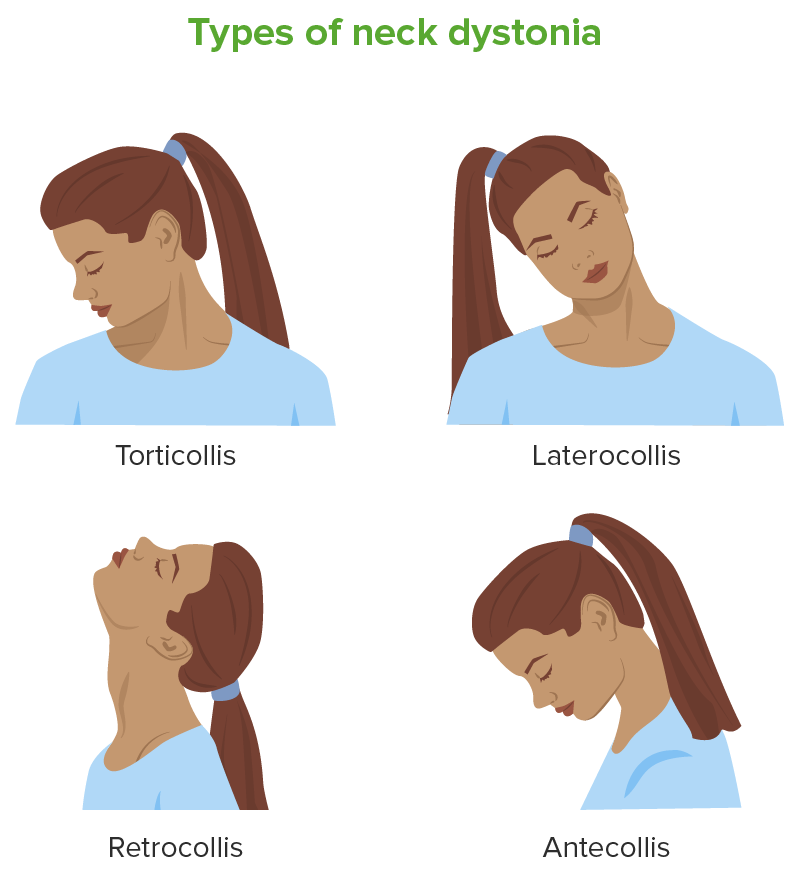
    • Distonía cervical → tortícolis espasmódica
  • Segmentaria: afecta 2 regiones corporales adyacentes:
    • Periocular + oromandibular
    • Cervical + branquial
  • Generalizada: afecta el tronco y ≥ 2 otros sitios:
    • Compromiso del tronco → postura anormal
    • La afectación de extremidades es variable Variable Variables represent information about something that can change. The design of the measurement scales, or of the methods for obtaining information, will determine the data gathered and the characteristics of that data. As a result, a variable can be qualitative or quantitative, and may be further classified into subgroups. Types of Variables
  • Multifocal Multifocal Retinoblastoma:
    • Afecta ≥ 2 regiones corporales no adyacentes
    • No cumple los LOS Neisseria criterios de distonía generalizada
    • Se observa con mayor frecuencia en EN Erythema nodosum is an immune-mediated panniculitis (inflammation of the subcutaneous fat) caused by a type IV (delayed-type) hypersensitivity reaction. It commonly manifests in young women as tender, erythematous nodules on the shins. Erythema Nodosum la distonía de inicio temprano
  • Hemidistonía:
    • Afecta a múltiples regiones del cuerpo en EN Erythema nodosum is an immune-mediated panniculitis (inflammation of the subcutaneous fat) caused by a type IV (delayed-type) hypersensitivity reaction. It commonly manifests in young women as tender, erythematous nodules on the shins. Erythema Nodosum el mismo lado del cuerpo
    • Más comúnmente una manifestación de lesión contralateral (distonía adquirida) a los LOS Neisseria ganglios basales
distonía de cuello

Presentaciones de distonía cervical

Imagen por Lecturio.

Tipos seleccionados de distonías comunes

Tabla: Tipos seleccionados de distonías comunes
Nombre Tipo Inicio Caracteristicas
Distonía de inicio temprano Primaria (heredada en EN Erythema nodosum is an immune-mediated panniculitis (inflammation of the subcutaneous fat) caused by a type IV (delayed-type) hypersensitivity reaction. It commonly manifests in young women as tender, erythematous nodules on the shins. Erythema Nodosum un patrón autosómico dominante) generalizada Infancia
  • Anormalidades progresivas y severas del movimiento
  • Más comúnmente comienza en EN Erythema nodosum is an immune-mediated panniculitis (inflammation of the subcutaneous fat) caused by a type IV (delayed-type) hypersensitivity reaction. It commonly manifests in young women as tender, erythematous nodules on the shins. Erythema Nodosum la(s) pierna(s)
  • Puede tener un temblor asociado
  • Ausencia de otras alteraciones neurológicas o cognitivas
Distonía DYT-TOR1A Primaria (heredada en EN Erythema nodosum is an immune-mediated panniculitis (inflammation of the subcutaneous fat) caused by a type IV (delayed-type) hypersensitivity reaction. It commonly manifests in young women as tender, erythematous nodules on the shins. Erythema Nodosum un patrón autosómico dominante) generalizada Infancia
  • La más común de las distonías de inicio temprano
  • Más comúnmente comienza en EN Erythema nodosum is an immune-mediated panniculitis (inflammation of the subcutaneous fat) caused by a type IV (delayed-type) hypersensitivity reaction. It commonly manifests in young women as tender, erythematous nodules on the shins. Erythema Nodosum la(s) extremidad(es)
  • Comúnmente, pero no siempre progresa a distonía generalizada
  • Ausencia de deterioro cognitivo
Distonía DYT-THAP1 Primaria (heredada en EN Erythema nodosum is an immune-mediated panniculitis (inflammation of the subcutaneous fat) caused by a type IV (delayed-type) hypersensitivity reaction. It commonly manifests in young women as tender, erythematous nodules on the shins. Erythema Nodosum un patrón autosómico dominante) generalizada Adolescencia
  • Inicio temprano, más comúnmente con distonía cráneo-cervical
  • La distonía laríngea es común → disfagia progresiva
  • Se mueve de craneal a caudal para volverse más generalizada
Distonía DYT-KMT2B Primaria (generalmente mutaciones de novo) Infancia
  • Se presenta similar a la distonía DYT-TOR1A, pero se asocia con discapacidades intelectuales, retrasos en EN Erythema nodosum is an immune-mediated panniculitis (inflammation of the subcutaneous fat) caused by a type IV (delayed-type) hypersensitivity reaction. It commonly manifests in young women as tender, erythematous nodules on the shins. Erythema Nodosum el desarrollo, dismorfias faciales y corporales y anomalías endocrinas
  • También se distingue por una alta incidencia de afectación oromandibular, laríngea y cervical
Distonía cervical (tortícolis espasmódica)
  • Primaria
  • Focal
Edad: 30–50 años
  • La más común entre las distonías focales
  • Se presenta con movimientos y posturas anormales del cuello
  • Frecuentemente asociada con dolor Dolor Inflammation
Distonía de extremidades
  • Primaria
  • Focal
Adultez
  • Distonías de acción que impactan en EN Erythema nodosum is an immune-mediated panniculitis (inflammation of the subcutaneous fat) caused by a type IV (delayed-type) hypersensitivity reaction. It commonly manifests in young women as tender, erythematous nodules on the shins. Erythema Nodosum ciertos movimientos
  • Causan una postura de flexión/extensión tortuosa involuntaria de los LOS Neisseria brazos, las piernas o los LOS Neisseria dedos
  • En EN Erythema nodosum is an immune-mediated panniculitis (inflammation of the subcutaneous fat) caused by a type IV (delayed-type) hypersensitivity reaction. It commonly manifests in young women as tender, erythematous nodules on the shins. Erythema Nodosum los LOS Neisseria brazos, por lo general ocurre después de actividades manuales repetitivas
  • Incluye “espasmo del escritor” y distonía del pie
Distonía laríngea (aislada)
  • Primaria
  • Focal
Adultez
  • Contracciones musculares involuntarias intermitentes de los LOS Neisseria músculos laríngeos
  • Interfiere con la función fisiológica
Blefaroespasmo (aislado)
  • Primario
  • Focal
Adultez
  • Contracciones musculares involuntarias intermitentes de los LOS Neisseria párpados
  • Interfiere con la función fisiológica
Distonía de torsión generalizada primaria
  • Primaria
  • Generalizada
Infancia
  • Patrón autosómico dominante vinculado a varios loci genéticos
  • Comienza como distonía focal y, a menudo, progresa a una distribución multifocal Multifocal Retinoblastoma o generalizada
  • Provoca una discapacidad grave debido a deficiencias en EN Erythema nodosum is an immune-mediated panniculitis (inflammation of the subcutaneous fat) caused by a type IV (delayed-type) hypersensitivity reaction. It commonly manifests in young women as tender, erythematous nodules on the shins. Erythema Nodosum la marcha y la postura.
Síndrome de Meige Segmentario primario Por lo general, en EN Erythema nodosum is an immune-mediated panniculitis (inflammation of the subcutaneous fat) caused by a type IV (delayed-type) hypersensitivity reaction. It commonly manifests in young women as tender, erythematous nodules on the shins. Erythema Nodosum la adultez
  • Se presenta con blefaroespasmo y distonía oromandibular
  • Generalmente comienza con blefaroespasmo unilateral, que se extiende al AL Amyloidosis otro lado
  • Disfunción muscular progresiva
Distonía inducida por medicamentos Secundario Después de exposición a medicamentos desencadenantes
  • Los LOS Neisseria medicamentos desencadenantes incluyen antipsicóticos, anticonvulsivos, levodopa Levodopa The naturally occurring form of dihydroxyphenylalanine and the immediate precursor of dopamine. Unlike dopamine itself, it can be taken orally and crosses the blood-brain barrier. It is rapidly taken up by dopaminergic neurons and converted to dopamine. It is used for the treatment of parkinsonian disorders and is usually given with agents that inhibit its conversion to dopamine outside of the central nervous system. Parkinson’s Disease Drugs y agonistas de la dopamina
  • Puede ser focal o generalizada
Trastornos heredodegenerativos Secundario Varía
  • Se presenta con distonía, así como con otros hallazgos neuropatológicos distintivos
  • Abarca un grupo de trastornos degenerativos y metabólicos que tienen una etiología genética
  • Incluye la enfermedad de Wilson, la enfermedad de Parkinson y la enfermedad de Huntington, entre muchas otras
Síndromes de distonía-plus Secundario Generalmente en EN Erythema nodosum is an immune-mediated panniculitis (inflammation of the subcutaneous fat) caused by a type IV (delayed-type) hypersensitivity reaction. It commonly manifests in young women as tender, erythematous nodules on the shins. Erythema Nodosum la infancia
  • Asociado con distonía y otros déficits neurológicos focales
  • Los LOS Neisseria síndromes de distonía-plus no están asociados con hallazgos neuropatológicos conocidos

Related videos

Presentación Clínica

Las contracciones musculares excesivas y frecuentes que conducen a posturas anormales y/o movimientos repetitivos son el sello distintivo de la distonía.

Ejemplos de anomalías del movimiento

  • Posturas anormales:
    • Pueden ser sostenidas
    • Pueden ser intermitentes
  • Movimientos repetitivos
  • Movimientos en EN Erythema nodosum is an immune-mediated panniculitis (inflammation of the subcutaneous fat) caused by a type IV (delayed-type) hypersensitivity reaction. It commonly manifests in young women as tender, erythematous nodules on the shins. Erythema Nodosum patrones
  • Movimientos de torsión
  • Temblores

Características de las anomalías del movimiento

Pueden afectar cualquier parte del cuerpo:

  • Focal: afecta 1 región del cuerpo
  • Segmentaria: afecta ≥ 2 regiones corporales adyacentes
  • Generalizada: afecta el tronco y ≥ 2 otros sitios
  • Multifocal Multifocal Retinoblastoma: afecta ≥ 2 regiones corporales no adyacentes
  • Hemidistonía: afecta a múltiples regiones del cuerpo unilateralmente

Empeoradas por la acción voluntaria:

  • Intentos de mantener una postura normal
  • Movimientos coordinados voluntarios (e.g., escribir → “espasmo del escritor”)

Ocurre con mayor frecuencia en EN Erythema nodosum is an immune-mediated panniculitis (inflammation of the subcutaneous fat) caused by a type IV (delayed-type) hypersensitivity reaction. It commonly manifests in young women as tender, erythematous nodules on the shins. Erythema Nodosum sitios anatómicamente distintos:

  • Cuello
  • Extremidades
  • Cara
  • Tronco

Pueden presentarse temprano en EN Erythema nodosum is an immune-mediated panniculitis (inflammation of the subcutaneous fat) caused by a type IV (delayed-type) hypersensitivity reaction. It commonly manifests in young women as tender, erythematous nodules on the shins. Erythema Nodosum la vida (distonía de inicio temprano):

  • Pueden comenzar en EN Erythema nodosum is an immune-mediated panniculitis (inflammation of the subcutaneous fat) caused by a type IV (delayed-type) hypersensitivity reaction. It commonly manifests in young women as tender, erythematous nodules on the shins. Erythema Nodosum:
    • Infancia (0–2 años)
    • Niñez (3–12 años)
    • Adolescencia (13–20 años)
  • Lo más común es que comience como una distonía focal de las extremidades inferiores
  • Es más probable que progrese a distonía generalizada
  • Más a menudo etiologías genéticas o idiopáticas

Pueden presentarse más tarde en EN Erythema nodosum is an immune-mediated panniculitis (inflammation of the subcutaneous fat) caused by a type IV (delayed-type) hypersensitivity reaction. It commonly manifests in young women as tender, erythematous nodules on the shins. Erythema Nodosum la vida (distonía de inicio tardío):

  • Puede comenzar en EN Erythema nodosum is an immune-mediated panniculitis (inflammation of the subcutaneous fat) caused by a type IV (delayed-type) hypersensitivity reaction. It commonly manifests in young women as tender, erythematous nodules on the shins. Erythema Nodosum:
    • Adultez temprana (21–40 años)
    • Adultez tardía (> 40 años)
  • Lo más común es que comience como una distonía focal o segmentaria de la parte superior del cuerpo (e.g., cervical, facial, brazo(s)):
    • La distonía generalizada aislada es rara en EN Erythema nodosum is an immune-mediated panniculitis (inflammation of the subcutaneous fat) caused by a type IV (delayed-type) hypersensitivity reaction. It commonly manifests in young women as tender, erythematous nodules on the shins. Erythema Nodosum adultos
    • Cuando está presente, la exposición a los LOS Neisseria antidopaminérgicos es la causa más común
  • Algunos sitios focales iniciales tienen más probabilidades de diseminarse que otros

Pueden tener dominancia temporal:

  • Fluctuaciones en EN Erythema nodosum is an immune-mediated panniculitis (inflammation of the subcutaneous fat) caused by a type IV (delayed-type) hypersensitivity reaction. It commonly manifests in young women as tender, erythematous nodules on the shins. Erythema Nodosum frecuencia o intensidad con la variación circadiana
  • Empeora a medida que transcurre el período de vigilia
  • Se observa mejoría después de un período de descanso

Pueden tener características dinámicas:

  • La distonía solo se manifiesta con la especificidad de la tarea (i.e., “espasmo de escritor”).
  • Fenómeno de desbordamiento:
    • Puede manifestarse con movimiento distónico involuntario de una extremidad afectada que “refleja” el movimiento voluntario de la extremidad contralateral
    • Puede manifestarse con movimiento distónico involuntario de una región del cuerpo no adyacente o distante con movimiento voluntario de una extremidad o región del cuerpo
  • Truco sensorial:
    • La estimulación sensorial de una parte distónica del cuerpo disminuye los LOS Neisseria movimientos distónicos
    • Observado en EN Erythema nodosum is an immune-mediated panniculitis (inflammation of the subcutaneous fat) caused by a type IV (delayed-type) hypersensitivity reaction. It commonly manifests in young women as tender, erythematous nodules on the shins. Erythema Nodosum aproximadamente el 60% de las personas afectadas con distonía
    • Puede ser útil en EN Erythema nodosum is an immune-mediated panniculitis (inflammation of the subcutaneous fat) caused by a type IV (delayed-type) hypersensitivity reaction. It commonly manifests in young women as tender, erythematous nodules on the shins. Erythema Nodosum el tratamiento de la distonía:
      • Las personas afectadas pueden ser entrenadas para autoadministrarse trucos sensoriales
      • Las personas afectadas pueden incluso ser entrenadas para “imaginar” el truco sensorial para detener los LOS Neisseria movimientos distónicos

Pueden presentarse con trastornos del movimiento comórbidos:

  • Ejemplos:
    • Parkinsonismo + distonía
    • Mioclonía + parkinsonismo
  • Otros hallazgos neurológicos pueden estar presentes:
    • Ataxia Ataxia Impairment of the ability to perform smoothly coordinated voluntary movements. This condition may affect the limbs, trunk, eyes, pharynx, larynx, and other structures. Ataxia may result from impaired sensory or motor function. Sensory ataxia may result from posterior column injury or peripheral nerve diseases. Motor ataxia may be associated with cerebellar diseases; cerebral cortex diseases; thalamic diseases; basal ganglia diseases; injury to the red nucleus; and other conditions. Ataxia-telangiectasia
    • Debilidad
    • Deterioro cognitivo
    • Convulsiones
    • Parálisis oculares

Diagnóstico

La distonía se diagnostica clínicamente sobre la base de una toma de antecedentes y un examen físico completos, con un enfoque particular en EN Erythema nodosum is an immune-mediated panniculitis (inflammation of the subcutaneous fat) caused by a type IV (delayed-type) hypersensitivity reaction. It commonly manifests in young women as tender, erythematous nodules on the shins. Erythema Nodosum los LOS Neisseria hallazgos del examen musculoesquelético y del sistema nervioso.

Antecedentes y examen físico

  • Una historia clínica minuciosa debe distinguir la distonía primaria de la secundaria:
    • Edad de inicio
    • Distribución anatómica
    • Otros síntomas neurológicos
  • Los LOS Neisseria antecedentes deben descartar:
    • Traumatismos (especialmente traumatismo craneoencefálico)
    • Exposición a medicamentos:
      • Medicamentos antidopaminérgicos (agentes bloqueadores de los LOS Neisseria receptores de dopamina)
      • Metoclopramida
      • Antipsicóticos de 1ra generación
      • Antipsicóticos de 2da generación
    • Exposición tóxica
  • Los LOS Neisseria antecedentes familiares de distonía, especialmente, son un factor importante.
  • Un examen físico detallado es clave para diagnosticar tipos específicos de distonía.
    • Presencia de los LOS Neisseria siguientes hallazgos observables o palpables:
      • Contracciones musculares
      • Movimientos anormales
      • Postura anormal
      • Temblores
      • Otros hallazgos neurológicos
    • Tener en EN Erythema nodosum is an immune-mediated panniculitis (inflammation of the subcutaneous fat) caused by a type IV (delayed-type) hypersensitivity reaction. It commonly manifests in young women as tender, erythematous nodules on the shins. Erythema Nodosum cuenta la distribución anatómica y la lateralidad de los LOS Neisseria hallazgos.
  • La ausencia de hallazgos neurológicos, además de la distonía y el temblor, debe separar las distonías primarias de las secundarias.
  • Puntaje AIMS:
    • Acrónimo de Abnormal Involutary Movement Scale Scale Dermatologic Examination (Escala de Movimientos Involuntarios Anormales)
    • Se utiliza para determinar la puntuación inicial antes de comenzar con los LOS Neisseria agentes bloqueadores de la dopamina, como los LOS Neisseria antipsicóticos

Prueba terapéutica con levodopa Levodopa The naturally occurring form of dihydroxyphenylalanine and the immediate precursor of dopamine. Unlike dopamine itself, it can be taken orally and crosses the blood-brain barrier. It is rapidly taken up by dopaminergic neurons and converted to dopamine. It is used for the treatment of parkinsonian disorders and is usually given with agents that inhibit its conversion to dopamine outside of the central nervous system. Parkinson’s Disease Drugs

  • Recomendado para personas con distonía de inicio temprano de etiología desconocida
  • También debe considerarse en EN Erythema nodosum is an immune-mediated panniculitis (inflammation of the subcutaneous fat) caused by a type IV (delayed-type) hypersensitivity reaction. It commonly manifests in young women as tender, erythematous nodules on the shins. Erythema Nodosum adultos que presentan distonía de etiología desconocida
  • Ayuda a identificar a las personas afectadas que pueden beneficiarse de la terapia con agonistas de la dopamina

Estudios de laboratorio

  • No hay marcadores de laboratorio de rutina específicos disponibles que sean diagnósticos de distonía.
  • El análisis de laboratorio ayuda a excluir otras etiologías que pueden presentarse de manera similar y a identificar afecciones comórbidas y contribuyentes.
  • La evaluación incluye:
    • Hemograma
    • Electrolitos
    • Pruebas de función renal y hepática
    • Anticuerpos antinucleares
    • Ceruloplasmina sérica
    • Niveles de cobre
    • Cobre urinario de 24 horas
    • Evaluación lisosomal
    • Velocidad de eritrosedimentación
    • Reagina plasmática rápida

Neuroimagenología

  • TC y/o RM cerebral.
  • Evaluar lesiones de los LOS Neisseria ganglios basales.

Pruebas genéticas

  • Indicadas en EN Erythema nodosum is an immune-mediated panniculitis (inflammation of the subcutaneous fat) caused by a type IV (delayed-type) hypersensitivity reaction. It commonly manifests in young women as tender, erythematous nodules on the shins. Erythema Nodosum distonía primaria, especialmente en EN Erythema nodosum is an immune-mediated panniculitis (inflammation of the subcutaneous fat) caused by a type IV (delayed-type) hypersensitivity reaction. It commonly manifests in young women as tender, erythematous nodules on the shins. Erythema Nodosum individuos con antecedentes familiares importantes o en EN Erythema nodosum is an immune-mediated panniculitis (inflammation of the subcutaneous fat) caused by a type IV (delayed-type) hypersensitivity reaction. It commonly manifests in young women as tender, erythematous nodules on the shins. Erythema Nodosum casos con inicio < 26 años de edad.
  • Las mutaciones en EN Erythema nodosum is an immune-mediated panniculitis (inflammation of the subcutaneous fat) caused by a type IV (delayed-type) hypersensitivity reaction. It commonly manifests in young women as tender, erythematous nodules on the shins. Erythema Nodosum el locus Locus Specific regions that are mapped within a genome. Genetic loci are usually identified with a shorthand notation that indicates the chromosome number and the position of a specific band along the P or Q arm of the chromosome where they are found. For example the locus 6p21 is found within band 21 of the P-arm of chromosome 6. Many well known genetic loci are also known by common names that are associated with a genetic function or hereditary disease. Basic Terms of Genetics DYT1 a menudo se asocian con distonía hereditaria:
    • Hay paneles específicos disponibles para evaluar las variantes DYT
    • Se recomienda asesoramiento genético para las personas afectadas y sus familias

Tratamiento

El tratamiento es en EN Erythema nodosum is an immune-mediated panniculitis (inflammation of the subcutaneous fat) caused by a type IV (delayed-type) hypersensitivity reaction. It commonly manifests in young women as tender, erythematous nodules on the shins. Erythema Nodosum gran medida sintomático, ya que no existe una cura para la distonía.

Farmacoterapia

  • El objetivo es abordar las deficiencias en EN Erythema nodosum is an immune-mediated panniculitis (inflammation of the subcutaneous fat) caused by a type IV (delayed-type) hypersensitivity reaction. It commonly manifests in young women as tender, erythematous nodules on the shins. Erythema Nodosum los LOS Neisseria circuitos de neurotransmisores colinérgicos y dopaminérgicos y/o la inhibición mediada por GABA GABA The most common inhibitory neurotransmitter in the central nervous system. Receptors and Neurotransmitters of the CNS.
  • Las clases de medicamentos incluyen:
    • Anticolinérgicos (trihexifenidilo)
    • Agentes dopaminérgicos (carbidopa/ levodopa Levodopa The naturally occurring form of dihydroxyphenylalanine and the immediate precursor of dopamine. Unlike dopamine itself, it can be taken orally and crosses the blood-brain barrier. It is rapidly taken up by dopaminergic neurons and converted to dopamine. It is used for the treatment of parkinsonian disorders and is usually given with agents that inhibit its conversion to dopamine outside of the central nervous system. Parkinson’s Disease Drugs)
    • Agonistas de GABA GABA The most common inhibitory neurotransmitter in the central nervous system. Receptors and Neurotransmitters of the CNS (altas dosis de baclofeno)
    • Inhibidores del transportador de monoamina vesicular tipo 2 (tetrabenazina):
      • Combinación de propiedades anticolinérgicas y antidopaminérgicas
      • Uso limitado debido a los LOS Neisseria efectos secundarios

Toxina botulínica

  • Tratamiento de elección para la distonía cervical aislada
  • Bloquea la liberación de acetilcolina de las neuronas motoras
  • Administrado como inyecciones intramusculares en EN Erythema nodosum is an immune-mediated panniculitis (inflammation of the subcutaneous fat) caused by a type IV (delayed-type) hypersensitivity reaction. It commonly manifests in young women as tender, erythematous nodules on the shins. Erythema Nodosum las áreas afectadas
  • Dirigida a reducir los LOS Neisseria síntomas distónicos a través del bloqueo neuromuscular solo en EN Erythema nodosum is an immune-mediated panniculitis (inflammation of the subcutaneous fat) caused by a type IV (delayed-type) hypersensitivity reaction. It commonly manifests in young women as tender, erythematous nodules on the shins. Erythema Nodosum el área afectada
  • El uso generalizado no es factible debido al AL Amyloidosis potencial de toxicidad sistémica (botulismo iatrogénico)
  • Algunos receptores pierden la capacidad de respuesta a la toxina botulínica con el tiempo:
    • Puede necesitar ajustes de dosis
    • Puede necesitar inyecciones más anatómicamente precisas
    • Puede necesitar fisioterapia adjunta
  • Algunos receptores desarrollan autoanticuerpos contra la toxina botulínica, lo que conduce a su ineficacia.

Cirugía

  • Estimulación cerebral profunda:
    • Apunta directamente al AL Amyloidosis globo pálido
    • Evidencia mixta de eficacia y uso incierto en EN Erythema nodosum is an immune-mediated panniculitis (inflammation of the subcutaneous fat) caused by a type IV (delayed-type) hypersensitivity reaction. It commonly manifests in young women as tender, erythematous nodules on the shins. Erythema Nodosum la distonía secundaria
  • Las cirugías lesionales se usaban en EN Erythema nodosum is an immune-mediated panniculitis (inflammation of the subcutaneous fat) caused by a type IV (delayed-type) hypersensitivity reaction. It commonly manifests in young women as tender, erythematous nodules on the shins. Erythema Nodosum el pasado, pero se descontinuaron debido a efectos secundarios graves

Terapia de rehabilitación

  • Fisioterapia para personas cuya marcha o escritura, entre otras acciones, se ven afectadas
  • Terapia del habla para personas en EN Erythema nodosum is an immune-mediated panniculitis (inflammation of the subcutaneous fat) caused by a type IV (delayed-type) hypersensitivity reaction. It commonly manifests in young women as tender, erythematous nodules on the shins. Erythema Nodosum quienes la distonía ha HA Hemolytic anemia (HA) is the term given to a large group of anemias that are caused by the premature destruction/hemolysis of circulating red blood cells (RBCs). Hemolysis can occur within (intravascular hemolysis) or outside the blood vessels (extravascular hemolysis). Hemolytic Anemia afectado el habla o la deglución

Diagnóstico Diferencial

  • Enfermedad de Parkinson: un trastorno neurodegenerativo crónico y progresivo. Los LOS Neisseria individuos afectados se presentan clínicamente con temblor en EN Erythema nodosum is an immune-mediated panniculitis (inflammation of the subcutaneous fat) caused by a type IV (delayed-type) hypersensitivity reaction. It commonly manifests in young women as tender, erythematous nodules on the shins. Erythema Nodosum reposo, bradicinesia, rigidez e inestabilidad postural. La enfermedad de Parkinson se diagnostica clínicamente en EN Erythema nodosum is an immune-mediated panniculitis (inflammation of the subcutaneous fat) caused by a type IV (delayed-type) hypersensitivity reaction. It commonly manifests in young women as tender, erythematous nodules on the shins. Erythema Nodosum función de sus signos y síntomas característicos. El tratamiento incluye cuidados físicos y emocionales de soporte, además de medicamentos como levodopa Levodopa The naturally occurring form of dihydroxyphenylalanine and the immediate precursor of dopamine. Unlike dopamine itself, it can be taken orally and crosses the blood-brain barrier. It is rapidly taken up by dopaminergic neurons and converted to dopamine. It is used for the treatment of parkinsonian disorders and is usually given with agents that inhibit its conversion to dopamine outside of the central nervous system. Parkinson’s Disease Drugs/carbidopa, inhibidores de la monoaminooxidasa tipo B y agonistas de la dopamina.
  • Parálisis cerebral: un grupo de afecciones que limitan la actividad física y resultan en EN Erythema nodosum is an immune-mediated panniculitis (inflammation of the subcutaneous fat) caused by a type IV (delayed-type) hypersensitivity reaction. It commonly manifests in young women as tender, erythematous nodules on the shins. Erythema Nodosum deterioro motor Motor Neurons which send impulses peripherally to activate muscles or secretory cells. Nervous System: Histology, afectando el tono y la postura. La parálisis cerebral es causada por una lesión no progresiva del SNC en EN Erythema nodosum is an immune-mediated panniculitis (inflammation of the subcutaneous fat) caused by a type IV (delayed-type) hypersensitivity reaction. It commonly manifests in young women as tender, erythematous nodules on the shins. Erythema Nodosum el cerebro fetal o infantil. La parálisis cerebral se clasifica según el tono muscular, su distribución y el tiempo presunto de la lesión. El diagnóstico se basa en EN Erythema nodosum is an immune-mediated panniculitis (inflammation of the subcutaneous fat) caused by a type IV (delayed-type) hypersensitivity reaction. It commonly manifests in young women as tender, erythematous nodules on the shins. Erythema Nodosum una historia clínica detallada, un examen físico y una RM para confirmar la lesión del SNC. Las intervenciones son multidisciplinares y el pronóstico depende del grado de discapacidad.
  • Síndrome de Tourette: una forma grave de trastorno neuroconductual de la infancia que se caracteriza por movimientos musculares estereotipados, súbitos, repetidos y no rítmicos, a veces acompañados de sonidos o vocalizaciones. El síndrome de Tourette se diagnostica clínicamente y el tratamiento consiste en EN Erythema nodosum is an immune-mediated panniculitis (inflammation of the subcutaneous fat) caused by a type IV (delayed-type) hypersensitivity reaction. It commonly manifests in young women as tender, erythematous nodules on the shins. Erythema Nodosum terapia conductual, antipsicóticos y tratamiento de afecciones comórbidas. La mayoría de los LOS Neisseria niños superan sus síntomas en EN Erythema nodosum is an immune-mediated panniculitis (inflammation of the subcutaneous fat) caused by a type IV (delayed-type) hypersensitivity reaction. It commonly manifests in young women as tender, erythematous nodules on the shins. Erythema Nodosum la adultez, aunque una minoría de adultos seguirá evidenciando tics Tics Habitual, repeated, rapid contraction of certain muscles, resulting in stereotyped individualized actions that can be voluntarily suppressed for only brief periods. They often involve the face, vocal cords, neck, and less often the extremities. Examples include repetitive throat clearing, vocalizations, sniffing, pursing the lips, and excessive blinking. Tics tend to be aggravated by emotional stress. When frequent they may interfere with speech and interpersonal relations. Conditions which feature frequent and prominent tics as a primary manifestation of disease are referred to as tic disorders. Tics and Tourette Syndrome graves.
  • Enfermedad de Huntington: un trastorno neurodegenerativo progresivo con un modo de herencia autosómico dominante y mal pronóstico. La presentación clínica más común en EN Erythema nodosum is an immune-mediated panniculitis (inflammation of the subcutaneous fat) caused by a type IV (delayed-type) hypersensitivity reaction. It commonly manifests in young women as tender, erythematous nodules on the shins. Erythema Nodosum la adultez es un trastorno del movimiento conocido como corea, que se caracteriza por movimientos bruscos e involuntarios de la cara, el tronco y las extremidades. Las características psiquiátricas y cognitivas también son comunes. El diagnóstico es principalmente clínico, a menudo con antecedentes familiares positivos seguidos de confirmación genética. El tratamiento es de soporte e involucra a un equipo interdisciplinario que trabaja hacia la meta de mantener la calidad de vida.
  • Enfermedad de Wilson: un trastorno autosómico recesivo caracterizado por un metabolismo anormal del cobre como resultado de mutaciones en EN Erythema nodosum is an immune-mediated panniculitis (inflammation of the subcutaneous fat) caused by a type IV (delayed-type) hypersensitivity reaction. It commonly manifests in young women as tender, erythematous nodules on the shins. Erythema Nodosum el gen ATP7B. El cobre se acumula en EN Erythema nodosum is an immune-mediated panniculitis (inflammation of the subcutaneous fat) caused by a type IV (delayed-type) hypersensitivity reaction. It commonly manifests in young women as tender, erythematous nodules on the shins. Erythema Nodosum el hígado y el SNC, lo que conduce a una disfunción orgánica progresiva. Los LOS Neisseria síntomas neurológicos casi siempre se limitan al AL Amyloidosis sistema motor Motor Neurons which send impulses peripherally to activate muscles or secretory cells. Nervous System: Histology e incluyen distonía, temblor, ataxia Ataxia Impairment of the ability to perform smoothly coordinated voluntary movements. This condition may affect the limbs, trunk, eyes, pharynx, larynx, and other structures. Ataxia may result from impaired sensory or motor function. Sensory ataxia may result from posterior column injury or peripheral nerve diseases. Motor ataxia may be associated with cerebellar diseases; cerebral cortex diseases; thalamic diseases; basal ganglia diseases; injury to the red nucleus; and other conditions. Ataxia-telangiectasia y pérdida del control motor Motor Neurons which send impulses peripherally to activate muscles or secretory cells. Nervous System: Histology. El diagnóstico se basa en EN Erythema nodosum is an immune-mediated panniculitis (inflammation of the subcutaneous fat) caused by a type IV (delayed-type) hypersensitivity reaction. It commonly manifests in young women as tender, erythematous nodules on the shins. Erythema Nodosum los LOS Neisseria hallazgos de laboratorio, que incluyen ceruloplasmina sérica reducida y niveles elevados de cobre. El tratamiento consiste en EN Erythema nodosum is an immune-mediated panniculitis (inflammation of the subcutaneous fat) caused by a type IV (delayed-type) hypersensitivity reaction. It commonly manifests in young women as tender, erythematous nodules on the shins. Erythema Nodosum una dieta baja en EN Erythema nodosum is an immune-mediated panniculitis (inflammation of the subcutaneous fat) caused by a type IV (delayed-type) hypersensitivity reaction. It commonly manifests in young women as tender, erythematous nodules on the shins. Erythema Nodosum cobre y el uso de agentes quelantes del cobre.
  • Discinesia tardía: síndrome extrapiramidal secundario al AL Amyloidosis uso prolongado de medicamentos, como los LOS Neisseria neurolépticos, que bloquean la actividad de los LOS Neisseria receptores de dopamina. La discinesia tardía se presenta con distonía focal, especialmente tortícolis o blefaroespasmo. El inicio es latente y ocurre entre días y años después del uso de agentes bloqueadores de dopamina. El tratamiento implica la detección precoz y la suspensión/cambio del medicamento desencadenante. Los LOS Neisseria medicamentos más nuevos, como los LOS Neisseria inhibidores del transportador de monoamina vesicular tipo 2, son prometedores.

Referencias

  1. Tarsy, D. (2006). Dystonia. The New England Journal of Medicine, 355, 818–829. Retrieved on August 5, 2025, from https://doi.org/10.1056/NEJMra055549
  2. Jankovic, J. (2006). Treatment of dystonia. The Lancet. Neurology, 5, 864–872. Retrieved on August 5, 2025, from https://doi.org/10.1016/S1474-4422(06)70574-9
  3. Breakefield, X. (2008). The pathophysiological basis of dystonias. Nature Reviews, Neuroscience, 9, 222–234. Retrieved on August 5, 2025, from https://doi.org/10.1038/nrn2337
  4. Pana, A., & Saggu, B. M. (2023). Dystonia. In StatPearls. StatPearls Publishing. Retrieved August 5, 2025, from https://www.ncbi.nlm.nih.gov/books/NBK448144/ 
  5. Deik, A., & Comella, C. (2025). Etiology, clinical features, and diagnostic evaluation of dystonia. UpToDate. Retrieved August 5, 2025, from https://www.uptodate.com/contents/etiology-clinical-features-and-diagnostic-evaluation-of-dystonia 
  6. Deik, A., & Comella, C. (2025). Treatment of dystonia in children and adults. UpToDate. Retrieved August 5, 2025, from https://www.uptodate.com/contents/treatment-of-dystonia-in-children-and-adults

¡Crea tu cuenta gratis o inicia una sesión para seguir leyendo!

Regístrate ahora y obtén acceso gratuito a Lecturio con páginas de concepto, videos médicos y cuestionarios para tu educación médica.

User Reviews

Que tengas una sesión de estudio alegre y navideña 🎁 Ahorra 50% en todos los planes >>

Details