Domina Conceptos Médicos

Estudia para la escuela de medicina y tus examenes con Lecturio.

Huesos: Desarrollo y Osificación

El proceso de formación del hueso se llama osificación. Los LOS Neisseria 2 tipos de osificación son la osificación intramembranosa, en EN Erythema nodosum is an immune-mediated panniculitis (inflammation of the subcutaneous fat) caused by a type IV (delayed-type) hypersensitivity reaction. It commonly manifests in young women as tender, erythematous nodules on the shins. Erythema Nodosum la que el hueso se desarrolla directamente a partir de las células del mesénquima, y la osificación endocondral, en EN Erythema nodosum is an immune-mediated panniculitis (inflammation of the subcutaneous fat) caused by a type IV (delayed-type) hypersensitivity reaction. It commonly manifests in young women as tender, erythematous nodules on the shins. Erythema Nodosum la que se crea primero un modelo de cartílago hialino y luego se sustituye por hueso. El hueso sigue creciendo hasta la edad adulta temprana en EN Erythema nodosum is an immune-mediated panniculitis (inflammation of the subcutaneous fat) caused by a type IV (delayed-type) hypersensitivity reaction. It commonly manifests in young women as tender, erythematous nodules on the shins. Erythema Nodosum las placas epifisarias, donde los LOS Neisseria condrocitos siguen dividiéndose, muriendo y siendo sustituidos por hueso mineralizado. La mineralización ósea se produce porque los LOS Neisseria osteoblastos permiten que se acumulen altos niveles de calcio y fosfato por encima de los LOS Neisseria niveles umbrales críticos dentro del hueso.

Last updated: Mar 27, 2025

Editorial responsibility: Stanley Oiseth, Lindsay Jones, Evelin Maza

Descripción General del Desarrollo Óseo

Definiciones

La formación de hueso se llama osificación u osteogénesis.

Tipos de osificación

Los LOS Neisseria 2 tipos principales de osificación son:

  • Osificación endocondral: se crea un modelo de cartílago hialino a partir del mesénquima y luego se sustituye por hueso
  • Osificación intramembranosa: los LOS Neisseria huesos se desarrollan directamente a partir del mesénquima

Revisión de la estructura ósea

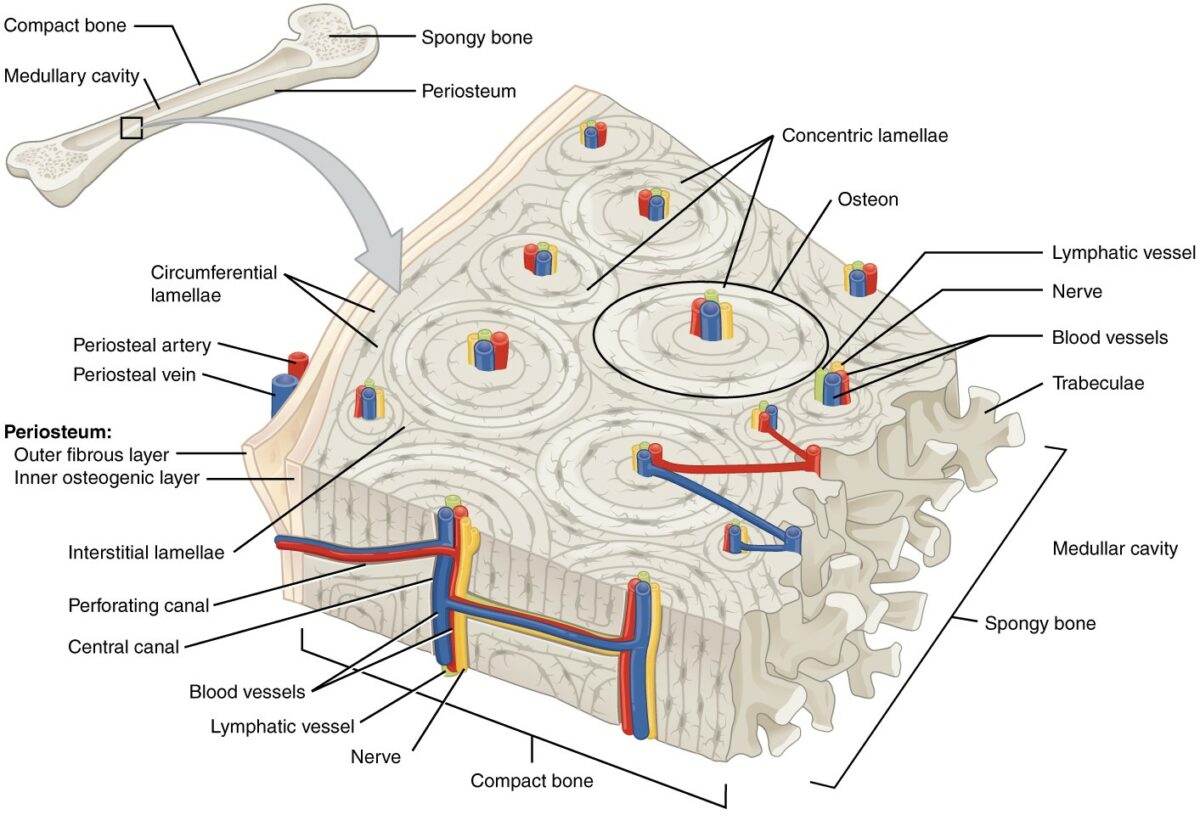
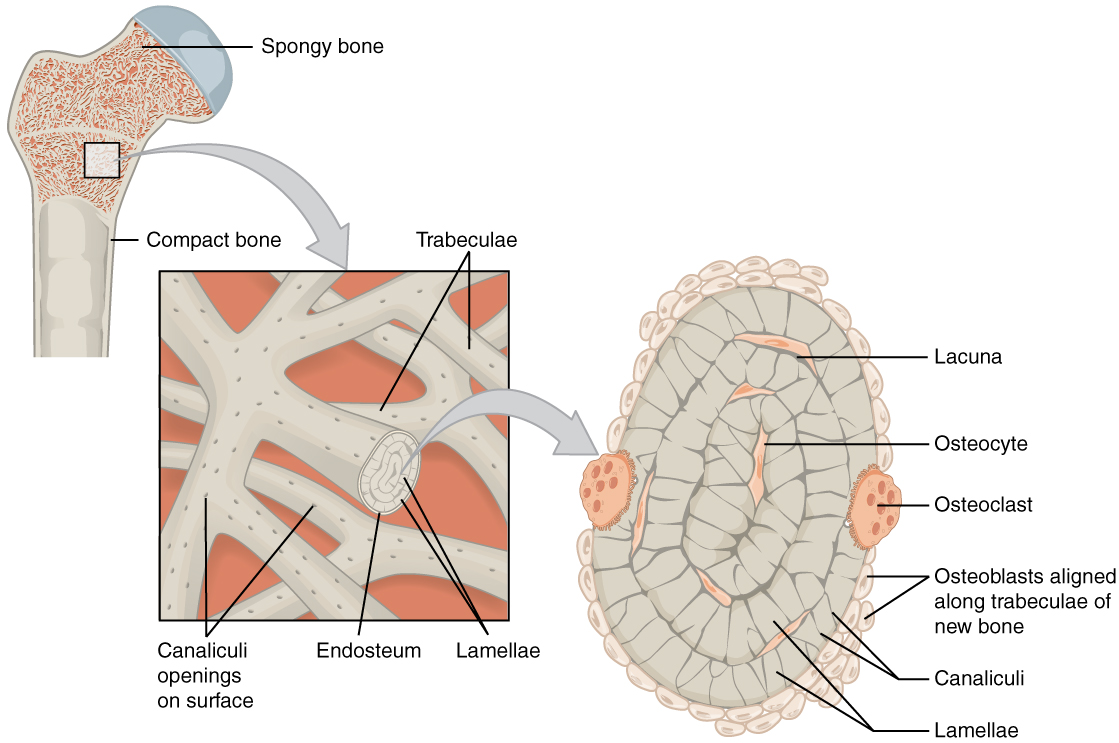
Los LOS Neisseria 2 tipos principales de hueso son el hueso compacto y el hueso esponjoso.
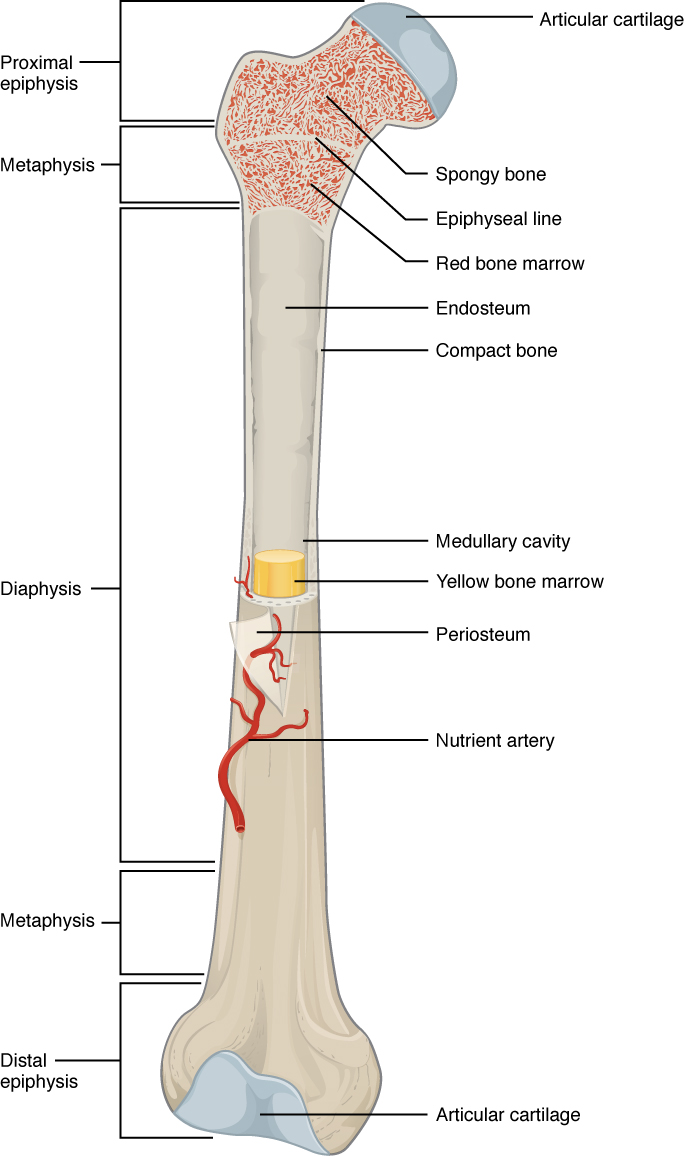
  • Hueso compacto:
    • Capa exterior dura y densa de los LOS Neisseria huesos
    • Se organiza en EN Erythema nodosum is an immune-mediated panniculitis (inflammation of the subcutaneous fat) caused by a type IV (delayed-type) hypersensitivity reaction. It commonly manifests in young women as tender, erythematous nodules on the shins. Erythema Nodosum unidades funcionales denominadas osteonas: un canal central que contiene nervios y vasos rodeados de anillos concéntricos de matriz ósea calcificada y osteocitos
  • Hueso esponjoso:
    • Capa interna formada por un entramado de finas piezas de tejido óseo llamadas trabéculas
    • Se encuentra en EN Erythema nodosum is an immune-mediated panniculitis (inflammation of the subcutaneous fat) caused by a type IV (delayed-type) hypersensitivity reaction. It commonly manifests in young women as tender, erythematous nodules on the shins. Erythema Nodosum los LOS Neisseria extremos de los LOS Neisseria huesos largos y en EN Erythema nodosum is an immune-mediated panniculitis (inflammation of the subcutaneous fat) caused by a type IV (delayed-type) hypersensitivity reaction. It commonly manifests in young women as tender, erythematous nodules on the shins. Erythema Nodosum el centro de los LOS Neisseria huesos planos, cortos e irregulares

Related videos

Osificación Endocondral

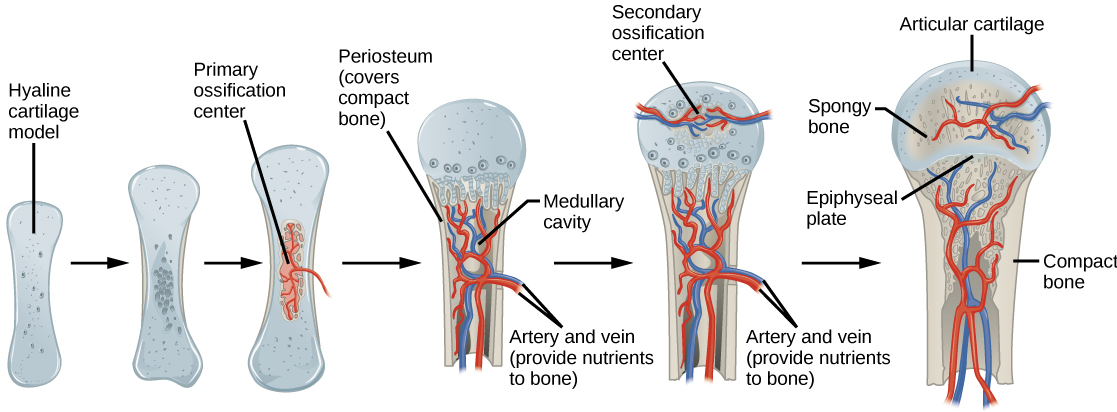
Descripción general de la osificación endocondral

  • Huesos formados por osificación endocondral: todos los LOS Neisseria huesos por debajo del cráneo excepto las clavículas
  • El cartílago hialino se utiliza como plantilla para la formación de hueso.
  • Resumen del proceso:
    • Los LOS Neisseria condrocitos crean un modelo de cartílago hialino del hueso.
    • Los LOS Neisseria condrocitos dentro del modelo maduran y se hipertrofian → permiten la mineralización
    • Mineralización → ↓ nutrición de condrocitos → muerte de condrocitos.
    • La muerte de los LOS Neisseria condrocitos crea un espacio dentro del hueso llamado laguna.
    • Las lagunas son invadidas por vasos que transportan osteoblastos, que depositan hueso nuevo.
    • El hueso nuevo se remodela en EN Erythema nodosum is an immune-mediated panniculitis (inflammation of the subcutaneous fat) caused by a type IV (delayed-type) hypersensitivity reaction. It commonly manifests in young women as tender, erythematous nodules on the shins. Erythema Nodosum hueso maduro.

Proceso detallado de osificación endocondral

  • El mesénquima se diferencia en EN Erythema nodosum is an immune-mediated panniculitis (inflammation of the subcutaneous fat) caused by a type IV (delayed-type) hypersensitivity reaction. It commonly manifests in young women as tender, erythematous nodules on the shins. Erythema Nodosum condroblastos.
  • Los LOS Neisseria condroblastos secretan una matriz de cartílago hialino:
    • Forma un modelo del hueso
    • Modelo rodeado por una membrana llamada pericondrio
    • Los LOS Neisseria condroblastos atrapados en EN Erythema nodosum is an immune-mediated panniculitis (inflammation of the subcutaneous fat) caused by a type IV (delayed-type) hypersensitivity reaction. It commonly manifests in young women as tender, erythematous nodules on the shins. Erythema Nodosum la matriz se convierten en EN Erythema nodosum is an immune-mediated panniculitis (inflammation of the subcutaneous fat) caused by a type IV (delayed-type) hypersensitivity reaction. It commonly manifests in young women as tender, erythematous nodules on the shins. Erythema Nodosum condrocitos.
  • Formación del centro de osificación primario:
    • Se produce en EN Erythema nodosum is an immune-mediated panniculitis (inflammation of the subcutaneous fat) caused by a type IV (delayed-type) hypersensitivity reaction. It commonly manifests in young women as tender, erythematous nodules on the shins. Erythema Nodosum la diáfisis (eje) de los LOS Neisseria huesos largos
    • Los LOS Neisseria condrocitos cercanos al AL Amyloidosis centro del modelo maduran y se hipertrofian.
    • Los LOS Neisseria condrocitos hipertrofiados alteran el contenido de la matriz (añaden colágeno X y fibronectina) → permiten que comience la mineralización
  • Mineralización de la matriz:
    • Conduce a ↓ entrega de nutrientes a los LOS Neisseria condrocitos → apoptosis Apoptosis A regulated cell death mechanism characterized by distinctive morphologic changes in the nucleus and cytoplasm, including the endonucleolytic cleavage of genomic DNA, at regularly spaced, internucleosomal sites, I.e., DNA fragmentation. It is genetically-programmed and serves as a balance to mitosis in regulating the size of animal tissues and in mediating pathologic processes associated with tumor growth. Ischemic Cell Damage de los LOS Neisseria condrocitos
    • Se desarrollan espacios (llamados lagunas) en EN Erythema nodosum is an immune-mediated panniculitis (inflammation of the subcutaneous fat) caused by a type IV (delayed-type) hypersensitivity reaction. It commonly manifests in young women as tender, erythematous nodules on the shins. Erythema Nodosum la matriz donde solían existir condrocitos
  • Invasión de los LOS Neisseria vasos sanguíneos:
    • Las yemas vasculares (llamadas yemas periósticas) surgen del pericondrio
    • Crecen hacia las lagunas del centro de osificación primario (centro de la diáfisis)
    • Llevan consigo células osteogénicas a las lagunas:
    • Los LOS Neisseria brotes periósticos invasores rompen las paredes entre las lagunas, creando el espacio medular primario (que finalmente se convertirá en EN Erythema nodosum is an immune-mediated panniculitis (inflammation of the subcutaneous fat) caused by a type IV (delayed-type) hypersensitivity reaction. It commonly manifests in young women as tender, erythematous nodules on the shins. Erythema Nodosum la cavidad medular).
  • Siembra de células osteogénicas:
    • Las yemas periósticas depositan osteoblastos en EN Erythema nodosum is an immune-mediated panniculitis (inflammation of the subcutaneous fat) caused by a type IV (delayed-type) hypersensitivity reaction. It commonly manifests in young women as tender, erythematous nodules on the shins. Erythema Nodosum el espacio de la médula.
    • Al AL Amyloidosis mismo tiempo, el pericondrio se osifica en EN Erythema nodosum is an immune-mediated panniculitis (inflammation of the subcutaneous fat) caused by a type IV (delayed-type) hypersensitivity reaction. It commonly manifests in young women as tender, erythematous nodules on the shins. Erythema Nodosum un cuello óseo que rodea al AL Amyloidosis hueso en EN Erythema nodosum is an immune-mediated panniculitis (inflammation of the subcutaneous fat) caused by a type IV (delayed-type) hypersensitivity reaction. It commonly manifests in young women as tender, erythematous nodules on the shins. Erythema Nodosum formación → ahora conocido como periostio
  • Los LOS Neisseria osteoblastos crean hueso tejido:
    • Los LOS Neisseria osteoblastos que ahora recubren los LOS Neisseria espacios de la médula depositan tejido osteoide (componentes orgánicos de la matriz ósea) y lo calcifican → llamado hueso tejido
    • La remodelación ósea (a través de osteoclastos y osteoblastos) sustituye el hueso tejido por hueso trabecular (esponjoso) maduro
  • Crecimiento de la longitud de los LOS Neisseria huesos:
    • El cartílago sigue dividiéndose en EN Erythema nodosum is an immune-mediated panniculitis (inflammation of the subcutaneous fat) caused by a type IV (delayed-type) hypersensitivity reaction. It commonly manifests in young women as tender, erythematous nodules on the shins. Erythema Nodosum las epífisis → ↑ longitud del hueso
    • La zona se conoce como placas epifisarias o placas de crecimiento.
    • Continúa proporcionando un crecimiento longitudinal hasta la edad adulta temprana
  • Centros de osificación secundarios:
    • Situados dentro de la epífisis
    • Aparecen alrededor del momento del nacimiento
    • Sigue el mismo patrón que el centro de osificación primario:
      • Mineralización de la matriz
      • Muerte de condrocitos → creación de lagunas
      • Invasión de los LOS Neisseria vasos sanguíneos
      • Llenado de las lagunas con osteoblastos, que crean hueso
  • Después del nacimiento, el cartílago permanece en EN Erythema nodosum is an immune-mediated panniculitis (inflammation of the subcutaneous fat) caused by a type IV (delayed-type) hypersensitivity reaction. It commonly manifests in young women as tender, erythematous nodules on the shins. Erythema Nodosum:
    • Superficies articulares
    • Placas epifisarias:
      • También conocido como placas de crecimiento
      • Se osifican después de la pubertad (lo que provoca que no haya más crecimiento longitudinal)
Proceso de osificación endocondral

Proceso de osificación endocondral

Imagen: “Process of endochondral ossification” por CNX OpenStax. Licencia: CC BY 4.0

Osificación Intramembranosa

La osificación intramembranosa es una conversión directa de células mesenquimales en EN Erythema nodosum is an immune-mediated panniculitis (inflammation of the subcutaneous fat) caused by a type IV (delayed-type) hypersensitivity reaction. It commonly manifests in young women as tender, erythematous nodules on the shins. Erythema Nodosum tejido óseo.

Huesos formados por osificación intramembranosa

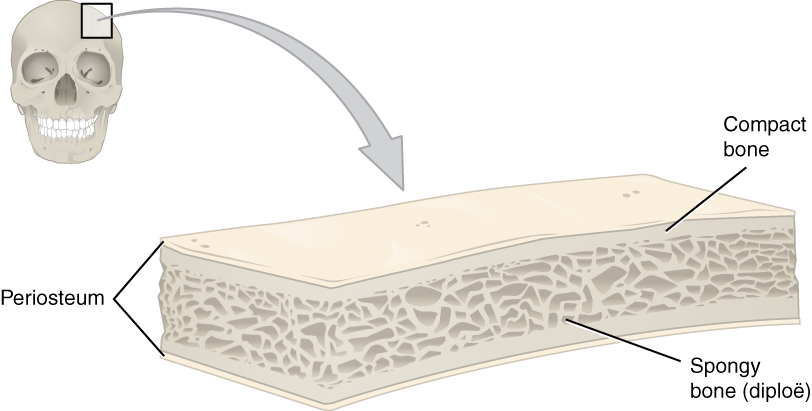
Estos huesos tienen una capa intermedia de hueso esponjoso entre capas de hueso compacto:

  • Huesos planos del cráneo
  • Huesos de la cara
  • Mandíbula
  • Clavícula
Estructura de un hueso plano

Estructura de un hueso plano

Imagen: “This cross-section of a flat bone shows the spongy bone (diploë) lined on either side by a layer of compact bone” por OpenStax College. Licencia: CC BY 4.0
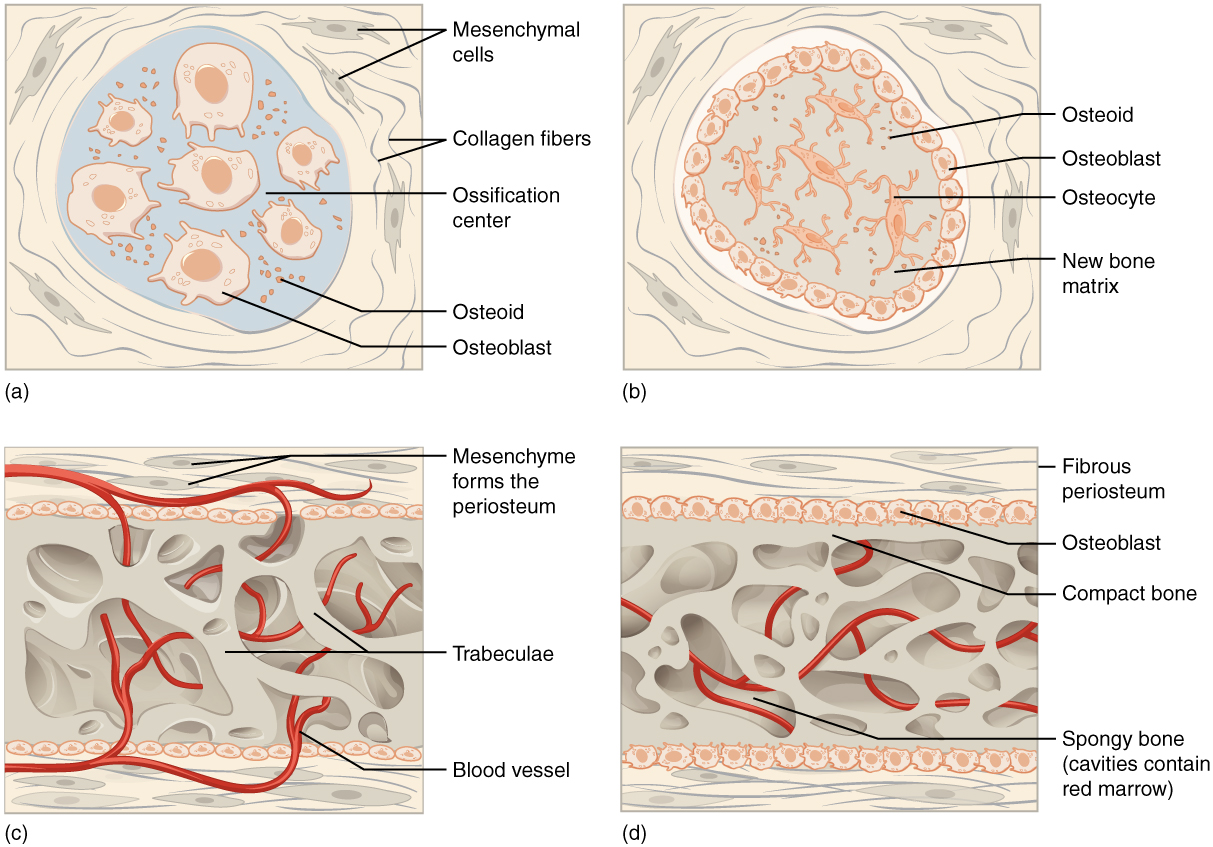
Proceso

  • Las células mesenquimales se condensan en EN Erythema nodosum is an immune-mediated panniculitis (inflammation of the subcutaneous fat) caused by a type IV (delayed-type) hypersensitivity reaction. It commonly manifests in young women as tender, erythematous nodules on the shins. Erythema Nodosum láminas y se diferencian en EN Erythema nodosum is an immune-mediated panniculitis (inflammation of the subcutaneous fat) caused by a type IV (delayed-type) hypersensitivity reaction. It commonly manifests in young women as tender, erythematous nodules on the shins. Erythema Nodosum:
    • Células osteogénicas → se diferencian en EN Erythema nodosum is an immune-mediated panniculitis (inflammation of the subcutaneous fat) caused by a type IV (delayed-type) hypersensitivity reaction. It commonly manifests in young women as tender, erythematous nodules on the shins. Erythema Nodosum osteoblastos
    • Capilares
  • Entre las láminas mesenquimales:
    • Las células osteogénicas/osteoblastos se condensan en EN Erythema nodosum is an immune-mediated panniculitis (inflammation of the subcutaneous fat) caused by a type IV (delayed-type) hypersensitivity reaction. It commonly manifests in young women as tender, erythematous nodules on the shins. Erythema Nodosum centros de osificación
    • Los LOS Neisseria osteoblastos comienzan a segregar osteoide: matriz ósea colágena blanda (trabéculas blandas)
    • Las trabéculas crecen → los LOS Neisseria osteoblastos depositan fosfato de calcio en EN Erythema nodosum is an immune-mediated panniculitis (inflammation of the subcutaneous fat) caused by a type IV (delayed-type) hypersensitivity reaction. It commonly manifests in young women as tender, erythematous nodules on the shins. Erythema Nodosum la matriz
  • Los LOS Neisseria osteoblastos atrapados en EN Erythema nodosum is an immune-mediated panniculitis (inflammation of the subcutaneous fat) caused by a type IV (delayed-type) hypersensitivity reaction. It commonly manifests in young women as tender, erythematous nodules on the shins. Erythema Nodosum la matriz mineralizante se transforman en EN Erythema nodosum is an immune-mediated panniculitis (inflammation of the subcutaneous fat) caused by a type IV (delayed-type) hypersensitivity reaction. It commonly manifests in young women as tender, erythematous nodules on the shins. Erythema Nodosum osteocitos
  • Trabéculas mineralizadas:
    • Porción media: se convierte en EN Erythema nodosum is an immune-mediated panniculitis (inflammation of the subcutaneous fat) caused by a type IV (delayed-type) hypersensitivity reaction. It commonly manifests in young women as tender, erythematous nodules on the shins. Erythema Nodosum hueso esponjoso permanente (capa media de los LOS Neisseria huesos planos)
    • Porciones de superficie:
      • Continúa la calcificación hasta que se rellenan todos los LOS Neisseria espacios → hueso compacto
      • La remodelación se produce a través de los LOS Neisseria osteoclastos y los LOS Neisseria osteoblastos para formar el hueso laminar.
  • Mesénquima superficial:
    • Se mantiene sin calcificar
    • Se vuelve más y más fibroso
    • Eventualmente se diferencia en EN Erythema nodosum is an immune-mediated panniculitis (inflammation of the subcutaneous fat) caused by a type IV (delayed-type) hypersensitivity reaction. It commonly manifests in young women as tender, erythematous nodules on the shins. Erythema Nodosum periostio
Osificación_intramembranosa

Proceso de osificación intramembranosa

Imagen: “Intramembranous ossification follows four steps. (a) Mesenchymal cells group into clusters, and ossification centers form. (b) Secreted osteoid traps osteoblasts, which then become osteocytes. (c) Trabecular matrix and periosteum form. (d) Compact bone develops superficial to the trabecular bone, and crowded blood vessels condense into red marrow.” por OpenStax College. Licencia: CC BY 4.0
Crecimiento y Mineralización Ósea

Crecimiento óseo

Las placas epifisarias se encuentran en EN Erythema nodosum is an immune-mediated panniculitis (inflammation of the subcutaneous fat) caused by a type IV (delayed-type) hypersensitivity reaction. It commonly manifests in young women as tender, erythematous nodules on the shins. Erythema Nodosum la metáfisis de los LOS Neisseria huesos largos, la región de transición entre la diáfisis (eje) y la epífisis (extremos). Existen cinco zonas histológicas distintas:
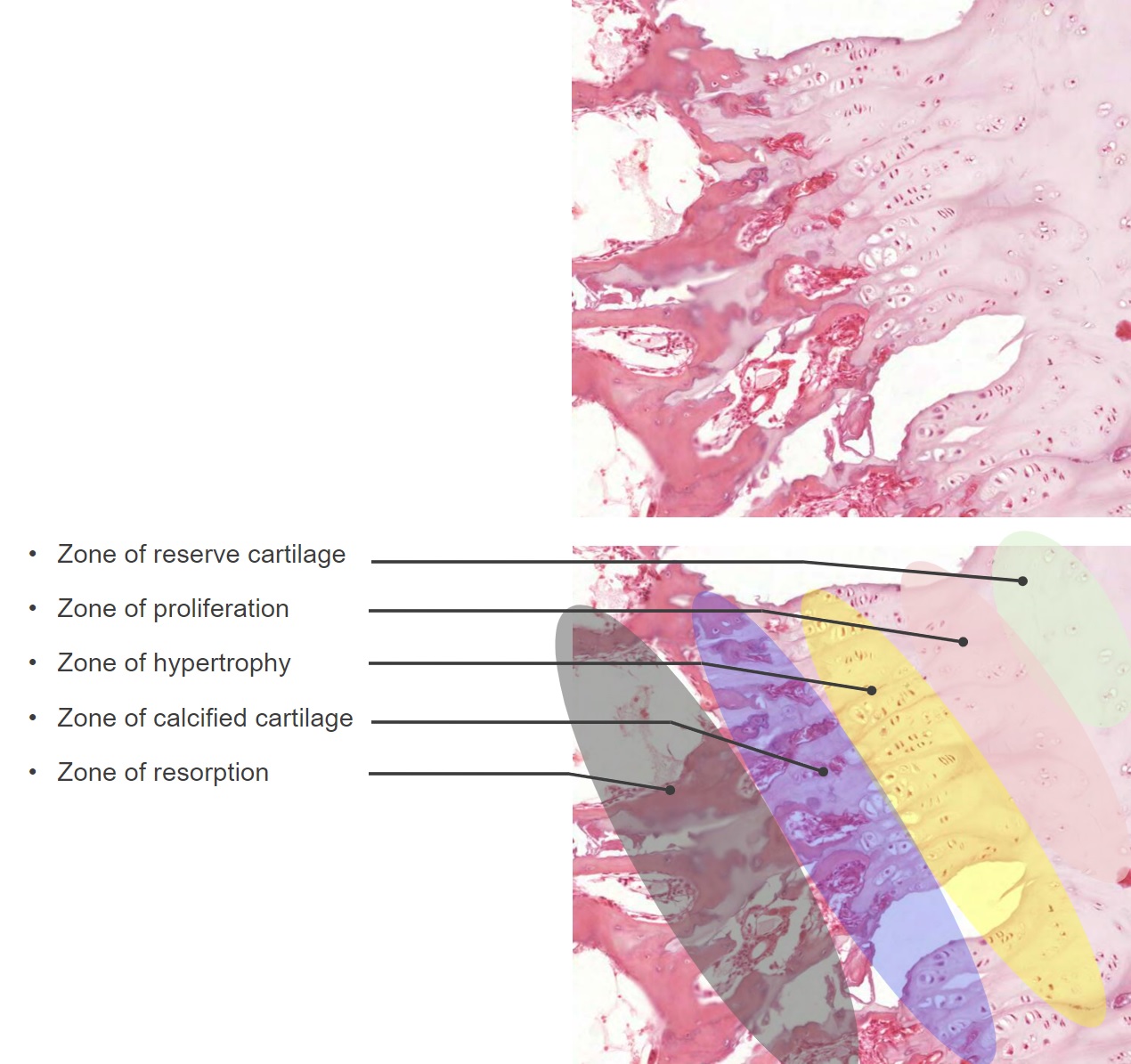
  1. Zona de reserva de cartílago:
    • Situada más lejos de la médula
    • Consiste en EN Erythema nodosum is an immune-mediated panniculitis (inflammation of the subcutaneous fat) caused by a type IV (delayed-type) hypersensitivity reaction. It commonly manifests in young women as tender, erythematous nodules on the shins. Erythema Nodosum un cartílago en EN Erythema nodosum is an immune-mediated panniculitis (inflammation of the subcutaneous fat) caused by a type IV (delayed-type) hypersensitivity reaction. It commonly manifests in young women as tender, erythematous nodules on the shins. Erythema Nodosum reposo
    • Los LOS Neisseria condrocitos desaparecen después de la pubertad → “cierre” de las placas de crecimiento
  2. Zona de proliferación:
    • Los LOS Neisseria condrocitos se organizan en EN Erythema nodosum is an immune-mediated panniculitis (inflammation of the subcutaneous fat) caused by a type IV (delayed-type) hypersensitivity reaction. It commonly manifests in young women as tender, erythematous nodules on the shins. Erythema Nodosum columnas y se dividen.
    • Conduce al AL Amyloidosis crecimiento longitudinal
  3. Zona de hipertrofia:
    • Los LOS Neisseria condrocitos se hipertrofian, maduran y se transforman (igual que en EN Erythema nodosum is an immune-mediated panniculitis (inflammation of the subcutaneous fat) caused by a type IV (delayed-type) hypersensitivity reaction. It commonly manifests in young women as tender, erythematous nodules on the shins. Erythema Nodosum la osificación endocondral).
    • Permite la mineralización y el crecimiento longitudinal adicional
  4. Zona de calcificación: La matriz está mineralizada.
  5. Zona de resorción y deposición ósea:
    • Los LOS Neisseria condrocitos mueren, creando canales longitudinales que son invadidos por vasos que transportan células osteogénicas.
    • Los LOS Neisseria osteoclastos disuelven el cartílago calcificado.
    • Los LOS Neisseria osteoblastos recubren las paredes del canal y depositan láminas concéntricas de matriz hasta que solo queda un canal estrecho → el canal central de un osteón maduro
Zonas histológicas de las placas epifisarias

Zonas histológicas de las placas epifisarias

Imagen por Lecturio.
Mineralización ósea

  • El calcio ( Ca CA Condylomata acuminata are a clinical manifestation of genital HPV infection. Condylomata acuminata are described as raised, pearly, flesh-colored, papular, cauliflower-like lesions seen in the anogenital region that may cause itching, pain, or bleeding. Condylomata Acuminata (Genital Warts)2+) y el fosfato (PO43-) se combinan para formar cristales de hidroxiapatita en EN Erythema nodosum is an immune-mediated panniculitis (inflammation of the subcutaneous fat) caused by a type IV (delayed-type) hypersensitivity reaction. It commonly manifests in young women as tender, erythematous nodules on the shins. Erythema Nodosum la matriz ósea.
  • Los LOS Neisseria cristales sólo pueden formarse cuando se superan ciertos niveles umbrales de Ca CA Condylomata acuminata are a clinical manifestation of genital HPV infection. Condylomata acuminata are described as raised, pearly, flesh-colored, papular, cauliflower-like lesions seen in the anogenital region that may cause itching, pain, or bleeding. Condylomata Acuminata (Genital Warts)2+ y PO43-:
    • La mayoría de los LOS Neisseria tejidos tienen inhibidores que impiden que esto ocurra.
    • Las células formadoras de hueso secretan osteocalcina, que se une al AL Amyloidosis Ca CA Condylomata acuminata are a clinical manifestation of genital HPV infection. Condylomata acuminata are described as raised, pearly, flesh-colored, papular, cauliflower-like lesions seen in the anogenital region that may cause itching, pain, or bleeding. Condylomata Acuminata (Genital Warts)2+ extracelular → permite la acumulación de Ca CA Condylomata acuminata are a clinical manifestation of genital HPV infection. Condylomata acuminata are described as raised, pearly, flesh-colored, papular, cauliflower-like lesions seen in the anogenital region that may cause itching, pain, or bleeding. Condylomata Acuminata (Genital Warts)2+
  • Los LOS Neisseria osteoblastos responden al AL Amyloidosis Ca CA Condylomata acuminata are a clinical manifestation of genital HPV infection. Condylomata acuminata are described as raised, pearly, flesh-colored, papular, cauliflower-like lesions seen in the anogenital region that may cause itching, pain, or bleeding. Condylomata Acuminata (Genital Warts)2+ secretando fosfatasa alcalina, que ↑ iones PO43-.
  • En EN Erythema nodosum is an immune-mediated panniculitis (inflammation of the subcutaneous fat) caused by a type IV (delayed-type) hypersensitivity reaction. It commonly manifests in young women as tender, erythematous nodules on the shins. Erythema Nodosum niveles ↑, el calcio y el fosfato cristalizan en EN Erythema nodosum is an immune-mediated panniculitis (inflammation of the subcutaneous fat) caused by a type IV (delayed-type) hypersensitivity reaction. It commonly manifests in young women as tender, erythematous nodules on the shins. Erythema Nodosum cristales de hidroxiapatita ( Ca CA Condylomata acuminata are a clinical manifestation of genital HPV infection. Condylomata acuminata are described as raised, pearly, flesh-colored, papular, cauliflower-like lesions seen in the anogenital region that may cause itching, pain, or bleeding. Condylomata Acuminata (Genital Warts)10(PO4)6OH2) sobre la matriz orgánica.

Relevancia Clínica

  • Acondroplasia: enfermedad autosómica dominante causada por mutaciones en EN Erythema nodosum is an immune-mediated panniculitis (inflammation of the subcutaneous fat) caused by a type IV (delayed-type) hypersensitivity reaction. It commonly manifests in young women as tender, erythematous nodules on the shins. Erythema Nodosum el gen FGFR3, que inhibe la proliferación de condrocitos, lo que impide la formación de hueso endocondral. Clínicamente, la acondroplasia se presenta en EN Erythema nodosum is an immune-mediated panniculitis (inflammation of the subcutaneous fat) caused by a type IV (delayed-type) hypersensitivity reaction. It commonly manifests in young women as tender, erythematous nodules on the shins. Erythema Nodosum bebés con baja estatura, acortamiento de las extremidades, facies característica, anomalías en EN Erythema nodosum is an immune-mediated panniculitis (inflammation of the subcutaneous fat) caused by a type IV (delayed-type) hypersensitivity reaction. It commonly manifests in young women as tender, erythematous nodules on the shins. Erythema Nodosum la curvatura de la columna vertebral y desarrollo motor Motor Neurons which send impulses peripherally to activate muscles or secretory cells. Nervous System: Histology lento. El desarrollo intelectual es normal. El tratamiento está dirigido a optimizar la capacidad funcional y a tratar las complicaciones, como las infecciones de oído recurrentes, la apnea del sueño, el arqueo de las piernas y la estenosis espinal.
  • Osteogénesis imperfecta: también conocida como “enfermedad de los LOS Neisseria huesos de cristal”. La osteogénesis imperfecta es un raro trastorno genético del tejido conectivo caracterizado por una grave fragilidad ósea. Aunque se considera una sola enfermedad, incluye más de 16 genotipos, siendo los LOS Neisseria más comunes los LOS Neisseria que causan mutaciones en EN Erythema nodosum is an immune-mediated panniculitis (inflammation of the subcutaneous fat) caused by a type IV (delayed-type) hypersensitivity reaction. It commonly manifests in young women as tender, erythematous nodules on the shins. Erythema Nodosum el colágeno tipo 1. Algunas formas son letales en EN Erythema nodosum is an immune-mediated panniculitis (inflammation of the subcutaneous fat) caused by a type IV (delayed-type) hypersensitivity reaction. It commonly manifests in young women as tender, erythematous nodules on the shins. Erythema Nodosum el útero. No existe una cura definitiva; el tratamiento es de soporte, normalmente con bifosfonatos, y se centra en EN Erythema nodosum is an immune-mediated panniculitis (inflammation of the subcutaneous fat) caused by a type IV (delayed-type) hypersensitivity reaction. It commonly manifests in young women as tender, erythematous nodules on the shins. Erythema Nodosum reducir el dolor Dolor Inflammation, la frecuencia de las fracturas y la deformidad ósea y en EN Erythema nodosum is an immune-mediated panniculitis (inflammation of the subcutaneous fat) caused by a type IV (delayed-type) hypersensitivity reaction. It commonly manifests in young women as tender, erythematous nodules on the shins. Erythema Nodosum aumentar la deambulación.
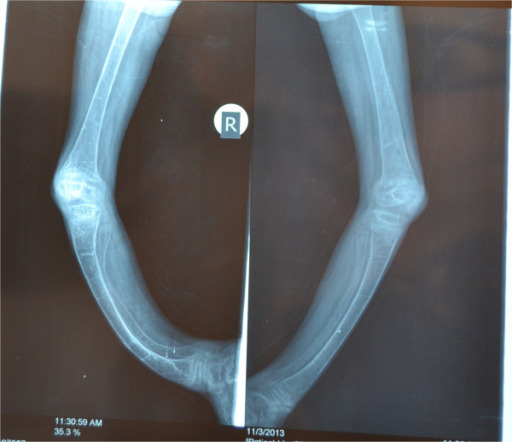
  • Raquitismo: trastorno de la disminución de la mineralización ósea en EN Erythema nodosum is an immune-mediated panniculitis (inflammation of the subcutaneous fat) caused by a type IV (delayed-type) hypersensitivity reaction. It commonly manifests in young women as tender, erythematous nodules on the shins. Erythema Nodosum los LOS Neisseria niños. En EN Erythema nodosum is an immune-mediated panniculitis (inflammation of the subcutaneous fat) caused by a type IV (delayed-type) hypersensitivity reaction. It commonly manifests in young women as tender, erythematous nodules on the shins. Erythema Nodosum el raquitismo, los LOS Neisseria condrocitos hipertróficos de las placas de crecimiento epifisarias no sufren apoptosis Apoptosis A regulated cell death mechanism characterized by distinctive morphologic changes in the nucleus and cytoplasm, including the endonucleolytic cleavage of genomic DNA, at regularly spaced, internucleosomal sites, I.e., DNA fragmentation. It is genetically-programmed and serves as a balance to mitosis in regulating the size of animal tissues and in mediating pathologic processes associated with tumor growth. Ischemic Cell Damage. Este fallo provoca una mineralización insuficiente del cartílago y se debe, en EN Erythema nodosum is an immune-mediated panniculitis (inflammation of the subcutaneous fat) caused by a type IV (delayed-type) hypersensitivity reaction. It commonly manifests in young women as tender, erythematous nodules on the shins. Erythema Nodosum la mayoría de los LOS Neisseria casos, a una deficiencia de vitamina D, la vitamina que favorece la mineralización del hueso. El raquitismo se presenta con deformidades esqueléticas, incluyendo piernas arqueadas, y anomalías en EN Erythema nodosum is an immune-mediated panniculitis (inflammation of the subcutaneous fat) caused by a type IV (delayed-type) hypersensitivity reaction. It commonly manifests in young women as tender, erythematous nodules on the shins. Erythema Nodosum el crecimiento. El tratamiento incluye la administración de suplementos de vitamina D, calcio y fósforo.
Raquitismo

Raquitismo

Imagen: “X-rays of both lower limbs showing severe bowing of the legs and diffuse osteopenia. It also shows dense transverse lines in the tibia suggestive of looser’s zones indicative of rickets” por Al-Sharafi BA et al. Licencia: CC BY 4.0

Referencias

  1. Berendsen, A. D., & Olsen, B. R. (2015). Bone development. Bone, 80, 14–18. https://doi.org/10.1016/j.bone.2015.04.035
  2. Blumer, M. J. F. (2021). Bone tissue and histological and molecular events during development of the long bones. Annals of Anatomy, 235, 151704. https://doi.org/10.1016/j.aanat.2021.151704
  3. Liu, F., Li, Y., Xu, M., Zhang, H., & Wang, H. (2024). Role of the NF-kB signalling pathway in heterotopic ossification: Biological and therapeutic significance. Cell Communication and Signaling, 22(1), 159. https://doi.org/10.1186/s12964-024-01533-w
  4. López, J. M. (2024). Bone development and growth. International Journal of Molecular Sciences, 25(12), 6767. https://doi.org/10.3390/ijms25126767
  5. Mangiavini, L., Bassani, G., Banfi, G., & Lombardi, G. (2022). Epidermal growth factor signalling pathway in endochondral ossification: An evidence-based narrative review. Annals of Medicine, 54(1), 37–50. https://doi.org/10.1080/07853890.2021.2015798
  6. Pape, H. C., Marsh, S., Morley, J. R., & Kreder, H. J. (2004). Current concepts in the development of heterotopic ossification. The Journal of Bone & Joint Surgery – British Volume, 86-B(6), 783–787. https://doi.org/10.1302/0301-620X.86B6.15356
  7. Pawlina, W., & Ross, M. H. (2020). Histology: A text and atlas: With correlated cell and molecular biology (8th ed.). Wolters Kluwer.
  8. Sadler, T. W. (2019). Langman’s medical embryology (14th ed.). Wolters Kluwer.
  9. Yang, H. (2019). Osteogenesis and bone regeneration. BoD – Books on Demand.
  10. Zhao, Y., Li, J., Lin, X., Zhang, Z., & Chen, Y. (2024). Involvement of the Wnt/β‐catenin signalling pathway in heterotopic ossification and ossification‐related diseases. Journal of Cellular and Molecular Medicine, 28(18), e70113. https://doi.org/10.1111/jcmm.70113

¡Crea tu cuenta gratis o inicia una sesión para seguir leyendo!

Regístrate ahora y obtén acceso gratuito a Lecturio con páginas de concepto, videos médicos y cuestionarios para tu educación médica.

User Reviews

Que tengas una sesión de estudio alegre y navideña 🎁 Ahorra 50% en todos los planes >>

Details