


Síndrome IPEX

A síndrome IPEX (desregulação imune, poliendocrinopatia, enteropatia ligada ao X) é uma deficiência congénita rara de células T, associada à disfunção do fator de transcrição FOXP3. Este fator regula o desenvolvimento de uma linhagem de células T reguladoras e as disfunções geralmente resultam em autoimunidade. A condição manifesta-se como enteropatia autoimune, dermatite eczematosa, distrofia ungueal, endocrinopatias autoimunes e doenças autoimunes da pele. A única forma de tratamento da IPEX é o transplante de medula óssea.

Last updated: Jan 5, 2025

Editorial responsibility: Stanley Oiseth, Lindsay Jones, Evelin Maza

Epidemiologia e Etiologia

Epidemiologia

  • Ocorre em 1 em 1,6 milhões de pessoas
  • Foram relatados menos de 300 casos de síndrome IPEX (desregulação imune, poliendocrinopatia, enteropatia, ligada ao X)

Etiologia

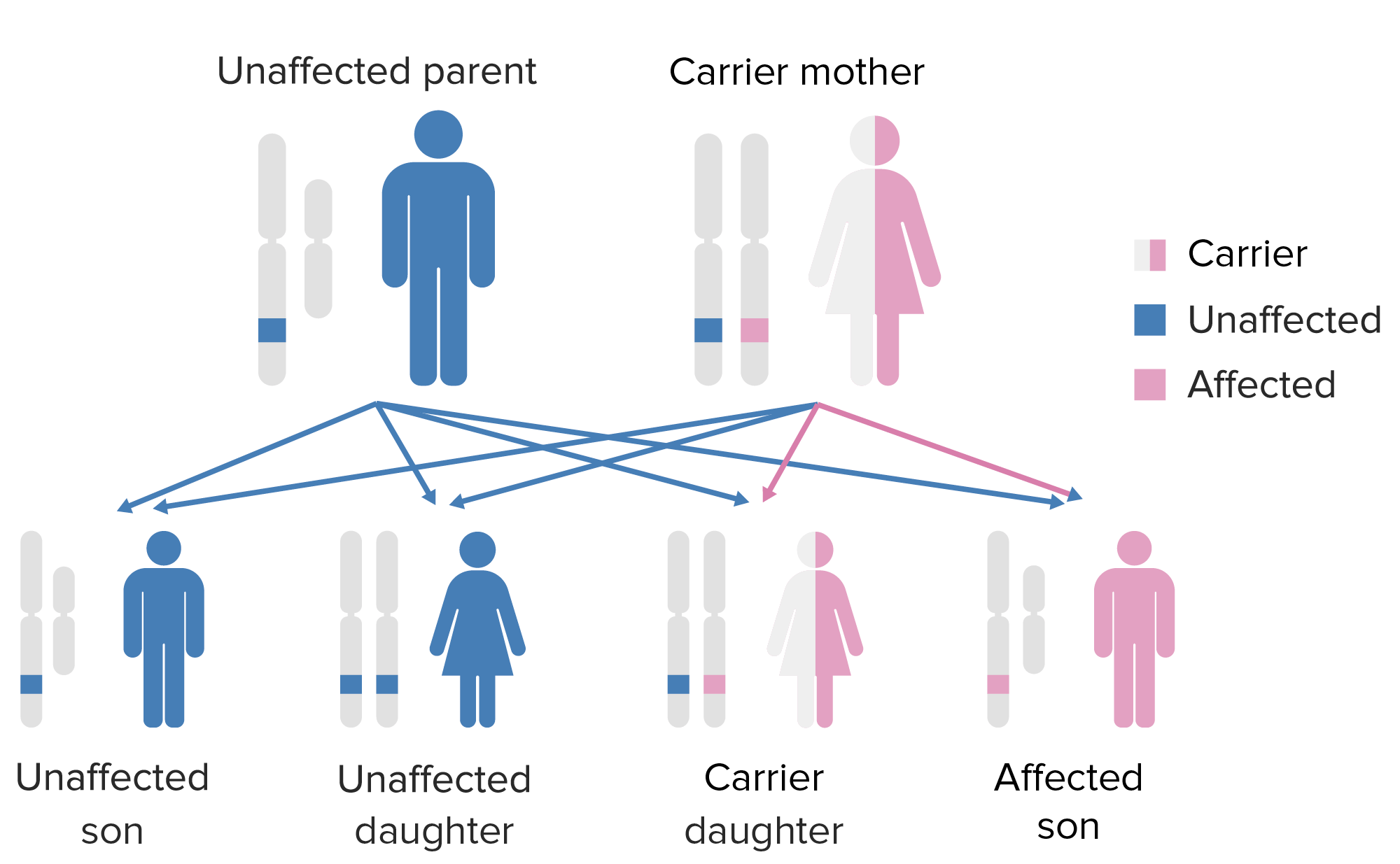
  • Tem um padrão de hereditariedade recessivo ligado ao X, por isso afeta principalmente homens
  • Causada por uma mutação no gene Gene A category of nucleic acid sequences that function as units of heredity and which code for the basic instructions for the development, reproduction, and maintenance of organisms. Basic Terms of Genetics que codifica o fator de transcrição da proteína forkhead box 3 (FOXP3), localizado em Xp11.23-Xq13.3
X-linked recessive inheritance
Padrão de hereditariedade da agamaglobulinemia ligada ao X. Observar que a mãe deve contribuir com o gene X defeituoso para o filho do sexo masculino, para que o mesmo expresse esse fenótipo.
Imagem por Lecturio.

Fisiopatologia

  • A mutação causa uma ativação disfuncional das células T reguladoras, tendo como alvo os tecidos do hospedeiro (autoimunidade).
  • Interrupções na via reguladora do FOXP3 podem levar a doenças autoimunes específicas de órgão, envolvendo a pele, o trato gastrointestinal (GI) e as glândulas endócrinas.
  • Também associada à perda de células T reguladoras CD4+ CD25+, que estão ligadas à autoimunidade

Apresentação Clínica

Os sinais de autoimunidade sistémica começam a apresentar-se no 1º ano de vida.

  • Apresentação da tríade clássica:
    1. Enteropatia:
    2. Endocrinopatia:
      • Hiper ou hipotiroidismo
      • Tiroidite
      • Diabetes Diabetes Diabetes mellitus (DM) is a metabolic disease characterized by hyperglycemia and dysfunction of the regulation of glucose metabolism by insulin. Type 1 DM is diagnosed mostly in children and young adults as the result of autoimmune destruction of β cells in the pancreas and the resulting lack of insulin. Type 2 DM has a significant association with obesity and is characterized by insulin resistance. Diabetes Mellitus mellitus tipo 1
      • Défice atípico da hormona do crescimento
      • Hipoadrenalismo
    3. Dermatite:
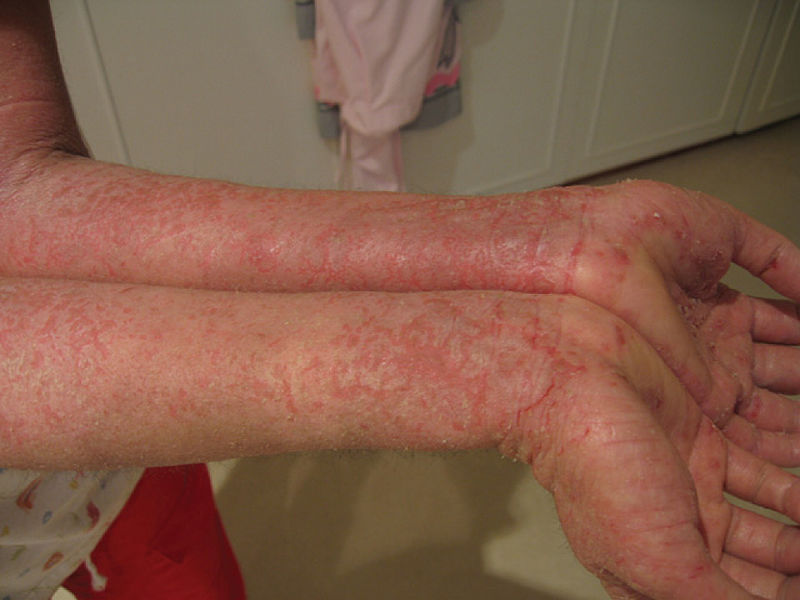
      • Eczema Eczema Atopic dermatitis, also known as eczema, is a chronic, relapsing, pruritic, inflammatory skin disease that occurs more frequently in children, although adults can also be affected. The condition is often associated with elevated serum levels of IgE and a personal or family history of atopy. Skin dryness, erythema, oozing, crusting, and lichenification are present. Atopic Dermatitis (Eczema) ou dermatite eczematosa
      • Distrofia das unhas
  • Outros sintomas incluem:
    • Linfadenopatia
    • Citopenias
    • Aumento da suscetibilidade e de respostas exageradas às infeções
    • Doença renal
    • Síndrome de dificuldade respiratória aguda
    • Perda de peso
    • Alopecia Alopecia Alopecia is the loss of hair in areas anywhere on the body where hair normally grows. Alopecia may be defined as scarring or non-scarring, localized or diffuse, congenital or acquired, reversible or permanent, or confined to the scalp or universal; however, alopecia is usually classified using the 1st 3 factors. Alopecia
    • Esplenomegalia
    • Artrite
    • Má evolução estaturo-ponderal
  • As crises de doença, ou agravamento súbito dos sintomas autoimunes ou alérgicos, podem ser desencadeadas por infeções, vacinas ou reações alérgicas a alimentos.

Diagnóstico e Tratamento

Diagnóstico

O diagnóstico da síndrome IPEX segue critérios sistemáticos consistentes com:

  • Exame clínico: tríade clássica de autoimunidade num lactente ou criança do sexo masculino (dermatite, enteropatia e distúrbio da tiroide ou diabetes Diabetes Diabetes mellitus (DM) is a metabolic disease characterized by hyperglycemia and dysfunction of the regulation of glucose metabolism by insulin. Type 1 DM is diagnosed mostly in children and young adults as the result of autoimmune destruction of β cells in the pancreas and the resulting lack of insulin. Type 2 DM has a significant association with obesity and is characterized by insulin resistance. Diabetes Mellitus insulino-dependente)
  • História familiar: a maioria das mutações é familiar; os casos esporádicos são raros
  • Teste genético: variante patogénica hemizigótica em FOXP3
  • Achados laboratoriais: células T reguladoras CD4+ CD25+ severamente reduzidas/ausentes

Tratamento

São usados inúmeros fármacos e a administração depende das manifestações de cada doente:

  • Erupções agudas da doença:
    • Corticosteroides: tratamento de primeira linha
    • Pode ser necessária a ressuscitação volémica
    • Nutrição parenteral total (NPT): fornece nutrição em casos de enteropatias graves
    • Reintrodução gradual de leite materno ou fórmula altamente hidrolisada
  • Tratamento a longo prazo:
    • Ciclosporina A, sirolimus Sirolimus A macrolide compound obtained from streptomyces hygroscopicus that acts by selectively blocking the transcriptional activation of cytokines thereby inhibiting cytokine production. It is bioactive only when bound to immunophilins. Sirolimus is a potent immunosuppressant and possesses both antifungal and antineoplastic properties. Immunosuppressants ou FK506: imunossupressão dirigida a células T
    • Evitar alergénios alimentares e vacinas
    • Transplante de medula óssea: única cura potencial para a síndrome IPEX
    • Tratamento padrão da diabetes Diabetes Diabetes mellitus (DM) is a metabolic disease characterized by hyperglycemia and dysfunction of the regulation of glucose metabolism by insulin. Type 1 DM is diagnosed mostly in children and young adults as the result of autoimmune destruction of β cells in the pancreas and the resulting lack of insulin. Type 2 DM has a significant association with obesity and is characterized by insulin resistance. Diabetes Mellitus mellitus e da doença autoimune da tiroide (e.g., suplementação de insulina e hormona tiroideia)
    • Fator estimulador de colónias de granulócitos e antibioterapia profilática para tratar a neutropenia Neutropenia Neutrophils are an important component of the immune system and play a significant role in the eradication of infections. Low numbers of circulating neutrophils, referred to as neutropenia, predispose the body to recurrent infections or sepsis, though patients can also be asymptomatic. Neutropenia autoimune associada
    • Esteroides tópicos e agentes anti-inflamatórios: para tratar o eczema Eczema Atopic dermatitis, also known as eczema, is a chronic, relapsing, pruritic, inflammatory skin disease that occurs more frequently in children, although adults can also be affected. The condition is often associated with elevated serum levels of IgE and a personal or family history of atopy. Skin dryness, erythema, oozing, crusting, and lichenification are present. Atopic Dermatitis (Eczema)

Diagnóstico Diferencial

As seguintes condições são diagnósticos diferenciais da síndrome IPEX:

  • Síndrome de Wiskott-Aldrich: distúrbio misto ligado ao X de deficiência de células B e T. A síndrome é causada por uma mutação no gene Gene A category of nucleic acid sequences that function as units of heredity and which code for the basic instructions for the development, reproduction, and maintenance of organisms. Basic Terms of Genetics WAS que leva ao comprometimento do citoesqueleto de actina, fagocitose e quimiotaxia, comprometimento do desenvolvimento plaquetário e, em geral, perda das respostas humorais e celulares. Apresenta-se como eczema Eczema Atopic dermatitis, also known as eczema, is a chronic, relapsing, pruritic, inflammatory skin disease that occurs more frequently in children, although adults can also be affected. The condition is often associated with elevated serum levels of IgE and a personal or family history of atopy. Skin dryness, erythema, oozing, crusting, and lichenification are present. Atopic Dermatitis (Eczema), distúrbios hemorrágicos, infeções oportunistas recorrentes e autoimunidade.
  • Síndrome de Omenn: forma autossómica recessiva de imunodeficiência combinada grave ( SCID SCID Severe combined immunodeficiency (SCID), also called “bubble boy disease,” is a rare genetic disorder in which the development of functional B and T cells is disturbed due to several genetic mutations that result in reduced or absent immune function. Severe Combined Immunodeficiency (SCID), pela sigla em inglês) causada por mutações nos genes Genes A category of nucleic acid sequences that function as units of heredity and which code for the basic instructions for the development, reproduction, and maintenance of organisms. DNA Types and Structure RAG1 RAG1 Immunoglobulins: Types and Functions ou RAG2 RAG2 Immunoglobulins: Types and Functions. Apresenta-se com diarreia crónica; eritrodermia; descamação; alopécia; má evolução estaturo-ponderal; linfadenopatia; hepatoesplenomegalia; infeções fúngicas, bacterianas e virais recorrentes; e níveis elevados de eosinófilos e IgE IgE An immunoglobulin associated with mast cells. Overexpression has been associated with allergic hypersensitivity. Immunoglobulins: Types and Functions sérica.
  • Diabetes Diabetes Diabetes mellitus (DM) is a metabolic disease characterized by hyperglycemia and dysfunction of the regulation of glucose metabolism by insulin. Type 1 DM is diagnosed mostly in children and young adults as the result of autoimmune destruction of β cells in the pancreas and the resulting lack of insulin. Type 2 DM has a significant association with obesity and is characterized by insulin resistance. Diabetes Mellitus neonatal transitório: forma de diabetes Diabetes Diabetes mellitus (DM) is a metabolic disease characterized by hyperglycemia and dysfunction of the regulation of glucose metabolism by insulin. Type 1 DM is diagnosed mostly in children and young adults as the result of autoimmune destruction of β cells in the pancreas and the resulting lack of insulin. Type 2 DM has a significant association with obesity and is characterized by insulin resistance. Diabetes Mellitus que se apresenta nas primeiras semanas de vida, mas é transitória. Geralmente causada por genes Genes A category of nucleic acid sequences that function as units of heredity and which code for the basic instructions for the development, reproduction, and maintenance of organisms. DNA Types and Structure disfuncionais no cromossoma 6. Os bebés afetados entram em remissão dentro de alguns meses, embora a possibilidade de recaída em diabetes Diabetes Diabetes mellitus (DM) is a metabolic disease characterized by hyperglycemia and dysfunction of the regulation of glucose metabolism by insulin. Type 1 DM is diagnosed mostly in children and young adults as the result of autoimmune destruction of β cells in the pancreas and the resulting lack of insulin. Type 2 DM has a significant association with obesity and is characterized by insulin resistance. Diabetes Mellitus permanente na adolescência ou na idade adulta permaneça. Apresenta-se como hiperglicemia, desidratação e má evolução estaturo-ponderal na infância.
  • Imunodeficiência combinada grave ( SCID SCID Severe combined immunodeficiency (SCID), also called “bubble boy disease,” is a rare genetic disorder in which the development of functional B and T cells is disturbed due to several genetic mutations that result in reduced or absent immune function. Severe Combined Immunodeficiency (SCID), pela sigla em inglês): a forma mais MAIS Androgen Insensitivity Syndrome grave de imunodeficiência primária. A SCID SCID Severe combined immunodeficiency (SCID), also called “bubble boy disease,” is a rare genetic disorder in which the development of functional B and T cells is disturbed due to several genetic mutations that result in reduced or absent immune function. Severe Combined Immunodeficiency (SCID) é um distúrbio genético que envolve uma resposta defeituosa de anticorpos devido ao envolvimento direto de linfócitos B ou por ativação inadequada de linfócitos B devido a células T auxiliares não funcionais. Apresenta-se como infeções oportunistas graves e recorrentes e é diagnosticada por PCR PCR Polymerase chain reaction (PCR) is a technique that amplifies DNA fragments exponentially for analysis. The process is highly specific, allowing for the targeting of specific genomic sequences, even with minuscule sample amounts. The PCR cycles multiple times through 3 phases: denaturation of the template DNA, annealing of a specific primer to the individual DNA strands, and synthesis/elongation of new DNA molecules. Polymerase Chain Reaction (PCR) quantitativa e citometria de fluxo.
  • Trombocitopenia ligada ao X: distúrbio hemorrágico que afeta homens devido ao seu padrão de hereditariedade recessivo ligado ao X. Caracteriza-se por baixos níveis de plaquetas e apresenta-se com hemorragia que ocorre espontaneamente ou após pequenos traumas.
  • Hipoplasia pancreática ou agenesia: subdesenvolvimento congénito ou completa ausência de desenvolvimento embrionário do pâncreas. O pâncreas é de origem endodérmica, desenvolvendo-se normalmente a partir do intestino anterior. Pode apresentar-se de forma assintomática ou com hiperglicemia, dor abdominal, diabetes Diabetes Diabetes mellitus (DM) is a metabolic disease characterized by hyperglycemia and dysfunction of the regulation of glucose metabolism by insulin. Type 1 DM is diagnosed mostly in children and young adults as the result of autoimmune destruction of β cells in the pancreas and the resulting lack of insulin. Type 2 DM has a significant association with obesity and is characterized by insulin resistance. Diabetes Mellitus mellitus, obstrução do ducto biliar ou sinais de pancreatite.

Referências

  1. Bacchetta, R. et al. (2024). “IPEX syndrome from diagnosis to cure, learning along the way.” Journal of Allergy and Clinical Immunology, 153(2), 595-605.
  2. Spahich, N. (2023). “The Future of Gene Therapy for a Rare Pediatric Autoimmune Disease.” The Scientist Magazine.
  3. Malhis, L., et al. (2023). “A case report of IPEX syndrome in Palestine: detailed family identification and breadth of disorders with the same defect.” Frontiers in Pediatrics.
  4. Braskett, M. J., & Chatila, T. (2022). IPEX: Immune dysregulation, polyendocrinopathy, enteropathy, X-linked. UpToDate. Retrieved on November 18, 2024, from https://www.uptodate.com/contents/ipex-immune-dysregulation-polyendocrinopathy-enteropathy-x-linked
  5. Aytekin G, Vaqar S. (2023). X-Linked Immunodeficiency. StatPearls [Internet]. Retrieved on November 18, 2024, from https://www.ncbi.nlm.nih.gov/books/NBK562182/
  6. Banks T, Gada S.M., & Mikita C.P. (2019). Immunodysregulation polyendocrinopathy enteropathy X-linked syndrome (IPEX) treatment & management. eMedicine. Retrieved on November 18, 2024, from https://emedicine.medscape.com/article/1663259-treatment#showall

Crie sua conta gratuita ou faça login para continuar lendo!

Cadastre-se agora e tenha acesso grátis ao Lecturio, com páginas de conceitos, vídeos de medicina e questões para sua educação médica.

Aprende mais com a Lecturio:

Multiple devices displaying human anatomy and health education content.

Complementa o teu estudo da faculdade com o companheiro de estudo tudo-em-um da Lecturio, através de métodos de ensino baseados em evidência.

Estuda onde quiseres

Two iPhones display medical education apps, one showing anatomy, the other Bookmatcher.

A Lecturio Medical complementa o teu estudo através de métodos de ensino baseados em evidência, vídeos de palestras, perguntas e muito mais – tudo combinado num só lugar e fácil de usar.

User Reviews

Have a holly, jolly study session 🎁 Save 50% on all plans now >>

Que tengas una sesión de estudio alegre y navideña 🎁 Ahorra 50% en todos los planes >>

Details